| REPORT ATTRIBUTE | DETAILS |
|---|---|
| Historical Period | 2020-2023 |
| Base Year | 2024 |
| Forecast Period | 2025-2032 |
| Animal Genetics Market Size 2024 | USD 6,751.54 million |
| Animal Genetics Market , CAGR | 6.14% |
| Animal Genetics Market Size 2032 | USD 10,834.40 million |
Market Overview
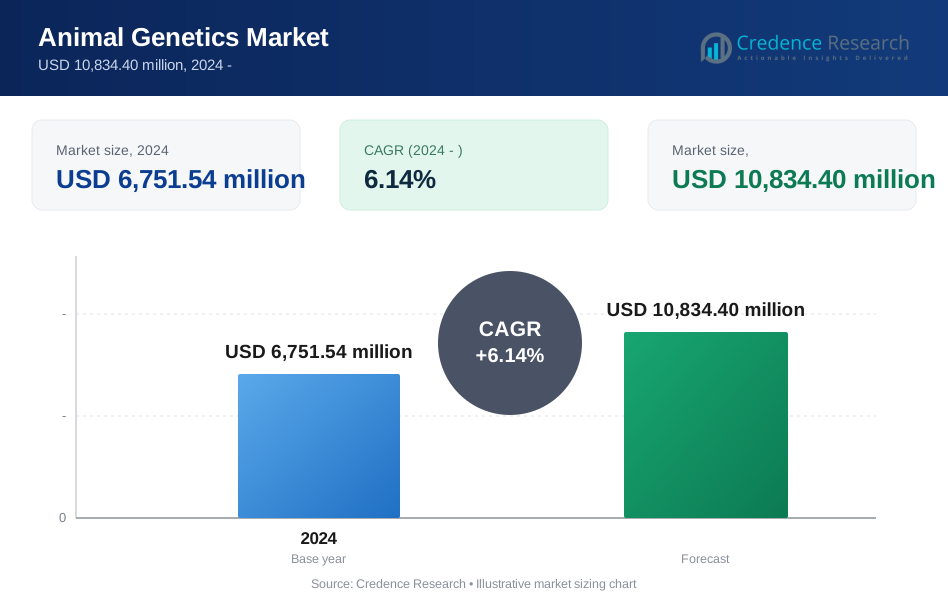
The Animal Genetics Market size was valued at USD 5,720.00 million in 2018, reached USD 6,751.54 million in 2024, and is anticipated to reach USD 10,834.40 million by 2032, at a CAGR of 6.14% during the forecast period.
The Animal Genetics market is highly competitive, with key players such as Neogen Corporation, Zoetis, Genus plc, Hendrix Genetics BV, URUS Group LP, CRV, Semex, STgenetics, Genetics Australia, Swine Genetics International, Animal Genetics Inc., and Generatio GmbH driving market growth through continuous innovation, strategic partnerships, and global expansion. These companies focus on advancing genomic technologies, enhancing breeding programs, and improving disease resistance in livestock and companion animals. North America leads the market with a 31.0% share in 2024, supported by strong technological infrastructure and high adoption of genetic solutions. Asia Pacific, with rapid growth and increasing livestock demand, is emerging as a key region, while Europe remains a significant contributor with a 28.5% market share.

Market Insights
- The Animal Genetics market was valued at USD 5,720.00 million in 2018, reached USD 6,751.54 million in 2024, and is projected to reach USD 10,834.40 million by 2032, growing at a CAGR of 6.14% during the forecast period.
- Growing demand for animal protein, rising awareness of genetic advancements, and increasing focus on disease-resistant livestock are key factors driving market growth.
- Asia Pacific is the fastest-growing region with a CAGR of 7.3%, while North America holds the largest share at 31.0% in 2024, followed by Europe at 28.5%; cattle remains the dominant animal type segment.
- The market is highly competitive, with major players like Neogen Corporation, Zoetis, Genus plc, and Hendrix Genetics BV focusing on expanding genomic portfolios and strategic collaborations.
- High genetic testing costs, limited awareness among small farmers, and varying regulatory frameworks across regions continue to restrain market growth.
Market Segmentation Analysis:
By Animal Type
In the Animal Genetics market, the cattle segment dominates with the largest market share. The high demand for quality milk and meat production, coupled with increasing investments in livestock improvement programs, drives the growth of this segment. Cattle breeding through advanced genetic solutions enhances productivity and disease resistance, attracting significant attention from both commercial and small-scale farmers. Additionally, the growing global population and rising consumption of animal-based products continue to support the expansion of this sub-segment over pigs, sheep & goats, companion animals, and others.
- For instance, Genus plc reported that its PIC800 sire line delivered an average daily gain improvement of 70 grams per day in cattle breeding programs, significantly enhancing beef production efficiency.
By Type
Among the type segments, genomic/genetic testing holds the largest market share due to its vital role in improving animal traits and enhancing disease resistance. The rising adoption of genomic testing in breeding programs allows for the selection of animals with superior genetic potential, thereby accelerating productivity and profitability. This segment is further propelled by advancements in DNA sequencing technologies, increased awareness among livestock producers, and the need for precise animal health management. Assistive reproduction technologies and live animals also contribute to market growth but remain secondary to genomic testing.
- For instance, Neogen Corporation’s Igenity Beef profile can analyze over 50,000 DNA markers to predict cattle performance traits, enabling more accurate breeding selections.
By Distribution Channel
The private distribution channel dominates the Animal Genetics market, holding a significant share due to the rapid commercialization of genetic services and products. Private companies actively invest in research and development, providing faster access to advanced genetic tools and breeding solutions. Their strong global networks, targeted marketing strategies, and customized services cater effectively to the diverse needs of livestock producers. While public channels contribute through government-led breeding programs and research institutions, they hold a comparatively smaller market share due to limited funding and slower adoption rates.
Market Overview
Rising Demand for Animal Protein
The increasing global consumption of animal-derived products, such as meat, milk, and eggs, significantly drives the animal genetics market. Growing population, urbanization, and shifting dietary preferences toward high-protein diets are fueling the demand for genetically superior livestock. This trend encourages the adoption of advanced breeding techniques and genetic testing to improve productivity and disease resistance. The need for sustainable livestock production to meet rising protein demand positions animal genetics as a critical solution for enhancing efficiency and output in the animal agriculture sector.
- For instance, URUS Group LP reported a genetic improvement program that increased milk production by an average of 500 liters per cow per lactation across selected herds in North America
Advancements in Genomic Technologies
Rapid technological progress in genomics, including DNA sequencing, gene editing, and marker-assisted selection, is propelling market growth. These innovations enable precise identification of desirable traits, facilitating the breeding of animals with improved health, productivity, and adaptability. Genomic tools have reduced breeding cycles and enhanced genetic gain, allowing for faster development of superior livestock. The accessibility and affordability of advanced genetic testing have increased their adoption among breeders and commercial farms, making genomics a cornerstone of modern animal breeding strategies.
- For instance, Zoetis’ Clarifide Plus genomic test provides genetic evaluations for more than 20 health and productivity traits in dairy cattle, supporting more informed breeding decisions.
Growing Focus on Disease Resistance
The increasing incidence of livestock diseases and the rising cost of veterinary care have intensified the need for genetically disease-resistant animals. Animal genetics enables the selection of breeds with natural resistance to common infections, reducing dependence on antibiotics and other treatments. This approach supports both animal welfare and food safety, aligning with regulatory movements aimed at minimizing antimicrobial resistance. The demand for healthier, more resilient livestock is creating substantial opportunities for genetic advancements focused on improving overall herd health and reducing production losses.
Key Trends & Opportunities
Expansion of Companion Animal Genetics
The growing human-animal bond and rising pet ownership rates are driving the demand for genetic testing and breeding in companion animals. Pet owners are increasingly seeking genetic insights to predict hereditary diseases, optimize health management, and understand breed-specific traits. This trend is creating new growth avenues for companies specializing in canine and feline genetic solutions. The segment presents opportunities for expanding product portfolios beyond livestock genetics and tapping into the profitable companion animal market, especially in developed regions.
- For instance, Wisdom Panel, a Zoetis subsidiary, has genetically screened over 3 million dogs globally, providing detailed breed and health insights that help veterinarians and owners make better health decisions.
Increased Investment in Biotechnology
Investment in animal biotechnology is rising, creating new opportunities for innovation in the animal genetics market. Companies and research institutes are focusing on developing gene editing technologies, like CRISPR, to introduce beneficial genetic traits with precision. These advancements open possibilities for creating animals with enhanced growth rates, improved feed efficiency, and superior reproductive traits. The supportive regulatory landscape in some countries further accelerates the commercialization of genetically modified animals, offering long-term growth potential for stakeholders in the industry.
- For instance, Recombinetics and Semex introduced a precision breeding alliance that produced approximately 100 hornless (polled) calves, integrating polled genetics into elite dairy lines.
Key Challenges
Ethical and Regulatory Concerns
The animal genetics market faces persistent ethical and regulatory challenges regarding genetic modification and selective breeding. Concerns about animal welfare, biodiversity reduction, and the long-term environmental impacts of genetically altered animals pose hurdles to market growth. Regulatory frameworks differ widely across regions, often delaying product approvals and creating market entry barriers. Addressing public skepticism and ensuring transparent, ethical practices will be essential for broader acceptance and sustainable growth in the animal genetics sector.
High Cost of Genetic Services
The significant cost associated with advanced genetic testing, breeding programs, and genomic technologies limits market accessibility, particularly for small-scale and developing-country farmers. The initial investment in genetic solutions, coupled with the need for skilled personnel and infrastructure, can be a substantial financial burden. These cost constraints may slow the adoption of animal genetics in certain markets, posing challenges for companies aiming for broad geographical expansion.
Limited Awareness and Technical Expertise
A key challenge in the animal genetics market is the limited awareness and lack of technical knowledge among livestock producers, especially in emerging economies. Many farmers remain unaware of the long-term benefits of genetic improvement or lack the expertise to implement advanced breeding practices effectively. This knowledge gap restricts the full potential of animal genetic technologies and underscores the need for targeted education, training programs, and government support to facilitate market penetration.
Regional Analysis
North America
North America dominated the Animal Genetics market in 2024, holding the largest regional share of approximately 31.0%, with a market size of USD 2,092.26 million, up from USD 1,797.80 million in 2018. The market is projected to reach USD 3,352.18 million by 2032, growing at a CAGR of 6.1%. This growth is driven by advanced infrastructure, rapid adoption of genomic technologies, and increasing investments in animal health and productivity. The presence of major industry players and a strong focus on companion animal genetics further support the region’s leading position in the global market.
Europe
Europe accounted for a significant 28.5% market share in the Animal Genetics market in 2024, with a market size of USD 1,922.65 million, rising from USD 1,687.40 million in 2018. The market is expected to reach USD 2,933.44 million by 2032, registering a CAGR of 5.5%. The region benefits from strong government support for sustainable livestock practices, well-established animal breeding programs, and increasing demand for disease-resistant animal breeds. The growing pet ownership trend and advancements in genetic testing for companion animals are also contributing to Europe’s steady market expansion.
Asia Pacific
Asia Pacific is emerging as the fastest-growing region in the Animal Genetics market, with a 27.6% market share in 2024 and a market size of USD 1,862.38 million, up from USD 1,515.80 million in 2018. The region is projected to reach USD 3,275.25 million by 2032, growing at the highest CAGR of 7.3%. Rapid population growth, increasing meat consumption, and rising awareness of genetic improvement techniques are key drivers. Expanding livestock production and government initiatives to enhance animal productivity position Asia Pacific as a key growth hub for animal genetics solutions.
Latin America
Latin America held a 5.8% market share in 2024, with the market valued at USD 392.20 million, up from USD 335.76 million in 2018. The market is forecasted to grow at a CAGR of 5.1%, reaching USD 580.40 million by 2032. The region’s growth is supported by rising demand for high-quality livestock, increasing investment in genetic improvement programs, and a gradual shift toward modern animal breeding techniques. Brazil and Argentina are particularly contributing to market expansion through their large-scale cattle production and growing adoption of advanced reproductive technologies.
Middle East
The Middle East contributed to 3.8% of the market share in 2024, with a market size of USD 254.49 million, increasing from USD 229.37 million in 2018. The market is expected to reach USD 370.60 million by 2032, growing at a CAGR of 4.9%. Growth in this region is driven by the rising focus on food security, investments in livestock productivity, and adoption of genetic solutions to improve breeding efficiency. While the market size is smaller compared to other regions, the Middle East is gradually adopting animal genetics to enhance meat and dairy production.
Africa
Africa accounted for the smallest share of the Animal Genetics market, holding 3.4% market share in 2024, with a market size of USD 227.55 million, rising from USD 153.87 million in 2018. The market is projected to reach USD 322.53 million by 2032, expanding at a CAGR of 4.1%. The region’s growth is modest due to limited infrastructure and low awareness of genetic advancements. However, increasing efforts to improve livestock quality, government-led breeding programs, and gradual investment in animal health and genetics are expected to support steady market development in the coming years.

Market Segmentations:
By Animal Type
- Cattle
- Pigs
- Sheep & Goats
- Companion Animals
- Others
By Type
- Assistive Reproduction Technologies
- Live Animals
- Genomic/ Genetic Testing
By Distribution Channel
- Private
- Public
By Geography
- North America
- U.S.
- Canada
- Mexico
- Europe
- Germany
- France
- U.K.
- Italy
- Spain
- Rest of Europe
- Asia Pacific
- China
- Japan
- India
- South Korea
- South-east Asia
- Rest of Asia Pacific
- Latin America
- Brazil
- Argentina
- Rest of Latin America
- Middle East & Africa
- GCC Countries
- South Africa
- Rest of the Middle East and Africa
Competitive Landscape
The Animal Genetics market is highly competitive and features a mix of global and regional players focusing on expanding their genetic portfolios and technological capabilities. Key companies such as Neogen Corporation, Zoetis, Genus plc, and Hendrix Genetics BV actively invest in research and development to advance genomic testing, selective breeding, and disease resistance in livestock and companion animals. These players are leveraging strategic partnerships, acquisitions, and product launches to strengthen their market positions. Additionally, companies like URUS Group LP, STgenetics, and Semex are expanding their global reach through innovative breeding programs and assistive reproductive technologies. Regional companies, including Genetics Australia and CRV, contribute significantly to local markets by offering customized genetic solutions. The market also witnesses growing interest in companion animal genetics, creating new opportunities for niche players such as Generatio GmbH. Continuous innovation, strong distribution networks, and a focus on genetic diversification remain key strategies for sustaining competitive advantage in this evolving market.
Key Player Analysis
- Neogen Corporation
- Genetics Australia
- Hendrix Genetics BV
- URUS Group LP
- CRV
- Semex
- Swine Genetics International
- STgenetics
- Animal Genetics Inc.
- Generatio GmbH
- Zoetis
- Genus plc
Recent Developments
- In September 2024, Zoetis (US) and Danone S.A. (France) announced a joint business development plan to drive sustainable practices on dairy farms through the power of genetics for healthier cows. This strategic partnership aims to innovate the dairy industry’s approach to breeding for sustainability.
- In September 2024, Genus PLC (UK) took full ownership of De Novo Genetics LLC (US), a dairy genetics company. This marked a significant step in the company’s growth.
- In May 2024, the genetic mutation that produces a recently found cat coat color pattern in Finland was uncovered by a team of geneticists, animal welfare professionals from the U.K., and one from the U.S. The researchers sequenced the genomes of two cats for their work, which was published in the journal Animal Genetics.
- In June 2023, Neogen launched Igenity BeefXDairy, a new and novel leading genomic test for beef-on-dairy calves.
- In October 2023, Zoetis launched the Breed + Health Dog DNA Test, an extensive DNA test for dogs, accelerating the health genetic testing landscape. This DNA Test helps pet owners shift from reactive to proactive care, offering easy swabbing and mobile-friendly results for a simplified experience.
- In June 2022, Zoetis Inc. acquired Basepaws-a company specializing in pet care genetics.
Market Concentration & Characteristics
The Animal Genetics Market exhibits a moderately concentrated structure with several key global and regional players driving innovation and competition. It is characterized by continuous advancements in genomic technologies, growing demand for disease-resistant livestock, and increasing application of genetic testing in both livestock and companion animals. The market shows strong participation from established companies with broad product portfolios and significant research investments, while regional players focus on localized breeding programs and genetic customization. It maintains a steady pace of new product introductions and strategic partnerships, which enhances the competitive intensity. The market displays high barriers to entry due to complex regulatory approvals, the need for advanced infrastructure, and substantial capital investment requirements. It relies on the integration of scientific research, technology, and field expertise to deliver sustainable breeding solutions. It demonstrates distinct regional dynamics, with North America and Europe leading in technology adoption, while Asia Pacific offers high growth potential driven by rising livestock demand and expanding animal protein consumption.
Report Coverage
The research report offers an in-depth analysis based on Animal Type, Type, Distribution Channel and Geography. It details leading market players, providing an overview of their business, product offerings, investments, revenue streams, and key applications. Additionally, the report includes insights into the competitive environment, SWOT analysis, current market trends, as well as the primary drivers and constraints. Furthermore, it discusses various factors that have driven market expansion in recent years. The report also explores market dynamics, regulatory scenarios, and technological advancements that are shaping the industry. It assesses the impact of external factors and global economic changes on market growth. Lastly, it provides strategic recommendations for new entrants and established companies to navigate the complexities of the market.
Future Outlook
- The Animal Genetics Market is expected to experience steady growth driven by increasing global demand for animal protein.
- Advancements in genomic technologies will continue to improve breeding efficiency and genetic selection.
- The focus on disease-resistant and high-yield livestock will expand across both developed and emerging markets.
- The companion animal genetics segment will gain more attention due to rising pet ownership and health awareness.
- Asia Pacific is likely to remain the fastest-growing region, supported by population growth and expanding meat consumption.
- Companies will invest more in research and development to introduce advanced genetic testing solutions.
- Strategic collaborations and mergers will increase to strengthen market presence and technological capabilities.
- Government support and policy initiatives will encourage the adoption of genetic solutions in livestock farming.
- The market will face continued challenges related to ethical concerns and varying international regulations.
- Educational efforts and training programs will play a key role in increasing the adoption of animal genetics in developing regions.
Request a Free Sample
Fill in your details and we'll send you a free sample report.
- Sample data tables & charts
- Research methodology
Market Dynamics
Advancements in Genomic Technologies
Rapid progress in DNA sequencing, gene editing, and marker-assisted selection enables precise identification and propagation of desirable traits, reducing breeding cycles and improving genetic gain. This technological evolution makes genetic testing more accessible and effective, driving adoption among breeders and commercial farms.
Growing Focus on Disease Resistance
The rising incidence of livestock diseases and the high cost of veterinary care are pushing producers to adopt genetic solutions that enhance natural disease resistance. This reduces reliance on antibiotics, supports animal welfare, and aligns with regulatory efforts to combat antimicrobial resistance.
Expansion of Companion Animal Genetics
Increasing pet ownership and the human-animal bond are fueling demand for genetic testing in companion animals, allowing owners and veterinarians to predict hereditary diseases and optimize health management. This trend is opening new revenue streams and expanding the market beyond traditional livestock genetics.
Rising Demand for Animal Protein
Global population growth, urbanization, and shifting dietary preferences toward high-protein diets are increasing the need for efficient, high-yield livestock. Genetic improvement programs help meet this demand by enhancing productivity and sustainability in animal agriculture.
Increased Investment in Biotechnology
Growing investments in animal biotechnology, including gene editing and precision breeding, are enabling the development of livestock with superior traits such as improved growth rates and feed efficiency. Supportive regulatory environments in some regions further accelerate the commercialization of these innovations.
Need a Custom Version of This Report?
Tailor the scope, geography, or segments to your exact requirements.
- Custom geography or segment scope
- Direct access to our analyst team
Frequently Asked Questions
What is the current size of the Animal Genetics Market?
What are the key segments within the Animal Genetics Market?
What are some challenges faced by the Animal Genetics Market?
Who are the major players in the Animal Genetics Market?
Table of Content
Chapter 1 Market Segmentation
- 1.1 Segmentation Framework
- 1.1.1 Product and Service Classification
- 1.1.2 Application and End-Use Classification
- 1.1.3 Technology and Solution Classification
- 1.1.4 Customer and Distribution Channel Classification
- 1.1.5 Geographic Segmentation
- 1.1.6 Market Segment Definitions and Boundaries
- 1.2 By Type
- 1.2.1 Genomic/Genetic Testing
- 1.2.2 Assistive Reproduction Technologies
- 1.2.3 Live Animals
- 1.3 By Animal Type
- 1.3.1 Cattle
- 1.3.2 Pigs
- 1.3.3 Sheep & Goats
- 1.3.4 Companion Animals
- 1.3.5 Others
Chapter 2 Introduction
- 2.1 Report Objectives and Scope
- 2.2 Product Definition and Industry Terminology
- 2.3 Market Inclusions and Exclusions
- 2.4 Research Process
- 2.4.1 Primary Research and Expert Interviews
- 2.4.2 Secondary Research and Source Review
- 2.4.3 Top-Down and Bottom-Up Estimation
- 2.4.4 Data Triangulation and Verification
- 2.5 Market Size Measurement Basis
- 2.5.1 2024: USD 6,751.54 million → 2032: USD 10,834.40 million
- 2.6 Historical and Forecast Reference Periods
- 2.6.1 Base Year: 2024
- 2.6.2 Forecast Period: 2024-2032
- 2.7 Research Assumptions and Limitations
Chapter 3 Executive Summary
- 3.1 Market Snapshot and Key Findings
- 3.2 Base-Year Market Size, 2024
- 3.3 Forecast Market Size, 2032
- 3.4 Revenue and Volume Growth Outlook
- 3.5 Key Demand and Supply Indicators
- 3.6 Leading Market Segments
- 3.7 Fastest-Growing Market Opportunities
- 3.8 Regional Performance Highlights
- 3.9 Technology and Industry Transformation
- 3.10 Competitive Landscape Summary
- 3.11 Analyst View and Strategic Implications
Chapter 4 Global Animal Genetics Market Trends and Developments
- 4.1 Historical Industry Development
- 4.2 Recent Market Trends and Developments
- 4.3 Demand and Customer Behavior Trends
- 4.4 Technology and Product Innovation
- 4.5 Artificial Intelligence, Automation and Digitalization
- 4.6 Local Manufacturing and Supply Chain Realignment
- 4.7 Industry Partnerships, Mergers and Acquisitions
- 4.8 Sustainability and Circular Economy Developments
- 4.9 Government and Private Sector Investment Trends
- 4.10 Emerging Business Models and Commercialization
- 4.11 Industry Developments and Announcements
Chapter 5 Global Animal Genetics Market Production, Supply and Demand Analysis
- 5.1 Demand Trend and Consumption Analysis
- 5.2 Demand Forecast, 2024-2032
- 5.3 Production and Output Trend
- 5.4 Production and Output Forecast, 2024-2032
- 5.5 Installed Capacity and Capacity Utilization
- 5.6 Company-Wise Production Plants and Statistics
- 5.6.1 Installed Production Capacity
- 5.6.2 Actual Production
- 5.6.3 Planned Capacity and Expansion Targets
- 5.7 Supply Chain Structure and Procurement Trends
- 5.8 Supply-Demand Gap and Bottlenecks
- 5.9 Import Dependence and Sourcing Structure
- 5.10 Contract Manufacturing and Outsourcing
- 5.11 Regional Supply and Demand Concentration
Chapter 6 Global Animal Genetics Market Pricing Analysis
- 6.1 Pricing Structure and Measurement
- 6.2 Historical Pricing Trends
- 6.3 Pricing Outlook, 2024-2032
- 6.4 Average Selling Price and Unit Economics
- 6.5 Pricing by Product and Market Segment
- 6.6 Geographic Pricing Differences
- 6.7 Key Input, Energy, Labor and Logistics Costs
- 6.8 Contract Pricing and Purchasing Models
- 6.9 Pricing Sensitivity and Competitive Positioning
- 6.10 Price, Margin and Profitability Implications
Chapter 7 Global Animal Genetics Market Dynamics
- 7.1 Market Growth Drivers
- 7.1.1 Demand-Side Drivers
- 7.1.2 Technology and Innovation Drivers
- 7.1.3 Infrastructure and Investment Drivers
- 7.1.4 Regulatory and Policy Drivers
- 7.2 Market Restraints
- 7.2.1 Cost and Affordability Constraints
- 7.2.2 Technology and Adoption Barriers
- 7.2.3 Supply Chain and Operational Constraints
- 7.3 Market Challenges
- 7.3.1 Competitive Pressure and Margin Erosion
- 7.3.2 Skills, Infrastructure and Implementation Gaps
- 7.4 Emerging Market Opportunities
- 7.5 Market Dynamics Impact and Time-Horizon Assessment
Chapter 8 Global Animal Genetics Value Chain Analysis
- 8.1 Industry Value Chain Overview
- 8.2 Upstream Suppliers and Critical Inputs
- 8.3 Technology and Component Providers
- 8.4 Manufacturing or Service Delivery
- 8.5 Distribution, Channel Partners and Integrators
- 8.6 Downstream Applications and End Users
- 8.7 Value Addition and Profit Pools
- 8.8 Vertical Integration and Outsourcing
- 8.9 Supplier Concentration and Risk
- 8.10 Supply Chain Localization and Resilience
Chapter 9 Global Animal Genetics Market Regulations and Policies
- 9.1 Relevant Laws, Standards and Compliance Frameworks
- 9.2 Product, Service, Safety and Quality Requirements
- 9.3 Government Policies, Incentives and Subsidies
- 9.4 Imports, Exports and Trade Barriers
- 9.5 Public Procurement and Local Content Requirements
- 9.6 Environmental and Sustainability Compliance
- 9.7 Upcoming Policy Changes and Market Implications
Chapter 10 Global Animal Genetics Market Hotspots and Opportunities
- 10.1 Market Opportunity Mapping and Growth Hotspots
- 10.2 High-Growth Applications and Customer Groups
- 10.3 Underserved Markets and White-Space Opportunities
- 10.4 Emerging Technology and Product Opportunities
- 10.5 New Capacity and Investment Hotspots
- 10.6 Market Entry and Expansion Opportunities
- 10.7 Distribution and Partnership Opportunities
- 10.8 Near-Term and Long-Term Commercial Potential
- 10.9 Opportunity Attractiveness and Execution Risks
Chapter 11 Global Animal Genetics Market Outlook, 2024-2032
- 11.1 Market Size and Analysis
- 11.1.1 Revenue (Market Measurement: 2024: USD 6,751.54 million → 2032: USD 10,834.40 million)
- 11.1.2 Market Volume and Quantity Sold
- 11.1.3 Historical Market Size
- 11.1.4 Base-Year Market Size, 2024
- 11.2 Market Forecast, 2024-2032
- 11.2.1 Revenue Forecast to 2032
- 11.2.2 Volume Forecast to 2032
- 11.2.3 CAGR and Year-on-Year Growth
- 11.2.4 Incremental Revenue Opportunity
- 11.3 Forecast Assumptions and Scenario Analysis
- 11.3.1 Base-Case Forecast
- 11.3.2 Optimistic and Conservative Scenarios
- 11.3.3 Technology, Pricing and Policy Sensitivities
- 11.4 Market Attractiveness and Growth Outlook
Chapter 12 Global Animal Genetics Market Segmentation and Outlook
- 12.1 Segmentation Summary and Market Shares, 2024
- 12.2 Largest and Fastest-Growing Segments
- 12.3 By Type - Market Size and Forecast, 2024-2032
- 12.3.1 Segment Definition and Scope
- 12.3.2 Historical Market Size
- 12.3.3 Revenue Forecast, 2024-2032
- 12.3.4 Volume Forecast, 2024-2032
- 12.3.5 Base-Year Market Share, 2024
- 12.3.6 Segment CAGR and Growth Drivers
- 12.3.7 Subsegment Market Size and Forecast
- 12.3.7.1 Genomic/Genetic Testing
- 12.3.7.2 Assistive Reproduction Technologies
- 12.3.7.3 Live Animals
- 12.3.8 Subsegment Pricing and Adoption Trends
- 12.3.9 Leading Suppliers and Competition
- 12.3.10 Regional Demand and Opportunities
- 12.4 By Animal Type - Market Size and Forecast, 2024-2032
- 12.4.1 Segment Definition and Scope
- 12.4.2 Historical Market Size
- 12.4.3 Revenue Forecast, 2024-2032
- 12.4.4 Volume Forecast, 2024-2032
- 12.4.5 Base-Year Market Share, 2024
- 12.4.6 Segment CAGR and Growth Drivers
- 12.4.7 Subsegment Market Size and Forecast
- 12.4.7.1 Cattle
- 12.4.7.2 Pigs
- 12.4.7.3 Sheep & Goats
- 12.4.7.4 Companion Animals
- 12.4.7.5 Others
- 12.4.8 Subsegment Pricing and Adoption Trends
- 12.4.9 Leading Suppliers and Competition
- 12.4.10 Regional Demand and Opportunities
- 12.5 Segment Growth Comparison
- 12.6 Segment Attractiveness and Priority Matrix
Chapter 13 Global Animal Genetics Geographic Market Outlook, 2024-2032
- 13.1 Regional Market Size and Share, 2024
- 13.2 Regional Market Forecast, 2024-2032
- 13.3 Regional Pricing, Production and Demand Differences
- 13.4 North America
- 13.4.1 United States
- 13.4.2 Canada
- 13.4.3 Mexico
- 13.5 Europe
- 13.5.1 Germany
- 13.5.2 France
- 13.5.3 Italy
- 13.5.4 United Kingdom
- 13.5.5 Spain
- 13.5.6 Poland
- 13.5.7 Russia
- 13.5.8 Netherlands
- 13.5.9 Belgium
- 13.5.10 Sweden
- 13.5.11 Denmark
- 13.5.12 Norway
- 13.5.13 Rest of Europe
- 13.6 Asia Pacific
- 13.6.1 China
- 13.6.2 India
- 13.6.3 Japan
- 13.6.4 South Korea
- 13.6.5 Thailand
- 13.6.6 Indonesia
- 13.6.7 Vietnam
- 13.6.8 Malaysia
- 13.6.9 Australia
- 13.6.10 Rest of Asia Pacific
- 13.7 Latin America
- 13.7.1 Brazil
- 13.7.2 Argentina
- 13.7.3 Colombia
- 13.7.4 Chile
- 13.7.5 Rest of Latin America
- 13.8 Middle East
- 13.8.1 Saudi Arabia
- 13.8.2 United Arab Emirates
- 13.8.3 Turkey
- 13.8.4 Israel
- 13.8.5 Iran
- 13.8.6 Rest of the Middle East
- 13.9 Africa
- 13.9.1 South Africa
- 13.9.2 Egypt
- 13.9.3 Nigeria
- 13.9.4 Morocco
- 13.9.5 Rest of Africa
- 13.10 Regional Investment, Policy and Supply Chain Differences
- 13.11 Regional Competitive Landscape
- 13.12 Geographic Growth Hotspots
Chapter 14 Global Animal Genetics Technology, Innovation and Sustainability Outlook
- 14.1 Technology Landscape and Maturity
- 14.2 Product, Process and Service Innovation
- 14.3 AI, Automation and Digital Tools in the Industry
- 14.4 Technology Adoption and Performance Benchmarking
- 14.5 Innovation Pipeline and R&D Investment
- 14.6 Patent and Intellectual Property Trends
- 14.7 Energy Efficiency and Resource Management
- 14.8 Sustainability, Recycling and Circularity
- 14.9 Technology Roadmap, 2024-2032
- 14.10 Risks of Obsolescence and Technology Substitution
Chapter 15 Global Animal Genetics Market Key Strategic Imperatives
- 15.1 Growth and Market Entry Priorities
- 15.2 High-Return Products and Segments
- 15.3 Pricing, Profitability and Cost Optimization
- 15.4 Technology Investment and Product Differentiation
- 15.5 Supply Chain Localization and Resilience
- 15.6 Distribution and Customer Acquisition
- 15.7 Partnership, Acquisition and Capacity Strategy
- 15.8 Regional Expansion Priorities
- 15.9 Short-, Medium- and Long-Term Actions
Chapter 16 Competition Outlook
- 16.1 Industry Competition Characteristics
- 16.2 Market Structure and Concentration
- 16.3 Market Share and Competitive Positioning, 2024
- 16.4 Company-Wise Revenue and Product Benchmarking
- 16.5 Production and Service Capacity Benchmarking
- 16.6 Technology, Pricing and Differentiation
- 16.7 Regional Footprint and Distribution Strength
- 16.8 Mergers, Acquisitions and Strategic Alliances
- 16.9 New Entrants and Competitive Threats
- 16.10 Porter's Five Forces and Industry Attractiveness
- 16.11 Competitive Outlook, 2024-2032
Chapter 17 Company Profiles
- 17.1 Company Coverage and Selection Criteria
- 17.2 Neogen Corporation
- 17.2.1 Business Description
- 17.2.2 Company Ownership and Geographic Presence
- 17.2.3 Product and Service Portfolio
- 17.2.4 Manufacturing and Operating Footprint
- 17.2.5 Production Capacity and Expansion Plans
- 17.2.6 Financial Performance and Investment
- 17.2.7 Market Share and Competitive Position
- 17.2.8 Technology and Innovation Capabilities
- 17.2.9 Strategic Alliances or Partnerships
- 17.2.10 Recent Developments
- 17.2.11 Growth Strategy and Outlook
- 17.3 Zoetis
- 17.4 Genus plc
- 17.5 Hendrix Genetics BV
- 17.6 URUS Group LP
- 17.7 CRV
- 17.8 Semex
- 17.9 STgenetics
- 17.10 Genetics Australia
- 17.11 Animal Genetics Inc.
- 17.12 Other Relevant Market Participants
Note: Every listed company is profiled on the structure shown under the first company. The company list is preliminary and may change based on research findings, market developments, data availability and client requirements.
Chapter 18 Disclaimer
- 18.1 Research and Forecast Disclaimer
- 18.2 Data Source and Estimation Limitations
Note: The depth of individual sections depends on data availability for this market. Volume, capacity, trade and other unit-based metrics are included where applicable.