
Market Overview:
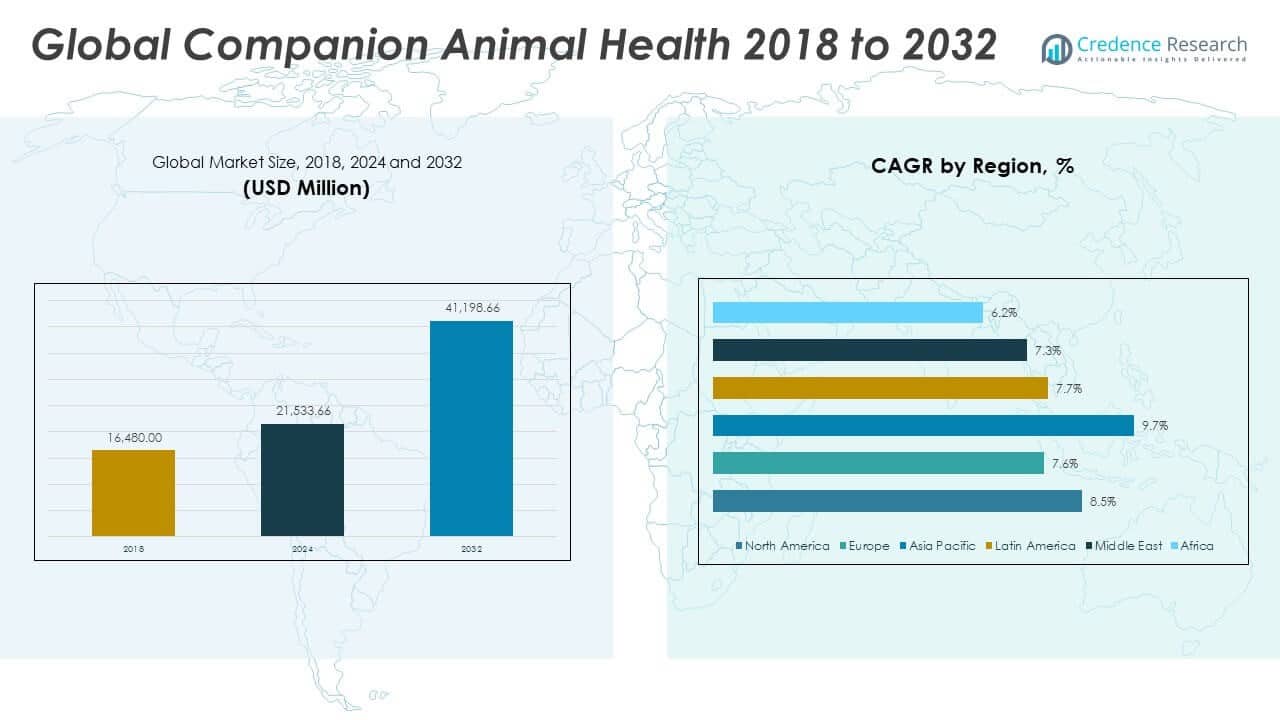
The Companion Animal Health Market size was valued at USD 16,480.00 million in 2018 to USD 21,533.66 million in 2024 and is anticipated to reach USD 41,198.66 million by 2032, at a CAGR of 8.51% during the forecast period.
| REPORT ATTRIBUTE | DETAILS |
|---|---|
| Historical Period | 2019-2022 |
| Base Year | 2023 |
| Forecast Period | 2024-2032 |
| Companion Animal Health Market Size 2024 | USD 21,533.66 Million |
| Companion Animal Health Market, CAGR | 8.51% |
| Companion Animal Health Market Size 2032 | USD 41,198.66 Million |
The Companion Animal Health Market is driven by increased pet ownership and the growing humanization of animals, where pets are treated as family members. This shift is fueling demand for advanced healthcare solutions, including vaccines, diagnostics, and chronic disease treatment. Improvements in veterinary infrastructure, along with the rise in insurance coverage, are enhancing access to quality care. Additionally, awareness campaigns and the role of social media are strengthening responsible pet ownership. These combined factors continue to influence spending behavior and healthcare standards for companion animals globally.
The Companion Animal Health Market is led by North America due to a mature veterinary ecosystem, high insurance coverage, and strong pet ownership rates. Europe also demonstrates strong growth, supported by structured healthcare systems and growing demand for premium pet care. Asia Pacific emerges as the fastest-growing region, driven by urbanization, rising disposable incomes, and increased awareness of pet wellness. Latin America and the Middle East are evolving markets with growing veterinary infrastructure. Africa shows potential, though growth is challenged by affordability and access limitations in rural regions.
Market Insights:
- The Companion Animal Health Market size was valued at USD 16,480.00 million in 2018 to USD 21,533.66 million in 2024 and is anticipated to reach USD 41,198.66 million by 2032, at a CAGR of 8.51% during the forecast period with strong demand from pet owners seeking preventive healthcare.
- North America leads the global market, while Asia Pacific shows the highest growth rate due to rising pet adoption.
- Personalized medicine and genomic diagnostics are redefining veterinary care practices.
- Digital health platforms and tele-veterinary services are expanding healthcare accessibility.
- High treatment costs and limited insurance availability in some regions pose key barriers.
- Pet insurance adoption is accelerating in developed countries, improving service access.
- Sustainable and clean-label products are shaping future consumer choices in companion animal health.
Market Drivers:
Pet Humanization & Preventive Care Adoption
The Companion Animal Health Market gains momentum from a deepening cultural shift in how owners view pets as integral household members. Owners allocate higher discretionary income toward wellness visits, dental care, nutrition enhancement, and vaccination schedules. Preventive focus elevates demand for routine diagnostics and wellness panels. Insurers encourage early intervention through coverage frameworks that reimburse screening protocols. Retail channels reinforce preventive narratives through pharmacy counseling and subscription health packs. Clinics structure annual care plans to lock in compliance. The shift stabilizes revenue flows for service providers. It sustains recurring sales across vaccines, nutraceuticals, and chronic care therapeutics.
- For example, in 2023, the Banfield Foundation donated six fully-equipped mobile veterinary units to nonprofit partners across the U.S. including the Maui Humane Society. These clinics delivered free and low-cost preventive care, vaccines, and spay/neuter surgeries in underserved regions, directly providing access to families unable to reach fixed-site hospitals.
Expansion of Veterinary Infrastructure & Clinical Capacity
Growth accelerates as private equity, corporate consolidators, and regional groups expand multi-clinic networks. The Companion Animal Health Market benefits when upgraded surgical suites, imaging units, and in-house labs shorten diagnostic cycles. Expanded capacity widens access for suburban and semi-urban populations that previously faced service gaps. Continuing education improves practitioner proficiency in oncology, orthopedics, dermatology, and cardiology. Investment in cold chain reliability strengthens biologics integrity. Collaboration between universities and commercial partners accelerates protocol standardization. It raises overall clinical throughput and elevates quality benchmarks across regions.
Technology Integration & Data-Enabled Decision Support
Digital platforms, AI triage tools, wearable biosensors, cloud medical records, and tele-veterinary consult portals reshape the Companion Animal Health Market. Real-time biometric feeds enable earlier anomaly detection in activity, heart rhythm, glucose, or pain indicators. AI-assisted image interpretation accelerates radiology workflow and reduces subjective variance. Interoperable practice management systems support inventory optimization and personalized dosing. Telemedicine bridges geographic gaps while retaining client loyalty. Data aggregation fuels predictive maintenance for treatment schedules. Integration lowers per-case handling time and frees clinician bandwidth. It unlocks scalable efficiency gains across care delivery.
- For example, the IDEXX ProCyte One Hematology Analyzer enables veterinary clinics to deliver reference-lab-quality complete blood counts in under 5 minutes per sample, dramatically reducing diagnostic turnaround and enabling on-site decision-making without reliance on third-party labs.
Diversification of Insurance & Financing Mechanisms
Broader penetration of pet insurance, wellness subscriptions, embedded payment plans, and credit products lowers financial friction. The Companion Animal Health Market benefits when budget uncertainty declines and owners authorize higher acuity interventions. Insurers negotiate standardized pricing bundles that improve transparency. Claims data analytics reveal adherence gaps and guide targeted outreach. Financing for advanced procedures increases uptake of oncology protocols, orthopedic implants, and specialty biologics. Pharmacies and e-commerce platforms embed protection plans that smooth expenditure cadence. It reinforces demand elasticity in premium therapeutic categories.
Market Trends
Personalization & Genomic-Driven Clinical Pathways
Personalized protocols, breed-specific risk stratification, and genomic screening reshape differential diagnosis. The Companion Animal Health Market integrates DNA test outputs into preventive plans for cardiomyopathy, metabolic disorders, and pharmacogenomic dosing. Tailored nutrition aligns with metabolic profiles. Targeted therapies gain traction as biomarker discovery accelerates. Laboratories bundle multi-panel assays for oncology and endocrine surveillance. Decision support tools surface individualized care alerts. It drives differentiation for clinics and diagnostics providers.
- For example, the MDR1 genetic test, originally developed at Washington State University and now offered by the UC Davis Veterinary Genetics Laboratory, identifies a mutation in the MDR1 (ABCB1) gene in dogs, especially in herding breeds like Collies and Australian Shepherds. This mutation makes affected dogs highly sensitive to common medications such as ivermectin, loperamide, and certain chemotherapy drugs.
Shift Toward Natural, Clean-Label, and Functional Formulations
Owners scrutinize ingredient provenance, excipient loads, and sustainability claims. The Companion Animal Health Market observes a migration toward botanical actives, omega-rich supplements, probiotic blends, and minimally processed therapeutic diets. Packaging innovations emphasize recyclability and reduced plastic. Transparency dashboards display sourcing, carbon metrics, and quality certifications. Retailers curate “clean health” assortments with strict formulation criteria. It fosters premium pricing resilience while widening a specialized nutraceutical lane.
Digitally Mediated Engagement & Remote Care Expansion
Practice portals, tele-triage channels, automated reminder systems, and app-based adherence tracking strengthen lifecycle engagement. The Companion Animal Health Market leverages remote monitoring wearables feeding continuous datasets into dashboards. AI chat support handles low-acuity queries and escalates complex cases. E-prescription flows integrate with online pharmacies for same-day fulfillment. Digital loyalty ecosystems reward compliance milestones. It compresses service latency and raises retention metrics for providers.
- For example, Animal HealthLink’s 24/7 veterinary teletriage platform, launched in 2022, has been adopted by hundreds of veterinary clinics across North America. It allows pet owners to access Registered Veterinary Technologists remotely via video and chat, triaging cases in real time and referring emergencies efficiently.
Preventive Health Model Institutionalization
Structured wellness plans, bundled vaccination protocols, regular dental cleanings, and early-stage screening adoption become institutional norms. The Companion Animal Health Market sees clinics marketing tiered preventive packages with transparent inclusions. KPI dashboards track compliance rates across parasite control, weight management, and oral health. Insurers align reimbursement incentives with preventive adherence. Corporate groups benchmark preventive uptake across clinic portfolios. It stabilizes revenue predictability and reduces episodic care volatility.
Market Challenges Analysis
Cost Barriers, Coverage Gaps, and Economic Sensitivity
The Companion Animal Health Market faces friction where high procedure pricing intersects with limited insurance penetration. Household budget constraints delay diagnostics for chronic and complex conditions. Specialized oncology, advanced imaging, and orthopedic interventions remain inaccessible to price-sensitive segments. Inflation in labor, biologics, and sterile supply inputs tightens clinic margins. Uneven geographic distribution of specialists prolongs referral timelines. It sustains a treatment accessibility disparity that dampens full potential demand.
Regulatory Fragmentation, Supply Chain Complexity, and Talent Shortages
The Companion Animal Health Market contends with diverse regulatory frameworks governing pharmacovigilance, compounding standards, biologic approvals, and antimicrobial stewardship. Disparate labeling and distribution requirements slow synchronized product rollouts. Global supply disruptions in active pharmaceutical ingredients and cold chain logistics create stock variability. Counterfeit risk necessitates authentication measures. Veterinarian and technician shortages elevate labor costs and extend appointment lead times. It constrains throughput efficiency and elongates commercialization cycles.
Market Opportunities
Emerging Market Penetration & Infrastructure Modernization
Rising urban middle classes in Asia Pacific, Latin America, Middle East, and parts of Africa expand the addressable base. The Companion Animal Health Market can unlock latent demand through scalable clinic formats, franchise networks, and mobile service models. Local manufacturing partnerships reduce import lead times and foreign exchange exposure. Educational outreach elevates preventive care literacy, lifting vaccination and wellness visit uptake. Strategic pricing tiers capture varied income bands. It enables accelerated share capture ahead of market maturation.
Digital Ecosystem Monetization & Integrated Service Platforms
End-to-end platforms linking teleconsultation, remote monitoring, e-pharmacy, insurance enrollment, and personalized nutrition create bundled lifetime value streams. The Companion Animal Health Market can leverage interoperable data layers to refine risk scoring and proactive outreach. AI decision engines support precision dosing and adherence optimization. Strategic alliances between pharma, diagnostics, insuretech, and pet-tech startups drive solution convergence. Data monetization through anonymized analytics opens ancillary revenue. It supports margin expansion beyond traditional product transactional models.
Market Segmentation Analysis:
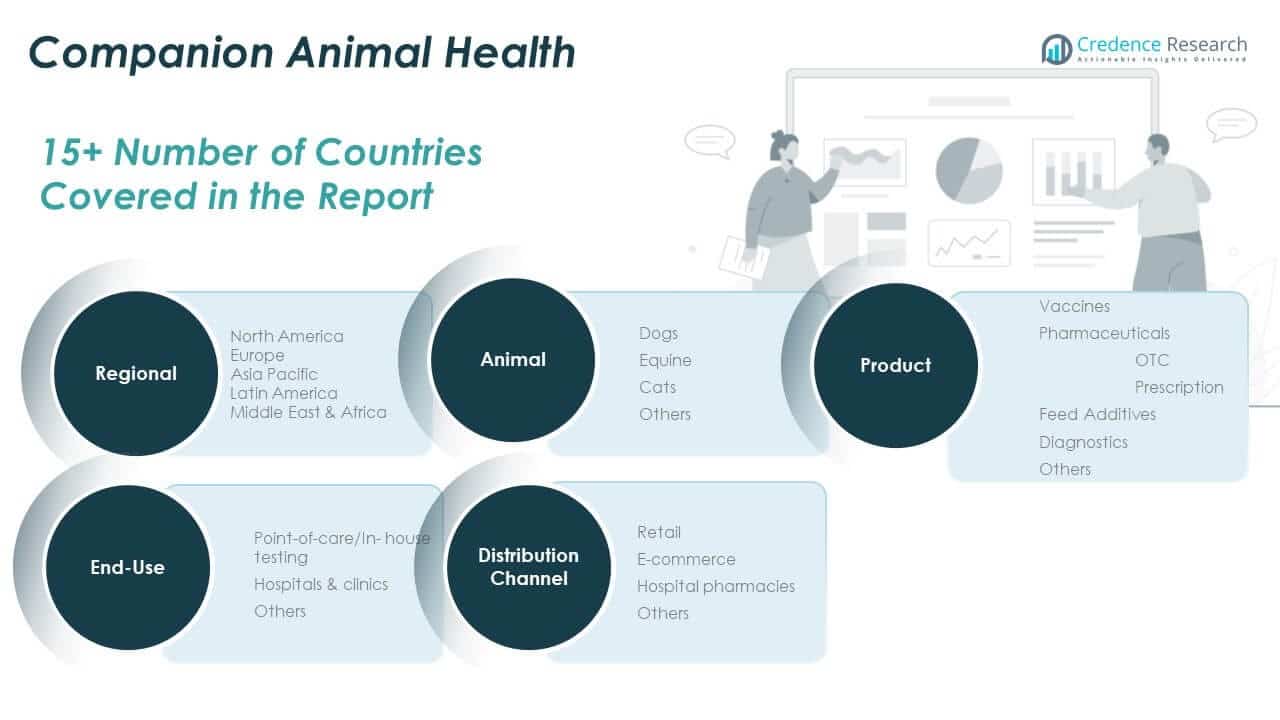
The Companion Animal Health Market is segmented
By animal type, with dogs dominating the segment due to their high global ownership rates and demand for advanced veterinary care. Cats represent the fastest-growing segment, driven by urbanization and space constraints that make felines more suitable for apartment living. Equine health remains a niche but steady contributor, particularly in sports and recreational segments. The “others” category includes birds and small mammals, with emerging interest in tailored nutrition and care solutions.
By product type, the market includes vaccines, pharmaceuticals, feed additives, diagnostics, and others. Vaccines play a critical preventive role, especially in high-risk regions. Pharmaceuticals are further split into OTC and prescription medications, catering to acute and chronic conditions respectively. Feed additives are increasingly used to enhance immunity and digestion, especially among aging pets. Diagnostics are gaining momentum with increased demand for rapid testing and in-clinic diagnostics that reduce the time between detection and treatment. The “others” category includes grooming, wound care, and supplements.
- For example, in 2024, China’s Ministry of Agriculture reported the delivery and deployment of millions of animal vaccine doses in direct response to outbreaks like avian influenza, underscoring the critical role of vaccines in high-risk regions. Globally, the animal vaccine market is set to rise from $17.26 billion in 2024.
By End-use segments comprise point-of-care/in-house testing, hospitals and clinics, and others. Point-of-care testing is growing swiftly as it allows immediate diagnosis and action, especially in emergencies or rural settings. Hospitals and clinics remain the dominant segment, offering comprehensive care and access to surgeries, imaging, and specialized treatments. The “others” segment covers mobile vet services and animal shelters that require scalable and cost-effective solutions.
- For example, technologies like the IDEXX ProCyte One analyzer and rapid point-of-care kits are widely used in clinics for immediate blood, chemistry, and disease detection.
By distribution channel, the market is segmented into retail, e-commerce, hospital pharmacies, and others. Retail remains dominant but is gradually losing share to e-commerce, which provides convenience and wider access. Hospital pharmacies maintain their position through bundled care and in-clinic sales. “Others” include NGOs, vet schools, and alternative distribution systems in developing economies.
Segmentation:
By Animal
- Dogs
- Equine
- Cats
- Others
By Product
- Vaccines
- Pharmaceuticals
- OTC
- Prescription
- Feed Additives
- Diagnostics
- Others
By End-use
- Point-of-care / In-house testing
- Hospitals & clinics
- Others
By Distribution Channel
- Retail
- E-commerce
- Hospital pharmacies
- Others
By Region
- North America
- Europe
- Asia Pacific
- Latin America
- Middle East
- Africa
Regional Analysis:
The North America Companion Animal Health Market size was valued at USD 5,899.84 million in 2018 to USD 7,614.17 million in 2024 and is anticipated to reach USD 14,547.32 million by 2032, at a CAGR of 8.5% during the forecast period. It accounts for 35.3% of the global market share. The Companion Animal Health Market in this region benefits from rising pet ownership and investments in veterinary healthcare infrastructure. Veterinary service providers and pet product manufacturers are expanding rapidly. Consumer awareness about preventive health, vaccinations, and insurance is improving. Technology adoption in diagnostics and wellness is supporting growth. It continues to attract multinational players and local startups seeking regional footholds.
The Europe Companion Animal Health Market size was valued at USD 3,757.44 million in 2018 to USD 4,689.44 million in 2024 and is anticipated to reach USD 8,394.34 million by 2032, at a CAGR of 7.6% during the forecast period. It accounts for 21.8% of the global market share. The Companion Animal Health Market in this region benefits from rising pet ownership and investments in veterinary healthcare infrastructure. Veterinary service providers and pet product manufacturers are expanding rapidly. Consumer awareness about preventive health, vaccinations, and insurance is improving. Technology adoption in diagnostics and wellness is supporting growth. It continues to attract multinational players and local startups seeking regional footholds.
The Asia Pacific Companion Animal Health Market size was valued at USD 4,474.32 million in 2018 to USD 6,079.94 million in 2024 and is anticipated to reach USD 12,722.18 million by 2032, at a CAGR of 9.7% during the forecast period. It accounts for 30.9% of the global market share. The Companion Animal Health Market in this region benefits from rising pet ownership and investments in veterinary healthcare infrastructure. Veterinary service providers and pet product manufacturers are expanding rapidly. Consumer awareness about preventive health, vaccinations, and insurance is improving. Technology adoption in diagnostics and wellness is supporting growth. It continues to attract multinational players and local startups seeking regional footholds.
The Latin America Companion Animal Health Market size was valued at USD 1,285.44 million in 2018 to USD 1,666.49 million in 2024 and is anticipated to reach USD 3,002.15 million by 2032, at a CAGR of 7.7% during the forecast period. It accounts for 7.2% of the global market share. The Companion Animal Health Market in this region benefits from rising pet ownership and investments in veterinary healthcare infrastructure. Veterinary service providers and pet product manufacturers are expanding rapidly. Consumer awareness about preventive health, vaccinations, and insurance is improving. Technology adoption in diagnostics and wellness is supporting growth. It continues to attract multinational players and local startups seeking regional footholds.
The Middle East Companion Animal Health Market size was valued at USD 675.68 million in 2018 to USD 831.06 million in 2024 and is anticipated to reach USD 1,446.30 million by 2032, at a CAGR of 7.3% during the forecast period. It accounts for 3.9% of the global market share. The Companion Animal Health Market in this region benefits from rising pet ownership and investments in veterinary healthcare infrastructure. Veterinary service providers and pet product manufacturers are expanding rapidly. Consumer awareness about preventive health, vaccinations, and insurance is improving. Technology adoption in diagnostics and wellness is supporting growth. It continues to attract multinational players and local startups seeking regional footholds.
The Africa Companion Animal Health Market size was valued at USD 387.28 million in 2018 to USD 652.56 million in 2024 and is anticipated to reach USD 1,086.38 million by 2032, at a CAGR of 6.2% during the forecast period. It accounts for 2.6% of the global market share. The Companion Animal Health Market in this region benefits from rising pet ownership and investments in veterinary healthcare infrastructure. Veterinary service providers and pet product manufacturers are expanding rapidly. Consumer awareness about preventive health, vaccinations, and insurance is improving. Technology adoption in diagnostics and wellness is supporting growth. It continues to attract multinational players and local startups seeking regional footholds.
Key Player Analysis:
- Agrolabo S.p.A.
- Boehringer Ingelheim International GmbH
- Ceva
- Elanco
- IDEXX Laboratories, Inc.
- Indian Immunologicals Ltd.
- Merck & Co., Inc.
- Norbrook
- Vetoquinol
- Virbac
- Zoetis Services LLC
Competitive Analysis:
The Companion Animal Health Market is characterized by the presence of several major players competing on product innovation, regional expansion, and pricing strategies. It exhibits moderate to high market consolidation, with companies like Zoetis, Elanco, and Boehringer Ingelheim holding significant shares. Companies focus on new product launches, veterinary partnerships, and geographic penetration to maintain their leadership. The rise of regional companies and pet-tech startups is intensifying competition. Mergers, acquisitions, and licensing deals are frequent strategies for portfolio expansion. Global players invest in R&D to stay competitive in diagnostics, pharmaceuticals, and vaccines. Regulatory compliance and brand recognition are key differentiators. It remains a strategically dynamic market shaped by innovation and regional diversification.
Recent Developments:
- In Feb 2025, Ceva made headlines with the launch of advanced high-performance DSPs with AI capabilities for next-generation wireless infrastructure, enhancing the technological landscape for connected devices in animal health applications. This move reinforces Ceva’s position in veterinary technology and connected care.
- In October 2024, Elanco received FDA approval for Credelio Quattro™, a first-of-its-kind, broad-spectrum parasiticide chewable for dogs that protects against six types of parasites. Earlier in February 2025, Elanco also launched Pet Protect™, a comprehensive line of veterinarian-formulated health supplements for dogs and cats, reinforcing its leadership in proactive pet wellness.
Market Concentration & Characteristics:
The Companion Animal Health Market shows a moderate-to-high concentration with a few global players dominating revenue shares. It is defined by continuous innovation, rising R&D investments, and strategic collaborations across the value chain. The market features strong regulatory oversight and evolving consumer preferences. Pet humanization and increased willingness to spend on veterinary services influence market behavior. Technological advancements like tele-vet platforms and AI diagnostics are driving product differentiation. Distribution through e-commerce and retail channels expands consumer access. It is also characterized by high entry barriers due to regulatory and capital requirements.
Future Outlook:
- Rising awareness and pet insurance adoption are expected to enhance access to preventive veterinary care.
- Technological innovation in diagnostics and AI-based tools will streamline early disease detection and treatment.
- Expansion of e-commerce platforms will strengthen the supply chain and retail distribution of animal health products.
- Growing urban populations and nuclear families will drive higher rates of pet ownership worldwide.
- Increased R&D investments are likely to accelerate new product approvals and specialized therapies for chronic diseases.
- Wearable health tracking and smart devices will gain momentum in companion animal healthcare.
- Asia Pacific and Latin America are projected to emerge as key high-growth regions in the market.
- Tele-veterinary platforms and mobile apps will redefine service delivery and remote consultations.
- Sustainability and clean-label trends will influence future product formulations and packaging.
- Collaborations between startups and pharmaceutical giants will boost innovation and market penetration.
Report Coverage:
The research report offers an in-depth analysis based on Animal, Product, End-use, and Distribution Channel. It details leading market players, providing an overview of their business, product offerings, investments, revenue streams, and key applications. Additionally, the report includes insights into the competitive environment, SWOT analysis, current market trends, as well as the primary drivers and constraints. Furthermore, it discusses various factors that have driven market expansion in recent years. The report also explores market dynamics, regulatory scenarios, and technological advancements that are shaping the industry. It assesses the impact of external factors and global economic changes on market growth. Lastly, it provides strategic recommendations for new entrants and established companies to navigate the complexities of the market.

Request a Free Sample
Fill in your details and we'll send you a free sample report.
- Sample data tables & charts
- Research methodology
Market Dynamics
Pet Humanization & Preventive Care Adoption
A cultural shift toward treating pets as family members is driving increased spending on wellness visits, vaccinations, diagnostics, and chronic disease management. This trend is supported by insurers and retail channels promoting preventive care, resulting in recurring demand for healthcare products and services.
Expansion of Veterinary Infrastructure
Investments from private equity and corporate consolidators are expanding multi-clinic networks, upgrading surgical and diagnostic capabilities, and improving access to advanced veterinary care. This expansion is particularly impactful in suburban and semi-urban areas, raising the overall quality and reach of companion animal healthcare.
Technology Integration & Digital Health Platforms
The adoption of digital health tools, AI diagnostics, tele-veterinary services, and wearable biosensors is transforming care delivery by enabling earlier disease detection, streamlining workflows, and expanding access to veterinary expertise, especially in underserved regions.
Diversification of Insurance & Financing Mechanisms
Broader adoption of pet insurance, wellness subscriptions, and flexible payment plans is reducing financial barriers for pet owners, encouraging uptake of advanced treatments and preventive care, and stabilizing revenue streams for providers.
Shift Toward Natural, Clean-Label, and Functional Products
Growing consumer preference for sustainable, minimally processed, and functional health products is shaping the market, driving innovation in nutraceuticals, supplements, and therapeutic diets, and supporting premium pricing for clean-label offerings.
Need a Custom Version of This Report?
Tailor the scope, geography, or segments to your exact requirements.
- Custom geography or segment scope
- Direct access to our analyst team
Frequently Asked Questions
What is the current size of the Companion Animal Health Market?
What factors are driving the growth of the Companion Animal Health Market?
What are the key segments within the Companion Animal Health Market?
What are some challenges faced by the Companion Animal Health Market?
Who are the major players in the Companion Animal Health Market?
Table of Content
Chapter 1 Market Segmentation
- 1.1 Segmentation Framework
- 1.1.1 Product and Service Classification
- 1.1.2 Application and End-Use Classification
- 1.1.3 Technology and Solution Classification
- 1.1.4 Customer and Distribution Channel Classification
- 1.1.5 Geographic Segmentation
- 1.1.6 Market Segment Definitions and Boundaries
- 1.2 By Animal
- 1.2.1 Dogs
- 1.2.2 Cats
- 1.2.3 Equine
- 1.2.4 Others
- 1.3 By End-use
- 1.3.1 Point-of-care / In-house testing
- 1.3.2 Hospitals & clinics
- 1.3.3 Others
- 1.4 By Product
- 1.4.1 Vaccines
- 1.4.2 Pharmaceuticals
- 1.4.3 Feed Additives
- 1.4.4 Diagnostics
- 1.4.5 Others
Chapter 2 Introduction
- 2.1 Report Objectives and Scope
- 2.2 Product Definition and Industry Terminology
- 2.3 Market Inclusions and Exclusions
- 2.4 Research Process
- 2.4.1 Primary Research and Expert Interviews
- 2.4.2 Secondary Research and Source Review
- 2.4.3 Top-Down and Bottom-Up Estimation
- 2.4.4 Data Triangulation and Verification
- 2.5 Market Size Measurement Basis
- 2.5.1 2024: USD 21,533.66 million → 2032: USD 41,198.66 million
- 2.6 Historical and Forecast Reference Periods
- 2.6.1 Base Year: 2024
- 2.6.2 Forecast Period: 2024-2032
- 2.7 Research Assumptions and Limitations
Chapter 3 Executive Summary
- 3.1 Market Snapshot and Key Findings
- 3.2 Base-Year Market Size, 2024
- 3.3 Forecast Market Size, 2032
- 3.4 Revenue and Volume Growth Outlook
- 3.5 Key Demand and Supply Indicators
- 3.6 Leading Market Segments
- 3.7 Fastest-Growing Market Opportunities
- 3.8 Regional Performance Highlights
- 3.9 Technology and Industry Transformation
- 3.10 Competitive Landscape Summary
- 3.11 Analyst View and Strategic Implications
Chapter 4 Global Companion Animal Health Market Trends and Developments
- 4.1 Historical Industry Development
- 4.2 Recent Market Trends and Developments
- 4.3 Demand and Customer Behavior Trends
- 4.4 Technology and Product Innovation
- 4.5 Artificial Intelligence, Automation and Digitalization
- 4.6 Local Manufacturing and Supply Chain Realignment
- 4.7 Industry Partnerships, Mergers and Acquisitions
- 4.8 Sustainability and Circular Economy Developments
- 4.9 Government and Private Sector Investment Trends
- 4.10 Emerging Business Models and Commercialization
- 4.11 Industry Developments and Announcements
Chapter 5 Global Companion Animal Health Market Production, Supply and Demand Analysis
- 5.1 Demand Trend and Consumption Analysis
- 5.2 Demand Forecast, 2024-2032
- 5.3 Production and Output Trend
- 5.4 Production and Output Forecast, 2024-2032
- 5.5 Installed Capacity and Capacity Utilization
- 5.6 Company-Wise Production Plants and Statistics
- 5.6.1 Installed Production Capacity
- 5.6.2 Actual Production
- 5.6.3 Planned Capacity and Expansion Targets
- 5.7 Supply Chain Structure and Procurement Trends
- 5.8 Supply-Demand Gap and Bottlenecks
- 5.9 Import Dependence and Sourcing Structure
- 5.10 Contract Manufacturing and Outsourcing
- 5.11 Regional Supply and Demand Concentration
Chapter 6 Global Companion Animal Health Market Pricing Analysis
- 6.1 Pricing Structure and Measurement
- 6.2 Historical Pricing Trends
- 6.3 Pricing Outlook, 2024-2032
- 6.4 Average Selling Price and Unit Economics
- 6.5 Pricing by Product and Market Segment
- 6.6 Geographic Pricing Differences
- 6.7 Key Input, Energy, Labor and Logistics Costs
- 6.8 Contract Pricing and Purchasing Models
- 6.9 Pricing Sensitivity and Competitive Positioning
- 6.10 Price, Margin and Profitability Implications
Chapter 7 Global Companion Animal Health Market Dynamics
- 7.1 Market Growth Drivers
- 7.1.1 Demand-Side Drivers
- 7.1.2 Technology and Innovation Drivers
- 7.1.3 Infrastructure and Investment Drivers
- 7.1.4 Regulatory and Policy Drivers
- 7.2 Market Restraints
- 7.2.1 Cost and Affordability Constraints
- 7.2.2 Technology and Adoption Barriers
- 7.2.3 Supply Chain and Operational Constraints
- 7.3 Market Challenges
- 7.3.1 Competitive Pressure and Margin Erosion
- 7.3.2 Skills, Infrastructure and Implementation Gaps
- 7.4 Emerging Market Opportunities
- 7.5 Market Dynamics Impact and Time-Horizon Assessment
Chapter 8 Global Companion Animal Health Value Chain Analysis
- 8.1 Industry Value Chain Overview
- 8.2 Upstream Suppliers and Critical Inputs
- 8.3 Technology and Component Providers
- 8.4 Manufacturing or Service Delivery
- 8.5 Distribution, Channel Partners and Integrators
- 8.6 Downstream Applications and End Users
- 8.7 Value Addition and Profit Pools
- 8.8 Vertical Integration and Outsourcing
- 8.9 Supplier Concentration and Risk
- 8.10 Supply Chain Localization and Resilience
Chapter 9 Global Companion Animal Health Market Regulations and Policies
- 9.1 Relevant Laws, Standards and Compliance Frameworks
- 9.2 Product, Service, Safety and Quality Requirements
- 9.3 Government Policies, Incentives and Subsidies
- 9.4 Imports, Exports and Trade Barriers
- 9.5 Public Procurement and Local Content Requirements
- 9.6 Environmental and Sustainability Compliance
- 9.7 Upcoming Policy Changes and Market Implications
Chapter 10 Global Companion Animal Health Market Hotspots and Opportunities
- 10.1 Market Opportunity Mapping and Growth Hotspots
- 10.2 High-Growth Applications and Customer Groups
- 10.3 Underserved Markets and White-Space Opportunities
- 10.4 Emerging Technology and Product Opportunities
- 10.5 New Capacity and Investment Hotspots
- 10.6 Market Entry and Expansion Opportunities
- 10.7 Distribution and Partnership Opportunities
- 10.8 Near-Term and Long-Term Commercial Potential
- 10.9 Opportunity Attractiveness and Execution Risks
Chapter 11 Global Companion Animal Health Market Outlook, 2024-2032
- 11.1 Market Size and Analysis
- 11.1.1 Revenue (Market Measurement: 2024: USD 21,533.66 million → 2032: USD 41,198.66 million)
- 11.1.2 Market Volume and Quantity Sold
- 11.1.3 Historical Market Size
- 11.1.4 Base-Year Market Size, 2024
- 11.2 Market Forecast, 2024-2032
- 11.2.1 Revenue Forecast to 2032
- 11.2.2 Volume Forecast to 2032
- 11.2.3 CAGR and Year-on-Year Growth
- 11.2.4 Incremental Revenue Opportunity
- 11.3 Forecast Assumptions and Scenario Analysis
- 11.3.1 Base-Case Forecast
- 11.3.2 Optimistic and Conservative Scenarios
- 11.3.3 Technology, Pricing and Policy Sensitivities
- 11.4 Market Attractiveness and Growth Outlook
Chapter 12 Global Companion Animal Health Market Segmentation and Outlook
- 12.1 Segmentation Summary and Market Shares, 2024
- 12.2 Largest and Fastest-Growing Segments
- 12.3 By Animal - Market Size and Forecast, 2024-2032
- 12.3.1 Segment Definition and Scope
- 12.3.2 Historical Market Size
- 12.3.3 Revenue Forecast, 2024-2032
- 12.3.4 Volume Forecast, 2024-2032
- 12.3.5 Base-Year Market Share, 2024
- 12.3.6 Segment CAGR and Growth Drivers
- 12.3.7 Subsegment Market Size and Forecast
- 12.3.7.1 Dogs
- 12.3.7.2 Cats
- 12.3.7.3 Equine
- 12.3.7.4 Others
- 12.3.8 Subsegment Pricing and Adoption Trends
- 12.3.9 Leading Suppliers and Competition
- 12.3.10 Regional Demand and Opportunities
- 12.4 By End-use - Market Size and Forecast, 2024-2032
- 12.4.1 Segment Definition and Scope
- 12.4.2 Historical Market Size
- 12.4.3 Revenue Forecast, 2024-2032
- 12.4.4 Volume Forecast, 2024-2032
- 12.4.5 Base-Year Market Share, 2024
- 12.4.6 Segment CAGR and Growth Drivers
- 12.4.7 Subsegment Market Size and Forecast
- 12.4.7.1 Point-of-care / In-house testing
- 12.4.7.2 Hospitals & clinics
- 12.4.7.3 Others
- 12.4.8 Subsegment Pricing and Adoption Trends
- 12.4.9 Leading Suppliers and Competition
- 12.4.10 Regional Demand and Opportunities
- 12.5 By Product - Market Size and Forecast, 2024-2032
- 12.5.1 Segment Definition and Scope
- 12.5.2 Historical Market Size
- 12.5.3 Revenue Forecast, 2024-2032
- 12.5.4 Volume Forecast, 2024-2032
- 12.5.5 Base-Year Market Share, 2024
- 12.5.6 Segment CAGR and Growth Drivers
- 12.5.7 Subsegment Market Size and Forecast
- 12.5.7.1 Vaccines
- 12.5.7.2 Pharmaceuticals
- 12.5.7.3 Feed Additives
- 12.5.7.4 Diagnostics
- 12.5.7.5 Others
- 12.5.8 Subsegment Pricing and Adoption Trends
- 12.5.9 Leading Suppliers and Competition
- 12.5.10 Regional Demand and Opportunities
- 12.6 Segment Growth Comparison
- 12.7 Segment Attractiveness and Priority Matrix
Chapter 13 Global Companion Animal Health End-Use and Application Market Outlook
- 13.1 End-Use Industry and Customer Demand Structure
- 13.2 Leading Applications and Customer Groups
- 13.3 End-Use Market Size, Share and Forecast
- 13.4 Major End-Use Industry Deep Dives
- 13.4.1 Customer Requirements and Use Cases
- 13.4.2 Demand and Replacement Cycles
- 13.4.3 Technical and Regulatory Considerations
- 13.4.4 Purchasing and Procurement Models
- 13.4.5 Leading Vendors and Distribution Channels
- 13.4.6 Forecast and Commercial Opportunities
- 13.5 Emerging Applications and Cross-Segment Demand
- 13.6 End-Use Industry Investment Priorities
Chapter 14 Global Companion Animal Health Geographic Market Outlook, 2024-2032
- 14.1 Regional Market Size and Share, 2024
- 14.2 Regional Market Forecast, 2024-2032
- 14.3 Regional Pricing, Production and Demand Differences
- 14.4 North America
- 14.4.1 United States
- 14.4.2 Canada
- 14.4.3 Mexico
- 14.5 Europe
- 14.5.1 Germany
- 14.5.2 France
- 14.5.3 Italy
- 14.5.4 United Kingdom
- 14.5.5 Spain
- 14.5.6 Poland
- 14.5.7 Russia
- 14.5.8 Netherlands
- 14.5.9 Belgium
- 14.5.10 Sweden
- 14.5.11 Denmark
- 14.5.12 Norway
- 14.5.13 Rest of Europe
- 14.6 Asia Pacific
- 14.6.1 China
- 14.6.2 India
- 14.6.3 Japan
- 14.6.4 South Korea
- 14.6.5 Thailand
- 14.6.6 Indonesia
- 14.6.7 Vietnam
- 14.6.8 Malaysia
- 14.6.9 Australia
- 14.6.10 Rest of Asia Pacific
- 14.7 Latin America
- 14.7.1 Brazil
- 14.7.2 Argentina
- 14.7.3 Colombia
- 14.7.4 Chile
- 14.7.5 Rest of Latin America
- 14.8 Middle East
- 14.8.1 Saudi Arabia
- 14.8.2 United Arab Emirates
- 14.8.3 Turkey
- 14.8.4 Israel
- 14.8.5 Iran
- 14.8.6 Rest of the Middle East
- 14.9 Africa
- 14.9.1 South Africa
- 14.9.2 Egypt
- 14.9.3 Nigeria
- 14.9.4 Morocco
- 14.9.5 Rest of Africa
- 14.10 Regional Investment, Policy and Supply Chain Differences
- 14.11 Regional Competitive Landscape
- 14.12 Geographic Growth Hotspots
Chapter 15 Global Companion Animal Health Technology, Innovation and Sustainability Outlook
- 15.1 Technology Landscape and Maturity
- 15.2 Product, Process and Service Innovation
- 15.3 AI, Automation and Digital Tools in the Industry
- 15.4 Technology Adoption and Performance Benchmarking
- 15.5 Innovation Pipeline and R&D Investment
- 15.6 Patent and Intellectual Property Trends
- 15.7 Energy Efficiency and Resource Management
- 15.8 Sustainability, Recycling and Circularity
- 15.9 Technology Roadmap, 2024-2032
- 15.10 Risks of Obsolescence and Technology Substitution
Chapter 16 Global Companion Animal Health Market Key Strategic Imperatives
- 16.1 Growth and Market Entry Priorities
- 16.2 High-Return Products and Segments
- 16.3 Pricing, Profitability and Cost Optimization
- 16.4 Technology Investment and Product Differentiation
- 16.5 Supply Chain Localization and Resilience
- 16.6 Distribution and Customer Acquisition
- 16.7 Partnership, Acquisition and Capacity Strategy
- 16.8 Regional Expansion Priorities
- 16.9 Short-, Medium- and Long-Term Actions
Chapter 17 Competition Outlook
- 17.1 Industry Competition Characteristics
- 17.2 Market Structure and Concentration
- 17.3 Market Share and Competitive Positioning, 2024
- 17.4 Company-Wise Revenue and Product Benchmarking
- 17.5 Production and Service Capacity Benchmarking
- 17.6 Technology, Pricing and Differentiation
- 17.7 Regional Footprint and Distribution Strength
- 17.8 Mergers, Acquisitions and Strategic Alliances
- 17.9 New Entrants and Competitive Threats
- 17.10 Porter's Five Forces and Industry Attractiveness
- 17.11 Competitive Outlook, 2024-2032
Chapter 18 Company Profiles
- 18.1 Company Coverage and Selection Criteria
- 18.2 Zoetis Services LLC
- 18.2.1 Business Description
- 18.2.2 Company Ownership and Geographic Presence
- 18.2.3 Product and Service Portfolio
- 18.2.4 Manufacturing and Operating Footprint
- 18.2.5 Production Capacity and Expansion Plans
- 18.2.6 Financial Performance and Investment
- 18.2.7 Market Share and Competitive Position
- 18.2.8 Technology and Innovation Capabilities
- 18.2.9 Strategic Alliances or Partnerships
- 18.2.10 Recent Developments
- 18.2.11 Growth Strategy and Outlook
- 18.3 Elanco
- 18.4 Boehringer Ingelheim International GmbH
- 18.5 Ceva
- 18.6 Virbac
- 18.7 IDEXX Laboratories, Inc.
- 18.8 Merck & Co., Inc.
- 18.9 Vetoquinol
- 18.10 Indian Immunologicals Ltd.
- 18.11 Norbrook
- 18.12 Other Relevant Market Participants
Note: Every listed company is profiled on the structure shown under the first company. The company list is preliminary and may change based on research findings, market developments, data availability and client requirements.
Chapter 19 Disclaimer
- 19.1 Research and Forecast Disclaimer
- 19.2 Data Source and Estimation Limitations
Note: The depth of individual sections depends on data availability for this market. Volume, capacity, trade and other unit-based metrics are included where applicable.

