
| REPORT ATTRIBUTE | DETAILS |
|---|---|
| Historical Period | 2019-2022 |
| Base Year | 2023 |
| Forecast Period | 2024-2032 |
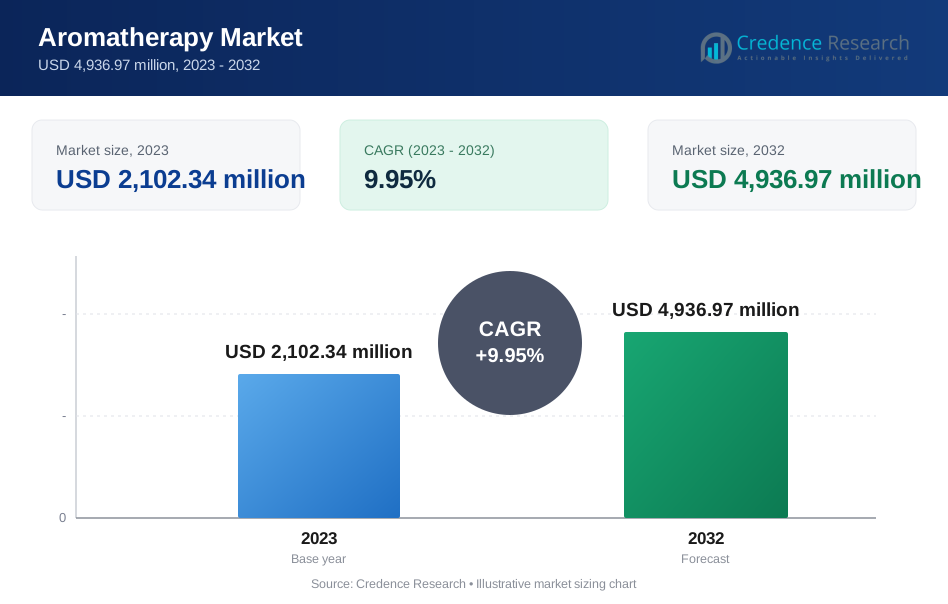
| Aromatherapy MarketSize 2023 | USD 2,102.34 Million |
| Aromatherapy Market, CAGR | 9.95% |
| Aromatherapy Market Size 2032 | USD 4,936.97 Million |
Market Overview
The Aromatherapy Market is projected to grow from USD 2,102.34 million in 2023 to an estimated USD 4,936.97 million by 2032, reflecting a compound annual growth rate (CAGR) of 9.95% from 2024 to 2032. This substantial growth is driven by increasing consumer interest in natural and holistic therapies for stress relief, mental health, and general well-being.
The primary market drivers include a growing consumer demand for natural and organic products, rising incidences of chronic health issues, and an increasing trend toward self-care and wellness. Aromatherapy’s ability to provide relief for stress, anxiety, and pain without invasive treatments has fueled its popularity. In addition, expanding R&D initiatives for novel blends and innovative delivery methods, such as diffusers and topical applications, are fostering market growth. Trends toward personalized wellness solutions and digital marketing strategies also amplify aromatherapy’s reach across diverse consumer demographics.
Geographically, North America holds a significant market share due to high consumer awareness and robust retail and e-commerce distribution channels. The Asia-Pacific region is anticipated to exhibit substantial growth, driven by increased disposable incomes, rapid urbanization, and growing interest in traditional therapeutic practices. Key players in the aromatherapy market include Young Living Essential Oils, doTERRA International, Edens Garden, Plant Therapy Essential Oils, and NOW Foods, which collectively drive market expansion through innovation and strategic partnerships.
Market Drivers
Increasing Consumer Demand for Natural and Holistic Health Solutions
The rising preference for natural and holistic healthcare solutions is a primary driver of the aromatherapy market's growth. Consumers are increasingly moving away from synthetic pharmaceuticals and invasive treatments, seeking alternative and complementary therapies. Aromatherapy, which utilizes essential oils derived from plants, offers therapeutic benefits that address a wide range of health concerns, including stress relief, anxiety reduction, pain management, and skin care.For instance, in yoga and meditation facilities, diffusing essential oils like lavender or bergamot can create a relaxation environment that helps reduce stress and promote mental clarity. Spa and wellness centers have already recognized this potential, with aromatherapy leading to enhanced relaxation and stress reduction.This trend has been particularly pronounced in regions with heightened consumer awareness regarding the potential side effects of chemical-based medicines. The growing popularity of wellness-focused lifestyles has further accelerated demand for aromatherapy as individuals become more proactive about health maintenance and prevention. Retailers have responded by offering a wide array of products, including diffusers, essential oils, and topical applications, thereby enhancing market penetration and driving industry growth.
Rising Awareness of Mental Health and Stress Management
Heightened awareness of mental health issues and the rising prevalence of stress-related disorders have driven interest in non-invasive, calming therapies like aromatherapy. Modern lifestyles, characterized by fast-paced work environments, digital overload, and high stress, have amplified the need for accessible relaxation techniques.For instance, studies have shown that lavender essential oils can help manage anxiety, with research comparing lavender oil preparation (Silexan) directly to the pharmaceutical Lorazepam for generalized anxiety disorder. Additionally, specific essential oils like bergamot have been found to positively impact mood states, parasympathetic nervous system activity, and reduce salivary cortisol levels.Aromatherapy is widely recognized for its stress-relieving and mood-enhancing properties, making it a sought-after solution for individuals seeking respite from everyday pressures. Research indicates that certain essential oils, such as lavender and chamomile, can lower cortisol levels and promote better sleep quality. The popularity of home-based aromatherapy solutions, including diffusers and essential oil rollers, has surged as more consumers incorporate these into their daily wellness routines. Businesses have also adopted aromatherapy practices in workplace wellness programs, contributing to greater market penetration and bolstering overall industry growth.
Expanding Applications Across Diverse Sectors
Aromatherapy’s versatility and efficacy have resulted in its broad adoption across multiple sectors, contributing significantly to market expansion. The healthcare sector utilizes essential oils as complementary therapies for patients with chronic pain, anxiety disorders, and other health challenges. Spas and wellness centers incorporate aromatherapy into their treatment offerings, enhancing relaxation and therapeutic benefits for their clients. The beauty and personal care industry has integrated essential oils into numerous products, such as skin care lotions, shampoos, and massage oils, capitalizing on their antioxidant and anti-inflammatory properties. Additionally, the use of aromatherapy in home care products, such as candles and air fresheners, has increased substantially. The expansion of applications across such diverse end-use industries has significantly driven market demand and presented opportunities for new product innovations.
Innovations in Product Development and Marketing Strategies
Innovative product development and strategic marketing initiatives have played a crucial role in driving the growth of the aromatherapy market. Companies are increasingly focused on research and development efforts to introduce novel products, such as essential oil blends tailored for specific health benefits or innovative delivery mechanisms like portable diffusers and aromatherapy-infused wearable devices. This trend aligns with the growing demand for personalized wellness solutions, allowing consumers to address their unique health and lifestyle needs. Furthermore, the rise of e-commerce platforms and digital marketing campaigns has expanded the market reach, enabling brands to engage with a global audience more effectively. Social media influencers, wellness bloggers, and online communities have also played a pivotal role in popularizing aromatherapy products, fostering greater consumer interest and boosting sales. The ability to innovate and stay attuned to evolving consumer preferences has empowered market players to capitalize on emerging opportunities, further driving market expansion.
Market Trends
Growing Demand for Personalized Aromatherapy Solutions
A notable trend within the aromatherapy market is the increasing emphasis on personalized health and wellness solutions. Consumers are seeking tailored experiences that cater to their specific needs, health goals, and lifestyle preferences. This shift has led to the development of customized essential oil blends and targeted product formulations designed to address distinct concerns such as anxiety relief, sleep enhancement, skin rejuvenation, and immune system support.For instance, the Pium smart diffuser allows users to load three different essential oil capsules simultaneously, enabling personalized scent experiences throughout the day. For example, Pium suggests a rosemary blend for morning stimulation, a lavender blend for nighttime relaxation, and a peppermint blend for work concentration.Companies are leveraging advanced technologies, including AI-driven wellness assessments and data analytics, to curate personalized aromatherapy regimens. Subscription-based services that provide curated essential oil packages based on user preferences have also gained traction. This trend reflects a broader movement toward personalized healthcare, allowing consumers to create unique and targeted aromatherapy experiences that align with their wellness journeys.
Integration of Aromatherapy in Digital and Smart Technologies
Another significant trend driving the aromatherapy market is the integration of essential oil-based therapies into digital and smart technology platforms. The convergence of aromatherapy and smart home devices, such as app-controlled diffusers and voice-activated aromatherapy systems, is transforming how consumers experience essential oils in their daily lives. These innovations allow for precise control over scent intensity, timing, and combination, thereby enhancing user convenience and personalization. Furthermore, the rise of wearable aromatherapy devices, including essential oil-infused jewelry and portable inhalers, has broadened the market’s reach by offering on-the-go wellness solutions. Digital applications and platforms that offer guided aromatherapy sessions and educational resources have also become prevalent, empowering consumers to understand and maximize the benefits of essential oils. This trend underscores the role of technology in elevating aromatherapy’s accessibility and appeal, making it an integral component of modern wellness lifestyles.
Market Restraints and Challenges
Lack of Standardization and Quality Control Issues
One of the major challenges facing the aromatherapy market is the lack of standardization and consistent quality control measures. The essential oils industry, which forms the core of aromatherapy products, remains largely unregulated in many regions, resulting in significant variability in product purity, potency, and labeling accuracy. Adulteration and dilution of essential oils have been reported, raising concerns among consumers and healthcare practitioners about the safety and efficacy of such products. This inconsistency can undermine consumer confidence and hinder market growth, as individuals may question the effectiveness of essential oils for therapeutic purposes. Moreover, the absence of universally accepted standards for grading and certifying essential oils creates a fragmented market environment that may limit consumer trust and present obstacles to wider adoption in clinical settings.
Limited Scientific Evidence and Regulatory Barriers
Despite the growing popularity of aromatherapy, the market faces significant challenges due to limited scientific evidence supporting the therapeutic claims made for many essential oils. While certain oils have demonstrated benefits in controlled studies, others lack robust clinical validation. This poses a barrier to wider acceptance among healthcare providers, regulatory authorities, and some consumer groups who demand evidence-based practices. Regulatory bodies in different regions often have varying guidelines and restrictions concerning the marketing and labeling of aromatherapy products, further complicating efforts to streamline market growth. In some cases, companies are required to demonstrate the safety and efficacy of their products to obtain regulatory approval, which can be a time-consuming and expensive process. These challenges, combined with potential regulatory scrutiny over health claims, can constrain the market's expansion and limit its reach among more skeptical demographics or those relying on scientifically validated health interventions.
Market Segmentation Analysis
By Product
The aromatherapy market by product is segmented into consumables and equipment. Consumables, including essential oils, carrier oils, and blends, hold a substantial market share due to their diverse therapeutic benefits and widespread use in personal care, wellness, and therapeutic applications. On the other hand, the equipment segment comprises diffusers, inhalers, nebulizers, and related devices that facilitate the delivery of aromatherapy. Growth in equipment sales is fueled by increasing consumer demand for home-based aromatherapy solutions and technological advancements, such as smart and app-controlled diffusers.
By Application
The aromatherapy market, by application, is led by the relaxation segment, which remains highly sought after for its effectiveness in stress relief, anxiety management, and mood enhancement. Skin and hair care applications are also expanding rapidly, driven by the incorporation of essential oils known for their antioxidant, anti-inflammatory, and antimicrobial properties, aligning with growing demand for natural beauty and personal care solutions. Additionally, products targeting respiratory health, including cold and cough relief, continue to gain popularity. Beyond these primary segments, aromatherapy finds use in pain management, sleep disorders, and various other therapeutic applications.
Segments
Based on Product
- Consumables
- Equipment
Based on Application
- Relaxation
- Skin & Hair Care
- Cold & Cough
- Others
Based on End User
- Home Use
- Spa & Wellness Centers
- Hospitals & Clinics
- Yoga & Meditation Centers
- Others
Based on Mode of Delivery
- Topical Application
- Aerial Diffusion
- Direct Inhalation
Based on Distribution Channel
- E-commerce
- Offline Stores
Based on Region
- North America
- U.S.
- Canada
- Mexico
- Europe
- Germany
- France
- U.K.
- Italy
- Spain
- Rest of Europe
- Asia Pacific
- China
- Japan
- India
- South Korea
- South-east Asia
- Rest of Asia Pacific
- Latin America
- Brazil
- Argentina
- Rest of Latin America
- Middle East & Africa
- GCC Countries
- South Africa
- Rest of the Middle East and Africa
Regional Analysis
North America (35%)
North America holds the largest share of the aromatherapy market, accounting for approximately 35% of the global market. This dominance is attributed to heightened consumer awareness of holistic health approaches, a well-established wellness industry, and widespread acceptance of natural therapies. The region benefits from robust retail and e-commerce distribution networks that enhance product accessibility. The U.S. and Canada are leading countries in this market, driven by demand for stress relief solutions, therapeutic treatments, and personal care products. The use of aromatherapy within wellness centers, hospitals, and homecare also supports market growth. Additionally, innovations such as smart diffusers and tailored essential oil blends continue to capture consumer interest in this region.
Europe (30%)
Europe accounts for about 30% of the global aromatherapy market, positioning itself as the second-largest regional market. The demand in Europe is driven by a strong cultural preference for natural and herbal solutions and a growing trend toward preventive healthcare. Countries like Germany, France, and the United Kingdom lead this market due to high disposable income levels, consumer health awareness, and the integration of aromatherapy into personal care and spa treatments. Regulatory initiatives promoting natural health products have further encouraged market growth. Moreover, a robust spa and wellness tourism industry within Europe contributes significantly to the market demand for essential oils and related products.
Key players
- Procter & Gamble
- Reckitt Benckiser Group PLC
- Ryohin Keikaku Co., Ltd.
- dōTERRA
- Young Living Essential Oils, LC
- Mountain Rose Herbs
- Edens Garden
- Plant Therapy
- Aurora
- Rocky Mountain Oils, LLC
- FLORIHANA
- Biolandes
- Falcon
- Stadler Form
Competitive Analysis
The aromatherapy market is highly competitive, with a diverse range of players that offer innovative and varied product portfolios to capture consumer demand for natural wellness solutions. Leading companies like Procter & Gamble and Reckitt Benckiser leverage their extensive distribution channels, global presence, and strong brand recognition. Specialty players such as dōTERRA and Young Living Essential Oils focus on premium essential oil offerings and emphasize direct selling models, fostering strong customer loyalty. Companies like Mountain Rose Herbs and Edens Garden highlight the importance of organic and sustainable sourcing, appealing to eco-conscious consumers. Niche players, including FLORIHANA and Rocky Mountain Oils, carve out unique positions through quality differentiation and targeted market strategies. Overall, competition centers around product innovation, brand trust, pricing strategies, and distribution capabilities, with significant emphasis on meeting evolving consumer wellness needs and preferences.
Recent Developments
- In October 2023, Procter & Gamble launched a new line of essential oil-infused home care products under its Febreze brand, focusing on mood-enhancing scents for relaxation and stress relief.
- In February 2022, Reckitt acquired Biofreeze, a brand known for its pain relief products, which includes essential oil-based formulations that align with wellness and aromatherapy trends.
- In August 2023, MUJI introduced a new range of portable essential oil diffusers designed for on-the-go use, catering to the growing demand for mobile aromatherapy solutions.
- In September 2024, dōTERRA launched its "MetaPWR" system, a wellness program that integrates essential oils with supplements aimed at metabolic health, emphasizing personalized wellness routines.
- In June 2024, Young Living introduced a new collection of limited-edition essential oil blends inspired by global destinations, focusing on travel-themed wellness experiences.
- In March 2024, Mountain Rose Herbs expanded its product line with organic aromatherapy kits that include sustainably sourced essential oils and educational resources for beginners.
- In July 2023, Edens Garden launched a new "Create Your Own" custom essential oil blend tool on their website, allowing customers to personalize their aromatherapy experience by selecting specific oils based on their preferences.
- In April 2024, Plant Therapy introduced a subscription box service offering monthly deliveries of curated essential oils and aromatherapy accessories tailored to individual wellness goals.
- In May 2024, Rocky Mountain Oils released a new line of kid-safe essential oil blends targeting common childhood issues like sleep support and focus enhancement.
- In January 2024, FLORIHANA launched an eco-friendly packaging initiative with its new collection of organic essential oils, focusing on sustainability in the aromatherapy market.
- In September 2023, Stadler Form introduced the "Julia" aroma diffuser with ultrasonic technology and a rotating nozzle feature for optimal scent distribution in large spaces, enhancing the user’s aromatherapy experience.
Market Concentration and Characteristics
The aromatherapy market exhibits moderate market concentration, characterized by a blend of large multinational corporations and specialized niche players. While global giants such as Procter & Gamble and Reckitt Benckiser hold a significant market share due to their established distribution networks and strong brand recognition, numerous smaller and specialized companies like dōTERRA, Young Living Essential Oils, and Edens Garden focus on high-quality essential oils and direct customer engagement strategies. This market’s characteristics include intense competition based on product differentiation, quality, and natural and organic sourcing. Key market dynamics are driven by consumer preferences for natural wellness solutions, increasing demand for holistic therapies, and continuous innovation in product delivery methods, such as diffusers and personalized essential oil blends. The market also emphasizes sustainability and transparency, aligning with evolving consumer values
Report Coverage
The research report offers an in-depth analysis based on Product, Application, End User, Mode of Delivery, Distribution Channel and Region. It details leading market players, providing an overview of their business, product offerings, investments, revenue streams, and key applications. Additionally, the report includes insights into the competitive environment, SWOT analysis, current market trends, as well as the primary drivers and constraints. Furthermore, it discusses various factors that have driven market expansion in recent years. The report also explores market dynamics, regulatory scenarios, and technological advancements that are shaping the industry. It assesses the impact of external factors and global economic changes on market growth. Lastly, it provides strategic recommendations for new entrants and established companies to navigate the complexities of the market.
Future Outlook
- The aromatherapy market is expected to sustain robust growth, driven by increasing consumer demand for natural and holistic health solutions across diverse demographics.
- Customizable essential oil blends and personalized aromatherapy experiences will gain prominence, with companies leveraging data-driven tools to meet individual wellness needs.
- The market will see expanded use of smart technology, including app-based diffusers and connected devices, to enhance convenience and personalization of aromatherapy applications.
- Consumers will increasingly prioritize sustainably sourced and ethically produced essential oils, prompting companies to adopt transparent and eco-friendly practices.
- Online sales channels will continue to expand, fueled by consumer preference for convenience, a wider selection of products, and enhanced digital marketing efforts.
- Aromatherapy will gain traction in various sectors such as hospitals, mental health clinics, and corporate wellness programs, emphasizing its therapeutic and stress-relief benefits.
- Regulatory authorities are likely to impose stricter guidelines on labeling, purity, and claims of essential oils, promoting higher standards but potentially increasing market complexity.
- Novel delivery methods, such as wearable aromatherapy devices, topical patches, and innovative diffuser designs, will emerge to provide more convenient and targeted use of essential oils.
- The Asia-Pacific region will witness significant growth, driven by rising disposable incomes, increased awareness of wellness products, and cultural acceptance of traditional therapies.
- Aromatherapy will continue to be widely adopted as a non-invasive solution for managing stress, anxiety, and sleep disorders, aligning with the rising focus on mental health and well-being worldwide.
Request a Free Sample
Fill in your details and we'll send you a free sample report.
- Sample data tables & charts
- Research methodology
Need a Custom Version of This Report?
Tailor the scope, geography, or segments to your exact requirements.
- Custom geography or segment scope
- Direct access to our analyst team
Frequently Asked Questions
What is the market size and growth rate of the aromatherapy market from 2023 to 2032?
What are the primary factors driving the growth of the aromatherapy market?
Which region holds the largest share of the aromatherapy market?
How is technology impacting the aromatherapy market?
What role does sustainability play in the aromatherapy market?
Table of Content
Chapter 1. Report Introduction
- 1.1 Report Description & Purpose
- 1.1.1 Report Title & Market Definition
- 1.1.2 Unique Selling Propositions (USP) & Key Differentiators
- 1.1.3 Value Proposition for Stakeholders
- 1.2 Research Objectives
- 1.2.1 Market Sizing Objectives (Volume & Revenue)
- 1.2.2 Segmentation Objectives
- 1.2.3 Competitive Intelligence Objectives
- 1.2.4 Forecast & Scenario Objectives
- 1.3 Report Scope
- 1.3.1 Aromatherapy Scope – Types & Subtypes Covered
- 1.3.2 Geographic Scope – Regions & Countries Covered
- 1.3.3 Historical Period, Base Year & Forecast Period (2023; forecast to 2032)
- 1.3.4 Inclusions & Exclusions
- 1.4 HS Code & Classification Framework
- 1.5 Currency, Units & Pricing Basis
- 1.6 Target Stakeholders
- 1.7 Limitations & Assumptions
Chapter 2. Executive Summary
- 2.1 Global Aromatherapy Market Snapshot
- 2.1.1 Market Size – Historical (2023) & Forecast (2023-2032) (2023: USD 2,102.34 million → 2032: USD 4,936.97 million)
- 2.1.2 Volume & Revenue – Global Totals
- 2.1.3 Key Market Highlights – Top Five Facts
- 2.2 Aromatherapy Market Segmentation Snapshot
- 2.2.1 Market Split by Region – 2023 vs. 2032
- 2.3 Competitive Snapshot
- 2.3.1 Top 10 Players by Revenue Share – 2023
- 2.3.2 Top 10 Players by Volume Share – 2023
- 2.3.3 Recent Strategic Developments (18-Month Summary)
- 2.4 Key Investment Highlights & Strategic Conclusions
Chapter 3. Aromatherapy Market Dynamics & Industry Analysis
- 3.1 Market Overview & Context
- 3.1.1 Aromatherapy Market Position in the Broader Automotive Value Chain
- 3.1.2 OEM vs. Replacement Market Dynamics
- 3.1.3 Market Maturity & Development Stage by Region
- 3.2 Aromatherapy Market Drivers
- 3.3 Aromatherapy Market Restraints & Challenges
- 3.4 Aromatherapy Market Opportunities
- 3.5 Porter's Five Forces Analysis
- 3.5.1 Threat of New Entrants
- 3.5.2 Bargaining Power of Suppliers
- 3.5.3 Bargaining Power of Buyers
- 3.5.4 Threat of Substitutes
- 3.5.5 Competitive Rivalry – Intensity Assessment
- 3.6 Aromatherapy Value Chain Analysis
- 3.6.1 Upstream – Raw Material/Input Suppliers
- 3.6.1.1 Raw Material/Input 1
- 3.6.1.2 Raw Material/Input 2
- 3.6.1.3 Raw Material/Input 3
- 3.6.2 Midstream – Production/Manufacturing/Service Delivery
- 3.6.2.1 Production/Process Overview
- 3.6.2.2 Key Facility Locations & Capacity by Manufacturer
- 3.6.3 Downstream – Distribution & End Consumer
- 3.6.3.1 Primary Channel – B2B/OEM
- 3.6.3.2 Secondary Channels – Dealer, Retail, Online, Direct
- 3.6.4 Value Chain Profitability Analysis
- 3.6.1 Upstream – Raw Material/Input Suppliers
- 3.7 PESTEL Analysis
- 3.7.1 Political Factors
- 3.7.2 Economic Factors
- 3.7.3 Social Factors
- 3.7.4 Technological Factors
- 3.7.5 Environmental Factors
- 3.7.6 Legal Factors
- 3.8 Aromatherapy Supply Chain Analysis
- 3.8.1 Raw Material/Input Supply Risk Assessment
- 3.8.2 Manufacturing Concentration Risk (Geographic Exposure)
- 3.8.3 Trade Disruption Impact Analysis
- 3.9 Regulatory & Policy Landscape
Note: The regulatory and policy landscape section covers regulations based on their applicability to the market, Aromatherapy category, geography, and scope of the study. Only regulatory frameworks with a material impact on operations, compliance, trade, sustainability, or market access are analyzed in detail.
Chapter 4. Key Investment Pockets & Opportunity Analysis
- 4.1 Aromatherapy Market Attractiveness Analysis
- 4.1.1 By Region – Investment Attractiveness Matrix (Volume × CAGR)
- 4.2 Absolute Revenue Growth Opportunity
- 4.2.1 By Region – Absolute USD Growth Through 2032
- 4.3 Incremental Volume Opportunity
- 4.3.1 By Region – Incremental Volume Through 2032
- 4.3.2 Segment – Incremental Volume
- 4.4 Emerging Submarket Opportunity Deep Dive (Subject to Applicability)
- 4.5 Emerging Market Opportunity Scorecards
- 4.5.1 United States
- 4.5.2 Europe
- 4.5.3 Asia
- 4.5.4 Middle East & Africa
Note: Emerging Market Opportunity Scorecards will be included based on relevance and strategic importance. Regions listed are indicative and may vary depending on data availability and market dynamics.
Chapter 5. Aromatherapy Import-Export Analysis & Trade Flows
- 5.1 Global Trade Overview
- 5.1.1 Global Export Value by Country (2023)
- 5.1.2 Global Export Volume by Country (2023)
- 5.1.3 Global Import Value by Country (2023)
- 5.1.4 Global Import Volume by Country (2023)
- 5.1.5 Net Trade Balance by Country (2023)
- 5.2 Export Analysis – Segment
- 5.2.1 Type 1 (HS Code)
- 5.2.2 Type 2 (HS Code)
- 5.2.3 Type 3 (HS Code)
- 5.2.4 Type 4 (HS Code)
- 5.2.5 Type 5 (HS Code)
- 5.3 Import Analysis – Segment
- 5.3.1 Type 1 (HS Code)
- 5.3.2 Type 2 (HS Code)
- 5.3.3 Type 3 (HS Code)
- 5.3.4 Type 4 (HS Code)
- 5.3.5 Type 5 (HS Code)
- 5.4 Average Unit Trade Prices
- 5.4.1 Average Export Price – Segment & Country
- 5.4.2 Average Import Price – Segment & Source Country
- 5.4.3 Price Trends (2023)
- 5.5 Key Trade Route Analysis
- 5.5.1 Trade Route 1
- 5.5.2 Trade Route 2
- 5.5.3 Trade Route 3
- 5.5.4 Trade Route 4
- 5.5.5 Trade Route 5
- 5.6 Trade Policy Impact Assessment
- 5.6.1 US Anti-Dumping & Section 301 Tariffs
- 5.6.2 EU Customs Union Impact
- 5.6.3 Major Free Trade Agreements
- 5.6.4 USMCA Rules of Origin
Note: Trade policy analysis will be included only where relevant to the Aromatherapy market.
Chapter 6. Competitive Landscape & Company Benchmarking
- 6.1 Aromatherapy Market Concentration & Structure
- 6.1.1 Herfindahl-Hirschman Index (HHI) – vs. 2023
- 6.1.2 Tier 1, Tier 2 & Tier 3 Market Structure
- 6.1.3 Global, Regional & Local Player Dynamics
- 6.2 Aromatherapy Market Share Analysis – 2023
- 6.2.1 Global Revenue Share by Company
- 6.2.2 Global Volume Share by Company
- 6.2.3 Regional Revenue Share
- 6.2.4 Market Share Evolution ( vs. 2023)
- 6.2.5 OEM Segment Share by Company
- 6.2.6 Replacement Segment Share by Company
- 6.3 Production/Delivery Capacity & Facility Analysis
- 6.3.1 Global Installed Capacity
- 6.3.2 Capacity Utilization Rates
- 6.3.3 Production/Output Volume
- 6.3.4 Facility Locations & Capacity Map
- 6.3.5 Planned Capacity Additions
- 6.4 Aromatherapy Competitive Benchmarking Matrix
- 6.4.1 Revenue, Volume, CAGR & Profitability Comparison
- 6.4.2 Channel Revenue Mix
- 6.4.3 Geographic Revenue Exposure
- 6.4.4 R&D Intensity
- 6.4.5 Sustainability Maturity
- 6.5 Strategic Developments in Aromatherapy (Last 24 Months)
- 6.5.1 Mergers, Acquisitions & Divestments
- 6.5.2 New Aromatherapy Launches
- 6.5.3 Facility Expansions
- 6.5.4 Strategic Alliances, Joint Ventures & Partnerships
- 6.5.5 Distribution Expansion & Market Entry
- 6.5.6 Sustainability & ESG Initiatives
- 6.6 Competitive Strategy Mapping
- 6.6.1 Leader, Challenger, Follower & Niche Classification
- 6.6.2 Pricing Strategy Comparison
- 6.6.3 Channel Strategy Matrix
Note: Strategic developments are included based on their materiality and the availability of reliable information.
Chapter 7. Global Aromatherapy Market – By Distribution Channel
- 7.1 Segment Overview
- 7.1.1 Volume & Revenue Split by Channel (2023 & 2032)
- 7.1.2 Channel Mix Evolution (2023-2032)
Chapter 8. Regional Market Analysis – Global Overview
- 8.1 Global Regional Overview
- 8.1.1 Regional Volume Share
- 8.1.2 Regional Revenue Share
- 8.1.3 Regional Volume by Region
- 8.1.4 Regional Revenue by Region
- 8.1.5 Regional Forecast Through 2032
- 8.2 Cross-Regional Segment Analysis
- 8.2.1 By Distribution Channel
- 8.2.2 By Brand/Price Tier
Chapter 9. North America Aromatherapy Market
- 9.1 United States
- 9.2 Canada
- 9.3 Mexico
Chapter 10. Europe Aromatherapy Market
- 10.1 Germany
- 10.2 France
- 10.3 Italy
- 10.4 United Kingdom
- 10.5 Spain
- 10.6 Poland
- 10.7 Russia
- 10.8 Netherlands
- 10.9 Belgium
- 10.10 Sweden
- 10.11 Denmark
- 10.12 Norway
- 10.13 Rest of Europe
Chapter 11. Asia Pacific Aromatherapy Market
- 11.1 China
- 11.2 India
- 11.3 Japan
- 11.4 South Korea
- 11.5 Thailand
- 11.6 Indonesia
- 11.7 Vietnam
- 11.8 Malaysia
- 11.9 Australia
- 11.10 Rest of Asia Pacific
Chapter 12. Latin America Aromatherapy Market
- 12.1 Brazil
- 12.2 Argentina
- 12.3 Colombia
- 12.4 Chile
- 12.5 Rest of Latin America
Chapter 13. Middle East Aromatherapy Market
- 13.1 Saudi Arabia
- 13.2 United Arab Emirates
- 13.3 Turkey
- 13.4 Israel
- 13.5 Iran
- 13.6 Rest of the Middle East
Chapter 14. Africa Aromatherapy Market
- 14.1 South Africa
- 14.2 Egypt
- 14.3 Nigeria
- 14.4 Morocco
- 14.5 Rest of Africa
Chapter 15. Aromatherapy Company Profiles
- 15.1 [Company 01]
- 15.1.1 Company Overview
- 15.1.2 Key Management Personnel
- 15.1.3 Products & Services Portfolio
- 15.1.4 Financial Performance
- 15.1.5 Key Market Focus & Geographic Presence
- 15.1.6 Recent Developments & Strategic Initiatives
Note: The company profile list is preliminary and may change based on research findings, market developments, data availability, and client requirements.
Chapter 16. Appendices
- Appendix A – List of Abbreviations & Acronyms
- Appendix B – Industry Classification Code Reference – Full Series
- Appendix C – Production & Capacity Data Tables
- Appendix D – End-Use & Demand Base Tables
- Appendix E – Consumption & Replacement Rate Assumptions
- Appendix F – ASP Reference Tables
- Appendix G – Manufacturing & Facility Database
- Appendix H – Import-Export Data Tables
- Appendix I – Regulatory Summary Tables
- Appendix J – Primary Research Participant List (Anonymized)
- Appendix K – Primary Research Questionnaire Framework
- Appendix L – Data Sources & Bibliography
- Appendix M – Market Size Divergence & Source Comparison
Chapter 17. Research Methodology
- 17.1 Research Framework & Philosophy
- 17.2 Secondary Research – Sources, Hierarchy & Data Extraction
- 17.3 Data Modeling – Bottom-Up & Top-Down Market Sizing
- 17.4 Primary Research – Stakeholder Framework, LOI & Sample Sizes
- 17.5 Forecast Methodology – Regression, Scenario & Sensitivity Analysis
- 17.6 Quality Control – Four-Layer Validation Framework
- 17.7 Limitations & Standard Assumptions
- 17.8 Disclaimer
