
| REPORT ATTRIBUTE | DETAILS |
|---|---|
| Historical Period | 2019-2022 |
| Base Year | 2023 |
| Forecast Period | 2024-2032 |
| Canada Custom Apparel Market Size 2024 | USD 70.25 Million |
| Canada Custom Apparel Market, CAGR | 7.16% |
| Canada Custom Apparel Market Size 2032 | USD 122.16 Million |
Market Overview:
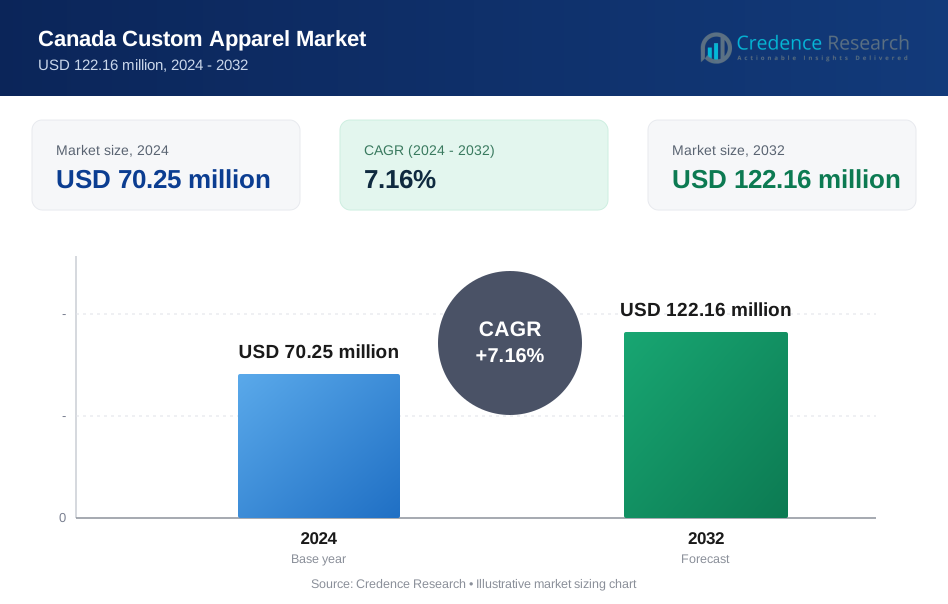
The Canada Custom Apparel Market is projected to grow from USD 70.25 million in 2024 to an estimated USD 122.16 million by 2032, with a compound annual growth rate (CAGR) of 7.16% from 2024 to 2032.
Several factors contribute to the growth of the Canada custom apparel market. Foremost among these is the rising preference for individuality and personalization in fashion, particularly among younger demographics. This trend is bolstered by the proliferation of e-commerce platforms that offer seamless customization options, enabling consumers to design their apparel conveniently. Furthermore, the corporate sector’s growing adoption of branded merchandise for promotional activities has amplified the demand for custom apparel. Advancements in printing technologies, including screen printing, embroidery, and sublimation, have enhanced the quality and accessibility of customized garments, further fueling the market's growth. In addition, heightened environmental consciousness among consumers has prompted manufacturers to adopt sustainable practices, such as the use of organic fabrics and eco-friendly dyes, which is attracting a broader customer base.
The custom apparel market in Canada exhibits strong regional dynamics, with urban centers such as Toronto, Vancouver, and Montreal driving significant demand. These cities host a vibrant fashion-conscious population and a thriving corporate sector that frequently utilizes custom apparel for branding and events. Western Canada, including Alberta and British Columbia, is witnessing rising interest due to the growing influence of social media-driven trends. Similarly, the eastern provinces, including Ontario and Quebec, are prominent hubs for manufacturing and distribution, supported by a robust logistics network. Rural areas are also increasingly contributing to market growth, with advancements in digital platforms bridging the gap between urban suppliers and remote consumers. Key players operating in the market, such as Printful, Vistaprint, and Custom Ink, are leveraging regional preferences and digital innovations to capture market share.
Market Insights:
- The Canada custom apparel market is projected to grow from USD 70.25 million in 2024 to USD 122.16 million by 2032, reflecting a robust CAGR of 7.16%.
- Rising demand for personalization and individuality, particularly among younger demographics, is a key driver of market expansion.
- E-commerce platforms play a pivotal role in accessibility, offering seamless customization tools and broad product catalogs to enhance user experience.
- The corporate sector’s adoption of branded apparel for promotional activities and events contributes significantly to the market's steady growth.
- Technological advancements, including direct-to-garment printing and augmented reality tools, are enhancing customization quality and expanding the market's reach.
- Sustainability is emerging as a vital trend, with eco-conscious consumers driving demand for organic and environmentally friendly custom apparel.
- Urban centers such as Toronto, Vancouver, and Montreal dominate the market, while improved digital access is gradually bridging the gap in rural regions.
Market Drivers:
Rising Demand for Personalization and Individuality
The growing emphasis on self-expression and individuality among Canadian consumers is a significant driver of the custom apparel market. For instance, Printful, a leading custom apparel company, reported a increase in orders for personalized clothing in 2024, reflecting the rising demand for unique and customized garments. Customers increasingly seek unique clothing that reflects their personality, preferences, or affiliations, moving away from mass-produced garments. This trend is particularly prevalent among younger demographics who value exclusivity and identity in their fashion choices. Customization options, such as personalized designs, logos, and messages, cater to these preferences, thereby driving market growth. Additionally, the rise of niche markets, such as customized activewear and wedding apparel, has further broadened the market's appeal.
Expansion of E-commerce and Digital Platforms
E-commerce platforms have revolutionized the way custom apparel is accessed and purchased, playing a pivotal role in market growth. For instance, Zazzle has enhanced its platform with AI and augmented reality features, allowing customers to visualize their designs before purchase, which has significantly boosted user engagement and satisfaction. Platforms offering seamless navigation, extensive product catalogs, and quick turnaround times have amplified the accessibility of custom clothing. Moreover, advancements in artificial intelligence and augmented reality tools are enhancing the online customization experience, enabling users to make informed choices. These digital advancements have not only streamlined the design process but also encouraged a broader audience to engage with custom apparel offerings.
Corporate Sector's Growing Adoption of Custom Apparel
The corporate sector's increasing reliance on custom apparel for branding and promotional activities is another major growth driver. Businesses in Canada frequently use customized clothing, such as branded T-shirts, hoodies, and caps, to foster brand identity and engage with clients, employees, and stakeholders. Events, trade shows, and marketing campaigns often include custom apparel as a part of their strategy, further boosting demand. Small and medium-sized enterprises (SMEs) are also contributing to this trend, leveraging personalized clothing to strengthen their market presence and establish a unique brand image. For instance, Vistaprint has seen a increase in orders from small and medium-sized enterprises (SMEs) looking to strengthen their brand presence through personalized apparel. The consistent demand from the corporate sector ensures sustained growth for the custom apparel market.
Technological Advancements in Customization Innovations in apparel customization technologies are significantly enhancing the quality, efficiency, and scope of personalized clothing in Canada. For instance, Spreadshirt has adopted direct-to-garment printing and dye-sublimation techniques, resulting in improvement in print quality and durability. Modern techniques such as direct-to-garment printing, embroidery, and dye-sublimation have elevated the customization process, offering superior precision and durability. These advancements have enabled manufacturers to cater to a wide variety of customer needs, ranging from intricate designs to high-volume orders. Furthermore, the integration of eco-friendly materials and processes, such as organic cotton and water-based inks, aligns with the increasing demand for sustainable fashion. The combination of technological and environmental progress has positioned the Canadian custom apparel market for sustained growth and innovation.
Market Trends:
Growth of Sustainable Custom Apparel
The Canadian custom apparel market is witnessing a strong shift towards sustainable and eco-friendly products as consumers become increasingly environmentally conscious. Manufacturers are responding by adopting organic fabrics, biodegradable materials, and non-toxic dyes in their production processes. For instance, Encircled produces its clothing collections locally in Toronto to reduce its carbon footprint, focusing on small-batch production using sustainable materials like bamboo and organic cotton. The rise of ethical fashion, supported by initiatives to reduce carbon footprints and promote circular economies, has driven demand for sustainable options. Brands that emphasize transparency in sourcing and production are gaining favor, and custom apparel providers integrating these practices are benefiting from increased consumer loyalty and higher market penetration.
Integration of Advanced Technology
Technological advancements are reshaping the landscape of the custom apparel market in Canada. The adoption of 3D printing technology and automated design software has improved production efficiency while enabling intricate and high-quality designs. For example, 3D printing allows for rapid prototyping of unique designs and complex structures, making it valuable for producing limited-edition items or accessories, Virtual fitting tools and augmented reality (AR) applications have further enhanced the consumer experience, allowing users to visualize designs and styles before purchase. Additionally, advancements in printing technology, such as digital textile printing, have streamlined operations, reduced lead times, and improved the customization process, making it more accessible to a wider audience.
Influence of Social Media and Digital Marketing
Social media platforms are playing a pivotal role in shaping trends within the custom apparel market. Influencers, fashion enthusiasts, and brands are leveraging platforms like Instagram, TikTok, and Pinterest to showcase unique custom designs, sparking interest and demand among followers. User-generated content and viral trends have significantly boosted consumer interest in personalized clothing. Digital marketing strategies, including targeted advertising and collaborations with influencers, are helping custom apparel providers reach a broader and more diverse customer base, ultimately driving market growth. For instance, Lenzing has effectively used content marketing and social media to educate consumers on the benefits of eco-friendly textiles, boosting their online engagement
Rising Popularity of Limited-Edition Collections Limited-edition and exclusive custom apparel collections are becoming increasingly popular in Canada, catering to consumers' growing desire for uniqueness and exclusivity. These collections often target specific events, seasons, or social causes, creating a sense of urgency and higher perceived value among customers. Collaboration between custom apparel brands and artists, designers, or celebrities has amplified this trend, leading to high engagement and sales. For example, Canada Basketball and INDOCHINO launched a limited-edition "Made For You, By Us" custom-lining campaign, celebrating an exciting summer for Canada's basketball teams. The appeal of owning distinctive and rare pieces is fueling demand, particularly among younger demographics who prioritize individuality in their fashion choices.
Market Challenges Analysis:
High Costs Associated with Customization
One of the primary restraints in the Canada custom apparel market is the high cost of producing personalized garments. Compared to mass-produced clothing, custom apparel involves additional expenses for design, materials, and production processes, which can make these products less affordable for price-sensitive consumers. Small-scale businesses and individuals may hesitate to invest in custom clothing due to budget constraints, limiting the market’s growth potential. The reliance on advanced technology for customization, such as digital printing and embroidery machines, further adds to operational costs, posing challenges for manufacturers seeking to balance affordability and profitability.
Limited Awareness in Rural Areas
While urban centers in Canada have embraced custom apparel trends, rural areas face a lack of awareness and accessibility to these offerings. Limited exposure to e-commerce platforms, lower internet penetration rates, and logistical challenges in delivering personalized garments to remote locations restrict the market's reach. This regional disparity prevents the market from achieving its full potential, highlighting the need for targeted efforts to promote and distribute custom apparel in underserved areas.
Complex Supply Chain Dynamics
The custom apparel market is characterized by a complex supply chain that often involves coordination between designers, material suppliers, manufacturers, and logistics providers. Delays in any part of this chain can disrupt production timelines and impact customer satisfaction. Furthermore, the requirement for precise and customized orders increases the risk of errors, such as incorrect designs or sizing issues, leading to returns and additional costs for businesses. Managing these complexities while maintaining efficiency and quality is a persistent challenge for market players.
Sustainability and Scalability Challenges
While sustainability is a growing trend, achieving scalable eco-friendly production in the custom apparel market remains a significant challenge. Sourcing sustainable materials and implementing environmentally friendly practices often require substantial investments and may not be feasible for smaller businesses. This creates a gap between consumer expectations for sustainability and the ability of manufacturers to deliver on these demands at scale. Overcoming this challenge is critical for long-term market growth.
Market Opportunities:
The Canada custom apparel market presents substantial opportunities driven by the rapid growth of e-commerce and advancements in digital technologies. Online platforms provide a convenient medium for consumers to explore, design, and purchase personalized apparel, making customization more accessible than ever. The integration of advanced tools like artificial intelligence, augmented reality, and virtual fitting rooms enhances user experience, enabling precise customization and fostering greater customer engagement. As consumers increasingly prefer online shopping, custom apparel providers have the chance to scale their reach and tap into a broader audience, including younger, tech-savvy demographics.
The rising emphasis on sustainability and eco-consciousness among Canadian consumers creates a promising avenue for market growth. Custom apparel manufacturers adopting environmentally friendly materials, such as organic fabrics and water-based inks, and practices like reducing production waste are positioned to capture the attention of a rapidly expanding green consumer base. Furthermore, partnerships with sustainable textile suppliers and certifications for ethical production can strengthen brand reputation and customer loyalty. The corporate sector’s interest in eco-friendly branding through customized apparel further amplifies this opportunity, allowing businesses to align their marketing efforts with environmental values. By addressing the growing demand for both sustainability and personalization, the market holds significant potential for innovation and expansion.
Market Segmentation Analysis:
The Canada custom apparel market is segmented by type, end-user, and distribution channel, each playing a significant role in driving the industry’s growth and diversification.
By Type
Among product types, shirts and suits hold the largest market share due to their widespread appeal across personal and professional settings. Shirts are particularly favored for corporate branding and casual personalization, while suits dominate in the formalwear segment for weddings and business attire. Coats, skirts, and pants are gaining traction as consumers explore customization options for complete wardrobe solutions. Rising interest in unique designs and tailored fits across all categories ensures robust growth in this segment.
By End-user
The women’s segment leads the market, driven by higher demand for customized clothing that aligns with evolving fashion trends and personal preferences. The men’s segment follows closely, with strong demand for tailored suits, shirts, and sportswear. Custom apparel for children is emerging as a promising category, fueled by parents seeking unique and high-quality clothing for special occasions and daily wear.
By Distribution Channel
The online distribution channel dominates the market, accounting for the majority share due to the convenience of digital customization tools and a wide product range. E-commerce platforms enable users to design, visualize, and order custom apparel seamlessly. Offline channels, including retail stores and specialized boutiques, remain essential for customers preferring in-person consultations and fittings. Both channels are expected to grow as technological advancements and consumer demand for customization continue to shape the market.
Segmentation:
By Type
- Coat
- Skirt
- Pants
- Shirt
- Suit
By End-user
- Women
- Men
- Children
By Distribution Channel
- Offline
- Online
Regional Analysis:
The Canada custom apparel market demonstrates distinct regional dynamics influenced by consumer behavior, technological adoption, and economic activity. The market is broadly segmented into key regions: Ontario, Quebec, British Columbia, Alberta, and the rest of Canada, each contributing uniquely to the industry’s growth.
Ontario: The Largest Market Share
Ontario holds the largest share of the Canada custom apparel market, accounting for approximately 35% of the total revenue in 2024. This dominance is driven by the region's robust economic activities, diverse population, and thriving corporate sector. Cities like Toronto and Ottawa are hubs for businesses that extensively use custom apparel for branding and promotional activities. The high concentration of e-commerce platforms and digital infrastructure in Ontario also contributes significantly to the market's growth, enabling widespread access to customization services.
Quebec: A Growing Market for Custom Apparel
Quebec accounts for about 25% of the market, supported by its vibrant cultural identity and emphasis on individuality. The region's bilingual population provides a unique opportunity for custom apparel providers to cater to both French and English-speaking consumers with tailored offerings. Montreal, as a fashion and cultural hub, drives demand for personalized and artistic clothing, reflecting the region’s distinctive style preferences. This region also benefits from a growing number of startups focusing on eco-friendly and artisanal custom apparel.
British Columbia: A Hub for Sustainability Trends
British Columbia holds approximately 20% of the market share, with a strong emphasis on sustainability and outdoor lifestyle influences. Cities like Vancouver are at the forefront of eco-conscious consumerism, encouraging the adoption of custom apparel made from organic and recyclable materials. The region’s dynamic mix of urban and outdoor lifestyles fuels demand for personalized activewear and casual clothing that aligns with environmental values.
Alberta: Driven by Corporate and Event-Based Demand
Alberta contributes around 15% to the market, with Calgary and Edmonton serving as major contributors. The region's economy, driven by industries such as oil and gas, supports corporate demand for branded apparel. Alberta also sees significant custom apparel usage during regional events, festivals, and trade shows, further boosting the market.
Rest of Canada: Emerging Opportunities The remaining 5% of the market is spread across smaller provinces and rural areas, where the adoption of custom apparel is gradually increasing. Improved access to digital platforms and logistical networks is opening new opportunities for businesses to penetrate these underserved regions.
Key Player Analysis:
- Adidas AG
- Allied Shirts
- Amazon.com Inc.
- CafePress Inc.
- Lynka Sp. z.o.o.
- Nike Inc.
- Printful Inc.
- Redbubble Ltd.
- THREADBIRD
- UberPrints Inc.
- Vantage Custom Classics Inc.
- Zazzle Inc.
Competitive Analysis:
The Canada custom apparel market is highly competitive, driven by a mix of local and international players. Key market participants such as Printful, Vistaprint, Custom Ink, and Threadless dominate the landscape with their advanced digital platforms, extensive product portfolios, and efficient supply chains. These companies leverage technology, such as AI-driven design tools and automated production systems, to deliver high-quality, personalized apparel at scale. For instance, Vistaprint has expanded its product offerings to include a wide range of customizable apparel, utilizing automated production systems to ensure quick turnaround times and high-quality products. Local players, including boutique custom apparel providers, focus on niche markets by offering sustainable and handcrafted options that appeal to eco-conscious consumers. The competitive edge for these businesses lies in their ability to provide unique designs and personalized customer experiences. Additionally, the market sees increasing competition from direct-to-consumer (DTC) brands that capitalize on e-commerce and social media marketing strategies to attract younger demographics. Continuous innovation and differentiation in quality, sustainability, and customization options remain pivotal in maintaining a competitive advantage in this evolving market.
Recent Developments:
- In September 2024, Kornit Digital partnered with Custom Ink to improve production efficiency and sustainability. Custom Ink will transition a significant portion of its printing operations from traditional screen printing to Kornit's digital direct-to-garment technology. This shift will enable Custom Ink to deliver high-quality custom apparel and gear while contributing to a more sustainable future.
- In September 2024, Kornit Digital partnered with Custom Ink to improve production efficiency and sustainability. Custom Ink will transition a significant portion of its printing operations from traditional screen printing to Kornit's digital direct-to-garment technology. This shift will enable Custom Ink to deliver high-quality custom apparel and gear while contributing to a more sustainable future
Market Concentration & Characteristics:
The Canada custom apparel market exhibits a moderately fragmented structure, with a blend of established international players and a growing number of local and boutique businesses. Key players such as Printful, Vistaprint, and Custom Ink dominate the market with advanced digital platforms and large-scale production capabilities, catering to diverse consumer needs efficiently. Local enterprises contribute significantly by focusing on niche segments, including sustainable and artisanal apparel, fostering competition and innovation. The market is characterized by rapid technological adoption, enabling streamlined customization processes through AI-driven design tools, automated production, and augmented reality applications. Consumer preferences for sustainability, personalization, and convenience shape market dynamics. Additionally, the growing importance of branding and promotional apparel within corporate sectors highlights a vital characteristic of the market. The interplay of large-scale operations, boutique-level customization, and sustainability initiatives defines the competitive and dynamic nature of the Canada custom apparel market.
Report Coverage:
The research report offers an in-depth analysis based on By Type, By End-user and By Distribution Channel. It details leading market players, providing an overview of their business, product offerings, investments, revenue streams, and key applications. Additionally, the report includes insights into the competitive environment, SWOT analysis, current market trends, as well as the primary drivers and constraints. Furthermore, it discusses various factors that have driven market expansion in recent years. The report also explores market dynamics, regulatory scenarios, and technological advancements that are shaping the industry. It assesses the impact of external factors and global economic changes on market growth. Lastly, it provides strategic recommendations for new entrants and established companies to navigate the complexities of the market.
Future Outlook:
- The Canada custom apparel market is projected to witness sustained growth, driven by increasing demand for personalization across consumer and corporate segments.
- Advancements in digital tools, such as AI and augmented reality, will enhance customer experience and drive adoption of online customization platforms.
- Rising environmental consciousness will encourage the use of sustainable materials and eco-friendly production methods, creating new growth opportunities.
- The growing influence of social media and influencer marketing will continue to shape consumer preferences and boost market visibility.
- Expansion of e-commerce platforms and improved logistics will facilitate access to custom apparel in rural and underserved regions.
- Corporate branding and promotional apparel demand will remain a key driver, particularly among small and medium-sized enterprises.
- The men’s and children’s segments are expected to grow rapidly, supported by increased interest in tailored and occasion-specific clothing.
- Local and boutique businesses will thrive by targeting niche markets, such as sustainable or artisanal custom apparel.
- Technological innovations, including 3D printing and advanced textile printing techniques, will improve production efficiency and quality.
- The market will become increasingly competitive as new entrants adopt innovative approaches to meet evolving consumer demands.
Request a Free Sample
Fill in your details and we'll send you a free sample report.
- Sample data tables & charts
- Research methodology
Need a Custom Version of This Report?
Tailor the scope, geography, or segments to your exact requirements.
- Custom geography or segment scope
- Direct access to our analyst team
Frequently Asked Questions
What is the projected growth of the Canada custom apparel market?
What factors are driving the market's growth?
Which regions in Canada are driving demand for custom apparel?
What challenges does the market face?
Table of Content
Chapter 1. Report Introduction
- 1.1 Report Description & Purpose
- 1.1.1 Report Title & Market Definition
- 1.1.2 Unique Selling Propositions (USP) & Key Differentiators
- 1.1.3 Value Proposition for Stakeholders
- 1.2 Research Objectives
- 1.2.1 Market Sizing Objectives (Volume & Revenue)
- 1.2.2 Segmentation Objectives
- 1.2.3 Competitive Intelligence Objectives
- 1.2.4 Forecast & Scenario Objectives
- 1.3 Report Scope
- 1.3.1 Canada Custom Apparel Scope – Types & Subtypes Covered
- 1.3.2 Geographic Scope – Regions & Countries Covered
- 1.3.3 Historical Period, Base Year & Forecast Period (2024; forecast to 2032)
- 1.3.4 Inclusions & Exclusions
- 1.4 HS Code & Classification Framework
- 1.5 Currency, Units & Pricing Basis
- 1.6 Target Stakeholders
- 1.7 Limitations & Assumptions
Chapter 2. Executive Summary
- 2.1 Global Canada Custom Apparel Market Snapshot
- 2.1.1 Market Size – Historical (2024) & Forecast (2024-2032) (2024: USD 70.25 million → 2032: USD 122.16 million)
- 2.1.2 Volume & Revenue – Global Totals
- 2.1.3 Key Market Highlights – Top Five Facts
- 2.2 Canada Custom Apparel Market Segmentation Snapshot
- 2.2.1 Market Split by Region – 2024 vs. 2032
- 2.3 Competitive Snapshot
- 2.3.1 Top 10 Players by Revenue Share – 2024
- 2.3.2 Top 10 Players by Volume Share – 2024
- 2.3.3 Recent Strategic Developments (18-Month Summary)
- 2.4 Key Investment Highlights & Strategic Conclusions
Chapter 3. Canada Custom Apparel Market Dynamics & Industry Analysis
- 3.1 Market Overview & Context
- 3.1.1 Canada Custom Apparel Market Position in the Broader Automotive Value Chain
- 3.1.2 OEM vs. Replacement Market Dynamics
- 3.1.3 Market Maturity & Development Stage by Region
- 3.2 Canada Custom Apparel Market Drivers
- 3.3 Canada Custom Apparel Market Restraints & Challenges
- 3.4 Canada Custom Apparel Market Opportunities
- 3.5 Porter's Five Forces Analysis
- 3.5.1 Threat of New Entrants
- 3.5.2 Bargaining Power of Suppliers
- 3.5.3 Bargaining Power of Buyers
- 3.5.4 Threat of Substitutes
- 3.5.5 Competitive Rivalry – Intensity Assessment
- 3.6 Canada Custom Apparel Value Chain Analysis
- 3.6.1 Upstream – Raw Material/Input Suppliers
- 3.6.1.1 Raw Material/Input 1
- 3.6.1.2 Raw Material/Input 2
- 3.6.1.3 Raw Material/Input 3
- 3.6.2 Midstream – Production/Manufacturing/Service Delivery
- 3.6.2.1 Production/Process Overview
- 3.6.2.2 Key Facility Locations & Capacity by Manufacturer
- 3.6.3 Downstream – Distribution & End Consumer
- 3.6.3.1 Primary Channel – B2B/OEM
- 3.6.3.2 Secondary Channels – Dealer, Retail, Online, Direct
- 3.6.4 Value Chain Profitability Analysis
- 3.6.1 Upstream – Raw Material/Input Suppliers
- 3.7 PESTEL Analysis
- 3.7.1 Political Factors
- 3.7.2 Economic Factors
- 3.7.3 Social Factors
- 3.7.4 Technological Factors
- 3.7.5 Environmental Factors
- 3.7.6 Legal Factors
- 3.8 Canada Custom Apparel Supply Chain Analysis
- 3.8.1 Raw Material/Input Supply Risk Assessment
- 3.8.2 Manufacturing Concentration Risk (Geographic Exposure)
- 3.8.3 Trade Disruption Impact Analysis
- 3.9 Regulatory & Policy Landscape
Note: The regulatory and policy landscape section covers regulations based on their applicability to the market, Canada Custom Apparel category, geography, and scope of the study. Only regulatory frameworks with a material impact on operations, compliance, trade, sustainability, or market access are analyzed in detail.
Chapter 4. Key Investment Pockets & Opportunity Analysis
- 4.1 Canada Custom Apparel Market Attractiveness Analysis
- 4.1.1 By Region – Investment Attractiveness Matrix (Volume × CAGR)
- 4.2 Absolute Revenue Growth Opportunity
- 4.2.1 By Region – Absolute USD Growth Through 2032
- 4.3 Incremental Volume Opportunity
- 4.3.1 By Region – Incremental Volume Through 2032
- 4.3.2 Segment – Incremental Volume
- 4.4 Emerging Submarket Opportunity Deep Dive (Subject to Applicability)
- 4.5 Emerging Market Opportunity Scorecards
- 4.5.1 United States
- 4.5.2 Europe
- 4.5.3 Asia
- 4.5.4 Middle East & Africa
Note: Emerging Market Opportunity Scorecards will be included based on relevance and strategic importance. Regions listed are indicative and may vary depending on data availability and market dynamics.
Chapter 5. Canada Custom Apparel Import-Export Analysis & Trade Flows
- 5.1 Global Trade Overview
- 5.1.1 Global Export Value by Country (2024)
- 5.1.2 Global Export Volume by Country (2024)
- 5.1.3 Global Import Value by Country (2024)
- 5.1.4 Global Import Volume by Country (2024)
- 5.1.5 Net Trade Balance by Country (2024)
- 5.2 Export Analysis – Segment
- 5.2.1 Type 1 (HS Code)
- 5.2.2 Type 2 (HS Code)
- 5.2.3 Type 3 (HS Code)
- 5.2.4 Type 4 (HS Code)
- 5.2.5 Type 5 (HS Code)
- 5.3 Import Analysis – Segment
- 5.3.1 Type 1 (HS Code)
- 5.3.2 Type 2 (HS Code)
- 5.3.3 Type 3 (HS Code)
- 5.3.4 Type 4 (HS Code)
- 5.3.5 Type 5 (HS Code)
- 5.4 Average Unit Trade Prices
- 5.4.1 Average Export Price – Segment & Country
- 5.4.2 Average Import Price – Segment & Source Country
- 5.4.3 Price Trends (2024)
- 5.5 Key Trade Route Analysis
- 5.5.1 Trade Route 1
- 5.5.2 Trade Route 2
- 5.5.3 Trade Route 3
- 5.5.4 Trade Route 4
- 5.5.5 Trade Route 5
- 5.6 Trade Policy Impact Assessment
- 5.6.1 US Anti-Dumping & Section 301 Tariffs
- 5.6.2 EU Customs Union Impact
- 5.6.3 Major Free Trade Agreements
- 5.6.4 USMCA Rules of Origin
Note: Trade policy analysis will be included only where relevant to the Canada Custom Apparel market.
Chapter 6. Competitive Landscape & Company Benchmarking
- 6.1 Canada Custom Apparel Market Concentration & Structure
- 6.1.1 Herfindahl-Hirschman Index (HHI) – vs. 2024
- 6.1.2 Tier 1, Tier 2 & Tier 3 Market Structure
- 6.1.3 Global, Regional & Local Player Dynamics
- 6.2 Canada Custom Apparel Market Share Analysis – 2024
- 6.2.1 Global Revenue Share by Company
- 6.2.2 Global Volume Share by Company
- 6.2.3 Regional Revenue Share
- 6.2.4 Market Share Evolution ( vs. 2024)
- 6.2.5 OEM Segment Share by Company
- 6.2.6 Replacement Segment Share by Company
- 6.3 Production/Delivery Capacity & Facility Analysis
- 6.3.1 Global Installed Capacity
- 6.3.2 Capacity Utilization Rates
- 6.3.3 Production/Output Volume
- 6.3.4 Facility Locations & Capacity Map
- 6.3.5 Planned Capacity Additions
- 6.4 Canada Custom Apparel Competitive Benchmarking Matrix
- 6.4.1 Revenue, Volume, CAGR & Profitability Comparison
- 6.4.2 Channel Revenue Mix
- 6.4.3 Geographic Revenue Exposure
- 6.4.4 R&D Intensity
- 6.4.5 Sustainability Maturity
- 6.5 Strategic Developments in Canada Custom Apparel (Last 24 Months)
- 6.5.1 Mergers, Acquisitions & Divestments
- 6.5.2 New Canada Custom Apparel Launches
- 6.5.3 Facility Expansions
- 6.5.4 Strategic Alliances, Joint Ventures & Partnerships
- 6.5.5 Distribution Expansion & Market Entry
- 6.5.6 Sustainability & ESG Initiatives
- 6.6 Competitive Strategy Mapping
- 6.6.1 Leader, Challenger, Follower & Niche Classification
- 6.6.2 Pricing Strategy Comparison
- 6.6.3 Channel Strategy Matrix
Note: Strategic developments are included based on their materiality and the availability of reliable information.
Chapter 7. Global Canada Custom Apparel Market – By Distribution Channel
- 7.1 Segment Overview
- 7.1.1 Volume & Revenue Split by Channel (2024 & 2032)
- 7.1.2 Channel Mix Evolution (2024-2032)
Chapter 8. Regional Market Analysis – Global Overview
- 8.1 Global Regional Overview
- 8.1.1 Regional Volume Share
- 8.1.2 Regional Revenue Share
- 8.1.3 Regional Volume by Region
- 8.1.4 Regional Revenue by Region
- 8.1.5 Regional Forecast Through 2032
- 8.2 Cross-Regional Segment Analysis
- 8.2.1 By Distribution Channel
- 8.2.2 By Brand/Price Tier
Chapter 9. North America Canada Custom Apparel Market
- 9.1 United States
- 9.2 Canada
- 9.3 Mexico
Chapter 10. Europe Canada Custom Apparel Market
- 10.1 Germany
- 10.2 France
- 10.3 Italy
- 10.4 United Kingdom
- 10.5 Spain
- 10.6 Poland
- 10.7 Russia
- 10.8 Netherlands
- 10.9 Belgium
- 10.10 Sweden
- 10.11 Denmark
- 10.12 Norway
- 10.13 Rest of Europe
Chapter 11. Asia Pacific Canada Custom Apparel Market
- 11.1 China
- 11.2 India
- 11.3 Japan
- 11.4 South Korea
- 11.5 Thailand
- 11.6 Indonesia
- 11.7 Vietnam
- 11.8 Malaysia
- 11.9 Australia
- 11.10 Rest of Asia Pacific
Chapter 12. Latin America Canada Custom Apparel Market
- 12.1 Brazil
- 12.2 Argentina
- 12.3 Colombia
- 12.4 Chile
- 12.5 Rest of Latin America
Chapter 13. Middle East Canada Custom Apparel Market
- 13.1 Saudi Arabia
- 13.2 United Arab Emirates
- 13.3 Turkey
- 13.4 Israel
- 13.5 Iran
- 13.6 Rest of the Middle East
Chapter 14. Africa Canada Custom Apparel Market
- 14.1 South Africa
- 14.2 Egypt
- 14.3 Nigeria
- 14.4 Morocco
- 14.5 Rest of Africa
Chapter 15. Canada Custom Apparel Company Profiles
- 15.1 [Company 01]
- 15.1.1 Company Overview
- 15.1.2 Key Management Personnel
- 15.1.3 Products & Services Portfolio
- 15.1.4 Financial Performance
- 15.1.5 Key Market Focus & Geographic Presence
- 15.1.6 Recent Developments & Strategic Initiatives
Note: The company profile list is preliminary and may change based on research findings, market developments, data availability, and client requirements.
Chapter 16. Appendices
- Appendix A – List of Abbreviations & Acronyms
- Appendix B – Industry Classification Code Reference – Full Series
- Appendix C – Production & Capacity Data Tables
- Appendix D – End-Use & Demand Base Tables
- Appendix E – Consumption & Replacement Rate Assumptions
- Appendix F – ASP Reference Tables
- Appendix G – Manufacturing & Facility Database
- Appendix H – Import-Export Data Tables
- Appendix I – Regulatory Summary Tables
- Appendix J – Primary Research Participant List (Anonymized)
- Appendix K – Primary Research Questionnaire Framework
- Appendix L – Data Sources & Bibliography
- Appendix M – Market Size Divergence & Source Comparison
Chapter 17. Research Methodology
- 17.1 Research Framework & Philosophy
- 17.2 Secondary Research – Sources, Hierarchy & Data Extraction
- 17.3 Data Modeling – Bottom-Up & Top-Down Market Sizing
- 17.4 Primary Research – Stakeholder Framework, LOI & Sample Sizes
- 17.5 Forecast Methodology – Regression, Scenario & Sensitivity Analysis
- 17.6 Quality Control – Four-Layer Validation Framework
- 17.7 Limitations & Standard Assumptions
- 17.8 Disclaimer
