
| REPORT ATTRIBUTE | DETAILS |
|---|---|
| Historical Period | 2019-2022 |
| Base Year | 2023 |
| Forecast Period | 2024-2032 |
| Canada Gift Cards Market Size 2023 | USD 46,512.30 Million |
| Canada Gift Cards Market, CAGR | 9.00% |
| Canada Gift Cards Market Size 2032 | USD 101,751.91 Million |
Market Overview
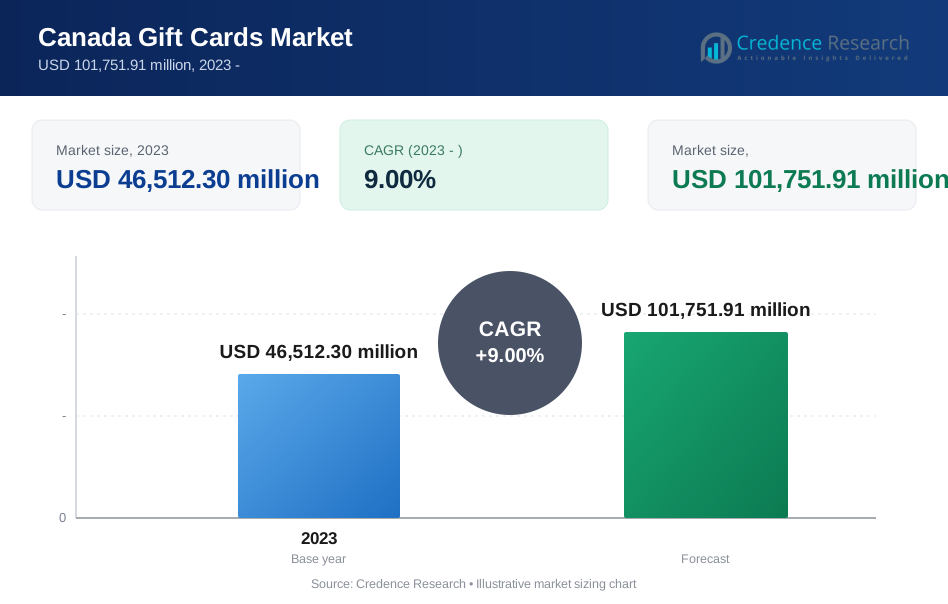
The Canada Gift Cards Market has emerged as a dynamic and rapidly evolving sector within the Canadian retail landscape, showcasing robust growth and evolving consumer preferences. The market's value stands at USD 46,512.30 million in 2023, and it is anticipated to experience substantial expansion, reaching USD 101,751.91 million by 2032, at a remarkable compound annual growth rate of 9.00%.
The growth trajectory of the Canada Gift Cards Market can be attributed to several key factors driving consumer behavior and reshaping the retail industry. Firstly, the convenience and flexibility offered by gift cards have positioned them as a preferred choice for both gift givers and recipients. The ability to choose from a diverse range of products and services provides a personalized touch to the gifting experience. Moreover, the digital transformation sweeping across the retail sector has significantly contributed to the market's expansion. The widespread adoption of online shopping and e-commerce platforms has facilitated the seamless integration of gift cards into the digital landscape. E-gift cards, in particular, have gained traction, offering instant delivery and redemption options, further enhancing the overall customer experience.
Understanding consumer trends is crucial in deciphering the Canada Gift Cards Market landscape. Gift cards have become an integral part of gifting culture, appealing to a broad demographic. The younger demographic, in particular, exhibits a preference for digital gift cards, aligning with their tech-savvy lifestyles. On the other hand, physical gift cards continue to resonate with older generations who appreciate the tangible aspect of traditional gifting. The customization options provided by gift cards allow consumers to tailor their gifts according to the recipient's preferences, contributing to their popularity. This personalized touch has fueled the growth of themed and branded gift cards, catering to niche markets and specific interests.
Retailers play a pivotal role in shaping the Canada Gift Cards Market, and their strategies have evolved to capitalize on this growing trend. Many retailers have implemented loyalty programs and partnerships to enhance the value proposition of their gift cards. Collaborations with other businesses, such as restaurants, entertainment venues, and online platforms, create a more comprehensive and appealing gift card offering. Furthermore, retailers are leveraging data analytics to gain insights into consumer behavior and preferences. This data-driven approach allows for targeted marketing campaigns, increasing the effectiveness of promotional efforts and driving the sales of gift cards.
The regulatory environment also plays a crucial role in shaping the Canada Gift Cards Market. Striking a balance between consumer protection and industry innovation, regulators have implemented measures to ensure transparency and fairness in gift card transactions. This includes regulations related to expiration dates, fees, and disclosure requirements, providing consumers with clear and comprehensive information. Additionally, advancements in payment technologies and security measures have bolstered consumer confidence in the use of gift cards. The integration of secure payment methods, such as tokenization and biometric authentication, enhances the overall safety and reliability of gift card transactions.
Despite the positive trajectory, the Canada Gift Cards Market faces certain challenges that industry stakeholders must navigate. Consumer concerns regarding the environmental impact of physical gift cards and potential security issues in the digital realm highlight the need for ongoing innovation and adaptation. However, these challenges also present opportunities for market players to explore sustainable and secure solutions, such as eco-friendly materials for physical cards and blockchain technology for enhanced security in digital transactions. Embracing these opportunities can not only address current concerns but also position the industry for long-term sustainability and growth.
Segmentation Analysis
By Type:
The Canada Gift Cards Market exhibits a multifaceted landscape, characterized by diverse segments that cater to a broad spectrum of consumers. One pivotal aspect of market segmentation is based on the type of gift cards, encompassing Closed-loop Cards, Open Loop Cards, E-Gifting options, and other specialized gift cards. Closed-loop cards, featuring specific brands or retailers, offer a more personalized and tailored gifting experience. Open-loop cards, on the other hand, provide versatility as they are accepted across multiple merchants. E-Gifting has gained significant traction in the digital age, providing instant delivery and redemption options. Other specialized gift cards cater to niche markets, offering unique and themed gifting experiences.
By Price Range
Another crucial segmentation criterion in the Canada Gift Cards Market is based on price range, comprising High (Above 400 US$), Medium (200-400 US$), and Low (0-200 US$) segments. High-end gift cards above $400 target consumers seeking premium gifting options, often associated with luxury brands or exclusive experiences. The Medium price range appeals to those looking for a balance between value and affordability, while Low-priced gift cards cater to budget-conscious consumers without compromising on the gifting experience.
By End-User
The segmentation based on end-users distinguishes between Business and Individual consumers. Gift cards designed for businesses often come in bulk, facilitating corporate gifting and employee incentives. Individual-focused gift cards offer a versatile range of options catering to personal preferences, making them ideal for special occasions or personal expressions of gratitude.
By Generation
Considering the generational aspect of the market, segmentation based on Generation X, Millennials, Generation Z, and others provides insights into the varying preferences across age groups. Generation X, representing individuals born between the early 1960s and late 1970s, may prefer traditional or nostalgic gifting experiences. Millennials, born between the early 1980s and mid-1990s, often seek digital and experiential gifts, aligning with the rise of E-Gifting. Generation Z, the youngest demographic, may gravitate towards innovative and tech-savvy gift card options, reflecting their digitally native lifestyles.
By Distribution Channel
The distribution channel is a pivotal segment, defining how gift cards reach consumers. In this market, distribution channels include Restaurants, Discount Stores, Supermarkets/Hypermarkets, Coffee Shops, and other specialized outlets. Restaurants offer gift cards for culinary experiences, while discount stores and supermarkets provide convenient options for a diverse range of products. Coffee shops contribute to the market through co-branded or standalone gift cards, enhancing the overall gifting experience. Other specialized outlets cater to specific niches, providing unique and tailored options.
Segments:
By Type:
- Closed-loop Card
- Open Loop
- E-Gifting
- Others Gift Card
By Price Range
- High (Above 400 US$)
- Medium (200-400 US$)
- Low (0-200 US$)
By End-User
- Business
- Individuals
By Generation
- Generation X
- Millennial
- Generation Z
- Others
By Distribution Channel
- Restaurants
- Discount Stores
- Supermarkets/Hypermarkets
- Coffee Shops
- Others
By Region
- Western Provinces (British Columbia, Alberta, Saskatchewan, Manitoba)
- Ontario
- Eastern Provinces (Quebec, Nova Scotia, New Brunswick, Prince Edward Island, Newfoundland and Labrador)
- Northern Territories (Yukon, Northwest Territories, Nunavut)
Market Drivers
Shifting Consumer Preferences: A Catalyst for Gift Card Growth
Younger generations, notably millennials and Gen Z, are steering the Canada Gift Cards Market into a new era driven by shifting consumer preferences. The allure of gift cards lies in their unparalleled convenience and flexibility, attributes highly appreciated by these demographics. Gift cards empower recipients with the autonomy to choose precisely what they desire, avoiding the cumbersome process of dealing with unwanted gifts. The younger demographic, with their tech-savvy lifestyles, values the ability to curate their own experiences, making gift cards an increasingly popular choice in the realm of gifting.
Rise of E-Commerce: Catalyst for Digital Gift Cards
The landscape of gift-giving is undergoing a profound transformation with the surge of e-commerce, becoming a pivotal driver for the Canada Gift Cards Market. The rapid growth of online shopping has catalyzed the demand for digital gift cards, offering a seamless and efficient alternative to traditional options. Consumers, enticed by the convenience of purchasing and delivering gifts online, are embracing digital gift cards as a preferred choice. This trend is poised to persist, resonating with the ongoing shift in consumer behavior towards online retail channels. As e-commerce continues its ascendancy, the demand for digital gift cards is expected to further solidify its position in the market.
Increased Use of Gift Cards for Incentives: Aligning Business Strategies
A notable trend shaping the Canada Gift Cards Market is the increased utilization of gift cards as powerful incentives by businesses. Beyond traditional gifting, businesses are leveraging gift cards to incentivize employees, reward customers, and enhance brand promotion. This strategic integration aligns with the evolving landscape of employee engagement and customer loyalty. The versatile nature of gift cards enables businesses to foster stronger connections with their target audiences. As companies seek innovative ways to engage and motivate, the role of gift cards as effective incentives is anticipated to gain even greater prominence in the business ecosystem.
Growing Demand for Personalized Gifting: Tailoring the Experience
In the ever-evolving gifting landscape, a key driver propelling the Canada Gift Cards Market forward is the escalating demand for personalized gifting experiences. Consumers, seeking to add a personal touch to their gifts, are turning to gift cards as a convenient means of customization. Retailers are responding to this demand by offering gift cards that can be personalized with messages or even photos. This customization aspect enhances the emotional resonance of the gift, transforming it into a more thoughtful and intimate gesture. The convergence of technology and personalization is driving this trend, reshaping the perception of gift cards from generic tokens to uniquely tailored expressions of sentiment.
Market Trends
Rise of Digital Gift Cards: Transforming the Gifting Landscape
Digital gift cards have emerged as a prominent trend, driven by their inherent convenience and ease of use. Consumers and businesses alike are drawn to the streamlined process of purchasing, sending, and redeeming digital gift cards, making them a preferred choice in the evolving gifting landscape. The seamless integration of digital gift cards with mobile wallets and online platforms adds another layer of convenience for consumers. Storing and managing digital gift cards within mobile wallets or online accounts enhances accessibility and ensures that users have their gift cards readily available whenever needed.
Personalization and Customization: Elevating the Gifting Experience
Consumers are increasingly seeking ways to make their gifts more meaningful, leading to a surge in demand for gift cards with customizable features. The ability to add personal touches such as messages, photos, or even video greetings enhances the emotional value of the gift, aligning with the growing trend of personalized gifting experiences. Retailers are strategically integrating gift cards with loyalty programs, fostering stronger customer engagement. This trend not only incentivizes gift card purchases but also allows customers to earn and redeem loyalty points, creating a symbiotic relationship between gift cards and brand loyalty.
Expansion Beyond Traditional Retail: Diversifying Gift Card Offerings
The trend of offering gift cards has expanded beyond traditional retail, encompassing a diverse array of businesses. Travel companies, restaurants, service providers, and entertainment venues now embrace gift cards, catering to the varied preferences of consumers seeking unique and experiential gifting options. The market has witnessed a growing demand for both open-loop and closed-loop gift cards. Open-loop cards, offering flexibility across various retailers, have become increasingly popular. Simultaneously, closed-loop cards, specific to a particular brand or store, remain sought after, providing a more targeted gifting experience based on consumer preferences.
Focus on Security and Fraud Prevention: Safeguarding Gift Card Transactions
To address concerns related to security and fraud, gift card issuers are adopting advanced security measures. Chip-enabled cards, PIN verification, and enhanced encryption contribute to a more secure environment, protecting against unauthorized use and fraudulent activities. Initiatives are underway to educate consumers about safe gift card purchasing and usage practices. By raising awareness, stakeholders aim to empower consumers with the knowledge needed to make secure transactions, fostering trust in the use of gift cards.
Market Restraints and Challenges
Potential Fraud and Security Risks: Safeguarding the Digital Gift Card Realm
Digital gift cards, while offering convenience, face inherent vulnerabilities such as hacking, phishing scams, and unauthorized access. These risks not only pose financial threats to both consumers and businesses but also hinder trust and adoption. Addressing these security concerns is imperative to ensure the continued growth of the digital gift card market. The complexity of regulations presents a significant challenge for issuers operating in the Canada Gift Cards Market. Navigating diverse regulations across different provinces and card types adds operational costs, creating a hurdle for seamless market operations. Simplifying and harmonizing regulations could alleviate this challenge and promote a more streamlined market environment.
Market Fragmentation: Navigating the Maze of Gift Card Providers
The presence of numerous gift card providers and issuers contributes to market fragmentation. This abundance creates confusion for consumers, making it challenging for them to navigate through the plethora of options available. This fragmentation, if unchecked, has the potential to limit the overall market growth potential. Inconsistent terms and conditions, fees, and redemption processes across different gift cards further compound the challenge of market fragmentation. The lack of standardization creates a complex and frustrating experience for consumers, hampering the seamless adoption of gift cards across various retail sectors.
Economic Uncertainty: Navigating Challenges Amid Economic Fluctuations
During economic downturns, consumer spending on discretionary items, including gift cards, may decline. This poses a challenge to market growth, especially for non-essential retailers relying on gift card sales. Strategies to mitigate the impact of economic uncertainties on consumer behavior become crucial for sustained market resilience. For open-loop gift cards with international acceptance, fluctuations in exchange rates can impact the perceived value and attractiveness of the gift card. Managing this volatility becomes essential for gift card providers to maintain competitiveness and appeal to a broader consumer base.
Rise of Alternative Gifting Options: Responding to Evolving Consumer Preferences
The rise of alternative gifting options, such as experiential gifts and subscription boxes, poses a competitive threat to traditional gift cards. This is particularly relevant for younger generations seeking unique and personalized experiences beyond the conventional gift card offerings. Adapting to evolving consumer preferences becomes pivotal in addressing this challenge.
Impersonal Nature of Gift Cards: Balancing Convenience and Thoughtfulness
Some consumers perceive gift cards as impersonal, lacking the thoughtfulness associated with more traditional, physical gifts. Overcoming this perception challenge requires innovative strategies to position gift cards as thoughtful and meaningful choices, balancing the convenience they offer with a personal touch. Canada Gift Cards Market faces a spectrum of challenges, from potential fraud and security risks to market fragmentation, economic uncertainties, the rise of alternative gifting options, and addressing the perceived impersonality of gift cards. Successfully navigating and mitigating these challenges will be essential for industry stakeholders to ensure the continued growth and resilience of the gift card market in an ever-evolving retail landscape.
Key Players
- George Weston Ltd
- Wal-Mart Stores Inc
- Empire Co Ltd
- Costco Wholesale Corp
- Metro AG
- Canadian Tire Corp Ltd
- Home Depot Inc, The
- Liquor Control Board of Ontario
- Hudson's Bay Co
- Home Hardware Stores Ltd
- Best Buy Co Inc
- Apple Inc
Regional Analysis
Western Provinces:
The Western provinces, including British Columbia, Alberta, Saskatchewan, and Manitoba, account for a significant portion of the Canadian gift card market share. In this region, the retail and hospitality sectors play a pivotal role, with consumers favoring gift cards from prominent national chains and local establishments alike. Notably, the growing popularity of digital gift cards has gained traction, catering to the tech-savvy population and aligning with the region's progressive outlook. Market share data indicates that the Western provinces collectively contribute approximately 35% to the overall Canadian gift card market. British Columbia, with its thriving urban centers and tourism industry, holds the largest share within this region, accounting for nearly 18% of the national market. Alberta, driven by its robust energy sector and growing consumer base, follows closely with a 12% market share. The remaining provinces, Saskatchewan and Manitoba, contribute 3% and 2% respectively.
Ontario:
Ontario, the most populous province in Canada, dominates the gift card market, capturing a substantial 40% market share. The diverse consumer base and the presence of major retail and hospitality players contribute to this dominance. Toronto, the provincial capital and Canada's largest city, serves as a hub for gift card innovations, with retailers continually exploring new ways to enhance the customer experience. Additionally, the growing popularity of e-commerce and mobile applications has facilitated the adoption of digital gift cards, further strengthening Ontario's position in the market. Within Ontario, the Greater Toronto Area accounts for a staggering 25% of the national gift card market, while regions like Ottawa and the Golden Horseshoe contribute 8% and 7% respectively.
Eastern Provinces:
The Eastern provinces, including Quebec, Nova Scotia, New Brunswick, Prince Edward Island, and Newfoundland and Labrador, present a unique gift card market dynamic. Cultural influences and consumer preferences shape the industry in this region, with a strong emphasis on local and regional brands. Quebec, in particular, has a distinct market characterized by a preference for French-language gift cards and products from Quebec-based retailers. The province accounts for a significant 15% of the Canadian gift card market share, driven by its large population and vibrant retail landscape. The remaining Eastern provinces collectively contribute around 5% to the national market, with Nova Scotia leading the way at 2%, followed by New Brunswick, Prince Edward Island, and Newfoundland and Labrador at 1% each.
Northern Territories:
The Northern territories of Yukon, Northwest Territories, and Nunavut, while sparsely populated, offer niche opportunities for the gift card market. In these regions, gift cards are often used as incentives and rewards, particularly in the mining and resource industries. Additionally, the growing tourism sector has created a demand for gift cards from local businesses and attractions. While the Northern territories contribute a relatively small share to the overall Canadian gift card market, their unique consumer dynamics and cultural influences shape the industry's presence in these regions. The Yukon holds the largest share among the territories, accounting for approximately 0.5% of the national market, followed by the Northwest Territories and Nunavut at 0.3% and 0.2% respectively. Despite their modest contributions, these regions present untapped potential for growth and innovation in the gift card industry.
Future Outlook
- The Canada Gift Cards Market is embracing digital formats for greater accessibility and convenience.
- Personalized gifting experiences are evolving, with AI-driven recommendations and dynamic customization options gaining prominence.
- Emerging technologies like blockchain and augmented reality are expected to play a significant role in shaping the future of gift cards.
- Cross-industry collaborations are on the rise, fostering innovation and expanding the market into new sectors.
- Sustainability is a growing focus, with an increasing shift towards eco-friendly materials for gift cards.
- Robust security measures, including biometric authentication and tokenization, will enhance the safety of digital gift card transactions.
- Streamlining regulations and standardizing terms will contribute to a more transparent and consumer-friendly market.
- Data analytics will drive targeted marketing strategies, ensuring tailored promotions based on comprehensive consumer insights.
- Innovative designs and materials will keep physical gift cards relevant, complementing the digital shift.
- Continuous adaptation to evolving consumer trends is crucial for sustained growth in the dynamic gift cards market.
Request a Free Sample
Fill in your details and we'll send you a free sample report.
- Sample data tables & charts
- Research methodology
Need a Custom Version of This Report?
Tailor the scope, geography, or segments to your exact requirements.
- Custom geography or segment scope
- Direct access to our analyst team
Frequently Asked Questions
What is the current value of the Canada Gift Cards Market, and how is it projected to grow in the coming years?
What factors are driving the growth of the Canada Gift Cards Market, and how are consumer preferences influencing the market dynamics?
How do consumer trends, particularly among different demographics, impact the Canada Gift Cards Market?
What role do retailers play in shaping the Canada Gift Cards Market, and how have their strategies evolved?
How does the regulatory environment impact the Canada Gift Cards Market, and what measures are in place to ensure transparency and fairness in gift card transactions?
Table of Content
Chapter 1. Report Introduction
- 1.1 Report Description & Purpose
- 1.1.1 Report Title & Market Definition
- 1.1.2 Unique Selling Propositions (USP) & Key Differentiators
- 1.1.3 Value Proposition for Stakeholders
- 1.2 Research Objectives
- 1.2.1 Market Sizing Objectives (Volume & Revenue) (Volume Where Applicable)
- 1.2.2 Segmentation Objectives
- 1.2.3 Competitive Intelligence Objectives
- 1.2.4 Forecast & Scenario Objectives
- 1.3 Report Scope
- 1.3.1 Canada Gift Cards Scope – Segments & Subsegments Covered
- 1.3.2 Geographic Scope – Selected Country & Subnational Markets Covered
- 1.3.3 Historical Period, Base Year & Forecast Period (2023; forecast to 2032)
- 1.3.4 Inclusions & Exclusions
- 1.4 Industry Classification & Applicable Codes
- 1.5 Currency, Measurement Units & Valuation Basis
- 1.6 Target Stakeholders
- 1.7 Limitations & Assumptions
Chapter 2. Executive Summary
- 2.1 Canada Gift Cards Snapshot
- 2.1.1 Market Size – Historical (2023) & Forecast (2023-2032) (2023: USD 46,512.30 million → 2032: USD 101,751.91 million)
- 2.1.2 Volume & Revenue – National Totals (Volume Where Applicable)
- 2.1.3 Key Market Highlights – Top Five Facts
- 2.2 Canada Gift Cards Segmentation Snapshot
- 2.2.1 Market Split by Subnational Area – 2023 vs. 2032
- 2.3 Competitive Snapshot
- 2.3.1 Top 10 Players by Revenue Share – 2023
- 2.3.2 Top 10 Players by Volume Share – 2023 (Volume Where Applicable)
- 2.3.3 Recent Strategic Developments (18-Month Summary)
- 2.4 Key Investment Highlights & Strategic Conclusions
Chapter 3. Canada Gift Cards Dynamics & Industry Analysis
- 3.1 Market Overview & Context
- 3.1.1 Canada Gift Cards Position in the Broader Industry Value Chain
- 3.1.2 Demand Structure & Purchasing Dynamics
- 3.1.3 Market Maturity & Development Stage Across Domestic Markets
- 3.2 Canada Gift Cards Drivers
- 3.3 Canada Gift Cards Restraints & Challenges
- 3.4 Canada Gift Cards Opportunities
- 3.5 Porter's Five Forces Analysis
- 3.5.1 Threat of New Entrants
- 3.5.2 Bargaining Power of Suppliers
- 3.5.3 Bargaining Power of Buyers
- 3.5.4 Threat of Substitutes
- 3.5.5 Competitive Rivalry – Intensity Assessment
- 3.6 Canada Gift Cards Value Chain Analysis
- 3.6.1 Upstream – Key Inputs, Resources & Suppliers
- 3.6.1.1 Key Input/Resource 1
- 3.6.1.2 Key Input/Resource 2
- 3.6.1.3 Key Input/Resource 3
- 3.6.2 Midstream – Core Operations & Value Creation
- 3.6.2.1 Operating Model & Process Overview
- 3.6.2.2 Key Operating Locations & Capabilities by Company
- 3.6.3 Downstream – Market Channels & End Users
- 3.6.3.1 Direct Sales & Customer Engagement Channels
- 3.6.3.2 Indirect Sales, Intermediaries & Partner Channels
- 3.6.4 Value Chain Profitability Analysis
- 3.6.1 Upstream – Key Inputs, Resources & Suppliers
- 3.7 PESTEL Analysis
- 3.7.1 Political Factors
- 3.7.2 Economic Factors
- 3.7.3 Social Factors
- 3.7.4 Technological Factors
- 3.7.5 Environmental Factors
- 3.7.6 Legal Factors
- 3.8 Canada Gift Cards Supply Chain Analysis
- 3.8.1 Critical Input & Resource Availability Risk Assessment
- 3.8.2 Supplier & Operational Concentration Risk (Geographic Exposure)
- 3.8.3 Supply & Service Disruption Impact Analysis
- 3.9 National & Subnational Regulatory Landscape
Note: The regulatory and policy landscape section covers regulations based on their applicability to the market, Canada Gift Cards category, geography, and scope of the study. Only regulatory frameworks with a material impact on operations, compliance, trade, sustainability, or market access are analyzed in detail.
Chapter 4. Key Investment Pockets & Opportunity Analysis
- 4.1 Canada Gift Cards Attractiveness Analysis
- 4.1.1 By Subnational Area – Investment Attractiveness Matrix (Market Size × CAGR)
- 4.2 Absolute Revenue Growth Opportunity
- 4.2.1 By Subnational Area – Absolute Revenue Growth Through 2032
- 4.3 Incremental Demand Opportunity
- 4.3.1 By Subnational Area – Incremental Demand Through 2032
- 4.3.2 Segment – Incremental Demand
- 4.4 Emerging Submarket Opportunity Deep Dive (Subject to Applicability)
- 4.5 Priority Domestic Market Opportunity Scorecards
- 4.5.1 Priority Domestic Market 1
- 4.5.2 Priority Domestic Market 2
- 4.5.3 Priority Domestic Market 3
- 4.5.4 Priority Domestic Market 4
Note: Domestic market scorecards cover relevant states, provinces, territories, cities, or economic zones within the selected country. Numbered entries are populated with market names suited to the national administrative structure and research scope. Geographic share tables use one consistent, nonoverlapping set of areas.
Chapter 5. Canada Gift Cards Cross-Border Trade & Market Access Analysis
- 5.1 National Trade & International Partner Overview
- 5.1.1 Export Value by Destination Country (2023)
- 5.1.2 Export Volume by Destination Country (2023) (Where Applicable)
- 5.1.3 Import Value by Source Country (2023)
- 5.1.4 Import Volume by Source Country (2023) (Where Applicable)
- 5.1.5 National & Partner-Country Trade Balances (2023)
- 5.2 Export Analysis – Segment
- 5.2.1 Category 1 (Applicable Classification Code)
- 5.2.2 Category 2 (Applicable Classification Code)
- 5.2.3 Category 3 (Applicable Classification Code)
- 5.2.4 Category 4 (Applicable Classification Code)
- 5.2.5 Category 5 (Applicable Classification Code)
- 5.3 Import Analysis – Segment
- 5.3.1 Category 1 (Applicable Classification Code)
- 5.3.2 Category 2 (Applicable Classification Code)
- 5.3.3 Category 3 (Applicable Classification Code)
- 5.3.4 Category 4 (Applicable Classification Code)
- 5.3.5 Category 5 (Applicable Classification Code)
- 5.4 Cross-Border Pricing & Transaction Benchmarks
- 5.4.1 Export Pricing – Segment & Destination Country
- 5.4.2 Import Pricing – Segment & Source Country
- 5.4.3 Price Trends (2023)
- 5.5 Key Cross-Border Trade & Delivery Routes
- 5.5.1 Cross-Border Trade/Delivery Route 1
- 5.5.2 Cross-Border Trade/Delivery Route 2
- 5.5.3 Cross-Border Trade/Delivery Route 3
- 5.5.4 Cross-Border Trade/Delivery Route 4
- 5.5.5 Cross-Border Trade/Delivery Route 5
- 5.6 Trade Policy & Market Access Impact Assessment
- 5.6.1 Tariff & Non-Tariff Barriers
- 5.6.2 National Participation in Regional Trade & Economic Frameworks
- 5.6.3 Bilateral & Multilateral Trade Agreements
- 5.6.4 Cross-Border Operating, Licensing & Localization Requirements
Note: This chapter covers international trade relevant to Canada Gift Cards in the selected country. Exports are analyzed by destination and imports by source. Domestic interregional flows are excluded from international trade totals. Goods, services, and digital offerings use applicable classifications; volume and route analyses apply only where meaningful.
Chapter 6. Competitive Landscape & Company Benchmarking
- 6.1 Canada Gift Cards Concentration & Structure
- 6.1.1 Herfindahl-Hirschman Index (HHI) – vs. 2023
- 6.1.2 Leading, Mid-Sized & Emerging Player Structure
- 6.1.3 Multinational, National & Local Player Dynamics
- 6.2 Canada Gift Cards Share Analysis – 2023
- 6.2.1 National Revenue Share by Company
- 6.2.2 National Volume Share by Company (Volume Where Applicable)
- 6.2.3 Company Revenue Share by Subnational Area
- 6.2.4 Market Share Evolution ( vs. 2023)
- 6.2.5 Company Market Share by Key Segment
- 6.2.6 Company Market Share by Customer Group
- 6.3 Operating Scale, Capacity & Infrastructure Analysis
- 6.3.1 National Operating Scale & Supply Capacity
- 6.3.2 Resource Utilization & Operating Efficiency
- 6.3.3 Output, Service Delivery & Activity Metrics
- 6.3.4 Operating Footprint & Infrastructure Map
- 6.3.5 Planned Operational & Capacity Expansion
- 6.4 Canada Gift Cards Competitive Benchmarking Matrix
- 6.4.1 Revenue, Growth, Profitability & Operating Metric Comparison
- 6.4.2 Channel Revenue Mix
- 6.4.3 Revenue Exposure Across Domestic Markets
- 6.4.4 R&D Intensity
- 6.4.5 Sustainability Maturity
- 6.5 Strategic Developments in Canada Gift Cards (Last 24 Months)
- 6.5.1 Mergers, Acquisitions & Divestments
- 6.5.2 New Products, Services & Solutions in Canada Gift Cards
- 6.5.3 Operational & Infrastructure Expansions
- 6.5.4 Strategic Alliances, Joint Ventures & Partnerships
- 6.5.5 Distribution Expansion & Market Entry
- 6.5.6 Sustainability & ESG Initiatives
- 6.6 Competitive Strategy Mapping
- 6.6.1 Leader, Challenger, Follower & Niche Classification
- 6.6.2 Pricing Strategy Comparison
- 6.6.3 Channel Strategy Matrix
Note: Strategic developments are included based on their materiality and the availability of reliable information.
Chapter 7. Canada Gift Cards – By Sales & Delivery Channel
- 7.1 Segment Overview
- 7.1.1 Volume & Revenue Split by Channel (2023 & 2032) (Volume Where Applicable)
- 7.1.2 Channel Mix Evolution (2023-2032)
Chapter 8. Subnational Market Analysis – Country Overview
- 8.1 Domestic Geographic Market Overview
- 8.1.1 Subnational Volume Share (Where Applicable)
- 8.1.2 Subnational Revenue Share
- 8.1.3 Market Volume by Subnational Area (Where Applicable)
- 8.1.4 Market Revenue by Subnational Area
- 8.1.5 Subnational Forecasts Through 2032
- 8.2 Cross-Area Segment Analysis Within the Country
- 8.2.1 By Sales & Delivery Channel
- 8.2.2 By Competitive Positioning & Price Tier
Chapter 9. Canada Gift Cards – Priority Domestic Market 1
Chapter 10. Canada Gift Cards – Priority Domestic Market 2
Chapter 11. Canada Gift Cards – Priority Domestic Market 3
Chapter 12. Canada Gift Cards – Priority Domestic Market 4
Chapter 13. Canada Gift Cards Company Profiles
- 13.1 [Company 01]
- 13.1.1 Company Overview
- 13.1.2 Key Management Personnel
- 13.1.3 Products & Services Portfolio
- 13.1.4 Financial Performance
- 13.1.5 Domestic Market Focus & Local Operating Presence
- 13.1.6 Recent Developments & Strategic Initiatives
Note: The company profile list is preliminary and may change based on research findings, market developments, data availability, and client requirements.
Chapter 14. Appendices
- Appendix A – List of Abbreviations & Acronyms
- Appendix B – Industry Classification Code Reference – Full Series
- Appendix C – Supply, Output & Operating Capacity Data Tables
- Appendix D – End-Use & Demand Base Tables
- Appendix E – Demand, Adoption & Usage Assumptions
- Appendix F – Pricing & Revenue Metric Reference Tables
- Appendix G – Company Operations & Infrastructure Database
- Appendix H – Cross-Border Trade & Activity Data Tables (Where Applicable)
- Appendix I – Regulatory Summary Tables
- Appendix J – Primary Research Participant List (Anonymized)
- Appendix K – Primary Research Questionnaire Framework
- Appendix L – Data Sources & Bibliography
- Appendix M – Market Size Divergence & Source Comparison
Chapter 15. Research Methodology
- 15.1 Research Framework & Philosophy
- 15.2 Secondary Research – Sources, Hierarchy & Data Extraction
- 15.3 Data Modeling – National Market Sizing & Subnational Allocation
- 15.4 Primary Research – Stakeholder Framework, LOI & Sample Sizes
- 15.5 Forecast Methodology – Regression, Scenario & Sensitivity Analysis
- 15.6 Quality Control – Four-Layer Validation Framework
- 15.7 Limitations & Standard Assumptions
- 15.8 Disclaimer
