
| REPORT ATTRIBUTE | DETAILS |
|---|---|
| Historical Period | 2019-2022 |
| Base Year | 2023 |
| Forecast Period | 2024-2032 |
| Canada Hummus Market Size 2023 | USD 152.93 million |
| Canada Hummus Market, CAGR | 10.67% |
| Canada Hummus Market Size 2032 | USD 344.24 million |
Market Overview
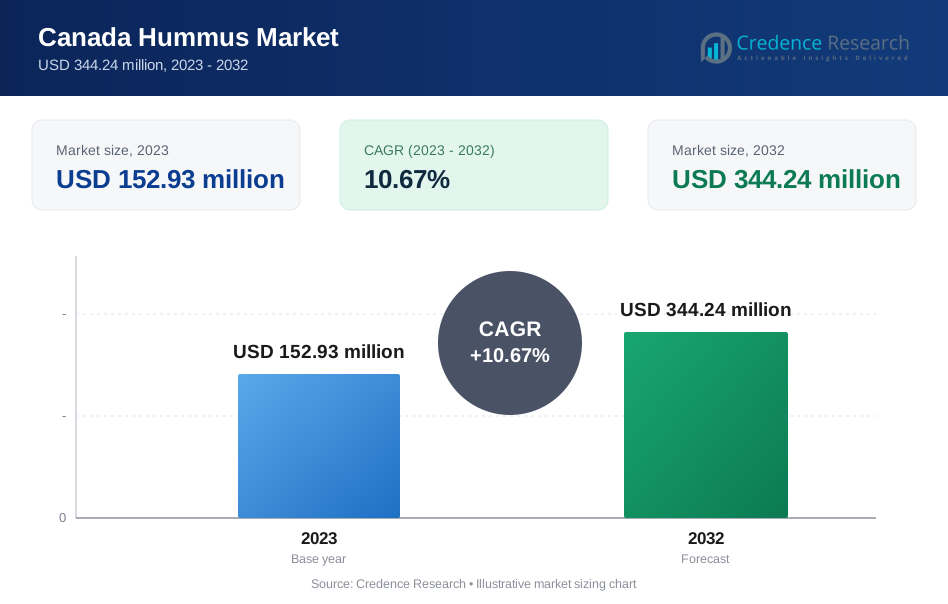
The Canada Hummus Market is projected to grow from USD 152.93 million in 2023 to an estimated USD 344.24 million by 2032, reflecting a robust compound annual growth rate (CAGR) of 10.67% from 2024 to 2032. This significant growth underscores the increasing demand for hummus as a versatile, plant-based food product across Canada.
Key drivers of this growth include heightened consumer awareness about the nutritional benefits of hummus, such as its high protein and fiber content, which align with the increasing preference for healthier snacking options. The market also benefits from evolving dietary trends, including plant-based and clean-label preferences. Additionally, the growing popularity of Mediterranean cuisine, combined with aggressive marketing and distribution strategies by leading brands, is accelerating market penetration. Trends like organic and non-GMO product offerings further bolster demand.
Geographically, the market is concentrated in urban centers such as Toronto, Vancouver, and Montreal, where health-conscious consumer bases drive adoption. Western Canada also shows promising growth, attributed to rising disposable incomes and dietary shifts. Key players in the Canada Hummus Market include Sabra Dipping Company, Fontaine Santé, Cedar’s Foods, and Summer Fresh Salads, which dominate the landscape with innovative product portfolios and strong distribution networks. These players continue to leverage strategic partnerships and marketing campaigns to maintain a competitive edge in the rapidly expanding market.
Market Insights
- The Canada Hummus Market is expected to grow from USD 152.93 million in 2023 to USD 344.24 million by 2032, with a CAGR of 10.67% from 2024 to 2032, driven by the increasing demand for plant-based food products.
- Rising awareness of the nutritional benefits of hummus, such as its high protein and fiber content, is driving the market, particularly among health-conscious consumers and those adopting plant-based diets.
- Manufacturers are introducing new flavors, organic, and clean-label variants to meet consumer demand for healthier, sustainable, and innovative food options.
- Ontario, Quebec, and British Columbia dominate the market, with urban centers showing the highest demand due to strong health-conscious consumer bases and diverse culinary preferences.
- Key players such as Sabra Dipping Company, Fontaine Santé, and Cedar’s Foods lead the market, with continuous innovations and strong distribution networks that enhance brand presence.
- Price sensitivity and intense competition, especially from private-label products, pose challenges for brand differentiation and market penetration, especially in price-sensitive segments.
- The growing shift toward online shopping and subscription-based models presents a significant opportunity for hummus brands to reach broader consumer bases across Canada.
Market Drivers
Growing Health Awareness and Shift Toward Plant-Based Diets
The trend toward plant-based diets in Canada is increasingly supported by data indicating a shift in consumer behavior. Approximately 15% of the Canadian adult population now practices some form of plant-based eating, with many identifying as flexitarians. This shift is largely driven by health concerns, as plant-based diets are associated with improved nutrient density and lower risks of chronic diseases such as obesity and diabetes. The 2019 Canadian Food Guide emphasizes plant-based proteins, suggesting that Canadians should incorporate these foods into their daily diets. This aligns with findings from a study showing that individuals adhering to strict plant-based diets were less likely to be overweight and had better overall health metrics compared to omnivores. As Canadians become more health-conscious, the demand for nutritious options like hummus, which is rich in protein and fiber, continues to rise. This dietary evolution reflects a broader societal movement towards healthier eating habits, particularly among younger generations who prioritize clean-label and minimally processed foods.
Rising Popularity of Mediterranean Cuisine
The increasing popularity of Mediterranean cuisine significantly influences the Canadian food landscape, particularly in the context of hummus consumption. Data shows that nearly half of Canadians are incorporating Mediterranean flavors into their meals, with this cuisine being regarded as both healthy and flavorful. Hummus, a staple of Mediterranean dining, is gaining traction not only as a dip but also as an essential ingredient in various dishes like wraps and salads. The 2023 survey revealed that about 42% of Canadians are preparing plant-based meals at home, often inspired by Mediterranean recipes. Additionally, food service establishments are embracing this trend by featuring hummus in their menus, thereby enhancing its visibility and accessibility. As cultural influences shape dining preferences, the integration of Mediterranean flavors into mainstream Canadian cuisine fosters a growing appreciation for dishes that emphasize fresh ingredients and balanced nutrition, further solidifying hummus's role in contemporary diets.
Product Innovation and Diversification
The hummus market in Canada is thriving due to continuous innovation and diversification by manufacturers. Companies are expanding their product lines to include a wide range of flavors and packaging options, catering to diverse consumer preferences. From classic flavors like garlic and roasted red pepper to unique offerings like beetroot and avocado-infused hummus, brands are investing heavily in research and development to stand out in a competitive landscape.Innovative packaging solutions also play a crucial role. Single-serving packets and eco-friendly containers appeal to busy, environmentally conscious consumers who prioritize convenience and sustainability. Furthermore, manufacturers are exploring organic, gluten-free, and non-GMO certifications to meet the demands of health-conscious and ethically minded shoppers. Such efforts not only enhance product appeal but also strengthen brand loyalty, contributing significantly to market expansion.
Strategic Marketing and Distribution Efforts
Effective marketing and robust distribution strategies are pivotal in driving the Canada hummus market. Leading brands have successfully capitalized on social media campaigns, influencer partnerships, and digital marketing to enhance product visibility and consumer engagement. Eye-catching advertisements and creative campaigns that emphasize hummus's health benefits and versatility have resonated well with target audiences. Moreover, strong retail partnerships have facilitated the widespread availability of hummus across multiple channels, including supermarkets, hypermarkets, online platforms, and specialty stores. E-commerce has emerged as a significant growth avenue, offering convenience and accessibility to a tech-savvy consumer base. Promotions, discounts, and product bundles on digital platforms have further encouraged repeat purchases and strengthened brand recall.The rise of private-label brands has also contributed to increased competition and market penetration. Retailers like Loblaws and Sobeys have introduced their own hummus lines, offering cost-effective alternatives to consumers. This diversification in market offerings ensures that a wide range of consumer preferences, from premium to budget-friendly options, is addressed.
Market Trends
Increasing Demand for Organic and Clean-Label Products
Canadian consumers are increasingly prioritizing health-conscious choices, fueling the demand for organic and clean-label hummus products. Shoppers are scrutinizing ingredient lists, favoring products free from artificial preservatives, flavors, and additives. Research indicates that a significant portion of consumers actively seeks products with fewer and more recognizable ingredients, highlighting a strong preference for transparency in food labeling. This trend is supported by findings showing that 70% of consumers prefer items with clearer labeling and minimal ingredients, reflecting a heightened awareness of health and wellness.To meet these preferences, manufacturers are innovating with cleaner formulations that emphasize high-quality, natural ingredients. Many brands now offer hummus variants with no added sugar, low sodium, and minimal processing. Furthermore, organic certifications and non-GMO labels resonate strongly with health-conscious consumers, aligning with their commitment to sustainability. The rise of e-commerce has also enhanced access to these organic options, allowing consumers to conveniently seek out specific products that meet their dietary needs. This combination of consumer awareness and product innovation not only appeals to health-focused demographics but also differentiates brands in an increasingly competitive market.
Rise of Flavor Diversification and Regional Adaptations
Flavor innovation is a standout trend in the Canadian hummus market, reflecting consumers' growing curiosity about new and exotic tastes. While traditional flavors like classic, garlic, and roasted red pepper remain popular, brands are introducing bold options such as jalapeño, beetroot, avocado, curry, and even dessert hummus variants like chocolate or cinnamon. This diversification caters to adventurous eaters seeking variety in their snacking choices.Additionally, regional adaptations are gaining traction as manufacturers aim to align products with local tastes and cultures. For instance, incorporating ingredients like maple syrup or using Canadian-grown chickpeas not only resonates with local food culture but also reinforces sustainability efforts. Research shows that consumers are more likely to purchase products that reflect their regional identity and preferences. This trend not only attracts diverse consumer segments but also drives repeat purchases by offering a fresh experience with every product iteration. As brands continue to innovate in flavor profiles and regional ingredients, they enhance their appeal while fostering a deeper connection with consumers who value both diversity and locality in their food choices.
Growth of Convenient and Sustainable Packaging
Convenience and sustainability have become key considerations in the Canada hummus market, influencing packaging trends. With busy lifestyles, consumers gravitate toward single-serving or portion-controlled packaging that offers grab-and-go convenience. This trend aligns with the rising popularity of hummus as a healthy snack option rather than just a meal accompaniment.Simultaneously, the focus on sustainability has driven the adoption of eco-friendly packaging materials. Brands are exploring biodegradable, compostable, and recyclable options to reduce environmental impact and appeal to environmentally conscious consumers. Innovations in resealable and reusable packaging also cater to consumers seeking practicality and reduced food waste. These advancements in packaging not only enhance user experience but also strengthen brand loyalty by aligning with broader consumer values.
Expansion of Distribution Channels and E-Commerce Growth
The proliferation of distribution channels, including online platforms, has significantly impacted the Canada hummus market. While traditional retail outlets such as supermarkets and specialty stores remain dominant, e-commerce has emerged as a critical growth driver. Online shopping offers unparalleled convenience, especially for tech-savvy consumers, and allows brands to reach wider audiences across urban and rural areas.Subscription-based delivery models and bundled offerings are gaining popularity, as they provide consistent supply and value for regular consumers. Additionally, partnerships between manufacturers and meal kit services have introduced hummus as a versatile ingredient, further boosting its presence in Canadian households.Retailers and brands are also leveraging data-driven marketing strategies to optimize online sales. Targeted advertisements, personalized recommendations, and digital coupons have proven effective in increasing consumer engagement and driving purchases. The integration of omnichannel strategies ensures a seamless shopping experience, enabling consumers to buy hummus products effortlessly across physical and digital platforms.
Market Challenges
Product Innovation and Diversification
The hummus market in Canada is thriving due to continuous innovation and diversification by manufacturers. For instance, brands like Sabra have recently launched bold flavors such as Buffalo Hummus and BBQ Hummus, catering to consumers seeking exciting taste experiences. This trend reflects a broader shift where traditional hummus varieties are being complemented by unique options, including dessert-inspired flavors like chocolate and pumpkin spice. The introduction of these novel flavors not only appeals to adventurous eaters but also stimulates market growth by attracting a wider consumer base.Moreover, innovative packaging solutions are enhancing product accessibility. Single-serving packets and eco-friendly containers are increasingly popular among busy, health-conscious consumers who prioritize convenience and sustainability. Companies like Hope Foods are revamping their packaging to highlight organic certifications and sustainability efforts, appealing to environmentally aware shoppers. This focus on product innovation and sustainable practices not only enhances the appeal of hummus but also fosters brand loyalty, ensuring that manufacturers can effectively compete in a dynamic market landscape.
Rising Popularity of Mediterranean Cuisine
The growing popularity of Mediterranean cuisine significantly impacts the hummus market in Canada. As consumers become more adventurous with their culinary choices, they increasingly embrace hummus as a staple ingredient in various dishes. Foodservice establishments, including restaurants and cafes, have integrated hummus into their menus, offering it as a dip or an ingredient in wraps and salads. This trend is exemplified by the rise of Mediterranean-themed products in retail spaces, making it easier for consumers to replicate restaurant experiences at home.Furthermore, the cultural appreciation for Mediterranean food has led to increased demand for hummus across diverse demographics. As consumers become more health-conscious, they seek nutritious options like hummus, which is rich in protein and fiber. This alignment with health trends positions hummus as a desirable choice for those looking to incorporate healthier snacks into their diets. The sustained interest in Mediterranean cuisine continues to create opportunities for hummus manufacturers to innovate and expand their product offerings, ultimately driving market growth.
Market Opportunities
Expansion of Health-Conscious Consumer Base
One of the most significant market opportunities in the Canada hummus market lies in the growing health-conscious consumer segment. As Canadians increasingly adopt plant-based, gluten-free, and low-sugar diets, there is an expanding demand for healthier snack alternatives. Hummus, with its rich nutritional profile—high in protein, fiber, and healthy fats—aligns well with these dietary preferences. For instance, the nutritional benefits of hummus are particularly appealing to Canadians who are increasingly adopting plant-based diets. Research indicates that consumers are actively seeking out natural and nutritious foods, with many opting for organic and gluten-free products. Moreover, the rise in chronic health conditions linked to diet has heightened awareness around nutritional choices, leading consumers to incorporate more nutrient-dense options like hummus into their meals. Manufacturers have the opportunity to capitalize on this trend by offering more specialized products, such as organic, non-GMO, and allergen-free hummus options. By positioning hummus as a healthy snack for various lifestyles, including vegan, vegetarian, and flexitarian diets, brands can tap into a broad and expanding consumer base. This strategic focus on health can effectively attract consumers seeking nutritious alternatives.
Growing Popularity of Convenient and On-the-Go Products
Another substantial opportunity for growth in the Canada hummus market lies in the increasing demand for convenient and portable food options. With busy lifestyles becoming the norm, Canadian consumers are seeking convenient snacks that do not compromise on health or taste. For instance, the demand for convenient snack options has surged as busy lifestyles become more prevalent among Canadians. The popularity of single-serve packaging for hummus aligns perfectly with this trend, catering to consumers looking for quick, healthy snacks that can be easily consumed on the go.Innovations in packaging, such as resealable containers and eco-friendly materials, have also gained traction as consumers become more environmentally conscious. Additionally, pairing hummus with other convenient items like pre-cut vegetables or pita chips enhances its appeal as a ready-to-eat snack solution. This combination not only meets the need for convenience but also promotes healthier eating habits among consumers who may otherwise resort to less nutritious snack options during their hectic days. By tapping into this growing need for ready-to-consume options, companies can expand their product offerings and reach a wider audience effectively.
Market Segmentation Analysis
By Product
The Canada Hummus Market features a wide range of product variants, each catering to diverse consumer preferences. Classic Latin America hummus, made from a traditional chickpea base with tahini and olive oil, remains a dominant segment due to its broad appeal and versatility in various applications. Roasted garlic hummus has gained popularity for its deeper, aromatic flavor, appealing to those seeking a richer taste, and is increasingly found in premium product lines. White bean hummus, offering a milder and creamier texture, caters to health-conscious consumers and those seeking alternative plant-based protein sources. Black olive hummus, with its bold and savory flavor, has carved a niche among consumers who enjoy Mediterranean cuisine and more distinct flavor profiles. The "Others" category includes innovative options like spicy harissa, beetroot, and avocado hummus, which cater to adventurous eaters and health-conscious individuals, positioning these variants for steady growth as consumer tastes evolve and diversify.
By Packaging Type
Packaging for hummus varies significantly, with tubs and cups being the most common formats, accounting for a large market share due to their convenience and portability, making them ideal for both household use and on-the-go consumption. Tubs are particularly popular for larger families or consumers who use hummus in larger quantities. Jars and bottles, on the other hand, offer a premium packaging solution, typically preferred for specialized or gourmet hummus products like organic, gluten-free, or low-sodium options, catering to consumers willing to pay a premium for high-quality items. As demand for premium and organic hummus grows, the jars and bottles segment is expected to expand. The "Others" segment includes innovative packaging such as single-serve packets and sustainable options, like biodegradable or recyclable materials, appealing to environmentally conscious consumers. These packaging solutions are designed for convenience and portion control while meeting the growing consumer preference for sustainability. Brands adopting these trends are likely to benefit from increased consumer loyalty and market differentiation.
Segments
Based on product
- Classic Latin America Hummus
- Roasted Garlic Latin America Hummus
- White Bean Latin America Hummus
- Black Olive Latin America Hummus
- Others
Based on Packaging type
- Tubs & Cups
- Jars & Bottles
- Others
Based on Ingredient type
- Chickpeas
- Tahini
- Olive Oil
- Garlic
- Others
Based on Distribution channel
- Supermarkets & Hypermarkets
- Convenience Stores
- Grocery Stores
- Online Retailers
- Others
Based on region
- Ontario
- Quebec
- British Columbia
Regional Analysis
Ontario (45%)
Ontario dominates the Canada hummus market with a substantial 45% market share, driven by its large population and diverse consumer base. Major urban centers like Toronto and Ottawa are key contributors to the region’s demand for hummus. Ontario’s growing health-conscious population, coupled with the increasing trend of plant-based diets, has significantly bolstered the consumption of hummus. The region's multicultural landscape also fosters a high acceptance of Mediterranean cuisine, including hummus, as a staple snack or meal accompaniment. Furthermore, Ontario's robust retail infrastructure, including large supermarket chains and health food stores, has made hummus easily accessible to consumers. As demand for organic, clean-label, and premium products rises, Ontario remains the primary driver of market growth.
Quebec (25%)
Quebec holds a 25% share of the Canada hummus market, with significant demand coming from cities like Montreal and Quebec City. The province is known for its appreciation of diverse cuisines, and Mediterranean dishes are increasingly popular. Health trends such as vegetarianism, veganism, and the desire for plant-based proteins have prompted a rise in hummus consumption. Quebec's emphasis on sustainability and locally sourced ingredients also aligns well with the growth of organic and environmentally friendly hummus products. Additionally, the growing number of health-conscious consumers and restaurants offering Mediterranean-inspired dishes has contributed to Quebec’s robust hummus consumption.
Key players
- Yves Veggie Cuisine
- Sabra Dipping Company
- Cedar's Foods
- Eat Well Enjoy Life
- The Hummus Bowl
- Gusta
- Pip & Nut
- Organic Garage
- Tribe Hummus
- Boar's Head
Competitive Analysis
The Canada hummus market is highly competitive, with a mix of established brands and emerging players. Sabra Dipping Company, as one of the leading global players, dominates the market with a wide variety of hummus products and strong brand recognition. Yves Veggie Cuisine and Cedar's Foods follow closely, offering organic and vegan-friendly options that cater to the growing health-conscious consumer base. Smaller brands like Eat Well Enjoy Life and The Hummus Bowl focus on niche markets, emphasizing clean-label, gluten-free, and organic ingredients, which resonate with consumers seeking premium products. Additionally, brands like Gusta and Pip & Nut bring innovation in flavor and packaging, targeting millennials and younger consumers. While established companies maintain competitive advantages in distribution, smaller players differentiate themselves through product quality, sustainability, and unique flavors. The competition is fierce, and companies that leverage innovation, quality, and effective marketing are better positioned for growth.
Recent Developments
- In December 2023, Yves Veggie Cuisine announced the launch of a new line of organic hummus made from non-GMO ingredients. This product aims to cater to the growing demand for plant-based and health-conscious food options among Canadian consumers. The new hummus line features unique flavors such as roasted red pepper and garlic, aligning with the brand's commitment to providing nutritious and flavorful plant-based products.
- In September 2023, Sabra Dipping Company introduced a new range of hummus flavors in Canada, including Mediterranean Roasted Garlic and Spicy Harissa. These flavors are designed to appeal to health-conscious consumers looking for bold and exciting options. The launch reflects Sabra's strategy to innovate and expand its product offerings in response to the increasing popularity of hummus as a healthy snack choice.
- In November 2023, Cedar's Foods made headlines with the introduction of its Organic Hot Honey Hummus. This unique flavor combines traditional hummus with a hint of sweetness from organic honey, targeting consumers seeking innovative and flavorful dips. The launch is part of Cedar's strategy to diversify its product line and meet the evolving tastes of Canadian consumers who are increasingly interested in gourmet and artisanal food options.
- In October 2024, Eat Well Enjoy Life announced the expansion of its hummus product line to include a new vegan-friendly option made with chickpeas sourced from local Canadian farms. This initiative highlights the company's commitment to sustainability and supporting local agriculture while catering to the growing demand for plant-based foods in Canada.
- In January 2024, The Hummus Bowl launched a new ready-to-eat hummus bowl featuring a combination of classic hummus topped with fresh vegetables and spices. This product aims to provide a convenient and healthy meal option for busy consumers looking for nutritious on-the-go meals.
- In August 2023, Gusta launched its new line of organic hummus products in Canada, featuring flavors like lemon tahini and spicy harissa. This expansion aligns with Gusta's mission to offer high-quality plant-based foods that cater to health-conscious consumers seeking flavorful alternatives.
- In March 2024, Pip & Nut expanded its product offerings in Canada by introducing a new range of nut butter-infused hummus. This innovative product combines the creamy texture of hummus with the rich flavor of nut butter, appealing to consumers looking for unique snack options that are both nutritious and delicious.
- In November 2023, Organic Garage announced that it would begin carrying a selection of locally produced hummus brands in its stores across Ontario. This move aims to support local businesses while providing customers with fresh and high-quality hummus options that align with their health-conscious values.
- In February 2024, Tribe Hummus launched a new line of flavored hummus products in Canada including options like roasted garlic and spicy jalapeño. This expansion is part of Tribe's strategy to enhance its market presence by offering diverse flavors that cater to various consumer preferences.
- In January 2024, Boar's Head introduced a new line of premium hummus products in Canada, focusing on gourmet flavors such as sundried tomato basil and roasted garlic. This launch reflects Boar's Head's commitment to quality and innovation within the competitive hummus market, targeting discerning consumers seeking high-end snack options.
Market Concentration and Characteristics
The Canada Hummus Market is moderately concentrated, with a few key players dominating the landscape while several smaller brands and emerging companies add diversity to the market. Major players like Sabra Dipping Company, Yves Veggie Cuisine, and Cedar's Foods hold a significant market share due to their strong distribution networks, brand recognition, and diverse product offerings. However, the market is also characterized by increasing competition from niche brands such as Eat Well Enjoy Life, The Hummus Bowl, and Gusta, which focus on organic, gluten-free, and clean-label products to cater to health-conscious consumers. The market is marked by a growing preference for innovative flavors, sustainable packaging, and plant-based options, driving manufacturers to invest in new product developments. Overall, while large players maintain a strong presence, the growing demand for premium and specialized hummus products allows for continuous market fragmentation and new entrants.
Report Coverage
The research report offers an in-depth analysis based on product, Packaging type, Ingredient type, Distribution channel and Region. It details leading market players, providing an overview of their business, product offerings, investments, revenue streams, and key applications. Additionally, the report includes insights into the competitive environment, SWOT analysis, current market trends, as well as the primary drivers and constraints. Furthermore, it discusses various factors that have driven market expansion in recent years. The report also explores market dynamics, regulatory scenarios, and technological advancements that are shaping the industry. It assesses the impact of external factors and global economic changes on market growth. Lastly, it provides strategic recommendations for new entrants and established companies to navigate the complexities of the market.
Future Outlook
- The increasing shift toward plant-based and vegan diets will drive continued demand for hummus as a healthy, versatile snack. As more consumers adopt plant-based eating habits, hummus will become a staple in their daily diets.
- As consumer preferences for organic and clean-label products grow, the demand for premium hummus varieties will increase. Brands will focus on organic, non-GMO, and allergen-free options to meet these needs.
- The market will see a surge in new and exotic hummus flavors as brands cater to adventurous eaters. From spicy variants to sweet dessert hummus, innovation will be key in attracting younger consumers.
- With busy lifestyles becoming more prevalent, single-serve and on-the-go packaging solutions will be in high demand. Convenient and portable packaging will allow hummus to appeal to consumers looking for quick, healthy snacks.
- Environmental concerns will drive the adoption of eco-friendly and recyclable packaging. Manufacturers will increasingly focus on sustainability to align with consumer values and reduce their environmental impact.
- E-commerce will continue to be a key channel for hummus sales, offering consumers convenience and a wider variety of products. Online platforms will drive growth by enabling brands to reach broader markets.
- As hummus consumption rises in urban centers, brands will expand distribution efforts into rural and underserved regions. Increased availability in supermarkets and local stores will help drive market penetration.
- Consumers will continue to prioritize healthy eating, and hummus, with its high-protein and fiber content, will gain further popularity. Hummus will be marketed as a nutritious alternative to traditional snacks.
- Hummus will see further growth through partnerships with foodservice providers and meal kit services. It will become a key ingredient in ready-to-eat meals, boosting its presence in the restaurant and delivery sectors.
- As demand for hummus grows, the competitive landscape will become increasingly intense. Both large established brands and emerging niche players will innovate to differentiate themselves and capture consumer attention.
Request a Free Sample
Fill in your details and we'll send you a free sample report.
- Sample data tables & charts
- Research methodology
Need a Custom Version of This Report?
Tailor the scope, geography, or segments to your exact requirements.
- Custom geography or segment scope
- Direct access to our analyst team
Frequently Asked Questions
What is the market size of the Canada Hummus Market in 2023 and 2032?
Which regions in Canada are leading the hummus market?
Who are the key players in the Canada Hummus Market?
What trends are shaping the future of the Canada Hummus Market?
Table of Content
Chapter 1. Report Introduction
- 1.1 Report Description & Purpose
- 1.1.1 Report Title & Market Definition
- 1.1.2 Unique Selling Propositions (USP) & Key Differentiators
- 1.1.3 Value Proposition for Stakeholders
- 1.2 Research Objectives
- 1.2.1 Market Sizing Objectives (Volume & Revenue)
- 1.2.2 Segmentation Objectives
- 1.2.3 Competitive Intelligence Objectives
- 1.2.4 Forecast & Scenario Objectives
- 1.3 Report Scope
- 1.3.1 Canada Hummus Scope – Types & Subtypes Covered
- 1.3.2 Geographic Scope – Regions & Countries Covered
- 1.3.3 Historical Period, Base Year & Forecast Period (2023; forecast to 2032)
- 1.3.4 Inclusions & Exclusions
- 1.4 HS Code & Classification Framework
- 1.5 Currency, Units & Pricing Basis
- 1.6 Target Stakeholders
- 1.7 Limitations & Assumptions
Chapter 2. Executive Summary
- 2.1 Global Canada Hummus Market Snapshot
- 2.1.1 Market Size – Historical (2023) & Forecast (2023-2032) (2023: USD 152.93 million → 2032: USD 344.24 million)
- 2.1.2 Volume & Revenue – Global Totals
- 2.1.3 Key Market Highlights – Top Five Facts
- 2.2 Canada Hummus Market Segmentation Snapshot
- 2.2.1 Market Split by Region – 2023 vs. 2032
- 2.3 Competitive Snapshot
- 2.3.1 Top 10 Players by Revenue Share – 2023
- 2.3.2 Top 10 Players by Volume Share – 2023
- 2.3.3 Recent Strategic Developments (18-Month Summary)
- 2.4 Key Investment Highlights & Strategic Conclusions
Chapter 3. Canada Hummus Market Dynamics & Industry Analysis
- 3.1 Market Overview & Context
- 3.1.1 Canada Hummus Market Position in the Broader Automotive Value Chain
- 3.1.2 OEM vs. Replacement Market Dynamics
- 3.1.3 Market Maturity & Development Stage by Region
- 3.2 Canada Hummus Market Drivers
- 3.3 Canada Hummus Market Restraints & Challenges
- 3.4 Canada Hummus Market Opportunities
- 3.5 Porter's Five Forces Analysis
- 3.5.1 Threat of New Entrants
- 3.5.2 Bargaining Power of Suppliers
- 3.5.3 Bargaining Power of Buyers
- 3.5.4 Threat of Substitutes
- 3.5.5 Competitive Rivalry – Intensity Assessment
- 3.6 Canada Hummus Value Chain Analysis
- 3.6.1 Upstream – Raw Material/Input Suppliers
- 3.6.1.1 Raw Material/Input 1
- 3.6.1.2 Raw Material/Input 2
- 3.6.1.3 Raw Material/Input 3
- 3.6.2 Midstream – Production/Manufacturing/Service Delivery
- 3.6.2.1 Production/Process Overview
- 3.6.2.2 Key Facility Locations & Capacity by Manufacturer
- 3.6.3 Downstream – Distribution & End Consumer
- 3.6.3.1 Primary Channel – B2B/OEM
- 3.6.3.2 Secondary Channels – Dealer, Retail, Online, Direct
- 3.6.4 Value Chain Profitability Analysis
- 3.6.1 Upstream – Raw Material/Input Suppliers
- 3.7 PESTEL Analysis
- 3.7.1 Political Factors
- 3.7.2 Economic Factors
- 3.7.3 Social Factors
- 3.7.4 Technological Factors
- 3.7.5 Environmental Factors
- 3.7.6 Legal Factors
- 3.8 Canada Hummus Supply Chain Analysis
- 3.8.1 Raw Material/Input Supply Risk Assessment
- 3.8.2 Manufacturing Concentration Risk (Geographic Exposure)
- 3.8.3 Trade Disruption Impact Analysis
- 3.9 Regulatory & Policy Landscape
Note: The regulatory and policy landscape section covers regulations based on their applicability to the market, Canada Hummus category, geography, and scope of the study. Only regulatory frameworks with a material impact on operations, compliance, trade, sustainability, or market access are analyzed in detail.
Chapter 4. Key Investment Pockets & Opportunity Analysis
- 4.1 Canada Hummus Market Attractiveness Analysis
- 4.1.1 By Region – Investment Attractiveness Matrix (Volume × CAGR)
- 4.2 Absolute Revenue Growth Opportunity
- 4.2.1 By Region – Absolute USD Growth Through 2032
- 4.3 Incremental Volume Opportunity
- 4.3.1 By Region – Incremental Volume Through 2032
- 4.3.2 Segment – Incremental Volume
- 4.4 Emerging Submarket Opportunity Deep Dive (Subject to Applicability)
- 4.5 Emerging Market Opportunity Scorecards
- 4.5.1 United States
- 4.5.2 Europe
- 4.5.3 Asia
- 4.5.4 Middle East & Africa
Note: Emerging Market Opportunity Scorecards will be included based on relevance and strategic importance. Regions listed are indicative and may vary depending on data availability and market dynamics.
Chapter 5. Canada Hummus Import-Export Analysis & Trade Flows
- 5.1 Global Trade Overview
- 5.1.1 Global Export Value by Country (2023)
- 5.1.2 Global Export Volume by Country (2023)
- 5.1.3 Global Import Value by Country (2023)
- 5.1.4 Global Import Volume by Country (2023)
- 5.1.5 Net Trade Balance by Country (2023)
- 5.2 Export Analysis – Segment
- 5.2.1 Type 1 (HS Code)
- 5.2.2 Type 2 (HS Code)
- 5.2.3 Type 3 (HS Code)
- 5.2.4 Type 4 (HS Code)
- 5.2.5 Type 5 (HS Code)
- 5.3 Import Analysis – Segment
- 5.3.1 Type 1 (HS Code)
- 5.3.2 Type 2 (HS Code)
- 5.3.3 Type 3 (HS Code)
- 5.3.4 Type 4 (HS Code)
- 5.3.5 Type 5 (HS Code)
- 5.4 Average Unit Trade Prices
- 5.4.1 Average Export Price – Segment & Country
- 5.4.2 Average Import Price – Segment & Source Country
- 5.4.3 Price Trends (2023)
- 5.5 Key Trade Route Analysis
- 5.5.1 Trade Route 1
- 5.5.2 Trade Route 2
- 5.5.3 Trade Route 3
- 5.5.4 Trade Route 4
- 5.5.5 Trade Route 5
- 5.6 Trade Policy Impact Assessment
- 5.6.1 US Anti-Dumping & Section 301 Tariffs
- 5.6.2 EU Customs Union Impact
- 5.6.3 Major Free Trade Agreements
- 5.6.4 USMCA Rules of Origin
Note: Trade policy analysis will be included only where relevant to the Canada Hummus market.
Chapter 6. Competitive Landscape & Company Benchmarking
- 6.1 Canada Hummus Market Concentration & Structure
- 6.1.1 Herfindahl-Hirschman Index (HHI) – vs. 2023
- 6.1.2 Tier 1, Tier 2 & Tier 3 Market Structure
- 6.1.3 Global, Regional & Local Player Dynamics
- 6.2 Canada Hummus Market Share Analysis – 2023
- 6.2.1 Global Revenue Share by Company
- 6.2.2 Global Volume Share by Company
- 6.2.3 Regional Revenue Share
- 6.2.4 Market Share Evolution ( vs. 2023)
- 6.2.5 OEM Segment Share by Company
- 6.2.6 Replacement Segment Share by Company
- 6.3 Production/Delivery Capacity & Facility Analysis
- 6.3.1 Global Installed Capacity
- 6.3.2 Capacity Utilization Rates
- 6.3.3 Production/Output Volume
- 6.3.4 Facility Locations & Capacity Map
- 6.3.5 Planned Capacity Additions
- 6.4 Canada Hummus Competitive Benchmarking Matrix
- 6.4.1 Revenue, Volume, CAGR & Profitability Comparison
- 6.4.2 Channel Revenue Mix
- 6.4.3 Geographic Revenue Exposure
- 6.4.4 R&D Intensity
- 6.4.5 Sustainability Maturity
- 6.5 Strategic Developments in Canada Hummus (Last 24 Months)
- 6.5.1 Mergers, Acquisitions & Divestments
- 6.5.2 New Canada Hummus Launches
- 6.5.3 Facility Expansions
- 6.5.4 Strategic Alliances, Joint Ventures & Partnerships
- 6.5.5 Distribution Expansion & Market Entry
- 6.5.6 Sustainability & ESG Initiatives
- 6.6 Competitive Strategy Mapping
- 6.6.1 Leader, Challenger, Follower & Niche Classification
- 6.6.2 Pricing Strategy Comparison
- 6.6.3 Channel Strategy Matrix
Note: Strategic developments are included based on their materiality and the availability of reliable information.
Chapter 7. Global Canada Hummus Market – By Distribution Channel
- 7.1 Segment Overview
- 7.1.1 Volume & Revenue Split by Channel (2023 & 2032)
- 7.1.2 Channel Mix Evolution (2023-2032)
Chapter 8. Regional Market Analysis – Global Overview
- 8.1 Global Regional Overview
- 8.1.1 Regional Volume Share
- 8.1.2 Regional Revenue Share
- 8.1.3 Regional Volume by Region
- 8.1.4 Regional Revenue by Region
- 8.1.5 Regional Forecast Through 2032
- 8.2 Cross-Regional Segment Analysis
- 8.2.1 By Distribution Channel
- 8.2.2 By Brand/Price Tier
Chapter 9. North America Canada Hummus Market
- 9.1 United States
- 9.2 Canada
- 9.3 Mexico
Chapter 10. Europe Canada Hummus Market
- 10.1 Germany
- 10.2 France
- 10.3 Italy
- 10.4 United Kingdom
- 10.5 Spain
- 10.6 Poland
- 10.7 Russia
- 10.8 Netherlands
- 10.9 Belgium
- 10.10 Sweden
- 10.11 Denmark
- 10.12 Norway
- 10.13 Rest of Europe
Chapter 11. Asia Pacific Canada Hummus Market
- 11.1 China
- 11.2 India
- 11.3 Japan
- 11.4 South Korea
- 11.5 Thailand
- 11.6 Indonesia
- 11.7 Vietnam
- 11.8 Malaysia
- 11.9 Australia
- 11.10 Rest of Asia Pacific
Chapter 12. Latin America Canada Hummus Market
- 12.1 Brazil
- 12.2 Argentina
- 12.3 Colombia
- 12.4 Chile
- 12.5 Rest of Latin America
Chapter 13. Middle East Canada Hummus Market
- 13.1 Saudi Arabia
- 13.2 United Arab Emirates
- 13.3 Turkey
- 13.4 Israel
- 13.5 Iran
- 13.6 Rest of the Middle East
Chapter 14. Africa Canada Hummus Market
- 14.1 South Africa
- 14.2 Egypt
- 14.3 Nigeria
- 14.4 Morocco
- 14.5 Rest of Africa
Chapter 15. Canada Hummus Company Profiles
- 15.1 [Company 01]
- 15.1.1 Company Overview
- 15.1.2 Key Management Personnel
- 15.1.3 Products & Services Portfolio
- 15.1.4 Financial Performance
- 15.1.5 Key Market Focus & Geographic Presence
- 15.1.6 Recent Developments & Strategic Initiatives
Note: The company profile list is preliminary and may change based on research findings, market developments, data availability, and client requirements.
Chapter 16. Appendices
- Appendix A – List of Abbreviations & Acronyms
- Appendix B – Industry Classification Code Reference – Full Series
- Appendix C – Production & Capacity Data Tables
- Appendix D – End-Use & Demand Base Tables
- Appendix E – Consumption & Replacement Rate Assumptions
- Appendix F – ASP Reference Tables
- Appendix G – Manufacturing & Facility Database
- Appendix H – Import-Export Data Tables
- Appendix I – Regulatory Summary Tables
- Appendix J – Primary Research Participant List (Anonymized)
- Appendix K – Primary Research Questionnaire Framework
- Appendix L – Data Sources & Bibliography
- Appendix M – Market Size Divergence & Source Comparison
Chapter 17. Research Methodology
- 17.1 Research Framework & Philosophy
- 17.2 Secondary Research – Sources, Hierarchy & Data Extraction
- 17.3 Data Modeling – Bottom-Up & Top-Down Market Sizing
- 17.4 Primary Research – Stakeholder Framework, LOI & Sample Sizes
- 17.5 Forecast Methodology – Regression, Scenario & Sensitivity Analysis
- 17.6 Quality Control – Four-Layer Validation Framework
- 17.7 Limitations & Standard Assumptions
- 17.8 Disclaimer
