
| REPORT ATTRIBUTE | DETAILS |
|---|---|
| Historical Period | 2019-2022 |
| Base Year | 2023 |
| Forecast Period | 2024-2032 |
| Drug Discovery Outsourcing Market Size 2024 | USD 3764.5 million |
| Drug Discovery Outsourcing Market, CAGR | 5.9% |
| Drug Discovery Outsourcing Market Size 2032 | USD 5954.9 million |
Market Overview:
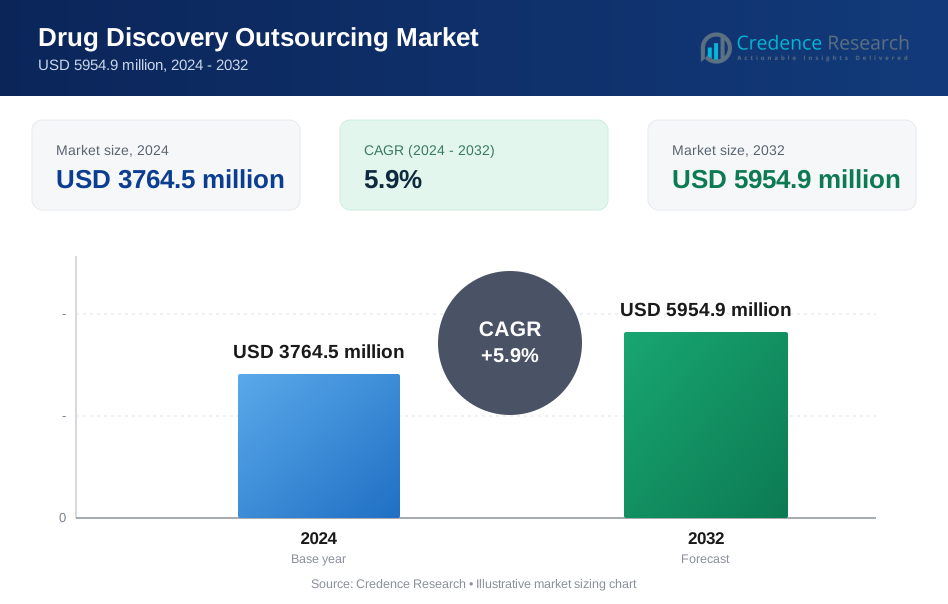
Drug Discovery Outsourcing Market size was valued at USD 3764.5 million in 2024 and is anticipated to reach USD 5954.9 million by 2032, at a CAGR of 5.9% during the forecast period (2024-2032).
Several factors contribute to the positive trajectory of the drug discovery outsourcing market. First, the rising pressure to control R&D expenditures has pushed pharmaceutical companies to outsource a wide range of services, including drug screening, target identification, and preclinical development. This shift enables companies to optimize their internal resources while focusing on core competencies. Furthermore, the increasing complexity of drug discovery, particularly in the fields of oncology, rare diseases, and biologics, has prompted the need for highly specialized and skilled external partners. The adoption of advanced technologies, such as artificial intelligence (AI) and machine learning (ML), is also fueling the outsourcing trend by improving efficiency and accuracy in drug discovery, offering a competitive edge to companies that leverage these innovations.
Regionally, North America holds the largest market share, driven by a well-established pharmaceutical industry, robust healthcare infrastructure, and substantial investments in research and development. This region benefits from a high level of technological adoption and a favorable business environment. Europe follows closely, supported by its growing pharmaceutical and biotechnology sectors, along with increasing collaborations between academia and the private sector. Meanwhile, the Asia Pacific region is expected to witness the highest growth over the forecast period. The availability of skilled labor at competitive costs, coupled with a favorable regulatory environment, makes countries like India and China attractive outsourcing destinations. These countries are rapidly emerging as global hubs for drug discovery services, further driving market expansion. Overall, the market’s growth is anticipated to be broad-based, with regional dynamics shaped by both economic factors and the evolving healthcare landscape.
Market Insights:
- The drug discovery outsourcing market was valued at USD 3764.5 million in 2024 and is expected to reach USD 5954.9 million by 2032.
- Rising pressure on pharmaceutical companies to control R&D costs is driving outsourcing demand for services like drug screening and preclinical development.
- The increasing complexity of drug discovery in fields like oncology and biologics is leading to a higher demand for specialized outsourcing partners.
- Adoption of advanced technologies such as AI and machine learning (ML) is enhancing the efficiency and accuracy of drug discovery, fueling market growth.
- North America dominates the market with a 40% share, driven by strong pharmaceutical infrastructure and significant R&D investments.
- The Asia-Pacific region is expected to experience the highest growth, offering cost-effective solutions and a skilled workforce, especially in India and China.
- Outsourcing offers companies the ability to reduce costs and improve speed to market, while focusing on core activities and innovation.
Market Drivers:
Cost Efficiency and Resource Optimization:
One of the primary drivers of the drug discovery outsourcing market is the need for pharmaceutical companies to reduce costs and optimize resources. R&D expenditures in drug development are substantial, and outsourcing offers a cost-effective solution by leveraging specialized third-party services. Outsourcing partners, especially those in regions with lower labor costs, enable companies to achieve operational efficiencies without compromising on the quality of their research. For instance, Pfizer partnered with Syngene International in India to achieve operational efficiencies without compromising on the quality of their research. This approach allows companies to allocate internal resources to core activities, enhancing overall productivity and cost management.
Technological Advancements in Drug Discovery:
The adoption of advanced technologies is another significant driver of outsourcing in drug discovery. Technologies such as artificial intelligence (AI), machine learning (ML), and high-throughput screening are revolutionizing the way drugs are discovered. For example, Novartis and Roche have adopted AI-driven drug discovery platforms that reduced the time to identify lead compounds by 40%. Outsourcing allows pharmaceutical companies to access the latest technological platforms without investing heavily in in-house capabilities. These advancements improve efficiency, accuracy, and the speed of drug discovery, making outsourcing an attractive option for companies looking to stay competitive.
Rising Complexity in Drug Development:
As drug development becomes more complex, especially in areas like oncology, rare diseases, and biologics, the demand for specialized expertise has increased. Outsourcing provides pharmaceutical companies access to highly skilled professionals and specialized services that are often required for these complex drug discovery processes. For instance, Bristol-Myers Squibb partnered with WuXi AppTec to manage the intricate stages of preclinical and clinical trials. This trend is particularly evident in the growing reliance on external partners to manage the intricate stages of preclinical and clinical trials.
Focus on Innovation and Speed to Market:
The pharmaceutical industry's competitive nature necessitates faster development timelines and continuous innovation. Outsourcing allows for parallel processing of tasks, accelerating the drug discovery process and enabling companies to bring products to market more quickly. For instance, AstraZeneca collaborated with Charles River Laboratories to streamline their non-core activities, allowing them to focus on innovation and strategic goals. They maintain a competitive edge in the rapidly evolving healthcare landscape.
Market Trends:
Increased Adoption of AI and Automation:
One of the current trends in the drug discovery outsourcing market is the growing adoption of artificial intelligence (AI) and automation technologies. These technologies streamline the drug discovery process by analyzing vast amounts of data, identifying potential drug candidates, and predicting their success rates. For instance, Exscientia has integrated AI into their workflows, achieving a 30% reduction in drug discovery time. Outsourcing partners are increasingly integrating AI and machine learning (ML) into their workflows, enabling pharmaceutical companies to reduce time and cost in the drug discovery process while improving the precision of their results.
Expansion of Outsourcing to Emerging Markets:
Emerging markets, particularly in Asia-Pacific, are witnessing increased outsourcing activities due to their cost advantages and rapidly growing expertise in drug discovery. Countries like India and China are becoming prominent outsourcing hubs, offering a combination of skilled labor and competitive pricing. For instance, WuXi AppTec in China provides comprehensive drug discovery services, attracting clients worldwide. The evolving regulatory landscape in these regions has also made them attractive destinations for pharmaceutical companies looking to cut costs without compromising quality.
Collaborations and Strategic Partnerships:
There has been a notable rise in strategic collaborations between pharmaceutical companies and contract research organizations (CROs), contract development and manufacturing organizations (CDMOs), and academic institutions. These partnerships enable companies to leverage external expertise, technologies, and infrastructure to enhance their R&D capabilities. For instance, Pfizer and BioNTech collaborated on the development of the COVID-19 vaccine, showcasing the power of strategic partnerships. Collaborations are particularly focused on niche areas like rare diseases, oncology, and biologics, where specialized knowledge is required to navigate complex drug discovery challenges.
Emphasis on Early-Stage Outsourcing:
Another trend is the increasing outsourcing of early-stage drug discovery, including target identification, high-throughput screening, and preclinical studies. This shift allows pharmaceutical companies to reduce costs and focus their resources on late-stage clinical trials and commercialization. For instance, Eli Lilly partnered with AbCellera for early-stage antibody discovery, enhancing their pipeline of potential therapies. Early-stage outsourcing also enables companies to mitigate the risks associated with drug development by testing multiple candidates before committing to large-scale trials.
Market Challenges Analysis:
Quality Control and Standardization:
One of the primary challenges in the drug discovery outsourcing market is maintaining consistent quality control and standardization across different service providers. Variations in the quality of outsourced services, particularly in regions with lower regulatory oversight, can affect the reliability and reproducibility of research outcomes. Pharmaceutical companies must ensure that their outsourcing partners adhere to strict quality standards, which can be difficult to monitor and enforce, especially when working with multiple external organizations.
Intellectual Property (IP) Protection:
Intellectual property concerns remain a significant challenge for pharmaceutical companies outsourcing drug discovery services. Protecting proprietary information and research data is critical during the drug discovery process, and working with external partners can increase the risk of IP theft or leakage. To mitigate these risks, companies must establish comprehensive contracts and safeguards, such as non-disclosure agreements (NDAs), while also ensuring that outsourcing partners have robust data protection measures in place. However, navigating IP protection laws across different regions can be complex and costly.
Regulatory Compliance and Legal Issues:
Navigating the regulatory landscape is another challenge in drug discovery outsourcing. Pharmaceutical companies must ensure that their outsourcing partners comply with international regulations and local laws, particularly when conducting clinical trials or managing patient data. The diversity of regulatory requirements across different regions can complicate the outsourcing process and lead to delays or compliance issues. Adherence to Good Laboratory Practice (GLP), Good Clinical Practice (GCP), and other relevant standards is essential to avoid legal and reputational risks.
Dependence on External Expertise:
Finally, the growing reliance on external partners for specialized expertise can lead to potential issues related to knowledge transfer, continuity, and integration of research activities. Effective communication and collaboration are crucial to maintaining the efficiency and effectiveness of the outsourced drug discovery process. The loss of critical knowledge or delays in transferring expertise can negatively impact the overall timeline and success of drug development projects.
Market Opportunities:
One of the significant market opportunities in the drug discovery outsourcing sector lies in the continued expansion of emerging markets, particularly in the Asia-Pacific region. Countries like India, China, and South Korea are becoming increasingly attractive due to their cost-effectiveness, access to a skilled workforce, and rapidly improving infrastructure for research and development. These markets provide pharmaceutical companies with the opportunity to reduce operational costs while benefiting from advanced research capabilities. As the region strengthens its healthcare and regulatory frameworks, outsourcing to these markets will continue to grow, presenting both cost advantages and expanded access to specialized expertise.
Another key opportunity is the integration of cutting-edge technologies such as artificial intelligence (AI), machine learning (ML), and high-throughput screening into the drug discovery process. The rapid development of these technologies offers pharmaceutical companies the chance to enhance the efficiency and accuracy of drug discovery, speeding up the process while reducing costs. Outsourcing partners that invest in AI and ML platforms will be positioned to meet the growing demand for precision medicine and personalized therapies. This technological evolution enables faster identification of drug candidates, optimization of research data, and better prediction of drug efficacy, all of which create significant opportunities for innovation and market growth in drug discovery outsourcing.
Market Segmentation Analysis:
By Workflow The drug discovery outsourcing market is divided into preclinical and clinical stages, with preclinical outsourcing being the dominant segment. Preclinical services such as target identification, screening, and lead optimization are frequently outsourced due to the high costs and specialized expertise required in these early phases of drug discovery.
By Therapeutic Area Oncology, neurology, and cardiovascular diseases are the leading therapeutic areas driving outsourcing demand. Oncology sees the highest demand due to the increasing prevalence of cancer worldwide, while rare diseases and infectious diseases are also significant areas of focus, with pharmaceutical companies developing innovative treatments.
By Drug Type The market is segmented into small molecules and biologics, with biologics witnessing faster growth. The increasing shift towards precision medicine and the development of targeted therapies, including monoclonal antibodies, are fueling the demand for biologics outsourcing, making this segment a key area of expansion.
By Service The market includes drug discovery services, preclinical services, clinical development services, and regulatory support. Outsourcing drug discovery services remains the largest segment, as companies seek to reduce costs and gain access to specialized expertise in areas such as drug screening and lead optimization.
Segmentations:
By Workflow
- Preclinical
- Clinical
By Therapeutic Area
- Oncology
- Neurology
- Cardiovascular Diseases
- Rare Diseases
- Infectious Diseases
By Drug Type
- Small Molecules
- Biologics
By Service
- Drug Discovery Services
- Preclinical Services
- Clinical Development Services
- Regulatory Support
By End-Use
- Pharmaceutical Companies
- Biotechnology Firms
- Research Institutions
By Region
- North America
- The U.S.
- Canada
- Mexico
- Europe
- Germany
- France
- The U.K.
- Italy
- Spain
- Rest of Europe
- Asia Pacific
- China
- Japan
- India
- South Korea
- South-east Asia
- Rest of Asia Pacific
- Latin America
- Brazil
- Argentina
- Rest of Latin America
- Middle East & Africa
- GCC Countries
- South Africa
- Rest of the Middle East and Africa
Regional Analysis:
North America
North America holds the largest market share in the drug discovery outsourcing market, accounting for 40% of the global market. This dominance is driven by a well-established pharmaceutical industry, advanced healthcare infrastructure, and significant investments in research and development. The presence of key players, including pharmaceutical giants and contract research organizations (CROs), further consolidates the region’s position. The growing trend of outsourcing preclinical and clinical development services to specialized external partners has contributed to the robust market performance in the U.S. and Canada. Additionally, the increasing demand for personalized medicine and the rapid adoption of cutting-edge technologies such as artificial intelligence (AI) and machine learning (ML) are fueling further market expansion in North America.
Europe
Europe holds a market share of 30%, making it the second-largest region in the drug discovery outsourcing market. The European market benefits from the presence of a diverse range of pharmaceutical and biotechnology companies, which actively engage in outsourcing drug discovery processes. Countries such as Germany, the U.K., and France are key contributors to the market’s growth. The increasing focus on rare diseases, oncology, and biologics within Europe has heightened the demand for specialized services. Furthermore, the rise of strategic collaborations between pharmaceutical companies, contract research organizations, and academic institutions has bolstered the region’s market share. The implementation of stringent regulations and standards in the EU ensures high-quality outsourcing services, attracting global pharmaceutical companies.
Asia-Pacific
Asia-Pacific represents the fastest-growing region in the drug discovery outsourcing market, holding a market share of 20%. The region’s growth is primarily driven by countries like China, India, and South Korea, which offer competitive labor costs, a skilled workforce, and rapidly improving research and development infrastructure. India and China, in particular, are emerging as global hubs for drug discovery outsourcing due to their cost-effective solutions and the increasing presence of multinational pharmaceutical companies. The expanding regulatory frameworks and the focus on improving healthcare systems in these countries contribute to the region’s accelerating market growth.
Latin America and Middle East & Africa
Latin America and the Middle East & Africa collectively account for 10% of the drug discovery outsourcing market. While these regions have smaller market, shares compared to North America, Europe, and Asia-Pacific, they are gradually gaining attention as emerging outsourcing hubs. Growing healthcare infrastructure and increasing collaborations between local research institutions and global pharmaceutical companies are driving market growth. Countries like Brazil and South Africa are expected to contribute to the growth as outsourcing demand for preclinical research services increases.
Key Player Analysis:
- Covance
- Charles River Laboratories
- Parexel International
- WuXi AppTec
- Lonza Group
- Syneos Health
- Labcorp Drug Development
- IQVIA
- Pharmaceutical Product Development (PPD)
- Medidata Solutions
Competitive Analysis:
The drug discovery outsourcing market is highly competitive, with a mix of established global players and emerging regional companies. Covance, Charles River Laboratories, and WuXi AppTec lead the market, offering a broad range of services including preclinical testing, clinical trial management, and regulatory support. For instance, Charles River Laboratories reported a 15% increase in revenue in 2022 due to the expansion of their service offerings in preclinical testing. These companies differentiate themselves through comprehensive service portfolios, technological advancements, and strategic partnerships with pharmaceutical firms. Smaller players, such as Lonza Group and Syneos Health, are gaining market share by focusing on niche services and offering specialized expertise in areas like biologics and oncology. The increasing use of artificial intelligence (AI) and machine learning (ML) by market leaders is further intensifying competition, as these technologies improve efficiency and precision in drug discovery processes. To stay competitive, companies are also exploring strategic collaborations, mergers, and acquisitions to expand their service offerings and global reach.
Recent Developments:
- In July 2024, Charles River Laboratories announced a collaborative program with Autobahn Labs to accelerate academic drug discovery. This agreement establishes Charles River as the preferred partner for Autobahn Labs, leveraging drug discovery and development capabilities to translate academic discoveries into novel therapeutics.
- In Aug 2023, Parexel and Partex agreed to a drug discovery and development partnership, aiming to leverage artificial intelligence (AI)-powered solutions to accelerate drug discovery and development for biopharmaceutical customers worldwide.
- In October 2024, WuXi AppTec was noted for its global operations and its broad portfolio of R&D and manufacturing services, enabling the pharmaceutical and life sciences industry to advance discoveries and deliver treatments.
Market Concentration & Characteristics:
The drug discovery outsourcing market exhibits moderate concentration, with a few large players such as Covance, Charles River Laboratories, and WuXi AppTec commanding a significant share of the market. These companies dominate due to their extensive service offerings, technological capabilities, and established relationships with major pharmaceutical firms. However, the market also features a variety of mid-sized and smaller players specializing in specific segments such as biologics, oncology, and personalized medicine. These players focus on offering niche services and leveraging emerging technologies like artificial intelligence and machine learning to gain a competitive edge. The market is characterized by high competition, driven by the growing demand for cost-effective, efficient, and specialized drug discovery services. Additionally, strategic partnerships, collaborations, and mergers and acquisitions are common as companies seek to expand their capabilities and geographical presence to meet the evolving needs of the pharmaceutical industry.
Report Coverage:
The research report offers an in-depth analysis based on Workflow, Therapeutic Area, Drug Type, Service, End-Use and Region. It details leading market players, providing an overview of their business, product offerings, investments, revenue streams, and key applications. Additionally, the report includes insights into the competitive environment, SWOT analysis, current market trends, as well as the primary drivers and constraints. Furthermore, it discusses various factors that have driven market expansion in recent years. The report also explores market dynamics, regulatory scenarios, and technological advancements that are shaping the industry. It assesses the impact of external factors and global economic changes on market growth. Lastly, it provides strategic recommendations for new entrants and established companies to navigate the complexities of the market.
Future Outlook:
- The drug discovery outsourcing market will continue to expand as pharmaceutical companies seek cost-effective solutions for complex drug development processes.
- The integration of artificial intelligence (AI) and machine learning (ML) will significantly enhance the efficiency and accuracy of drug discovery, driving further outsourcing demand.
- Growth in the biologics segment will lead to increased outsourcing activities, particularly in areas like monoclonal antibodies and gene therapies.
- The demand for specialized expertise in oncology, rare diseases, and personalized medicine will encourage more outsourcing partnerships.
- Emerging markets, particularly in Asia-Pacific, will become key hubs for outsourcing, driven by competitive labor costs and increasing R&D capabilities.
- The trend of outsourcing preclinical and clinical services will intensify as companies look to optimize their R&D expenditure and improve time-to-market.
- Regulatory pressures and the need for compliance with global standards will make outsourcing more attractive for pharmaceutical companies.
- Strategic collaborations and acquisitions will increase as firms aim to expand their service offerings and technological capabilities.
- The rise of contract research organizations (CROs) and contract development and manufacturing organizations (CDMOs) will play a pivotal role in shaping the outsourcing landscape.
- Advancements in data analytics and high-throughput screening technologies will continue to redefine drug discovery processes and outsourcing strategies.
Request a Free Sample
Fill in your details and we'll send you a free sample report.
- Sample data tables & charts
- Research methodology
Need a Custom Version of This Report?
Tailor the scope, geography, or segments to your exact requirements.
- Custom geography or segment scope
- Direct access to our analyst team
Frequently Asked Questions
What is the current size of the drug discovery outsourcing market?
What is the projected market growth for the drug discovery outsourcing industry?
Which category is leading the global market share in terms of preclinical services?
Which chemistry services segment governs the global demand for drug discovery outsourcing?
Which contract models segment will post the highest CAGR in the forecast period?
Which region is propelling the growth of the drug discovery outsourcing industry?
Who are the leading players in the global drug discovery outsourcing market?
Table of Content
Chapter 1. Report Introduction
- 1.1 Report Description & Purpose
- 1.1.1 Report Title & Market Definition
- 1.1.2 Unique Selling Propositions (USP) & Key Differentiators
- 1.1.3 Value Proposition for Stakeholders
- 1.2 Research Objectives
- 1.2.1 Market Sizing Objectives (Volume & Revenue)
- 1.2.2 Segmentation Objectives
- 1.2.3 Competitive Intelligence Objectives
- 1.2.4 Forecast & Scenario Objectives
- 1.3 Report Scope
- 1.3.1 Drug Discovery Outsourcing Scope – Types & Subtypes Covered
- 1.3.2 Geographic Scope – Regions & Countries Covered
- 1.3.3 Historical Period, Base Year & Forecast Period (2024; forecast to 2032)
- 1.3.4 Inclusions & Exclusions
- 1.4 HS Code & Classification Framework
- 1.5 Currency, Units & Pricing Basis
- 1.6 Target Stakeholders
- 1.7 Limitations & Assumptions
Chapter 2. Executive Summary
- 2.1 Global Drug Discovery Outsourcing Market Snapshot
- 2.1.1 Market Size – Historical (2024) & Forecast (2024-2032) (2024: USD 3764.5 million → 2032: USD 5954.9 million)
- 2.1.2 Volume & Revenue – Global Totals
- 2.1.3 Key Market Highlights – Top Five Facts
- 2.2 Drug Discovery Outsourcing Market Segmentation Snapshot
- 2.2.1 Market Split by Region – 2024 vs. 2032
- 2.3 Competitive Snapshot
- 2.3.1 Top 10 Players by Revenue Share – 2024
- 2.3.2 Top 10 Players by Volume Share – 2024
- 2.3.3 Recent Strategic Developments (18-Month Summary)
- 2.4 Key Investment Highlights & Strategic Conclusions
Chapter 3. Drug Discovery Outsourcing Market Dynamics & Industry Analysis
- 3.1 Market Overview & Context
- 3.1.1 Drug Discovery Outsourcing Market Position in the Broader Automotive Value Chain
- 3.1.2 OEM vs. Replacement Market Dynamics
- 3.1.3 Market Maturity & Development Stage by Region
- 3.2 Drug Discovery Outsourcing Market Drivers
- 3.3 Drug Discovery Outsourcing Market Restraints & Challenges
- 3.4 Drug Discovery Outsourcing Market Opportunities
- 3.5 Porter's Five Forces Analysis
- 3.5.1 Threat of New Entrants
- 3.5.2 Bargaining Power of Suppliers
- 3.5.3 Bargaining Power of Buyers
- 3.5.4 Threat of Substitutes
- 3.5.5 Competitive Rivalry – Intensity Assessment
- 3.6 Drug Discovery Outsourcing Value Chain Analysis
- 3.6.1 Upstream – Raw Material/Input Suppliers
- 3.6.1.1 Raw Material/Input 1
- 3.6.1.2 Raw Material/Input 2
- 3.6.1.3 Raw Material/Input 3
- 3.6.2 Midstream – Production/Manufacturing/Service Delivery
- 3.6.2.1 Production/Process Overview
- 3.6.2.2 Key Facility Locations & Capacity by Manufacturer
- 3.6.3 Downstream – Distribution & End Consumer
- 3.6.3.1 Primary Channel – B2B/OEM
- 3.6.3.2 Secondary Channels – Dealer, Retail, Online, Direct
- 3.6.4 Value Chain Profitability Analysis
- 3.6.1 Upstream – Raw Material/Input Suppliers
- 3.7 PESTEL Analysis
- 3.7.1 Political Factors
- 3.7.2 Economic Factors
- 3.7.3 Social Factors
- 3.7.4 Technological Factors
- 3.7.5 Environmental Factors
- 3.7.6 Legal Factors
- 3.8 Drug Discovery Outsourcing Supply Chain Analysis
- 3.8.1 Raw Material/Input Supply Risk Assessment
- 3.8.2 Manufacturing Concentration Risk (Geographic Exposure)
- 3.8.3 Trade Disruption Impact Analysis
- 3.9 Regulatory & Policy Landscape
Note: The regulatory and policy landscape section covers regulations based on their applicability to the market, Drug Discovery Outsourcing category, geography, and scope of the study. Only regulatory frameworks with a material impact on operations, compliance, trade, sustainability, or market access are analyzed in detail.
Chapter 4. Key Investment Pockets & Opportunity Analysis
- 4.1 Drug Discovery Outsourcing Market Attractiveness Analysis
- 4.1.1 By Region – Investment Attractiveness Matrix (Volume × CAGR)
- 4.2 Absolute Revenue Growth Opportunity
- 4.2.1 By Region – Absolute USD Growth Through 2032
- 4.3 Incremental Volume Opportunity
- 4.3.1 By Region – Incremental Volume Through 2032
- 4.3.2 Segment – Incremental Volume
- 4.4 Emerging Submarket Opportunity Deep Dive (Subject to Applicability)
- 4.5 Emerging Market Opportunity Scorecards
- 4.5.1 United States
- 4.5.2 Europe
- 4.5.3 Asia
- 4.5.4 Middle East & Africa
Note: Emerging Market Opportunity Scorecards will be included based on relevance and strategic importance. Regions listed are indicative and may vary depending on data availability and market dynamics.
Chapter 5. Drug Discovery Outsourcing Import-Export Analysis & Trade Flows
- 5.1 Global Trade Overview
- 5.1.1 Global Export Value by Country (2024)
- 5.1.2 Global Export Volume by Country (2024)
- 5.1.3 Global Import Value by Country (2024)
- 5.1.4 Global Import Volume by Country (2024)
- 5.1.5 Net Trade Balance by Country (2024)
- 5.2 Export Analysis – Segment
- 5.2.1 Type 1 (HS Code)
- 5.2.2 Type 2 (HS Code)
- 5.2.3 Type 3 (HS Code)
- 5.2.4 Type 4 (HS Code)
- 5.2.5 Type 5 (HS Code)
- 5.3 Import Analysis – Segment
- 5.3.1 Type 1 (HS Code)
- 5.3.2 Type 2 (HS Code)
- 5.3.3 Type 3 (HS Code)
- 5.3.4 Type 4 (HS Code)
- 5.3.5 Type 5 (HS Code)
- 5.4 Average Unit Trade Prices
- 5.4.1 Average Export Price – Segment & Country
- 5.4.2 Average Import Price – Segment & Source Country
- 5.4.3 Price Trends (2024)
- 5.5 Key Trade Route Analysis
- 5.5.1 Trade Route 1
- 5.5.2 Trade Route 2
- 5.5.3 Trade Route 3
- 5.5.4 Trade Route 4
- 5.5.5 Trade Route 5
- 5.6 Trade Policy Impact Assessment
- 5.6.1 US Anti-Dumping & Section 301 Tariffs
- 5.6.2 EU Customs Union Impact
- 5.6.3 Major Free Trade Agreements
- 5.6.4 USMCA Rules of Origin
Note: Trade policy analysis will be included only where relevant to the Drug Discovery Outsourcing market.
Chapter 6. Competitive Landscape & Company Benchmarking
- 6.1 Drug Discovery Outsourcing Market Concentration & Structure
- 6.1.1 Herfindahl-Hirschman Index (HHI) – vs. 2024
- 6.1.2 Tier 1, Tier 2 & Tier 3 Market Structure
- 6.1.3 Global, Regional & Local Player Dynamics
- 6.2 Drug Discovery Outsourcing Market Share Analysis – 2024
- 6.2.1 Global Revenue Share by Company
- 6.2.2 Global Volume Share by Company
- 6.2.3 Regional Revenue Share
- 6.2.4 Market Share Evolution ( vs. 2024)
- 6.2.5 OEM Segment Share by Company
- 6.2.6 Replacement Segment Share by Company
- 6.3 Production/Delivery Capacity & Facility Analysis
- 6.3.1 Global Installed Capacity
- 6.3.2 Capacity Utilization Rates
- 6.3.3 Production/Output Volume
- 6.3.4 Facility Locations & Capacity Map
- 6.3.5 Planned Capacity Additions
- 6.4 Drug Discovery Outsourcing Competitive Benchmarking Matrix
- 6.4.1 Revenue, Volume, CAGR & Profitability Comparison
- 6.4.2 Channel Revenue Mix
- 6.4.3 Geographic Revenue Exposure
- 6.4.4 R&D Intensity
- 6.4.5 Sustainability Maturity
- 6.5 Strategic Developments in Drug Discovery Outsourcing (Last 24 Months)
- 6.5.1 Mergers, Acquisitions & Divestments
- 6.5.2 New Drug Discovery Outsourcing Launches
- 6.5.3 Facility Expansions
- 6.5.4 Strategic Alliances, Joint Ventures & Partnerships
- 6.5.5 Distribution Expansion & Market Entry
- 6.5.6 Sustainability & ESG Initiatives
- 6.6 Competitive Strategy Mapping
- 6.6.1 Leader, Challenger, Follower & Niche Classification
- 6.6.2 Pricing Strategy Comparison
- 6.6.3 Channel Strategy Matrix
Note: Strategic developments are included based on their materiality and the availability of reliable information.
Chapter 7. Global Drug Discovery Outsourcing Market – By Distribution Channel
- 7.1 Segment Overview
- 7.1.1 Volume & Revenue Split by Channel (2024 & 2032)
- 7.1.2 Channel Mix Evolution (2024-2032)
Chapter 8. Regional Market Analysis – Global Overview
- 8.1 Global Regional Overview
- 8.1.1 Regional Volume Share
- 8.1.2 Regional Revenue Share
- 8.1.3 Regional Volume by Region
- 8.1.4 Regional Revenue by Region
- 8.1.5 Regional Forecast Through 2032
- 8.2 Cross-Regional Segment Analysis
- 8.2.1 By Distribution Channel
- 8.2.2 By Brand/Price Tier
Chapter 9. North America Drug Discovery Outsourcing Market
- 9.1 United States
- 9.2 Canada
- 9.3 Mexico
Chapter 10. Europe Drug Discovery Outsourcing Market
- 10.1 Germany
- 10.2 France
- 10.3 Italy
- 10.4 United Kingdom
- 10.5 Spain
- 10.6 Poland
- 10.7 Russia
- 10.8 Netherlands
- 10.9 Belgium
- 10.10 Sweden
- 10.11 Denmark
- 10.12 Norway
- 10.13 Rest of Europe
Chapter 11. Asia Pacific Drug Discovery Outsourcing Market
- 11.1 China
- 11.2 India
- 11.3 Japan
- 11.4 South Korea
- 11.5 Thailand
- 11.6 Indonesia
- 11.7 Vietnam
- 11.8 Malaysia
- 11.9 Australia
- 11.10 Rest of Asia Pacific
Chapter 12. Latin America Drug Discovery Outsourcing Market
- 12.1 Brazil
- 12.2 Argentina
- 12.3 Colombia
- 12.4 Chile
- 12.5 Rest of Latin America
Chapter 13. Middle East Drug Discovery Outsourcing Market
- 13.1 Saudi Arabia
- 13.2 United Arab Emirates
- 13.3 Turkey
- 13.4 Israel
- 13.5 Iran
- 13.6 Rest of the Middle East
Chapter 14. Africa Drug Discovery Outsourcing Market
- 14.1 South Africa
- 14.2 Egypt
- 14.3 Nigeria
- 14.4 Morocco
- 14.5 Rest of Africa
Chapter 15. Drug Discovery Outsourcing Company Profiles
- 15.1 [Company 01]
- 15.1.1 Company Overview
- 15.1.2 Key Management Personnel
- 15.1.3 Products & Services Portfolio
- 15.1.4 Financial Performance
- 15.1.5 Key Market Focus & Geographic Presence
- 15.1.6 Recent Developments & Strategic Initiatives
Note: The company profile list is preliminary and may change based on research findings, market developments, data availability, and client requirements.
Chapter 16. Appendices
- Appendix A – List of Abbreviations & Acronyms
- Appendix B – Industry Classification Code Reference – Full Series
- Appendix C – Production & Capacity Data Tables
- Appendix D – End-Use & Demand Base Tables
- Appendix E – Consumption & Replacement Rate Assumptions
- Appendix F – ASP Reference Tables
- Appendix G – Manufacturing & Facility Database
- Appendix H – Import-Export Data Tables
- Appendix I – Regulatory Summary Tables
- Appendix J – Primary Research Participant List (Anonymized)
- Appendix K – Primary Research Questionnaire Framework
- Appendix L – Data Sources & Bibliography
- Appendix M – Market Size Divergence & Source Comparison
Chapter 17. Research Methodology
- 17.1 Research Framework & Philosophy
- 17.2 Secondary Research – Sources, Hierarchy & Data Extraction
- 17.3 Data Modeling – Bottom-Up & Top-Down Market Sizing
- 17.4 Primary Research – Stakeholder Framework, LOI & Sample Sizes
- 17.5 Forecast Methodology – Regression, Scenario & Sensitivity Analysis
- 17.6 Quality Control – Four-Layer Validation Framework
- 17.7 Limitations & Standard Assumptions
- 17.8 Disclaimer
