
| REPORT ATTRIBUTE | DETAILS |
|---|---|
| Historical Period | 2019-2022 |
| Base Year | 2023 |
| Forecast Period | 2024-2032 |
| Europe Fruit and Vegetable Powders Market Size 2023 | USD 13,665.65 Million |
| Europe Fruit and Vegetable Powders Market, CAGR | 4.46% |
| Europe Fruit and Vegetable Powders Market Size 2032 | USD 20,336.00 Million |
Market Overview
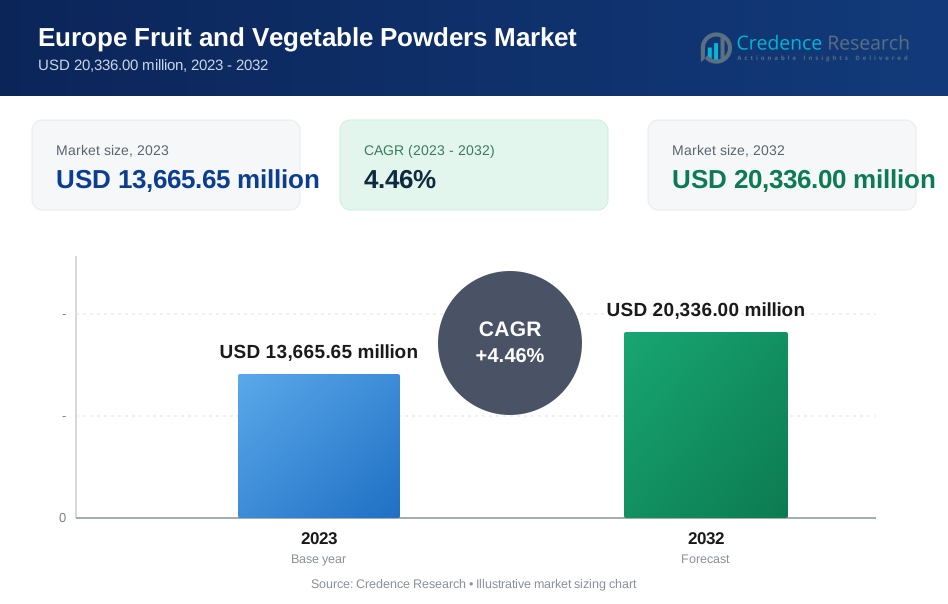
The Europe Fruit and Vegetable Powders Market is projected to grow from USD 13,665.65 million in 2023 to USD 20,336.00 million by 2032, reflecting a compound annual growth rate (CAGR) of 4.46%.
The Europe Fruit and Vegetable Powders Market is driven by rising health consciousness and demand for convenient, nutritious food options. Consumers are increasingly seeking natural and minimally processed products, aligning with the clean label trend. Technological advancements in drying and processing enhance product quality and shelf life, catering to busy lifestyles. The growing popularity of functional foods and beverages, which include fortified and nutrient-rich powders, further propels market growth. Additionally, expanding applications in various sectors such as snacks, beverages, and bakery products cater to evolving dietary preferences, sustaining the market's upward trajectory.
The Europe Fruit and Vegetable Powders Market shows significant demand across countries like Germany, France, the UK, Italy, and Spain, driven by health-conscious consumers and busy lifestyles. Key players in this market include Paradise Fruits (Germany), Kanegrade, Iprona SpA (Italy), Schilling Ltd (Denmark), Archer Daniels Midland Company, Cargill, Incorporated, Olam International Limited, SunOpta Inc., Kerry Group plc, Sensient Technologies Corporation, Doehler Group SE, SVZ International B.V., Diana Food (part of Symrise AG), and AGRANA Beteiligungs-AG. These companies fuel market growth through innovative product offerings, diverse portfolios, and robust distribution networks.
Market Drivers
Rising Health Consciousness:
Europeans are increasingly health-conscious and actively seeking ways to incorporate more fruits and vegetables into their diets. In the EU, 67.8% of the population aged 16 years or over perceived their health as very good or good in 2022. Fruit and vegetable powders offer a convenient and concentrated way to boost nutrient intake, appealing to this trend. These powders can also be useful for weight management and sugar reduction, providing natural sweetness and essential nutrients without the high calories or added sugars found in some juices or fruit purees. Furthermore, there is a strong preference for natural and organic ingredients in Europe, with fruit and vegetable powders aligning well by offering a natural way to add flavor, color, and nutrients without artificial additives or fillers.
Convenience and Lifestyle Factors
The fast-paced lifestyle in many European countries fuels the demand for convenient food options. For instance, time scarcity, multiple responsibilities, lack of culinary training, and a dynamic lifestyle significantly increase the monthly expenditure on convenience food. Fruit and vegetable powders provide a simple way to add fruits and vegetables to smoothies, yogurts, baked goods, and other food and beverage products. Their extended shelf life significantly reduces food waste, making them ideal for busy consumers. Additionally, these powders cater to specific dietary needs like veganism or vegetarianism by providing a concentrated source of essential nutrients from plant-based sources, thus supporting various dietary preferences and lifestyles.
Product Innovation and Functionality
Consumers are increasingly seeking powders that retain most of the nutritional value and flavor of fresh produce. This demand drives the development of gentler drying technologies like freeze-drying and spray drying, resulting in high-quality, minimally processed powders. Furthermore, there is a growing demand for fruit and vegetable powders with added benefits, such as fortification with essential vitamins, minerals, or functional ingredients like probiotics or prebiotics. For instance, more than half (53%) of all enterprises in the EU reported some form of innovation activity in 2018-2020, indicating a strong trend towards product innovation and functionality in various sectors, including the food industry. These fortified powders cater to specific consumer needs, such as gut health, immunity support, or cognitive function. The diversification in applications sees these powders enhancing bakery items with vibrant colors and natural flavors, serving as concentrated sources of vitamins and antioxidants in nutraceuticals, and being used in cosmetics for their antioxidant and skin-nourishing benefits.
Government Initiatives and Regional Variations:
Some European countries have implemented initiatives to encourage healthy eating habits, indirectly benefiting the fruit and vegetable powders market by providing a convenient way to increase fruit and vegetable consumption. Regional variations across Europe play a crucial role, with preferences and regulations differing from country to country. For example, Eastern Europe might have stronger price sensitivity, while Western Europe might prioritize organic and functional ingredients. Understanding these variations is essential for manufacturers looking to expand their reach and effectively cater to diverse market demands, ensuring their products meet the specific needs and preferences of different European markets.
Market Trends
Functional and Fortified Powders and Flavor and Ingredient Innovation
There is a growing demand for fruit and vegetable powders with added benefits, such as fortification with essential vitamins, minerals, or other functional ingredients like probiotics or prebiotics. These fortified powders cater to specific health needs, such as gut health, immunity support, or even sports performance enhancement. For example, a typical fortified powder might contain 100% of the recommended daily intake of Vitamin C and 30% of iron per serving.
Flavor and ingredient innovation is also thriving, with a 15% increase in new product launches featuring exotic flavors and superfood ingredients over the past year. For instance, a popular European blend might include Mediterranean herbs like oregano and thyme, coupled with antioxidant-rich berries, which have seen a 20% rise in consumer preference in the region. This demand drives continuous innovation in the market, with manufacturers developing powders that provide targeted health benefits. Moreover, flavor and ingredient innovation is on the rise to cater to diverse preferences. These innovative flavor combinations and ingredient blends broaden the appeal of fruit and vegetable powders, making them a versatile and attractive option for a wide range of consumers.
E-commerce Flourishing
Online platforms are playing a significant role in the European market for fruit and vegetable powders. They provide consumers with easy access to a wider variety of products, including niche or exotic options, directly from manufacturers or specialty stores. In the e-commerce sector, the European market for these powders has witnessed a remarkable 25% growth in online sales, with platforms like Amazon and local e-stores expanding their offerings. For instance, the availability of niche products like baobab fruit powder or camu camu has increased by 40% on these platforms, catering to the 60% of consumers who seek unique and health-beneficial options. This online presence allows for convenient purchasing, fostering brand discovery for smaller players and enabling them to compete with larger, established brands. The growth of e-commerce is particularly beneficial for consumers seeking specific or hard-to-find products, as it offers a broader selection than traditional brick-and-mortar stores. Additionally, the ease of online shopping aligns with the busy lifestyles of many European consumers, who prefer the convenience of having products delivered directly to their doorsteps.
Market Challenges Analysis
Limited Consumer Awareness and Potential for Adulteration
Although awareness of fruit and vegetable powders for beverages and yogurts is increasing, many consumers might not be fully aware of their potential in other applications such as baking, nutraceuticals, or sports nutrition. This limited consumer awareness can hinder market expansion for these innovative uses. Educational marketing campaigns are needed to inform consumers about the versatility and health benefits of these powders in various applications. Furthermore, the potential for adulteration in the global market poses a significant risk. Stricter regulations and enforcement are needed to prevent such practices and maintain consumer confidence in the quality and safety of fruit and vegetable powders. Maintaining strict quality control measures and promoting transparency in sourcing and production processes are essential to prevent adulteration and ensure consumer trust.
Seasonality, Climate, and Overcoming Challenges
While fruit and vegetable powders offer consistent availability, seasonal and climate variations can impact the quality and yield of certain fruits and vegetables, potentially affecting the supply chain for specific powders. Weather variations can lead to fluctuations in availability and pricing, posing a challenge for manufacturers to maintain a steady supply of high-quality products. Overcoming these challenges requires collaboration between manufacturers, regulatory bodies, and industry associations to implement best practices, promote consumer education, and ensure consistent quality standards. Technological advancements to improve drying efficiency and reduce production costs are crucial for maintaining competitive pricing. Developing innovative marketing strategies to effectively communicate the unique value proposition of fruit and vegetable powders across various applications and streamlining regulatory compliance processes to navigate the variations between European countries are essential steps. Additionally, maintaining strict quality control measures to prevent adulteration and ensuring sustainable sourcing practices can help overcome these challenges and support the sustained success of the European fruit and vegetable powders market.
Market Segmentation Analysis:
By Fruit Powder:
The Europe Fruit and Vegetable Powders Market is segmented by fruit powder types, including Apple, Orange, Pineapple, Mango, and others. Apple powder is particularly popular due to its high fiber content and versatility, making it a common addition to smoothies, baked goods, and health supplements. Orange and Pineapple powders are favored for their natural sweetness and high vitamin C content, ideal for flavored drinks and confectionery products. Mango powder, known for its distinct flavor and rich nutritional profile, is used in both sweet and savory applications. The segment for other fruit powders, which includes berries and exotic fruits, is expanding as consumers seek diverse and unique flavors. These diverse fruit powder options cater to varying consumer preferences and dietary needs, supporting market growth. Advances in drying and processing technologies enhance the quality and shelf life of these powders, further boosting their market appeal and aligning with the growing health-conscious trend among European consumers.
By Vegetable Powder:
The vegetable powder segment of the Europe Fruit and Vegetable Powders Market includes Carrot, Tomatoes, Beetroot, Pumpkin, and other vegetables. Carrot powder is highly sought after due to its high beta-carotene content and natural sweetness, making it a popular addition to health foods and baked goods. Tomato powder, rich in lycopene, is widely used to enhance the flavor and nutritional profile of various culinary applications, including soups, sauces, and ready-to-eat (RTE) products. Beetroot powder is gaining popularity for its high antioxidant content and its use in health drinks and smoothies, appealing to consumers looking for natural ways to boost their nutrient intake. Pumpkin powder, known for its nutritional value and unique flavor, is increasingly used in bakery and confectionery products. The segment for other vegetable powders, which includes spinach, kale, and other leafy greens, is expanding as consumers look for convenient ways to add vegetables to their diet. These powders are appreciated for their concentrated nutrients, ease of use, and long shelf life, aligning with the growing trend towards plant-based diets and natural ingredients in the European market.
Segments:
Based on Fruit Powder:
- Apple
- Orange
- Pineapple
- Mango
- Others
Based on Vegetable Powder:
- Carrot
- Tomatoes
- Beetroot
- Pumpkin
- Other Vegetables
Based on Application:
- Beverages
- Confectionery Products
- Bakery Products
- Soups and Sauces
- RTE Products
Based on Distribution Channel:
- Direct
- Indirect
- Hypermarkets
- Supermarkets
- Online retail
Based on the Geography:
- UK
- France
- Germany
- Italy
- Spain
- Russia
- Belgium
- Netherland
- Austria
- Sweden
- Poland
- Denmark
- Switzerland
- Rest of Europe
Regional Analysis
Western Europe, including countries like Germany, France, the Netherlands, and the United Kingdom, holds the largest market share of approximately 40%. This region benefits from a strong food and beverage manufacturing sector and a relatively high concentration of health-conscious consumers. The growing demand for natural and clean-label ingredients has driven the market for fruit and vegetable powders in Western Europe, particularly in urban centers like London, Paris, and Berlin.
Southern Europe, comprising countries such as Italy, Spain, and Greece, accounts for a market share of around 25%. This region is known for its rich agricultural heritage and a strong emphasis on Mediterranean cuisine, which heavily incorporates various fruits and vegetables. The popularity of traditional dishes and the growing interest in healthier eating habits have fueled the demand for fruit and vegetable powders in this region.
Key Player Analysis
- Paradise Fruits (Germany)
- Kanegrade
- Iprona SpA (Italy)
- Schilling Ltd (Denmark)
- Archer Daniels Midland Company
- Cargill, Incorporated
- Olam International Limited
- SunOpta Inc.
- Kerry Group plc
- Sensient Technologies Corporation
- Doehler Group SE
- SVZ International B.V.
- Diana Food (part of Symrise AG)
- AGRANA Beteiligungs-AG
Competitive Analysis
The competitive landscape of the Europe Fruit and Vegetable Powders Market is characterized by the presence of several key players, including Paradise Fruits (Germany), Kanegrade, Iprona SpA (Italy), Schilling Ltd (Denmark), Archer Daniels Midland Company, Cargill, Incorporated, Olam International Limited, SunOpta Inc., Kerry Group plc, Sensient Technologies Corporation, Doehler Group SE, SVZ International B.V., Diana Food (part of Symrise AG), and AGRANA Beteiligungs-AG. These companies compete based on product quality, innovation, and distribution capabilities. Paradise Fruits and Iprona SpA are recognized for their advanced processing technologies and high-quality product lines. Archer Daniels Midland and Cargill leverage their extensive global supply chains and expertise in agricultural products to maintain a strong market presence. Companies like Kerry Group and Sensient Technologies focus on innovative flavor and ingredient solutions, while Doehler Group and SVZ International emphasize sustainability and traceability. Continuous innovation, strategic partnerships, and expanding product portfolios are key strategies driving competition in this dynamic market.
Recent Developments
In June 2022, Symrise introduced Diana Food, an extensive line of active components and blueberry ingredients. The company claims that its newly launched product qualities and performance benefits include different organoleptic properties, application-specific high-quality standards for baby food, distinctive certifications like organic, and the option to assert health benefits.
Market Concentration & Characteristics
The Europe Fruit and Vegetable Powders Market is moderately concentrated, featuring a blend of well-established firms and emerging players. Leading companies like Paradise Fruits, Kanegrade, and Iprona SpA dominate the market with their extensive distribution networks and advanced processing technologies. The market is characterized by a strong emphasis on natural and minimally processed products, driven by rising health consciousness and a preference for convenient, nutritious food options. There is also a notable trend towards clean labeling, sustainability, and incorporating functional ingredients, reflecting consumer demand for transparency and added health benefits. Continuous innovation, strategic partnerships, and compliance with stringent food safety regulations are essential for maintaining competitiveness and meeting the evolving needs of health-conscious European consumers.
Report Coverage
The research report offers an in-depth analysis based on Fruit Powder, Vegetable Powder, Application, Distribution Channel and Geography. It details leading market players, providing an overview of their business, product offerings, investments, revenue streams, and key applications. Additionally, the report includes insights into the competitive environment, SWOT analysis, current market trends, as well as the primary drivers and constraints. Furthermore, it discusses various factors that have driven market expansion in recent years. The report also explores market dynamics, regulatory scenarios, and technological advancements that are shaping the industry. It assesses the impact of external factors and global economic changes on market growth. Lastly, it provides strategic recommendations for new entrants and established companies to navigate the complexities of the market.
Future Outlook
- The Europe Fruit and Vegetable Powders Market is expected to experience robust growth driven by increasing health consciousness among consumers.
- Demand for natural and minimally processed powders will continue to rise significantly.
- Technological advancements in drying and processing will enhance product quality and shelf life.
- E-commerce platforms will expand market reach, providing greater access to niche and regional products.
- There will be increased applications in nutraceuticals, cosmetics, and sports nutrition.
- Sustainable sourcing and packaging practices will become more prevalent.
- Functional ingredients like probiotics, antioxidants, and vitamins will gain popularity.
- Rising disposable incomes will drive demand for premium and organic products.
- Stricter food safety regulations will ensure higher product standards.
- The market will witness heightened competition from both domestic and international players.
Request a Free Sample
Fill in your details and we'll send you a free sample report.
- Sample data tables & charts
- Research methodology
Need a Custom Version of This Report?
Tailor the scope, geography, or segments to your exact requirements.
- Custom geography or segment scope
- Direct access to our analyst team
Frequently Asked Questions
What is the current size of the Europe Fruit and Vegetable Powders Market?
What factors are driving the growth of the Europe Fruit and Vegetable Powders Market?
What are the key segments within the Europe Fruit and Vegetable Powders Market?
What are some challenges faced by the Europe Fruit and Vegetable Powders Market?
Who are the major players in the Europe Fruit and Vegetable Powders Market?
Which segment is leading the market share?
Table of Content
Chapter 1. Report Introduction
- 1.1 Report Description & Purpose
- 1.1.1 Report Title & Market Definition
- 1.1.2 Unique Selling Propositions (USP) & Key Differentiators
- 1.1.3 Value Proposition for Stakeholders
- 1.2 Research Objectives
- 1.2.1 Market Sizing Objectives (Volume & Revenue)
- 1.2.2 Segmentation Objectives
- 1.2.3 Competitive Intelligence Objectives
- 1.2.4 Forecast & Scenario Objectives
- 1.3 Report Scope
- 1.3.1 Europe Fruit and Vegetable Powders Scope – Types & Subtypes Covered
- 1.3.2 Geographic Scope – Regions & Countries Covered
- 1.3.3 Historical Period, Base Year & Forecast Period (2023; forecast to 2032)
- 1.3.4 Inclusions & Exclusions
- 1.4 HS Code & Classification Framework
- 1.5 Currency, Units & Pricing Basis
- 1.6 Target Stakeholders
- 1.7 Limitations & Assumptions
Chapter 2. Executive Summary
- 2.1 Global Europe Fruit and Vegetable Powders Market Snapshot
- 2.1.1 Market Size – Historical (2023) & Forecast (2023-2032) (2023: USD 13,665.65 million → 2032: USD 20,336.00 million)
- 2.1.2 Volume & Revenue – Global Totals
- 2.1.3 Key Market Highlights – Top Five Facts
- 2.2 Europe Fruit and Vegetable Powders Market Segmentation Snapshot
- 2.2.1 Market Split by Region – 2023 vs. 2032
- 2.3 Competitive Snapshot
- 2.3.1 Top 10 Players by Revenue Share – 2023
- 2.3.2 Top 10 Players by Volume Share – 2023
- 2.3.3 Recent Strategic Developments (18-Month Summary)
- 2.4 Key Investment Highlights & Strategic Conclusions
Chapter 3. Europe Fruit and Vegetable Powders Market Dynamics & Industry Analysis
- 3.1 Market Overview & Context
- 3.1.1 Europe Fruit and Vegetable Powders Market Position in the Broader Automotive Value Chain
- 3.1.2 OEM vs. Replacement Market Dynamics
- 3.1.3 Market Maturity & Development Stage by Region
- 3.2 Europe Fruit and Vegetable Powders Market Drivers
- 3.3 Europe Fruit and Vegetable Powders Market Restraints & Challenges
- 3.4 Europe Fruit and Vegetable Powders Market Opportunities
- 3.5 Porter's Five Forces Analysis
- 3.5.1 Threat of New Entrants
- 3.5.2 Bargaining Power of Suppliers
- 3.5.3 Bargaining Power of Buyers
- 3.5.4 Threat of Substitutes
- 3.5.5 Competitive Rivalry – Intensity Assessment
- 3.6 Europe Fruit and Vegetable Powders Value Chain Analysis
- 3.6.1 Upstream – Raw Material/Input Suppliers
- 3.6.1.1 Raw Material/Input 1
- 3.6.1.2 Raw Material/Input 2
- 3.6.1.3 Raw Material/Input 3
- 3.6.2 Midstream – Production/Manufacturing/Service Delivery
- 3.6.2.1 Production/Process Overview
- 3.6.2.2 Key Facility Locations & Capacity by Manufacturer
- 3.6.3 Downstream – Distribution & End Consumer
- 3.6.3.1 Primary Channel – B2B/OEM
- 3.6.3.2 Secondary Channels – Dealer, Retail, Online, Direct
- 3.6.4 Value Chain Profitability Analysis
- 3.6.1 Upstream – Raw Material/Input Suppliers
- 3.7 PESTEL Analysis
- 3.7.1 Political Factors
- 3.7.2 Economic Factors
- 3.7.3 Social Factors
- 3.7.4 Technological Factors
- 3.7.5 Environmental Factors
- 3.7.6 Legal Factors
- 3.8 Europe Fruit and Vegetable Powders Supply Chain Analysis
- 3.8.1 Raw Material/Input Supply Risk Assessment
- 3.8.2 Manufacturing Concentration Risk (Geographic Exposure)
- 3.8.3 Trade Disruption Impact Analysis
- 3.9 Regulatory & Policy Landscape
Note: The regulatory and policy landscape section covers regulations based on their applicability to the market, Europe Fruit and Vegetable Powders category, geography, and scope of the study. Only regulatory frameworks with a material impact on operations, compliance, trade, sustainability, or market access are analyzed in detail.
Chapter 4. Key Investment Pockets & Opportunity Analysis
- 4.1 Europe Fruit and Vegetable Powders Market Attractiveness Analysis
- 4.1.1 By Region – Investment Attractiveness Matrix (Volume × CAGR)
- 4.2 Absolute Revenue Growth Opportunity
- 4.2.1 By Region – Absolute USD Growth Through 2032
- 4.3 Incremental Volume Opportunity
- 4.3.1 By Region – Incremental Volume Through 2032
- 4.3.2 Segment – Incremental Volume
- 4.4 Emerging Submarket Opportunity Deep Dive (Subject to Applicability)
- 4.5 Emerging Market Opportunity Scorecards
- 4.5.1 United States
- 4.5.2 Europe
- 4.5.3 Asia
- 4.5.4 Middle East & Africa
Note: Emerging Market Opportunity Scorecards will be included based on relevance and strategic importance. Regions listed are indicative and may vary depending on data availability and market dynamics.
Chapter 5. Europe Fruit and Vegetable Powders Import-Export Analysis & Trade Flows
- 5.1 Global Trade Overview
- 5.1.1 Global Export Value by Country (2023)
- 5.1.2 Global Export Volume by Country (2023)
- 5.1.3 Global Import Value by Country (2023)
- 5.1.4 Global Import Volume by Country (2023)
- 5.1.5 Net Trade Balance by Country (2023)
- 5.2 Export Analysis – Segment
- 5.2.1 Type 1 (HS Code)
- 5.2.2 Type 2 (HS Code)
- 5.2.3 Type 3 (HS Code)
- 5.2.4 Type 4 (HS Code)
- 5.2.5 Type 5 (HS Code)
- 5.3 Import Analysis – Segment
- 5.3.1 Type 1 (HS Code)
- 5.3.2 Type 2 (HS Code)
- 5.3.3 Type 3 (HS Code)
- 5.3.4 Type 4 (HS Code)
- 5.3.5 Type 5 (HS Code)
- 5.4 Average Unit Trade Prices
- 5.4.1 Average Export Price – Segment & Country
- 5.4.2 Average Import Price – Segment & Source Country
- 5.4.3 Price Trends (2023)
- 5.5 Key Trade Route Analysis
- 5.5.1 Trade Route 1
- 5.5.2 Trade Route 2
- 5.5.3 Trade Route 3
- 5.5.4 Trade Route 4
- 5.5.5 Trade Route 5
- 5.6 Trade Policy Impact Assessment
- 5.6.1 US Anti-Dumping & Section 301 Tariffs
- 5.6.2 EU Customs Union Impact
- 5.6.3 Major Free Trade Agreements
- 5.6.4 USMCA Rules of Origin
Note: Trade policy analysis will be included only where relevant to the Europe Fruit and Vegetable Powders market.
Chapter 6. Competitive Landscape & Company Benchmarking
- 6.1 Europe Fruit and Vegetable Powders Market Concentration & Structure
- 6.1.1 Herfindahl-Hirschman Index (HHI) – vs. 2023
- 6.1.2 Tier 1, Tier 2 & Tier 3 Market Structure
- 6.1.3 Global, Regional & Local Player Dynamics
- 6.2 Europe Fruit and Vegetable Powders Market Share Analysis – 2023
- 6.2.1 Global Revenue Share by Company
- 6.2.2 Global Volume Share by Company
- 6.2.3 Regional Revenue Share
- 6.2.4 Market Share Evolution ( vs. 2023)
- 6.2.5 OEM Segment Share by Company
- 6.2.6 Replacement Segment Share by Company
- 6.3 Production/Delivery Capacity & Facility Analysis
- 6.3.1 Global Installed Capacity
- 6.3.2 Capacity Utilization Rates
- 6.3.3 Production/Output Volume
- 6.3.4 Facility Locations & Capacity Map
- 6.3.5 Planned Capacity Additions
- 6.4 Europe Fruit and Vegetable Powders Competitive Benchmarking Matrix
- 6.4.1 Revenue, Volume, CAGR & Profitability Comparison
- 6.4.2 Channel Revenue Mix
- 6.4.3 Geographic Revenue Exposure
- 6.4.4 R&D Intensity
- 6.4.5 Sustainability Maturity
- 6.5 Strategic Developments in Europe Fruit and Vegetable Powders (Last 24 Months)
- 6.5.1 Mergers, Acquisitions & Divestments
- 6.5.2 New Europe Fruit and Vegetable Powders Launches
- 6.5.3 Facility Expansions
- 6.5.4 Strategic Alliances, Joint Ventures & Partnerships
- 6.5.5 Distribution Expansion & Market Entry
- 6.5.6 Sustainability & ESG Initiatives
- 6.6 Competitive Strategy Mapping
- 6.6.1 Leader, Challenger, Follower & Niche Classification
- 6.6.2 Pricing Strategy Comparison
- 6.6.3 Channel Strategy Matrix
Note: Strategic developments are included based on their materiality and the availability of reliable information.
Chapter 7. Global Europe Fruit and Vegetable Powders Market – By Distribution Channel
- 7.1 Segment Overview
- 7.1.1 Volume & Revenue Split by Channel (2023 & 2032)
- 7.1.2 Channel Mix Evolution (2023-2032)
Chapter 8. Regional Market Analysis – Global Overview
- 8.1 Global Regional Overview
- 8.1.1 Regional Volume Share
- 8.1.2 Regional Revenue Share
- 8.1.3 Regional Volume by Region
- 8.1.4 Regional Revenue by Region
- 8.1.5 Regional Forecast Through 2032
- 8.2 Cross-Regional Segment Analysis
- 8.2.1 By Distribution Channel
- 8.2.2 By Brand/Price Tier
Chapter 9. North America Europe Fruit and Vegetable Powders Market
- 9.1 United States
- 9.2 Canada
- 9.3 Mexico
Chapter 10. Europe Europe Fruit and Vegetable Powders Market
- 10.1 Germany
- 10.2 France
- 10.3 Italy
- 10.4 United Kingdom
- 10.5 Spain
- 10.6 Poland
- 10.7 Russia
- 10.8 Netherlands
- 10.9 Belgium
- 10.10 Sweden
- 10.11 Denmark
- 10.12 Norway
- 10.13 Rest of Europe
Chapter 11. Asia Pacific Europe Fruit and Vegetable Powders Market
- 11.1 China
- 11.2 India
- 11.3 Japan
- 11.4 South Korea
- 11.5 Thailand
- 11.6 Indonesia
- 11.7 Vietnam
- 11.8 Malaysia
- 11.9 Australia
- 11.10 Rest of Asia Pacific
Chapter 12. Latin America Europe Fruit and Vegetable Powders Market
- 12.1 Brazil
- 12.2 Argentina
- 12.3 Colombia
- 12.4 Chile
- 12.5 Rest of Latin America
Chapter 13. Middle East Europe Fruit and Vegetable Powders Market
- 13.1 Saudi Arabia
- 13.2 United Arab Emirates
- 13.3 Turkey
- 13.4 Israel
- 13.5 Iran
- 13.6 Rest of the Middle East
Chapter 14. Africa Europe Fruit and Vegetable Powders Market
- 14.1 South Africa
- 14.2 Egypt
- 14.3 Nigeria
- 14.4 Morocco
- 14.5 Rest of Africa
Chapter 15. Europe Fruit and Vegetable Powders Company Profiles
- 15.1 [Company 01]
- 15.1.1 Company Overview
- 15.1.2 Key Management Personnel
- 15.1.3 Products & Services Portfolio
- 15.1.4 Financial Performance
- 15.1.5 Key Market Focus & Geographic Presence
- 15.1.6 Recent Developments & Strategic Initiatives
Note: The company profile list is preliminary and may change based on research findings, market developments, data availability, and client requirements.
Chapter 16. Appendices
- Appendix A – List of Abbreviations & Acronyms
- Appendix B – Industry Classification Code Reference – Full Series
- Appendix C – Production & Capacity Data Tables
- Appendix D – End-Use & Demand Base Tables
- Appendix E – Consumption & Replacement Rate Assumptions
- Appendix F – ASP Reference Tables
- Appendix G – Manufacturing & Facility Database
- Appendix H – Import-Export Data Tables
- Appendix I – Regulatory Summary Tables
- Appendix J – Primary Research Participant List (Anonymized)
- Appendix K – Primary Research Questionnaire Framework
- Appendix L – Data Sources & Bibliography
- Appendix M – Market Size Divergence & Source Comparison
Chapter 17. Research Methodology
- 17.1 Research Framework & Philosophy
- 17.2 Secondary Research – Sources, Hierarchy & Data Extraction
- 17.3 Data Modeling – Bottom-Up & Top-Down Market Sizing
- 17.4 Primary Research – Stakeholder Framework, LOI & Sample Sizes
- 17.5 Forecast Methodology – Regression, Scenario & Sensitivity Analysis
- 17.6 Quality Control – Four-Layer Validation Framework
- 17.7 Limitations & Standard Assumptions
- 17.8 Disclaimer
