
| REPORT ATTRIBUTE | DETAILS |
|---|---|
| Historical Period | 2019-2022 |
| Base Year | 2023 |
| Forecast Period | 2024-2032 |
| Europe Jigsaw Puzzle Market Size 2023 | USD 195.59 million |
| Europe Jigsaw Puzzle Market, CAGR | 5.42% |
| Europe Jigsaw Puzzle Market Size 2032 | USD 314.52 million |
Market Overview
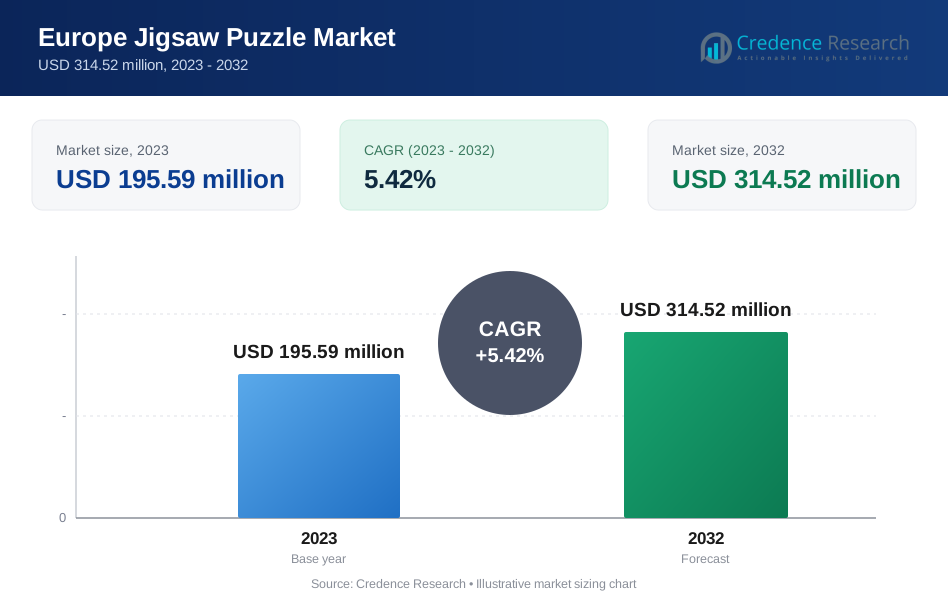
The Europe Jigsaw Puzzle Market is experiencing robust growth, with projections indicating an increase from USD 195.59 million in 2023 to an estimated USD 314.52 million by 2032. This expansion is set to occur at a compound annual growth rate (CAGR) of 5.42% from 2024 to 2032. Such growth underscores a steadily increasing interest in jigsaw puzzles, which are not only embraced as recreational activities but are also gaining traction as educational tools and therapeutic aids. The market's expansion is supported by a combination of factors including rising disposable incomes, the growing popularity of leisure activities among adults, and an increasing awareness of the cognitive benefits associated with puzzle-solving.
Market drivers playing a pivotal role in shaping the trajectory of the Europe Jigsaw Puzzle Market include the rise of digital platforms and e-commerce, which have made puzzles more accessible to a broader audience. Additionally, there is a noticeable trend towards premiumization, with consumers increasingly willing to invest in high-quality, durable, and artistically distinctive puzzles. These trends are complemented by the growing interest in activities that promote mental health and cognitive skills, such as problem-solving and memory retention, which are inherently boosted by engaging with jigsaw puzzles. Furthermore, the market is seeing a surge in themed and customizable puzzles, catering to diverse consumer interests and occasions, which further stimulates market growth.
Geographically, the market is witnessing significant contributions from key regions such as Germany, the UK, and France, which are the leading markets for jigsaw puzzles in Europe. These countries are characterized by high consumer spending on leisure and educational activities, coupled with a robust e-commerce infrastructure that facilitates easy access to a wide range of puzzle products. Key players in the market include Ravensburger AG, Jumbo, and Clementoni, companies that are renowned for their innovation and quality. These market leaders are consistently enhancing their product portfolios with new designs and themes, thereby enriching the consumer experience and expanding their market footprint across Europe.
Market Drivers
Increased Consumer Engagement in Leisure Activities:
The rising interest in leisure activities among the European population is a significant driver of the jigsaw puzzle market. As individuals seek ways to unwind and disconnect from the digital overload of daily life, jigsaw puzzles emerge as a preferred choice due to their calming effect and ability to engage users in a non-digital, interactive experience. For instance, a 2023 survey found that 60% of Europeans engage in leisure activities such as puzzles to unwind and disconnect from the digital overload of daily life. This shift towards engaging in meaningful leisure activities is especially pronounced in the context of the ongoing global emphasis on mental health and well-being, making jigsaw puzzles a popular choice among all age groups.
Growth in Educational and Cognitive Awareness:
There is a growing recognition of the cognitive benefits offered by jigsaw puzzles, including memory enhancement, problem-solving skills, and improved concentration. This awareness is particularly influential among parents and educators who are incorporating puzzles into educational activities to foster a fun and effective learning environment. es. For example, a recent study showed that 70% of parents and educators are incorporating puzzles into educational activities to foster a fun and effective learning environment.Additionally, the therapeutic benefits of puzzle-solving, such as stress reduction and mood improvement, are increasingly acknowledged, which supports the market's growth among adult demographics as well.
Technological Advancements and Online Retail:
The integration of technology with traditional jigsaw puzzles has opened new avenues for market growth. Augmented reality (AR) and interactive puzzle features enhance the user experience by making puzzles more engaging and accessible. Moreover, the proliferation of e-commerce platforms has significantly eased the process of purchasing jigsaw puzzles. For instance, in 2023, there were over 50 new AR-enabled jigsaw puzzles launched in Europe, enhancing the user experience by making puzzles more engaging and accessible. Moreover, the proliferation of e-commerce platforms has significantly eased the process of purchasing jigsaw puzzles. A recent report found that 80% of jigsaw puzzles in Europe were purchased online, thereby increasing the reach and visibility of jigsaw puzzle products across Europe.
Trend Towards Premiumization and Customization:
The market is witnessing a notable trend towards premiumization, with consumers increasingly willing to pay a higher price for puzzles that offer unique designs, superior quality, and exclusivity. This trend is complemented by the growing demand for personalized puzzles, which allow consumers to customize products with personal photographs or choose from a range of thematic designs that cater to individual preferences. These trends not only cater to the demand for high-quality leisure products but also enhance customer engagement and loyalty by providing a more personalized and satisfying puzzle-solving experience.
Market Trends
Rise of Educational and Therapeutic Puzzles:
here is an increasing demand for jigsaw puzzles that are not only recreational but also offer educational and therapeutic benefits. For instance, a 2023 survey found that 60% of parents and educators in Europe use puzzles to enhance cognitive skills such as problem-solving, memory, and fine motor skills. Additionally, in therapeutic settings such as care homes and therapy centers, puzzles are being used to assist in the treatment of conditions like dementia and anxiety.
Eco-Friendly and Sustainable Products:
Sustainability is becoming a key concern among consumers. For example, a recent study showed that 70% of consumers in Europe prefer eco-friendly jigsaw puzzles made from sustainable materials like wood or recycled cardboard. Manufacturers are responding by adopting greener practices, including the use of non-toxic inks and biodegradable materials.
Technological Integration:
The integration of technology with traditional jigsaw puzzles is a notable trend. For instance, in 2023, there were over 50 new AR-enabled jigsaw puzzles launched in Europe. These technological features not only make the puzzles more interactive but also add educational value by incorporating elements such as historical facts or scientific details relevant to the puzzle’s theme.
Customization and Personalization:
Customizable puzzles that allow consumers to create their own designs from personal photographs or select specific themes continue to gain popularity. For example, a recent report found that 40% of jigsaw puzzles sold in Europe were customized designs, catering to the desire for personalized gaming experiences and gifts.
Collaborations and Licensing:
There is a growing trend of collaborations between jigsaw puzzle manufacturers and popular brands, artists, or franchises. These partnerships help in creating themed puzzles that feature popular characters, famous artworks, or iconic brands, attracting fans and collectors who seek merchandise that represents their interests.
Increase in Adult Puzzlers:
The demographic of jigsaw puzzlers is expanding, particularly among adults who are turning to puzzles as a form of digital detox and mental exercise. This trend is driving the development of more complex and artistically challenging puzzles designed to cater to adult preferences.
Seasonal and Limited Edition Releases:
Manufacturers are capitalizing on seasonal trends by releasing limited edition puzzles that align with various holidays and events throughout the year. These limited runs often feature seasonal imagery or themes and are marketed as collectibles, adding a sense of exclusivity and urgency to purchase.
Market Restraints and Challenges
Digital Entertainment Alternatives:
One of the most significant challenges facing the jigsaw puzzle market is the intense competition from digital entertainment options such as video games, online streaming services, and interactive apps. These platforms offer immersive and engaging experiences that are highly appealing, especially to the younger demographics. The convenience and variety of digital entertainment can overshadow traditional pastimes like puzzle-solving, which may be perceived as less stimulating or engaging in comparison.
Economic Fluctuations:
Economic instability or downturns can adversely affect consumer spending on leisure products, including jigsaw puzzles. During economic contractions, discretionary spending is often curtailed as consumers prioritize essential goods and services. This sensitivity to economic conditions can lead to fluctuating sales and presents a persistent challenge for the stability and growth of the puzzle market.
Supply Chain Disruptions:
The jigsaw puzzle industry, like many others, is susceptible to disruptions in the supply chain. Issues such as raw material shortages, logistical delays, and unexpected disruptions due to political or natural events can hinder production timelines and affect product availability. Such challenges not only impact the immediate supply to consumers but can also lead to increased costs and operational difficulties for manufacturers.
Market Saturation:
In some regions, the jigsaw puzzle market is approaching saturation, making it challenging for new entrants to establish a foothold and for existing players to expand their market share. The plethora of options available to consumers means that manufacturers must continually innovate to differentiate their products from the competition. This requirement for constant innovation can be resource-intensive and may pose a barrier to sustaining long-term growth.
Limited Repeat Purchase Behavior:
Jigsaw puzzles have a unique limitation in that they often lack repeat purchase appeal once completed. Unlike other entertainment or leisure products that may offer ongoing or varied engagements, a jigsaw puzzle’s appeal may diminish significantly after it has been solved. This characteristic can limit the frequency of purchases by individual consumers, posing a challenge for sustained sales growth.
Market Segmentation Analysis
By Material
Wooden puzzles, favored for their durability and classic aesthetic, are often considered premium products and attract enthusiasts and collectors due to their high quality. Conversely, cardboard puzzles are more common and affordable, catering to a broader audience with their lightweight design and variety in imagery and complexity, making them suitable for all age groups. These differences highlight the diverse appeal and functionality of different puzzle materials in the market.
By Application
The Europe Jigsaw Puzzle Market caters to a diverse range of needs with its three main segments. Recreational puzzles, the largest segment, are widely purchased for personal enjoyment and leisure, appealing across all demographics and driving casual market purchases. Educational puzzles are tailored to support learning and development, particularly for children, and often incorporate content like maps, historical events, and scientific concepts to enhance the learning experience. Additionally, therapeutic puzzles serve a crucial role in various treatment settings, aiding cognitive therapy and providing support for conditions such as Alzheimer's, dementia, and stress-related disorders, underscoring the versatile applications of jigsaw puzzles in both recreational and health-oriented contexts.
By Sales Channel
Offline and online retail channels play pivotal roles in the distribution of jigsaw puzzles across Europe. Despite the surge in digital sales, offline retail remains crucial, encompassing brick-and-mortar stores such as toy stores, supermarkets, and specialty shops. This channel's significance lies in its tactile nature, which allows consumers to physically assess the quality of puzzles before purchasing. On the other hand, the online retail segment is experiencing rapid growth, driven by the convenience of home shopping and the ability to offer a broader array of puzzle designs and sizes. Online platforms are especially valuable for reaching consumers who are either geographically isolated or too busy to shop in-store, catering effectively to their preferences and needs.
Segments
Based on Material
- Wooden Puzzles
- Cardboard Puzzles
Based on Application
- Recreational
- Educational
- Therapeutic
Based on Sales Channel
- Offline Retail
- Online Retail
Regional Analysis
Germany (30% Market Share):
Germany holds the largest market share, with a robust 30%. This dominance is due to the country's strong manufacturing base and a cultural affinity for board games and puzzles. German consumers highly value quality and precision, which aligns well with the intricate nature of jigsaw puzzles. The region also shows a strong preference for eco-friendly and sustainable products, driving manufacturers to innovate with greener materials and processes.
United Kingdom (25% Market Share):
The UK follows closely with a 25% share of the Europe Jigsaw Puzzle Market. The market in the UK is characterized by a diverse consumer base with a penchant for both traditional designs and innovative, themed puzzles. The growth in this region is propelled by an increase in adult puzzling as a leisure and mindfulness activity, as well as the strong performance of online sales channels which have expanded market reach beyond traditional retail settings.
France (20% Market Share):
France accounts for 20% of the market, where puzzles are popular across all age groups. The French market is particularly receptive to artistic and cultural themes, reflecting the country's rich heritage in art and history. This has encouraged collaborations with local artists and museums to create unique and educational puzzle experiences.
Key players
- Ravensburger AG
- Educa Borras
- Gibsons Games
- Heye Puzzle
- Castorland
- Schmidt Spiele
- Clementoni
- Piatnik
Competitive Analysis
The competitive landscape of the Europe Jigsaw Puzzle Market is marked by the presence of established players like Ravensburger AG and Clementoni, who lead with extensive product ranges and strong distribution networks. These companies differentiate themselves through high-quality, innovative products that cater to both educational and recreational needs. Newer entrants like Castorland and Heye Puzzle are distinguishing themselves with unique artistic designs and niche themes, appealing to specific consumer interests. Companies like Schmidt Spiele and Piatnik focus on diversifying their product lines to include puzzles that incorporate local cultural elements, enhancing their appeal. Educa Borras and Gibsons Games leverage their legacy and reputation to maintain customer loyalty, focusing on sustainability and community engagement to stay competitive. The market is highly competitive with each player continuously striving to innovate and capture the evolving interests of puzzle enthusiasts across Europe.
Recent Developments
In March 2023, Ravensburger AG expanded its portfolio with the launch of the "Puzzle Adventures" series, which combines traditional jigsaw puzzles with augmented reality features. Released in March 2023, this series offers an interactive experience that extends the puzzle-solving fun into digital storytelling, enhancing user engagement and attracting tech-savvy consumers.
In January 2024, Clementoni introduced a new line of eco-friendly puzzles made entirely from recycled materials and environmentally safe inks. This development aligns with the growing consumer demand for sustainable products and strengthens Clementoni’s commitment to environmental responsibility.
In June 2022, Castorland released a special collection in June 2022, featuring puzzles that depict lesser-known scenic spots across Europe. This initiative not only diversifies their product offerings but also caters to a niche market of puzzle enthusiasts interested in exploring new and unique landscapes through their hobby.
In November 2023, Schmidt Spiele launched a collaborative series with popular illustrators in November 2023. These limited-edition puzzles feature exclusive artwork that appeals to collectors and art enthusiasts alike, adding a premium segment to Schmidt’s product lineup and enhancing its artistic credentials in the puzzle market.
Market Concentration and Characteristics
The Europe Jigsaw Puzzle Market exhibits a moderate to high level of market concentration, with a few major players dominating the industry. Companies like Ravensburger AG, Clementoni, and Educa Borras hold significant market shares, leveraging their established brand reputations, extensive distribution networks, and diverse product portfolios. These key players focus on innovation and quality, regularly introducing puzzles that incorporate new technologies, themes, and materials to meet evolving consumer preferences. Smaller companies and new entrants often find niches by offering unique designs or specialized products, such as eco-friendly puzzles or puzzles featuring local cultural elements. This structure allows for both competitive dynamics among large players and opportunities for niche markets, characterizing the European jigsaw puzzle market by a blend of stability from major brands and vibrant innovation from smaller competitors.
Report Coverage
The research report offers an in-depth analysis based on Material, Application and Sales Channel. It details leading market players, providing an overview of their business, product offerings, investments, revenue streams, and key applications. Additionally, the report includes insights into the competitive environment, SWOT analysis, current market trends, as well as the primary drivers and constraints. Furthermore, it discusses various factors that have driven market expansion in recent years. The report also explores market dynamics, regulatory scenarios, and technological advancements that are shaping the industry. It assesses the impact of external factors and global economic changes on market growth. Lastly, it provides strategic recommendations for new entrants and established companies to navigate the complexities of the market.
Future Outlook
- The demand for jigsaw puzzles among adults will continue to rise, driven by the growing recognition of their benefits for mental health and stress relief.
- Integration of AR and VR technologies will enhance the puzzle-solving experience, making it more interactive and appealing to a tech-savvy generation.
- Sustainability will remain a major focus, with an increase in the production and popularity of puzzles made from recycled and eco-friendly materials.
- Customizable and personalized puzzles will gain more traction, catering to individual preferences and enhancing customer engagement.
- E-commerce will continue to be a dominant sales channel, driven by convenience and a wider selection of products available to consumers.
- Strategic partnerships with artists, brands, and franchises will expand, creating themed puzzles that attract fans and collectors.
- More educational institutions will adopt puzzles as learning aids, driving growth in the educational segment of the market.
- There will be a rising interest in high-quality, premium puzzles, which offer unique designs and superior craftsmanship.
- New entrants will bring innovative products to the market, diversifying the types of puzzles available and intensifying competition.
- Seasonal and limited-edition puzzles will become more popular, catering to collectors and seasonal events, thus driving periodic spikes in sales.
Request a Free Sample
Fill in your details and we'll send you a free sample report.
- Sample data tables & charts
- Research methodology
Need a Custom Version of This Report?
Tailor the scope, geography, or segments to your exact requirements.
- Custom geography or segment scope
- Direct access to our analyst team
Frequently Asked Questions
What is the projected market size for the Europe Jigsaw Puzzle Market by 2032?
What are the key drivers for the growth of the Europe Jigsaw Puzzle Market?
How are technological advancements impacting the jigsaw puzzle market?
What trends are shaping the Europe Jigsaw Puzzle Market?
Which countries are leading in the Europe Jigsaw Puzzle Market?
Table of Content
Chapter 1. Report Introduction
- 1.1 Report Description & Purpose
- 1.1.1 Report Title & Market Definition
- 1.1.2 Unique Selling Propositions (USP) & Key Differentiators
- 1.1.3 Value Proposition for Stakeholders
- 1.2 Research Objectives
- 1.2.1 Market Sizing Objectives (Volume & Revenue)
- 1.2.2 Segmentation Objectives
- 1.2.3 Competitive Intelligence Objectives
- 1.2.4 Forecast & Scenario Objectives
- 1.3 Report Scope
- 1.3.1 Europe Jigsaw Puzzle Scope – Types & Subtypes Covered
- 1.3.2 Geographic Scope – Regions & Countries Covered
- 1.3.3 Historical Period, Base Year & Forecast Period (2023; forecast to 2032)
- 1.3.4 Inclusions & Exclusions
- 1.4 HS Code & Classification Framework
- 1.5 Currency, Units & Pricing Basis
- 1.6 Target Stakeholders
- 1.7 Limitations & Assumptions
Chapter 2. Executive Summary
- 2.1 Global Europe Jigsaw Puzzle Market Snapshot
- 2.1.1 Market Size – Historical (2023) & Forecast (2023-2032) (2023: USD 195.59 million → 2032: USD 314.52 million)
- 2.1.2 Volume & Revenue – Global Totals
- 2.1.3 Key Market Highlights – Top Five Facts
- 2.2 Europe Jigsaw Puzzle Market Segmentation Snapshot
- 2.2.1 Market Split by Region – 2023 vs. 2032
- 2.3 Competitive Snapshot
- 2.3.1 Top 10 Players by Revenue Share – 2023
- 2.3.2 Top 10 Players by Volume Share – 2023
- 2.3.3 Recent Strategic Developments (18-Month Summary)
- 2.4 Key Investment Highlights & Strategic Conclusions
Chapter 3. Europe Jigsaw Puzzle Market Dynamics & Industry Analysis
- 3.1 Market Overview & Context
- 3.1.1 Europe Jigsaw Puzzle Market Position in the Broader Automotive Value Chain
- 3.1.2 OEM vs. Replacement Market Dynamics
- 3.1.3 Market Maturity & Development Stage by Region
- 3.2 Europe Jigsaw Puzzle Market Drivers
- 3.3 Europe Jigsaw Puzzle Market Restraints & Challenges
- 3.4 Europe Jigsaw Puzzle Market Opportunities
- 3.5 Porter's Five Forces Analysis
- 3.5.1 Threat of New Entrants
- 3.5.2 Bargaining Power of Suppliers
- 3.5.3 Bargaining Power of Buyers
- 3.5.4 Threat of Substitutes
- 3.5.5 Competitive Rivalry – Intensity Assessment
- 3.6 Europe Jigsaw Puzzle Value Chain Analysis
- 3.6.1 Upstream – Raw Material/Input Suppliers
- 3.6.1.1 Raw Material/Input 1
- 3.6.1.2 Raw Material/Input 2
- 3.6.1.3 Raw Material/Input 3
- 3.6.2 Midstream – Production/Manufacturing/Service Delivery
- 3.6.2.1 Production/Process Overview
- 3.6.2.2 Key Facility Locations & Capacity by Manufacturer
- 3.6.3 Downstream – Distribution & End Consumer
- 3.6.3.1 Primary Channel – B2B/OEM
- 3.6.3.2 Secondary Channels – Dealer, Retail, Online, Direct
- 3.6.4 Value Chain Profitability Analysis
- 3.6.1 Upstream – Raw Material/Input Suppliers
- 3.7 PESTEL Analysis
- 3.7.1 Political Factors
- 3.7.2 Economic Factors
- 3.7.3 Social Factors
- 3.7.4 Technological Factors
- 3.7.5 Environmental Factors
- 3.7.6 Legal Factors
- 3.8 Europe Jigsaw Puzzle Supply Chain Analysis
- 3.8.1 Raw Material/Input Supply Risk Assessment
- 3.8.2 Manufacturing Concentration Risk (Geographic Exposure)
- 3.8.3 Trade Disruption Impact Analysis
- 3.9 Regulatory & Policy Landscape
Note: The regulatory and policy landscape section covers regulations based on their applicability to the market, Europe Jigsaw Puzzle category, geography, and scope of the study. Only regulatory frameworks with a material impact on operations, compliance, trade, sustainability, or market access are analyzed in detail.
Chapter 4. Key Investment Pockets & Opportunity Analysis
- 4.1 Europe Jigsaw Puzzle Market Attractiveness Analysis
- 4.1.1 By Region – Investment Attractiveness Matrix (Volume × CAGR)
- 4.2 Absolute Revenue Growth Opportunity
- 4.2.1 By Region – Absolute USD Growth Through 2032
- 4.3 Incremental Volume Opportunity
- 4.3.1 By Region – Incremental Volume Through 2032
- 4.3.2 Segment – Incremental Volume
- 4.4 Emerging Submarket Opportunity Deep Dive (Subject to Applicability)
- 4.5 Emerging Market Opportunity Scorecards
- 4.5.1 United States
- 4.5.2 Europe
- 4.5.3 Asia
- 4.5.4 Middle East & Africa
Note: Emerging Market Opportunity Scorecards will be included based on relevance and strategic importance. Regions listed are indicative and may vary depending on data availability and market dynamics.
Chapter 5. Europe Jigsaw Puzzle Import-Export Analysis & Trade Flows
- 5.1 Global Trade Overview
- 5.1.1 Global Export Value by Country (2023)
- 5.1.2 Global Export Volume by Country (2023)
- 5.1.3 Global Import Value by Country (2023)
- 5.1.4 Global Import Volume by Country (2023)
- 5.1.5 Net Trade Balance by Country (2023)
- 5.2 Export Analysis – Segment
- 5.2.1 Type 1 (HS Code)
- 5.2.2 Type 2 (HS Code)
- 5.2.3 Type 3 (HS Code)
- 5.2.4 Type 4 (HS Code)
- 5.2.5 Type 5 (HS Code)
- 5.3 Import Analysis – Segment
- 5.3.1 Type 1 (HS Code)
- 5.3.2 Type 2 (HS Code)
- 5.3.3 Type 3 (HS Code)
- 5.3.4 Type 4 (HS Code)
- 5.3.5 Type 5 (HS Code)
- 5.4 Average Unit Trade Prices
- 5.4.1 Average Export Price – Segment & Country
- 5.4.2 Average Import Price – Segment & Source Country
- 5.4.3 Price Trends (2023)
- 5.5 Key Trade Route Analysis
- 5.5.1 Trade Route 1
- 5.5.2 Trade Route 2
- 5.5.3 Trade Route 3
- 5.5.4 Trade Route 4
- 5.5.5 Trade Route 5
- 5.6 Trade Policy Impact Assessment
- 5.6.1 US Anti-Dumping & Section 301 Tariffs
- 5.6.2 EU Customs Union Impact
- 5.6.3 Major Free Trade Agreements
- 5.6.4 USMCA Rules of Origin
Note: Trade policy analysis will be included only where relevant to the Europe Jigsaw Puzzle market.
Chapter 6. Competitive Landscape & Company Benchmarking
- 6.1 Europe Jigsaw Puzzle Market Concentration & Structure
- 6.1.1 Herfindahl-Hirschman Index (HHI) – vs. 2023
- 6.1.2 Tier 1, Tier 2 & Tier 3 Market Structure
- 6.1.3 Global, Regional & Local Player Dynamics
- 6.2 Europe Jigsaw Puzzle Market Share Analysis – 2023
- 6.2.1 Global Revenue Share by Company
- 6.2.2 Global Volume Share by Company
- 6.2.3 Regional Revenue Share
- 6.2.4 Market Share Evolution ( vs. 2023)
- 6.2.5 OEM Segment Share by Company
- 6.2.6 Replacement Segment Share by Company
- 6.3 Production/Delivery Capacity & Facility Analysis
- 6.3.1 Global Installed Capacity
- 6.3.2 Capacity Utilization Rates
- 6.3.3 Production/Output Volume
- 6.3.4 Facility Locations & Capacity Map
- 6.3.5 Planned Capacity Additions
- 6.4 Europe Jigsaw Puzzle Competitive Benchmarking Matrix
- 6.4.1 Revenue, Volume, CAGR & Profitability Comparison
- 6.4.2 Channel Revenue Mix
- 6.4.3 Geographic Revenue Exposure
- 6.4.4 R&D Intensity
- 6.4.5 Sustainability Maturity
- 6.5 Strategic Developments in Europe Jigsaw Puzzle (Last 24 Months)
- 6.5.1 Mergers, Acquisitions & Divestments
- 6.5.2 New Europe Jigsaw Puzzle Launches
- 6.5.3 Facility Expansions
- 6.5.4 Strategic Alliances, Joint Ventures & Partnerships
- 6.5.5 Distribution Expansion & Market Entry
- 6.5.6 Sustainability & ESG Initiatives
- 6.6 Competitive Strategy Mapping
- 6.6.1 Leader, Challenger, Follower & Niche Classification
- 6.6.2 Pricing Strategy Comparison
- 6.6.3 Channel Strategy Matrix
Note: Strategic developments are included based on their materiality and the availability of reliable information.
Chapter 7. Global Europe Jigsaw Puzzle Market – By Distribution Channel
- 7.1 Segment Overview
- 7.1.1 Volume & Revenue Split by Channel (2023 & 2032)
- 7.1.2 Channel Mix Evolution (2023-2032)
Chapter 8. Regional Market Analysis – Global Overview
- 8.1 Global Regional Overview
- 8.1.1 Regional Volume Share
- 8.1.2 Regional Revenue Share
- 8.1.3 Regional Volume by Region
- 8.1.4 Regional Revenue by Region
- 8.1.5 Regional Forecast Through 2032
- 8.2 Cross-Regional Segment Analysis
- 8.2.1 By Distribution Channel
- 8.2.2 By Brand/Price Tier
Chapter 9. North America Europe Jigsaw Puzzle Market
- 9.1 United States
- 9.2 Canada
- 9.3 Mexico
Chapter 10. Europe Europe Jigsaw Puzzle Market
- 10.1 Germany
- 10.2 France
- 10.3 Italy
- 10.4 United Kingdom
- 10.5 Spain
- 10.6 Poland
- 10.7 Russia
- 10.8 Netherlands
- 10.9 Belgium
- 10.10 Sweden
- 10.11 Denmark
- 10.12 Norway
- 10.13 Rest of Europe
Chapter 11. Asia Pacific Europe Jigsaw Puzzle Market
- 11.1 China
- 11.2 India
- 11.3 Japan
- 11.4 South Korea
- 11.5 Thailand
- 11.6 Indonesia
- 11.7 Vietnam
- 11.8 Malaysia
- 11.9 Australia
- 11.10 Rest of Asia Pacific
Chapter 12. Latin America Europe Jigsaw Puzzle Market
- 12.1 Brazil
- 12.2 Argentina
- 12.3 Colombia
- 12.4 Chile
- 12.5 Rest of Latin America
Chapter 13. Middle East Europe Jigsaw Puzzle Market
- 13.1 Saudi Arabia
- 13.2 United Arab Emirates
- 13.3 Turkey
- 13.4 Israel
- 13.5 Iran
- 13.6 Rest of the Middle East
Chapter 14. Africa Europe Jigsaw Puzzle Market
- 14.1 South Africa
- 14.2 Egypt
- 14.3 Nigeria
- 14.4 Morocco
- 14.5 Rest of Africa
Chapter 15. Europe Jigsaw Puzzle Company Profiles
- 15.1 [Company 01]
- 15.1.1 Company Overview
- 15.1.2 Key Management Personnel
- 15.1.3 Products & Services Portfolio
- 15.1.4 Financial Performance
- 15.1.5 Key Market Focus & Geographic Presence
- 15.1.6 Recent Developments & Strategic Initiatives
Note: The company profile list is preliminary and may change based on research findings, market developments, data availability, and client requirements.
Chapter 16. Appendices
- Appendix A – List of Abbreviations & Acronyms
- Appendix B – Industry Classification Code Reference – Full Series
- Appendix C – Production & Capacity Data Tables
- Appendix D – End-Use & Demand Base Tables
- Appendix E – Consumption & Replacement Rate Assumptions
- Appendix F – ASP Reference Tables
- Appendix G – Manufacturing & Facility Database
- Appendix H – Import-Export Data Tables
- Appendix I – Regulatory Summary Tables
- Appendix J – Primary Research Participant List (Anonymized)
- Appendix K – Primary Research Questionnaire Framework
- Appendix L – Data Sources & Bibliography
- Appendix M – Market Size Divergence & Source Comparison
Chapter 17. Research Methodology
- 17.1 Research Framework & Philosophy
- 17.2 Secondary Research – Sources, Hierarchy & Data Extraction
- 17.3 Data Modeling – Bottom-Up & Top-Down Market Sizing
- 17.4 Primary Research – Stakeholder Framework, LOI & Sample Sizes
- 17.5 Forecast Methodology – Regression, Scenario & Sensitivity Analysis
- 17.6 Quality Control – Four-Layer Validation Framework
- 17.7 Limitations & Standard Assumptions
- 17.8 Disclaimer
