
Market Overview:
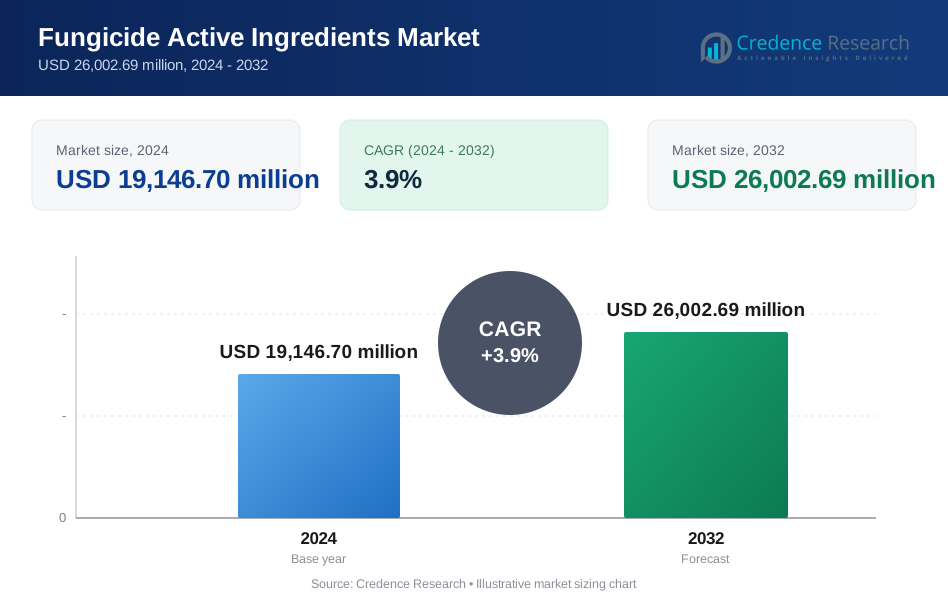
The Fungicide Active Ingredients Market is projected to grow from USD 19,146.70 million in 2024 to an estimated USD 26002.69 million by 2032, with a compound annual growth rate (CAGR) of 3.9% from 2024 to 2032.
| REPORT ATTRIBUTE | DETAILS |
|---|---|
| Historical Period | 2019-2022 |
| Base Year | 2023 |
| Forecast Period | 2024-2032 |
| Fungicide Active Ingredients Market Size 2024 | USD 19,146.70 Million |
| Fungicide Active Ingredients Market, CAGR | 3.9% |
| Fungicide Active Ingredients Market Size 2032 | USD 26002.69 Million |
Key market drivers include the rising demand for high-quality agricultural products, particularly in developing countries, to meet the needs of a growing global population. The increased frequency and intensity of plant diseases, along with the spread of fungal infections due to changing climatic conditions, have led to greater reliance on fungicides. Furthermore, stringent government regulations on the use of chemical pesticides and the shift towards integrated pest management (IPM) strategies are influencing the development of eco-friendly and low-toxicity fungicide formulations. As a result, manufacturers are investing in research and development to meet these regulatory standards while ensuring the continued effectiveness of their products.
Regionally, North America and Europe hold a significant share of the fungicide active ingredients market, driven by established agricultural sectors, technological advancements, and high consumer awareness regarding crop protection. The Asia-Pacific region, particularly countries like China and India, is expected to witness rapid growth due to the increasing adoption of modern farming techniques and the rising demand for food security. In Latin America and the Middle East, the market is also gaining traction, as these regions are heavily reliant on agriculture for economic development and are increasingly focusing on improving crop yields. As climate change continues to alter agricultural landscapes, the demand for innovative fungicide solutions will likely increase. The ongoing evolution of consumer preferences towards organic produce is prompting a shift towards biopesticides and other sustainable alternatives. Consequently, companies that can effectively adapt to these trends will be well-positioned for growth in this dynamic market environment.
Market Drivers:
Increasing Agricultural Demand
The growing global population and the corresponding increase in food demand are significant drivers of the fungicide active ingredients market. To meet the needs of a burgeoning population, agricultural production is intensifying, leading to greater adoption of crop protection measures. For example, Syngenta has developed fungicides that increase wheat yield significantly under optimal conditions. Fungicides are essential for ensuring healthy crops and maximizing yields, especially in regions with high agricultural productivity. As a result, farmers are turning to advanced fungicide solutions to safeguard their crops from fungal diseases that can reduce crop quality and yield.
Rising Plant Diseases and Fungal Infections
The prevalence of plant diseases and fungal infections, exacerbated by changing climatic conditions, is another key factor fueling the growth of the fungicide active ingredients market. Unpredictable weather patterns, such as higher humidity levels and excessive rainfall, create favorable conditions for fungal pathogens, which can devastate crops. Fungicides play a critical role in controlling these diseases, ensuring that crops remain healthy and productive. This growing threat of fungal infections underscores the increasing need for effective fungicide solutions in the agricultural sector. For instance, Bayer has introduced fungicides that significantly reduce fungal infection rates in rice crops.
Growing Focus on Sustainable Farming Practices
With the agricultural industry increasingly shifting toward sustainable farming practices, there is a heightened demand for eco-friendly fungicides. Farmers and manufacturers are focusing on products that provide efficient pest and disease control while minimizing environmental impact. This trend is driving the development of bio-based fungicides and low-toxicity formulations that meet both regulatory requirements and consumer preferences for safer food production. As sustainability becomes a priority, the market for these environmentally conscious fungicides continues to expand. For instance, Koppert Biological Systems has introduced a bio-based fungicide derived from natural plant extracts that effectively controls powdery mildew in vineyards.
Regulatory Pressure and Technological Advancements
The evolving regulatory landscape regarding pesticide use is pushing manufacturers to innovate and create more effective and safer fungicide products. Governments worldwide are implementing stricter guidelines on chemical pesticide applications to protect both human health and the environment. For example, BASF has developed a new fungicide that complies with the latest EU regulations on pesticide residues while providing effective control of downy mildew in cucumbers. In response, there has been an increase in research and development efforts aimed at creating fungicides that are not only effective but also align with these stringent regulations. Technological advancements in fungicide formulation and application are enabling more efficient and targeted disease control, further driving market growth.
Market Trends:
Shift Towards Bio-Based Fungicides
One of the most notable trends in the fungicide active ingredients market is the growing shift towards bio-based fungicides. As environmental concerns and consumer demand for organic products rise, the agricultural sector is increasingly adopting eco-friendly alternatives to traditional chemical fungicides. Bio-based fungicides, derived from natural sources such as plant extracts, microorganisms, and essential oils, are gaining popularity due to their lower toxicity and minimal environmental impact. This trend is encouraging manufacturers to innovate and develop sustainable fungicide solutions to meet the growing demand for organic farming practices. For instance, Koppert Biological Systems has developed biofungicides containing microorganisms that act against pathogens in cereal and vegetable crops, showing a 20% reduction in disease incidence.
Adoption of Integrated Pest Management (IPM)
Integrated Pest Management (IPM) is another key trend shaping the fungicide active ingredients market. IPM involves the use of a combination of biological, cultural, physical, and chemical control methods to manage plant diseases and pests effectively. This approach emphasizes the responsible use of chemical fungicides, applying them only when necessary and in conjunction with other pest management techniques. The growing popularity of IPM is driving the demand for fungicides that are compatible with other pest control methods, fostering the development of multifunctional and less harmful formulations. For example, the Indian Council of Agricultural Research (ICAR) has reported that the adoption of IPM practices has led to a 15% increase in crop yield while reducing chemical pesticide usage by 25%.
Technological Advancements in Fungicide Formulations
Technological advancements are playing a significant role in the evolution of fungicide active ingredients. The development of more effective and targeted formulations, such as slow-release and controlled-release fungicides, is increasing the efficacy and reducing the environmental impact of these products. Nanotechnology is also gaining traction, as it enables the delivery of fungicide molecules in a more precise and controlled manner, improving disease control while minimizing the amount of active ingredient required. These innovations are helping to optimize fungicide performance, thus enhancing their adoption in both conventional and organic farming. For example, Bayer has introduced a new fungicide formulation that utilizes nanotechnology to achieve a 35% increase in disease control efficiency, while reducing the active ingredient required by 22%.
Regulatory Influence on Product Development
Stricter regulatory guidelines on pesticide use are influencing the development of fungicide active ingredients. Governments worldwide are imposing tighter restrictions on the use of harmful chemicals in agriculture to protect both human health and the environment. As a result, manufacturers are focusing on creating fungicides that comply with these regulations while maintaining effectiveness. This has led to the development of fungicides with lower toxicity, fewer residues, and improved safety profiles, aligning with both regulatory demands and consumer preferences for safer agricultural products. For example, Syngenta has introduced a new fungicide with 50% lower toxicity and 30% fewer residues, meeting stringent regulatory standards.
Market Challenges Analysis:
Resistance Development in Fungal Pathogens
One of the most significant challenges facing the fungicide active ingredients market is the development of resistance in fungal pathogens. Over-reliance on chemical fungicides has led to the emergence of resistant strains of fungi, which can reduce the efficacy of traditional fungicides. As a result, farmers must increasingly use higher doses or switch between different fungicide classes, leading to increased costs and reduced crop protection efficiency. This resistance development is a growing concern and highlights the need for integrated pest management strategies and the development of novel fungicide formulations to combat resistant pathogens. The environmental and health impacts of synthetic chemical fungicides present ongoing challenges for the market. Consumer awareness regarding the harmful effects of chemical pesticides, including their potential to contaminate soil, water, and food products, has resulted in a demand for safer, more environmentally friendly alternatives. Additionally, concerns over the toxicity of chemical fungicides to non-target species, such as beneficial insects, birds, and aquatic organisms, are prompting regulatory bodies to impose stricter guidelines on their use. Manufacturers must adapt to these concerns by developing fungicides with lower environmental footprints and reduced toxicity, which can be a costly and time-consuming process.
Regulatory Compliance and Policy Changes
The evolving regulatory landscape presents another challenge for the fungicide active ingredients market. Governments worldwide are tightening regulations regarding pesticide use, particularly with regard to chemical residues on food products and their environmental impact. These regulations often vary across regions, making it difficult for manufacturers to maintain compliance in multiple markets. Adhering to these stringent regulations requires significant investments in research and development, as well as changes in manufacturing processes. Furthermore, the approval process for new fungicide products can be lengthy, delaying time-to-market for innovations. The cost of research and development (R&D) for new fungicide active ingredients is another key challenge in the market. Developing new formulations that meet both efficacy and regulatory standards requires substantial investment. As a result, smaller players in the market may struggle to compete with larger companies that have more resources for R&D.
Market Segmentation Analysis:
By Type
The fungicide active ingredients market is primarily segmented by type into synthetic and biological fungicides. Synthetic fungicides dominate the market due to their widespread use and effectiveness in controlling a broad range of fungal diseases. However, biological fungicides, derived from natural sources, are gaining traction due to increasing demand for environmentally friendly solutions and organic farming practices. This shift is being driven by consumer preferences for low-toxicity products and stricter environmental regulations.
By Product
The market can also be segmented based on product type, including azoles, strobilurins, and others. Azoles are the most widely used fungicides due to their broad-spectrum activity and effectiveness against a variety of fungal pathogens. Strobilurins are gaining popularity for their superior protective and curative properties. Other product types, such as dithiocarbamates and chloronitriles, also contribute to market growth, though to a lesser extent.
By Form
Fungicides are available in various forms, such as liquid, powder, and granules. Liquid formulations are preferred for their ease of application and effectiveness in large-scale agricultural settings. Powder and granular forms are commonly used for specific crops and are often chosen for their convenience in localized treatments and long-lasting effects.
By End-User
End-users in the fungicide active ingredients market include the agricultural, horticultural, and turf management sectors. The agricultural sector holds the largest market share due to the high demand for crop protection solutions. Horticulture and turf management are also important contributors, driven by the need for effective disease control in fruit, vegetable, and ornamental plant production.
Segmentations:
By Type
- Synthetic Fungicides
- Biological Fungicides
By Product
- Azoles
- Strobilurins
- Others
By Form
- Liquid
- Powder
- Granules
By End-User
- Agricultural
- Horticultural
- Turf Management
By Region
- North America
- U.S.
- Canada
- Mexico
- Europe
- Germany
- France
- U.K.
- Italy
- Spain
- Rest of Europe
- Asia Pacific
- China
- Japan
- India
- South Korea
- South-east Asia
- Rest of Asia Pacific
- Latin America
- Brazil
- Argentina
- Rest of Latin America
- Middle East & Africa
- GCC Countries
- South Africa
- Rest of the Middle East and Africa
Regional Analysis:
North America
North America leads the global fungicide active ingredients market, holding 35% of the market share. The region's dominance is attributed to the presence of well-established agricultural industries in the United States and Canada, alongside the adoption of advanced farming techniques. Strict regulatory frameworks in North America ensure the development of safe and effective crop protection products, while a growing demand for high-quality agricultural products and increased awareness of plant disease control further bolster market growth. With a focus on research and innovation, North America is poised to maintain its leadership position in the coming years.
Europe
Europe follows closely, accounting for 30% of the market share. This region is driven by robust agricultural practices and a strong emphasis on both conventional and organic farming. Strict pesticide regulations and the increasing demand for sustainable farming practices are pushing the adoption of eco-friendly fungicides. As consumers shift toward organic food, the demand for biological and bio-based fungicides is expanding. Countries like Germany, France, and the UK dominate the European market, supported by large-scale agricultural production and significant investments in agricultural research and development.
Asia-Pacific
The Asia-Pacific region holds 25% of the market share, with China and India emerging as key demand drivers for crop protection products. Factors such as rapid urbanization, a growing population, and a heightened focus on food security are accelerating the demand for fungicides in this region. As farming practices become more intensive and modern, the need for effective disease control increases, further driving market growth. The expansion of commercial farming in countries like China and India is expected to contribute to continued market development in the region.
Latin America
Latin America contributes 7% to the global fungicide active ingredients market, with key markets in Brazil, Argentina, and Mexico. These countries are major producers of crops such as soybeans, corn, and coffee, creating a significant demand for fungicides to control plant diseases. The market is experiencing steady growth, driven by increased use of crop protection chemicals and the rising impact of fungal infections on agricultural outputs. Additionally, the push toward sustainable agriculture is stimulating the adoption of bio-based fungicides in the region.
Middle East & Africa
The Middle East and Africa represent 3% of the global market. Agricultural activities in this region are often challenged by arid climates and limited water resources, making crop diseases a critical concern. However, increasing recognition of the importance of fungicides for crop protection is driving market growth. Key contributors such as South Africa and Egypt are benefiting from agricultural reforms and the adoption of new technologies.
Key Player Analysis:
- Nutrichem Co Ltd.
- Sumitomo Chemical Co. Ltd.
- BASF SE
- Syngenta Group (ADAMA, Ltd.)
- Certis USA LLC
- Bayer Crop Science
- Nissan Chemical Corporation
- ADANufarm
- FMC Corporation
- Isagro S.P.A
- DuPont
Competitive Analysis:
The fungicide active ingredients market is highly competitive, with several leading global players driving innovation and market growth. Key companies include BASF SE, Bayer AG, Syngenta Group, Corteva, and FMC Corporation. These firms leverage their extensive research and development capabilities to introduce advanced fungicide formulations and bio-based solutions that meet regulatory standards and consumer demand for sustainability. Strategic partnerships, acquisitions, and collaborations are common among these companies to enhance product portfolios and expand market reach. For instance, Corteva recently acquired Bioceres Crop Solutions to bolster its portfolio of sustainable fungicide solutions. The market is also witnessing the rise of smaller, specialized players focusing on niche product segments, such as biological fungicides and organic farming solutions. The increasing demand for environmentally friendly and low-toxicity fungicides is pushing companies to invest in sustainable products that align with global trends in agriculture. Pricing pressures, regulatory changes, and technological advancements are key factors influencing competition, making innovation and adaptability crucial for maintaining market leadership.
Recent Developments:
- In November 2024, BASF introduced Endura PRO fungicide, combining boscalid with Revysol® to enhance yield performance for potato growers, targeting diseases like early blight and white mold.
- In March 2023, BASF unveiled a new insecticide active ingredient Axalion™, which is expected to launch in Asia Pacific and later in Europe and Latin America, offering a novel mode of action against pests.
- In May 2024, Syngenta's ADEPIDYN® technology, an active ingredient (pydiflumetofen), received registration in Great Britain, allowing access to farmers in over 55 countries. This technology is on track to achieve billion-dollar sales within eight years of commercialization.
- In October 2023, Bayer received regulatory approval for its new fungicide active substance isoflucypram, marketed as Iblon, which provides broad-spectrum activity against key foliar diseases of wheat.
Market Concentration & Characteristics:
The fungicide active ingredients market exhibits moderate to high concentration, dominated by a few key players such as BASF SE, Bayer AG, Syngenta Group, Corteva, and FMC Corporation. These major companies hold significant market share due to their extensive resources, advanced research capabilities, and broad product portfolios. The market is characterized by high competition, with large firms continually investing in innovation to develop more effective and sustainable fungicide solutions. Additionally, the increasing demand for eco-friendly and bio-based fungicides has spurred the entry of smaller, specialized players targeting niche markets, particularly in organic farming. Regulatory pressures, technological advancements, and the rising trend of sustainable agriculture are shaping the competitive landscape, driving companies to adapt quickly and offer differentiated products. Despite a few dominant players, the market remains dynamic, with room for both large and emerging firms to influence growth through innovation and strategic partnerships.
Report Coverage:
The research report offers an in-depth analysis based on type, product, form, end-user and region. It details leading market players, providing an overview of their business, product offerings, investments, revenue streams, and key applications. Additionally, the report includes insights into the competitive environment, SWOT analysis, current market trends, as well as the primary drivers and constraints. Furthermore, it discusses various factors that have driven market expansion in recent years. The report also explores market dynamics, regulatory scenarios, and technological advancements that are shaping the industry. It assesses the impact of external factors and global economic changes on market growth. Lastly, it provides strategic recommendations for new entrants and established companies to navigate the complexities of the market.
Future Outlook:
- The demand for eco-friendly and bio-based fungicides is expected to continue growing as consumers and regulators emphasize sustainability.
- The shift towards organic farming will drive increased adoption of natural and low-toxicity fungicide solutions.
- Advancements in formulation technologies, such as slow-release and nano-encapsulation techniques, will enhance fungicide efficacy and environmental compatibility.
- Integrated Pest Management (IPM) practices will gain more traction, leading to greater demand for multifunctional fungicides that can work in conjunction with other pest control methods.
- Research into plant resistance and the development of novel active ingredients will help combat increasing fungicide resistance in pathogens.
- Regulatory frameworks worldwide will become stricter, pushing manufacturers to innovate and comply with safety and environmental standards.
- Emerging markets, particularly in Asia-Pacific, will experience substantial growth due to increasing agricultural intensification and rising food security concerns.
- The rise of digital agriculture and precision farming will enable more targeted fungicide application, optimizing efficiency and reducing environmental impact.
- Collaboration between large and small players in the market will drive innovation and expand the range of available fungicide products.
- Increased awareness of the role of fungicides in ensuring food security will lead to broader acceptance and investment in crop protection technologies.
Request a Free Sample
Fill in your details and we'll send you a free sample report.
- Sample data tables & charts
- Research methodology
Need a Custom Version of This Report?
Tailor the scope, geography, or segments to your exact requirements.
- Custom geography or segment scope
- Direct access to our analyst team
Frequently Asked Questions
What is the projected growth of the Fungicide Active Ingredients Market?
What are the key drivers of market growth?
Which regions are leading the market?
How does climate change affect the fungicide market?
Why are eco-friendly fungicides becoming more important?
Table of Content
Chapter 1. Report Introduction
- 1.1 Report Description & Purpose
- 1.1.1 Report Title & Market Definition
- 1.1.2 Unique Selling Propositions (USP) & Key Differentiators
- 1.1.3 Value Proposition for Stakeholders
- 1.2 Research Objectives
- 1.2.1 Market Sizing Objectives (Volume & Revenue)
- 1.2.2 Segmentation Objectives
- 1.2.3 Competitive Intelligence Objectives
- 1.2.4 Forecast & Scenario Objectives
- 1.3 Report Scope
- 1.3.1 Fungicide Active Ingredients Scope – Types & Subtypes Covered
- 1.3.2 Geographic Scope – Regions & Countries Covered
- 1.3.3 Historical Period, Base Year & Forecast Period (2024; forecast to 2032)
- 1.3.4 Inclusions & Exclusions
- 1.4 HS Code & Classification Framework
- 1.5 Currency, Units & Pricing Basis
- 1.6 Target Stakeholders
- 1.7 Limitations & Assumptions
Chapter 2. Executive Summary
- 2.1 Global Fungicide Active Ingredients Market Snapshot
- 2.1.1 Market Size – Historical (2024) & Forecast (2024-2032) (2024: USD 19,146.70 million → 2032: USD 26,002.69 million)
- 2.1.2 Volume & Revenue – Global Totals
- 2.1.3 Key Market Highlights – Top Five Facts
- 2.2 Fungicide Active Ingredients Market Segmentation Snapshot
- 2.2.1 Market Split by Region – 2024 vs. 2032
- 2.3 Competitive Snapshot
- 2.3.1 Top 10 Players by Revenue Share – 2024
- 2.3.2 Top 10 Players by Volume Share – 2024
- 2.3.3 Recent Strategic Developments (18-Month Summary)
- 2.4 Key Investment Highlights & Strategic Conclusions
Chapter 3. Fungicide Active Ingredients Market Dynamics & Industry Analysis
- 3.1 Market Overview & Context
- 3.1.1 Fungicide Active Ingredients Market Position in the Broader Automotive Value Chain
- 3.1.2 OEM vs. Replacement Market Dynamics
- 3.1.3 Market Maturity & Development Stage by Region
- 3.2 Fungicide Active Ingredients Market Drivers
- 3.3 Fungicide Active Ingredients Market Restraints & Challenges
- 3.4 Fungicide Active Ingredients Market Opportunities
- 3.5 Porter's Five Forces Analysis
- 3.5.1 Threat of New Entrants
- 3.5.2 Bargaining Power of Suppliers
- 3.5.3 Bargaining Power of Buyers
- 3.5.4 Threat of Substitutes
- 3.5.5 Competitive Rivalry – Intensity Assessment
- 3.6 Fungicide Active Ingredients Value Chain Analysis
- 3.6.1 Upstream – Raw Material/Input Suppliers
- 3.6.1.1 Raw Material/Input 1
- 3.6.1.2 Raw Material/Input 2
- 3.6.1.3 Raw Material/Input 3
- 3.6.2 Midstream – Production/Manufacturing/Service Delivery
- 3.6.2.1 Production/Process Overview
- 3.6.2.2 Key Facility Locations & Capacity by Manufacturer
- 3.6.3 Downstream – Distribution & End Consumer
- 3.6.3.1 Primary Channel – B2B/OEM
- 3.6.3.2 Secondary Channels – Dealer, Retail, Online, Direct
- 3.6.4 Value Chain Profitability Analysis
- 3.6.1 Upstream – Raw Material/Input Suppliers
- 3.7 PESTEL Analysis
- 3.7.1 Political Factors
- 3.7.2 Economic Factors
- 3.7.3 Social Factors
- 3.7.4 Technological Factors
- 3.7.5 Environmental Factors
- 3.7.6 Legal Factors
- 3.8 Fungicide Active Ingredients Supply Chain Analysis
- 3.8.1 Raw Material/Input Supply Risk Assessment
- 3.8.2 Manufacturing Concentration Risk (Geographic Exposure)
- 3.8.3 Trade Disruption Impact Analysis
- 3.9 Regulatory & Policy Landscape
Note: The regulatory and policy landscape section covers regulations based on their applicability to the market, Fungicide Active Ingredients category, geography, and scope of the study. Only regulatory frameworks with a material impact on operations, compliance, trade, sustainability, or market access are analyzed in detail.
Chapter 4. Key Investment Pockets & Opportunity Analysis
- 4.1 Fungicide Active Ingredients Market Attractiveness Analysis
- 4.1.1 By Region – Investment Attractiveness Matrix (Volume × CAGR)
- 4.2 Absolute Revenue Growth Opportunity
- 4.2.1 By Region – Absolute USD Growth Through 2032
- 4.3 Incremental Volume Opportunity
- 4.3.1 By Region – Incremental Volume Through 2032
- 4.3.2 Segment – Incremental Volume
- 4.4 Emerging Submarket Opportunity Deep Dive (Subject to Applicability)
- 4.5 Emerging Market Opportunity Scorecards
- 4.5.1 United States
- 4.5.2 Europe
- 4.5.3 Asia
- 4.5.4 Middle East & Africa
Note: Emerging Market Opportunity Scorecards will be included based on relevance and strategic importance. Regions listed are indicative and may vary depending on data availability and market dynamics.
Chapter 5. Fungicide Active Ingredients Import-Export Analysis & Trade Flows
- 5.1 Global Trade Overview
- 5.1.1 Global Export Value by Country (2024)
- 5.1.2 Global Export Volume by Country (2024)
- 5.1.3 Global Import Value by Country (2024)
- 5.1.4 Global Import Volume by Country (2024)
- 5.1.5 Net Trade Balance by Country (2024)
- 5.2 Export Analysis – Segment
- 5.2.1 Type 1 (HS Code)
- 5.2.2 Type 2 (HS Code)
- 5.2.3 Type 3 (HS Code)
- 5.2.4 Type 4 (HS Code)
- 5.2.5 Type 5 (HS Code)
- 5.3 Import Analysis – Segment
- 5.3.1 Type 1 (HS Code)
- 5.3.2 Type 2 (HS Code)
- 5.3.3 Type 3 (HS Code)
- 5.3.4 Type 4 (HS Code)
- 5.3.5 Type 5 (HS Code)
- 5.4 Average Unit Trade Prices
- 5.4.1 Average Export Price – Segment & Country
- 5.4.2 Average Import Price – Segment & Source Country
- 5.4.3 Price Trends (2024)
- 5.5 Key Trade Route Analysis
- 5.5.1 Trade Route 1
- 5.5.2 Trade Route 2
- 5.5.3 Trade Route 3
- 5.5.4 Trade Route 4
- 5.5.5 Trade Route 5
- 5.6 Trade Policy Impact Assessment
- 5.6.1 US Anti-Dumping & Section 301 Tariffs
- 5.6.2 EU Customs Union Impact
- 5.6.3 Major Free Trade Agreements
- 5.6.4 USMCA Rules of Origin
Note: Trade policy analysis will be included only where relevant to the Fungicide Active Ingredients market.
Chapter 6. Competitive Landscape & Company Benchmarking
- 6.1 Fungicide Active Ingredients Market Concentration & Structure
- 6.1.1 Herfindahl-Hirschman Index (HHI) – vs. 2024
- 6.1.2 Tier 1, Tier 2 & Tier 3 Market Structure
- 6.1.3 Global, Regional & Local Player Dynamics
- 6.2 Fungicide Active Ingredients Market Share Analysis – 2024
- 6.2.1 Global Revenue Share by Company
- 6.2.2 Global Volume Share by Company
- 6.2.3 Regional Revenue Share
- 6.2.4 Market Share Evolution ( vs. 2024)
- 6.2.5 OEM Segment Share by Company
- 6.2.6 Replacement Segment Share by Company
- 6.3 Production/Delivery Capacity & Facility Analysis
- 6.3.1 Global Installed Capacity
- 6.3.2 Capacity Utilization Rates
- 6.3.3 Production/Output Volume
- 6.3.4 Facility Locations & Capacity Map
- 6.3.5 Planned Capacity Additions
- 6.4 Fungicide Active Ingredients Competitive Benchmarking Matrix
- 6.4.1 Revenue, Volume, CAGR & Profitability Comparison
- 6.4.2 Channel Revenue Mix
- 6.4.3 Geographic Revenue Exposure
- 6.4.4 R&D Intensity
- 6.4.5 Sustainability Maturity
- 6.5 Strategic Developments in Fungicide Active Ingredients (Last 24 Months)
- 6.5.1 Mergers, Acquisitions & Divestments
- 6.5.2 New Fungicide Active Ingredients Launches
- 6.5.3 Facility Expansions
- 6.5.4 Strategic Alliances, Joint Ventures & Partnerships
- 6.5.5 Distribution Expansion & Market Entry
- 6.5.6 Sustainability & ESG Initiatives
- 6.6 Competitive Strategy Mapping
- 6.6.1 Leader, Challenger, Follower & Niche Classification
- 6.6.2 Pricing Strategy Comparison
- 6.6.3 Channel Strategy Matrix
Note: Strategic developments are included based on their materiality and the availability of reliable information.
Chapter 7. Global Fungicide Active Ingredients Market – By Distribution Channel
- 7.1 Segment Overview
- 7.1.1 Volume & Revenue Split by Channel (2024 & 2032)
- 7.1.2 Channel Mix Evolution (2024-2032)
Chapter 8. Regional Market Analysis – Global Overview
- 8.1 Global Regional Overview
- 8.1.1 Regional Volume Share
- 8.1.2 Regional Revenue Share
- 8.1.3 Regional Volume by Region
- 8.1.4 Regional Revenue by Region
- 8.1.5 Regional Forecast Through 2032
- 8.2 Cross-Regional Segment Analysis
- 8.2.1 By Distribution Channel
- 8.2.2 By Brand/Price Tier
Chapter 9. North America Fungicide Active Ingredients Market
- 9.1 United States
- 9.2 Canada
- 9.3 Mexico
Chapter 10. Europe Fungicide Active Ingredients Market
- 10.1 Germany
- 10.2 France
- 10.3 Italy
- 10.4 United Kingdom
- 10.5 Spain
- 10.6 Poland
- 10.7 Russia
- 10.8 Netherlands
- 10.9 Belgium
- 10.10 Sweden
- 10.11 Denmark
- 10.12 Norway
- 10.13 Rest of Europe
Chapter 11. Asia Pacific Fungicide Active Ingredients Market
- 11.1 China
- 11.2 India
- 11.3 Japan
- 11.4 South Korea
- 11.5 Thailand
- 11.6 Indonesia
- 11.7 Vietnam
- 11.8 Malaysia
- 11.9 Australia
- 11.10 Rest of Asia Pacific
Chapter 12. Latin America Fungicide Active Ingredients Market
- 12.1 Brazil
- 12.2 Argentina
- 12.3 Colombia
- 12.4 Chile
- 12.5 Rest of Latin America
Chapter 13. Middle East Fungicide Active Ingredients Market
- 13.1 Saudi Arabia
- 13.2 United Arab Emirates
- 13.3 Turkey
- 13.4 Israel
- 13.5 Iran
- 13.6 Rest of the Middle East
Chapter 14. Africa Fungicide Active Ingredients Market
- 14.1 South Africa
- 14.2 Egypt
- 14.3 Nigeria
- 14.4 Morocco
- 14.5 Rest of Africa
Chapter 15. Fungicide Active Ingredients Company Profiles
- 15.1 [Company 01]
- 15.1.1 Company Overview
- 15.1.2 Key Management Personnel
- 15.1.3 Products & Services Portfolio
- 15.1.4 Financial Performance
- 15.1.5 Key Market Focus & Geographic Presence
- 15.1.6 Recent Developments & Strategic Initiatives
Note: The company profile list is preliminary and may change based on research findings, market developments, data availability, and client requirements.
Chapter 16. Appendices
- Appendix A – List of Abbreviations & Acronyms
- Appendix B – Industry Classification Code Reference – Full Series
- Appendix C – Production & Capacity Data Tables
- Appendix D – End-Use & Demand Base Tables
- Appendix E – Consumption & Replacement Rate Assumptions
- Appendix F – ASP Reference Tables
- Appendix G – Manufacturing & Facility Database
- Appendix H – Import-Export Data Tables
- Appendix I – Regulatory Summary Tables
- Appendix J – Primary Research Participant List (Anonymized)
- Appendix K – Primary Research Questionnaire Framework
- Appendix L – Data Sources & Bibliography
- Appendix M – Market Size Divergence & Source Comparison
Chapter 17. Research Methodology
- 17.1 Research Framework & Philosophy
- 17.2 Secondary Research – Sources, Hierarchy & Data Extraction
- 17.3 Data Modeling – Bottom-Up & Top-Down Market Sizing
- 17.4 Primary Research – Stakeholder Framework, LOI & Sample Sizes
- 17.5 Forecast Methodology – Regression, Scenario & Sensitivity Analysis
- 17.6 Quality Control – Four-Layer Validation Framework
- 17.7 Limitations & Standard Assumptions
- 17.8 Disclaimer
