
| REPORT ATTRIBUTE | DETAILS |
|---|---|
| Historical Period | 2019-2022 |
| Base Year | 2023 |
| Forecast Period | 2024-2032 |
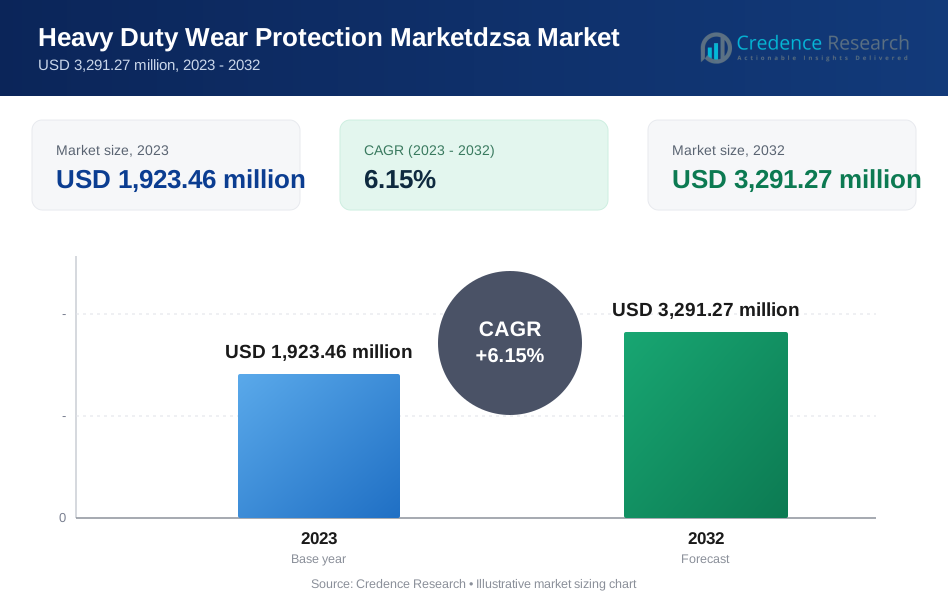
| Heavy Duty Wear Protection Market Size 2023 | USD 1,923.46 Million |
| Heavy Duty Wear Protection Market, CAGR | 6.15% |
| Heavy Duty Wear Protection Market Size 2032 | USD 3,291.27 Million |
Market Overview
The global heavy-duty wear protection market is projected to grow from USD 1,923.46 million in 2023 to an estimated USD 3,291.27 million by 2032, exhibiting a compound annual growth rate (CAGR) of 6.15% from 2024 to 2032. This market expansion is driven by the increasing demand for wear protection solutions across industries such as mining, construction, oil and gas, and manufacturing, where equipment longevity and cost-effective maintenance are critical.
Key drivers for the heavy-duty wear protection market include the rise in industrial activities worldwide, advancements in wear-resistant materials, and growing awareness about the benefits of proactive equipment protection. Trends such as eco-friendly and recyclable wear protection materials are emerging, catering to the demand for sustainable solutions. Additionally, the adoption of innovative technologies to enhance product performance and durability is propelling market growth as industries look to improve operational efficiency and reduce maintenance costs.
Geographically, North America and Europe hold significant market shares due to their robust industrial bases and strong presence of heavy machinery sectors. However, Asia-Pacific is anticipated to witness the fastest growth, driven by rapid industrialization and increasing investments in infrastructure development, particularly in countries like China and India. Major players in the global heavy-duty wear protection market include 3M, Sandvik AB, H-E Parts International, FLSmidth & Co., and Kalenborn International, all actively focusing on expanding product offerings and enhancing their global reach through strategic partnerships and innovations.
Market Drivers
Growing Demand for Industrial Equipment Longevity and Efficiency
Industries such as mining, construction, oil and gas, and manufacturing rely heavily on expensive machinery and equipment that operate under extreme conditions. These sectors prioritize maximizing equipment longevity and minimizing operational downtime to optimize costs. Heavy-duty wear protection materials, such as rubber, ceramics, and metal overlays, play a crucial role in extending equipment life by preventing wear, corrosion, and abrasion. This demand is particularly strong in mining and oil and gas sectors, where equipment is constantly exposed to harsh materials and environments that accelerate wear. With wear protection materials, companies can ensure equipment durability and reduce the frequency of repairs, ultimately enhancing productivity and saving on capital expenditure. For instance, a study by the International Association of Oil & Gas Producers (IOGP) found that the use of advanced wear protection materials in offshore drilling equipment reduced maintenance-related downtime by 37 days per year on average, resulting in significant cost savings for operators. This emphasis on efficiency and cost-effectiveness is a major factor driving the growth of the heavy-duty wear protection market.
Advancements in Wear-Resistant Material Technology
Technological advancements in materials science have led to the development of more efficient and durable wear-resistant solutions. New materials, such as advanced composites and high-performance polymers, offer superior protection against extreme conditions compared to traditional materials. Additionally, ceramic coatings and other innovations are tailored to address specific wear-related challenges in various industries. These advancements not only extend the lifespan of equipment but also improve performance under demanding conditions, driving their adoption across different sectors. The continuous evolution of wear protection technologies aligns with industry needs, encouraging manufacturers to integrate these materials into their operations, ultimately supporting the market's growth.
Rise in Industrial Activities in Emerging Markets
Emerging economies, particularly in Asia-Pacific and Latin America, are witnessing a surge in industrial activities due to rapid urbanization, infrastructure development, and increased investment in sectors like manufacturing, mining, and construction. These regions are seeing robust demand for wear protection solutions as industries expand and modernize their machinery and equipment. Countries like China, India, and Brazil are experiencing rapid industrialization, necessitating protective solutions for heavy machinery used in infrastructure projects and resource extraction. As a result, companies in these regions are increasingly adopting heavy-duty wear protection materials to ensure equipment longevity and efficiency. The growth of industrial activities in these emerging markets serves as a critical driver for the global heavy-duty wear protection market, with Asia-Pacific anticipated to be a leading growth contributor.
Increased Focus on Sustainable and Eco-Friendly Solutions
Sustainability has become a major focus for industries worldwide, as companies seek to reduce their environmental footprint and improve energy efficiency. The heavy-duty wear protection market is responding to this trend by developing eco-friendly and recyclable wear protection materials. Manufacturers are innovating to produce materials that are not only durable but also recyclable and environmentally friendly, meeting regulatory requirements and appealing to environmentally conscious companies. Additionally, sustainable wear protection solutions can reduce the frequency of equipment replacement, further decreasing environmental impact. This shift toward sustainable practices is driving market growth as industries increasingly seek eco-friendly solutions to align with global environmental standards and consumer expectations.
Market Trends
Adoption of Advanced, High-Performance Materials and Coatings
The global heavy-duty wear protection market is witnessing a strong trend toward the adoption of advanced materials, including ceramics, composite materials, and high-performance polymers. These materials offer superior resistance to abrasion, corrosion, and extreme temperatures, making them suitable for high-stress environments in industries like mining, construction, and oil and gas. Ceramic coatings, in particular, are gaining traction due to their ability to withstand abrasive wear and thermal stress, extending equipment life significantly compared to traditional materials. For instance, a leading manufacturer of wear-resistant materials reported that their advanced ceramic coatings increased equipment lifespan by 3-5 times compared to traditional steel in mining applications, with some components lasting over 10,000 hours in high-abrasion environments. Additionally, composite materials and reinforced polymers are lightweight yet highly durable, making them appealing in applications where reducing equipment weight can improve energy efficiency. These advanced materials are tailored to meet specific needs across industries, leading companies to adopt these high-performance solutions for enhanced durability and operational efficiency.
Growing Demand for Sustainable and Eco-Friendly Wear Protection Solutions
As industries increasingly focus on sustainability and environmental responsibility, there is a rising demand for eco-friendly wear protection solutions that align with environmental standards and corporate social responsibility goals. Manufacturers in the wear protection market are innovating to produce materials that are recyclable, have lower environmental impact, and are safer to handle during application and disposal. For instance, biodegradable polymers and coatings with reduced chemical emissions are becoming popular, especially in regions with strict environmental regulations. This trend is particularly prevalent in developed markets like North America and Europe, where companies are prioritizing sustainable practices to meet regulatory requirements and fulfill consumer expectations for greener industrial processes. By investing in sustainable wear protection solutions, companies are not only reducing their environmental footprint but also enhancing brand value and market appeal among environmentally conscious stakeholders. This shift is likely to continue as regulatory pressures and global demand for eco-friendly industrial practices rise, influencing the heavy-duty wear protection market's trajectory.
Market Restraints and Challenges
High Initial Costs of Advanced Wear Protection Solutions
One of the primary restraints in the global heavy-duty wear protection market is the high initial cost associated with advanced wear protection materials and technologies. High-performance coatings and materials such as ceramics, composites, and engineered polymers often come with a premium price tag due to the complex manufacturing processes and specialized raw materials required. For many industries, especially small and medium-sized enterprises (SMEs), these upfront costs can pose a significant financial burden, making them hesitant to invest in advanced wear protection solutions despite the long-term savings and operational benefits they offer. Additionally, companies with limited capital may opt for less expensive, traditional materials even if they require more frequent replacement and maintenance. This cost barrier can slow the adoption of advanced wear protection solutions, particularly in emerging markets where cost sensitivity is high.
Technical Challenges in Material Application and Compatibility
Another challenge impacting the heavy-duty wear protection market is the technical complexity involved in applying wear protection materials and ensuring compatibility with different types of equipment and operating environments. Advanced coatings and materials often require specialized equipment and skilled technicians for application, which can limit their use in certain regions or industries lacking technical expertise. Furthermore, ensuring that these materials perform optimally in specific, high-stress conditions requires precise customization, which can be challenging and time-consuming. Variability in environmental factors, such as temperature extremes, chemical exposure, and abrasive materials, adds further complexity, as the wear protection solutions must be tailored to withstand specific stresses without compromising equipment functionality. These technical challenges not only increase costs but also prolong installation times, potentially leading to operational delays for industries requiring continuous production, thereby limiting the broader adoption of wear protection solutions in the market.
Market Segmentation Analysis
By Type
Ceramic-based wear protection materials hold a significant market share due to their exceptional resistance to abrasion, corrosion, and extreme temperatures, making them indispensable in high-stress applications across mining and steel industries. Rubber materials are also widely favored for their flexibility, impact resistance, and cost-effectiveness, especially in transportation and automotive sectors where shock and vibration absorption are essential. Lining systems play a crucial role in industries like oil and gas, providing necessary protection against friction and erosion in pipelines and tanks, and thereby supporting the growing demand in fluid handling applications. Coating systems, adaptable to various equipment types, are essential for surface protection across industries, offering a protective barrier against environmental factors like chemicals and abrasives; this segment is set to grow as coating technologies become increasingly durable and customizable. The "Others" category encompasses niche materials and innovative solutions for specific industry needs, with promising growth potential driven by ongoing R&D efforts to introduce new, specialized materials.
By End User
The end-user segment for heavy-duty wear protection solutions is diverse, with each industry demonstrating specific needs driven by operational challenges. In transportation and automotive, wear protection materials are essential for reducing friction and prolonging the life of high-wear components like brakes and bearings, especially as demand grows for durable parts in electric vehicles and heavy-duty trucks. The oil and gas sector requires exceptionally resilient materials to withstand corrosive and abrasive conditions in drilling and pipeline operations, making wear protection crucial to minimizing equipment degradation and downtime. Similarly, the iron and steel industry relies on wear-resistant solutions to handle high temperatures and friction, ensuring operational efficiency and steady growth in this segment. Mining, one of the largest end-users, depends heavily on wear protection to maintain productivity and extend machinery lifespan under extreme conditions. Other industries, including construction, agriculture, and manufacturing, are also increasing their adoption of wear protection to safeguard equipment, contributing to the market's overall expansion.
Segments
Based on Type
- Ceramic
- Rubber
- Lining System
- Coating System
- Others
Based on End User
- Transportation & Automotive
- Oil and Gas
- Iron and Steel
- Mining
- Others
Based on Region
- North America
- U.S.
- Canada
- Mexico
- Europe
- Germany
- France
- U.K.
- Italy
- Spain
- Rest of Europe
- Asia Pacific
- China
- Japan
- India
- South Korea
- South-east Asia
- Rest of Asia Pacific
- Latin America
- Brazil
- Argentina
- Rest of Latin America
- Middle East & Africa
- GCC Countries
- South Africa
- Rest of the Middle East and Africa
Regional Analysis
North America (25%)
North America holds a significant share of the global heavy-duty wear protection market, accounting for approximately 25% of the total market. This region’s dominance is due to its well-established industrial base, particularly in sectors like oil and gas, mining, and automotive manufacturing. High standards for equipment longevity and stringent regulatory requirements push companies to adopt durable wear protection solutions to maintain operational efficiency and minimize downtime. Furthermore, the increasing adoption of sustainable and advanced wear protection technologies in the U.S. and Canada drives regional growth. North America is also home to key market players that continuously invest in innovation, supporting the demand for high-performance materials in heavy-duty applications.
Europe (20%)
Europe captures around 20% of the global heavy-duty wear protection market. The presence of prominent industries, such as iron and steel, automotive, and construction, contributes to steady demand for wear protection solutions. European industries prioritize sustainable practices, propelling the adoption of eco-friendly and recyclable wear protection materials. Regulatory bodies in the European Union enforce strict environmental standards, encouraging industries to invest in long-lasting wear protection solutions that minimize material waste and lower environmental impact. Germany, the UK, and France are key contributors to the region’s market growth, where innovation in wear-resistant materials and coatings is actively pursued to meet the region’s specific industrial needs.
Key players
- Densit
- Thejo Engineering Limited
- West American Rubber Company, LLC
- Xervon GmbH
- Plant Maintenance Service Corporation
- The Weir Group PLC
- Blair Rubber Company
- Nilos GmbH and Co. KG
- Kalenborn International GmbH and Co. KG
- ContiTech AG
- SNC-Lavalin Group
- Industrial Lining Inc
- Bilfinger SE
- TEGA Industries LTD
Competitive Analysis
The global heavy-duty wear protection market is highly competitive, with numerous players offering a variety of specialized solutions across different industries. Key players like The Weir Group PLC, ContiTech AG, and SNC-Lavalin Group stand out due to their expansive product portfolios and significant presence in multiple regions. Companies such as Densit, Thejo Engineering Limited, and West American Rubber Company, LLC have a strong foothold in niche markets, delivering tailored wear protection solutions. Innovation in materials and eco-friendly products is a common focus, as companies strive to address the growing demand for sustainable options. Strategic partnerships, acquisitions, and investments in research and development are prevalent, as firms aim to expand their market share and enhance their technical capabilities. This competitive landscape drives continuous improvement and innovation, pushing companies to enhance product durability and cost-effectiveness, catering to the evolving needs of global industries.
Recent Developments
- In August 2023, Thejo Engineering Limited acquired an additional 6% stake in Thejo Australia Pty Ltd from Bridgestone Mining Solutions Australia Pty Ltd for AUD 0.29 million. This acquisition strengthens Thejo's presence in the Australian market for heavy-duty wear protection solutions.
- In 2022, WARCO announced the sale of its Ripley, MS-based subsidiary, Biltrite Ripley Operations LLC, to GRT Rubber Technologies. This divestiture allows WARCO to focus on its core competencies in calendered sheet, extruded, and molded rubber businesses, reinforcing its position in the heavy-duty wear protection market.
- In June 2024, Bilfinger SE announced the successful acquisition of Stork units, which is expected to contribute to the company's revenue and EBITA margin. This acquisition enhances Bilfinger's capabilities in industrial services, potentially including wear protection solutions.
- In February 2023, TEGA Industries acquired McNally Sayaji Engineering Limited (MSEL) through the NCLT process. This acquisition expands TEGA's product portfolio in the mining, mineral processing, and material handling industries, which includes heavy-duty wear protection solutions.
Market Concentration and Characteristics
The global heavy-duty wear protection market is moderately fragmented, with a mix of well-established international players and regional firms providing specialized solutions. Market concentration is moderate, as leading companies like The Weir Group PLC, ContiTech AG, and SNC-Lavalin Group hold notable shares, primarily due to their extensive product portfolios, global reach, and investments in advanced wear-resistant materials. However, regional players like Thejo Engineering Limited and Industrial Lining Inc. maintain strong positions in specific geographic markets, addressing localized demand with tailored solutions. Key market characteristics include a focus on innovation, as companies increasingly develop eco-friendly and high-performance materials to cater to industries like mining, oil and gas, and construction. The market also reflects a growing emphasis on sustainability, with customers prioritizing long-lasting wear protection products to minimize equipment downtime and extend operational efficiency. As industries prioritize durability and environmental compliance, competition among market participants continues to drive technological advancements and diversification in product offerings.
Report Coverage
The research report offers an in-depth analysis based on Type, End User and Region. It details leading market players, providing an overview of their business, product offerings, investments, revenue streams, and key applications. Additionally, the report includes insights into the competitive environment, SWOT analysis, current market trends, as well as the primary drivers and constraints. Furthermore, it discusses various factors that have driven market expansion in recent years. The report also explores market dynamics, regulatory scenarios, and technological advancements that are shaping the industry. It assesses the impact of external factors and global economic changes on market growth. Lastly, it provides strategic recommendations for new entrants and established companies to navigate the complexities of the market.
Future Outlook
- The market is expected to experience steady growth, driven by demand across sectors like mining, oil and gas, and construction, which rely heavily on wear-resistant materials to maintain operational efficiency.
- High-performance materials such as ceramics, polymers, and composites will see higher adoption, as industries seek durable, efficient, and lightweight options to extend equipment life in harsh conditions.
- Rapid industrialization in emerging economies, particularly in Asia-Pacific, will boost demand for wear protection as industries expand infrastructure and resource extraction activities.
- Companies will increasingly develop eco-friendly and recyclable wear protection materials to meet environmental regulations and growing customer preference for sustainable solutions.
- Innovations in wear protection technologies, such as nano-coatings and advanced ceramic compounds, are expected to improve performance and durability, attracting more industry investment.
- The adoption of predictive maintenance technologies will increase, as industries prioritize proactive solutions that enhance wear protection and minimize equipment downtime.
- The shift toward electric vehicles (EVs) and high-demand automotive applications will drive the need for wear-resistant materials that support new mobility solutions and extend part lifespan.
- Industries are expected to prioritize cost-effective wear protection solutions, as companies balance upfront material costs with long-term savings in maintenance and downtime reduction.
- Resource-rich regions like Latin America and Africa will see increased demand for wear protection in mining and oil sectors, as countries expand extraction activities to meet global demand.
- The market will witness intense competition, as leading players invest in research and development, strategic partnerships, and mergers to expand their product portfolios and global presence.
Request a Free Sample
Fill in your details and we'll send you a free sample report.
- Sample data tables & charts
- Research methodology
Need a Custom Version of This Report?
Tailor the scope, geography, or segments to your exact requirements.
- Custom geography or segment scope
- Direct access to our analyst team
Frequently Asked Questions
What is the market size of the global heavy-duty wear protection market in 2023, and how much is it expected to reach by 2032?
Which industries drive demand in the heavy-duty wear protection market?
What materials are commonly used for heavy-duty wear protection?
What regional markets are leading in heavy-duty wear protection?
How is the heavy-duty wear protection market responding to environmental concerns?
Who are some major players in the global heavy-duty wear protection market?
Table of Content
Chapter 1. Report Introduction
- 1.1 Report Description & Purpose
- 1.1.1 Report Title & Market Definition
- 1.1.2 Unique Selling Propositions (USP) & Key Differentiators
- 1.1.3 Value Proposition for Stakeholders
- 1.2 Research Objectives
- 1.2.1 Market Sizing Objectives (Volume & Revenue)
- 1.2.2 Segmentation Objectives
- 1.2.3 Competitive Intelligence Objectives
- 1.2.4 Forecast & Scenario Objectives
- 1.3 Report Scope
- 1.3.1 Heavy Duty Wear Protection Marketdzsa Scope – Types & Subtypes Covered
- 1.3.2 Geographic Scope – Regions & Countries Covered
- 1.3.3 Historical Period, Base Year & Forecast Period (2023; forecast to 2032)
- 1.3.4 Inclusions & Exclusions
- 1.4 HS Code & Classification Framework
- 1.5 Currency, Units & Pricing Basis
- 1.6 Target Stakeholders
- 1.7 Limitations & Assumptions
Chapter 2. Executive Summary
- 2.1 Global Heavy Duty Wear Protection Marketdzsa Market Snapshot
- 2.1.1 Market Size – Historical (2023) & Forecast (2023-2032) (2023: USD 1,923.46 million → 2032: USD 3,291.27 million)
- 2.1.2 Volume & Revenue – Global Totals
- 2.1.3 Key Market Highlights – Top Five Facts
- 2.2 Heavy Duty Wear Protection Marketdzsa Market Segmentation Snapshot
- 2.2.1 Market Split by Region – 2023 vs. 2032
- 2.3 Competitive Snapshot
- 2.3.1 Top 10 Players by Revenue Share – 2023
- 2.3.2 Top 10 Players by Volume Share – 2023
- 2.3.3 Recent Strategic Developments (18-Month Summary)
- 2.4 Key Investment Highlights & Strategic Conclusions
Chapter 3. Heavy Duty Wear Protection Marketdzsa Market Dynamics & Industry Analysis
- 3.1 Market Overview & Context
- 3.1.1 Heavy Duty Wear Protection Marketdzsa Market Position in the Broader Automotive Value Chain
- 3.1.2 OEM vs. Replacement Market Dynamics
- 3.1.3 Market Maturity & Development Stage by Region
- 3.2 Heavy Duty Wear Protection Marketdzsa Market Drivers
- 3.3 Heavy Duty Wear Protection Marketdzsa Market Restraints & Challenges
- 3.4 Heavy Duty Wear Protection Marketdzsa Market Opportunities
- 3.5 Porter's Five Forces Analysis
- 3.5.1 Threat of New Entrants
- 3.5.2 Bargaining Power of Suppliers
- 3.5.3 Bargaining Power of Buyers
- 3.5.4 Threat of Substitutes
- 3.5.5 Competitive Rivalry – Intensity Assessment
- 3.6 Heavy Duty Wear Protection Marketdzsa Value Chain Analysis
- 3.6.1 Upstream – Raw Material/Input Suppliers
- 3.6.1.1 Raw Material/Input 1
- 3.6.1.2 Raw Material/Input 2
- 3.6.1.3 Raw Material/Input 3
- 3.6.2 Midstream – Production/Manufacturing/Service Delivery
- 3.6.2.1 Production/Process Overview
- 3.6.2.2 Key Facility Locations & Capacity by Manufacturer
- 3.6.3 Downstream – Distribution & End Consumer
- 3.6.3.1 Primary Channel – B2B/OEM
- 3.6.3.2 Secondary Channels – Dealer, Retail, Online, Direct
- 3.6.4 Value Chain Profitability Analysis
- 3.6.1 Upstream – Raw Material/Input Suppliers
- 3.7 PESTEL Analysis
- 3.7.1 Political Factors
- 3.7.2 Economic Factors
- 3.7.3 Social Factors
- 3.7.4 Technological Factors
- 3.7.5 Environmental Factors
- 3.7.6 Legal Factors
- 3.8 Heavy Duty Wear Protection Marketdzsa Supply Chain Analysis
- 3.8.1 Raw Material/Input Supply Risk Assessment
- 3.8.2 Manufacturing Concentration Risk (Geographic Exposure)
- 3.8.3 Trade Disruption Impact Analysis
- 3.9 Regulatory & Policy Landscape
Note: The regulatory and policy landscape section covers regulations based on their applicability to the market, Heavy Duty Wear Protection Marketdzsa category, geography, and scope of the study. Only regulatory frameworks with a material impact on operations, compliance, trade, sustainability, or market access are analyzed in detail.
Chapter 4. Key Investment Pockets & Opportunity Analysis
- 4.1 Heavy Duty Wear Protection Marketdzsa Market Attractiveness Analysis
- 4.1.1 By Region – Investment Attractiveness Matrix (Volume × CAGR)
- 4.2 Absolute Revenue Growth Opportunity
- 4.2.1 By Region – Absolute USD Growth Through 2032
- 4.3 Incremental Volume Opportunity
- 4.3.1 By Region – Incremental Volume Through 2032
- 4.3.2 Segment – Incremental Volume
- 4.4 Emerging Submarket Opportunity Deep Dive (Subject to Applicability)
- 4.5 Emerging Market Opportunity Scorecards
- 4.5.1 United States
- 4.5.2 Europe
- 4.5.3 Asia
- 4.5.4 Middle East & Africa
Note: Emerging Market Opportunity Scorecards will be included based on relevance and strategic importance. Regions listed are indicative and may vary depending on data availability and market dynamics.
Chapter 5. Heavy Duty Wear Protection Marketdzsa Import-Export Analysis & Trade Flows
- 5.1 Global Trade Overview
- 5.1.1 Global Export Value by Country (2023)
- 5.1.2 Global Export Volume by Country (2023)
- 5.1.3 Global Import Value by Country (2023)
- 5.1.4 Global Import Volume by Country (2023)
- 5.1.5 Net Trade Balance by Country (2023)
- 5.2 Export Analysis – Segment
- 5.2.1 Type 1 (HS Code)
- 5.2.2 Type 2 (HS Code)
- 5.2.3 Type 3 (HS Code)
- 5.2.4 Type 4 (HS Code)
- 5.2.5 Type 5 (HS Code)
- 5.3 Import Analysis – Segment
- 5.3.1 Type 1 (HS Code)
- 5.3.2 Type 2 (HS Code)
- 5.3.3 Type 3 (HS Code)
- 5.3.4 Type 4 (HS Code)
- 5.3.5 Type 5 (HS Code)
- 5.4 Average Unit Trade Prices
- 5.4.1 Average Export Price – Segment & Country
- 5.4.2 Average Import Price – Segment & Source Country
- 5.4.3 Price Trends (2023)
- 5.5 Key Trade Route Analysis
- 5.5.1 Trade Route 1
- 5.5.2 Trade Route 2
- 5.5.3 Trade Route 3
- 5.5.4 Trade Route 4
- 5.5.5 Trade Route 5
- 5.6 Trade Policy Impact Assessment
- 5.6.1 US Anti-Dumping & Section 301 Tariffs
- 5.6.2 EU Customs Union Impact
- 5.6.3 Major Free Trade Agreements
- 5.6.4 USMCA Rules of Origin
Note: Trade policy analysis will be included only where relevant to the Heavy Duty Wear Protection Marketdzsa market.
Chapter 6. Competitive Landscape & Company Benchmarking
- 6.1 Heavy Duty Wear Protection Marketdzsa Market Concentration & Structure
- 6.1.1 Herfindahl-Hirschman Index (HHI) – vs. 2023
- 6.1.2 Tier 1, Tier 2 & Tier 3 Market Structure
- 6.1.3 Global, Regional & Local Player Dynamics
- 6.2 Heavy Duty Wear Protection Marketdzsa Market Share Analysis – 2023
- 6.2.1 Global Revenue Share by Company
- 6.2.2 Global Volume Share by Company
- 6.2.3 Regional Revenue Share
- 6.2.4 Market Share Evolution ( vs. 2023)
- 6.2.5 OEM Segment Share by Company
- 6.2.6 Replacement Segment Share by Company
- 6.3 Production/Delivery Capacity & Facility Analysis
- 6.3.1 Global Installed Capacity
- 6.3.2 Capacity Utilization Rates
- 6.3.3 Production/Output Volume
- 6.3.4 Facility Locations & Capacity Map
- 6.3.5 Planned Capacity Additions
- 6.4 Heavy Duty Wear Protection Marketdzsa Competitive Benchmarking Matrix
- 6.4.1 Revenue, Volume, CAGR & Profitability Comparison
- 6.4.2 Channel Revenue Mix
- 6.4.3 Geographic Revenue Exposure
- 6.4.4 R&D Intensity
- 6.4.5 Sustainability Maturity
- 6.5 Strategic Developments in Heavy Duty Wear Protection Marketdzsa (Last 24 Months)
- 6.5.1 Mergers, Acquisitions & Divestments
- 6.5.2 New Heavy Duty Wear Protection Marketdzsa Launches
- 6.5.3 Facility Expansions
- 6.5.4 Strategic Alliances, Joint Ventures & Partnerships
- 6.5.5 Distribution Expansion & Market Entry
- 6.5.6 Sustainability & ESG Initiatives
- 6.6 Competitive Strategy Mapping
- 6.6.1 Leader, Challenger, Follower & Niche Classification
- 6.6.2 Pricing Strategy Comparison
- 6.6.3 Channel Strategy Matrix
Note: Strategic developments are included based on their materiality and the availability of reliable information.
Chapter 7. Global Heavy Duty Wear Protection Marketdzsa Market – By Distribution Channel
- 7.1 Segment Overview
- 7.1.1 Volume & Revenue Split by Channel (2023 & 2032)
- 7.1.2 Channel Mix Evolution (2023-2032)
Chapter 8. Regional Market Analysis – Global Overview
- 8.1 Global Regional Overview
- 8.1.1 Regional Volume Share
- 8.1.2 Regional Revenue Share
- 8.1.3 Regional Volume by Region
- 8.1.4 Regional Revenue by Region
- 8.1.5 Regional Forecast Through 2032
- 8.2 Cross-Regional Segment Analysis
- 8.2.1 By Distribution Channel
- 8.2.2 By Brand/Price Tier
Chapter 9. North America Heavy Duty Wear Protection Marketdzsa Market
- 9.1 United States
- 9.2 Canada
- 9.3 Mexico
Chapter 10. Europe Heavy Duty Wear Protection Marketdzsa Market
- 10.1 Germany
- 10.2 France
- 10.3 Italy
- 10.4 United Kingdom
- 10.5 Spain
- 10.6 Poland
- 10.7 Russia
- 10.8 Netherlands
- 10.9 Belgium
- 10.10 Sweden
- 10.11 Denmark
- 10.12 Norway
- 10.13 Rest of Europe
Chapter 11. Asia Pacific Heavy Duty Wear Protection Marketdzsa Market
- 11.1 China
- 11.2 India
- 11.3 Japan
- 11.4 South Korea
- 11.5 Thailand
- 11.6 Indonesia
- 11.7 Vietnam
- 11.8 Malaysia
- 11.9 Australia
- 11.10 Rest of Asia Pacific
Chapter 12. Latin America Heavy Duty Wear Protection Marketdzsa Market
- 12.1 Brazil
- 12.2 Argentina
- 12.3 Colombia
- 12.4 Chile
- 12.5 Rest of Latin America
Chapter 13. Middle East Heavy Duty Wear Protection Marketdzsa Market
- 13.1 Saudi Arabia
- 13.2 United Arab Emirates
- 13.3 Turkey
- 13.4 Israel
- 13.5 Iran
- 13.6 Rest of the Middle East
Chapter 14. Africa Heavy Duty Wear Protection Marketdzsa Market
- 14.1 South Africa
- 14.2 Egypt
- 14.3 Nigeria
- 14.4 Morocco
- 14.5 Rest of Africa
Chapter 15. Heavy Duty Wear Protection Marketdzsa Company Profiles
- 15.1 [Company 01]
- 15.1.1 Company Overview
- 15.1.2 Key Management Personnel
- 15.1.3 Products & Services Portfolio
- 15.1.4 Financial Performance
- 15.1.5 Key Market Focus & Geographic Presence
- 15.1.6 Recent Developments & Strategic Initiatives
Note: The company profile list is preliminary and may change based on research findings, market developments, data availability, and client requirements.
Chapter 16. Appendices
- Appendix A – List of Abbreviations & Acronyms
- Appendix B – Industry Classification Code Reference – Full Series
- Appendix C – Production & Capacity Data Tables
- Appendix D – End-Use & Demand Base Tables
- Appendix E – Consumption & Replacement Rate Assumptions
- Appendix F – ASP Reference Tables
- Appendix G – Manufacturing & Facility Database
- Appendix H – Import-Export Data Tables
- Appendix I – Regulatory Summary Tables
- Appendix J – Primary Research Participant List (Anonymized)
- Appendix K – Primary Research Questionnaire Framework
- Appendix L – Data Sources & Bibliography
- Appendix M – Market Size Divergence & Source Comparison
Chapter 17. Research Methodology
- 17.1 Research Framework & Philosophy
- 17.2 Secondary Research – Sources, Hierarchy & Data Extraction
- 17.3 Data Modeling – Bottom-Up & Top-Down Market Sizing
- 17.4 Primary Research – Stakeholder Framework, LOI & Sample Sizes
- 17.5 Forecast Methodology – Regression, Scenario & Sensitivity Analysis
- 17.6 Quality Control – Four-Layer Validation Framework
- 17.7 Limitations & Standard Assumptions
- 17.8 Disclaimer
