
| REPORT ATTRIBUTE | DETAILS |
|---|---|
| Historical Period | 2019-2022 |
| Base Year | 2023 |
| Forecast Period | 2024-2032 |
| India Second Hand Books Market Size 2023 | USD 781.04 million |
| India Second Hand Books Market, CAGR | 6.80% |
| India Second Hand Books Market Size 2032 | USD 1,411.93 million |
Market Overview
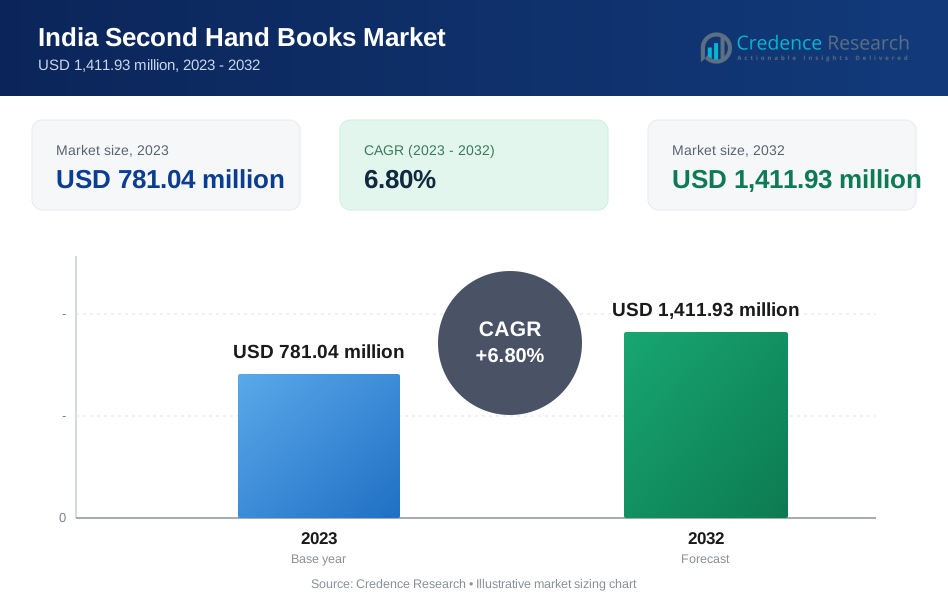
The India Second Hand Books Market is projected to grow from USD 781.04 million in 2023 to an estimated USD 1,411.93 million by 2032, with a compound annual growth rate (CAGR) of 6.80% from 2024 to 2032. This substantial growth reflects a rising demand for affordable reading options amidst increasing literacy rates and educational pursuits. The market's expansion is driven by various factors, including the growing awareness of sustainable practices and the cost-effectiveness of second-hand books, making them an attractive alternative to new books.
The key drivers for the India Second Hand Books Market include the increasing penetration of online platforms, which make it easier for consumers to buy and sell used books. Additionally, the cultural shift towards sustainability and the reduction of waste have bolstered the market's appeal. The affordability of second-hand books is another significant factor, providing cost savings for students and avid readers. The market also benefits from trends such as the nostalgia for physical books in an era of digitalization and the rise of niche bookstores specializing in rare and out-of-print editions.
Geographically, the market is witnessing robust growth across major metropolitan areas such as Delhi, Mumbai, and Bangalore, where the demand for educational and recreational reading material is high. These cities have well-established marketplaces and online portals that facilitate the circulation of second-hand books. Key players in the market include local vendors, independent bookstores, and online platforms like Amazon and Flipkart, which have expanded their offerings to include used books. These entities are crucial in driving market growth, providing diverse and accessible options for consumers nationwide.
Market Drivers
Affordability and Cost Savings
One of the most compelling drivers of the India Second Hand Books Market is the affordability of second-hand books. With the rising costs of new books, particularly academic and reference materials, second-hand books offer a cost-effective alternative. Students, in particular, benefit from the substantial savings provided by purchasing used textbooks, which can be a fraction of the price of new ones. This affordability extends to general readers as well, who can expand their personal libraries without the financial burden associated with buying new books. For instance, a university student might choose to buy second-hand textbooks for their courses instead of new ones. This cost savings are especially crucial in a price-sensitive market like India, where consumers are constantly seeking value for money.
Increasing Penetration of Online Platforms
The proliferation of online platforms dedicated to the buying and selling of second-hand books has revolutionized the market. E-commerce giants like Amazon and Flipkart have integrated second-hand book sections into their offerings, making it easier for consumers to find and purchase used books. Additionally, specialized platforms such as BookChor and Bookish Santa have emerged, catering specifically to the second-hand book market. These online platforms provide a vast selection of books, convenient browsing, and user-friendly purchasing processes, which have significantly broadened the reach of second-hand books. The digital shift also includes mobile apps and social media marketplaces that facilitate peer-to-peer transactions, further boosting market growth.
Cultural Shift Towards Sustainability
The global movement towards sustainability and environmentally conscious living has had a positive impact on the second-hand books market in India. For instance, consumers are increasingly aware of the environmental benefits of buying used books, such as reducing paper waste and the carbon footprint associated with book production and distribution. This cultural shift is particularly evident among younger generations, who prioritize eco-friendly practices and are more likely to support the circular economy. The environmental appeal of second-hand books is amplified by initiatives from both governmental and non-governmental organizations promoting sustainable consumption. As a result, the market is benefiting from this growing environmental consciousness.
Nostalgia and the Tangibility of Physical Books
Despite the rise of digital reading devices and e-books, there remains a strong preference for physical books among many readers. The tangible experience of holding a book, turning its pages, and even the unique scent of old books contribute to the enduring appeal of physical copies. This nostalgia is a significant driver for the second-hand books market, as many consumers seek out classic editions, rare finds, and out-of-print books that are often only available second-hand. The charm and sentimental value attached to owning physical books ensure a steady demand in the market. Additionally, second-hand bookstores and markets often serve as cultural hubs, offering a unique shopping experience that cannot be replicated online, further enhancing their appeal.
Market Trends
Growth of Online Marketplaces and Digital Platforms
The surge in online marketplaces and digital platforms has revolutionized the second-hand books market. Websites like Amazon and Flipkart, alongside niche platforms such as BookChor and Bookish Santa, have made it easier for consumers to buy and sell used books. These platforms offer extensive catalogs, convenient search options, and streamlined purchasing processes, enhancing the accessibility and appeal of second-hand books. Additionally, mobile apps and social media groups dedicated to book trading are gaining popularity, further expanding the market's digital footprint. For instance, a student looking for an affordable textbook might turn to online platforms to find the book they need.
Rising Popularity of Book Fairs and Pop-Up Events
Book fairs and pop-up events focusing on second-hand books are becoming increasingly popular across India. Events such as the Delhi Book Fair and Chennai Book Fair often include dedicated sections for second-hand books, attracting large crowds of bibliophiles. These events provide opportunities for direct interactions between buyers and sellers, fostering a community spirit and a shared love for books. Pop-up events in cafes and community centers also contribute to the trend, offering unique shopping experiences and promoting the concept of sustainable reading.
Increased Focus on Sustainability and Eco-Friendly Practices
Sustainability is a significant trend impacting the second-hand books market. Consumers are increasingly conscious of their environmental footprint and are opting for second-hand books as a sustainable choice. The reduced demand for new book production helps lower deforestation rates and carbon emissions associated with publishing. Many organizations and communities are actively promoting the benefits of recycling and reusing books, aligning with the broader global movement towards sustainable living.
Expansion of Niche Markets and Specialized Collections
The market is witnessing the growth of niche segments and specialized collections. Collectors and enthusiasts often seek rare, out-of-print, and first-edition books that are typically available only in second-hand markets. For example, a collector might be interested in first-edition books. This trend is supported by independent bookstores and online platforms that curate unique collections, catering to specific interests such as vintage literature, academic texts, and regional publications. The focus on niche markets adds diversity and depth to the overall second-hand books market.
Integration of Technology for Enhanced Customer Experience
Technological advancements are playing a crucial role in enhancing the customer experience in the second-hand books market. Augmented reality (AR) and virtual reality (VR) technologies are being explored to create immersive book browsing experiences online. Additionally, advanced algorithms and AI-driven recommendations on e-commerce platforms help customers find books that match their preferences more efficiently. These innovations are making the process of discovering and purchasing second-hand books more engaging and user-friendly.
Educational Institutions Embracing Second-Hand Books
Educational institutions, particularly schools and colleges, are increasingly encouraging the use of second-hand textbooks. This practice helps reduce the financial burden on students and promotes sustainable consumption. Many institutions have set up book banks and exchange programs where students can donate and borrow books. This trend not only supports the second-hand books market but also fosters a culture of sharing and resourcefulness among students.
Rise of Community Libraries and Book Exchange Programs
Community libraries and book exchange programs are gaining traction in urban and rural areas alike. These initiatives encourage the sharing and circulation of books within communities, making reading materials more accessible to a broader audience. Little Free Libraries, neighborhood book swaps, and public book exchange shelves are becoming common sights, reflecting a grassroots movement towards communal reading and learning.
Market Restraints and Challenges
Limited Awareness and Perception Issues
One of the primary challenges facing the second-hand books market is the limited awareness and negative perceptions associated with used books. Many consumers still prefer new books due to concerns about the quality, condition, and authenticity of second-hand books. The perception that second-hand books are worn out or damaged can deter potential buyers, impacting market growth. Increasing awareness about the benefits and quality of second-hand books remains a critical challenge for market players.
Fragmented Market Structure
The second-hand books market in India is highly fragmented, with numerous small-scale vendors, independent bookstores, and online platforms operating independently. This fragmentation leads to inconsistencies in pricing, quality control, and customer service. The lack of a standardized framework makes it difficult for consumers to navigate the market efficiently, resulting in a less seamless buying experience. The absence of large, organized players further exacerbates this issue, limiting the market's scalability and reach.
Competition from Digital Alternatives
The rise of digital reading devices and e-books presents a significant challenge to the second-hand books market. With the convenience of instant access, portability, and often lower prices, e-books are increasingly preferred by tech-savvy readers. The competition from digital alternatives reduces the demand for physical second-hand books, particularly among younger generations who are more inclined towards digital solutions. Adapting to this shift and finding ways to integrate digital and physical book offerings is crucial for market sustainability.
Supply Chain and Logistics Issues
Effective supply chain and logistics management is a significant challenge in the second-hand books market. The collection, sorting, and distribution of used books require efficient logistics to ensure books reach customers in good condition and within a reasonable timeframe. However, the unorganized nature of the market often results in logistical inefficiencies, leading to delays, damaged books, and dissatisfied customers. Improving supply chain processes and adopting advanced logistics solutions are essential to address these challenges.
Regulatory and Copyright Concerns
Regulatory and copyright issues pose additional restraints on the second-hand books market. The resale of books can sometimes conflict with copyright laws, leading to legal complications. Ensuring compliance with copyright regulations while facilitating the free exchange of books is a delicate balance that market players must navigate. Additionally, the lack of clear guidelines and regulations governing the second-hand books market can create uncertainties for both buyers and sellers.
Limited Infrastructure in Rural Areas
While urban areas have well-established second-hand book markets, rural regions often lack the necessary infrastructure to support this market segment. Limited access to online platforms, fewer physical bookstores, and inadequate logistics networks in rural areas restrict the market's growth potential. Bridging the urban-rural divide and expanding the market's reach to underserved regions is a significant challenge that requires concerted efforts from market stakeholders.
Market Segmentation Analysis
By Book Type
The India Second Hand Books Market spans a diverse range of genres, each attracting different segments of readers. Action & Adventure books are popular among both young adults and adults seeking thrilling, affordable entertainment. Art, Music, Film, and Photography books cater to enthusiasts and professionals, driven by the high cost of new editions. Academic books form a significant segment, highly sought after by students and educators for substantial cost savings. Biographies and Comics appeal to those interested in personal stories and graphic narratives, offering an economical way to explore these genres. Books on Crafts, Home & Lifestyle attract hobbyists and DIY enthusiasts due to their affordability. Fantasy, Horror & Science Fiction books enjoy a dedicated fan base, valued for their imaginative content. Politics and Religion books cater to readers interested in social issues and diverse viewpoints, often found in rare editions. Science, Technology, and Medicine books are essential for professionals and students, who seek affordable, relevant editions. Lastly, the market includes a variety of other books catering to diverse interests and preferences.
By Price Range
The India Second Hand Books Market caters to a diverse range of consumers through two primary price segments: Mass/Economy and Premium. The Mass/Economy segment targets price-sensitive consumers seeking affordable reading options, encompassing a wide variety of genres and book types. In contrast, the Premium segment focuses on high-quality second-hand books, often featuring rare editions, first editions, or books in excellent condition, appealing to collectors and discerning readers who are willing to invest more for superior and unique finds.
By End Use
Adults represent the largest end-use segment in the India Second Hand Books Market, purchasing books for personal reading, professional development, and hobbies. This segment encompasses a diverse range of book types and genres. Meanwhile, the segment for kids focuses on children's books, including educational materials, storybooks, and comics. Parents and educators are drawn to second-hand books for their cost-effectiveness and variety, making them a practical choice for children's reading needs.
By Sales Channel
The India Second Hand Books Market features a diverse range of sales channels. Wholesalers and distributors play a key role by handling bulk purchases, supplying bookstores, educational institutions, and libraries. Hypermarkets and supermarkets incorporate second-hand books into their broader inventory, offering convenience for shoppers. Specialty stores and independent bookstores focus on curated collections, often specializing in specific genres or niches. Multibrand stores provide a variety of second-hand books alongside other products, catering to diverse consumer interests. Additionally, online platforms, pop-up events, and street vendors offer extra avenues for consumers to access second-hand books, enhancing the market's reach and accessibility.
Segments
Based on Book Type
- Action & Adventure
- Art, Music, Film, and Photography
- Academic Books
- Biographies and Comics
- Crafts, Home & Lifestyle
- Fantasy, Horror & Science Fiction
- Politics and Religion
- Science, Technology, and Medicine
- Other
Based on Price Range
- Mass/Economy
- Premium
Based on End Use
- Adults
- Kids
Based on Sales Channel
- Wholesalers/Distributors
- Hypermarkets/Supermarkets
- Specialty Stores
- Multibrand Stores
- Others
Regional Analysis
North India (35%)
North India holds the largest market share, accounting for approximately 35% of the India Second Hand Books Market. This dominance is driven by the region's high literacy rates and the presence of major educational hubs like Delhi, Chandigarh, and Jaipur. The region's numerous universities and colleges generate a significant demand for academic books, fueling the second-hand market. Additionally, North India's rich cultural heritage and historical significance attract a vast readership interested in biographies, historical accounts, and literature. The thriving market in cities like Delhi is further supported by well-established second-hand book markets, such as Daryaganj, which offers a vast array of books at affordable prices.
South India (30%)
South India is the second-largest market, with a 30% share. The region's strong emphasis on education and literacy, coupled with a high number of educational institutions, drives the demand for second-hand academic books. Cities like Bangalore, Chennai, and Hyderabad are major centers for higher education and technology, contributing to the market's growth. Additionally, the presence of numerous IT professionals and tech-savvy individuals in South India boosts the demand for second-hand books related to science, technology, and medicine. The region also has a vibrant culture of book fairs and literary festivals, further promoting the second-hand books market.
West India (25%)
West India contributes around 25% to the market share, with key cities like Mumbai, Pune, and Ahmedabad leading the demand. Mumbai, as a major metropolitan city, has a diverse and dynamic population with varied reading preferences. The city's numerous colleges and universities create a substantial market for second-hand academic books. Additionally, Mumbai's vibrant arts and entertainment scene fuels the demand for books on art, music, film, and photography. Pune, known as an educational hub, also contributes significantly to the market with its numerous students and educational institutions seeking affordable reading materials.
East India (10%)
East India holds the smallest market share at approximately 10%, but it shows considerable growth potential. Kolkata, with its rich literary heritage and culture, is a significant contributor to the region's market. The city's strong tradition of reading and book fairs, such as the Kolkata Book Fair, supports the second-hand books market. However, compared to other regions, the market in East India is less developed, with fewer organized second-hand book markets and online platforms. The region's growth is also hindered by lower economic development and literacy rates in some areas.
Key players
- BookChor Literary Solutions Private Limited
- Crossword Bookstores Ltd.
- eBay Inc.
- Powells Book
- Skyo
- Com
- BookMafiya Study Solutions Pvt. Ltd.
- Thrift Books
- Better World Books
Competitive Analysis
The India Second Hand Books Market is characterized by a mix of local and international players, each contributing uniquely to the competitive landscape. BookChor Literary Solutions Private Limited and BookMafiya Study Solutions Pvt. Ltd. are notable local entities leveraging their deep understanding of regional consumer preferences. Crossword Bookstores Ltd. operates both physical and online stores, providing a comprehensive book-shopping experience. International giants like eBay Inc., Powells Book, and Better World Books offer extensive online platforms, ensuring wide accessibility and diverse book collections. Skyo and Thrift Books emphasize affordability and a broad range of genres, appealing to budget-conscious consumers. Bookadda.Com focuses on a user-friendly online shopping experience with a wide selection of books. Together, these players drive the market through competitive pricing, diverse inventory, and innovative sales strategies, catering to the varied needs of Indian readers.
Recent Developments
In 2023, BookChor launched its "Lock The Box" campaign, a nationwide initiative allowing customers to fill a box with as many books as possible for a fixed price. This initiative, aimed at making reading more affordable, has significantly increased customer engagement and expanded its user base. The campaign has been widely acclaimed for its innovative approach to promoting second-hand books and fostering a reading culture among diverse demographics.
In 2022, Crossword Bookstores Ltd. expanded its e-commerce capabilities by partnering with various logistics providers to enhance delivery efficiency and customer service. This development aimed to streamline their online shopping experience and reduce delivery times. The initiative resulted in a substantial increase in online sales, solidifying Crossword's position as a leading player in both physical and online book retail markets.
In early 2024, eBay Inc. introduced a new AI-driven recommendation system for its second-hand books category. This system uses advanced algorithms to analyze user preferences and suggest books that match their interests. The development has improved user experience by providing personalized book recommendations, leading to increased customer satisfaction and sales in the second-hand books segment.
Better World Books launched a sustainability initiative in 2023, focusing on increasing the percentage of books recycled and donated. The program includes partnerships with various educational and non-profit organizations to distribute books to underprivileged communities. This initiative has reinforced Better World Books' commitment to environmental sustainability and social responsibility, enhancing its reputation and market presence in the second-hand books industry.
Market Concentration and Characteristics
The India Second Hand Books Market is characterized by a moderately fragmented structure with a mix of local and international players contributing to its diversity. Market concentration is relatively low, with numerous small-scale vendors, independent bookstores, and online platforms like BookChor, BookMafiya, and Better World Books operating alongside larger retail chains like Crossword Bookstores. The market features a wide range of book genres catering to varied consumer preferences, from academic and professional texts to fiction and non-fiction. Despite the fragmented nature, the market benefits from increasing online penetration, growing awareness of sustainability, and a strong cultural affinity for physical books. These characteristics create a dynamic and competitive landscape, fostering innovation and customer-centric strategies among market participants.
Report Coverage
The research report offers an in-depth analysis based on Book Type, Price Range, End Use and Sales Channel. It details leading market players, providing an overview of their business, product offerings, investments, revenue streams, and key applications. Additionally, the report includes insights into the competitive environment, SWOT analysis, current market trends, as well as the primary drivers and constraints. Furthermore, it discusses various factors that have driven market expansion in recent years. The report also explores market dynamics, regulatory scenarios, and technological advancements that are shaping the industry. It assesses the impact of external factors and global economic changes on market growth. Lastly, it provides strategic recommendations for new entrants and established companies to navigate the complexities of the market.
Future Outlook
- Online platforms will continue to drive market growth, providing convenient access to a vast selection of second-hand books for a wider audience.
- Consumers’ growing awareness of environmental sustainability will boost the demand for second-hand books as an eco-friendly alternative to new books.
- Specialized segments such as rare and vintage books, academic texts, and regional literature will see significant growth as collectors and enthusiasts seek unique finds.
- Technological advancements, including AI-driven recommendations and virtual book browsing experiences, will enhance the customer experience and streamline purchases.
- Community libraries, book exchange programs, and grassroots initiatives will gain popularity, promoting the circulation of second-hand books within local communities.
- Collaborations with schools, colleges, and universities will expand, providing affordable textbooks and reference materials to students, further driving market growth.
- Efforts to bridge the urban-rural divide will see the expansion of second-hand book availability in rural regions, supported by improved logistics and digital access.
- The integration of physical stores and online platforms will create hybrid retail models, offering customers the benefits of both in-store browsing and online convenience.
- The market will experience growing demand for second-hand books in regional languages, catering to diverse linguistic groups across India.
- Market players will continue to emphasize affordability and accessibility, ensuring that second-hand books remain an attractive option for budget-conscious consumers.
Request a Free Sample
Fill in your details and we'll send you a free sample report.
- Sample data tables & charts
- Research methodology
Market Dynamics
Affordability and Cost Savings
Second-hand books offer significant cost savings compared to new books, making them highly attractive to students and price-sensitive consumers in India. This affordability enables wider access to educational and recreational reading materials, driving market growth.
Increasing Penetration of Online Platforms
The expansion of online platforms and e-commerce giants like Amazon and Flipkart, along with specialized sites such as BookChor and Bookish Santa, has made it easier for consumers to buy and sell used books, broadening the market’s reach and convenience.
Cultural Shift Towards Sustainability
Growing environmental awareness and the desire to reduce waste have led more consumers to choose second-hand books as a sustainable alternative, aligning with global trends toward eco-friendly consumption and supporting the circular economy.
Nostalgia and Preference for Physical Books
Despite the rise of digital reading, many Indian consumers value the tangible experience and sentimental value of physical books, especially rare or out-of-print editions, sustaining demand for second-hand books.
Expansion of Educational Institutions and Book Exchange Programs
The increasing number of schools, colleges, and universities, along with the adoption of book banks and exchange programs, is boosting demand for affordable second-hand textbooks and reference materials across India.
Need a Custom Version of This Report?
Tailor the scope, geography, or segments to your exact requirements.
- Custom geography or segment scope
- Direct access to our analyst team
Frequently Asked Questions
What is the projected growth of the India Second Hand Books Market by 2032?
What are the key drivers influencing the India Second Hand Books Market?
Which regions in India are witnessing robust growth in the second-hand books market?
How do online platforms contribute to the growth of the second-hand books market?
What are the challenges faced by the India Second Hand Books Market?
Table of Content
Chapter 1 Market Segmentation
- 1.1 Segmentation Framework
- 1.1.1 Product and Service Classification
- 1.1.2 Application and End-Use Classification
- 1.1.3 Technology and Solution Classification
- 1.1.4 Customer and Distribution Channel Classification
- 1.1.5 Geographic Segmentation
- 1.1.6 Market Segment Definitions and Boundaries
- 1.2 By End Use
- 1.2.1 Adults
- 1.2.2 Kids
- 1.3 By Book Type
- 1.3.1 Academic Books
- 1.3.2 Action & Adventure
- 1.3.3 Art, Music, Film, and Photography
- 1.3.4 Biographies and Comics
- 1.3.5 Crafts, Home & Lifestyle
- 1.3.6 Fantasy, Horror & Science Fiction
- 1.3.7 Politics and Religion
- 1.3.8 Science, Technology, and Medicine
- 1.3.9 Other
- 1.4 By Price Range
- 1.4.1 Mass/Economy
- 1.4.2 Premium
- 1.5 By Sales Channel
- 1.5.1 Wholesalers/Distributors
- 1.5.2 Hypermarkets/Supermarkets
- 1.5.3 Specialty Stores
- 1.5.4 Multibrand Stores
- 1.5.5 Others
Chapter 2 Introduction
- 2.1 Report Objectives and Scope
- 2.2 Product Definition and Industry Terminology
- 2.3 Market Inclusions and Exclusions
- 2.4 Research Process
- 2.4.1 Primary Research and Expert Interviews
- 2.4.2 Secondary Research and Source Review
- 2.4.3 Top-Down and Bottom-Up Estimation
- 2.4.4 Data Triangulation and Verification
- 2.5 Market Size Measurement Basis
- 2.5.1 2023: USD 781.04 million → 2032: USD 1,411.93 million
- 2.6 Historical and Forecast Reference Periods
- 2.6.1 Base Year: 2023
- 2.6.2 Forecast Period: 2023-2032
- 2.7 Research Assumptions and Limitations
Chapter 3 Executive Summary
- 3.1 Market Snapshot and Key Findings
- 3.2 Base-Year Market Size, 2023
- 3.3 Forecast Market Size, 2032
- 3.4 Revenue and Volume Growth Outlook
- 3.5 Key Demand and Supply Indicators
- 3.6 Leading Market Segments
- 3.7 Fastest-Growing Market Opportunities
- 3.8 Regional Performance Highlights
- 3.9 Technology and Industry Transformation
- 3.10 Competitive Landscape Summary
- 3.11 Analyst View and Strategic Implications
Chapter 4 India Second Hand Books Market Trends and Developments
- 4.1 Historical Industry Development
- 4.2 Recent Market Trends and Developments
- 4.3 Demand and Customer Behavior Trends
- 4.4 Technology and Product Innovation
- 4.5 Artificial Intelligence, Automation and Digitalization
- 4.6 Local Manufacturing and Supply Chain Realignment
- 4.7 Industry Partnerships, Mergers and Acquisitions
- 4.8 Sustainability and Circular Economy Developments
- 4.9 Government and Private Sector Investment Trends
- 4.10 Emerging Business Models and Commercialization
- 4.11 Industry Developments and Announcements
Chapter 5 India Second Hand Books Market Production, Supply and Demand Analysis
- 5.1 Demand Trend and Consumption Analysis
- 5.2 Demand Forecast, 2023-2032
- 5.3 Production and Output Trend
- 5.4 Production and Output Forecast, 2023-2032
- 5.5 Installed Capacity and Capacity Utilization
- 5.6 Company-Wise Production Plants and Statistics
- 5.6.1 Installed Production Capacity
- 5.6.2 Actual Production
- 5.6.3 Planned Capacity and Expansion Targets
- 5.7 Supply Chain Structure and Procurement Trends
- 5.8 Supply-Demand Gap and Bottlenecks
- 5.9 Import Dependence and Sourcing Structure
- 5.10 Contract Manufacturing and Outsourcing
- 5.11 Regional Supply and Demand Concentration
Chapter 6 India Second Hand Books Market Pricing Analysis
- 6.1 Pricing Structure and Measurement
- 6.2 Historical Pricing Trends
- 6.3 Pricing Outlook, 2023-2032
- 6.4 Average Selling Price and Unit Economics
- 6.5 Pricing by Product and Market Segment
- 6.6 Geographic Pricing Differences
- 6.7 Key Input, Energy, Labor and Logistics Costs
- 6.8 Contract Pricing and Purchasing Models
- 6.9 Pricing Sensitivity and Competitive Positioning
- 6.10 Price, Margin and Profitability Implications
Chapter 7 India Second Hand Books Market Dynamics
- 7.1 Market Growth Drivers
- 7.1.1 Demand-Side Drivers
- 7.1.2 Technology and Innovation Drivers
- 7.1.3 Infrastructure and Investment Drivers
- 7.1.4 Regulatory and Policy Drivers
- 7.2 Market Restraints
- 7.2.1 Cost and Affordability Constraints
- 7.2.2 Technology and Adoption Barriers
- 7.2.3 Supply Chain and Operational Constraints
- 7.3 Market Challenges
- 7.3.1 Competitive Pressure and Margin Erosion
- 7.3.2 Skills, Infrastructure and Implementation Gaps
- 7.4 Emerging Market Opportunities
- 7.5 Market Dynamics Impact and Time-Horizon Assessment
Chapter 8 India Second Hand Books Value Chain Analysis
- 8.1 Industry Value Chain Overview
- 8.2 Upstream Suppliers and Critical Inputs
- 8.3 Technology and Component Providers
- 8.4 Manufacturing or Service Delivery
- 8.5 Distribution, Channel Partners and Integrators
- 8.6 Downstream Applications and End Users
- 8.7 Value Addition and Profit Pools
- 8.8 Vertical Integration and Outsourcing
- 8.9 Supplier Concentration and Risk
- 8.10 Supply Chain Localization and Resilience
Chapter 9 India Second Hand Books Market Regulations and Policies
- 9.1 Relevant Laws, Standards and Compliance Frameworks
- 9.2 Product, Service, Safety and Quality Requirements
- 9.3 Government Policies, Incentives and Subsidies
- 9.4 Imports, Exports and Trade Barriers
- 9.5 Public Procurement and Local Content Requirements
- 9.6 Environmental and Sustainability Compliance
- 9.7 Upcoming Policy Changes and Market Implications
Chapter 10 India Second Hand Books Market Hotspots and Opportunities
- 10.1 Market Opportunity Mapping and Growth Hotspots
- 10.2 High-Growth Applications and Customer Groups
- 10.3 Underserved Markets and White-Space Opportunities
- 10.4 Emerging Technology and Product Opportunities
- 10.5 New Capacity and Investment Hotspots
- 10.6 Market Entry and Expansion Opportunities
- 10.7 Distribution and Partnership Opportunities
- 10.8 Near-Term and Long-Term Commercial Potential
- 10.9 Opportunity Attractiveness and Execution Risks
Chapter 11 India Second Hand Books Market Outlook, 2023-2032
- 11.1 Market Size and Analysis
- 11.1.1 Revenue (Market Measurement: 2023: USD 781.04 million → 2032: USD 1,411.93 million)
- 11.1.2 Market Volume and Quantity Sold
- 11.1.3 Historical Market Size
- 11.1.4 Base-Year Market Size, 2023
- 11.2 Market Forecast, 2023-2032
- 11.2.1 Revenue Forecast to 2032
- 11.2.2 Volume Forecast to 2032
- 11.2.3 CAGR and Year-on-Year Growth
- 11.2.4 Incremental Revenue Opportunity
- 11.3 Forecast Assumptions and Scenario Analysis
- 11.3.1 Base-Case Forecast
- 11.3.2 Optimistic and Conservative Scenarios
- 11.3.3 Technology, Pricing and Policy Sensitivities
- 11.4 Market Attractiveness and Growth Outlook
Chapter 12 India Second Hand Books Market Segmentation and Outlook
- 12.1 Segmentation Summary and Market Shares, 2023
- 12.2 Largest and Fastest-Growing Segments
- 12.3 By End Use - Market Size and Forecast, 2023-2032
- 12.3.1 Segment Definition and Scope
- 12.3.2 Historical Market Size
- 12.3.3 Revenue Forecast, 2023-2032
- 12.3.4 Volume Forecast, 2023-2032
- 12.3.5 Base-Year Market Share, 2023
- 12.3.6 Segment CAGR and Growth Drivers
- 12.3.7 Subsegment Market Size and Forecast
- 12.3.7.1 Adults
- 12.3.7.2 Kids
- 12.3.8 Subsegment Pricing and Adoption Trends
- 12.3.9 Leading Suppliers and Competition
- 12.3.10 Regional Demand and Opportunities
- 12.4 By Book Type - Market Size and Forecast, 2023-2032
- 12.4.1 Segment Definition and Scope
- 12.4.2 Historical Market Size
- 12.4.3 Revenue Forecast, 2023-2032
- 12.4.4 Volume Forecast, 2023-2032
- 12.4.5 Base-Year Market Share, 2023
- 12.4.6 Segment CAGR and Growth Drivers
- 12.4.7 Subsegment Market Size and Forecast
- 12.4.7.1 Academic Books
- 12.4.7.2 Action & Adventure
- 12.4.7.3 Art, Music, Film, and Photography
- 12.4.7.4 Biographies and Comics
- 12.4.7.5 Crafts, Home & Lifestyle
- 12.4.7.6 Fantasy, Horror & Science Fiction
- 12.4.7.7 Politics and Religion
- 12.4.7.8 Science, Technology, and Medicine
- 12.4.7.9 Other
- 12.4.8 Subsegment Pricing and Adoption Trends
- 12.4.9 Leading Suppliers and Competition
- 12.4.10 Regional Demand and Opportunities
- 12.5 By Price Range - Market Size and Forecast, 2023-2032
- 12.5.1 Segment Definition and Scope
- 12.5.2 Historical Market Size
- 12.5.3 Revenue Forecast, 2023-2032
- 12.5.4 Volume Forecast, 2023-2032
- 12.5.5 Base-Year Market Share, 2023
- 12.5.6 Segment CAGR and Growth Drivers
- 12.5.7 Subsegment Market Size and Forecast
- 12.5.7.1 Mass/Economy
- 12.5.7.2 Premium
- 12.5.8 Subsegment Pricing and Adoption Trends
- 12.5.9 Leading Suppliers and Competition
- 12.5.10 Regional Demand and Opportunities
- 12.6 By Sales Channel - Market Size and Forecast, 2023-2032
- 12.6.1 Segment Definition and Scope
- 12.6.2 Historical Market Size
- 12.6.3 Revenue Forecast, 2023-2032
- 12.6.4 Volume Forecast, 2023-2032
- 12.6.5 Base-Year Market Share, 2023
- 12.6.6 Segment CAGR and Growth Drivers
- 12.6.7 Subsegment Market Size and Forecast
- 12.6.7.1 Wholesalers/Distributors
- 12.6.7.2 Hypermarkets/Supermarkets
- 12.6.7.3 Specialty Stores
- 12.6.7.4 Multibrand Stores
- 12.6.7.5 Others
- 12.6.8 Subsegment Pricing and Adoption Trends
- 12.6.9 Leading Suppliers and Competition
- 12.6.10 Regional Demand and Opportunities
- 12.7 Segment Growth Comparison
- 12.8 Segment Attractiveness and Priority Matrix
Chapter 13 India Second Hand Books End-Use and Application Market Outlook
- 13.1 End-Use Industry and Customer Demand Structure
- 13.2 Leading Applications and Customer Groups
- 13.3 End-Use Market Size, Share and Forecast
- 13.4 Major End-Use Industry Deep Dives
- 13.4.1 Customer Requirements and Use Cases
- 13.4.2 Demand and Replacement Cycles
- 13.4.3 Technical and Regulatory Considerations
- 13.4.4 Purchasing and Procurement Models
- 13.4.5 Leading Vendors and Distribution Channels
- 13.4.6 Forecast and Commercial Opportunities
- 13.5 Emerging Applications and Cross-Segment Demand
- 13.6 End-Use Industry Investment Priorities
Chapter 14 India Second Hand Books Geographic Market Outlook, 2023-2032
- 14.1 Domestic Market Distribution and Demand Clusters
- 14.2 State- or Province-Wise Market Size and Forecast, 2023-2032
- 14.3 City and Metropolitan Market Outlook
- 14.4 Industrial, Manufacturing and Commercial Clusters
- 14.5 Geographic Concentration of Key End Users
- 14.6 Local Pricing and Purchasing Differences
- 14.7 Domestic Production Facilities and Capacity Map
- 14.8 Local Infrastructure and Project Pipeline
- 14.9 State-Level Policy and Incentive Differences
- 14.10 Subnational Investment Hotspots and Opportunities
- 14.11 Distribution and Logistics Networks
- 14.12 Domestic Competitive Footprint
Chapter 15 India Second Hand Books Technology, Innovation and Sustainability Outlook
- 15.1 Technology Landscape and Maturity
- 15.2 Product, Process and Service Innovation
- 15.3 AI, Automation and Digital Tools in the Industry
- 15.4 Technology Adoption and Performance Benchmarking
- 15.5 Innovation Pipeline and R&D Investment
- 15.6 Patent and Intellectual Property Trends
- 15.7 Energy Efficiency and Resource Management
- 15.8 Sustainability, Recycling and Circularity
- 15.9 Technology Roadmap, 2023-2032
- 15.10 Risks of Obsolescence and Technology Substitution
Chapter 16 India Second Hand Books Market Key Strategic Imperatives
- 16.1 Growth and Market Entry Priorities
- 16.2 High-Return Products and Segments
- 16.3 Pricing, Profitability and Cost Optimization
- 16.4 Technology Investment and Product Differentiation
- 16.5 Supply Chain Localization and Resilience
- 16.6 Distribution and Customer Acquisition
- 16.7 Partnership, Acquisition and Capacity Strategy
- 16.8 Regional Expansion Priorities
- 16.9 Short-, Medium- and Long-Term Actions
Chapter 17 Competition Outlook
- 17.1 Industry Competition Characteristics
- 17.2 Market Structure and Concentration
- 17.3 Market Share and Competitive Positioning, 2023
- 17.4 Company-Wise Revenue and Product Benchmarking
- 17.5 Production and Service Capacity Benchmarking
- 17.6 Technology, Pricing and Differentiation
- 17.7 Regional Footprint and Distribution Strength
- 17.8 Mergers, Acquisitions and Strategic Alliances
- 17.9 New Entrants and Competitive Threats
- 17.10 Porter's Five Forces and Industry Attractiveness
- 17.11 Competitive Outlook, 2023-2032
Chapter 18 Company Profiles
- 18.1 Company Coverage and Selection Criteria
- 18.2 BookChor Literary Solutions Private Limited
- 18.2.1 Business Description
- 18.2.2 Company Ownership and Geographic Presence
- 18.2.3 Product and Service Portfolio
- 18.2.4 Manufacturing and Operating Footprint
- 18.2.5 Production Capacity and Expansion Plans
- 18.2.6 Financial Performance and Investment
- 18.2.7 Market Share and Competitive Position
- 18.2.8 Technology and Innovation Capabilities
- 18.2.9 Strategic Alliances or Partnerships
- 18.2.10 Recent Developments
- 18.2.11 Growth Strategy and Outlook
- 18.3 Crossword Bookstores Ltd.
- 18.4 eBay Inc.
- 18.5 Powells Book
- 18.6 Skyo
- 18.7 BookMafiya Study Solutions Pvt. Ltd.
- 18.8 Thrift Books
- 18.9 Better World Books
- 18.10 Bookadda.Com
- 18.11 Other Relevant Market Participants
Note: Every listed company is profiled on the structure shown under the first company. The company list is preliminary and may change based on research findings, market developments, data availability and client requirements.
Chapter 19 Disclaimer
- 19.1 Research and Forecast Disclaimer
- 19.2 Data Source and Estimation Limitations
Note: The depth of individual sections depends on data availability for this market. Volume, capacity, trade and other unit-based metrics are included where applicable.

