
| REPORT ATTRIBUTE | DETAILS |
|---|---|
| Historical Period | 2019-2022 |
| Base Year | 2023 |
| Forecast Period | 2024-2032 |
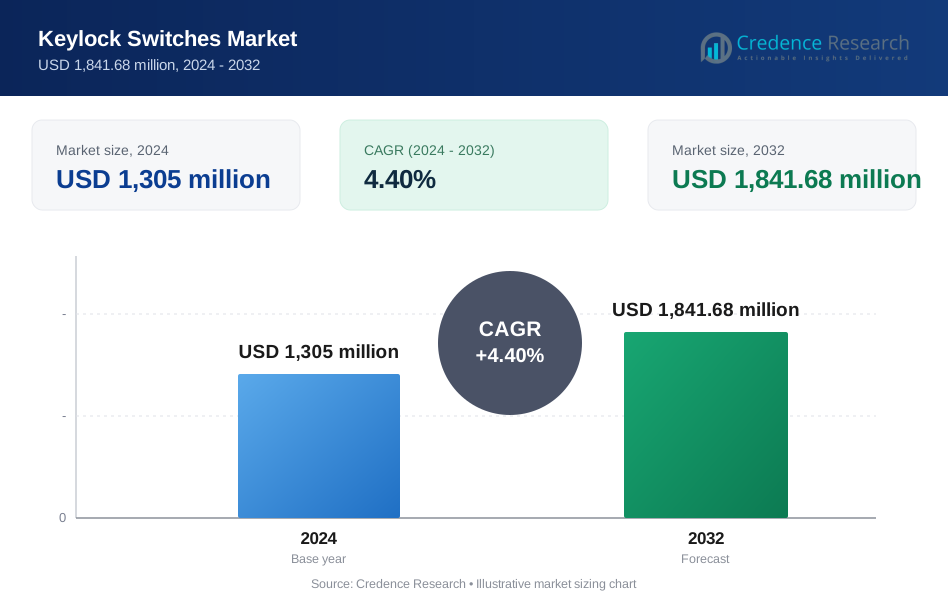
| Keylock Switches market Size 2024 | USD 1,305 million |
| Keylock Switches market, CAGR | 4.4% |
| Keylock Switches market Size 2032 | USD 1,841.68 million |
Market Overview:
The Keylock Switches market is projected to grow from USD 1,305 million in 2024 to USD 1,841.68 million by 2032, with a compound annual growth rate (CAGR) of 4.4% over the forecast period. This growth reflects the increasing demand for keylock switches across a range of industries, including automotive, aerospace, manufacturing, and security systems. Keylock switches, known for their security and functionality, are used to control and restrict access to machinery, electrical panels, and systems, ensuring only authorized personnel can operate or access critical functions. The market expansion is driven by rising safety and security requirements, increasing automation, and a strong emphasis on access control in industrial and commercial environments.
Market growth is primarily driven by the rising demand for safety and security across multiple sectors. The growth of automation in industrial settings has fueled demand for keylock switches, as they offer reliable access control for machines and systems. The increasing adoption of smart infrastructure and connected systems in buildings, data centers, and transportation further drives demand for keylock switches with enhanced functionality. Furthermore, stringent safety and regulatory standards in sectors like manufacturing and automotive have amplified the need for secure control systems, making keylock switches an essential component in these applications.
Regionally, North America holds a significant market share, driven by the strong adoption of advanced security systems, automation technologies, and stringent safety regulations. Europe follows closely, supported by a strong industrial base and the widespread adoption of access control solutions in manufacturing and transportation. The Asia-Pacific region is expected to exhibit the fastest growth, driven by rapid industrialization, urbanization, and the expansion of infrastructure in China, India, and Southeast Asia. Latin America and the Middle East & Africa are gradually adopting keylock switches, supported by growing industrialization, security concerns, and the expansion of commercial infrastructure.
Market Drivers:
Industrial Safety and Access Control:
The keylock switches market is experiencing substantial growth driven by escalating industrial safety and access control requirements. Manufacturers like Schneider Electric and Siemens are developing advanced keylock switch technologies that provide robust security mechanisms for critical industrial equipment. The increasing automation of production processes necessitates sophisticated access control solutions, with double-pole key lock switches emerging as a preferred option for low-cost security implementation. Industries are prioritizing equipment protection, with 78% of manufacturing facilities reporting increased investment in access control technologies to prevent unauthorized machine interactions and enhance operational safety.
Technological Innovation and Security Enhancement:
Technological advancements are transforming keylock switch capabilities across diverse sectors. Companies are integrating advanced features such as multi-factor authentication, digital encryption, and remote monitoring capabilities. For instance, Honeywell International Inc. has developed keylock switches with integrated IoT technologies that enable real-time access tracking and comprehensive security management. The automotive and aerospace industries are particularly driving innovation, with 65% of manufacturers seeking more sophisticated access control solutions that can withstand extreme operational environments. These technological innovations are expanding the application range of keylock switches beyond traditional industrial settings.
Cross-Sector Application Expansion:
The keylock switches market is experiencing remarkable growth through diversification across multiple industry segments. Consumer electronics, telecommunications, medical devices, and transportation sectors are increasingly adopting these security technologies. The medical industry, for example, has shown a 40% increase in keylock switch implementation for critical equipment protection. Automotive manufacturers are integrating advanced keylock switches in personal transportation vehicles, with growing demand for enhanced security features. This cross-sector adoption is driving manufacturers to develop more versatile and adaptable keylock switch solutions that can meet diverse operational requirements.
Regulatory Compliance and Safety Standards:
Stringent global safety regulations are significantly driving keylock switch market growth. Occupational safety guidelines from organizations like OSHA mandate comprehensive access control mechanisms for industrial equipment. Governments worldwide are implementing more rigorous workplace safety standards, compelling industries to invest in advanced security technologies. The increasing complexity of industrial operations requires sophisticated switching technologies that provide robust protection against unauthorized access. Manufacturers are responding by developing keylock switches that not only meet but exceed current safety regulations, creating opportunities for innovative security solutions across various industrial and commercial applications.
Market Trends:
Advanced Security and Digital Integration:
The keylock switches market is experiencing remarkable technological transformation through sophisticated digital integration and security features. Best Access Systems demonstrates this trend with Switch™ Tech Innovations, enabling both fob and smartphone access through secure Bluetooth® protocols, including two-factor identification options. These advanced systems support comprehensive credential management, allowing organizations to implement electronic access across single doors, multiple entry points, and entire facilities. The technology enables remote management of electronic door credentials, with cloud-based platforms providing instant audit logging and credential updates.
Touchless and Multi-Factor Authentication:
Access control technologies are rapidly evolving towards touchless and multi-factor authentication solutions. Avigilon reports that 92% of companies are now running systems in the cloud, driving the adoption of advanced security technologies. Multi-factor authentication is becoming standard, with users required to present multiple credentials for entry. For instance, mobile applications now integrate FaceID, passcodes, and additional authentication layers to enhance security. The trend towards all-in-one devices is gaining momentum, with entry solutions now incorporating HD cameras, two-way audio, and video intercom technologies to provide comprehensive security solutions.
IoT and Smart Technology Integration:
The keylock switches market is witnessing significant innovation through Internet of Things (IoT) and smart technology integration. For instance, Switch™ Tech has engineered solutions that exceed BHMA Grade 1 impact test standards, ensuring durability and advanced security capabilities. These technologies enable remote monitoring, control, and customization of security settings, providing unprecedented access control flexibility. The integration of AI and deep learning technologies allows for more sophisticated security mechanisms, with systems capable of streamlining operations and automating access control processes.
Sustainable and Customizable Solutions:
Manufacturers are focusing on developing sustainable and highly customizable keylock switch technologies. The market is moving towards more flexible solutions that can be tailored to specific organizational needs. For instance, Switch™ Tech offers scalable technologies that allow organizations to start with small-scale implementations and progressively expand their access control systems. The emphasis is on creating solutions that combine advanced security features with user-friendly interfaces, enabling organizations to implement sophisticated access control strategies without significant infrastructure modifications.
Market Challenges Analysis:
High Cost of Advanced Keylock Switches:
The Keylock Switches market faces significant challenges related to the high cost of advanced keylock switches with enhanced functionalities, such as electronic access control and integration capabilities. These costs can be prohibitive for small and medium-sized enterprises (SMEs) that operate under tight budget constraints, limiting the adoption of advanced solutions. Cost sensitivity in emerging economies further restricts market penetration, posing a barrier to widespread adoption.
Technological Complexity and Integration Issues:
Integrating keylock switches into modern automated and connected systems can present technical challenges. Complexities related to compatibility with existing systems, particularly in legacy industrial environments, often lead to increased installation costs and potential downtime during implementation. The need for seamless integration with IoT platforms and other advanced systems can further complicate adoption, deterring businesses from upgrading or deploying new keylock switch solutions.
Regulatory Compliance and Safety Standards:
Compliance with stringent regulatory requirements imposed by authorities such as the Occupational Safety and Health Administration (OSHA) in the United States and similar bodies worldwide poses another key challenge. Manufacturers must ensure that keylock switches meet specific safety, performance, and durability standards, which can drive up production costs and delay product development. Navigating diverse regional regulations adds further complexity, particularly for global manufacturers aiming to expand their market reach.
Security Concerns and Cybersecurity Risks:
As keylock switches are increasingly integrated into smart systems and connected infrastructure, security concerns and potential cybersecurity risks pose challenges. Unauthorized access or tampering with keylock switches used in critical systems can compromise safety and lead to operational risks. Ensuring robust security features and addressing potential vulnerabilities require continuous innovation and investment, further increasing the cost and complexity of these solutions. Addressing these challenges is essential for ensuring the sustained growth and adoption of keylock switches across diverse applications.
Market Segmentation Analysis:
By Type
The market is segmented into mechanical keylock switches and electronic keylock switches. Mechanical keylock switches hold a significant share due to their reliability, ease of use, and broad applications in industries such as manufacturing and automotive, where simple yet effective access control is required. Electronic keylock switches are experiencing increasing demand due to their enhanced security features, ability to integrate with smart systems, and suitability for advanced applications in sectors like building automation and high-security environments.
By Technology
Segmentation by technology includes wired keylock switches and wireless keylock switches. Wired keylock switches dominate the market due to their established reliability and lower cost. However, wireless keylock switches are gaining traction, driven by the growing adoption of connected devices, IoT integration, and the demand for flexible, remote access control solutions in industrial and commercial settings.
By End User
The end-user segment encompasses industrial, commercial, automotive, and residential sectors. The industrial sector holds the largest market share, driven by the need for reliable access control in manufacturing, energy, and critical infrastructure applications. The commercial sector is also a significant contributor, with keylock switches widely used in buildings, data centers, and retail establishments for enhanced security. Automotive applications leverage keylock switches for vehicle ignition and access control, while the residential segment benefits from their use in smart home security and automation systems. This segmentation highlights the versatile applications and strong demand for keylock switches across diverse sectors.
Segmentations:
By Type
- Single-Pole Keylock Switches
- Double-Pole Keylock Switches
By Application
- Consumer Electronics
- Telecommunications
- Industrial
- Medical
Regions
- North America
- U.S.
- Canada
- Mexico
- Europe
- Germany
- France
- U.K.
- Italy
- Spain
- Rest of Europe
- Asia Pacific
- China
- Japan
- India
- South Korea
- South-east Asia
- Rest of Asia Pacific
- Latin America
- Brazil
- Argentina
- Rest of Latin America
- Middle East & Africa
- GCC Countries
- South Africa
- Rest of the Middle East and Africa
Regional Analysis:
North America
North America holds a substantial share of approximately 30% of the global Keylock Switches market, driven by the strong adoption of advanced security and automation technologies. The United States is a key contributor due to its extensive use of keylock switches across industrial, commercial, and automotive applications. High demand for enhanced access control solutions, stringent safety regulations set by entities such as the Occupational Safety and Health Administration (OSHA), and the widespread adoption of smart infrastructure drive market growth. Canada also contributes significantly, focusing on the integration of advanced access control solutions in commercial and residential buildings.
Europe
Europe accounts for around 25% of the global market share, with Germany, the United Kingdom, and France being key markets. The region's strong industrial base and focus on safety and security drive demand for keylock switches. Germany leads due to its emphasis on manufacturing automation and stringent safety regulations. The European Union's commitment to smart city initiatives, building automation, and stringent access control regulations further fuels market growth. The adoption of electronic keylock switches, driven by demand for advanced security systems, is prominent in commercial and industrial sectors.
Asia-Pacific
The Asia-Pacific region leads the market with a share of approximately 35%. Rapid industrialization, urbanization, and the expansion of infrastructure in China, India, Japan, and Southeast Asia drive demand for keylock switches. Increasing investments in smart cities, building automation, and industrial safety systems further bolster market growth. The region’s large manufacturing base, along with rising security concerns, contributes to the adoption of both mechanical and electronic keylock switches.
Latin America and the Middle East & Africa
Latin America and the Middle East & Africa collectively hold around 10% of the market share. Growth in these regions is driven by increasing investments in infrastructure development, industrialization, and heightened security concerns. Brazil leads in Latin America, supported by the adoption of keylock switches across commercial and industrial sectors. The Middle East benefits from significant infrastructure projects and the need for robust access control solutions in commercial and industrial applications. Africa is gradually adopting keylock switches due to industrial expansion and rising focus on building security.
Key Player Analysis:
- TE Connectivity
- C&K
- CWT
- E-Switch
- Crouzet
- Grayhill Inc.
- CTS Electronic Components
- Omron
- Apem (IDEC)
- Wurth Electronics
Competitive Analysis:
The Keylock Switches market is characterized by intense competition, driven by established global players and specialized regional manufacturers focusing on advanced access control solutions. Major companies such as TE Connectivity, C&K, and Omron hold significant market shares due to their extensive product portfolios, global distribution networks, and strong focus on quality and reliability. These market leaders emphasize innovation, offering keylock switches with enhanced security features, durability, and integration capabilities for industrial automation, commercial security, and automotive applications. Regional and emerging players enhance market dynamics by offering cost-effective and customized solutions tailored to specific market needs, further intensifying competition. The competitive landscape is shaped by technological advancements, regulatory compliance, and increasing demand for connected and smart security solutions. Market participants must continuously innovate and adapt to evolving industry trends to maintain and expand their market presence in this competitive space.
Recent Developments:
- In 2023, TE Connectivity expanded its keylock switch portfolio by introducing a new series designed for harsh environments, featuring enhanced sealing and durability to meet stringent industrial standards.
- In 2022, C&K launched a line of keylock switches with improved tactile feedback and customizable options, catering to the growing demand for user-friendly and adaptable security solutions in various applications.
- In June 2023, Knitter-Switch introduced new panel-mount keylock switches, the MRK216, MRK1091, and MRK1343/1444 series, offering multiple mounting threads and switch positions to enhance versatility in industrial applications.
- In 2024, Oslo Switch announced the development of keylock switches with quick-turnaround custom-marking capabilities, providing sealing, lighted, and non-lighted options to meet diverse customer requirements.
Market Concentration & Characteristics:
The Keylock Switches market exhibits a moderate to high level of concentration, with key global players and specialized regional manufacturers driving competition. Major companies such as TE Connectivity, C&K, and Omron hold substantial market shares due to their comprehensive product offerings, focus on quality, and strong distribution networks. The market is characterized by its emphasis on security, durability, and customization to meet the diverse needs of industrial, commercial, automotive, and residential sectors. Technological advancements in electronic keylock switches, integration with smart systems, and enhanced durability in harsh environments define the market’s innovative landscape. Compliance with stringent safety and regulatory standards further shapes product development and market dynamics. Regional players contribute by providing cost-effective and tailored solutions, intensifying market competition. The continuous demand for reliable and secure access control solutions underscores the market’s importance and drives ongoing innovation and adaptation across sectors.
Report Coverage:
The research report offers an in-depth analysis based on Type, Application, and Region. It details leading market players, providing an overview of their business, product offerings, investments, revenue streams, and key applications. Additionally, the report includes insights into the competitive environment, SWOT analysis, current market trends, as well as the primary drivers and constraints. Furthermore, it discusses various factors that have driven market expansion in recent years. The report also explores market dynamics, regulatory scenarios, and technological advancements that are shaping the industry. It assesses the impact of external factors and global economic changes on market growth. Lastly, it provides strategic recommendations for new entrants and established companies to navigate the complexities of the market.
Future Outlook:
- Demand for keylock switches will continue to grow as industries emphasize security, automation, and access control solutions.
- Integration of electronic keylock switches with smart and connected systems will gain traction, enhancing security and operational efficiency.
- Increasing adoption of automation in industrial settings will drive demand for reliable keylock switches to restrict and control machine access.
- Technological advancements in durability, customization, and weather-resistant designs will cater to diverse applications in harsh environments.
- Rising safety regulations across sectors will compel manufacturers to develop keylock switches that meet stringent compliance standards.
- Growth in the automotive sector will spur demand for advanced keylock switches for ignition and access control applications.
- Expansion of smart infrastructure and building automation will boost the demand for electronic keylock switches in commercial and residential sectors.
- Companies will focus on enhancing product features such as tactile feedback, multi-position locking, and modular configurations.
- Emerging markets, particularly in Asia-Pacific, will offer growth opportunities due to industrial expansion and urbanization.
- Increased demand for energy-efficient and eco-friendly solutions will drive innovation in sustainable keylock switch technologies.
Request a Free Sample
Fill in your details and we'll send you a free sample report.
- Sample data tables & charts
- Research methodology
Need a Custom Version of This Report?
Tailor the scope, geography, or segments to your exact requirements.
- Custom geography or segment scope
- Direct access to our analyst team
Frequently Asked Questions
What is the current size of the Keylock Switches market?
What factors are driving the growth of the Keylock Switches market?
What are some challenges faced by the Keylock Switches market?
Who are the major players in the Keylock Switches market?
Which segment is leading the market share?
Table of Content
Chapter 1. Report Introduction
- 1.1 Report Description & Purpose
- 1.1.1 Report Title & Market Definition
- 1.1.2 Unique Selling Propositions (USP) & Key Differentiators
- 1.1.3 Value Proposition for Stakeholders
- 1.2 Research Objectives
- 1.2.1 Market Sizing Objectives (Volume & Revenue) (Volume Where Applicable)
- 1.2.2 Segmentation Objectives
- 1.2.3 Competitive Intelligence Objectives
- 1.2.4 Forecast & Scenario Objectives
- 1.3 Report Scope
- 1.3.1 Keylock Switches Scope – Segments & Subsegments Covered
- 1.3.2 Geographic Scope – Regions & Countries Covered
- 1.3.3 Historical Period, Base Year & Forecast Period (2024; forecast to 2032)
- 1.3.4 Inclusions & Exclusions
- 1.4 Industry Classification & Applicable Codes
- 1.5 Currency, Measurement Units & Valuation Basis
- 1.6 Target Stakeholders
- 1.7 Limitations & Assumptions
Chapter 2. Executive Summary
- 2.1 Global Keylock Switches Market Snapshot
- 2.1.1 Market Size – Historical (2024) & Forecast (2024-2032) (2024: USD 1,305 million → 2032: USD 1,841.68 million)
- 2.1.2 Volume & Revenue – Global Totals (Volume Where Applicable)
- 2.1.3 Key Market Highlights – Top Five Facts
- 2.2 Keylock Switches Market Segmentation Snapshot
- 2.2.1 Market Split by Region – 2024 vs. 2032
- 2.3 Competitive Snapshot
- 2.3.1 Top 10 Players by Revenue Share – 2024
- 2.3.2 Top 10 Players by Volume Share – 2024 (Volume Where Applicable)
- 2.3.3 Recent Strategic Developments (18-Month Summary)
- 2.4 Key Investment Highlights & Strategic Conclusions
Chapter 3. Keylock Switches Market Dynamics & Industry Analysis
- 3.1 Market Overview & Context
- 3.1.1 Keylock Switches Market Position in the Broader Industry Value Chain
- 3.1.2 Demand Structure & Purchasing Dynamics
- 3.1.3 Market Maturity & Development Stage by Region
- 3.2 Keylock Switches Market Drivers
- 3.3 Keylock Switches Market Restraints & Challenges
- 3.4 Keylock Switches Market Opportunities
- 3.5 Porter's Five Forces Analysis
- 3.5.1 Threat of New Entrants
- 3.5.2 Bargaining Power of Suppliers
- 3.5.3 Bargaining Power of Buyers
- 3.5.4 Threat of Substitutes
- 3.5.5 Competitive Rivalry – Intensity Assessment
- 3.6 Keylock Switches Value Chain Analysis
- 3.6.1 Upstream – Key Inputs, Resources & Suppliers
- 3.6.1.1 Key Input/Resource 1
- 3.6.1.2 Key Input/Resource 2
- 3.6.1.3 Key Input/Resource 3
- 3.6.2 Midstream – Core Operations & Value Creation
- 3.6.2.1 Operating Model & Process Overview
- 3.6.2.2 Key Operating Locations & Capabilities by Company
- 3.6.3 Downstream – Market Channels & End Users
- 3.6.3.1 Direct Sales & Customer Engagement Channels
- 3.6.3.2 Indirect Sales, Intermediaries & Partner Channels
- 3.6.4 Value Chain Profitability Analysis
- 3.6.1 Upstream – Key Inputs, Resources & Suppliers
- 3.7 PESTEL Analysis
- 3.7.1 Political Factors
- 3.7.2 Economic Factors
- 3.7.3 Social Factors
- 3.7.4 Technological Factors
- 3.7.5 Environmental Factors
- 3.7.6 Legal Factors
- 3.8 Keylock Switches Supply Chain Analysis
- 3.8.1 Critical Input & Resource Availability Risk Assessment
- 3.8.2 Supplier & Operational Concentration Risk (Geographic Exposure)
- 3.8.3 Supply & Service Disruption Impact Analysis
- 3.9 Regulatory & Policy Landscape
Note: The regulatory and policy landscape section covers regulations based on their applicability to the market, Keylock Switches category, geography, and scope of the study. Only regulatory frameworks with a material impact on operations, compliance, trade, sustainability, or market access are analyzed in detail.
Chapter 4. Key Investment Pockets & Opportunity Analysis
- 4.1 Keylock Switches Market Attractiveness Analysis
- 4.1.1 By Region – Investment Attractiveness Matrix (Market Size × CAGR)
- 4.2 Absolute Revenue Growth Opportunity
- 4.2.1 By Region – Absolute Revenue Growth Through 2032
- 4.3 Incremental Demand Opportunity
- 4.3.1 By Region – Incremental Demand Through 2032
- 4.3.2 Segment – Incremental Demand
- 4.4 Emerging Submarket Opportunity Deep Dive (Subject to Applicability)
- 4.5 Priority Market Opportunity Scorecards
- 4.5.1 United States
- 4.5.2 Europe
- 4.5.3 Asia
- 4.5.4 Middle East & Africa
Note: Priority market opportunity scorecards reflect the geographic scope and strategic relevance of the study. Listed markets are indicative and may be adapted to the industry.
Chapter 5. Keylock Switches Cross-Border Trade & Market Access Analysis
- 5.1 International Trade & Cross-Border Activity Overview
- 5.1.1 Global Export Value by Country (2024)
- 5.1.2 Global Export Volume by Country (2024) (Volume Where Applicable)
- 5.1.3 Global Import Value by Country (2024)
- 5.1.4 Global Import Volume by Country (2024) (Volume Where Applicable)
- 5.1.5 Net Trade Balance by Country (2024)
- 5.2 Export Analysis – Segment
- 5.2.1 Category 1 (Applicable Classification Code)
- 5.2.2 Category 2 (Applicable Classification Code)
- 5.2.3 Category 3 (Applicable Classification Code)
- 5.2.4 Category 4 (Applicable Classification Code)
- 5.2.5 Category 5 (Applicable Classification Code)
- 5.3 Import Analysis – Segment
- 5.3.1 Category 1 (Applicable Classification Code)
- 5.3.2 Category 2 (Applicable Classification Code)
- 5.3.3 Category 3 (Applicable Classification Code)
- 5.3.4 Category 4 (Applicable Classification Code)
- 5.3.5 Category 5 (Applicable Classification Code)
- 5.4 Cross-Border Pricing & Transaction Benchmarks
- 5.4.1 Export Pricing – Segment & Country
- 5.4.2 Import Pricing – Segment & Source Country
- 5.4.3 Price Trends (2024)
- 5.5 Key Cross-Border Trade & Delivery Routes
- 5.5.1 Cross-Border Trade/Delivery Route 1
- 5.5.2 Cross-Border Trade/Delivery Route 2
- 5.5.3 Cross-Border Trade/Delivery Route 3
- 5.5.4 Cross-Border Trade/Delivery Route 4
- 5.5.5 Cross-Border Trade/Delivery Route 5
- 5.6 Trade Policy & Market Access Impact Assessment
- 5.6.1 Tariff & Non-Tariff Barriers
- 5.6.2 Regional Trade & Economic Integration Frameworks
- 5.6.3 Bilateral & Multilateral Trade Agreements
- 5.6.4 Cross-Border Operating, Licensing & Localization Requirements
Note: This chapter applies where cross-border trade or delivery is relevant to Keylock Switches. Goods, services, and digital offerings are assessed using applicable classifications and transaction measures. Import-export volumes, trade balances, and route analyses are included only where meaningful to the market.
Chapter 6. Competitive Landscape & Company Benchmarking
- 6.1 Keylock Switches Market Concentration & Structure
- 6.1.1 Herfindahl-Hirschman Index (HHI) – the historical period vs. 2024
- 6.1.2 Leading, Mid-Sized & Emerging Player Structure
- 6.1.3 Global, Regional & Local Player Dynamics
- 6.2 Keylock Switches Market Share Analysis – 2024
- 6.2.1 Global Revenue Share by Company
- 6.2.2 Global Volume Share by Company (Volume Where Applicable)
- 6.2.3 Regional Revenue Share
- 6.2.4 Market Share Evolution (the historical period vs. 2024)
- 6.2.5 Company Market Share by Key Segment
- 6.2.6 Company Market Share by Customer Group
- 6.3 Operating Scale, Capacity & Infrastructure Analysis
- 6.3.1 Global Operating Scale & Supply Capacity
- 6.3.2 Resource Utilization & Operating Efficiency
- 6.3.3 Output, Service Delivery & Activity Metrics
- 6.3.4 Operating Footprint & Infrastructure Map
- 6.3.5 Planned Operational & Capacity Expansion
- 6.4 Keylock Switches Competitive Benchmarking Matrix
- 6.4.1 Revenue, Growth, Profitability & Operating Metric Comparison
- 6.4.2 Channel Revenue Mix
- 6.4.3 Geographic Revenue Exposure
- 6.4.4 R&D Intensity
- 6.4.5 Sustainability Maturity
- 6.5 Strategic Developments in Keylock Switches (Last 24 Months)
- 6.5.1 Mergers, Acquisitions & Divestments
- 6.5.2 New Products, Services & Solutions in Keylock Switches
- 6.5.3 Operational & Infrastructure Expansions
- 6.5.4 Strategic Alliances, Joint Ventures & Partnerships
- 6.5.5 Distribution Expansion & Market Entry
- 6.5.6 Sustainability & ESG Initiatives
- 6.6 Competitive Strategy Mapping
- 6.6.1 Leader, Challenger, Follower & Niche Classification
- 6.6.2 Pricing Strategy Comparison
- 6.6.3 Channel Strategy Matrix
Note: Strategic developments are included based on their materiality and the availability of reliable information.
Chapter 7. Global Keylock Switches Market – By Sales & Delivery Channel
- 7.1 Segment Overview
- 7.1.1 Volume & Revenue Split by Channel (2024 & 2032) (Volume Where Applicable)
- 7.1.2 Channel Mix Evolution (2024-2032)
Chapter 8. Regional Market Analysis – Global Overview
- 8.1 Global Regional Overview
- 8.1.1 Regional Volume Share (Volume Where Applicable)
- 8.1.2 Regional Revenue Share
- 8.1.3 Regional Volume by Region (Volume Where Applicable)
- 8.1.4 Regional Revenue by Region
- 8.1.5 Regional Forecast Through 2032
- 8.2 Cross-Regional Segment Analysis
- 8.2.1 By Sales & Delivery Channel
- 8.2.2 By Competitive Positioning & Price Tier
Chapter 9. North America Keylock Switches Market
- 9.1 United States
- 9.2 Canada
- 9.3 Mexico
Chapter 10. Europe Keylock Switches Market
- 10.1 Germany
- 10.2 France
- 10.3 Italy
- 10.4 United Kingdom
- 10.5 Spain
- 10.6 Poland
- 10.7 Russia
- 10.8 Netherlands
- 10.9 Belgium
- 10.10 Sweden
- 10.11 Denmark
- 10.12 Norway
- 10.13 Rest of Europe
Chapter 11. Asia Pacific Keylock Switches Market
- 11.1 China
- 11.2 India
- 11.3 Japan
- 11.4 South Korea
- 11.5 Thailand
- 11.6 Indonesia
- 11.7 Vietnam
- 11.8 Malaysia
- 11.9 Australia
- 11.10 Rest of Asia Pacific
Chapter 12. Latin America Keylock Switches Market
- 12.1 Brazil
- 12.2 Argentina
- 12.3 Colombia
- 12.4 Chile
- 12.5 Rest of Latin America
Chapter 13. Middle East Keylock Switches Market
- 13.1 Saudi Arabia
- 13.2 United Arab Emirates
- 13.3 Turkey
- 13.4 Israel
- 13.5 Iran
- 13.6 Rest of the Middle East
Chapter 14. Africa Keylock Switches Market
- 14.1 South Africa
- 14.2 Egypt
- 14.3 Nigeria
- 14.4 Morocco
- 14.5 Rest of Africa
Chapter 15. Keylock Switches Company Profiles
- 15.1 [Company 01]
- 15.1.1 Company Overview
- 15.1.2 Key Management Personnel
- 15.1.3 Products & Services Portfolio
- 15.1.4 Financial Performance
- 15.1.5 Key Market Focus & Geographic Presence
- 15.1.6 Recent Developments & Strategic Initiatives
Note: The company profile list is preliminary and may change based on research findings, market developments, data availability, and client requirements.
Chapter 16. Appendices
- Appendix A – List of Abbreviations & Acronyms
- Appendix B – Industry Classification Code Reference – Full Series
- Appendix C – Supply, Output & Operating Capacity Data Tables
- Appendix D – End-Use & Demand Base Tables
- Appendix E – Demand, Adoption & Usage Assumptions
- Appendix F – Pricing & Revenue Metric Reference Tables
- Appendix G – Company Operations & Infrastructure Database
- Appendix H – Cross-Border Trade & Activity Data Tables (Where Applicable)
- Appendix I – Regulatory Summary Tables
- Appendix J – Primary Research Participant List (Anonymized)
- Appendix K – Primary Research Questionnaire Framework
- Appendix L – Data Sources & Bibliography
- Appendix M – Market Size Divergence & Source Comparison
Chapter 17. Research Methodology
- 17.1 Research Framework & Philosophy
- 17.2 Secondary Research – Sources, Hierarchy & Data Extraction
- 17.3 Data Modeling – Bottom-Up & Top-Down Market Sizing
- 17.4 Primary Research – Stakeholder Framework, LOI & Sample Sizes
- 17.5 Forecast Methodology – Regression, Scenario & Sensitivity Analysis
- 17.6 Quality Control – Four-Layer Validation Framework
- 17.7 Limitations & Standard Assumptions
- 17.8 Disclaimer
