| REPORT ATTRIBUTE |
DETAILS |
| Historical Period |
2020-2023 |
| Base Year |
2024 |
| Forecast Period |
2025-2032 |
| Knee Arthritis Treatment Market Size 2024 |
USD 5,550.8 million |
| Knee Arthritis Treatment Market, CAGR |
7.17% |
| Knee Arthritis Treatment Market Size 2032 |
USD 9,676.8 million |
Market Overview:
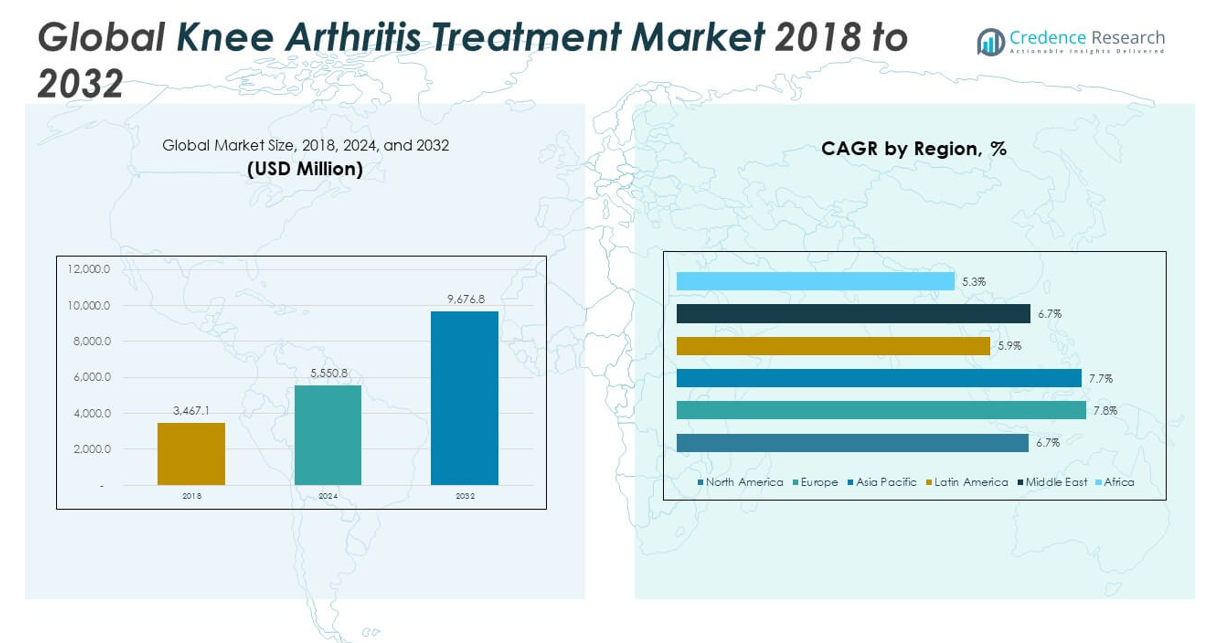
The Global Knee Arthritis Treatment Market size was valued at USD 3,467.1 million in 2018 to USD 5,550.8 million in 2024 and is anticipated to reach USD 9,676.8 million by 2032, at a CAGR of 7.17% during the forecast period.
Several key factors are propelling the growth of the knee arthritis treatment market. One of the most significant drivers is the rising global burden of osteoarthritis, particularly among the aging population. With more individuals living longer, the incidence of joint-related conditions, especially knee OA, has surged. Additionally, the global rise in obesity rates and sedentary lifestyles further contribute to joint degradation and OA onset. Innovations in therapeutic approaches are also accelerating market momentum. Advancements in pharmacological treatments such as topical NSAIDs, corticosteroids, and viscosupplementation, along with regenerative therapies like platelet-rich plasma (PRP), stem cell applications, and disease-modifying OA drugs (DMOADs), are broadening clinical applications. Furthermore, the integration of digital tools and AI-driven platforms is enhancing diagnostic precision and patient-specific care pathways, making treatment more efficient and personalized. Increasing investment in R&D and a strong pipeline of next-generation drugs also support long-term market sustainability and innovation.
Regionally, North America holds a dominant share in the global knee arthritis treatment market due to high healthcare expenditure, early adoption of innovative treatment technologies, and a large aging population. The U.S. leads in both drug utilization and surgical procedures related to knee OA, supported by advanced medical infrastructure and favorable reimbursement policies. Europe follows closely, with countries such as Germany, the UK, and France investing heavily in OA management through structured public healthcare systems and ongoing clinical trials. Asia-Pacific is expected to witness the fastest growth over the coming decade, driven by improving healthcare infrastructure, increasing prevalence of lifestyle-related diseases, and growing elderly populations in countries like China, India, and Japan. Additionally, government support for chronic disease management and expanded access to modern therapies is fueling demand in the region. Meanwhile, Latin America, the Middle East, and Africa show moderate but steady growth, supported by emerging health systems, rising patient awareness, and expanding pharmaceutical distribution networks. Overall, the global knee arthritis treatment market is poised for accelerated growth, supported by demographic trends, evolving treatment paradigms, and regional expansions in healthcare capabilities.
Market Insights:
- The Global Knee Arthritis Treatment Market was valued at USD 3,467.1 million in 2018, reached USD 5,550.8 million in 2024, and is anticipated to reach USD 9,676.8 million by 2032, growing at a CAGR of 7.17% during the forecast period.
- The rising global burden of osteoarthritis, particularly knee OA among the aging population, is significantly increasing the demand for treatment solutions.
- The global rise in obesity rates and sedentary lifestyles is accelerating the onset of knee OA, driving market expansion through higher patient volumes.
- Therapeutic advancements, including topical NSAIDs, corticosteroids, hyaluronic acid injections, platelet-rich plasma (PRP), stem cell therapies, and emerging DMOADs, are transforming treatment practices.
- The integration of AI-driven diagnostics, mobile health applications, and digital monitoring tools is improving personalized care and treatment adherence.
- Asia-Pacific is expected to witness the fastest growth, supported by improving healthcare infrastructure and growing elderly populations in China, India, and Japan.
- North America holds a dominant market share, led by the U.S., due to high healthcare expenditure and early adoption of advanced treatments, while Europe closely follows with strong public healthcare systems and ongoing clinical research investments.
Access crucial information at unmatched prices!
Request your sample report today & start making informed decisions powered by Credence Research Inc.!
Download Sample
Market Drivers:
Rising Prevalence of Knee Osteoarthritis Due to Aging and Obesity Trends:
The growing global burden of knee osteoarthritis is a major factor driving the Global Knee Arthritis Treatment Market. The rising elderly population is particularly vulnerable to degenerative joint conditions, with knee OA becoming one of the most common chronic ailments among seniors. It affects mobility, independence, and overall quality of life, prompting strong demand for long-term treatment options. At the same time, the global rise in obesity and sedentary behavior accelerates the onset and severity of OA symptoms by placing excess mechanical stress on knee joints. The dual impact of these demographic and lifestyle trends is pushing healthcare systems to allocate more resources toward OA diagnosis and treatment. It continues to place knee arthritis treatment at the forefront of chronic disease management strategies worldwide.
- For instance, the Centers for Disease Control and Prevention (CDC) reported that in the United States, the prevalence of diagnosed arthritis among adults aged 65 and older reached 50.4% in 2024. Simultaneously, obesity is a significant risk factor.
Technological Advancements and Development of Innovative Therapeutic Solutions:
Ongoing innovation in pharmacological and non-pharmacological therapies is expanding the treatment landscape. The market is seeing increased adoption of next-generation products, such as COX-2 selective NSAIDs, intra-articular corticosteroids, and hyaluronic acid injections that offer targeted relief with fewer side effects. In recent years, biologic and regenerative therapies like platelet-rich plasma (PRP) and stem cell-based interventions have gained clinical interest for their potential to restore joint function rather than just reduce symptoms. These solutions are transforming how practitioners manage progressive knee OA. The integration of AI and imaging technologies in diagnosis and monitoring further enhances treatment planning. The Global Knee Arthritis Treatment Market benefits significantly from these advancements, strengthening its value proposition to patients and providers.
- For instance, Zimmer Biomet’s Gel-One® Cross-linked Hyaluronate, an FDA-approved single-injection viscosupplement, demonstrated statistically significant pain reduction in knee OA patients at 13 weeks in a multicenter clinical trial (n=381, p<0.05).
Growing Demand for Minimally Invasive and Outpatient Treatment Options:
The shift toward outpatient and minimally invasive procedures is influencing patient preferences and healthcare delivery models. Individuals increasingly seek alternatives to total knee replacement, especially in early and moderate stages of OA. Techniques such as arthroscopy, radiofrequency ablation, and ultrasound-guided injections allow for faster recovery, reduced hospital stays, and lower complication rates. The convenience and lower cost associated with these interventions are accelerating their use across outpatient and ambulatory care settings. It supports a broader movement toward value-based care, where outcomes and efficiency drive treatment decisions. This trend continues to shape the direction of new product development and clinical protocol design.
Rising Healthcare Investment and Expanding Access Across Emerging Markets:
Healthcare systems in emerging economies are investing more in musculoskeletal disease management. Government-led initiatives and public-private partnerships are expanding access to joint health services in countries with growing middle-class populations. Awareness campaigns about arthritis, improved diagnostic capabilities, and increased insurance coverage are enabling more patients to seek timely care. Pharmaceutical and device companies are also expanding their presence in Asia-Pacific, Latin America, and the Middle East through strategic collaborations and localized distribution. The Global Knee Arthritis Treatment Market gains traction in these regions due to the growing demand for effective, affordable care. It reflects a global shift toward inclusive and proactive chronic disease treatment strategies.
Market Trends:
Emergence of Disease-Modifying Osteoarthritis Drugs (DMOADs) as a Long-Term Market Disruptor:
The development of Disease-Modifying Osteoarthritis Drugs (DMOADs) is reshaping expectations around knee arthritis treatment. Unlike traditional pain management approaches, DMOADs target the underlying structural deterioration of the joint, aiming to slow or reverse cartilage degradation. Several pharmaceutical companies are advancing late-stage clinical trials for these agents, signaling a potential breakthrough in disease management. These drugs offer the possibility of altering disease progression rather than simply alleviating symptoms, creating long-term therapeutic value. The Global Knee Arthritis Treatment Market is watching this segment closely, as DMOAD approvals could introduce a new standard of care. It may also shift reimbursement models to favor treatments that prevent or delay surgical intervention.
- For instance, TissueGene’s Invossa™ (TG-C), a cell and gene therapy for knee OA, completed Phase III trials in South Korea and received regulatory approval in 2023, showing a statistically significant improvement in WOMAC pain.
Increased Focus on Combination Therapies for Enhanced Patient Outcomes:
Combination therapies that integrate pharmacological, biological, and physical interventions are gaining attention in clinical practice. Physicians are increasingly adopting multimodal regimens that include NSAIDs, hyaluronic acid, physical therapy, and regenerative injections to maximize treatment efficacy. These strategies offer tailored solutions for different stages of OA, improving functionality while minimizing reliance on high-dose medications. Clinical studies are showing improved pain control and mobility in patients receiving coordinated therapy rather than single-modality treatment. This trend encourages cross-disciplinary care approaches involving rheumatologists, orthopedists, physiotherapists, and pain specialists. The Global Knee Arthritis Treatment Market is evolving to support these care models through integrated product and service offerings.
- For example, A 2024 systematic review and network meta-analysis of 71 randomized controlled trials found that combined pharmacological and exercise interventions outperformed single therapies for pain reduction and functional improvement in knee OA.
Rise of Personalized Medicine and Biomarker-Based Treatment Selection:
Precision medicine is entering the knee arthritis treatment space, supported by advances in genomics and biomarker discovery. Researchers are identifying patient-specific indicators that predict response to certain drugs or biologics, enabling more targeted treatment strategies. This approach reduces trial-and-error in therapy selection and optimizes patient outcomes. Diagnostic tools are evolving to assess molecular profiles and joint health parameters, guiding the selection of personalized therapeutic plans. Companies are investing in companion diagnostics that align with their treatment portfolios. The Global Knee Arthritis Treatment Market is aligning with this movement toward personalized care, creating room for innovation in both diagnostics and therapeutics.
Integration of Digital Health Platforms to Improve Monitoring and Adherence:
Digital health tools are being incorporated into arthritis management to improve patient engagement, adherence, and long-term monitoring. Mobile applications, wearable devices, and remote assessment platforms are enabling real-time tracking of symptoms, activity levels, and treatment response. These tools provide clinicians with actionable insights to adjust care plans promptly. Patients benefit from reminders, education modules, and digital pain diaries that foster better self-management. Health systems are beginning to integrate these technologies into routine care pathways, enhancing efficiency and transparency. The Global Knee Arthritis Treatment Market is expanding to include these digital components, reflecting the shift toward data-driven and patient-centered care delivery.
Market Challenges Analysis:
Limited Long-Term Effectiveness of Current Therapies and Dependence on Symptomatic Relief:
Most existing treatments for knee arthritis focus on managing pain and inflammation rather than addressing the root cause of joint degeneration. Nonsteroidal anti-inflammatory drugs (NSAIDs), corticosteroid injections, and viscosupplementation offer short-term relief but often fail to deliver sustained improvements in joint health. Over time, repeated use of these therapies can lead to diminishing effectiveness, increased tolerance, or unwanted side effects. Many patients eventually require surgical intervention, indicating a gap in truly restorative treatment options. The Global Knee Arthritis Treatment Market faces a challenge in developing therapies that provide both durable symptom control and disease modification. It remains constrained by limited therapeutic diversity and the absence of widely approved disease-modifying osteoarthritis drugs.
High Treatment Costs, Unequal Access, and Reimbursement Barriers in Emerging Markets:
Access to advanced treatment options varies significantly across regions, particularly in low- and middle-income countries. High costs associated with biologics, regenerative therapies, and surgical interventions create affordability barriers for a large portion of the global population. Inconsistent insurance coverage and limited public health funding further restrict patient access to effective care. Delays in diagnosis and treatment often occur in regions with limited musculoskeletal specialists and diagnostic infrastructure. The Global Knee Arthritis Treatment Market must navigate these systemic issues to ensure equitable access and long-term commercial sustainability. It also requires alignment between innovation, pricing strategies, and healthcare policy to broaden reach and adoption in underserved areas.
Market Opportunities:
Expansion of Regenerative Medicine and Biologics to Redefine Therapeutic Pathways:
Emerging regenerative therapies such as platelet-rich plasma (PRP), stem cell injections, and tissue engineering present strong opportunities for future growth. These interventions aim to repair damaged cartilage and delay or avoid the need for joint replacement. Growing clinical evidence, patient preference for non-surgical options, and regulatory support are accelerating their adoption. Companies investing in scalable biologic platforms and long-term clinical trials stand to gain early-mover advantages. The Global Knee Arthritis Treatment Market can benefit from this shift by integrating these therapies into mainstream care. It enables the development of long-term, minimally invasive alternatives with strong clinical and commercial potential.
Digital Therapeutics and Remote Monitoring Solutions to Improve Disease Management:
Digital tools offer new ways to support treatment adherence, patient education, and early intervention strategies. Mobile applications, wearable technologies, and AI-driven decision support systems provide real-time data to clinicians and empower patients in self-management. These tools can reduce progression by encouraging physical activity, monitoring symptoms, and prompting timely care adjustments. The Global Knee Arthritis Treatment Market can expand its value chain by incorporating digital health platforms into care models. It opens revenue streams through partnerships with tech firms and payers seeking outcome-based solutions. This integration supports the broader healthcare shift toward personalized, proactive, and data-informed musculoskeletal care.
Market Segmentation Analysis:
By Product Type
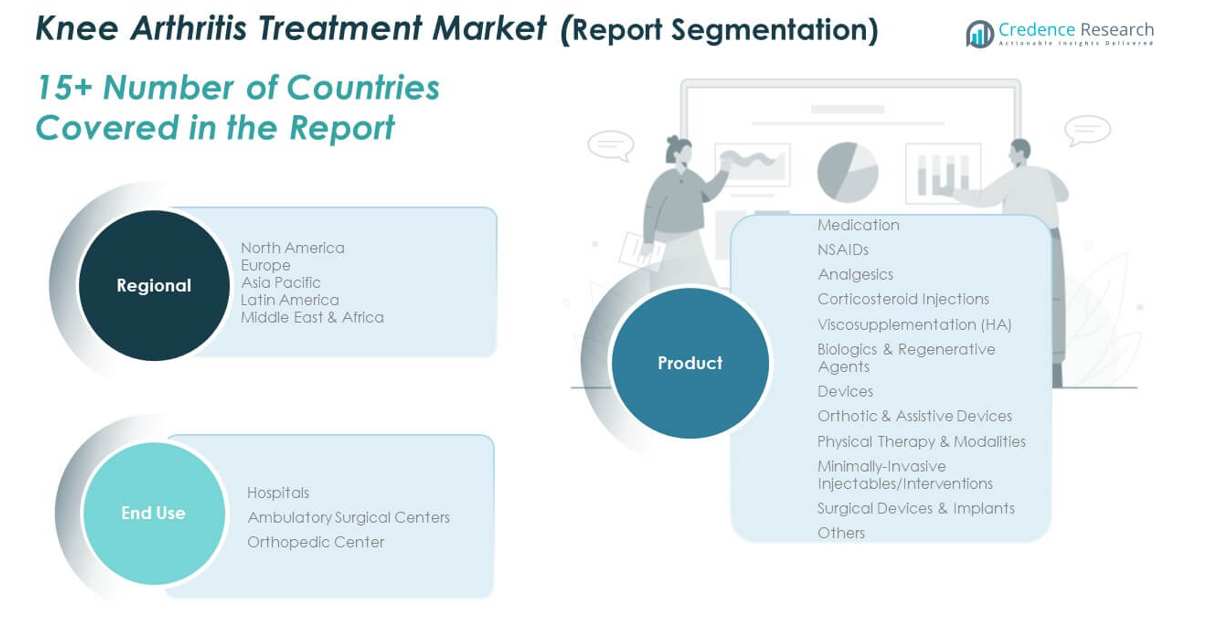
The Global Knee Arthritis Treatment Market is segmented into medication and devices. In the medication segment, NSAIDs remain widely prescribed for controlling pain and inflammation. Analgesics are used to supplement other drug therapies, especially in early-stage treatment. Corticosteroid injections offer short-term symptom relief and are often administered in outpatient settings. Viscosupplementation (HA) is increasingly preferred for patients seeking alternatives to surgery, particularly those in moderate disease stages. The biologics and regenerative agents’ segment is growing steadily, driven by interest in platelet-rich plasma (PRP), stem cell therapies, and emerging disease-modifying OA drugs (DMOADs) that aim to repair cartilage and slow disease progression. The devices category includes orthotic and assistive devices designed to relieve joint pressure and support mobility. Physical therapy and modalities such as ultrasound, electrical stimulation, and manual therapy play a crucial role in non-pharmacological management. Minimally-invasive injectables/interventions, including radiofrequency ablation and ultrasound-guided injections, are gaining popularity for their reduced downtime. Surgical devices and implants dominate the treatment landscape in late-stage OA where knee replacement is necessary. Other devices include rehabilitation tools and monitoring equipment.
- For example, Platelet-rich plasma (PRP) and stem cell therapies are gaining traction for their regenerative potential, supported by emerging clinical data.
By End User
The end user segment includes hospitals, ambulatory surgical centers (ASCs), and orthopedic centers. Hospitals lead the market due to their advanced infrastructure and capability to handle high patient volumes and complex surgeries. Orthopedic centers are gaining share through specialization and focus on joint care. ASCs attract patients seeking faster, less expensive, and minimally invasive procedures. The Global Knee Arthritis Treatment Market continues to benefit from evolving service delivery models aligned with patient preferences and technological advancement.
- For example, Ambulatory surgical centers (ASCs) and orthopedic centers are also significant, particularly for minimally invasive and outpatient interventions. This distribution reflects the evolving landscape of knee OA care, with a strong emphasis on accessible, multidisciplinary, and patient-centered treatment pathways.
Segmentation:
By Product Type
- Medication
- NSAIDs
- Analgesics
- Corticosteroid Injections
- Viscosupplementation (HA)
- Biologics & Regenerative Agents
- Devices
- Orthotic & Assistive Devices
- Physical Therapy & Modalities
- Minimally-Invasive Injectables/Interventions
- Surgical Devices & Implants
- Others
By End User
- Hospitals
- Ambulatory Surgical Centers
- Orthopedic Centers
By Region and Country
- North America
- Europe
- UK
- France
- Germany
- Italy
- Spain
- Russia
- Rest of Europe
- Asia Pacific
- China
- Japan
- South Korea
- India
- Australia
- Southeast Asia
- Rest of Asia Pacific
- Latin America
- Brazil
- Argentina
- Rest of Latin America
- Middle East
- GCC Countries
- Israel
- Turkey
- Rest of Middle East
- Africa
- South Africa
- Egypt
- Rest of Africa
Regional Analysis:
North America
The North America Knee Arthritis Treatment Market size was valued at USD 851.51 million in 2018 to USD 1,326.16 million in 2024 and is anticipated to reach USD 2,225.66 million by 2032, at a CAGR of 6.7% during the forecast period. North America holds the largest share in the Global Knee Arthritis Treatment Market, contributing approximately 24% of global revenue. The U.S. leads in drug usage, surgical procedures, and early adoption of biologics and regenerative therapies. Strong healthcare infrastructure and favorable reimbursement systems drive the high utilization of advanced treatments. Hospitals and orthopedic centers are integrating minimally invasive interventions and AI-based tools for enhanced outcomes. Pharmaceutical innovation and strong clinical trial networks continue to reinforce the region’s dominance. It remains a strategic hub for product launches and regulatory approvals.
Europe
The Europe Knee Arthritis Treatment Market size was valued at USD 755.13 million in 2018 to USD 1,250.83 million in 2024 and is anticipated to reach USD 2,277.91 million by 2032, at a CAGR of 7.8% during the forecast period. Europe accounts for around 22% of the global market, supported by universal healthcare access and a large aging population. Germany, France, and the UK lead adoption of viscosupplementation and biologics. Structured national treatment pathways improve diagnosis and consistent access to therapies. Ongoing research in disease-modifying drugs is expanding clinical interest. Physical therapy and assistive devices are widely used across outpatient centers. It continues to attract investment in innovation and health system partnerships.
Asia Pacific
The Asia Pacific Knee Arthritis Treatment Market size was valued at USD 1,168.40 million in 2018 to USD 1,925.33 million in 2024 and is anticipated to reach USD 3,483.64 million by 2032, at a CAGR of 7.7% during the forecast period. Asia Pacific holds the largest regional share, approximately 36%, and remains the fastest-growing market. China, India, and Japan are leading the growth, supported by increasing healthcare expenditure and rising osteoarthritis prevalence. Demand for cost-effective, minimally invasive therapies is expanding rapidly. Government programs targeting chronic disease are improving treatment access. Local manufacturers and global collaborations are strengthening product availability. It offers significant opportunities for scalable solutions and long-term expansion.
Latin America
The Latin America Knee Arthritis Treatment Market size was valued at USD 364.74 million in 2018 to USD 547.78 million in 2024 and is anticipated to reach USD 870.91 million by 2032, at a CAGR of 5.9% during the forecast period. Latin America contributes about 9% to the global market, with Brazil, Mexico, and Argentina as the top markets. Growing awareness, urbanization, and private healthcare expansion support rising treatment demand. Access to HA injections and corticosteroids is improving in metro areas, while biologics remain limited. Public health reforms are gradually increasing coverage. Outpatient services and rehabilitation clinics are gaining traction. It presents moderate growth potential supported by regulatory improvements.
Middle East
The Middle East Knee Arthritis Treatment Market size was valued at USD 232.29 million in 2018 to USD 362.39 million in 2024 and is anticipated to reach USD 609.64 million by 2032, at a CAGR of 6.7% during the forecast period. The Middle East represents nearly 6% of the global market, led by GCC countries such as Saudi Arabia and the UAE. Government investment in healthcare infrastructure is accelerating access to orthopedic services. Surgical implants and regenerative injections are seeing rising demand. Hospitals are integrating advanced diagnostic tools and partnering with global device firms. Medical tourism and specialty care expansion are boosting procedural volumes. It remains positioned for steady growth through modernization and innovation.
Africa
The Africa Knee Arthritis Treatment Market size was valued at USD 95.00 million in 2018 to USD 138.29 million in 2024 and is anticipated to reach USD 209.02 million by 2032, at a CAGR of 5.3% during the forecast period. Africa accounts for less than 3% of global revenue but shows emerging market potential. South Africa and Egypt are leading regional adoption with access to specialist care and joint surgeries. Limited infrastructure outside major cities restricts broader treatment availability. NGOs and donor programs are playing key roles in expanding musculoskeletal services. Low-cost interventions and patient education are gaining focus. It presents long-term opportunities for affordable and localized treatment models.
Shape Your Report to Specific Countries or Regions & Enjoy 30% Off!
Key Player Analysis:
- Flexion Therapeutics, Inc.
- Seikagaku Corporation
- Anika Therapeutics
- Synartro AB
- Bioventus
- Zimmer Biomet
- Stryker
- Johnson & Johnson Services, Inc.
- Braun SE
- MicroPort Scientific Corporation
- Other Key Players
Competitive Analysis:
The Global Knee Arthritis Treatment Market is moderately fragmented, with a mix of pharmaceutical, biotechnology, and medical device companies competing across diverse product categories. Leading players such as Flexion Therapeutics, Seikagaku Corporation, and Anika Therapeutics focus on viscosupplementation and injectable therapies. Companies like Zimmer Biomet, Stryker, and Johnson & Johnson dominate the surgical implants and orthopedic devices segment. The market is witnessing increased investments in regenerative medicine and biologics, with emerging players like Synartro AB and Bioventus gaining traction. Strategic alliances, R&D collaborations, and regulatory approvals play a critical role in shaping competitive advantage. Product innovation, clinical efficacy, and cost-efficiency remain key differentiators. The Global Knee Arthritis Treatment Market continues to evolve with a strong focus on non-invasive interventions, real-world outcomes, and global expansion strategies. It supports both established brands and new entrants seeking to address unmet clinical needs and capitalize on growing demand for advanced joint care solutions.
Recent Developments:
- In March 2025, Seikagaku Corporationannounced a revision of its full-year consolidated financial forecast for fiscal 2024, reflecting operational results and ongoing investments in its osteoarthritis treatment portfolio. Earlier, Seikagaku had acquired Dalton Chemical Laboratories Inc., strengthening its product pipeline and manufacturing capabilities related to hyaluronic acid-based therapies widely used in knee OA treatment.
- In November 2024, Anika Therapeuticscompleted the divestiture of its Arthrosurface business as part of a strategic review, receiving $10 million in consideration and agreeing to provide support services through early 2025. Anika continues to focus on joint preservation solutions, including hyaluronic acid products and regenerative therapies for osteoarthritis pain management, serving key care sites such as ambulatory surgery centers.
Market Concentration & Characteristics:
The Global Knee Arthritis Treatment Market exhibits moderate market concentration, with a balanced mix of established multinationals and emerging innovators operating across drug, device, and biologics segments. It features a diverse product landscape, including NSAIDs, HA injections, corticosteroids, regenerative therapies, orthotic devices, and surgical implants. Large players maintain strong positions through robust distribution networks, regulatory expertise, and broad portfolios. The market shows steady innovation in biologics and digital integration, driven by rising demand for non-surgical and personalized care. Regional dynamics influence market access, with North America and Europe leading adoption and Asia Pacific driving volume growth. It is characterized by high clinical need, strong price sensitivity in developing regions, and growing preference for outpatient procedures. Competitive dynamics emphasize cost-effectiveness, evidence-based outcomes, and pipeline development targeting long-term disease modification.
Report Coverage:
The research report offers an in-depth analysis based on by product type into medication and devices. It details leading market players, providing an overview of their business, product offerings, investments, revenue streams, and key applications. Additionally, the report includes insights into the competitive environment, SWOT analysis, current market trends, as well as the primary drivers and constraints. Furthermore, it discusses various factors that have driven market expansion in recent years. The report also explores market dynamics, regulatory scenarios, and technological advancements that are shaping the industry. It assesses the impact of external factors and global economic changes on market growth. Lastly, it provides strategic recommendations for new entrants and established companies to navigate the complexities of the market.
Future Outlook:
- Increasing global life expectancy will expand the patient pool requiring long-term knee arthritis treatment.
- Rising obesity rates and sedentary lifestyles will continue to drive early onset and severity of knee osteoarthritis.
- Advancements in regenerative medicine, including stem cell and PRP therapies, will reshape treatment paradigms.
- Disease-modifying osteoarthritis drugs (DMOADs) in late-stage trials are expected to enter the market and shift clinical approaches.
- Adoption of AI-driven diagnostics and digital monitoring tools will improve personalized care and adherence.
- Demand for minimally invasive and outpatient procedures will increase due to faster recovery and cost-efficiency.
- Asia Pacific will emerge as the highest-growth region due to healthcare expansion and aging demographics.
- Strategic partnerships between biotech firms and device manufacturers will accelerate innovation pipelines.
- Reimbursement frameworks and regulatory support will influence product accessibility and regional adoption rates.
- Rising focus on preventive joint care and early-stage intervention will open new commercial opportunities.



