
| REPORT ATTRIBUTE | DETAILS |
|---|---|
| Historical Period | 2019-2022 |
| Base Year | 2023 |
| Forecast Period | 2024-2032 |
| Latin America Custom Apparel Market Size 2024 | USD 116.31 Million |
| Latin America Custom Apparel Market, CAGR | 6.79% |
| Latin America Custom Apparel Market Size 2032 | USD 196.76 Million |
Market Overview:
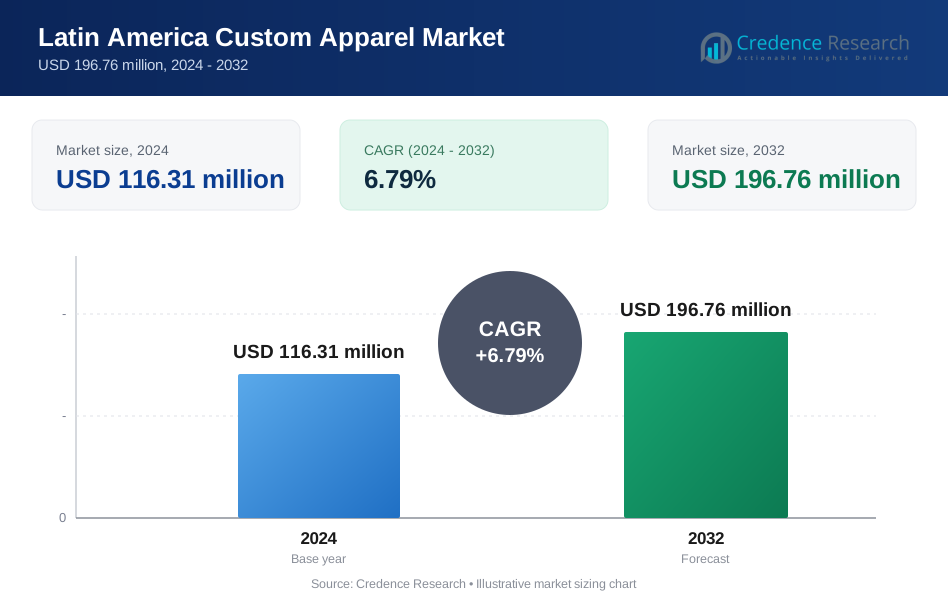
The Latin America Custom Apparel Market is projected to grow from USD 116.31 million in 2024 to an estimated USD 196.76 million by 2032, with a compound annual growth rate (CAGR) of 6.79% from 2024 to 2032.
The rising popularity of personalized fashion, particularly among younger demographics, is a key driver of the Latin America custom apparel market. Consumers are increasingly seeking clothing that reflects individuality and cultural identity. The region's growing middle-class population, with higher disposable incomes, has amplified this trend, enabling greater spending on customized clothing. Additionally, technological advancements such as direct-to-garment (DTG) printing and 3D design software have made customization more accessible and efficient for both manufacturers and consumers. The influence of social media and shifting consumer preferences towards sustainable and ethical production practices further bolster the market. Customized apparel brands are increasingly incorporating eco-friendly materials and production methods to cater to environmentally conscious buyers.
Brazil and Mexico dominate the Latin America custom apparel market, accounting for the largest shares due to their extensive populations and established fashion industries. Brazil, with its vibrant cultural diversity and dynamic fashion sector, is a key hub for custom apparel. Mexico, driven by its proximity to North America and strong e-commerce penetration, is witnessing a surge in demand for personalized clothing. Argentina and Chile are emerging markets, benefiting from increased adoption of online retail platforms and rising awareness of customized apparel offerings. Collectively, these regions are shaping the growth of the Latin America custom apparel market, supported by favorable economic conditions and growing consumer interest in fashion innovation.
Market Insights:
- The Latin America custom apparel market is projected to grow from USD 116.31 million in 2024 to USD 196.76 million by 2032, with a CAGR of 6.79%, reflecting robust consumer demand for personalized fashion solutions.
- Rising consumer interest in individuality and self-expression is driving the demand for tailored apparel, particularly among younger demographics, making personalization a critical growth driver.
- The growing middle-class population with higher disposable incomes is fueling demand for premium and custom clothing, particularly in urban centers across the region.
- Technological advancements like direct-to-garment (DTG) printing and 3D body scanning are streamlining production, enabling businesses to offer efficient, high-quality customization at competitive prices.
- The expansion of e-commerce platforms and digital marketing is significantly enhancing market access, making custom apparel more convenient and appealing to consumers, especially in previously underserved regions.
- Brazil and Mexico dominate the market, holding the largest shares due to their strong fashion industries and increasing e-commerce penetration, while Argentina and Chile are emerging as key growth contributors.
- Challenges such as high costs of advanced technologies, logistics inefficiencies, and limited digital infrastructure in certain regions remain barriers to growth but present opportunities for innovation and investment.
Market Drivers:
Increasing Consumer Demand for Personalization
The growing emphasis on individuality and self-expression is driving the demand for custom apparel in Latin America. Consumers, particularly younger demographics, are increasingly seeking clothing that reflects their unique styles and cultural identities. This shift toward personalized fashion has created opportunities for brands to offer tailored solutions that cater to specific tastes. For instance, GAT Fashion Lab utilizes 3D clothing technology to create digital samples within 24 hours, allowing consumers to visualize and modify designs before production. Customization options such as design personalization, size adjustments, and fabric choices are becoming more popular, further boosting the market.
Rising Middle-Class Population and Disposable Income
The expanding middle-class population in Latin America, coupled with rising disposable incomes, is a significant driver for the custom apparel market. As consumers gain more purchasing power, they are increasingly inclined to invest in premium and personalized clothing options. This trend is particularly pronounced in urban areas, where the demand for high-quality and customized apparel is growing rapidly. For example, Falabella, a major retailer in Chile, reported increase in sales of personalized fashion items in 2022, reflecting the growing consumer interest in custom apparel. The ability to afford custom fashion has turned personalized apparel from a luxury into a mainstream choice for many.
Advancements in Apparel Customization Technology
Technological innovation has played a pivotal role in shaping the growth of the custom apparel market in Latin America. Advanced technologies such as direct-to-garment printing, 3D body scanning, and automated pattern-making tools have streamlined the customization process, making it more accessible and efficient for businesses and consumers alike. These advancements have reduced production time and costs, enabling brands to scale their operations and offer competitive pricing. For instance, Get Outfit uses AI-powered design tools to optimize fashion designs, reducing design approval time. The integration of technology has also enhanced the precision and quality of customized clothing, further attracting customers.
Expansion of E-commerce and Digital Platforms
The rapid growth of e-commerce and digital platforms is another key driver of the Latin America custom apparel market. Online retail channels have made it easier for consumers to explore, design, and order customized clothing from the comfort of their homes. Digital marketing and social media platforms have also played a crucial role in increasing awareness about custom apparel options, especially among younger audiences. For example, Calvin Klein launched its e-commerce platform in Peru, providing consumers with easy access to customized clothing options. The convenience and reach of online channels have enabled businesses to tap into previously untapped markets, driving overall growth in the region.
Market Trends:
Growing Popularity of Digital Customization Tools
Digital transformation is shaping the Latin America custom apparel market, with the increasing use of online design tools and virtual fitting rooms. Consumers now have access to advanced customization platforms that enable them to visualize and modify designs in real time before purchase. This trend is particularly popular among tech-savvy younger demographics who value convenience and personalization. For instance, in Brazil, the e-commerce platform Dafiti has introduced a virtual fitting room feature, allowing customers to see how clothes would fit on their digital avatars before making a purchase. As a result, brands are investing in innovative technologies to enhance user experiences, enabling them to tap into new customer segments and strengthen market positioning.
Expansion of Eco-Friendly and Sustainable Apparel
The demand for sustainable fashion is a prominent trend influencing the Latin America custom apparel market. Consumers are becoming more environmentally conscious, prompting brands to incorporate eco-friendly practices in their operations. The use of organic fabrics, recycled materials, and low-impact dyeing processes is gaining traction. For example, in Mexico, the brand "C&A" has launched a line of clothing made from 100% organic cotton, emphasizing sustainability in their production process. Additionally, brands are promoting transparency in their supply chains to align with consumer expectations for ethical production. This focus on sustainability not only strengthens brand loyalty but also opens opportunities for premium pricing.
Rise of Localized and Cultural Customization
Latin America’s rich cultural diversity is fostering a trend toward localized and culturally inspired customization. Consumers are seeking apparel that reflects their heritage, traditions, and personal identities. Local designers are increasingly collaborating with manufacturers to create unique designs that resonate with regional tastes. This emphasis on cultural relevance is particularly evident in Brazil and Mexico, where traditional patterns and fabrics are being integrated into modern apparel, further driving market growth. For instance, in Brazil, the brand "Amissima" has gained popularity by incorporating traditional Brazilian embroidery into contemporary fashion, appealing to both local and international markets
Integration of Omnichannel Retail Strategies
The adoption of omnichannel retail strategies is transforming how custom apparel brands engage with their customers. Companies are blending physical stores and online platforms to create seamless shopping experiences. For example, in Argentina, the fashion retailer "Falabella" has developed an omnichannel approach where customers can design their apparel online and finalize fittings in-store or vice versa. This hybrid model not only enhances convenience but also caters to a wider audience, including those who prefer traditional retail methods. As omnichannel strategies gain momentum, businesses are better equipped to address diverse consumer needs and increase market reach.
Market Challenges Analysis:
High Cost of Advanced Customization Technologies
The integration of advanced technologies, such as direct-to-garment (DTG) printing and 3D design software, often involves significant investment. For small and medium-sized enterprises (SMEs), these costs can be prohibitive, limiting their ability to compete with larger players who can leverage economies of scale. This technological barrier poses a challenge to market expansion, particularly in less developed areas of Latin America.
Limited Digital Infrastructure in Emerging Regions
While e-commerce and digital platforms are driving growth, many emerging markets in Latin America still face inadequate digital infrastructure. Poor internet connectivity, limited access to online payment systems, and low digital literacy rates in rural areas restrict the penetration of online custom apparel services. This challenge creates a digital divide, hindering businesses from tapping into potential customer bases in these regions.
Logistics and Supply Chain Inefficiencies
The region's diverse geography and underdeveloped logistics infrastructure often lead to inefficiencies in the supply chain. Delays in production and delivery, along with high shipping costs, negatively impact customer satisfaction and operational profitability. Managing these logistical challenges is crucial for businesses aiming to maintain competitiveness in a market where timely service is a key differentiator.
Price Sensitivity Among Consumers
Despite rising disposable incomes, a significant portion of the Latin American population remains price-sensitive. Custom apparel, often priced higher than mass-produced alternatives, may be perceived as a luxury rather than a necessity. This consumer behavior poses a challenge for businesses to balance affordability with the quality and uniqueness of their offerings.
Market Opportunities:
The Latin America custom apparel market offers significant growth opportunities driven by evolving consumer preferences and technological advancements. The increasing demand for personalized fashion, particularly among younger demographics, presents a lucrative avenue for market players. With a growing middle-class population and rising disposable incomes, consumers are more inclined to invest in unique and customized clothing options that reflect individuality and cultural identity. The rapid adoption of digital technologies, such as direct-to-garment (DTG) printing and 3D design software, is further enabling manufacturers and retailers to meet this demand efficiently. Additionally, the surge in e-commerce platforms has widened access to custom apparel, allowing businesses to reach untapped markets and smaller urban centers.
Sustainability and ethical production practices present another promising opportunity in the market. As environmentally conscious consumers increasingly prioritize brands that adopt eco-friendly materials and responsible manufacturing, companies can gain a competitive edge by aligning their practices with these values. Emerging markets such as Argentina and Chile also hold immense potential for growth, as rising awareness and expanding digital infrastructure drive the adoption of customized apparel. Moreover, partnerships between local designers and international brands can expand product offerings and market reach, catering to diverse consumer needs. Collectively, these factors highlight the immense potential for businesses to capitalize on the growing demand for personalized, sustainable, and technologically advanced apparel in Latin America.
Market Segmentation Analysis:
The Latin America custom apparel market demonstrates varying levels of growth and market share across its key regions, including Brazil, Mexico, Argentina, and Chile. These regional differences are influenced by factors such as economic conditions, consumer behavior, technological adoption, and infrastructure development.
Brazil holds the largest share of the market, accounting for approximately 35% in 2024, driven by its vibrant cultural diversity, strong fashion industry, and expanding e-commerce ecosystem. The growing middle class with higher disposable incomes has fueled demand for personalized and culturally significant apparel. Technological advancements and collaborations with international brands further bolster Brazil’s dominant position in the market.
Mexico follows as the second-largest market, representing about 28% of the market share. Proximity to North America has enabled Mexican manufacturers to integrate advanced customization technologies and leverage cross-border e-commerce platforms. Rising urbanization and consumer preference for unique fashion items are key growth drivers in this region. The market in Mexico is also benefiting from increasing digital marketing initiatives and the adoption of sustainable practices by apparel brands.
Argentina accounts for 15% of the market share and is an emerging player in the custom apparel industry. The region is experiencing steady growth due to an expanding e-commerce infrastructure and growing consumer awareness of customization options. Argentina’s local designers are gaining prominence for their ability to blend traditional elements with contemporary trends, making the region a hotspot for niche offerings.
Chile, with a market share of approximately 12%, is another rapidly growing market in Latin America. The country’s focus on technology-driven solutions and its rising young population seeking personalized fashion are key contributors to its growth. The adoption of eco-friendly materials and ethical production practices is further driving consumer interest in custom apparel.
The remaining 10% of the market is distributed among smaller economies in the region, where rising digital penetration and growing middle-class populations present untapped opportunities. Collectively, these regions are shaping the Latin America custom apparel market, driven by economic development, technological innovation, and shifting consumer preferences. The market is poised for steady growth as these regions continue to adopt and adapt to the dynamic trends of personalized fashion.
Segmentation:
By Type
- Coat
- Skirt
- Pants
- Shirt
- Suit
By End-user
- Women
- Men
- Children
By Distribution Channel
- Offline
- Online
Regional Analysis:
The Latin America custom apparel market demonstrates varying levels of growth and market share across its key regions, including Brazil, Mexico, Argentina, and Chile. These regional differences are influenced by factors such as economic conditions, consumer behavior, technological adoption, and infrastructure development.
Brazil holds the largest share of the market, accounting for approximately 35% in 2024, driven by its vibrant cultural diversity, strong fashion industry, and expanding e-commerce ecosystem. The growing middle class with higher disposable incomes has fueled demand for personalized and culturally significant apparel. Technological advancements and collaborations with international brands further bolster Brazil’s dominant position in the market.
Mexico follows as the second-largest market, representing about 28% of the market share. Proximity to North America has enabled Mexican manufacturers to integrate advanced customization technologies and leverage cross-border e-commerce platforms. Rising urbanization and consumer preference for unique fashion items are key growth drivers in this region. The market in Mexico is also benefiting from increasing digital marketing initiatives and the adoption of sustainable practices by apparel brands.
Argentina accounts for 15% of the market share and is an emerging player in the custom apparel industry. The region is experiencing steady growth due to an expanding e-commerce infrastructure and growing consumer awareness of customization options. Argentina’s local designers are gaining prominence for their ability to blend traditional elements with contemporary trends, making the region a hotspot for niche offerings.
Chile, with a market share of approximately 12%, is another rapidly growing market in Latin America. The country’s focus on technology-driven solutions and its rising young population seeking personalized fashion are key contributors to its growth. The adoption of eco-friendly materials and ethical production practices is further driving consumer interest in custom apparel.
The remaining 10% of the market is distributed among smaller economies in the region, where rising digital penetration and growing middle-class populations present untapped opportunities. Collectively, these regions are shaping the Latin America custom apparel market, driven by economic development, technological innovation, and shifting consumer preferences. The market is poised for steady growth as these regions continue to adopt and adapt to the dynamic trends of personalized fashion.
Key Player Analysis:
- Adidas AG
- Allied Shirts
- Amazon.com Inc.
- CafePress Inc.
- DOWNTOWN CUSTOM PRINTWEAR
- Jakprints
- Lynka Sp. z.o.o.
- Nike Inc.
- Printful Inc.
- Redbubble Ltd.
- Society6 LLC
- Spreadshirt Inc.
- TeeTalkies
- THREADBIRD
- UberPrints Inc.
- Vantage Custom Classics Inc.
- · Zazzle Inc.
Competitive Analysis:
The Latin America custom apparel market is highly competitive, with a blend of local and international players vying for market share. Established global brands leverage advanced technologies and extensive supply chains to offer a wide range of customizable products, catering to diverse consumer preferences. Local companies, on the other hand, excel in delivering culturally relevant designs and personalized customer experiences, giving them a competitive edge in niche segments. E-commerce platforms have intensified competition by enabling smaller players to expand their reach and offer direct-to-consumer services. Innovation in customization technologies, such as direct-to-garment printing and 3D design, is a significant focus area for many market participants, enabling faster production and improved quality. For instance, Get Outfit uses AI-powered design tools to optimize fashion designs. Sustainability and ethical practices are emerging as key competitive differentiators, with brands adopting eco-friendly materials to appeal to environmentally conscious consumers. The competitive landscape is dynamic, driven by innovation and evolving consumer demands.
Recent Developments:
- In December 2024, Nike announced that its web3 company, RTFKT, would wind down operations by the end of January 2025. RTFKT, acquired by Nike in December 2021, has been involved in multiple real-life and NFT sneaker projects. The decision to wind down operations comes under the new leadership of CEO Elliot Hill, signaling a shift in strategy for Nike's digital footprint. An updated website will serve as a digital archive of RTFKT's projects, and one final drop, the MLNTH X, is planned for this month.
Market Concentration & Characteristics:
The Latin America custom apparel market exhibits moderate market concentration, with a mix of established local players and emerging international brands. While large enterprises dominate through robust distribution networks and advanced customization technologies, small and medium-sized businesses thrive by offering unique, culturally tailored designs. The market is characterized by its dynamic nature, driven by diverse consumer preferences and rapidly evolving fashion trends. Technological advancements, such as direct-to-garment printing and 3D customization, have lowered entry barriers, encouraging the participation of new players. The growing adoption of e-commerce platforms has further diversified the competitive landscape, enabling smaller brands to reach broader audiences. Additionally, sustainability and ethical production practices are becoming key differentiators, with eco-conscious consumers favoring brands that prioritize environmental responsibility. Overall, the market’s adaptability and focus on individuality position it for sustained growth in a competitive environment.
Report Coverage:
The research report offers an in-depth analysis based on By Type, By End-user and By Distribution Channel.It details leading market players, providing an overview of their business, product offerings, investments, revenue streams, and key applications. Additionally, the report includes insights into the competitive environment, SWOT analysis, current market trends, as well as the primary drivers and constraints. Furthermore, it discusses various factors that have driven market expansion in recent years. The report also explores market dynamics, regulatory scenarios, and technological advancements that are shaping the industry. It assesses the impact of external factors and global economic changes on market growth. Lastly, it provides strategic recommendations for new entrants and established companies to navigate the complexities of the market.
Future Outlook:
- The market is expected to witness steady growth, driven by increasing consumer demand for personalized and culturally relevant fashion.
- Advancements in digital printing and 3D customization technologies will enhance production efficiency and accessibility.
- Rising middle-class incomes and urbanization will contribute to higher spending on customized apparel across the region.
- E-commerce platforms will continue to expand their reach, enabling greater market penetration for custom apparel brands.
- Sustainability will play a crucial role, with brands adopting eco-friendly materials and ethical production practices.
- Brazil and Mexico will remain key markets, while emerging economies like Argentina and Chile will drive future growth.
- Social media and digital marketing will increasingly influence consumer purchasing behavior, amplifying demand for unique apparel designs.
- Collaboration between local designers and international brands will expand product offerings and market reach.
- Logistics and supply chain advancements will address regional challenges, improving delivery times and customer satisfaction.
- Government initiatives supporting local textile industries may further boost growth opportunities for custom apparel businesses.
Request a Free Sample
Fill in your details and we'll send you a free sample report.
- Sample data tables & charts
- Research methodology
Need a Custom Version of This Report?
Tailor the scope, geography, or segments to your exact requirements.
- Custom geography or segment scope
- Direct access to our analyst team
Frequently Asked Questions
What is the projected growth of the Latin America Custom Apparel Market?
What are the key drivers of growth in this market?
Which countries dominate the Latin America custom apparel market?
What challenges does the Latin America custom apparel market face?
Table of Content
Chapter 1. Report Introduction
- 1.1 Report Description & Purpose
- 1.1.1 Report Title & Market Definition
- 1.1.2 Unique Selling Propositions (USP) & Key Differentiators
- 1.1.3 Value Proposition for Stakeholders
- 1.2 Research Objectives
- 1.2.1 Market Sizing Objectives (Volume & Revenue)
- 1.2.2 Segmentation Objectives
- 1.2.3 Competitive Intelligence Objectives
- 1.2.4 Forecast & Scenario Objectives
- 1.3 Report Scope
- 1.3.1 Latin America Custom Apparel Scope – Types & Subtypes Covered
- 1.3.2 Geographic Scope – Regions & Countries Covered
- 1.3.3 Historical Period, Base Year & Forecast Period (2024; forecast to 2032)
- 1.3.4 Inclusions & Exclusions
- 1.4 HS Code & Classification Framework
- 1.5 Currency, Units & Pricing Basis
- 1.6 Target Stakeholders
- 1.7 Limitations & Assumptions
Chapter 2. Executive Summary
- 2.1 Global Latin America Custom Apparel Market Snapshot
- 2.1.1 Market Size – Historical (2024) & Forecast (2024-2032) (2024: USD 116.31 million → 2032: USD 196.76 million)
- 2.1.2 Volume & Revenue – Global Totals
- 2.1.3 Key Market Highlights – Top Five Facts
- 2.2 Latin America Custom Apparel Market Segmentation Snapshot
- 2.2.1 Market Split by Region – 2024 vs. 2032
- 2.3 Competitive Snapshot
- 2.3.1 Top 10 Players by Revenue Share – 2024
- 2.3.2 Top 10 Players by Volume Share – 2024
- 2.3.3 Recent Strategic Developments (18-Month Summary)
- 2.4 Key Investment Highlights & Strategic Conclusions
Chapter 3. Latin America Custom Apparel Market Dynamics & Industry Analysis
- 3.1 Market Overview & Context
- 3.1.1 Latin America Custom Apparel Market Position in the Broader Automotive Value Chain
- 3.1.2 OEM vs. Replacement Market Dynamics
- 3.1.3 Market Maturity & Development Stage by Region
- 3.2 Latin America Custom Apparel Market Drivers
- 3.3 Latin America Custom Apparel Market Restraints & Challenges
- 3.4 Latin America Custom Apparel Market Opportunities
- 3.5 Porter's Five Forces Analysis
- 3.5.1 Threat of New Entrants
- 3.5.2 Bargaining Power of Suppliers
- 3.5.3 Bargaining Power of Buyers
- 3.5.4 Threat of Substitutes
- 3.5.5 Competitive Rivalry – Intensity Assessment
- 3.6 Latin America Custom Apparel Value Chain Analysis
- 3.6.1 Upstream – Raw Material/Input Suppliers
- 3.6.1.1 Raw Material/Input 1
- 3.6.1.2 Raw Material/Input 2
- 3.6.1.3 Raw Material/Input 3
- 3.6.2 Midstream – Production/Manufacturing/Service Delivery
- 3.6.2.1 Production/Process Overview
- 3.6.2.2 Key Facility Locations & Capacity by Manufacturer
- 3.6.3 Downstream – Distribution & End Consumer
- 3.6.3.1 Primary Channel – B2B/OEM
- 3.6.3.2 Secondary Channels – Dealer, Retail, Online, Direct
- 3.6.4 Value Chain Profitability Analysis
- 3.6.1 Upstream – Raw Material/Input Suppliers
- 3.7 PESTEL Analysis
- 3.7.1 Political Factors
- 3.7.2 Economic Factors
- 3.7.3 Social Factors
- 3.7.4 Technological Factors
- 3.7.5 Environmental Factors
- 3.7.6 Legal Factors
- 3.8 Latin America Custom Apparel Supply Chain Analysis
- 3.8.1 Raw Material/Input Supply Risk Assessment
- 3.8.2 Manufacturing Concentration Risk (Geographic Exposure)
- 3.8.3 Trade Disruption Impact Analysis
- 3.9 Regulatory & Policy Landscape
Note: The regulatory and policy landscape section covers regulations based on their applicability to the market, Latin America Custom Apparel category, geography, and scope of the study. Only regulatory frameworks with a material impact on operations, compliance, trade, sustainability, or market access are analyzed in detail.
Chapter 4. Key Investment Pockets & Opportunity Analysis
- 4.1 Latin America Custom Apparel Market Attractiveness Analysis
- 4.1.1 By Region – Investment Attractiveness Matrix (Volume × CAGR)
- 4.2 Absolute Revenue Growth Opportunity
- 4.2.1 By Region – Absolute USD Growth Through 2032
- 4.3 Incremental Volume Opportunity
- 4.3.1 By Region – Incremental Volume Through 2032
- 4.3.2 Segment – Incremental Volume
- 4.4 Emerging Submarket Opportunity Deep Dive (Subject to Applicability)
- 4.5 Emerging Market Opportunity Scorecards
- 4.5.1 United States
- 4.5.2 Europe
- 4.5.3 Asia
- 4.5.4 Middle East & Africa
Note: Emerging Market Opportunity Scorecards will be included based on relevance and strategic importance. Regions listed are indicative and may vary depending on data availability and market dynamics.
Chapter 5. Latin America Custom Apparel Import-Export Analysis & Trade Flows
- 5.1 Global Trade Overview
- 5.1.1 Global Export Value by Country (2024)
- 5.1.2 Global Export Volume by Country (2024)
- 5.1.3 Global Import Value by Country (2024)
- 5.1.4 Global Import Volume by Country (2024)
- 5.1.5 Net Trade Balance by Country (2024)
- 5.2 Export Analysis – Segment
- 5.2.1 Type 1 (HS Code)
- 5.2.2 Type 2 (HS Code)
- 5.2.3 Type 3 (HS Code)
- 5.2.4 Type 4 (HS Code)
- 5.2.5 Type 5 (HS Code)
- 5.3 Import Analysis – Segment
- 5.3.1 Type 1 (HS Code)
- 5.3.2 Type 2 (HS Code)
- 5.3.3 Type 3 (HS Code)
- 5.3.4 Type 4 (HS Code)
- 5.3.5 Type 5 (HS Code)
- 5.4 Average Unit Trade Prices
- 5.4.1 Average Export Price – Segment & Country
- 5.4.2 Average Import Price – Segment & Source Country
- 5.4.3 Price Trends (2024)
- 5.5 Key Trade Route Analysis
- 5.5.1 Trade Route 1
- 5.5.2 Trade Route 2
- 5.5.3 Trade Route 3
- 5.5.4 Trade Route 4
- 5.5.5 Trade Route 5
- 5.6 Trade Policy Impact Assessment
- 5.6.1 US Anti-Dumping & Section 301 Tariffs
- 5.6.2 EU Customs Union Impact
- 5.6.3 Major Free Trade Agreements
- 5.6.4 USMCA Rules of Origin
Note: Trade policy analysis will be included only where relevant to the Latin America Custom Apparel market.
Chapter 6. Competitive Landscape & Company Benchmarking
- 6.1 Latin America Custom Apparel Market Concentration & Structure
- 6.1.1 Herfindahl-Hirschman Index (HHI) – vs. 2024
- 6.1.2 Tier 1, Tier 2 & Tier 3 Market Structure
- 6.1.3 Global, Regional & Local Player Dynamics
- 6.2 Latin America Custom Apparel Market Share Analysis – 2024
- 6.2.1 Global Revenue Share by Company
- 6.2.2 Global Volume Share by Company
- 6.2.3 Regional Revenue Share
- 6.2.4 Market Share Evolution ( vs. 2024)
- 6.2.5 OEM Segment Share by Company
- 6.2.6 Replacement Segment Share by Company
- 6.3 Production/Delivery Capacity & Facility Analysis
- 6.3.1 Global Installed Capacity
- 6.3.2 Capacity Utilization Rates
- 6.3.3 Production/Output Volume
- 6.3.4 Facility Locations & Capacity Map
- 6.3.5 Planned Capacity Additions
- 6.4 Latin America Custom Apparel Competitive Benchmarking Matrix
- 6.4.1 Revenue, Volume, CAGR & Profitability Comparison
- 6.4.2 Channel Revenue Mix
- 6.4.3 Geographic Revenue Exposure
- 6.4.4 R&D Intensity
- 6.4.5 Sustainability Maturity
- 6.5 Strategic Developments in Latin America Custom Apparel (Last 24 Months)
- 6.5.1 Mergers, Acquisitions & Divestments
- 6.5.2 New Latin America Custom Apparel Launches
- 6.5.3 Facility Expansions
- 6.5.4 Strategic Alliances, Joint Ventures & Partnerships
- 6.5.5 Distribution Expansion & Market Entry
- 6.5.6 Sustainability & ESG Initiatives
- 6.6 Competitive Strategy Mapping
- 6.6.1 Leader, Challenger, Follower & Niche Classification
- 6.6.2 Pricing Strategy Comparison
- 6.6.3 Channel Strategy Matrix
Note: Strategic developments are included based on their materiality and the availability of reliable information.
Chapter 7. Global Latin America Custom Apparel Market – By Distribution Channel
- 7.1 Segment Overview
- 7.1.1 Volume & Revenue Split by Channel (2024 & 2032)
- 7.1.2 Channel Mix Evolution (2024-2032)
Chapter 8. Regional Market Analysis – Global Overview
- 8.1 Global Regional Overview
- 8.1.1 Regional Volume Share
- 8.1.2 Regional Revenue Share
- 8.1.3 Regional Volume by Region
- 8.1.4 Regional Revenue by Region
- 8.1.5 Regional Forecast Through 2032
- 8.2 Cross-Regional Segment Analysis
- 8.2.1 By Distribution Channel
- 8.2.2 By Brand/Price Tier
Chapter 9. North America Latin America Custom Apparel Market
- 9.1 United States
- 9.2 Canada
- 9.3 Mexico
Chapter 10. Europe Latin America Custom Apparel Market
- 10.1 Germany
- 10.2 France
- 10.3 Italy
- 10.4 United Kingdom
- 10.5 Spain
- 10.6 Poland
- 10.7 Russia
- 10.8 Netherlands
- 10.9 Belgium
- 10.10 Sweden
- 10.11 Denmark
- 10.12 Norway
- 10.13 Rest of Europe
Chapter 11. Asia Pacific Latin America Custom Apparel Market
- 11.1 China
- 11.2 India
- 11.3 Japan
- 11.4 South Korea
- 11.5 Thailand
- 11.6 Indonesia
- 11.7 Vietnam
- 11.8 Malaysia
- 11.9 Australia
- 11.10 Rest of Asia Pacific
Chapter 12. Latin America Latin America Custom Apparel Market
- 12.1 Brazil
- 12.2 Argentina
- 12.3 Colombia
- 12.4 Chile
- 12.5 Rest of Latin America
Chapter 13. Middle East Latin America Custom Apparel Market
- 13.1 Saudi Arabia
- 13.2 United Arab Emirates
- 13.3 Turkey
- 13.4 Israel
- 13.5 Iran
- 13.6 Rest of the Middle East
Chapter 14. Africa Latin America Custom Apparel Market
- 14.1 South Africa
- 14.2 Egypt
- 14.3 Nigeria
- 14.4 Morocco
- 14.5 Rest of Africa
Chapter 15. Latin America Custom Apparel Company Profiles
- 15.1 [Company 01]
- 15.1.1 Company Overview
- 15.1.2 Key Management Personnel
- 15.1.3 Products & Services Portfolio
- 15.1.4 Financial Performance
- 15.1.5 Key Market Focus & Geographic Presence
- 15.1.6 Recent Developments & Strategic Initiatives
Note: The company profile list is preliminary and may change based on research findings, market developments, data availability, and client requirements.
Chapter 16. Appendices
- Appendix A – List of Abbreviations & Acronyms
- Appendix B – Industry Classification Code Reference – Full Series
- Appendix C – Production & Capacity Data Tables
- Appendix D – End-Use & Demand Base Tables
- Appendix E – Consumption & Replacement Rate Assumptions
- Appendix F – ASP Reference Tables
- Appendix G – Manufacturing & Facility Database
- Appendix H – Import-Export Data Tables
- Appendix I – Regulatory Summary Tables
- Appendix J – Primary Research Participant List (Anonymized)
- Appendix K – Primary Research Questionnaire Framework
- Appendix L – Data Sources & Bibliography
- Appendix M – Market Size Divergence & Source Comparison
Chapter 17. Research Methodology
- 17.1 Research Framework & Philosophy
- 17.2 Secondary Research – Sources, Hierarchy & Data Extraction
- 17.3 Data Modeling – Bottom-Up & Top-Down Market Sizing
- 17.4 Primary Research – Stakeholder Framework, LOI & Sample Sizes
- 17.5 Forecast Methodology – Regression, Scenario & Sensitivity Analysis
- 17.6 Quality Control – Four-Layer Validation Framework
- 17.7 Limitations & Standard Assumptions
- 17.8 Disclaimer
