
| REPORT ATTRIBUTE | DETAILS |
|---|---|
| Historical Period | 2020-2023 |
| Base Year | 2024 |
| Forecast Period | 2025-2032 |
| Latin America Stone Plastic Composite Flooring Market Size 2023 | USD 12381.89 million |
| Latin America Stone Plastic Composite Flooring Market, CAGR | 20.84% |
| Latin America Stone Plastic Composite Flooring Market Size 2032 | USD 69521.46 million |
Market Overview:
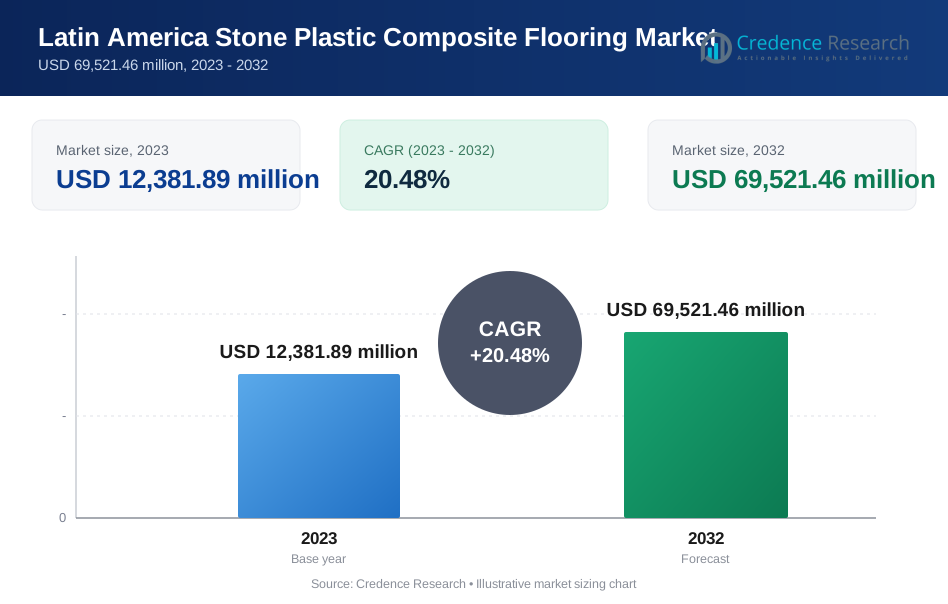
The Latin America Stone Plastic Composite Flooring Market is projected to grow from USD 12381.89 million in 2023 to an estimated USD 69521.46 million by 2032, with a compound annual growth rate (CAGR) of 20.48% from 2023 to 2032.
Several key factors are propelling the expansion of the SPC flooring market in Latin America. The region is experiencing a surge in construction and renovation activities, particularly in urban areas, leading to a heightened demand for flooring materials that offer longevity and ease of maintenance. SPC flooring, known for its water resistance, scratch resistance, and affordability, meets these requirements effectively. Additionally, the growing consumer preference for eco-friendly and sustainable building materials is influencing the market, as SPC flooring is often made from recyclable materials and has a lower environmental impact compared to traditional flooring options. The rise in disposable incomes and changing lifestyles are also contributing to the increased adoption of SPC flooring, as consumers seek modern and durable flooring solutions for their homes and businesses.
The Latin American SPC flooring market is characterized by diverse dynamics across its key countries. Brazil, being the largest economy in the region, leads the market due to its extensive construction activities and urban development projects. Mexico follows closely, with significant growth attributed to its expanding real estate sector and industrialization. Argentina and Chile are also notable markets, driven by their growing infrastructure projects and increasing demand for modern flooring solutions. While the market is still emerging in some countries, the overall trend indicates a shift towards the adoption of SPC flooring as a preferred choice for its combination of durability, aesthetic appeal, and cost-effectiveness. As the region continues to develop, the demand for SPC flooring is expected to rise, presenting opportunities for manufacturers and suppliers to expand their presence in the Latin American market.
Market Insights:
- The Latin America Stone Plastic Composite Flooring Market is projected to grow from USD 12,381.89 million in 2023 to USD 69,521.46 million by 2032, at a CAGR of 20.48%.
- Rapid urbanization and increased construction activities drive demand for durable, water-resistant SPC flooring in residential, commercial, and industrial buildings.
- Growing consumer awareness about low-maintenance and eco-friendly flooring materials supports wider adoption of SPC flooring.
- Technological advancements, including improved wear layers and realistic surface textures, enhance product appeal and competitiveness.
- Expansion of the real estate sector and rising disposable incomes fuel investments in modern flooring for home renovations and new developments.
- High initial installation costs and limited awareness among end-users restrain market growth, especially in price-sensitive and rural areas.
- Price volatility in raw materials and competition from alternatives like laminate and luxury vinyl tiles challenge manufacturers to maintain quality and competitive pricing.
Report Scope
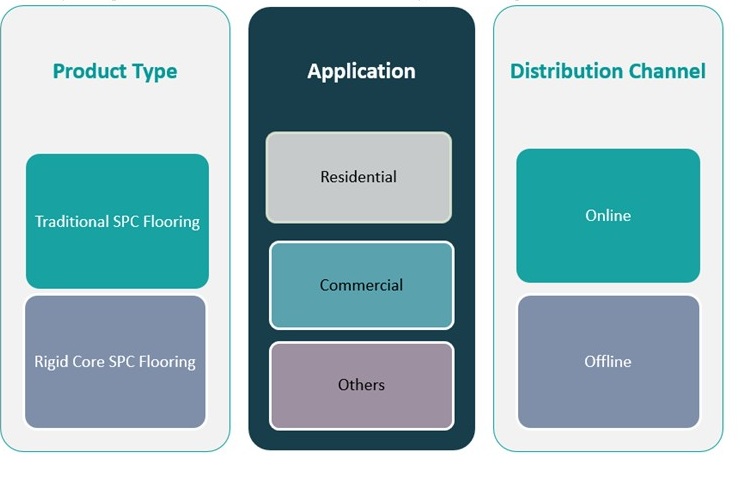
The report segments the Latin America Stone Plastic Composite Flooring Market as follow
Market Drivers:
Rapid Urbanization and Growth in Construction Activities Fuel Demand for Durable Flooring Solutions
The Latin America Stone Plastic Composite Flooring Market benefits significantly from rapid urbanization and increased construction activities across the region. Expanding cities and infrastructure development projects drive demand for reliable and long-lasting flooring options in residential, commercial, and industrial buildings. Construction companies and real estate developers prefer SPC flooring due to its robustness, water resistance, and ability to withstand heavy foot traffic. The demand for modern housing and office spaces with enhanced aesthetics further stimulates adoption. Growing investments in commercial real estate and public infrastructure projects contribute to steady market growth. It offers an effective solution to meet the durability and maintenance requirements that new constructions demand, making it a preferred choice among builders and architects.
Rising Consumer Awareness and Preference for Low-Maintenance and Eco-Friendly Flooring
Increased awareness of maintenance efficiency and environmental impact influences consumer choices in Latin America. The Stone Plastic Composite flooring market sees growth driven by end-users seeking flooring materials that combine durability with ease of upkeep. SPC flooring requires minimal maintenance compared to traditional hardwood or ceramic tiles, reducing long-term costs and labor. Consumers are increasingly aware of sustainability factors and prefer products that have a smaller carbon footprint and use recyclable materials. It aligns with global trends emphasizing environmental responsibility, which many manufacturers have embraced by incorporating eco-friendly production processes. The appeal of SPC flooring’s resistance to moisture, stains, and wear supports its growing acceptance among environmentally conscious buyers.
- For instance, SPC Click Flooring certified by FloorScore emits less than 0.5 mg/m²/hr of VOCs, ensuring healthy indoor air quality and meeting ISO 14001 environmental management standards.
Technological Advancements and Product Innovations Enhance Market Competitiveness
The Latin America Stone Plastic Composite Flooring Market benefits from ongoing technological improvements and product innovations that increase performance and design options. Manufacturers invest in research to improve wear layers, surface textures, and locking mechanisms, enhancing product durability and installation ease. Innovations such as enhanced embossing techniques provide realistic wood and stone looks, broadening consumer appeal. It addresses diverse application needs across residential, commercial, and industrial sectors. Improved manufacturing technologies also allow competitive pricing, making SPC flooring accessible to a wider customer base. These advancements enable suppliers to differentiate their offerings and strengthen market presence in an increasingly competitive environment.
- For instance, DECNO’s EIR SPC flooring uses synchronous positioning and pressing technology to achieve a three-dimensional wood grain effect, closely matching the decorative film’s pattern for heightened realism.
Expanding Real Estate Sector and Increasing Disposable Income Drive Market Growth
The expanding real estate sector in Latin America underpins demand for modern flooring solutions that blend functionality with aesthetics. Increasing disposable income among the middle and upper-middle classes encourages investments in home improvement and interior upgrades. Consumers seek durable and stylish flooring that complements contemporary design trends and offers value for money. It benefits from the growing popularity of DIY renovation projects supported by wider product availability and distribution channels. The market also gains momentum from commercial establishments upgrading flooring to enhance customer experience and operational efficiency. Together, these factors contribute to sustained demand growth and present opportunities for market players to capitalize on evolving consumer needs.
Market Trends:
Increasing Adoption of SPC Flooring in Commercial and Residential Sectors Accelerates Market Expansion
The Latin America Stone Plastic Composite Flooring Market experiences a notable shift with rising adoption across both commercial and residential segments. Developers and homeowners increasingly select SPC flooring for its durability, water resistance, and aesthetic versatility. It offers a practical alternative to traditional materials such as hardwood and ceramic tiles, meeting the demand for stylish yet functional flooring solutions. The commercial sector, including retail outlets, offices, and hospitality venues, leverages SPC’s low maintenance and high resilience to foot traffic. Residential consumers favor it for modern designs and ease of installation. This broadening application base significantly contributes to the market’s sustained growth and diversification.
Integration of Advanced Manufacturing Techniques Enhances Product Quality and Consumer Appeal
Manufacturers in the Latin America Stone Plastic Composite Flooring Market prioritize incorporating advanced production technologies to improve product quality and design realism. Techniques such as digital printing and enhanced embossing replicate natural wood and stone textures with high precision, appealing to design-conscious consumers. It results in flooring that combines aesthetic appeal with functional benefits such as scratch resistance and dimensional stability. Innovations also extend to locking systems that simplify installation and reduce time and labor costs. Continuous improvements in manufacturing processes allow companies to offer varied product lines that cater to different price points and consumer preferences, strengthening market competitiveness.
- For instance, Gerflor’s Rigid 55 Lock Acoustic SPC flooring integrates synchronized embossing and a 0.55 mm wear layer, delivering both tactile realism and scratch resistance. Decno Group’s EIR (Embossed-in-Register) SPC planks use a five-roll extension process, ensuring dimensional stability and lifelike textures that meet ISO 10582 standards for luxury vinyl tiles.
Sustainability and Eco-Conscious Product Development Drive Market Preferences
Environmental concerns increasingly influence product development and consumer purchasing decisions in the Latin America Stone Plastic Composite Flooring Market. Manufacturers adopt eco-friendly raw materials and sustainable production methods to align with growing regulatory requirements and consumer expectations. It includes the use of recycled components and reduction of volatile organic compounds (VOCs) to improve indoor air quality. Sustainable certifications and transparency in supply chains gain importance as buyers prioritize green building materials. This trend compels companies to innovate toward greener products while maintaining performance and cost-effectiveness, creating new avenues for differentiation and growth.
- For instance, Mohawk Industries’ SPC flooring is manufactured with up to 70% recycled content in the core and utilizes non-phthalate, low-VOC adhesives, earning FloorScore and GreenGuard Gold certifications for indoor air quality.
Expansion of Distribution Networks and E-commerce Platforms Facilitates Market Penetration
The Latin America Stone Plastic Composite Flooring Market benefits from expanded distribution channels and the rise of digital sales platforms. Traditional retail outlets, specialized flooring stores, and large home improvement chains increase their SPC flooring offerings to meet growing demand. It enables wider accessibility for consumers across urban and semi-urban areas. Online marketplaces and e-commerce platforms enhance convenience, product variety, and price transparency, driving sales especially among tech-savvy buyers. The growing presence of digital platforms also supports direct-to-consumer models and customized product options. This evolution in sales and distribution channels accelerates market penetration and supports ongoing revenue growth.
Market Challenges Analysis:
High Initial Installation Costs and Limited Awareness Among End-Users Restrain Market Growth
The Latin America Stone Plastic Composite Flooring Market faces challenges related to the relatively high upfront costs associated with SPC flooring installation compared to conventional alternatives like vinyl or laminate flooring. This cost factor limits adoption among price-sensitive customers, particularly in emerging markets and rural areas where budget constraints prevail. It requires skilled labor and specialized tools for proper installation, which can increase total project expenses and discourage small-scale contractors or individual homeowners. Limited awareness about the long-term cost benefits and durability of SPC flooring further impedes widespread acceptance. Many potential buyers remain unfamiliar with its advantages over traditional materials, causing hesitation during the decision-making process.
- For instance,the average material cost for SPC flooring in Latin America ranges from $2 to $7 per square foot, excluding installation, according to Wintel Surfaces. Professional installation can add an additional $1 to $3 per square foot, making the total upfront investment significantly higher than traditional vinyl or laminate flooring, which often costs less both in materials and labor
Raw Material Price Volatility and Competition from Alternative Flooring Materials Impact Market Dynamics
The Latin America Stone Plastic Composite Flooring Market encounters pressure from fluctuating raw material prices, especially polymers and calcium carbonate used in SPC manufacturing. These price volatilities can affect production costs, influencing pricing strategies and profit margins. It challenges manufacturers to maintain competitive pricing while ensuring product quality. The market also faces stiff competition from other flooring options such as laminate, luxury vinyl tiles, and engineered hardwood, which offer alternative benefits and pricing structures. Preference for traditional flooring materials in some regions slows SPC flooring adoption, requiring companies to invest in consumer education and product differentiation. Managing supply chain disruptions and maintaining consistent quality amid these factors remains a critical challenge for market players.
Market Opportunities:
Growing Demand for Sustainable and High-Performance Flooring Solutions Presents Expansion Potential
The Latin America Stone Plastic Composite Flooring Market holds significant opportunities due to increasing consumer demand for sustainable and high-performance flooring materials. It offers manufacturers a chance to develop eco-friendly SPC products using recycled and renewable raw materials to meet evolving environmental regulations and buyer preferences. Rising interest in green building certifications and sustainable construction practices further supports this growth avenue. Expanding product portfolios with enhanced durability, water resistance, and design versatility allows companies to capture wider market segments. Emphasizing these benefits can attract environmentally conscious consumers and commercial clients looking for long-term value.
Expansion of Urban Infrastructure and Real Estate Development Drives Market Penetration Prospects
Rapid urbanization and growing investments in infrastructure and real estate projects across Latin America create promising opportunities for the SPC flooring market. It enables suppliers to partner with construction firms, architects, and interior designers to integrate SPC flooring into new residential and commercial developments. The surge in renovation activities and modernization efforts also supports increased demand. Expanding distribution networks and leveraging e-commerce platforms can improve product accessibility in both metropolitan and emerging areas. These factors position the market for accelerated growth and broader adoption across diverse end-use sectors.
Market Segmentation Analysis:
The Latin America Stone Plastic Composite Flooring Market is segmented by product type, application, and distribution channel, each contributing distinct growth drivers and demand dynamics.
By product type, the market divides into traditional SPC flooring and rigid core SPC flooring. Traditional SPC flooring maintains steady demand due to its affordability and durability, appealing primarily to cost-sensitive consumers and renovation projects. Rigid core SPC flooring gains prominence for its enhanced stability, thicker wear layers, and superior performance in commercial and high-traffic residential environments. It captures increasing market share owing to growing preference for long-lasting and premium flooring solutions.
By application, the market segments into residential, commercial, and others. The residential segment dominates, driven by rising urbanization and disposable incomes, encouraging homeowners to invest in modern, stylish, and durable flooring. The commercial segment exhibits robust growth supported by expanding retail, hospitality, and office infrastructure development that demands resilient and low-maintenance flooring materials. The others segment includes industrial and institutional applications, which contribute gradually due to increasing infrastructure modernization efforts.
By distribution channels, the market splits between online and offline platforms. Offline distribution remains predominant through traditional retail stores, specialty flooring outlets, and home improvement centers that provide direct customer interaction and installation services. The online channel shows rapid growth fueled by expanding e-commerce penetration, offering convenience, wider product variety, and competitive pricing. It caters especially to younger, tech-savvy consumers seeking customized solutions and efficient purchasing processes. The Latin America Stone Plastic Composite Flooring Market leverages this multi-channel distribution framework to maximize reach and address diverse consumer preferences.
Segmentation:
By Product Type:
- Traditional SPC Flooring
- Rigid Core SPC Flooring
By Application:
- Residential
- Commercial
- Others
By Distribution Channel:
- Online
- Offline
Regional Analysis:
Brazil Leads the Latin America Stone Plastic Composite Flooring Market with Strong Urbanization and Construction Activity Brazil dominates the Latin America Stone Plastic Composite Flooring Market, holding an estimated 40% share in 2024. The country’s large population and rapid urbanization drive substantial demand for modern flooring solutions across residential, commercial, and industrial sectors. Robust investments in infrastructure and real estate developments further support market growth. Brazil’s construction industry emphasizes quality and durability, increasing preference for SPC flooring due to its water resistance and maintenance ease. It benefits from expanding distribution networks and growing consumer awareness about advanced flooring technologies. Leading manufacturers focus on Brazil to establish manufacturing bases and distribution channels, capitalizing on its sizable market potential.
Mexico Emerges as a Key Market with Expanding Industrial and Commercial Sectors Mexico accounts for approximately 25% of the Latin America Stone Plastic Composite Flooring Market, positioning itself as a critical growth hub. The country experiences increased industrialization and commercial construction, which propels demand for durable and cost-effective flooring materials. Growing urban centers and infrastructure projects create opportunities for SPC flooring integration in office buildings, retail spaces, and residential complexes. It benefits from proximity to North American markets, facilitating technology transfer and product innovation. Mexico’s rising middle class and increased disposable income encourage adoption of premium flooring solutions, supporting steady market expansion. Manufacturers target Mexico to diversify regional presence and strengthen supply chains.
Argentina, Chile, and Other Latin American Countries Contribute to Market Growth with Emerging Opportunities Argentina and Chile collectively represent around 20% of the Latin America Stone Plastic Composite Flooring Market, with other countries contributing the remaining 15%. Argentina’s construction industry benefits from government initiatives focused on urban renewal and affordable housing, driving demand for efficient flooring options. Chile’s growing infrastructure projects and commercial developments offer promising prospects for SPC flooring adoption. Other nations such as Colombia, Peru, and Uruguay show increasing interest in SPC flooring due to rising construction activities and infrastructure modernization. It faces challenges in these markets from traditional flooring preferences but gradually gains traction through education and competitive pricing. This regional diversity allows market players to explore untapped segments and expand footprint across Latin America.
Key Player Analysis:
- Shaw Industries
- Mohawk Industries, Inc.
- Gerflor
- Decno Group
- Armstrong Flooring, Inc.
Competitive Analysis:
The Latin America Stone Plastic Composite Flooring Market features intense competition among both regional manufacturers and multinational corporations. Leading players focus on product innovation, expanding manufacturing capacities, and strengthening distribution networks to capture a larger market share. It drives companies to differentiate through enhanced durability, design variety, and eco-friendly product offerings. Key market participants invest in localized production facilities to reduce costs and improve supply chain efficiency. Strategic partnerships with construction firms, retailers, and distributors support broader market penetration. Price competitiveness and customer service quality also play critical roles in gaining consumer trust. The competitive landscape encourages continuous improvement and responsiveness to evolving market demands, ensuring dynamic growth opportunities for established and emerging players alike.
Recent Developments:
- In Feb 2025, Shaw Industries Group, Inc. launched a series of new resilient flooring products in Latin America, expanding its Floorté Classic Series (WPC) and Floorté Pro Series (SPC) lines, as well as introducing new flex and loose lay options. These launches feature fresh designs inspired by emerging color and visual trends, offering enhanced waterproofing, resistance to scuffs, and improved comfort underfoot.
Market Concentration & Characteristics:
The Latin America Stone Plastic Composite Flooring Market exhibits a moderately concentrated structure with a mix of established multinational corporations and regional manufacturers. It is characterized by competitive pricing, product innovation, and expanding distribution networks to capture diverse customer segments. Leading players leverage advanced manufacturing technologies to deliver high-quality, durable, and eco-friendly flooring solutions that meet evolving consumer preferences. The market favors companies with strong supply chain capabilities and localized production to reduce costs and improve responsiveness. It also shows increasing collaboration with construction and real estate sectors to integrate SPC flooring into new developments. This balanced concentration fosters healthy competition, encouraging continuous product improvements and strategic partnerships to enhance market reach across Latin America.
Report Coverage:
The research report offers an in-depth analysis based on Product Type, Application and Distribution Channel. It details leading market players, providing an overview of their business, product offerings, investments, revenue streams, and key applications. Additionally, the report includes insights into the competitive environment, SWOT analysis, current market trends, as well as the primary drivers and constraints. Furthermore, it discusses various factors that have driven market expansion in recent years. The report also explores market dynamics, regulatory scenarios, and technological advancements that are shaping the industry. It assesses the impact of external factors and global economic changes on market growth. Lastly, it provides strategic recommendations for new entrants and established companies to navigate the complexities of the market.
Future Outlook:
- Rising urbanization and infrastructure investments will drive steady demand for SPC flooring across Latin America.
- Technological advancements will improve product durability and design realism, enhancing consumer appeal.
- Increased focus on sustainability will encourage development of eco-friendly SPC flooring options.
- Expanding middle-class income levels will boost residential market adoption of premium flooring solutions.
- Growth in commercial real estate and hospitality sectors will create new opportunities for SPC flooring applications.
- E-commerce platforms and digital sales channels will enhance product accessibility and customer reach.
- Manufacturers will invest in local production facilities to reduce costs and improve supply chain efficiency.
- Strategic partnerships with construction and real estate firms will accelerate market penetration.
- Rising consumer awareness about maintenance benefits will drive preference for SPC flooring over traditional materials.
- Competitive pricing and product innovation will remain key factors shaping market dynamics and growth.
Request a Free Sample
Fill in your details and we'll send you a free sample report.
- Sample data tables & charts
- Research methodology
Need a Custom Version of This Report?
Tailor the scope, geography, or segments to your exact requirements.
- Custom geography or segment scope
- Direct access to our analyst team
Frequently Asked Questions
What is the current size of the Latin America Stone Plastic Composite Flooring Market?
What factors are driving the growth of the Latin America Stone Plastic Composite Flooring Market?
What are the key segments within the Latin America Stone Plastic Composite Flooring Market?
Who are the major players in the Latin America Stone Plastic Composite Flooring Market?
Table of Content
Chapter 1. Report Introduction
- 1.1 Report Description & Purpose
- 1.1.1 Report Title & Market Definition
- 1.1.2 Unique Selling Propositions (USP) & Key Differentiators
- 1.1.3 Value Proposition for Stakeholders
- 1.2 Research Objectives
- 1.2.1 Market Sizing Objectives (Volume & Revenue)
- 1.2.2 Segmentation Objectives
- 1.2.3 Competitive Intelligence Objectives
- 1.2.4 Forecast & Scenario Objectives
- 1.3 Report Scope
- 1.3.1 Latin America Stone Plastic Composite Flooring Scope – Types & Subtypes Covered
- 1.3.2 Geographic Scope – Regions & Countries Covered
- 1.3.3 Historical Period, Base Year & Forecast Period (2023; forecast to 2032)
- 1.3.4 Inclusions & Exclusions
- 1.4 HS Code & Classification Framework
- 1.5 Currency, Units & Pricing Basis
- 1.6 Target Stakeholders
- 1.7 Limitations & Assumptions
Chapter 2. Executive Summary
- 2.1 Global Latin America Stone Plastic Composite Flooring Market Snapshot
- 2.1.1 Market Size – Historical (2023) & Forecast (2023-2032) (2023: USD 12,381.89 million → 2032: USD 69,521.46 million)
- 2.1.2 Volume & Revenue – Global Totals
- 2.1.3 Key Market Highlights – Top Five Facts
- 2.2 Latin America Stone Plastic Composite Flooring Market Segmentation Snapshot
- 2.2.1 Market Split by Region – 2023 vs. 2032
- 2.3 Competitive Snapshot
- 2.3.1 Top 10 Players by Revenue Share – 2023
- 2.3.2 Top 10 Players by Volume Share – 2023
- 2.3.3 Recent Strategic Developments (18-Month Summary)
- 2.4 Key Investment Highlights & Strategic Conclusions
Chapter 3. Latin America Stone Plastic Composite Flooring Market Dynamics & Industry Analysis
- 3.1 Market Overview & Context
- 3.1.1 Latin America Stone Plastic Composite Flooring Market Position in the Broader Automotive Value Chain
- 3.1.2 OEM vs. Replacement Market Dynamics
- 3.1.3 Market Maturity & Development Stage by Region
- 3.2 Latin America Stone Plastic Composite Flooring Market Drivers
- 3.3 Latin America Stone Plastic Composite Flooring Market Restraints & Challenges
- 3.4 Latin America Stone Plastic Composite Flooring Market Opportunities
- 3.5 Porter's Five Forces Analysis
- 3.5.1 Threat of New Entrants
- 3.5.2 Bargaining Power of Suppliers
- 3.5.3 Bargaining Power of Buyers
- 3.5.4 Threat of Substitutes
- 3.5.5 Competitive Rivalry – Intensity Assessment
- 3.6 Latin America Stone Plastic Composite Flooring Value Chain Analysis
- 3.6.1 Upstream – Raw Material/Input Suppliers
- 3.6.1.1 Raw Material/Input 1
- 3.6.1.2 Raw Material/Input 2
- 3.6.1.3 Raw Material/Input 3
- 3.6.2 Midstream – Production/Manufacturing/Service Delivery
- 3.6.2.1 Production/Process Overview
- 3.6.2.2 Key Facility Locations & Capacity by Manufacturer
- 3.6.3 Downstream – Distribution & End Consumer
- 3.6.3.1 Primary Channel – B2B/OEM
- 3.6.3.2 Secondary Channels – Dealer, Retail, Online, Direct
- 3.6.4 Value Chain Profitability Analysis
- 3.6.1 Upstream – Raw Material/Input Suppliers
- 3.7 PESTEL Analysis
- 3.7.1 Political Factors
- 3.7.2 Economic Factors
- 3.7.3 Social Factors
- 3.7.4 Technological Factors
- 3.7.5 Environmental Factors
- 3.7.6 Legal Factors
- 3.8 Latin America Stone Plastic Composite Flooring Supply Chain Analysis
- 3.8.1 Raw Material/Input Supply Risk Assessment
- 3.8.2 Manufacturing Concentration Risk (Geographic Exposure)
- 3.8.3 Trade Disruption Impact Analysis
- 3.9 Regulatory & Policy Landscape
Note: The regulatory and policy landscape section covers regulations based on their applicability to the market, Latin America Stone Plastic Composite Flooring category, geography, and scope of the study. Only regulatory frameworks with a material impact on operations, compliance, trade, sustainability, or market access are analyzed in detail.
Chapter 4. Key Investment Pockets & Opportunity Analysis
- 4.1 Latin America Stone Plastic Composite Flooring Market Attractiveness Analysis
- 4.1.1 By Region – Investment Attractiveness Matrix (Volume × CAGR)
- 4.2 Absolute Revenue Growth Opportunity
- 4.2.1 By Region – Absolute USD Growth Through 2032
- 4.3 Incremental Volume Opportunity
- 4.3.1 By Region – Incremental Volume Through 2032
- 4.3.2 Segment – Incremental Volume
- 4.4 Emerging Submarket Opportunity Deep Dive (Subject to Applicability)
- 4.5 Emerging Market Opportunity Scorecards
- 4.5.1 United States
- 4.5.2 Europe
- 4.5.3 Asia
- 4.5.4 Middle East & Africa
Note: Emerging Market Opportunity Scorecards will be included based on relevance and strategic importance. Regions listed are indicative and may vary depending on data availability and market dynamics.
Chapter 5. Latin America Stone Plastic Composite Flooring Import-Export Analysis & Trade Flows
- 5.1 Global Trade Overview
- 5.1.1 Global Export Value by Country (2023)
- 5.1.2 Global Export Volume by Country (2023)
- 5.1.3 Global Import Value by Country (2023)
- 5.1.4 Global Import Volume by Country (2023)
- 5.1.5 Net Trade Balance by Country (2023)
- 5.2 Export Analysis – Segment
- 5.2.1 Type 1 (HS Code)
- 5.2.2 Type 2 (HS Code)
- 5.2.3 Type 3 (HS Code)
- 5.2.4 Type 4 (HS Code)
- 5.2.5 Type 5 (HS Code)
- 5.3 Import Analysis – Segment
- 5.3.1 Type 1 (HS Code)
- 5.3.2 Type 2 (HS Code)
- 5.3.3 Type 3 (HS Code)
- 5.3.4 Type 4 (HS Code)
- 5.3.5 Type 5 (HS Code)
- 5.4 Average Unit Trade Prices
- 5.4.1 Average Export Price – Segment & Country
- 5.4.2 Average Import Price – Segment & Source Country
- 5.4.3 Price Trends (2023)
- 5.5 Key Trade Route Analysis
- 5.5.1 Trade Route 1
- 5.5.2 Trade Route 2
- 5.5.3 Trade Route 3
- 5.5.4 Trade Route 4
- 5.5.5 Trade Route 5
- 5.6 Trade Policy Impact Assessment
- 5.6.1 US Anti-Dumping & Section 301 Tariffs
- 5.6.2 EU Customs Union Impact
- 5.6.3 Major Free Trade Agreements
- 5.6.4 USMCA Rules of Origin
Note: Trade policy analysis will be included only where relevant to the Latin America Stone Plastic Composite Flooring market.
Chapter 6. Competitive Landscape & Company Benchmarking
- 6.1 Latin America Stone Plastic Composite Flooring Market Concentration & Structure
- 6.1.1 Herfindahl-Hirschman Index (HHI) – vs. 2023
- 6.1.2 Tier 1, Tier 2 & Tier 3 Market Structure
- 6.1.3 Global, Regional & Local Player Dynamics
- 6.2 Latin America Stone Plastic Composite Flooring Market Share Analysis – 2023
- 6.2.1 Global Revenue Share by Company
- 6.2.2 Global Volume Share by Company
- 6.2.3 Regional Revenue Share
- 6.2.4 Market Share Evolution ( vs. 2023)
- 6.2.5 OEM Segment Share by Company
- 6.2.6 Replacement Segment Share by Company
- 6.3 Production/Delivery Capacity & Facility Analysis
- 6.3.1 Global Installed Capacity
- 6.3.2 Capacity Utilization Rates
- 6.3.3 Production/Output Volume
- 6.3.4 Facility Locations & Capacity Map
- 6.3.5 Planned Capacity Additions
- 6.4 Latin America Stone Plastic Composite Flooring Competitive Benchmarking Matrix
- 6.4.1 Revenue, Volume, CAGR & Profitability Comparison
- 6.4.2 Channel Revenue Mix
- 6.4.3 Geographic Revenue Exposure
- 6.4.4 R&D Intensity
- 6.4.5 Sustainability Maturity
- 6.5 Strategic Developments in Latin America Stone Plastic Composite Flooring (Last 24 Months)
- 6.5.1 Mergers, Acquisitions & Divestments
- 6.5.2 New Latin America Stone Plastic Composite Flooring Launches
- 6.5.3 Facility Expansions
- 6.5.4 Strategic Alliances, Joint Ventures & Partnerships
- 6.5.5 Distribution Expansion & Market Entry
- 6.5.6 Sustainability & ESG Initiatives
- 6.6 Competitive Strategy Mapping
- 6.6.1 Leader, Challenger, Follower & Niche Classification
- 6.6.2 Pricing Strategy Comparison
- 6.6.3 Channel Strategy Matrix
Note: Strategic developments are included based on their materiality and the availability of reliable information.
Chapter 7. Global Latin America Stone Plastic Composite Flooring Market – By Distribution Channel
- 7.1 Segment Overview
- 7.1.1 Volume & Revenue Split by Channel (2023 & 2032)
- 7.1.2 Channel Mix Evolution (2023-2032)
Chapter 8. Regional Market Analysis – Global Overview
- 8.1 Global Regional Overview
- 8.1.1 Regional Volume Share
- 8.1.2 Regional Revenue Share
- 8.1.3 Regional Volume by Region
- 8.1.4 Regional Revenue by Region
- 8.1.5 Regional Forecast Through 2032
- 8.2 Cross-Regional Segment Analysis
- 8.2.1 By Distribution Channel
- 8.2.2 By Brand/Price Tier
Chapter 9. North America Latin America Stone Plastic Composite Flooring Market
- 9.1 United States
- 9.2 Canada
- 9.3 Mexico
Chapter 10. Europe Latin America Stone Plastic Composite Flooring Market
- 10.1 Germany
- 10.2 France
- 10.3 Italy
- 10.4 United Kingdom
- 10.5 Spain
- 10.6 Poland
- 10.7 Russia
- 10.8 Netherlands
- 10.9 Belgium
- 10.10 Sweden
- 10.11 Denmark
- 10.12 Norway
- 10.13 Rest of Europe
Chapter 11. Asia Pacific Latin America Stone Plastic Composite Flooring Market
- 11.1 China
- 11.2 India
- 11.3 Japan
- 11.4 South Korea
- 11.5 Thailand
- 11.6 Indonesia
- 11.7 Vietnam
- 11.8 Malaysia
- 11.9 Australia
- 11.10 Rest of Asia Pacific
Chapter 12. Latin America Latin America Stone Plastic Composite Flooring Market
- 12.1 Brazil
- 12.2 Argentina
- 12.3 Colombia
- 12.4 Chile
- 12.5 Rest of Latin America
Chapter 13. Middle East Latin America Stone Plastic Composite Flooring Market
- 13.1 Saudi Arabia
- 13.2 United Arab Emirates
- 13.3 Turkey
- 13.4 Israel
- 13.5 Iran
- 13.6 Rest of the Middle East
Chapter 14. Africa Latin America Stone Plastic Composite Flooring Market
- 14.1 South Africa
- 14.2 Egypt
- 14.3 Nigeria
- 14.4 Morocco
- 14.5 Rest of Africa
Chapter 15. Latin America Stone Plastic Composite Flooring Company Profiles
- 15.1 [Company 01]
- 15.1.1 Company Overview
- 15.1.2 Key Management Personnel
- 15.1.3 Products & Services Portfolio
- 15.1.4 Financial Performance
- 15.1.5 Key Market Focus & Geographic Presence
- 15.1.6 Recent Developments & Strategic Initiatives
Note: The company profile list is preliminary and may change based on research findings, market developments, data availability, and client requirements.
Chapter 16. Appendices
- Appendix A – List of Abbreviations & Acronyms
- Appendix B – Industry Classification Code Reference – Full Series
- Appendix C – Production & Capacity Data Tables
- Appendix D – End-Use & Demand Base Tables
- Appendix E – Consumption & Replacement Rate Assumptions
- Appendix F – ASP Reference Tables
- Appendix G – Manufacturing & Facility Database
- Appendix H – Import-Export Data Tables
- Appendix I – Regulatory Summary Tables
- Appendix J – Primary Research Participant List (Anonymized)
- Appendix K – Primary Research Questionnaire Framework
- Appendix L – Data Sources & Bibliography
- Appendix M – Market Size Divergence & Source Comparison
Chapter 17. Research Methodology
- 17.1 Research Framework & Philosophy
- 17.2 Secondary Research – Sources, Hierarchy & Data Extraction
- 17.3 Data Modeling – Bottom-Up & Top-Down Market Sizing
- 17.4 Primary Research – Stakeholder Framework, LOI & Sample Sizes
- 17.5 Forecast Methodology – Regression, Scenario & Sensitivity Analysis
- 17.6 Quality Control – Four-Layer Validation Framework
- 17.7 Limitations & Standard Assumptions
- 17.8 Disclaimer
