| REPORT ATTRIBUTE | DETAILS |
|---|---|
| Historical Period | 2020-2023 |
| Base Year | 2024 |
| Forecast Period | 2025-2032 |
| Liquid Sugar Market Size 2024 | USD 1562 million |
| Liquid Sugar Market, CAGR | 2.4% |
| Liquid Sugar Market Size 2032 | USD 1888 million |
Market Overview:
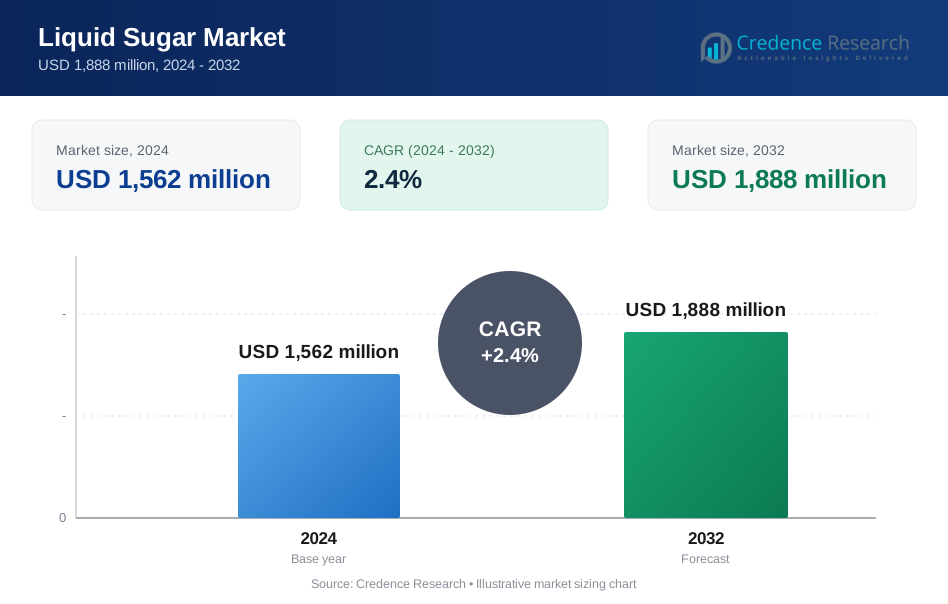
The Liquid sugar market is projected to grow from USD 1562 million in 2024 to an estimated USD 1888 million by 2032, with a compound annual growth rate (CAGR) of 2.4% from 2024 to 2032.
Several factors are propelling the expansion of the liquid sugar market. The beverage industry, encompassing carbonated drinks, energy beverages, and flavored waters, significantly contributes to this growth. Liquid sugar's superior solubility and consistency in flavor make it a preferred choice for manufacturers aiming to enhance product quality and streamline production processes. Consumer health trends also play a pivotal role. There's a notable shift towards organic and low-calorie liquid sugar variants, driven by rising health consciousness and demand for clean-label products. These variants cater to the increasing preference for natural ingredients and healthier alternatives in food and beverage formulations. Additionally, the pharmaceutical and personal care sectors are exploring new applications for liquid sugar. In pharmaceuticals, it serves as a sweetening agent in syrups and tonics, while in personal care, it is utilized for its humectant properties in skincare products.
The Asia Pacific region is poised to dominate the global liquid sugar market. Countries like India and China, with their expansive food and beverage industries and substantial sugarcane production, are central to this dominance. India's position as the world's second-largest sugarcane producer ensures a steady supply of raw materials, facilitating the growth of the liquid sugar market. In North America, the market is experiencing steady growth, particularly in the United States, where the demand for liquid sugar in bakery and confectionery products is on the rise. The region's focus on product innovation and clean-label trends further supports market expansion. Europe presents a diverse landscape, with varying demand across countries. While some nations exhibit a strong preference for liquid sugar in beverages and confectionery, others are witnessing a shift towards alternative sweeteners due to health concerns and regulatory measures aimed at reducing sugar consumption.
Market Insights:
- The liquid sugar market is expected to grow from USD 1,562 million in 2024 to USD 1,888 million by 2032, with a CAGR of 2.4%.
- The beverage industry is a key driver, with increasing demand for carbonated drinks, energy beverages, and flavored waters fueling the need for liquid sugar.
- Growing health consciousness among consumers is leading to a shift towards organic and low-calorie liquid sugar variants.
- Liquid sugar is expanding its use in the pharmaceutical industry, particularly in syrups and tonics to improve taste and shelf life.
- The personal care and cosmetics sectors are adopting liquid sugar for its humectant properties, aiding in moisture retention for skincare products.
- Volatility in sugar prices and supply chain disruptions pose challenges for manufacturers, affecting consistency and profitability.
- Stricter regulations on sugar consumption, including sugar taxes and labeling requirements, are pushing manufacturers to explore alternative sweeteners.
Market Drivers:
Rising Demand in the Beverage Industry
The beverage industry is a major driver of the liquid sugar market’s growth. Liquid sugar’s superior solubility and consistent sweetness make it the preferred choice for soft drink and energy beverage manufacturers. The increasing consumption of carbonated drinks, fruit juices, and energy drinks has boosted the demand for liquid sugar, as it enhances the overall taste and consumer experience. Manufacturers are increasingly adopting liquid sugar in formulations due to its ability to dissolve quickly, saving time and improving the efficiency of production processes. The demand for flavored and low-calorie drinks further fuels the adoption of liquid sugar, which is essential for achieving the desired taste profile in beverages.
- For example, Coca-Cola Indonesia established a joint venture with a local sugar refinery in 2020 to build a dedicated liquid sugar production facility, supplying five of its factories with over 60,000 tons per year per plant. This model is being considered for global rollout to streamline ingredient supply for beverage production.
Health Trends and Shift Towards Natural Ingredients
Health trends continue to shape the liquid sugar market, with growing consumer preference for natural and organic sweeteners. Health-conscious consumers are actively seeking products that are free from artificial additives and chemicals. Liquid sugar, particularly organic and low-calorie variants, caters to this demand by offering a more natural alternative to traditional sugar. This shift towards cleaner labels and healthier ingredients is driving the development and demand for liquid sugar in food and beverages. Companies are now focusing on producing liquid sugar derived from natural sources such as cane or beet, which align with consumer preferences for wholesome products.
Expanding Use in Pharmaceutical Applications
The pharmaceutical sector is witnessing an increasing adoption of liquid sugar due to its functional benefits. It is widely used in the formulation of syrups, tonics, and other liquid medications, where it serves as a sweetening agent. Liquid sugar helps mask the unpleasant taste of certain medications, improving the palatability of drugs. Its versatility extends beyond just sweetening; it also aids in preserving the shelf life of syrups and other liquid pharmaceutical products. As the demand for liquid-based medications rises, the need for liquid sugar in the pharmaceutical industry continues to grow, providing a substantial market opportunity.
- For example, invert sugar syrup is favored for its high viscosity and taste-masking properties, essential in pediatric and oral liquid medications.
Growth in the Personal Care and Cosmetics Industry
The personal care and cosmetics industry has also become a key driver for the liquid sugar market. Liquid sugar is utilized for its humectant properties, which help retain moisture in skincare products, creams, and lotions. As consumers demand products that offer both cosmetic benefits and enhanced skin hydration, liquid sugar has found its place in formulations aimed at moisturizing and improving skin elasticity. This expanding use of liquid sugar in cosmetics is contributing to the market's growth, as manufacturers look for ingredients that offer both functional and aesthetic benefits to consumers.
Market Trends:
Shift Towards Clean-Label Products
The clean-label trend continues to reshape the liquid sugar market as consumers increasingly demand transparency in ingredient sourcing and product formulation. Brands are under pressure to offer products that contain fewer artificial additives and preservatives. Liquid sugar meets this demand by offering a more straightforward, natural alternative to other sweeteners. It is gaining traction in the market due to its simple composition, which appeals to consumers looking for healthier and more transparent product options. As consumers become more knowledgeable about food ingredients, manufacturers are prioritizing the use of liquid sugar to align with clean-label trends and cater to evolving consumer preferences.
- For instance, according to Tate & Lyle’s official product documentation, their liquid sugar products are made from cane sugar, are Non-GMO Project Verified, and are formulated without artificial preservatives or additives. The company’s 2023 annual report highlights that clean-label solutions are a significant growth driver in North America, with demand for non-GMO and simple-ingredient sweeteners continuing to rise.
Adoption of Liquid Sugar in Low-Calorie and Sugar-Free Alternatives
The growing demand for low-calorie and sugar-free alternatives is fueling the adoption of liquid sugar in food and beverage products. Many consumers are seeking healthier options that allow them to enjoy the taste of sugar without the associated calorie intake. Liquid sugar, with its ease of use and ability to provide sweetness with fewer calories, is ideal for formulating reduced-calorie products. Manufacturers are incorporating it into beverages, snacks, and even confectionery items to cater to the expanding market for healthier, guilt-free alternatives. This trend aligns with the increasing consumer focus on weight management and health-conscious eating habits.
- For instance, Cargill launched EverSweet® + Monk Fruit, a zero-calorie liquid sweetener blend of stevia and monk fruit, designed as a direct replacement for traditional liquid sugar in beverages and snacks. According to Cargill, this blend delivers the same sweetness as sugar with zero calories per serving.
Increasing Use of Liquid Sugar in Plant-Based Products
The rise of plant-based diets is influencing the liquid sugar market, as it finds applications in plant-based and vegan food products. Liquid sugar is often used in plant-based beverages such as almond milk, oat milk, and soy milk, where it helps enhance flavor and sweetness. With plant-based food and beverages becoming more mainstream, there is an increasing demand for ingredients that support these formulations. Liquid sugar is a preferred ingredient due to its solubility and ability to blend seamlessly with plant-based ingredients, making it an attractive choice for manufacturers catering to the growing plant-based consumer base.
Technological Advancements in Liquid Sugar Production
Technological advancements in liquid sugar production are transforming the market by improving the efficiency and scalability of manufacturing processes. Innovations in production techniques have led to cost reductions, making liquid sugar more accessible to a wider range of industries. The development of more advanced filtration and refining processes has also improved the quality and consistency of liquid sugar, ensuring better performance in various applications. These advancements are driving the expansion of the liquid sugar market as companies look for cost-effective, high-quality ingredients that support large-scale production. With improved manufacturing processes, liquid sugar is becoming a more viable and attractive option for businesses across different sectors.
Market Challenges Analysis:
Price Volatility and Supply Chain Issues
One of the significant challenges facing the liquid sugar market is the volatility in sugar prices and supply chain disruptions. The cost of sugar can fluctuate significantly due to factors such as weather conditions, agricultural production yields, and global market dynamics. These fluctuations can impact the pricing of liquid sugar, making it difficult for manufacturers to maintain consistent profit margins. The unpredictable nature of sugar availability also creates challenges in sourcing raw materials for liquid sugar production. Supply chain disruptions, exacerbated by factors like geopolitical tensions or transportation delays, can further affect production schedules and increase operational costs for manufacturers, hindering market growth and stability.
Regulatory Pressures and Health Concerns
Another challenge the liquid sugar market faces is the increasing regulatory scrutiny surrounding sugar consumption. Governments around the world are implementing stricter regulations to limit sugar intake due to rising health concerns related to obesity, diabetes, and other metabolic diseases. These regulations include sugar taxes, labeling requirements, and limits on sugar content in food and beverages. Such measures are causing manufacturers to rethink their ingredient choices, pushing them toward alternative sweeteners that may be perceived as healthier or lower in calories. This trend could negatively impact the demand for liquid sugar, especially in regions where such policies are gaining traction. The shifting regulatory landscape presents a challenge for liquid sugar producers as they navigate changing industry standards and consumer preferences.
Market Opportunities:
Expansion in Emerging Markets
The liquid sugar market presents significant opportunities in emerging markets, where rapid urbanization and changing dietary habits are driving the demand for processed food and beverages. As disposable incomes rise and consumer preferences shift towards convenience, manufacturers in these regions are increasingly incorporating liquid sugar into a wide range of products. The growing popularity of packaged beverages, snacks, and ready-to-eat meals creates a steady demand for liquid sugar, as it offers superior solubility and consistency in formulations. Companies expanding into these regions can capitalize on the growing middle class and evolving consumer tastes to fuel market growth.
Growth of Health-Conscious Product Lines
Another opportunity for the liquid sugar market lies in the increasing demand for health-conscious products. Consumers are becoming more focused on maintaining a balanced diet, driving the rise of sugar-free, organic, and low-calorie products. Liquid sugar variants, particularly those derived from organic sources, cater to this trend, providing an alternative to traditional refined sugars. Manufacturers can leverage this demand for healthier products by incorporating liquid sugar in food and beverages that appeal to health-conscious consumers. As the trend toward natural ingredients and clean labels continues, liquid sugar is poised to play a key role in the development of innovative, health-oriented products.
Market Segmentation Analysis:
The liquid sugar market is segmented based on origin, source, grade, and application.
By origin, the market is divided into organic and conventional liquid sugar. Organic liquid sugar caters to the rising demand for clean-label and natural ingredients, while conventional liquid sugar remains popular due to its cost-effectiveness and broad availability.
By source, sugarcane and sugar beet are the primary raw materials used for liquid sugar production. Sugarcane is the dominant source, especially in regions like Asia-Pacific and Latin America, due to its widespread cultivation. Sugar beet, however, is more common in Europe and North America.
- For instance, Nordzuckerconfirms: “Our liquid sugar is produced from both beet and cane, depending on regional availability and customer requirements.
By grade into industrial, food, and pharmaceutical grades. Industrial-grade liquid sugar is mainly used in large-scale food and beverage manufacturing, while food-grade and pharmaceutical-grade variants are designed for more specific applications, offering higher purity and quality standards.
By application, liquid sugar plays a significant role in various sectors. It is widely used in beverages, including carbonated drinks, energy drinks, and juices. The bakery, confectionery, and processed food industries also rely heavily on liquid sugar for its solubility and consistency. It finds additional use in frozen desserts, dairy products, baby foods, pharmaceuticals, and personal care products, where it functions as both a sweetener and humectant. These diverse applications drive the steady growth of the liquid sugar market.
- For instance, Coca-Colaand PepsiCo both use liquid sugar as a primary sweetener in their carbonated and non-carbonated drinks.
Segmentation:
By Origin / Nature
- Organic Liquid Sugar
- Conventional Liquid Sugar
By Source
- Sugarcane
- Sugar Beet
By Grade
- Industrial Grade
- Food Grade
- Pharmaceutical Grade
By Application / End Use
- Beverages (carbonated drinks, energy drinks, juices)
- Bakery
- Confectionery
- Processed Food
- Frozen Desserts
- Dairy Products
- Baby Foods
- Pharmaceuticals
- Personal Care / Cosmetics
- Other Applications
By Region
- North America
- U.S.
- Canada
- Mexico
- Europe
- Germany
- France
- U.K.
- Italy
- Spain
- Rest of Europe
- Asia Pacific
- China
- Japan
- India
- South Korea
- South-east Asia
- Rest of Asia Pacific
- Latin America
- Brazil
- Argentina
- Rest of Latin America
- Middle East & Africa
- GCC Countries
- South Africa
- Rest of the Middle East and Africa
Regional Analysis:
North America: Market Leadership
North America holds the largest share of the liquid sugar market, accounting for over 35% of the global market. The region's strong demand for liquid sugar can be attributed to the booming beverage industry, particularly in the United States, where soft drinks, energy beverages, and flavored waters are immensely popular. Liquid sugar’s ability to dissolve quickly and maintain consistency in taste is driving its adoption across various segments. The growing trend towards healthier, low-calorie, and organic beverages further contributes to its demand. Furthermore, North America's well-established supply chain infrastructure and the presence of major liquid sugar manufacturers enhance the market's growth prospects in this region. The increasing focus on clean-label products and natural sweeteners also positions liquid sugar as a key ingredient in the formulation of beverages and other food products.
Asia Pacific: Rapid Growth and Emerging Opportunities
The Asia Pacific region is expected to experience the highest growth in the liquid sugar market, with a projected CAGR of 7.4%. This region, which holds around 30% of the global market share, is driven by the expanding food and beverage sector in countries like China and India. As consumer spending rises and lifestyles become more urbanized, demand for processed and ready-to-eat products continues to grow, increasing the need for ingredients like liquid sugar. The region’s thriving soft drink market, coupled with a growing inclination towards health-conscious food products, is creating substantial opportunities for liquid sugar manufacturers. The shift towards natural, organic alternatives in emerging economies is also fueling market expansion. Companies focusing on innovation and product differentiation are expected to benefit from the growing consumer base in this region.
Europe: Steady Demand with Regulatory Challenges
Europe accounts for approximately 25% of the liquid sugar market share, with steady demand coming from the food and beverage industry. The region’s market growth is driven by the ongoing demand for liquid sugar in confectionery, baked goods, and soft drinks. However, regulatory challenges related to sugar consumption, such as sugar taxes and stricter labeling laws, are placing pressure on the market. Despite these hurdles, liquid sugar remains a preferred choice for many manufacturers due to its efficiency in production processes. The trend toward organic and low-sugar products is gaining traction, which further supports the demand for liquid sugar variants. European consumers' increasing awareness of health and sustainability also pushes companies to offer cleaner, more natural sweetening solutions, providing continued growth potential for the liquid sugar market in this region.
Key Player Analysis:
- Tate & Lyle PLC
- Cargill Incorporated
- Archer Daniels Midland Company (ADM)
- Nordzucker AG
- Südzucker AG
- Sugar Australia Company Ltd
- Zukán S.L.U.
- The Boettger Group (Boettger Gruppe)
- Galam Group
- Toyo Sugar Refining Co., Ltd.
- Sucroliq S.A.P.I DE C.V.
- Banah
- Raizen SA
- Wilmar International
- Imperial Sugar Company
Competitive Analysis:
The liquid sugar market is highly competitive, with several global and regional players striving to secure their positions. Leading companies like Cargill, Inc., Tate & Lyle, and Südzucker AG dominate the market due to their strong distribution networks, diverse product offerings, and established customer relationships. These companies leverage their extensive experience in the food and beverage sector to provide tailored liquid sugar solutions, catering to the growing demand for organic and clean-label products. Smaller regional players also contribute to the competition, focusing on cost-efficiency and local preferences. Innovation plays a crucial role in maintaining competitiveness, with companies investing in new product development and improved manufacturing processes. The demand for low-calorie and organic liquid sugar variants is shaping the competitive landscape, with major players adapting to health trends and sustainability goals. This dynamic environment forces companies to continuously innovate and align with evolving consumer preferences to remain competitive.
Recent Developments:
- In February 2024, Südzucker launched its CO₂-reduced beet sugar, aiming to contribute to a healthy, sustainable, and enjoyable future.This initiative reflects the company's commitment to sustainability and reducing the environmental impact of its products.
- In July 2023, Tate & Lyle launched TASTEVA® SOL, a highly soluble stevia sweetener, to address solubility challenges in beverage concentrates, dairy fruit preparations, and sweet syrups at high sugar replacement levels.This innovation provides over 200 times the solubility of Reb M and D products on the market, meeting the growing consumer demand for reduced sugar foods and beverages without sacrificing taste.
Market Concentration & Characteristics:
The liquid sugar market exhibits moderate concentration, with a few dominant global players such as Cargill, Inc., Tate & Lyle, and Südzucker AG controlling a significant share of the market. These companies maintain strong market positions through extensive distribution networks, advanced production processes, and established relationships with key players in the food and beverage, pharmaceutical, and personal care industries. Smaller regional players also contribute to the market by offering cost-effective solutions and catering to local demand. The market is characterized by a high level of competition, with companies focusing on innovation, product differentiation, and the growing demand for natural and organic sweeteners. Sustainability and clean-label trends are becoming increasingly important, with leading players adapting to consumer preferences for healthier, more transparent ingredients. The market dynamics suggest a balanced mix of large multinationals and regional manufacturers competing for market share.
Report Coverage:
The research report offers an in-depth analysis based on origin, source, grade, and application. It details leading market players, providing an overview of their business, product offerings, investments, revenue streams, and key applications. Additionally, the report includes insights into the competitive environment, SWOT analysis, current market trends, as well as the primary drivers and constraints. Furthermore, it discusses various factors that have driven market expansion in recent years. The report also explores market dynamics, regulatory scenarios, and technological advancements that are shaping the industry. It assesses the impact of external factors and global economic changes on market growth. Lastly, it provides strategic recommendations for new entrants and established companies to navigate the complexities of the market.
Future Outlook:
- The liquid sugar market will continue to benefit from the growing demand for processed food and beverages in emerging economies.
- Health-conscious consumer trends will drive the demand for organic and low-calorie liquid sugar variants.
- Increasing urbanization and rising disposable incomes will propel market growth in Asia Pacific.
- Regulatory pressures on sugar content will push manufacturers to develop cleaner, healthier alternatives.
- Technological advancements in liquid sugar production will improve efficiency and cost-effectiveness.
- The demand for clean-label products will lead to a rise in liquid sugar usage across multiple industries.
- The beverage sector will remain the largest application area, particularly in soft drinks and energy beverages.
- Liquid sugar’s role in the pharmaceutical industry will expand, particularly for use in syrups and tonics.
- Sustainability will become a key focus, with companies exploring eco-friendly production methods.
- Strategic partnerships and mergers will drive consolidation and innovation within the liquid sugar market.
Request a Free Sample
Fill in your details and we'll send you a free sample report.
- Sample data tables & charts
- Research methodology
Market Dynamics
Expansion of the Beverage Industry
The beverage sector, especially carbonated drinks, energy beverages, and flavored waters, is a major consumer of liquid sugar due to its superior solubility and consistent sweetness, driving increased adoption among manufacturers seeking to enhance product quality and streamline production.
Health and Clean-Label Trends
Rising consumer health consciousness is fueling demand for organic and low-calorie liquid sugar variants, as well as clean-label products free from artificial additives, prompting manufacturers to innovate and expand their product portfolios.
Growth in Pharmaceutical and Personal Care Applications
Liquid sugar is increasingly used in pharmaceuticals as a sweetening and taste-masking agent in syrups and tonics, and in personal care for its humectant properties, broadening its application base and supporting market growth.
Technological Advancements in Production
Innovations in liquid sugar manufacturing, such as improved filtration and refining processes, are enhancing product quality, reducing costs, and enabling large-scale production, making liquid sugar more accessible to diverse industries.
Emerging Market Expansion
Rapid urbanization and rising disposable incomes in emerging markets, particularly in Asia Pacific, are increasing demand for processed foods and beverages, creating new opportunities for liquid sugar manufacturers.
Need a Custom Version of This Report?
Tailor the scope, geography, or segments to your exact requirements.
- Custom geography or segment scope
- Direct access to our analyst team
Frequently Asked Questions
What is the current size of the Liquid sugar market?
What factors are driving the growth of the Liquid sugar market?
What are some challenges faced by the Liquid sugar market?
Who are the major players in the Liquid sugar market?
Table of Content
Chapter 1 Market Segmentation
- 1.1 Segmentation Framework
- 1.1.1 Product and Service Classification
- 1.1.2 Application and End-Use Classification
- 1.1.3 Technology and Solution Classification
- 1.1.4 Customer and Distribution Channel Classification
- 1.1.5 Geographic Segmentation
- 1.1.6 Market Segment Definitions and Boundaries
- 1.2 By Grade
- 1.2.1 Industrial Grade
- 1.2.2 Food Grade
- 1.2.3 Pharmaceutical Grade
- 1.3 By Origin
- 1.3.1 Organic Liquid Sugar
- 1.3.2 Conventional Liquid Sugar
- 1.4 By Source
- 1.4.1 Sugarcane
- 1.4.2 Sugar Beet
- 1.5 By Application
- 1.5.1 Beverages
- 1.5.2 Bakery
- 1.5.3 Confectionery
- 1.5.4 Processed Food
- 1.5.5 Pharmaceuticals
- 1.5.6 Personal Care / Cosmetics
Chapter 2 Introduction
- 2.1 Report Objectives and Scope
- 2.2 Product Definition and Industry Terminology
- 2.3 Market Inclusions and Exclusions
- 2.4 Research Process
- 2.4.1 Primary Research and Expert Interviews
- 2.4.2 Secondary Research and Source Review
- 2.4.3 Top-Down and Bottom-Up Estimation
- 2.4.4 Data Triangulation and Verification
- 2.5 Market Size Measurement Basis
- 2.5.1 2024: USD 1,562 million → 2032: USD 1,888 million
- 2.6 Historical and Forecast Reference Periods
- 2.6.1 Base Year: 2024
- 2.6.2 Forecast Period: 2024-2032
- 2.7 Research Assumptions and Limitations
Chapter 3 Executive Summary
- 3.1 Market Snapshot and Key Findings
- 3.2 Base-Year Market Size, 2024
- 3.3 Forecast Market Size, 2032
- 3.4 Revenue and Volume Growth Outlook
- 3.5 Key Demand and Supply Indicators
- 3.6 Leading Market Segments
- 3.7 Fastest-Growing Market Opportunities
- 3.8 Regional Performance Highlights
- 3.9 Technology and Industry Transformation
- 3.10 Competitive Landscape Summary
- 3.11 Analyst View and Strategic Implications
Chapter 4 Global Liquid Sugar Market Trends and Developments
- 4.1 Historical Industry Development
- 4.2 Recent Market Trends and Developments
- 4.3 Demand and Customer Behavior Trends
- 4.4 Technology and Product Innovation
- 4.5 Artificial Intelligence, Automation and Digitalization
- 4.6 Local Manufacturing and Supply Chain Realignment
- 4.7 Industry Partnerships, Mergers and Acquisitions
- 4.8 Sustainability and Circular Economy Developments
- 4.9 Government and Private Sector Investment Trends
- 4.10 Emerging Business Models and Commercialization
- 4.11 Industry Developments and Announcements
Chapter 5 Global Liquid Sugar Market Production, Supply and Demand Analysis
- 5.1 Demand Trend and Consumption Analysis
- 5.2 Demand Forecast, 2024-2032
- 5.3 Production and Output Trend
- 5.4 Production and Output Forecast, 2024-2032
- 5.5 Installed Capacity and Capacity Utilization
- 5.6 Company-Wise Production Plants and Statistics
- 5.6.1 Installed Production Capacity
- 5.6.2 Actual Production
- 5.6.3 Planned Capacity and Expansion Targets
- 5.7 Supply Chain Structure and Procurement Trends
- 5.8 Supply-Demand Gap and Bottlenecks
- 5.9 Import Dependence and Sourcing Structure
- 5.10 Contract Manufacturing and Outsourcing
- 5.11 Regional Supply and Demand Concentration
Chapter 6 Global Liquid Sugar Market Pricing Analysis
- 6.1 Pricing Structure and Measurement
- 6.2 Historical Pricing Trends
- 6.3 Pricing Outlook, 2024-2032
- 6.4 Average Selling Price and Unit Economics
- 6.5 Pricing by Product and Market Segment
- 6.6 Geographic Pricing Differences
- 6.7 Key Input, Energy, Labor and Logistics Costs
- 6.8 Contract Pricing and Purchasing Models
- 6.9 Pricing Sensitivity and Competitive Positioning
- 6.10 Price, Margin and Profitability Implications
Chapter 7 Global Liquid Sugar Market Dynamics
- 7.1 Market Growth Drivers
- 7.1.1 Demand-Side Drivers
- 7.1.2 Technology and Innovation Drivers
- 7.1.3 Infrastructure and Investment Drivers
- 7.1.4 Regulatory and Policy Drivers
- 7.2 Market Restraints
- 7.2.1 Cost and Affordability Constraints
- 7.2.2 Technology and Adoption Barriers
- 7.2.3 Supply Chain and Operational Constraints
- 7.3 Market Challenges
- 7.3.1 Competitive Pressure and Margin Erosion
- 7.3.2 Skills, Infrastructure and Implementation Gaps
- 7.4 Emerging Market Opportunities
- 7.5 Market Dynamics Impact and Time-Horizon Assessment
Chapter 8 Global Liquid Sugar Value Chain Analysis
- 8.1 Industry Value Chain Overview
- 8.2 Upstream Suppliers and Critical Inputs
- 8.3 Technology and Component Providers
- 8.4 Manufacturing or Service Delivery
- 8.5 Distribution, Channel Partners and Integrators
- 8.6 Downstream Applications and End Users
- 8.7 Value Addition and Profit Pools
- 8.8 Vertical Integration and Outsourcing
- 8.9 Supplier Concentration and Risk
- 8.10 Supply Chain Localization and Resilience
Chapter 9 Global Liquid Sugar Market Regulations and Policies
- 9.1 Relevant Laws, Standards and Compliance Frameworks
- 9.2 Product, Service, Safety and Quality Requirements
- 9.3 Government Policies, Incentives and Subsidies
- 9.4 Imports, Exports and Trade Barriers
- 9.5 Public Procurement and Local Content Requirements
- 9.6 Environmental and Sustainability Compliance
- 9.7 Upcoming Policy Changes and Market Implications
Chapter 10 Global Liquid Sugar Market Hotspots and Opportunities
- 10.1 Market Opportunity Mapping and Growth Hotspots
- 10.2 High-Growth Applications and Customer Groups
- 10.3 Underserved Markets and White-Space Opportunities
- 10.4 Emerging Technology and Product Opportunities
- 10.5 New Capacity and Investment Hotspots
- 10.6 Market Entry and Expansion Opportunities
- 10.7 Distribution and Partnership Opportunities
- 10.8 Near-Term and Long-Term Commercial Potential
- 10.9 Opportunity Attractiveness and Execution Risks
Chapter 11 Global Liquid Sugar Market Outlook, 2024-2032
- 11.1 Market Size and Analysis
- 11.1.1 Revenue (Market Measurement: 2024: USD 1,562 million → 2032: USD 1,888 million)
- 11.1.2 Market Volume and Quantity Sold
- 11.1.3 Historical Market Size
- 11.1.4 Base-Year Market Size, 2024
- 11.2 Market Forecast, 2024-2032
- 11.2.1 Revenue Forecast to 2032
- 11.2.2 Volume Forecast to 2032
- 11.2.3 CAGR and Year-on-Year Growth
- 11.2.4 Incremental Revenue Opportunity
- 11.3 Forecast Assumptions and Scenario Analysis
- 11.3.1 Base-Case Forecast
- 11.3.2 Optimistic and Conservative Scenarios
- 11.3.3 Technology, Pricing and Policy Sensitivities
- 11.4 Market Attractiveness and Growth Outlook
Chapter 12 Global Liquid Sugar Market Segmentation and Outlook
- 12.1 Segmentation Summary and Market Shares, 2024
- 12.2 Largest and Fastest-Growing Segments
- 12.3 By Grade - Market Size and Forecast, 2024-2032
- 12.3.1 Segment Definition and Scope
- 12.3.2 Historical Market Size
- 12.3.3 Revenue Forecast, 2024-2032
- 12.3.4 Volume Forecast, 2024-2032
- 12.3.5 Base-Year Market Share, 2024
- 12.3.6 Segment CAGR and Growth Drivers
- 12.3.7 Subsegment Market Size and Forecast
- 12.3.7.1 Industrial Grade
- 12.3.7.2 Food Grade
- 12.3.7.3 Pharmaceutical Grade
- 12.3.8 Subsegment Pricing and Adoption Trends
- 12.3.9 Leading Suppliers and Competition
- 12.3.10 Regional Demand and Opportunities
- 12.4 By Origin - Market Size and Forecast, 2024-2032
- 12.4.1 Segment Definition and Scope
- 12.4.2 Historical Market Size
- 12.4.3 Revenue Forecast, 2024-2032
- 12.4.4 Volume Forecast, 2024-2032
- 12.4.5 Base-Year Market Share, 2024
- 12.4.6 Segment CAGR and Growth Drivers
- 12.4.7 Subsegment Market Size and Forecast
- 12.4.7.1 Organic Liquid Sugar
- 12.4.7.2 Conventional Liquid Sugar
- 12.4.8 Subsegment Pricing and Adoption Trends
- 12.4.9 Leading Suppliers and Competition
- 12.4.10 Regional Demand and Opportunities
- 12.5 By Source - Market Size and Forecast, 2024-2032
- 12.5.1 Segment Definition and Scope
- 12.5.2 Historical Market Size
- 12.5.3 Revenue Forecast, 2024-2032
- 12.5.4 Volume Forecast, 2024-2032
- 12.5.5 Base-Year Market Share, 2024
- 12.5.6 Segment CAGR and Growth Drivers
- 12.5.7 Subsegment Market Size and Forecast
- 12.5.7.1 Sugarcane
- 12.5.7.2 Sugar Beet
- 12.5.8 Subsegment Pricing and Adoption Trends
- 12.5.9 Leading Suppliers and Competition
- 12.5.10 Regional Demand and Opportunities
- 12.6 By Application - Market Size and Forecast, 2024-2032
- 12.6.1 Segment Definition and Scope
- 12.6.2 Historical Market Size
- 12.6.3 Revenue Forecast, 2024-2032
- 12.6.4 Volume Forecast, 2024-2032
- 12.6.5 Base-Year Market Share, 2024
- 12.6.6 Segment CAGR and Growth Drivers
- 12.6.7 Subsegment Market Size and Forecast
- 12.6.7.1 Beverages
- 12.6.7.2 Bakery
- 12.6.7.3 Confectionery
- 12.6.7.4 Processed Food
- 12.6.7.5 Pharmaceuticals
- 12.6.7.6 Personal Care / Cosmetics
- 12.6.8 Subsegment Pricing and Adoption Trends
- 12.6.9 Leading Suppliers and Competition
- 12.6.10 Regional Demand and Opportunities
- 12.7 Segment Growth Comparison
- 12.8 Segment Attractiveness and Priority Matrix
Chapter 13 Global Liquid Sugar End-Use and Application Market Outlook
- 13.1 End-Use Industry and Customer Demand Structure
- 13.2 Leading Applications and Customer Groups
- 13.3 End-Use Market Size, Share and Forecast
- 13.4 Major End-Use Industry Deep Dives
- 13.4.1 Customer Requirements and Use Cases
- 13.4.2 Demand and Replacement Cycles
- 13.4.3 Technical and Regulatory Considerations
- 13.4.4 Purchasing and Procurement Models
- 13.4.5 Leading Vendors and Distribution Channels
- 13.4.6 Forecast and Commercial Opportunities
- 13.5 Emerging Applications and Cross-Segment Demand
- 13.6 End-Use Industry Investment Priorities
Chapter 14 Global Liquid Sugar Geographic Market Outlook, 2024-2032
- 14.1 Regional Market Size and Share, 2024
- 14.2 Regional Market Forecast, 2024-2032
- 14.3 Regional Pricing, Production and Demand Differences
- 14.4 North America
- 14.4.1 United States
- 14.4.2 Canada
- 14.4.3 Mexico
- 14.5 Europe
- 14.5.1 Germany
- 14.5.2 France
- 14.5.3 Italy
- 14.5.4 United Kingdom
- 14.5.5 Spain
- 14.5.6 Poland
- 14.5.7 Russia
- 14.5.8 Netherlands
- 14.5.9 Belgium
- 14.5.10 Sweden
- 14.5.11 Denmark
- 14.5.12 Norway
- 14.5.13 Rest of Europe
- 14.6 Asia Pacific
- 14.6.1 China
- 14.6.2 India
- 14.6.3 Japan
- 14.6.4 South Korea
- 14.6.5 Thailand
- 14.6.6 Indonesia
- 14.6.7 Vietnam
- 14.6.8 Malaysia
- 14.6.9 Australia
- 14.6.10 Rest of Asia Pacific
- 14.7 Latin America
- 14.7.1 Brazil
- 14.7.2 Argentina
- 14.7.3 Colombia
- 14.7.4 Chile
- 14.7.5 Rest of Latin America
- 14.8 Middle East
- 14.8.1 Saudi Arabia
- 14.8.2 United Arab Emirates
- 14.8.3 Turkey
- 14.8.4 Israel
- 14.8.5 Iran
- 14.8.6 Rest of the Middle East
- 14.9 Africa
- 14.9.1 South Africa
- 14.9.2 Egypt
- 14.9.3 Nigeria
- 14.9.4 Morocco
- 14.9.5 Rest of Africa
- 14.10 Regional Investment, Policy and Supply Chain Differences
- 14.11 Regional Competitive Landscape
- 14.12 Geographic Growth Hotspots
Chapter 15 Global Liquid Sugar Technology, Innovation and Sustainability Outlook
- 15.1 Technology Landscape and Maturity
- 15.2 Product, Process and Service Innovation
- 15.3 AI, Automation and Digital Tools in the Industry
- 15.4 Technology Adoption and Performance Benchmarking
- 15.5 Innovation Pipeline and R&D Investment
- 15.6 Patent and Intellectual Property Trends
- 15.7 Energy Efficiency and Resource Management
- 15.8 Sustainability, Recycling and Circularity
- 15.9 Technology Roadmap, 2024-2032
- 15.10 Risks of Obsolescence and Technology Substitution
Chapter 16 Global Liquid Sugar Market Key Strategic Imperatives
- 16.1 Growth and Market Entry Priorities
- 16.2 High-Return Products and Segments
- 16.3 Pricing, Profitability and Cost Optimization
- 16.4 Technology Investment and Product Differentiation
- 16.5 Supply Chain Localization and Resilience
- 16.6 Distribution and Customer Acquisition
- 16.7 Partnership, Acquisition and Capacity Strategy
- 16.8 Regional Expansion Priorities
- 16.9 Short-, Medium- and Long-Term Actions
Chapter 17 Competition Outlook
- 17.1 Industry Competition Characteristics
- 17.2 Market Structure and Concentration
- 17.3 Market Share and Competitive Positioning, 2024
- 17.4 Company-Wise Revenue and Product Benchmarking
- 17.5 Production and Service Capacity Benchmarking
- 17.6 Technology, Pricing and Differentiation
- 17.7 Regional Footprint and Distribution Strength
- 17.8 Mergers, Acquisitions and Strategic Alliances
- 17.9 New Entrants and Competitive Threats
- 17.10 Porter's Five Forces and Industry Attractiveness
- 17.11 Competitive Outlook, 2024-2032
Chapter 18 Company Profiles
- 18.1 Company Coverage and Selection Criteria
- 18.2 Tate & Lyle PLC
- 18.2.1 Business Description
- 18.2.2 Company Ownership and Geographic Presence
- 18.2.3 Product and Service Portfolio
- 18.2.4 Manufacturing and Operating Footprint
- 18.2.5 Production Capacity and Expansion Plans
- 18.2.6 Financial Performance and Investment
- 18.2.7 Market Share and Competitive Position
- 18.2.8 Technology and Innovation Capabilities
- 18.2.9 Strategic Alliances or Partnerships
- 18.2.10 Recent Developments
- 18.2.11 Growth Strategy and Outlook
- 18.3 Cargill Incorporated
- 18.4 Archer Daniels Midland Company (ADM)
- 18.5 Nordzucker AG
- 18.6 Südzucker AG
- 18.7 Sugar Australia Company Ltd
- 18.8 Zukán S.L.U.
- 18.9 The Boettger Group
- 18.10 Galam Group
- 18.11 Wilmar International
- 18.12 Other Relevant Market Participants
Note: Every listed company is profiled on the structure shown under the first company. The company list is preliminary and may change based on research findings, market developments, data availability and client requirements.
Chapter 19 Disclaimer
- 19.1 Research and Forecast Disclaimer
- 19.2 Data Source and Estimation Limitations
Note: The depth of individual sections depends on data availability for this market. Volume, capacity, trade and other unit-based metrics are included where applicable.