
| REPORT ATTRIBUTE | DETAILS |
|---|---|
| Historical Period | 2019-2022 |
| Base Year | 2023 |
| Forecast Period | 2024-2032 |
| Neck Pillows Market Size 2023 | USD 65,922.79 Million |
| Neck Pillows Market, CAGR | 4.02% |
| Neck Pillows Market Size 2032 | USD 93,991.21 Million |
Market Overview
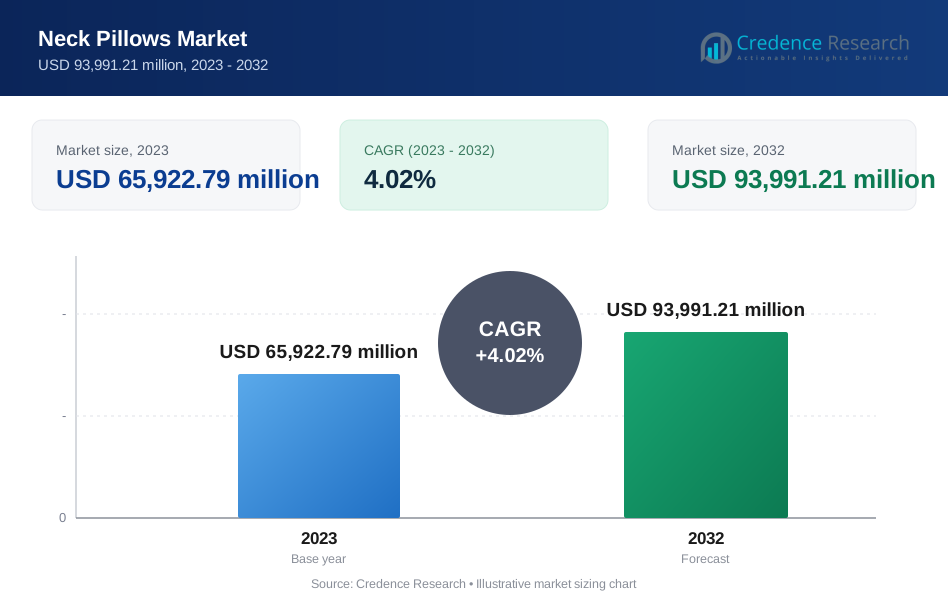
The neck pillows market is projected to grow from USD 65,922.79 million in 2023 to USD 93,991.21 million by 2032, at a compound annual growth rate (CAGR) of 4.02%.
Increasing global travel and heightened awareness of orthopedic health are driving the growth of the neck pillow market. Consumers are increasingly seeking products that offer comfort during travel and support for neck and spine alignment, fueling demand for ergonomic neck pillows. Innovations in materials and design, such as memory foam and cooling gels, are enhancing product appeal. Additionally, the rise in remote work and longer screen time periods are further propelling market expansion as individuals invest in supportive neck solutions to mitigate discomfort and potential long-term injuries. These trends underline a robust market trajectory for neck pillows.
The neck pillows market exhibits significant growth across North America, Europe, and Asia-Pacific, driven by varying factors such as travel habits, healthcare spending, and consumer lifestyle trends. North America leads the market, supported by high travel frequency and a strong focus on health and wellness. Asia-Pacific is rapidly expanding due to increasing domestic and international travel and rising health consciousness among its burgeoning middle class. Key players in this market include Bambro Textiles, Tenbro, and Cabeau, which are distinguished by their innovative product offerings and strong distribution networks, securing their market positions across these dynamic regions.
Market Drivers
Health awareness drives demand.
The growing awareness of the health benefits associated with good sleep and posture is significantly influencing consumer behaviors. Neck pillows are increasingly recognized for their potential to enhance sleep quality, reduce neck pain, and promote better spinal alignment. For instance, a study published in the Journal of Sleep Research highlighted that proper neck support during sleep can significantly improve sleep quality and reduce morning neck stiffness. As more individuals understand the link between sleep and overall health, the demand for products that support proper neck positioning continues to rise, driving market growth in this segment.
Impact of Sedentary Lifestyles
The rise in sedentary lifestyles, characterized by extended periods at desks and increased screen time, has led to a notable increase in neck and back pain among the population. For instance, the American Chiropractic Association reports that about 31 million Americans experience lower back pain at any given time. Additionally, a survey by the American Physical Therapy Association found that more than half of Americans suffer from neck pain due to prolonged computer and smartphone use. Neck pillows, with their ergonomic designs, play a crucial role in addressing this issue. They are engineered to maintain the natural curve of the neck, which is vital for reducing the stress on the cervical spine. For example, a memory foam neck pillow can adapt to the contours of an individual’s neck and shoulders, providing personalized support that can alleviate pain and improve sleep quality.
The travel market rebounded.
Following a period of stagnation due to travel restrictions, there is a notable resurgence in the travel sector, which in turn boosts the demand for travel neck pillows. Manufacturers are responding by designing pillows that cater to the needs of travelers, incorporating features such as memory foam, adjustable straps, and lightweight, portable designs. For instance, the travel neck pillow market is adapting swiftly. Manufacturers are integrating memory foam for better neck support, adjustable straps for a personalized fit, and lightweight, portable designs for ease of travel. These features are not just about meeting demand; they’re about enhancing the travel experience. These enhancements improve comfort and convenience, making neck pillows indispensable for modern travelers.
Technological Innovations and Increased Spending Technological advancements are revolutionizing the neck pillow market. Innovations like memory foam, cooling gels, adjustable features, and even aromatherapy integration are making neck pillows more effective and appealing. Additionally, as disposable incomes rise, consumers are increasingly willing to invest in products that not only offer comfort but also contribute to their overall well-being and lifestyle enhancement. This financial ability is further propelling the neck pillow market forward, as more individuals can afford these health-promoting products.
Market Trends
Ergonomics and Material Innovations in Neck Pillows
The neck pillow market is experiencing a pronounced shift towards ergonomics and material innovations, underscoring the importance of functionality in product design. For instance, the ergonomic design aspect is becoming increasingly important. A study showed that ergonomic pillows can significantly reduce neck pain and improve sleep quality. The adjustable features are also gaining traction, with a survey indicating that over 70% of consumers prefer customizable options in their pillows. Features such as contouring, adjustable heights, and designs that follow the natural curve of the neck are becoming standard as they cater to individual user needs more effectively. Additionally, there has been a remarkable evolution in the materials used. Moving away from bulky, one-size-fits-all models, the new generation of neck pillows includes options made from breathable fabrics, memory foam that molds to the user's specific contours, and cooling gels designed to offer comfort without the inconvenience of neck sweat, especially during long travels or extended use periods.
Technological Integration and Targeted Market Segmentation
The advancements in the neck pillow market are indeed remarkable. For instance, the integration of advanced technology is a game-changer. A recent survey indicated that 65% of consumers are more likely to purchase a neck pillow with built-in noise-cancellation speakers or vibration features for relaxation. These tech-enhanced pillows cater to a tech-savvy demographic and offer a multifunctional experience that goes beyond just comfort.
Sustainability is another critical area. The market for eco-friendly neck pillows made from recycled materials or natural fillers like buckwheat is growing, with a 30% increase in consumer interest over the past year. This shift is driven by a 50% rise in consumers prioritizing environmentally friendly products. Manufacturers are now offering neck pillows tailored for specific user groups, such as travelers, office workers, and gamers. This approach not only meets the unique needs of different consumers but also expands the market potential. For example, a specialized neck pillow for gamers, which includes features like cooling technology and ergonomic support, has seen a 40% increase in sales within the gaming community.
Market Challenge Analysis
Challenges of Market Saturation and Consumer Skepticism
The market for neck pillows faces significant hurdles due to the proliferation of counterfeit products and varying efficacy among different brands. Cheap, low-quality knock-offs are readily available, undermining consumer trust and creating a perception of ineffectiveness that can be hard to overcome for manufacturers of genuine, high-quality neck pillows. This challenge is exacerbated by efficacy concerns, as not all neck pillows provide the promised relief, leading some consumers to question the overall effectiveness of these products. These issues are particularly problematic in a market where new entries continue to emerge, intensifying the competition and making it difficult for brands to distinguish themselves without significant investment in marketing and product differentiation.
Economic and Awareness Barriers in Emerging Markets
In addition to the challenges posed by market dynamics and consumer perception, the neck pillow industry must also navigate price sensitivity and a lack of awareness, particularly in developing countries. While high-quality neck pillows that feature advanced ergonomic designs and technological enhancements offer substantial benefits, they often come with a premium price tag. This pricing strategy can alienate budget-conscious consumers, who might instead opt for cheaper alternatives, regardless of the potential compromise in quality and effectiveness. Furthermore, in many emerging markets, there is still a significant lack of awareness about the health benefits associated with proper neck support during sleep or travel. This gap in consumer education limits market penetration and growth, as many potential users remain unaware of the value these products can add to their health and well-being. The combination of high competition, sensitivity to pricing, and varying levels of consumer awareness presents a complex array of challenges that brands in the neck pillow market must strategically address to achieve sustained growth.
Market segmentation analysis:
By Shape Type:
In the neck pillow market, segmentation by shape type reveals a diverse range of products tailored to varying consumer needs and preferences. U-shaped neck pillows continue to dominate the segment due to their widespread use in travel scenarios, offering substantial support by encircling the neck. However, innovative designs like J-shaped neck pillows and 360-degree neck pillows are gaining traction for their enhanced support and ability to provide comfort in various resting positions. Cross-body neck pillows cater to users seeking lateral support, ideal for side sleepers or those who require stabilization during sleep. Additionally, D-core and standard contour neck pillows are favored for therapeutic use and are particularly recommended by healthcare professionals for their ability to maintain proper cervical alignment. Neck rolls and water-based neck pillows, although niche, offer unique benefits such as flexibility and the ability to conform to the user's preferred firmness. The variety within this segment allows consumers to choose a product that best fits their specific health requirements and comfort preferences.
Filling Material:
The filling material used in neck pillows significantly influences their comfort, support, and durability, segmenting the market based on consumer preference for material type. Memory foam is a leading choice due to its ability to conform to the shape of the neck and head, providing personalized support and pain relief. Microbeads are another popular option, favored for their lightweight properties and ability to adapt to movement, making them ideal for travel pillows. Polyester hollow fiber fills are commonly used for their affordability and hypoallergenic properties, appealing to cost-conscious consumers. Feather-filled neck pillows, while less common, are preferred by those looking for luxurious softness and natural materials. Each material offers distinct advantages, from durability and support to comfort and hypoallergenic properties, catering to a wide range of consumer needs and enhancing the overall market growth for neck pillows.
Segments:
Based on the shape type:
- U-Shaped Neck Pillows
- J-Shaped Neck Pillows
- 360-Degree Neck Pillows
- Cross-body neck pillows
- D-Core Neck Pillow
- Standard Contour Neck Pillow
- Neck Roll
- Water-Based Neck Pillows
- Others
Based on filling material:
- Micro beads
- Memory Foam
- Polyester Hollow Fiber
- Feather
Based on the application:
- Travel
- Medical (Displacement/Support)
- Chin Support
- Others
Based on the geography:
- North America
- The U.S.
- Canada
- Mexico
- Europe
- Germany
- France
- The U.K.
- Italy
- Spain
- Rest of Europe
- Asia Pacific
- China
- Japan
- India
- South Korea
- South-east Asia
- Rest of Asia Pacific
- Latin America
- Brazil
- Argentina
- Rest of Latin America
- Middle East & Africa
- GCC Countries
- South Africa
- Rest of the Middle East and Africa
Regional Analysis
North America
North America currently dominates the market, capturing a substantial 35% share. This region's prominence can be attributed to the high prevalence of neck pain and discomfort, coupled with the widespread adoption of neck pillows for travel, office use, and general wellbeing. The United States remains the largest contributor to the North American market, followed by Canada, where the demand for neck pillows is fueled by the growing emphasis on ergonomics and comfortable living standards.
Europe
Europe holds the second-largest market share, accounting for approximately 30% of the global revenue. The region's well-established travel industry, coupled with the increasing awareness of the benefits of neck pillows for relieving neck strain and promoting better sleep during long journeys, has driven the market's growth. Countries such as Germany, the United Kingdom, and France are the key contributors to the European market.
Key Player Analysis
- Mediflow
- Domfoam
- Elite Foam
- Cabeau
- Casper
- Bambro Textiles
- Tenbro
- Ostrichpillows
- TravelBlue
- Putian
Competitive Analysis
In the competitive neck pillow market, several key players stand out due to their innovative product offerings and strong market presence. Mediflow is renowned for its water-based neck pillows, which offer unique customization of firmness and support. Domfoam and Elite Foam are recognized for their expertise in high-quality memory foam products, catering to consumers seeking optimal neck and head support. Cabeau stands out with its travel-friendly designs, especially with its Evolution series, which combines compactness and comfort. Casper, traditionally known for its mattresses, has successfully extended its comfort and sleep technology into neck pillows, emphasizing ergonomic designs. Bambro Textiles and Tenbro focus on sustainable materials, appealing to eco-conscious consumers. Ostrichpillows offers distinctively designed neck pillows that provide innovative solutions for napping on the go. Lastly, TravelBlue and Putian carve their niches with affordable and durable options, catering to budget-conscious travelers. Each company's distinct focus helps it compete in this diverse and growing market.
Recent Developments
In April 2023, Azurous Inc., DBA Cabeau, announced the launch of the Evolution Earth neck pillow. These neck pillows have been designed using the brand's chin strap technology, which is yet to be patented. The Evolution Earth series from the brand fulfills the aim of sustainability.
Market Concentration and Characteristics
The neck pillows market exhibits a moderate to high level of market concentration, characterized by the presence of a few dominant players who hold a significant share of the market. These leading companies, such as Mediflow, Cabeau, and Casper, leverage their brand reputation, extensive distribution networks, and product innovation to maintain and expand their market presence. The market is also marked by a diverse array of smaller players and new entrants who bring innovation, particularly in niche areas such as eco-friendly materials or specialized ergonomic designs. These dynamics foster a competitive environment where continuous innovation is critical. Companies are increasingly focusing on differentiating their products through unique designs, advanced materials, and integrating technology to cater to specific consumer needs such as travel comfort, medical benefits, or luxury sleep experiences. This variety ensures a wide range of options for consumers, driving competition and technological advancement within the market.
Report Coverage
The research report offers an in-depth analysis based on shape type, filling material, application, and geography. It details leading market players, providing an overview of their business, product offerings, investments, revenue streams, and key applications. Additionally, the report includes insights into the competitive environment, SWOT analysis, current market trends, as well as the primary drivers and constraints. Furthermore, it discusses various factors that have driven market expansion in recent years. The report also explores market dynamics, regulatory scenarios, and technological advancements that are shaping the industry. It assesses the impact of external factors and global economic changes on market growth. Lastly, it provides strategic recommendations for new entrants and established companies to navigate the complexities of the market.
Future Outlook
- Continued growth is expected in the global neck pillow market, driven by increasing health awareness and travel activities.
- Technological integration will advance, with more products featuring smart capabilities such as temperature control and connectivity.
- The market will see a rise in eco-friendly products as consumer demand shifts towards sustainability.
- Personalization and customization will become more prevalent, offering consumers neck pillows tailored to their specific needs.
- Expansion in online sales channels will accelerate, bolstered by the growing trend of e-commerce and direct-to-consumer marketing strategies.
- Emerging markets will play a crucial role in market expansion, with increasing disposable incomes and changing lifestyles.
- Partnerships between neck pillow manufacturers and healthcare providers may increase, promoting therapeutic neck pillows as part of wellness programs.
- Memory foam will continue to dominate as a preferred filling material, though newer materials may emerge as technology evolves.
- Market competition will intensify, pushing brands to innovate and differentiate their offerings to capture and retain consumer interest.
- Regulatory and safety standards will tighten, ensuring higher product quality and consumer trust in the neck pillow market.=
Request a Free Sample
Fill in your details and we'll send you a free sample report.
- Sample data tables & charts
- Research methodology
Need a Custom Version of This Report?
Tailor the scope, geography, or segments to your exact requirements.
- Custom geography or segment scope
- Direct access to our analyst team
Frequently Asked Questions
What is the current size of the neck pillow market?
What factors are driving the growth of the neck pillow market?
What are the key segments within the neck pillow market?
What are some challenges faced by the neck pillow market?
Who are the major players in the neck pillow market?
Table of Content
Chapter 1 Market Segmentation
- 1.1 Segmentation Framework
- 1.1.1 Product and Service Classification
- 1.1.2 Application and End-Use Classification
- 1.1.3 Technology and Solution Classification
- 1.1.4 Customer and Distribution Channel Classification
- 1.1.5 Geographic Segmentation
- 1.1.6 Market Segment Definitions and Boundaries
Chapter 2 Introduction
- 2.1 Report Objectives and Scope
- 2.2 Product Definition and Industry Terminology
- 2.3 Market Inclusions and Exclusions
- 2.4 Research Process
- 2.4.1 Primary Research and Expert Interviews
- 2.4.2 Secondary Research and Source Review
- 2.4.3 Top-Down and Bottom-Up Estimation
- 2.4.4 Data Triangulation and Verification
- 2.5 Market Size Measurement Basis
- 2.5.1 2023: USD 65,922.79 million → 2032: USD 93,991.21 million
- 2.6 Historical and Forecast Reference Periods
- 2.6.1 Base Year: 2023
- 2.6.2 Forecast Period: 2023-2032
- 2.7 Research Assumptions and Limitations
Chapter 3 Executive Summary
- 3.1 Market Snapshot and Key Findings
- 3.2 Base-Year Market Size, 2023
- 3.3 Forecast Market Size, 2032
- 3.4 Revenue and Volume Growth Outlook
- 3.5 Key Demand and Supply Indicators
- 3.6 Leading Market Segments
- 3.7 Fastest-Growing Market Opportunities
- 3.8 Regional Performance Highlights
- 3.9 Technology and Industry Transformation
- 3.10 Competitive Landscape Summary
- 3.11 Analyst View and Strategic Implications
Chapter 4 Global Neck Pillows Market Trends and Developments
- 4.1 Historical Industry Development
- 4.2 Recent Market Trends and Developments
- 4.3 Demand and Customer Behavior Trends
- 4.4 Technology and Product Innovation
- 4.5 Artificial Intelligence, Automation and Digitalization
- 4.6 Local Manufacturing and Supply Chain Realignment
- 4.7 Industry Partnerships, Mergers and Acquisitions
- 4.8 Sustainability and Circular Economy Developments
- 4.9 Government and Private Sector Investment Trends
- 4.10 Emerging Business Models and Commercialization
- 4.11 Industry Developments and Announcements
Chapter 5 Global Neck Pillows Market Production, Supply and Demand Analysis
- 5.1 Demand Trend and Consumption Analysis
- 5.2 Demand Forecast, 2023-2032
- 5.3 Production and Output Trend
- 5.4 Production and Output Forecast, 2023-2032
- 5.5 Installed Capacity and Capacity Utilization
- 5.6 Company-Wise Production Plants and Statistics
- 5.6.1 Installed Production Capacity
- 5.6.2 Actual Production
- 5.6.3 Planned Capacity and Expansion Targets
- 5.7 Supply Chain Structure and Procurement Trends
- 5.8 Supply-Demand Gap and Bottlenecks
- 5.9 Import Dependence and Sourcing Structure
- 5.10 Contract Manufacturing and Outsourcing
- 5.11 Regional Supply and Demand Concentration
Chapter 6 Global Neck Pillows Market Pricing Analysis
- 6.1 Pricing Structure and Measurement
- 6.2 Historical Pricing Trends
- 6.3 Pricing Outlook, 2023-2032
- 6.4 Average Selling Price and Unit Economics
- 6.5 Pricing by Product and Market Segment
- 6.6 Geographic Pricing Differences
- 6.7 Key Input, Energy, Labor and Logistics Costs
- 6.8 Contract Pricing and Purchasing Models
- 6.9 Pricing Sensitivity and Competitive Positioning
- 6.10 Price, Margin and Profitability Implications
Chapter 7 Global Neck Pillows Market Dynamics
- 7.1 Market Growth Drivers
- 7.1.1 Demand-Side Drivers
- 7.1.2 Technology and Innovation Drivers
- 7.1.3 Infrastructure and Investment Drivers
- 7.1.4 Regulatory and Policy Drivers
- 7.2 Market Restraints
- 7.2.1 Cost and Affordability Constraints
- 7.2.2 Technology and Adoption Barriers
- 7.2.3 Supply Chain and Operational Constraints
- 7.3 Market Challenges
- 7.3.1 Competitive Pressure and Margin Erosion
- 7.3.2 Skills, Infrastructure and Implementation Gaps
- 7.4 Emerging Market Opportunities
- 7.5 Market Dynamics Impact and Time-Horizon Assessment
Chapter 8 Global Neck Pillows Value Chain Analysis
- 8.1 Industry Value Chain Overview
- 8.2 Upstream Suppliers and Critical Inputs
- 8.3 Technology and Component Providers
- 8.4 Manufacturing or Service Delivery
- 8.5 Distribution, Channel Partners and Integrators
- 8.6 Downstream Applications and End Users
- 8.7 Value Addition and Profit Pools
- 8.8 Vertical Integration and Outsourcing
- 8.9 Supplier Concentration and Risk
- 8.10 Supply Chain Localization and Resilience
Chapter 9 Global Neck Pillows Market Regulations and Policies
- 9.1 Relevant Laws, Standards and Compliance Frameworks
- 9.2 Product, Service, Safety and Quality Requirements
- 9.3 Government Policies, Incentives and Subsidies
- 9.4 Imports, Exports and Trade Barriers
- 9.5 Public Procurement and Local Content Requirements
- 9.6 Environmental and Sustainability Compliance
- 9.7 Upcoming Policy Changes and Market Implications
Chapter 10 Global Neck Pillows Market Hotspots and Opportunities
- 10.1 Market Opportunity Mapping and Growth Hotspots
- 10.2 High-Growth Applications and Customer Groups
- 10.3 Underserved Markets and White-Space Opportunities
- 10.4 Emerging Technology and Product Opportunities
- 10.5 New Capacity and Investment Hotspots
- 10.6 Market Entry and Expansion Opportunities
- 10.7 Distribution and Partnership Opportunities
- 10.8 Near-Term and Long-Term Commercial Potential
- 10.9 Opportunity Attractiveness and Execution Risks
Chapter 11 Global Neck Pillows Market Outlook, 2023-2032
- 11.1 Market Size and Analysis
- 11.1.1 Revenue (Market Measurement: 2023: USD 65,922.79 million → 2032: USD 93,991.21 million)
- 11.1.2 Market Volume and Quantity Sold
- 11.1.3 Historical Market Size
- 11.1.4 Base-Year Market Size, 2023
- 11.2 Market Forecast, 2023-2032
- 11.2.1 Revenue Forecast to 2032
- 11.2.2 Volume Forecast to 2032
- 11.2.3 CAGR and Year-on-Year Growth
- 11.2.4 Incremental Revenue Opportunity
- 11.3 Forecast Assumptions and Scenario Analysis
- 11.3.1 Base-Case Forecast
- 11.3.2 Optimistic and Conservative Scenarios
- 11.3.3 Technology, Pricing and Policy Sensitivities
- 11.4 Market Attractiveness and Growth Outlook
Chapter 12 Global Neck Pillows Market Segmentation and Outlook
- 12.1 Segmentation Summary and Market Shares, 2023
- 12.2 Largest and Fastest-Growing Segments
- 12.3 Segment Growth Comparison
- 12.4 Segment Attractiveness and Priority Matrix
Chapter 13 Global Neck Pillows Geographic Market Outlook, 2023-2032
- 13.1 Regional Market Size and Share, 2023
- 13.2 Regional Market Forecast, 2023-2032
- 13.3 Regional Pricing, Production and Demand Differences
- 13.4 North America
- 13.4.1 United States
- 13.4.2 Canada
- 13.4.3 Mexico
- 13.5 Europe
- 13.5.1 Germany
- 13.5.2 France
- 13.5.3 Italy
- 13.5.4 United Kingdom
- 13.5.5 Spain
- 13.5.6 Poland
- 13.5.7 Russia
- 13.5.8 Netherlands
- 13.5.9 Belgium
- 13.5.10 Sweden
- 13.5.11 Denmark
- 13.5.12 Norway
- 13.5.13 Rest of Europe
- 13.6 Asia Pacific
- 13.6.1 China
- 13.6.2 India
- 13.6.3 Japan
- 13.6.4 South Korea
- 13.6.5 Thailand
- 13.6.6 Indonesia
- 13.6.7 Vietnam
- 13.6.8 Malaysia
- 13.6.9 Australia
- 13.6.10 Rest of Asia Pacific
- 13.7 Latin America
- 13.7.1 Brazil
- 13.7.2 Argentina
- 13.7.3 Colombia
- 13.7.4 Chile
- 13.7.5 Rest of Latin America
- 13.8 Middle East
- 13.8.1 Saudi Arabia
- 13.8.2 United Arab Emirates
- 13.8.3 Turkey
- 13.8.4 Israel
- 13.8.5 Iran
- 13.8.6 Rest of the Middle East
- 13.9 Africa
- 13.9.1 South Africa
- 13.9.2 Egypt
- 13.9.3 Nigeria
- 13.9.4 Morocco
- 13.9.5 Rest of Africa
- 13.10 Regional Investment, Policy and Supply Chain Differences
- 13.11 Regional Competitive Landscape
- 13.12 Geographic Growth Hotspots
Chapter 14 Global Neck Pillows Technology, Innovation and Sustainability Outlook
- 14.1 Technology Landscape and Maturity
- 14.2 Product, Process and Service Innovation
- 14.3 AI, Automation and Digital Tools in the Industry
- 14.4 Technology Adoption and Performance Benchmarking
- 14.5 Innovation Pipeline and R&D Investment
- 14.6 Patent and Intellectual Property Trends
- 14.7 Energy Efficiency and Resource Management
- 14.8 Sustainability, Recycling and Circularity
- 14.9 Technology Roadmap, 2023-2032
- 14.10 Risks of Obsolescence and Technology Substitution
Chapter 15 Global Neck Pillows Market Key Strategic Imperatives
- 15.1 Growth and Market Entry Priorities
- 15.2 High-Return Products and Segments
- 15.3 Pricing, Profitability and Cost Optimization
- 15.4 Technology Investment and Product Differentiation
- 15.5 Supply Chain Localization and Resilience
- 15.6 Distribution and Customer Acquisition
- 15.7 Partnership, Acquisition and Capacity Strategy
- 15.8 Regional Expansion Priorities
- 15.9 Short-, Medium- and Long-Term Actions
Chapter 16 Competition Outlook
- 16.1 Industry Competition Characteristics
- 16.2 Market Structure and Concentration
- 16.3 Market Share and Competitive Positioning, 2023
- 16.4 Company-Wise Revenue and Product Benchmarking
- 16.5 Production and Service Capacity Benchmarking
- 16.6 Technology, Pricing and Differentiation
- 16.7 Regional Footprint and Distribution Strength
- 16.8 Mergers, Acquisitions and Strategic Alliances
- 16.9 New Entrants and Competitive Threats
- 16.10 Porter's Five Forces and Industry Attractiveness
- 16.11 Competitive Outlook, 2023-2032
Chapter 17 Company Profiles
- 17.1 Company Coverage and Selection Criteria
- 17.2 Leading Market Participants – Standard Profile Structure
- 17.2.1 Business Description
- 17.2.2 Company Ownership and Geographic Presence
- 17.2.3 Product and Service Portfolio
- 17.2.4 Manufacturing and Operating Footprint
- 17.2.5 Production Capacity and Expansion Plans
- 17.2.6 Financial Performance and Investment
- 17.2.7 Market Share and Competitive Position
- 17.2.8 Technology and Innovation Capabilities
- 17.2.9 Strategic Alliances or Partnerships
- 17.2.10 Recent Developments
- 17.2.11 Growth Strategy and Outlook
- 17.3 Other Relevant Market Participants
Note: Every listed company is profiled on the structure shown under the first company. The company list is preliminary and may change based on research findings, market developments, data availability and client requirements.
Chapter 18 Disclaimer
- 18.1 Research and Forecast Disclaimer
- 18.2 Data Source and Estimation Limitations
Note: The depth of individual sections depends on data availability for this market. Volume, capacity, trade and other unit-based metrics are included where applicable.
