Non-Viral Drug Delivery Systems Market Overview:
The global non-viral drug delivery systems market was valued at USD 15,689 million in 2024 and is projected to reach USD 33,386.1 million by 2032, expanding at a compound annual growth rate (CAGR) of 9.9% during the forecast period 2025-2032.
| REPORT ATTRIBUTE | DETAILS |
|---|---|
| Historical Period | 2020-2023 |
| Base Year | 2024 |
| Forecast Period | 2025-2032 |
| Non-Viral Drug Delivery Systems Market Size 2024 | USD 15,689 million |
| Non-Viral Drug Delivery Systems Market, CAGR | 9.9% |
| Non-Viral Drug Delivery Systems Market Size 2032 | USD 33,386.1 million |
Non-Viral Drug Delivery Systems Market Insights
- Market growth is primarily driven by rapid expansion of RNA- and gene-based therapeutics, increasing demand for targeted drug delivery, and strong preference for non-viral platforms due to superior safety and repeat-dose capability compared to viral vectors, especially in oncology and infectious disease applications.
- Key trends include rising adoption of lipid nanoparticles and polymeric nanoparticles, with liposomes holding the dominant delivery vehicle share due to clinical validation and scalability, while polymeric nanoparticles show the fastest growth; oncology remains the leading application segment driven by high unmet medical needs.
- Competitive intensity is high, with major players focusing on proprietary delivery platforms, injectable systems, and strategic partnerships; platform licensing and co-development agreements are increasingly used to accelerate clinical timelines and reduce development risk.
- Regionally, North America leads with ~41% market share, followed by Europe (~27%) and Asia Pacific (~22%), with Asia Pacific emerging as the fastest-growing region due to expanding biopharma manufacturing, CRO activity, and clinical trial participation.
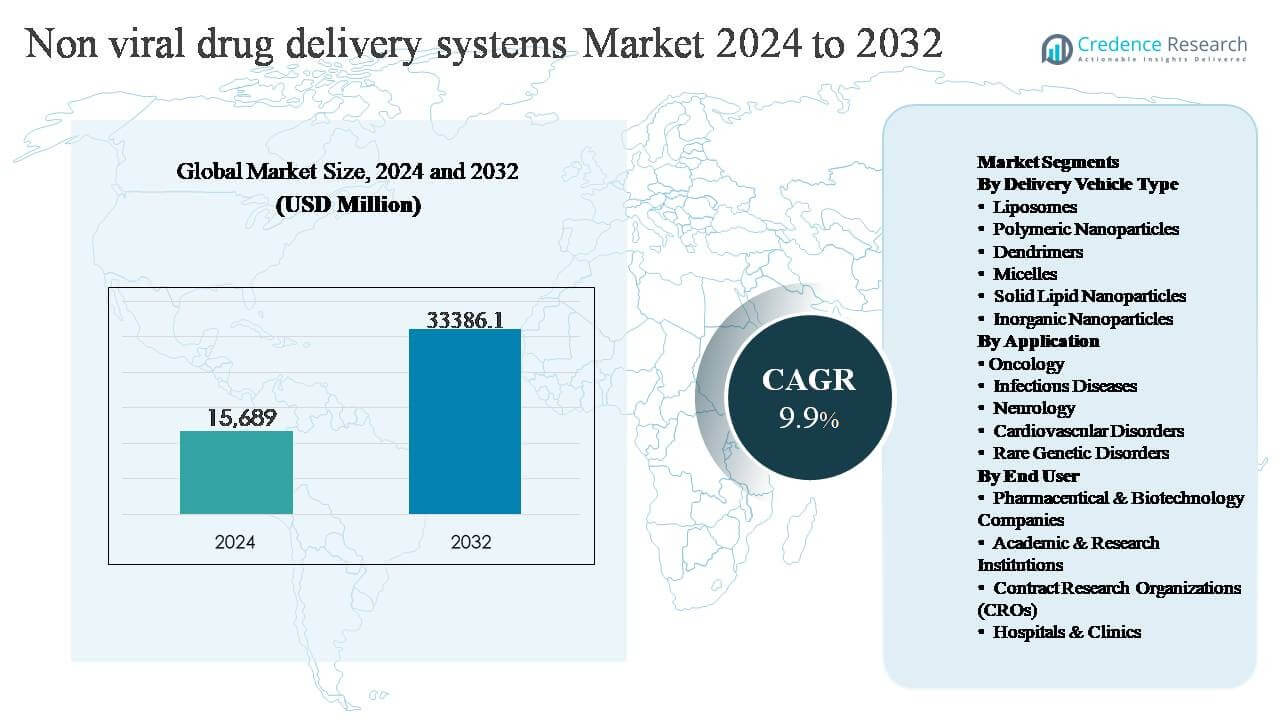
Non-Viral Drug Delivery Systems Market Segmentation Analysis:
By Delivery Vehicle Type:
The delivery vehicle landscape in non-viral drug delivery systems is dominated by liposomes, which account for the largest market share due to their biocompatibility, ability to encapsulate both hydrophilic and hydrophobic drugs, and strong clinical validation across oncology and infectious disease therapies. Liposomes benefit from well-established manufacturing scalability and regulatory familiarity. Polymeric nanoparticles represent the fastest-growing sub-segment, driven by tunable release profiles and improved stability for nucleic acid payloads. Dendrimers, micelles, solid lipid nanoparticles, and inorganic nanoparticles continue to gain traction for targeted delivery, controlled biodistribution, and enhanced intracellular uptake.
- For instance, Gilead Sciences’ liposomal amphotericin B (AmBisome®) has been manufactured at commercial scale in the U.S. since its FDA approval on August 11, 1997. It is a true unilamellar liposomal delivery system with a typical median diameter of ~80 nm (consistently maintained under 100 nm).
By Application:
By application, oncology remains the dominant segment, capturing the highest market share due to the extensive use of non-viral carriers for targeted chemotherapy, RNA-based therapeutics, and combination regimens aimed at reducing systemic toxicity. High unmet need, rising cancer prevalence, and strong R&D pipelines reinforce this leadership. Infectious diseases follow, driven by mRNA vaccines and antimicrobial delivery innovations. Neurology shows accelerating adoption as non-viral systems overcome blood–brain barrier challenges. Cardiovascular disorders and rare genetic disorders benefit from precision delivery requirements, particularly for gene modulation and enzyme replacement therapies.
- For instance, Pfizer and BioNTech’s mRNA cancer vaccine candidates, such as BNT111 and BNT116, have advanced into multiple Phase I/II oncology trials; these clinical formulations utilize lipid nanoparticles (LNPs) or RNA-lipoplexes (RNA-LPX) typically engineered at sizes below 100 nm to optimize delivery to lymphoid tissues and enhance the activation of antigen-presenting cells."
By End User:
Among end users, pharmaceutical and biotechnology companies dominate the market, supported by extensive internal R&D capabilities, proprietary delivery platforms, and strong commercialization pipelines for RNA, gene, and targeted therapies. Their dominance is reinforced by sustained investment in platform technologies and strategic partnerships. Contract research organizations (CROs) are the fastest-growing sub-segment, driven by outsourcing of formulation development, preclinical studies, and scale-up activities. Academic and research institutions play a critical role in early-stage innovation, while hospitals and clinics support clinical validation and translational research adoption.
Key Growth Drivers
Rapid Expansion of RNA- and Gene-Based Therapeutics
The accelerating development of RNA- and gene-based therapeutics is a primary growth driver for non-viral drug delivery systems. Modalities such as mRNA, siRNA, antisense oligonucleotides, and gene-editing payloads require delivery platforms that ensure stability, cellular uptake, and controlled intracellular release without triggering immune responses. Non-viral systems particularly lipid- and polymer-based carriers offer superior safety profiles compared to viral vectors, enabling repeat dosing and broader therapeutic applicability. The expanding clinical pipeline for oncology, infectious diseases, and rare genetic disorders continues to increase demand for adaptable, scalable delivery technologies. Regulatory approvals of RNA therapeutics have further validated non-viral platforms, encouraging pharmaceutical companies to invest heavily in proprietary delivery systems. As precision medicine advances, the ability of non-viral carriers to be chemically tuned for specific tissues and payloads continues to drive sustained market expansion.
- For instance, Moderna’s proprietary lipid nanoparticle (LNP) platform has been validated across more than 10 commercially and clinically advanced mRNA programs, with manufacturing processes capable of producing GMP-grade mRNA drug substance at batch scales exceeding 1,000 liters per run.
Growing Demand for Targeted and Controlled Drug Delivery
Rising emphasis on targeted therapy and controlled drug release is significantly accelerating adoption of non-viral drug delivery systems. Conventional formulations often suffer from poor bioavailability, off-target toxicity, and rapid systemic clearance. Non-viral carriers such as liposomes, polymeric nanoparticles, and micelles address these limitations by enabling site-specific delivery, prolonged circulation time, and stimulus-responsive release mechanisms. This capability is particularly critical in oncology and neurology, where minimizing systemic exposure while maximizing therapeutic concentration at the target site directly impacts clinical outcomes. Healthcare systems increasingly prioritize therapies that improve efficacy while reducing adverse effects, further strengthening demand. Advances in surface modification, ligand conjugation, and particle engineering continue to enhance targeting accuracy, positioning non-viral delivery systems as a core enabler of next-generation therapeutics.
- For instance, Johnson & Johnson’s liposomal doxorubicin formulation employs a pegylated liposome design with an average particle diameter of approximately 100 nanometers, enabling prolonged circulation time and reduced uptake by the reticuloendothelial system during clinical use.
Favorable Safety Profile and Manufacturing Scalability
The favorable safety characteristics and scalable manufacturing potential of non-viral drug delivery systems strongly support market growth. Unlike viral vectors, non-viral carriers eliminate risks associated with insertional mutagenesis and long-term immunogenicity, making them suitable for chronic and repeat-dose therapies. From a production perspective, non-viral platforms are generally easier to manufacture, characterize, and modify, enabling faster development timelines and cost efficiencies. Pharmaceutical companies increasingly favor these systems due to improved batch consistency and compatibility with established pharmaceutical manufacturing infrastructure. The ability to rapidly scale production in response to clinical and commercial demand has become especially critical following large-scale vaccine and RNA therapeutic deployments. This combination of safety, flexibility, and scalability continues to drive widespread industry adoption.
Key Trends & Opportunities
Integration of Precision Medicine and Personalized Therapies
The growing integration of precision medicine presents a major opportunity for non-viral drug delivery systems. As therapies become increasingly tailored to individual genetic and molecular profiles, delivery platforms must offer modularity and customization. Non-viral carriers enable precise tuning of size, surface chemistry, and release kinetics to match patient-specific requirements. This trend is particularly evident in oncology and rare genetic disorders, where personalized RNA and gene therapies are gaining clinical momentum. The ability to rapidly redesign delivery systems for new targets creates significant commercial opportunities for platform-based developers. As companion diagnostics and biomarker-driven treatments expand, non-viral delivery technologies are positioned to play a central role in enabling individualized therapeutic strategies.
- For instance, Precision NanoSystems’ NanoAssemblr® systems allow programmable formulation of nanoparticles with tightly controlled sizes below 100 nanometers, supporting reproducible manufacturing of patient-tailored RNA therapeutics.
Advancements in Nanotechnology and Smart Delivery Systems
Ongoing advancements in nanotechnology are creating new growth opportunities across the non-viral drug delivery landscape. Innovations such as stimulus-responsive nanoparticles, multifunctional carriers, and hybrid systems combining organic and inorganic materials are enhancing delivery efficiency and therapeutic precision. Smart delivery systems capable of responding to pH, enzymes, or temperature are gaining traction for complex disease environments such as tumors and inflamed tissues. These advancements enable higher drug loading, improved intracellular trafficking, and real-time control over release behavior. As research progresses from proof-of-concept to clinical translation, these technologies open pathways for differentiated products and premium therapeutic applications.
- For instance, Evonik’s hybrid lipid–polymer nanoparticles integrate biodegradable polymer cores with lipid shells, achieving drug loading capacities exceeding several milligrams per milliliter while maintaining particle diameters typically below 150 nanometers for systemic administration.
Increasing Strategic Collaborations and Platform Licensing
Strategic partnerships between pharmaceutical companies, biotechnology firms, and technology providers represent a key opportunity area. Many drug developers prefer licensing proven non-viral delivery platforms rather than building capabilities in-house. This trend accelerates clinical development while reducing technical risk. Platform licensing, co-development agreements, and research collaborations are expanding rapidly, particularly in RNA therapeutics. Such partnerships allow delivery technology specialists to monetize platforms across multiple indications, creating recurring revenue models. As competition intensifies, companies with validated, versatile delivery systems are well-positioned to secure long-term strategic alliances.
Key Challenges
Delivery Efficiency and Biological Barriers
Despite technological advances, achieving consistent delivery efficiency remains a major challenge for non-viral drug delivery systems. Biological barriers such as enzymatic degradation, rapid clearance by the reticuloendothelial system, and limited tissue penetration can reduce therapeutic effectiveness. Intracellular trafficking and endosomal escape remain particularly complex for nucleic acid payloads. Variability in patient physiology further complicates predictable biodistribution and dosing. Addressing these challenges requires continuous optimization of carrier design, surface modification, and formulation strategies. Failure to achieve sufficient delivery efficiency can limit clinical success, delay regulatory approval, and increase development costs.
Regulatory Complexity and Translational Uncertainty
Regulatory complexity presents another significant challenge for the non-viral drug delivery market. As delivery systems become more sophisticated, regulators require extensive characterization of materials, stability, biodistribution, and long-term safety. Translating promising preclinical results into consistent clinical performance remains difficult due to differences in scale, biology, and manufacturing conditions. Standardized regulatory pathways for novel nanocarriers are still evolving, leading to longer approval timelines and higher development risk. Companies must invest heavily in analytical validation and regulatory expertise to navigate this environment, which can be particularly burdensome for smaller developers and emerging technology providers.
Regional Analysis
North America:
North America holds the largest share of the non-viral drug delivery systems market, accounting for approximately 41% of global revenue. Market leadership is driven by strong RNA and gene therapy pipelines, advanced nanomedicine research, and early regulatory approvals for non-viral platforms. The United States dominates the region due to high R&D spending by pharmaceutical and biotechnology companies, robust venture funding, and extensive clinical trial activity. Widespread adoption of lipid nanoparticles and polymeric systems in oncology and infectious diseases further strengthens regional demand. Well-established manufacturing infrastructure and close collaboration between industry and academia sustain North America’s leading position.
Europe:
Europe represents around 27% of the global non-viral drug delivery systems market, supported by strong academic research, public funding initiatives, and a growing focus on advanced therapeutics. Countries such as Germany, the United Kingdom, and France play central roles through active participation in RNA therapeutics, nanotechnology research, and translational medicine programs. The region benefits from increasing cross-border collaborations and regulatory frameworks that support innovation while maintaining safety standards. Rising adoption of targeted drug delivery in oncology and rare diseases continues to drive growth. Europe’s emphasis on precision medicine and sustainable pharmaceutical development reinforces its substantial market presence.
Asia Pacific:
Asia Pacific accounts for approximately 22% of the global market and represents the fastest-growing regional segment. Growth is driven by expanding pharmaceutical manufacturing capacity, rising healthcare investment, and increasing participation in global clinical trials. China, Japan, and South Korea lead adoption through strong government support for biotechnology, nanomedicine, and gene therapy research. India contributes through cost-efficient manufacturing and growing CRO activity. Increasing prevalence of cancer and infectious diseases, combined with improving regulatory pathways, accelerates uptake of non-viral delivery technologies. The region’s scalability and cost advantages position it as a key future growth engine.
Latin America:
Latin America holds an estimated 6% market share, supported by gradual expansion of advanced drug delivery adoption across Brazil, Mexico, and Argentina. Growth is primarily driven by rising cancer incidence, improving healthcare infrastructure, and increasing participation in multinational clinical trials. While local manufacturing capabilities remain limited compared to developed regions, partnerships with global pharmaceutical companies are improving technology access. Government initiatives aimed at strengthening biopharmaceutical research and public healthcare systems further support demand. Adoption remains concentrated in oncology and infectious disease applications, with non-viral platforms increasingly used in clinical and hospital-based research settings.
Middle East & Africa:
The Middle East & Africa region accounts for approximately 4% of the global non-viral drug delivery systems market. Market development is driven by expanding healthcare investments in Gulf Cooperation Council countries and increasing focus on specialty therapeutics. Adoption is concentrated in tertiary hospitals, research centers, and government-backed healthcare initiatives. While limited local manufacturing and R&D infrastructure constrain growth, rising imports of advanced therapeutics and collaboration with international pharmaceutical companies support gradual expansion. Increasing awareness of targeted therapies and rare disease treatments is expected to enhance long-term adoption across select Middle Eastern and African markets.
Non-Viral Drug Delivery Systems Market Segmentations:
By Delivery Vehicle Type
- Liposomes
- Polymeric Nanoparticles
- Dendrimers
- Micelles
- Solid Lipid Nanoparticles
- Inorganic Nanoparticles
By Application
- Oncology
- Infectious Diseases
- Neurology
- Cardiovascular Disorders
- Rare Genetic Disorders
By End User
- Pharmaceutical & Biotechnology Companies
- Academic & Research Institutions
- Contract Research Organizations (CROs)
- Hospitals & Clinics
By Geography
- North America
- U.S.
- Canada
- Mexico
- Europe
- Germany
- France
- U.K.
- Italy
- Spain
- Rest of Europe
- Asia Pacific
- China
- Japan
- India
- South Korea
- South-east Asia
- Rest of Asia Pacific
- Latin America
- Brazil
- Argentina
- Rest of Latin America
- Middle East & Africa
- GCC Countries
- South Africa
- Rest of the Middle East and Africa
Competitive Landscape
The competitive landscape of the non-viral drug delivery systems market is characterized by intense innovation, platform differentiation, and strategic collaboration among pharmaceutical companies, biotechnology firms, and specialized delivery technology providers. Leading players focus on proprietary lipid- and polymer-based delivery platforms that support RNA, gene, and targeted therapies across multiple therapeutic areas. Competition centers on delivery efficiency, safety profile, scalability, and regulatory readiness. Companies increasingly pursue strategic partnerships, licensing agreements, and co-development models to accelerate clinical translation and expand pipeline reach. Continuous investment in nanotechnology, surface engineering, and controlled-release mechanisms underpins competitive advantage. Established players leverage strong intellectual property portfolios and manufacturing capabilities, while emerging firms differentiate through next-generation materials and precision delivery solutions. This dynamic environment favors companies with adaptable platforms, robust clinical validation, and the ability to support multiple therapeutic modalities.
Key Player Analysis
- BD (Becton, Dickinson and Company) (U.S.)
- Gerresheimer AG (Germany)
- Baxter (U.S.)
- Ypsomed (Switzerland)
- West Pharmaceutical Services Inc. (U.S.)
- Medtronic (Ireland)
- Kindeva Drug Delivery (U.S.)
- E3D Elcam Drug Delivery Devices (Israel)
- Nemera (France)
Recent Developments
- In October 2025, Gerresheimer showcased an extensive portfolio of primary packaging and drug delivery systems for sensitive biologics including Gx Elite ready-to-fill syringes, cartridges and RTU/RTF vials (cryogenic stability to –80 °C) alongside patient-centric devices such as the Gx Inbeneo autoinjector and Gx InPuls on-body delivery platforms targeting subcutaneous administration outside traditional clinical settings.
- In October 2024, BD and Ypsomed collaboration to advance self-injection solutions for high-viscosity biologics: BD announced a strategic partnership with Ypsomed to integrate the BD Neopak™ XtraFlow™ Glass Prefillable Syringe (featuring an 8 mm needle and thin-wall cannula optimized for >15 cP viscosities) into Ypsomed’s YpsoMate® 2.25 autoinjector platform, enabling subcutaneous delivery of high-viscosity biologic formulations previously challenging in autoinjector formats.
Report Coverage
The research report offers an in-depth analysis based on Delivery vehicle type, Application, End User and Geography. It details leading market players, providing an overview of their business, product offerings, investments, revenue streams, and key applications. Additionally, the report includes insights into the competitive environment, SWOT analysis, current market trends, as well as the primary drivers and constraints. Furthermore, it discusses various factors that have driven market expansion in recent years. The report also explores market dynamics, regulatory scenarios, and technological advancements that are shaping the industry. It assesses the impact of external factors and global economic changes on market growth. Lastly, it provides strategic recommendations for new entrants and established companies to navigate the complexities of the market.
Future Outlook
- Non-viral drug delivery systems will play a central role in enabling next-generation RNA, gene, and precision therapies across multiple disease areas.
- Continued improvements in delivery efficiency, endosomal escape, and tissue targeting will expand clinical success rates.
- Lipid- and polymer-based platforms will remain the backbone of commercialized non-viral delivery technologies.
- Advanced surface engineering and ligand conjugation will improve cell- and tissue-specific targeting.
- Smart and stimulus-responsive delivery systems will gain wider clinical adoption.
- Platform-based delivery technologies will increasingly be licensed across multiple therapeutic pipelines.
- Manufacturing scalability and formulation robustness will become key competitive differentiators.
- Regulatory frameworks will mature, supporting faster translation of novel delivery systems.
- Asia Pacific will see accelerated adoption driven by expanding biopharmaceutical production and clinical research.
- Strategic collaborations between drug developers and delivery technology providers will intensify.

Request a Free Sample
Fill in your details and we'll send you a free sample report.
- Sample data tables & charts
- Research methodology
Need a Custom Version of This Report?
Tailor the scope, geography, or segments to your exact requirements.
- Custom geography or segment scope
- Direct access to our analyst team
Frequently Asked Questions
What is the current market size for Non-viral drug delivery systems, and what is its projected size in 2032?
At what Compound Annual Growth Rate is the Non-viral drug delivery systems market projected to grow between 2024 and 2032?
Which Non-viral drug delivery systems segment held the largest share in 2024?
What are the primary factors fueling the growth of the Non-viral drug delivery systems market?
Who are the leading companies in the Non-viral drug delivery systems market?
Which region commanded the largest share of the Non-viral drug delivery systems market in 2024?
Table of Content
Chapter 1 Market Segmentation
- 1.1 Segmentation Framework
- 1.1.1 Product and Service Classification
- 1.1.2 Application and End-Use Classification
- 1.1.3 Technology and Solution Classification
- 1.1.4 Customer and Distribution Channel Classification
- 1.1.5 Geographic Segmentation
- 1.1.6 Market Segment Definitions and Boundaries
Chapter 2 Introduction
- 2.1 Report Objectives and Scope
- 2.2 Product Definition and Industry Terminology
- 2.3 Market Inclusions and Exclusions
- 2.4 Research Process
- 2.4.1 Primary Research and Expert Interviews
- 2.4.2 Secondary Research and Source Review
- 2.4.3 Top-Down and Bottom-Up Estimation
- 2.4.4 Data Triangulation and Verification
- 2.5 Market Size Measurement Basis
- 2.5.1 2024: USD 15,689 million → 2032: USD 33,386.1 million
- 2.6 Historical and Forecast Reference Periods
- 2.6.1 Base Year: 2024
- 2.6.2 Forecast Period: 2024-2032
- 2.7 Research Assumptions and Limitations
Chapter 3 Executive Summary
- 3.1 Market Snapshot and Key Findings
- 3.2 Base-Year Market Size, 2024
- 3.3 Forecast Market Size, 2032
- 3.4 Revenue and Volume Growth Outlook
- 3.5 Key Demand and Supply Indicators
- 3.6 Leading Market Segments
- 3.7 Fastest-Growing Market Opportunities
- 3.8 Regional Performance Highlights
- 3.9 Technology and Industry Transformation
- 3.10 Competitive Landscape Summary
- 3.11 Analyst View and Strategic Implications
Chapter 4 Global Non-Viral Drug Delivery Systems Market Trends and Developments
- 4.1 Historical Industry Development
- 4.2 Recent Market Trends and Developments
- 4.3 Demand and Customer Behavior Trends
- 4.4 Technology and Product Innovation
- 4.5 Artificial Intelligence, Automation and Digitalization
- 4.6 Local Manufacturing and Supply Chain Realignment
- 4.7 Industry Partnerships, Mergers and Acquisitions
- 4.8 Sustainability and Circular Economy Developments
- 4.9 Government and Private Sector Investment Trends
- 4.10 Emerging Business Models and Commercialization
- 4.11 Industry Developments and Announcements
Chapter 5 Global Non-Viral Drug Delivery Systems Market Production, Supply and Demand Analysis
- 5.1 Demand Trend and Consumption Analysis
- 5.2 Demand Forecast, 2024-2032
- 5.3 Production and Output Trend
- 5.4 Production and Output Forecast, 2024-2032
- 5.5 Installed Capacity and Capacity Utilization
- 5.6 Company-Wise Production Plants and Statistics
- 5.6.1 Installed Production Capacity
- 5.6.2 Actual Production
- 5.6.3 Planned Capacity and Expansion Targets
- 5.7 Supply Chain Structure and Procurement Trends
- 5.8 Supply-Demand Gap and Bottlenecks
- 5.9 Import Dependence and Sourcing Structure
- 5.10 Contract Manufacturing and Outsourcing
- 5.11 Regional Supply and Demand Concentration
Chapter 6 Global Non-Viral Drug Delivery Systems Market Pricing Analysis
- 6.1 Pricing Structure and Measurement
- 6.2 Historical Pricing Trends
- 6.3 Pricing Outlook, 2024-2032
- 6.4 Average Selling Price and Unit Economics
- 6.5 Pricing by Product and Market Segment
- 6.6 Geographic Pricing Differences
- 6.7 Key Input, Energy, Labor and Logistics Costs
- 6.8 Contract Pricing and Purchasing Models
- 6.9 Pricing Sensitivity and Competitive Positioning
- 6.10 Price, Margin and Profitability Implications
Chapter 7 Global Non-Viral Drug Delivery Systems Market Dynamics
- 7.1 Market Growth Drivers
- 7.1.1 Demand-Side Drivers
- 7.1.2 Technology and Innovation Drivers
- 7.1.3 Infrastructure and Investment Drivers
- 7.1.4 Regulatory and Policy Drivers
- 7.2 Market Restraints
- 7.2.1 Cost and Affordability Constraints
- 7.2.2 Technology and Adoption Barriers
- 7.2.3 Supply Chain and Operational Constraints
- 7.3 Market Challenges
- 7.3.1 Competitive Pressure and Margin Erosion
- 7.3.2 Skills, Infrastructure and Implementation Gaps
- 7.4 Emerging Market Opportunities
- 7.5 Market Dynamics Impact and Time-Horizon Assessment
Chapter 8 Global Non-Viral Drug Delivery Systems Value Chain Analysis
- 8.1 Industry Value Chain Overview
- 8.2 Upstream Suppliers and Critical Inputs
- 8.3 Technology and Component Providers
- 8.4 Manufacturing or Service Delivery
- 8.5 Distribution, Channel Partners and Integrators
- 8.6 Downstream Applications and End Users
- 8.7 Value Addition and Profit Pools
- 8.8 Vertical Integration and Outsourcing
- 8.9 Supplier Concentration and Risk
- 8.10 Supply Chain Localization and Resilience
Chapter 9 Global Non-Viral Drug Delivery Systems Market Regulations and Policies
- 9.1 Relevant Laws, Standards and Compliance Frameworks
- 9.2 Product, Service, Safety and Quality Requirements
- 9.3 Government Policies, Incentives and Subsidies
- 9.4 Imports, Exports and Trade Barriers
- 9.5 Public Procurement and Local Content Requirements
- 9.6 Environmental and Sustainability Compliance
- 9.7 Upcoming Policy Changes and Market Implications
Chapter 10 Global Non-Viral Drug Delivery Systems Market Hotspots and Opportunities
- 10.1 Market Opportunity Mapping and Growth Hotspots
- 10.2 High-Growth Applications and Customer Groups
- 10.3 Underserved Markets and White-Space Opportunities
- 10.4 Emerging Technology and Product Opportunities
- 10.5 New Capacity and Investment Hotspots
- 10.6 Market Entry and Expansion Opportunities
- 10.7 Distribution and Partnership Opportunities
- 10.8 Near-Term and Long-Term Commercial Potential
- 10.9 Opportunity Attractiveness and Execution Risks
Chapter 11 Global Non-Viral Drug Delivery Systems Market Outlook, 2024-2032
- 11.1 Market Size and Analysis
- 11.1.1 Revenue (Market Measurement: 2024: USD 15,689 million → 2032: USD 33,386.1 million)
- 11.1.2 Market Volume and Quantity Sold
- 11.1.3 Historical Market Size
- 11.1.4 Base-Year Market Size, 2024
- 11.2 Market Forecast, 2024-2032
- 11.2.1 Revenue Forecast to 2032
- 11.2.2 Volume Forecast to 2032
- 11.2.3 CAGR and Year-on-Year Growth
- 11.2.4 Incremental Revenue Opportunity
- 11.3 Forecast Assumptions and Scenario Analysis
- 11.3.1 Base-Case Forecast
- 11.3.2 Optimistic and Conservative Scenarios
- 11.3.3 Technology, Pricing and Policy Sensitivities
- 11.4 Market Attractiveness and Growth Outlook
Chapter 12 Global Non-Viral Drug Delivery Systems Market Segmentation and Outlook
- 12.1 Segmentation Summary and Market Shares, 2024
- 12.2 Largest and Fastest-Growing Segments
- 12.3 Segment Growth Comparison
- 12.4 Segment Attractiveness and Priority Matrix
Chapter 13 Global Non-Viral Drug Delivery Systems Geographic Market Outlook, 2024-2032
- 13.1 Regional Market Size and Share, 2024
- 13.2 Regional Market Forecast, 2024-2032
- 13.3 Regional Pricing, Production and Demand Differences
- 13.4 North America
- 13.4.1 United States
- 13.4.2 Canada
- 13.4.3 Mexico
- 13.5 Europe
- 13.5.1 Germany
- 13.5.2 France
- 13.5.3 Italy
- 13.5.4 United Kingdom
- 13.5.5 Spain
- 13.5.6 Poland
- 13.5.7 Russia
- 13.5.8 Netherlands
- 13.5.9 Belgium
- 13.5.10 Sweden
- 13.5.11 Denmark
- 13.5.12 Norway
- 13.5.13 Rest of Europe
- 13.6 Asia Pacific
- 13.6.1 China
- 13.6.2 India
- 13.6.3 Japan
- 13.6.4 South Korea
- 13.6.5 Thailand
- 13.6.6 Indonesia
- 13.6.7 Vietnam
- 13.6.8 Malaysia
- 13.6.9 Australia
- 13.6.10 Rest of Asia Pacific
- 13.7 Latin America
- 13.7.1 Brazil
- 13.7.2 Argentina
- 13.7.3 Colombia
- 13.7.4 Chile
- 13.7.5 Rest of Latin America
- 13.8 Middle East
- 13.8.1 Saudi Arabia
- 13.8.2 United Arab Emirates
- 13.8.3 Turkey
- 13.8.4 Israel
- 13.8.5 Iran
- 13.8.6 Rest of the Middle East
- 13.9 Africa
- 13.9.1 South Africa
- 13.9.2 Egypt
- 13.9.3 Nigeria
- 13.9.4 Morocco
- 13.9.5 Rest of Africa
- 13.10 Regional Investment, Policy and Supply Chain Differences
- 13.11 Regional Competitive Landscape
- 13.12 Geographic Growth Hotspots
Chapter 14 Global Non-Viral Drug Delivery Systems Technology, Innovation and Sustainability Outlook
- 14.1 Technology Landscape and Maturity
- 14.2 Product, Process and Service Innovation
- 14.3 AI, Automation and Digital Tools in the Industry
- 14.4 Technology Adoption and Performance Benchmarking
- 14.5 Innovation Pipeline and R&D Investment
- 14.6 Patent and Intellectual Property Trends
- 14.7 Energy Efficiency and Resource Management
- 14.8 Sustainability, Recycling and Circularity
- 14.9 Technology Roadmap, 2024-2032
- 14.10 Risks of Obsolescence and Technology Substitution
Chapter 15 Global Non-Viral Drug Delivery Systems Market Key Strategic Imperatives
- 15.1 Growth and Market Entry Priorities
- 15.2 High-Return Products and Segments
- 15.3 Pricing, Profitability and Cost Optimization
- 15.4 Technology Investment and Product Differentiation
- 15.5 Supply Chain Localization and Resilience
- 15.6 Distribution and Customer Acquisition
- 15.7 Partnership, Acquisition and Capacity Strategy
- 15.8 Regional Expansion Priorities
- 15.9 Short-, Medium- and Long-Term Actions
Chapter 16 Competition Outlook
- 16.1 Industry Competition Characteristics
- 16.2 Market Structure and Concentration
- 16.3 Market Share and Competitive Positioning, 2024
- 16.4 Company-Wise Revenue and Product Benchmarking
- 16.5 Production and Service Capacity Benchmarking
- 16.6 Technology, Pricing and Differentiation
- 16.7 Regional Footprint and Distribution Strength
- 16.8 Mergers, Acquisitions and Strategic Alliances
- 16.9 New Entrants and Competitive Threats
- 16.10 Porter's Five Forces and Industry Attractiveness
- 16.11 Competitive Outlook, 2024-2032
Chapter 17 Company Profiles
- 17.1 Company Coverage and Selection Criteria
- 17.2 Leading Market Participants – Standard Profile Structure
- 17.2.1 Business Description
- 17.2.2 Company Ownership and Geographic Presence
- 17.2.3 Product and Service Portfolio
- 17.2.4 Manufacturing and Operating Footprint
- 17.2.5 Production Capacity and Expansion Plans
- 17.2.6 Financial Performance and Investment
- 17.2.7 Market Share and Competitive Position
- 17.2.8 Technology and Innovation Capabilities
- 17.2.9 Strategic Alliances or Partnerships
- 17.2.10 Recent Developments
- 17.2.11 Growth Strategy and Outlook
- 17.3 Other Relevant Market Participants
Note: Every listed company is profiled on the structure shown under the first company. The company list is preliminary and may change based on research findings, market developments, data availability and client requirements.
Chapter 18 Disclaimer
- 18.1 Research and Forecast Disclaimer
- 18.2 Data Source and Estimation Limitations
Note: The depth of individual sections depends on data availability for this market. Volume, capacity, trade and other unit-based metrics are included where applicable.