
| REPORT ATTRIBUTE | DETAILS |
|---|---|
| Historical Period | 2019-2022 |
| Base Year | 2023 |
| Forecast Period | 2024-2032 |
| Philippines Medical Gas And Equipment Market Size 2023 | USD 6.42 Million |
| Philippines Medical Gas And Equipment Market, CAGR | 6.77% |
| Philippines Medical Gas And Equipment Market Size 2032 | USD 10.84 Million |
Market Overview
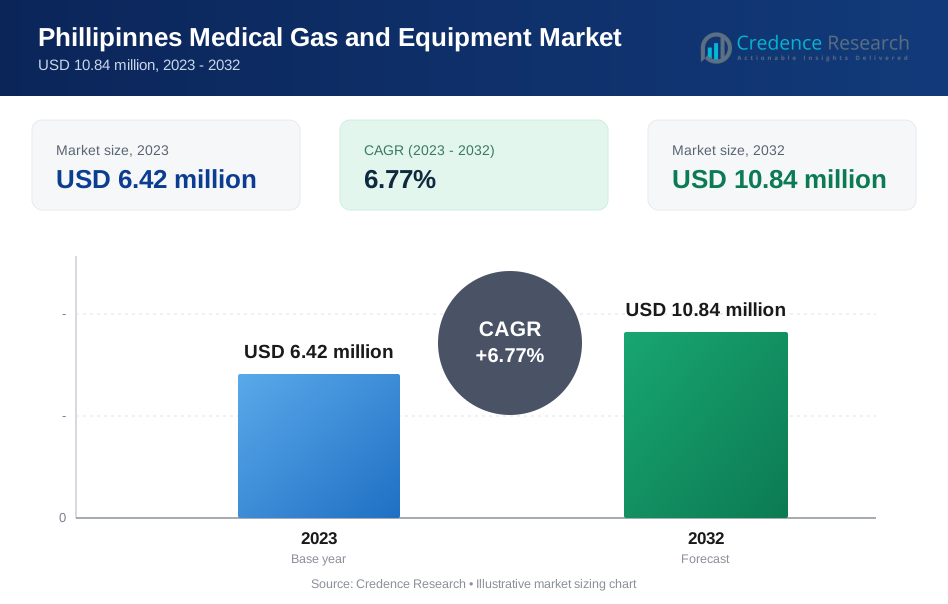
The Philippines Medical Gas And Equipment Market is projected to grow from USD 6.42 million in 2023 to USD 10.84 million by 2032, reflecting a compound annual growth rate (CAGR) of 6.77%.
The Philippines medical gas and equipment market is driven by the growing demand for healthcare services, particularly in hospitals and healthcare facilities, as the population ages and chronic diseases rise. The increasing adoption of advanced medical technologies and the government’s focus on improving healthcare infrastructure further boosts market growth. Additionally, the rising awareness about the importance of medical gases in critical care and anesthesiology is contributing to the market's expansion. Trends such as the shift towards home healthcare and the increasing use of oxygen therapy for respiratory diseases are also shaping the market landscape. Technological advancements in gas delivery systems, along with enhanced safety standards, are improving the efficiency and reliability of medical gas equipment. Furthermore, regulatory support and investments in healthcare infrastructure by both the public and private sectors are fostering market growth, positioning the Philippines as a key player in the Southeast Asian medical gas and equipment sector.
The Philippines Medical Gas and Equipment market is experiencing significant growth, driven by the increasing demand for healthcare services and advancements in medical technologies. Geographically, Metro Manila, Cebu, and Davao are the primary hubs for medical gas usage, with Metro Manila leading in terms of healthcare infrastructure and medical equipment demand. Northern Luzon also shows potential due to its expanding healthcare facilities. Key players in the market include global and local companies such as Taiyo Nippon Sanso Corporation, Air Liquide, Linde Plc, and INOX Air Products Pvt. Ltd. These companies are major contributors to the supply of medical gases and equipment, ensuring the provision of high-quality and reliable products. The market is highly competitive, with these key players focusing on expanding their product portfolios, enhancing their distribution networks, and adopting advanced technologies to cater to the growing healthcare sector in the Philippines.
Market Insights
- The Philippines Medical Gas and Equipment market is projected to grow from USD 6.42 million in 2023 to USD 10.84 million by 2032, with a CAGR of 6.77%.
- Increasing prevalence of respiratory diseases is driving the demand for medical gases, especially oxygen and nitrous oxide.
- The demand for home healthcare services is rising, further fueling the need for portable and efficient medical gas equipment.
- Advancements in portable medical gas equipment are providing new growth opportunities in the market.
- Stringent regulatory policies and high capital investment are significant market restraints.
- Metro Manila, Cebu, and Davao are key regions contributing to the market’s growth, with Metro Manila being the largest hub for medical gas usage.
- Competitive analysis reveals that major players like Taiyo Nippon Sanso, Air Liquide, and Linde Plc are leading the market through innovations and expansion strategies.
Market Drivers
Growing Healthcare Infrastructure Investment
The Philippines’ healthcare sector is witnessing substantial investments from both the public and private sectors. The government’s focus on improving healthcare facilities and expanding access to quality medical care is a major driver for the medical gas and equipment market. For instance, the Department of Health (DOH) has allocated ₱35.37 billion for enhancing healthcare facilities and equipment in underserved communities. Initiatives such as the "Universal Health Care" law aim to enhance the country's healthcare system, resulting in an increased need for medical gases and equipment in hospitals and healthcare institutions. As the infrastructure improves, the demand for reliable medical gas supply systems is rising, further fueling market growth.
Aging Population and Chronic Diseases
An aging population and the rising prevalence of chronic diseases, such as respiratory disorders, cardiovascular diseases, and diabetes, are significantly driving the demand for medical gases and equipment. For instance, the number of older people in the Philippines has grown from 4.6 million in 2000 to 9.4 million in 2020, and is projected to reach 23.9 million by 2050. Elderly patients often require critical care, which involves the use of medical gases for oxygen therapy, anesthesia, and respiratory treatments. This demographic shift in the Philippines is amplifying the need for advanced and reliable medical gas systems to address these healthcare challenges.
Technological Advancements in Medical Gas Systems
Technological innovations in medical gas delivery systems are a key market driver in the Philippines. The adoption of smart, automated systems for monitoring and controlling medical gas flow, as well as advancements in gas cylinder safety and storage, is enhancing the efficiency of healthcare delivery. These innovations not only ensure the safety of both healthcare providers and patients but also improve the overall quality of care, making them a crucial factor for hospitals and clinics looking to upgrade their facilities.
Growing Awareness of Home Healthcare
The increasing demand for home healthcare services is also contributing to the growth of the medical gas and equipment market. As more patients prefer to receive medical care at home, especially for conditions like respiratory issues and post-operative recovery, there is a growing need for medical gases, such as oxygen, and portable equipment. This trend is driving the demand for smaller, more versatile medical gas delivery systems that can be used in home settings, further expanding the market potential.
Market Trends
Increasing Demand for Oxygen Therapy
One of the prominent trends in the Philippines medical gas and equipment market is the rising demand for oxygen therapy. With the growing prevalence of respiratory diseases, such as chronic obstructive pulmonary disease (COPD) and asthma, as well as the impact of the COVID-19 pandemic, the need for oxygen supply has escalated. For instance, the Department of Health reported that acute respiratory infections were the leading illness in the Philippines in 2021, with approximately 598,591 cases. Healthcare providers are increasingly utilizing medical gases for treating respiratory ailments, resulting in a surge in demand for both stationary and portable oxygen delivery systems. This trend is driving the adoption of medical gas equipment across hospitals, clinics, and homecare settings.
Focus on Patient Safety and Compliance
A significant market trend in the Philippines is the increasing emphasis on patient safety and compliance with international healthcare standards. Medical gas systems are integral to patient safety, especially in critical care units and surgical settings. Healthcare facilities are adopting advanced gas delivery systems and components that comply with global safety standards and certifications. For instance, the Department of Trade and Industry (DTI) conducts audits to ensure that medical grade oxygen products comply with the Philippine National Standard and ISO 9001:2015. This trend is driven by both regulatory requirements and the increasing awareness of the importance of maintaining high safety standards in medical gas management to prevent accidents and ensure quality patient care.
Adoption of Advanced Medical Gas Delivery Systems
Technological advancements are reshaping the landscape of medical gas systems in the Philippines. The trend toward adopting advanced medical gas delivery systems, such as automated and remote-controlled systems, is gaining momentum. These systems improve the efficiency and safety of medical gas management by allowing healthcare facilities to monitor and control gas flow in real-time. Additionally, the integration of IoT (Internet of Things) technology into medical gas systems ensures better maintenance and reduces the risk of errors. As hospitals and healthcare facilities seek to improve patient care, the demand for these sophisticated medical gas solutions continues to rise.
Expansion of Home Healthcare Services
The rising demand for home healthcare services is another key trend in the medical gas and equipment market in the Philippines. As patients increasingly prefer to receive care in the comfort of their homes, particularly for long-term conditions like respiratory diseases, the need for home-use medical gas equipment is growing. This includes portable oxygen concentrators, home ventilators, and other devices that support oxygen therapy and respiratory care. The convenience and cost-effectiveness of home healthcare services are further accelerating the demand for medical gas solutions designed for residential use.
Market Challenges Analysis
Regulatory and Compliance Challenges
One of the key challenges facing the Philippines medical gas and equipment market is navigating complex regulatory requirements. Medical gas systems must meet strict safety and quality standards to ensure patient safety, which can vary across different regions and regulatory bodies. For instance, the Food and Drug Administration (FDA) of the Philippines mandates compliance with regulations related to the installation, operation, and maintenance of medical gas systems. Compliance with these regulations requires significant investment in training, certification, and ongoing monitoring, which can be a burden for smaller healthcare providers. The lack of clear and uniform regulations, as well as the evolving nature of compliance standards, creates uncertainty for manufacturers and distributors, leading to delays in product approvals and market entry. Furthermore, maintaining compliance with international standards, such as those set by the European Union and the United States, adds additional complexity for local players in the industry.
High Initial Investment Costs and Maintenance Expenses
The high upfront costs associated with medical gas equipment and systems represent a significant challenge in the Philippines market. Hospitals and healthcare facilities, particularly smaller or public institutions, may struggle with the financial burden of purchasing and maintaining high-quality medical gas systems. These systems often require substantial capital investment for installation and regular maintenance to ensure their proper functioning and safety. Additionally, the costs associated with upgrading outdated systems to meet current safety and technological standards can be prohibitive. As a result, many healthcare providers face difficulties in accessing or maintaining state-of-the-art medical gas solutions, potentially affecting the quality of care they can deliver to patients.
Market Opportunities
Expansion of Healthcare Infrastructure and Services
The Philippines presents significant market opportunities for medical gas and equipment due to the ongoing expansion of healthcare infrastructure. As the government continues to prioritize healthcare development, new hospitals, clinics, and healthcare facilities are being built and upgraded, creating a demand for advanced medical gas systems. Public and private investments in healthcare are expected to further fuel this growth, as modern facilities require high-quality medical gas solutions for critical care, anesthesia, and respiratory treatments. Additionally, the increasing need for healthcare services due to a rising population and the prevalence of chronic diseases opens up new avenues for market expansion. Healthcare providers seeking to enhance the quality of care will invest in advanced medical gas systems to meet patient demands for reliable and safe medical gases.
Growth in Home Healthcare and Portable Solutions
Another promising opportunity lies in the growing demand for home healthcare services in the Philippines. With an aging population and a rise in long-term conditions like respiratory diseases, many patients are opting for home-based care, including oxygen therapy and other medical gas solutions. This shift toward home healthcare creates a need for portable medical gas equipment, such as oxygen concentrators and home ventilators, which is driving innovation in the market. Manufacturers have the opportunity to develop and offer user-friendly, cost-effective, and efficient solutions tailored for home use, catering to both patient and caregiver needs. This trend presents significant growth potential for medical gas suppliers and distributors, especially as the home healthcare market continues to expand in the coming years.
Market Segmentation Analysis:
By Medical Gases:
The Philippines medical gas and equipment market is primarily segmented by the types of gases used in medical applications, including oxygen, nitrous oxide, carbon dioxide, nitrogen, and others. Oxygen holds the largest market share due to its widespread use in therapeutic treatments for respiratory disorders, anesthesia, and critical care. Nitrous oxide, commonly used for its anesthetic properties, is also a significant segment, particularly in dental and surgical applications. Carbon dioxide is widely used for diagnostic and therapeutic purposes, such as in endoscopy procedures, while nitrogen is primarily used for medical equipment maintenance and cryogenic applications. Other gases like helium, argon, and medical air are also essential for specialized procedures, contributing to the overall market. The growth of each segment is influenced by the evolving demand for patient care, the rise in chronic respiratory diseases, and the continuous improvement of healthcare infrastructure.
By Application:
The medical gas and equipment market in the Philippines is also segmented based on application, with key categories including therapeutic, diagnostic, pharmaceutical manufacturing, research, and others. The therapeutic segment dominates due to the increasing use of medical gases like oxygen in treating respiratory diseases, post-surgical recovery, and emergency care. The diagnostic application segment is expanding due to the growing adoption of medical gases like carbon dioxide in procedures such as endoscopy and imaging. Pharmaceutical manufacturing and research applications also contribute significantly, as medical gases are used in drug formulation, laboratory testing, and clinical trials. Additionally, the 'others' category includes niche applications, such as in cryogenics or specialized surgeries, where gases like nitrogen are used. As the demand for healthcare services and research activities continues to grow, these applications will drive further expansion of the market.
Segments:
Based on Medical Gases:
- Oxygen
- Nitrous Oxide
- Carbon Dioxide
- Nitrogen
- Others
Based on Application:
- Therapeutic
- Diagnostic
- Pharmaceutical Manufacturing
- Research
- Others
Based on End-user:
- Hospitals
- Ambulatory Surgical Centers
- Home Healthcare
- Clinics
- Others
Based on Medical Gas Equipment:
- Cylinders
- Flowmeters
- Regulators
- Vacuum Systems
- Others
Based on the Geography:
- Metro Manila
- Cebu
- Davao
- Northern Luzon
Regional Analysis
Metro Manila
Metro Manila, which holds the largest market share at approximately 45%. This is primarily due to the region's status as the country's economic and healthcare hub, housing a significant number of public and private healthcare institutions, hospitals, and clinics. The demand for medical gases such as oxygen, nitrous oxide, and nitrogen is high in Metro Manila, driven by its large population, aging demographic, and increasing prevalence of chronic diseases. Additionally, Metro Manila benefits from substantial government and private sector investments in healthcare infrastructure, which further boosts the adoption of advanced medical gas systems. As the region continues to expand its healthcare services, the market share for medical gases in Metro Manila is expected to maintain a dominant position.
Cebu
Cebu, the second-largest market in the Philippines for medical gases and equipment, accounts for approximately 15% of the market share. The region serves as a central economic and healthcare hub in the Visayas, hosting numerous hospitals, clinics, and medical centers. Cebu's growing medical tourism industry, along with its rising population and improved healthcare infrastructure, is driving demand for medical gases, particularly oxygen and nitrous oxide for therapeutic and diagnostic applications. As healthcare facilities continue to modernize and expand in Cebu, the need for reliable and efficient medical gas systems is set to rise, supporting the region's steady market growth.
Davao
Davao, located in the southern part of the Philippines, holds approximately 10% of the medical gas and equipment market share. As Mindanao’s largest city, Davao has seen significant growth in healthcare facilities, supported by the region's economic development. With a growing middle-class population and increasing demand for healthcare services, the need for medical gases, especially oxygen for therapeutic use, is expanding. Davao’s healthcare infrastructure is modernizing to cater to a wider range of medical conditions, contributing to the rising market demand for medical gases. In addition, Davao's strategic location and accessibility to neighboring provinces make it a key player in the region's overall healthcare service expansion.
Northern Luzon
Northern Luzon, which includes key cities such as Baguio and Dagupan, represents a smaller but growing segment of the medical gas market, with an estimated market share of 7%. The region is seeing steady growth in healthcare services due to government initiatives to enhance healthcare accessibility, especially in rural areas. Northern Luzon’s medical gas demand is increasing, particularly in areas like oxygen for respiratory care and anesthesia. The expansion of both public and private hospitals, along with the improvement of healthcare services in this region, is contributing to the steady rise in market share. Northern Luzon is poised for further growth as the healthcare infrastructure continues to improve and local health policies prioritize accessible healthcare solutions.
Key Player Analysis
- Taiyo Nippon Sanso Corporation
- Air Liquide
- Linde Plc
- Philippines National Air Separation Engineering Co., Ltd.
- Suzhou Xinglu Air Separation Plant Science and Technology Development Co., Ltd.
- INOX Air Products Pvt. Ltd.
- Universal Industrial Gases, Inc.
- Cryogenmash JSC
- NovaAir Pvt. Ltd.
- Gas Philippines Berhad
Competitive Analysis
The Philippines Medical Gas and Equipment market is highly competitive, with several leading players focusing on product innovation, strategic partnerships, and geographical expansion to capture market share. Major players in the market include Taiyo Nippon Sanso Corporation, Air Liquide, Linde Plc, Philippines National Air Separation Engineering Co., Ltd., Suzhou Xinglu Air Separation Plant Science and Technology Development Co., Ltd., INOX Air Products Pvt. Ltd., Universal Industrial Gases, Inc., Cryogenmash JSC, NovaAir Pvt. Ltd., and Gas Philippines Berhad. These companies offer a wide range of medical gases and equipment such as oxygen, nitrous oxide, nitrogen, and cylinders, meeting the growing demand in hospitals, ambulatory surgical centers, and home healthcare applications. For instance, Air Liquide has been actively involved in supplying medical gases to hospitals across the Philippines, ensuring a steady supply of essential gases. To maintain a competitive edge, these players focus on technological advancements, particularly in portable medical gas equipment, and form strategic alliances to enhance distribution channels. Additionally, with increasing demand for healthcare solutions, players are expanding their presence in key regions like Metro Manila, Cebu, and Davao. Competitive strategies also include mergers and acquisitions, as well as continuous investments in research and development to cater to the evolving needs of the healthcare sector.
Recent Developments
- In September 2024, Taiyo Nippon Sanso Corporation announced the development of CO2 shipping tank equipment aimed at achieving carbon neutrality, with plans for market release in Spring 2025.
- In May 2024, Linde entered into a long-term agreement with H2 Green Steel to supply industrial gases for the world’s first large-scale green steel plant. This project involves an investment of approximately $150 million to build an on-site air separation unit (ASU), which will also support local healthcare customers by providing essential gases like oxygen and nitrogen.
- In February 2024, GCE group launched new terminal units designed to improve safety and accuracy in medical gas pipeline systems. These units are critical for connecting medical gases to devices like ventilators
- In January 2024, Linde signed a record number of small on-site projects in 2023, totaling 53 projects with a capital expenditure of $270 million. These projects focus on the supply of nitrogen and oxygen, utilizing Linde’s ECOVAR® technology for enhanced efficiency and sustainability across various sectors, including healthcare.
Market Concentration & Characteristics
The Philippines Medical Gas and Equipment market exhibits moderate concentration, with a few dominant players leading the market share. Major international companies such as Air Liquide, Linde Plc, and Taiyo Nippon Sanso Corporation have a significant presence, providing a range of high-quality medical gases and associated equipment. These players dominate the market due to their strong distribution networks, technological advancements, and established brand recognition. However, the market also has room for smaller regional players like NovaAir Pvt. Ltd. and Universal Industrial Gases, Inc., who cater to niche segments and specific geographic areas, particularly in regions such as Davao and Cebu. The market is characterized by intense competition, with companies focusing on offering customized solutions for diverse healthcare needs, from oxygen therapy in hospitals to home healthcare applications. Additionally, there is an increasing shift toward portable and easy-to-use medical gas equipment due to the rising demand for home healthcare services. The market is also witnessing growing investment in R&D to improve gas safety standards, efficiency, and environmental sustainability. As a result, companies are striving to innovate and improve their product offerings to maintain a competitive edge in a market that is both evolving and highly regulated.
Report Coverage
The research report offers an in-depth analysis based on Medical Gases, Application, End-user, Medical Gas Equipment and Geography. It details leading market players, providing an overview of their business, product offerings, investments, revenue streams, and key applications. Additionally, the report includes insights into the competitive environment, SWOT analysis, current market trends, as well as the primary drivers and constraints. Furthermore, it discusses various factors that have driven market expansion in recent years. The report also explores market dynamics, regulatory scenarios, and technological advancements that are shaping the industry. It assesses the impact of external factors and global economic changes on market growth. Lastly, it provides strategic recommendations for new entrants and established companies to navigate the complexities of the market.
Future Outlook
- The Philippines medical gas and equipment market is projected to grow significantly over the next decade, driven by the increasing demand for healthcare services.
- Rising prevalence of respiratory diseases and the aging population will boost the demand for medical gases, particularly oxygen.
- Home healthcare services are expected to expand, leading to greater demand for portable medical gas equipment.
- Technological advancements in medical gas delivery systems will improve efficiency, safety, and user-friendliness.
- Government initiatives to improve healthcare infrastructure in rural and remote areas will increase the market's reach.
- Increasing awareness about the importance of medical gas safety standards will push for better regulatory frameworks.
- The trend of hospital mergers and expansions will result in higher consumption of medical gases and associated equipment.
- Key players are likely to focus on strategic partnerships and acquisitions to strengthen their market position.
- The growing demand for eco-friendly and sustainable medical gas equipment will prompt innovation in green technologies.
- The market's competitive landscape will remain dynamic, with both international and local players working to meet evolving healthcare needs.
Request a Free Sample
Fill in your details and we'll send you a free sample report.
- Sample data tables & charts
- Research methodology
Need a Custom Version of This Report?
Tailor the scope, geography, or segments to your exact requirements.
- Custom geography or segment scope
- Direct access to our analyst team
Frequently Asked Questions
What is the current size of the Philippines Medical Gas and Equipment Market?
What factors are driving the growth of the Philippines Medical Gas and Equipment Market?
What are the key segments within the Philippines Medical Gas and Equipment Market?
What are some challenges faced by the Philippines Medical Gas and Equipment Market?
Who are the major players in the Philippines Medical Gas and Equipment Market?
Table of Content
Chapter 1. Report Introduction
- 1.1 Report Description & Purpose
- 1.1.1 Report Title & Market Definition
- 1.1.2 Unique Selling Propositions (USP) & Key Differentiators
- 1.1.3 Value Proposition for Stakeholders
- 1.2 Research Objectives
- 1.2.1 Market Sizing Objectives (Volume & Revenue)
- 1.2.2 Segmentation Objectives
- 1.2.3 Competitive Intelligence Objectives
- 1.2.4 Forecast & Scenario Objectives
- 1.3 Report Scope
- 1.3.1 Phillipinnes Medical Gas and Equipment Scope – Types & Subtypes Covered
- 1.3.2 Geographic Scope – Regions & Countries Covered
- 1.3.3 Historical Period, Base Year & Forecast Period (2023; forecast to 2032)
- 1.3.4 Inclusions & Exclusions
- 1.4 HS Code & Classification Framework
- 1.5 Currency, Units & Pricing Basis
- 1.6 Target Stakeholders
- 1.7 Limitations & Assumptions
Chapter 2. Executive Summary
- 2.1 Global Phillipinnes Medical Gas and Equipment Market Snapshot
- 2.1.1 Market Size – Historical (2023) & Forecast (2023-2032) (2023: USD 6.42 million → 2032: USD 10.84 million)
- 2.1.2 Volume & Revenue – Global Totals
- 2.1.3 Key Market Highlights – Top Five Facts
- 2.2 Phillipinnes Medical Gas and Equipment Market Segmentation Snapshot
- 2.2.1 Market Split by Region – 2023 vs. 2032
- 2.3 Competitive Snapshot
- 2.3.1 Top 10 Players by Revenue Share – 2023
- 2.3.2 Top 10 Players by Volume Share – 2023
- 2.3.3 Recent Strategic Developments (18-Month Summary)
- 2.4 Key Investment Highlights & Strategic Conclusions
Chapter 3. Phillipinnes Medical Gas and Equipment Market Dynamics & Industry Analysis
- 3.1 Market Overview & Context
- 3.1.1 Phillipinnes Medical Gas and Equipment Market Position in the Broader Automotive Value Chain
- 3.1.2 OEM vs. Replacement Market Dynamics
- 3.1.3 Market Maturity & Development Stage by Region
- 3.2 Phillipinnes Medical Gas and Equipment Market Drivers
- 3.3 Phillipinnes Medical Gas and Equipment Market Restraints & Challenges
- 3.4 Phillipinnes Medical Gas and Equipment Market Opportunities
- 3.5 Porter's Five Forces Analysis
- 3.5.1 Threat of New Entrants
- 3.5.2 Bargaining Power of Suppliers
- 3.5.3 Bargaining Power of Buyers
- 3.5.4 Threat of Substitutes
- 3.5.5 Competitive Rivalry – Intensity Assessment
- 3.6 Phillipinnes Medical Gas and Equipment Value Chain Analysis
- 3.6.1 Upstream – Raw Material/Input Suppliers
- 3.6.1.1 Raw Material/Input 1
- 3.6.1.2 Raw Material/Input 2
- 3.6.1.3 Raw Material/Input 3
- 3.6.2 Midstream – Production/Manufacturing/Service Delivery
- 3.6.2.1 Production/Process Overview
- 3.6.2.2 Key Facility Locations & Capacity by Manufacturer
- 3.6.3 Downstream – Distribution & End Consumer
- 3.6.3.1 Primary Channel – B2B/OEM
- 3.6.3.2 Secondary Channels – Dealer, Retail, Online, Direct
- 3.6.4 Value Chain Profitability Analysis
- 3.6.1 Upstream – Raw Material/Input Suppliers
- 3.7 PESTEL Analysis
- 3.7.1 Political Factors
- 3.7.2 Economic Factors
- 3.7.3 Social Factors
- 3.7.4 Technological Factors
- 3.7.5 Environmental Factors
- 3.7.6 Legal Factors
- 3.8 Phillipinnes Medical Gas and Equipment Supply Chain Analysis
- 3.8.1 Raw Material/Input Supply Risk Assessment
- 3.8.2 Manufacturing Concentration Risk (Geographic Exposure)
- 3.8.3 Trade Disruption Impact Analysis
- 3.9 Regulatory & Policy Landscape
Note: The regulatory and policy landscape section covers regulations based on their applicability to the market, Phillipinnes Medical Gas and Equipment category, geography, and scope of the study. Only regulatory frameworks with a material impact on operations, compliance, trade, sustainability, or market access are analyzed in detail.
Chapter 4. Key Investment Pockets & Opportunity Analysis
- 4.1 Phillipinnes Medical Gas and Equipment Market Attractiveness Analysis
- 4.1.1 By Region – Investment Attractiveness Matrix (Volume × CAGR)
- 4.2 Absolute Revenue Growth Opportunity
- 4.2.1 By Region – Absolute USD Growth Through 2032
- 4.3 Incremental Volume Opportunity
- 4.3.1 By Region – Incremental Volume Through 2032
- 4.3.2 Segment – Incremental Volume
- 4.4 Emerging Submarket Opportunity Deep Dive (Subject to Applicability)
- 4.5 Emerging Market Opportunity Scorecards
- 4.5.1 United States
- 4.5.2 Europe
- 4.5.3 Asia
- 4.5.4 Middle East & Africa
Note: Emerging Market Opportunity Scorecards will be included based on relevance and strategic importance. Regions listed are indicative and may vary depending on data availability and market dynamics.
Chapter 5. Phillipinnes Medical Gas and Equipment Import-Export Analysis & Trade Flows
- 5.1 Global Trade Overview
- 5.1.1 Global Export Value by Country (2023)
- 5.1.2 Global Export Volume by Country (2023)
- 5.1.3 Global Import Value by Country (2023)
- 5.1.4 Global Import Volume by Country (2023)
- 5.1.5 Net Trade Balance by Country (2023)
- 5.2 Export Analysis – Segment
- 5.2.1 Type 1 (HS Code)
- 5.2.2 Type 2 (HS Code)
- 5.2.3 Type 3 (HS Code)
- 5.2.4 Type 4 (HS Code)
- 5.2.5 Type 5 (HS Code)
- 5.3 Import Analysis – Segment
- 5.3.1 Type 1 (HS Code)
- 5.3.2 Type 2 (HS Code)
- 5.3.3 Type 3 (HS Code)
- 5.3.4 Type 4 (HS Code)
- 5.3.5 Type 5 (HS Code)
- 5.4 Average Unit Trade Prices
- 5.4.1 Average Export Price – Segment & Country
- 5.4.2 Average Import Price – Segment & Source Country
- 5.4.3 Price Trends (2023)
- 5.5 Key Trade Route Analysis
- 5.5.1 Trade Route 1
- 5.5.2 Trade Route 2
- 5.5.3 Trade Route 3
- 5.5.4 Trade Route 4
- 5.5.5 Trade Route 5
- 5.6 Trade Policy Impact Assessment
- 5.6.1 US Anti-Dumping & Section 301 Tariffs
- 5.6.2 EU Customs Union Impact
- 5.6.3 Major Free Trade Agreements
- 5.6.4 USMCA Rules of Origin
Note: Trade policy analysis will be included only where relevant to the Phillipinnes Medical Gas and Equipment market.
Chapter 6. Competitive Landscape & Company Benchmarking
- 6.1 Phillipinnes Medical Gas and Equipment Market Concentration & Structure
- 6.1.1 Herfindahl-Hirschman Index (HHI) – vs. 2023
- 6.1.2 Tier 1, Tier 2 & Tier 3 Market Structure
- 6.1.3 Global, Regional & Local Player Dynamics
- 6.2 Phillipinnes Medical Gas and Equipment Market Share Analysis – 2023
- 6.2.1 Global Revenue Share by Company
- 6.2.2 Global Volume Share by Company
- 6.2.3 Regional Revenue Share
- 6.2.4 Market Share Evolution ( vs. 2023)
- 6.2.5 OEM Segment Share by Company
- 6.2.6 Replacement Segment Share by Company
- 6.3 Production/Delivery Capacity & Facility Analysis
- 6.3.1 Global Installed Capacity
- 6.3.2 Capacity Utilization Rates
- 6.3.3 Production/Output Volume
- 6.3.4 Facility Locations & Capacity Map
- 6.3.5 Planned Capacity Additions
- 6.4 Phillipinnes Medical Gas and Equipment Competitive Benchmarking Matrix
- 6.4.1 Revenue, Volume, CAGR & Profitability Comparison
- 6.4.2 Channel Revenue Mix
- 6.4.3 Geographic Revenue Exposure
- 6.4.4 R&D Intensity
- 6.4.5 Sustainability Maturity
- 6.5 Strategic Developments in Phillipinnes Medical Gas and Equipment (Last 24 Months)
- 6.5.1 Mergers, Acquisitions & Divestments
- 6.5.2 New Phillipinnes Medical Gas and Equipment Launches
- 6.5.3 Facility Expansions
- 6.5.4 Strategic Alliances, Joint Ventures & Partnerships
- 6.5.5 Distribution Expansion & Market Entry
- 6.5.6 Sustainability & ESG Initiatives
- 6.6 Competitive Strategy Mapping
- 6.6.1 Leader, Challenger, Follower & Niche Classification
- 6.6.2 Pricing Strategy Comparison
- 6.6.3 Channel Strategy Matrix
Note: Strategic developments are included based on their materiality and the availability of reliable information.
Chapter 7. Global Phillipinnes Medical Gas and Equipment Market – By Distribution Channel
- 7.1 Segment Overview
- 7.1.1 Volume & Revenue Split by Channel (2023 & 2032)
- 7.1.2 Channel Mix Evolution (2023-2032)
Chapter 8. Regional Market Analysis – Global Overview
- 8.1 Global Regional Overview
- 8.1.1 Regional Volume Share
- 8.1.2 Regional Revenue Share
- 8.1.3 Regional Volume by Region
- 8.1.4 Regional Revenue by Region
- 8.1.5 Regional Forecast Through 2032
- 8.2 Cross-Regional Segment Analysis
- 8.2.1 By Distribution Channel
- 8.2.2 By Brand/Price Tier
Chapter 9. North America Phillipinnes Medical Gas and Equipment Market
- 9.1 United States
- 9.2 Canada
- 9.3 Mexico
Chapter 10. Europe Phillipinnes Medical Gas and Equipment Market
- 10.1 Germany
- 10.2 France
- 10.3 Italy
- 10.4 United Kingdom
- 10.5 Spain
- 10.6 Poland
- 10.7 Russia
- 10.8 Netherlands
- 10.9 Belgium
- 10.10 Sweden
- 10.11 Denmark
- 10.12 Norway
- 10.13 Rest of Europe
Chapter 11. Asia Pacific Phillipinnes Medical Gas and Equipment Market
- 11.1 China
- 11.2 India
- 11.3 Japan
- 11.4 South Korea
- 11.5 Thailand
- 11.6 Indonesia
- 11.7 Vietnam
- 11.8 Malaysia
- 11.9 Australia
- 11.10 Rest of Asia Pacific
Chapter 12. Latin America Phillipinnes Medical Gas and Equipment Market
- 12.1 Brazil
- 12.2 Argentina
- 12.3 Colombia
- 12.4 Chile
- 12.5 Rest of Latin America
Chapter 13. Middle East Phillipinnes Medical Gas and Equipment Market
- 13.1 Saudi Arabia
- 13.2 United Arab Emirates
- 13.3 Turkey
- 13.4 Israel
- 13.5 Iran
- 13.6 Rest of the Middle East
Chapter 14. Africa Phillipinnes Medical Gas and Equipment Market
- 14.1 South Africa
- 14.2 Egypt
- 14.3 Nigeria
- 14.4 Morocco
- 14.5 Rest of Africa
Chapter 15. Phillipinnes Medical Gas and Equipment Company Profiles
- 15.1 [Company 01]
- 15.1.1 Company Overview
- 15.1.2 Key Management Personnel
- 15.1.3 Products & Services Portfolio
- 15.1.4 Financial Performance
- 15.1.5 Key Market Focus & Geographic Presence
- 15.1.6 Recent Developments & Strategic Initiatives
Note: The company profile list is preliminary and may change based on research findings, market developments, data availability, and client requirements.
Chapter 16. Appendices
- Appendix A – List of Abbreviations & Acronyms
- Appendix B – Industry Classification Code Reference – Full Series
- Appendix C – Production & Capacity Data Tables
- Appendix D – End-Use & Demand Base Tables
- Appendix E – Consumption & Replacement Rate Assumptions
- Appendix F – ASP Reference Tables
- Appendix G – Manufacturing & Facility Database
- Appendix H – Import-Export Data Tables
- Appendix I – Regulatory Summary Tables
- Appendix J – Primary Research Participant List (Anonymized)
- Appendix K – Primary Research Questionnaire Framework
- Appendix L – Data Sources & Bibliography
- Appendix M – Market Size Divergence & Source Comparison
Chapter 17. Research Methodology
- 17.1 Research Framework & Philosophy
- 17.2 Secondary Research – Sources, Hierarchy & Data Extraction
- 17.3 Data Modeling – Bottom-Up & Top-Down Market Sizing
- 17.4 Primary Research – Stakeholder Framework, LOI & Sample Sizes
- 17.5 Forecast Methodology – Regression, Scenario & Sensitivity Analysis
- 17.6 Quality Control – Four-Layer Validation Framework
- 17.7 Limitations & Standard Assumptions
- 17.8 Disclaimer
