Market Overview:
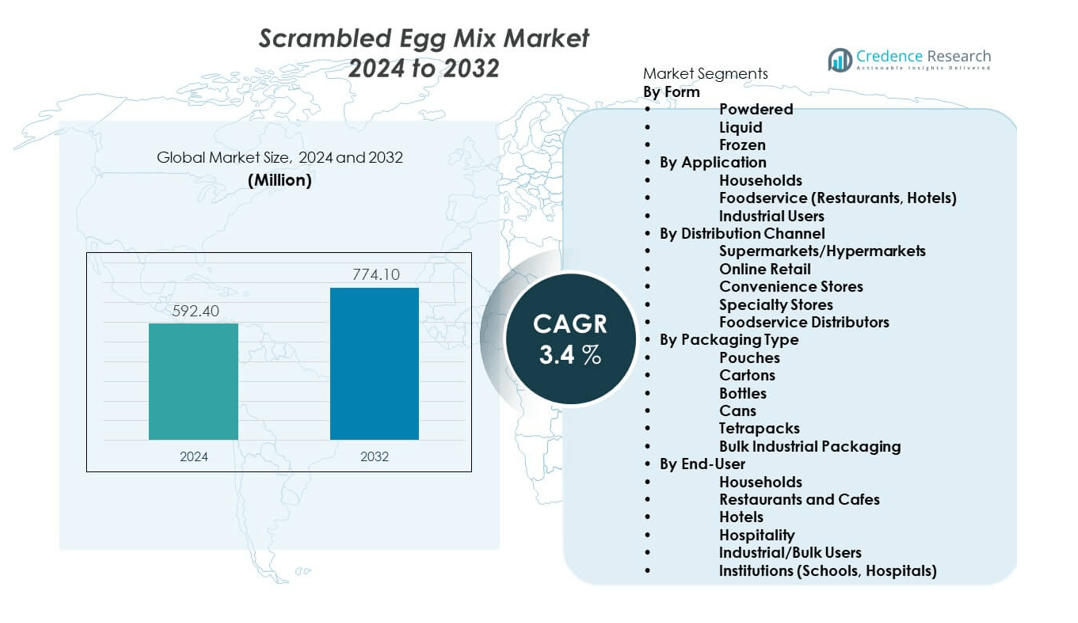
The Scrambled egg mix market is projected to grow from USD 592.4 million in 2024 to an estimated USD 774.1 million by 2032, with a compound annual growth rate (CAGR) of 3.4% during the forecast period.
| REPORT ATTRIBUTE |
DETAILS |
| Historical Period |
2020-2023 |
| Base Year |
2024 |
| Forecast Period |
2025-2032 |
| Scrambled Egg Mix Market Size 2024 |
USD 592.4 million |
| Scrambled Egg Mix Market , CAGR |
3.4% |
| Scrambled Egg Mix Market Size 2032 |
USD 774.1 million |
Growing urbanization, busy lifestyles, and rising preference for ready-to-cook breakfast options are key drivers. Consumers are increasingly drawn to products that combine convenience, taste, and nutrition, making scrambled egg mixes popular among households and commercial kitchens alike. The market benefits from rising awareness of protein-rich diets, expansion of e-commerce platforms, and innovation in packaging that extends shelf life. Health-conscious trends and the adoption of high-quality powdered egg products further enhance consumer trust and broaden the customer base.
Regionally, North America leads the scrambled egg mix market due to strong demand for convenient breakfast foods and established foodservice networks. Europe shows steady growth supported by dietary awareness and increasing use of egg-based products in hotels and catering. Asia-Pacific is emerging as a high-growth region, driven by urbanization, changing dietary habits, and expanding hospitality sectors in countries like China and India. Meanwhile, Latin America and the Middle East & Africa represent developing markets, supported by rising disposable incomes and growing retail penetration of packaged food products.
Market Insights:
- The scrambled egg mix market was valued at USD 592.4 million in 2024 and is projected to reach USD 774.1 million by 2032, growing at a CAGR of 3.4% during the forecast period.
- Rising demand for convenient and protein-rich breakfast solutions drives steady product adoption across households and foodservice sectors.
- Increasing popularity of protein-focused diets strengthens the market as consumers seek balanced and easy-to-prepare meals.
- Market restraints include competition from fresh eggs, plant-based substitutes, and cost sensitivity in low-income regions.
- Regulatory compliance challenges and supply chain disruptions from fluctuating egg production also pose hurdles.
- North America leads the market with strong foodservice adoption, while Europe records steady demand through hospitality and catering channels.
- Asia-Pacific emerges as the fastest-growing region, driven by urbanization, rising disposable incomes, and expanding retail and e-commerce channels.
Access crucial information at unmatched prices!
Request your sample report today & start making informed decisions powered by Credence Research Inc.!
Download Sample
Market Drivers
Rising Demand for Convenient Breakfast Options:
The scrambled egg mix market is driven by increasing consumer preference for quick meal solutions. Busy urban lifestyles encourage reliance on ready-to-cook food products that save time. Scrambled egg mixes provide convenience without compromising nutrition or taste. Households, students, and working professionals form a large share of the consumer base. Families appreciate consistent taste, texture, and ease of preparation. Foodservice outlets benefit from efficiency when serving large groups at once. It addresses the growing demand for portable and easy-to-make breakfast solutions. The combination of nutrition and convenience strongly supports long-term adoption.
- For instance, Nestlé’s Maggi Instant Egg Mix achieved rapid rehydration in just 45 seconds, streamlining preparation time in busy households and cafeterias, as confirmed by recent product testing.
Expanding Foodservice and Hospitality Sector:
The growth of hospitality and catering industries significantly supports product demand. Hotels and restaurants prefer scrambled egg mixes for efficiency and uniformity in meals. Catering services adopt them for cost control and scalability during events. Airlines and quick-service restaurants incorporate the mixes to maintain speed of service. Tourism and business travel boost hotel breakfasts, increasing usage across regions. The scrambled egg mix market finds strong traction in institutional foodservice operations. It ensures cost-effectiveness by reducing labor-intensive preparation processes. Dependence on bulk orders strengthens its role in commercial food applications.
- For instance, Sysco Corporation supplies over 1,000 foodservice clients monthly with its large-scale liquid egg mixes, which offer consistent quality and reduce preparation time by nearly 30 minutes per meal batch.
Rising Popularity of Protein-Rich Diets:
Global dietary habits increasingly prioritize protein-based foods. Consumers link protein intake with energy, fitness, and weight management. Scrambled egg mixes offer a rich protein source with minimal preparation effort. Fitness-conscious individuals integrate them into everyday diets for fast nutrition. Growing awareness of functional food enhances acceptance in diverse consumer groups. Supermarkets and health-focused stores highlight protein products to meet growing interest. The scrambled egg mix market benefits from its natural nutritional profile. It aligns with consumer objectives for healthier and more sustainable meal choices.
Growth in Packaged and E-Commerce Retail Channels:
Retail modernization expands the visibility of egg-based convenience foods. Supermarkets, hypermarkets, and specialty stores actively promote scrambled egg mixes. E-commerce platforms increase accessibility through home delivery and subscription services. Attractive online discounts and brand campaigns drive wider consumer trials. Urban consumers particularly adopt digital retail platforms for convenience. The scrambled egg mix market strengthens through partnerships with modern trade channels. It gains reach in both developed and emerging economies through retail expansion. Broader product availability across retail formats secures consistent market momentum.
Market Trends:
Product Innovation and Flavor Expansion:
Product innovation emerges as a defining trend in the market. Manufacturers experiment with herbs, spices, and fortified blends. Organic and allergen-free formulations expand consumer choices. Flavored mixes attract younger and adventurous consumer segments. Premium variants target health-conscious individuals seeking high-quality ingredients. The scrambled egg mix market benefits from continuous innovation to capture new customers. It positions the category as versatile and adaptable. Innovation ensures differentiation in an increasingly competitive marketplace.
- For instance, Kerry Group turmeric black pepper egg mix antioxidant level: Research supports turmeric + black pepper synergistic effect improves antioxidant status significantly.
Rising Focus on Sustainability and Ethical Sourcing:
Sustainability plays a vital role in shaping food purchasing habits. Consumers prefer brands that ensure responsible sourcing of ingredients. Cage-free and organic certification builds credibility among buyers. Environmentally friendly packaging attracts eco-conscious customers. Companies highlight ethical practices in marketing strategies. The scrambled egg mix market adapts by improving supply chain transparency. It appeals to both individual consumers and corporate buyers seeking accountability. Sustainability reinforces brand loyalty while aligning with global values.
- For instance, Vital Farms sources 100% cage-free eggs certified under rigorous animal welfare standards, guaranteeing ethical ingredient provenance for its scrambled egg mixes.
Integration of Technology in Foodservice Applications:
Technology adoption transforms foodservice operations worldwide. Automated kitchen tools support efficient use of pre-mixed egg products. Restaurants utilize dispensers for standardized portioning and cost control. Integration reduces food waste while maintaining consistent quality. Quick-service outlets value speed and reliability in preparation processes. The scrambled egg mix market grows through synergy with digital kitchen systems. It ensures uniform results across diverse commercial settings. Technology accelerates operational performance and enhances service delivery.
Expansion into Emerging Consumer Segments:
Evolving demographics broaden market opportunities across regions. Younger generations adopt convenience foods due to changing routines. Single-person households increase reliance on ready-to-cook options. Students find scrambled egg mixes affordable and time-saving. Health-conscious seniors embrace them for balanced nutrition and easy preparation. The scrambled egg mix market expands its base across lifestyle groups. It appeals to varied age categories by offering flexible consumption patterns. Growth in emerging demographics provides long-term stability for the industry.
Market Challenges Analysis:
Rising Competition from Fresh and Alternative Products:
The scrambled egg mix market faces competition from fresh eggs and substitutes. Consumers in many regions still prefer traditional fresh egg preparation. Plant-based alternatives gain attention among vegan and flexitarian segments. Price sensitivity creates challenges in low-income markets with limited packaged food adoption. Premium mixes sometimes struggle to appeal to cost-conscious households. It requires brands to invest heavily in awareness campaigns. Competition from local suppliers and fresh alternatives restrains market penetration. The market must balance affordability and quality to stay competitive.
Supply Chain Disruptions and Regulatory Compliance:
Raw material availability significantly influences industry performance. Fluctuations in egg production due to disease outbreaks impact costs. Global logistics disruptions create uncertainty in supply continuity. Packaging and labelling regulations differ across regions, creating compliance challenges. Smaller brands struggle to meet strict food safety standards. The scrambled egg mix market faces pressure from evolving regulatory frameworks. It requires continuous investment in monitoring and quality assurance. Efficient supply chain management remains critical for long-term sustainability.
Market Opportunities:
Expansion into Emerging Economies and Urban Markets:
Rapid urbanization in Asia-Pacific, Latin America, and Africa creates strong growth opportunities. Rising disposable incomes drive adoption of packaged convenience foods. Young populations in these regions value quick and nutritious breakfast choices. Expansion of supermarkets and e-commerce strengthens distribution. The scrambled egg mix market leverages this trend by targeting new demographics. It builds brand awareness through affordable price points and localized flavors. Retail penetration helps accelerate demand in untapped markets. The opportunity lies in tapping fast-growing consumer bases.
Innovation in Product Formats and Nutritional Enhancements:
Growing consumer awareness fosters interest in fortified and functional foods. Manufacturers experiment with mixes enriched with vitamins, minerals, and herbs. Flavored and premium variants attract diverse audience segments. Single-serve packaging appeals to students and working professionals. The scrambled egg mix market capitalizes on these innovations to stay relevant. It provides flexible solutions for both households and commercial users. Continuous improvements ensure higher customer satisfaction and differentiation. Product enhancement creates avenues for premium pricing and market expansion.
Market Segmentation Analysis:
By Form:
The scrambled egg mix market is segmented into powdered, liquid, and frozen forms. Powdered mixes dominate due to their extended shelf life, lightweight nature, and easy storage. Liquid mixes are preferred in foodservice settings for quick preparation and consistent quality. Frozen formats appeal to institutional buyers that prioritize bulk storage. Each format addresses distinct consumer and industry needs, strengthening overall adoption.
- For instance, Michael Foods’ liquid egg products maintain freshness for up to 21 days under refrigeration, facilitating efficient inventory management in commercial kitchens.
By Application:
Applications span across households, foodservice, and industrial users. Households seek convenience and nutrition, while restaurants and hotels adopt mixes for consistent service. Industrial users such as bakeries and prepared meal producers value egg mixes for reliable formulations in processed foods. The segment demonstrates versatility across consumer and commercial channels.
- For instance, Cal-Maine Foods supplies over 200 industrial customers with specialty egg products tailored for bakery applications, providing precise protein content that supports uniform product quality.
By Distribution Channel:
Supermarkets and hypermarkets represent the largest share, supported by strong consumer reach and visibility. Online retail grows rapidly as e-commerce expands in both developed and emerging markets. Convenience stores and specialty outlets provide accessibility to urban consumers. Foodservice distributors supply bulk products directly to hotels, caterers, and institutions.
By Packaging Type:
Packaging formats include pouches, cartons, bottles, cans, tetrapacks, and bulk packaging. Cartons hold the largest share, offering practical storage and durability. Pouches attract retail buyers seeking portability and portion control. Bulk packaging supports industrial and institutional demand. Each format ensures broader appeal to diverse customer bases.
By End-User:
End-user categories include households, restaurants, cafes, hotels, hospitality, industrial users, and institutions such as schools and hospitals. Households form a strong consumer base, while commercial users drive large-scale demand. Institutional adoption reflects the product’s importance in cost-effective meal programs. For instance, Nutriom OvaEasy reported sales of over 120,000 powdered units in 2024, highlighting demand for durable and lightweight mixes.
Segmentation:
By Form
By Application
- Households
- Foodservice (Restaurants, Hotels)
- Industrial Users (Bakeries, Prepared Meal Manufacturers)
By Distribution Channel
- Supermarkets/Hypermarkets
- Online Retail
- Convenience Stores
- Specialty Stores
- Foodservice Distributors
By Packaging Type
- Pouches
- Cartons
- Bottles
- Cans
- Tetrapacks
- Bulk Industrial Packaging
By End-User
- Households
- Restaurants and Cafes
- Hotels
- Hospitality
- Industrial/Bulk Users
- Institutions (Schools, Hospitals)
By Region
- North America
- Europe
- Germany
- France
- UK.
- Italy
- Spain
- Rest of Europe
- Asia Pacific
- China
- Japan
- India
- South Korea
- South-east Asia
- Rest of Asia Pacific
- Latin America
- Brazil
- Argentina
- Rest of Latin America
- Middle East & Africa
- GCC Countries
- South Africa
- The Rest of the Middle East and Africa
Regional Analysis:
North America and Europe
North America holds the largest share of the scrambled egg mix market, accounting for nearly 35% of global revenue. Strong demand for convenient breakfast solutions and the presence of well-established foodservice networks drive regional growth. The United States leads with wide adoption across households, hotels, and institutional kitchens. Canada also supports expansion with rising use in packaged food and catering. Europe follows with around 28% share, supported by strong hospitality industries and consumer preference for protein-rich foods. Countries such as the United Kingdom, Germany, and France are major contributors to market demand. It benefits from established retail networks and growing adoption in catering services.
Asia-Pacific
Asia-Pacific represents the fastest-growing region, holding around 25% of the scrambled egg mix market share. Rising urbanization and busy lifestyles in China, India, and Southeast Asia fuel strong demand. Expanding retail networks and the rapid growth of e-commerce platforms support wider accessibility. The hospitality sector, including hotels and quick-service restaurants, increasingly adopts scrambled egg mixes to meet growing customer volumes. Japan and South Korea contribute to premium segment growth with a preference for high-quality, protein-enriched foods. Australia also demonstrates steady consumption, supported by a strong foodservice culture. It strengthens its position by appealing to both household and commercial users.
Latin America and Middle East & Africa
Latin America and the Middle East & Africa together account for nearly 12% of the scrambled egg mix market. Latin America sees demand growth in Brazil and Mexico, driven by rising disposable incomes and changing food habits. Institutional adoption in schools and hospitals adds to steady expansion. The Middle East & Africa benefit from tourism growth and foodservice development in countries such as the UAE and Saudi Arabia. Retail penetration remains limited, but increasing awareness of convenience foods supports long-term opportunities. It continues to gain momentum as more consumers adopt packaged and ready-to-cook products. Regional growth potential remains strong with supportive demographics and infrastructure investment.
Shape Your Report to Specific Countries or Regions & Enjoy 30% Off!
Key Player Analysis:
- Nestlé S.A. (Nestlé Professional)
- The Kraft Heinz Company (Kraft)
- Unilever PLC (Knorr)
- Cargill, Incorporated
- McCain Foods Limited
- Augason Farms
- Sonstegard Foods Company
- National Food Group
- Nutriom OvaEasy
- Saratoga Farms
- Thrive Life, LLC.
- Backpacker’s Pantry
- Zeagold Quality Eggs
- Lodewijckx NV/SA
- GCF Corporation
Competitive Analysis:
The scrambled egg mix market features intense competition with global and regional players striving to strengthen their positions. Leading companies such as Nestlé, Kraft Heinz, Unilever, and Cargill focus on product innovation, flavor expansion, and supply chain efficiency. Smaller brands like Augason Farms, Nutriom OvaEasy, and Thrive Life emphasize niche offerings and lightweight packaging formats to cater to outdoor and retail segments. Foodservice-oriented suppliers target hotels, restaurants, and institutions through large-scale contracts. It remains competitive through continuous innovation, strategic partnerships, and expansion into emerging markets. Companies invest heavily in marketing campaigns and e-commerce distribution to increase consumer reach.
Recent Developments:
- In 2025, Unilever PLC (Knorr) has been focusing on innovation in markets like Mexico, with initiatives to provide flavorful and convenient meal solutions including scrambled eggs, although no specific new scrambled egg mix launch was announced within this year, their ongoing product development emphasizes sustainability and consumer health trends.
Report Coverage:
The research report offers an in-depth analysis based on Form, Application, Distribution Channel, Packaging Type, and End-User. It details leading market players, providing an overview of their business, product offerings, investments, revenue streams, and key applications. Additionally, the report includes insights into the competitive environment, SWOT analysis, current market trends, as well as the primary drivers and constraints. Furthermore, it discusses various factors that have driven market expansion in recent years. The report also explores market dynamics, regulatory scenarios, and technological advancements that are shaping the industry. It assesses the impact of external factors and global economic changes on market growth. Lastly, it provides strategic recommendations for new entrants and established companies to navigate the complexities of the market.
Future Outlook:
- Expansion of product innovation with fortified and flavored scrambled egg mixes.
- Growth in e-commerce and online grocery platforms supporting wider accessibility.
- Rising adoption of bulk packaging by hotels, restaurants, and institutional users.
- Increasing demand in emerging economies driven by urbanization and income growth.
- Strong role of sustainability with eco-friendly packaging and ethical sourcing.
- Broader appeal across demographics, including students, professionals, and seniors.
- Integration of automation in foodservice kitchens boosting usage of pre-mixed products.
- Steady growth in industrial applications such as bakeries and meal manufacturers.
- Strong marketing campaigns enhancing consumer awareness and trial adoption.
- Partnerships between multinational brands and regional distributors strengthening presence.



