
| REPORT ATTRIBUTE | DETAILS |
|---|---|
| Historical Period | 2019-2022 |
| Base Year | 2023 |
| Forecast Period | 2024-2032 |
| Switzerland Safety Gloves Market Size 2023 | USD 84.54 million |
| Switzerland Safety Gloves Market, CAGR | 5.31% |
| Switzerland Safety Gloves Market Size 2032 | USD 134.80 million |
Market Overview
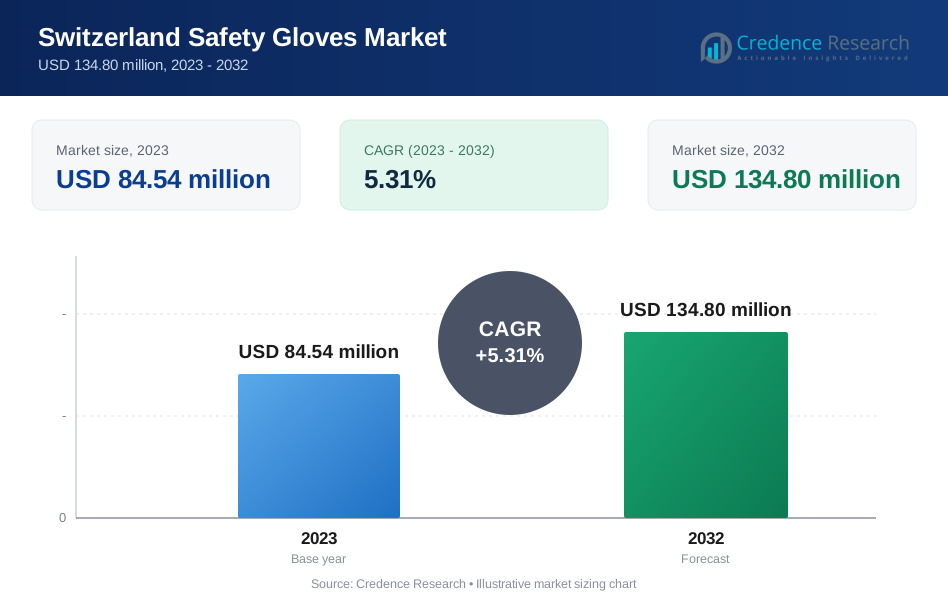
The Switzerland Safety Gloves Market is projected to grow from USD 84.54 million in 2023 to an estimated USD 134.80 million by 2032, reflecting a compound annual growth rate (CAGR) of 5.31% from 2024 to 2032. The market's steady expansion is driven by the increasing emphasis on workplace safety regulations across industries, particularly in construction, manufacturing, and healthcare.
Key drivers fueling the Switzerland Safety Gloves Market include stringent government regulations mandating safety standards, along with the rising prevalence of workplace injuries. Trends such as the adoption of eco-friendly and biodegradable gloves are gaining traction, driven by growing environmental concerns. Additionally, the demand for gloves with enhanced dexterity, grip, and cut resistance is rising as industries prioritize productivity and safety. The increasing use of automation and robotics in manufacturing is also creating demand for specialized safety gloves.
Geographically, urban industrial hubs in Switzerland account for significant market share due to the high concentration of manufacturing and construction activities. Key players in the market include Ansell Limited, Honeywell International Inc., 3M Company, Superior Glove, and Kimberly-Clark Corporation. These companies focus on innovation, offering technologically advanced gloves that meet specific industry requirements while adhering to environmental standards. The market's competitive landscape is shaped by continuous investments in research and development to improve product performance and expand applications.
Market Insights
- The Switzerland Safety Gloves Market is projected to grow from USD 84.54 million in 2023 to USD 134.80 million by 2032, with a CAGR of 5.31% from 2024 to 2032.
- Increasing workplace safety regulations, rising awareness of hand safety, and growing industrial sectors like construction and healthcare are driving market growth.
- The adoption of eco-friendly and biodegradable gloves is gaining traction as environmental concerns influence purchasing decisions in various industries.
- Advancements in glove materials, such as cut-resistant and chemical-resistant fabrics, are enhancing glove performance and expanding market opportunities.
- Stringent government regulations and safety standards are pushing industries to adopt high-quality safety gloves, ensuring worker protection.
- The Swiss-German region holds the largest market share, driven by high manufacturing and industrial activity, followed by the Swiss-French and Swiss-Italian regions.
- High production costs, especially in labor and energy-intensive industries, pose challenges to local manufacturers, competing with lower-cost imports.
Market Drivers
Stringent Workplace Safety Regulations
The Switzerland Safety Gloves Market is significantly driven by stringent workplace safety regulations mandated by the government and international standards. Regulatory bodies, such as the Federal Coordination Commission for Occupational Safety (FCOS), enforce strict compliance measures to ensure worker safety across various industries. For instance, FCOS mandates that employers must take all necessary measures to prevent occupational accidents and diseases, which includes providing appropriate personal protective equipment (PPE) such as gloves. This regulatory framework establishes clear requirements for safety gear and imposes penalties for non-compliance, compelling companies to prioritize the procurement of safety gloves to protect their workforce. Industries such as construction, manufacturing, and healthcare are particularly affected due to their high-risk environments, leading to a consistent demand for protective gloves.
Growing Awareness of Occupational Hazards
Rising awareness regarding occupational hazards is another critical driver for the safety gloves market in Switzerland. Employers increasingly recognize the importance of investing in high-quality protective gear to reduce workplace injuries, which can lead to significant financial and reputational losses. For instance, organizations frequently conduct training sessions and awareness campaigns about workplace safety, resulting in heightened demand for safety gloves that ensure both protection and comfort. Workers are also becoming more proactive in seeking PPE that meets their safety needs. The focus on ergonomic designs and innovative materials enhances user acceptance, further driving market growth. As both employers and employees prioritize safety, the adoption of safety gloves continues to rise, reflecting a collective commitment to creating safer work environments.
Technological Advancements in Glove Materials
Innovations in materials and technology play a pivotal role in the development of the Switzerland Safety Gloves Market. Manufacturers continually improve their offerings by introducing gloves with advanced features such as enhanced cut resistance, improved grip, and resistance to chemicals and extreme temperatures. For instance, the use of innovative materials like nitrile, neoprene, and polyurethane has gained traction among environmentally conscious consumers. Additionally, the integration of smart technologies into glove designs—such as sensors for real-time monitoring of hazardous conditions—addresses the growing demand for gloves that combine safety, durability, and user comfort while aligning with Switzerland’s sustainability goals.
Industrial Growth and Diversification
The robust industrial growth and diversification of sectors in Switzerland significantly contribute to the increasing demand for safety gloves. Sectors such as automotive, pharmaceuticals, construction, and chemicals are expanding rapidly, driving the need for specialized protective gloves tailored to specific industry requirements. For instance, the construction sector requires gloves with enhanced abrasion and cut resistance, while the pharmaceutical industry demands sterile and chemical-resistant options. Furthermore, the rise of automation and robotics in manufacturing has created a demand for gloves designed for precision handling and protection against mechanical hazards. As industries diversify, the demand for customized safety solutions continues to rise, providing a steady impetus to market growth.
Market Trends
Rising Demand for Sustainable and Eco-Friendly Gloves
The Switzerland Safety Gloves Market is witnessing a significant trend towards sustainable and eco-friendly products. Manufacturers are increasingly utilizing biodegradable materials, such as natural latex and recycled fibers, in response to the growing consumer demand for environmentally responsible options. For instance, companies are adopting greener production processes that minimize waste and reduce their overall environmental footprint. This shift is further accelerated by regulatory measures in Switzerland that emphasize environmental sustainability, particularly within the industrial sector. As a result, businesses are actively seeking gloves that align with eco-friendly practices, prompting manufacturers to position these sustainable gloves as premium offerings. This marketing strategy appeals to environmentally conscious companies that aim to meet global sustainability goals while enhancing their brand image.
Advancements in Glove Technology and Materials
Technological advancements are revolutionizing the safety gloves market, with manufacturers introducing innovative materials and designs to improve functionality. For instance, gloves now feature superior cut resistance and chemical protection, which are essential for high-risk industries like construction, chemical manufacturing, and healthcare. Additionally, the emergence of smart gloves equipped with integrated sensors represents a significant leap in workplace safety technology. These smart gloves can monitor temperature or detect hazardous chemicals, providing real-time feedback to workers and helping them avoid injuries. Furthermore, the development of lightweight and ergonomic designs ensures that safety gloves not only protect users but also enhance comfort during prolonged use. This focus on innovation addresses the growing need for durable and user-friendly protective gear across various sectors.
Customization and Industry-Specific Solutions
The demand for customized safety gloves tailored to specific industry requirements is on the rise in Switzerland. Different sectors, such as healthcare, automotive, and food processing, require gloves with unique features to meet their regulatory and operational needs. For example, healthcare gloves must be sterile and resistant to punctures, while food processing gloves need to comply with strict hygiene standards. This trend has prompted manufacturers to offer specialized gloves designed for diverse applications—from ultra-thin gloves for precision tasks to heavy-duty options for construction work. By focusing on customization, manufacturers ensure that their products not only enhance safety but also improve productivity and compliance across various settings.
Growing Adoption of Automation in Glove Manufacturing
The adoption of automation and advanced manufacturing technologies is transforming the Switzerland Safety Gloves Market. Automated production lines enable manufacturers to increase efficiency while maintaining consistent quality. For instance, robotic systems and machine learning algorithms are being utilized to optimize production processes, ensuring that gloves meet stringent safety standards. This integration of automation facilitates faster production cycles, allowing manufacturers to respond effectively to rising demand. Furthermore, the incorporation of Industry 4.0 technologies—such as real-time monitoring and predictive maintenance—streamlines manufacturing operations. This technological evolution allows companies to remain competitive in a dynamic market environment while ensuring that they deliver high-quality safety gloves tailored to the needs of various industries.
Market Challenges
Compliance with Stringent Regulations and Standards
One of the significant challenges in the Switzerland Safety Gloves Market is adhering to stringent safety and quality regulations. The Swiss regulatory environment mandates high standards for personal protective equipment (PPE), including safety gloves, to ensure worker safety across industries such as construction, manufacturing, and healthcare. For instance, the Swiss regulatory framework requires that PPE comply with EU Regulation 2016/425, which outlines essential safety standards for protective gear. This regulation necessitates rigorous testing and certification processes to ensure that gloves provide adequate protection against various hazards, including mechanical risks as defined by standards like EN 388 and EN 374.Manufacturers must obtain CE marking from approved bodies, indicating compliance with these stringent regulations. This process can involve significant investment in testing and certification, particularly for small and medium-sized enterprises (SMEs) that may struggle with the financial burden associated with meeting these high standards. Additionally, compliance with evolving European Union standards focused on eco-friendliness and biodegradability adds another layer of complexity; companies must invest in new technologies and sustainable materials to align with these requirements. While these regulations foster a safe working environment, they also increase the operational challenges for manufacturers, limiting their ability to compete effectively with larger players who may have more resources at their disposal.
High Costs and Market Competition
The high cost of producing quality safety gloves in Switzerland poses another challenge for market participants. Switzerland’s labor costs and energy expenses are among the highest in Europe, significantly impacting the overall production cost of safety gloves. This elevated cost structure drives up retail prices, making it difficult for local manufacturers to compete with imported gloves from countries where production costs are lower. For example, while Swiss manufacturers focus on innovation and premium products to differentiate themselves in the market, intense competition from international brands offering affordable alternatives places additional pressure on them. Price-sensitive industries may opt for cheaper imports, hampering market share growth for domestic players. As a result, local manufacturers must strike a delicate balance between maintaining high quality and achieving cost efficiency. The challenge lies not only in adhering to stringent regulations but also in navigating a competitive landscape where price sensitivity can dictate purchasing decisions. Consequently, while innovation remains a key strategy for differentiation, the overarching need to manage costs effectively is critical for sustaining competitiveness in the Swiss safety gloves market.
Market Opportunities
Expansion of Eco-Friendly Product Lines
A significant market opportunity in the Switzerland Safety Gloves Market lies in the growing demand for eco-friendly and sustainable products. As environmental concerns continue to rise globally, Switzerland, known for its commitment to sustainability, presents a unique opportunity for manufacturers to develop and market biodegradable, recyclable, or low-impact gloves. The shift towards environmentally conscious consumerism, driven by both individual businesses and regulatory bodies, offers an opening for safety glove manufacturers to lead the market with green innovations. For instance, manufacturers are increasingly experimenting with gloves made from plant-based polymers, which significantly reduce environmental impact while catering to the eco-conscious consumer segment. This trend aligns with Switzerland's strong commitment to sustainability, as evidenced by various initiatives promoting the use of renewable resources in manufacturing processes. Regulatory bodies are also advocating for environmentally responsible practices, creating a supportive landscape for manufacturers to innovate and market eco-friendly gloves. By developing products that utilize renewable materials or recycled content, companies can not only meet consumer demand but also align with sustainability regulations, attracting customers who prioritize environmental responsibility. This focus on eco-friendly product lines positions safety glove manufacturers to capitalize on a growing market segment while contributing positively to global sustainability efforts.
Growth in Industrial and Construction Sectors
The industrial and construction sectors in Switzerland are experiencing steady growth, creating a robust demand for specialized safety equipment, including gloves. With significant investments in infrastructure development and smart city projects, there is an increasing need for high-performance safety gloves that offer superior protection against cuts, abrasions, and other workplace hazards. For example, recent government initiatives aimed at enhancing urban development have led to a marked increase in construction projects across the country.In response to this growth, safety glove manufacturers are focusing on creating specialized products tailored to the unique demands of these sectors. Additionally, advancements in technology such as robotics and automation are prompting industries to seek gloves that provide both dexterity and protection. This evolution not only necessitates high-quality materials but also innovative designs that address specific industrial applications. By providing industry-specific solutions—such as gloves designed for construction, chemical handling, or heavy-duty manufacturing—manufacturers can effectively capitalize on the expanding opportunities within these sectors. As industries continue to evolve and embrace new technologies, the demand for specialized safety gloves is expected to grow significantly, offering ample opportunities for innovation and market penetration.
Market Segmentation Analysis
By Product
The Switzerland Safety Gloves Market features a variety of products designed to meet the specific needs of different industries. Nitrile gloves dominate due to their superior puncture and chemical resistance, making them ideal for healthcare, chemical manufacturing, and food processing. They are also hypoallergenic, catering to workers with sensitive skin. Latex gloves, known for their elasticity and comfort, are widely used in healthcare but face limited adoption due to latex allergies, leading to a shift toward nitrile and vinyl alternatives. Vinyl gloves are popular for their cost-effectiveness and are commonly used in non-hazardous applications such as food handling and light industrial tasks. Puncture-resistant gloves, designed to protect workers in high-risk industries like construction and automotive, are gaining demand due to an increased focus on safety. Polyethylene gloves, lightweight and affordable, are primarily used in food handling and medical examinations, offering basic protection for short-term tasks.
By Application
Safety gloves are essential across various applications, each designed to protect workers from specific hazards. Biological gloves are used in healthcare, laboratory, and pharmaceutical industries to shield workers from exposure to pathogens and bacteria, with demand rising due to increased health and safety awareness, especially after the COVID-19 pandemic. Chemical gloves, commonly made of nitrile or neoprene, protect against harmful chemicals and are vital in industries like chemical manufacturing, pharmaceuticals, and agriculture. Mechanical gloves provide protection against cuts, abrasions, and impacts, and are widely used in construction, automotive, and manufacturing sectors due to stringent safety regulations. Thermal gloves safeguard workers from extreme temperatures, essential in industries like metallurgy, welding, and food processing, with demand increasing as worker safety becomes a priority. Finally, anti-static gloves are crucial in electronics and semiconductor industries to prevent static discharge from damaging sensitive components, with their use growing in line with technological advancements and the increasing demand for electronic devices.
Segments
Based on Product
- Nitrile Gloves
- Latex Gloves
- Vinyl Gloves
- Puncture-Resistant Gloves
- Polyethylene Gloves
Based on Application
- Biological
- Chemical
- Mechanical
- Thermal
- Anti-Static
Based on End-User
- Healthcare
- Food and Beverages
- Transportation
- Fire Protection
- Manufacturing
Based on Type
- Disposable
- Reusable
Based on Distribution Channel
- Retail
- Direct Sales/B2B
Based on Region
- Swiss-German Region
- Swiss-French Region
- Swiss-Italian Region
Regional Analysis
Swiss-German Region (50%)
The Swiss-German region, including major cities like Zurich, Basel, and Bern, dominates the Switzerland Safety Gloves Market, contributing around 50% of the total market share. This region is home to a highly industrialized economy, with a strong presence of manufacturing, automotive, and chemical industries. The Swiss-German region also has a large proportion of the country's healthcare facilities, which drives the demand for medical and biological safety gloves. The robust industrial infrastructure and stringent safety regulations in this region further enhance the market for safety gloves. Additionally, the region’s emphasis on technological advancements and automation in manufacturing increases the demand for gloves designed to provide both protection and dexterity.
Swiss-French Region (30%)
The Swiss-French region, including cities like Geneva and Lausanne, accounts for approximately 30% of the market share. This region has a diverse industrial base, including pharmaceutical, chemical, and financial sectors. The pharmaceutical industry, in particular, contributes significantly to the demand for high-quality safety gloves, especially in biological and chemical applications. With several global pharmaceutical companies operating in this region, the need for specialized gloves with precise features like chemical resistance and sterility is growing. Furthermore, with Switzerland's proximity to European Union regulations, the region often aligns with EU standards, encouraging the use of high-performance gloves in various industries. The demand for eco-friendly and sustainable safety gloves is also increasingly being felt in this region, aligning with the growing trend of environmental responsibility in Swiss-French businesses.
Key players
- 3M
- MCR Safety
- Ergodyne
- Saf-T-Gard International, Inc.
- Radians Inc.
- Protective Industrial Products, Inc.
- Lakeland Industries, Inc.
- Honeywell International Inc.
- GFox
- Karam Africa
Competitive Analysis
The Switzerland Safety Gloves Market is highly competitive, with key players focusing on product innovation, quality, and safety features to cater to diverse industrial needs. Companies like 3M and Honeywell International Inc. are leaders due to their extensive product portfolios and technological advancements in glove materials, such as cut-resistant and chemical-resistant gloves. MCR Safety and Ergodyne are notable competitors in the industrial segment, offering specialized gloves designed for mechanical and thermal protection. Saf-T-Gard International and Radians Inc. emphasize customization and ergonomic designs, addressing specific industry requirements, while Lakeland Industries and Protective Industrial Products, Inc. focus on expanding their global footprint and strengthening market presence. Emerging players like GFox and Karam Africa are gaining traction by offering cost-effective solutions, particularly in emerging markets, further intensifying the competitive landscape. As safety standards evolve, these companies are expected to maintain competitive edge through continuous innovation and strategic partnerships.
Recent Developments
- In January 2025, 3M announced the launch of a new line of safety gloves specifically designed for the construction industry in Switzerland. These gloves feature enhanced grip and cut resistance, addressing the increasing demand for protective gear in high-risk environments. The company emphasized its commitment to innovation and worker safety in the announcement.
- In February 2025, MCR Safety introduced a new range of disposable gloves made from eco-friendly materials. This initiative aims to cater to the growing market demand for sustainable products while ensuring adequate protection for workers in various industries, including healthcare and food processing.
- In April 2025, Saf-T-Gard International, Inc. launched a marketing campaign in Switzerland highlighting its comprehensive line of chemical-resistant gloves. The campaign focuses on educating customers about the importance of proper glove selection in preventing workplace injuries related to chemical exposure.
- In July 2025, Lakeland Industries, Inc. launched a new line of flame-resistant gloves tailored for the oil and gas industry. The gloves are designed to provide maximum protection against heat and flames while maintaining comfort and dexterity for workers.
- In August 2025, Honeywell International Inc. revealed an innovative glove technology that integrates smart sensors to monitor hand movements and provide real-time feedback on grip strength. This technology aims to enhance safety protocols in industries where precision handling is critical.
Market Concentration and Characteristics
The Switzerland Safety Gloves Market exhibits a moderate to high level of concentration, with a mix of global and regional players competing for market share. Leading multinational companies like 3M, Honeywell International Inc., and MCR Safety dominate the market due to their established brand presence, extensive product portfolios, and advanced technological innovations. These companies focus on offering specialized, high-quality gloves that cater to diverse industries such as healthcare, construction, and manufacturing. At the same time, smaller, regional players like GFox and Karam Africa contribute to the competitive landscape by offering cost-effective solutions and focusing on niche applications. The market is characterized by continuous innovation in materials, such as eco-friendly options and smart gloves with integrated technology, as well as an increasing demand for customization to meet the specific safety requirements of different industries. As safety standards become more stringent, companies are investing in research and development to stay competitive and comply with regulatory changes.
Report Coverage
The research report offers an in-depth analysis based on Product, Application, End-User, Type, Distribution Channel and Region. It details leading market players, providing an overview of their business, product offerings, investments, revenue streams, and key applications. Additionally, the report includes insights into the competitive environment, SWOT analysis, current market trends, as well as the primary drivers and constraints. Furthermore, it discusses various factors that have driven market expansion in recent years. The report also explores market dynamics, regulatory scenarios, and technological advancements that are shaping the industry. It assesses the impact of external factors and global economic changes on market growth. Lastly, it provides strategic recommendations for new entrants and established companies to navigate the complexities of the market.
Future Outlook
- As sustainability becomes a key priority, there will be a rising demand for eco-friendly and biodegradable safety gloves. Companies will increasingly adopt green manufacturing practices to meet consumer and regulatory expectations.
- The incorporation of smart technologies, such as sensors and IoT-enabled gloves, will expand in industries like manufacturing and healthcare, providing real-time monitoring for enhanced worker safety.
- The development of new materials, including ultra-durable, cut-resistant, and chemical-resistant fabrics, will drive innovation in the safety gloves sector. This will cater to industries with high-risk tasks, such as construction and chemical handling.
- Demand for customized gloves specific to various industries will grow. Manufacturers will focus on providing tailored solutions to meet the exact needs of workers in specialized fields like pharmaceuticals and food processing.
- Growing awareness of workplace safety hazards and the long-term health impact on workers will drive the need for high-quality protective gloves. As industries prioritize safety, the gloves market will experience robust growth.
- With an increasing emphasis on hygiene and protection, the healthcare sector will see continued growth in the use of medical-grade safety gloves. The COVID-19 pandemic has accelerated this trend, pushing long-term demand for personal protective equipment.
- As the adoption of robotics and automation increases in manufacturing, the demand for gloves offering dexterity and protection from mechanical hazards will rise, especially in precision tasks.
- Stricter regulations related to workplace safety standards will drive the need for compliance, leading to a consistent demand for high-performance gloves that meet international and local safety requirements.
- Emerging markets, particularly in construction and automotive industries, will fuel the demand for robust safety gloves. This will lead to growth in both domestic and international markets.
- As competition intensifies, manufacturers will focus on balancing cost-efficiency with high-quality production. Affordable, durable gloves will cater to industries seeking to reduce expenses without compromising worker protection.
Request a Free Sample
Fill in your details and we'll send you a free sample report.
- Sample data tables & charts
- Research methodology
Need a Custom Version of This Report?
Tailor the scope, geography, or segments to your exact requirements.
- Custom geography or segment scope
- Direct access to our analyst team
Frequently Asked Questions
What is the market size of the Switzerland Safety Gloves Market in 2023 and 2032?
What are the key drivers of growth in the Switzerland Safety Gloves Market?
How are technological advancements influencing the safety gloves market?
What are the main applications for safety gloves in Switzerland?
Which regions are contributing most to the Switzerland Safety Gloves Market?
Table of Content
Chapter 1. Report Introduction
- 1.1 Report Description & Purpose
- 1.1.1 Report Title & Market Definition
- 1.1.2 Unique Selling Propositions (USP) & Key Differentiators
- 1.1.3 Value Proposition for Stakeholders
- 1.2 Research Objectives
- 1.2.1 Market Sizing Objectives (Volume & Revenue)
- 1.2.2 Segmentation Objectives
- 1.2.3 Competitive Intelligence Objectives
- 1.2.4 Forecast & Scenario Objectives
- 1.3 Report Scope
- 1.3.1 Switzerland Safety Gloves Scope – Types & Subtypes Covered
- 1.3.2 Geographic Scope – Regions & Countries Covered
- 1.3.3 Historical Period, Base Year & Forecast Period (2023; forecast to 2032)
- 1.3.4 Inclusions & Exclusions
- 1.4 HS Code & Classification Framework
- 1.5 Currency, Units & Pricing Basis
- 1.6 Target Stakeholders
- 1.7 Limitations & Assumptions
Chapter 2. Executive Summary
- 2.1 Global Switzerland Safety Gloves Market Snapshot
- 2.1.1 Market Size – Historical (2023) & Forecast (2023-2032) (2023: USD 84.54 million → 2032: USD 134.80 million)
- 2.1.2 Volume & Revenue – Global Totals
- 2.1.3 Key Market Highlights – Top Five Facts
- 2.2 Switzerland Safety Gloves Market Segmentation Snapshot
- 2.2.1 Market Split by Region – 2023 vs. 2032
- 2.3 Competitive Snapshot
- 2.3.1 Top 10 Players by Revenue Share – 2023
- 2.3.2 Top 10 Players by Volume Share – 2023
- 2.3.3 Recent Strategic Developments (18-Month Summary)
- 2.4 Key Investment Highlights & Strategic Conclusions
Chapter 3. Switzerland Safety Gloves Market Dynamics & Industry Analysis
- 3.1 Market Overview & Context
- 3.1.1 Switzerland Safety Gloves Market Position in the Broader Automotive Value Chain
- 3.1.2 OEM vs. Replacement Market Dynamics
- 3.1.3 Market Maturity & Development Stage by Region
- 3.2 Switzerland Safety Gloves Market Drivers
- 3.3 Switzerland Safety Gloves Market Restraints & Challenges
- 3.4 Switzerland Safety Gloves Market Opportunities
- 3.5 Porter's Five Forces Analysis
- 3.5.1 Threat of New Entrants
- 3.5.2 Bargaining Power of Suppliers
- 3.5.3 Bargaining Power of Buyers
- 3.5.4 Threat of Substitutes
- 3.5.5 Competitive Rivalry – Intensity Assessment
- 3.6 Switzerland Safety Gloves Value Chain Analysis
- 3.6.1 Upstream – Raw Material/Input Suppliers
- 3.6.1.1 Raw Material/Input 1
- 3.6.1.2 Raw Material/Input 2
- 3.6.1.3 Raw Material/Input 3
- 3.6.2 Midstream – Production/Manufacturing/Service Delivery
- 3.6.2.1 Production/Process Overview
- 3.6.2.2 Key Facility Locations & Capacity by Manufacturer
- 3.6.3 Downstream – Distribution & End Consumer
- 3.6.3.1 Primary Channel – B2B/OEM
- 3.6.3.2 Secondary Channels – Dealer, Retail, Online, Direct
- 3.6.4 Value Chain Profitability Analysis
- 3.6.1 Upstream – Raw Material/Input Suppliers
- 3.7 PESTEL Analysis
- 3.7.1 Political Factors
- 3.7.2 Economic Factors
- 3.7.3 Social Factors
- 3.7.4 Technological Factors
- 3.7.5 Environmental Factors
- 3.7.6 Legal Factors
- 3.8 Switzerland Safety Gloves Supply Chain Analysis
- 3.8.1 Raw Material/Input Supply Risk Assessment
- 3.8.2 Manufacturing Concentration Risk (Geographic Exposure)
- 3.8.3 Trade Disruption Impact Analysis
- 3.9 Regulatory & Policy Landscape
Note: The regulatory and policy landscape section covers regulations based on their applicability to the market, Switzerland Safety Gloves category, geography, and scope of the study. Only regulatory frameworks with a material impact on operations, compliance, trade, sustainability, or market access are analyzed in detail.
Chapter 4. Key Investment Pockets & Opportunity Analysis
- 4.1 Switzerland Safety Gloves Market Attractiveness Analysis
- 4.1.1 By Region – Investment Attractiveness Matrix (Volume × CAGR)
- 4.2 Absolute Revenue Growth Opportunity
- 4.2.1 By Region – Absolute USD Growth Through 2032
- 4.3 Incremental Volume Opportunity
- 4.3.1 By Region – Incremental Volume Through 2032
- 4.3.2 Segment – Incremental Volume
- 4.4 Emerging Submarket Opportunity Deep Dive (Subject to Applicability)
- 4.5 Emerging Market Opportunity Scorecards
- 4.5.1 United States
- 4.5.2 Europe
- 4.5.3 Asia
- 4.5.4 Middle East & Africa
Note: Emerging Market Opportunity Scorecards will be included based on relevance and strategic importance. Regions listed are indicative and may vary depending on data availability and market dynamics.
Chapter 5. Switzerland Safety Gloves Import-Export Analysis & Trade Flows
- 5.1 Global Trade Overview
- 5.1.1 Global Export Value by Country (2023)
- 5.1.2 Global Export Volume by Country (2023)
- 5.1.3 Global Import Value by Country (2023)
- 5.1.4 Global Import Volume by Country (2023)
- 5.1.5 Net Trade Balance by Country (2023)
- 5.2 Export Analysis – Segment
- 5.2.1 Type 1 (HS Code)
- 5.2.2 Type 2 (HS Code)
- 5.2.3 Type 3 (HS Code)
- 5.2.4 Type 4 (HS Code)
- 5.2.5 Type 5 (HS Code)
- 5.3 Import Analysis – Segment
- 5.3.1 Type 1 (HS Code)
- 5.3.2 Type 2 (HS Code)
- 5.3.3 Type 3 (HS Code)
- 5.3.4 Type 4 (HS Code)
- 5.3.5 Type 5 (HS Code)
- 5.4 Average Unit Trade Prices
- 5.4.1 Average Export Price – Segment & Country
- 5.4.2 Average Import Price – Segment & Source Country
- 5.4.3 Price Trends (2023)
- 5.5 Key Trade Route Analysis
- 5.5.1 Trade Route 1
- 5.5.2 Trade Route 2
- 5.5.3 Trade Route 3
- 5.5.4 Trade Route 4
- 5.5.5 Trade Route 5
- 5.6 Trade Policy Impact Assessment
- 5.6.1 US Anti-Dumping & Section 301 Tariffs
- 5.6.2 EU Customs Union Impact
- 5.6.3 Major Free Trade Agreements
- 5.6.4 USMCA Rules of Origin
Note: Trade policy analysis will be included only where relevant to the Switzerland Safety Gloves market.
Chapter 6. Competitive Landscape & Company Benchmarking
- 6.1 Switzerland Safety Gloves Market Concentration & Structure
- 6.1.1 Herfindahl-Hirschman Index (HHI) – vs. 2023
- 6.1.2 Tier 1, Tier 2 & Tier 3 Market Structure
- 6.1.3 Global, Regional & Local Player Dynamics
- 6.2 Switzerland Safety Gloves Market Share Analysis – 2023
- 6.2.1 Global Revenue Share by Company
- 6.2.2 Global Volume Share by Company
- 6.2.3 Regional Revenue Share
- 6.2.4 Market Share Evolution ( vs. 2023)
- 6.2.5 OEM Segment Share by Company
- 6.2.6 Replacement Segment Share by Company
- 6.3 Production/Delivery Capacity & Facility Analysis
- 6.3.1 Global Installed Capacity
- 6.3.2 Capacity Utilization Rates
- 6.3.3 Production/Output Volume
- 6.3.4 Facility Locations & Capacity Map
- 6.3.5 Planned Capacity Additions
- 6.4 Switzerland Safety Gloves Competitive Benchmarking Matrix
- 6.4.1 Revenue, Volume, CAGR & Profitability Comparison
- 6.4.2 Channel Revenue Mix
- 6.4.3 Geographic Revenue Exposure
- 6.4.4 R&D Intensity
- 6.4.5 Sustainability Maturity
- 6.5 Strategic Developments in Switzerland Safety Gloves (Last 24 Months)
- 6.5.1 Mergers, Acquisitions & Divestments
- 6.5.2 New Switzerland Safety Gloves Launches
- 6.5.3 Facility Expansions
- 6.5.4 Strategic Alliances, Joint Ventures & Partnerships
- 6.5.5 Distribution Expansion & Market Entry
- 6.5.6 Sustainability & ESG Initiatives
- 6.6 Competitive Strategy Mapping
- 6.6.1 Leader, Challenger, Follower & Niche Classification
- 6.6.2 Pricing Strategy Comparison
- 6.6.3 Channel Strategy Matrix
Note: Strategic developments are included based on their materiality and the availability of reliable information.
Chapter 7. Global Switzerland Safety Gloves Market – By Distribution Channel
- 7.1 Segment Overview
- 7.1.1 Volume & Revenue Split by Channel (2023 & 2032)
- 7.1.2 Channel Mix Evolution (2023-2032)
Chapter 8. Regional Market Analysis – Global Overview
- 8.1 Global Regional Overview
- 8.1.1 Regional Volume Share
- 8.1.2 Regional Revenue Share
- 8.1.3 Regional Volume by Region
- 8.1.4 Regional Revenue by Region
- 8.1.5 Regional Forecast Through 2032
- 8.2 Cross-Regional Segment Analysis
- 8.2.1 By Distribution Channel
- 8.2.2 By Brand/Price Tier
Chapter 9. North America Switzerland Safety Gloves Market
- 9.1 United States
- 9.2 Canada
- 9.3 Mexico
Chapter 10. Europe Switzerland Safety Gloves Market
- 10.1 Germany
- 10.2 France
- 10.3 Italy
- 10.4 United Kingdom
- 10.5 Spain
- 10.6 Poland
- 10.7 Russia
- 10.8 Netherlands
- 10.9 Belgium
- 10.10 Sweden
- 10.11 Denmark
- 10.12 Norway
- 10.13 Rest of Europe
Chapter 11. Asia Pacific Switzerland Safety Gloves Market
- 11.1 China
- 11.2 India
- 11.3 Japan
- 11.4 South Korea
- 11.5 Thailand
- 11.6 Indonesia
- 11.7 Vietnam
- 11.8 Malaysia
- 11.9 Australia
- 11.10 Rest of Asia Pacific
Chapter 12. Latin America Switzerland Safety Gloves Market
- 12.1 Brazil
- 12.2 Argentina
- 12.3 Colombia
- 12.4 Chile
- 12.5 Rest of Latin America
Chapter 13. Middle East Switzerland Safety Gloves Market
- 13.1 Saudi Arabia
- 13.2 United Arab Emirates
- 13.3 Turkey
- 13.4 Israel
- 13.5 Iran
- 13.6 Rest of the Middle East
Chapter 14. Africa Switzerland Safety Gloves Market
- 14.1 South Africa
- 14.2 Egypt
- 14.3 Nigeria
- 14.4 Morocco
- 14.5 Rest of Africa
Chapter 15. Switzerland Safety Gloves Company Profiles
- 15.1 [Company 01]
- 15.1.1 Company Overview
- 15.1.2 Key Management Personnel
- 15.1.3 Products & Services Portfolio
- 15.1.4 Financial Performance
- 15.1.5 Key Market Focus & Geographic Presence
- 15.1.6 Recent Developments & Strategic Initiatives
Note: The company profile list is preliminary and may change based on research findings, market developments, data availability, and client requirements.
Chapter 16. Appendices
- Appendix A – List of Abbreviations & Acronyms
- Appendix B – Industry Classification Code Reference – Full Series
- Appendix C – Production & Capacity Data Tables
- Appendix D – End-Use & Demand Base Tables
- Appendix E – Consumption & Replacement Rate Assumptions
- Appendix F – ASP Reference Tables
- Appendix G – Manufacturing & Facility Database
- Appendix H – Import-Export Data Tables
- Appendix I – Regulatory Summary Tables
- Appendix J – Primary Research Participant List (Anonymized)
- Appendix K – Primary Research Questionnaire Framework
- Appendix L – Data Sources & Bibliography
- Appendix M – Market Size Divergence & Source Comparison
Chapter 17. Research Methodology
- 17.1 Research Framework & Philosophy
- 17.2 Secondary Research – Sources, Hierarchy & Data Extraction
- 17.3 Data Modeling – Bottom-Up & Top-Down Market Sizing
- 17.4 Primary Research – Stakeholder Framework, LOI & Sample Sizes
- 17.5 Forecast Methodology – Regression, Scenario & Sensitivity Analysis
- 17.6 Quality Control – Four-Layer Validation Framework
- 17.7 Limitations & Standard Assumptions
- 17.8 Disclaimer
