| REPORT ATTRIBUTE | DETAILS |
|---|---|
| Historical Period | 2019-2022 |
| Base Year | 2023 |
| Forecast Period | 2024-2032 |
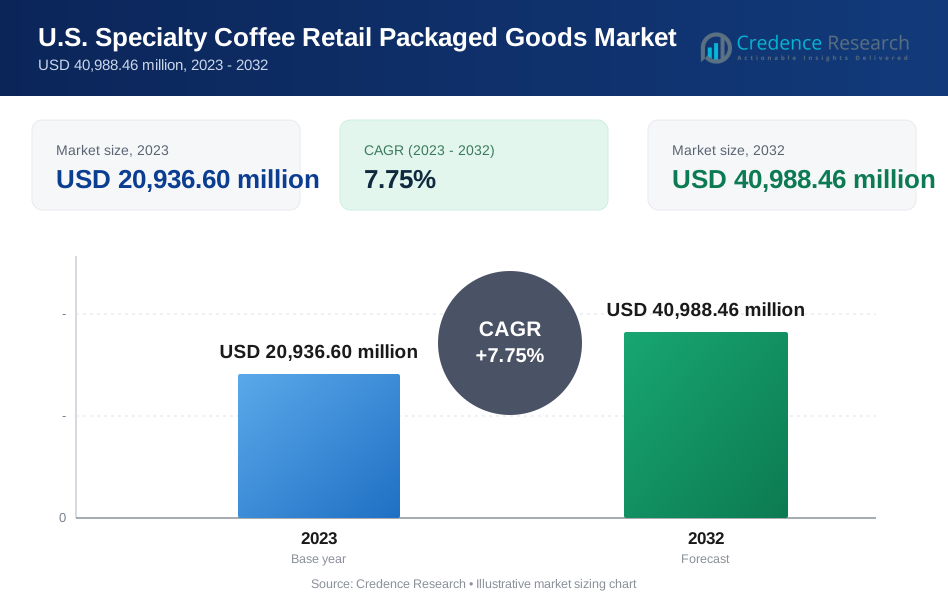
| U.S. Specialty Coffee Retail Packaged Goods Market Size 2023 | USD 20,936.60 Million |
| U.S. Specialty Coffee Retail Packaged Goods Market, CAGR | 7.75% |
| U.S. Specialty Coffee Retail Packaged Goods Market Size 2032 | USD 40,988.46 Million |
Market Overview
The U.S. Specialty Coffee Retail Packaged Goods Market is projected to grow from USD 20,936.60 million in 2023 to an estimated USD 40,988.46 million by 2032, with a compound annual growth rate (CAGR) of 7.75% from 2024 to 2032. This robust growth underscores the increasing demand for high-quality, premium coffee products among U.S. consumers. Factors such as rising disposable incomes, a growing number of coffee enthusiasts, and an increasing preference for home-brewed coffee are contributing to the market's expansion. Additionally, the proliferation of specialty coffee shops and the influence of social media trends are encouraging consumers to seek out unique and premium coffee experiences, further driving market growth.
Key drivers of the U.S. specialty coffee retail packaged goods market include the increasing consumer preference for premium and ethically sourced coffee products. Trends such as the third wave coffee movement, which emphasizes high-quality coffee production, and the growing interest in sustainable and fair-trade coffee are significant contributors to market growth. Additionally, the advent of e-commerce platforms has made specialty coffee products more accessible to a broader audience, facilitating easier purchasing and expanding market reach. Innovations in packaging, such as single-serve pods and ready-to-drink coffee beverages, also cater to the convenience-focused lifestyle of modern consumers, boosting market demand.
Geographically, the U.S. specialty coffee market is diverse, with significant growth observed across various regions. The West Coast, particularly California, remains a dominant player due to its established coffee culture and numerous specialty coffee shops. The East Coast, including New York and Washington D.C., also shows substantial market activity driven by urban coffee enthusiasts and a high concentration of specialty coffee retailers. Key players in the market include Starbucks Corporation, J.M. Smucker Company, Nestlé USA, Inc., and Keurig Dr Pepper Inc. These companies are continually innovating and expanding their product portfolios to meet evolving consumer preferences, ensuring their stronghold in the competitive landscape of the specialty coffee market.
Market Drivers
Increasing Consumer Preference for Premium and Ethically Sourced Coffee
One of the primary drivers of the U.S. specialty coffee retail packaged goods market is the increasing consumer preference for premium and ethically sourced coffee products. As consumers become more discerning about the quality and origin of their coffee, there is a growing demand for products that offer superior taste, unique flavor profiles, and ethical sourcing practices. The third wave coffee movement, which emphasizes artisanal methods of coffee production, has significantly influenced consumer behavior. This movement promotes high-quality beans, often single-origin, that are sourced directly from farmers practicing sustainable and fair-trade methods. Consumers are willing to pay a premium for these products, driving growth in the specialty coffee segment. The awareness of social and environmental issues associated with coffee production further reinforces this trend, as more consumers seek out brands that align with their values. For instance, a survey found that 60% of coffee drinkers in the U.S. reported a preference for premium coffee products, and 70% expressed a willingness to pay more for ethically sourced coffee. This trend is particularly strong among millennials and Gen Z consumers, who are driving the third wave coffee movement. The market's growth is propelled by these evolving preferences, making quality and sustainability key characteristics of the specialty coffee segment.
Growth of E-commerce and Online Retail Platforms
The proliferation of e-commerce and online retail platforms has played a crucial role in expanding the U.S. specialty coffee retail packaged goods market, which exhibits a moderate to high level of market concentration. Online shopping offers convenience and accessibility, allowing consumers to explore and purchase a wide variety of specialty coffee products from the comfort of their homes. The digital marketplace provides a platform for both established brands, such as The J.M. Smucker Company and Strauss Group Ltd., and niche coffee roasters to reach a broader audience. This accessibility has facilitated the growth of direct-to-consumer models, where consumers can subscribe to receive regular shipments of their favorite specialty coffees. Additionally, online platforms offer detailed product descriptions, customer reviews, and brewing tips, enhancing the overall shopping experience and encouraging repeat purchases. The growth of e-commerce is particularly significant in reaching younger demographics who are more likely to shop online and seek out unique, high-quality coffee products. For example, it was reported that online sales of specialty coffee products increased by 20% year-on-year. Furthermore, a study found that 55% of consumers had purchased coffee online in the past year, with 30% subscribing to a coffee delivery service. These trends are particularly pronounced among younger demographics, with 75% of consumers aged 18-34 reporting that they regularly purchase coffee online.
Innovations in Packaging and Product Formats
Innovations in packaging and product formats are significantly driving the growth of the U.S. specialty coffee retail packaged goods market. Modern consumers prioritize convenience without compromising on quality, leading to the development of various innovative coffee products. Single-serve pods, ready-to-drink (RTD) coffee beverages, and specialty instant coffee cater to the fast-paced lifestyles of many consumers. These products offer the quality of specialty coffee with the convenience of quick preparation, appealing to both busy professionals and coffee enthusiasts. Sustainable packaging solutions, such as compostable pods and recyclable materials, also attract environmentally conscious consumers. Brands investing in innovative and eco-friendly packaging not only enhance consumer appeal but also differentiate themselves in a competitive market. For instance, sales of single-serve pods grew by 15% last year, while RTD coffee beverages saw a 25% increase in sales. Additionally, a survey found that 50% of consumers consider the environmental impact of packaging when purchasing coffee products, indicating a strong market for sustainable packaging solutions. This trend underscores the importance of quality, convenience, and sustainability in the specialty coffee market, driving both market growth and consumer satisfaction.
Influence of Social Media and Coffee Culture
The influence of social media and the burgeoning coffee culture significantly impact the U.S. specialty coffee retail packaged goods market. Social media platforms like Instagram, TikTok, and YouTube have become vital channels for coffee brands to engage with consumers and build a loyal following. Influencers and coffee enthusiasts share brewing techniques, review specialty coffee products, and create visually appealing content that highlights the unique aspects of premium coffee. This social media-driven culture promotes the exploration of specialty coffee, encouraging consumers to try new products and brands. Additionally, the rise of coffee-centric events, such as coffee festivals and barista competitions, further fuels interest and enthusiasm for specialty coffee. The community aspect of coffee culture fosters a sense of connection and loyalty among consumers, driving consistent demand for high-quality, retail packaged coffee products.
Market Trends
Rise of Single-Origin and Traceable Coffee
Consumers are increasingly seeking single-origin coffee, where beans come from a specific location, farm, or cooperative. For instance, a survey conducted in 2023 found that approximately 60% of coffee consumers in the U.S. expressed a preference for single-origin coffee. This trend is driven by the desire for unique flavor profiles and the ability to trace the coffee's origin. Traceability ensures transparency and allows consumers to make informed choices about the ethical and sustainable practices behind their coffee. Brands that offer detailed information about the sourcing and processing of their coffee are gaining traction in the market.
Growth of Ready-to-Drink (RTD) Coffee Beverages
Ready-to-drink (RTD) coffee beverages have seen substantial growth, reflecting consumers' demand for convenience without sacrificing quality. For instance, sales of RTD coffee beverages increased by 20% in 2023 compared to the previous year. RTD products, including cold brew, nitro coffee, and specialty iced coffees, provide quick and easy options for coffee enthusiasts. These beverages are often crafted using high-quality beans and innovative brewing methods, ensuring that the taste and experience of specialty coffee are maintained in a convenient format.
Increasing Popularity of Sustainable and Eco-Friendly Packaging
Environmental concerns are driving the trend towards sustainable and eco-friendly packaging in the specialty coffee market. Brands are adopting recyclable, compostable, and biodegradable packaging materials to reduce their environmental impact. Consumers are more inclined to support companies that prioritize sustainability, making eco-friendly packaging a significant selling point. As for sustainable and eco-friendly packaging, a recent study showed that 80% of consumers are willing to pay more for products with eco-friendly packaging. Innovations such as compostable coffee pods and recyclable coffee bags are becoming more prevalent, aligning with the values of environmentally conscious consumers.
Expansion of Direct-to-Consumer (DTC) Sales Models
The direct-to-consumer (DTC) sales model is expanding in the specialty coffee market, allowing brands to build stronger relationships with their customers. Subscription services, where consumers receive regular deliveries of their favorite specialty coffee, are particularly popular. These models offer personalized experiences and convenience, as well as opportunities for brands to gather valuable customer insights and feedback. DTC models also enable brands to offer exclusive products and promotions, enhancing customer loyalty and engagement.
Emergence of Health-Conscious Coffee Products
Health-conscious consumers are driving the demand for coffee products that offer additional health benefits. Specialty coffee brands are introducing products that incorporate functional ingredients such as adaptogens, vitamins, and probiotics. These enhanced coffee products cater to consumers looking for beverages that support their overall wellness while providing the rich, robust flavors of specialty coffee. This trend reflects a broader movement towards health and wellness in the food and beverage industry.
Influence of Coffee Subscription Services
Coffee subscription services are gaining popularity as they provide convenience and variety to consumers. These services offer curated selections of specialty coffee delivered to the doorstep on a regular basis, often with detailed tasting notes and brewing tips. Subscription models cater to both casual drinkers and coffee connoisseurs, providing access to a diverse range of high-quality beans from various roasters. The personalization and exclusivity offered by subscription services enhance the overall coffee experience.
Adoption of Innovative Brewing Techniques
Innovative brewing techniques are becoming more widespread in the specialty coffee market, reflecting consumers' interest in unique and high-quality coffee experiences. Methods such as cold brewing, nitro brewing, and vacuum extraction are gaining popularity. These techniques often result in smoother, richer, and more complex flavors, appealing to coffee enthusiasts who seek to explore different brewing styles. Brands that embrace and promote these innovative techniques are attracting a dedicated customer base.
Market Restraints and Challenges
High Cost of Specialty Coffee Production
One of the primary restraints in the U.S. specialty coffee retail packaged goods market is the high cost of production. Specialty coffee typically involves more meticulous and labor-intensive processes, from selective harvesting to artisanal roasting methods. These processes ensure superior quality but also significantly increase production costs. Additionally, sourcing high-quality, ethically produced beans often involves paying premium prices to farmers, which further elevates costs. As a result, specialty coffee products are priced higher than regular coffee, limiting their affordability and accessibility to a broader consumer base. This price sensitivity can be a considerable barrier to market expansion, particularly in economically uncertain times.
Volatility of Coffee Bean Prices
The specialty coffee market is heavily influenced by the volatility of coffee bean prices, which can be affected by various factors, including climatic conditions, geopolitical instability, and fluctuations in supply and demand. Adverse weather conditions, such as droughts or excessive rainfall in key coffee-growing regions, can drastically impact coffee yields and quality, leading to supply shortages and increased prices. Geopolitical issues, such as trade tariffs and export restrictions, can also disrupt supply chains and affect pricing. These fluctuations pose a significant challenge for specialty coffee producers and retailers, as they strive to maintain consistent pricing and quality while managing costs.
Intense Market Competition
The U.S. specialty coffee market is highly competitive, with numerous established brands and new entrants vying for market share. Major players like Starbucks, J.M. Smucker Company, and Nestlé USA dominate the market, leveraging extensive resources and well-established distribution networks. Smaller, independent coffee roasters and specialty brands face challenges in differentiating themselves and gaining visibility in this crowded market. The intense competition also drives the need for continuous innovation and marketing efforts, which can be resource-intensive and challenging for smaller companies to sustain.
Consumer Perception and Education
While there is a growing interest in specialty coffee, many consumers still lack awareness or understanding of what sets specialty coffee apart from regular coffee. Educating consumers about the benefits, quality, and unique characteristics of specialty coffee requires substantial marketing efforts. Misconceptions about the value and pricing of specialty coffee can also deter potential customers. Bridging this knowledge gap is crucial for expanding the market and converting regular coffee drinkers to specialty coffee enthusiasts.
Sustainability and Ethical Sourcing Challenges
Sustainability and ethical sourcing are critical concerns in the specialty coffee market. Ensuring that coffee is produced under fair and environmentally sustainable practices is essential for maintaining consumer trust and brand reputation. However, achieving and verifying these standards can be challenging, particularly for smaller brands with limited resources. The complexity of global supply chains makes it difficult to monitor and ensure compliance with ethical and sustainable practices consistently. Additionally, the costs associated with certifications and sustainable practices can be prohibitive, adding another layer of financial strain on producers and retailers.
Market Segmentation Analysis
By Type
Whole bean coffee remains a popular choice among specialty coffee consumers who prefer to grind their beans fresh for each brew. This segment caters to coffee enthusiasts who value the control over grind size and freshness, ensuring an optimal flavor experience. Ground coffee offers convenience without compromising on quality, appealing to consumers who want a quick and easy brewing process. This segment includes a wide range of grind sizes suitable for various brewing methods, making it versatile and accessible to a broader audience. Single-serve pods have gained significant traction due to their convenience and consistency. These pods are designed for single-use brewing systems, offering a hassle-free coffee experience. The segment appeals to busy consumers who prioritize speed and convenience. Ready-to-Drink (RTD) coffee beverages, including cold brew and specialty iced coffees, cater to on-the-go consumers looking for high-quality coffee without the need for preparation. This segment has seen rapid growth due to its convenience and the rising popularity of cold coffee beverages. Specialty instant coffee provides a quick and easy solution for consumers who desire the quality of specialty coffee but with the convenience of instant preparation. This segment targets consumers who prioritize both quality and speed.
By Application
Home Use segment is driven by the growing trend of home brewing, where consumers seek to replicate café-quality coffee in their own kitchens. This segment includes products such as whole bean coffee, ground coffee, and single-serve pods, catering to various brewing preferences. Specialty coffee products for office use focus on convenience and efficiency, catering to workplaces that provide high-quality coffee options for their employees. Single-serve pods and ground coffee are popular in this segment, offering easy and quick brewing solutions. Specialty coffee products for cafés and restaurants emphasize consistency and quality, catering to establishments that serve discerning coffee drinkers. Whole bean coffee is particularly prevalent in this segment, allowing baristas to grind beans fresh and tailor the brewing process to each customer's preferences.
Segments
Based no Type
- Whole Bean Coffee
- Ground Coffee
- Single-Serve Pods
- Ready-to-Drink (RTD) Coffee
- Specialty Instant Coffee
Based on Application
- Home Use
- Office Use
- Cafés and Restaurants
Regional Analysis
West Coast (35%):
The West Coast, particularly California, represents the largest market for specialty coffee retail packaged goods in the U.S., accounting for approximately 35% of the market share. This region is renowned for its vibrant coffee culture, with cities like Seattle and Portland serving as major hubs for coffee innovation and consumption. The presence of numerous specialty coffee roasters, cafés, and events such as coffee festivals has cultivated a strong demand for high-quality coffee products. Additionally, the West Coast's emphasis on sustainability and ethical sourcing aligns well with the values of specialty coffee consumers, further driving market growth in this area.
East Coast (25%):
The East Coast follows closely, holding around 25% of the market share. Urban centers such as New York City, Boston, and Washington D.C. are key contributors to the demand for specialty coffee retail packaged goods. The fast-paced lifestyle of these metropolitan areas fuels the need for convenient, high-quality coffee options, making single-serve pods and ready-to-drink (RTD) beverages particularly popular. The East Coast also benefits from a diverse and discerning consumer base that appreciates the unique flavors and premium quality of specialty coffee, supporting the market's expansion in this region.
Key players
- The J.M. Smucker Company
- Strauss Group Ltd.
Competitive Analysis
The U.S. specialty coffee retail packaged goods market is characterized by intense competition, with key players such as The J.M. Smucker Company and Strauss Group Ltd. driving significant market activity. The J.M. Smucker Company, known for its broad portfolio of coffee brands, leverages its extensive distribution network and strong brand recognition to maintain a competitive edge. Their investment in premium and sustainable coffee products aligns well with evolving consumer preferences. On the other hand, Strauss Group Ltd., with its focus on innovation and high-quality coffee offerings, has established a strong presence in the specialty segment. Their emphasis on unique flavor profiles and ethical sourcing resonates with discerning coffee enthusiasts. Both companies are continually enhancing their product lines and exploring new market opportunities, ensuring they remain competitive in the rapidly growing specialty coffee market.
Recent Developments
Strauss Group (TASE: STRS) recently presented its business strategy update for 2024-2026. Key strategy highlights include a focus on core businesses and planned investments of 5%-7% of revenues in plants and infrastructure in Israel. The strategy also emphasizes sustainable growth in key markets, including Israel, China, and Brazil, to reinforce its market position and drive long-term success.
In March 2023, Blue Bottle Coffee secured USD 700 million in funding. This substantial investment will be utilized to expand Blue Bottle's retail and wholesale operations and drive new product development. This funding aims to enhance the company's market presence and support its growth initiatives, ensuring continued innovation and offering high-quality coffee experiences to a broader customer base.
In February 2023, Peet's Coffee acquired Stumptown Coffee Roasters for USD 1.1 billion. This acquisition marks a significant consolidation in the specialty coffee industry, expected to spur increased competition and innovation. By combining resources and expertise, Peet's Coffee aims to strengthen its market position and offer diverse, premium coffee products to a wider audience.
In January 2023, Starbucks announced plans to open 3,000 new stores in China over the next five years. This substantial investment highlights the company's commitment to the Chinese market, anticipated to be one of the fastest-growing markets for specialty coffee. This expansion aims to cater to the rising demand for high-quality coffee experiences among Chinese consumers.
Market Concentration and Characteristics
The U.S. specialty coffee retail packaged goods market exhibits a moderate to high level of market concentration, characterized by the dominance of several key players such as The J.M. Smucker Company and Strauss Group Ltd., alongside numerous smaller, independent roasters and specialty brands. This market is marked by a strong emphasis on quality, sustainability, and innovation, with consumers increasingly seeking ethically sourced, premium coffee products. The presence of well-established brands ensures extensive distribution networks and marketing capabilities, while smaller players drive diversity and niche offerings through unique flavor profiles and artisanal production methods. The market's growth is further propelled by trends such as single-origin coffee, ready-to-drink (RTD) beverages, and sustainable packaging, catering to the evolving preferences of a discerning and environmentally conscious consumer base.
Report Coverage
The research report offers an in-depth analysis based on Type and Application. It details leading market players, providing an overview of their business, product offerings, investments, revenue streams, and key applications. Additionally, the report includes insights into the competitive environment, SWOT analysis, current market trends, as well as the primary drivers and constraints. Furthermore, it discusses various factors that have driven market expansion in recent years. The report also explores market dynamics, regulatory scenarios, and technological advancements that are shaping the industry. It assesses the impact of external factors and global economic changes on market growth. Lastly, it provides strategic recommendations for new entrants and established companies to navigate the complexities of the market.
Future Outlook
- The U.S. specialty coffee market is expected to maintain robust growth, driven by increasing consumer demand for premium, high-quality coffee products.
- E-commerce platforms will play a pivotal role in market expansion, providing greater accessibility and convenience for purchasing specialty coffee products online.
- Ongoing innovation in coffee products, including new flavors, brewing methods, and functional beverages, will cater to evolving consumer tastes and preferences.
- Sustainability will become even more critical, with companies focusing on eco-friendly packaging, ethical sourcing, and reducing their carbon footprint to meet consumer expectations.
- The ready-to-drink (RTD) coffee segment will continue to grow rapidly, driven by consumer demand for convenient, high-quality coffee options on the go.
- Efforts to educate consumers about specialty coffee’s benefits, origins, and brewing methods will help drive market growth and consumer loyalty.
- Personalization in coffee products and services, such as subscription models offering tailored coffee selections, will become more prevalent, enhancing customer satisfaction.
- Technological advancements in coffee brewing equipment and smart home devices will offer consumers enhanced coffee experiences at home.
- Direct-to-consumer sales models will expand, allowing brands to build stronger relationships with customers and offer exclusive products and promotions.
- The trend towards health and wellness will influence product development, with more coffee products incorporating health benefits such as adaptogens, vitamins, and probiotics.
Request a Free Sample
Fill in your details and we'll send you a free sample report.
- Sample data tables & charts
- Research methodology
Market Dynamics
Increasing Consumer Preference for Premium and Ethically Sourced Coffee
U.S. consumers are increasingly seeking high-quality, ethically sourced specialty coffee, driven by the third wave coffee movement and a willingness to pay more for products with unique flavor profiles and sustainable origins. This trend is especially strong among millennials and Gen Z, fueling demand for premium retail packaged goods.
Growth of E-commerce and Online Retail Platforms
The expansion of e-commerce has made specialty coffee more accessible, allowing consumers to easily discover and purchase a wide variety of premium products online. Direct-to-consumer models and subscription services are particularly popular among younger demographics, supporting rapid market growth.
Innovations in Packaging and Product Formats
Convenience-focused innovations such as single-serve pods, RTD beverages, and sustainable packaging solutions are attracting busy and environmentally conscious consumers. These formats offer high-quality coffee experiences with minimal preparation, broadening the market’s appeal.
Influence of Social Media and Coffee Culture
Social media platforms and coffee-centric events are amplifying consumer interest in specialty coffee, encouraging exploration of new brands and brewing methods. This cultural shift is driving consistent demand for unique, high-quality retail packaged coffee products.
Rising Popularity of Ready-to-Drink (RTD) and Functional Coffee Beverages
The surge in demand for RTD and health-oriented coffee products reflects consumers’ desire for convenience and added wellness benefits. Brands are responding with innovative offerings that cater to on-the-go lifestyles and health-conscious preferences, further expanding the market.
Need a Custom Version of This Report?
Tailor the scope, geography, or segments to your exact requirements.
- Custom geography or segment scope
- Direct access to our analyst team
Frequently Asked Questions
What is the projected growth of the U.S. specialty coffee retail packaged goods market?
What factors are driving the growth of the specialty coffee market?
How is e-commerce influencing the specialty coffee market?
What role does sustainability play in the specialty coffee market?
Who are some key players in the U.S. specialty coffee market?
Table of Content
Chapter 1 Market Segmentation
- 1.1 Segmentation Framework
- 1.1.1 Product and Service Classification
- 1.1.2 Application and End-Use Classification
- 1.1.3 Technology and Solution Classification
- 1.1.4 Customer and Distribution Channel Classification
- 1.1.5 Geographic Segmentation
- 1.1.6 Market Segment Definitions and Boundaries
- 1.2 By Type
- 1.2.1 Whole Bean Coffee
- 1.2.2 Ground Coffee
- 1.2.3 Single-Serve Pods
- 1.2.4 Ready-to-Drink (RTD) Coffee
- 1.2.5 Specialty Instant Coffee
- 1.3 By Packaging
- 1.3.1 Bags
- 1.3.2 Pods & Capsules
- 1.3.3 Bottles & Cans
- 1.3.4 Eco-Friendly/Compostable Packaging
- 1.4 By Application
- 1.4.1 Home Use
- 1.4.2 Office Use
- 1.4.3 Cafés and Restaurants
Chapter 2 Introduction
- 2.1 Report Objectives and Scope
- 2.2 Product Definition and Industry Terminology
- 2.3 Market Inclusions and Exclusions
- 2.4 Research Process
- 2.4.1 Primary Research and Expert Interviews
- 2.4.2 Secondary Research and Source Review
- 2.4.3 Top-Down and Bottom-Up Estimation
- 2.4.4 Data Triangulation and Verification
- 2.5 Market Size Measurement Basis
- 2.5.1 2023: USD 20,936.60 million → 2032: USD 40,988.46 million
- 2.6 Historical and Forecast Reference Periods
- 2.6.1 Base Year: 2023
- 2.6.2 Forecast Period: 2023-2032
- 2.7 Research Assumptions and Limitations
Chapter 3 Executive Summary
- 3.1 Market Snapshot and Key Findings
- 3.2 Base-Year Market Size, 2023
- 3.3 Forecast Market Size, 2032
- 3.4 Revenue and Volume Growth Outlook
- 3.5 Key Demand and Supply Indicators
- 3.6 Leading Market Segments
- 3.7 Fastest-Growing Market Opportunities
- 3.8 Regional Performance Highlights
- 3.9 Technology and Industry Transformation
- 3.10 Competitive Landscape Summary
- 3.11 Analyst View and Strategic Implications
Chapter 4 U.S. Specialty Coffee Retail Packaged Goods Market Trends and Developments
- 4.1 Historical Industry Development
- 4.2 Recent Market Trends and Developments
- 4.3 Demand and Customer Behavior Trends
- 4.4 Technology and Product Innovation
- 4.5 Artificial Intelligence, Automation and Digitalization
- 4.6 Local Manufacturing and Supply Chain Realignment
- 4.7 Industry Partnerships, Mergers and Acquisitions
- 4.8 Sustainability and Circular Economy Developments
- 4.9 Government and Private Sector Investment Trends
- 4.10 Emerging Business Models and Commercialization
- 4.11 Industry Developments and Announcements
Chapter 5 U.S. Specialty Coffee Retail Packaged Goods Market Production, Supply and Demand Analysis
- 5.1 Demand Trend and Consumption Analysis
- 5.2 Demand Forecast, 2023-2032
- 5.3 Production and Output Trend
- 5.4 Production and Output Forecast, 2023-2032
- 5.5 Installed Capacity and Capacity Utilization
- 5.6 Company-Wise Production Plants and Statistics
- 5.6.1 Installed Production Capacity
- 5.6.2 Actual Production
- 5.6.3 Planned Capacity and Expansion Targets
- 5.7 Supply Chain Structure and Procurement Trends
- 5.8 Supply-Demand Gap and Bottlenecks
- 5.9 Import Dependence and Sourcing Structure
- 5.10 Contract Manufacturing and Outsourcing
- 5.11 Regional Supply and Demand Concentration
Chapter 6 U.S. Specialty Coffee Retail Packaged Goods Market Pricing Analysis
- 6.1 Pricing Structure and Measurement
- 6.2 Historical Pricing Trends
- 6.3 Pricing Outlook, 2023-2032
- 6.4 Average Selling Price and Unit Economics
- 6.5 Pricing by Product and Market Segment
- 6.6 Geographic Pricing Differences
- 6.7 Key Input, Energy, Labor and Logistics Costs
- 6.8 Contract Pricing and Purchasing Models
- 6.9 Pricing Sensitivity and Competitive Positioning
- 6.10 Price, Margin and Profitability Implications
Chapter 7 U.S. Specialty Coffee Retail Packaged Goods Market Dynamics
- 7.1 Market Growth Drivers
- 7.1.1 Demand-Side Drivers
- 7.1.2 Technology and Innovation Drivers
- 7.1.3 Infrastructure and Investment Drivers
- 7.1.4 Regulatory and Policy Drivers
- 7.2 Market Restraints
- 7.2.1 Cost and Affordability Constraints
- 7.2.2 Technology and Adoption Barriers
- 7.2.3 Supply Chain and Operational Constraints
- 7.3 Market Challenges
- 7.3.1 Competitive Pressure and Margin Erosion
- 7.3.2 Skills, Infrastructure and Implementation Gaps
- 7.4 Emerging Market Opportunities
- 7.5 Market Dynamics Impact and Time-Horizon Assessment
Chapter 8 U.S. Specialty Coffee Retail Packaged Goods Value Chain Analysis
- 8.1 Industry Value Chain Overview
- 8.2 Upstream Suppliers and Critical Inputs
- 8.3 Technology and Component Providers
- 8.4 Manufacturing or Service Delivery
- 8.5 Distribution, Channel Partners and Integrators
- 8.6 Downstream Applications and End Users
- 8.7 Value Addition and Profit Pools
- 8.8 Vertical Integration and Outsourcing
- 8.9 Supplier Concentration and Risk
- 8.10 Supply Chain Localization and Resilience
Chapter 9 U.S. Specialty Coffee Retail Packaged Goods Market Regulations and Policies
- 9.1 Relevant Laws, Standards and Compliance Frameworks
- 9.2 Product, Service, Safety and Quality Requirements
- 9.3 Government Policies, Incentives and Subsidies
- 9.4 Imports, Exports and Trade Barriers
- 9.5 Public Procurement and Local Content Requirements
- 9.6 Environmental and Sustainability Compliance
- 9.7 Upcoming Policy Changes and Market Implications
Chapter 10 U.S. Specialty Coffee Retail Packaged Goods Market Hotspots and Opportunities
- 10.1 Market Opportunity Mapping and Growth Hotspots
- 10.2 High-Growth Applications and Customer Groups
- 10.3 Underserved Markets and White-Space Opportunities
- 10.4 Emerging Technology and Product Opportunities
- 10.5 New Capacity and Investment Hotspots
- 10.6 Market Entry and Expansion Opportunities
- 10.7 Distribution and Partnership Opportunities
- 10.8 Near-Term and Long-Term Commercial Potential
- 10.9 Opportunity Attractiveness and Execution Risks
Chapter 11 U.S. Specialty Coffee Retail Packaged Goods Market Outlook, 2023-2032
- 11.1 Market Size and Analysis
- 11.1.1 Revenue (Market Measurement: 2023: USD 20,936.60 million → 2032: USD 40,988.46 million)
- 11.1.2 Market Volume and Quantity Sold
- 11.1.3 Historical Market Size
- 11.1.4 Base-Year Market Size, 2023
- 11.2 Market Forecast, 2023-2032
- 11.2.1 Revenue Forecast to 2032
- 11.2.2 Volume Forecast to 2032
- 11.2.3 CAGR and Year-on-Year Growth
- 11.2.4 Incremental Revenue Opportunity
- 11.3 Forecast Assumptions and Scenario Analysis
- 11.3.1 Base-Case Forecast
- 11.3.2 Optimistic and Conservative Scenarios
- 11.3.3 Technology, Pricing and Policy Sensitivities
- 11.4 Market Attractiveness and Growth Outlook
Chapter 12 U.S. Specialty Coffee Retail Packaged Goods Market Segmentation and Outlook
- 12.1 Segmentation Summary and Market Shares, 2023
- 12.2 Largest and Fastest-Growing Segments
- 12.3 By Type - Market Size and Forecast, 2023-2032
- 12.3.1 Segment Definition and Scope
- 12.3.2 Historical Market Size
- 12.3.3 Revenue Forecast, 2023-2032
- 12.3.4 Volume Forecast, 2023-2032
- 12.3.5 Base-Year Market Share, 2023
- 12.3.6 Segment CAGR and Growth Drivers
- 12.3.7 Subsegment Market Size and Forecast
- 12.3.7.1 Whole Bean Coffee
- 12.3.7.2 Ground Coffee
- 12.3.7.3 Single-Serve Pods
- 12.3.7.4 Ready-to-Drink (RTD) Coffee
- 12.3.7.5 Specialty Instant Coffee
- 12.3.8 Subsegment Pricing and Adoption Trends
- 12.3.9 Leading Suppliers and Competition
- 12.3.10 Regional Demand and Opportunities
- 12.4 By Packaging - Market Size and Forecast, 2023-2032
- 12.4.1 Segment Definition and Scope
- 12.4.2 Historical Market Size
- 12.4.3 Revenue Forecast, 2023-2032
- 12.4.4 Volume Forecast, 2023-2032
- 12.4.5 Base-Year Market Share, 2023
- 12.4.6 Segment CAGR and Growth Drivers
- 12.4.7 Subsegment Market Size and Forecast
- 12.4.7.1 Bags
- 12.4.7.2 Pods & Capsules
- 12.4.7.3 Bottles & Cans
- 12.4.7.4 Eco-Friendly/Compostable Packaging
- 12.4.8 Subsegment Pricing and Adoption Trends
- 12.4.9 Leading Suppliers and Competition
- 12.4.10 Regional Demand and Opportunities
- 12.5 By Application - Market Size and Forecast, 2023-2032
- 12.5.1 Segment Definition and Scope
- 12.5.2 Historical Market Size
- 12.5.3 Revenue Forecast, 2023-2032
- 12.5.4 Volume Forecast, 2023-2032
- 12.5.5 Base-Year Market Share, 2023
- 12.5.6 Segment CAGR and Growth Drivers
- 12.5.7 Subsegment Market Size and Forecast
- 12.5.7.1 Home Use
- 12.5.7.2 Office Use
- 12.5.7.3 Cafés and Restaurants
- 12.5.8 Subsegment Pricing and Adoption Trends
- 12.5.9 Leading Suppliers and Competition
- 12.5.10 Regional Demand and Opportunities
- 12.6 Segment Growth Comparison
- 12.7 Segment Attractiveness and Priority Matrix
Chapter 13 U.S. Specialty Coffee Retail Packaged Goods End-Use and Application Market Outlook
- 13.1 End-Use Industry and Customer Demand Structure
- 13.2 Leading Applications and Customer Groups
- 13.3 End-Use Market Size, Share and Forecast
- 13.4 Major End-Use Industry Deep Dives
- 13.4.1 Customer Requirements and Use Cases
- 13.4.2 Demand and Replacement Cycles
- 13.4.3 Technical and Regulatory Considerations
- 13.4.4 Purchasing and Procurement Models
- 13.4.5 Leading Vendors and Distribution Channels
- 13.4.6 Forecast and Commercial Opportunities
- 13.5 Emerging Applications and Cross-Segment Demand
- 13.6 End-Use Industry Investment Priorities
Chapter 14 U.S. Specialty Coffee Retail Packaged Goods Geographic Market Outlook, 2023-2032
- 14.1 Domestic Market Distribution and Demand Clusters
- 14.2 State- or Province-Wise Market Size and Forecast, 2023-2032
- 14.3 City and Metropolitan Market Outlook
- 14.4 Industrial, Manufacturing and Commercial Clusters
- 14.5 Geographic Concentration of Key End Users
- 14.6 Local Pricing and Purchasing Differences
- 14.7 Domestic Production Facilities and Capacity Map
- 14.8 Local Infrastructure and Project Pipeline
- 14.9 State-Level Policy and Incentive Differences
- 14.10 Subnational Investment Hotspots and Opportunities
- 14.11 Distribution and Logistics Networks
- 14.12 Domestic Competitive Footprint
Chapter 15 U.S. Specialty Coffee Retail Packaged Goods Technology, Innovation and Sustainability Outlook
- 15.1 Technology Landscape and Maturity
- 15.2 Product, Process and Service Innovation
- 15.3 AI, Automation and Digital Tools in the Industry
- 15.4 Technology Adoption and Performance Benchmarking
- 15.5 Innovation Pipeline and R&D Investment
- 15.6 Patent and Intellectual Property Trends
- 15.7 Energy Efficiency and Resource Management
- 15.8 Sustainability, Recycling and Circularity
- 15.9 Technology Roadmap, 2023-2032
- 15.10 Risks of Obsolescence and Technology Substitution
Chapter 16 U.S. Specialty Coffee Retail Packaged Goods Market Key Strategic Imperatives
- 16.1 Growth and Market Entry Priorities
- 16.2 High-Return Products and Segments
- 16.3 Pricing, Profitability and Cost Optimization
- 16.4 Technology Investment and Product Differentiation
- 16.5 Supply Chain Localization and Resilience
- 16.6 Distribution and Customer Acquisition
- 16.7 Partnership, Acquisition and Capacity Strategy
- 16.8 Regional Expansion Priorities
- 16.9 Short-, Medium- and Long-Term Actions
Chapter 17 Competition Outlook
- 17.1 Industry Competition Characteristics
- 17.2 Market Structure and Concentration
- 17.3 Market Share and Competitive Positioning, 2023
- 17.4 Company-Wise Revenue and Product Benchmarking
- 17.5 Production and Service Capacity Benchmarking
- 17.6 Technology, Pricing and Differentiation
- 17.7 Regional Footprint and Distribution Strength
- 17.8 Mergers, Acquisitions and Strategic Alliances
- 17.9 New Entrants and Competitive Threats
- 17.10 Porter's Five Forces and Industry Attractiveness
- 17.11 Competitive Outlook, 2023-2032
Chapter 18 Company Profiles
- 18.1 Company Coverage and Selection Criteria
- 18.2 The J.M. Smucker Company
- 18.2.1 Business Description
- 18.2.2 Company Ownership and Geographic Presence
- 18.2.3 Product and Service Portfolio
- 18.2.4 Manufacturing and Operating Footprint
- 18.2.5 Production Capacity and Expansion Plans
- 18.2.6 Financial Performance and Investment
- 18.2.7 Market Share and Competitive Position
- 18.2.8 Technology and Innovation Capabilities
- 18.2.9 Strategic Alliances or Partnerships
- 18.2.10 Recent Developments
- 18.2.11 Growth Strategy and Outlook
- 18.3 Strauss Group Ltd.
- 18.4 Starbucks Corporation
- 18.5 Nestlé USA, Inc.
- 18.6 Keurig Dr Pepper Inc.
- 18.7 Peet's Coffee
- 18.8 Blue Bottle Coffee
- 18.9 Stumptown Coffee Roasters
- 18.10 Lavazza North America
- 18.11 Intelligentsia Coffee
- 18.12 Other Relevant Market Participants
Note: Every listed company is profiled on the structure shown under the first company. The company list is preliminary and may change based on research findings, market developments, data availability and client requirements.
Chapter 19 Disclaimer
- 19.1 Research and Forecast Disclaimer
- 19.2 Data Source and Estimation Limitations
Note: The depth of individual sections depends on data availability for this market. Volume, capacity, trade and other unit-based metrics are included where applicable.