
| REPORT ATTRIBUTE | DETAILS |
|---|---|
| Historical Period | 2019-2022 |
| Base Year | 2023 |
| Forecast Period | 2024-2032 |
| Freight Management Software Market Size 2024 | USD 13,255.10 Million |
| Freight Management Software Market, CAGR | 7.6% |
| Freight Management Software Market Size 2032 | USD 23816.67 Million |
Market Overview:
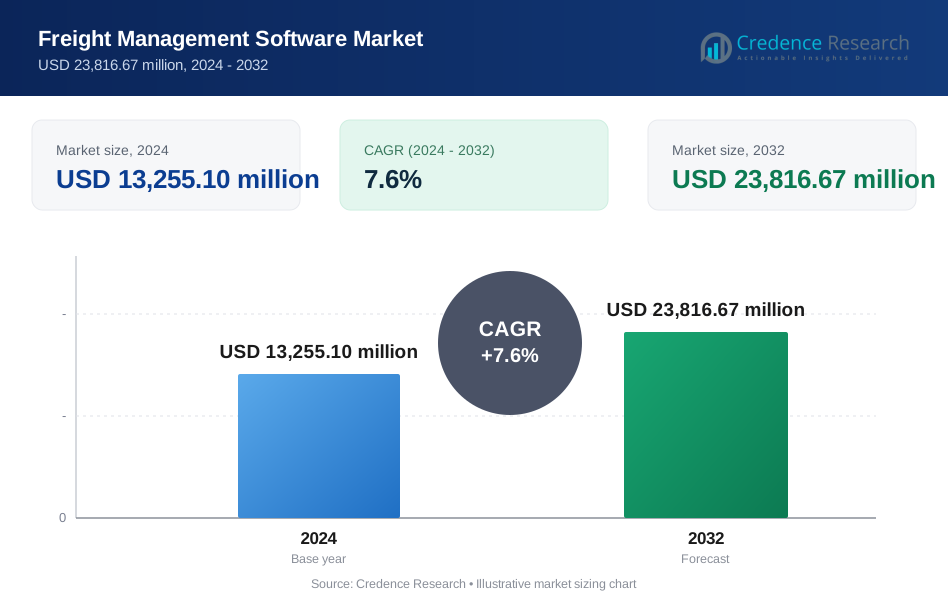
The Freight Management Software Market is projected to grow from USD 13,255.10 million in 2024 to USD 23816.67 million by 2032, at a CAGR of 7.6% from 2024 to 2032.
The key drivers of the freight management software market include the need for optimized supply chain operations, cost reduction, and improved delivery timelines. Companies across various industries are adopting digital solutions to streamline freight management processes, manage shipments more effectively, and enhance visibility into their logistics networks. Additionally, the rise in global trade and the demand for real-time tracking of goods are fueling the adoption of these software solutions. Furthermore, the increasing complexity of supply chains and growing environmental concerns have led organizations to seek sustainable and cost-efficient solutions, further driving market growth. The adoption of artificial intelligence and machine learning is also enhancing predictive analytics, which enables companies to forecast and mitigate potential supply chain disruptions.
Regionally, North America holds the largest share of the freight management software market, primarily driven by the presence of key players, technological advancements, and robust infrastructure in the logistics and transportation sectors. The growing emphasis on digitalization and automation in the region is further accelerating market demand. Europe follows closely, with the growing demand for seamless integration of transportation management systems. The region's focus on sustainability and regulatory compliance is also contributing to the increasing adoption of advanced freight management software. The Asia Pacific region is expected to witness the highest growth rate, driven by the rapid expansion of the logistics and e-commerce industries in countries such as China and India. Increasing investments in logistics infrastructure are also supporting this rapid growth. Latin America and the Middle East are also showing promising growth, fueled by increasing trade activities and the digital transformation of logistics operations.
Market Drivers:
Optimization of Supply Chain Operations:
One of the primary drivers of the freight management software market is the need for optimized supply chain operations. As businesses seek to improve operational efficiency, freight management software enables better coordination between supply chain partners, reducing manual errors and streamlining the flow of goods. For instance, companies like DHL and FedEx use advanced freight management software to enhance their logistics operations, reducing delivery times and improving customer satisfaction. This software offers tools for route optimization, load planning, and warehouse management, which significantly enhances the overall efficiency of logistics operations. Companies are leveraging these technologies to reduce operational costs and enhance productivity.
Cost Reduction and Improved Profitability:
Another critical factor driving the market is the increasing emphasis on cost reduction. Freight management software offers businesses the ability to optimize freight spending by automating processes, analyzing transportation routes, and selecting the most cost-effective shipping options. For example, UPS has reported a reduction in operational costs by 10% after implementing advanced freight management solutions. With the rising costs of fuel and logistics services, these software solutions enable organizations to minimize unnecessary expenditures, improving overall profitability. The ability to monitor expenses in real time also enhances decision-making, leading to more effective cost management.
Real-Time Tracking and Enhanced Visibility:
The demand for real-time tracking of shipments is driving the growth of the freight management software market. Customers and businesses alike require greater visibility into the status of their shipments. For instance, Amazon uses real-time tracking technology to provide customers with up-to-date information on their deliveries. Freight management software provides real-time updates, improving transparency and allowing companies to proactively address delays or disruptions. This increased visibility fosters better communication and trust between suppliers, carriers, and customers.
Technological Advancements and Integration:
The integration of advanced technologies such as artificial intelligence (AI), machine learning, and the Internet of Things (IoT) is fueling the market’s growth. These technologies enhance the predictive capabilities of freight management software, helping businesses forecast demand, optimize routes, and mitigate potential disruptions. For example, IBM's Watson AI is used in freight management to predict and resolve logistical challenges. The increased integration of these solutions into existing transportation management systems further accelerates their adoption, driving long-term market growth.
Market Trends:
Adoption of Artificial Intelligence and Machine Learning:
A prominent trend in the freight management software market is the integration of artificial intelligence (AI) and machine learning (ML) to enhance predictive analytics. These technologies allow businesses to anticipate supply chain disruptions, optimize delivery routes, and forecast demand more accurately. For instance, Maersk uses AI-driven insights to streamline their shipping operations, significantly reducing delays and improving overall efficiency. AI-driven insights enable real-time decision-making, improving the efficiency of freight operations. As AI and ML capabilities continue to evolve, their role in shaping smarter, more autonomous logistics solutions will expand significantly.
Cloud-Based Solutions:
The increasing shift towards cloud-based freight management software is another key trend. Cloud platforms offer scalability, flexibility, and reduced infrastructure costs, making them more attractive to organizations of all sizes. For example, XPO Logistics has adopted cloud-based solutions to enhance collaboration and data sharing across their supply chain network. These solutions enable businesses to manage freight processes from anywhere, enhance collaboration across the supply chain, and ensure better data security. The growing preference for cloud-based solutions is driven by their ability to support real-time data sharing, which improves visibility and decision-making across the logistics network.
Sustainability and Green Logistics:
Sustainability is becoming a major focus within the freight management software market. As businesses face mounting pressure to reduce carbon footprints and adopt more environmentally responsible practices, software solutions are incorporating features to support green logistics. For instance, DHL has implemented route optimization and the use of electric vehicles to reduce their carbon emissions. This includes route optimization to reduce fuel consumption, the adoption of electric vehicles, and the ability to track emissions. Organizations are increasingly prioritizing these sustainable logistics solutions as part of their corporate responsibility strategies.
Blockchain Integration:
Blockchain technology is gaining traction within the freight management software market due to its potential to enhance transparency and security. By providing a decentralized and tamper-proof record of transactions, blockchain ensures more efficient and secure supply chain management. For example, Walmart uses blockchain to track its food supply chain, reducing fraud and improving traceability. It facilitates better tracking of goods, reducing fraud and errors while improving trust among stakeholders. As the technology matures, its integration into freight management systems is expected to become more widespread.
Market Challenges Analysis:
High Initial Investment Costs:
One of the primary challenges faced by organizations in adopting freight management software is the high initial investment required for implementation. Small and medium-sized enterprises (SMEs) often struggle to justify the upfront costs of acquiring advanced software solutions, especially when their operational budgets are limited. While these systems provide long-term benefits, the initial financial commitment, which includes software licensing, integration, and training, can be a significant barrier for many businesses.
Complexity of Integration with Existing Systems:
Integrating freight management software with an organization’s existing infrastructure and legacy systems poses another significant challenge. Many businesses rely on outdated software and manual processes, making the transition to a more sophisticated system complex and time-consuming. This integration process can cause disruptions in daily operations, leading to potential delays and productivity losses. Furthermore, some software solutions may not be fully compatible with other tools or platforms in use, which can hinder smooth integration and create operational inefficiencies.
Market Segmentation Analysis:
By Deployment Type
The market is divided into cloud-based and on-premises solutions. Cloud-based solutions are gaining significant traction due to their scalability, cost-effectiveness, and ease of access, especially among small and medium-sized enterprises (SMEs). These solutions offer flexibility and lower upfront costs, making them attractive to businesses with varying needs. On-premises solutions, however, are preferred by large enterprises that require more control over their data and infrastructure, as they provide better customization and security options.
By End-User Industry
Key segments in this category include logistics and transportation, retail and e-commerce, manufacturing, and healthcare. The logistics and transportation industry dominate, driven by the growing need to streamline operations and improve supply chain visibility. The retail and e-commerce sectors are also significant adopters, seeking better freight management to reduce operational costs and enhance delivery performance. Manufacturing and healthcare sectors are increasingly investing in freight management software to optimize their supply chains and ensure timely deliveries.
By Function
The primary functions include transportation management, fleet management, and warehouse management. Transportation management systems are the largest segment, enabling companies to optimize shipping routes, reduce costs, and improve service levels. Fleet management solutions are growing in demand, helping organizations monitor and manage their fleets more efficiently. Warehouse management systems are also crucial, supporting inventory control and enhancing logistics operations.
Segmentations:
By Deployment Type
- Cloud-Based
- On-Premises
By End-User Industry
- Logistics and Transportation
- Retail and E-Commerce
- Manufacturing
- Automotive
- Aerospace and Defense
- Healthcare and Pharmaceuticals
- Others
By Function
- Transportation Management
- Warehouse Management
- Fleet Management
- Order Management
- Supply Chain Visibility
- Others
By Organization Size
- Small and Medium Enterprises (SMEs)
- Large Enterprises
By Region
- North America
- U.S.
- Canada
- Mexico
- Europe
- Germany
- France
- U.K.
- Italy
- Spain
- Rest of Europe
- Asia Pacific
- China
- Japan
- India
- South Korea
- South-east Asia
- Rest of Asia Pacific
- Latin America
- Brazil
- Argentina
- Rest of Latin America
- Middle East & Africa
- GCC Countries
- South Africa
- Rest of the Middle East and Africa
Regional Analysis:
North America
North America holds the largest market share in the freight management software market, accounting for 35% of the global market. The region’s dominance is primarily driven by the strong presence of key industry players, technological advancements, and the well-established infrastructure of logistics and transportation sectors. The increasing adoption of digital technologies, such as AI, IoT, and cloud computing, is further accelerating market growth. The U.S. is a significant contributor to this growth, with businesses focusing on automating supply chain processes to reduce operational costs and improve efficiency. Furthermore, the demand for real-time tracking and enhanced visibility of shipments is contributing to the rapid adoption of advanced freight management solutions.
Europe
Europe holds a market share of 30% in the global freight management software market. The region is characterized by a high demand for integrated and automated logistics solutions, driven by the growing complexity of supply chains and the need for more efficient operations. European countries are prioritizing sustainability, with an increasing emphasis on reducing carbon emissions in the logistics sector. Freight management software solutions that offer route optimization, fleet management, and sustainability features are in high demand. Moreover, the European Union's regulatory framework, which focuses on improving operational efficiency and compliance within the transportation and logistics sectors, is also driving the adoption of digital solutions.
Asia Pacific
Asia Pacific is the fastest-growing region, capturing 25% of the global market share. This growth is fueled by the rapid expansion of the logistics and e-commerce industries in countries like China and India. The region’s large population base, coupled with increasing urbanization and trade activities, is driving demand for more efficient logistics solutions. Additionally, the rise in the adoption of cloud-based technologies, coupled with the region’s growing reliance on automated systems for supply chain management, is accelerating the uptake of freight management software. Investments in logistics infrastructure and the growing trend of digital transformation are expected to further fuel market growth in the region.
Latin America and Middle East & Africa
Latin America and the Middle East & Africa together account for 10% of the global market share. Both regions are witnessing steady growth, with an increasing focus on improving trade activities and modernizing logistics operations. Digital transformation in these regions is helping to improve efficiency in freight management, and the adoption of cloud-based solutions is gaining traction. Despite facing some economic challenges, these regions are expected to see continued growth, driven by increasing investments in logistics infrastructure and the demand for more efficient freight management solutions.
Key Player Analysis:
- Oracle Corporation
- SAP SE
- JDA Software Group, Inc.
- Descartes Systems Group Inc.
- Manhattan Associates, Inc.
- Trimble Inc.
- C.H. Robinson Worldwide, Inc.
- Project44
- MercuryGate International, Inc.
- Transplace
Competitive Analysis:
The freight management software market is highly competitive, with several key players vying for market share through strategic product innovations and acquisitions. Companies such as Oracle, SAP, and JDA Software dominate the market, offering comprehensive solutions that cater to various sectors, including transportation, logistics, and supply chain management. For instance, SAP's Transportation Management System (TMS) helps accurately forecast demand and shipment volumes, enhancing freight, fleet, and logistics management for over 544 companies. These players focus on integrating advanced technologies like artificial intelligence, machine learning, and cloud-based systems to enhance the efficiency of their offerings. Additionally, emerging players like Project44 and Transplace are gaining traction by offering specialized solutions, particularly around real-time tracking and end-to-end visibility. Competitive differentiation is increasingly driven by the ability to provide tailored solutions, scalability, and seamless integration with existing logistics systems. As the market grows, companies are focusing on expanding their global reach and enhancing customer experience, with many adopting strategic partnerships and collaborations to stay ahead of the competition.
Recent Developments:
- In February 2024, Oracle Fusion Cloud SCM introduced enhanced logistics management capabilities, including business intelligence integrations for better visibility into transportation and trade data. These features aim to streamline logistics operations and improve decision-making processes for users.
- In October 2024, SAP announced a merger of its Transportation Management System (TMS) with Sedna's software, enhancing data accessibility and collaboration for shippers. This integration is expected to improve transportation management-related data control significantly.
- In January 2024, Descartes announced the top carriers worldwide using its MacroPoint solution for freight visibility, emphasizing the importance of tracking compliance and performance in logistics operations.
- In December 2024, Descartes Systems Group Inc. company released findings from its Supply Chain Intelligence Report, revealing that rising tariffs and trade barriers are significant concerns for supply chain leaders. This insight reflects ongoing challenges within the logistics sector.
Market Concentration & Characteristics:
The freight management software market is moderately concentrated, with a few large players such as Oracle, SAP, and JDA Software holding significant market share. These companies dominate the market by offering comprehensive, integrated solutions that cater to large enterprises with complex logistics needs. However, the market also features a growing number of emerging players like Project44 and Transplace, which are focusing on niche areas such as real-time tracking, visibility, and cloud-based solutions. These smaller players are driving innovation, particularly in enhancing the user experience and providing more agile solutions. As the market evolves, competition is increasingly based on technological advancements, scalability, and the ability to integrate with other supply chain management tools. The market is characterized by a blend of established companies offering full-suite solutions and new entrants focusing on specialized, innovative functionalities.
Report Coverage:
The research report offers an in-depth analysis based on deployment type, end-user industry, function, organization size and region. It details leading market players, providing an overview of their business, product offerings, investments, revenue streams, and key applications. Additionally, the report includes insights into the competitive environment, SWOT analysis, current market trends, as well as the primary drivers and constraints. Furthermore, it discusses various factors that have driven market expansion in recent years. The report also explores market dynamics, regulatory scenarios, and technological advancements that are shaping the industry. It assesses the impact of external factors and global economic changes on market growth. Lastly, it provides strategic recommendations for new entrants and established companies to navigate the complexities of the market.
Future Outlook:
- The freight management software market is expected to see continued growth driven by increasing demand for efficient supply chain management solutions.
- The integration of artificial intelligence and machine learning will enhance predictive capabilities, optimizing routes and improving decision-making.
- Real-time tracking and end-to-end visibility will become critical for businesses aiming to improve transparency and reduce operational disruptions.
- Cloud-based solutions will gain more traction due to their flexibility, scalability, and cost-effectiveness for businesses of all sizes.
- Automation will continue to play a key role in streamlining operations, reducing human errors, and enhancing overall efficiency.
- Sustainability concerns will drive demand for software solutions focused on optimizing fuel usage and reducing carbon emissions in logistics operations.
- Increased focus on data security and privacy will push for stronger cybersecurity measures in freight management platforms.
- Blockchain technology will emerge as a key enabler, ensuring greater transparency, security, and efficiency in the supply chain.
- The adoption of freight management software will expand in emerging markets, particularly in Asia Pacific, as e-commerce and logistics infrastructure continue to grow.
- Ongoing innovations in user experience and system integration will help businesses further optimize freight operations, driving long-term market growth.
Request a Free Sample
Fill in your details and we'll send you a free sample report.
- Sample data tables & charts
- Research methodology
Need a Custom Version of This Report?
Tailor the scope, geography, or segments to your exact requirements.
- Custom geography or segment scope
- Direct access to our analyst team
Frequently Asked Questions
What is the projected growth of the Freight Management Software Market?
What are the key drivers of the Freight Management Software Market?
Which region holds the largest share of the Freight Management Software Market?
Which region is expected to witness the highest growth in the Freight Management Software Market?
How are artificial intelligence and machine learning impacting the Freight Management Software Market?
Table of Content
Chapter 1. Report Introduction
- 1.1 Report Description & Purpose
- 1.1.1 Report Title & Market Definition
- 1.1.2 Unique Selling Propositions (USP) & Key Differentiators
- 1.1.3 Value Proposition for Stakeholders
- 1.2 Research Objectives
- 1.2.1 Market Sizing Objectives (Volume & Revenue) (Volume Where Applicable)
- 1.2.2 Segmentation Objectives
- 1.2.3 Competitive Intelligence Objectives
- 1.2.4 Forecast & Scenario Objectives
- 1.3 Report Scope
- 1.3.1 Freight Management Software Scope – Segments & Subsegments Covered
- 1.3.2 Geographic Scope – Regions & Countries Covered
- 1.3.3 Historical Period, Base Year & Forecast Period (2024; forecast to 2032)
- 1.3.4 Inclusions & Exclusions
- 1.4 Industry Classification & Applicable Codes
- 1.5 Currency, Measurement Units & Valuation Basis
- 1.6 Target Stakeholders
- 1.7 Limitations & Assumptions
Chapter 2. Executive Summary
- 2.1 Global Freight Management Software Market Snapshot
- 2.1.1 Market Size – Historical (2024) & Forecast (2024-2032) (2024: USD 13,255.10 million → 2032: USD 23,816.67 million)
- 2.1.2 Volume & Revenue – Global Totals (Volume Where Applicable)
- 2.1.3 Key Market Highlights – Top Five Facts
- 2.2 Freight Management Software Market Segmentation Snapshot
- 2.2.1 Market Split by Region – 2024 vs. 2032
- 2.3 Competitive Snapshot
- 2.3.1 Top 10 Players by Revenue Share – 2024
- 2.3.2 Top 10 Players by Volume Share – 2024 (Volume Where Applicable)
- 2.3.3 Recent Strategic Developments (18-Month Summary)
- 2.4 Key Investment Highlights & Strategic Conclusions
Chapter 3. Freight Management Software Market Dynamics & Industry Analysis
- 3.1 Market Overview & Context
- 3.1.1 Freight Management Software Market Position in the Broader Industry Value Chain
- 3.1.2 Demand Structure & Purchasing Dynamics
- 3.1.3 Market Maturity & Development Stage by Region
- 3.2 Freight Management Software Market Drivers
- 3.3 Freight Management Software Market Restraints & Challenges
- 3.4 Freight Management Software Market Opportunities
- 3.5 Porter's Five Forces Analysis
- 3.5.1 Threat of New Entrants
- 3.5.2 Bargaining Power of Suppliers
- 3.5.3 Bargaining Power of Buyers
- 3.5.4 Threat of Substitutes
- 3.5.5 Competitive Rivalry – Intensity Assessment
- 3.6 Freight Management Software Value Chain Analysis
- 3.6.1 Upstream – Key Inputs, Resources & Suppliers
- 3.6.1.1 Key Input/Resource 1
- 3.6.1.2 Key Input/Resource 2
- 3.6.1.3 Key Input/Resource 3
- 3.6.2 Midstream – Core Operations & Value Creation
- 3.6.2.1 Operating Model & Process Overview
- 3.6.2.2 Key Operating Locations & Capabilities by Company
- 3.6.3 Downstream – Market Channels & End Users
- 3.6.3.1 Direct Sales & Customer Engagement Channels
- 3.6.3.2 Indirect Sales, Intermediaries & Partner Channels
- 3.6.4 Value Chain Profitability Analysis
- 3.6.1 Upstream – Key Inputs, Resources & Suppliers
- 3.7 PESTEL Analysis
- 3.7.1 Political Factors
- 3.7.2 Economic Factors
- 3.7.3 Social Factors
- 3.7.4 Technological Factors
- 3.7.5 Environmental Factors
- 3.7.6 Legal Factors
- 3.8 Freight Management Software Supply Chain Analysis
- 3.8.1 Critical Input & Resource Availability Risk Assessment
- 3.8.2 Supplier & Operational Concentration Risk (Geographic Exposure)
- 3.8.3 Supply & Service Disruption Impact Analysis
- 3.9 Regulatory & Policy Landscape
Note: The regulatory and policy landscape section covers regulations based on their applicability to the market, Freight Management Software category, geography, and scope of the study. Only regulatory frameworks with a material impact on operations, compliance, trade, sustainability, or market access are analyzed in detail.
Chapter 4. Key Investment Pockets & Opportunity Analysis
- 4.1 Freight Management Software Market Attractiveness Analysis
- 4.1.1 By Region – Investment Attractiveness Matrix (Market Size × CAGR)
- 4.2 Absolute Revenue Growth Opportunity
- 4.2.1 By Region – Absolute Revenue Growth Through 2032
- 4.3 Incremental Demand Opportunity
- 4.3.1 By Region – Incremental Demand Through 2032
- 4.3.2 Segment – Incremental Demand
- 4.4 Emerging Submarket Opportunity Deep Dive (Subject to Applicability)
- 4.5 Priority Market Opportunity Scorecards
- 4.5.1 United States
- 4.5.2 Europe
- 4.5.3 Asia
- 4.5.4 Middle East & Africa
Note: Priority market opportunity scorecards reflect the geographic scope and strategic relevance of the study. Listed markets are indicative and may be adapted to the industry.
Chapter 5. Freight Management Software Cross-Border Trade & Market Access Analysis
- 5.1 International Trade & Cross-Border Activity Overview
- 5.1.1 Global Export Value by Country (2024)
- 5.1.2 Global Export Volume by Country (2024) (Volume Where Applicable)
- 5.1.3 Global Import Value by Country (2024)
- 5.1.4 Global Import Volume by Country (2024) (Volume Where Applicable)
- 5.1.5 Net Trade Balance by Country (2024)
- 5.2 Export Analysis – Segment
- 5.2.1 Category 1 (Applicable Classification Code)
- 5.2.2 Category 2 (Applicable Classification Code)
- 5.2.3 Category 3 (Applicable Classification Code)
- 5.2.4 Category 4 (Applicable Classification Code)
- 5.2.5 Category 5 (Applicable Classification Code)
- 5.3 Import Analysis – Segment
- 5.3.1 Category 1 (Applicable Classification Code)
- 5.3.2 Category 2 (Applicable Classification Code)
- 5.3.3 Category 3 (Applicable Classification Code)
- 5.3.4 Category 4 (Applicable Classification Code)
- 5.3.5 Category 5 (Applicable Classification Code)
- 5.4 Cross-Border Pricing & Transaction Benchmarks
- 5.4.1 Export Pricing – Segment & Country
- 5.4.2 Import Pricing – Segment & Source Country
- 5.4.3 Price Trends (2024)
- 5.5 Key Cross-Border Trade & Delivery Routes
- 5.5.1 Cross-Border Trade/Delivery Route 1
- 5.5.2 Cross-Border Trade/Delivery Route 2
- 5.5.3 Cross-Border Trade/Delivery Route 3
- 5.5.4 Cross-Border Trade/Delivery Route 4
- 5.5.5 Cross-Border Trade/Delivery Route 5
- 5.6 Trade Policy & Market Access Impact Assessment
- 5.6.1 Tariff & Non-Tariff Barriers
- 5.6.2 Regional Trade & Economic Integration Frameworks
- 5.6.3 Bilateral & Multilateral Trade Agreements
- 5.6.4 Cross-Border Operating, Licensing & Localization Requirements
Note: This chapter applies where cross-border trade or delivery is relevant to Freight Management Software. Goods, services, and digital offerings are assessed using applicable classifications and transaction measures. Import-export volumes, trade balances, and route analyses are included only where meaningful to the market.
Chapter 6. Competitive Landscape & Company Benchmarking
- 6.1 Freight Management Software Market Concentration & Structure
- 6.1.1 Herfindahl-Hirschman Index (HHI) – vs. 2024
- 6.1.2 Leading, Mid-Sized & Emerging Player Structure
- 6.1.3 Global, Regional & Local Player Dynamics
- 6.2 Freight Management Software Market Share Analysis – 2024
- 6.2.1 Global Revenue Share by Company
- 6.2.2 Global Volume Share by Company (Volume Where Applicable)
- 6.2.3 Regional Revenue Share
- 6.2.4 Market Share Evolution ( vs. 2024)
- 6.2.5 Company Market Share by Key Segment
- 6.2.6 Company Market Share by Customer Group
- 6.3 Operating Scale, Capacity & Infrastructure Analysis
- 6.3.1 Global Operating Scale & Supply Capacity
- 6.3.2 Resource Utilization & Operating Efficiency
- 6.3.3 Output, Service Delivery & Activity Metrics
- 6.3.4 Operating Footprint & Infrastructure Map
- 6.3.5 Planned Operational & Capacity Expansion
- 6.4 Freight Management Software Competitive Benchmarking Matrix
- 6.4.1 Revenue, Growth, Profitability & Operating Metric Comparison
- 6.4.2 Channel Revenue Mix
- 6.4.3 Geographic Revenue Exposure
- 6.4.4 R&D Intensity
- 6.4.5 Sustainability Maturity
- 6.5 Strategic Developments in Freight Management Software (Last 24 Months)
- 6.5.1 Mergers, Acquisitions & Divestments
- 6.5.2 New Products, Services & Solutions in Freight Management Software
- 6.5.3 Operational & Infrastructure Expansions
- 6.5.4 Strategic Alliances, Joint Ventures & Partnerships
- 6.5.5 Distribution Expansion & Market Entry
- 6.5.6 Sustainability & ESG Initiatives
- 6.6 Competitive Strategy Mapping
- 6.6.1 Leader, Challenger, Follower & Niche Classification
- 6.6.2 Pricing Strategy Comparison
- 6.6.3 Channel Strategy Matrix
Note: Strategic developments are included based on their materiality and the availability of reliable information.
Chapter 7. Global Freight Management Software Market – By Sales & Delivery Channel
- 7.1 Segment Overview
- 7.1.1 Volume & Revenue Split by Channel (2024 & 2032) (Volume Where Applicable)
- 7.1.2 Channel Mix Evolution (2024-2032)
Chapter 8. Regional Market Analysis – Global Overview
- 8.1 Global Regional Overview
- 8.1.1 Regional Volume Share (Volume Where Applicable)
- 8.1.2 Regional Revenue Share
- 8.1.3 Regional Volume by Region (Volume Where Applicable)
- 8.1.4 Regional Revenue by Region
- 8.1.5 Regional Forecast Through 2032
- 8.2 Cross-Regional Segment Analysis
- 8.2.1 By Sales & Delivery Channel
- 8.2.2 By Competitive Positioning & Price Tier
Chapter 9. North America Freight Management Software Market
- 9.1 United States
- 9.2 Canada
- 9.3 Mexico
Chapter 10. Europe Freight Management Software Market
- 10.1 Germany
- 10.2 France
- 10.3 Italy
- 10.4 United Kingdom
- 10.5 Spain
- 10.6 Poland
- 10.7 Russia
- 10.8 Netherlands
- 10.9 Belgium
- 10.10 Sweden
- 10.11 Denmark
- 10.12 Norway
- 10.13 Rest of Europe
Chapter 11. Asia Pacific Freight Management Software Market
- 11.1 China
- 11.2 India
- 11.3 Japan
- 11.4 South Korea
- 11.5 Thailand
- 11.6 Indonesia
- 11.7 Vietnam
- 11.8 Malaysia
- 11.9 Australia
- 11.10 Rest of Asia Pacific
Chapter 12. Latin America Freight Management Software Market
- 12.1 Brazil
- 12.2 Argentina
- 12.3 Colombia
- 12.4 Chile
- 12.5 Rest of Latin America
Chapter 13. Middle East Freight Management Software Market
- 13.1 Saudi Arabia
- 13.2 United Arab Emirates
- 13.3 Turkey
- 13.4 Israel
- 13.5 Iran
- 13.6 Rest of the Middle East
Chapter 14. Africa Freight Management Software Market
- 14.1 South Africa
- 14.2 Egypt
- 14.3 Nigeria
- 14.4 Morocco
- 14.5 Rest of Africa
Chapter 15. Freight Management Software Company Profiles
- 15.1 [Company 01]
- 15.1.1 Company Overview
- 15.1.2 Key Management Personnel
- 15.1.3 Products & Services Portfolio
- 15.1.4 Financial Performance
- 15.1.5 Key Market Focus & Geographic Presence
- 15.1.6 Recent Developments & Strategic Initiatives
Note: The company profile list is preliminary and may change based on research findings, market developments, data availability, and client requirements.
Chapter 16. Appendices
- Appendix A – List of Abbreviations & Acronyms
- Appendix B – Industry Classification Code Reference – Full Series
- Appendix C – Supply, Output & Operating Capacity Data Tables
- Appendix D – End-Use & Demand Base Tables
- Appendix E – Demand, Adoption & Usage Assumptions
- Appendix F – Pricing & Revenue Metric Reference Tables
- Appendix G – Company Operations & Infrastructure Database
- Appendix H – Cross-Border Trade & Activity Data Tables (Where Applicable)
- Appendix I – Regulatory Summary Tables
- Appendix J – Primary Research Participant List (Anonymized)
- Appendix K – Primary Research Questionnaire Framework
- Appendix L – Data Sources & Bibliography
- Appendix M – Market Size Divergence & Source Comparison
Chapter 17. Research Methodology
- 17.1 Research Framework & Philosophy
- 17.2 Secondary Research – Sources, Hierarchy & Data Extraction
- 17.3 Data Modeling – Bottom-Up & Top-Down Market Sizing
- 17.4 Primary Research – Stakeholder Framework, LOI & Sample Sizes
- 17.5 Forecast Methodology – Regression, Scenario & Sensitivity Analysis
- 17.6 Quality Control – Four-Layer Validation Framework
- 17.7 Limitations & Standard Assumptions
- 17.8 Disclaimer
