
| REPORT ATTRIBUTE | DETAILS |
|---|---|
| Historical Period | 2020-2023 |
| Base Year | 2024 |
| Forecast Period | 2025-2032 |
| High-Performance Industrial Doors Market Size 2024 | USD 14,176.14 Million |
| High-Performance Industrial Doors Market, CAGR | 5.6% |
| High-Performance Industrial Doors Market Size 2032 | USD 21,921.45 Million |
Market Overview:
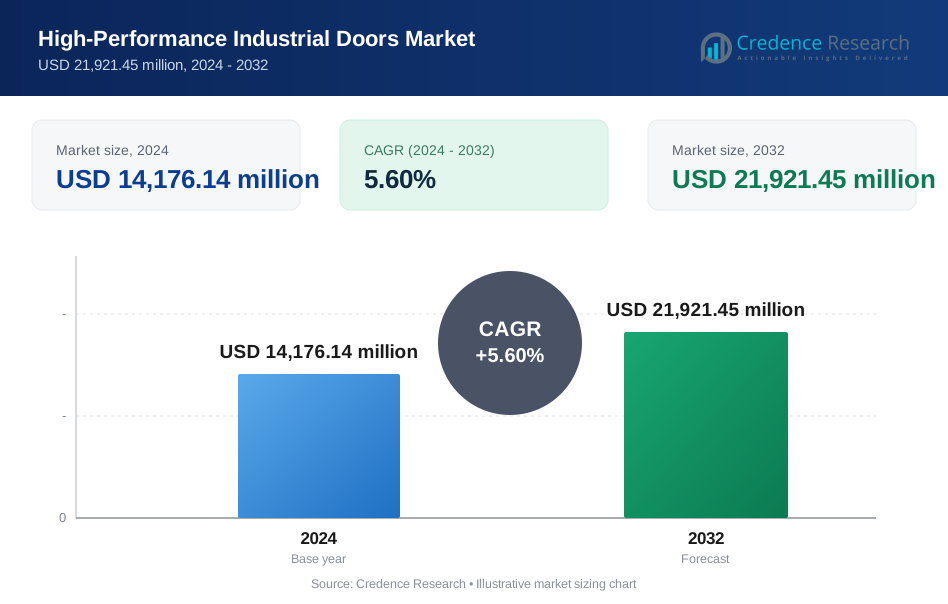
The High-Performance Industrial Doors Market is projected to grow from USD 14,176.14 million in 2024 to USD 21,921.45 million by 2032, reflecting a compound annual growth rate (CAGR) of 5.6%.
The High-performance Industrial Doors Market is driven by the increasing demand for energy-efficient, durable, and secure solutions across industries such as manufacturing, logistics, and pharmaceuticals. Growing automation and the need for enhanced operational efficiency in industrial facilities are further boosting market growth. Additionally, rising concerns about environmental sustainability are prompting industries to adopt energy-saving door systems that reduce operational costs and carbon footprints. Technological advancements, including the integration of smart sensors, remote monitoring, and automated control systems, are shaping trends in the market, making doors more responsive and user-friendly. The expansion of e-commerce and the need for rapid shipping and improved warehouse efficiency also contribute to the rising adoption of high-performance industrial doors. Furthermore, strict regulations regarding workplace safety and climate control in industrial settings are fostering market demand, driving manufacturers to innovate and meet evolving customer needs with more robust and versatile door solutions.
The High-performance Industrial Doors Market is witnessing significant growth across various regions, with North America holding the largest market share of 35% in 2024, driven by demand in logistics, manufacturing, and e-commerce sectors. Europe follows with a 30% market share, fueled by strict environmental regulations and the increasing focus on sustainability. The Asia-Pacific region, with a 20% share, is experiencing rapid industrialization, particularly in China and India, driving demand for automation and energy-efficient doors. The Rest of the World, including Latin America, the Middle East, and Africa, accounts for 15% of the market, with infrastructure development and industrial growth contributing to increasing adoption. Leading players, including Rite-Hite Holding Corporation, Hormann Group, ASSA ABLOY AB, and Rytec Corporation, are expanding their presence globally, catering to the growing demand across these regions with innovative solutions.
Market Insights:
- The High-performance Industrial Doors Market is projected to grow from USD 14,176.14 million in 2024 to USD 21,921.45 million by 2032, at a CAGR of 5.6%.
- Increased demand for energy-efficient, durable, and secure door solutions across manufacturing, logistics, and pharmaceuticals sectors is driving market growth.
- Automation trends and the need for operational efficiency in industrial facilities are boosting the demand for advanced industrial doors.
- Technological advancements, such as smart sensors and automated control systems, are enhancing the functionality and usability of high-performance doors.
- The rising expansion of e-commerce and the need for efficient warehouse operations are fueling the market's growth.
- Strict regulations related to workplace safety, energy consumption, and climate control are promoting the adoption of high-performance doors.
- Regional markets are seeing significant growth, with North America holding 35%, Europe 30%, Asia-Pacific 20%, and the Rest of the World 15% market share in 2024.
Market Drivers:
Growing Demand for Energy Efficiency:
One of the primary drivers of the High-performance Industrial Doors Market is the increasing demand for energy-efficient solutions across various industries. Energy-efficient doors help minimize energy loss by providing better insulation, which is particularly crucial in temperature-controlled environments such as cold storage facilities, food processing units, and pharmaceutical manufacturing plants. For instance, ASSA ABLOY has developed high-speed doors that open and close within seconds, significantly reducing air exchange and maintaining optimal internal temperatures, which leads to minimized energy costs and improved productivity in industrial settings. As energy costs continue to rise, industries are seeking ways to reduce operational expenses, and high-performance doors, with their superior sealing and insulation capabilities, present an effective solution. This demand for energy efficiency aligns with global sustainability goals, further accelerating the adoption of these advanced door systems.
Rising Automation and Industry 4.0:
The ongoing shift towards automation and the embrace of Industry 4.0 technologies in industrial sectors are significantly influencing the High-performance Industrial Doors Market. Automated systems and smart factory environments demand doors that offer seamless operation, security, and high-speed functionality. High-performance industrial doors meet these requirements by integrating with automated systems, facilitating faster workflows, and enhancing overall operational efficiency. For instance, Rytec Corporation launched a state-of-the-art Smart Factory in Hartford, Wisconsin, in late 2023, incorporating advanced robotics, automated metal storage and retrieval, and real-time data collection. These doors often feature advanced technologies such as motion sensors, automated opening/closing mechanisms, and remote monitoring capabilities, aligning with the growing trend of digitization and automation in modern industrial facilities.
Enhanced Workplace Safety and Security:
Increasing concerns regarding workplace safety and security are also key factors driving the market. High-performance industrial doors provide enhanced security features, such as secure locking mechanisms, resistance to impact, and the ability to withstand hazardous environments. These doors protect both workers and valuable equipment by preventing unauthorized access and minimizing the risk of accidents. As industries prioritize the safety of employees and assets, the adoption of robust and secure high-performance doors has become a necessity, particularly in hazardous environments like chemical plants and manufacturing units.
Regulatory Compliance and Environmental Sustainability:
Strict regulations regarding environmental sustainability and workplace safety are encouraging the adoption of high-performance industrial doors. Many industries are required to comply with regulations that mandate energy-efficient systems and safe working conditions. High-performance doors help companies meet these standards by reducing energy consumption and maintaining optimal internal temperatures. Additionally, the growing emphasis on sustainability is prompting industries to choose doors that contribute to reducing their carbon footprints. As a result, regulatory pressures are driving manufacturers to develop and deploy high-performance doors that align with both legal requirements and environmental responsibility.
Market Trends:
Integration of Smart Technologies:
One of the most notable trends in the High-performance Industrial Doors Market is the integration of smart technologies. As industries increasingly adopt automation and the Internet of Things (IoT), there is a growing demand for industrial doors that can connect to other systems within a facility. These smart doors are equipped with sensors, remote monitoring capabilities, and automated controls that allow for seamless operation and real-time data tracking. This technological integration enhances efficiency, improves predictive maintenance, and reduces downtime by enabling proactive monitoring of door performance and wear. The adoption of smart doors is transforming how facilities manage security, energy consumption, and operations.
Sustainability and Eco-friendly Designs:
Environmental sustainability continues to influence trends in the High-performance Industrial Doors Market. As industries seek to reduce their environmental impact, the demand for eco-friendly door solutions has increased. High-performance doors are now being designed with sustainable materials and energy-efficient features, such as improved insulation properties that help reduce energy consumption. For instance, ASSA ABLOY has developed high-speed doors designed to minimize air exchange and maintain optimal internal temperatures, which leads to lower energy consumption and reduced operational costs. These doors not only minimize the carbon footprint of industrial facilities but also comply with stricter environmental regulations.
Customization and Versatility:
There is a growing trend toward customization and versatility in the High-performance Industrial Doors Market. As industries face diverse operational needs, doors are being designed to accommodate a wide range of specifications, from varying sizes and shapes to specialized materials that can withstand harsh environments. For instance, BMP Doors manufactures self-repairing DynamicRoll® doors with galvanized or stainless steel frames, specifically designed for intensive-use environments such as clean rooms and chemical plants; these doors automatically reinsert into their guides after impact, reducing downtime and maintenance while meeting the unique requirements of demanding industrial settings. Whether it’s for temperature-controlled storage, hazardous material handling, or high-speed access in logistics, customers are demanding doors that can be tailored to meet their specific requirements.
Focus on Safety and Security Features:
The emphasis on safety and security is another dominant trend shaping the High-performance Industrial Doors Market. Modern industrial doors are being designed with advanced safety features to protect both employees and assets. These include impact-resistant materials, secure locking mechanisms, and enhanced resistance to environmental hazards such as fire or chemical exposure. With safety regulations becoming more stringent across industries, doors that can provide a higher level of security and protection are in greater demand. This focus on safety ensures that doors not only enhance operational efficiency but also create safer working environments.
Market Challenges Analysis:
High Initial Investment and Maintenance Costs:
A significant challenge in the High-performance Industrial Doors Market is the high initial investment and ongoing maintenance costs. These advanced doors, which often feature cutting-edge technologies such as automated controls, smart sensors, and enhanced insulation, require substantial capital outlay for both purchase and installation. The premium materials used in the construction of these doors, such as reinforced steel, high-grade polymers, and energy-efficient insulation, contribute to the elevated costs. For smaller companies or those with limited budgets, the expense of adopting such solutions can be prohibitive, limiting their ability to invest in high-performance doors despite their long-term benefits. Additionally, these systems require specialized expertise for installation, calibration, and maintenance. Ongoing costs related to the upkeep of these sophisticated systems, including periodic inspections and repairs, can add up over time. This combination of high upfront costs and continuous maintenance requirements may deter some businesses from adopting these advanced door solutions, slowing market growth in certain regions and industries.
Technological Integration and Compatibility Issues:
Another challenge impacting the High-performance Industrial Doors Market is the technological integration and compatibility issues that arise when installing these advanced systems in older industrial facilities. Many existing buildings still rely on conventional door solutions that lack the automated features and smart technologies integral to high-performance doors. Retrofitting or replacing outdated doors with newer models often requires significant modifications to existing infrastructure, which can be costly and time-consuming. For instance, Hart Doors undertook a major retrofit at the Stewarts Lane depot in Battersea, where replacing old rail shutters with nine new high-performance doors required the removal of legacy systems and installation of large, modern doors-some as wide as 8.5 meters-demonstrating the scale and complexity of such upgrades in aging facilities. Additionally, integrating these doors with the existing building management systems (BMS) or automation platforms can be complex. Compatibility issues may arise when trying to connect high-performance doors to legacy systems, leading to disruptions and potential delays in installation. These technical challenges can also increase the cost of implementation, particularly when customization or specialized software is required. As a result, businesses must carefully evaluate the compatibility of new doors with their existing infrastructure before making investment decisions, which can slow the adoption of high-performance door solutions in some cases.
Market Opportunities:
The High-performance Industrial Doors Market presents several promising opportunities driven by the growing demand for energy-efficient solutions and automation across industries. As businesses increasingly focus on sustainability and cost reduction, the demand for energy-efficient doors is on the rise. High-performance doors, which offer superior insulation and energy-saving capabilities, can significantly reduce energy consumption in facilities that require temperature control, such as cold storage warehouses, manufacturing plants, and pharmaceutical industries. Additionally, industries are becoming more reliant on automated systems and smart technologies to streamline operations, presenting an opportunity for manufacturers to develop and supply doors with integrated smart features. These doors can offer enhanced functionality, such as automated opening and closing, remote monitoring, and real-time performance tracking, catering to the evolving needs of modern industrial facilities.
Another significant opportunity lies in the expanding use of high-performance industrial doors in sectors like e-commerce, logistics, and transportation. As global supply chains grow more complex and fast-paced, the need for efficient, secure, and rapid access points in warehouses and distribution centers becomes increasingly important. High-performance doors can provide faster opening and closing cycles, improving workflow efficiency and reducing downtime in these critical environments. Additionally, the rise in construction activities and the demand for green building certifications create an opportunity for manufacturers to position their products as eco-friendly and compliant with sustainability standards. By focusing on innovation, custom solutions, and smart technologies, companies in the high-performance industrial doors market can tap into these growth opportunities, meeting the demands of various sectors while contributing to improved operational efficiency and sustainability.
Market Segmentation Analysis:
By Product Type
The High-performance Industrial Doors Market is segmented into Roll-Up Doors, Folding Doors, Sliding Doors, and Others. Roll-up doors are popular for their space-saving design and high-speed operation, making them ideal for warehouses and distribution centers. Sliding and folding doors offer versatility and are commonly used in high-traffic areas. Other types cater to specific industrial needs.
By Application
The market's application segment includes Warehouses, Logistics, Food & Beverage, Pharmaceuticals, and Others. Warehouses and logistics benefit from high-speed, durable doors that enhance operational efficiency. The food and beverage and pharmaceutical sectors require doors that provide strict environmental control, security, and hygiene standards. Each application demands tailored solutions for safety, efficiency, and regulatory compliance.
By Material
Materials used in high-performance industrial doors include Metal, Fabric, and Composite. Metal doors offer robust durability and security, suitable for environments requiring resistance to impacts and harsh conditions. Fabric doors are lightweight, energy-efficient, and ideal for high-speed applications. Composite doors combine strength with energy-saving properties, catering to industries seeking both performance and sustainability.
Segments:
Based on Product Type
- Roll-Up Doors
- Folding Doors
- Sliding Doors
- Others
Based on Application
- Warehouses
- Logistics
- Food & Beverage
- Pharmaceuticals
- Others
Based on Material
- Metal
- Fabric
- Composite
- Others
Based on Operation
- Manual
- Automatic
Based on the Geography:
- North America
- U.S.
- Canada
- Mexico
- Europe
- Germany
- France
- U.K.
- Italy
- Spain
- Rest of Europe
- Asia Pacific
- China
- Japan
- India
- South Korea
- South-east Asia
- Rest of Asia Pacific
- Latin America
- Brazil
- Argentina
- Rest of Latin America
- Middle East & Africa
- GCC Countries
- South Africa
- Rest of the Middle East and Africa
Regional Analysis:
North America
North America is a dominant region in the High-performance Industrial Doors Market, holding a significant market share of 35% in 2024. The region benefits from advanced industrial infrastructure and high demand for energy-efficient, secure door solutions across industries like logistics, food & beverage, and pharmaceuticals. The United States, as the largest market in the region, drives innovation and demand for automated, high-performance doors due to the increasing focus on operational efficiency and workplace safety. Additionally, stringent regulations on energy consumption and sustainability have spurred the adoption of energy-efficient door solutions. The growing e-commerce sector in North America also contributes to the rising demand for fast, secure access points in warehouses and distribution centers, further boosting market growth in this region.
Europe
Europe holds a market share of 30% in 2024, driven by stringent environmental regulations and the increasing need for sustainable solutions. The region is a leader in green building practices, and many European countries have incorporated high-performance industrial doors into their construction and manufacturing sectors to comply with energy-saving regulations. Countries like Germany, the UK, and France are major contributors to the market, with demand particularly strong in the logistics, food & beverage, and pharmaceutical industries. The adoption of automation and Industry 4.0 technologies further accelerates the need for advanced industrial doors, which offer enhanced functionality and integration with digital systems. The focus on environmental sustainability and energy efficiency continues to drive the market in Europe.
Asia-Pacific
Asia-Pacific is expected to experience the highest growth rate in the High-performance Industrial Doors Market, with a market share of 20% in 2024. The region's rapid industrialization, increasing construction activities, and growing demand for automation are key drivers of this market. China and India, as emerging industrial hubs, are witnessing significant demand for high-performance industrial doors in sectors such as logistics, warehousing, and manufacturing. The region is also experiencing an increase in the adoption of energy-efficient and environmentally friendly technologies, as businesses prioritize sustainability. The expanding e-commerce industry and the modernization of manufacturing facilities are further contributing to the growth of high-performance industrial doors in Asia-Pacific.
Rest of the World
The Rest of the World, including Latin America, the Middle East, and Africa, holds a combined market share of 15% in 2024. While this segment currently holds a smaller share, it is expected to grow steadily due to infrastructure development, especially in countries like Brazil, Saudi Arabia, and South Africa. Increasing investments in industrial sectors such as logistics, manufacturing, and construction are driving the demand for high-performance industrial doors. The rise of smart cities and industrial automation projects in the Middle East and Africa is also likely to spur growth in these regions, contributing to the overall market expansion.
Key Player Analysis:
- Nergeco SAS
- Rytec Corporation
- Dortek Ltd.
- TMI, LLC
- Rite-Hite Holding Corporation
- Efaflex GmbH & Co. KG
- Hormann Group
- ASI Doors, Inc.
- Alpine Overhead Doors, Inc.
- ASSA ABLOY AB
- Hart Door Systems
- TNR Industrial Doors Inc.
Competitive Analysis:
The High-performance Industrial Doors Market is highly competitive, with leading players such as Rite-Hite Holding Corporation, Hormann Group, ASSA ABLOY AB, TNR Industrial Doors Inc., Rytec Corporation, TMI, LLC, Efaflex GmbH & Co. KG, Nergeco SAS, Dortek Ltd., Hart Door Systems, ASI Doors, Inc., and Alpine Overhead Doors, Inc. These companies dominate the market by offering a diverse range of high-performance door solutions tailored to meet the specific needs of industries such as logistics, food & beverage, pharmaceuticals, and manufacturing. They focus on innovation, incorporating smart technologies, automation, and energy-efficient designs to stay competitive. Key strategies employed by these players include product diversification, strategic partnerships, and expanding their geographical reach to capitalize on growing demand in emerging markets. Moreover, ongoing research and development investments allow them to enhance product features, such as increased durability, security, and environmental sustainability, which further strengthens their market position and helps cater to the evolving demands of industrial customers.
Recent Developments:
- In June 2024, Nucor Corporation announced the acquisition of Rytec Corporation for $565 million, marking a significant expansion of Nucor’s downstream product portfolio and integrating Rytec’s expertise in high-speed, high-performance commercial doors into Nucor’s operations.
- In April 2024, Dortek launched the 344 Vertical High Speed Door, designed for demanding industrial environments, prioritizing safety, energy efficiency, and rapid operation. The door features a robust drive unit, advanced safety systems, and customizable options for various applications.
- In March 2025, Hörmann introduced the HS 5040 Turbolux S, which is currently the fastest vertically opening industrial high-speed door in the world, with an opening speed of over 4 m/s and a transparent door leaf for optimal visibility.
Market Concentration & Characteristics:
The High-performance Industrial Doors Market is moderately concentrated, with a mix of established global players and regional manufacturers. Large corporations such as Rite-Hite Holding Corporation, Hormann Group, and ASSA ABLOY AB dominate the market, leveraging their vast distribution networks, advanced technologies, and strong brand recognition. These companies invest heavily in research and development, offering a diverse range of high-performance doors to meet the specific needs of various industries, including manufacturing, logistics, and pharmaceuticals. At the same time, regional players contribute to market dynamics by offering tailored solutions and catering to localized demands, particularly in emerging economies. The market is characterized by innovation, with a strong focus on energy efficiency, automation, and integration with smart technologies. Companies in this space are also increasingly addressing environmental sustainability and regulatory compliance. Overall, the market remains competitive, driven by the continuous need for enhanced operational efficiency, security, and energy savings across industries.
Report Coverage:
The research report offers an in-depth analysis based on Type, End-User and Geography. It details leading market players, providing an overview of their business, product offerings, investments, revenue streams, and key applications. Additionally, the report includes insights into the competitive environment, SWOT analysis, current market trends, as well as the primary drivers and constraints. Furthermore, it discusses various factors that have driven market expansion in recent years. The report also explores market dynamics, regulatory scenarios, and technological advancements that are shaping the industry. It assesses the impact of external factors and global economic changes on market growth. Lastly, it provides strategic recommendations for new entrants and established companies to navigate the complexities of the market.
Future Outlook:
- Increasing adoption of energy-efficient industrial doors will continue to drive market growth across various industries.
- The rise in automation and smart technologies will lead to more advanced, responsive door systems integrated into industrial environments.
- Regulatory pressures on sustainability and energy consumption will encourage the deployment of energy-saving door solutions.
- The demand for high-speed, durable doors will increase, especially in sectors like logistics, e-commerce, and manufacturing.
- Automation in warehouses and distribution centers will continue to spur the need for seamless, high-performance doors.
- The growing focus on workplace safety will lead to more advanced security features in industrial door solutions.
- Advancements in materials such as composites and energy-efficient insulation will improve the performance and longevity of doors.
- Regional markets in emerging economies, particularly in Asia-Pacific, will experience strong growth due to rapid industrialization.
- Demand for customizable door solutions tailored to specific industry needs will rise.
- Increased investments in green building initiatives will drive the adoption of high-performance industrial doors in construction projects.
Request a Free Sample
Fill in your details and we'll send you a free sample report.
- Sample data tables & charts
- Research methodology
Need a Custom Version of This Report?
Tailor the scope, geography, or segments to your exact requirements.
- Custom geography or segment scope
- Direct access to our analyst team
Frequently Asked Questions
What is the current size of the High-performance Industrial Doors Market?
What factors are driving the growth of the High-performance Industrial Doors Market?
What are the key segments within the High-performance Industrial Doors Market?
What are some challenges faced by the High-performance Industrial Doors Market?
Who are the major players in the High-performance Industrial Doors Market?
Table of Content
Chapter 1. Report Introduction
- 1.1 Report Description & Purpose
- 1.1.1 Report Title & Market Definition
- 1.1.2 Unique Selling Propositions (USP) & Key Differentiators
- 1.1.3 Value Proposition for Stakeholders
- 1.2 Research Objectives
- 1.2.1 Market Sizing Objectives (Volume & Revenue) (Volume Where Applicable)
- 1.2.2 Segmentation Objectives
- 1.2.3 Competitive Intelligence Objectives
- 1.2.4 Forecast & Scenario Objectives
- 1.3 Report Scope
- 1.3.1 High-Performance Industrial Doors Scope – Segments & Subsegments Covered
- 1.3.2 Geographic Scope – Regions & Countries Covered
- 1.3.3 Historical Period, Base Year & Forecast Period (2024; forecast to 2032)
- 1.3.4 Inclusions & Exclusions
- 1.4 Industry Classification & Applicable Codes
- 1.5 Currency, Measurement Units & Valuation Basis
- 1.6 Target Stakeholders
- 1.7 Limitations & Assumptions
Chapter 2. Executive Summary
- 2.1 Global High-Performance Industrial Doors Market Snapshot
- 2.1.1 Market Size – Historical (2024) & Forecast (2024-2032) (2024: USD 14,176.14 million → 2032: USD 21,921.45 million)
- 2.1.2 Volume & Revenue – Global Totals (Volume Where Applicable)
- 2.1.3 Key Market Highlights – Top Five Facts
- 2.2 High-Performance Industrial Doors Market Segmentation Snapshot
- 2.2.1 Market Split by Region – 2024 vs. 2032
- 2.3 Competitive Snapshot
- 2.3.1 Top 10 Players by Revenue Share – 2024
- 2.3.2 Top 10 Players by Volume Share – 2024 (Volume Where Applicable)
- 2.3.3 Recent Strategic Developments (18-Month Summary)
- 2.4 Key Investment Highlights & Strategic Conclusions
Chapter 3. High-Performance Industrial Doors Market Dynamics & Industry Analysis
- 3.1 Market Overview & Context
- 3.1.1 High-Performance Industrial Doors Market Position in the Broader Industry Value Chain
- 3.1.2 Demand Structure & Purchasing Dynamics
- 3.1.3 Market Maturity & Development Stage by Region
- 3.2 High-Performance Industrial Doors Market Drivers
- 3.3 High-Performance Industrial Doors Market Restraints & Challenges
- 3.4 High-Performance Industrial Doors Market Opportunities
- 3.5 Porter's Five Forces Analysis
- 3.5.1 Threat of New Entrants
- 3.5.2 Bargaining Power of Suppliers
- 3.5.3 Bargaining Power of Buyers
- 3.5.4 Threat of Substitutes
- 3.5.5 Competitive Rivalry – Intensity Assessment
- 3.6 High-Performance Industrial Doors Value Chain Analysis
- 3.6.1 Upstream – Key Inputs, Resources & Suppliers
- 3.6.1.1 Key Input/Resource 1
- 3.6.1.2 Key Input/Resource 2
- 3.6.1.3 Key Input/Resource 3
- 3.6.2 Midstream – Core Operations & Value Creation
- 3.6.2.1 Operating Model & Process Overview
- 3.6.2.2 Key Operating Locations & Capabilities by Company
- 3.6.3 Downstream – Market Channels & End Users
- 3.6.3.1 Direct Sales & Customer Engagement Channels
- 3.6.3.2 Indirect Sales, Intermediaries & Partner Channels
- 3.6.4 Value Chain Profitability Analysis
- 3.6.1 Upstream – Key Inputs, Resources & Suppliers
- 3.7 PESTEL Analysis
- 3.7.1 Political Factors
- 3.7.2 Economic Factors
- 3.7.3 Social Factors
- 3.7.4 Technological Factors
- 3.7.5 Environmental Factors
- 3.7.6 Legal Factors
- 3.8 High-Performance Industrial Doors Supply Chain Analysis
- 3.8.1 Critical Input & Resource Availability Risk Assessment
- 3.8.2 Supplier & Operational Concentration Risk (Geographic Exposure)
- 3.8.3 Supply & Service Disruption Impact Analysis
- 3.9 Regulatory & Policy Landscape
Note: The regulatory and policy landscape section covers regulations based on their applicability to the market, High-Performance Industrial Doors category, geography, and scope of the study. Only regulatory frameworks with a material impact on operations, compliance, trade, sustainability, or market access are analyzed in detail.
Chapter 4. Key Investment Pockets & Opportunity Analysis
- 4.1 High-Performance Industrial Doors Market Attractiveness Analysis
- 4.1.1 By Region – Investment Attractiveness Matrix (Market Size × CAGR)
- 4.2 Absolute Revenue Growth Opportunity
- 4.2.1 By Region – Absolute Revenue Growth Through 2032
- 4.3 Incremental Demand Opportunity
- 4.3.1 By Region – Incremental Demand Through 2032
- 4.3.2 Segment – Incremental Demand
- 4.4 Emerging Submarket Opportunity Deep Dive (Subject to Applicability)
- 4.5 Priority Market Opportunity Scorecards
- 4.5.1 United States
- 4.5.2 Europe
- 4.5.3 Asia
- 4.5.4 Middle East & Africa
Note: Priority market opportunity scorecards reflect the geographic scope and strategic relevance of the study. Listed markets are indicative and may be adapted to the industry.
Chapter 5. High-Performance Industrial Doors Cross-Border Trade & Market Access Analysis
- 5.1 International Trade & Cross-Border Activity Overview
- 5.1.1 Global Export Value by Country (2024)
- 5.1.2 Global Export Volume by Country (2024) (Volume Where Applicable)
- 5.1.3 Global Import Value by Country (2024)
- 5.1.4 Global Import Volume by Country (2024) (Volume Where Applicable)
- 5.1.5 Net Trade Balance by Country (2024)
- 5.2 Export Analysis – Segment
- 5.2.1 Category 1 (Applicable Classification Code)
- 5.2.2 Category 2 (Applicable Classification Code)
- 5.2.3 Category 3 (Applicable Classification Code)
- 5.2.4 Category 4 (Applicable Classification Code)
- 5.2.5 Category 5 (Applicable Classification Code)
- 5.3 Import Analysis – Segment
- 5.3.1 Category 1 (Applicable Classification Code)
- 5.3.2 Category 2 (Applicable Classification Code)
- 5.3.3 Category 3 (Applicable Classification Code)
- 5.3.4 Category 4 (Applicable Classification Code)
- 5.3.5 Category 5 (Applicable Classification Code)
- 5.4 Cross-Border Pricing & Transaction Benchmarks
- 5.4.1 Export Pricing – Segment & Country
- 5.4.2 Import Pricing – Segment & Source Country
- 5.4.3 Price Trends (2024)
- 5.5 Key Cross-Border Trade & Delivery Routes
- 5.5.1 Cross-Border Trade/Delivery Route 1
- 5.5.2 Cross-Border Trade/Delivery Route 2
- 5.5.3 Cross-Border Trade/Delivery Route 3
- 5.5.4 Cross-Border Trade/Delivery Route 4
- 5.5.5 Cross-Border Trade/Delivery Route 5
- 5.6 Trade Policy & Market Access Impact Assessment
- 5.6.1 Tariff & Non-Tariff Barriers
- 5.6.2 Regional Trade & Economic Integration Frameworks
- 5.6.3 Bilateral & Multilateral Trade Agreements
- 5.6.4 Cross-Border Operating, Licensing & Localization Requirements
Note: This chapter applies where cross-border trade or delivery is relevant to High-Performance Industrial Doors. Goods, services, and digital offerings are assessed using applicable classifications and transaction measures. Import-export volumes, trade balances, and route analyses are included only where meaningful to the market.
Chapter 6. Competitive Landscape & Company Benchmarking
- 6.1 High-Performance Industrial Doors Market Concentration & Structure
- 6.1.1 Herfindahl-Hirschman Index (HHI) – vs. 2024
- 6.1.2 Leading, Mid-Sized & Emerging Player Structure
- 6.1.3 Global, Regional & Local Player Dynamics
- 6.2 High-Performance Industrial Doors Market Share Analysis – 2024
- 6.2.1 Global Revenue Share by Company
- 6.2.2 Global Volume Share by Company (Volume Where Applicable)
- 6.2.3 Regional Revenue Share
- 6.2.4 Market Share Evolution ( vs. 2024)
- 6.2.5 Company Market Share by Key Segment
- 6.2.6 Company Market Share by Customer Group
- 6.3 Operating Scale, Capacity & Infrastructure Analysis
- 6.3.1 Global Operating Scale & Supply Capacity
- 6.3.2 Resource Utilization & Operating Efficiency
- 6.3.3 Output, Service Delivery & Activity Metrics
- 6.3.4 Operating Footprint & Infrastructure Map
- 6.3.5 Planned Operational & Capacity Expansion
- 6.4 High-Performance Industrial Doors Competitive Benchmarking Matrix
- 6.4.1 Revenue, Growth, Profitability & Operating Metric Comparison
- 6.4.2 Channel Revenue Mix
- 6.4.3 Geographic Revenue Exposure
- 6.4.4 R&D Intensity
- 6.4.5 Sustainability Maturity
- 6.5 Strategic Developments in High-Performance Industrial Doors (Last 24 Months)
- 6.5.1 Mergers, Acquisitions & Divestments
- 6.5.2 New Products, Services & Solutions in High-Performance Industrial Doors
- 6.5.3 Operational & Infrastructure Expansions
- 6.5.4 Strategic Alliances, Joint Ventures & Partnerships
- 6.5.5 Distribution Expansion & Market Entry
- 6.5.6 Sustainability & ESG Initiatives
- 6.6 Competitive Strategy Mapping
- 6.6.1 Leader, Challenger, Follower & Niche Classification
- 6.6.2 Pricing Strategy Comparison
- 6.6.3 Channel Strategy Matrix
Note: Strategic developments are included based on their materiality and the availability of reliable information.
Chapter 7. Global High-Performance Industrial Doors Market – By Sales & Delivery Channel
- 7.1 Segment Overview
- 7.1.1 Volume & Revenue Split by Channel (2024 & 2032) (Volume Where Applicable)
- 7.1.2 Channel Mix Evolution (2024-2032)
Chapter 8. Regional Market Analysis – Global Overview
- 8.1 Global Regional Overview
- 8.1.1 Regional Volume Share (Volume Where Applicable)
- 8.1.2 Regional Revenue Share
- 8.1.3 Regional Volume by Region (Volume Where Applicable)
- 8.1.4 Regional Revenue by Region
- 8.1.5 Regional Forecast Through 2032
- 8.2 Cross-Regional Segment Analysis
- 8.2.1 By Sales & Delivery Channel
- 8.2.2 By Competitive Positioning & Price Tier
Chapter 9. North America High-Performance Industrial Doors Market
- 9.1 United States
- 9.2 Canada
- 9.3 Mexico
Chapter 10. Europe High-Performance Industrial Doors Market
- 10.1 Germany
- 10.2 France
- 10.3 Italy
- 10.4 United Kingdom
- 10.5 Spain
- 10.6 Poland
- 10.7 Russia
- 10.8 Netherlands
- 10.9 Belgium
- 10.10 Sweden
- 10.11 Denmark
- 10.12 Norway
- 10.13 Rest of Europe
Chapter 11. Asia Pacific High-Performance Industrial Doors Market
- 11.1 China
- 11.2 India
- 11.3 Japan
- 11.4 South Korea
- 11.5 Thailand
- 11.6 Indonesia
- 11.7 Vietnam
- 11.8 Malaysia
- 11.9 Australia
- 11.10 Rest of Asia Pacific
Chapter 12. Latin America High-Performance Industrial Doors Market
- 12.1 Brazil
- 12.2 Argentina
- 12.3 Colombia
- 12.4 Chile
- 12.5 Rest of Latin America
Chapter 13. Middle East High-Performance Industrial Doors Market
- 13.1 Saudi Arabia
- 13.2 United Arab Emirates
- 13.3 Turkey
- 13.4 Israel
- 13.5 Iran
- 13.6 Rest of the Middle East
Chapter 14. Africa High-Performance Industrial Doors Market
- 14.1 South Africa
- 14.2 Egypt
- 14.3 Nigeria
- 14.4 Morocco
- 14.5 Rest of Africa
Chapter 15. High-Performance Industrial Doors Company Profiles
- 15.1 [Company 01]
- 15.1.1 Company Overview
- 15.1.2 Key Management Personnel
- 15.1.3 Products & Services Portfolio
- 15.1.4 Financial Performance
- 15.1.5 Key Market Focus & Geographic Presence
- 15.1.6 Recent Developments & Strategic Initiatives
Note: The company profile list is preliminary and may change based on research findings, market developments, data availability, and client requirements.
Chapter 16. Appendices
- Appendix A – List of Abbreviations & Acronyms
- Appendix B – Industry Classification Code Reference – Full Series
- Appendix C – Supply, Output & Operating Capacity Data Tables
- Appendix D – End-Use & Demand Base Tables
- Appendix E – Demand, Adoption & Usage Assumptions
- Appendix F – Pricing & Revenue Metric Reference Tables
- Appendix G – Company Operations & Infrastructure Database
- Appendix H – Cross-Border Trade & Activity Data Tables (Where Applicable)
- Appendix I – Regulatory Summary Tables
- Appendix J – Primary Research Participant List (Anonymized)
- Appendix K – Primary Research Questionnaire Framework
- Appendix L – Data Sources & Bibliography
- Appendix M – Market Size Divergence & Source Comparison
Chapter 17. Research Methodology
- 17.1 Research Framework & Philosophy
- 17.2 Secondary Research – Sources, Hierarchy & Data Extraction
- 17.3 Data Modeling – Bottom-Up & Top-Down Market Sizing
- 17.4 Primary Research – Stakeholder Framework, LOI & Sample Sizes
- 17.5 Forecast Methodology – Regression, Scenario & Sensitivity Analysis
- 17.6 Quality Control – Four-Layer Validation Framework
- 17.7 Limitations & Standard Assumptions
- 17.8 Disclaimer
