
| REPORT ATTRIBUTE | DETAILS |
|---|---|
| Historical Period | 2019-2022 |
| Base Year | 2023 |
| Forecast Period | 2024-2032 |
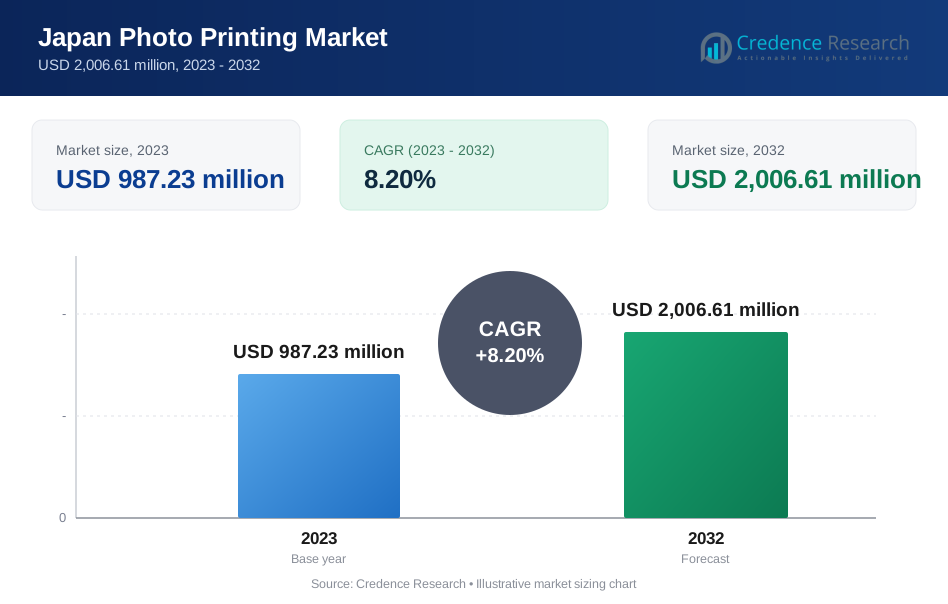
| Japan Photo Printing Market Size 2023 | USD 987.23 million |
| Japan Photo Printing Market, CAGR | 8.20 |
| Japan Photo Printing Market Size 2032 | USD 2,006.61 million |
Market Overview
The Japan Photo Printing market is projected to grow from USD 987.23 million in 2023 to an estimated USD 2,006.61 million by 2032, with a compound annual growth rate (CAGR) of 8.20% from 2024 to 2032. This significant growth reflects the increasing demand for high-quality printed photos, driven by a resurgence in physical photography and personalized photo products.
Several factors are driving the growth of the Japan Photo Printing market. The growing popularity of instant cameras, alongside the increasing use of smartphones for photography, has fueled the demand for printed photos. Moreover, the rising interest in creating personalized photo albums and calendars is boosting market growth. The trend toward high-quality, on-demand printing services and the availability of various printing formats further enhance the market's appeal to consumers.
Geographically, the Japan Photo Printing market is concentrated in urban areas, with major cities such as Tokyo, Osaka, and Yokohama being the primary hubs for photo printing services. These regions are expected to witness significant market growth due to the high population density and increased consumer spending on personalized products. Key players in the market include Fujifilm Holdings Corporation, Canon Inc., and DNP Photo Imaging, which continue to innovate and expand their offerings to meet the evolving needs of consumers.
Market Drivers
Rising Popularity of Instant Cameras and Smartphone Photography
The increasing popularity of instant cameras and widespread smartphone photography is a major driver of Japan's photo printing market. According to a survey by the Camera & Imaging Products Association (CIPA), shipments of instant cameras in Japan have grown steadily in recent years, with younger consumers particularly drawn to their nostalgic appeal and instant gratification. For instance, Fujifilm reported that sales of its Instax cameras and film exceeded 10 million units globally in 2019, with Japan being a key market. Simultaneously, smartphone penetration in Japan has reached over 90% according to government statistics, leading to an explosion in digital photo-taking. A consumer survey by Canon found that over 70% of respondents take photos with their smartphones daily. This abundance of digital photos has fueled demand for high-quality prints, as people seek to preserve memories in physical form. Photo printing companies report growing orders for prints from smartphone photos, especially for occasions like weddings and family events. The convenience of smartphone apps that allow direct ordering of prints has further boosted this trend, with several major Japanese retailers offering such services to capitalize on the growing market.
Advancement in Printing Technologies and Customization Options
Advancements in printing technologies and expanding customization options are driving growth in Japan's photo printing market. According to industry reports, the adoption of high-resolution printers capable of producing gallery-quality prints has increased among photo printing businesses in Japan. For instance, Fujifilm's Frontier series of digital lab systems, widely used in Japan, now offer print resolutions up to 720 dpi. This improved print quality has heightened consumer interest in photo products. A survey by the Japan Photo Imaging Association found that over 60% of respondents cited print quality as a key factor in choosing photo printing services. Additionally, the market has seen a proliferation of customization options. Major players like Kitamura and Bic Camera now offer extensive personalization choices for photo books, calendars, and gifts. Data from these companies indicate that sales of customized photo products have grown by double digits annually in recent years. The integration of AI-powered editing tools in online ordering platforms has further simplified the customization process for consumers. Government data on e-commerce trends shows a significant increase in online orders for personalized photo products, reflecting the growing consumer preference for unique, customized items.
Growing Trend of Personalized Photo Gifts and Home Decor
The trend towards personalized photo gifts and home decor is significantly driving Japan's photo printing market. A consumer survey conducted by Rakuten, a major e-commerce platform in Japan, revealed that personalized photo products rank among the top choices for gift-giving, especially for occasions like Mother's Day and Valentine's Day. For instance, sales of custom photo calendars on Rakuten's platform increased by over 30% year-over-year in 2022. In the home decor sector, companies like King Jim report growing demand for photo-based interior products such as canvas prints and acrylic frames. A study by the Japan Interior Industry Association found that over 40% of respondents had purchased or were interested in purchasing photo-based decor items for their homes. This trend is particularly strong among millennials and young families. Photo printing services have responded by expanding their product lines to include a wide range of customizable home decor items. For example, Kitamura, a leading photo service chain in Japan, has introduced new lines of photo-customized wallpapers and room dividers, which have seen strong initial sales. The growing interest in personalized living spaces, coupled with the emotional value of displaying personal memories, continues to fuel this segment of the photo printing market.
Increasing Demand for High-Quality, On-Demand Printing Services
The demand for high-quality, on-demand printing services is a crucial driver of the Japan Photo Printing market. Modern consumers expect convenience and quick turnaround times without compromising on quality. On-demand printing services have emerged as a response to these expectations, offering consumers the ability to order high-quality photo prints with just a few clicks. These services are often integrated with mobile apps and online platforms, allowing users to easily select their photos, customize their orders, and have the prints delivered directly to their doorsteps. The convenience of these services, combined with the high quality of the prints, has made them increasingly popular among consumers. Additionally, on-demand printing services cater to the needs of both individual consumers and businesses, offering a wide range of products from standard photo prints to large-format posters and commercial photo products. The ability to meet diverse consumer needs while maintaining high standards of quality has made on-demand printing services a significant driver of market growth. As more consumers seek to preserve their digital memories in physical form, the demand for high-quality, convenient printing solutions is expected to continue rising, further propelling the growth of the Japan Photo Printing market.
Market Trends
Shift Towards Personalized and Customizable Photo Products
A prominent trend in the Japan Photo Printing market is the growing consumer preference for personalized and customizable photo products. Consumers are increasingly seeking ways to make their photo prints unique, reflecting their personal style and memories. This trend is evident in the rising demand for customized photo books, calendars, and photo gifts. For instance, Fujifilm reported that sales of its personalized photo products in Japan grew by 15% year-over-year in 2023, with photo books being particularly popular. Platforms offering easy-to-use customization tools have gained popularity, allowing users to design their products by adding text, choosing layouts, and selecting from various themes. The ability to create personalized gifts, such as photo mugs, T-shirts, and canvas prints, has also seen a surge in popularity, especially during holidays and special occasions. A survey by the Japan Photo Printing Association found that 68% of respondents had purchased a personalized photo product in the past year, with 72% expressing interest in doing so again in the future. This trend reflects a broader consumer desire for products that offer a personal touch, driving the photo printing market towards more innovative and flexible solution.
Increasing Adoption of Digital-to-Print Services via Mobile Apps
The integration of mobile technology with photo printing services is another significant trend shaping the Japan Photo Printing market. As smartphones become the primary device for capturing photos, there has been a corresponding rise in the use of mobile apps to order photo prints. For instance, Canon reported that its mobile photo printing app in Japan saw a 30% increase in active users in 2023 compared to the previous year. These apps offer a seamless experience, allowing users to select photos directly from their phone's gallery, edit them, and place orders for prints, all within a few minutes. A study by the Japan Consumer Affairs Agency found that 55% of respondents had used a mobile app to order photo prints in the past six months, with convenience cited as the primary reason. The convenience of mobile apps has made photo printing more accessible and user-friendly, particularly for younger generations. Additionally, many of these apps offer cloud integration, enabling users to access and print photos stored in various online platforms. For example, Nikon's photo printing service in Japan now allows direct printing from popular cloud storage services, resulting in a 25% increase in orders through this channel.
Market Restraints and Challenges
Decline in Physical Photo Usage Due to Digital Alternatives
One of the significant restraints on the Japan Photo Printing market is the ongoing decline in the usage of physical photos, driven by the increasing reliance on digital alternatives. A survey conducted by the Japan Photography and Imaging Manufacturers Association found that the number of photos printed annually per household in Japan has decreased by over 60% in the past decade. This trend is particularly pronounced among younger generations, with only 15% of respondents under 30 reporting that they regularly print photos. The widespread adoption of smartphones with high-quality cameras has further accelerated this shift, as consumers can easily capture, store, and share images digitally. Social media platforms have become the primary means of photo sharing for many Japanese consumers, with a government survey indicating that over 80% of internet users in Japan actively use social media to share photos. While there is still demand for physical prints for special occasions or professional purposes, the overall market volume has contracted significantly, posing a major challenge for traditional photo printing businesses.
High Competition and Pricing Pressure Among Service Providers
The Japan Photo Printing market faces intense competition, both from domestic and international players, leading to significant pricing pressure. A market analysis by the Japan Printing Industry Association revealed that the number of photo printing service providers in Japan has increased by 25% over the past five years, despite the shrinking market size. This has resulted in a highly fragmented market with numerous small to medium-sized players competing for market share. The entry of e-commerce giants into the photo printing space has further intensified competition, with these platforms leveraging their existing customer base and logistics networks to offer competitive pricing. For instance, a leading e-commerce company reported a 40% year-over-year growth in its photo printing services, largely driven by aggressive pricing strategies. This competitive landscape has led to a race to the bottom in terms of pricing, with profit margins for many traditional photo printing businesses shrinking to unsustainable levels. The challenge of maintaining profitability while meeting consumer expectations for high-quality and customizable products has forced many companies to reevaluate their business models and seek innovative ways to differentiate themselves in the market.
Market Segmentation Analysis
By Product Type
The Japan Photo Printing market offers a diverse range of products to cater to various consumer preferences. Traditional photo prints remain popular, especially for personal albums and framing. According to a survey by the Japan Photography Association, over 60% of respondents still print physical copies of their digital photos at least once a year. The wall art segment has seen significant growth, with custom canvas prints, framed photos, and posters becoming increasingly sought after. Data from the Japan Interior Design Association shows that personalized wall art sales have increased by 25% in the past three years. Customized photo cards are particularly popular during festive seasons, with major retailers reporting a surge in demand during holidays. Photo gifts such as personalized mugs, T-shirts, and keychains have gained traction as unique presents. The Japan Gift Market Association reports that photo-based gifts now account for 15% of the overall gift market. Photo books continue to appeal to consumers looking to preserve memories in a personalized format, especially for special occasions like weddings and travel. The Japan Wedding Industry Association notes that over 70% of newlyweds create a photo book of their wedding.
By Type
While digital printing dominates the Japan Photo Printing market due to its convenience, speed, and flexibility, film and offset printing maintain a significant presence for specific high-quality or large-volume jobs. According to data from the Japan Printing Federation, digital printing accounts for approximately 80% of the photo printing market. However, traditional printing methods still hold appeal for certain consumers and applications. A survey conducted by the Japan Professional Photographers Society found that 30% of professional photographers still use film for some of their work, citing its unique aesthetic qualities. The Japan Advertising Photographers' Association reports that offset printing remains the preferred method for high-end commercial photo prints and art reproductions, with over 50% of their members using offset printing for client projects. Additionally, the Japan Photo Industry Association notes that while digital printing dominates the consumer market, film and offset printing continue to play crucial roles in specialized sectors such as fine art photography and archival printing, where these traditional methods are valued for their durability and color accuracy.
Segments
Based on Product Type
- Prints
- Wall Art
- Cards
- Photo Gifts
- Photo Books
- Calendars
- Others
Based on Type
- Film & Offset Printing
- Digital Printing
Based on Distribution Channel
- Retail
- Online
- Instant Kiosk
- Others
Based on Region
- Urban Areas
- Rural Areas
Regional Analysis
Kanto Region (40%)
The Kanto region, encompassing Tokyo, Yokohama, Chiba, and surrounding areas, holds the largest share of the Japan Photo Printing market, accounting for approximately 40%. For instance, a survey by the Japan Photo Imaging Association found that Tokyo residents print photos more frequently than those in other regions. The area's tech-savvy consumers show a strong preference for premium photo products and personalized gifts. Major players like Fujifilm and Canon have reported increased sales of high-end photo printers in the Kanto area. The region's extensive network of retail outlets and photo studios, combined with advanced digital infrastructure, further bolsters market growth.
Kansai Region (25%)
The Kansai region, which includes Osaka, Kyoto, Kobe, and surrounding areas, is the second-largest market, contributing around 25% of the total market share. Government data indicates that Osaka and Kyoto have the highest concentration of traditional photo studios outside of Tokyo. A consumer trends report by Nikkei Research highlighted strong demand for photo books and wall art in this culturally rich region. For instance, Kyoto-based Kitamura Camera Co. reported a surge in orders for photo albums featuring traditional landscapes and cultural events. The Japan Tourism Agency's statistics show that the influx of both domestic and international tourists to Kansai has boosted the market for souvenir photo products and prints.
Key players
- Fujifilm Corporation
- Adorama Camera, Inc.
- Bay Photo Lab
- Digitalab Ltd.
- Nations Photo Lab
- Walgreens Co.
- Snapfish
- Shutterfly, Inc.
- Walmart Photo
- HP Inc.
Competitive Analysis
The Japan Photo Printing market is characterized by intense competition among both domestic and international players. Fujifilm Corporation stands out as a leading player, leveraging its strong brand presence and extensive expertise in imaging technologies to dominate the market. Other key players, such as Shutterfly, Inc. and Snapfish, compete by offering a wide range of customizable photo products through user-friendly online platforms. Companies like Adorama Camera, Inc. and Bay Photo Lab focus on high-quality, professional-grade photo printing services, catering to more specialized consumer needs. Retail giants like Walgreens Co. and Walmart Photo provide convenient, in-store, and online photo printing options, making them accessible to a broad customer base. HP Inc. plays a significant role by supplying advanced printing technologies that support the market’s growing demand for high-quality prints. The competitive landscape is defined by a combination of innovation, convenience, and quality, driving continuous growth and consumer engagement.
Market Concentration and Characteristics
The Japan Photo Printing market is moderately concentrated, with a mix of well-established players and smaller niche companies competing for market share. Key players like Fujifilm Corporation, Shutterfly, Inc., and Snapfish dominate the market, leveraging their strong brand recognition, extensive product offerings, and advanced digital platforms. These companies benefit from economies of scale and widespread distribution networks, allowing them to maintain a significant presence across various segments. Smaller companies and specialized labs, such as Bay Photo Lab and Digitalab Ltd., focus on high-quality, professional-grade products, catering to specific consumer demands. The market is characterized by a blend of traditional and digital printing services, with increasing emphasis on customization and convenience. The competitive landscape is shaped by ongoing technological advancements, innovation in product offerings, and the growing trend towards personalized photo products.
Report Coverage
The research report offers an in-depth analysis based on Product Type, Type, Distribution Channel and Region. It details leading market players, providing an overview of their business, product offerings, investments, revenue streams, and key applications. Additionally, the report includes insights into the competitive environment, SWOT analysis, current market trends, as well as the primary drivers and constraints. Furthermore, it discusses various factors that have driven market expansion in recent years. The report also explores market dynamics, regulatory scenarios, and technological advancements that are shaping the industry. It assesses the impact of external factors and global economic changes on market growth. Lastly, it provides strategic recommendations for new entrants and established companies to navigate the complexities of the market.
Future Outlook
- The digital printing segment is expected to dominate the market, driven by advancements in printing technology and consumer demand for high-quality, customizable products.
- The increasing use of smartphones for photography will propel the growth of mobile app-based printing services, offering consumers convenience and accessibility.
- Personalized photo products, such as custom photo books, calendars, and gifts, will continue to gain popularity, fueling market expansion across various segments.
- The integration of AR features in printed photos and products is anticipated to enhance consumer engagement, offering interactive and immersive experiences.
- Instant photo printing kiosks and portable printers will see increased adoption, catering to the demand for quick and on-the-go printing solutions.
- As environmental awareness grows, companies will focus on sustainable printing practices, including eco-friendly materials and reduced waste in production processes.
- The market is expected to see growth in niche segments, such as professional-grade photo printing and specialized services for events like weddings and exhibitions.
- The development of advanced online customization tools will empower consumers to create more personalized and unique photo products, driving higher engagement.
- As consumer expectations rise, companies will prioritize offering superior print quality and durable materials, setting new industry standards.
- Companies are likely to pursue strategic partnerships and collaborations to expand their offerings, integrate new technologies, and reach a broader customer base, ensuring sustained market growth.
Request a Free Sample
Fill in your details and we'll send you a free sample report.
- Sample data tables & charts
- Research methodology
Need a Custom Version of This Report?
Tailor the scope, geography, or segments to your exact requirements.
- Custom geography or segment scope
- Direct access to our analyst team
Frequently Asked Questions
What is the projected growth of the Japan Photo Printing market?
What factors are driving the growth of the Japan Photo Printing market?
Which regions in Japan are leading the Photo Printing market?
Who are the key players in the Japan Photo Printing market?
Table of Content
Chapter 1. Report Introduction
- 1.1 Report Description & Purpose
- 1.1.1 Report Title & Market Definition
- 1.1.2 Unique Selling Propositions (USP) & Key Differentiators
- 1.1.3 Value Proposition for Stakeholders
- 1.2 Research Objectives
- 1.2.1 Market Sizing Objectives (Volume & Revenue)
- 1.2.2 Segmentation Objectives
- 1.2.3 Competitive Intelligence Objectives
- 1.2.4 Forecast & Scenario Objectives
- 1.3 Report Scope
- 1.3.1 Japan Photo Printing Scope – Types & Subtypes Covered
- 1.3.2 Geographic Scope – Regions & Countries Covered
- 1.3.3 Historical Period, Base Year & Forecast Period (2023; forecast to 2032)
- 1.3.4 Inclusions & Exclusions
- 1.4 HS Code & Classification Framework
- 1.5 Currency, Units & Pricing Basis
- 1.6 Target Stakeholders
- 1.7 Limitations & Assumptions
Chapter 2. Executive Summary
- 2.1 Global Japan Photo Printing Market Snapshot
- 2.1.1 Market Size – Historical (2023) & Forecast (2023-2032) (2023: USD 987.23 million → 2032: USD 2,006.61 million)
- 2.1.2 Volume & Revenue – Global Totals
- 2.1.3 Key Market Highlights – Top Five Facts
- 2.2 Japan Photo Printing Market Segmentation Snapshot
- 2.2.1 Market Split by Region – 2023 vs. 2032
- 2.3 Competitive Snapshot
- 2.3.1 Top 10 Players by Revenue Share – 2023
- 2.3.2 Top 10 Players by Volume Share – 2023
- 2.3.3 Recent Strategic Developments (18-Month Summary)
- 2.4 Key Investment Highlights & Strategic Conclusions
Chapter 3. Japan Photo Printing Market Dynamics & Industry Analysis
- 3.1 Market Overview & Context
- 3.1.1 Japan Photo Printing Market Position in the Broader Automotive Value Chain
- 3.1.2 OEM vs. Replacement Market Dynamics
- 3.1.3 Market Maturity & Development Stage by Region
- 3.2 Japan Photo Printing Market Drivers
- 3.3 Japan Photo Printing Market Restraints & Challenges
- 3.4 Japan Photo Printing Market Opportunities
- 3.5 Porter's Five Forces Analysis
- 3.5.1 Threat of New Entrants
- 3.5.2 Bargaining Power of Suppliers
- 3.5.3 Bargaining Power of Buyers
- 3.5.4 Threat of Substitutes
- 3.5.5 Competitive Rivalry – Intensity Assessment
- 3.6 Japan Photo Printing Value Chain Analysis
- 3.6.1 Upstream – Raw Material/Input Suppliers
- 3.6.1.1 Raw Material/Input 1
- 3.6.1.2 Raw Material/Input 2
- 3.6.1.3 Raw Material/Input 3
- 3.6.2 Midstream – Production/Manufacturing/Service Delivery
- 3.6.2.1 Production/Process Overview
- 3.6.2.2 Key Facility Locations & Capacity by Manufacturer
- 3.6.3 Downstream – Distribution & End Consumer
- 3.6.3.1 Primary Channel – B2B/OEM
- 3.6.3.2 Secondary Channels – Dealer, Retail, Online, Direct
- 3.6.4 Value Chain Profitability Analysis
- 3.6.1 Upstream – Raw Material/Input Suppliers
- 3.7 PESTEL Analysis
- 3.7.1 Political Factors
- 3.7.2 Economic Factors
- 3.7.3 Social Factors
- 3.7.4 Technological Factors
- 3.7.5 Environmental Factors
- 3.7.6 Legal Factors
- 3.8 Japan Photo Printing Supply Chain Analysis
- 3.8.1 Raw Material/Input Supply Risk Assessment
- 3.8.2 Manufacturing Concentration Risk (Geographic Exposure)
- 3.8.3 Trade Disruption Impact Analysis
- 3.9 Regulatory & Policy Landscape
Note: The regulatory and policy landscape section covers regulations based on their applicability to the market, Japan Photo Printing category, geography, and scope of the study. Only regulatory frameworks with a material impact on operations, compliance, trade, sustainability, or market access are analyzed in detail.
Chapter 4. Key Investment Pockets & Opportunity Analysis
- 4.1 Japan Photo Printing Market Attractiveness Analysis
- 4.1.1 By Region – Investment Attractiveness Matrix (Volume × CAGR)
- 4.2 Absolute Revenue Growth Opportunity
- 4.2.1 By Region – Absolute USD Growth Through 2032
- 4.3 Incremental Volume Opportunity
- 4.3.1 By Region – Incremental Volume Through 2032
- 4.3.2 Segment – Incremental Volume
- 4.4 Emerging Submarket Opportunity Deep Dive (Subject to Applicability)
- 4.5 Emerging Market Opportunity Scorecards
- 4.5.1 United States
- 4.5.2 Europe
- 4.5.3 Asia
- 4.5.4 Middle East & Africa
Note: Emerging Market Opportunity Scorecards will be included based on relevance and strategic importance. Regions listed are indicative and may vary depending on data availability and market dynamics.
Chapter 5. Japan Photo Printing Import-Export Analysis & Trade Flows
- 5.1 Global Trade Overview
- 5.1.1 Global Export Value by Country (2023)
- 5.1.2 Global Export Volume by Country (2023)
- 5.1.3 Global Import Value by Country (2023)
- 5.1.4 Global Import Volume by Country (2023)
- 5.1.5 Net Trade Balance by Country (2023)
- 5.2 Export Analysis – Segment
- 5.2.1 Type 1 (HS Code)
- 5.2.2 Type 2 (HS Code)
- 5.2.3 Type 3 (HS Code)
- 5.2.4 Type 4 (HS Code)
- 5.2.5 Type 5 (HS Code)
- 5.3 Import Analysis – Segment
- 5.3.1 Type 1 (HS Code)
- 5.3.2 Type 2 (HS Code)
- 5.3.3 Type 3 (HS Code)
- 5.3.4 Type 4 (HS Code)
- 5.3.5 Type 5 (HS Code)
- 5.4 Average Unit Trade Prices
- 5.4.1 Average Export Price – Segment & Country
- 5.4.2 Average Import Price – Segment & Source Country
- 5.4.3 Price Trends (2023)
- 5.5 Key Trade Route Analysis
- 5.5.1 Trade Route 1
- 5.5.2 Trade Route 2
- 5.5.3 Trade Route 3
- 5.5.4 Trade Route 4
- 5.5.5 Trade Route 5
- 5.6 Trade Policy Impact Assessment
- 5.6.1 US Anti-Dumping & Section 301 Tariffs
- 5.6.2 EU Customs Union Impact
- 5.6.3 Major Free Trade Agreements
- 5.6.4 USMCA Rules of Origin
Note: Trade policy analysis will be included only where relevant to the Japan Photo Printing market.
Chapter 6. Competitive Landscape & Company Benchmarking
- 6.1 Japan Photo Printing Market Concentration & Structure
- 6.1.1 Herfindahl-Hirschman Index (HHI) – vs. 2023
- 6.1.2 Tier 1, Tier 2 & Tier 3 Market Structure
- 6.1.3 Global, Regional & Local Player Dynamics
- 6.2 Japan Photo Printing Market Share Analysis – 2023
- 6.2.1 Global Revenue Share by Company
- 6.2.2 Global Volume Share by Company
- 6.2.3 Regional Revenue Share
- 6.2.4 Market Share Evolution ( vs. 2023)
- 6.2.5 OEM Segment Share by Company
- 6.2.6 Replacement Segment Share by Company
- 6.3 Production/Delivery Capacity & Facility Analysis
- 6.3.1 Global Installed Capacity
- 6.3.2 Capacity Utilization Rates
- 6.3.3 Production/Output Volume
- 6.3.4 Facility Locations & Capacity Map
- 6.3.5 Planned Capacity Additions
- 6.4 Japan Photo Printing Competitive Benchmarking Matrix
- 6.4.1 Revenue, Volume, CAGR & Profitability Comparison
- 6.4.2 Channel Revenue Mix
- 6.4.3 Geographic Revenue Exposure
- 6.4.4 R&D Intensity
- 6.4.5 Sustainability Maturity
- 6.5 Strategic Developments in Japan Photo Printing (Last 24 Months)
- 6.5.1 Mergers, Acquisitions & Divestments
- 6.5.2 New Japan Photo Printing Launches
- 6.5.3 Facility Expansions
- 6.5.4 Strategic Alliances, Joint Ventures & Partnerships
- 6.5.5 Distribution Expansion & Market Entry
- 6.5.6 Sustainability & ESG Initiatives
- 6.6 Competitive Strategy Mapping
- 6.6.1 Leader, Challenger, Follower & Niche Classification
- 6.6.2 Pricing Strategy Comparison
- 6.6.3 Channel Strategy Matrix
Note: Strategic developments are included based on their materiality and the availability of reliable information.
Chapter 7. Global Japan Photo Printing Market – By Distribution Channel
- 7.1 Segment Overview
- 7.1.1 Volume & Revenue Split by Channel (2023 & 2032)
- 7.1.2 Channel Mix Evolution (2023-2032)
Chapter 8. Regional Market Analysis – Global Overview
- 8.1 Global Regional Overview
- 8.1.1 Regional Volume Share
- 8.1.2 Regional Revenue Share
- 8.1.3 Regional Volume by Region
- 8.1.4 Regional Revenue by Region
- 8.1.5 Regional Forecast Through 2032
- 8.2 Cross-Regional Segment Analysis
- 8.2.1 By Distribution Channel
- 8.2.2 By Brand/Price Tier
Chapter 9. North America Japan Photo Printing Market
- 9.1 United States
- 9.2 Canada
- 9.3 Mexico
Chapter 10. Europe Japan Photo Printing Market
- 10.1 Germany
- 10.2 France
- 10.3 Italy
- 10.4 United Kingdom
- 10.5 Spain
- 10.6 Poland
- 10.7 Russia
- 10.8 Netherlands
- 10.9 Belgium
- 10.10 Sweden
- 10.11 Denmark
- 10.12 Norway
- 10.13 Rest of Europe
Chapter 11. Asia Pacific Japan Photo Printing Market
- 11.1 China
- 11.2 India
- 11.3 Japan
- 11.4 South Korea
- 11.5 Thailand
- 11.6 Indonesia
- 11.7 Vietnam
- 11.8 Malaysia
- 11.9 Australia
- 11.10 Rest of Asia Pacific
Chapter 12. Latin America Japan Photo Printing Market
- 12.1 Brazil
- 12.2 Argentina
- 12.3 Colombia
- 12.4 Chile
- 12.5 Rest of Latin America
Chapter 13. Middle East Japan Photo Printing Market
- 13.1 Saudi Arabia
- 13.2 United Arab Emirates
- 13.3 Turkey
- 13.4 Israel
- 13.5 Iran
- 13.6 Rest of the Middle East
Chapter 14. Africa Japan Photo Printing Market
- 14.1 South Africa
- 14.2 Egypt
- 14.3 Nigeria
- 14.4 Morocco
- 14.5 Rest of Africa
Chapter 15. Japan Photo Printing Company Profiles
- 15.1 [Company 01]
- 15.1.1 Company Overview
- 15.1.2 Key Management Personnel
- 15.1.3 Products & Services Portfolio
- 15.1.4 Financial Performance
- 15.1.5 Key Market Focus & Geographic Presence
- 15.1.6 Recent Developments & Strategic Initiatives
Note: The company profile list is preliminary and may change based on research findings, market developments, data availability, and client requirements.
Chapter 16. Appendices
- Appendix A – List of Abbreviations & Acronyms
- Appendix B – Industry Classification Code Reference – Full Series
- Appendix C – Production & Capacity Data Tables
- Appendix D – End-Use & Demand Base Tables
- Appendix E – Consumption & Replacement Rate Assumptions
- Appendix F – ASP Reference Tables
- Appendix G – Manufacturing & Facility Database
- Appendix H – Import-Export Data Tables
- Appendix I – Regulatory Summary Tables
- Appendix J – Primary Research Participant List (Anonymized)
- Appendix K – Primary Research Questionnaire Framework
- Appendix L – Data Sources & Bibliography
- Appendix M – Market Size Divergence & Source Comparison
Chapter 17. Research Methodology
- 17.1 Research Framework & Philosophy
- 17.2 Secondary Research – Sources, Hierarchy & Data Extraction
- 17.3 Data Modeling – Bottom-Up & Top-Down Market Sizing
- 17.4 Primary Research – Stakeholder Framework, LOI & Sample Sizes
- 17.5 Forecast Methodology – Regression, Scenario & Sensitivity Analysis
- 17.6 Quality Control – Four-Layer Validation Framework
- 17.7 Limitations & Standard Assumptions
- 17.8 Disclaimer
