
| REPORT ATTRIBUTE | DETAILS |
|---|---|
| Historical Period | 2019-2022 |
| Base Year | 2023 |
| Forecast Period | 2024-2032 |
| UK K Beauty Product Market Size 2023 | USD 584.16 million |
| UK K Beauty Product Market, CAGR | 7.81% |
| UK K Beauty Product Market Size 2032 | USD 1,149.99 million |
Market Overview
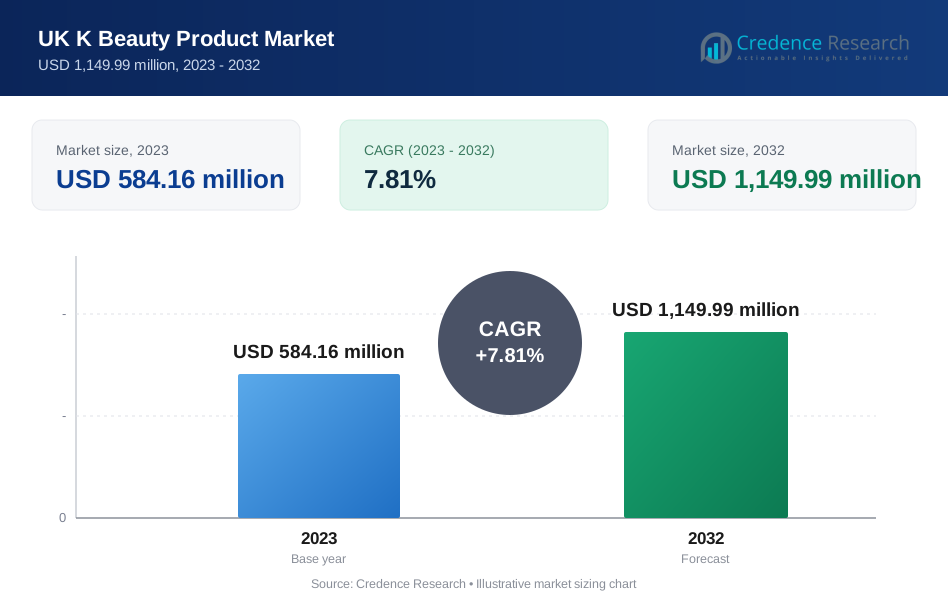
The UK K Beauty Product Market is projected to grow from USD 584.16 million in 2023 to an estimated USD 1,149.99 million by 2032, with a compound annual growth rate (CAGR) of 7.81% from 2024 to 2032. This substantial growth underscores the increasing adoption of Korean beauty products among UK consumers, driven by their reputation for innovative formulations and high efficacy.
Key drivers propelling the UK K Beauty Product Market include the growing awareness of comprehensive skincare routines, the influence of social media and K-pop culture, and a heightened demand for natural and high-quality ingredients. Additionally, trends such as the preference for cruelty-free and eco-friendly products, along with the surge in online retail platforms, have significantly contributed to market expansion. The innovative packaging and unique product offerings typical of K-beauty brands also align with contemporary consumer preferences for personalized and effective beauty solutions, further fueling market growth.
Geographically, the UK K Beauty Product Market is predominantly concentrated in urban regions such as London, Manchester, and Birmingham, where there is higher consumer spending and a greater inclination towards international beauty trends. These metropolitan areas serve as key hubs for distribution and marketing of K-beauty products, leveraging their diverse and trend-sensitive populations. Prominent key players in the market include Amorepacific, Missha, Innisfree, and The Face Shop, which have established strong brand presences through strategic partnerships, retail expansions, and robust digital marketing initiatives. These companies continue to drive market growth by catering to the evolving preferences of UK consumers and expanding their product portfolios to meet diverse beauty needs.
Market Insights
- The UK K Beauty Product Market is projected to grow from USD 584.16 million in 2023 to USD 1,149.99 million by 2032, driven by a CAGR of 7.81% from 2024 to 2032.
- Key factors include growing consumer awareness of comprehensive skincare routines, the influence of K-pop culture, and the rising demand for natural and eco-friendly ingredients.
- Online retail platforms are a significant driver, offering greater accessibility to K-beauty products across the UK.
- The challenge of intense market competition and the high cost of premium K-beauty products may limit market growth.
- The market is primarily concentrated in urban areas like London, Manchester, and Birmingham, with these regions leading the adoption of K-beauty products.
- There is a growing demand for personalized, multi-functional, and clean beauty products, aligning with global beauty trends.
- Major brands like Amorepacific, Missha, Innisfree, and The Face Shop dominate the market with strong digital marketing and retail expansion strategies.
Market Drivers
Rising Consumer Awareness of Advanced Skincare Solutions
The growing awareness of the importance of skincare has emerged as a significant driver in the UK K Beauty Product Market. With increasing access to information, consumers are more educated about the benefits of adopting structured skincare routines that emphasize prevention and long-term health rather than quick fixes. For instance, there has been a notable rise in online searches and discussions about K-beauty products, indicating a shift towards comprehensive skincare regimens that address specific concerns like acne and aging. K-beauty products are particularly appealing due to their multi-step approaches, which include cleansing, exfoliation, and intensive hydration. Moreover, K-beauty brands stand out for their commitment to innovative formulations that incorporate traditional Korean ingredients such as ginseng, rice water, and snail mucin, combined with advanced biotechnology. This unique value proposition resonates strongly with UK consumers who seek high-quality alternatives to conventional beauty products. The focus on natural, effective, and gentle skincare solutions has solidified K-beauty’s position in the market, catering to an increasingly discerning audience that values both efficacy and holistic skin health.
Influence of Social Media and K-Pop Culture
Social media platforms and the global appeal of Korean pop culture have played a crucial role in shaping consumer behavior in the UK K Beauty Product Market. For instance, platforms like Instagram and TikTok are now essential for beauty enthusiasts, with influencers frequently showcasing K-beauty products and their effectiveness. This digital engagement creates substantial buzz around these products, driving demand among consumers eager to explore new skincare solutions. The aspirational beauty standards set by K-pop idols further amplify this trend. Fans often aspire to emulate the flawless skin of their favorite celebrities, establishing a strong association between K-beauty products and desirable beauty ideals. Collaborations between K-beauty brands and popular K-pop figures enhance product visibility and attract a younger demographic in the UK. Additionally, beauty vloggers and dermatologists contribute to consumer trust by providing detailed product reviews and skincare routines. This synergy between social media influence and celebrity culture has significantly propelled the popularity of K-beauty products among UK consumers.
Preference for Natural and Eco-Friendly Products
A growing demand for natural, organic, and sustainable beauty products is driving the adoption of K-beauty products in the UK. Consumers are increasingly concerned about the environmental and health impacts of their skincare choices. For instance, many K-beauty brands have effectively responded to this trend by offering eco-friendly formulations that prioritize minimalistic yet attractive packaging alongside cruelty-free testing processes. The emphasis on using natural ingredients without compromising on effectiveness positions K-beauty products as reliable options for eco-conscious consumers. Transparency in ingredient sourcing and the absence of harsh chemicals appeal to a broad audience seeking healthier skincare alternatives. This alignment with sustainability and ethical practices has given K-beauty brands a competitive edge in the UK market, allowing them to cater to consumers who prioritize both personal care and environmental responsibility.
Expansion of Online Retail and E-commerce Platforms
The widespread availability of K-beauty products through online retail and e-commerce platforms has significantly contributed to market growth. For instance, e-commerce giants like Amazon, Cult Beauty, and Lookfantastic have made it convenient for UK consumers to access a diverse range of Korean beauty products. The digital-first approach not only expands the reach of K-beauty brands but also facilitates direct engagement with consumers through reviews, tutorials, and personalized recommendations.During the COVID-19 pandemic, the surge in online shopping habits accelerated this trend even further. Many K-beauty brands capitalized on this shift by enhancing their online presence with exclusive discounts, free shipping offers, and promotional bundles. The incorporation of augmented reality (AR) tools and virtual try-ons on e-commerce sites has also enriched the shopping experience, empowering consumers to make informed purchasing decisions. This seamless integration of digital marketing strategies with e-commerce has positioned K-beauty products as accessible and desirable options for UK consumers seeking innovative skincare solutions.
Market Trends
Increased Focus on Customization and Personalization
The demand for personalized skincare and beauty solutions has grown significantly in the UK, with K-beauty brands leading the way in offering tailored products and regimens. This trend stems from consumers' increasing awareness of unique skin types and conditions, alongside their willingness to invest in products that cater specifically to their needs. For instance, brands are leveraging AI-driven skin diagnostic tools that analyze individual skin conditions, enabling them to recommend bespoke product solutions. Personalized offerings like customizable sheet masks and serums have gained immense popularity, as they allow consumers to address specific concerns effectively. Moreover, many brands emphasize consumer education by providing guidance on integrating products into multi-step routines. This focus on personalization not only enhances customer satisfaction but also fosters loyalty, as consumers feel their individual needs are understood and prioritized. Ultimately, this trend signifies a shift toward a more individualized approach in the beauty industry, where consmers seek products that resonate with their unique skincare journeys.
Rise of Minimalist Skincare (Skinimalism)
While K-beauty has traditionally been associated with elaborate multi-step routines, a shift toward minimalist skincare has emerged as a dominant trend in the UK market. Known as "skinimalism," this trend emphasizes using fewer products while focusing on quality and efficacy. Consumers are increasingly seeking streamlined routines that prioritize skin health over superficial perfection. K-beauty brands have responded by introducing multi-functional products that combine the benefits of multiple steps into one. For example, hybrid formulations that act as a moisturizer, sunscreen, and serum are becoming popular among consumers looking for efficiency without sacrificing quality. Additionally, there is a growing emphasis on barrier repair and skin hydration, with products featuring ingredients like ceramides, hyaluronic acid, and probiotics. This trend aligns with the broader movement toward simplicity and sustainability, appealing to time-strapped, eco-conscious consumers in the UK who prefer effective solutions that minimize waste. By catering to this desire for streamlined beauty routines, K-beauty brands are redefining the consumer experience and reinforcing their relevance in a fast-paced world.
Growing Popularity of Clean and Vegan Beauty
Clean beauty has become a defining trend in the UK market, with consumers increasingly demanding transparency in ingredients and formulations. K-beauty brands have successfully capitalized on this trend by offering products that adhere to clean beauty principles, such as being free from parabens, sulfates, and artificial fragrances. The preference for vegan and cruelty-free products is also driving innovation; UK consumers prioritize ethical beauty choices more than ever before. For example, many K-beauty brands highlight their use of natural ingredients like green tea and centella asiatica for their soothing properties while ensuring sustainable sourcing practices. This commitment resonates deeply with modern consumers who value both efficacy and ethical considerations in their purchases. Furthermore, brands are emphasizing eco-friendly packaging solutions such as refillable containers and biodegradable materials, which further strengthen their appeal to environmentally conscious shoppers. As clean beauty continues to gain traction in the UK market, K-beauty brands are not only meeting consumer demands but also setting new standards for responsible beauty practices.
Integration of Technology in Beauty Routines
The incorporation of technology into beauty routines is another trend reshaping the UK K Beauty Product Market. From virtual try-ons to app-based skincare diagnostics, technological advancements are enhancing consumer experiences and engagement. K-beauty brands have been at the forefront of this innovation by offering smart beauty devices and tech-enabled skincare solutions that cater to tech-savvy consumers seeking professional-grade results at home. For instance, LED face masks and microcurrent devices are becoming increasingly popular among those looking for effective skincare treatments without visiting salons. Additionally, augmented reality (AR) tools allow consumers to visualize the effects of products before purchase-helping them make informed decisions based on their specific needs. Subscription-based apps that track skincare progress while providing tailored product recommendations are also gaining traction, fostering a deeper connection between consumers and brands. By integrating technology into beauty routines, K-beauty brands are not only enhancing user experiences but also creating opportunities for ongoing engagement and personalization in an increasingly digital world.
Market Challenges
Intense Market Competition and Brand Differentiation
The UK K-beauty product market faces significant competition, not only from established global beauty brands but also from emerging local and indie labels. For instance, the market is populated by a diverse range of brands, including well-known names like Cosrx and Laneige, alongside newer entrants that emphasize unique formulations. This competitive landscape necessitates continuous innovation in product offerings and marketing strategies to capture consumer interest amidst a crowded marketplace. As K-beauty brands strive to differentiate themselves, they often incorporate distinctive ingredients and packaging that reflect their Korean heritage while adapting to local consumer preferences. Moreover, the growing popularity of "clean beauty" and minimalistic skincare has encouraged other non-Korean brands to adopt K-beauty principles, further diluting its uniqueness. This saturation makes it challenging for new and smaller brands to establish a foothold. To remain competitive, K-beauty brands must invest in robust marketing strategies and innovative product development. By doing so, they can maintain their authenticity while appealing to an evolving consumer base that seeks both quality and cultural resonance in their beauty products.
Logistics, Regulatory Compliance, and Pricing Pressures
Navigating logistics and regulatory requirements in the UK poses a challenge for K-beauty brands, particularly with the changes brought about by Brexit. For example, the introduction of new import regulations and tariffs has led to increased operational costs for many brands. These complexities require careful management to ensure compliance with UK-specific standards for cosmetic products, which can result in delays in product availability. Such delays may impact consumer satisfaction and loyalty, as customers increasingly expect timely access to their favorite products.Additionally, the perception of K-beauty products as premium offerings creates pricing pressures in a cost-sensitive market. Striking a balance between affordability and maintaining high product quality is critical yet challenging. As consumers become more conscious of value for money, K-beauty brands must address these challenges to sustain growth. They need to implement strategic pricing models that reflect both their premium positioning and the realities of the competitive landscape. By effectively managing these logistical hurdles and pricing strategies, K-beauty brands can build long-term trust with consumers in the dynamic UK beauty market.
Market Opportunities
Expansion into Untapped Consumer Segments and Regions
The UK K Beauty Product Market holds significant potential for growth by targeting untapped consumer segments and expanding into less saturated regions. While K-beauty has gained popularity among urban, trend-conscious consumers, there is an opportunity to reach a broader demographic, including older age groups and male consumers. Tailoring products to address specific concerns such as anti-aging, sensitive skin, or grooming for men can unlock new customer bases. Geographically, K-beauty brands can capitalize on the growing demand in suburban and rural areas, where access to premium beauty products has traditionally been limited. Strategic partnerships with retail chains and localized marketing campaigns can enhance brand visibility and drive adoption in these regions. By diversifying their reach, K-beauty brands can achieve sustainable growth in the UK market.
Leveraging Digital Channels and Innovative Retail Experiences
The increasing reliance on e-commerce and digital platforms presents a robust opportunity for K-beauty brands to strengthen their presence in the UK. By optimizing online storefronts, utilizing data-driven personalization, and offering seamless shopping experiences, brands can cater to tech-savvy consumers seeking convenience. Additionally, incorporating augmented reality (AR) tools and virtual consultations can enhance customer engagement and foster trust in online purchases.Innovative retail experiences, such as pop-up stores, immersive brand activations, and in-store technology integrations, can also attract attention and create memorable customer interactions. Combining digital and physical strategies allows K-beauty brands to differentiate themselves and build long-term loyalty in the competitive UK beauty landscape.
Market Segmentation Analysis
By Type
The UK K Beauty Product Market features a diverse range of product types driving its growth. Sheet masks are highly popular for their convenience, affordability, and targeted skincare benefits, appealing to consumers seeking quick solutions. Cleansers, particularly innovative oil-based and foam formulations, cater to varying skin types and are an integral part of skincare routines. Moisturizers, in high demand for hydration-focused skincare, often combine multiple benefits, such as SPF protection and anti-aging properties. Additionally, the "Others" segment, which includes serums, toners, and exfoliators, supports the popularity of multi-step K-beauty routines, offering versatility and customization for consumers seeking tailored solutions
By Application
The UK K Beauty Product Market is driven by various applications, with personal use forming the largest segment as consumers increasingly adopt structured skincare routines. The affordability and accessibility of K-beauty products have made them a popular choice for at-home use. Additionally, beauty businesses, including salons, spas, and beauty service providers, are key consumers of K-beauty products, incorporating them into premium skincare treatments and enhancing their service offerings. Niche applications, such as theatrical makeup and professional skincare, also contribute to the market, albeit with a smaller but consistent demand.
Segments
Based on Type
- Sheet Masks
- Cleansers
- Moisturizers
- Others
Based on Application
- Beauty Business
- Personal
- Others
Based on End User
- Male
- Female
- Children and Teenage
Based on Distribution Channel
- Online Retail
- Supermarket/Hypermarket
- Specialty/Monobrand Stores
Based on Region
- London
- Manchester
- Birmingham
Regional Analysis
London and the South East (35%)
London and the South East are at the forefront of the UK's K-Beauty market, accounting for approximately 35% of the national market share.The region's diverse and affluent population, coupled with a high concentration of beauty retailers and flagship stores, has facilitated the widespread adoption of K-Beauty products.The presence of major international beauty retailers and a vibrant e-commerce environment further bolster product accessibility and consumer engagement.
Midlands and the North (25%)
The Midlands and Northern England collectively represent around 25% of the UK's K-Beauty market share.Cities such as Manchester, Birmingham, and Leeds have witnessed a surge in demand, driven by increasing urbanization and a growing interest in global beauty trends.The expansion of specialty beauty stores and the penetration of online retail platforms have enhanced product availability, catering to a broader consumer base seeking innovative skincare solutions.
Key players
- Able C & C Ltd
- Adwin Korea Corporation
- Amorepacific Corporation
- CLIO COSMETICS Co. Ltd
- Cosrx Inc
- LG H&H Co. Ltd. (LG Corporation)
- The Crème Shop Inc
- The Face Shop Inc
- Tonymoly Co. Ltd
Competitive Analysis
The UK K Beauty Product Market is highly competitive, with key players such as Amorepacific Corporation, Cosrx Inc, and Tonymoly Co. Ltd leading the market. These brands differentiate themselves by offering a diverse range of innovative and high-quality skincare solutions that cater to the growing demand for effective and personalized beauty products. Amorepacific, for example, boasts a strong brand presence with its extensive product portfolio that includes high-performance skincare lines. Meanwhile, Cosrx Inc focuses on acne treatment and sensitive skin solutions, appealing to a specific consumer need. Smaller players like The Crème Shop Inc and CLIO COSMETICS leverage creative marketing strategies and product differentiation to build their customer base. The increasing focus on sustainability, clean ingredients, and cruelty-free products has further intensified competition, forcing brands to adopt innovative business strategies to stay ahead in the market.
Recent Developments
- In December 2024, Able C & C announced the launch of a new line of skincare products specifically designed for the UK market. This line incorporates popular K-beauty ingredients such as propolis and green tea, targeting consumers seeking natural and effective skincare solutions.
- In October 2024, Amorepacific launched a marketing campaign in the UK that highlights the benefits of its best-selling skincare products. The campaign utilizes social media influencers to reach younger demographics, emphasizing the brand's commitment to innovation and quality.
- In September 2024, CLIO COSMETICS introduced a new range of makeup products tailored for the UK market. This collection features vibrant colors and long-lasting formulas, aligning with current beauty trends in the region.
- In August 2024, Cosrx reported a significant increase in sales within the UK, driven by their popular acne treatment products. The company plans to expand its product line further to include more targeted treatments for various skin concerns.
- As of June 2024, The Crème Shop launched a limited-edition collaboration with a popular UK influencer. This collaboration features exclusive K-beauty products that reflect current beauty trends while promoting cultural exchange between South Korea and the UK.
- In May 2024, The Face Shop expanded its presence in the UK by opening new retail locations in major cities. The brand is focusing on educating consumers about K-beauty routines through in-store events and workshops.
Market Concentration and Characteristics
The UK K Beauty Product Market is moderately concentrated, with a mix of well-established global brands and emerging players. Leading brands such as Amorepacific, Cosrx, and Tonymoly dominate the market, benefiting from strong brand recognition, extensive product portfolios, and established distribution channels. These companies have strategically positioned themselves through innovation, high-quality formulations, and partnerships with retailers. However, the market also features a growing presence of smaller and niche brands, particularly those emphasizing eco-friendly, clean, and cruelty-free products, which are becoming increasingly popular among UK consumers. This dynamic mix of dominant players and emerging brands creates a competitive environment, fostering continuous innovation and driving the market's evolution. With an increasing focus on personalized skincare, multi-functional products, and sustainability, the market continues to evolve to meet the diverse needs of UK consumers.
Report Coverage
The research report offers an in-depth analysis based on Type, Application, End User, Distribution Channel and Region. It details leading market players, providing an overview of their business, product offerings, investments, revenue streams, and key applications. Additionally, the report includes insights into the competitive environment, SWOT analysis, current market trends, as well as the primary drivers and constraints. Furthermore, it discusses various factors that have driven market expansion in recent years. The report also explores market dynamics, regulatory scenarios, and technological advancements that are shaping the industry. It assesses the impact of external factors and global economic changes on market growth. Lastly, it provides strategic recommendations for new entrants and established companies to navigate the complexities of the market.
Future Outlook
- The UK K Beauty market is expected to maintain steady growth, with projections indicating a CAGR of 7.81% from 2024 to 2032. This growth will be fueled by increasing consumer demand for innovative skincare solutions.
- Online retail will continue to play a dominant role in market expansion, offering consumers easy access to a wide variety of K-beauty products. This digital shift will support broader reach across different demographics.
- Consumers will increasingly prioritize clean, cruelty-free, and sustainable beauty products. Brands that emphasize eco-friendly ingredients and packaging will gain a competitive edge.
- There will be a growing interest in K-beauty products tailored specifically for men, with grooming solutions targeting skin concerns such as acne and aging gaining prominence.
- The demand for personalized skincare will continue to rise, as consumers seek products that cater specifically to their unique skin types and concerns, pushing brands to offer more tailored solutions.
- K-beauty brands will leverage technology such as AI and augmented reality to enhance consumer experiences, from virtual try-ons to personalized skincare diagnostics.
- While major cities like London dominate the market, there will be increasing opportunities in smaller cities and rural areas. Localized marketing and distribution will facilitate this expansion.
- K-beauty brands will continue to innovate with new formulations and multifunctional products, creating unique offerings that cater to the evolving beauty needs of UK consumers.
- As the market grows, stricter regulations and increased consumer demand for transparency will prompt brands to focus on ingredient sourcing and compliance with UK standards.
- Strategic partnerships between K-beauty brands and local retailers or influencers will continue to rise, enabling brands to expand their customer base and visibility in the UK market.
Request a Free Sample
Fill in your details and we'll send you a free sample report.
- Sample data tables & charts
- Research methodology
Need a Custom Version of This Report?
Tailor the scope, geography, or segments to your exact requirements.
- Custom geography or segment scope
- Direct access to our analyst team
Frequently Asked Questions
What is the market size of the UK K Beauty Product Market in 2023 and 2032?
What are the key drivers of the UK K Beauty Product Market?
Which regions in the UK are leading the K Beauty Product Market?
What are the primary trends in the UK K Beauty Product Market?
Who are the key players in the UK K Beauty Product Market?
Table of Content
Chapter 1. Report Introduction
- 1.1 Report Description & Purpose
- 1.1.1 Report Title & Market Definition
- 1.1.2 Unique Selling Propositions (USP) & Key Differentiators
- 1.1.3 Value Proposition for Stakeholders
- 1.2 Research Objectives
- 1.2.1 Market Sizing Objectives (Volume & Revenue) (Volume Where Applicable)
- 1.2.2 Segmentation Objectives
- 1.2.3 Competitive Intelligence Objectives
- 1.2.4 Forecast & Scenario Objectives
- 1.3 Report Scope
- 1.3.1 UK K Beauty Product Scope – Segments & Subsegments Covered
- 1.3.2 Geographic Scope – Regions & Countries Covered
- 1.3.3 Historical Period, Base Year & Forecast Period (2023; forecast to 2032)
- 1.3.4 Inclusions & Exclusions
- 1.4 Industry Classification & Applicable Codes
- 1.5 Currency, Measurement Units & Valuation Basis
- 1.6 Target Stakeholders
- 1.7 Limitations & Assumptions
Chapter 2. Executive Summary
- 2.1 Global UK K Beauty Product Market Snapshot
- 2.1.1 Market Size – Historical (2023) & Forecast (2023-2032) (2023: USD 584.16 million → 2032: USD 1,149.99 million)
- 2.1.2 Volume & Revenue – Global Totals (Volume Where Applicable)
- 2.1.3 Key Market Highlights – Top Five Facts
- 2.2 UK K Beauty Product Market Segmentation Snapshot
- 2.2.1 Market Split by Region – 2023 vs. 2032
- 2.3 Competitive Snapshot
- 2.3.1 Top 10 Players by Revenue Share – 2023
- 2.3.2 Top 10 Players by Volume Share – 2023 (Volume Where Applicable)
- 2.3.3 Recent Strategic Developments (18-Month Summary)
- 2.4 Key Investment Highlights & Strategic Conclusions
Chapter 3. UK K Beauty Product Market Dynamics & Industry Analysis
- 3.1 Market Overview & Context
- 3.1.1 UK K Beauty Product Market Position in the Broader Industry Value Chain
- 3.1.2 Demand Structure & Purchasing Dynamics
- 3.1.3 Market Maturity & Development Stage by Region
- 3.2 UK K Beauty Product Market Drivers
- 3.3 UK K Beauty Product Market Restraints & Challenges
- 3.4 UK K Beauty Product Market Opportunities
- 3.5 Porter's Five Forces Analysis
- 3.5.1 Threat of New Entrants
- 3.5.2 Bargaining Power of Suppliers
- 3.5.3 Bargaining Power of Buyers
- 3.5.4 Threat of Substitutes
- 3.5.5 Competitive Rivalry – Intensity Assessment
- 3.6 UK K Beauty Product Value Chain Analysis
- 3.6.1 Upstream – Key Inputs, Resources & Suppliers
- 3.6.1.1 Key Input/Resource 1
- 3.6.1.2 Key Input/Resource 2
- 3.6.1.3 Key Input/Resource 3
- 3.6.2 Midstream – Core Operations & Value Creation
- 3.6.2.1 Operating Model & Process Overview
- 3.6.2.2 Key Operating Locations & Capabilities by Company
- 3.6.3 Downstream – Market Channels & End Users
- 3.6.3.1 Direct Sales & Customer Engagement Channels
- 3.6.3.2 Indirect Sales, Intermediaries & Partner Channels
- 3.6.4 Value Chain Profitability Analysis
- 3.6.1 Upstream – Key Inputs, Resources & Suppliers
- 3.7 PESTEL Analysis
- 3.7.1 Political Factors
- 3.7.2 Economic Factors
- 3.7.3 Social Factors
- 3.7.4 Technological Factors
- 3.7.5 Environmental Factors
- 3.7.6 Legal Factors
- 3.8 UK K Beauty Product Supply Chain Analysis
- 3.8.1 Critical Input & Resource Availability Risk Assessment
- 3.8.2 Supplier & Operational Concentration Risk (Geographic Exposure)
- 3.8.3 Supply & Service Disruption Impact Analysis
- 3.9 Regulatory & Policy Landscape
Note: The regulatory and policy landscape section covers regulations based on their applicability to the market, UK K Beauty Product category, geography, and scope of the study. Only regulatory frameworks with a material impact on operations, compliance, trade, sustainability, or market access are analyzed in detail.
Chapter 4. Key Investment Pockets & Opportunity Analysis
- 4.1 UK K Beauty Product Market Attractiveness Analysis
- 4.1.1 By Region – Investment Attractiveness Matrix (Market Size × CAGR)
- 4.2 Absolute Revenue Growth Opportunity
- 4.2.1 By Region – Absolute Revenue Growth Through 2032
- 4.3 Incremental Demand Opportunity
- 4.3.1 By Region – Incremental Demand Through 2032
- 4.3.2 Segment – Incremental Demand
- 4.4 Emerging Submarket Opportunity Deep Dive (Subject to Applicability)
- 4.5 Priority Market Opportunity Scorecards
- 4.5.1 United States
- 4.5.2 Europe
- 4.5.3 Asia
- 4.5.4 Middle East & Africa
Note: Priority market opportunity scorecards reflect the geographic scope and strategic relevance of the study. Listed markets are indicative and may be adapted to the industry.
Chapter 5. UK K Beauty Product Cross-Border Trade & Market Access Analysis
- 5.1 International Trade & Cross-Border Activity Overview
- 5.1.1 Global Export Value by Country (2023)
- 5.1.2 Global Export Volume by Country (2023) (Volume Where Applicable)
- 5.1.3 Global Import Value by Country (2023)
- 5.1.4 Global Import Volume by Country (2023) (Volume Where Applicable)
- 5.1.5 Net Trade Balance by Country (2023)
- 5.2 Export Analysis – Segment
- 5.2.1 Category 1 (Applicable Classification Code)
- 5.2.2 Category 2 (Applicable Classification Code)
- 5.2.3 Category 3 (Applicable Classification Code)
- 5.2.4 Category 4 (Applicable Classification Code)
- 5.2.5 Category 5 (Applicable Classification Code)
- 5.3 Import Analysis – Segment
- 5.3.1 Category 1 (Applicable Classification Code)
- 5.3.2 Category 2 (Applicable Classification Code)
- 5.3.3 Category 3 (Applicable Classification Code)
- 5.3.4 Category 4 (Applicable Classification Code)
- 5.3.5 Category 5 (Applicable Classification Code)
- 5.4 Cross-Border Pricing & Transaction Benchmarks
- 5.4.1 Export Pricing – Segment & Country
- 5.4.2 Import Pricing – Segment & Source Country
- 5.4.3 Price Trends (2023)
- 5.5 Key Cross-Border Trade & Delivery Routes
- 5.5.1 Cross-Border Trade/Delivery Route 1
- 5.5.2 Cross-Border Trade/Delivery Route 2
- 5.5.3 Cross-Border Trade/Delivery Route 3
- 5.5.4 Cross-Border Trade/Delivery Route 4
- 5.5.5 Cross-Border Trade/Delivery Route 5
- 5.6 Trade Policy & Market Access Impact Assessment
- 5.6.1 Tariff & Non-Tariff Barriers
- 5.6.2 Regional Trade & Economic Integration Frameworks
- 5.6.3 Bilateral & Multilateral Trade Agreements
- 5.6.4 Cross-Border Operating, Licensing & Localization Requirements
Note: This chapter applies where cross-border trade or delivery is relevant to UK K Beauty Product. Goods, services, and digital offerings are assessed using applicable classifications and transaction measures. Import-export volumes, trade balances, and route analyses are included only where meaningful to the market.
Chapter 6. Competitive Landscape & Company Benchmarking
- 6.1 UK K Beauty Product Market Concentration & Structure
- 6.1.1 Herfindahl-Hirschman Index (HHI) – vs. 2023
- 6.1.2 Leading, Mid-Sized & Emerging Player Structure
- 6.1.3 Global, Regional & Local Player Dynamics
- 6.2 UK K Beauty Product Market Share Analysis – 2023
- 6.2.1 Global Revenue Share by Company
- 6.2.2 Global Volume Share by Company (Volume Where Applicable)
- 6.2.3 Regional Revenue Share
- 6.2.4 Market Share Evolution ( vs. 2023)
- 6.2.5 Company Market Share by Key Segment
- 6.2.6 Company Market Share by Customer Group
- 6.3 Operating Scale, Capacity & Infrastructure Analysis
- 6.3.1 Global Operating Scale & Supply Capacity
- 6.3.2 Resource Utilization & Operating Efficiency
- 6.3.3 Output, Service Delivery & Activity Metrics
- 6.3.4 Operating Footprint & Infrastructure Map
- 6.3.5 Planned Operational & Capacity Expansion
- 6.4 UK K Beauty Product Competitive Benchmarking Matrix
- 6.4.1 Revenue, Growth, Profitability & Operating Metric Comparison
- 6.4.2 Channel Revenue Mix
- 6.4.3 Geographic Revenue Exposure
- 6.4.4 R&D Intensity
- 6.4.5 Sustainability Maturity
- 6.5 Strategic Developments in UK K Beauty Product (Last 24 Months)
- 6.5.1 Mergers, Acquisitions & Divestments
- 6.5.2 New Products, Services & Solutions in UK K Beauty Product
- 6.5.3 Operational & Infrastructure Expansions
- 6.5.4 Strategic Alliances, Joint Ventures & Partnerships
- 6.5.5 Distribution Expansion & Market Entry
- 6.5.6 Sustainability & ESG Initiatives
- 6.6 Competitive Strategy Mapping
- 6.6.1 Leader, Challenger, Follower & Niche Classification
- 6.6.2 Pricing Strategy Comparison
- 6.6.3 Channel Strategy Matrix
Note: Strategic developments are included based on their materiality and the availability of reliable information.
Chapter 7. Global UK K Beauty Product Market – By Sales & Delivery Channel
- 7.1 Segment Overview
- 7.1.1 Volume & Revenue Split by Channel (2023 & 2032) (Volume Where Applicable)
- 7.1.2 Channel Mix Evolution (2023-2032)
Chapter 8. Regional Market Analysis – Global Overview
- 8.1 Global Regional Overview
- 8.1.1 Regional Volume Share (Volume Where Applicable)
- 8.1.2 Regional Revenue Share
- 8.1.3 Regional Volume by Region (Volume Where Applicable)
- 8.1.4 Regional Revenue by Region
- 8.1.5 Regional Forecast Through 2032
- 8.2 Cross-Regional Segment Analysis
- 8.2.1 By Sales & Delivery Channel
- 8.2.2 By Competitive Positioning & Price Tier
Chapter 9. North America UK K Beauty Product Market
- 9.1 United States
- 9.2 Canada
- 9.3 Mexico
Chapter 10. Europe UK K Beauty Product Market
- 10.1 Germany
- 10.2 France
- 10.3 Italy
- 10.4 United Kingdom
- 10.5 Spain
- 10.6 Poland
- 10.7 Russia
- 10.8 Netherlands
- 10.9 Belgium
- 10.10 Sweden
- 10.11 Denmark
- 10.12 Norway
- 10.13 Rest of Europe
Chapter 11. Asia Pacific UK K Beauty Product Market
- 11.1 China
- 11.2 India
- 11.3 Japan
- 11.4 South Korea
- 11.5 Thailand
- 11.6 Indonesia
- 11.7 Vietnam
- 11.8 Malaysia
- 11.9 Australia
- 11.10 Rest of Asia Pacific
Chapter 12. Latin America UK K Beauty Product Market
- 12.1 Brazil
- 12.2 Argentina
- 12.3 Colombia
- 12.4 Chile
- 12.5 Rest of Latin America
Chapter 13. Middle East UK K Beauty Product Market
- 13.1 Saudi Arabia
- 13.2 United Arab Emirates
- 13.3 Turkey
- 13.4 Israel
- 13.5 Iran
- 13.6 Rest of the Middle East
Chapter 14. Africa UK K Beauty Product Market
- 14.1 South Africa
- 14.2 Egypt
- 14.3 Nigeria
- 14.4 Morocco
- 14.5 Rest of Africa
Chapter 15. UK K Beauty Product Company Profiles
- 15.1 [Company 01]
- 15.1.1 Company Overview
- 15.1.2 Key Management Personnel
- 15.1.3 Products & Services Portfolio
- 15.1.4 Financial Performance
- 15.1.5 Key Market Focus & Geographic Presence
- 15.1.6 Recent Developments & Strategic Initiatives
Note: The company profile list is preliminary and may change based on research findings, market developments, data availability, and client requirements.
Chapter 16. Appendices
- Appendix A – List of Abbreviations & Acronyms
- Appendix B – Industry Classification Code Reference – Full Series
- Appendix C – Supply, Output & Operating Capacity Data Tables
- Appendix D – End-Use & Demand Base Tables
- Appendix E – Demand, Adoption & Usage Assumptions
- Appendix F – Pricing & Revenue Metric Reference Tables
- Appendix G – Company Operations & Infrastructure Database
- Appendix H – Cross-Border Trade & Activity Data Tables (Where Applicable)
- Appendix I – Regulatory Summary Tables
- Appendix J – Primary Research Participant List (Anonymized)
- Appendix K – Primary Research Questionnaire Framework
- Appendix L – Data Sources & Bibliography
- Appendix M – Market Size Divergence & Source Comparison
Chapter 17. Research Methodology
- 17.1 Research Framework & Philosophy
- 17.2 Secondary Research – Sources, Hierarchy & Data Extraction
- 17.3 Data Modeling – Bottom-Up & Top-Down Market Sizing
- 17.4 Primary Research – Stakeholder Framework, LOI & Sample Sizes
- 17.5 Forecast Methodology – Regression, Scenario & Sensitivity Analysis
- 17.6 Quality Control – Four-Layer Validation Framework
- 17.7 Limitations & Standard Assumptions
- 17.8 Disclaimer
