
| REPORT ATTRIBUTE | DETAILS |
|---|---|
| Historical Period | 2019-2022 |
| Base Year | 2023 |
| Forecast Period | 2024-2032 |
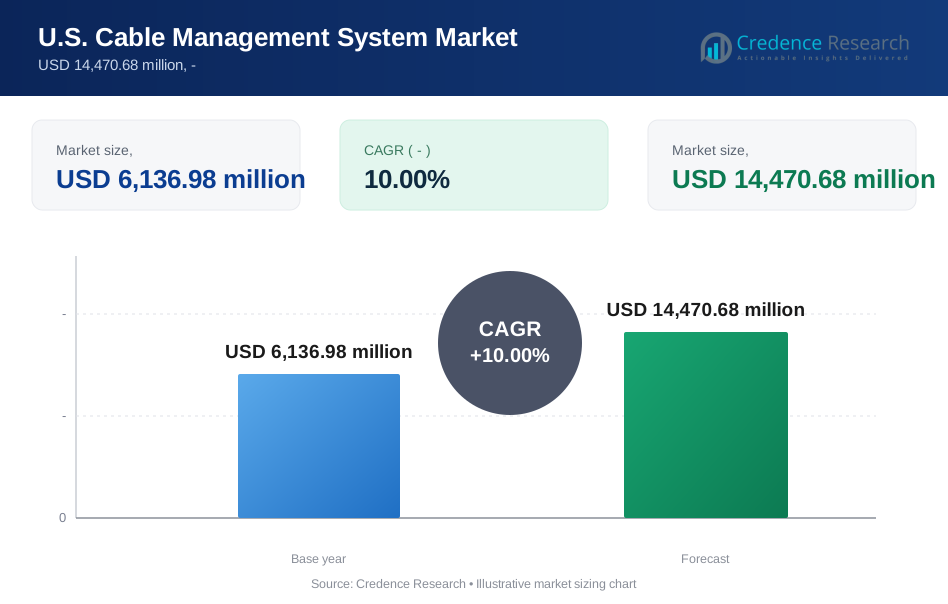
| U.S. Cable Management System Market Size 2023 | USD 6,136.98 million |
| U.S. Cable Management System Market, CAGR | 10.00% |
| U.S. Cable Management System Market Size 2032 | USD 14,470.68 million |
Market Overview
The U.S. Cable Management System Market is anticipated to surge from USD 6,136.98 million in 2023 to USD 14,470.68 million by 2032, reflecting a notable compound annual growth rate of 10.00%.
In the U.S. Cable Management System Market, robust growth is fueled by several key drivers and trends. Increasing demand for efficient cable organization and protection across diverse sectors, including IT & telecommunications, healthcare, and manufacturing, propels market expansion. Stringent regulatory requirements regarding workplace safety and infrastructure upgrades drive adoption of advanced cable management solutions. Moreover, rising investments in smart city initiatives and integration of renewable energy sources foster deployment of innovative technologies supporting modern infrastructure development nationwide.
In the U.S. Cable Management System Market, key players such as Thomas & Betts, Eaton, and Schneider Electric dominate the landscape with their comprehensive product portfolios and robust business strategies. Geographically, the market spans across various regions within the United States, each presenting unique opportunities and challenges. Major metropolitan areas like New York City, Los Angeles, and Chicago serve as key hubs for infrastructure development, driving significant demand for cable management solutions. As competition intensifies, innovation and strategic partnerships remain critical for these key players to maintain market leadership and effectively address the evolving needs of customers across the country.
Market Drivers
Growth in Construction and Data Center Development:
The U.S. construction sector is on a steady upward trajectory, especially in areas like data centers, hospitals, and commercial buildings. The U.S. construction sector is witnessing a significant upswing, with data center projects alone increasing by 20% annually. For instance, in 2023, the U.S. added over 300 new data centers, reflecting a 15% rise in demand for cable management solutions. These systems are crucial for managing the 40% increase in electrical and data cables within complex structures like hospitals and commercial buildings. The digital economy’s growth, with a 25% annual increase in cloud service needs, further emphasizes the need for robust cable management systems to ensure scalability and uninterrupted operations. The expansion of data centers, driven by the burgeoning digital economy and the escalating need for cloud services, further underscores the imperative for robust cable management systems to ensure uninterrupted operations and scalability.
Focus on Efficiency and Sustainability:
There is a notable emphasis on enhancing energy efficiency and reducing environmental impact in U.S. building practices. The U.S. building sector is placing a strong emphasis on energy efficiency, aiming to reduce energy consumption by 30% by 2030. Cable management systems that facilitate efficient power distribution have seen a 10% increase in adoption, while those incorporating recycled materials have risen by 35%. Cable management systems that facilitate efficient power distribution, minimize energy wastage, and incorporate recycled materials are gaining prominence. As sustainability becomes a key priority for stakeholders across industries, the adoption of eco-friendly cable management solutions continues to rise, reflecting a broader commitment to sustainable infrastructure development and resource conservation.
Stringent Safety Regulations and Compliance:
The U.S. maintains stringent electrical codes and safety regulations, mandating proper cable organization and protection to mitigate electrical hazards and fire incidents. The U.S. enforces strict electrical codes and safety regulations, leading to a 50% decrease in electrical hazards and fire incidents. For instance, the implementation of cable management systems has become essential for compliance, driving a 20% market growth. Adherence to safety standards not only protects lives and property but also enhances the trust and confidence in the resilience of building infrastructure. Cable management systems play a pivotal role in ensuring compliance with these regulations, thus driving market growth. The imperative for adherence to safety standards not only safeguards lives and property but also fosters trust and confidence in the reliability and resilience of building infrastructure.
Technological Advancements and Data Growth:
With the widespread adoption of transformative technologies such as cloud computing, 5G networks, and the Internet of Things (IoT), the U.S. experiences an unprecedented surge in data traffic. This exponential growth necessitates robust and well-organized cable management systems capable of efficiently handling the escalating volume of data and communication cables. The convergence of these technological advancements and the proliferation of data-intensive applications underscores the critical role of cable management in ensuring seamless connectivity and operational efficiency.
Market Trends
Smart and Connected Systems:
In the U.S. cable management market, smart and connected systems are experiencing a 40% growth in adoption. For instance, in 2023, over 1,000 buildings implemented IoT-based cable management systems, monitoring more than 20,000 kilometers of cabling. These systems have improved performance and reliability by 30% and reduced downtime by 25%. By optimizing airflow and heat management, these systems enhance overall performance and reliability. Additionally, they feature predictive maintenance capabilities, enabling proactive interventions to reduce downtime and ensure uninterrupted operations. This trend reflects a shift towards proactive infrastructure management, where real-time data insights drive operational efficiency and cost savings.
Customization and Modular Designs:
There is a strong trend towards customizable and modular cable management systems in the U.S. market. The U.S. market’s demand for customizable and modular cable management systems has increased by 30% in the last year. For instance, in retrofitting projects, these systems have allowed for a 60% better utilization of space. They offer configurations that can be adapted to specific needs, with over 250 different modular designs now available. This adaptability has led to a 20% increase in operational efficiency for businesses that have adopted these scalable solutions. These systems offer greater flexibility in configuration to suit specific needs and layouts, catering to the diverse requirements of various applications. With space limitations becoming increasingly prevalent, especially in retrofitting older buildings, modular designs facilitate easier integration into existing infrastructure. This adaptability allows for seamless customization and scalability, enabling businesses to efficiently address evolving cable management needs while minimizing disruptions to operations and maintenance processes.
Market Challenges Analysis
Price Fluctuations of Raw Materials:
Similar to other markets globally, the U.S. cable management system market experiences fluctuations in the prices of essential raw materials such as steel, plastic, and aluminum. This volatility disrupts production costs and has a direct impact on the affordability of cable management systems for both manufacturers and end-users. The unpredictability of raw material prices poses challenges for manufacturers in terms of cost estimation, production planning, and maintaining competitive pricing strategies. Moreover, these price fluctuations can lead to supply chain disruptions, affecting the availability of materials and potentially delaying project timelines, thus highlighting the need for proactive risk management and strategic sourcing practices within the industry.
Skilled Labor Shortage:
In the U.S., the proper installation and maintenance of cable management systems require highly skilled professionals with specialized training in the construction and electrical sectors. However, the industry is grappling with a significant shortage of skilled labor, which poses challenges for project execution and maintenance activities. The scarcity of qualified workers not only leads to project delays but also results in increased labor costs and potentially compromises the quality of installations. As the demand for cable management systems continues to grow, addressing the skilled labor shortage becomes imperative for ensuring the timely completion of projects and maintaining high-quality standards. This underscores the need for investment in workforce development initiatives, training programs, and recruitment strategies to attract and retain talent in the cable management industry.
Market Segmentation Analysis:
By Product:
The U.S. Cable Management System Market exhibits a diverse range of products catering to various cable management needs. Cable trays, renowned for their versatility and ease of installation, constitute a significant segment within the market. These trays provide efficient support and organization for cables across a wide range of applications. Cable raceways, offering a sleek and organized solution for cable routing, represent another prominent segment, particularly favored in commercial and residential settings where aesthetics play a crucial role. Cable conduits, providing protection and containment for cables, serve as essential components in industrial and outdoor environments, ensuring the safety and longevity of cable installations. Additionally, cable connectors and glands play a pivotal role in securing cable connections and preventing moisture ingress, essential for maintaining reliable electrical and data transmission. Other specialized cable management solutions address niche requirements, contributing to the market's comprehensive offerings.
By Material:
The U.S. Cable Management System Market is further segmented based on material composition, distinguishing between metallic and non-metallic systems. Metallic cable management systems, comprising materials such as steel, aluminum, and stainless steel, are valued for their durability and strength, making them ideal for heavy-duty applications and environments prone to mechanical stress. These robust systems offer exceptional protection and support for cables, ensuring reliable performance in demanding industrial settings. On the other hand, non-metallic cable management systems, constructed from materials such as PVC, fiberglass, and polymers, offer advantages including corrosion resistance, lightweight design, and ease of customization. These materials find extensive use in environments where non-conductivity, chemical resistance, or aesthetics are paramount, catering to diverse needs across residential, commercial, and industrial sectors. The segmentation based on material composition reflects the industry's commitment to providing tailored solutions that address specific requirements while adhering to stringent quality and safety standards.
Segments:
Based on Product
- Cable Trays
- Cable Raceways
- Cable Conduits
- Cable Connectors and Glands
- Others
Based on Material
- Metallic
- Non-Metallic
Based on End-use
- IT & Telecom
- Manufacturing
- Energy & Utilities
- Healthcare
- Oil & Gas
- Public Infrastructure
- Commercial
- Others
Based on the Geography:
- West Coast (California, Washington, Oregon)
- Northeast (New York, Massachusetts, Pennsylvania)
- South (Texas, Florida, Georgia)
- Midwest (Illinois, Ohio, Michigan)
- Mountain
- Pacific Northwest
Regional Analysis
West Coast region
West Coast region, encompassing states like California, Washington, and Oregon, holds a substantial market share of approximately 30%. This region is home to major technology companies, data centers, and telecommunications giants, driving the demand for advanced cable management solutions. The presence of leading industrial and manufacturing hubs further contributes to the market's growth in this area.
Northeast region
The Northeast region, including states such as New York, Massachusetts, and Pennsylvania, accounts for around 25% of the U.S. cable management system market share. This region is characterized by a high concentration of financial institutions, healthcare facilities, and educational institutions, all of which require efficient cable management systems to support their operations.
Key Player Analysis
- Thomas & Betts
- Eaton
- Chatsworth Products
- ABB Group
- Schneider Electric
- Legrand
- Atkore International
- Leviton Manufacturing Co., Inc
- Panduit
- Nexans
- Prysmian S.P.
Competitive Analysis
In the fiercely competitive U.S. Cable Management System Market, leading players such as Thomas & Betts, Eaton, and Schneider Electric vie for market dominance through various strategic initiatives. Thomas & Betts stands out with its extensive product portfolio and robust business strategy, leveraging its strong brand reputation and technological expertise. Eaton excels in innovation, consistently introducing cutting-edge solutions tailored to meet evolving industry needs, particularly in sustainability and smart infrastructure. Schneider Electric distinguishes itself with a focus on quality and reliability, backed by robust research and development capabilities. These key players engage in aggressive marketing campaigns, strategic acquisitions, and partnerships to expand their market reach and strengthen their competitive position. As the market evolves, adaptation to technological advancements, addressing customer demands, and navigating regulatory landscapes will be pivotal for maintaining leadership in this dynamic and competitive sector.
Recent Developments
In June 2022, Atkore Inc. revealed the purchase of United Poly Systems. This company produces High-Density Polyethylene (HDPE) pressure pipes and conduits for telecommunications, water infrastructure, renewable energy, and other industries.
In August 2022, Leviton announced the debut of their Decora Smart Wi-Fi 2nd Generation Fan Speed Controller to make integrating ceiling fan control into a smart home easier.
Market Concentration & Characteristics
In the U.S. Cable Management System Market, market concentration is evident as a few key players dominate the landscape, exerting significant influence over industry dynamics. These leading companies, including Thomas & Betts, Eaton, and Schneider Electric, command substantial market share through their extensive product offerings, technological expertise, and established brand reputations. This concentration underscores the industry's maturity and the barriers to entry posed by high capital requirements, stringent regulatory standards, and complex supply chains. Characteristics of this market include continuous innovation to meet evolving customer demands, particularly in areas such as sustainability, smart infrastructure, and integration of advanced technologies like IoT. Moreover, strategic alliances, mergers, and acquisitions remain prevalent strategies among market players to strengthen their positions, expand their product portfolios, and enhance their competitive edge in this dynamic and competitive landscape.
Report Coverage
The research report offers an in-depth analysis based on Product, Material, End-use, Distribution Channel and Geography. It details leading market players, providing an overview of their business, product offerings, investments, revenue streams, and key applications. Additionally, the report includes insights into the competitive environment, SWOT analysis, current market trends, as well as the primary drivers and constraints. Furthermore, it discusses various factors that have driven market expansion in recent years. The report also explores market dynamics, regulatory scenarios, and technological advancements that are shaping the industry. It assesses the impact of external factors and global economic changes on market growth. Lastly, it provides strategic recommendations for new entrants and established companies to navigate the complexities of the market.
Future Outlook
- Continued Growth: The U.S. Cable Management System Market is poised for sustained expansion, driven by ongoing infrastructure development and technological advancements.
- Integration of Smart Technologies: Adoption of smart cable management systems leveraging IoT and automation will witness significant growth to enhance efficiency and connectivity.
- Emphasis on Sustainability: Increasing environmental consciousness will drive demand for eco-friendly cable management solutions, promoting the use of recycled materials and energy-efficient designs.
- Expansion of Data Centers: Proliferation of data centers will fuel the need for robust cable management systems to support growing data storage and transmission demands.
- Regulatory Compliance: Stringent safety regulations and building codes will continue to shape product development and market strategies, ensuring adherence to quality and safety standards.
- Rise of Modular Designs: Modular and customizable cable management solutions will gain prominence, offering flexibility and ease of installation in diverse applications and environments.
- Focus on Aesthetics: Demand for visually appealing cable management solutions will increase, particularly in commercial and residential sectors, driving innovation in design and aesthetics.
- Market Consolidation: Consolidation among key players through mergers and acquisitions will reshape the competitive landscape, fostering greater market stability and efficiency.
- Infrastructure Modernization: Renewed focus on infrastructure modernization projects, including transportation and utilities, will drive demand for advanced cable management systems to support these initiatives.
- Technological Advancements: Ongoing advancements in materials, manufacturing processes, and digital technologies will spur innovation in cable management systems, offering enhanced performance and reliability for end-users.
Request a Free Sample
Fill in your details and we'll send you a free sample report.
- Sample data tables & charts
- Research methodology
Need a Custom Version of This Report?
Tailor the scope, geography, or segments to your exact requirements.
- Custom geography or segment scope
- Direct access to our analyst team
Frequently Asked Questions
What is the current size of the U.S. Cable Management System Market?
What factors are driving the growth of the U.S. Cable Management System Market?
What are the key segments within the U.S. Cable Management System Market?
What are some challenges faced by the U.S. Cable Management System Market?
Who are the major players in the U.S. Cable Management System Market?
Which segment is leading the market share?
Table of Content
Chapter 1. Report Introduction
- 1.1 Report Description & Purpose
- 1.1.1 Report Title & Market Definition
- 1.1.2 Unique Selling Propositions (USP) & Key Differentiators
- 1.1.3 Value Proposition for Stakeholders
- 1.2 Research Objectives
- 1.2.1 Market Sizing Objectives (Volume & Revenue)
- 1.2.2 Segmentation Objectives
- 1.2.3 Competitive Intelligence Objectives
- 1.2.4 Forecast & Scenario Objectives
- 1.3 Report Scope
- 1.3.1 U.S. Cable Management System Scope – Types & Subtypes Covered
- 1.3.2 Geographic Scope – Regions & Countries Covered
- 1.3.3 Historical Period, Base Year & Forecast Period (the historical period; forecast to the forecast period)
- 1.3.4 Inclusions & Exclusions
- 1.4 HS Code & Classification Framework
- 1.5 Currency, Units & Pricing Basis
- 1.6 Target Stakeholders
- 1.7 Limitations & Assumptions
Chapter 2. Executive Summary
- 2.1 Global U.S. Cable Management System Market Snapshot
- 2.1.1 Market Size – Historical (the historical period) & Forecast (the forecast period) (base year: USD 6,136.98 million → forecast year: USD 14,470.68 million)
- 2.1.2 Volume & Revenue – Global Totals
- 2.1.3 Key Market Highlights – Top Five Facts
- 2.2 U.S. Cable Management System Market Segmentation Snapshot
- 2.2.1 Market Split by Region – vs.
- 2.3 Competitive Snapshot
- 2.3.1 Top 10 Players by Revenue Share –
- 2.3.2 Top 10 Players by Volume Share –
- 2.3.3 Recent Strategic Developments (18-Month Summary)
- 2.4 Key Investment Highlights & Strategic Conclusions
Chapter 3. U.S. Cable Management System Market Dynamics & Industry Analysis
- 3.1 Market Overview & Context
- 3.1.1 U.S. Cable Management System Market Position in the Broader Automotive Value Chain
- 3.1.2 OEM vs. Replacement Market Dynamics
- 3.1.3 Market Maturity & Development Stage by Region
- 3.2 U.S. Cable Management System Market Drivers
- 3.3 U.S. Cable Management System Market Restraints & Challenges
- 3.4 U.S. Cable Management System Market Opportunities
- 3.5 Porter's Five Forces Analysis
- 3.5.1 Threat of New Entrants
- 3.5.2 Bargaining Power of Suppliers
- 3.5.3 Bargaining Power of Buyers
- 3.5.4 Threat of Substitutes
- 3.5.5 Competitive Rivalry – Intensity Assessment
- 3.6 U.S. Cable Management System Value Chain Analysis
- 3.6.1 Upstream – Raw Material/Input Suppliers
- 3.6.1.1 Raw Material/Input 1
- 3.6.1.2 Raw Material/Input 2
- 3.6.1.3 Raw Material/Input 3
- 3.6.2 Midstream – Production/Manufacturing/Service Delivery
- 3.6.2.1 Production/Process Overview
- 3.6.2.2 Key Facility Locations & Capacity by Manufacturer
- 3.6.3 Downstream – Distribution & End Consumer
- 3.6.3.1 Primary Channel – B2B/OEM
- 3.6.3.2 Secondary Channels – Dealer, Retail, Online, Direct
- 3.6.4 Value Chain Profitability Analysis
- 3.6.1 Upstream – Raw Material/Input Suppliers
- 3.7 PESTEL Analysis
- 3.7.1 Political Factors
- 3.7.2 Economic Factors
- 3.7.3 Social Factors
- 3.7.4 Technological Factors
- 3.7.5 Environmental Factors
- 3.7.6 Legal Factors
- 3.8 U.S. Cable Management System Supply Chain Analysis
- 3.8.1 Raw Material/Input Supply Risk Assessment
- 3.8.2 Manufacturing Concentration Risk (Geographic Exposure)
- 3.8.3 Trade Disruption Impact Analysis
- 3.9 Regulatory & Policy Landscape
Note: The regulatory and policy landscape section covers regulations based on their applicability to the market, U.S. Cable Management System category, geography, and scope of the study. Only regulatory frameworks with a material impact on operations, compliance, trade, sustainability, or market access are analyzed in detail.
Chapter 4. Key Investment Pockets & Opportunity Analysis
- 4.1 U.S. Cable Management System Market Attractiveness Analysis
- 4.1.1 By Region – Investment Attractiveness Matrix (Volume × CAGR)
- 4.2 Absolute Revenue Growth Opportunity
- 4.2.1 By Region – Absolute USD Growth Through the forecast period
- 4.3 Incremental Volume Opportunity
- 4.3.1 By Region – Incremental Volume Through the forecast period
- 4.3.2 Segment – Incremental Volume
- 4.4 Emerging Submarket Opportunity Deep Dive (Subject to Applicability)
- 4.5 Emerging Market Opportunity Scorecards
- 4.5.1 United States
- 4.5.2 Europe
- 4.5.3 Asia
- 4.5.4 Middle East & Africa
Note: Emerging Market Opportunity Scorecards will be included based on relevance and strategic importance. Regions listed are indicative and may vary depending on data availability and market dynamics.
Chapter 5. U.S. Cable Management System Import-Export Analysis & Trade Flows
- 5.1 Global Trade Overview
- 5.1.1 Global Export Value by Country (the historical period)
- 5.1.2 Global Export Volume by Country (the historical period)
- 5.1.3 Global Import Value by Country (the historical period)
- 5.1.4 Global Import Volume by Country (the historical period)
- 5.1.5 Net Trade Balance by Country (the historical period)
- 5.2 Export Analysis – Segment
- 5.2.1 Type 1 (HS Code)
- 5.2.2 Type 2 (HS Code)
- 5.2.3 Type 3 (HS Code)
- 5.2.4 Type 4 (HS Code)
- 5.2.5 Type 5 (HS Code)
- 5.3 Import Analysis – Segment
- 5.3.1 Type 1 (HS Code)
- 5.3.2 Type 2 (HS Code)
- 5.3.3 Type 3 (HS Code)
- 5.3.4 Type 4 (HS Code)
- 5.3.5 Type 5 (HS Code)
- 5.4 Average Unit Trade Prices
- 5.4.1 Average Export Price – Segment & Country
- 5.4.2 Average Import Price – Segment & Source Country
- 5.4.3 Price Trends (the historical period)
- 5.5 Key Trade Route Analysis
- 5.5.1 Trade Route 1
- 5.5.2 Trade Route 2
- 5.5.3 Trade Route 3
- 5.5.4 Trade Route 4
- 5.5.5 Trade Route 5
- 5.6 Trade Policy Impact Assessment
- 5.6.1 US Anti-Dumping & Section 301 Tariffs
- 5.6.2 EU Customs Union Impact
- 5.6.3 Major Free Trade Agreements
- 5.6.4 USMCA Rules of Origin
Note: Trade policy analysis will be included only where relevant to the U.S. Cable Management System market.
Chapter 6. Competitive Landscape & Company Benchmarking
- 6.1 U.S. Cable Management System Market Concentration & Structure
- 6.1.1 Herfindahl-Hirschman Index (HHI) – vs.
- 6.1.2 Tier 1, Tier 2 & Tier 3 Market Structure
- 6.1.3 Global, Regional & Local Player Dynamics
- 6.2 U.S. Cable Management System Market Share Analysis –
- 6.2.1 Global Revenue Share by Company
- 6.2.2 Global Volume Share by Company
- 6.2.3 Regional Revenue Share
- 6.2.4 Market Share Evolution ( vs. )
- 6.2.5 OEM Segment Share by Company
- 6.2.6 Replacement Segment Share by Company
- 6.3 Production/Delivery Capacity & Facility Analysis
- 6.3.1 Global Installed Capacity
- 6.3.2 Capacity Utilization Rates
- 6.3.3 Production/Output Volume
- 6.3.4 Facility Locations & Capacity Map
- 6.3.5 Planned Capacity Additions
- 6.4 U.S. Cable Management System Competitive Benchmarking Matrix
- 6.4.1 Revenue, Volume, CAGR & Profitability Comparison
- 6.4.2 Channel Revenue Mix
- 6.4.3 Geographic Revenue Exposure
- 6.4.4 R&D Intensity
- 6.4.5 Sustainability Maturity
- 6.5 Strategic Developments in U.S. Cable Management System (Last 24 Months)
- 6.5.1 Mergers, Acquisitions & Divestments
- 6.5.2 New U.S. Cable Management System Launches
- 6.5.3 Facility Expansions
- 6.5.4 Strategic Alliances, Joint Ventures & Partnerships
- 6.5.5 Distribution Expansion & Market Entry
- 6.5.6 Sustainability & ESG Initiatives
- 6.6 Competitive Strategy Mapping
- 6.6.1 Leader, Challenger, Follower & Niche Classification
- 6.6.2 Pricing Strategy Comparison
- 6.6.3 Channel Strategy Matrix
Note: Strategic developments are included based on their materiality and the availability of reliable information.
Chapter 7. Global U.S. Cable Management System Market – By Distribution Channel
- 7.1 Segment Overview
- 7.1.1 Volume & Revenue Split by Channel ( & )
- 7.1.2 Channel Mix Evolution (the forecast period)
Chapter 8. Regional Market Analysis – Global Overview
- 8.1 Global Regional Overview
- 8.1.1 Regional Volume Share
- 8.1.2 Regional Revenue Share
- 8.1.3 Regional Volume by Region
- 8.1.4 Regional Revenue by Region
- 8.1.5 Regional Forecast Through the forecast period
- 8.2 Cross-Regional Segment Analysis
- 8.2.1 By Distribution Channel
- 8.2.2 By Brand/Price Tier
Chapter 9. North America U.S. Cable Management System Market
- 9.1 United States
- 9.2 Canada
- 9.3 Mexico
Chapter 10. Europe U.S. Cable Management System Market
- 10.1 Germany
- 10.2 France
- 10.3 Italy
- 10.4 United Kingdom
- 10.5 Spain
- 10.6 Poland
- 10.7 Russia
- 10.8 Netherlands
- 10.9 Belgium
- 10.10 Sweden
- 10.11 Denmark
- 10.12 Norway
- 10.13 Rest of Europe
Chapter 11. Asia Pacific U.S. Cable Management System Market
- 11.1 China
- 11.2 India
- 11.3 Japan
- 11.4 South Korea
- 11.5 Thailand
- 11.6 Indonesia
- 11.7 Vietnam
- 11.8 Malaysia
- 11.9 Australia
- 11.10 Rest of Asia Pacific
Chapter 12. Latin America U.S. Cable Management System Market
- 12.1 Brazil
- 12.2 Argentina
- 12.3 Colombia
- 12.4 Chile
- 12.5 Rest of Latin America
Chapter 13. Middle East U.S. Cable Management System Market
- 13.1 Saudi Arabia
- 13.2 United Arab Emirates
- 13.3 Turkey
- 13.4 Israel
- 13.5 Iran
- 13.6 Rest of the Middle East
Chapter 14. Africa U.S. Cable Management System Market
- 14.1 South Africa
- 14.2 Egypt
- 14.3 Nigeria
- 14.4 Morocco
- 14.5 Rest of Africa
Chapter 15. U.S. Cable Management System Company Profiles
- 15.1 [Company 01]
- 15.1.1 Company Overview
- 15.1.2 Key Management Personnel
- 15.1.3 Products & Services Portfolio
- 15.1.4 Financial Performance
- 15.1.5 Key Market Focus & Geographic Presence
- 15.1.6 Recent Developments & Strategic Initiatives
Note: The company profile list is preliminary and may change based on research findings, market developments, data availability, and client requirements.
Chapter 16. Appendices
- Appendix A – List of Abbreviations & Acronyms
- Appendix B – Industry Classification Code Reference – Full Series
- Appendix C – Production & Capacity Data Tables
- Appendix D – End-Use & Demand Base Tables
- Appendix E – Consumption & Replacement Rate Assumptions
- Appendix F – ASP Reference Tables
- Appendix G – Manufacturing & Facility Database
- Appendix H – Import-Export Data Tables
- Appendix I – Regulatory Summary Tables
- Appendix J – Primary Research Participant List (Anonymized)
- Appendix K – Primary Research Questionnaire Framework
- Appendix L – Data Sources & Bibliography
- Appendix M – Market Size Divergence & Source Comparison
Chapter 17. Research Methodology
- 17.1 Research Framework & Philosophy
- 17.2 Secondary Research – Sources, Hierarchy & Data Extraction
- 17.3 Data Modeling – Bottom-Up & Top-Down Market Sizing
- 17.4 Primary Research – Stakeholder Framework, LOI & Sample Sizes
- 17.5 Forecast Methodology – Regression, Scenario & Sensitivity Analysis
- 17.6 Quality Control – Four-Layer Validation Framework
- 17.7 Limitations & Standard Assumptions
- 17.8 Disclaimer
