
| REPORT ATTRIBUTE | DETAILS |
|---|---|
| Historical Period | 2020-2023 |
| Base Year | 2024 |
| Forecast Period | 2025-2032 |
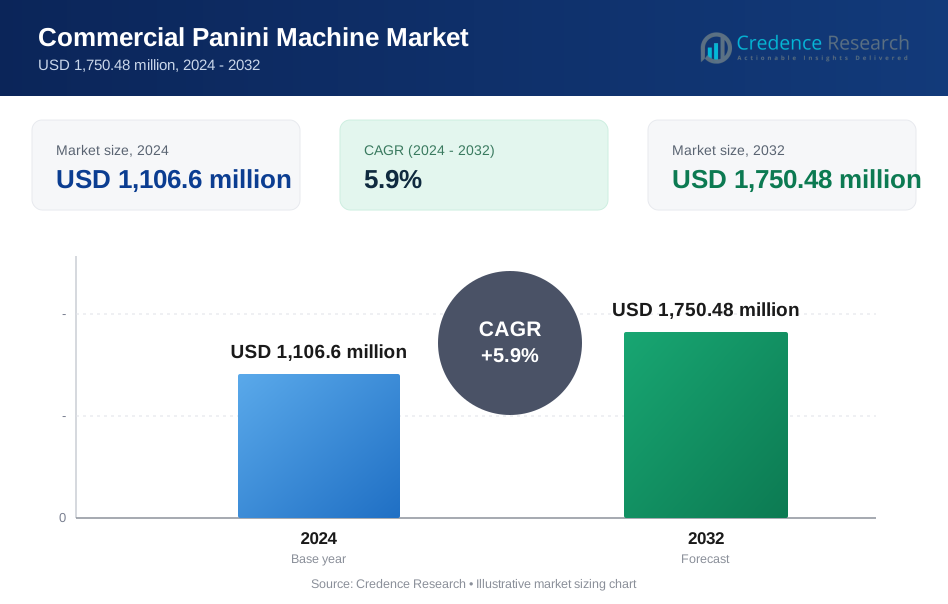
| Commercial Panini Machine Market Size 2024 | USD 1,106.6 Million |
| Commercial Panini Machine Market, CAGR | 5.9% |
| Commercial Panini Machine Market Size 2032 | USD 1,750.48 Million |
Market Overview
The Commercial Panini Machine Market is expected to grow from USD 1,106.6 million in 2024 to USD 1,750.48 million by 2032, at a compound annual growth rate (CAGR) of 5.9%.
The commercial panini machine market shows varied growth across regions, with North America holding the largest share, driven by the demand from quick-service restaurants and cafes. Europe follows closely, benefiting from its rich culinary tradition and a high preference for grilled sandwiches. The Asia-Pacific region is experiencing rapid growth due to the expanding foodservice industry in emerging markets like China and India. Latin America, while smaller in share, is growing steadily, driven by an increasing number of foodservice outlets in countries like Brazil and Mexico. The Middle East and Africa (MEA) region is also seeing growth, especially in the UAE and Saudi Arabia, due to the rise of international chains. Leading players such as Sirman, The Vollrath Company, Cadco, Hatco, and others are capitalizing on these regional trends to expand their presence globally.
The commercial panini machine market shows varied growth across regions, with North America holding the largest share, driven by the demand from quick-service restaurants and cafes. Europe follows closely, benefiting from its rich culinary tradition and a high preference for grilled sandwiches. The Asia-Pacific region is experiencing rapid growth due to the expanding foodservice industry in emerging markets like China and India. Latin America, while smaller in share, is growing steadily, driven by an increasing number of foodservice outlets in countries like Brazil and Mexico. The Middle East and Africa (MEA) region is also seeing growth, especially in the UAE and Saudi Arabia, due to the rise of international chains. Leading players such as Sirman, The Vollrath Company, Cadco, Hatco, and others are capitalizing on these regional trends to expand their presence globally.
Market Insights
- The commercial panini machine market is expected to grow from USD 1,106.6 million in 2024 to USD 1,750.48 million by 2032, at a CAGR of 5.9%.
- North America holds the largest market share at 38% in 2024, driven by high demand from QSRs and cafes for fast, quality sandwiches.
- Europe follows with a market share of 30%, benefiting from its culinary tradition and strong demand for grilled sandwiches.
- The Asia-Pacific region is projected to hold 18% of the market share in 2024, driven by growing foodservice industries in China, India, and Southeast Asia.
- Latin America holds a 7% market share, with Brazil and Mexico driving demand due to the rise of international food chains and fast food outlets.
- The Middle East and Africa (MEA) has a smaller market share of 5% in 2024, but is expected to see steady growth from the expansion of fast-casual and QSR sectors.
- Key drivers include the growing preference for healthy, customizable food options and technological advancements in energy-efficient, high-performance panini machines.
Market Drivers
Growing Demand for Quick-Service Restaurants and Cafes:
The increasing number of quick-service restaurants (QSRs) and cafes globally is a key driver for the commercial panini machine market. As consumer preferences shift toward fast and convenient dining options, foodservice businesses are focusing on offering a variety of grilled sandwiches and paninis. For instance, popular chains like Subway and Panera Bread are expanding their menu offerings to include a variety of paninis, driving the demand for efficient, high-performance cooking equipment, including panini machines. This growing trend of on-the-go food consumption drives the demand for versatile and reliable panini machines, ensuring sustained demand for such equipment.
Consumer Preference for Customizable and Healthy Food Options:
Consumers are increasingly seeking healthier, customizable food choices, which has led to an expanded menu offering in foodservice establishments. This trend benefits the commercial panini machine market, as these machines allow for the preparation of a variety of sandwiches that can be tailored to individual preferences, including vegetarian, gluten-free, and low-fat options. For instance, restaurants like Sweetgreen and Pret A Manger are offering customizable sandwich options that cater to health-conscious consumers. The ability to grill ingredients to perfection while maintaining flavor and texture appeals to these consumers, further boosting the market demand for panini machines.
Technological Advancements in Cooking Equipment:
The development of more energy-efficient and technologically advanced panini machines is another significant driver of market growth. Modern panini presses come equipped with features such as adjustable temperature controls, non-stick surfaces, and faster cooking times. For instance, manufacturers like Breville and Cuisinart are developing advanced panini machines that enhance operational efficiency, reduce energy consumption, and improve food quality. These innovations make panini machines an attractive investment for businesses in the foodservice industry. The integration of smart technology, allowing operators to control and monitor cooking processes remotely, is expected to further accelerate the adoption of these machines.
Expansion of Global Foodservice Industry:
The rapid growth of the global foodservice industry, particularly in emerging markets, is driving the demand for commercial panini machines. With an increasing number of foodservice outlets opening worldwide, particularly in urban areas, the need for efficient cooking equipment is intensifying. For instance, international chains like Starbucks and Costa Coffee are expanding their presence in emerging markets, boosting the demand for versatile panini machines that can handle a wide range of sandwich types. This expansion of the foodservice sector, combined with a greater focus on operational efficiency, underpins the growth of the commercial panini machine market.
Market Trends
Customization and Personalization in Menu Offerings
One of the current trends in the commercial panini machine market is the increasing demand for customizable menu options. Consumers are seeking more control over their meals, preferring personalized sandwiches with specific ingredients. For instance, foodservice operators like Subway and Panera Bread are responding by offering diverse panini options, such as vegetarian, vegan, and gluten-free choices. This trend is driving the demand for versatile panini machines that can accommodate a variety of sandwich types and cooking styles, allowing for enhanced flexibility and menu creativity.
Technological Integration for Operational Efficiency
Another key trend is the integration of advanced technology into panini machines to improve efficiency and food quality. Features such as digital temperature controls, programmable cooking times, and automatic shut-off mechanisms are becoming standard in the market. For instance, manufacturers like Breville and Cuisinart are incorporating these innovations to help reduce energy consumption and cooking time while ensuring consistent results. Additionally, some machines now offer connectivity for remote monitoring, allowing operators to manage equipment performance and reduce downtime, which significantly enhances overall operational efficiency in commercial kitchens.
Sustainability and Energy-Efficient Solutions
Sustainability is a growing concern in the foodservice industry, and the commercial panini machine market is reflecting this trend. Manufacturers are focusing on producing energy-efficient machines that consume less power, reducing the carbon footprint of foodservice businesses. For instance, companies like Hamilton Beach and Waring are developing eco-friendly designs, along with non-toxic, recyclable materials, which are becoming more common in the market. Operators are increasingly prioritizing environmentally sustainable equipment to align with consumer preferences for businesses that prioritize green practices and sustainability.
Expansion of the Fast Casual and QSR Sectors
The rise of fast casual dining and quick-service restaurants (QSRs) has also influenced current trends in the panini machine market. These segments are expanding rapidly, driven by consumer demand for quick, affordable, and high-quality meals. For instance, chains like Chipotle and Starbucks are incorporating grilled sandwiches and paninis into their menus, boosting the need for reliable, high-performance panini machines. The trend toward fast, yet quality-driven food options is pushing operators to invest in equipment that meets both speed and quality expectations.
Market Challenges Analysis
High Initial Investment and Maintenance Costs
One of the significant challenges in the commercial panini machine market is the high initial investment required for purchasing advanced equipment. While newer, more energy-efficient models offer long-term savings, the upfront cost of high-quality panini machines can be a barrier for small and medium-sized foodservice establishments. Additionally, these machines often come with high maintenance costs, including regular servicing, spare parts, and occasional repairs, which can strain the operational budget of foodservice operators. Smaller businesses, in particular, may find it difficult to justify such expenditures, especially when competing against larger chains with more significant financial resources. As a result, some operators may opt for lower-cost alternatives, which could potentially affect the quality and efficiency of food production. In turn, this affects the long-term sustainability of foodservice operations, as poorly maintained or outdated equipment may lead to inefficiencies, impacting overall profitability and customer satisfaction.
Competition and Technological Advancements
Another challenge faced by the commercial panini machine market is the rapid pace of technological advancements and the competitive nature of the industry. As manufacturers continuously innovate to offer more efficient, versatile, and feature-rich products, operators must keep up with the latest trends to remain competitive. However, the frequent release of new models can result in uncertainty about the best investment, as businesses may worry about their equipment becoming obsolete shortly after purchase. Additionally, the growing number of competing brands in the market creates price pressure, making it difficult for some manufacturers to differentiate their products effectively. This intense competition, combined with the fast-evolving technology landscape, means that foodservice operators must carefully consider their equipment choices to balance cost, performance, and longevity. This challenge is particularly pronounced in the context of an industry that demands high operational efficiency and reliability, making it crucial for operators to find the right panini machine that meets both their budget and operational needs without compromising on quality.
Market Opportunities
The commercial panini machine market presents significant opportunities driven by the increasing demand for quick-service restaurants (QSRs) and cafes, particularly in emerging markets. As the global foodservice industry continues to expand, there is growing potential for panini machines to become essential kitchen equipment in a variety of dining establishments. The rising consumer preference for quick, customizable, and convenient food options further enhances the market's prospects, as paninis and grilled sandwiches remain popular choices for on-the-go meals. Foodservice operators, especially in regions like Asia-Pacific and Latin America, are capitalizing on this trend by incorporating versatile cooking equipment like panini machines to cater to diverse customer preferences and improve operational efficiency. This trend offers a lucrative opportunity for manufacturers to introduce affordable and efficient panini machines to cater to the growing number of foodservice outlets in these regions.
Technological advancements also present a key opportunity for growth in the commercial panini machine market. Manufacturers are focusing on creating smarter, energy-efficient models that not only enhance cooking speed but also reduce energy consumption and operational costs. Features like digital controls, programmable settings, and automatic shut-off functions are gaining traction among foodservice operators who are seeking to streamline operations and improve food consistency. Additionally, the increasing emphasis on sustainability within the foodservice industry provides an opportunity for manufacturers to develop eco-friendly panini machines that align with environmental goals, such as using non-toxic materials and reducing carbon footprints. These innovations, combined with the growing trend of customization in food offerings, present numerous opportunities for companies to capture market share and meet the evolving needs of modern foodservice businesses.
Market Segmentation Analysis:
By Type
The commercial panini machine market is segmented by type into single-plate and double-plate machines. Single-plate machines are ideal for small-scale foodservice establishments with lower volume, while double-plate machines cater to larger operations with higher demand for simultaneous cooking. Double-plate machines offer increased efficiency and versatility, making them popular in high-traffic restaurants.
By Application
The market is further segmented by application, including grilling paninis, sandwiches, subs, and bagels. Panini machines are highly versatile, allowing foodservice operators to prepare a wide range of grilled items. This segmentation highlights the increasing demand for equipment that can support diverse menu options, providing significant flexibility for foodservice establishments.
By End-User
End-user segmentation includes quick-service restaurants (QSRs), cafes, hotels, and institutional foodservice establishments. QSRs and cafes dominate the market due to their emphasis on fast, convenient meals like paninis and sandwiches. The growing trend of fast-casual dining further drives the demand for commercial panini machines in these foodservice segments.
Segments:
Based on Type
- Electric Panini Grill
- Fixed Plate
- Removable Plate
- Gas Panini Grill
- Fixed Plate
- Removable Plate
Based on Application
- Cafes
- Casual Dining
- Fast Casual
- Fine Dining
- Food Trucks
- Quick Service Restaurants
Based on End User
- Catering Services
- Clubs And Lounges
- Hotels
- Restaurants
- Supermarkets And Hypermarkets
Based on Distribution Channel
- Direct Sales
- Distributors
- Online Retailers
- Specialty Stores
Based on Features
- Adjustable Thermostat
- Double Plate Grill
- Floating Hinge System
- Multi-Contact Grill
- Non-Stick Plates
- Temperature Control
- Timer Control
Based on Material
- Aluminum
- Cast Iron
- Stainless Steel
Based on the Geography:
- North America
- U.S.
- Canada
- Mexico
- Europe
- Germany
- France
- U.K.
- Italy
- Spain
- Rest of Europe
- Asia Pacific
- China
- Japan
- India
- South Korea
- South-east Asia
- Rest of Asia Pacific
- Latin America
- Brazil
- Argentina
- Rest of Latin America
- Middle East & Africa
- GCC Countries
- South Africa
- Rest of the Middle East and Africa
Regional Analysis
North America
North America holds the largest share of the commercial panini machine market, accounting for 38% of the market share in 2024. The dominance of this region can be attributed to the strong presence of quick-service restaurants (QSRs) and cafes that rely heavily on panini machines to meet consumer demand for fast, high-quality sandwiches and grilled items. The U.S. leads the market, driven by the large number of foodservice establishments and the popularity of fast-casual dining. Technological advancements in kitchen equipment and the demand for energy-efficient solutions further contribute to market growth in the region. Moreover, rising consumer trends for healthier, customizable food options continue to fuel demand for versatile panini machines.
Europe
Europe is the second-largest market for commercial panini machines, holding a market share of 30% in 2024. The region benefits from the widespread popularity of paninis and grilled sandwiches, especially in countries like Italy, France, and Spain, where these dishes are staples of the local cuisine. The growth in European foodservice outlets, particularly in the fast-casual dining segment, drives demand for high-performance panini machines. Additionally, European consumers’ increasing preference for sustainable and energy-efficient kitchen equipment is fostering innovation in the market. The region's established culinary culture and preference for diverse sandwich offerings contribute to the continued market expansion.
Asia-Pacific
The Asia-Pacific (APAC) region is experiencing rapid growth in the commercial panini machine market, with a projected market share of 18% in 2024. This growth is largely driven by the increasing number of quick-service restaurants and cafes in emerging economies such as China, India, and Southeast Asian countries. With rising disposable incomes and changing dietary preferences, consumers in these regions are increasingly seeking fast and convenient dining options like paninis. As the region continues to urbanize, there is a growing demand for foodservice equipment capable of meeting the needs of expanding foodservice businesses. Manufacturers are introducing cost-effective panini machines tailored for the APAC market, contributing to the region’s market growth.
Latin America
Latin America holds a market share of 7% in 2024, with Brazil and Mexico being the key contributors to market growth. The increasing number of fast-food chains and the rising popularity of international cuisines are driving demand for commercial panini machines in the region. With a focus on affordable yet high-quality food options, Latin American foodservice businesses are investing in equipment that enhances operational efficiency. The demand for versatile cooking equipment, such as panini machines, is growing as operators look to cater to a diverse and evolving consumer base.
Middle East and Africa The Middle East and Africa (MEA) region holds a relatively smaller market share of 5% in 2024. However, the market is expected to grow steadily in the coming years due to the rising number of international fast-food chains and foodservice outlets in key markets like the UAE and Saudi Arabia. As the region’s hospitality and foodservice industries expand, there is increasing demand for advanced kitchen equipment to meet the growing consumer preference for convenient and customizable food options. The growth of the fast-casual and QSR sectors in MEA presents long-term growth potential for the commercial panini machine market.
Key Player Analysis
- Avantco Equipment
- Star Manufacturing International
- Sammic
- Nemco Food Equipment
- Eurodib
- Globe Food Equipment
- Hatco
- Sirman
- The Vollrath Company
- Grindmaster-Cecilware
- Cadco
- Anvil
Competitive Analysis
The commercial panini machine market is highly competitive, with several key players driving innovation and market growth. Leading companies such as Sirman, The Vollrath Company, Cadco, Hatco, Globe Food Equipment, Sammic, Eurodib, Grindmaster-Cecilware, Nemco Food Equipment, Avantco Equipment, Star Manufacturing International, and Anvil dominate the landscape. These manufacturers focus on enhancing the efficiency, versatility, and energy performance of their products to meet the evolving demands of foodservice businesses. Many companies are investing in advanced technologies, such as digital controls, programmable settings, and energy-saving solutions, to offer more value to customers. Additionally, the growing preference for customizable and healthy food options has prompted players to design panini machines capable of accommodating a wide variety of sandwiches and grilled items. For example, companies like Cadco and Globe Food Equipment are developing machines that cater to vegetarian, vegan, and gluten-free options.As competition intensifies, companies are also focusing on cost-effective solutions and expanding their global reach, particularly in emerging markets like Asia-Pacific and Latin America.
Recent Developments
- In March 2023, Merrychef launched a new panini press designed to enhance the convenience of their conneX® 12 and eikon® e2s products. This press speeds up cooking, removes the need for vents, and simplifies installation. With the new kit, sandwiches are consistently compressed and grilled to perfection. The press easily installs by resting on the cavity stubs, allowing operators to create paninis, bagels, sandwiches, and subs with greater versatility.
- In October 2024, Vollrath began enhancing its product line by adding smart technology features to their panini grills, enabling programmable cooking settings. This innovation caters to the growing consumer demand for customizable food options.
- In 2023, Hatco continued to innovate within the commercial panini grill market, focusing on energy-efficient models that cater to the growing demand for quick-service foods. Their latest models feature advanced heating technologies, ensuring even cooking and faster service.
- In 2024, Cadco introduced compact panini grills, ideal for small kitchens, food trucks, and cafes. These models are designed to optimize space while maintaining high performance.
Market Concentration & Characteristics
The commercial panini machine market is moderately concentrated, with a mix of established global players and regional manufacturers competing for market share. Leading players such as Sirman, The Vollrath Company, Cadco, Hatco, and Globe Food Equipment dominate the market by offering a range of technologically advanced, high-performance machines. However, there is also a growing presence of regional and smaller companies that cater to specific market needs, such as cost-effective and customizable solutions. The market is characterized by high innovation, with manufacturers focusing on energy-efficient designs, faster cooking times, and user-friendly features such as digital controls and non-stick surfaces. Additionally, product differentiation is a key factor, as foodservice businesses seek machines that can handle diverse menu options, from paninis to bagels and subs. This dynamic market structure ensures both competition and opportunity for businesses that can provide reliable, versatile, and cost-effective panini machines.
Report Coverage
The research report offers an in-depth analysis based on Type, Application, Feature, Material, Distribution Channel, End-User and Geography. It details leading market players, providing an overview of their business, product offerings, investments, revenue streams, and key applications. Additionally, the report includes insights into the competitive environment, SWOT analysis, current market trends, as well as the primary drivers and constraints. Furthermore, it discusses various factors that have driven market expansion in recent years. The report also explores market dynamics, regulatory scenarios, and technological advancements that are shaping the industry. It assesses the impact of external factors and global economic changes on market growth. Lastly, it provides strategic recommendations for new entrants and established companies to navigate the complexities of the market.
Future Outlook
- The commercial panini machine market is expected to continue growing at a steady pace, driven by the increasing demand for quick-service restaurants and cafes.
- Technological advancements will lead to more energy-efficient, faster, and user-friendly panini machines.
- Consumers’ growing preference for healthy and customizable food options will push foodservice operators to invest in versatile cooking equipment.
- The expansion of the global foodservice industry, especially in emerging markets, will provide new growth opportunities for panini machine manufacturers.
- North America will remain the largest market, while regions like Asia-Pacific and Latin America will see significant growth.
- The trend toward sustainable and eco-friendly kitchen equipment will drive innovation in the market.
- Increased competition will result in more cost-effective and affordable panini machine models, catering to a broader range of foodservice businesses.
- The rising popularity of fast-casual dining will further boost the demand for high-performance panini machines.
- As more global and regional foodservice chains expand, there will be a greater need for efficient, high-capacity cooking equipment.
- Manufacturers will focus on product differentiation by introducing machines with specialized features, catering to diverse menu requirements.
Request a Free Sample
Fill in your details and we'll send you a free sample report.
- Sample data tables & charts
- Research methodology
Need a Custom Version of This Report?
Tailor the scope, geography, or segments to your exact requirements.
- Custom geography or segment scope
- Direct access to our analyst team
Frequently Asked Questions
What is the current size of the Commercial Panini Machine market?
What factors are driving the growth of the Commercial Panini Machine market?
What are the key segments within the Commercial Panini Machine market?
What are some challenges faced by the Commercial Panini Machine market?
Who are the major players in the Commercial Panini Machine market?
Table of Content
Chapter 1. Report Introduction
- 1.1 Report Description & Purpose
- 1.1.1 Report Title & Market Definition
- 1.1.2 Unique Selling Propositions (USP) & Key Differentiators
- 1.1.3 Value Proposition for Stakeholders
- 1.2 Research Objectives
- 1.2.1 Market Sizing Objectives (Volume & Revenue)
- 1.2.2 Segmentation Objectives
- 1.2.3 Competitive Intelligence Objectives
- 1.2.4 Forecast & Scenario Objectives
- 1.3 Report Scope
- 1.3.1 Commercial Panini Machine Scope – Types & Subtypes Covered
- 1.3.2 Geographic Scope – Regions & Countries Covered
- 1.3.3 Historical Period, Base Year & Forecast Period (2024; forecast to 2032)
- 1.3.4 Inclusions & Exclusions
- 1.4 HS Code & Classification Framework
- 1.5 Currency, Units & Pricing Basis
- 1.6 Target Stakeholders
- 1.7 Limitations & Assumptions
Chapter 2. Executive Summary
- 2.1 Global Commercial Panini Machine Market Snapshot
- 2.1.1 Market Size – Historical (2024) & Forecast (2024-2032) (2024: USD 1,106.6 million → 2032: USD 1,750.48 million)
- 2.1.2 Volume & Revenue – Global Totals
- 2.1.3 Key Market Highlights – Top Five Facts
- 2.2 Commercial Panini Machine Market Segmentation Snapshot
- 2.2.1 Market Split by Region – 2024 vs. 2032
- 2.3 Competitive Snapshot
- 2.3.1 Top 10 Players by Revenue Share – 2024
- 2.3.2 Top 10 Players by Volume Share – 2024
- 2.3.3 Recent Strategic Developments (18-Month Summary)
- 2.4 Key Investment Highlights & Strategic Conclusions
Chapter 3. Commercial Panini Machine Market Dynamics & Industry Analysis
- 3.1 Market Overview & Context
- 3.1.1 Commercial Panini Machine Market Position in the Broader Automotive Value Chain
- 3.1.2 OEM vs. Replacement Market Dynamics
- 3.1.3 Market Maturity & Development Stage by Region
- 3.2 Commercial Panini Machine Market Drivers
- 3.3 Commercial Panini Machine Market Restraints & Challenges
- 3.4 Commercial Panini Machine Market Opportunities
- 3.5 Porter's Five Forces Analysis
- 3.5.1 Threat of New Entrants
- 3.5.2 Bargaining Power of Suppliers
- 3.5.3 Bargaining Power of Buyers
- 3.5.4 Threat of Substitutes
- 3.5.5 Competitive Rivalry – Intensity Assessment
- 3.6 Commercial Panini Machine Value Chain Analysis
- 3.6.1 Upstream – Raw Material/Input Suppliers
- 3.6.1.1 Raw Material/Input 1
- 3.6.1.2 Raw Material/Input 2
- 3.6.1.3 Raw Material/Input 3
- 3.6.2 Midstream – Production/Manufacturing/Service Delivery
- 3.6.2.1 Production/Process Overview
- 3.6.2.2 Key Facility Locations & Capacity by Manufacturer
- 3.6.3 Downstream – Distribution & End Consumer
- 3.6.3.1 Primary Channel – B2B/OEM
- 3.6.3.2 Secondary Channels – Dealer, Retail, Online, Direct
- 3.6.4 Value Chain Profitability Analysis
- 3.6.1 Upstream – Raw Material/Input Suppliers
- 3.7 PESTEL Analysis
- 3.7.1 Political Factors
- 3.7.2 Economic Factors
- 3.7.3 Social Factors
- 3.7.4 Technological Factors
- 3.7.5 Environmental Factors
- 3.7.6 Legal Factors
- 3.8 Commercial Panini Machine Supply Chain Analysis
- 3.8.1 Raw Material/Input Supply Risk Assessment
- 3.8.2 Manufacturing Concentration Risk (Geographic Exposure)
- 3.8.3 Trade Disruption Impact Analysis
- 3.9 Regulatory & Policy Landscape
Note: The regulatory and policy landscape section covers regulations based on their applicability to the market, Commercial Panini Machine category, geography, and scope of the study. Only regulatory frameworks with a material impact on operations, compliance, trade, sustainability, or market access are analyzed in detail.
Chapter 4. Key Investment Pockets & Opportunity Analysis
- 4.1 Commercial Panini Machine Market Attractiveness Analysis
- 4.1.1 By Region – Investment Attractiveness Matrix (Volume × CAGR)
- 4.2 Absolute Revenue Growth Opportunity
- 4.2.1 By Region – Absolute USD Growth Through 2032
- 4.3 Incremental Volume Opportunity
- 4.3.1 By Region – Incremental Volume Through 2032
- 4.3.2 Segment – Incremental Volume
- 4.4 Emerging Submarket Opportunity Deep Dive (Subject to Applicability)
- 4.5 Emerging Market Opportunity Scorecards
- 4.5.1 United States
- 4.5.2 Europe
- 4.5.3 Asia
- 4.5.4 Middle East & Africa
Note: Emerging Market Opportunity Scorecards will be included based on relevance and strategic importance. Regions listed are indicative and may vary depending on data availability and market dynamics.
Chapter 5. Commercial Panini Machine Import-Export Analysis & Trade Flows
- 5.1 Global Trade Overview
- 5.1.1 Global Export Value by Country (2024)
- 5.1.2 Global Export Volume by Country (2024)
- 5.1.3 Global Import Value by Country (2024)
- 5.1.4 Global Import Volume by Country (2024)
- 5.1.5 Net Trade Balance by Country (2024)
- 5.2 Export Analysis – Segment
- 5.2.1 Type 1 (HS Code)
- 5.2.2 Type 2 (HS Code)
- 5.2.3 Type 3 (HS Code)
- 5.2.4 Type 4 (HS Code)
- 5.2.5 Type 5 (HS Code)
- 5.3 Import Analysis – Segment
- 5.3.1 Type 1 (HS Code)
- 5.3.2 Type 2 (HS Code)
- 5.3.3 Type 3 (HS Code)
- 5.3.4 Type 4 (HS Code)
- 5.3.5 Type 5 (HS Code)
- 5.4 Average Unit Trade Prices
- 5.4.1 Average Export Price – Segment & Country
- 5.4.2 Average Import Price – Segment & Source Country
- 5.4.3 Price Trends (2024)
- 5.5 Key Trade Route Analysis
- 5.5.1 Trade Route 1
- 5.5.2 Trade Route 2
- 5.5.3 Trade Route 3
- 5.5.4 Trade Route 4
- 5.5.5 Trade Route 5
- 5.6 Trade Policy Impact Assessment
- 5.6.1 US Anti-Dumping & Section 301 Tariffs
- 5.6.2 EU Customs Union Impact
- 5.6.3 Major Free Trade Agreements
- 5.6.4 USMCA Rules of Origin
Note: Trade policy analysis will be included only where relevant to the Commercial Panini Machine market.
Chapter 6. Competitive Landscape & Company Benchmarking
- 6.1 Commercial Panini Machine Market Concentration & Structure
- 6.1.1 Herfindahl-Hirschman Index (HHI) – vs. 2024
- 6.1.2 Tier 1, Tier 2 & Tier 3 Market Structure
- 6.1.3 Global, Regional & Local Player Dynamics
- 6.2 Commercial Panini Machine Market Share Analysis – 2024
- 6.2.1 Global Revenue Share by Company
- 6.2.2 Global Volume Share by Company
- 6.2.3 Regional Revenue Share
- 6.2.4 Market Share Evolution ( vs. 2024)
- 6.2.5 OEM Segment Share by Company
- 6.2.6 Replacement Segment Share by Company
- 6.3 Production/Delivery Capacity & Facility Analysis
- 6.3.1 Global Installed Capacity
- 6.3.2 Capacity Utilization Rates
- 6.3.3 Production/Output Volume
- 6.3.4 Facility Locations & Capacity Map
- 6.3.5 Planned Capacity Additions
- 6.4 Commercial Panini Machine Competitive Benchmarking Matrix
- 6.4.1 Revenue, Volume, CAGR & Profitability Comparison
- 6.4.2 Channel Revenue Mix
- 6.4.3 Geographic Revenue Exposure
- 6.4.4 R&D Intensity
- 6.4.5 Sustainability Maturity
- 6.5 Strategic Developments in Commercial Panini Machine (Last 24 Months)
- 6.5.1 Mergers, Acquisitions & Divestments
- 6.5.2 New Commercial Panini Machine Launches
- 6.5.3 Facility Expansions
- 6.5.4 Strategic Alliances, Joint Ventures & Partnerships
- 6.5.5 Distribution Expansion & Market Entry
- 6.5.6 Sustainability & ESG Initiatives
- 6.6 Competitive Strategy Mapping
- 6.6.1 Leader, Challenger, Follower & Niche Classification
- 6.6.2 Pricing Strategy Comparison
- 6.6.3 Channel Strategy Matrix
Note: Strategic developments are included based on their materiality and the availability of reliable information.
Chapter 7. Global Commercial Panini Machine Market – By Distribution Channel
- 7.1 Segment Overview
- 7.1.1 Volume & Revenue Split by Channel (2024 & 2032)
- 7.1.2 Channel Mix Evolution (2024-2032)
Chapter 8. Regional Market Analysis – Global Overview
- 8.1 Global Regional Overview
- 8.1.1 Regional Volume Share
- 8.1.2 Regional Revenue Share
- 8.1.3 Regional Volume by Region
- 8.1.4 Regional Revenue by Region
- 8.1.5 Regional Forecast Through 2032
- 8.2 Cross-Regional Segment Analysis
- 8.2.1 By Distribution Channel
- 8.2.2 By Brand/Price Tier
Chapter 9. North America Commercial Panini Machine Market
- 9.1 United States
- 9.2 Canada
- 9.3 Mexico
Chapter 10. Europe Commercial Panini Machine Market
- 10.1 Germany
- 10.2 France
- 10.3 Italy
- 10.4 United Kingdom
- 10.5 Spain
- 10.6 Poland
- 10.7 Russia
- 10.8 Netherlands
- 10.9 Belgium
- 10.10 Sweden
- 10.11 Denmark
- 10.12 Norway
- 10.13 Rest of Europe
Chapter 11. Asia Pacific Commercial Panini Machine Market
- 11.1 China
- 11.2 India
- 11.3 Japan
- 11.4 South Korea
- 11.5 Thailand
- 11.6 Indonesia
- 11.7 Vietnam
- 11.8 Malaysia
- 11.9 Australia
- 11.10 Rest of Asia Pacific
Chapter 12. Latin America Commercial Panini Machine Market
- 12.1 Brazil
- 12.2 Argentina
- 12.3 Colombia
- 12.4 Chile
- 12.5 Rest of Latin America
Chapter 13. Middle East Commercial Panini Machine Market
- 13.1 Saudi Arabia
- 13.2 United Arab Emirates
- 13.3 Turkey
- 13.4 Israel
- 13.5 Iran
- 13.6 Rest of the Middle East
Chapter 14. Africa Commercial Panini Machine Market
- 14.1 South Africa
- 14.2 Egypt
- 14.3 Nigeria
- 14.4 Morocco
- 14.5 Rest of Africa
Chapter 15. Commercial Panini Machine Company Profiles
- 15.1 [Company 01]
- 15.1.1 Company Overview
- 15.1.2 Key Management Personnel
- 15.1.3 Products & Services Portfolio
- 15.1.4 Financial Performance
- 15.1.5 Key Market Focus & Geographic Presence
- 15.1.6 Recent Developments & Strategic Initiatives
Note: The company profile list is preliminary and may change based on research findings, market developments, data availability, and client requirements.
Chapter 16. Appendices
- Appendix A – List of Abbreviations & Acronyms
- Appendix B – Industry Classification Code Reference – Full Series
- Appendix C – Production & Capacity Data Tables
- Appendix D – End-Use & Demand Base Tables
- Appendix E – Consumption & Replacement Rate Assumptions
- Appendix F – ASP Reference Tables
- Appendix G – Manufacturing & Facility Database
- Appendix H – Import-Export Data Tables
- Appendix I – Regulatory Summary Tables
- Appendix J – Primary Research Participant List (Anonymized)
- Appendix K – Primary Research Questionnaire Framework
- Appendix L – Data Sources & Bibliography
- Appendix M – Market Size Divergence & Source Comparison
Chapter 17. Research Methodology
- 17.1 Research Framework & Philosophy
- 17.2 Secondary Research – Sources, Hierarchy & Data Extraction
- 17.3 Data Modeling – Bottom-Up & Top-Down Market Sizing
- 17.4 Primary Research – Stakeholder Framework, LOI & Sample Sizes
- 17.5 Forecast Methodology – Regression, Scenario & Sensitivity Analysis
- 17.6 Quality Control – Four-Layer Validation Framework
- 17.7 Limitations & Standard Assumptions
- 17.8 Disclaimer
