
Market Overview:
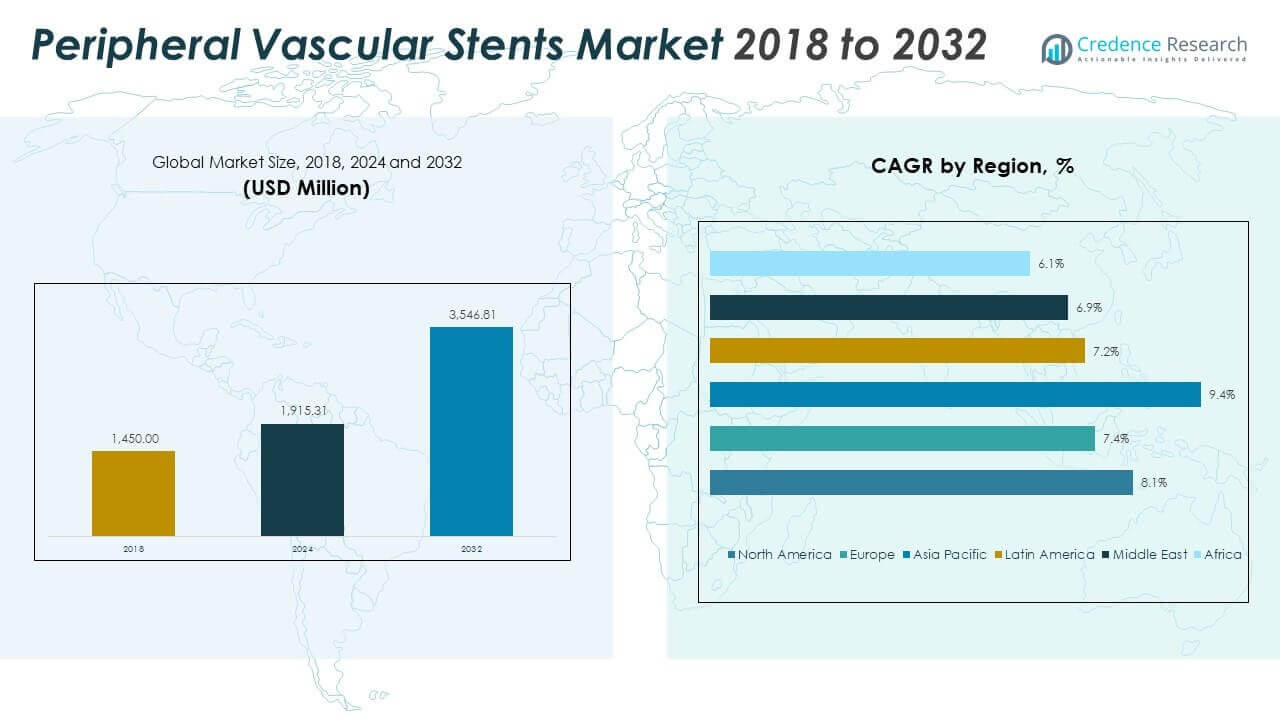
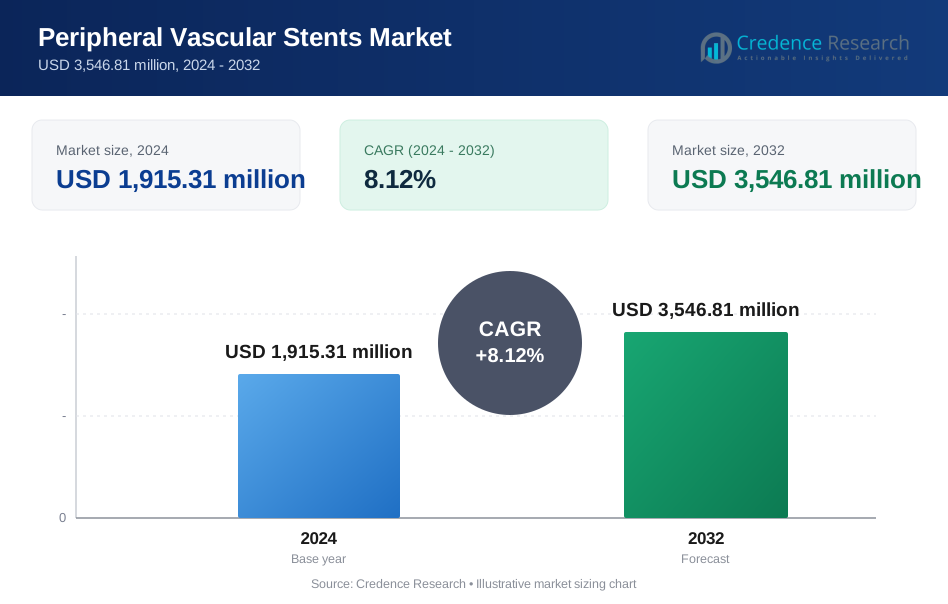
The Peripheral Vascular Stents Market size was valued at USD 1,450.00 million in 2018, increased to USD 1,915.31 million in 2024, and is anticipated to reach USD 3,546.81 million by 2032, at a CAGR of 8.12% during the forecast period.
| REPORT ATTRIBUTE | DETAILS |
|---|---|
| Historical Period | 2020-2023 |
| Base Year | 2024 |
| Forecast Period | 2025-2032 |
| Peripheral Vascular Stents Market Size 2024 | USD 1,915.31 Million |
| Peripheral Vascular Stents Market, CAGR | 8.12% |
| Peripheral Vascular Stents Market Size 2032 | USD 3,546.81 Million |
The market is primarily driven by the rising prevalence of peripheral artery disease and the growing need for minimally invasive vascular interventions. An aging population, coupled with increased rates of diabetes, obesity, and smoking, continues to expand the patient pool. Advancements in stent technology, including drug-eluting and bioresorbable devices, support better clinical outcomes. Hospitals and outpatient centers increasingly adopt stenting procedures due to reduced recovery time and lower complication risks. The market benefits from improved diagnosis, healthcare access, and expanded reimbursement for vascular interventions.
North America leads due to strong infrastructure, high awareness, and widespread access to vascular procedures. Europe follows with stable adoption across major healthcare systems. Asia Pacific is the fastest-growing region, driven by urbanization, lifestyle changes, and improved healthcare investments in countries like China and India. Latin America and the Middle East are emerging, supported by public health programs and growing access to interventional care. Africa holds untapped potential with ongoing investments in diagnostic and surgical capabilities.
Market Insights:
- The Peripheral Vascular Stents Market was valued at USD 1,450.00 million in 2018, reached USD 1,915.31 million in 2024, and is projected to hit USD 3,546.81 million by 2032, expanding at a CAGR of 8.12%.
- North America led in 2024 with about 33.8% share, followed by Europe at nearly 26.4% and Asia Pacific at around 25.8%, supported by strong healthcare infrastructure, high PAD awareness, and established intervention volumes.
- Asia Pacific is the fastest-growing region, holding roughly 25.8% share in 2024, driven by rapid healthcare expansion, rising lifestyle diseases, and improving access to vascular interventions in China and India.
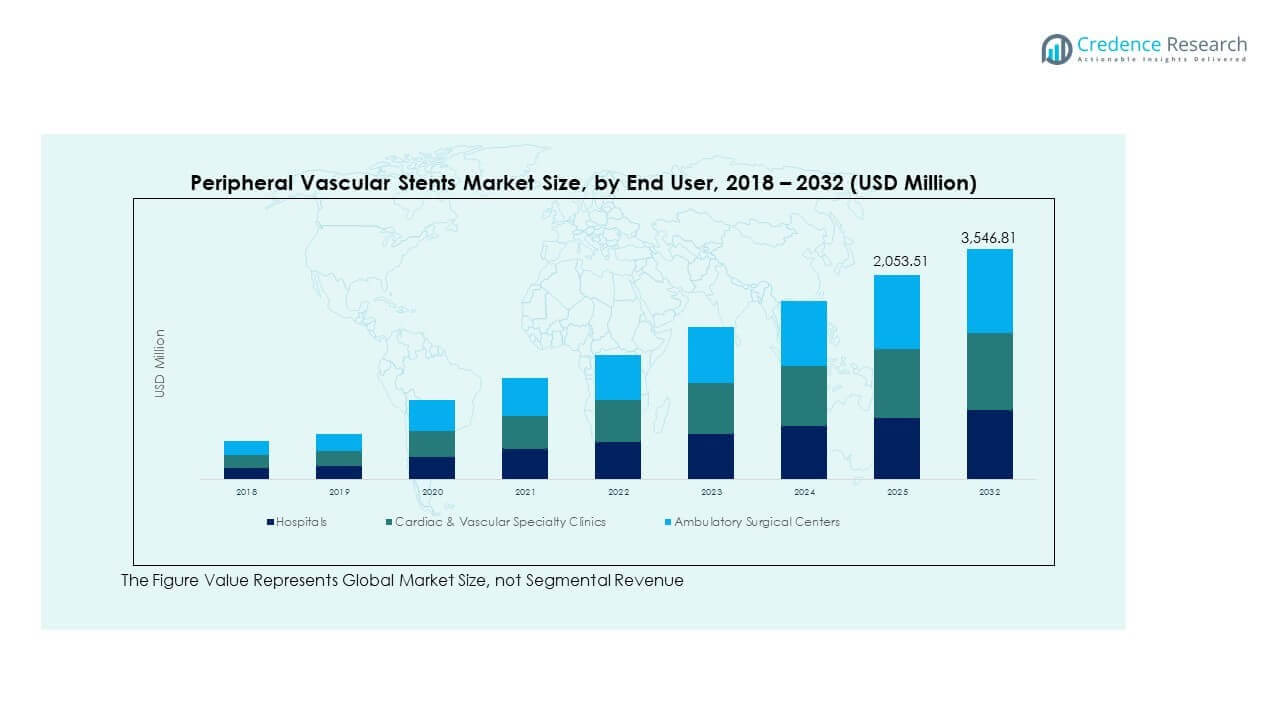
- By end user, hospitals accounted for the largest share at about 40%, reflecting dominance in complex procedures, hybrid labs, and specialist availability.
- Cardiac and vascular specialty clinics held nearly 35% share, while ambulatory surgical centers contributed around 25%, supported by growth in outpatient procedures and faster patient turnover.
Market Drivers
Rising Prevalence of Peripheral Artery Disease Among Aging and Diabetic Populations
The growing burden of peripheral artery disease (PAD) significantly drives the Peripheral Vascular Stents Market. Aging populations face higher risks due to reduced vascular elasticity and increased comorbidities. Diabetes, obesity, and smoking elevate PAD incidence, leading to a larger patient base needing intervention. Clinicians adopt stents to treat arterial blockages with minimal trauma. Demand increases in both developed and emerging economies where lifestyle diseases are on the rise. Healthcare providers focus on early detection and intervention. Public health initiatives also promote vascular screening. These efforts expand patient diagnosis rates and treatment volumes.
- For instance, Medtronic's EverFlex self-expanding peripheral stent achieved 77.9% freedom from loss of primary patency at 1 year (PSVR <2.0, no clinically-driven reintervention) in the DURABILITY II trial for complex femoropopliteal lesions up to 200 mm.
Increasing Preference for Minimally Invasive Interventions in Vascular Therapy
Healthcare systems shift toward minimally invasive approaches for faster recovery and reduced complications. Peripheral stenting offers precise placement with smaller incisions, shorter hospital stays, and lower procedural risks. Physicians favor these options for elderly and high-risk patients. Endovascular techniques gain popularity in outpatient and ambulatory care settings. Clinical guidelines support stenting as a first-line treatment in selected PAD cases. Technological improvements enhance accuracy and procedural success. This fuels market demand across vascular surgery, radiology, and cardiology segments. The Peripheral Vascular Stents Market benefits from consistent adoption across specialties.
Technological Advancements in Stent Design and Material Composition
Stent innovation continues to strengthen the value proposition for peripheral vascular applications. Drug-eluting stents reduce restenosis rates and enhance long-term vessel patency. Nitinol-based self-expanding stents offer flexibility in tortuous vessels. Bioabsorbable stents show promise in reducing long-term complications. Manufacturers integrate imaging-compatible materials for improved visualization. These enhancements improve patient outcomes and reduce revision procedures. Clinical studies support the safety and efficacy of next-generation products. R&D pipelines remain active, with global players investing in novel solutions. Such innovation shapes the growth of the Peripheral Vascular Stents Market.
Government Initiatives and Expanding Insurance Coverage for PAD Treatment
Policy initiatives focus on addressing cardiovascular disease burden through access and affordability. Governments invest in non-communicable disease control programs, enabling early diagnosis and treatment of PAD. Reimbursement schemes expand to cover endovascular procedures, supporting wider access. Public hospitals in emerging markets begin offering advanced vascular therapies. Private insurers also recognize the long-term cost savings from minimally invasive interventions. Training programs for physicians improve stent deployment skills and outcomes. The Peripheral Vascular Stents Market gains momentum from aligned policy and payer environments. Market growth links closely with national healthcare priorities and vascular health funding.
- For instance, BD's Supera interwoven nitinol stent achieved 89.3% primary patency at 12 months in the SUPERB trial for femoropopliteal disease, supporting procedural reimbursement. Training programs for physicians improve stent deployment skills and outcomes.
Market Trends
Emergence of Image-Guided and Robotic-Assisted Peripheral Vascular Procedures
Precision-guided techniques reshape vascular surgery workflows. Robotic-assisted platforms help clinicians position stents with higher accuracy in complex anatomies. Image fusion and intravascular ultrasound guide placement in real time. These tools reduce complication rates and reintervention needs. Hospitals adopt hybrid operating rooms with advanced imaging support. Interventional radiologists gain confidence in treating smaller, harder-to-reach vessels. Growth of image-guided solutions expands peripheral stenting to more clinical settings. The Peripheral Vascular Stents Market evolves with this shift toward data-driven interventions.
- For instance, Philips’ Azurion platform supports complex peripheral and neurovascular procedures through real-time 3D fusion imaging and cone-beam CT. It is widely adopted in clinical settings to enhance precision and workflow efficiency.
Rising Integration of Artificial Intelligence in Peripheral Intervention Planning
AI-driven planning tools support preoperative analysis for PAD cases. Machine learning algorithms assist in vessel segmentation, stent sizing, and procedural simulation. Hospitals use predictive analytics to identify high-risk patients for early intervention. AI platforms reduce planning time and enhance procedural precision. Developers train AI systems on angiographic and CT datasets. Health systems in North America and Europe lead in AI integration. AI tools contribute to more personalized and efficient care delivery. The Peripheral Vascular Stents Market reflects this digital transformation.
- For instance, Circle Cardiovascular Imaging’s cvi42 software offers AI-powered automation for cardiac CT and MR image analysis, including vessel segmentation and quantification. It is FDA-cleared and used globally to improve workflow efficiency and diagnostic consistency in cardiovascular imaging.
Development of Outpatient and Ambulatory Endovascular Centers Across Regions
Outpatient settings now support a growing number of peripheral vascular stenting cases. Dedicated vascular suites lower treatment costs and reduce inpatient pressure. Physicians find these settings more efficient for standard procedures. Regulators approve outpatient use of approved stent technologies. Patient demand for same-day discharge fuels this shift. Emerging markets follow this trend with hybrid public-private models. Ambulatory centers in Asia Pacific and Latin America gain traction in urban regions. The Peripheral Vascular Stents Market aligns with this decentralized care approach.
Increasing Focus on Personalized Vascular Treatment Through Biomarker and Genetic Profiling
Personalized medicine shapes vascular treatment protocols. Researchers explore genetic markers for stent response and restenosis risk. Clinical labs support biomarker testing to predict treatment efficacy. Precision medicine programs integrate stenting with patient-specific vascular profiles. Some firms develop coated stents tailored for inflammatory or diabetic conditions. Personalized pathways reduce trial-and-error in complex PAD cases. This approach helps clinicians optimize stent selection and reduce long-term complications. The Peripheral Vascular Stents Market reflects this movement toward individualized care.
Market Challenges Analysis
Risk of Restenosis, Stent Fracture, and Long-Term Complications Limits Adoption
Despite clinical benefits, peripheral vascular stenting presents durability and safety concerns. Restenosis remains a challenge in certain arterial beds, especially in long lesions. Mechanical stress, anatomical complexity, and patient comorbidities raise risk of stent fracture. Bioabsorbable stents reduce long-term presence but face questions about efficacy. Some regions lack follow-up infrastructure, leading to unmanaged post-procedural risks. Physicians sometimes hesitate to recommend stenting in borderline cases. Regulatory bodies enforce strict safety standards and post-marketing surveillance. The Peripheral Vascular Stents Market must address these performance concerns to sustain momentum.
High Cost of Advanced Stent Systems and Uneven Access in Low-Resource Settings
Modern drug-eluting and hybrid stents come at a premium cost. Public health systems in low- and middle-income countries often struggle to afford them. Out-of-pocket expenses deter patients in regions without insurance coverage. Hospitals may limit procurement of advanced stents due to budget constraints. Access gaps remain across rural and underserved areas. Price-sensitive markets rely heavily on generic or older-generation stents. These barriers reduce the overall penetration of high-performance solutions. The Peripheral Vascular Stents Market must overcome pricing and distribution hurdles to reach full potential.
Market Opportunities
Expansion of PAD Awareness Programs and Rural Outreach Boosts Screening Volumes
Public health bodies now prioritize awareness and early screening for PAD. Mobile diagnostic units and outreach camps bring services to underserved areas. NGOs and private players collaborate to spread knowledge through local campaigns. Screening boosts detection and referrals for vascular intervention. Hospitals expand community vascular programs with stent capabilities. Medical associations support CME for rural physicians on endovascular techniques. The Peripheral Vascular Stents Market benefits from this widening diagnostic net.
Strategic Collaborations and Product Launches in Emerging Markets Create New Growth Channels
Firms form alliances to distribute stents in Africa, Southeast Asia, and Latin America. Local partnerships help navigate regulations and healthcare systems. New product approvals in regional markets open fresh revenue lines. Stent makers tailor offerings for region-specific disease profiles. Hybrid pricing strategies expand reach across income groups. Training centers in emerging countries enhance procedural quality. These dynamics unlock new commercial opportunities for global players.
Market Segmentation Analysis:
By Product Type
The Peripheral Vascular Stents Market shows clear differentiation across product categories. Bare metal peripheral vascular stents remain widely used due to cost efficiency and proven clinical familiarity. Drug‑eluting peripheral vascular stents gain traction where restenosis risk is high and long‑term patency matters. Covered stents support treatment of vessel rupture, aneurysm repair, and complex lesions. Bioabsorbable and bioresorbable stents attract interest for temporary vessel support without permanent implants. Product choice depends on lesion type, patient risk profile, and clinical objectives. Innovation continues to refine safety and durability.
- For instance, Abbott's Supera stent, a bare metal interwoven nitinol design, achieved 91% primary patency at 1 year when nominally deployed in the SUPERB trial. Drug‑eluting peripheral vascular stents gain traction where restenosis risk is high and long‑term patency matters.
By Material
Material selection plays a critical role in device performance. Nitinol leads adoption due to flexibility, shape memory, and fatigue resistance in peripheral vessels. Stainless steel supports use in simpler anatomies with stable structural needs. Cobalt‑chromium offers higher radial strength for demanding vascular segments. Polymer‑based materials address niche requirements tied to absorbable designs. Each material balances strength, flexibility, and biocompatibility. Clinical preference aligns closely with anatomical complexity and procedural goals.
By Application
Application demand reflects disease prevalence and procedural complexity. Femoral‑popliteal disease represents a major use area due to high PAD incidence. Iliac artery disease follows with consistent intervention volumes. Below‑the‑knee lesions require precise stent deployment and flexible designs. Renal artery stenosis and carotid artery disease demand advanced accuracy and safety profiles. Venous obstructions expand stent usage beyond arterial care. Application diversity supports steady procedural demand.
- For instance, in the SUPERSUB II study, the Supera stent achieved 100% technical success and 100% limb salvage at one year in patients with long chronic total occlusions. The study validated its use in complex femoropopliteal interventions.
By End‑User
End‑user adoption varies by care setting. Hospitals dominate usage due to advanced imaging access and multidisciplinary teams. Cardiac and vascular specialty clinics support focused intervention workflows. Ambulatory surgical centers gain adoption for routine cases with faster discharge cycles. Cost efficiency and patient convenience drive this shift. Care setting choice depends on procedure complexity and patient risk level.
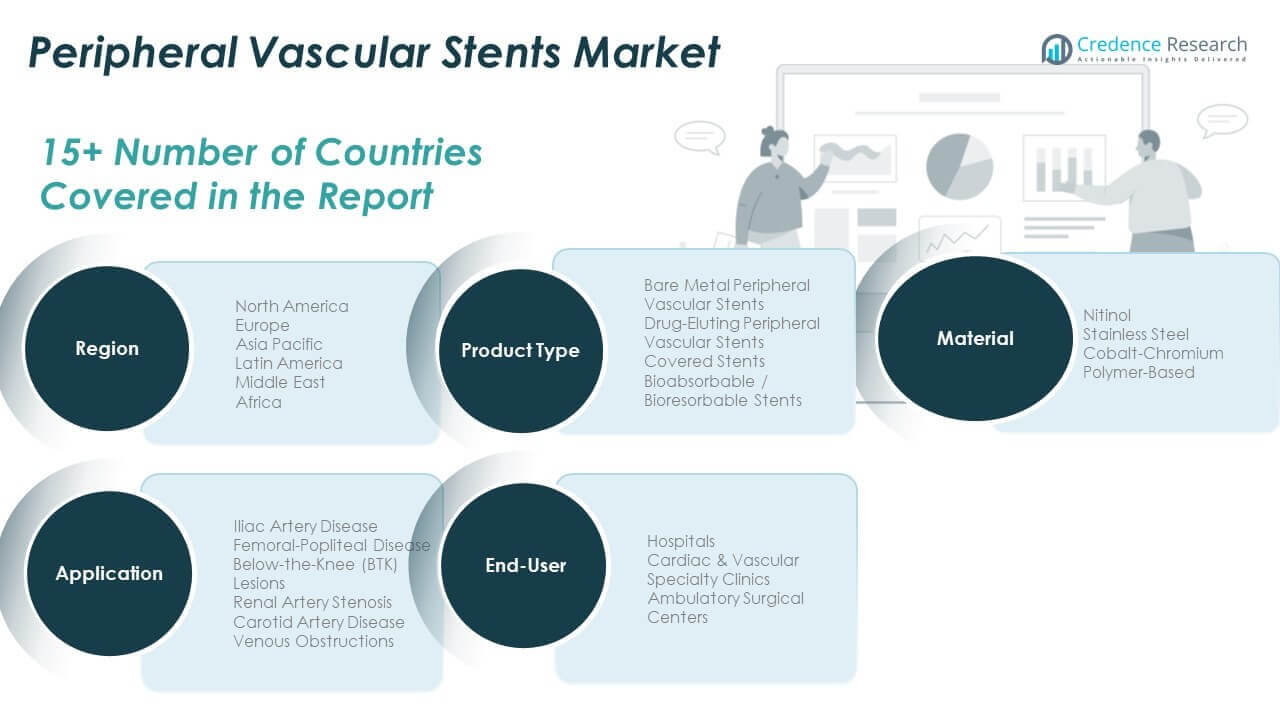
Segmentation:
By Product Type
- Bare Metal Peripheral Vascular Stents
- Drug-Eluting Peripheral Vascular Stents
- Covered Stents
- Bioabsorbable / Bioresorbable Stents
By Material
- Nitinol
- Stainless Steel
- Cobalt-Chromium
- Polymer-Based
By Application
- Iliac Artery Disease
- Femoral-Popliteal Disease
- Below-the-Knee (BTK) Lesions
- Renal Artery Stenosis
- Carotid Artery Disease
- Venous Obstructions
By End-User
- Hospitals
- Cardiac & Vascular Specialty Clinics
- Ambulatory Surgical Centers
By Region
- North America
- U.S.
- Canada
- Mexico
- Europe
- Germany
- France
- U.K.
- Italy
- Spain
- Rest of Europe
- Asia Pacific
- China
- Japan
- India
- South Korea
- South-east Asia
- Rest of Asia Pacific
- Latin America
- Brazil
- Argentina
- Rest of Latin America
- Middle East & Africa
- GCC Countries
- South Africa
- Rest of the Middle East and Africa
Regional Analysis:
North America
The North America Peripheral Vascular Stents Market size was valued at USD 495.90 million in 2018, grew to USD 646.60 million in 2024, and is anticipated to reach USD 1,195.64 million by 2032, at a CAGR of 8.1% during the forecast period. It held the largest market share of approximately 33.76% in 2024. The region benefits from high disease awareness, favorable reimbursement, and early adoption of advanced endovascular technologies. Hospitals and ambulatory centers in the U.S. perform large volumes of peripheral stenting procedures. Key players actively launch new-generation stents, supported by FDA approvals. Clinical guidelines favor stenting in femoral and iliac lesions, driving demand. The aging population and high prevalence of diabetes and obesity further expand the patient base. Research funding and strong distributor networks reinforce market strength. North America maintains a leadership position through innovation and infrastructure.
Europe
The Europe Peripheral Vascular Stents Market size was valued at USD 398.03 million in 2018, increased to USD 506.16 million in 2024, and is projected to reach USD 887.60 million by 2032, at a CAGR of 7.4%. It represented around 26.42% of the global market in 2024. Europe shows strong adoption across Germany, France, Italy, and the UK. Public and private hospitals routinely perform stent-based interventions for PAD. European medical device regulations support quality and safety in stent approvals. Local manufacturers and global players offer a wide range of CE-marked devices. Clinical trials and academic research institutions support product development. Increasing geriatric population and healthcare access fuel long-term growth. Awareness campaigns and screening programs drive early diagnosis. Europe remains a mature and competitive market.
Asia Pacific
The Asia Pacific Peripheral Vascular Stents Market size was USD 357.86 million in 2018, reached USD 493.47 million in 2024, and is expected to hit USD 1,007.65 million by 2032, growing at a CAGR of 9.4%. It captured about 25.77% of the global market share in 2024. Rising incidence of peripheral artery disease and expanding healthcare infrastructure drive growth. Countries like China, India, and Japan lead procedural volumes. Governments increase healthcare spending and insurance coverage for cardiovascular care. Domestic manufacturers gain approval for low-cost stents. Urban hospitals offer advanced vascular services, while rural outreach expands diagnostics. Training programs and conferences boost physician expertise. Foreign investments and partnerships support regional access. Asia Pacific emerges as a high-growth, high-potential market.
Latin America
The Latin America Peripheral Vascular Stents Market size was USD 98.60 million in 2018, grew to USD 129.07 million in 2024, and is forecasted to reach USD 222.99 million by 2032, at a CAGR of 7.2%. It accounted for around 6.74% of the global market in 2024. Brazil and Mexico lead regional growth due to high urbanization and increasing lifestyle diseases. Public healthcare reforms expand vascular care capabilities. Hospitals in major cities adopt drug-eluting and self-expanding stents. Cost constraints influence product selection, favoring value-based offerings. Distributors play a key role in device penetration. Multinational companies increase presence through partnerships and tenders. Procedural awareness improves with ongoing physician training. Latin America continues to show steady expansion across major markets.
Middle East
The Middle East Peripheral Vascular Stents Market size was USD 59.45 million in 2018, reached USD 73.92 million in 2024, and is expected to reach USD 124.51 million by 2032, registering a CAGR of 6.9%. It held around 3.86% of the global market in 2024. Gulf countries like Saudi Arabia and the UAE lead adoption due to strong investment in tertiary care centers. Rising obesity and diabetes rates increase PAD prevalence. Hospitals implement screening and intervention programs to manage vascular disease. Imported stents dominate the market due to limited local manufacturing. Private hospitals offer minimally invasive treatments to a growing patient base. Insurance expansion supports endovascular procedures. Training and international collaborations enhance procedural quality. Middle East shows moderate but strategic growth.
Africa
The Africa Peripheral Vascular Stents Market size stood at USD 40.16 million in 2018, grew to USD 66.09 million in 2024, and is projected to reach USD 108.42 million by 2032, at a CAGR of 6.1%. Africa represented about 3.45% of the global share in 2024. South Africa leads the market with growing cardiology infrastructure. Vascular interventions are limited in rural areas but expanding in urban hospitals. Cost barriers restrict advanced stent usage, favoring basic metallic options. NGOs and public health agencies support PAD awareness and treatment access. Imported devices dominate supply chains. Training gaps and limited specialist availability remain challenges. Governments begin to invest in chronic disease programs. Africa holds long-term potential with infrastructure improvement.
Key Player Analysis:
- Medtronic plc
- Boston Scientific Corporation
- Abbott Laboratories
- Terumo Corporation
- Cook Medical
Competitive Analysis:
The Peripheral Vascular Stents Market features strong competition among global medical device leaders and regional specialists. Major players focus on portfolio breadth across drug‑eluting, bare metal, and covered stents. Companies invest heavily in clinical evidence to support safety and long‑term patency claims. Product differentiation centers on flexibility, radial strength, and deliverability in complex anatomies. Firms pursue regulatory approvals across key regions to expand geographic reach. Strategic acquisitions strengthen technology pipelines and distribution access. Pricing strategies balance premium innovation with value offerings for cost‑sensitive markets. Hospitals prefer vendors with training support and reliable supply chains. Competitive intensity remains high due to frequent product upgrades and tender‑based procurement. Innovation cycles stay short, pushing companies to refresh designs often. Brand reputation and clinical trust strongly influence purchasing decisions. It remains shaped by technology leadership, scale advantages, and procedural adoption trends.
Recent Developments:
- In February 2025, Teleflex announced plans to acquire BIOTRONIK’s vascular intervention business for approximately €760 million, gaining drug-coated balloon and stent assets with 25% of revenue tied to peripheral interventions.
- In January 2025, Medtronic plc entered an exclusive US distribution agreement with Contego Medical for the FDA-cleared Neuroguard IEP System, a three-in-one carotid stenting platform relevant to peripheral vascular interventions.
Report Coverage:
The research report offers an in-depth analysis based on Product Type, Material, Application and End-User. It details leading market players, providing an overview of their business, product offerings, investments, revenue streams, and key applications. Additionally, the report includes insights into the competitive environment, SWOT analysis, current market trends, as well as the primary drivers and constraints. Furthermore, it discusses various factors that have driven market expansion in recent years. The report also explores market dynamics, regulatory scenarios, and technological advancements that are shaping the industry. It assesses the impact of external factors and global economic changes on market growth. Lastly, it provides strategic recommendations for new entrants and established companies to navigate the complexities of the market.
Future Outlook:
- Demand will steadily rise with an aging global population and growing incidence of peripheral artery disease.
- Drug-eluting and bioresorbable stents will gain share due to clinical benefits and innovation.
- Asia Pacific will show the fastest growth due to healthcare expansion, urbanization, and higher disease awareness.
- Hospitals and specialty clinics will remain the top end-users, supported by procedural volume and infrastructure.
- Nitinol will continue leading the material segment owing to flexibility and vessel compatibility.
- Reimbursement expansion in emerging economies will enhance access to advanced stent procedures.
- Vendors will focus on cost optimization to penetrate Latin America, Africa, and Southeast Asia.
- AI-driven diagnostic tools and image-guided navigation will increase procedural success rates.
- Market consolidation will grow through strategic acquisitions and technology licensing.
- Regulatory clarity and faster device approvals will streamline new product launches globally.
Request a Free Sample
Fill in your details and we'll send you a free sample report.
- Sample data tables & charts
- Research methodology
Need a Custom Version of This Report?
Tailor the scope, geography, or segments to your exact requirements.
- Custom geography or segment scope
- Direct access to our analyst team
Frequently Asked Questions
What is the current market size for Peripheral Vascular Stents Market, and what is its projected size in 2032?
At what Compound Annual Growth Rate is the Peripheral Vascular Stents Market projected to grow between 2024 and 2032?
Which Peripheral Vascular Stents Market segment held the largest share in 2024?
What are the primary factors fueling the growth of the Peripheral Vascular Stents Market?
Who are the leading companies in the Peripheral Vascular Stents Market?
Which region commanded the largest share of the Peripheral Vascular Stents Market in 2024?
Table of Content
Chapter 1 Market Segmentation
- 1.1 Segmentation Framework
- 1.1.1 Product and Service Classification
- 1.1.2 Application and End-Use Classification
- 1.1.3 Technology and Solution Classification
- 1.1.4 Customer and Distribution Channel Classification
- 1.1.5 Geographic Segmentation
- 1.1.6 Market Segment Definitions and Boundaries
Chapter 2 Introduction
- 2.1 Report Objectives and Scope
- 2.2 Product Definition and Industry Terminology
- 2.3 Market Inclusions and Exclusions
- 2.4 Research Process
- 2.4.1 Primary Research and Expert Interviews
- 2.4.2 Secondary Research and Source Review
- 2.4.3 Top-Down and Bottom-Up Estimation
- 2.4.4 Data Triangulation and Verification
- 2.5 Market Size Measurement Basis
- 2.5.1 2024: USD 1,915.31 million → 2032: USD 3,546.81 million
- 2.6 Historical and Forecast Reference Periods
- 2.6.1 Base Year: 2024
- 2.6.2 Forecast Period: 2024-2032
- 2.7 Research Assumptions and Limitations
Chapter 3 Executive Summary
- 3.1 Market Snapshot and Key Findings
- 3.2 Base-Year Market Size, 2024
- 3.3 Forecast Market Size, 2032
- 3.4 Revenue and Volume Growth Outlook
- 3.5 Key Demand and Supply Indicators
- 3.6 Leading Market Segments
- 3.7 Fastest-Growing Market Opportunities
- 3.8 Regional Performance Highlights
- 3.9 Technology and Industry Transformation
- 3.10 Competitive Landscape Summary
- 3.11 Analyst View and Strategic Implications
Chapter 4 Global Peripheral Vascular Stents Market Trends and Developments
- 4.1 Historical Industry Development
- 4.2 Recent Market Trends and Developments
- 4.3 Demand and Customer Behavior Trends
- 4.4 Technology and Product Innovation
- 4.5 Artificial Intelligence, Automation and Digitalization
- 4.6 Local Manufacturing and Supply Chain Realignment
- 4.7 Industry Partnerships, Mergers and Acquisitions
- 4.8 Sustainability and Circular Economy Developments
- 4.9 Government and Private Sector Investment Trends
- 4.10 Emerging Business Models and Commercialization
- 4.11 Industry Developments and Announcements
Chapter 5 Global Peripheral Vascular Stents Market Production, Supply and Demand Analysis
- 5.1 Demand Trend and Consumption Analysis
- 5.2 Demand Forecast, 2024-2032
- 5.3 Production and Output Trend
- 5.4 Production and Output Forecast, 2024-2032
- 5.5 Installed Capacity and Capacity Utilization
- 5.6 Company-Wise Production Plants and Statistics
- 5.6.1 Installed Production Capacity
- 5.6.2 Actual Production
- 5.6.3 Planned Capacity and Expansion Targets
- 5.7 Supply Chain Structure and Procurement Trends
- 5.8 Supply-Demand Gap and Bottlenecks
- 5.9 Import Dependence and Sourcing Structure
- 5.10 Contract Manufacturing and Outsourcing
- 5.11 Regional Supply and Demand Concentration
Chapter 6 Global Peripheral Vascular Stents Market Pricing Analysis
- 6.1 Pricing Structure and Measurement
- 6.2 Historical Pricing Trends
- 6.3 Pricing Outlook, 2024-2032
- 6.4 Average Selling Price and Unit Economics
- 6.5 Pricing by Product and Market Segment
- 6.6 Geographic Pricing Differences
- 6.7 Key Input, Energy, Labor and Logistics Costs
- 6.8 Contract Pricing and Purchasing Models
- 6.9 Pricing Sensitivity and Competitive Positioning
- 6.10 Price, Margin and Profitability Implications
Chapter 7 Global Peripheral Vascular Stents Market Dynamics
- 7.1 Market Growth Drivers
- 7.1.1 Demand-Side Drivers
- 7.1.2 Technology and Innovation Drivers
- 7.1.3 Infrastructure and Investment Drivers
- 7.1.4 Regulatory and Policy Drivers
- 7.2 Market Restraints
- 7.2.1 Cost and Affordability Constraints
- 7.2.2 Technology and Adoption Barriers
- 7.2.3 Supply Chain and Operational Constraints
- 7.3 Market Challenges
- 7.3.1 Competitive Pressure and Margin Erosion
- 7.3.2 Skills, Infrastructure and Implementation Gaps
- 7.4 Emerging Market Opportunities
- 7.5 Market Dynamics Impact and Time-Horizon Assessment
Chapter 8 Global Peripheral Vascular Stents Value Chain Analysis
- 8.1 Industry Value Chain Overview
- 8.2 Upstream Suppliers and Critical Inputs
- 8.3 Technology and Component Providers
- 8.4 Manufacturing or Service Delivery
- 8.5 Distribution, Channel Partners and Integrators
- 8.6 Downstream Applications and End Users
- 8.7 Value Addition and Profit Pools
- 8.8 Vertical Integration and Outsourcing
- 8.9 Supplier Concentration and Risk
- 8.10 Supply Chain Localization and Resilience
Chapter 9 Global Peripheral Vascular Stents Market Regulations and Policies
- 9.1 Relevant Laws, Standards and Compliance Frameworks
- 9.2 Product, Service, Safety and Quality Requirements
- 9.3 Government Policies, Incentives and Subsidies
- 9.4 Imports, Exports and Trade Barriers
- 9.5 Public Procurement and Local Content Requirements
- 9.6 Environmental and Sustainability Compliance
- 9.7 Upcoming Policy Changes and Market Implications
Chapter 10 Global Peripheral Vascular Stents Market Hotspots and Opportunities
- 10.1 Market Opportunity Mapping and Growth Hotspots
- 10.2 High-Growth Applications and Customer Groups
- 10.3 Underserved Markets and White-Space Opportunities
- 10.4 Emerging Technology and Product Opportunities
- 10.5 New Capacity and Investment Hotspots
- 10.6 Market Entry and Expansion Opportunities
- 10.7 Distribution and Partnership Opportunities
- 10.8 Near-Term and Long-Term Commercial Potential
- 10.9 Opportunity Attractiveness and Execution Risks
Chapter 11 Global Peripheral Vascular Stents Market Outlook, 2024-2032
- 11.1 Market Size and Analysis
- 11.1.1 Revenue (Market Measurement: 2024: USD 1,915.31 million → 2032: USD 3,546.81 million)
- 11.1.2 Market Volume and Quantity Sold
- 11.1.3 Historical Market Size
- 11.1.4 Base-Year Market Size, 2024
- 11.2 Market Forecast, 2024-2032
- 11.2.1 Revenue Forecast to 2032
- 11.2.2 Volume Forecast to 2032
- 11.2.3 CAGR and Year-on-Year Growth
- 11.2.4 Incremental Revenue Opportunity
- 11.3 Forecast Assumptions and Scenario Analysis
- 11.3.1 Base-Case Forecast
- 11.3.2 Optimistic and Conservative Scenarios
- 11.3.3 Technology, Pricing and Policy Sensitivities
- 11.4 Market Attractiveness and Growth Outlook
Chapter 12 Global Peripheral Vascular Stents Market Segmentation and Outlook
- 12.1 Segmentation Summary and Market Shares, 2024
- 12.2 Largest and Fastest-Growing Segments
- 12.3 Segment Growth Comparison
- 12.4 Segment Attractiveness and Priority Matrix
Chapter 13 Global Peripheral Vascular Stents Geographic Market Outlook, 2024-2032
- 13.1 Regional Market Size and Share, 2024
- 13.2 Regional Market Forecast, 2024-2032
- 13.3 Regional Pricing, Production and Demand Differences
- 13.4 North America
- 13.4.1 United States
- 13.4.2 Canada
- 13.4.3 Mexico
- 13.5 Europe
- 13.5.1 Germany
- 13.5.2 France
- 13.5.3 Italy
- 13.5.4 United Kingdom
- 13.5.5 Spain
- 13.5.6 Poland
- 13.5.7 Russia
- 13.5.8 Netherlands
- 13.5.9 Belgium
- 13.5.10 Sweden
- 13.5.11 Denmark
- 13.5.12 Norway
- 13.5.13 Rest of Europe
- 13.6 Asia Pacific
- 13.6.1 China
- 13.6.2 India
- 13.6.3 Japan
- 13.6.4 South Korea
- 13.6.5 Thailand
- 13.6.6 Indonesia
- 13.6.7 Vietnam
- 13.6.8 Malaysia
- 13.6.9 Australia
- 13.6.10 Rest of Asia Pacific
- 13.7 Latin America
- 13.7.1 Brazil
- 13.7.2 Argentina
- 13.7.3 Colombia
- 13.7.4 Chile
- 13.7.5 Rest of Latin America
- 13.8 Middle East
- 13.8.1 Saudi Arabia
- 13.8.2 United Arab Emirates
- 13.8.3 Turkey
- 13.8.4 Israel
- 13.8.5 Iran
- 13.8.6 Rest of the Middle East
- 13.9 Africa
- 13.9.1 South Africa
- 13.9.2 Egypt
- 13.9.3 Nigeria
- 13.9.4 Morocco
- 13.9.5 Rest of Africa
- 13.10 Regional Investment, Policy and Supply Chain Differences
- 13.11 Regional Competitive Landscape
- 13.12 Geographic Growth Hotspots
Chapter 14 Global Peripheral Vascular Stents Technology, Innovation and Sustainability Outlook
- 14.1 Technology Landscape and Maturity
- 14.2 Product, Process and Service Innovation
- 14.3 AI, Automation and Digital Tools in the Industry
- 14.4 Technology Adoption and Performance Benchmarking
- 14.5 Innovation Pipeline and R&D Investment
- 14.6 Patent and Intellectual Property Trends
- 14.7 Energy Efficiency and Resource Management
- 14.8 Sustainability, Recycling and Circularity
- 14.9 Technology Roadmap, 2024-2032
- 14.10 Risks of Obsolescence and Technology Substitution
Chapter 15 Global Peripheral Vascular Stents Market Key Strategic Imperatives
- 15.1 Growth and Market Entry Priorities
- 15.2 High-Return Products and Segments
- 15.3 Pricing, Profitability and Cost Optimization
- 15.4 Technology Investment and Product Differentiation
- 15.5 Supply Chain Localization and Resilience
- 15.6 Distribution and Customer Acquisition
- 15.7 Partnership, Acquisition and Capacity Strategy
- 15.8 Regional Expansion Priorities
- 15.9 Short-, Medium- and Long-Term Actions
Chapter 16 Competition Outlook
- 16.1 Industry Competition Characteristics
- 16.2 Market Structure and Concentration
- 16.3 Market Share and Competitive Positioning, 2024
- 16.4 Company-Wise Revenue and Product Benchmarking
- 16.5 Production and Service Capacity Benchmarking
- 16.6 Technology, Pricing and Differentiation
- 16.7 Regional Footprint and Distribution Strength
- 16.8 Mergers, Acquisitions and Strategic Alliances
- 16.9 New Entrants and Competitive Threats
- 16.10 Porter's Five Forces and Industry Attractiveness
- 16.11 Competitive Outlook, 2024-2032
Chapter 17 Company Profiles
- 17.1 Company Coverage and Selection Criteria
- 17.2 Leading Market Participants – Standard Profile Structure
- 17.2.1 Business Description
- 17.2.2 Company Ownership and Geographic Presence
- 17.2.3 Product and Service Portfolio
- 17.2.4 Manufacturing and Operating Footprint
- 17.2.5 Production Capacity and Expansion Plans
- 17.2.6 Financial Performance and Investment
- 17.2.7 Market Share and Competitive Position
- 17.2.8 Technology and Innovation Capabilities
- 17.2.9 Strategic Alliances or Partnerships
- 17.2.10 Recent Developments
- 17.2.11 Growth Strategy and Outlook
- 17.3 Other Relevant Market Participants
Note: Every listed company is profiled on the structure shown under the first company. The company list is preliminary and may change based on research findings, market developments, data availability and client requirements.
Chapter 18 Disclaimer
- 18.1 Research and Forecast Disclaimer
- 18.2 Data Source and Estimation Limitations
Note: The depth of individual sections depends on data availability for this market. Volume, capacity, trade and other unit-based metrics are included where applicable.
