
Market Overview
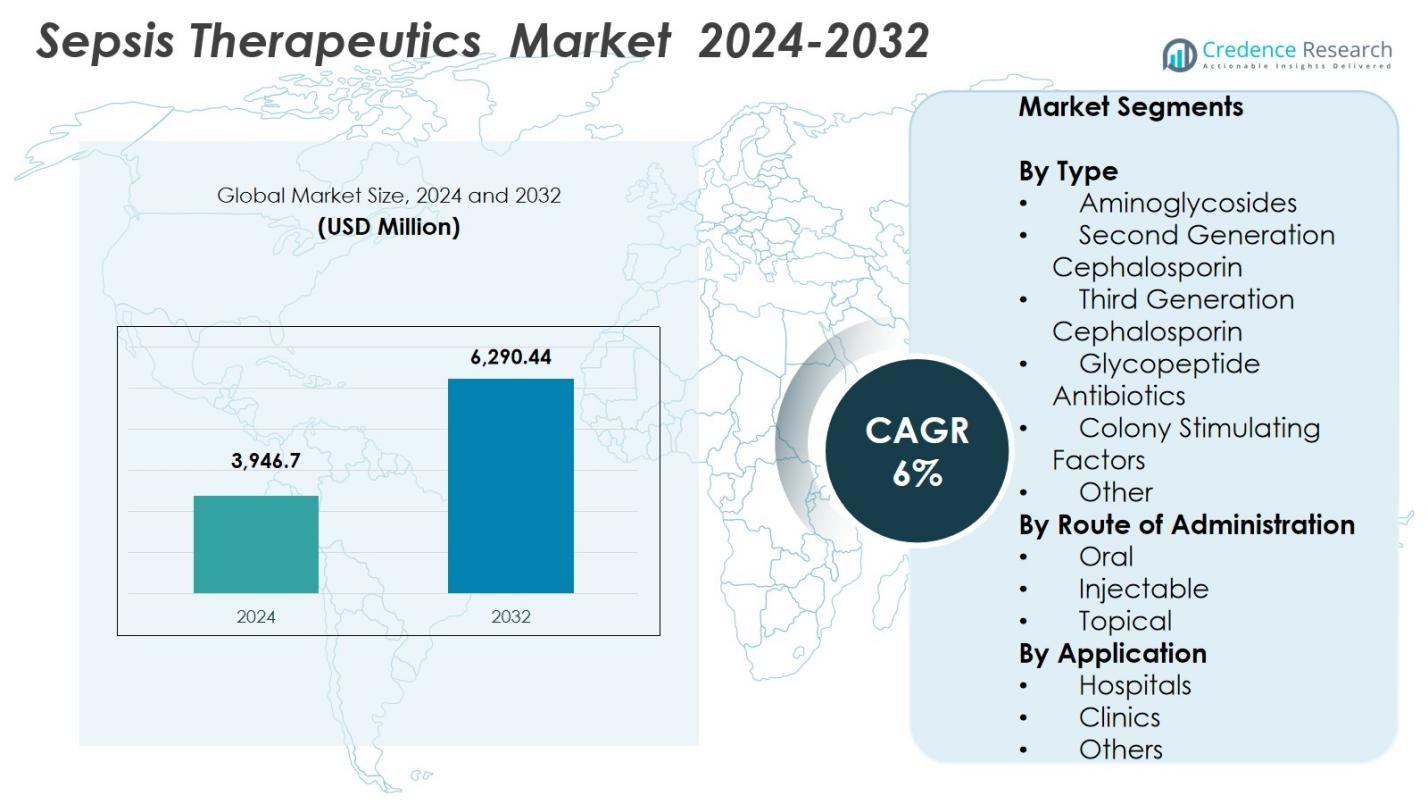
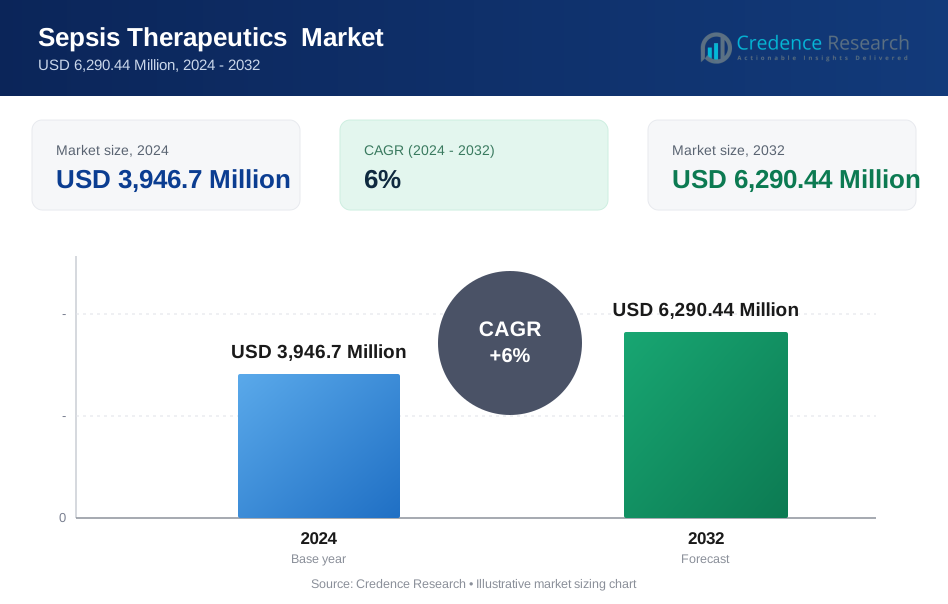
Sepsis Therapeutics Market size was valued at USD 3,946.7 Million in 2024 and is anticipated to reach USD 6,290.44 Million by 2032, at a CAGR of 6% during the forecast period.
| REPORT ATTRIBUTE | DETAILS |
|---|---|
| Historical Period | 2020-2023 |
| Base Year | 2024 |
| Forecast Period | 2025-2032 |
| Sepsis Therapeutics Market Size 2024 | USD 3,946.7 Million |
| Sepsis Therapeutics Market, CAGR | 6% |
| Sepsis Therapeutics Market Size 2032 | USD 6,290.44 Million |
The Sepsis Therapeutics Market is driven by strong participation from leading players such as Eli Lilly and Company, AstraZeneca, Bayer AG, Gilead Sciences, Abbott Laboratories, La Jolla Pharmaceutical Company, Agennix, Atox Bio, CytoGenix, and TaiRx, Inc., all of which are advancing antimicrobial, immunomodulatory, and biologic treatment portfolios. These companies focus on addressing rising antimicrobial resistance and improving clinical outcomes through innovative drug pipelines and strategic partnerships. Regionally, North America led the market with a 38.4% share in 2024, supported by advanced critical care infrastructure, high treatment adoption, and strong R&D activity, positioning it as the dominant hub for sepsis therapeutic development.
Market Insights
- The Sepsis Therapeutics Market was valued at USD 3,946.7 million in 2024 and is projected to reach USD 6,290.44 million by 2032, growing at a CAGR of 6%.
- Market growth is driven by rising sepsis incidence, expanding ICU admissions, and increased adoption of advanced antimicrobial and immunomodulatory therapies across hospitals.
- Key trends include rapid adoption of precision medicine, AI-assisted diagnostic tools, and accelerated development of next-generation antibiotics targeting resistant pathogens.
- Major players such as Eli Lilly and Company, AstraZeneca, Bayer AG, Gilead Sciences, Abbott Laboratories, and La Jolla Pharmaceutical Company are strengthening pipelines through R&D investments and strategic partnerships.
- North America dominated with 38.4% share in 2024, while hospitals led the application segment with 69.8% share; Asia-Pacific is the fastest-growing region due to rising infection rates and expanding healthcare infrastructure.
Market Segmentation Analysis
By Type
The Sepsis Therapeutics market by type was led by third-generation cephalosporins, accounting for an 34.6% share in 2024, driven by their broad-spectrum activity and effectiveness against multidrug-resistant gram-negative pathogens. Their rapid bactericidal action and proven clinical efficacy in severe sepsis cases support widespread hospital adoption. Aminoglycosides and glycopeptide antibiotics also show strong demand due to rising antimicrobial resistance, while colony-stimulating factors gain traction for improving immune recovery in septic patients. Increasing clinical trials and enhanced treatment protocols continue to boost adoption across all therapeutic classes.
- For instance, Ceftazidime‑Avibactam a third-generation cephalosporin combined with a β-lactamase inhibitor showed 75.4% clinical efficacy and a 66.0% bacterial clearance rate in a multicenter retrospective study of 183 patients with carbapenem-resistant gram-negative infections, with only 11.5% 30-day all-cause mortality.
By Route of Administration
The injectable segment dominated the Sepsis Therapeutics market with 72.3% share in 2024, reflecting the urgent nature of sepsis treatment, which requires rapid drug absorption and intravenous delivery for effective patient stabilization. Injectable formulations remain the standard of care in emergency departments and intensive care units, supported by their fast onset of action and controlled dosing. Oral therapies account for a smaller share due to limited suitability for critical cases, while topical routes remain niche for localized infections. Increasing hospitalizations and advanced IV antibiotic therapies continue to strengthen the injectable segment.
- For instance, Paratek’s NUZYRA (omadacycline) IV formulation continued adoption in hospitals following clinical results showing comparable efficacy to moxifloxacin in treating community-acquired bacterial infections, supporting its role when rapid parenteral initiation is required before transitioning to oral dosing.
By Application
Hospitals remained the leading application segment in 2024, capturing 69.8% market share, driven by the high volume of sepsis cases requiring intensive monitoring, advanced diagnostics, and immediate therapeutic intervention. The strong presence of critical care units, availability of trained professionals, and integration of standardized sepsis management protocols further enhance hospital demand. Clinics account for moderate usage, primarily for follow-up treatment and early-stage infection management, while the “others” category includes ambulatory centers and long-term care facilities. Rising global sepsis burden and improved hospital infrastructure continue to support segment dominance.
Key Growth Drivers
Advancements in Antimicrobial and Adjunctive Therapies
Rapid advancements in antimicrobial formulations and adjunctive therapies are significantly accelerating growth in the Sepsis Therapeutics market. New generations of broad-spectrum antibiotics, anti-endotoxin agents, and immunomodulators are improving survival outcomes and reducing organ dysfunction in severe sepsis. Pharmaceutical companies are increasingly investing in molecules targeting resistant gram-negative bacteria, addressing one of the most persistent clinical challenges. Additionally, biologics such as cytokine inhibitors and colony-stimulating factors are expanding therapeutic options beyond traditional antibiotics. The rise in adaptive clinical trial designs and expedited regulatory pathways for life-threatening infections further supports faster commercialization of innovative therapies.
- For instance, Xacduro (sulbactam + durlobactam) approved by U.S. Food and Drug Administration (FDA) in May 2023 for serious hospital-acquired and ventilator-associated pneumonia caused by carbapenem-resistant Acinetobacter baumannii
Rising Prevalence of Sepsis and Growing Hospital Admissions
The global rise in sepsis cases, driven by aging populations, chronic disease prevalence, and increased hospital-acquired infections, remains a major market growth catalyst. High-risk groups—including elderly patients, immunocompromised individuals, and those undergoing invasive surgeries—are contributing to escalating sepsis incidence. Hospitals worldwide are reporting higher ICU admissions linked to severe bacterial, viral, and fungal infections, boosting demand for advanced sepsis treatments. Increased awareness campaigns and improved clinical recognition of early sepsis symptoms are enhancing diagnosis rates. Moreover, post-pandemic healthcare reforms have strengthened critical care capacity, creating sustained demand for effective sepsis therapeutics across emergency settings.
- For instance, a U.S. CDC analysis noted that nearly 87% of sepsis cases originate in the community but require hospitalization, and about 1 in 3 patients who die in a hospital have sepsis, underscoring rising ICU and emergency department pressures.
Expansion of Diagnostic Capabilities and Early Intervention Protocols
Enhanced diagnostic capabilities and early intervention protocols are fundamentally reshaping treatment efficiency and driving therapeutic uptake. Rapid molecular diagnostics, point-of-care tests, and biomarker-based assays enable earlier detection of bloodstream infections, allowing physicians to initiate targeted therapy within critical time windows. Hospitals are increasingly adopting standardized sepsis management bundles, integrating tools such as lactate monitoring and automated alert systems. These advancements reduce mortality rates and minimize antibiotic misuse, reinforcing the need for timely therapeutic administration. As healthcare systems prioritize early intervention to improve outcomes and reduce treatment costs, demand for reliable and fast-acting sepsis drugs continues to expand.
Key Trends & Opportunities
Development of Precision and Personalized Sepsis Therapies
Precision medicine is emerging as a transformative trend in the Sepsis Therapeutics market, offering opportunities to tailor treatments based on patient-specific immune responses, genetic markers, and pathogen profiles. Researchers are developing host-directed therapeutics that modulate immune dysregulation, a central factor in sepsis progression. Pharmacogenomic screening is improving drug selection and reducing adverse reactions, while machine learning models predict patient trajectories to guide individualized therapy. This shift toward personalized treatment strategies opens new avenues for biologics, immunotherapies, and companion diagnostics. Companies leveraging these innovations are positioned to address unmet needs in severe and refractory sepsis cases.
- For instance, Inflammatix created the TriVerity test, an FDA-cleared host-response diagnostic using AI to interpret 29 mRNA markers from blood samples, providing scores for bacterial/viral likelihood and infection severity to inform personalized therapy decisions in acute care.
Integration of AI, Predictive Analytics, and Digital Health Tools
The integration of AI-driven predictive analytics and digital health platforms presents significant opportunities for enhancing sepsis treatment effectiveness. AI-enabled clinical decision support tools can identify sepsis risk early, optimize antibiotic selection, and forecast treatment responses using real-time patient data. Remote monitoring technologies and connected ICU systems allow clinicians to track vital signs continuously, enabling proactive interventions. Digital platforms also support better stewardship of antibiotics by evaluating resistance patterns and adjusting dosing protocols. As healthcare providers shift toward data-driven care, demand for therapeutics that align with advanced monitoring and predictive tools is expected to grow rapidly.
- For instance, connected ICU platforms such as Philips’ IntelliVue Guardian demonstrated reduced code-blue events in clinical evaluations by using continuous remote monitoring and early-warning algorithms that alert clinicians before patient deterioration.
Key Challenges
Escalating Antimicrobial Resistance Impacting Treatment Outcomes
Antimicrobial resistance (AMR) remains one of the most significant challenges restraining the Sepsis Therapeutics market. Rising resistance among gram-negative bacteria, including carbapenem-resistant Enterobacteriaceae and multidrug-resistant Pseudomonas species, severely limits the effectiveness of existing antibiotics. This forces clinicians to rely on older, more toxic drugs or untested combinations, raising safety concerns and treatment complexities. AMR-driven clinical failures are increasing ICU stays, mortality rates, and overall healthcare costs. While new antibiotic development is underway, the discovery pipeline remains insufficient compared to the pace of resistance. Addressing AMR requires coordinated global strategies, antibiotic stewardship programs, and sustained R&D investment.
High Treatment Costs and Limited Access in Low-Resource Settings
High treatment costs pose a major barrier to widespread adoption of advanced sepsis therapeutics, particularly in low- and middle-income countries. Innovative biologics, next-generation antibiotics, and advanced diagnostics significantly increase overall treatment expenditure, limiting affordability for both healthcare systems and patients. In many regions, constraints related to ICU capacity, diagnostic infrastructure, and skilled medical personnel further restrict timely access to sepsis care. Delayed treatment initiation contributes to higher mortality rates and poorer outcomes. These disparities highlight the need for cost-effective therapeutics, expanded healthcare funding, and scalable clinical protocols that can be implemented even in resource-constrained environments.
Regional Analysis
North America
North America dominated the Sepsis Therapeutics market in 2024 with an 38.4% share, driven by high sepsis incidence, advanced critical care infrastructure, and strong adoption of innovative antimicrobial and immunomodulatory therapies. The region benefits from extensive R&D investment, robust antibiotic stewardship programs, and faster regulatory approvals that accelerate drug availability. Growing awareness among clinicians, improved diagnostic capabilities, and rising hospital admissions due to chronic illnesses further strengthen demand. The U.S. leads the regional landscape, supported by major pharmaceutical players, strong reimbursement frameworks, and expanding clinical trials focused on next-generation sepsis treatments.
Europe
Europe held 27.1% share of the Sepsis Therapeutics market in 2024, supported by its well-established healthcare systems, increasing ICU capacity, and strong emphasis on adherence to clinical sepsis management guidelines. The region experiences high sepsis burden due to aging populations and rising antimicrobial resistance, driving demand for advanced therapeutics and rapid diagnostics. Government-funded awareness programs and stringent infection-control protocols further enhance treatment utilization. Countries such as Germany, the U.K., and France lead adoption, fueled by continuous research collaborations and favorable regulatory initiatives that support the development of novel sepsis treatment solutions.
Asia-Pacific
Asia-Pacific accounted for 22.8% share in 2024 and is expected to grow at the fastest pace due to rising infection rates, expanding hospital infrastructure, and increasing healthcare expenditure across emerging economies. High sepsis prevalence among neonatal and elderly populations drives significant therapeutic demand. Governments in China, India, and Southeast Asia are investing in critical care upgrades, antibiotic accessibility, and sepsis awareness programs. The region also benefits from improving diagnostic adoption and growing pharmaceutical manufacturing capabilities. Rapid urbanization, rising chronic disease incidence, and enhanced emergency care availability support strong future growth prospects.
Latin America
Latin America captured an 6.3% market share in 2024, influenced by rising sepsis-related hospitalizations, improving access to essential antibiotics, and ongoing expansion of public healthcare systems. Countries such as Brazil and Mexico are investing in enhanced ICU infrastructure and sepsis management guidelines to reduce mortality rates. However, uneven healthcare quality and limited availability of advanced biologics constrain broader adoption. International partnerships and government-led infection-control initiatives are gradually improving diagnostic and treatment capacities, positioning the region for moderate growth as healthcare modernization efforts gain momentum.
Middle East & Africa
The Middle East & Africa region held 5.4% share of the Sepsis Therapeutics market in 2024, driven by improving healthcare infrastructure, rising awareness of sepsis mortality, and increasing investments in critical care facilities. Gulf countries, including Saudi Arabia and the UAE, are leading adoption due to strong healthcare spending and availability of advanced therapeutics. In contrast, many African nations face challenges such as limited ICU capacity, diagnostic shortages, and affordability issues, resulting in delayed treatment initiation. International aid programs, expanded training initiatives, and gradual adoption of essential sepsis protocols are helping strengthen regional treatment capabilities.
Market Segmentations
By Type
- Aminoglycosides
- Second Generation Cephalosporin
- Third Generation Cephalosporin
- Glycopeptide Antibiotics
- Colony Stimulating Factors
- Other
By Route of Administration
- Oral
- Injectable
- Topical
By Application
- Hospitals
- Clinics
- Others
By Geography
- North America
- U.S.
- Canada
- Mexico
- Europe
- Germany
- France
- U.K.
- Italy
- Spain
- Rest of Europe
- Asia Pacific
- China
- Japan
- India
- South Korea
- South-east Asia
- Rest of Asia Pacific
- Latin America
- Brazil
- Argentina
- Rest of Latin America
- Middle East & Africa
- GCC Countries
- South Africa
- Rest of the Middle East and Africa
Competitive Landscape
The Sepsis Therapeutics market features a diverse group of global and emerging companies focusing on antimicrobial innovation, immunomodulatory drug development, and advanced biologics. Key players such as Eli Lilly and Company, AstraZeneca, Bayer AG, Gilead Sciences, Abbott Laboratories, La Jolla Pharmaceutical Company, Agennix, Atox Bio, CytoGenix, and TaiRx, Inc. are actively expanding their clinical pipelines to address rising antimicrobial resistance and unmet medical needs in severe sepsis. Many companies are investing in next-generation antibiotics, host-directed therapies, and anti-inflammatory agents to improve survival outcomes. Strategic collaborations, accelerated regulatory pathways, and increasing Phase II/III clinical trials are shaping the market’s growth dynamics. Emerging biotech firms are contributing to niche innovations, particularly in immunotherapy and targeted biologics. As healthcare systems prioritize early intervention and improved treatment efficacy, companies with robust R&D capabilities, strong commercialization networks, and diversified sepsis portfolios are strengthening their market presence.
Key Player Analysis
- TaiRx, Inc.
- Bayer AG
- Atox Bio
- Gilead Sciences
- Abbott Laboratories
- Agennix
- AstraZeneca
- CytoGenix
- La Jolla Pharmaceutical Company
- Eli Lilly and Company
Recent Developments
- In December 2025, VolitionRx Limited announced that its Nu.Q® NETs H3.1 assay was included in a French “real-world evaluation” program for early detection of sepsis, as part of a national initiative under the DETECSEPS Consortium.
- In November 2025, ABIONYX Pharma entered advanced strategic discussions with IHU SEPSIS, aiming to build a global integrated platform for sepsis treatment combining apoA-I based therapeutics and HDL-derived vectors.
- In November 2025, ABIONYX Pharma also formed an exclusive global strategic partnership with SEBIA to validate new infectious and metabolic diagnostic tests allowing earlier and more accurate identification of sepsis severity.
Report Coverage
The research report offers an in-depth analysis based on Type, Route of Administration, Application, and Geography. It details leading market players, providing an overview of their business, product offerings, investments, revenue streams, and key applications. Additionally, the report includes insights into the competitive environment, SWOT analysis, current market trends, as well as the primary drivers and constraints. Furthermore, it discusses various factors that have driven market expansion in recent years. The report also explores market dynamics, regulatory scenarios, and technological advancements that are shaping the industry. It assesses the impact of external factors and global economic changes on market growth. Lastly, it provides strategic recommendations for new entrants and established companies to navigate the complexities of the market.
Future Outlook
- The market will experience steady growth driven by rising global sepsis incidence and expanding critical care capacity.
- Development of targeted immunotherapies will strengthen treatment options for severe and refractory sepsis cases.
- Precision medicine approaches will enable more personalized and effective therapeutic interventions.
- AI-powered diagnostic tools will support earlier detection and faster therapeutic decision-making.
- Pharmaceutical pipelines will expand with next-generation antibiotics addressing multidrug-resistant pathogens.
- Collaborations between biotech firms and research institutions will accelerate innovation in adjunctive therapies.
- Greater adoption of rapid molecular diagnostics will improve treatment timing and outcomes.
- Healthcare systems will increase investment in sepsis management protocols and ICU infrastructure.
- Regulatory agencies will continue to provide accelerated pathways for life-saving sepsis therapies.
- Emerging markets will witness increased therapeutic uptake due to improved awareness and healthcare modernization.
Request a Free Sample
Fill in your details and we'll send you a free sample report.
- Sample data tables & charts
- Research methodology
Need a Custom Version of This Report?
Tailor the scope, geography, or segments to your exact requirements.
- Custom geography or segment scope
- Direct access to our analyst team
Frequently Asked Questions
What is the current market size for Sepsis Therapeutics Market, and what is its projected size in 2032?
At what Compound Annual Growth Rate is the Sepsis Therapeutics Market projected to grow between 2024 and 2032?
Which Sepsis Therapeutics Market segment held the largest share in 2024?
What are the primary factors fueling the growth of the Sepsis Therapeutics Market?
Who are the leading companies in the Sepsis Therapeutics Market?
Which region commanded the largest share of the Sepsis Therapeutics Market in 2024?
Table of Content
Chapter 1. Report Introduction
- 1.1 Report Description & Purpose
- 1.1.1 Report Title & Market Definition
- 1.1.2 Unique Selling Propositions (USP) & Key Differentiators
- 1.1.3 Value Proposition for Stakeholders
- 1.2 Research Objectives
- 1.2.1 Market Sizing Objectives (Volume & Revenue)
- 1.2.2 Segmentation Objectives
- 1.2.3 Competitive Intelligence Objectives
- 1.2.4 Forecast & Scenario Objectives
- 1.3 Report Scope
- 1.3.1 Sepsis Therapeutics Scope – Types & Subtypes Covered
- 1.3.2 Geographic Scope – Regions & Countries Covered
- 1.3.3 Historical Period, Base Year & Forecast Period (2024; forecast to 2032)
- 1.3.4 Inclusions & Exclusions
- 1.4 HS Code & Classification Framework
- 1.5 Currency, Units & Pricing Basis
- 1.6 Target Stakeholders
- 1.7 Limitations & Assumptions
Chapter 2. Executive Summary
- 2.1 Global Sepsis Therapeutics Market Snapshot
- 2.1.1 Market Size – Historical (2024) & Forecast (2024-2032) (2024: USD 3,946.7 Million → 2032: USD 6,290.44 Million)
- 2.1.2 Volume & Revenue – Global Totals
- 2.1.3 Key Market Highlights – Top Five Facts
- 2.2 Sepsis Therapeutics Market Segmentation Snapshot
- 2.2.1 Market Split by Region – 2024 vs. 2032
- 2.3 Competitive Snapshot
- 2.3.1 Top 10 Players by Revenue Share – 2024
- 2.3.2 Top 10 Players by Volume Share – 2024
- 2.3.3 Recent Strategic Developments (18-Month Summary)
- 2.4 Key Investment Highlights & Strategic Conclusions
Chapter 3. Sepsis Therapeutics Market Dynamics & Industry Analysis
- 3.1 Market Overview & Context
- 3.1.1 Sepsis Therapeutics Market Position in the Broader Automotive Value Chain
- 3.1.2 OEM vs. Replacement Market Dynamics
- 3.1.3 Market Maturity & Development Stage by Region
- 3.2 Sepsis Therapeutics Market Drivers
- 3.3 Sepsis Therapeutics Market Restraints & Challenges
- 3.4 Sepsis Therapeutics Market Opportunities
- 3.5 Porter's Five Forces Analysis
- 3.5.1 Threat of New Entrants
- 3.5.2 Bargaining Power of Suppliers
- 3.5.3 Bargaining Power of Buyers
- 3.5.4 Threat of Substitutes
- 3.5.5 Competitive Rivalry – Intensity Assessment
- 3.6 Sepsis Therapeutics Value Chain Analysis
- 3.6.1 Upstream – Raw Material/Input Suppliers
- 3.6.1.1 Raw Material/Input 1
- 3.6.1.2 Raw Material/Input 2
- 3.6.1.3 Raw Material/Input 3
- 3.6.2 Midstream – Production/Manufacturing/Service Delivery
- 3.6.2.1 Production/Process Overview
- 3.6.2.2 Key Facility Locations & Capacity by Manufacturer
- 3.6.3 Downstream – Distribution & End Consumer
- 3.6.3.1 Primary Channel – B2B/OEM
- 3.6.3.2 Secondary Channels – Dealer, Retail, Online, Direct
- 3.6.4 Value Chain Profitability Analysis
- 3.6.1 Upstream – Raw Material/Input Suppliers
- 3.7 PESTEL Analysis
- 3.7.1 Political Factors
- 3.7.2 Economic Factors
- 3.7.3 Social Factors
- 3.7.4 Technological Factors
- 3.7.5 Environmental Factors
- 3.7.6 Legal Factors
- 3.8 Sepsis Therapeutics Supply Chain Analysis
- 3.8.1 Raw Material/Input Supply Risk Assessment
- 3.8.2 Manufacturing Concentration Risk (Geographic Exposure)
- 3.8.3 Trade Disruption Impact Analysis
- 3.9 Regulatory & Policy Landscape
Note: The regulatory and policy landscape section covers regulations based on their applicability to the market, Sepsis Therapeutics category, geography, and scope of the study. Only regulatory frameworks with a material impact on operations, compliance, trade, sustainability, or market access are analyzed in detail.
Chapter 4. Key Investment Pockets & Opportunity Analysis
- 4.1 Sepsis Therapeutics Market Attractiveness Analysis
- 4.1.1 By Region – Investment Attractiveness Matrix (Volume × CAGR)
- 4.2 Absolute Revenue Growth Opportunity
- 4.2.1 By Region – Absolute USD Growth Through 2032
- 4.3 Incremental Volume Opportunity
- 4.3.1 By Region – Incremental Volume Through 2032
- 4.3.2 Segment – Incremental Volume
- 4.4 Emerging Submarket Opportunity Deep Dive (Subject to Applicability)
- 4.5 Emerging Market Opportunity Scorecards
- 4.5.1 United States
- 4.5.2 Europe
- 4.5.3 Asia
- 4.5.4 Middle East & Africa
Note: Emerging Market Opportunity Scorecards will be included based on relevance and strategic importance. Regions listed are indicative and may vary depending on data availability and market dynamics.
Chapter 5. Sepsis Therapeutics Import-Export Analysis & Trade Flows
- 5.1 Global Trade Overview
- 5.1.1 Global Export Value by Country (2024)
- 5.1.2 Global Export Volume by Country (2024)
- 5.1.3 Global Import Value by Country (2024)
- 5.1.4 Global Import Volume by Country (2024)
- 5.1.5 Net Trade Balance by Country (2024)
- 5.2 Export Analysis – Segment
- 5.2.1 Type 1 (HS Code)
- 5.2.2 Type 2 (HS Code)
- 5.2.3 Type 3 (HS Code)
- 5.2.4 Type 4 (HS Code)
- 5.2.5 Type 5 (HS Code)
- 5.3 Import Analysis – Segment
- 5.3.1 Type 1 (HS Code)
- 5.3.2 Type 2 (HS Code)
- 5.3.3 Type 3 (HS Code)
- 5.3.4 Type 4 (HS Code)
- 5.3.5 Type 5 (HS Code)
- 5.4 Average Unit Trade Prices
- 5.4.1 Average Export Price – Segment & Country
- 5.4.2 Average Import Price – Segment & Source Country
- 5.4.3 Price Trends (2024)
- 5.5 Key Trade Route Analysis
- 5.5.1 Trade Route 1
- 5.5.2 Trade Route 2
- 5.5.3 Trade Route 3
- 5.5.4 Trade Route 4
- 5.5.5 Trade Route 5
- 5.6 Trade Policy Impact Assessment
- 5.6.1 US Anti-Dumping & Section 301 Tariffs
- 5.6.2 EU Customs Union Impact
- 5.6.3 Major Free Trade Agreements
- 5.6.4 USMCA Rules of Origin
Note: Trade policy analysis will be included only where relevant to the Sepsis Therapeutics market.
Chapter 6. Competitive Landscape & Company Benchmarking
- 6.1 Sepsis Therapeutics Market Concentration & Structure
- 6.1.1 Herfindahl-Hirschman Index (HHI) – vs. 2024
- 6.1.2 Tier 1, Tier 2 & Tier 3 Market Structure
- 6.1.3 Global, Regional & Local Player Dynamics
- 6.2 Sepsis Therapeutics Market Share Analysis – 2024
- 6.2.1 Global Revenue Share by Company
- 6.2.2 Global Volume Share by Company
- 6.2.3 Regional Revenue Share
- 6.2.4 Market Share Evolution ( vs. 2024)
- 6.2.5 OEM Segment Share by Company
- 6.2.6 Replacement Segment Share by Company
- 6.3 Production/Delivery Capacity & Facility Analysis
- 6.3.1 Global Installed Capacity
- 6.3.2 Capacity Utilization Rates
- 6.3.3 Production/Output Volume
- 6.3.4 Facility Locations & Capacity Map
- 6.3.5 Planned Capacity Additions
- 6.4 Sepsis Therapeutics Competitive Benchmarking Matrix
- 6.4.1 Revenue, Volume, CAGR & Profitability Comparison
- 6.4.2 Channel Revenue Mix
- 6.4.3 Geographic Revenue Exposure
- 6.4.4 R&D Intensity
- 6.4.5 Sustainability Maturity
- 6.5 Strategic Developments in Sepsis Therapeutics (Last 24 Months)
- 6.5.1 Mergers, Acquisitions & Divestments
- 6.5.2 New Sepsis Therapeutics Launches
- 6.5.3 Facility Expansions
- 6.5.4 Strategic Alliances, Joint Ventures & Partnerships
- 6.5.5 Distribution Expansion & Market Entry
- 6.5.6 Sustainability & ESG Initiatives
- 6.6 Competitive Strategy Mapping
- 6.6.1 Leader, Challenger, Follower & Niche Classification
- 6.6.2 Pricing Strategy Comparison
- 6.6.3 Channel Strategy Matrix
Note: Strategic developments are included based on their materiality and the availability of reliable information.
Chapter 7. Global Sepsis Therapeutics Market – By Distribution Channel
- 7.1 Segment Overview
- 7.1.1 Volume & Revenue Split by Channel (2024 & 2032)
- 7.1.2 Channel Mix Evolution (2024-2032)
Chapter 8. Regional Market Analysis – Global Overview
- 8.1 Global Regional Overview
- 8.1.1 Regional Volume Share
- 8.1.2 Regional Revenue Share
- 8.1.3 Regional Volume by Region
- 8.1.4 Regional Revenue by Region
- 8.1.5 Regional Forecast Through 2032
- 8.2 Cross-Regional Segment Analysis
- 8.2.1 By Distribution Channel
- 8.2.2 By Brand/Price Tier
Chapter 9. North America Sepsis Therapeutics Market
- 9.1 United States
- 9.2 Canada
- 9.3 Mexico
Chapter 10. Europe Sepsis Therapeutics Market
- 10.1 Germany
- 10.2 France
- 10.3 Italy
- 10.4 United Kingdom
- 10.5 Spain
- 10.6 Poland
- 10.7 Russia
- 10.8 Netherlands
- 10.9 Belgium
- 10.10 Sweden
- 10.11 Denmark
- 10.12 Norway
- 10.13 Rest of Europe
Chapter 11. Asia Pacific Sepsis Therapeutics Market
- 11.1 China
- 11.2 India
- 11.3 Japan
- 11.4 South Korea
- 11.5 Thailand
- 11.6 Indonesia
- 11.7 Vietnam
- 11.8 Malaysia
- 11.9 Australia
- 11.10 Rest of Asia Pacific
Chapter 12. Latin America Sepsis Therapeutics Market
- 12.1 Brazil
- 12.2 Argentina
- 12.3 Colombia
- 12.4 Chile
- 12.5 Rest of Latin America
Chapter 13. Middle East Sepsis Therapeutics Market
- 13.1 Saudi Arabia
- 13.2 United Arab Emirates
- 13.3 Turkey
- 13.4 Israel
- 13.5 Iran
- 13.6 Rest of the Middle East
Chapter 14. Africa Sepsis Therapeutics Market
- 14.1 South Africa
- 14.2 Egypt
- 14.3 Nigeria
- 14.4 Morocco
- 14.5 Rest of Africa
Chapter 15. Sepsis Therapeutics Company Profiles
- 15.1 [Company 01]
- 15.1.1 Company Overview
- 15.1.2 Key Management Personnel
- 15.1.3 Products & Services Portfolio
- 15.1.4 Financial Performance
- 15.1.5 Key Market Focus & Geographic Presence
- 15.1.6 Recent Developments & Strategic Initiatives
Note: The company profile list is preliminary and may change based on research findings, market developments, data availability, and client requirements.
Chapter 16. Appendices
- Appendix A – List of Abbreviations & Acronyms
- Appendix B – Industry Classification Code Reference – Full Series
- Appendix C – Production & Capacity Data Tables
- Appendix D – End-Use & Demand Base Tables
- Appendix E – Consumption & Replacement Rate Assumptions
- Appendix F – ASP Reference Tables
- Appendix G – Manufacturing & Facility Database
- Appendix H – Import-Export Data Tables
- Appendix I – Regulatory Summary Tables
- Appendix J – Primary Research Participant List (Anonymized)
- Appendix K – Primary Research Questionnaire Framework
- Appendix L – Data Sources & Bibliography
- Appendix M – Market Size Divergence & Source Comparison
Chapter 17. Research Methodology
- 17.1 Research Framework & Philosophy
- 17.2 Secondary Research – Sources, Hierarchy & Data Extraction
- 17.3 Data Modeling – Bottom-Up & Top-Down Market Sizing
- 17.4 Primary Research – Stakeholder Framework, LOI & Sample Sizes
- 17.5 Forecast Methodology – Regression, Scenario & Sensitivity Analysis
- 17.6 Quality Control – Four-Layer Validation Framework
- 17.7 Limitations & Standard Assumptions
- 17.8 Disclaimer
