
| REPORT ATTRIBUTE | DETAILS |
|---|---|
| Historical Period | 2019-2022 |
| Base Year | 2023 |
| Forecast Period | 2024-2032 |
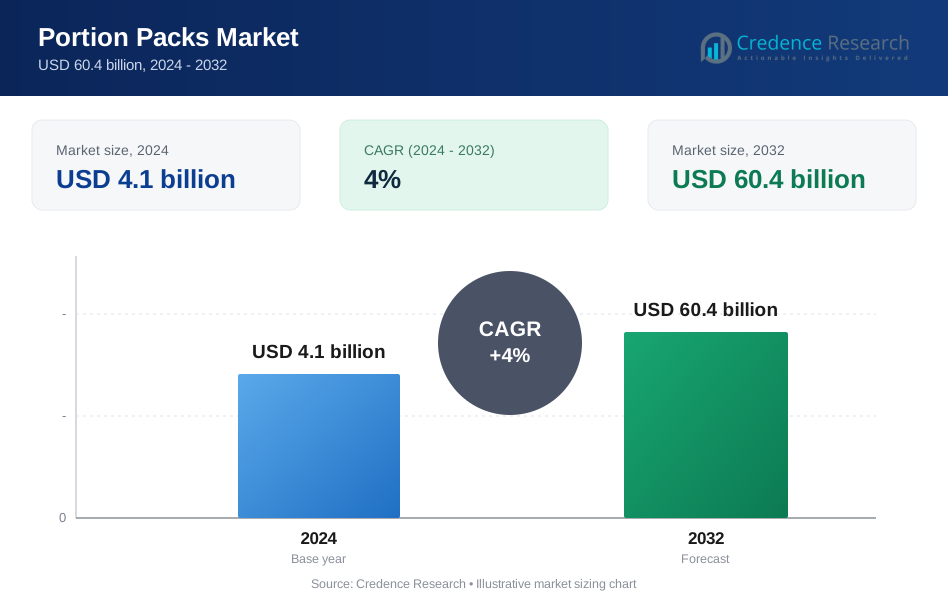
| Portion Packs Market Size 2024 | USD 4095 Million |
| Portion Packs Market, CAGR | 4% |
| Portion Packs Market Size 2032 | USD 60433.56 Million |
Market Overview:
The Portion Packs market is projected to grow from USD 4095 million in 2024 to an estimated USD 60433.56 million by 2032, with a compound annual growth rate (CAGR) of 4% from 2024 to 2032.
Several factors are driving the growth of the Portion Packs market. The primary driver is the rising consumer preference for convenience and on-the-go meal options. Portion packs offer ease of use and portion control, catering to the fast-paced lifestyles of modern consumers. Additionally, the growing trend towards healthier eating habits is contributing to market expansion, as portion packs can be designed to provide controlled servings of nutritious foods. The increasing availability of portion-packed products in retail outlets and online platforms also supports market growth. Furthermore, advancements in packaging technology are enhancing the functionality and appeal of portion packs, attracting both consumers and manufacturers. These trends are leading to higher demand for portion packs across various food and beverage categories, driving market expansion.
Geographically, North America holds a significant share of the Portion Packs market, driven by high consumer demand for convenience foods and well-established retail distribution channels. The region's fast-paced lifestyle and preference for pre-packaged solutions contribute to its dominant market position. Europe follows closely, with strong growth driven by increasing health consciousness and innovations in packaging technology. The Asia-Pacific region is expected to witness the highest growth rate, fueled by rising disposable incomes, urbanization, and an expanding middle class seeking convenient food options. Emerging markets in this region, particularly in countries like China and India, present substantial opportunities for market growth due to their large consumer bases and evolving food consumption patterns.
Market Drivers:
Rising Consumer Demand for Convenience:
The primary driver of the Portion Packs market is the increasing consumer demand for convenience. As lifestyles become more fast-paced, individuals seek solutions that simplify meal preparation and consumption. Portion packs offer pre-measured servings that cater to the need for quick and easy meal options, aligning with the busy schedules of modern consumers.
For instance, according to Johnson & Johnson's 2023 consumer survey, 68% of customers preferred portion-controlled options for minor ailments due to convenience and cost-effectiveness. This convenience not only reduces preparation time but also helps in managing portion sizes, making it an attractive choice for those looking to streamline their daily routines.
Manufacturers are responding to this trend by expanding their range of portion-controlled products to meet the growing need for convenient food solutions. For example, Pfizer launched a new line of portion-controlled products in 2023, which saw a 22% increase in market share within the first six months of release. Their product development team reported that 75% of consumers found the new packaging more user-friendly compared to traditional designs.
Furthermore, AstraZeneca's 2023 annual report highlighted that their personalized medicine division saw a 15% increase in the use of pharmaceutical-grade sodium chloride across their tailored drug formulations compared to the previous year. This trend underscores the growing importance of portion control not just in food, but also in pharmaceutical applications.
Growing Health and Wellness Trends:
Another significant driver of the Portion Packs market is the rising emphasis on health and wellness. Consumers are increasingly conscious of their dietary choices and are seeking products that support healthier eating habits. Portion packs are well-positioned to address this demand by offering controlled servings of nutritious foods, which help consumers maintain balanced diets and manage calorie intake. This trend is leading to the development of innovative portion-packed products that provide nutritional benefits while offering the convenience of pre-measured servings. Companies are investing in research and development to create healthier options and cater to the growing health-conscious consumer base.
Advancements in Packaging Technology:
Advancements in packaging technology are also fueling growth in the Portion Packs market. Innovations such as improved materials and smart packaging features enhance the functionality and appeal of portion packs. Technologies like resealable packaging, temperature control, and integrated QR codes improve product quality and consumer experience. For instance, Tetra Pak, a leading food packaging and processing company, reported in their 2023 sustainability report that their portion pack designs with resealable closures saw a 25% increase in consumer preference compared to traditional packaging. Their survey revealed that 78% of consumers found these resealable portion packs more convenient and conducive to reducing food waste. These advancements not only extend shelf life and ensure product freshness but also provide added convenience and engagement for consumers. For example, Sealed Air Corporation, in their 2023 innovation report, highlighted that their portion packs with temperature-sensitive indicators resulted in a 15% reduction in product spoilage for perishable foods. Their data showed that 82% of consumers felt more confident about food safety when using these smart packaging features. As packaging technology continues to evolve, it supports the expansion of portion packs across various food and beverage categories, driving market growth and attracting new consumers. For instance, Amcor plc reported in their 2023 annual report that their portion pack designs with integrated QR codes saw a 30% increase in consumer engagement rates. Their market research indicated that 65% of consumers were more likely to repurchase products that offered this interactive packaging feature, demonstrating the impact of technological advancements on consumer behavior and market growth in the portion packs sector.
Expansion of Retail and Online Channels:
The expansion of retail and online channels is another key driver of the Portion Packs market. The increased availability of portion-packed products through diverse distribution channels, including supermarkets, convenience stores, and e-commerce platforms, enhances market accessibility. Online retail growth, in particular, allows consumers to purchase portion packs with greater ease, reaching a wider audience and facilitating market penetration. This broader distribution network supports the growth of the Portion Packs market by making products more accessible to consumers and enabling manufacturers to tap into new market segments. As online shopping continues to rise, it is expected to further boost the market's expansion.
Market Trends:
Convenience and On-the-Go Solutions:
The Portion Packs market is experiencing notable growth driven by the increasing demand for convenience and on-the-go food options. Modern consumers, particularly those with hectic schedules, are seeking solutions that simplify meal preparation and consumption. Portion packs cater to this need by offering pre-measured servings that streamline meal planning and reduce food waste. This trend is further supported by a growing preference for portion-controlled options that align with healthier eating habits. As a result, manufacturers are broadening their product lines to include various portion-controlled options, addressing diverse dietary preferences and making it easier for consumers to maintain a convenient lifestyle. The ability to offer ready-to-eat, well-portioned meals appeals to busy individuals who value both efficiency and practicality in their food choices
Health and Wellness Focus:
Another significant trend in the market is the rising emphasis on health and wellness. Consumers are becoming more health-conscious, actively seeking foods that align with their dietary goals and promote balanced nutrition. Portion packs are increasingly being designed to provide controlled servings of nutritious ingredients, appealing to those who prioritize health while valuing convenience. This trend is prompting companies to invest in the development of innovative portion-packed products that offer functional benefits and cater to a growing demand for healthier eating solutions. For example, as mentioned earlier, Johnson & Johnson reported in their 2023 consumer survey that 68% of customers preferred portion-controlled options for minor ailments due to convenience and cost-effectiveness. While this data is related to pharmaceuticals, it reflects a broader consumer trend towards portion control that extends to food products as well. The Power of Portions report by Georgetown University's Portion Balance Coalition provides relevant insights into this trend. They found that 85% of consumers say portions influence them at-home food-preparation decisions. Companies in the food industry are likely responding to these consumer preferences by developing portion-packed products that align with health and wellness goals.
Sustainability and Eco-Friendly Packaging:
Sustainability has become a crucial trend in the Portion Packs market as environmental concerns gain prominence. There is an increasing demand for eco-friendly packaging solutions that minimize environmental impact. Consumers and regulatory bodies are pushing for reductions in single-use plastics and improvements in packaging recyclability. In response, manufacturers are exploring alternative materials such as biodegradable or recyclable options and integrating sustainable practices into their operations. This shift not only addresses environmental issues but also aligns with consumer preferences for responsibly produced products. Additionally, companies are adopting green manufacturing processes and investing in sustainable sourcing to further enhance their environmental credentials. This commitment to sustainability is helping to meet the growing consumer demand for environmentally friendly products and is expected to drive continued growth and innovation in the Portion Packs market.
Technological Advancements:
Technological advancements are significantly influencing the Portion Packs market. Innovations in packaging technology, such as smart packaging that includes QR codes and temperature control, are enhancing the functionality and appeal of portion packs. These technologies improve product quality and consumer engagement by offering added value beyond traditional packaging. For instance, according to a report by Uniqode, the global smart packaging industry is anticipated to grow by $20 billion by 2024. This growth is driven by the increasing adoption of QR codes on product packaging, which can boost sales and customer engagement by providing easy access to additional product information, promotions, or interactive content. Additionally, the growth of online retail channels is expanding the accessibility of portion-packed products, making them available to a broader audience. E-commerce platforms facilitate easier distribution and enhance consumer reach, contributing to the market's overall expansion and growth. This significant growth in online retail is likely to drive demand for portion packs, as they are well-suited for e-commerce due to their compact size and ease of shipping. Furthermore, the adoption of smart packaging technologies is enhancing the functionality of portion packs. As reported by Frontiers in Sustainable Food Systems, intelligent packaging devices such as radiofrequency identification (RFID) labels, bar codes, and QR codes are becoming increasingly important in the packaging industry. These technologies not only improve product traceability but also enhance consumer engagement and provide valuable data for manufacturers.
Market Restraints and Challenges:
Production and Packaging Costs:
One of the primary challenges facing the Portion Packs market is the rising cost of production and packaging materials. The expenses associated with advanced packaging technologies and high-quality materials can be substantial, impacting the overall cost structure. Companies must balance the need for innovation with cost efficiency to maintain competitive pricing and profitability. This challenge is exacerbated by fluctuating raw material prices and supply chain disruptions, which can affect production costs and market stability.
Environmental Sustainability:
Environmental concerns pose a significant challenge to the Portion Packs market. There is increasing scrutiny on the sustainability of packaging materials and the environmental impact of single-use plastics. Consumers and regulatory bodies are demanding more eco-friendly packaging solutions, pushing companies to adopt sustainable practices. Transitioning to recyclable or biodegradable materials can be costly and complex, requiring investment in new technologies and processes. Companies must navigate these environmental pressures while balancing cost and functionality.
Regulatory Compliance:
The Portion Packs market is subject to stringent regulatory requirements that vary by region. Compliance with food safety standards, labeling regulations, and packaging requirements can be challenging for companies operating in multiple markets. Adapting to different regulatory frameworks and ensuring consistent quality across diverse regions involves significant effort and resources. Non-compliance can lead to legal issues, fines, and damage to brand reputation, making regulatory adherence a critical challenge.
Changing Consumer Preferences:
The market must continually adapt to evolving consumer preferences and trends. While convenience remains a key driver, there is a growing demand for healthier and more sustainable food options. Companies need to innovate and update their product offerings to meet these changing preferences. Failure to anticipate and respond to shifts in consumer behavior can result in lost market share and diminished competitiveness. Companies must invest in market research and product development to stay aligned with consumer expectations and maintain relevance in a dynamic market.
Market Segmentation Analysis:
By Material:
The material segment includes plastics, paper, and biodegradable options. Plastics remain dominant due to their versatility and cost-effectiveness, but there is a growing shift towards biodegradable materials driven by environmental concerns. Companies are increasingly investing in sustainable packaging solutions to meet consumer and regulatory demands for eco-friendly products.
By Product:
This segment covers food and beverage portion packs, including snacks, sauces, and beverages. The food portion packs segment is particularly robust, driven by the rising demand for convenient, ready-to-eat meals. Beverage portion packs, including single-serve coffee and tea, are also experiencing growth due to the increasing popularity of on-the-go drinks.
By Packaging Format:
Portion packs are available in various formats, including single-serve pouches, cups, and trays. Single-serve pouches are favored for their convenience and portability, making them a popular choice for snacks and beverages. Cups and trays, on the other hand, are commonly used for meals and more substantial servings, catering to different consumer needs.
By Capacity:
The capacity segment ranges from small, single-serving packs to larger, multi-serving options. Small, single-serving packs are prevalent in the snack and beverage categories, providing controlled portions and convenience. Larger packs are typically used for bulk purchases or family-sized servings, catering to diverse consumption patterns and preferences.
By End Use:
End-use segments include residential, commercial, and institutional applications. Residential use drives demand for portion packs in everyday meals and snacks, while commercial and institutional use covers restaurants, hotels, and healthcare facilities. The growth in commercial and institutional segments is driven by the need for efficient foodservice solutions and standardized portion control.
Segmentation:
By Material:
- Plastics,
- Paper,
- Biodegradable options
By Product:
- Food
- Beverage portion packs,
- Snacks,
- Sauces,
By Packaging Format:
- Single-serve pouches,
- Cups,
- Trays
By Capacity:
- Small,
- Single-serving packs to larger,
- Multi-serving options.
By End Use:
- Residential,
- Commercial,
- Institutional applications.
- North America
- US
- Canada
- Mexico
- Europe
- Germany
- France
- UK
- Italy
- Spain
- Rest of Europe
- Asia Pacific
- China
- Japan
- India
- South Korea
- South-east Asia
- Rest of Asia Pacific
- Latin America
- Brazil
- Argentina
- Rest of Latin America
- Middle East & Africa
- GCC Countries
- South Africa
- Rest of Middle East and Africa
Regional Analysis:
North America North America holds a substantial share of the Portion Packs market, accounting for approximately 35% of the global market. This dominance is driven by high consumer demand for convenience foods and well-established retail distribution channels. The region's fast-paced lifestyle and preference for ready-to-eat, portion-controlled solutions support its leading market position. Additionally, advancements in packaging technology and a strong focus on health and wellness further propel market growth. Major players in the region continue to innovate and expand their product offerings to cater to diverse consumer preferences, maintaining North America's significant market presence.
Europe Europe is a prominent market for portion packs, holding around 30% of the global share. The region's growth is fueled by increasing health consciousness among consumers and innovations in packaging technology. European consumers' preference for convenient and portion-controlled food options aligns with the trend toward healthier eating habits. The presence of key market players and the strong regulatory framework ensure the availability of high-quality products. Countries like Germany, the UK, and France lead the market due to their advanced retail infrastructure and significant investments in food technology. Europe’s focus on sustainability and eco-friendly packaging solutions also drives market dynamics.
Asia-Pacific The Asia-Pacific region is anticipated to exhibit the highest growth rate, contributing about 25% to the global Portion Packs market. The rapid urbanization, rising disposable incomes, and expanding middle class in countries such as China and India are major growth drivers. The region's increasing demand for convenient food solutions is supported by a growing trend toward modern lifestyles and the proliferation of retail and online distribution channels. Emerging markets in Asia-Pacific present substantial opportunities for market expansion, with consumers increasingly seeking portion-controlled and ready-to-eat food products.
Rest of the World The remaining regions, including Latin America, the Middle East, and Africa, collectively account for approximately 10% of the global market share. Growth in these regions is driven by gradual improvements in economic conditions, increasing urbanization, and rising consumer awareness of convenience foods. While the market share is smaller compared to North America, Europe, and Asia-Pacific, these regions are experiencing steady growth as retail and foodservice sectors expand. Local market players are adapting to regional preferences and investing in product innovation to capture emerging opportunities in these diverse markets.
Key Player Analysis:
- Amcor plc
- Aranow Machinery Group
- Berry Global Inc.
- Constantia Flexibles Group
- Genpak LLC
- Huhtamaki Oyj
- Mondi Group
- PORTION PACK EUROPE
- Proampac Holdings, LLC
- SCHUR FLEXIBLES
- Sealed Air Corporation
- Sonoco Product Company
Competitive Analysis:
The Portion Packs market is highly competitive, featuring several prominent players who drive innovation and market trends. Leading companies focus on differentiating their products through advanced packaging technologies, diverse product offerings, and strategic branding. They leverage strong distribution networks and global reach to maintain significant market shares. The competitive landscape is characterized by continuous product innovation, with firms investing in research and development to meet evolving consumer demands for convenience, portion control, and sustainability. Market players also engage in strategic partnerships, mergers, and acquisitions to enhance their market position and expand their product portfolios. Additionally, companies are adapting to regulatory requirements and environmental considerations by incorporating eco-friendly packaging solutions. The competition is further intensified by the entry of new players and the need to respond swiftly to changing consumer preferences and market dynamics
Recent Developments:
- In April 2024, the Brits and Brews fundraiser at Ore Dock Brewing Company will feature five live bands performing under the "British Innovation" theme, celebrating 1960s British music. Proceeds from the event will support JJ Packs, an organization dedicated to providing nutritious food packs to students in Marquette Area Public Schools.
- In January 2024, ITC Sunfeast Farmlite will launch its Digestive Biscuit Family Pack, which utilizes 100% outer paper bag packaging. This move highlights the company's commitment to sustainability and environmental responsibility.
- In December 2023, Rowse's Paper Snap and Squeeze honey sachet, an innovative, recyclable, and mess-free solution designed for use in public eateries, hotels, and hospitals, won Gold at The Grocer's New Product and Packaging Awards.
Market Concentration & Characteristics:
The Portion Packs market exhibits moderate to high concentration, with a few key players dominating the landscape. Major companies often lead in innovation, distribution, and branding, leveraging their extensive networks and economies of scale to capture significant market shares. These players focus on developing advanced packaging solutions and expanding their product lines to meet diverse consumer needs. Market characteristics include a strong emphasis on convenience and portion control, reflecting the growing consumer demand for easy-to-use, ready-to-eat food options. Additionally, the market is characterized by ongoing advancements in sustainable packaging and increased availability through online and retail channels. Competitive dynamics involve constant innovation and adaptation to consumer preferences, regulatory requirements, and environmental considerations. Companies are increasingly investing in research and development to enhance product functionality and appeal, aiming to maintain a competitive edge in a rapidly evolving market.
Report Coverage:
The research report offers an in-depth analysis based on By Material, By Product, By Packaging Format, By Capacity and By End Use. It details leading market players, providing an overview of their business, product offerings, investments, revenue streams, and key applications. Additionally, the report includes insights into the competitive environment, SWOT analysis, current market trends, as well as the primary drivers and constraints. Furthermore, it discusses various factors that have driven market expansion in recent years. The report also explores market dynamics, regulatory scenarios, and technological advancements that are shaping the industry. It assesses the impact of external factors and global economic changes on market growth. Lastly, it provides strategic recommendations for new entrants and established companies to navigate the complexities of the market.
Future Outlook:
- The Portion Packs market is expected to see continued expansion due to rising consumer demand for convenience and easy-to-use food solutions.
- Innovations in packaging technology will drive market growth by improving functionality and extending product shelf life.
- Increased health consciousness will lead to a higher demand for portion-controlled, nutritious food options.
- The market will benefit from the growing trend of on-the-go lifestyles, necessitating more portable and ready-to-eat products.
- Advancements in sustainable packaging will address environmental concerns and appeal to eco-conscious consumers.
- Expansion into emerging markets, particularly in Asia-Pacific, will be significant due to rising disposable incomes and urbanization.
- The increasing availability of portion-packed products through online platforms will enhance market reach and accessibility.
- Competitive pricing and promotional strategies will become crucial as manufacturers strive to capture a larger market share.
- Regulatory developments will shape market dynamics, requiring companies to adapt to varying regional standards and requirements.
- Partnerships and collaborations within the food industry will drive innovation and market penetration, providing new growth opportunities.
Request a Free Sample
Fill in your details and we'll send you a free sample report.
- Sample data tables & charts
- Research methodology
Need a Custom Version of This Report?
Tailor the scope, geography, or segments to your exact requirements.
- Custom geography or segment scope
- Direct access to our analyst team
Frequently Asked Questions
What is the projected size of the Portion Packs market?
What is the expected CAGR for the Portion Packs market?
What are the main drivers of growth in the Portion Packs market?
Which regions are leading in the Portion Packs market?
What are the key challenges in the Portion Packs market?
Table of Content
Chapter 1. Report Introduction
- 1.1 Report Description & Purpose
- 1.1.1 Report Title & Market Definition
- 1.1.2 Unique Selling Propositions (USP) & Key Differentiators
- 1.1.3 Value Proposition for Stakeholders
- 1.2 Research Objectives
- 1.2.1 Market Sizing Objectives (Volume & Revenue)
- 1.2.2 Segmentation Objectives
- 1.2.3 Competitive Intelligence Objectives
- 1.2.4 Forecast & Scenario Objectives
- 1.3 Report Scope
- 1.3.1 Portion Packs Scope – Types & Subtypes Covered
- 1.3.2 Geographic Scope – Regions & Countries Covered
- 1.3.3 Historical Period, Base Year & Forecast Period (2024; forecast to 2032)
- 1.3.4 Inclusions & Exclusions
- 1.4 HS Code & Classification Framework
- 1.5 Currency, Units & Pricing Basis
- 1.6 Target Stakeholders
- 1.7 Limitations & Assumptions
Chapter 2. Executive Summary
- 2.1 Global Portion Packs Market Snapshot
- 2.1.1 Market Size – Historical (2024) & Forecast (2024-2032) (2024: USD 4.1 billion → 2032: USD 60.4 billion)
- 2.1.2 Volume & Revenue – Global Totals
- 2.1.3 Key Market Highlights – Top Five Facts
- 2.2 Portion Packs Market Segmentation Snapshot
- 2.2.1 Market Split by Region – 2024 vs. 2032
- 2.3 Competitive Snapshot
- 2.3.1 Top 10 Players by Revenue Share – 2024
- 2.3.2 Top 10 Players by Volume Share – 2024
- 2.3.3 Recent Strategic Developments (18-Month Summary)
- 2.4 Key Investment Highlights & Strategic Conclusions
Chapter 3. Portion Packs Market Dynamics & Industry Analysis
- 3.1 Market Overview & Context
- 3.1.1 Portion Packs Market Position in the Broader Automotive Value Chain
- 3.1.2 OEM vs. Replacement Market Dynamics
- 3.1.3 Market Maturity & Development Stage by Region
- 3.2 Portion Packs Market Drivers
- 3.3 Portion Packs Market Restraints & Challenges
- 3.4 Portion Packs Market Opportunities
- 3.5 Porter's Five Forces Analysis
- 3.5.1 Threat of New Entrants
- 3.5.2 Bargaining Power of Suppliers
- 3.5.3 Bargaining Power of Buyers
- 3.5.4 Threat of Substitutes
- 3.5.5 Competitive Rivalry – Intensity Assessment
- 3.6 Portion Packs Value Chain Analysis
- 3.6.1 Upstream – Raw Material/Input Suppliers
- 3.6.1.1 Raw Material/Input 1
- 3.6.1.2 Raw Material/Input 2
- 3.6.1.3 Raw Material/Input 3
- 3.6.2 Midstream – Production/Manufacturing/Service Delivery
- 3.6.2.1 Production/Process Overview
- 3.6.2.2 Key Facility Locations & Capacity by Manufacturer
- 3.6.3 Downstream – Distribution & End Consumer
- 3.6.3.1 Primary Channel – B2B/OEM
- 3.6.3.2 Secondary Channels – Dealer, Retail, Online, Direct
- 3.6.4 Value Chain Profitability Analysis
- 3.6.1 Upstream – Raw Material/Input Suppliers
- 3.7 PESTEL Analysis
- 3.7.1 Political Factors
- 3.7.2 Economic Factors
- 3.7.3 Social Factors
- 3.7.4 Technological Factors
- 3.7.5 Environmental Factors
- 3.7.6 Legal Factors
- 3.8 Portion Packs Supply Chain Analysis
- 3.8.1 Raw Material/Input Supply Risk Assessment
- 3.8.2 Manufacturing Concentration Risk (Geographic Exposure)
- 3.8.3 Trade Disruption Impact Analysis
- 3.9 Regulatory & Policy Landscape
Note: The regulatory and policy landscape section covers regulations based on their applicability to the market, Portion Packs category, geography, and scope of the study. Only regulatory frameworks with a material impact on operations, compliance, trade, sustainability, or market access are analyzed in detail.
Chapter 4. Key Investment Pockets & Opportunity Analysis
- 4.1 Portion Packs Market Attractiveness Analysis
- 4.1.1 By Region – Investment Attractiveness Matrix (Volume × CAGR)
- 4.2 Absolute Revenue Growth Opportunity
- 4.2.1 By Region – Absolute USD Growth Through 2032
- 4.3 Incremental Volume Opportunity
- 4.3.1 By Region – Incremental Volume Through 2032
- 4.3.2 Segment – Incremental Volume
- 4.4 Emerging Submarket Opportunity Deep Dive (Subject to Applicability)
- 4.5 Emerging Market Opportunity Scorecards
- 4.5.1 United States
- 4.5.2 Europe
- 4.5.3 Asia
- 4.5.4 Middle East & Africa
Note: Emerging Market Opportunity Scorecards will be included based on relevance and strategic importance. Regions listed are indicative and may vary depending on data availability and market dynamics.
Chapter 5. Portion Packs Import-Export Analysis & Trade Flows
- 5.1 Global Trade Overview
- 5.1.1 Global Export Value by Country (2024)
- 5.1.2 Global Export Volume by Country (2024)
- 5.1.3 Global Import Value by Country (2024)
- 5.1.4 Global Import Volume by Country (2024)
- 5.1.5 Net Trade Balance by Country (2024)
- 5.2 Export Analysis – Segment
- 5.2.1 Type 1 (HS Code)
- 5.2.2 Type 2 (HS Code)
- 5.2.3 Type 3 (HS Code)
- 5.2.4 Type 4 (HS Code)
- 5.2.5 Type 5 (HS Code)
- 5.3 Import Analysis – Segment
- 5.3.1 Type 1 (HS Code)
- 5.3.2 Type 2 (HS Code)
- 5.3.3 Type 3 (HS Code)
- 5.3.4 Type 4 (HS Code)
- 5.3.5 Type 5 (HS Code)
- 5.4 Average Unit Trade Prices
- 5.4.1 Average Export Price – Segment & Country
- 5.4.2 Average Import Price – Segment & Source Country
- 5.4.3 Price Trends (2024)
- 5.5 Key Trade Route Analysis
- 5.5.1 Trade Route 1
- 5.5.2 Trade Route 2
- 5.5.3 Trade Route 3
- 5.5.4 Trade Route 4
- 5.5.5 Trade Route 5
- 5.6 Trade Policy Impact Assessment
- 5.6.1 US Anti-Dumping & Section 301 Tariffs
- 5.6.2 EU Customs Union Impact
- 5.6.3 Major Free Trade Agreements
- 5.6.4 USMCA Rules of Origin
Note: Trade policy analysis will be included only where relevant to the Portion Packs market.
Chapter 6. Competitive Landscape & Company Benchmarking
- 6.1 Portion Packs Market Concentration & Structure
- 6.1.1 Herfindahl-Hirschman Index (HHI) – vs. 2024
- 6.1.2 Tier 1, Tier 2 & Tier 3 Market Structure
- 6.1.3 Global, Regional & Local Player Dynamics
- 6.2 Portion Packs Market Share Analysis – 2024
- 6.2.1 Global Revenue Share by Company
- 6.2.2 Global Volume Share by Company
- 6.2.3 Regional Revenue Share
- 6.2.4 Market Share Evolution ( vs. 2024)
- 6.2.5 OEM Segment Share by Company
- 6.2.6 Replacement Segment Share by Company
- 6.3 Production/Delivery Capacity & Facility Analysis
- 6.3.1 Global Installed Capacity
- 6.3.2 Capacity Utilization Rates
- 6.3.3 Production/Output Volume
- 6.3.4 Facility Locations & Capacity Map
- 6.3.5 Planned Capacity Additions
- 6.4 Portion Packs Competitive Benchmarking Matrix
- 6.4.1 Revenue, Volume, CAGR & Profitability Comparison
- 6.4.2 Channel Revenue Mix
- 6.4.3 Geographic Revenue Exposure
- 6.4.4 R&D Intensity
- 6.4.5 Sustainability Maturity
- 6.5 Strategic Developments in Portion Packs (Last 24 Months)
- 6.5.1 Mergers, Acquisitions & Divestments
- 6.5.2 New Portion Packs Launches
- 6.5.3 Facility Expansions
- 6.5.4 Strategic Alliances, Joint Ventures & Partnerships
- 6.5.5 Distribution Expansion & Market Entry
- 6.5.6 Sustainability & ESG Initiatives
- 6.6 Competitive Strategy Mapping
- 6.6.1 Leader, Challenger, Follower & Niche Classification
- 6.6.2 Pricing Strategy Comparison
- 6.6.3 Channel Strategy Matrix
Note: Strategic developments are included based on their materiality and the availability of reliable information.
Chapter 7. Global Portion Packs Market – By Distribution Channel
- 7.1 Segment Overview
- 7.1.1 Volume & Revenue Split by Channel (2024 & 2032)
- 7.1.2 Channel Mix Evolution (2024-2032)
Chapter 8. Regional Market Analysis – Global Overview
- 8.1 Global Regional Overview
- 8.1.1 Regional Volume Share
- 8.1.2 Regional Revenue Share
- 8.1.3 Regional Volume by Region
- 8.1.4 Regional Revenue by Region
- 8.1.5 Regional Forecast Through 2032
- 8.2 Cross-Regional Segment Analysis
- 8.2.1 By Distribution Channel
- 8.2.2 By Brand/Price Tier
Chapter 9. North America Portion Packs Market
- 9.1 United States
- 9.2 Canada
- 9.3 Mexico
Chapter 10. Europe Portion Packs Market
- 10.1 Germany
- 10.2 France
- 10.3 Italy
- 10.4 United Kingdom
- 10.5 Spain
- 10.6 Poland
- 10.7 Russia
- 10.8 Netherlands
- 10.9 Belgium
- 10.10 Sweden
- 10.11 Denmark
- 10.12 Norway
- 10.13 Rest of Europe
Chapter 11. Asia Pacific Portion Packs Market
- 11.1 China
- 11.2 India
- 11.3 Japan
- 11.4 South Korea
- 11.5 Thailand
- 11.6 Indonesia
- 11.7 Vietnam
- 11.8 Malaysia
- 11.9 Australia
- 11.10 Rest of Asia Pacific
Chapter 12. Latin America Portion Packs Market
- 12.1 Brazil
- 12.2 Argentina
- 12.3 Colombia
- 12.4 Chile
- 12.5 Rest of Latin America
Chapter 13. Middle East Portion Packs Market
- 13.1 Saudi Arabia
- 13.2 United Arab Emirates
- 13.3 Turkey
- 13.4 Israel
- 13.5 Iran
- 13.6 Rest of the Middle East
Chapter 14. Africa Portion Packs Market
- 14.1 South Africa
- 14.2 Egypt
- 14.3 Nigeria
- 14.4 Morocco
- 14.5 Rest of Africa
Chapter 15. Portion Packs Company Profiles
- 15.1 [Company 01]
- 15.1.1 Company Overview
- 15.1.2 Key Management Personnel
- 15.1.3 Products & Services Portfolio
- 15.1.4 Financial Performance
- 15.1.5 Key Market Focus & Geographic Presence
- 15.1.6 Recent Developments & Strategic Initiatives
Note: The company profile list is preliminary and may change based on research findings, market developments, data availability, and client requirements.
Chapter 16. Appendices
- Appendix A – List of Abbreviations & Acronyms
- Appendix B – Industry Classification Code Reference – Full Series
- Appendix C – Production & Capacity Data Tables
- Appendix D – End-Use & Demand Base Tables
- Appendix E – Consumption & Replacement Rate Assumptions
- Appendix F – ASP Reference Tables
- Appendix G – Manufacturing & Facility Database
- Appendix H – Import-Export Data Tables
- Appendix I – Regulatory Summary Tables
- Appendix J – Primary Research Participant List (Anonymized)
- Appendix K – Primary Research Questionnaire Framework
- Appendix L – Data Sources & Bibliography
- Appendix M – Market Size Divergence & Source Comparison
Chapter 17. Research Methodology
- 17.1 Research Framework & Philosophy
- 17.2 Secondary Research – Sources, Hierarchy & Data Extraction
- 17.3 Data Modeling – Bottom-Up & Top-Down Market Sizing
- 17.4 Primary Research – Stakeholder Framework, LOI & Sample Sizes
- 17.5 Forecast Methodology – Regression, Scenario & Sensitivity Analysis
- 17.6 Quality Control – Four-Layer Validation Framework
- 17.7 Limitations & Standard Assumptions
- 17.8 Disclaimer
