
| REPORT ATTRIBUTE | DETAILS |
|---|---|
| Historical Period | 2019-2022 |
| Base Year | 2023 |
| Forecast Period | 2024-2032 |
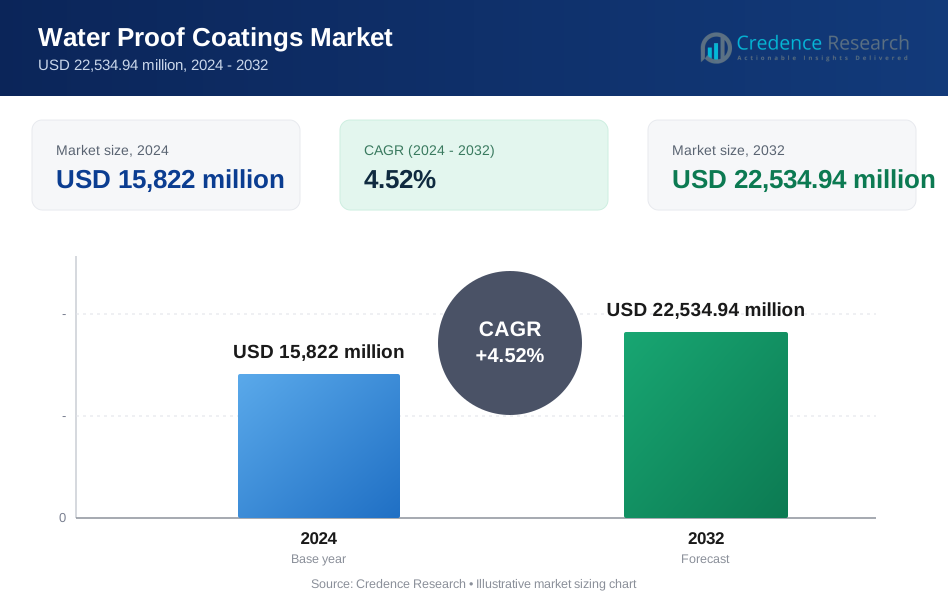
| Water Proof Coatings Market Size 2024 | USD 15,822 million |
| Water Proof Coatings Market, CAGR | 4.52% |
| Water Proof Coatings Market Size 2032 | USD 22,534.94 million |
Market Overview
The Water Proof Coatings Market is projected to grow from USD 15,822 million in 2024 to USD 22,534.94 million by 2032, at a compound annual growth rate (CAGR) of 4.52%.
The Water Proof Coatings Market is driven by increasing demand for durable and sustainable solutions across various industries, including construction, automotive, and marine. Rapid urbanization, coupled with a growing focus on infrastructure development, fuels the need for high-performance coatings that offer enhanced protection against moisture, corrosion, and environmental damage. Additionally, the rising awareness about energy efficiency and the need for eco-friendly products are influencing market growth. Technological advancements in coatings, such as the development of water-based and non-toxic formulations, further contribute to the expansion of the market. The rising adoption of waterproof coatings in residential, commercial, and industrial applications, especially in regions prone to extreme weather conditions, also supports market growth. As environmental regulations become stricter, there is a shift towards more sustainable products, offering increased opportunities for manufacturers to innovate and meet consumer demand for high-quality, reliable, and eco-conscious waterproofing solutions.
The Water Proof Coatings Market is witnessing significant growth across various regions, with North America and Asia-Pacific leading the way. North America, particularly the U.S., holds a dominant market share due to robust infrastructure development and stringent environmental regulations. Asia-Pacific, driven by rapid urbanization and industrial expansion in countries like China and India, is the fastest-growing market. Key players in the market include global leaders such as Sika AG, Firestone Building Products Company, Carlisle Companies Inc., and Dow, who are driving innovation in waterproofing technologies. Additionally, regional players like Solmax (Canada), Fosroc (U.A.E.), and Derbigum Manufacturing (South Africa) are also making substantial contributions to market growth. These companies are focusing on expanding their product offerings, improving sustainability, and enhancing the performance of waterproof coatings to meet regional and global demands.
Market Drivers:
Increasing Demand for Infrastructure Development:
The rapid pace of urbanization and infrastructure development, particularly in emerging economies, is a primary driver of the Water Proof Coatings Market. As cities expand, the demand for new residential, commercial, and industrial buildings increases, requiring effective waterproofing solutions to safeguard structures from the damaging effects of moisture and water exposure. For instance, companies like Carlisle Companies Inc., a leading manufacturer of waterproofing membranes and coatings, are at the forefront of providing these essential solutions. This trend is also supported by the growing construction of bridges, tunnels, and other critical infrastructure, which further elevates the need for high-performance coatings that ensure longevity and durability.
Rising Awareness of Energy Efficiency and Sustainability:
With a global push toward sustainable development and energy efficiency, the demand for eco-friendly waterproofing solutions is growing. Consumers and businesses alike are increasingly aware of the environmental impact of construction materials and are prioritizing green and low-emission products. For instance, Firestone Building Products Company LLC offers a range of eco-friendly waterproofing solutions known for their durability and performance. Water-based and non-toxic waterproof coatings are gaining popularity due to their minimal environmental footprint, aligning with stricter environmental regulations and certifications.
Stringent Regulatory Standards:
The implementation of stringent environmental regulations across various industries is significantly driving the adoption of advanced waterproofing solutions. Governments worldwide are imposing stricter norms on the use of chemicals and coatings that impact the environment, prompting manufacturers to develop safer, non-toxic alternatives. For instance, Sika AG, a global leader in waterproofing and sealing solutions, provides a variety of products that align with these stringent standards. These regulations are pushing the industry towards the adoption of sustainable products, such as bio-based and water-based coatings, which are becoming increasingly popular in construction, automotive, and marine applications.
Growing Adoption in High-Risk Regions:
The increasing frequency of extreme weather events, such as floods, hurricanes, and heavy rainfall, particularly in flood-prone regions, is another key driver for the growth of the Water Proof Coatings Market. These conditions highlight the importance of protective coatings that prevent water infiltration and damage to buildings, vehicles, and industrial structures. For instance, companies like Dow Chemical Company and Soprema Group specialize in advanced waterproofing solutions designed to withstand these extreme conditions and ensure long-lasting protection. As a result, there is a growing adoption of waterproof coatings in residential, commercial, and industrial sectors, as businesses and homeowners seek to mitigate the risks associated with water damage.
Market Trends:
Shift Towards Eco-Friendly and Sustainable Coatings:
One of the prominent trends in the Water Proof Coatings Market is the growing preference for eco-friendly, sustainable solutions. With increasing environmental concerns, there is a clear shift from solvent-based coatings to water-based formulations. For instance, Dow Chemical Company offers eco-friendly coatings that are non-toxic, low in volatile organic compounds (VOCs), and provide improved environmental safety without compromising performance. Consumers are prioritizing green building certifications, which further drives the demand for sustainable waterproofing products.
Technological Advancements in Coating Materials:
Advancements in coating technology are revolutionizing the market by enhancing the performance and functionality of waterproof coatings. For instance, Sika AG has developed innovations such as nanotechnology and self-healing coatings that provide superior protection against moisture and environmental damage. Nanoparticle-infused coatings offer enhanced durability, resistance to cracking, and greater water resistance, making them ideal for high-performance applications. The ability to develop coatings that can repair themselves over time is also increasing the longevity of structures, reducing maintenance costs.
Rising Demand for Multifunctional Coatings:
Another trend shaping the market is the increasing demand for multifunctional coatings that offer more than just waterproofing. For instance, Carlisle Companies Inc. provides advanced coatings designed to offer additional benefits such as anti-corrosion, fire resistance, and thermal insulation. The ability to integrate multiple protective functions in a single coating solution adds value, particularly in industries like construction, automotive, and marine, where materials face multiple environmental stresses.
Expansion in Emerging Markets:
The Water Proof Coatings Market is witnessing significant growth in emerging economies, where rapid industrialization and infrastructure development are creating new opportunities. For instance, in regions facing increasing challenges from extreme weather conditions, Soprema Group offers effective waterproofing solutions that meet the rising demand. Additionally, with higher disposable incomes and increased awareness about the benefits of durable, long-lasting coatings, these markets are expected to contribute significantly to the overall market expansion in the coming years
Market Challenges Analysis:
High Raw Material Costs:
One of the key challenges faced by the Water Proof Coatings Market is the fluctuating prices of raw materials, which can significantly impact production costs. The cost of key components, such as resins, solvents, and additives, can vary due to supply chain disruptions, geopolitical factors, and fluctuating demand. This uncertainty in raw material prices makes it difficult for manufacturers to predict costs and maintain consistent pricing for their products. Moreover, high raw material costs can lead to increased prices for end consumers, which could impact the adoption of waterproof coatings in cost-sensitive markets, especially in emerging economies. Manufacturers must balance the need for high-performance coatings with the rising cost of production to stay competitive while maintaining profitability.
Intense Competition and Price Sensitivity:
The Water Proof Coatings Market is highly competitive, with a large number of established players and new entrants vying for market share. This intense competition puts pressure on manufacturers to continually innovate and offer superior products while keeping costs in check. Additionally, price sensitivity among consumers, particularly in the residential and commercial sectors, can further complicate pricing strategies. Customers often prioritize cost-effective solutions over high-end products, even if the latter offer enhanced performance and longer lifespan. As a result, companies face the challenge of differentiating their products based on value-added features, such as durability, environmental benefits, and multi-functionality, without significantly increasing costs. Balancing quality, performance, and pricing in such a competitive landscape is a constant challenge for market participants.
Market Segmentation Analysis:
By Product
The Water Proof Coatings Market is segmented by product type into liquid coatings, cementitious coatings, and bituminous coatings, among others. Liquid coatings are the dominant product type, driven by their ease of application and versatility. These coatings are widely used in both residential and commercial applications due to their ability to form a seamless, flexible barrier against water ingress. Cementitious coatings are gaining popularity in the construction industry due to their durability, ease of use, and high resistance to water penetration, especially in basement waterproofing and underground structures. Bituminous coatings are preferred in applications requiring robust waterproofing for roofs, foundations, and bridges due to their strong adhesion and excellent protection against water and moisture.
By Technology
The technology segment of the Water Proof Coatings Market is primarily divided into solvent-based, water-based, and others. Water-based waterproof coatings are rapidly gaining market share due to their eco-friendly nature, lower VOC emissions, and compliance with stringent environmental regulations. These coatings are widely used in both industrial and residential applications, especially for areas where environmental sustainability is a priority. Solvent-based coatings, while offering superior durability and performance, face challenges due to environmental concerns and regulatory pressures related to VOC emissions. However, they are still popular in heavy-duty applications where maximum protection is required. Additionally, the growing demand for high-performance coatings incorporating advanced technologies, such as nanotechnology and self-healing materials, is contributing to the evolution of the market, offering enhanced durability, resistance, and functionality.
Segments:
Based on Product
- Polymers
- Bitumen
- Polymer Modified Cement
- Others
Based on Raw Material
- Modified Bitumen
- Ethylene Propylene Diene Terpolymer (EPDM)
- Thermoplastic Polyolefin (TPO)
- High-Density Polyethylene (HDPE)
- Low-Density Polyethylene (LDPE)
- Others
Based on Technology
- Integral Systems
- Preformed Membranes
- Coatings
- Liquid Applied Membrane System (LAMS)
- Sheet Membranes
Based on Application
- Roofing and Walls
- Waste and Water Management
- Building Structures
- Floors and Basements
- Bridges and Highways
- Mining Application
- Tunnel Liners
- Landfills
- Others
Based on the Geography:
- North America
- U.S.
- Canada
- Mexico
- Europe
- Germany
- France
- U.K.
- Italy
- Spain
- Rest of Europe
- Asia Pacific
- China
- Japan
- India
- South Korea
- South-east Asia
- Rest of Asia Pacific
- Latin America
- Brazil
- Argentina
- Rest of Latin America
- Middle East & Africa
- GCC Countries
- South Africa
- Rest of the Middle East and Africa
Regional Analysis:
North America
North America holds a significant share of the Water Proof Coatings Market, accounting for 30% of the global market. This dominance can be attributed to the growing demand for advanced waterproofing solutions across a range of industries, including construction, automotive, and marine. The region's focus on infrastructure development, especially in the United States, is a key driver of this demand. Strict environmental regulations and a high level of awareness regarding sustainable building practices further contribute to the growth of eco-friendly waterproof coatings, such as water-based and low-VOC formulations. Additionally, the growing prevalence of extreme weather conditions in North America, including hurricanes, floods, and heavy rainfall, has increased the need for protective coatings that can withstand harsh environmental elements. These factors have further encouraged the adoption of waterproofing solutions in both residential and commercial buildings, as well as transportation infrastructure. As North America continues to prioritize climate resilience, there is also a growing emphasis on the development of innovative, long-lasting coatings that offer enhanced durability, water resistance, and environmental safety. The continued development of infrastructure, especially in flood-prone areas, as well as increased demand for waterproof coatings in the automotive sector, further strengthens the market outlook for waterproof coatings in this region. In particular, Canada and the U.S. are expected to remain strong contributors to this market.
Asia-Pacific
The Asia-Pacific region is the fastest growing market for waterproof coatings, projected to experience robust growth during the forecast period. This growth is driven by rapid urbanization, industrial expansion, and infrastructure development in countries such as China, India, and Japan. The region's increasing focus on improving infrastructure, especially in water-sensitive areas, is creating significant demand for high-performance waterproof coatings. As economies in Asia continue to grow, there is a greater need to ensure the longevity and safety of buildings, industrial facilities, and infrastructure projects, particularly in flood-prone areas. Moreover, rising disposable incomes and the growing construction industry in emerging economies are further fueling the adoption of waterproofing solutions in both residential and commercial sectors. Governments in the region are also prioritizing sustainability and environmental protection, driving the demand for eco-friendly waterproof coatings. The demand for environmentally friendly and cost-effective products is also on the rise, with water-based coatings gaining popularity due to their eco-friendly nature and compliance with local regulations. This trend is expected to accelerate as more countries introduce stringent environmental standards for construction materials. The Asia-Pacific region is expected to account for 25% of the global market share, driven by both infrastructure development and a growing consumer preference for durable, high-quality waterproof coatings. Countries such as India and China are expected to witness rapid adoption of waterproof coatings as urban development continues to rise, further positioning the region as a key player in the global market.
Key Player Analysis:
- Sika AG (Switzerland)
- JUTA Ltd (Czech Republic)
- Firestone Building Products Company, LLC (U.S.)
- Flex Membranes International Corp. (Canada)
- IKO Industries Ltd. (Canada)
- Fosroc (U.A.E.)
- Solmax (Canada)
- Derbigum Manufacturing (Pty) Ltd (South Africa)
- GAF Materials Corporation (U.S.)
- MAPEI S.p.A. (Italy)
Competitive Analysis:
The Water Proof Coatings Market is highly competitive, with leading players striving to enhance their product portfolios and expand market share. For instance, companies like Sika AG, Firestone Building Products Company, Carlisle Companies Inc., Dow, and GAF Materials Corporation are actively investing in research and development to introduce advanced, high-performance waterproofing solutions. These players focus on developing eco-friendly, water-based coatings, as well as innovative technologies such as self-healing and nanotechnology-infused coatings. To stay competitive, companies are also forming strategic partnerships and expanding their geographical presence, especially in emerging markets. Additionally, manufacturers are differentiating themselves by offering a wide range of products tailored to specific applications, from construction to automotive. Price competitiveness and sustainable product offerings are also key differentiators, as customers increasingly prioritize both cost-effectiveness and environmental safety. Overall, the market remains dynamic, with constant innovation driving the competition among industry leaders.
Recent Developments:
- In January 2024, Wanhua Chemical introduces a new waterproof polyether for the coatings sector. The move will boost the growth of water-resistant coatings market across the globe.
- In 2024, Sherwin-Williams introduced SHER-WOOD® EA Hydroplus™ Water-Based Wood Coating, an innovative water-based wood coating providing improved adaptability in various environmental conditions.
- In February 2024, Covestro declared that it is creating waterborne coating solutions for industrial coating applications including cabinetry and wood furniture.
- In June 2023, Fosroc introduced Polyurea WH 100, which benefits a wide range of roof waterproofing applications. Its hand-applied application makes it very easy to install, especially in flat roofs where detailing can be tricky and spray equipment might not be available.
- In January 2023, Unilin Technologies and Kastamonu Entegre extended their licensing cooperation to include the waterproof technology Unicoat. With this new agreement, Kastamonu became the first flooring manufacturer in Turkey to sign a license agreement for the coating technology developed by Unilin. With Kastamonu's adoption, the Unicoat technology will now be used by some of the largest players in the industry in North America, Europe, and Asia.
Market Concentration & Characteristics:
The Water Proof Coatings Market exhibits moderate to high market concentration, with a few large multinational companies holding a significant share of the market. Key players dominate the market due to their established brand reputation, extensive distribution networks, and significant investment in research and development. These companies have the resources to innovate and provide a wide range of high-quality, performance-driven waterproofing solutions. At the same time, there is also a presence of regional players, particularly in emerging markets, who cater to localized demand and offer cost-effective alternatives. The market is characterized by a strong focus on product innovation, especially in sustainable and eco-friendly coatings that comply with stringent environmental regulations. Additionally, customer preference for high-performance coatings in construction, automotive, and industrial applications is fueling the demand for advanced waterproofing technologies, driving competitive dynamics within the market.
Report Coverage:
The research report offers an in-depth analysis based on Product, Raw Material, Technology, Application and Geography. It details leading market players, providing an overview of their business, product offerings, investments, revenue streams, and key applications. Additionally, the report includes insights into the competitive environment, SWOT analysis, current market trends, as well as the primary drivers and constraints. Furthermore, it discusses various factors that have driven market expansion in recent years. The report also explores market dynamics, regulatory scenarios, and technological advancements that are shaping the industry. It assesses the impact of external factors and global economic changes on market growth. Lastly, it provides strategic recommendations for new entrants and established companies to navigate the complexities of the market.
Future Outlook:
- The Water Proof Coatings Market is expected to grow steadily due to increased infrastructure development and urbanization globally.
- Eco-friendly and sustainable waterproofing solutions will continue to gain popularity as environmental regulations tighten.
- Technological advancements, such as self-healing coatings and nanotechnology, will play a major role in improving the performance and longevity of waterproof coatings.
- The growing demand for durable, high-quality coatings in construction, automotive, and marine sectors will drive market expansion.
- Increased awareness of water damage and its effects on buildings will boost the adoption of waterproof coatings.
- Rising consumer preference for low-VOC and non-toxic coatings will support the growth of water-based waterproofing solutions.
- Emerging markets, especially in Asia-Pacific and the Middle East, will offer new growth opportunities due to rapid industrialization and construction activities.
- The need for waterproof coatings in flood-prone and extreme weather areas will drive demand in affected regions.
- Strategic mergers, acquisitions, and partnerships among key market players will result in product diversification and geographical expansion.
- Ongoing focus on research and development will lead to more efficient, cost-effective, and environmentally friendly waterproofing solutions.
Request a Free Sample
Fill in your details and we'll send you a free sample report.
- Sample data tables & charts
- Research methodology
Need a Custom Version of This Report?
Tailor the scope, geography, or segments to your exact requirements.
- Custom geography or segment scope
- Direct access to our analyst team
Frequently Asked Questions
What is the current size of the Water Proof Coatings Market?
What factors are driving the growth of the Water Proof Coatings Market?
What are some challenges faced by the Water Proof Coatings Market?
Who are the major players in the Water Proof Coatings Market?
Table of Content
Chapter 1. Report Introduction
- 1.1 Report Description & Purpose
- 1.1.1 Report Title & Market Definition
- 1.1.2 Unique Selling Propositions (USP) & Key Differentiators
- 1.1.3 Value Proposition for Stakeholders
- 1.2 Research Objectives
- 1.2.1 Market Sizing Objectives (Volume & Revenue)
- 1.2.2 Segmentation Objectives
- 1.2.3 Competitive Intelligence Objectives
- 1.2.4 Forecast & Scenario Objectives
- 1.3 Report Scope
- 1.3.1 Water Proof Coatings Scope – Types & Subtypes Covered
- 1.3.2 Geographic Scope – Regions & Countries Covered
- 1.3.3 Historical Period, Base Year & Forecast Period (2024; forecast to 2032)
- 1.3.4 Inclusions & Exclusions
- 1.4 HS Code & Classification Framework
- 1.5 Currency, Units & Pricing Basis
- 1.6 Target Stakeholders
- 1.7 Limitations & Assumptions
Chapter 2. Executive Summary
- 2.1 Global Water Proof Coatings Market Snapshot
- 2.1.1 Market Size – Historical (2024) & Forecast (2024-2032) (2024: USD 15,822 million → 2032: USD 22,534.94 million)
- 2.1.2 Volume & Revenue – Global Totals
- 2.1.3 Key Market Highlights – Top Five Facts
- 2.2 Water Proof Coatings Market Segmentation Snapshot
- 2.2.1 Market Split by Region – 2024 vs. 2032
- 2.3 Competitive Snapshot
- 2.3.1 Top 10 Players by Revenue Share – 2024
- 2.3.2 Top 10 Players by Volume Share – 2024
- 2.3.3 Recent Strategic Developments (18-Month Summary)
- 2.4 Key Investment Highlights & Strategic Conclusions
Chapter 3. Water Proof Coatings Market Dynamics & Industry Analysis
- 3.1 Market Overview & Context
- 3.1.1 Water Proof Coatings Market Position in the Broader Automotive Value Chain
- 3.1.2 OEM vs. Replacement Market Dynamics
- 3.1.3 Market Maturity & Development Stage by Region
- 3.2 Water Proof Coatings Market Drivers
- 3.3 Water Proof Coatings Market Restraints & Challenges
- 3.4 Water Proof Coatings Market Opportunities
- 3.5 Porter's Five Forces Analysis
- 3.5.1 Threat of New Entrants
- 3.5.2 Bargaining Power of Suppliers
- 3.5.3 Bargaining Power of Buyers
- 3.5.4 Threat of Substitutes
- 3.5.5 Competitive Rivalry – Intensity Assessment
- 3.6 Water Proof Coatings Value Chain Analysis
- 3.6.1 Upstream – Raw Material/Input Suppliers
- 3.6.1.1 Raw Material/Input 1
- 3.6.1.2 Raw Material/Input 2
- 3.6.1.3 Raw Material/Input 3
- 3.6.2 Midstream – Production/Manufacturing/Service Delivery
- 3.6.2.1 Production/Process Overview
- 3.6.2.2 Key Facility Locations & Capacity by Manufacturer
- 3.6.3 Downstream – Distribution & End Consumer
- 3.6.3.1 Primary Channel – B2B/OEM
- 3.6.3.2 Secondary Channels – Dealer, Retail, Online, Direct
- 3.6.4 Value Chain Profitability Analysis
- 3.6.1 Upstream – Raw Material/Input Suppliers
- 3.7 PESTEL Analysis
- 3.7.1 Political Factors
- 3.7.2 Economic Factors
- 3.7.3 Social Factors
- 3.7.4 Technological Factors
- 3.7.5 Environmental Factors
- 3.7.6 Legal Factors
- 3.8 Water Proof Coatings Supply Chain Analysis
- 3.8.1 Raw Material/Input Supply Risk Assessment
- 3.8.2 Manufacturing Concentration Risk (Geographic Exposure)
- 3.8.3 Trade Disruption Impact Analysis
- 3.9 Regulatory & Policy Landscape
Note: The regulatory and policy landscape section covers regulations based on their applicability to the market, Water Proof Coatings category, geography, and scope of the study. Only regulatory frameworks with a material impact on operations, compliance, trade, sustainability, or market access are analyzed in detail.
Chapter 4. Key Investment Pockets & Opportunity Analysis
- 4.1 Water Proof Coatings Market Attractiveness Analysis
- 4.1.1 By Region – Investment Attractiveness Matrix (Volume × CAGR)
- 4.2 Absolute Revenue Growth Opportunity
- 4.2.1 By Region – Absolute USD Growth Through 2032
- 4.3 Incremental Volume Opportunity
- 4.3.1 By Region – Incremental Volume Through 2032
- 4.3.2 Segment – Incremental Volume
- 4.4 Emerging Submarket Opportunity Deep Dive (Subject to Applicability)
- 4.5 Emerging Market Opportunity Scorecards
- 4.5.1 United States
- 4.5.2 Europe
- 4.5.3 Asia
- 4.5.4 Middle East & Africa
Note: Emerging Market Opportunity Scorecards will be included based on relevance and strategic importance. Regions listed are indicative and may vary depending on data availability and market dynamics.
Chapter 5. Water Proof Coatings Import-Export Analysis & Trade Flows
- 5.1 Global Trade Overview
- 5.1.1 Global Export Value by Country (2024)
- 5.1.2 Global Export Volume by Country (2024)
- 5.1.3 Global Import Value by Country (2024)
- 5.1.4 Global Import Volume by Country (2024)
- 5.1.5 Net Trade Balance by Country (2024)
- 5.2 Export Analysis – Segment
- 5.2.1 Type 1 (HS Code)
- 5.2.2 Type 2 (HS Code)
- 5.2.3 Type 3 (HS Code)
- 5.2.4 Type 4 (HS Code)
- 5.2.5 Type 5 (HS Code)
- 5.3 Import Analysis – Segment
- 5.3.1 Type 1 (HS Code)
- 5.3.2 Type 2 (HS Code)
- 5.3.3 Type 3 (HS Code)
- 5.3.4 Type 4 (HS Code)
- 5.3.5 Type 5 (HS Code)
- 5.4 Average Unit Trade Prices
- 5.4.1 Average Export Price – Segment & Country
- 5.4.2 Average Import Price – Segment & Source Country
- 5.4.3 Price Trends (2024)
- 5.5 Key Trade Route Analysis
- 5.5.1 Trade Route 1
- 5.5.2 Trade Route 2
- 5.5.3 Trade Route 3
- 5.5.4 Trade Route 4
- 5.5.5 Trade Route 5
- 5.6 Trade Policy Impact Assessment
- 5.6.1 US Anti-Dumping & Section 301 Tariffs
- 5.6.2 EU Customs Union Impact
- 5.6.3 Major Free Trade Agreements
- 5.6.4 USMCA Rules of Origin
Note: Trade policy analysis will be included only where relevant to the Water Proof Coatings market.
Chapter 6. Competitive Landscape & Company Benchmarking
- 6.1 Water Proof Coatings Market Concentration & Structure
- 6.1.1 Herfindahl-Hirschman Index (HHI) – vs. 2024
- 6.1.2 Tier 1, Tier 2 & Tier 3 Market Structure
- 6.1.3 Global, Regional & Local Player Dynamics
- 6.2 Water Proof Coatings Market Share Analysis – 2024
- 6.2.1 Global Revenue Share by Company
- 6.2.2 Global Volume Share by Company
- 6.2.3 Regional Revenue Share
- 6.2.4 Market Share Evolution ( vs. 2024)
- 6.2.5 OEM Segment Share by Company
- 6.2.6 Replacement Segment Share by Company
- 6.3 Production/Delivery Capacity & Facility Analysis
- 6.3.1 Global Installed Capacity
- 6.3.2 Capacity Utilization Rates
- 6.3.3 Production/Output Volume
- 6.3.4 Facility Locations & Capacity Map
- 6.3.5 Planned Capacity Additions
- 6.4 Water Proof Coatings Competitive Benchmarking Matrix
- 6.4.1 Revenue, Volume, CAGR & Profitability Comparison
- 6.4.2 Channel Revenue Mix
- 6.4.3 Geographic Revenue Exposure
- 6.4.4 R&D Intensity
- 6.4.5 Sustainability Maturity
- 6.5 Strategic Developments in Water Proof Coatings (Last 24 Months)
- 6.5.1 Mergers, Acquisitions & Divestments
- 6.5.2 New Water Proof Coatings Launches
- 6.5.3 Facility Expansions
- 6.5.4 Strategic Alliances, Joint Ventures & Partnerships
- 6.5.5 Distribution Expansion & Market Entry
- 6.5.6 Sustainability & ESG Initiatives
- 6.6 Competitive Strategy Mapping
- 6.6.1 Leader, Challenger, Follower & Niche Classification
- 6.6.2 Pricing Strategy Comparison
- 6.6.3 Channel Strategy Matrix
Note: Strategic developments are included based on their materiality and the availability of reliable information.
Chapter 7. Global Water Proof Coatings Market – By Distribution Channel
- 7.1 Segment Overview
- 7.1.1 Volume & Revenue Split by Channel (2024 & 2032)
- 7.1.2 Channel Mix Evolution (2024-2032)
Chapter 8. Regional Market Analysis – Global Overview
- 8.1 Global Regional Overview
- 8.1.1 Regional Volume Share
- 8.1.2 Regional Revenue Share
- 8.1.3 Regional Volume by Region
- 8.1.4 Regional Revenue by Region
- 8.1.5 Regional Forecast Through 2032
- 8.2 Cross-Regional Segment Analysis
- 8.2.1 By Distribution Channel
- 8.2.2 By Brand/Price Tier
Chapter 9. North America Water Proof Coatings Market
- 9.1 United States
- 9.2 Canada
- 9.3 Mexico
Chapter 10. Europe Water Proof Coatings Market
- 10.1 Germany
- 10.2 France
- 10.3 Italy
- 10.4 United Kingdom
- 10.5 Spain
- 10.6 Poland
- 10.7 Russia
- 10.8 Netherlands
- 10.9 Belgium
- 10.10 Sweden
- 10.11 Denmark
- 10.12 Norway
- 10.13 Rest of Europe
Chapter 11. Asia Pacific Water Proof Coatings Market
- 11.1 China
- 11.2 India
- 11.3 Japan
- 11.4 South Korea
- 11.5 Thailand
- 11.6 Indonesia
- 11.7 Vietnam
- 11.8 Malaysia
- 11.9 Australia
- 11.10 Rest of Asia Pacific
Chapter 12. Latin America Water Proof Coatings Market
- 12.1 Brazil
- 12.2 Argentina
- 12.3 Colombia
- 12.4 Chile
- 12.5 Rest of Latin America
Chapter 13. Middle East Water Proof Coatings Market
- 13.1 Saudi Arabia
- 13.2 United Arab Emirates
- 13.3 Turkey
- 13.4 Israel
- 13.5 Iran
- 13.6 Rest of the Middle East
Chapter 14. Africa Water Proof Coatings Market
- 14.1 South Africa
- 14.2 Egypt
- 14.3 Nigeria
- 14.4 Morocco
- 14.5 Rest of Africa
Chapter 15. Water Proof Coatings Company Profiles
- 15.1 [Company 01]
- 15.1.1 Company Overview
- 15.1.2 Key Management Personnel
- 15.1.3 Products & Services Portfolio
- 15.1.4 Financial Performance
- 15.1.5 Key Market Focus & Geographic Presence
- 15.1.6 Recent Developments & Strategic Initiatives
Note: The company profile list is preliminary and may change based on research findings, market developments, data availability, and client requirements.
Chapter 16. Appendices
- Appendix A – List of Abbreviations & Acronyms
- Appendix B – Industry Classification Code Reference – Full Series
- Appendix C – Production & Capacity Data Tables
- Appendix D – End-Use & Demand Base Tables
- Appendix E – Consumption & Replacement Rate Assumptions
- Appendix F – ASP Reference Tables
- Appendix G – Manufacturing & Facility Database
- Appendix H – Import-Export Data Tables
- Appendix I – Regulatory Summary Tables
- Appendix J – Primary Research Participant List (Anonymized)
- Appendix K – Primary Research Questionnaire Framework
- Appendix L – Data Sources & Bibliography
- Appendix M – Market Size Divergence & Source Comparison
Chapter 17. Research Methodology
- 17.1 Research Framework & Philosophy
- 17.2 Secondary Research – Sources, Hierarchy & Data Extraction
- 17.3 Data Modeling – Bottom-Up & Top-Down Market Sizing
- 17.4 Primary Research – Stakeholder Framework, LOI & Sample Sizes
- 17.5 Forecast Methodology – Regression, Scenario & Sensitivity Analysis
- 17.6 Quality Control – Four-Layer Validation Framework
- 17.7 Limitations & Standard Assumptions
- 17.8 Disclaimer
