
| REPORT ATTRIBUTE | DETAILS |
|---|---|
| Historical Period | 2020-2023 |
| Base Year | 2024 |
| Forecast Period | 2025-2032 |
| Alcohol Based Markers Market Size 2024 | USD 2,603.50 million |
| Alcohol Based Markers Market, CAGR | 4.5% |
| Alcohol Based Markers Market Size 2032 | USD 3,702.4 million |
Market Overview
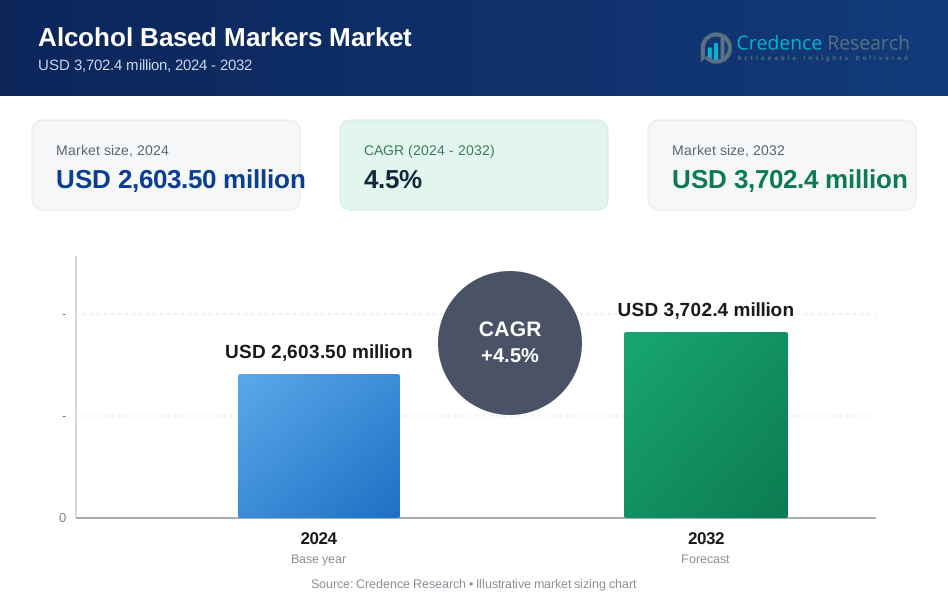
The Alcohol Based Markers Market is projected to grow from USD 2,603.50 million in 2024 to USD 3,702.4 million by 2032, registering a compound annual growth rate (CAGR) of 4.5% during the forecast period.
The Alcohol Based Markers Market is driven by rising demand from professional artists, illustrators, architects, and designers who prefer vibrant, fast-drying, and smudge-resistant ink for precision and quality output. Increasing popularity of adult coloring books, DIY crafts, and personalized stationery further boosts adoption among hobbyists and students. The market also benefits from expanding applications in calligraphy, manga art, and fashion design. Growing preference for dual-tip markers and refillable designs supports product innovation and sustainability trends. Brands are investing in ergonomic designs, low-odor formulas, and extended color ranges to enhance user experience. E-commerce platforms continue to drive accessibility and sales, offering bundled sets and customization options. Educational institutions and creative learning programs are incorporating alcohol-based markers into curricula, further strengthening market penetration. Rising consumer awareness regarding non-toxic and environmentally friendly formulations influences product development. These factors, combined with global interest in visual arts and creative expression, continue to shape the growth trajectory of the alcohol based markers market.
The Alcohol based markers market shows strong geographical distribution, with North America leading at 36% market share, followed by Europe at 28% and Asia-Pacific at 24%. North America benefits from high consumer spending and an established art community, while Europe sees steady demand driven by sustainability preferences and design culture. Asia-Pacific is expanding quickly due to rising education standards and creative trends in countries like Japan and South Korea. The Rest of the World, holding 12%, presents long-term opportunities in Latin America, the Middle East, and Africa through educational outreach and digital exposure. Key players operating globally include Copic, Prismacolor, Arteza, Ohuhu, Tombow, Bianyo, ShinHan Art, Chartpak Inc., Winsor & Newton, Spectrum Noir, Touchnew, and Blick Art Materials. These companies compete through innovation, product quality, and strategic branding across diverse regional markets.
Market Insights
- The Alcohol Based Markers Market is projected to grow from USD 2,603.50 million in 2024 to USD 3,702.4 million by 2032, at a CAGR of 4.5%, driven by increasing demand across professional and hobbyist segments.
- Rising adoption by artists, architects, illustrators, and designers is fueling demand for high-performance, smudge-resistant, and fast-drying markers.
- Educational institutions and creative learning programs are integrating alcohol-based markers into curricula, creating consistent demand among students and educators.
- Dual-tip, refillable, and ergonomically designed markers are gaining popularity due to their versatility, long-term usability, and alignment with sustainability trends.
- High product cost remains a challenge, limiting accessibility for entry-level users and institutions in price-sensitive regions.
- North America leads with 36% market share, followed by Europe (28%), Asia-Pacific (24%), and Rest of the World (12%), reflecting diverse regional growth dynamics.
- Key players such as Copic, Prismacolor, Arteza, Ohuhu, Tombow, and Winsor & Newton compete through product innovation, strategic branding, and global online presence.
Market Drivers
Rising Demand from Creative Professionals and Hobbyists
The Alcohol based markers market is gaining momentum due to increased adoption by professional illustrators, designers, and hobbyists. Creative industries such as graphic design, animation, architecture, and fashion rely heavily on high-performance markers for precision and vibrant color output. Hobbyist engagement through crafts, scrapbooking, and adult coloring books further contributes to demand. These markers offer advantages like smooth blending, quick drying, and fade resistance. Consumers prefer them for their ease of use and consistent results.
- For instance, Copic Classic markers are favored by professionals for their 214 specialized colors, refillable ink system, and dual nibs that allow for both broad coverage and fine detail—making them ideal for design renderings and architectural illustrations.
Expansion of Educational and Art Programs Globally
Global growth in art education and creative learning programs has strengthened demand in the Alcohol based markers market. Schools, art academies, and extracurricular centers are integrating quality markers into their curricula to support skill development. Students benefit from tools that deliver both professional and accessible results. Increased funding in education, along with rising parental investment in creative kits, supports this trend. The market benefits from institutional purchases and growing academic demand for premium supplies.
Innovation in Product Design and Formulation
Product innovation remains a key driver in the Alcohol based markers market. Manufacturers are introducing dual-tip markers, refillable ink systems, and expanded color palettes to meet varied user preferences. Ergonomic designs and low-odor, non-toxic formulas attract both professionals and children. Companies focus on developing long-lasting products with superior blending capability. These features enhance the creative experience and differentiate products in a competitive landscape. It enables brands to meet sustainability goals and consumer safety expectations.
- For instance, Grabie’s 48-count dual-tip alcohol marker set includes a brush tip for dynamic strokes and a chisel tip for precision, with a sleek triangular barrel for ergonomic grip and fast-drying, smudge-proof ink.
Strong E-Commerce Growth and Branding Initiatives
The Alcohol based markers market is supported by the rapid expansion of e-commerce platforms that offer wide product visibility and consumer access. Online marketplaces allow brands to showcase full product ranges, offer value packs, and reach global buyers efficiently. Social media promotions and influencer-led tutorials drive engagement and build brand loyalty. Consumers are drawn to curated sets and subscription models that encourage repeat purchases. This digital presence enhances market penetration and accelerates sales growth.
Market Trends
Growing Popularity of Dual-Tip and Brush Markers
The Alcohol based markers market is witnessing a strong shift toward dual-tip and brush-style markers that offer enhanced flexibility and usability. Artists and designers value the ability to switch between broad strokes and fine detailing without changing tools. This design trend caters to both professionals and hobbyists who seek convenience and precision. Manufacturers are investing in advanced tip technologies that improve ink flow and line control. Brush tips mimic traditional painting tools and appeal to a wider creative audience. It drives repeat purchases and expands user engagement across experience levels.
- For instance, Tombow offers the Dual Brush Pen series, which features both a flexible brush tip for expressive calligraphy and a fine tip for detailed work, making it a favorite among professional artists and hobbyists alike.
Increased Focus on Sustainable and Refillable Products
Sustainability has become a critical trend shaping the Alcohol based markers market. Consumers increasingly prefer refillable, reusable, and recyclable options that reduce waste and promote environmental responsibility. Brands are responding with eco-friendly packaging and long-lasting marker systems that extend product life. Companies also highlight non-toxic ink compositions and certifications to meet growing safety demands. It positions sustainability not just as a value-add but as a core feature. This shift supports brand differentiation in a competitive and environmentally conscious market.
- For instance, Copic has pioneered refillable alcohol-based markers since the 1980s, with each marker capable of being refilled 5–9 times depending on the model, significantly reducing the number of markers that end up in landfills.
Rising Integration with Digital Platforms and Tutorials
Digital platforms have transformed how consumers engage with the Alcohol based markers market. Brands are leveraging social media, YouTube, and art-sharing platforms to showcase product capabilities through live tutorials and influencer partnerships. These platforms educate users while building strong online communities around creative content. Product awareness and skill-building now happen simultaneously through interactive formats. It enables companies to drive loyalty while reaching younger, tech-savvy demographics. This integration boosts visibility and expands the market’s user base.
Increased Customization and Niche Segment Targeting
The Alcohol based markers market is trending toward greater customization to meet diverse creative needs. Brands now offer tailored sets for specific uses such as manga illustration, fashion sketching, or calligraphy. This segmentation aligns product offerings with niche artistic communities. Limited edition collections and personalized kits add value for enthusiasts seeking unique experiences. It allows manufacturers to cater to micro-markets without diluting brand identity. Customization drives premium pricing opportunities and enhances customer satisfaction across creative verticals.
Market Challenges Analysis
High Product Cost and Limited Accessibility for Beginners
The Alcohol based markers market faces a challenge in pricing, particularly for beginners and students. High-quality alcohol markers are expensive compared to water-based or standard alternatives, limiting their accessibility to entry-level users. This price sensitivity affects demand in emerging markets and among budget-conscious consumers. Bulk purchases by educational institutions or hobby stores are often constrained due to cost. It restricts market penetration in segments that could otherwise drive volume growth. Brands must balance innovation and affordability to capture a broader user base.
- For instance, The Ohuhu Honolulu Alcohol Markers 320-color set is available for about $245, which is significantly lower than Copic but still a substantial investment for beginners or bulk buyers in educational setting.
Environmental Concerns and Regulatory Pressures
Environmental and regulatory challenges also impact the Alcohol based markers market. The use of alcohol-based solvents and non-recyclable components raises concerns about sustainability and disposal. Regulatory agencies are increasing scrutiny on chemical compositions and labeling standards, especially for products marketed to children. Companies must invest in compliance and reformulation, which adds to production costs. It creates barriers for small manufacturers and slows down product rollout. Navigating environmental mandates while maintaining performance remains a key industry hurdle.
Market Opportunities
Expansion in Emerging Creative Markets and Educational Sectors
The Alcohol based markers market has strong growth potential in emerging economies where art education and creative industries are expanding. Rising disposable incomes and greater access to global art trends support higher demand for quality art supplies. Governments and private institutions are investing in art-based curricula, which increases bulk procurement of markers. Localized product offerings and affordable bundles can help brands enter price-sensitive regions. It allows companies to tap into untapped customer bases across schools, studios, and informal learning centers. These markets offer long-term opportunities for volume growth and brand visibility.
Product Diversification and Strategic Collaborations
Diversifying product lines and forming strategic partnerships present clear opportunities in the Alcohol based markers market. Brands can collaborate with influencers, artists, and content creators to co-develop limited edition collections or artist-specific kits. Expanding into complementary product categories like sketchbooks, storage solutions, and instructional guides enhances customer value and retention. It enables companies to offer a complete creative experience under one brand. This approach helps strengthen brand identity while attracting new users through curated experiences and bundled offerings.
Market Segmentation Analysis:
By Product Type
The Alcohol based markers market includes permanent, refillable, and non-refillable markers. Permanent markers lead the segment due to their durability, strong adhesion, and long-lasting results across surfaces. Refillable markers are gaining popularity among professionals and eco-conscious users for their sustainability and long-term cost-effectiveness. Non-refillable variants remain preferred in educational settings for convenience and lower upfront cost. It reflects varied consumer preferences across usage intensity and budget constraints. Manufacturers are focusing on design enhancements and ink quality across all types.
- For instance, Sharpie, a leading brand, offers permanent markers that are engineered for water resistance and fade-proof performance, widely used for labeling on metal, plastic, and cardboard in manufacturing and logistics environments.
By Application
The Alcohol based markers market finds major application in art and design, followed by office and school supplies, industrial uses, and other segments. Art and design dominate due to widespread use among illustrators, designers, and hobbyists. Office and school supplies support steady demand driven by educational institutions and administrative tasks. Industrial uses include labeling, marking, and surface treatment across manufacturing sectors. It allows the market to serve both creative and functional needs. Application diversity helps sustain long-term growth.
By Distribution Channel
Online stores lead the distribution channel in the Alcohol based markers market, driven by wide product access, detailed reviews, and bundled deals. Specialty stores attract professional buyers seeking expert guidance and premium offerings. Supermarkets and hypermarkets offer convenience and impulse purchases, especially among students and parents. Other retail formats provide regional access and seasonal sales. It enables brands to reach different buyer profiles through an omnichannel approach. E-commerce growth continues to reshape sales dynamics.
- For instance, Ohuhu’s extensive range of alcohol-based markers is prominently featured on Amazon and its own website, offering detailed product guides, customer reviews, and bundle deals such as 72-color sets for aspiring artists.
Segments:
Based on Product Type
- Permanent Markers
- Refillable Markers
- Non-Refillable Markers
Based on Application
- Art and Design
- Office and School Supplies
- Industrial Uses
- Others
Based on Distribution Channel
- Online Stores
- Supermarkets/Hypermarkets
- Specialty Stores
- Others
Based on End-User
- Artists
- Students
- Professionals
- Others
Based on the Geography:
- North America
- U.S.
- Canada
- Mexico
- Europe
- Germany
- France
- U.K.
- Italy
- Spain
- Rest of Europe
- Asia Pacific
- China
- Japan
- India
- South Korea
- South-east Asia
- Rest of Asia Pacific
- Latin America
- Brazil
- Argentina
- Rest of Latin America
- Middle East & Africa
- GCC Countries
- South Africa
- Rest of the Middle East and Africa
Regional Analysis
North America
North America holds the largest share in the Alcohol based markers market, accounting for 36% of the global revenue. Strong presence of established art supply brands and widespread use in professional illustration, design, and education drive regional dominance. Consumers value product quality, refillability, and color variety, pushing manufacturers to innovate consistently. High per capita spending on creative tools supports premium product segments. The U.S. leads in both consumption and product development activities. It remains a key hub for marketing collaborations and influencer-driven promotions.
Europe
Europe contributes 28% to the global Alcohol based markers market. Demand is driven by a strong culture of arts and design, supported by academic institutions and creative industries. Countries like Germany, the UK, and France lead in product adoption, especially among professional artists and hobbyists. Sustainability awareness influences preferences for refillable and non-toxic markers. Specialty stores and online platforms provide a balanced retail environment for distribution. It supports both mainstream and niche brands through consistent product demand.
Asia-Pacific
Asia-Pacific represents 24% of the Alcohol based markers market and continues to grow rapidly due to expanding educational systems and rising disposable incomes. Japan, South Korea, and China show high interest in anime, manga, and design-related art forms, boosting marker usage. Local and global brands compete by offering value packs and customized sets tailored to regional preferences. Online channels accelerate product access across urban and semi-urban areas. It offers significant potential for market expansion through student engagement and cultural adoption.
Rest of the World
The Rest of the World holds 12% of the global Alcohol based markers market. Growth in Latin America, the Middle East, and Africa is supported by increasing interest in creative expression and art education. Market entry is gradual but steady, driven by social media exposure and low-cost options. Brands focus on expanding retail presence and affordability. It provides long-term opportunities through grassroots art programs and institutional outreach.
Key Player Analysis
- Arteza
- Touchnew
- Blick Art Materials
- Prismacolor
- Copic
- Chartpak Inc.
- Spectrum Noir
- Ohuhu
- Tombow
- ShinHan Art
- Winsor & Newton
- Bianyo
Competitive Analysis
The Alcohol based markers market features strong competition among global and regional players focused on product innovation, brand positioning, and customer engagement. Companies such as Copic, Prismacolor, Arteza, and Ohuhu lead in terms of brand recognition and quality perception. These brands offer extensive color ranges, dual-tip options, and refillable systems to cater to professionals and hobbyists. The market encourages continuous innovation in ink formulation, tip design, and eco-friendly packaging. E-commerce platforms allow emerging brands like Bianyo and Touchnew to gain visibility and scale quickly. Established firms leverage influencer partnerships and art community sponsorships to maintain consumer loyalty. The Alcohol based markers market benefits from a high degree of product differentiation, allowing players to target specific user groups such as students, illustrators, and designers. It supports both premium and value-oriented offerings, which enables diverse participation and sustained growth across competitive tiers. Strategic expansion, online presence, and product quality remain key success factors.
Recent Developments
- In May 2025, OLO Marker launched a focused 8-color alcohol-based marker set, catering to artists seeking compact, high-quality tools for precise illustration work.
- In June 2024, Copic introduced its new Copic acrea line—a primarily water-based marker engineered to remain compatible with its traditional alcohol-based range, expanding flexibility for creative professionals.
- In April 2025, Tim Holtz® (by Ranger Ink) unveiled four curated 8-pack alcohol ink kits—Retro, Bright, Classic, and Spectrum Urban—tailored to enhance mixed-media projects on non-porous surfaces and expand their alcohol ink palette offerings.
Market Concentration & Characteristics
The Alcohol based markers market is moderately concentrated, with a mix of global leaders and emerging players competing across price and quality tiers. Leading brands such as Copic, Prismacolor, Arteza, and Ohuhu maintain strong market presence through product innovation, extensive distribution networks, and loyal customer bases. It is characterized by high product differentiation, with companies offering varied features such as dual tips, refillable systems, and expanded color ranges. Consumer preferences for performance, safety, and eco-friendliness shape product development. The market supports both premium and budget-friendly offerings, allowing companies to target professionals, students, and hobbyists effectively. E-commerce has intensified competition by giving smaller brands global exposure and faster market entry. Strategic collaborations with artists and influencers help firms build community trust and drive brand visibility. It remains dynamic, driven by trends in customization, sustainability, and creative engagement, positioning it as both an expressive tool and a specialized art supply.
Report Coverage
The research report offers an in-depth analysis based on Product Type, Application, Distribution Channel, End-User and Geography. It details leading market players, providing an overview of their business, product offerings, investments, revenue streams, and key applications. Additionally, the report includes insights into the competitive environment, SWOT analysis, current market trends, as well as the primary drivers and constraints. Furthermore, it discusses various factors that have driven market expansion in recent years. The report also explores market dynamics, regulatory scenarios, and technological advancements that are shaping the industry. It assesses the impact of external factors and global economic changes on market growth. Lastly, it provides strategic recommendations for new entrants and established companies to navigate the complexities of the market.
Future Outlook
- Demand for alcohol-based markers will continue rising due to growing interest in art, design, and creative hobbies.
- Refillable and sustainable marker systems will gain more traction among environmentally conscious consumers.
- Brands will expand product lines with specialty markers for manga, fashion illustration, and architectural design.
- Digital platforms and influencer marketing will further drive product awareness and user engagement.
- Manufacturers will focus on non-toxic, low-odor formulations to meet safety regulations and consumer preferences.
- Online retail channels will dominate distribution, offering customizable sets and global accessibility.
- Educational institutions will adopt markers more widely as part of structured art programs.
- Emerging markets will offer new opportunities through growing disposable incomes and exposure to global art trends.
- Innovation in ergonomic design and ink technology will remain a core area of competition.
- Collaborations with artists and content creators will shape branding strategies and product development.
Request a Free Sample
Fill in your details and we'll send you a free sample report.
- Sample data tables & charts
- Research methodology
Need a Custom Version of This Report?
Tailor the scope, geography, or segments to your exact requirements.
- Custom geography or segment scope
- Direct access to our analyst team
Frequently Asked Questions
What is the current size of the Alcohol Based Markers Market?
What factors are driving the growth of the Alcohol Based Markers Market?
What are some challenges faced by the Alcohol Based Markers Market?
Who are the major players in the Alcohol Based Markers Market?
Table of Content
Chapter 1. Report Introduction
- 1.1 Report Description & Purpose
- 1.1.1 Report Title & Market Definition
- 1.1.2 Unique Selling Propositions (USP) & Key Differentiators
- 1.1.3 Value Proposition for Stakeholders
- 1.2 Research Objectives
- 1.2.1 Market Sizing Objectives (Volume & Revenue)
- 1.2.2 Segmentation Objectives
- 1.2.3 Competitive Intelligence Objectives
- 1.2.4 Forecast & Scenario Objectives
- 1.3 Report Scope
- 1.3.1 Alcohol Based Markers Scope – Types & Subtypes Covered
- 1.3.2 Geographic Scope – Regions & Countries Covered
- 1.3.3 Historical Period, Base Year & Forecast Period (2024; forecast to 2032)
- 1.3.4 Inclusions & Exclusions
- 1.4 HS Code & Classification Framework
- 1.5 Currency, Units & Pricing Basis
- 1.6 Target Stakeholders
- 1.7 Limitations & Assumptions
Chapter 2. Executive Summary
- 2.1 Global Alcohol Based Markers Market Snapshot
- 2.1.1 Market Size – Historical (2024) & Forecast (2024-2032) (2024: USD 2,603.50 million → 2032: USD 3,702.4 million)
- 2.1.2 Volume & Revenue – Global Totals
- 2.1.3 Key Market Highlights – Top Five Facts
- 2.2 Alcohol Based Markers Market Segmentation Snapshot
- 2.2.1 Market Split by Region – 2024 vs. 2032
- 2.3 Competitive Snapshot
- 2.3.1 Top 10 Players by Revenue Share – 2024
- 2.3.2 Top 10 Players by Volume Share – 2024
- 2.3.3 Recent Strategic Developments (18-Month Summary)
- 2.4 Key Investment Highlights & Strategic Conclusions
Chapter 3. Alcohol Based Markers Market Dynamics & Industry Analysis
- 3.1 Market Overview & Context
- 3.1.1 Alcohol Based Markers Market Position in the Broader Automotive Value Chain
- 3.1.2 OEM vs. Replacement Market Dynamics
- 3.1.3 Market Maturity & Development Stage by Region
- 3.2 Alcohol Based Markers Market Drivers
- 3.3 Alcohol Based Markers Market Restraints & Challenges
- 3.4 Alcohol Based Markers Market Opportunities
- 3.5 Porter's Five Forces Analysis
- 3.5.1 Threat of New Entrants
- 3.5.2 Bargaining Power of Suppliers
- 3.5.3 Bargaining Power of Buyers
- 3.5.4 Threat of Substitutes
- 3.5.5 Competitive Rivalry – Intensity Assessment
- 3.6 Alcohol Based Markers Value Chain Analysis
- 3.6.1 Upstream – Raw Material/Input Suppliers
- 3.6.1.1 Raw Material/Input 1
- 3.6.1.2 Raw Material/Input 2
- 3.6.1.3 Raw Material/Input 3
- 3.6.2 Midstream – Production/Manufacturing/Service Delivery
- 3.6.2.1 Production/Process Overview
- 3.6.2.2 Key Facility Locations & Capacity by Manufacturer
- 3.6.3 Downstream – Distribution & End Consumer
- 3.6.3.1 Primary Channel – B2B/OEM
- 3.6.3.2 Secondary Channels – Dealer, Retail, Online, Direct
- 3.6.4 Value Chain Profitability Analysis
- 3.6.1 Upstream – Raw Material/Input Suppliers
- 3.7 PESTEL Analysis
- 3.7.1 Political Factors
- 3.7.2 Economic Factors
- 3.7.3 Social Factors
- 3.7.4 Technological Factors
- 3.7.5 Environmental Factors
- 3.7.6 Legal Factors
- 3.8 Alcohol Based Markers Supply Chain Analysis
- 3.8.1 Raw Material/Input Supply Risk Assessment
- 3.8.2 Manufacturing Concentration Risk (Geographic Exposure)
- 3.8.3 Trade Disruption Impact Analysis
- 3.9 Regulatory & Policy Landscape
Note: The regulatory and policy landscape section covers regulations based on their applicability to the market, Alcohol Based Markers category, geography, and scope of the study. Only regulatory frameworks with a material impact on operations, compliance, trade, sustainability, or market access are analyzed in detail.
Chapter 4. Key Investment Pockets & Opportunity Analysis
- 4.1 Alcohol Based Markers Market Attractiveness Analysis
- 4.1.1 By Region – Investment Attractiveness Matrix (Volume × CAGR)
- 4.2 Absolute Revenue Growth Opportunity
- 4.2.1 By Region – Absolute USD Growth Through 2032
- 4.3 Incremental Volume Opportunity
- 4.3.1 By Region – Incremental Volume Through 2032
- 4.3.2 Segment – Incremental Volume
- 4.4 Emerging Submarket Opportunity Deep Dive (Subject to Applicability)
- 4.5 Emerging Market Opportunity Scorecards
- 4.5.1 United States
- 4.5.2 Europe
- 4.5.3 Asia
- 4.5.4 Middle East & Africa
Note: Emerging Market Opportunity Scorecards will be included based on relevance and strategic importance. Regions listed are indicative and may vary depending on data availability and market dynamics.
Chapter 5. Alcohol Based Markers Import-Export Analysis & Trade Flows
- 5.1 Global Trade Overview
- 5.1.1 Global Export Value by Country (2024)
- 5.1.2 Global Export Volume by Country (2024)
- 5.1.3 Global Import Value by Country (2024)
- 5.1.4 Global Import Volume by Country (2024)
- 5.1.5 Net Trade Balance by Country (2024)
- 5.2 Export Analysis – Segment
- 5.2.1 Type 1 (HS Code)
- 5.2.2 Type 2 (HS Code)
- 5.2.3 Type 3 (HS Code)
- 5.2.4 Type 4 (HS Code)
- 5.2.5 Type 5 (HS Code)
- 5.3 Import Analysis – Segment
- 5.3.1 Type 1 (HS Code)
- 5.3.2 Type 2 (HS Code)
- 5.3.3 Type 3 (HS Code)
- 5.3.4 Type 4 (HS Code)
- 5.3.5 Type 5 (HS Code)
- 5.4 Average Unit Trade Prices
- 5.4.1 Average Export Price – Segment & Country
- 5.4.2 Average Import Price – Segment & Source Country
- 5.4.3 Price Trends (2024)
- 5.5 Key Trade Route Analysis
- 5.5.1 Trade Route 1
- 5.5.2 Trade Route 2
- 5.5.3 Trade Route 3
- 5.5.4 Trade Route 4
- 5.5.5 Trade Route 5
- 5.6 Trade Policy Impact Assessment
- 5.6.1 US Anti-Dumping & Section 301 Tariffs
- 5.6.2 EU Customs Union Impact
- 5.6.3 Major Free Trade Agreements
- 5.6.4 USMCA Rules of Origin
Note: Trade policy analysis will be included only where relevant to the Alcohol Based Markers market.
Chapter 6. Competitive Landscape & Company Benchmarking
- 6.1 Alcohol Based Markers Market Concentration & Structure
- 6.1.1 Herfindahl-Hirschman Index (HHI) – vs. 2024
- 6.1.2 Tier 1, Tier 2 & Tier 3 Market Structure
- 6.1.3 Global, Regional & Local Player Dynamics
- 6.2 Alcohol Based Markers Market Share Analysis – 2024
- 6.2.1 Global Revenue Share by Company
- 6.2.2 Global Volume Share by Company
- 6.2.3 Regional Revenue Share
- 6.2.4 Market Share Evolution ( vs. 2024)
- 6.2.5 OEM Segment Share by Company
- 6.2.6 Replacement Segment Share by Company
- 6.3 Production/Delivery Capacity & Facility Analysis
- 6.3.1 Global Installed Capacity
- 6.3.2 Capacity Utilization Rates
- 6.3.3 Production/Output Volume
- 6.3.4 Facility Locations & Capacity Map
- 6.3.5 Planned Capacity Additions
- 6.4 Alcohol Based Markers Competitive Benchmarking Matrix
- 6.4.1 Revenue, Volume, CAGR & Profitability Comparison
- 6.4.2 Channel Revenue Mix
- 6.4.3 Geographic Revenue Exposure
- 6.4.4 R&D Intensity
- 6.4.5 Sustainability Maturity
- 6.5 Strategic Developments in Alcohol Based Markers (Last 24 Months)
- 6.5.1 Mergers, Acquisitions & Divestments
- 6.5.2 New Alcohol Based Markers Launches
- 6.5.3 Facility Expansions
- 6.5.4 Strategic Alliances, Joint Ventures & Partnerships
- 6.5.5 Distribution Expansion & Market Entry
- 6.5.6 Sustainability & ESG Initiatives
- 6.6 Competitive Strategy Mapping
- 6.6.1 Leader, Challenger, Follower & Niche Classification
- 6.6.2 Pricing Strategy Comparison
- 6.6.3 Channel Strategy Matrix
Note: Strategic developments are included based on their materiality and the availability of reliable information.
Chapter 7. Global Alcohol Based Markers Market – By Distribution Channel
- 7.1 Segment Overview
- 7.1.1 Volume & Revenue Split by Channel (2024 & 2032)
- 7.1.2 Channel Mix Evolution (2024-2032)
Chapter 8. Regional Market Analysis – Global Overview
- 8.1 Global Regional Overview
- 8.1.1 Regional Volume Share
- 8.1.2 Regional Revenue Share
- 8.1.3 Regional Volume by Region
- 8.1.4 Regional Revenue by Region
- 8.1.5 Regional Forecast Through 2032
- 8.2 Cross-Regional Segment Analysis
- 8.2.1 By Distribution Channel
- 8.2.2 By Brand/Price Tier
Chapter 9. North America Alcohol Based Markers Market
- 9.1 United States
- 9.2 Canada
- 9.3 Mexico
Chapter 10. Europe Alcohol Based Markers Market
- 10.1 Germany
- 10.2 France
- 10.3 Italy
- 10.4 United Kingdom
- 10.5 Spain
- 10.6 Poland
- 10.7 Russia
- 10.8 Netherlands
- 10.9 Belgium
- 10.10 Sweden
- 10.11 Denmark
- 10.12 Norway
- 10.13 Rest of Europe
Chapter 11. Asia Pacific Alcohol Based Markers Market
- 11.1 China
- 11.2 India
- 11.3 Japan
- 11.4 South Korea
- 11.5 Thailand
- 11.6 Indonesia
- 11.7 Vietnam
- 11.8 Malaysia
- 11.9 Australia
- 11.10 Rest of Asia Pacific
Chapter 12. Latin America Alcohol Based Markers Market
- 12.1 Brazil
- 12.2 Argentina
- 12.3 Colombia
- 12.4 Chile
- 12.5 Rest of Latin America
Chapter 13. Middle East Alcohol Based Markers Market
- 13.1 Saudi Arabia
- 13.2 United Arab Emirates
- 13.3 Turkey
- 13.4 Israel
- 13.5 Iran
- 13.6 Rest of the Middle East
Chapter 14. Africa Alcohol Based Markers Market
- 14.1 South Africa
- 14.2 Egypt
- 14.3 Nigeria
- 14.4 Morocco
- 14.5 Rest of Africa
Chapter 15. Alcohol Based Markers Company Profiles
- 15.1 [Company 01]
- 15.1.1 Company Overview
- 15.1.2 Key Management Personnel
- 15.1.3 Products & Services Portfolio
- 15.1.4 Financial Performance
- 15.1.5 Key Market Focus & Geographic Presence
- 15.1.6 Recent Developments & Strategic Initiatives
Note: The company profile list is preliminary and may change based on research findings, market developments, data availability, and client requirements.
Chapter 16. Appendices
- Appendix A – List of Abbreviations & Acronyms
- Appendix B – Industry Classification Code Reference – Full Series
- Appendix C – Production & Capacity Data Tables
- Appendix D – End-Use & Demand Base Tables
- Appendix E – Consumption & Replacement Rate Assumptions
- Appendix F – ASP Reference Tables
- Appendix G – Manufacturing & Facility Database
- Appendix H – Import-Export Data Tables
- Appendix I – Regulatory Summary Tables
- Appendix J – Primary Research Participant List (Anonymized)
- Appendix K – Primary Research Questionnaire Framework
- Appendix L – Data Sources & Bibliography
- Appendix M – Market Size Divergence & Source Comparison
Chapter 17. Research Methodology
- 17.1 Research Framework & Philosophy
- 17.2 Secondary Research – Sources, Hierarchy & Data Extraction
- 17.3 Data Modeling – Bottom-Up & Top-Down Market Sizing
- 17.4 Primary Research – Stakeholder Framework, LOI & Sample Sizes
- 17.5 Forecast Methodology – Regression, Scenario & Sensitivity Analysis
- 17.6 Quality Control – Four-Layer Validation Framework
- 17.7 Limitations & Standard Assumptions
- 17.8 Disclaimer
