
| REPORT ATTRIBUTE | DETAILS |
|---|---|
| Historical Period | 2020-2023 |
| Base Year | 2024 |
| Forecast Period | 2025-2032 |
| Butyl Butyrate Market Size 2024 | USD 240 million |
| Butyl Butyrate Market, CAGR | 5.5% |
| Butyl Butyrate Market Size 2032 | USD 388.5 million |
Market Overview:
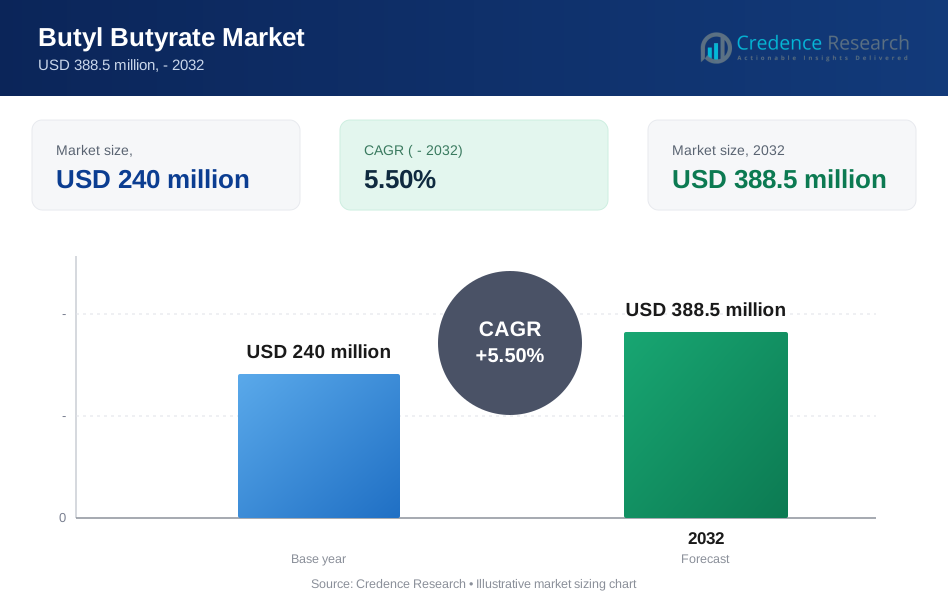
Butyl Butyrate Market size was valued at USD 240 million in 2024 and is anticipated to reach USD 388.5 million by 2032, at a CAGR of 5.5% during the forecast period (2024-2032).
Several key drivers are fueling the expansion of the Butyl Butyrate market. The food & beverage sector's demand for flavoring agents and esters is a major contributor, particularly in enhancing the aroma and taste of various products. Butyl Butyrate is increasingly used in confectionery, dairy, and beverages due to its ability to provide a pleasant, fruity scent. Additionally, the rising consumer preference for eco-friendly and sustainable ingredients has led to the use of Butyl Butyrate as a substitute for synthetic compounds in fragrances and flavoring applications. This shift toward natural ingredients aligns with global sustainability goals. Furthermore, its increasing adoption in personal care and pharmaceutical formulations due to its low toxicity and versatile applications is further driving market growth. The surge in demand for high-performance solvents in chemical manufacturing and coatings is also boosting the market, as industries seek safer and more efficient alternatives to traditional solvents.
Regionally, North America holds the largest market share, driven by the extensive usage of Butyl Butyrate in the chemical, food, and beverage industries. The U.S. is the primary consumer of Butyl Butyrate, owing to its well-established industrial base and high demand for flavors and fragrances. The growing trend of clean-label products in food and beverages further amplifies the need for natural flavoring agents. The Asia Pacific region is expected to witness the highest growth rate during the forecast period. This is attributed to the growing manufacturing sector in countries like China and India, coupled with the expanding consumer goods market. Increasing awareness regarding sustainable and natural ingredients is expected to fuel further demand in the region. Additionally, government initiatives promoting green chemistry and environmentally friendly products are expected to further support market growth.
Market Insights:
- The Butyl Butyrate market was valued at USD 240 million in 2024 and is expected to reach USD 388.5 million by 2032, growing at a CAGR of 5.5%.
- The market is benefiting from the rising demand for natural flavoring agents in the food and beverage industry, where Butyl Butyrate is favored for its pleasant fruity odor in confectioneries, dairy products, beverages, and baked goods.
- Growing preference for eco-friendly ingredients is driving the demand for Butyl Butyrate as a sustainable alternative to synthetic chemicals in fragrances, flavors, and cosmetics.
- The expanding use of Butyl Butyrate in personal care and pharmaceutical products is increasing, as it serves as a solvent, stabilizer, and fragrance enhancer in skincare, haircare, and pharmaceutical formulations.
- Butyl Butyrate is gaining traction in the chemical manufacturing sector due to its excellent solvency power and low volatility, particularly in coatings, adhesives, and industrial cleaners.
- North America holds 40% of the global Butyl Butyrate market share in 2024, driven by high demand in the food, beverage, and personal care sectors and the growing trend for clean-label products.
- The Asia Pacific region is expected to experience the highest growth rate, contributing to 30% of the global market share by 2032, fueled by industrialization, rising demand for eco-friendly products, and increasing disposable incomes in countries like China and India.
Market Drivers:
Increasing Demand for Natural Flavoring Agents in the Food & Beverage Industry
The Butyl Butyrate market is benefiting from the rising demand for natural flavoring agents in the food and beverage industry. Consumers are becoming more conscious of the ingredients in their food, prompting manufacturers to replace synthetic additives with natural alternatives. Butyl Butyrate, with its pleasant fruity odor, is highly favored for flavoring confectioneries, dairy products, beverages, and baked goods. It enhances the taste and aroma of products without compromising safety, making it an ideal solution for meeting the growing consumer preference for clean-label products. This demand is accelerating the adoption of Butyl Butyrate in the food sector.
Shift Towards Eco-Friendly and Sustainable Ingredients
There is an increasing preference for eco-friendly and sustainable ingredients across multiple industries, which has positively impacted the Butyl Butyrate market. It is considered a more environmentally friendly alternative to synthetic chemical compounds used in fragrances, flavors, and cosmetics. As manufacturers focus on reducing their environmental impact and offering safer products, Butyl Butyrate serves as a critical ingredient in meeting sustainability goals. The growing emphasis on natural ingredients aligns with global trends towards reducing chemical exposure and supporting sustainable sourcing practices.
- For instance, a study published in 2023 demonstrated that using shrimp shell waste as a nitrogen source in butyl butyrate fermentation enabled production of 5.9 grams per liter in a 5-liter bioreactor, showcasing a sustainable approach to ingredient manufacturing.
Growing Use in Personal Care and Pharmaceutical Products
The expanding use of Butyl Butyrate in the personal care and pharmaceutical industries is another key driver of market growth. It is widely adopted in cosmetic formulations due to its low toxicity, stability, and ability to enhance product performance. Butyl Butyrate is used in skincare, haircare, and fragrance products, where it acts as a solvent, stabilizer, and fragrance enhancer. The pharmaceutical sector also utilizes it for its solubilizing properties in oral and topical drug formulations. Its versatility and non-toxic nature make it an attractive option for manufacturers in these sectors.
- For instance, Nordmann Global lists Butyl Butyrate as a solvent ingredient used in pharmaceutical drug formulation processes, supporting its adoption in the fine chemicals and pharmaceutical industries.
Rising Demand for High-Performance Solvents in Chemical Manufacturing
The Butyl Butyrate market is also driven by the increasing demand for high-performance solvents in chemical manufacturing and coatings. Its excellent solvency power and low volatility make it suitable for use in paints, coatings, adhesives, and industrial cleaners. As industries continue to seek safer alternatives to traditional solvents, Butyl Butyrate is gaining traction for its efficiency and performance. Its adoption in various industrial applications is expected to continue growing as regulations around the use of harmful solvents become stricter.
Market Trends:
Growing Shift Towards Natural and Clean Label Products
The Butyl Butyrate market is experiencing a significant shift towards natural and clean-label products, driven by consumer demand for transparency and healthier options. Food and beverage companies are increasingly replacing artificial additives with natural ingredients, including Butyl Butyrate, to meet the rising consumer preference for products free from synthetic chemicals. This trend is particularly evident in the flavoring and fragrance segments, where Butyl Butyrate’s natural fruity scent serves as a valuable alternative to artificial compounds. The clean-label movement is gaining momentum across industries, encouraging manufacturers to adopt safer, more sustainable ingredients, thus boosting the demand for Butyl Butyrate in various consumer goods.
- For instance, VedaOils supplies Butyl Butyrate as a natural flavoring agent to more than 120 food and beverage manufacturers for use in beverages, desserts, and baked goods.
Technological Advancements and Innovations in Product Applications
Technological advancements are playing a key role in expanding the applications of Butyl Butyrate, particularly in industries such as personal care, pharmaceuticals, and chemicals. Innovations in formulation technologies have enhanced the stability, solubility, and performance of Butyl Butyrate, making it suitable for a broader range of applications. In the personal care sector, new developments in its use as a fragrance enhancer and solubilizer are driving increased adoption in skincare and haircare products. Similarly, Butyl Butyrate’s role in improving the efficiency of high-performance solvents in coatings and adhesives is gaining traction. These technological innovations are expected to continue shaping the market’s growth trajectory, expanding its applications and appeal across various industries.
- For instance, a patented process using aluminum oxalate as a catalyst allows the production of Butyl Butyrate with a raw material conversion rate and product selectivity both exceeding 99% in a single two-hour batch, supporting high-purity applications in cosmetics and pharmaceuticals.
Market Challenges Analysis:
Fluctuating Raw Material Prices and Supply Chain Disruptions
The Butyl Butyrate market faces challenges related to fluctuating raw material prices and supply chain disruptions. The production of Butyl Butyrate relies on chemicals derived from petroleum-based sources, which are subject to price volatility due to global market fluctuations. This price instability can impact the overall cost of production and pricing strategies for manufacturers. Furthermore, supply chain disruptions caused by geopolitical factors, natural disasters, or regulatory changes can hinder the timely availability of raw materials. These challenges may lead to production delays and affect market growth, particularly in regions where supply chain issues are more prevalent.
- For instance, in Q4 2023, the butyric acid market in the USA maintained a stable price of 1385 USD/MT FOB Houston, even as the sector faced weather-related supply chain disruptions, demonstrating the resilience of established supply networks.
Regulatory Hurdles and Environmental Concerns
The Butyl Butyrate market is also confronted with regulatory hurdles and environmental concerns. Stringent environmental regulations governing the use of chemicals in various industries are increasing across regions, which may limit the application of certain ingredients in products such as cosmetics, food, and industrial goods. The market may experience delays in approvals for new products or formulations due to these regulations, hindering growth opportunities. In addition, rising environmental concerns over chemical waste and sustainability may lead to calls for more eco-friendly alternatives, pushing manufacturers to adapt their production processes and formulations. These regulatory and environmental challenges can slow down the adoption of Butyl Butyrate in certain markets.
Market Opportunities:
Expansion of Demand in Emerging Markets
The Butyl Butyrate market presents significant opportunities in emerging markets, where rapid industrialization and rising consumer demand for processed goods are driving market growth. As countries in Asia Pacific, Latin America, and Africa continue to urbanize, there is a notable increase in the demand for food, beverage, and cosmetic products. The growing middle class and their preference for higher-quality, safer, and more natural ingredients open new avenues for the use of Butyl Butyrate. This market expansion allows companies to capitalize on the increasing adoption of clean-label and sustainable products in these regions, fostering growth for Butyl Butyrate in new and untapped markets.
Innovations in Sustainable and Eco-Friendly Applications
The growing emphasis on sustainability presents a significant opportunity for the Butyl Butyrate market. With rising consumer awareness and regulatory pressures favoring environmentally friendly products, Butyl Butyrate's role as a natural and eco-friendly alternative positions it well for future growth. Its use in applications such as eco-friendly coatings, green chemistry solutions, and sustainable packaging could drive increased demand. Companies investing in innovative production methods, such as bio-based and renewable sourcing, can further capitalize on this opportunity, aligning with global sustainability trends and responding to market demands for cleaner, greener products.
Market Segmentation Analysis:
By Purity
The Butyl Butyrate market is divided into various purity levels, including standard and high-purity grades. High-purity Butyl Butyrate is primarily used in sensitive applications, such as pharmaceuticals and cosmetics, where minimal impurities are essential for product quality and safety. Standard grades are more common in fragrances and flavoring applications, where lower purity levels are acceptable for effective performance.
- For instance, Tokyo Chemical Industry (TCI) supplies Butyl Butyrate with an exact purity of 99.0% (GC) for use in pharmaceutical and laboratory environments.
By Application
Butyl Butyrate serves multiple applications, with significant demand in fragrances, flavors, pharmaceuticals, and personal care products. In the fragrance and flavor industries, it is valued for its ability to contribute fruity and sweet aromas. In pharmaceuticals, it acts as a solvent and stabilizer, enhancing the effectiveness of drug formulations. The personal care sector increasingly adopts Butyl Butyrate for its ability to improve the performance and sensory appeal of lotions, creams, and other products.
By End-User Industry
The Butyl Butyrate market serves a variety of end-user industries, including food & beverages, personal care, pharmaceuticals, and cosmetics. The food and beverage sector remains a key driver due to its role as a flavoring agent. The personal care and cosmetics industries are expanding their use of Butyl Butyrate as consumer preferences shift towards natural and safe ingredients. The pharmaceutical industry also contributes significantly, leveraging Butyl Butyrate’s non-toxic and solubilizing properties for drug formulations.
- For instance, Butyl Butyrate is used at a level of 24 mg/kg in candy manufacturing to create a sweet, fruity taste that enhances product appeal.
Segmentations:
By Purity
- High-Purity Butyl Butyrate
- Standard Purity Butyl Butyrate
By Application
- Fragrances
- Flavors
- Pharmaceuticals
- Personal Care
- Food & Beverages
- Other Applications
By End-User Industry
- Food & Beverages
- Personal Care
- Pharmaceuticals
- Cosmetics
- Household Products
By Region
- North America
- S.
- Canada
- Mexico
- Europe
- UK
- France
- Germany
- Italy
- Spain
- Russia
- Rest of Europe
- Asia Pacific
- China
- Japan
- South Korea
- India
- Australia
- Southeast Asia
- Rest of Asia Pacific
- Latin America
- Brazil
- Argentina
- Rest of Latin America
- Middle East
- GCC Countries
- Israel
- Turkey
- Rest of Middle East
- Africa
- South Africa
- Egypt
- Rest of Africa
Regional Analysis:
North America Holds the Largest Market Share in Butyl Butyrate Demand
North America holds a significant share of the Butyl Butyrate market, accounting for 40% of the global demand in 2024. The region's growth is driven by high demand in the food, beverage, and personal care sectors. The U.S. leads the market, where Butyl Butyrate is widely used in flavoring, fragrances, and as a solvent in various industrial applications. The rising consumer preference for natural and clean-label products in food and cosmetics is fostering growth in these sectors. North American manufacturers are increasingly adopting sustainable production processes, which further supports the demand for eco-friendly ingredients such as Butyl Butyrate. The well-established industrial base and high consumer spending power make North America a key driver of the market.
Asia Pacific Sees the Highest Growth Rate in Butyl Butyrate Demand
The Asia Pacific region is anticipated to grow rapidly, contributing to 30% of the global Butyl Butyrate market share by 2032. This growth is driven by industrialization and increased consumer demand for processed food and personal care products. Countries such as China, India, and Japan are leading the adoption of natural ingredients in food and beverage applications. The growing awareness of sustainable and eco-friendly products is encouraging the use of Butyl Butyrate. Furthermore, the region’s expanding middle class, increasing disposable incomes, and focus on eco-friendly products contribute to the growing market potential. The rise in manufacturing activities in China and India presents further opportunities for Butyl Butyrate in industrial applications.
Europe Maintains a Stable Market Share for Butyl Butyrate
Europe holds a steady share of 25% in the global Butyl Butyrate market in 2024, with continued demand across food, beverage, and cosmetic sectors. Countries like Germany, France, and the UK continue to lead the demand for this ingredient due to their established consumer goods markets and emphasis on sustainability. The region’s commitment to high-quality, eco-friendly, and natural products is promoting the adoption of Butyl Butyrate in various applications. Regulatory advancements supporting the use of safer, greener alternatives further enhance its market potential. The consistent demand for Butyl Butyrate in these markets reflects the region’s focus on clean-label and environmentally conscious products.
Key Player Analysis:
- Eastman Chemical Company
- Dow Chemical Company
- BASF SE
- ExxonMobil Corporation
- Shell Chemicals
- Honeywell International Inc.
- Perstorp Holding AB
- Arkema Group
- Celanese Corporation
- Evonik Industries AG
- Mitsubishi Chemical Corporation
- LG Chem Ltd.
- INEOS Group Holdings S.A.
- Sasol Limited
- Oxea GmbH
Competitive Analysis:
The competitive landscape of the Butyl Butyrate market is characterized by several key players focused on expanding their product portfolios and enhancing market share. Leading companies are investing in sustainable production methods to meet the growing demand for eco-friendly ingredients in fragrances, flavors, and personal care products. Innovation in product formulations and technology plays a critical role in driving competition, with firms leveraging advanced techniques to improve the performance and safety of their products. Strategic partnerships and collaborations are common, with companies aiming to strengthen their distribution networks and reach new markets. The demand for natural and low-toxic ingredients has prompted many companies to prioritize research and development, allowing them to offer high-quality, eco-friendly alternatives. The Butyl Butyrate market remains competitive, with companies striving to position themselves as leaders in sustainability and consumer safety.
Recent Developments:
- In March 2025, Dow announced an equity stake in Xycle, a Rotterdam-based advanced recycling technology company, to boost access to circular feedstocks for plastics.
- In May 2025, BASF announced its intention to acquire DOMO Chemicals’ 49% share in the Alsachimie joint venture, aiming for full ownership and strengthening its position in the polyamide 6.6 value chain.
- In March 2025, Shell announced it is exploring strategic partnerships in the U.S. and considering the closure of some European chemical assets to improve performance and returns.
Market Concentration & Characteristics:
The Butyl Butyrate market exhibits moderate concentration, with several key players dominating the industry, particularly in the fragrance and food sectors. Leading companies have established strong market positions through strategic innovations, sustainable practices, and long-standing industry experience. The market is characterized by increasing demand for eco-friendly and natural ingredients, driving companies to invest in research and development to improve the efficiency and environmental footprint of their production processes. Companies focus on offering high-quality, non-toxic, and versatile products to meet the diverse needs of industries such as cosmetics, pharmaceuticals, and food & beverages. Competition remains intense as businesses strive to capture a larger share of the growing market by enhancing product performance and responding to consumer demand for safer, sustainable alternatives. Market dynamics are shifting towards cleaner production methods, which further shapes the competitive environment.
Report Coverage:
The research report offers an in-depth analysis based on Purity, Application, End-User Industry and Region. It details leading market players, providing an overview of their business, product offerings, investments, revenue streams, and key applications. Additionally, the report includes insights into the competitive environment, SWOT analysis, current market trends, as well as the primary drivers and constraints. Furthermore, it discusses various factors that have driven market expansion in recent years. The report also explores market dynamics, regulatory scenarios, and technological advancements that are shaping the industry. It assesses the impact of external factors and global economic changes on market growth. Lastly, it provides strategic recommendations for new entrants and established companies to navigate the complexities of the market.
Future Outlook:
- The market is projected to experience steady growth due to increasing consumer demand for natural and clean-label products in food & beverages, cosmetics, and pharmaceuticals.
- The Asia Pacific region is expected to see substantial growth, driven by the expanding chemical industry and rising adoption in food & beverage and cosmetic applications.
- North America and Europe will continue to be leading markets, supported by stringent regulatory standards and a high demand for natural ingredients in consumer goods.
- The pharmaceutical industry will drive greater usage of Butyl Butyrate as a solvent and stabilizer in drug formulations, enhancing its market presence.
- Technological advancements in production processes are expected to enhance efficiency and reduce costs, positively influencing market dynamics.
- Research and development efforts will lead to the discovery of new applications, further expanding Butyl Butyrate’s use across multiple industries.
- Growing sustainability trends will prompt manufacturers to adopt eco-friendly production methods, aligning with global environmental goals.
- Increasing investments in R&D will open up new opportunities for Butyl Butyrate in emerging markets and industries.
- Strategic partnerships and collaborations will play a critical role in strengthening distribution networks, facilitating market expansion.
- The market will continue to benefit from rising consumer preference for eco-friendly and natural alternatives, driving demand across multiple sectors.
Request a Free Sample
Fill in your details and we'll send you a free sample report.
- Sample data tables & charts
- Research methodology
Need a Custom Version of This Report?
Tailor the scope, geography, or segments to your exact requirements.
- Custom geography or segment scope
- Direct access to our analyst team
Frequently Asked Questions
What is the projected market size of Butyl Butyrate by 2032?
What is driving the growth of the Butyl Butyrate market?
Which region is expected to experience the highest growth in the Butyl Butyrate market?
Why is Butyl Butyrate popular in clean-label products?
Table of Content
Chapter 1. Report Introduction
- 1.1 Report Description & Purpose
- 1.1.1 Report Title & Market Definition
- 1.1.2 Unique Selling Propositions (USP) & Key Differentiators
- 1.1.3 Value Proposition for Stakeholders
- 1.2 Research Objectives
- 1.2.1 Market Sizing Objectives (Volume & Revenue)
- 1.2.2 Segmentation Objectives
- 1.2.3 Competitive Intelligence Objectives
- 1.2.4 Forecast & Scenario Objectives
- 1.3 Report Scope
- 1.3.1 Butyl Butyrate Scope – Types & Subtypes Covered
- 1.3.2 Geographic Scope – Regions & Countries Covered
- 1.3.3 Historical Period, Base Year & Forecast Period (the historical period; forecast to 2032)
- 1.3.4 Inclusions & Exclusions
- 1.4 HS Code & Classification Framework
- 1.5 Currency, Units & Pricing Basis
- 1.6 Target Stakeholders
- 1.7 Limitations & Assumptions
Chapter 2. Executive Summary
- 2.1 Global Butyl Butyrate Market Snapshot
- 2.1.1 Market Size – Historical (the historical period) & Forecast (2032) (base year: USD 240 million → 2032: USD 388.5 million)
- 2.1.2 Volume & Revenue – Global Totals
- 2.1.3 Key Market Highlights – Top Five Facts
- 2.2 Butyl Butyrate Market Segmentation Snapshot
- 2.2.1 Market Split by Region – vs. 2032
- 2.3 Competitive Snapshot
- 2.3.1 Top 10 Players by Revenue Share –
- 2.3.2 Top 10 Players by Volume Share –
- 2.3.3 Recent Strategic Developments (18-Month Summary)
- 2.4 Key Investment Highlights & Strategic Conclusions
Chapter 3. Butyl Butyrate Market Dynamics & Industry Analysis
- 3.1 Market Overview & Context
- 3.1.1 Butyl Butyrate Market Position in the Broader Automotive Value Chain
- 3.1.2 OEM vs. Replacement Market Dynamics
- 3.1.3 Market Maturity & Development Stage by Region
- 3.2 Butyl Butyrate Market Drivers
- 3.3 Butyl Butyrate Market Restraints & Challenges
- 3.4 Butyl Butyrate Market Opportunities
- 3.5 Porter's Five Forces Analysis
- 3.5.1 Threat of New Entrants
- 3.5.2 Bargaining Power of Suppliers
- 3.5.3 Bargaining Power of Buyers
- 3.5.4 Threat of Substitutes
- 3.5.5 Competitive Rivalry – Intensity Assessment
- 3.6 Butyl Butyrate Value Chain Analysis
- 3.6.1 Upstream – Raw Material/Input Suppliers
- 3.6.1.1 Raw Material/Input 1
- 3.6.1.2 Raw Material/Input 2
- 3.6.1.3 Raw Material/Input 3
- 3.6.2 Midstream – Production/Manufacturing/Service Delivery
- 3.6.2.1 Production/Process Overview
- 3.6.2.2 Key Facility Locations & Capacity by Manufacturer
- 3.6.3 Downstream – Distribution & End Consumer
- 3.6.3.1 Primary Channel – B2B/OEM
- 3.6.3.2 Secondary Channels – Dealer, Retail, Online, Direct
- 3.6.4 Value Chain Profitability Analysis
- 3.6.1 Upstream – Raw Material/Input Suppliers
- 3.7 PESTEL Analysis
- 3.7.1 Political Factors
- 3.7.2 Economic Factors
- 3.7.3 Social Factors
- 3.7.4 Technological Factors
- 3.7.5 Environmental Factors
- 3.7.6 Legal Factors
- 3.8 Butyl Butyrate Supply Chain Analysis
- 3.8.1 Raw Material/Input Supply Risk Assessment
- 3.8.2 Manufacturing Concentration Risk (Geographic Exposure)
- 3.8.3 Trade Disruption Impact Analysis
- 3.9 Regulatory & Policy Landscape
Note: The regulatory and policy landscape section covers regulations based on their applicability to the market, Butyl Butyrate category, geography, and scope of the study. Only regulatory frameworks with a material impact on operations, compliance, trade, sustainability, or market access are analyzed in detail.
Chapter 4. Key Investment Pockets & Opportunity Analysis
- 4.1 Butyl Butyrate Market Attractiveness Analysis
- 4.1.1 By Region – Investment Attractiveness Matrix (Volume × CAGR)
- 4.2 Absolute Revenue Growth Opportunity
- 4.2.1 By Region – Absolute USD Growth Through 2032
- 4.3 Incremental Volume Opportunity
- 4.3.1 By Region – Incremental Volume Through 2032
- 4.3.2 Segment – Incremental Volume
- 4.4 Emerging Submarket Opportunity Deep Dive (Subject to Applicability)
- 4.5 Emerging Market Opportunity Scorecards
- 4.5.1 United States
- 4.5.2 Europe
- 4.5.3 Asia
- 4.5.4 Middle East & Africa
Note: Emerging Market Opportunity Scorecards will be included based on relevance and strategic importance. Regions listed are indicative and may vary depending on data availability and market dynamics.
Chapter 5. Butyl Butyrate Import-Export Analysis & Trade Flows
- 5.1 Global Trade Overview
- 5.1.1 Global Export Value by Country (the historical period)
- 5.1.2 Global Export Volume by Country (the historical period)
- 5.1.3 Global Import Value by Country (the historical period)
- 5.1.4 Global Import Volume by Country (the historical period)
- 5.1.5 Net Trade Balance by Country (the historical period)
- 5.2 Export Analysis – Segment
- 5.2.1 Type 1 (HS Code)
- 5.2.2 Type 2 (HS Code)
- 5.2.3 Type 3 (HS Code)
- 5.2.4 Type 4 (HS Code)
- 5.2.5 Type 5 (HS Code)
- 5.3 Import Analysis – Segment
- 5.3.1 Type 1 (HS Code)
- 5.3.2 Type 2 (HS Code)
- 5.3.3 Type 3 (HS Code)
- 5.3.4 Type 4 (HS Code)
- 5.3.5 Type 5 (HS Code)
- 5.4 Average Unit Trade Prices
- 5.4.1 Average Export Price – Segment & Country
- 5.4.2 Average Import Price – Segment & Source Country
- 5.4.3 Price Trends (the historical period)
- 5.5 Key Trade Route Analysis
- 5.5.1 Trade Route 1
- 5.5.2 Trade Route 2
- 5.5.3 Trade Route 3
- 5.5.4 Trade Route 4
- 5.5.5 Trade Route 5
- 5.6 Trade Policy Impact Assessment
- 5.6.1 US Anti-Dumping & Section 301 Tariffs
- 5.6.2 EU Customs Union Impact
- 5.6.3 Major Free Trade Agreements
- 5.6.4 USMCA Rules of Origin
Note: Trade policy analysis will be included only where relevant to the Butyl Butyrate market.
Chapter 6. Competitive Landscape & Company Benchmarking
- 6.1 Butyl Butyrate Market Concentration & Structure
- 6.1.1 Herfindahl-Hirschman Index (HHI) – vs.
- 6.1.2 Tier 1, Tier 2 & Tier 3 Market Structure
- 6.1.3 Global, Regional & Local Player Dynamics
- 6.2 Butyl Butyrate Market Share Analysis –
- 6.2.1 Global Revenue Share by Company
- 6.2.2 Global Volume Share by Company
- 6.2.3 Regional Revenue Share
- 6.2.4 Market Share Evolution ( vs. )
- 6.2.5 OEM Segment Share by Company
- 6.2.6 Replacement Segment Share by Company
- 6.3 Production/Delivery Capacity & Facility Analysis
- 6.3.1 Global Installed Capacity
- 6.3.2 Capacity Utilization Rates
- 6.3.3 Production/Output Volume
- 6.3.4 Facility Locations & Capacity Map
- 6.3.5 Planned Capacity Additions
- 6.4 Butyl Butyrate Competitive Benchmarking Matrix
- 6.4.1 Revenue, Volume, CAGR & Profitability Comparison
- 6.4.2 Channel Revenue Mix
- 6.4.3 Geographic Revenue Exposure
- 6.4.4 R&D Intensity
- 6.4.5 Sustainability Maturity
- 6.5 Strategic Developments in Butyl Butyrate (Last 24 Months)
- 6.5.1 Mergers, Acquisitions & Divestments
- 6.5.2 New Butyl Butyrate Launches
- 6.5.3 Facility Expansions
- 6.5.4 Strategic Alliances, Joint Ventures & Partnerships
- 6.5.5 Distribution Expansion & Market Entry
- 6.5.6 Sustainability & ESG Initiatives
- 6.6 Competitive Strategy Mapping
- 6.6.1 Leader, Challenger, Follower & Niche Classification
- 6.6.2 Pricing Strategy Comparison
- 6.6.3 Channel Strategy Matrix
Note: Strategic developments are included based on their materiality and the availability of reliable information.
Chapter 7. Global Butyl Butyrate Market – By Distribution Channel
- 7.1 Segment Overview
- 7.1.1 Volume & Revenue Split by Channel ( & 2032)
- 7.1.2 Channel Mix Evolution (2032)
Chapter 8. Regional Market Analysis – Global Overview
- 8.1 Global Regional Overview
- 8.1.1 Regional Volume Share
- 8.1.2 Regional Revenue Share
- 8.1.3 Regional Volume by Region
- 8.1.4 Regional Revenue by Region
- 8.1.5 Regional Forecast Through 2032
- 8.2 Cross-Regional Segment Analysis
- 8.2.1 By Distribution Channel
- 8.2.2 By Brand/Price Tier
Chapter 9. North America Butyl Butyrate Market
- 9.1 United States
- 9.2 Canada
- 9.3 Mexico
Chapter 10. Europe Butyl Butyrate Market
- 10.1 Germany
- 10.2 France
- 10.3 Italy
- 10.4 United Kingdom
- 10.5 Spain
- 10.6 Poland
- 10.7 Russia
- 10.8 Netherlands
- 10.9 Belgium
- 10.10 Sweden
- 10.11 Denmark
- 10.12 Norway
- 10.13 Rest of Europe
Chapter 11. Asia Pacific Butyl Butyrate Market
- 11.1 China
- 11.2 India
- 11.3 Japan
- 11.4 South Korea
- 11.5 Thailand
- 11.6 Indonesia
- 11.7 Vietnam
- 11.8 Malaysia
- 11.9 Australia
- 11.10 Rest of Asia Pacific
Chapter 12. Latin America Butyl Butyrate Market
- 12.1 Brazil
- 12.2 Argentina
- 12.3 Colombia
- 12.4 Chile
- 12.5 Rest of Latin America
Chapter 13. Middle East Butyl Butyrate Market
- 13.1 Saudi Arabia
- 13.2 United Arab Emirates
- 13.3 Turkey
- 13.4 Israel
- 13.5 Iran
- 13.6 Rest of the Middle East
Chapter 14. Africa Butyl Butyrate Market
- 14.1 South Africa
- 14.2 Egypt
- 14.3 Nigeria
- 14.4 Morocco
- 14.5 Rest of Africa
Chapter 15. Butyl Butyrate Company Profiles
- 15.1 [Company 01]
- 15.1.1 Company Overview
- 15.1.2 Key Management Personnel
- 15.1.3 Products & Services Portfolio
- 15.1.4 Financial Performance
- 15.1.5 Key Market Focus & Geographic Presence
- 15.1.6 Recent Developments & Strategic Initiatives
Note: The company profile list is preliminary and may change based on research findings, market developments, data availability, and client requirements.
Chapter 16. Appendices
- Appendix A – List of Abbreviations & Acronyms
- Appendix B – Industry Classification Code Reference – Full Series
- Appendix C – Production & Capacity Data Tables
- Appendix D – End-Use & Demand Base Tables
- Appendix E – Consumption & Replacement Rate Assumptions
- Appendix F – ASP Reference Tables
- Appendix G – Manufacturing & Facility Database
- Appendix H – Import-Export Data Tables
- Appendix I – Regulatory Summary Tables
- Appendix J – Primary Research Participant List (Anonymized)
- Appendix K – Primary Research Questionnaire Framework
- Appendix L – Data Sources & Bibliography
- Appendix M – Market Size Divergence & Source Comparison
Chapter 17. Research Methodology
- 17.1 Research Framework & Philosophy
- 17.2 Secondary Research – Sources, Hierarchy & Data Extraction
- 17.3 Data Modeling – Bottom-Up & Top-Down Market Sizing
- 17.4 Primary Research – Stakeholder Framework, LOI & Sample Sizes
- 17.5 Forecast Methodology – Regression, Scenario & Sensitivity Analysis
- 17.6 Quality Control – Four-Layer Validation Framework
- 17.7 Limitations & Standard Assumptions
- 17.8 Disclaimer
