
| REPORT ATTRIBUTE | DETAILS |
|---|---|
| Historical Period | 2020-2023 |
| Base Year | 2024 |
| Forecast Period | 2025-2032 |
| China Disposable Medical Supplies Market Size 2023 | USD 29,757.47 million |
| China Disposable Medical Supplies Market, CAGR | 7.35% |
| China Disposable Medical Supplies Market Size 2032 | USD 56,366.49 million |
Market Overview
China Disposable Medical Supplies Market size was valued at USD 29,757.47 million in 2023 and is anticipated to reach USD 56,366.49 million by 2032, at a CAGR of 7.35% during the forecast period (2023-2032).
The China disposable medical supplies market is experiencing robust growth, driven by the rising prevalence of chronic diseases, increased surgical procedures, and expanding elderly population. The growing focus on infection control and hospital-acquired infection prevention is further accelerating the demand for single-use medical products such as gloves, syringes, and surgical masks. In addition, supportive government policies aimed at strengthening healthcare infrastructure and improving patient care standards are positively influencing market expansion. Technological advancements in material design, combined with increased awareness regarding hygiene and patient safety, are encouraging the adoption of high-quality disposable supplies. Moreover, the COVID-19 pandemic has significantly heightened the importance of personal protective equipment (PPE), leading to a sustained rise in production and consumption across healthcare settings. Emerging trends such as the shift toward eco-friendly and biodegradable materials and the growing presence of domestic manufacturers offering cost-effective solutions are shaping the competitive landscape and supporting long-term market growth.
China’s disposable medical supplies market is experiencing rapid growth, supported by rising healthcare needs, expanding hospital networks, and increasing awareness of hygiene and infection control. The country’s focus on improving healthcare infrastructure, coupled with a growing elderly population, is driving demand for products such as syringes, gloves, masks, and wound care items. Urbanization and frequent health emergencies have further fueled the need for readily available, single-use medical products. Additionally, domestic manufacturing capabilities and cost-effective production are positioning China as a key supplier in the global market. Key players operating in the Chinese disposable medical supplies industry include Shanghai Neo-Medical Co., Ltd., Narang Medical Limited, Ningbo EZ Medical Instruments Co. Ltd, and SeaskyMedical. These companies are actively investing in innovation, quality assurance, and international expansion. Their strategic efforts focus on meeting both domestic and international demand, making China a competitive hub for disposable medical supply production and distribution.
Market Insights
- China Disposable Medical Supplies market was valued at USD 29,757.47 million in 2023 and is expected to reach USD 56,366.49 million by 2032, growing at a CAGR of 7.35%.
- The global Disposable Medical Supplies market was valued at USD 2,45,000 million in 2023 and is expected to reach USD 3,93,306.92 million by 2032, growing at a CAGR of 5.40% during the forecast period.
- Growing healthcare awareness and increasing hospital admissions are key drivers of market demand.
- Rising focus on hygiene and infection prevention is pushing the adoption of single-use medical products.
- Domestic companies are expanding production capabilities and investing in cost-effective innovations.
- Price sensitivity and regulatory challenges may hinder rapid adoption of advanced disposable products.
- Eastern China holds a significant share due to the presence of major hospitals and healthcare centers.
- Tier 2 and Tier 3 cities are showing increased demand, driven by healthcare reforms and infrastructure development.
Report Scope
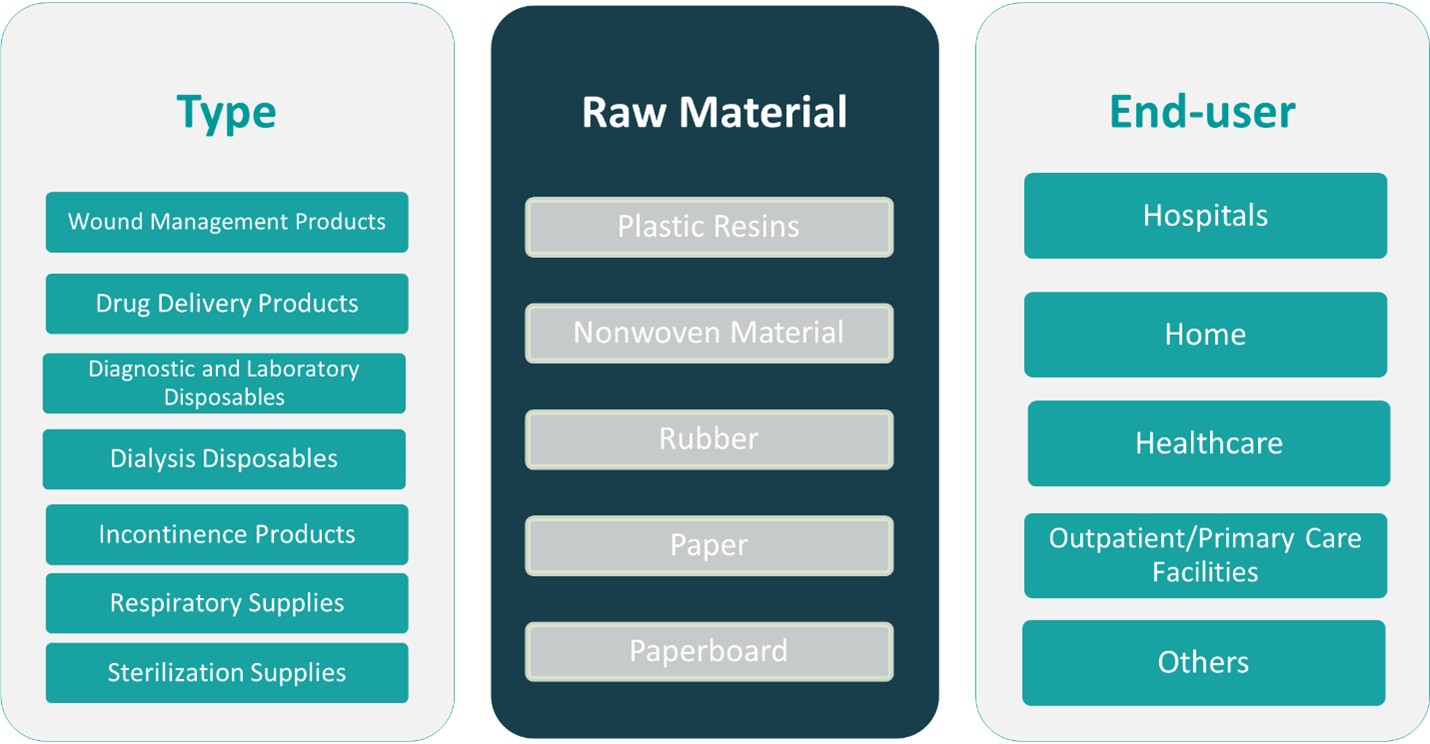
This report segments the China Disposable Medical Supplies Market as follows:
Market Drivers
Rising Healthcare Expenditure and Government Support
China's increasing healthcare expenditure is a key driver fueling the growth of the disposable medical supplies market. For instance, the Healthy China 2030 plan has prioritized preventive care and hospital modernization, leading to significant investments in public health infrastructure. The Chinese government has also implemented stricter hygiene regulations to reduce hospital-acquired infections, encouraging healthcare institutions to adopt single-use medical products such as surgical gloves, gowns, and syringes. These strategic initiatives ensure consistent supply and availability while providing a stable environment for manufacturers to scale operations and innovate within the market.
Rising Geriatric Population and Chronic Disease Burden
The growing elderly population in China significantly contributes to the expanding demand for disposable medical supplies. For instance, the National Health Service Survey highlighted that individuals aged 60 and above are increasingly affected by chronic conditions such as cardiovascular disease and diabetes, necessitating frequent medical interventions. Disposable medical products like catheters, incontinence supplies, and wound care items are essential in preventing cross-contamination during long-term care and home healthcare. As chronic diseases become a long-term public health challenge, the demand for disposable medical supplies continues to grow to support both inpatient and outpatient care.
Increased Awareness of Infection Prevention
Heightened awareness regarding infection control has become a critical driver in the widespread adoption of disposable medical supplies across China. The COVID-19 pandemic played a pivotal role in emphasizing the importance of PPE, hand hygiene, and single-use equipment in preventing viral transmission. Hospitals, clinics, and diagnostic centers have increasingly adopted disposable masks, gowns, gloves, and face shields to enhance patient and staff safety. Additionally, the surge in nosocomial infections in healthcare settings has pushed institutions to standardize practices that rely heavily on disposables. This trend is not only limited to urban healthcare centers but is also spreading across smaller medical facilities and rural clinics, thereby broadening the market scope. As infection control continues to remain a top priority, especially during seasonal outbreaks or public health emergencies, the reliance on disposable medical products will persist.
Technological Advancements and Local Manufacturing Initiatives
Innovation in material science and production technology has significantly contributed to market expansion. Manufacturers in China are increasingly adopting automation and smart manufacturing techniques to improve product quality, efficiency, and scalability. Advanced materials such as hypoallergenic polymers, biodegradable plastics, and non-woven fabrics are being integrated into disposable medical products to enhance comfort, safety, and sustainability. Moreover, the Chinese government’s focus on strengthening domestic manufacturing capabilities has led to a growing presence of local companies offering cost-effective and high-quality products. This localization reduces dependency on imports and ensures quicker supply chain responsiveness, particularly during emergencies. Combined with strong research and development support, these advancements enable manufacturers to meet rising domestic demand while positioning themselves competitively in the global market.
Market Trends
Surge in Demand for Eco-Friendly and Biodegradable Products
A notable trend shaping the China disposable medical supplies market is the increasing demand for eco-friendly and biodegradable products. For instance, the Chinese Ministry of Ecology and Environment has introduced guidelines encouraging the use of recyclable and compostable materials in healthcare settings, particularly in large-scale hospital networks. Manufacturers like Hubei Surglex Medical Manufacturing Co., Ltd. are investing in research and development to produce disposable supplies made from plant-based polymers and biodegradable plastics. This shift aligns with global sustainability goals and appeals to environmentally conscious healthcare institutions and patients, fostering long-term market evolution.
Growth of E-commerce and Online Procurement Channels
The rapid expansion of e-commerce and digital procurement platforms has emerged as a transformative trend in the distribution of disposable medical supplies across China. For instance, platforms like Alibaba Health have enabled hospitals, clinics, and individual healthcare providers to use online portals for bulk purchasing, enhancing procurement efficiency and price transparency. The growth of B2B healthcare marketplaces has enabled suppliers to showcase a wide range of disposable products with real-time inventory updates and competitive pricing. This digital shift also supports rural and remote healthcare facilities by providing easier access to essential medical supplies, overcoming traditional distribution limitations. Moreover, advanced tracking and logistics systems are improving delivery timelines and inventory management for healthcare providers across the country.
Integration of Smart Packaging and Traceability Technologies
Technological innovation is significantly influencing the disposable medical supplies market, particularly through the integration of smart packaging and traceability features. Manufacturers are incorporating QR codes, RFID tags, and digital barcodes into packaging to enable real-time tracking, authentication, and inventory monitoring. These technologies help healthcare providers validate product authenticity, monitor usage rates, and comply with safety regulations. Smart packaging also supports better waste management by providing clear usage instructions and disposal guidelines. This trend is especially prominent in high-value disposable items such as surgical kits, implant accessories, and diagnostic test kits, where tracking and quality assurance are critical.
Shift Toward High-Performance and Customizable Supplies
Another emerging trend is the increasing preference for high-performance and customizable disposable medical supplies. Healthcare professionals are seeking products tailored to specific procedures and patient needs, driving demand for ergonomic designs, enhanced barrier properties, and skin-friendly materials. Customization is particularly valued in surgical and diagnostic settings where product performance directly impacts patient outcomes. In addition, premium disposable supplies that offer improved durability, flexibility, and comfort are gaining traction, especially in tertiary care hospitals and specialty clinics. This shift indicates a move away from standard, one-size-fits-all products toward innovative solutions that improve efficiency and patient satisfaction.
Market Challenges Analysis
Regulatory Complexity and Quality Control Issues
One of the primary challenges facing the China disposable medical supplies market is the complex and evolving regulatory environment. For instance, the National Medical Products Administration (NMPA) has implemented stringent quality certifications such as ISO and CE, which smaller domestic producers often struggle to meet. Despite efforts to streamline medical device approvals and enforce quality standards, inconsistent regulatory enforcement across different provinces can create barriers for manufacturers and suppliers. Moreover, frequent policy changes regarding product classification, registration processes, and compliance requirements increase the administrative burden and delay time-to-market for new disposable items. These regulatory inconsistencies can also result in product recalls or restrictions, undermining end-user confidence and impacting long-term business growth. Ensuring uniform enforcement of standards and providing support for small and mid-sized enterprises (SMEs) to upgrade their production capabilities remains a pressing concern in this dynamic market landscape.
Rising Raw Material Costs and Supply Chain Disruptions
The market is also grappling with the rising cost of raw materials and intermittent supply chain disruptions, both of which directly impact profit margins and product availability. Disposable medical supplies often rely on petroleum-based materials such as polypropylene and polyethylene, which are subject to global price volatility. Additionally, the increased global demand for personal protective equipment (PPE) and other disposable items post-COVID-19 has led to intense competition for raw materials, raising procurement costs for manufacturers in China. Logistics challenges, including port congestion and transportation delays, further exacerbate these issues, especially for companies involved in international trade. For domestic suppliers, fluctuations in raw material prices also limit their ability to offer consistent pricing to healthcare providers, affecting long-term contracts and supplier relationships. To mitigate these risks, companies must invest in localized sourcing strategies, diversify supplier bases, and adopt agile inventory management practices to maintain competitiveness and ensure consistent supply in the face of global uncertainties.
Market Opportunities
The China disposable medical supplies market presents considerable growth opportunities driven by the expansion of rural healthcare infrastructure and the government’s ongoing commitment to universal health coverage. As China strengthens its primary healthcare system, demand for basic medical consumables such as gloves, syringes, gauze, and diagnostic supplies is expected to rise across underpenetrated regions. The growing presence of township health centers and village clinics offers an untapped market for manufacturers to distribute cost-effective, standardized disposable products tailored to local needs. Additionally, initiatives under China’s 14th Five-Year Plan, which emphasize the modernization of medical facilities and increased access to essential healthcare services, are expected to support the mass procurement and distribution of disposable medical supplies throughout the country.
Further opportunities lie in the increasing adoption of advanced and specialized disposable products in high-end medical institutions and private healthcare facilities. As consumer awareness regarding health and hygiene grows, particularly among urban populations, there is rising demand for premium, high-performance, and patient-centric disposable products that enhance comfort, safety, and clinical efficiency. Moreover, the accelerating shift toward home-based healthcare, driven by the aging population and advancements in telemedicine, opens new avenues for disposable items such as wound dressings, insulin delivery devices, and personal diagnostic kits. Manufacturers that invest in innovation, product differentiation, and localized production are well-positioned to meet evolving customer preferences and regulatory expectations. In addition, expanding export potential-supported by China’s large-scale manufacturing capabilities and growing global recognition-offers a strategic growth path for suppliers able to meet international standards and certifications.
Market Segmentation Analysis:
By Type:
The China disposable medical supplies market demonstrates significant segmentation based on product type, with each category catering to distinct clinical requirements. Wound management products, including dressings, bandages, and gauze, hold a substantial share due to the high volume of surgical procedures and increasing cases of chronic wounds, particularly among the elderly. Drug delivery products such as syringes, IV sets, and catheters are also witnessing steady demand, driven by the growing prevalence of chronic illnesses like diabetes and cardiovascular disorders that require continuous medication management. Diagnostic and laboratory disposables, including specimen containers, pipette tips, and testing kits, have gained prominence with the expansion of diagnostic services and the rise in preventive healthcare practices. Dialysis disposables, although a niche segment, are growing due to the increasing incidence of kidney disorders. Incontinence products, such as adult diapers and underpads, are experiencing rising consumption due to the aging population and growing awareness of elderly care. These segments collectively contribute to the market’s dynamic and diversified growth trajectory.
By Raw Material:
The market’s segmentation by raw material reveals a strong reliance on plastic resins, which are widely used across various disposable medical products for their cost-effectiveness, flexibility, and ease of manufacturing. Nonwoven materials, often used in surgical drapes, masks, and gowns, are gaining popularity due to their superior barrier properties, breathability, and disposability. The COVID-19 pandemic further accelerated the use of nonwoven fabrics in protective gear and medical textiles. Rubber-based materials remain essential in the production of gloves and certain catheters, offering elasticity and durability critical in clinical applications. Paper and paperboard, although representing a smaller share, are commonly used in disposable packaging and medical charts, and their demand is supported by growing environmental consciousness and regulatory push toward sustainable packaging. Manufacturers are increasingly investing in material innovation to meet safety standards, reduce environmental impact, and enhance product performance. The evolving material landscape reflects the industry's commitment to balancing functionality, affordability, and sustainability in disposable medical supplies.
Segments:
Based on Type:
- Wound Management Products
- Drug Delivery Products
- Diagnostic and Laboratory Disposables
- Dialysis Disposables
- Incontinence Products
Based on Raw Material:
- Plastic Resins
- Nonwoven Material
- Rubber
- Paper
- Paperboard
Based on End- User:
- Hospitals
- Home
- Healthcare
- Outpatient/Primary Care Facilities
- Others
Based on the Geography:
- Beijing
- Shanghai
- Guangzhou
- Shenzhen
Regional Analysis
Beijing
Beijing accounted for approximately 28% of the China disposable medical supplies market in 2023, making it one of the leading regional contributors. As the nation’s political and healthcare policy center, Beijing houses several top-tier public hospitals, research institutions, and regulatory bodies, which collectively drive demand for high-quality disposable medical supplies. The region benefits from extensive government funding and well-established infrastructure, supporting the adoption of advanced medical technologies and infection control practices. Additionally, Beijing's aging population and the high prevalence of chronic diseases have led to greater reliance on consumables such as incontinence products, wound care supplies, and drug delivery devices. Strong partnerships between hospitals and local manufacturers have further accelerated product innovation and procurement efficiency, reinforcing the region’s dominant market position.
Shanghai
Shanghai represented around 25% of the national market share in 2023, supported by its status as a commercial and medical innovation hub. The region hosts a dense concentration of private hospitals, specialty clinics, and multinational medical device companies, all of which contribute to sustained demand for disposable medical products. Shanghai’s robust healthcare infrastructure and high medical standards necessitate a continuous supply of diagnostic and laboratory disposables, surgical gloves, gowns, and protective gear. Furthermore, government initiatives promoting smart healthcare and digital hospital models have led to the increased adoption of technologically enhanced disposables integrated with traceability features. The city’s proximity to key industrial zones and its efficient logistics network also facilitate streamlined distribution and faster access to innovative products.
Guangzhou
Guangzhou held an estimated 23% share of the China disposable medical supplies market in 2023, driven by expanding healthcare services and a rapidly growing population. As a regional economic powerhouse in southern China, Guangzhou benefits from rising healthcare investments, particularly in the public sector. The growing number of tertiary hospitals and community healthcare centers has fueled the demand for disposable supplies, particularly wound management and dialysis consumables. Additionally, the region’s focus on improving maternal and elderly care services has spurred demand for products like incontinence supplies and neonatal consumables. Guangzhou also plays a strategic role in manufacturing and exporting medical disposables due to its well-integrated industrial supply chain and export-oriented infrastructure.
Shenzhen
Shenzhen captured approximately 21% of the market share in 2023, supported by its rapidly advancing medical technology sector and focus on healthcare innovation. Known as China's “Silicon Valley,” Shenzhen is home to a large number of tech-driven medical startups and advanced manufacturing units that produce high-performance disposable items. The region’s hospitals and private clinics are early adopters of premium, customized consumables for diagnostics, surgical care, and chronic disease management. With growing investment in elderly care services and outpatient facilities, Shenzhen is witnessing increasing demand for portable and patient-friendly disposable products. Its proximity to Hong Kong further strengthens cross-border trade and collaborative research, positioning Shenzhen as a strategic growth region for both domestic and international players.
Key Player Analysis
- Smith+Nephew
- Shanghai Neo-Medical Co., Ltd
- Procter & Gamble
- Principle Business Enterprises, Inc
- Ontex
- Medtronic
- Nu-Life Medical & Surgical Supplies Inc
- Narang Medical Limited
- Molnlycke Health Care
- Mellon Medical B.V.
- MedGyn Products, Inc
- MED-CON Inc.
- SeaskyMedical
- Ningbo EZ Medical Instruments Co. Ltd
Competitive Analysis
The China Disposable Medical Supplies market is highly competitive, with several key players actively shaping the industry through innovation, manufacturing capabilities, and strategic expansion. Leading companies such as Shanghai Neo-Medical Co., Ltd., Narang Medical Limited, Ningbo EZ Medical Instruments Co. Ltd, and SeaskyMedical play a crucial role in the market’s growth. These players focus on delivering cost-effective, high-quality products tailored to both domestic and international demands. Their strong distribution networks and adaptability to shifting healthcare needs give them a competitive edge. Competitive strategies include investment in research and development, automation of manufacturing processes, and enhancement of supply chain efficiency to reduce costs and delivery times. Manufacturers are also emphasizing eco-friendly and sustainable product development to meet evolving consumer preferences and regulatory expectations. The rise in local demand for affordable and reliable medical disposables has pushed companies to strengthen their distribution networks, especially in emerging urban and rural areas. Additionally, strategic collaborations and partnerships, both domestic and international, are becoming common as businesses aim to expand their reach and tap into new markets. The competitive environment remains dynamic, with innovation and cost-efficiency being the key factors for long-term success.
Recent Developments
- In March 2025, At the AAOS Annual Meeting, Smith+Nephew introduced the TESSA Spatial Surgery System, a 510(k)-pending technology combining augmented reality and advanced imaging for arthroscopic surgeries.
- In March 2025, Ontex inaugurated a new R&D center in Segovia, Spain, focusing on sustainable feminine care innovations and eco-friendly production processes.
- In May 2024, PBE invested in expanding production capacity for plus-size incontinence products, launching new 3XL disposable pull-on underwear with breathable materials to enhance comfort and skin health.
- In 2024, Medtronic initiated the limited release of its Evolut FX+ Transcatheter Aortic Valve Replacement device for minimally invasive heart surgeries.
- In May 2023, P&G acquired an established antiseptic brand to strengthen its hygiene portfolio, reflecting a strategic expansion into the personal hygiene market.
Market Concentration & Characteristics
The China Disposable Medical Supplies market exhibits moderate to high market concentration, with several established manufacturers holding significant influence due to their extensive production capacity, technological capabilities, and strong distribution networks. The market is characterized by a broad range of products, including gloves, syringes, surgical drapes, and face masks, catering to hospitals, clinics, and home care settings. A key characteristic of the market is its responsiveness to public health demands and regulatory shifts, as seen during health crises like the COVID-19 pandemic. Manufacturers prioritize scalability, cost efficiency, and compliance with both domestic and international standards. The market also reflects a growing emphasis on innovation, particularly in biodegradable and high-performance materials, as environmental and safety concerns rise. While urban centers remain primary demand hubs, increased penetration in lower-tier cities is shaping the market landscape. Overall, the industry balances mass production with quality control, positioning itself competitively in both local and global healthcare supply chains
Report Coverage
The research report offers an in-depth analysis based on Type, Raw Material, End-User and Geography. It details leading market players, providing an overview of their business, product offerings, investments, revenue streams, and key applications. Additionally, the report includes insights into the competitive environment, SWOT analysis, current market trends, as well as the primary drivers and constraints. Furthermore, it discusses various factors that have driven market expansion in recent years. The report also explores market dynamics, regulatory scenarios, and technological advancements that are shaping the industry. It assesses the impact of external factors and global economic changes on market growth. Lastly, it provides strategic recommendations for new entrants and established companies to navigate the complexities of the market.
Future Outlook
- Government initiatives to strengthen public health systems will continue to boost demand for essential disposable medical supplies.
- Increased focus on infection control protocols will maintain a steady demand for gloves, masks, and sterile products.
- Growth in medical tourism within China will contribute to higher consumption of disposable medical goods.
- Domestic companies will increasingly invest in R&D to develop high-value products and compete globally.
- Online healthcare and e-commerce platforms will play a growing role in the distribution of disposable medical supplies.
- Training and education programs for healthcare professionals will emphasize proper use of disposable supplies, improving compliance.
- Enhanced logistics and cold chain systems will support efficient delivery and inventory management across regions.
- Export opportunities will rise as international markets seek affordable and reliable disposable products.
- Private healthcare sector expansion will lead to higher procurement of disposable medical equipment.
- Continuous innovation in design and materials will improve user comfort and clinical effectiveness.

Request a Free Sample
Fill in your details and we'll send you a free sample report.
- Sample data tables & charts
- Research methodology
Market Dynamics
Rising Healthcare Expenditure and Government Support
China's increasing healthcare spending, supported by initiatives like the Healthy China 2030 plan, is driving investments in public health infrastructure and stricter hygiene regulations, leading to higher adoption of disposable medical supplies in hospitals and clinics.
Aging Population and Chronic Disease Burden
The expanding elderly population and rising prevalence of chronic diseases such as diabetes and cardiovascular disorders are fueling demand for disposable products like catheters, incontinence supplies, and wound care items, especially for long-term and home-based care.
Increased Focus on Infection Prevention
Heightened awareness of infection control, particularly following the COVID-19 pandemic, has accelerated the use of single-use medical products such as gloves, masks, and gowns to prevent hospital-acquired infections and ensure patient and staff safety.
Technological Advancements and Local Manufacturing
Innovations in material science, automation, and smart manufacturing are enabling Chinese companies to produce high-quality, cost-effective disposable medical supplies, reducing reliance on imports and enhancing supply chain responsiveness.
Expansion of E-commerce and Digital Procurement
The growth of online procurement platforms and B2B healthcare marketplaces is streamlining the distribution of disposable medical supplies, improving access for rural and urban healthcare providers, and increasing market penetration across China.
Need a Custom Version of This Report?
Tailor the scope, geography, or segments to your exact requirements.
- Custom geography or segment scope
- Direct access to our analyst team
Frequently Asked Questions
What is the current size of the China Disposable Medical Supplies?
What factors are driving the growth of the China Disposable Medical Supplies?
What are some challenges faced by the China Disposable Medical Supplies?
Who are the major players in the China Disposable Medical Supplies?
Table of Content
Chapter 1 Market Segmentation
- 1.1 Segmentation Framework
- 1.1.1 Product and Service Classification
- 1.1.2 Application and End-Use Classification
- 1.1.3 Technology and Solution Classification
- 1.1.4 Customer and Distribution Channel Classification
- 1.1.5 Geographic Segmentation
- 1.1.6 Market Segment Definitions and Boundaries
- 1.2 By Type
- 1.2.1 Wound Management Products
- 1.2.2 Drug Delivery Products
- 1.2.3 Diagnostic and Laboratory Disposables
- 1.2.4 Dialysis Disposables
- 1.2.5 Incontinence Products
- 1.3 By End-User
- 1.3.1 Hospitals
- 1.3.2 Home Healthcare
- 1.3.3 Outpatient/Primary Care Facilities
- 1.3.4 Others
- 1.4 By Raw Material
- 1.4.1 Plastic Resins
- 1.4.2 Nonwoven Material
- 1.4.3 Rubber
- 1.4.4 Paper
- 1.4.5 Paperboard
Chapter 2 Introduction
- 2.1 Report Objectives and Scope
- 2.2 Product Definition and Industry Terminology
- 2.3 Market Inclusions and Exclusions
- 2.4 Research Process
- 2.4.1 Primary Research and Expert Interviews
- 2.4.2 Secondary Research and Source Review
- 2.4.3 Top-Down and Bottom-Up Estimation
- 2.4.4 Data Triangulation and Verification
- 2.5 Market Size Measurement Basis
- 2.5.1 2023: USD 29,757.47 million → 2032: USD 56,366.49 million
- 2.6 Historical and Forecast Reference Periods
- 2.6.1 Base Year: 2023
- 2.6.2 Forecast Period: 2023-2032
- 2.7 Research Assumptions and Limitations
Chapter 3 Executive Summary
- 3.1 Market Snapshot and Key Findings
- 3.2 Base-Year Market Size, 2023
- 3.3 Forecast Market Size, 2032
- 3.4 Revenue and Volume Growth Outlook
- 3.5 Key Demand and Supply Indicators
- 3.6 Leading Market Segments
- 3.7 Fastest-Growing Market Opportunities
- 3.8 Regional Performance Highlights
- 3.9 Technology and Industry Transformation
- 3.10 Competitive Landscape Summary
- 3.11 Analyst View and Strategic Implications
Chapter 4 China Disposable Medical Supplies Market Trends and Developments
- 4.1 Historical Industry Development
- 4.2 Recent Market Trends and Developments
- 4.3 Demand and Customer Behavior Trends
- 4.4 Technology and Product Innovation
- 4.5 Artificial Intelligence, Automation and Digitalization
- 4.6 Local Manufacturing and Supply Chain Realignment
- 4.7 Industry Partnerships, Mergers and Acquisitions
- 4.8 Sustainability and Circular Economy Developments
- 4.9 Government and Private Sector Investment Trends
- 4.10 Emerging Business Models and Commercialization
- 4.11 Industry Developments and Announcements
Chapter 5 China Disposable Medical Supplies Market Production, Supply and Demand Analysis
- 5.1 Demand Trend and Consumption Analysis
- 5.2 Demand Forecast, 2023-2032
- 5.3 Production and Output Trend
- 5.4 Production and Output Forecast, 2023-2032
- 5.5 Installed Capacity and Capacity Utilization
- 5.6 Company-Wise Production Plants and Statistics
- 5.6.1 Installed Production Capacity
- 5.6.2 Actual Production
- 5.6.3 Planned Capacity and Expansion Targets
- 5.7 Supply Chain Structure and Procurement Trends
- 5.8 Supply-Demand Gap and Bottlenecks
- 5.9 Import Dependence and Sourcing Structure
- 5.10 Contract Manufacturing and Outsourcing
- 5.11 Regional Supply and Demand Concentration
Chapter 6 China Disposable Medical Supplies Market Pricing Analysis
- 6.1 Pricing Structure and Measurement
- 6.2 Historical Pricing Trends
- 6.3 Pricing Outlook, 2023-2032
- 6.4 Average Selling Price and Unit Economics
- 6.5 Pricing by Product and Market Segment
- 6.6 Geographic Pricing Differences
- 6.7 Key Input, Energy, Labor and Logistics Costs
- 6.8 Contract Pricing and Purchasing Models
- 6.9 Pricing Sensitivity and Competitive Positioning
- 6.10 Price, Margin and Profitability Implications
Chapter 7 China Disposable Medical Supplies Market Dynamics
- 7.1 Market Growth Drivers
- 7.1.1 Demand-Side Drivers
- 7.1.2 Technology and Innovation Drivers
- 7.1.3 Infrastructure and Investment Drivers
- 7.1.4 Regulatory and Policy Drivers
- 7.2 Market Restraints
- 7.2.1 Cost and Affordability Constraints
- 7.2.2 Technology and Adoption Barriers
- 7.2.3 Supply Chain and Operational Constraints
- 7.3 Market Challenges
- 7.3.1 Competitive Pressure and Margin Erosion
- 7.3.2 Skills, Infrastructure and Implementation Gaps
- 7.4 Emerging Market Opportunities
- 7.5 Market Dynamics Impact and Time-Horizon Assessment
Chapter 8 China Disposable Medical Supplies Value Chain Analysis
- 8.1 Industry Value Chain Overview
- 8.2 Upstream Suppliers and Critical Inputs
- 8.3 Technology and Component Providers
- 8.4 Manufacturing or Service Delivery
- 8.5 Distribution, Channel Partners and Integrators
- 8.6 Downstream Applications and End Users
- 8.7 Value Addition and Profit Pools
- 8.8 Vertical Integration and Outsourcing
- 8.9 Supplier Concentration and Risk
- 8.10 Supply Chain Localization and Resilience
Chapter 9 China Disposable Medical Supplies Market Regulations and Policies
- 9.1 Relevant Laws, Standards and Compliance Frameworks
- 9.2 Product, Service, Safety and Quality Requirements
- 9.3 Government Policies, Incentives and Subsidies
- 9.4 Imports, Exports and Trade Barriers
- 9.5 Public Procurement and Local Content Requirements
- 9.6 Environmental and Sustainability Compliance
- 9.7 Upcoming Policy Changes and Market Implications
Chapter 10 China Disposable Medical Supplies Market Hotspots and Opportunities
- 10.1 Market Opportunity Mapping and Growth Hotspots
- 10.2 High-Growth Applications and Customer Groups
- 10.3 Underserved Markets and White-Space Opportunities
- 10.4 Emerging Technology and Product Opportunities
- 10.5 New Capacity and Investment Hotspots
- 10.6 Market Entry and Expansion Opportunities
- 10.7 Distribution and Partnership Opportunities
- 10.8 Near-Term and Long-Term Commercial Potential
- 10.9 Opportunity Attractiveness and Execution Risks
Chapter 11 China Disposable Medical Supplies Market Outlook, 2023-2032
- 11.1 Market Size and Analysis
- 11.1.1 Revenue (Market Measurement: 2023: USD 29,757.47 million → 2032: USD 56,366.49 million)
- 11.1.2 Market Volume and Quantity Sold
- 11.1.3 Historical Market Size
- 11.1.4 Base-Year Market Size, 2023
- 11.2 Market Forecast, 2023-2032
- 11.2.1 Revenue Forecast to 2032
- 11.2.2 Volume Forecast to 2032
- 11.2.3 CAGR and Year-on-Year Growth
- 11.2.4 Incremental Revenue Opportunity
- 11.3 Forecast Assumptions and Scenario Analysis
- 11.3.1 Base-Case Forecast
- 11.3.2 Optimistic and Conservative Scenarios
- 11.3.3 Technology, Pricing and Policy Sensitivities
- 11.4 Market Attractiveness and Growth Outlook
Chapter 12 China Disposable Medical Supplies Market Segmentation and Outlook
- 12.1 Segmentation Summary and Market Shares, 2023
- 12.2 Largest and Fastest-Growing Segments
- 12.3 By Type - Market Size and Forecast, 2023-2032
- 12.3.1 Segment Definition and Scope
- 12.3.2 Historical Market Size
- 12.3.3 Revenue Forecast, 2023-2032
- 12.3.4 Volume Forecast, 2023-2032
- 12.3.5 Base-Year Market Share, 2023
- 12.3.6 Segment CAGR and Growth Drivers
- 12.3.7 Subsegment Market Size and Forecast
- 12.3.7.1 Wound Management Products
- 12.3.7.2 Drug Delivery Products
- 12.3.7.3 Diagnostic and Laboratory Disposables
- 12.3.7.4 Dialysis Disposables
- 12.3.7.5 Incontinence Products
- 12.3.8 Subsegment Pricing and Adoption Trends
- 12.3.9 Leading Suppliers and Competition
- 12.3.10 Regional Demand and Opportunities
- 12.4 By End-User - Market Size and Forecast, 2023-2032
- 12.4.1 Segment Definition and Scope
- 12.4.2 Historical Market Size
- 12.4.3 Revenue Forecast, 2023-2032
- 12.4.4 Volume Forecast, 2023-2032
- 12.4.5 Base-Year Market Share, 2023
- 12.4.6 Segment CAGR and Growth Drivers
- 12.4.7 Subsegment Market Size and Forecast
- 12.4.7.1 Hospitals
- 12.4.7.2 Home Healthcare
- 12.4.7.3 Outpatient/Primary Care Facilities
- 12.4.7.4 Others
- 12.4.8 Subsegment Pricing and Adoption Trends
- 12.4.9 Leading Suppliers and Competition
- 12.4.10 Regional Demand and Opportunities
- 12.5 By Raw Material - Market Size and Forecast, 2023-2032
- 12.5.1 Segment Definition and Scope
- 12.5.2 Historical Market Size
- 12.5.3 Revenue Forecast, 2023-2032
- 12.5.4 Volume Forecast, 2023-2032
- 12.5.5 Base-Year Market Share, 2023
- 12.5.6 Segment CAGR and Growth Drivers
- 12.5.7 Subsegment Market Size and Forecast
- 12.5.7.1 Plastic Resins
- 12.5.7.2 Nonwoven Material
- 12.5.7.3 Rubber
- 12.5.7.4 Paper
- 12.5.7.5 Paperboard
- 12.5.8 Subsegment Pricing and Adoption Trends
- 12.5.9 Leading Suppliers and Competition
- 12.5.10 Regional Demand and Opportunities
- 12.6 Segment Growth Comparison
- 12.7 Segment Attractiveness and Priority Matrix
Chapter 13 China Disposable Medical Supplies End-Use and Application Market Outlook
- 13.1 End-Use Industry and Customer Demand Structure
- 13.2 Leading Applications and Customer Groups
- 13.3 End-Use Market Size, Share and Forecast
- 13.4 Major End-Use Industry Deep Dives
- 13.4.1 Customer Requirements and Use Cases
- 13.4.2 Demand and Replacement Cycles
- 13.4.3 Technical and Regulatory Considerations
- 13.4.4 Purchasing and Procurement Models
- 13.4.5 Leading Vendors and Distribution Channels
- 13.4.6 Forecast and Commercial Opportunities
- 13.5 Emerging Applications and Cross-Segment Demand
- 13.6 End-Use Industry Investment Priorities
Chapter 14 China Disposable Medical Supplies Geographic Market Outlook, 2023-2032
- 14.1 Domestic Market Distribution and Demand Clusters
- 14.2 State- or Province-Wise Market Size and Forecast, 2023-2032
- 14.3 City and Metropolitan Market Outlook
- 14.4 Industrial, Manufacturing and Commercial Clusters
- 14.5 Geographic Concentration of Key End Users
- 14.6 Local Pricing and Purchasing Differences
- 14.7 Domestic Production Facilities and Capacity Map
- 14.8 Local Infrastructure and Project Pipeline
- 14.9 State-Level Policy and Incentive Differences
- 14.10 Subnational Investment Hotspots and Opportunities
- 14.11 Distribution and Logistics Networks
- 14.12 Domestic Competitive Footprint
Chapter 15 China Disposable Medical Supplies Technology, Innovation and Sustainability Outlook
- 15.1 Technology Landscape and Maturity
- 15.2 Product, Process and Service Innovation
- 15.3 AI, Automation and Digital Tools in the Industry
- 15.4 Technology Adoption and Performance Benchmarking
- 15.5 Innovation Pipeline and R&D Investment
- 15.6 Patent and Intellectual Property Trends
- 15.7 Energy Efficiency and Resource Management
- 15.8 Sustainability, Recycling and Circularity
- 15.9 Technology Roadmap, 2023-2032
- 15.10 Risks of Obsolescence and Technology Substitution
Chapter 16 China Disposable Medical Supplies Market Key Strategic Imperatives
- 16.1 Growth and Market Entry Priorities
- 16.2 High-Return Products and Segments
- 16.3 Pricing, Profitability and Cost Optimization
- 16.4 Technology Investment and Product Differentiation
- 16.5 Supply Chain Localization and Resilience
- 16.6 Distribution and Customer Acquisition
- 16.7 Partnership, Acquisition and Capacity Strategy
- 16.8 Regional Expansion Priorities
- 16.9 Short-, Medium- and Long-Term Actions
Chapter 17 Competition Outlook
- 17.1 Industry Competition Characteristics
- 17.2 Market Structure and Concentration
- 17.3 Market Share and Competitive Positioning, 2023
- 17.4 Company-Wise Revenue and Product Benchmarking
- 17.5 Production and Service Capacity Benchmarking
- 17.6 Technology, Pricing and Differentiation
- 17.7 Regional Footprint and Distribution Strength
- 17.8 Mergers, Acquisitions and Strategic Alliances
- 17.9 New Entrants and Competitive Threats
- 17.10 Porter's Five Forces and Industry Attractiveness
- 17.11 Competitive Outlook, 2023-2032
Chapter 18 Company Profiles
- 18.1 Company Coverage and Selection Criteria
- 18.2 Shanghai Neo-Medical Co., Ltd.
- 18.2.1 Business Description
- 18.2.2 Company Ownership and Geographic Presence
- 18.2.3 Product and Service Portfolio
- 18.2.4 Manufacturing and Operating Footprint
- 18.2.5 Production Capacity and Expansion Plans
- 18.2.6 Financial Performance and Investment
- 18.2.7 Market Share and Competitive Position
- 18.2.8 Technology and Innovation Capabilities
- 18.2.9 Strategic Alliances or Partnerships
- 18.2.10 Recent Developments
- 18.2.11 Growth Strategy and Outlook
- 18.3 Narang Medical Limited
- 18.4 Ningbo EZ Medical Instruments Co. Ltd
- 18.5 SeaskyMedical
- 18.6 Smith+Nephew
- 18.7 Procter & Gamble
- 18.8 Medtronic
- 18.9 Ontex
- 18.10 Molnlycke Health Care
- 18.11 Principle Business Enterprises, Inc
- 18.12 Other Relevant Market Participants
Note: Every listed company is profiled on the structure shown under the first company. The company list is preliminary and may change based on research findings, market developments, data availability and client requirements.
Chapter 19 Disclaimer
- 19.1 Research and Forecast Disclaimer
- 19.2 Data Source and Estimation Limitations
Note: The depth of individual sections depends on data availability for this market. Volume, capacity, trade and other unit-based metrics are included where applicable.

