
Market Overview:
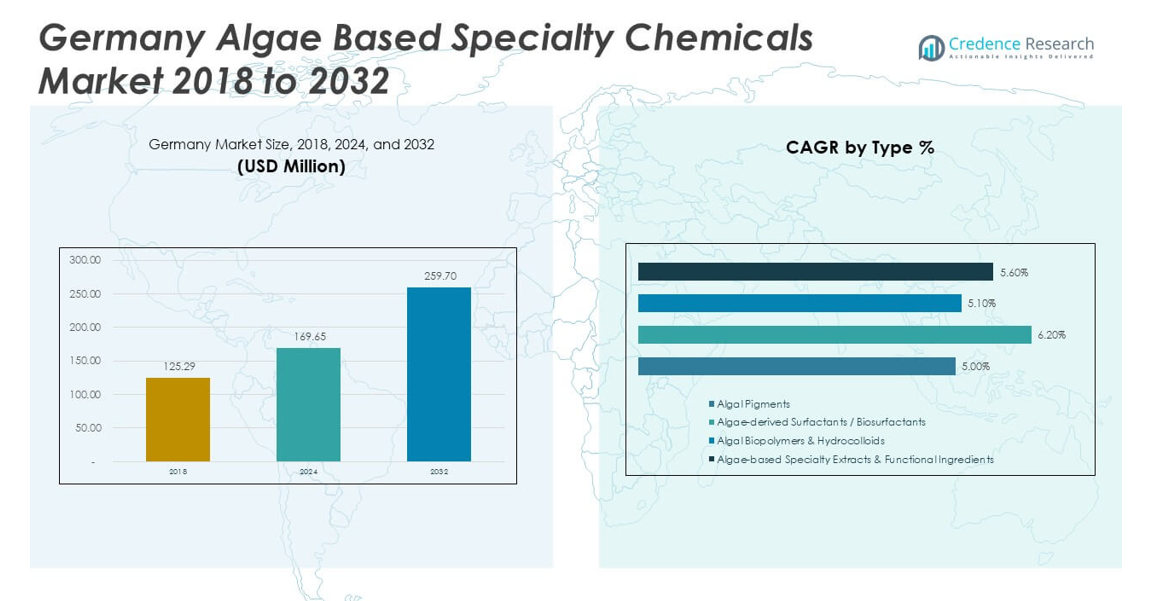
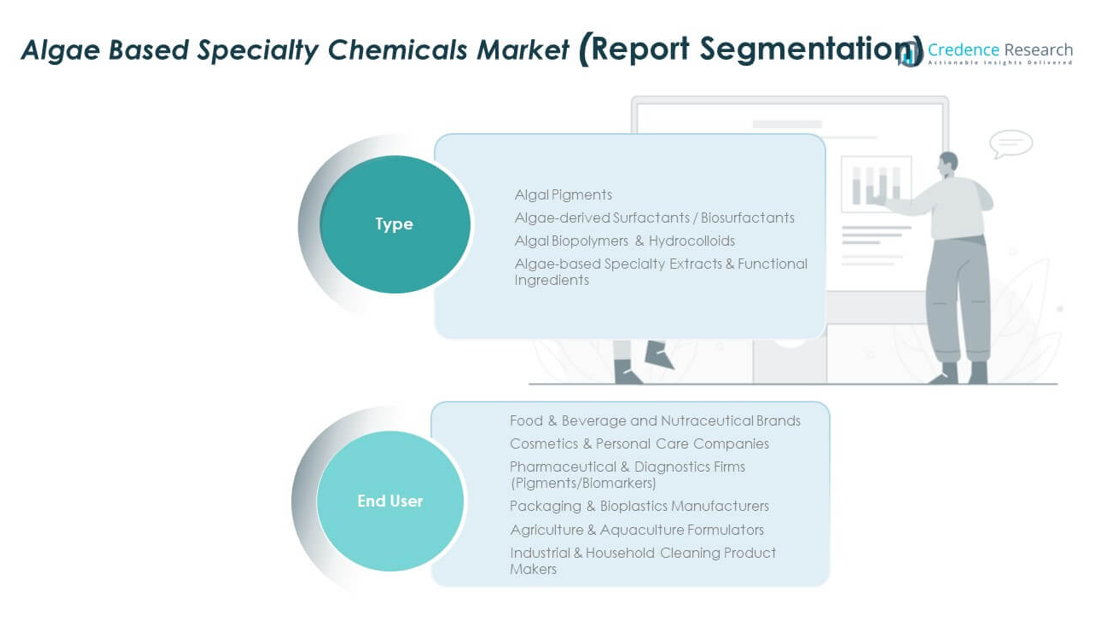
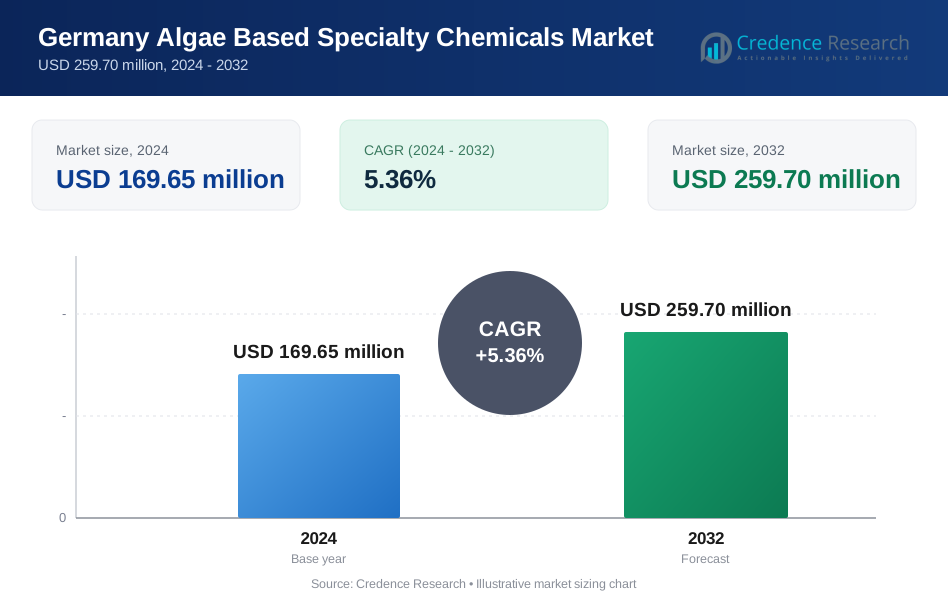
The Germany Algae Based Specialty Chemicals Market size was valued at USD 125.29 million in 2018 to USD 169.65 million in 2024 and is anticipated to reach USD 259.70 million by 2032, at a CAGR of 5.36% during the forecast period.
| REPORT ATTRIBUTE | DETAILS |
|---|---|
| Historical Period | 2020-2023 |
| Base Year | 2024 |
| Forecast Period | 2025-2032 |
| Germany Algae Based Specialty Chemicals Market Size 2024 | USD 169.65 million |
| Germany Algae Based Specialty Chemicals Market, CAGR | 5.36% |
| Germany Algae Based Specialty Chemicals Market Size 2032 | USD 259.70 million |
The market is driven by rising demand for natural, sustainable, and eco-friendly alternatives across industries. Cosmetics and personal care companies are increasingly replacing synthetic ingredients with algae-derived pigments and bioactives. Food and nutraceutical brands benefit from algae compounds that deliver natural colors, proteins, and functional ingredients. Pharmaceutical firms are expanding use of algae-derived extracts in biomarker research and therapeutic applications. Regulatory support for renewable solutions combined with consumer preference for clean-label products continues to accelerate adoption. Growing awareness about algae’s nutritional and environmental advantages further strengthens market momentum.
Regionally, Southern Germany leads due to its strong biotechnology infrastructure, advanced research collaborations, and proximity to major pharmaceutical and nutraceutical firms. Western Germany demonstrates significant strength with its chemical industry base and export-oriented production capabilities. Northern and Eastern Germany are emerging with support from startups, coastal algae cultivation, and government-backed sustainability initiatives. While smaller in share, these regions show growing potential, particularly in aquaculture feed, eco-friendly packaging, and functional food applications. This diverse regional spread creates a balanced growth pathway for the Germany Algae Based Specialty Chemicals Market.
Market Insights
- The Germany Algae Based Specialty Chemicals Market was valued at USD 125.29 million in 2018, reached USD 169.65 million in 2024, and is anticipated to hit USD 259.70 million by 2032, registering a CAGR of 5.36%.
- Southern Germany led with 38% share, supported by biotech hubs and strong pharmaceutical presence, while Western Germany held 32% share due to its established chemical industry base, and Northern & Eastern Germany together captured 30% driven by government incentives and startup activity.
- Northern and Eastern Germany represent the fastest-growing subregions with 30% share, benefiting from coastal algae cultivation, renewable energy integration, and aquaculture demand.
- Algal pigments accounted for 42% of the segment share in 2024, reflecting strong demand in cosmetics and food applications.
- Algal biopolymers and hydrocolloids represented 26% of the share, supported by increasing adoption in packaging and bioplastic manufacturing.
Market Drivers
Growing Demand for Natural and Sustainable Ingredients
The Germany Algae Based Specialty Chemicals Market is driven by increasing demand for natural alternatives in personal care, food, and pharmaceutical sectors. Consumers are shifting from synthetic ingredients to plant-based and algae-derived solutions. It is strengthening as manufacturers integrate bio-based compounds in formulations. Demand for products with lower environmental impact is encouraging investments in algae cultivation. Rising consumer awareness about algae-based antioxidants and proteins supports consistent adoption. Government regulations favoring sustainable practices further reinforce growth. Companies are aligning product lines with eco-conscious expectations. This creates a strong market foundation across industrial and consumer applications.
- For instance, in August 2025, Corbion entered a strategic partnership with Kuehnle AgroSystems to develop and commercialize natural astaxanthin derived from non-GMO heterotrophic algae, specifically for use in high-bioavailability, antioxidant-rich applications for nutraceutical and aquaculture sectors.
Technological Advancements in Algae Cultivation and Processing
Algae cultivation and extraction technologies are advancing to deliver higher yield and consistent quality. In Germany Algae Based Specialty Chemicals Market, firms are investing in photobioreactors and controlled cultivation systems. It enables year-round production and reduces dependency on climatic factors. Improved processing techniques help in achieving high-value extracts like polysaccharides, pigments, and fatty acids. Industry players are focusing on scaling efficiency while minimizing energy costs. Partnerships with biotech firms enhance product innovation and application diversity. Research initiatives across universities and R&D centers are also strengthening innovation pipelines. The sector is improving scalability while addressing industrial demand for specialized compounds.
- For instance, Lgem, a Dutch-German photobioreactor specialist, reported in May 2025 that its industrial closed photobioreactor systems have enabled high-density algae cultures with maximized nutrient uptake, enhanced operational efficiency, and scalability capable of reliably supporting industrial-scale feedstock production for the chemical sector.
Supportive Regulatory Policies and Sustainability Goals
Germany’s strong environmental regulations and sustainability frameworks play a critical role in market development. Policies encourage industries to replace petrochemical-based additives with algae-derived alternatives. In Germany Algae Based Specialty Chemicals Market, alignment with EU circular economy goals is strengthening industry growth. It fosters research funding, commercial production incentives, and industry-academia collaborations. Certifications and quality standards ensure reliability of algae-based compounds in consumer goods. Market players benefit from regulations supporting renewable resource adoption. The government’s focus on green chemistry strengthens competitiveness. Corporate commitments to sustainability add momentum, ensuring steady long-term demand.
Expanding Applications Across Multiple Industries
Algae-derived specialty chemicals are finding increasing applications in cosmetics, nutraceuticals, agriculture, and bioplastics. In Germany Algae Based Specialty Chemicals Market, expansion into diverse end-use sectors broadens opportunities. It creates resilience against sector-specific fluctuations and drives revenue consistency. Food and beverage firms are exploring natural pigments and omega-3-rich oils. Pharmaceutical players use algae compounds for advanced formulations. Agricultural applications include bio-stimulants and eco-friendly fertilizers. Bioplastic manufacturers incorporate algae extracts for sustainable material production. Expanding versatility strengthens market outlook and ensures long-term adoption across multiple industries.
Market Trends
Rising Focus on Functional Ingredients in Cosmetics and Skincare
The Germany Algae Based Specialty Chemicals Market is witnessing strong uptake in cosmetics. It is driven by the need for anti-aging, moisturizing, and UV-protection solutions. Algae-derived polysaccharides and carotenoids enhance product positioning in premium skincare. German cosmetic companies highlight algae-based actives in marketing strategies. Consumers show preference for natural solutions with high efficacy. Sustainable sourcing adds credibility to product portfolios. Brands are investing in advanced formulations with algae compounds. Skincare and personal care remain dominant adopters fueling steady market expansion.
- For instance, in June 2025, Finnish company Origin by Ocean partnered with CABB Group to establish a biorefinery in Kokkola, Finland, designed to convert invasive sargassum algae into high-value ingredients such as alginate and fucoidan.
Integration of Algae-Based Solutions in Sustainable Packaging
Sustainable packaging innovations are emerging as a prominent trend. In Germany Algae Based Specialty Chemicals Market, algae extracts are being tested in biodegradable coatings and films. It supports eco-friendly packaging goals for food and consumer goods. Companies are experimenting with algae-based laminates to replace plastics. Research highlights algae polysaccharides as effective alternatives for packaging barriers. Brands adopting algae-based packaging strengthen market appeal. The trend aligns with EU directives on reducing single-use plastics. Adoption is gaining momentum across FMCG and retail. This trend strengthens cross-industry adoption opportunities.
Expansion of Research Collaborations and Industrial Partnerships
Collaborations between biotech firms, universities, and industrial players are increasing. The Germany Algae Based Specialty Chemicals Market benefits from these partnerships. It enables knowledge transfer, scaling support, and faster commercialization. Research programs are exploring high-value applications in pharmaceuticals and agriculture. Joint ventures enhance access to advanced cultivation infrastructure. Companies secure shared funding and minimize risks in product development. Public-private partnerships support algae-based innovation ecosystems. The market benefits from cross-disciplinary expertise, improving innovation pipelines and sector resilience.
Growing Adoption in Animal Nutrition and Aquaculture
The demand for algae-based specialty chemicals is expanding in animal feed and aquaculture. In Germany Algae Based Specialty Chemicals Market, algae-based omega-3 oils are replacing fish-based alternatives. It helps ensure supply chain stability and sustainability in aquaculture. Feed manufacturers prefer algae-derived solutions for consistency and traceability. It also reduces environmental pressure on marine ecosystems. Algae-based proteins and pigments enhance livestock nutrition. Aquaculture farms incorporate algae feed for improved growth and immunity. This trend expands the role of algae in sustainable agriculture and protein supply.
- For instance, in 2024, Veramaris, a DSM–Evonik joint venture, increased algae oil production for aquafeed by 61% while reducing greenhouse-gas emissions by 5.6%, highlighting its role as a sustainable omega-3 source for the aquaculture industry.
Market Challenges Analysis
High Production Costs and Limited Economies of Scale
The Germany Algae Based Specialty Chemicals Market faces cost-related challenges in production. It is capital intensive due to specialized infrastructure for algae cultivation. Photobioreactors and controlled growth systems increase initial investments. Energy-intensive processing methods further add to operational expenses. Limited economies of scale restrict widespread adoption across smaller industries. Companies struggle with balancing cost-efficiency while maintaining quality standards. Import competition with low-cost alternatives also affects market competitiveness. Reducing costs remains essential for achieving broader commercialization and adoption.
Regulatory Compliance and Market Awareness Constraints
Complex regulatory approvals pose challenges for new algae-based specialty chemical applications. In Germany Algae Based Specialty Chemicals Market, firms must align with strict EU safety standards. It can delay commercialization and increase R&D expenditure. Market awareness about algae-based products among smaller industries remains limited. Consumer education requires consistent marketing and awareness campaigns. The fragmented knowledge base reduces pace of adoption in emerging applications. Regulatory ambiguity across global markets further complicates exports. These challenges necessitate industry collaboration to simplify regulations and enhance outreach.
Market Opportunities
Rising Demand for Eco-Friendly Alternatives Across Consumer Goods
The Germany Algae Based Specialty Chemicals Market offers growth opportunities in eco-conscious consumer goods. It is supported by growing adoption in cosmetics, packaging, and nutraceuticals. Companies that highlight sustainability gain competitive advantage. Innovations in algae-derived bioactive compounds strengthen product portfolios. Consumer demand for green-label solutions supports new launches. Regulatory push for biodegradable materials accelerates adoption. Market potential expands as industries integrate algae into mainstream product lines.
Expansion into High-Value Sectors and Emerging Applications
Emerging applications in pharmaceuticals, bioplastics, and advanced agriculture create strong opportunities. In Germany Algae Based Specialty Chemicals Market, new product development focuses on specialized compounds. It enhances potential across high-margin sectors. Companies investing in R&D can capture niche markets. Expansion in aquaculture and functional foods strengthens revenue streams. Market entry for SMEs with innovative solutions is supported. Industry growth is reinforced by EU funding and private investment pipelines.
Market Segmentation Analysis
By type, the Germany Algae Based Specialty Chemicals Market is shaped by strong adoption of algal pigments, which dominate due to wide use in cosmetics, food, and nutraceuticals. Algae-derived surfactants and biosurfactants are gaining traction in industrial cleaning and household products, supported by demand for biodegradable solutions. Algal biopolymers and hydrocolloids serve packaging and bioplastic applications, reflecting sustainability goals in Germany’s manufacturing sectors. Algae-based specialty extracts and functional ingredients strengthen their position in pharmaceuticals and nutraceuticals by providing bioactive compounds with therapeutic and nutritional value. Each type segment contributes to a diversified demand pattern, reducing market reliance on a single product category.
- For instance, in January 2025, Algaia S.A. introduced a line of enhanced-stability algal-derived natural food colorants for beverage applications, developed to meet clean-label and regulatory standards.
By end user, food and beverage and nutraceutical brands are leading consumers, driven by demand for natural colors, flavors, and health-boosting compounds. Cosmetics and personal care companies follow closely, integrating algae-based actives into skincare and haircare formulations. Pharmaceutical and diagnostics firms use algae-derived pigments and biomarkers to improve precision in therapies and research. Packaging and bioplastics manufacturers are adopting algae compounds for sustainable material innovation. Agriculture and aquaculture formulators integrate algae-based bio-stimulants and feed solutions to improve crop and livestock performance. Industrial and household cleaning product makers benefit from algae-derived surfactants, reflecting growing alignment with eco-friendly standards. Together, these segments illustrate the market’s diverse adoption base and long-term growth opportunities.
- For instance, BASF has implemented its biomass balance approach in Germany, using certified renewable feedstock (including raw materials derived from algae) in multiple chemical products, ensuring independent REDcert² certification of sustainable specialty chemicals provided to packaging, cleaning, and personal care companies since 2023.
Segmentation
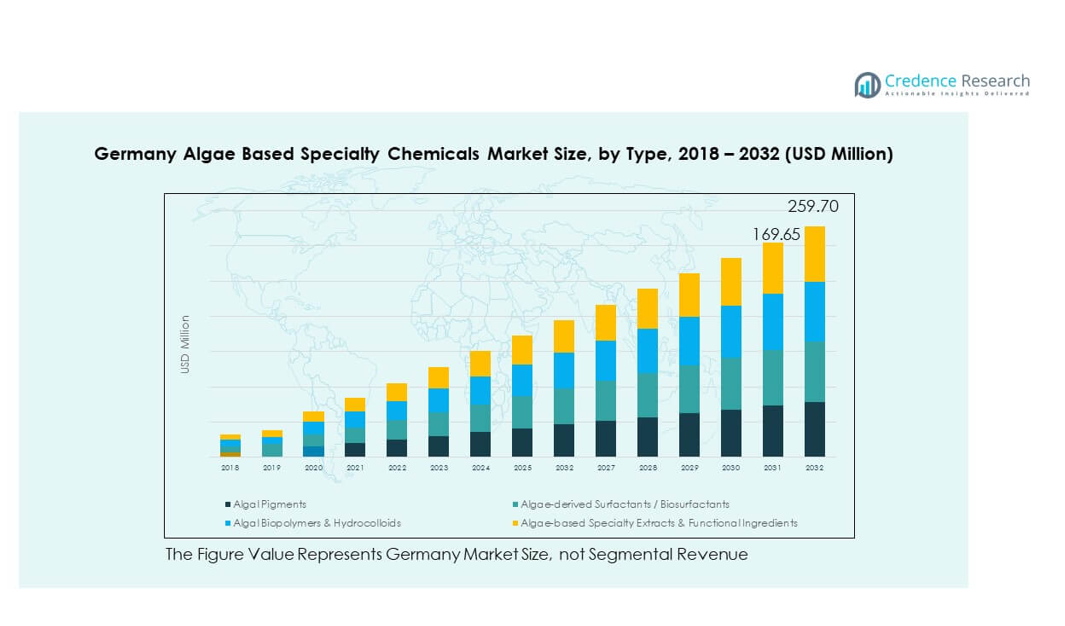
By Type
- Algal Pigments
- Algae-derived Surfactants / Biosurfactants
- Algal Biopolymers & Hydrocolloids
- Algae-based Specialty Extracts & Functional Ingredients
By End User
- Food & Beverage and Nutraceutical Brands
- Cosmetics & Personal Care Companies
- Pharmaceutical & Diagnostics Firms (Pigments/Biomarkers)
- Packaging & Bioplastics Manufacturers
- Agriculture & Aquaculture Formulators
- Industrial & Household Cleaning Product Makers
Regional Analysis
Southern Germany
Southern Germany holds 38% share of the Germany Algae Based Specialty Chemicals Market, supported by its advanced biotech clusters and proximity to major pharmaceutical and nutraceutical firms. Bavaria and Baden-Württemberg anchor algae-based innovation with strong R&D networks and industry-academia partnerships. It benefits from high investment in food and beverage applications, particularly natural pigments and functional ingredients. Local cosmetic manufacturers integrate algae extracts into skincare portfolios, strengthening market penetration. Demand from agriculture and aquaculture formulators in rural zones further supports adoption. Infrastructure readiness and policy support ensure Southern Germany’s leadership in production and commercialization.
Western Germany
Western Germany accounts for 32% share, driven by the concentration of chemical and industrial giants in North Rhine-Westphalia and Hesse. It sustains demand for algae-derived surfactants and biopolymers used in packaging, cleaning, and industrial sectors. The presence of global players such as BASF supports innovation pipelines and accelerates commercialization of new formulations. It also benefits from export-oriented production, with strong logistics and international trade hubs. Universities in this subregion collaborate with firms on algae cultivation and process optimization. The market in Western Germany thrives due to strong industry linkages, demand diversity, and access to European trade networks.
Northern and Eastern Germany
Northern and Eastern Germany collectively hold 30% share, with Hamburg and Berlin emerging as notable hubs for algae-based biotechnology startups. It supports development of algae-based specialty extracts and eco-friendly packaging solutions. Northern Germany benefits from access to coastal resources and renewable energy integration in cultivation facilities. Eastern regions leverage government incentives to attract investments in sustainable chemical production. It also gains traction in aquaculture feed applications due to proximity to marine industries. While smaller in market size, this subregion demonstrates high growth potential, fueled by startups and green technology initiatives that strengthen long-term competitiveness.
Key Player Analysis
- CABB Chemicals
- BASF SE
- I.D. Parry (Parry Nutraceuticals)
- Cyanotech Corporation
- Earthrise Nutritionals
- Algatechnologies (Algatech)
- CP Kelco
- Cargill
- DSM
- Other Key Players
Competitive Analysis
The Germany Algae Based Specialty Chemicals Market features strong competition among multinational corporations and specialized biotech firms. Leading companies such as BASF SE, DSM, and Cargill maintain dominance through broad product portfolios, advanced R&D capabilities, and established distribution networks. It is also shaped by focused players like E.I.D. Parry, Cyanotech Corporation, and Algatechnologies, which emphasize nutraceuticals, pigments, and functional ingredients. Domestic players such as CABB Chemicals enhance competitiveness by supplying specialized chemical derivatives aligned with sustainability goals. Strategic developments include partnerships, acquisitions, and product launches aimed at diversifying applications and scaling production efficiency. Smaller firms and startups are leveraging niche innovations in bioplastics and eco-friendly formulations to compete with larger entities. Overall, the competitive landscape is dynamic, with established leaders consolidating market positions while emerging firms bring disruptive solutions tailored to growing demand.
Recent Developments
- In July 2025, the German specialty chemicals startup CYNiO secured over €2 million in investment to expand its portfolio and scale up the production of CO2-based isocyanates, with plans for a new production facility at Bitterfeld-Wolfen Chemical Park. Although not exclusively algae-based, CYNiO is focused on innovative, sustainable chemical production relevant to the specialty chemicals market, and their solutions support reduced reliance on fossil-based and toxic intermediates.
- In June 2025, Origin by Ocean and Germany-based CABB Group announced a new partnership to set up a biorefinery dedicated to producing specialty chemical ingredients from invasive brown algae. This collaboration aims to leverage algae as a renewable raw material source, enabling the manufacture of sustainable specialty chemicals for various industrial applications in Germany and Europe.
- In April 2025, BASF SE launched three new natural-based ingredients—Verdessence Maize, Lamesoft OP Plus, and Dehyton PK45 GA/RA—as part of its portfolio expansion for personal care applications. These new products offer biodegradable and sustainable alternatives to traditional fossil-based chemicals and were presented during the in-cosmetics Global event in Amsterdam, underscoring BASF's commitment to advancing environmentally responsible innovations for specialty chemicals markets in Germany and worldwide.
Report Coverage
The research report offers an in-depth analysis based on Type and End User. It details leading market players, providing an overview of their business, product offerings, investments, revenue streams, and key applications. Additionally, the report includes insights into the competitive environment, SWOT analysis, current market trends, as well as the primary drivers and constraints. Furthermore, it discusses various factors that have driven market expansion in recent years. The report also explores market dynamics, regulatory scenarios, and technological advancements that are shaping the industry. It assesses the impact of external factors and global economic changes on market growth. Lastly, it provides strategic recommendations for new entrants and established companies to navigate the complexities of the market.
Future Outlook
- The Germany Algae Based Specialty Chemicals Market will experience steady expansion driven by sustainability-focused industries.
- Demand from cosmetics and personal care companies will increase due to consumer preference for natural formulations.
- Food and nutraceutical sectors will continue adopting algae-derived pigments and functional ingredients.
- Bioplastics and packaging applications will grow as industries target eco-friendly material alternatives.
- Pharmaceutical and diagnostics firms will expand use of algae-based compounds for biomarker and therapeutic solutions.
- Agriculture and aquaculture segments will integrate algae bio-stimulants and feed additives to enhance productivity.
- Regional hubs in Southern Germany will maintain leadership due to robust R&D infrastructure and industrial clusters.
- Startups in Northern and Eastern Germany will emerge as key innovators in eco-friendly formulations.
- Strategic collaborations between biotech firms and industrial players will accelerate commercialization of new applications.
- Regulatory support for renewable resources will strengthen long-term competitiveness across diverse industries.
Request a Free Sample
Fill in your details and we'll send you a free sample report.
- Sample data tables & charts
- Research methodology
Need a Custom Version of This Report?
Tailor the scope, geography, or segments to your exact requirements.
- Custom geography or segment scope
- Direct access to our analyst team
Frequently Asked Questions
What is the current market size for Germany Algae Based Specialty Chemicals Market, and what is its projected size in 2032?
At what Compound Annual Growth Rate is the Germany Algae Based Specialty Chemicals Market projected to grow between 2024 and 2032?
Which Germany Algae Based Specialty Chemicals Market segment held the largest share in 2024?
What are the primary factors fueling the growth of the Germany Algae Based Specialty Chemicals Market?
Who are the leading companies in the Germany Algae Based Specialty Chemicals Market?
Table of Content
Chapter 1. Report Introduction
- 1.1 Report Description & Purpose
- 1.1.1 Report Title & Market Definition
- 1.1.2 Unique Selling Propositions (USP) & Key Differentiators
- 1.1.3 Value Proposition for Stakeholders
- 1.2 Research Objectives
- 1.2.1 Market Sizing Objectives (Volume & Revenue)
- 1.2.2 Segmentation Objectives
- 1.2.3 Competitive Intelligence Objectives
- 1.2.4 Forecast & Scenario Objectives
- 1.3 Report Scope
- 1.3.1 Germany Algae Based Specialty Chemicals Scope – Types & Subtypes Covered
- 1.3.2 Geographic Scope – Regions & Countries Covered
- 1.3.3 Historical Period, Base Year & Forecast Period (2024; forecast to 2032)
- 1.3.4 Inclusions & Exclusions
- 1.4 HS Code & Classification Framework
- 1.5 Currency, Units & Pricing Basis
- 1.6 Target Stakeholders
- 1.7 Limitations & Assumptions
Chapter 2. Executive Summary
- 2.1 Global Germany Algae Based Specialty Chemicals Market Snapshot
- 2.1.1 Market Size – Historical (2024) & Forecast (2024-2032) (2024: USD 169.65 million → 2032: USD 259.70 million)
- 2.1.2 Volume & Revenue – Global Totals
- 2.1.3 Key Market Highlights – Top Five Facts
- 2.2 Germany Algae Based Specialty Chemicals Market Segmentation Snapshot
- 2.2.1 Market Split by Region – 2024 vs. 2032
- 2.3 Competitive Snapshot
- 2.3.1 Top 10 Players by Revenue Share – 2024
- 2.3.2 Top 10 Players by Volume Share – 2024
- 2.3.3 Recent Strategic Developments (18-Month Summary)
- 2.4 Key Investment Highlights & Strategic Conclusions
Chapter 3. Germany Algae Based Specialty Chemicals Market Dynamics & Industry Analysis
- 3.1 Market Overview & Context
- 3.1.1 Germany Algae Based Specialty Chemicals Market Position in the Broader Automotive Value Chain
- 3.1.2 OEM vs. Replacement Market Dynamics
- 3.1.3 Market Maturity & Development Stage by Region
- 3.2 Germany Algae Based Specialty Chemicals Market Drivers
- 3.3 Germany Algae Based Specialty Chemicals Market Restraints & Challenges
- 3.4 Germany Algae Based Specialty Chemicals Market Opportunities
- 3.5 Porter's Five Forces Analysis
- 3.5.1 Threat of New Entrants
- 3.5.2 Bargaining Power of Suppliers
- 3.5.3 Bargaining Power of Buyers
- 3.5.4 Threat of Substitutes
- 3.5.5 Competitive Rivalry – Intensity Assessment
- 3.6 Germany Algae Based Specialty Chemicals Value Chain Analysis
- 3.6.1 Upstream – Raw Material/Input Suppliers
- 3.6.1.1 Raw Material/Input 1
- 3.6.1.2 Raw Material/Input 2
- 3.6.1.3 Raw Material/Input 3
- 3.6.2 Midstream – Production/Manufacturing/Service Delivery
- 3.6.2.1 Production/Process Overview
- 3.6.2.2 Key Facility Locations & Capacity by Manufacturer
- 3.6.3 Downstream – Distribution & End Consumer
- 3.6.3.1 Primary Channel – B2B/OEM
- 3.6.3.2 Secondary Channels – Dealer, Retail, Online, Direct
- 3.6.4 Value Chain Profitability Analysis
- 3.6.1 Upstream – Raw Material/Input Suppliers
- 3.7 PESTEL Analysis
- 3.7.1 Political Factors
- 3.7.2 Economic Factors
- 3.7.3 Social Factors
- 3.7.4 Technological Factors
- 3.7.5 Environmental Factors
- 3.7.6 Legal Factors
- 3.8 Germany Algae Based Specialty Chemicals Supply Chain Analysis
- 3.8.1 Raw Material/Input Supply Risk Assessment
- 3.8.2 Manufacturing Concentration Risk (Geographic Exposure)
- 3.8.3 Trade Disruption Impact Analysis
- 3.9 Regulatory & Policy Landscape
Note: The regulatory and policy landscape section covers regulations based on their applicability to the market, Germany Algae Based Specialty Chemicals category, geography, and scope of the study. Only regulatory frameworks with a material impact on operations, compliance, trade, sustainability, or market access are analyzed in detail.
Chapter 4. Key Investment Pockets & Opportunity Analysis
- 4.1 Germany Algae Based Specialty Chemicals Market Attractiveness Analysis
- 4.1.1 By Region – Investment Attractiveness Matrix (Volume × CAGR)
- 4.2 Absolute Revenue Growth Opportunity
- 4.2.1 By Region – Absolute USD Growth Through 2032
- 4.3 Incremental Volume Opportunity
- 4.3.1 By Region – Incremental Volume Through 2032
- 4.3.2 Segment – Incremental Volume
- 4.4 Emerging Submarket Opportunity Deep Dive (Subject to Applicability)
- 4.5 Emerging Market Opportunity Scorecards
- 4.5.1 United States
- 4.5.2 Europe
- 4.5.3 Asia
- 4.5.4 Middle East & Africa
Note: Emerging Market Opportunity Scorecards will be included based on relevance and strategic importance. Regions listed are indicative and may vary depending on data availability and market dynamics.
Chapter 5. Germany Algae Based Specialty Chemicals Import-Export Analysis & Trade Flows
- 5.1 Global Trade Overview
- 5.1.1 Global Export Value by Country (2024)
- 5.1.2 Global Export Volume by Country (2024)
- 5.1.3 Global Import Value by Country (2024)
- 5.1.4 Global Import Volume by Country (2024)
- 5.1.5 Net Trade Balance by Country (2024)
- 5.2 Export Analysis – Segment
- 5.2.1 Type 1 (HS Code)
- 5.2.2 Type 2 (HS Code)
- 5.2.3 Type 3 (HS Code)
- 5.2.4 Type 4 (HS Code)
- 5.2.5 Type 5 (HS Code)
- 5.3 Import Analysis – Segment
- 5.3.1 Type 1 (HS Code)
- 5.3.2 Type 2 (HS Code)
- 5.3.3 Type 3 (HS Code)
- 5.3.4 Type 4 (HS Code)
- 5.3.5 Type 5 (HS Code)
- 5.4 Average Unit Trade Prices
- 5.4.1 Average Export Price – Segment & Country
- 5.4.2 Average Import Price – Segment & Source Country
- 5.4.3 Price Trends (2024)
- 5.5 Key Trade Route Analysis
- 5.5.1 Trade Route 1
- 5.5.2 Trade Route 2
- 5.5.3 Trade Route 3
- 5.5.4 Trade Route 4
- 5.5.5 Trade Route 5
- 5.6 Trade Policy Impact Assessment
- 5.6.1 US Anti-Dumping & Section 301 Tariffs
- 5.6.2 EU Customs Union Impact
- 5.6.3 Major Free Trade Agreements
- 5.6.4 USMCA Rules of Origin
Note: Trade policy analysis will be included only where relevant to the Germany Algae Based Specialty Chemicals market.
Chapter 6. Competitive Landscape & Company Benchmarking
- 6.1 Germany Algae Based Specialty Chemicals Market Concentration & Structure
- 6.1.1 Herfindahl-Hirschman Index (HHI) – vs. 2024
- 6.1.2 Tier 1, Tier 2 & Tier 3 Market Structure
- 6.1.3 Global, Regional & Local Player Dynamics
- 6.2 Germany Algae Based Specialty Chemicals Market Share Analysis – 2024
- 6.2.1 Global Revenue Share by Company
- 6.2.2 Global Volume Share by Company
- 6.2.3 Regional Revenue Share
- 6.2.4 Market Share Evolution ( vs. 2024)
- 6.2.5 OEM Segment Share by Company
- 6.2.6 Replacement Segment Share by Company
- 6.3 Production/Delivery Capacity & Facility Analysis
- 6.3.1 Global Installed Capacity
- 6.3.2 Capacity Utilization Rates
- 6.3.3 Production/Output Volume
- 6.3.4 Facility Locations & Capacity Map
- 6.3.5 Planned Capacity Additions
- 6.4 Germany Algae Based Specialty Chemicals Competitive Benchmarking Matrix
- 6.4.1 Revenue, Volume, CAGR & Profitability Comparison
- 6.4.2 Channel Revenue Mix
- 6.4.3 Geographic Revenue Exposure
- 6.4.4 R&D Intensity
- 6.4.5 Sustainability Maturity
- 6.5 Strategic Developments in Germany Algae Based Specialty Chemicals (Last 24 Months)
- 6.5.1 Mergers, Acquisitions & Divestments
- 6.5.2 New Germany Algae Based Specialty Chemicals Launches
- 6.5.3 Facility Expansions
- 6.5.4 Strategic Alliances, Joint Ventures & Partnerships
- 6.5.5 Distribution Expansion & Market Entry
- 6.5.6 Sustainability & ESG Initiatives
- 6.6 Competitive Strategy Mapping
- 6.6.1 Leader, Challenger, Follower & Niche Classification
- 6.6.2 Pricing Strategy Comparison
- 6.6.3 Channel Strategy Matrix
Note: Strategic developments are included based on their materiality and the availability of reliable information.
Chapter 7. Global Germany Algae Based Specialty Chemicals Market – By Distribution Channel
- 7.1 Segment Overview
- 7.1.1 Volume & Revenue Split by Channel (2024 & 2032)
- 7.1.2 Channel Mix Evolution (2024-2032)
Chapter 8. Regional Market Analysis – Global Overview
- 8.1 Global Regional Overview
- 8.1.1 Regional Volume Share
- 8.1.2 Regional Revenue Share
- 8.1.3 Regional Volume by Region
- 8.1.4 Regional Revenue by Region
- 8.1.5 Regional Forecast Through 2032
- 8.2 Cross-Regional Segment Analysis
- 8.2.1 By Distribution Channel
- 8.2.2 By Brand/Price Tier
Chapter 9. North America Germany Algae Based Specialty Chemicals Market
- 9.1 United States
- 9.2 Canada
- 9.3 Mexico
Chapter 10. Europe Germany Algae Based Specialty Chemicals Market
- 10.1 Germany
- 10.2 France
- 10.3 Italy
- 10.4 United Kingdom
- 10.5 Spain
- 10.6 Poland
- 10.7 Russia
- 10.8 Netherlands
- 10.9 Belgium
- 10.10 Sweden
- 10.11 Denmark
- 10.12 Norway
- 10.13 Rest of Europe
Chapter 11. Asia Pacific Germany Algae Based Specialty Chemicals Market
- 11.1 China
- 11.2 India
- 11.3 Japan
- 11.4 South Korea
- 11.5 Thailand
- 11.6 Indonesia
- 11.7 Vietnam
- 11.8 Malaysia
- 11.9 Australia
- 11.10 Rest of Asia Pacific
Chapter 12. Latin America Germany Algae Based Specialty Chemicals Market
- 12.1 Brazil
- 12.2 Argentina
- 12.3 Colombia
- 12.4 Chile
- 12.5 Rest of Latin America
Chapter 13. Middle East Germany Algae Based Specialty Chemicals Market
- 13.1 Saudi Arabia
- 13.2 United Arab Emirates
- 13.3 Turkey
- 13.4 Israel
- 13.5 Iran
- 13.6 Rest of the Middle East
Chapter 14. Africa Germany Algae Based Specialty Chemicals Market
- 14.1 South Africa
- 14.2 Egypt
- 14.3 Nigeria
- 14.4 Morocco
- 14.5 Rest of Africa
Chapter 15. Germany Algae Based Specialty Chemicals Company Profiles
- 15.1 [Company 01]
- 15.1.1 Company Overview
- 15.1.2 Key Management Personnel
- 15.1.3 Products & Services Portfolio
- 15.1.4 Financial Performance
- 15.1.5 Key Market Focus & Geographic Presence
- 15.1.6 Recent Developments & Strategic Initiatives
Note: The company profile list is preliminary and may change based on research findings, market developments, data availability, and client requirements.
Chapter 16. Appendices
- Appendix A – List of Abbreviations & Acronyms
- Appendix B – Industry Classification Code Reference – Full Series
- Appendix C – Production & Capacity Data Tables
- Appendix D – End-Use & Demand Base Tables
- Appendix E – Consumption & Replacement Rate Assumptions
- Appendix F – ASP Reference Tables
- Appendix G – Manufacturing & Facility Database
- Appendix H – Import-Export Data Tables
- Appendix I – Regulatory Summary Tables
- Appendix J – Primary Research Participant List (Anonymized)
- Appendix K – Primary Research Questionnaire Framework
- Appendix L – Data Sources & Bibliography
- Appendix M – Market Size Divergence & Source Comparison
Chapter 17. Research Methodology
- 17.1 Research Framework & Philosophy
- 17.2 Secondary Research – Sources, Hierarchy & Data Extraction
- 17.3 Data Modeling – Bottom-Up & Top-Down Market Sizing
- 17.4 Primary Research – Stakeholder Framework, LOI & Sample Sizes
- 17.5 Forecast Methodology – Regression, Scenario & Sensitivity Analysis
- 17.6 Quality Control – Four-Layer Validation Framework
- 17.7 Limitations & Standard Assumptions
- 17.8 Disclaimer
