
| REPORT ATTRIBUTE | DETAILS |
|---|---|
| Historical Period | 2019-2022 |
| Base Year | 2023 |
| Forecast Period | 2024-2032 |
| Germany Contract Cleaning Services Market Size 2023 | USD 25,338.06 million |
| Germany Contract Cleaning Services Market, CAGR | 7.09% |
| Germany Contract Cleaning Services Market Size 2032 | USD 46,961.39 million |
Market Overview
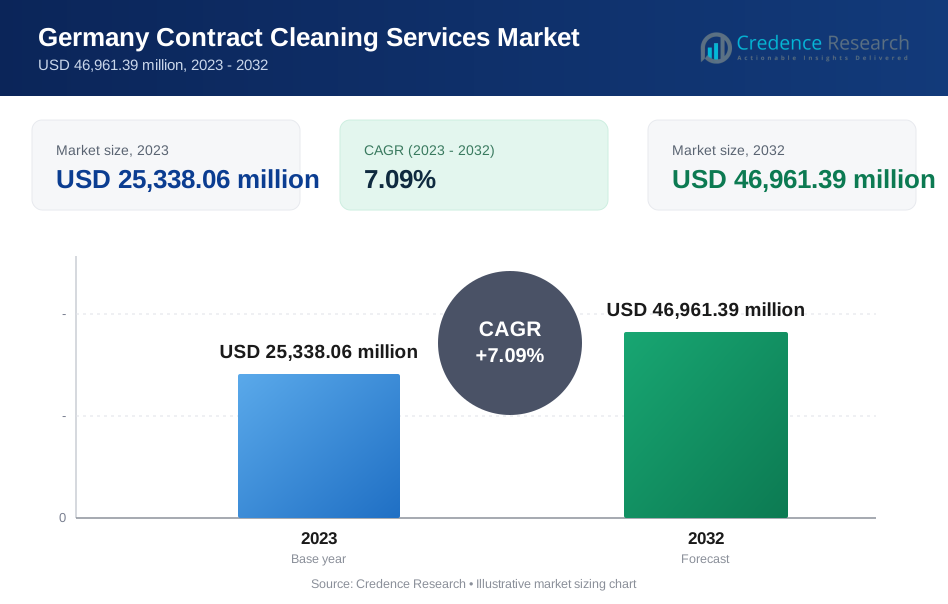
The Germany Contract Cleaning Services Market is projected to grow from USD 25,338.06 million in 2023 to USD 46,961.39 million by 2032, at a compound annual growth rate (CAGR) of 7.09%.
The Germany contract cleaning services market is driven by factors such as increasing demand for professional cleaning in commercial, industrial, and residential spaces, driven by a growing focus on hygiene and sanitation. Rising urbanization and the expansion of office spaces, healthcare facilities, and retail sectors further fuel the demand for specialized cleaning services. Additionally, advancements in cleaning technologies, including the use of eco-friendly and automated solutions, are enhancing service efficiency and sustainability. The rising awareness of environmental issues and health concerns is prompting businesses to adopt green cleaning practices, which is becoming a key trend in the market. Moreover, the ongoing emphasis on health and safety standards, especially in post-pandemic scenarios, continues to support market growth. The market's expansion is also attributed to outsourcing trends, where businesses prefer specialized cleaning services to focus on their core operations while ensuring a clean, safe environment for employees and customers.
Germany's contract cleaning services market is characterized by strong regional demand, with major cities like Berlin, Munich, Hamburg, and Frankfurt driving the market due to their large commercial, industrial, and residential sectors. In these urban hubs, businesses and institutions increasingly prioritize cleanliness to maintain hygiene standards and ensure employee and customer satisfaction. Key players in the market include companies such as ISS Facility Services, Apleona, and Dussmann Group, which offer comprehensive cleaning solutions across various sectors including healthcare, education, and hospitality. These companies leverage advanced cleaning technologies and eco-friendly practices to meet the growing demand for sustainability and efficiency. Additionally, smaller regional players also contribute to the market by catering to local businesses and specialized cleaning needs. The competitive landscape in these regions is evolving as businesses seek innovative, cost-effective solutions to manage their cleaning operations.
Market Insights
- The Germany contract cleaning services market is valued at USD 25,338.06 million in 2023 and is expected to reach USD 46,961.39 million by 2032, growing at a CAGR of 7.09%.
- Increasing demand for hygiene and sanitation in both commercial and residential sectors is a key market driver.
- Technological advancements, such as automation and eco-friendly cleaning solutions, are transforming the market and driving efficiency.
- The shift toward green cleaning practices is gaining momentum, with businesses prioritizing sustainability.
- High competition from both large players and small regional companies makes it challenging for service providers to maintain profit margins.
- Rising labor costs and a shortage of skilled workers are restraining market growth.
- Key regions such as Berlin, Munich, Hamburg, and Frankfurt dominate the market, with major players like ISS Facility Services and Apleona leading in service offerings.
Market Drivers
Growing Demand for Hygiene and Sanitation
The increasing focus on hygiene and sanitation is a major driver of the Germany contract cleaning services market. For instance, data from the WHO/UNICEF Joint Monitoring Programme indicates that 99.23% of the population in Germany uses at least basic sanitation services. As businesses, healthcare facilities, and educational institutions prioritize cleanliness to ensure a safe environment, the demand for professional cleaning services has surged. This is particularly evident in the post-pandemic era, where stringent hygiene protocols are essential to prevent the spread of infectious diseases. Businesses are turning to expert cleaning services to maintain high standards of cleanliness, which has led to consistent market growth.
Expansion of Commercial and Industrial Spaces
The rapid expansion of commercial, industrial, and retail spaces is another key driver of the market. For instance, the commercial real estate market in Germany has seen significant growth, with the cost of industrial land in cities like Munich reaching 535 euros per square meter in 2024. With urbanization on the rise, more office buildings, shopping centers, and factories are being constructed across Germany, increasing the need for regular cleaning services. Contract cleaning companies are in high demand to maintain these large-scale facilities, as businesses require professional services to ensure that spaces remain clean, organized, and compliant with health and safety regulations.
Technological Advancements in Cleaning Solutions
Technological innovations are playing a crucial role in driving the growth of Germany’s contract cleaning services market. The introduction of automated cleaning equipment, such as robotic vacuums and floor scrubbers, is improving the efficiency and effectiveness of cleaning operations. Furthermore, advancements in eco-friendly cleaning products and green cleaning practices are gaining traction, as businesses look for sustainable alternatives. These innovations not only enhance the quality of service but also align with growing environmental consciousness and the need for sustainable practices in the cleaning industry.
Outsourcing of Cleaning Services
Outsourcing cleaning services has become a common practice among businesses in Germany, contributing significantly to market growth. Companies are increasingly recognizing the benefits of focusing on their core operations while leaving cleaning tasks to specialized service providers. This trend is particularly prevalent among large corporations, healthcare institutions, and educational organizations, where maintaining cleanliness and hygiene is critical. By outsourcing cleaning services, businesses can ensure high standards of cleanliness while optimizing their resources and costs.
Market Trends
Shift Towards Green and Sustainable Cleaning
A prominent trend in the Germany contract cleaning services market is the growing adoption of green cleaning practices. For instance, the German Environment Agency reported that 12.2% of turnover in the sector of products with official eco-labels was generated with environmentally friendly and socially responsible products in 2022. With increasing awareness about environmental issues, businesses are prioritizing sustainability in their operations. This has led to a rise in demand for eco-friendly cleaning products and methods that minimize environmental impact. Companies are seeking services that use biodegradable cleaning agents, energy-efficient equipment, and water-saving technologies. This trend not only supports environmental goals but also meets the expectations of environmentally-conscious consumers and businesses aiming to enhance their corporate social responsibility (CSR) profiles.
Integration of Advanced Cleaning Technologies
The integration of advanced cleaning technologies is transforming the contract cleaning services market in Germany. Innovations such as robotic cleaning machines, automated floor scrubbers, and AI-driven scheduling systems are improving efficiency and precision in cleaning operations. These technologies enable cleaning services to perform tasks faster and with higher accuracy, while reducing labor costs. Moreover, smart cleaning systems that monitor cleanliness levels in real-time are becoming more common, allowing service providers to offer customized and proactive cleaning solutions. This trend reflects the broader shift toward automation and digitalization across industries.
Increased Demand for Specialized Cleaning Services
There is a noticeable shift towards the demand for specialized cleaning services in Germany. Businesses are increasingly opting for services tailored to specific industries, such as healthcare facilities, manufacturing plants, and hospitality businesses. Specialized cleaning services require trained personnel and specific equipment to handle unique cleaning needs, such as the sanitization of medical equipment or the deep cleaning of food production areas. This trend is fueled by growing regulatory standards in sectors like healthcare and food production, where maintaining a high level of cleanliness is crucial to health and safety compliance.
Rise of Outsourcing and Facility Management
Outsourcing cleaning services as part of broader facility management contracts is gaining momentum in Germany. Many businesses are consolidating their cleaning needs with larger facility management contracts, allowing for streamlined operations and cost efficiencies. This trend is especially evident in large corporate offices, multi-tenant buildings, and industrial sites, where integrated solutions offer a comprehensive approach to facility upkeep. By outsourcing cleaning tasks, companies can focus on their core operations, while ensuring that cleaning services are handled by professional providers with expertise in maintaining various types of facilities.
Market Challenges Analysis
Rising Labor Costs and Shortage of Skilled Workforce
Another significant challenge for the Germany contract cleaning services market is the rising labor costs and the shortage of skilled workers. For instance, the Federal Statistical Office reports that employers in industry and the service sector in Germany paid an average of 39.50 euros per hour worked in 2022. As the demand for cleaning services increases, especially in sectors such as healthcare and hospitality, cleaning companies are struggling to find qualified personnel to meet the demand. This labor shortage is compounded by increasing wages and stricter labor regulations, which place additional financial strain on service providers. Furthermore, the cleaning industry is often seen as low-wage and low-skill, which makes it difficult to attract and retain employees, leading to high turnover rates and potential disruptions in service quality. This challenge requires cleaning companies to invest in employee training and retention strategies, adding to operational costs.
Increasing Competition in a Fragmented Market
One of the primary challenges facing the Germany contract cleaning services market is the high level of competition in a fragmented industry. The market is composed of a large number of small to medium-sized enterprises (SMEs), which increases price sensitivity and reduces profit margins for service providers. As new players enter the market, established companies face pressure to differentiate themselves, often through price reductions or the introduction of innovative service offerings. This intensifies competition and makes it challenging for cleaning companies to maintain consistent revenue streams, especially when dealing with cost-conscious clients who prioritize affordable solutions over quality.
Market Opportunities
Growing Demand for Specialized Cleaning Services
One significant opportunity in the Germany contract cleaning services market lies in the increasing demand for specialized cleaning solutions. As businesses across various sectors, including healthcare, manufacturing, and hospitality, face stricter regulatory standards and hygiene requirements, the need for tailored cleaning services is rising. Healthcare facilities, for example, require high-level sanitization to meet health and safety regulations, while manufacturing plants need specialized services for cleanrooms or food production areas. By expanding into these niche markets, cleaning companies can cater to industries that require specific expertise and equipment, thus positioning themselves as trusted providers of specialized services. This trend provides a valuable opportunity for market players to differentiate themselves from competitors by offering specialized, compliant, and high-quality cleaning solutions.
Expansion of Green and Sustainable Cleaning Solutions
The growing emphasis on environmental sustainability presents another promising opportunity for the Germany contract cleaning services market. As businesses and consumers increasingly prioritize eco-friendly practices, there is rising demand for cleaning services that utilize green cleaning products and sustainable methods. Contract cleaning companies can capitalize on this trend by incorporating environmentally friendly cleaning solutions, such as biodegradable detergents, energy-efficient equipment, and water-saving technologies. Furthermore, offering green certifications or partnering with sustainability-focused organizations can help cleaning companies appeal to eco-conscious clients, particularly in the commercial sector. By aligning with environmental values, companies can enhance their reputation, attract new clients, and gain a competitive edge in a market that is becoming more focused on sustainability.
Market Segmentation Analysis:
By Service Type:
The Germany contract cleaning services market is segmented based on service type, with key categories including window cleaning, floor and carpet cleaning, upholstery cleaning, construction cleaning, and other specialized services. Floor and carpet cleaning is the dominant segment, driven by the increasing demand for maintaining cleanliness in residential, commercial, and industrial spaces. This is followed by window cleaning, which is crucial for both aesthetic appeal and maintaining hygiene, especially in high-rise commercial buildings and residential complexes. Upholstery cleaning also sees demand due to the growing focus on cleanliness in offices, hotels, and homes. Construction cleaning is a specialized service that focuses on post-construction debris removal, serving both residential and commercial construction projects. The "Others" category includes niche services like pressure washing and deep cleaning for specific industries. As businesses and property owners recognize the importance of regular and professional cleaning to maintain hygiene and appearance, the demand for these services continues to grow.
By End-use:
The market is further segmented by end-use, which includes residential, industrial, and commercial sectors. Among the commercial sector, key sub-segments include healthcare and medical facilities, educational institutions, hotels and restaurants, retail outlets, corporate offices, and financial institutions. Healthcare and medical facilities require stringent cleaning protocols, making them a critical market for contract cleaning services. Educational institutions, hotels, and retail outlets also rely on regular cleaning services to ensure hygiene and customer satisfaction. Corporate offices and financial institutions demand high-quality, consistent cleaning to maintain a professional environment. The industrial segment encompasses manufacturing plants and warehouses, which require specialized cleaning solutions for different operational needs. Meanwhile, the residential segment is driven by increasing demand for home cleaning services, particularly among busy professionals and families. As each sector has distinct cleaning requirements, service providers are focusing on offering customized solutions to meet the varied needs of these end-users.
Segments:
Based on Service Type:
- Window Cleaning
- Floor & Carpet Cleaning
- Upholstery Cleaning
- Construction Cleaning
- Others
Based on End-use:
- Residential
- Industrial
- Commercial
- Healthcare & Medical Facilities
- Educational Institutions
- Hotels & Restaurants
- Retail Outlets
- Corporate Offices
- Financial Institutions
- Others
Based on the Geography:
- Berlin
- Munich
- Hamburg
- Frankfurt
Regional Analysis
Berlin
Berlin, as the capital of Germany, leads the market with a 26% share. The city's vibrant economy, diverse population, and cultural significance contribute to its strong demand for contract cleaning services. A wide range of industries, including government institutions, educational organizations, hospitality, and residential complexes, require consistent and professional cleaning solutions. The ongoing urban development and construction projects in Berlin also drive the need for specialized services such as construction cleaning. Furthermore, as businesses place greater emphasis on maintaining clean and sanitary environments, particularly in public-facing sectors like retail and hospitality, the demand for cleaning services remains high. The residential sector is also growing, with an increasing number of apartment buildings, which require regular maintenance and cleaning.
Munich
Munich, with a market share of 23%, is a major contributor to the Germany contract cleaning services market. Known for its strong economic performance, Munich is home to numerous multinational corporations, financial institutions, and luxury hotels, all of which require professional cleaning services to maintain hygiene standards. The corporate sector, in particular, represents a significant portion of the demand for contract cleaning services, as office buildings and financial institutions prioritize cleanliness to enhance employee productivity and create a professional environment for clients. Munich's hospitality sector, including hotels and restaurants, also contributes significantly to the market, as high service standards require consistent, high-quality cleaning. The city's focus on sustainability further drives the trend towards eco-friendly cleaning solutions, presenting opportunities for service providers to offer green cleaning services.
Hamburg and Frankfurt
Hamburg, with a market share of 20%, is a major industrial and port city, driving demand for contract cleaning services in sectors such as manufacturing, warehousing, and logistics. The city's bustling port requires specialized cleaning solutions for its warehouses, transport facilities, and logistics operations. Additionally, Hamburg's growing number of commercial office buildings, retail outlets, and hospitality establishments further contributes to the demand for cleaning services. Frankfurt, with a market share of 18%, serves as Germany’s financial powerhouse, housing numerous banks, financial institutions, and corporate headquarters. These sectors, along with the city's growing residential complexes and healthcare facilities, create a steady demand for high-quality cleaning services. Both cities also benefit from increased urbanization, with construction and renovation projects fueling the demand for post-construction cleaning services. As businesses across all sectors prioritize hygiene and cleanliness, these regions represent significant opportunities for cleaning service providers.
Key Player Analysis
- AISS Group
- Sodexo
- Klüh Service Management GmbH
- Dussmann Group
- Berner Group
- Clean Group
- Atlas Facilities Management Ltd.
- Stratus Building Solutions
- Eco Group Services
Competitive Analysis
The competitive landscape of the Germany contract cleaning services market is characterized by the presence of several leading players that offer diverse and specialized cleaning solutions. Key players include ISS Facility Services, Apleona, Dussmann Group, Berner Group, and Klüh Service Management, all of which are well-established in the market. Major players in the market focus on offering comprehensive cleaning solutions tailored to the needs of various sectors, including healthcare, commercial, industrial, and residential. The competition is intensified by the presence of both large, well-established companies and smaller, regional service providers, all of which strive to differentiate themselves through innovation, cost-effectiveness, and service quality. Companies are increasingly adopting advanced technologies such as automated cleaning equipment, AI-driven scheduling systems, and eco-friendly cleaning practices to enhance efficiency and appeal to environmentally-conscious clients. For instance, the Federal Statistical Office reports that employers in industry and the service sector in Germany paid an average of 39.50 euros per hour worked in 2022. Additionally, the integration of facility management services, which combines cleaning with security, maintenance, and other services, has become a competitive edge for many players. Service providers are also focusing on specialized cleaning offerings, particularly in industries such as healthcare and hospitality, where strict hygiene standards must be maintained. As competition intensifies, companies are faced with challenges such as rising labor costs, fluctuating demand, and the need to constantly innovate to meet evolving client expectations. Maintaining a balance between quality service, operational efficiency, and cost-effectiveness is key for success in this competitive market.
Recent Developments
- In September 2024, OCS UK & I, a subsidiary of OCS Group Holdings Ltd., acquired Exclusive Services Group, a leading provider of contract cleaning services in the UK and Ireland. This acquisition will strengthen OCS's position in key sectors like education, data centers, leisure, media, and retail. Both companies share similar values and a focus on operational excellence, ensuring smooth integration. This move is a significant step towards OCS's goal of becoming a leading facilities service provider, with the company aiming to double its revenue in the UK and Ireland over the next five years.
- In October 2023, Principle Cleaning Services partnered with Skyline Robotics to bring autonomous window-cleaning robots to London. The partnership will help complete the window cleaning up to three times faster than humans, and it will be a more effective alternative to humans.
- In September 2023, United Global, specializing in providing commercial services for cleaning in Western Australia, partnered with Perth Glory. The partnership will help the company in enhancing its business in Australia.
- In July 2023, The ServiceMaster Company, LLC. partnered with Aspire Software to provide commercial cleaning business management system technology for the effective growth of the organization.
- In April 2022, KBS, a portfolio company of Cerberus Capital Management, acquired Kimco, a leading provider of commercial cleaning and facility maintenance services. This acquisition will strengthen KBS's position in the business and industrial sectors, allowing it to offer a wider range of services to its clients. By combining their expertise and technology, KBS and Kimco aim to enhance operational performance and set new industry standards.
Market Concentration & Characteristics
The Germany contract cleaning services market exhibits moderate concentration, with a mix of large multinational companies and smaller regional players dominating the landscape. The market is fragmented, with numerous players offering diverse cleaning solutions across sectors such as healthcare, hospitality, commercial offices, and residential spaces. While large companies benefit from economies of scale, advanced technologies, and a broad service portfolio, smaller, specialized service providers often carve out niches by offering tailored solutions and focusing on specific sectors or regions. This segmentation leads to varying levels of competition depending on the service type and geographic location. The characteristics of the market are marked by high competition, price sensitivity, and an increasing emphasis on sustainability and eco-friendly practices. Companies are differentiating themselves by adopting green cleaning methods, utilizing energy-efficient equipment, and offering specialized services, such as medical facility cleaning or post-construction cleaning. Additionally, there is a rising trend toward integrated facility management, where cleaning is bundled with other services like maintenance, security, and waste management. With labor costs rising and skilled workforce shortages, companies are increasingly relying on automation and technology to enhance operational efficiency. The market's focus on hygiene, quality, and compliance with regulatory standards makes it essential for service providers to continuously innovate and meet the evolving needs of their clients.
Report Coverage
The research report offers an in-depth analysis based on Service Type, End-use, and Geography. It details leading market players, providing an overview of their business, product offerings, investments, revenue streams, and key applications. Additionally, the report includes insights into the competitive environment, SWOT analysis, current market trends, as well as the primary drivers and constraints. Furthermore, it discusses various factors that have driven market expansion in recent years. The report also explores market dynamics, regulatory scenarios, and technological advancements that are shaping the industry. It assesses the impact of external factors and global economic changes on market growth. Lastly, it provides strategic recommendations for new entrants and established companies to navigate the complexities of the market.
Future Outlook
- The Germany contract cleaning services market is expected to continue growing at a steady pace, driven by increasing demand for hygiene and sanitation across various sectors.
- The adoption of eco-friendly and sustainable cleaning practices will become more prevalent as businesses prioritize environmental responsibility.
- Technological advancements, including automation and AI-driven cleaning solutions, will play a crucial role in improving operational efficiency.
- The demand for specialized cleaning services in sectors like healthcare, hospitality, and industrial manufacturing will continue to rise.
- Labor shortages and rising labor costs will push companies to invest more in automation and advanced cleaning equipment.
- Green certifications and environmentally conscious practices will become a key differentiator for cleaning companies in the market.
- The integration of cleaning services with other facility management offerings will increase, creating more comprehensive service packages for clients.
- As urbanization increases, the demand for residential cleaning services in cities like Berlin and Munich will rise.
- Competitive pressure will encourage both large players and small regional firms to innovate and offer customized solutions.
- Companies will need to adapt to changing regulations and hygiene standards, especially in healthcare and food service industries.
Request a Free Sample
Fill in your details and we'll send you a free sample report.
- Sample data tables & charts
- Research methodology
Need a Custom Version of This Report?
Tailor the scope, geography, or segments to your exact requirements.
- Custom geography or segment scope
- Direct access to our analyst team
Frequently Asked Questions
What is the current size of the Germany Contract Cleaning Services market?
What factors are driving the growth of the Germany Contract Cleaning Services market?
What are the key segments within the Germany Contract Cleaning Services market?
What are some challenges faced by the Germany Contract Cleaning Services market?
Who are the major players in the Germany Contract Cleaning Services market?
Table of Content
Chapter 1. Report Introduction
- 1.1 Report Description & Purpose
- 1.1.1 Report Title & Market Definition
- 1.1.2 Unique Selling Propositions (USP) & Key Differentiators
- 1.1.3 Value Proposition for Stakeholders
- 1.2 Research Objectives
- 1.2.1 Market Sizing Objectives (Volume & Revenue)
- 1.2.2 Segmentation Objectives
- 1.2.3 Competitive Intelligence Objectives
- 1.2.4 Forecast & Scenario Objectives
- 1.3 Report Scope
- 1.3.1 Germany Contract Cleaning Services Scope – Types & Subtypes Covered
- 1.3.2 Geographic Scope – Regions & Countries Covered
- 1.3.3 Historical Period, Base Year & Forecast Period (2023; forecast to 2032)
- 1.3.4 Inclusions & Exclusions
- 1.4 HS Code & Classification Framework
- 1.5 Currency, Units & Pricing Basis
- 1.6 Target Stakeholders
- 1.7 Limitations & Assumptions
Chapter 2. Executive Summary
- 2.1 Global Germany Contract Cleaning Services Market Snapshot
- 2.1.1 Market Size – Historical (2023) & Forecast (2023-2032) (2023: USD 25,338.06 million → 2032: USD 46,961.39 million)
- 2.1.2 Volume & Revenue – Global Totals
- 2.1.3 Key Market Highlights – Top Five Facts
- 2.2 Germany Contract Cleaning Services Market Segmentation Snapshot
- 2.2.1 Market Split by Region – 2023 vs. 2032
- 2.3 Competitive Snapshot
- 2.3.1 Top 10 Players by Revenue Share – 2023
- 2.3.2 Top 10 Players by Volume Share – 2023
- 2.3.3 Recent Strategic Developments (18-Month Summary)
- 2.4 Key Investment Highlights & Strategic Conclusions
Chapter 3. Germany Contract Cleaning Services Market Dynamics & Industry Analysis
- 3.1 Market Overview & Context
- 3.1.1 Germany Contract Cleaning Services Market Position in the Broader Automotive Value Chain
- 3.1.2 OEM vs. Replacement Market Dynamics
- 3.1.3 Market Maturity & Development Stage by Region
- 3.2 Germany Contract Cleaning Services Market Drivers
- 3.3 Germany Contract Cleaning Services Market Restraints & Challenges
- 3.4 Germany Contract Cleaning Services Market Opportunities
- 3.5 Porter's Five Forces Analysis
- 3.5.1 Threat of New Entrants
- 3.5.2 Bargaining Power of Suppliers
- 3.5.3 Bargaining Power of Buyers
- 3.5.4 Threat of Substitutes
- 3.5.5 Competitive Rivalry – Intensity Assessment
- 3.6 Germany Contract Cleaning Services Value Chain Analysis
- 3.6.1 Upstream – Raw Material/Input Suppliers
- 3.6.1.1 Raw Material/Input 1
- 3.6.1.2 Raw Material/Input 2
- 3.6.1.3 Raw Material/Input 3
- 3.6.2 Midstream – Production/Manufacturing/Service Delivery
- 3.6.2.1 Production/Process Overview
- 3.6.2.2 Key Facility Locations & Capacity by Manufacturer
- 3.6.3 Downstream – Distribution & End Consumer
- 3.6.3.1 Primary Channel – B2B/OEM
- 3.6.3.2 Secondary Channels – Dealer, Retail, Online, Direct
- 3.6.4 Value Chain Profitability Analysis
- 3.6.1 Upstream – Raw Material/Input Suppliers
- 3.7 PESTEL Analysis
- 3.7.1 Political Factors
- 3.7.2 Economic Factors
- 3.7.3 Social Factors
- 3.7.4 Technological Factors
- 3.7.5 Environmental Factors
- 3.7.6 Legal Factors
- 3.8 Germany Contract Cleaning Services Supply Chain Analysis
- 3.8.1 Raw Material/Input Supply Risk Assessment
- 3.8.2 Manufacturing Concentration Risk (Geographic Exposure)
- 3.8.3 Trade Disruption Impact Analysis
- 3.9 Regulatory & Policy Landscape
Note: The regulatory and policy landscape section covers regulations based on their applicability to the market, Germany Contract Cleaning Services category, geography, and scope of the study. Only regulatory frameworks with a material impact on operations, compliance, trade, sustainability, or market access are analyzed in detail.
Chapter 4. Key Investment Pockets & Opportunity Analysis
- 4.1 Germany Contract Cleaning Services Market Attractiveness Analysis
- 4.1.1 By Region – Investment Attractiveness Matrix (Volume × CAGR)
- 4.2 Absolute Revenue Growth Opportunity
- 4.2.1 By Region – Absolute USD Growth Through 2032
- 4.3 Incremental Volume Opportunity
- 4.3.1 By Region – Incremental Volume Through 2032
- 4.3.2 Segment – Incremental Volume
- 4.4 Emerging Submarket Opportunity Deep Dive (Subject to Applicability)
- 4.5 Emerging Market Opportunity Scorecards
- 4.5.1 United States
- 4.5.2 Europe
- 4.5.3 Asia
- 4.5.4 Middle East & Africa
Note: Emerging Market Opportunity Scorecards will be included based on relevance and strategic importance. Regions listed are indicative and may vary depending on data availability and market dynamics.
Chapter 5. Germany Contract Cleaning Services Import-Export Analysis & Trade Flows
- 5.1 Global Trade Overview
- 5.1.1 Global Export Value by Country (2023)
- 5.1.2 Global Export Volume by Country (2023)
- 5.1.3 Global Import Value by Country (2023)
- 5.1.4 Global Import Volume by Country (2023)
- 5.1.5 Net Trade Balance by Country (2023)
- 5.2 Export Analysis – Segment
- 5.2.1 Type 1 (HS Code)
- 5.2.2 Type 2 (HS Code)
- 5.2.3 Type 3 (HS Code)
- 5.2.4 Type 4 (HS Code)
- 5.2.5 Type 5 (HS Code)
- 5.3 Import Analysis – Segment
- 5.3.1 Type 1 (HS Code)
- 5.3.2 Type 2 (HS Code)
- 5.3.3 Type 3 (HS Code)
- 5.3.4 Type 4 (HS Code)
- 5.3.5 Type 5 (HS Code)
- 5.4 Average Unit Trade Prices
- 5.4.1 Average Export Price – Segment & Country
- 5.4.2 Average Import Price – Segment & Source Country
- 5.4.3 Price Trends (2023)
- 5.5 Key Trade Route Analysis
- 5.5.1 Trade Route 1
- 5.5.2 Trade Route 2
- 5.5.3 Trade Route 3
- 5.5.4 Trade Route 4
- 5.5.5 Trade Route 5
- 5.6 Trade Policy Impact Assessment
- 5.6.1 US Anti-Dumping & Section 301 Tariffs
- 5.6.2 EU Customs Union Impact
- 5.6.3 Major Free Trade Agreements
- 5.6.4 USMCA Rules of Origin
Note: Trade policy analysis will be included only where relevant to the Germany Contract Cleaning Services market.
Chapter 6. Competitive Landscape & Company Benchmarking
- 6.1 Germany Contract Cleaning Services Market Concentration & Structure
- 6.1.1 Herfindahl-Hirschman Index (HHI) – vs. 2023
- 6.1.2 Tier 1, Tier 2 & Tier 3 Market Structure
- 6.1.3 Global, Regional & Local Player Dynamics
- 6.2 Germany Contract Cleaning Services Market Share Analysis – 2023
- 6.2.1 Global Revenue Share by Company
- 6.2.2 Global Volume Share by Company
- 6.2.3 Regional Revenue Share
- 6.2.4 Market Share Evolution ( vs. 2023)
- 6.2.5 OEM Segment Share by Company
- 6.2.6 Replacement Segment Share by Company
- 6.3 Production/Delivery Capacity & Facility Analysis
- 6.3.1 Global Installed Capacity
- 6.3.2 Capacity Utilization Rates
- 6.3.3 Production/Output Volume
- 6.3.4 Facility Locations & Capacity Map
- 6.3.5 Planned Capacity Additions
- 6.4 Germany Contract Cleaning Services Competitive Benchmarking Matrix
- 6.4.1 Revenue, Volume, CAGR & Profitability Comparison
- 6.4.2 Channel Revenue Mix
- 6.4.3 Geographic Revenue Exposure
- 6.4.4 R&D Intensity
- 6.4.5 Sustainability Maturity
- 6.5 Strategic Developments in Germany Contract Cleaning Services (Last 24 Months)
- 6.5.1 Mergers, Acquisitions & Divestments
- 6.5.2 New Germany Contract Cleaning Services Launches
- 6.5.3 Facility Expansions
- 6.5.4 Strategic Alliances, Joint Ventures & Partnerships
- 6.5.5 Distribution Expansion & Market Entry
- 6.5.6 Sustainability & ESG Initiatives
- 6.6 Competitive Strategy Mapping
- 6.6.1 Leader, Challenger, Follower & Niche Classification
- 6.6.2 Pricing Strategy Comparison
- 6.6.3 Channel Strategy Matrix
Note: Strategic developments are included based on their materiality and the availability of reliable information.
Chapter 7. Global Germany Contract Cleaning Services Market – By Distribution Channel
- 7.1 Segment Overview
- 7.1.1 Volume & Revenue Split by Channel (2023 & 2032)
- 7.1.2 Channel Mix Evolution (2023-2032)
Chapter 8. Regional Market Analysis – Global Overview
- 8.1 Global Regional Overview
- 8.1.1 Regional Volume Share
- 8.1.2 Regional Revenue Share
- 8.1.3 Regional Volume by Region
- 8.1.4 Regional Revenue by Region
- 8.1.5 Regional Forecast Through 2032
- 8.2 Cross-Regional Segment Analysis
- 8.2.1 By Distribution Channel
- 8.2.2 By Brand/Price Tier
Chapter 9. North America Germany Contract Cleaning Services Market
- 9.1 United States
- 9.2 Canada
- 9.3 Mexico
Chapter 10. Europe Germany Contract Cleaning Services Market
- 10.1 Germany
- 10.2 France
- 10.3 Italy
- 10.4 United Kingdom
- 10.5 Spain
- 10.6 Poland
- 10.7 Russia
- 10.8 Netherlands
- 10.9 Belgium
- 10.10 Sweden
- 10.11 Denmark
- 10.12 Norway
- 10.13 Rest of Europe
Chapter 11. Asia Pacific Germany Contract Cleaning Services Market
- 11.1 China
- 11.2 India
- 11.3 Japan
- 11.4 South Korea
- 11.5 Thailand
- 11.6 Indonesia
- 11.7 Vietnam
- 11.8 Malaysia
- 11.9 Australia
- 11.10 Rest of Asia Pacific
Chapter 12. Latin America Germany Contract Cleaning Services Market
- 12.1 Brazil
- 12.2 Argentina
- 12.3 Colombia
- 12.4 Chile
- 12.5 Rest of Latin America
Chapter 13. Middle East Germany Contract Cleaning Services Market
- 13.1 Saudi Arabia
- 13.2 United Arab Emirates
- 13.3 Turkey
- 13.4 Israel
- 13.5 Iran
- 13.6 Rest of the Middle East
Chapter 14. Africa Germany Contract Cleaning Services Market
- 14.1 South Africa
- 14.2 Egypt
- 14.3 Nigeria
- 14.4 Morocco
- 14.5 Rest of Africa
Chapter 15. Germany Contract Cleaning Services Company Profiles
- 15.1 [Company 01]
- 15.1.1 Company Overview
- 15.1.2 Key Management Personnel
- 15.1.3 Products & Services Portfolio
- 15.1.4 Financial Performance
- 15.1.5 Key Market Focus & Geographic Presence
- 15.1.6 Recent Developments & Strategic Initiatives
Note: The company profile list is preliminary and may change based on research findings, market developments, data availability, and client requirements.
Chapter 16. Appendices
- Appendix A – List of Abbreviations & Acronyms
- Appendix B – Industry Classification Code Reference – Full Series
- Appendix C – Production & Capacity Data Tables
- Appendix D – End-Use & Demand Base Tables
- Appendix E – Consumption & Replacement Rate Assumptions
- Appendix F – ASP Reference Tables
- Appendix G – Manufacturing & Facility Database
- Appendix H – Import-Export Data Tables
- Appendix I – Regulatory Summary Tables
- Appendix J – Primary Research Participant List (Anonymized)
- Appendix K – Primary Research Questionnaire Framework
- Appendix L – Data Sources & Bibliography
- Appendix M – Market Size Divergence & Source Comparison
Chapter 17. Research Methodology
- 17.1 Research Framework & Philosophy
- 17.2 Secondary Research – Sources, Hierarchy & Data Extraction
- 17.3 Data Modeling – Bottom-Up & Top-Down Market Sizing
- 17.4 Primary Research – Stakeholder Framework, LOI & Sample Sizes
- 17.5 Forecast Methodology – Regression, Scenario & Sensitivity Analysis
- 17.6 Quality Control – Four-Layer Validation Framework
- 17.7 Limitations & Standard Assumptions
- 17.8 Disclaimer
