
| REPORT ATTRIBUTE | DETAILS |
|---|---|
| Historical Period | 2019-2022 |
| Base Year | 2023 |
| Forecast Period | 2024-2032 |
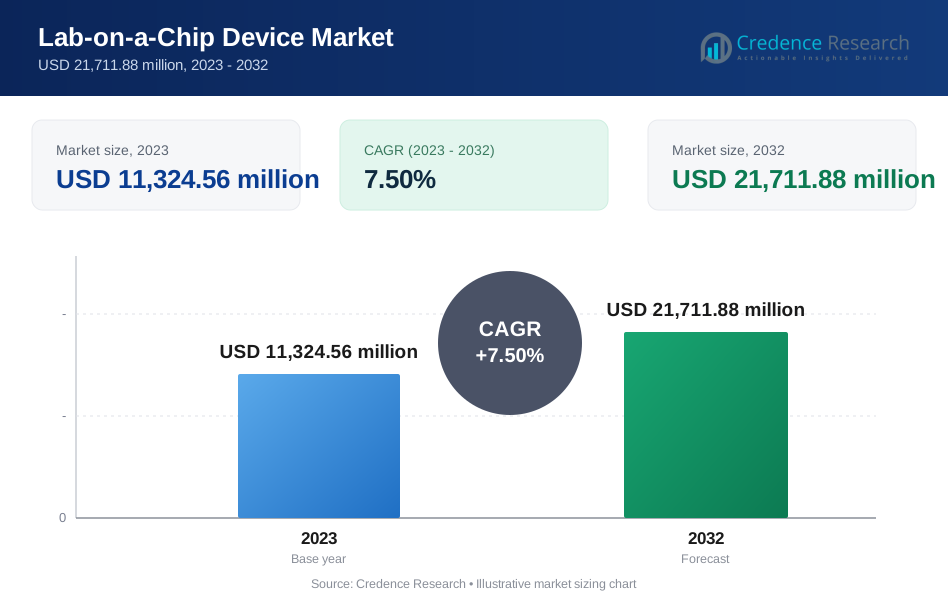
| Lab-on-a-Chip Device Market Size 2023 | USD 11,324.56 Million |
| Lab-on-a-Chip Device Market, CAGR | 7.50% |
| Lab-on-a-Chip Device Market Size 2032 | USD 21,711.88 Million |
Market Overview
The Lab-on-a-Chip Device Market is projected to grow from USD 11,324.56 million in 2023 to USD 21,711.88 million by 2032, reflecting a compound annual growth rate (CAGR) of 7.50%.
The Lab-on-a-Chip Device Market is driven by the increasing demand for point-of-care diagnostics, which offer rapid and accurate results, making them essential in clinical and research settings. Advances in microfluidics and nanotechnology have enhanced the functionality and efficiency of these devices, further boosting their adoption. The growing focus on personalized medicine and the need for miniaturized, cost-effective, and portable diagnostic solutions also contribute to market growth. Additionally, the rising prevalence of chronic diseases and the need for early detection and monitoring support the expanding use of lab-on-a-chip devices across various healthcare applications.
The Global Lab-on-a-Chip Device Market exhibits significant geographical diversity, with North America and Europe leading due to their advanced healthcare infrastructure, high adoption rates of innovative technologies, and substantial investments in research and development. The Asia-Pacific region is expected to witness rapid growth, driven by increasing healthcare expenditure, rising awareness of advanced diagnostic tools, and expanding biotechnology and pharmaceutical industries. Key players in the market, such as Becton, Dickinson and Company, Agilent Technologies Inc., Danaher Corporation, and Abbott Laboratories, dominate through their extensive product portfolios, technological advancements, and strategic partnerships, enabling them to cater to the growing global demand for lab-on-a-chip devices.
Market Drivers
Miniaturization and Portability
Lab-on-a-Chip (LOC) devices are transforming the diagnostic landscape through their significantly reduced size and enhanced portability compared to traditional laboratory equipment. For instance, LOC devices have been developed to the size of a cell phone or smaller, capable of diagnosing chronic diseases from a tiny droplet of blood or other body fluid. This miniaturization allows for easy transportation and use in various settings, including remote locations, emergency situations, and even at home, thus broadening access to diagnostic testing. The convenience of these portable devices means that testing can be conducted outside traditional laboratory environments, making diagnostics more accessible and timely for patients and healthcare providers alike.
Point-of-Care Testing
The ability of LOC devices to perform testing at or near the point of care represents a major shift in diagnostic practice, decentralizing testing and bringing it closer to the patient. For instance, in September 2022, Unitaid announced that it would invest USD 30 million to accelerate the introduction of advanced diagnostic technologies, which would further enhance screening efforts and expand testing availability at lower tiers of the healthcare system. This approach reduces turnaround times and improves patient outcomes by allowing for immediate clinical decisions based on test results. The decentralized nature of LOC testing is particularly advantageous in underserved areas and developing countries, where access to traditional laboratory facilities may be limited, thereby enhancing healthcare delivery and patient care in these regions.
Rapid Diagnostics
One of the key advantages of LOC devices is their ability to provide rapid diagnostic results, often within minutes. This quick turnaround is a major improvement over traditional laboratory methods, which can take hours or even days to deliver results. The speed of LOC devices is particularly beneficial for diagnosing infectious diseases, monitoring chronic conditions, and enabling timely medical interventions. Fast diagnostics are crucial in emergency settings where immediate decision-making is needed to ensure patient safety and effective treatment.
Cost-Effectiveness
LOC devices offer a cost-effective alternative to conventional laboratory testing by eliminating the need for extensive laboratory infrastructure and specialized personnel. The automation and miniaturization inherent in LOC technology lead to increased operational efficiency, significantly reducing the costs associated with testing. This affordability makes LOC devices a valuable tool for healthcare systems, especially in low-resource settings where budget constraints limit access to comprehensive laboratory services.
Market Trends
Technological Advancements and Rising Demand for Point-of-Care Diagnostics
The Lab-on-a-Chip (LOC) market is experiencing significant growth driven by technological advancements, particularly in the areas of microfluidics, nanotechnology, and biosensors. The integration of microfluidics technology is enabling the development of more complex and sophisticated LOC devices, allowing them to perform multiple analyses on a single chip. For instance, a recent survey by the National Institutes of Health (NIH) highlighted that LOC devices incorporating microfluidics have been successfully used in clinical trials to detect multiple biomarkers simultaneously, significantly reducing diagnostic time. This capability expands their range of applications and enhances their efficiency. Additionally, nanotechnology is being leveraged to create smaller, more sensitive, and more efficient LOC devices. These advancements enable the detection of minute quantities of analytes, making LOC devices more accurate and reliable for various diagnostic applications. The development of advanced biosensors further enhances the capabilities of LOC devices, enabling the detection and quantification of a wide range of biological and chemical substances. This technological progress is particularly valuable for point-of-care diagnostics, where rapid and accurate results are crucial for immediate medical decision-making. The rising demand for point-of-care diagnostics is a key driver of the LOC market, as these devices offer rapid and accurate results, making them ideal for use in decentralized healthcare settings such as homes, clinics, and emergency departments. The increasing need for decentralized healthcare solutions is driving the adoption of LOC devices, as they allow for testing to be conducted closer to the patient, reducing the need for centralized laboratory facilities.
Increasing Focus on Personalized Medicine and Expanding Applications
The focus on personalized medicine is growing, with LOC devices playing a crucial role in this transformation. These devices facilitate personalized medicine by enabling the analysis of individual genetic profiles and biomarkers, providing critical information that can be used to tailor treatments to specific patient needs. Precision diagnostics made possible by LOC technology can significantly improve treatment outcomes by ensuring that patients receive the most effective therapies based on their unique biological characteristics. This approach not only enhances the efficacy of treatments but also reduces the risk of adverse effects, making healthcare more targeted and efficient. Beyond traditional diagnostics, LOC devices are finding expanding applications in fields such as environmental monitoring, food safety testing, and drug discovery. Their ability to rapidly detect and analyze contaminants and pathogens makes them invaluable tools for monitoring environmental quality and ensuring food safety. In the pharmaceutical industry, LOC devices are being used to accelerate drug discovery processes by enabling high-throughput screening of potential drug candidates, reducing both time and costs associated with research and development.
Market Challenges Analysis
Technological Limitations and Regulatory Hurdles
The Lab-on-a-Chip (LOC) market faces several technological challenges that impact the development and adoption of these devices. One of the primary issues is the difficulty associated with miniaturizing complex laboratory processes onto a single chip. This miniaturization requires sophisticated technology to ensure that all necessary components and functionalities can be effectively integrated, which can be both technically challenging and expensive. Integration difficulties arise when combining various components, such as sensors, actuators, and microfluidic channels, into a cohesive and functional unit. These complexities can limit the capabilities of some LOC devices, restricting their applications and performance. Furthermore, ensuring accurate and reliable sample handling within the microfluidic channels is another significant challenge. The precision required for manipulating small volumes of liquids and ensuring consistent results can be difficult to achieve, affecting the reliability and accuracy of the tests performed by LOC devices. Regulatory hurdles also pose significant challenges for the LOC market, particularly for devices intended for medical diagnostics. The process of obtaining regulatory approval can be lengthy and costly, as LOC devices must meet stringent safety and efficacy standards set by regulatory bodies. The complexity of these approval processes can delay the commercialization of new LOC technologies, hindering market growth.
Cost and Manufacturing Challenges and Market Competition
Cost and manufacturing challenges are significant barriers to the widespread adoption of LOC devices. The production of LOC devices can be expensive, particularly in the early stages of development and commercialization when economies of scale have not yet been achieved. High manufacturing costs can make LOC devices less accessible and affordable, limiting their use to specific markets or applications. Additionally, scaling up the manufacturing process to meet mass production demands can be challenging, as it requires substantial investment in infrastructure and technology. Achieving consistent quality and performance across large volumes of production is crucial, but it can be difficult to maintain as production scales up. These manufacturing challenges can impact the ability of LOC device manufacturers to meet market demand and achieve profitability. The LOC market also faces intense competition from established players in the diagnostics and medical device industries. These established companies have significant resources, extensive distribution networks, and strong brand recognition, which can pose challenges for smaller or newer LOC device manufacturers trying to enter the market. The presence of established players can lead to price pressure, making it difficult for LOC device manufacturers to achieve profitability while maintaining competitive pricing.
Market Segmentation Analysis:
By Product:
The Global Lab-on-a-Chip (LOC) Device Market is segmented into instruments, reagents, and consumables. Instruments are critical components of LOC systems, encompassing devices that facilitate the miniaturization of laboratory processes. These include microfluidic chips and integrated systems that perform complex analyses. Reagents, another significant segment, are essential for conducting biochemical reactions and assays on the chip, enabling the detection and quantification of specific analytes. Consumables, such as microchips and cartridges, are vital for single-use applications and ensure the accuracy and reliability of the tests performed. As LOC technology advances, the demand for these products is expected to grow, driven by their increasing application across various fields.
By Application:
The application of LOC devices spans several areas, including genomics, proteomics, point-of-care diagnostics, drug discovery, and others. In genomics, LOC devices enable rapid and efficient analysis of genetic material, facilitating research and diagnostic applications. Proteomics benefits from LOC technology through the analysis of proteins and their functions, supporting disease research and biomarker discovery. Point-of-care diagnostics is a major driver for the LOC market, providing rapid, on-site testing capabilities in clinical and remote settings. In drug discovery, LOC devices accelerate the screening of potential drug candidates, improving the efficiency of the research process. These diverse applications underscore the versatility and growing importance of LOC technology in modern scientific and medical research.
Segments:
Based on Product:
- Instruments
- Reagents
- Consumables
Based on Application:
- Genomics
- Proteomics
- Point of Care Diagnostics
- Drug Discovery
- Others
Based on End-user:
- Hospitals & Clinics
- Biotechnology Companies
- Pharmaceutical Companies
- Forensic Laboratories
- Diagnostic Centres
Based on Technology:
- Microarrays
- Microfluidics
- Tissue Biochip
- Others
Based on the Geography:
- North America
- U.S.
- Canada
- Mexico
- Europe
- Germany
- France
- U.K.
- Italy
- Spain
- Rest of Europe
- Asia Pacific
- China
- Japan
- India
- South Korea
- South-east Asia
- Rest of Asia Pacific
- Latin America
- Brazil
- Argentina
- Rest of Latin America
- Middle East & Africa
- GCC Countries
- South Africa
- Rest of the Middle East and Africa
Regional Analysis
North America
North America dominates the global lab-on-a-chip device market, holding a substantial market share of approximately 40%. This leadership position is primarily driven by the region's advanced healthcare infrastructure, significant investments in research and development, and early adoption of innovative medical technologies. The United States, in particular, contributes heavily to this market share due to its robust biotechnology and pharmaceutical industries. The region's market is characterized by a strong focus on personalized medicine and point-of-care diagnostics, which has accelerated the development and adoption of lab-on-a-chip devices. Additionally, favorable government initiatives supporting the advancement of microfluidic technologies and the presence of major market players further bolster North America's position. The region also benefits from a well-established regulatory framework that facilitates the commercialization of these devices, ensuring their quality and reliability. The increasing demand for rapid, accurate, and cost-effective diagnostic solutions in clinical settings continues to drive the growth of the lab-on-a-chip device market in North America.
Europe
Europe holds the second-largest share in the global lab-on-a-chip device market, accounting for approximately 30% of the total market. The region's strong market position is underpinned by its robust academic and research institutions, which contribute significantly to innovations in microfluidic technologies. Countries such as Germany, the United Kingdom, and Switzerland lead in market adoption, driven by their advanced healthcare systems and strong emphasis on medical research. Europe's market is distinguished by a growing focus on environmental monitoring and food safety applications of lab-on-a-chip devices, expanding their use beyond traditional healthcare settings. The region also sees increasing collaborations between academic institutions and industry players, fostering the development of novel lab-on-a-chip solutions. Furthermore, European Union initiatives promoting the development of advanced medical technologies have created a favorable environment for market growth. The region's aging population and the consequent increase in chronic diseases have also contributed to the rising demand for efficient diagnostic tools, further driving the adoption of lab-on-a-chip devices across Europe.
Key Player Analysis
- Becton
- Dickinson and Company
- Agilent Technologies Inc.
- Danaher Corporation
- Bio-Rad Laboratories
- Abbott Laboratories
- Hoffmann-La Roche AG
- PerkinElmer Inc.
- IDEX Corporation
- Thermo Fisher Scientific Inc.
- Cepheid Inc.
- Biacore AB
Competitive Analysis
The Global Lab-on-a-Chip Device Market is highly competitive, with leading players like Becton, Dickinson and Company, Agilent Technologies Inc., Danaher Corporation, Bio-Rad Laboratories, Abbott Laboratories, and Thermo Fisher Scientific Inc. maintaining dominant positions. These companies leverage their strong research and development capabilities, extensive product portfolios, and global distribution networks to capture significant market shares. Innovation is a key competitive strategy, with these firms continuously developing advanced lab-on-a-chip technologies that offer improved sensitivity, portability, and cost-effectiveness. Strategic partnerships, mergers, and acquisitions are also common tactics employed to enhance market presence and expand product offerings. For example, companies often collaborate with academic institutions and research organizations to drive technological advancements and gain access to cutting-edge research. Additionally, these market leaders invest heavily in marketing and educational initiatives to raise awareness about the benefits of lab-on-a-chip devices, thereby driving adoption across various end-user segments, including hospitals, diagnostic centers, and pharmaceutical companies.
Recent Developments
- In August 2024, Abbott entered a global partnership with Medtronic to collaborate on an integrated continuous glucose monitoring (CGM) system.
- In July 2024, Danaher announced the launch of two new Clinical Laboratory Improvement Amendments (CLIA) and College of American Pathologists (CAP)-certified labs intended to accelerate the development of Companion Diagnostics (CDx) and Complementary Diagnostics (CoDx).
- In June 2024, Agilent introduced two new products, namely the Agilent 7010D Triple Quadrupole gas chromatography (GC)-MS System and the Agilent ExD Cell.
- In August 2024, Bio-Rad launched Annexin V StarBright Conjugates for Apoptosis Detection via Flow Cytometry.
- In June 2023, Becton Dickinson and Company launched a new robotic system to automate clinical flow cytometry.
Market Concentration & Characteristics
The Global Lab-on-a-Chip Device Market is characterized by a moderate to high level of market concentration, with a few key players holding substantial market shares. Leading companies such as Becton, Dickinson and Company, Agilent Technologies Inc., and Thermo Fisher Scientific Inc. dominate the market due to their extensive research and development capabilities, comprehensive product portfolios, and strong brand recognition. These firms drive innovation by continuously introducing advanced technologies that enhance the capabilities and applications of lab-on-a-chip devices. The market is marked by rapid technological advancements, including the integration of microfluidics, nanotechnology, and biosensors, which expand the functionality and efficiency of lab-on-a-chip devices. Despite the dominance of major players, the market also features numerous smaller companies and startups that contribute to innovation and diversification. The competitive landscape is influenced by factors such as regulatory compliance, cost-effective manufacturing, and the ability to meet the growing demand for point-of-care diagnostics and personalized medicine solutions.
Report Coverage
The research report offers an in-depth analysis based on Product, Application, End-user, Technology and Geography. It details leading market players, providing an overview of their business, product offerings, investments, revenue streams, and key applications. Additionally, the report includes insights into the competitive environment, SWOT analysis, current market trends, as well as the primary drivers and constraints. Furthermore, it discusses various factors that have driven market expansion in recent years. The report also explores market dynamics, regulatory scenarios, and technological advancements that are shaping the industry. It assesses the impact of external factors and global economic changes on market growth. Lastly, it provides strategic recommendations for new entrants and established companies to navigate the complexities of the market.
Future Outlook
- The Global Lab-on-a-Chip Device Market is expected to grow steadily due to increasing demand for point-of-care diagnostics and rapid testing solutions.
- Advancements in microfluidics and nanotechnology will continue to drive innovation, enhancing the precision and efficiency of lab-on-a-chip devices.
- The integration of artificial intelligence and machine learning will enable more accurate data analysis and interpretation, improving diagnostic outcomes.
- Growing applications in personalized medicine will expand the market, allowing for tailored treatments based on individual genetic profiles.
- The market will see increased adoption in drug discovery and development, as lab-on-a-chip devices facilitate high-throughput screening and accelerated research.
- Rising demand for home-based testing and remote monitoring will boost the market, particularly for chronic disease management.
- The expansion of healthcare infrastructure in emerging markets will provide significant growth opportunities for lab-on-a-chip devices.
- Regulatory approvals and standardization of lab-on-a-chip technologies will streamline market entry and foster broader adoption.
- Partnerships and collaborations between technology firms, research institutions, and healthcare providers will accelerate the development and commercialization of new lab-on-a-chip solutions.
- The market will face challenges related to cost reduction and scalability, requiring continuous innovation to ensure affordability and widespread adoption.
Request a Free Sample
Fill in your details and we'll send you a free sample report.
- Sample data tables & charts
- Research methodology
Need a Custom Version of This Report?
Tailor the scope, geography, or segments to your exact requirements.
- Custom geography or segment scope
- Direct access to our analyst team
Frequently Asked Questions
What is the current size of the Global Lab-on-a-Chip Device Market?
What factors are driving the growth of the Global Lab-on-a-Chip Device Market?
What are the key segments within the Global Lab-on-a-Chip Device Market?
What are some challenges faced by the Global Lab-on-a-Chip Device Market?
Who are the major players in the Global Lab-on-a-Chip Device Market?
Table of Content
Chapter 1. Report Introduction
- 1.1 Report Description & Purpose
- 1.1.1 Report Title & Market Definition
- 1.1.2 Unique Selling Propositions (USP) & Key Differentiators
- 1.1.3 Value Proposition for Stakeholders
- 1.2 Research Objectives
- 1.2.1 Market Sizing Objectives (Volume & Revenue)
- 1.2.2 Segmentation Objectives
- 1.2.3 Competitive Intelligence Objectives
- 1.2.4 Forecast & Scenario Objectives
- 1.3 Report Scope
- 1.3.1 Lab-on-a-Chip Device Scope – Types & Subtypes Covered
- 1.3.2 Geographic Scope – Regions & Countries Covered
- 1.3.3 Historical Period, Base Year & Forecast Period (2023; forecast to 2032)
- 1.3.4 Inclusions & Exclusions
- 1.4 HS Code & Classification Framework
- 1.5 Currency, Units & Pricing Basis
- 1.6 Target Stakeholders
- 1.7 Limitations & Assumptions
Chapter 2. Executive Summary
- 2.1 Global Lab-on-a-Chip Device Market Snapshot
- 2.1.1 Market Size – Historical (2023) & Forecast (2023-2032) (2023: USD 11,324.56 million → 2032: USD 21,711.88 million)
- 2.1.2 Volume & Revenue – Global Totals
- 2.1.3 Key Market Highlights – Top Five Facts
- 2.2 Lab-on-a-Chip Device Market Segmentation Snapshot
- 2.2.1 Market Split by Region – 2023 vs. 2032
- 2.3 Competitive Snapshot
- 2.3.1 Top 10 Players by Revenue Share – 2023
- 2.3.2 Top 10 Players by Volume Share – 2023
- 2.3.3 Recent Strategic Developments (18-Month Summary)
- 2.4 Key Investment Highlights & Strategic Conclusions
Chapter 3. Lab-on-a-Chip Device Market Dynamics & Industry Analysis
- 3.1 Market Overview & Context
- 3.1.1 Lab-on-a-Chip Device Market Position in the Broader Automotive Value Chain
- 3.1.2 OEM vs. Replacement Market Dynamics
- 3.1.3 Market Maturity & Development Stage by Region
- 3.2 Lab-on-a-Chip Device Market Drivers
- 3.3 Lab-on-a-Chip Device Market Restraints & Challenges
- 3.4 Lab-on-a-Chip Device Market Opportunities
- 3.5 Porter's Five Forces Analysis
- 3.5.1 Threat of New Entrants
- 3.5.2 Bargaining Power of Suppliers
- 3.5.3 Bargaining Power of Buyers
- 3.5.4 Threat of Substitutes
- 3.5.5 Competitive Rivalry – Intensity Assessment
- 3.6 Lab-on-a-Chip Device Value Chain Analysis
- 3.6.1 Upstream – Raw Material/Input Suppliers
- 3.6.1.1 Raw Material/Input 1
- 3.6.1.2 Raw Material/Input 2
- 3.6.1.3 Raw Material/Input 3
- 3.6.2 Midstream – Production/Manufacturing/Service Delivery
- 3.6.2.1 Production/Process Overview
- 3.6.2.2 Key Facility Locations & Capacity by Manufacturer
- 3.6.3 Downstream – Distribution & End Consumer
- 3.6.3.1 Primary Channel – B2B/OEM
- 3.6.3.2 Secondary Channels – Dealer, Retail, Online, Direct
- 3.6.4 Value Chain Profitability Analysis
- 3.6.1 Upstream – Raw Material/Input Suppliers
- 3.7 PESTEL Analysis
- 3.7.1 Political Factors
- 3.7.2 Economic Factors
- 3.7.3 Social Factors
- 3.7.4 Technological Factors
- 3.7.5 Environmental Factors
- 3.7.6 Legal Factors
- 3.8 Lab-on-a-Chip Device Supply Chain Analysis
- 3.8.1 Raw Material/Input Supply Risk Assessment
- 3.8.2 Manufacturing Concentration Risk (Geographic Exposure)
- 3.8.3 Trade Disruption Impact Analysis
- 3.9 Regulatory & Policy Landscape
Note: The regulatory and policy landscape section covers regulations based on their applicability to the market, Lab-on-a-Chip Device category, geography, and scope of the study. Only regulatory frameworks with a material impact on operations, compliance, trade, sustainability, or market access are analyzed in detail.
Chapter 4. Key Investment Pockets & Opportunity Analysis
- 4.1 Lab-on-a-Chip Device Market Attractiveness Analysis
- 4.1.1 By Region – Investment Attractiveness Matrix (Volume × CAGR)
- 4.2 Absolute Revenue Growth Opportunity
- 4.2.1 By Region – Absolute USD Growth Through 2032
- 4.3 Incremental Volume Opportunity
- 4.3.1 By Region – Incremental Volume Through 2032
- 4.3.2 Segment – Incremental Volume
- 4.4 Emerging Submarket Opportunity Deep Dive (Subject to Applicability)
- 4.5 Emerging Market Opportunity Scorecards
- 4.5.1 United States
- 4.5.2 Europe
- 4.5.3 Asia
- 4.5.4 Middle East & Africa
Note: Emerging Market Opportunity Scorecards will be included based on relevance and strategic importance. Regions listed are indicative and may vary depending on data availability and market dynamics.
Chapter 5. Lab-on-a-Chip Device Import-Export Analysis & Trade Flows
- 5.1 Global Trade Overview
- 5.1.1 Global Export Value by Country (2023)
- 5.1.2 Global Export Volume by Country (2023)
- 5.1.3 Global Import Value by Country (2023)
- 5.1.4 Global Import Volume by Country (2023)
- 5.1.5 Net Trade Balance by Country (2023)
- 5.2 Export Analysis – Segment
- 5.2.1 Type 1 (HS Code)
- 5.2.2 Type 2 (HS Code)
- 5.2.3 Type 3 (HS Code)
- 5.2.4 Type 4 (HS Code)
- 5.2.5 Type 5 (HS Code)
- 5.3 Import Analysis – Segment
- 5.3.1 Type 1 (HS Code)
- 5.3.2 Type 2 (HS Code)
- 5.3.3 Type 3 (HS Code)
- 5.3.4 Type 4 (HS Code)
- 5.3.5 Type 5 (HS Code)
- 5.4 Average Unit Trade Prices
- 5.4.1 Average Export Price – Segment & Country
- 5.4.2 Average Import Price – Segment & Source Country
- 5.4.3 Price Trends (2023)
- 5.5 Key Trade Route Analysis
- 5.5.1 Trade Route 1
- 5.5.2 Trade Route 2
- 5.5.3 Trade Route 3
- 5.5.4 Trade Route 4
- 5.5.5 Trade Route 5
- 5.6 Trade Policy Impact Assessment
- 5.6.1 US Anti-Dumping & Section 301 Tariffs
- 5.6.2 EU Customs Union Impact
- 5.6.3 Major Free Trade Agreements
- 5.6.4 USMCA Rules of Origin
Note: Trade policy analysis will be included only where relevant to the Lab-on-a-Chip Device market.
Chapter 6. Competitive Landscape & Company Benchmarking
- 6.1 Lab-on-a-Chip Device Market Concentration & Structure
- 6.1.1 Herfindahl-Hirschman Index (HHI) – vs. 2023
- 6.1.2 Tier 1, Tier 2 & Tier 3 Market Structure
- 6.1.3 Global, Regional & Local Player Dynamics
- 6.2 Lab-on-a-Chip Device Market Share Analysis – 2023
- 6.2.1 Global Revenue Share by Company
- 6.2.2 Global Volume Share by Company
- 6.2.3 Regional Revenue Share
- 6.2.4 Market Share Evolution ( vs. 2023)
- 6.2.5 OEM Segment Share by Company
- 6.2.6 Replacement Segment Share by Company
- 6.3 Production/Delivery Capacity & Facility Analysis
- 6.3.1 Global Installed Capacity
- 6.3.2 Capacity Utilization Rates
- 6.3.3 Production/Output Volume
- 6.3.4 Facility Locations & Capacity Map
- 6.3.5 Planned Capacity Additions
- 6.4 Lab-on-a-Chip Device Competitive Benchmarking Matrix
- 6.4.1 Revenue, Volume, CAGR & Profitability Comparison
- 6.4.2 Channel Revenue Mix
- 6.4.3 Geographic Revenue Exposure
- 6.4.4 R&D Intensity
- 6.4.5 Sustainability Maturity
- 6.5 Strategic Developments in Lab-on-a-Chip Device (Last 24 Months)
- 6.5.1 Mergers, Acquisitions & Divestments
- 6.5.2 New Lab-on-a-Chip Device Launches
- 6.5.3 Facility Expansions
- 6.5.4 Strategic Alliances, Joint Ventures & Partnerships
- 6.5.5 Distribution Expansion & Market Entry
- 6.5.6 Sustainability & ESG Initiatives
- 6.6 Competitive Strategy Mapping
- 6.6.1 Leader, Challenger, Follower & Niche Classification
- 6.6.2 Pricing Strategy Comparison
- 6.6.3 Channel Strategy Matrix
Note: Strategic developments are included based on their materiality and the availability of reliable information.
Chapter 7. Global Lab-on-a-Chip Device Market – By Distribution Channel
- 7.1 Segment Overview
- 7.1.1 Volume & Revenue Split by Channel (2023 & 2032)
- 7.1.2 Channel Mix Evolution (2023-2032)
Chapter 8. Regional Market Analysis – Global Overview
- 8.1 Global Regional Overview
- 8.1.1 Regional Volume Share
- 8.1.2 Regional Revenue Share
- 8.1.3 Regional Volume by Region
- 8.1.4 Regional Revenue by Region
- 8.1.5 Regional Forecast Through 2032
- 8.2 Cross-Regional Segment Analysis
- 8.2.1 By Distribution Channel
- 8.2.2 By Brand/Price Tier
Chapter 9. North America Lab-on-a-Chip Device Market
- 9.1 United States
- 9.2 Canada
- 9.3 Mexico
Chapter 10. Europe Lab-on-a-Chip Device Market
- 10.1 Germany
- 10.2 France
- 10.3 Italy
- 10.4 United Kingdom
- 10.5 Spain
- 10.6 Poland
- 10.7 Russia
- 10.8 Netherlands
- 10.9 Belgium
- 10.10 Sweden
- 10.11 Denmark
- 10.12 Norway
- 10.13 Rest of Europe
Chapter 11. Asia Pacific Lab-on-a-Chip Device Market
- 11.1 China
- 11.2 India
- 11.3 Japan
- 11.4 South Korea
- 11.5 Thailand
- 11.6 Indonesia
- 11.7 Vietnam
- 11.8 Malaysia
- 11.9 Australia
- 11.10 Rest of Asia Pacific
Chapter 12. Latin America Lab-on-a-Chip Device Market
- 12.1 Brazil
- 12.2 Argentina
- 12.3 Colombia
- 12.4 Chile
- 12.5 Rest of Latin America
Chapter 13. Middle East Lab-on-a-Chip Device Market
- 13.1 Saudi Arabia
- 13.2 United Arab Emirates
- 13.3 Turkey
- 13.4 Israel
- 13.5 Iran
- 13.6 Rest of the Middle East
Chapter 14. Africa Lab-on-a-Chip Device Market
- 14.1 South Africa
- 14.2 Egypt
- 14.3 Nigeria
- 14.4 Morocco
- 14.5 Rest of Africa
Chapter 15. Lab-on-a-Chip Device Company Profiles
- 15.1 [Company 01]
- 15.1.1 Company Overview
- 15.1.2 Key Management Personnel
- 15.1.3 Products & Services Portfolio
- 15.1.4 Financial Performance
- 15.1.5 Key Market Focus & Geographic Presence
- 15.1.6 Recent Developments & Strategic Initiatives
Note: The company profile list is preliminary and may change based on research findings, market developments, data availability, and client requirements.
Chapter 16. Appendices
- Appendix A – List of Abbreviations & Acronyms
- Appendix B – Industry Classification Code Reference – Full Series
- Appendix C – Production & Capacity Data Tables
- Appendix D – End-Use & Demand Base Tables
- Appendix E – Consumption & Replacement Rate Assumptions
- Appendix F – ASP Reference Tables
- Appendix G – Manufacturing & Facility Database
- Appendix H – Import-Export Data Tables
- Appendix I – Regulatory Summary Tables
- Appendix J – Primary Research Participant List (Anonymized)
- Appendix K – Primary Research Questionnaire Framework
- Appendix L – Data Sources & Bibliography
- Appendix M – Market Size Divergence & Source Comparison
Chapter 17. Research Methodology
- 17.1 Research Framework & Philosophy
- 17.2 Secondary Research – Sources, Hierarchy & Data Extraction
- 17.3 Data Modeling – Bottom-Up & Top-Down Market Sizing
- 17.4 Primary Research – Stakeholder Framework, LOI & Sample Sizes
- 17.5 Forecast Methodology – Regression, Scenario & Sensitivity Analysis
- 17.6 Quality Control – Four-Layer Validation Framework
- 17.7 Limitations & Standard Assumptions
- 17.8 Disclaimer
