| REPORT ATTRIBUTE | DETAILS |
|---|---|
| Historical Period | 2019-2022 |
| Base Year | 2023 |
| Forecast Period | 2024-2032 |
| Medical Aesthetics Market Size 2024 | USD 14,987.63 million |
| Medical Aesthetics Market, CAGR | 10.85% |
| Medical Aesthetics Market Size 2032 | USD 37,875.14 million |
Market Overview:
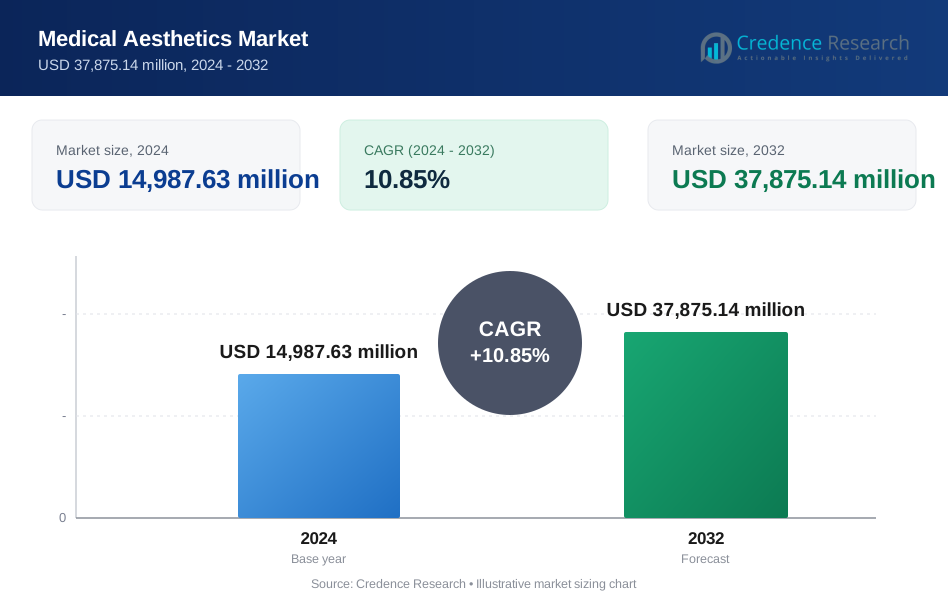
The global medical aesthetics market, valued at approximately USD 14,987.63 million in 2024, is projected to grow to USD 37,875.14 million by 2032, expanding at a compound annual growth rate (CAGR) of 10.85% over the forecast period. Medical aesthetics encompasses a wide range of procedures, including botulinum toxin injections, dermal fillers, laser hair removal, body contouring, and skin rejuvenation treatments. These treatments, primarily offered in aesthetic clinics, dermatology centers, and medical spas, are aimed at enhancing physical appearance through minimally invasive and non-invasive techniques. The market’s growth reflects increasing consumer demand for appearance-enhancing procedures that offer results with minimal recovery time.
Key drivers of growth in the medical aesthetics market include rising consumer interest in physical appearance and an increasing acceptance of aesthetic procedures across all age groups and demographics. The influence of social media and changing perceptions of beauty contribute to the popularity of these treatments. Technological advancements in aesthetic devices, such as laser-based systems and radiofrequency treatments, provide effective, safe, and natural-looking results, making procedures more appealing to a broader audience. Additionally, the aging population and growing disposable incomes in many regions support demand, as more individuals seek minimally invasive procedures to maintain youthful appearances and improve skin quality.
Regionally, North America holds the largest share of the medical aesthetics market, driven by high disposable income levels, a robust healthcare infrastructure, and significant consumer interest in aesthetic treatments. The United States leads the region, with widespread availability of advanced procedures and a strong presence of key industry players. Europe follows closely, with increasing demand from countries such as France, Germany, and the United Kingdom, where a focus on appearance and access to advanced treatments drive market growth. The Asia-Pacific region is expected to experience the highest growth rate, fueled by rising disposable incomes, a growing middle class, and expanding healthcare infrastructure in countries like China, Japan, and South Korea. Latin America and the Middle East & Africa are witnessing steady growth, supported by expanding access to aesthetic services and an increasing focus on wellness and self-care.
Market Drivers:
Rising Demand for Minimally Invasive Procedures:
The growing preference for minimally invasive procedures has become a pivotal driver in the medical aesthetics market. Consumers increasingly favor treatments that offer enhanced results with minimal recovery time. For instance, according to a report from the American Society of Plastic Surgeons, minimally invasive cosmetic procedures grew by over 200% between 2000 and 2023. Procedures such as Botox injections and dermal fillers are particularly popular, as they allow patients to achieve desired aesthetic results without undergoing major surgery. The reduced recovery time and lower risk associated with these treatments have made them a preferred choice for both younger demographics and older adults seeking subtle rejuvenation.
Technological Advancements in Aesthetic Treatments:
Advances in technology are continually expanding the possibilities for medical aesthetics, driving market growth through new and innovative treatment options. For instance, laser technologies, such as CO2 and fractional lasers, have significantly improved outcomes for skin resurfacing and scar reduction. According to industry data, the global laser aesthetics segment is expected to grow by 15% annually, underscoring strong consumer interest in such cutting-edge procedures. Additionally, advancements in body contouring devices and radiofrequency technologies are enabling non-invasive fat reduction and skin tightening, meeting the rising consumer demand for safe and effective body sculpting solutions.
Aging Population and Growing Consumer Awareness:
The global aging population is another key factor fueling demand for medical aesthetics, as older adults increasingly seek aesthetic solutions for youthful appearances. According to the World Health Organization (WHO), the global population aged 60 years and older is expected to double by 2050. This demographic shift contributes significantly to market expansion, as older adults increasingly pursue aesthetic treatments to address aging concerns like wrinkles, sagging skin, and volume loss. Growing awareness of aesthetic options across various age groups is further bolstering demand, especially with social media platforms playing a role in showcasing aesthetic trends and results.
Supportive Government Regulations and Approvals:
Government approvals and regulatory advancements also play a substantial role in market growth, particularly with the swift approval of innovative treatments and devices. For instance, in the United States, the FDA has approved several new fillers and laser devices in recent years, which has encouraged both healthcare providers and consumers to adopt the latest technologies confidently. Similarly, in countries like South Korea, known for its strong aesthetic industry, government initiatives aimed at boosting medical tourism have further supported the market's expansion, attracting an international consumer base.
Market Trends:
Growth in Non-Surgical Body Contouring:
One of the prevailing trends in the medical aesthetics market is the increased demand for non-surgical body contouring procedures. Consumers are increasingly seeking effective, non-invasive methods to improve body shape without downtime. For instance, Allergan’s CoolSculpting technology, a popular cryolipolysis device, saw a 25% increase in usage in the last three years, largely due to its ability to reduce fat without invasive surgery. In addition, a survey by the American Society for Dermatologic Surgery (ASDS) reported that over 55% of patients preferred non-surgical body contouring options over traditional methods, reflecting a shift towards treatments with lower risks and faster recovery times.
Rising Popularity of Combination Treatments:
Combination treatments that blend multiple aesthetic procedures are gaining traction, offering enhanced results through a multi-faceted approach. Patients are opting for personalized treatment plans that combine treatments like Botox, fillers, and laser therapies to achieve more comprehensive rejuvenation. For example, Galderma’s Restylane filler products have shown increased usage when combined with neuromodulators, as these combinations address multiple signs of aging in a single session. According to clinical data, nearly 30% of patients seeking injectables now choose combination treatments, a trend driven by the growing desire for tailored, holistic results that target multiple concerns simultaneously.
Increased Focus on Male Aesthetic Treatments:
The market for male aesthetic treatments is also expanding, driven by a growing acceptance of aesthetic procedures among men. According to the American Academy of Facial Plastic and Reconstructive Surgery (AAFPRS), male patients represented 15% of all aesthetic procedures in 2023, a notable increase from previous years. Treatments like hair restoration, jawline enhancement, and body contouring are particularly popular among male patients. For instance, Cynosure’s SculpSure, a non-invasive fat reduction treatment, reported a 20% growth in its male clientele, reflecting a shifting perception and demand among men for non-surgical aesthetic enhancements.
Rise in Skin Health and Preventive Treatments:
Consumers are increasingly focusing on preventive and skin health treatments, which has led to rising demand for procedures that maintain youthful skin. Preventive Botox, for example, has gained popularity among younger individuals, with data showing that patients in their 20s and 30s now account for over 15% of all Botox users in the U.S. Similarly, HydraFacial reported a 30% increase in its younger clientele, who view regular skin maintenance as a preventive measure. This trend highlights a growing awareness of proactive skin health, with consumers investing in treatments to maintain their appearance over the long term.
Market Challenges Analysis:
High Cost of Aesthetic Procedures:
One of the primary restraints in the medical aesthetics market is the high cost associated with aesthetic procedures, which limits accessibility for many potential patients. Non-surgical treatments like injectables and laser therapies often require regular maintenance to achieve optimal results, adding to cumulative costs. For example, a single session of laser skin resurfacing can range from $500 to $2,500 in the United States, making it less feasible for individuals with moderate incomes. This cost barrier is particularly evident in regions with limited insurance coverage for elective procedures, reducing the potential consumer base.
Stringent Regulatory Approval Processes:
The stringent regulatory framework surrounding medical aesthetics is another significant challenge, as it often delays the introduction of new treatments and technologies. The U.S. Food and Drug Administration (FDA) and the European Medicines Agency (EMA) have strict guidelines for approving aesthetic devices and treatments, prioritizing patient safety and efficacy. While these regulations ensure high standards, they also require extensive clinical trials and testing, which can be time-consuming and costly for companies. This lengthy approval process slows down the adoption of new technologies and can hinder market expansion, especially for smaller companies with limited resources.
Risk of Complications and Side Effects:
Potential complications and side effects associated with aesthetic procedures remain a critical concern, deterring some consumers from opting for treatments. Although minimally invasive procedures are considered safer than surgical alternatives, they still carry risks such as infection, scarring, and adverse reactions. The American Society for Dermatologic Surgery (ASDS) reports that around 5% of minimally invasive procedures result in some form of side effect, highlighting the ongoing need for high safety standards. These risks, combined with the potential for unsatisfactory results, can lead to hesitation among potential patients.
Lack of Qualified Practitioners:
Another pressing challenge is the shortage of qualified practitioners in the medical aesthetics field. Effective administration of treatments such as injectables, lasers, and body contouring devices requires specialized skills and training. In some regions, limited access to certified practitioners has resulted in inconsistent treatment quality, which affects patient satisfaction and market reputation.
Market Segmentation Analysis:
By Type, the market is divided into segments including injectables, skin resurfacing, body contouring, and others. Injectables, such as Botox and dermal fillers, hold the largest share due to their popularity for wrinkle reduction and facial volume restoration. Body contouring and skin resurfacing are also experiencing steady growth as consumers increasingly seek non-invasive options for fat reduction and skin rejuvenation.
By Technology, the market encompasses laser-based technologies, energy-based devices, and micro-needling, among others. Laser technologies dominate this segment, widely used for hair removal, skin resurfacing, and pigmentation treatments. Energy-based devices, including ultrasound and radiofrequency, are rapidly gaining traction for non-surgical body contouring and skin tightening procedures. Micro-needling, often combined with radiofrequency, is another growing segment, valued for its effectiveness in treating skin texture and promoting collagen production.
By End User, the market includes hospitals, dermatology clinics, medical spas, and beauty clinics. Medical spas and dermatology clinics lead the end-user segment, as these facilities are equipped with advanced devices and staffed with skilled professionals trained in aesthetic procedures. The hospital segment also contributes significantly, offering a range of aesthetic treatments alongside traditional medical services, particularly in urban centers.
Segmentations:
By Type
- Energy-based Aesthetic Devices
-
- Laser-based Aesthetic Devices
- Radiofrequency-based Aesthetic Devices
- Light-based Aesthetic Devices
- Ultrasound Aesthetic Devices
- Non-energy-based Aesthetic Devices
-
- Botulinum Toxin
- Dermal Fillers
- Microdermabrasion
- Implants
- Dental Implants
- Breast Implants
- Other Implants
- Others
By Application
- Skin Resurfacing & Tightening
- Body Contouring and Cellulite Reduction
- Hair and Tattoo Removal
- Breast Augmentation
- Other Applications
By End-user
- Hospitals
- Specialty Clinics
- Others
By Region
- North America
- U.S.
- Canada
- Mexico
- Europe
- Germany
- France
- U.K.
- Italy
- Spain
- Rest of Europe
- Asia Pacific
- China
- Japan
- India
- South Korea
- South-east Asia
- Rest of Asia Pacific
- Latin America
- Brazil
- Argentina
- Rest of Latin America
- Middle East & Africa
- GCC Countries
- South Africa
- Rest of the Middle East and Africa
Regional Analysis:
North America holds the largest market share, accounting for approximately 35% of the global market. This dominance is driven by well-established healthcare systems, high disposable incomes, and a strong demand for aesthetic treatments. The United States leads this region, with a high concentration of clinics and medical spas offering advanced aesthetic procedures. Furthermore, favorable regulatory approvals from the U.S. Food and Drug Administration (FDA) have facilitated the quick adoption of new technologies in this market. Canada also plays a significant role, with increasing awareness of aesthetic treatments and a rise in minimally invasive procedures.
Europe follows closely, holding around 25% of the global market share. The region’s market is driven by rising demand for non-invasive and minimally invasive treatments, coupled with a strong regulatory framework from the European Medicines Agency (EMA). Countries such as Germany, France, and the United Kingdom are key contributors, with robust healthcare infrastructure and a growing number of certified medical professionals trained in aesthetic procedures. Additionally, an increasing aging population in Europe is fueling demand for anti-aging solutions, with a steady rise in the adoption of injectables and laser-based treatments.
Asia-Pacific is the fastest-growing region in the medical aesthetics market, accounting for approximately 20% of the global market share and expected to see the highest growth rate over the coming years. Factors such as economic growth, rising disposable incomes, and a growing middle class are boosting market demand. Countries like South Korea, Japan, and China are at the forefront of this growth, with South Korea recognized as a global hub for cosmetic procedures and medical tourism. Government initiatives in the region, such as those promoting medical tourism, are also playing a significant role in expanding access to aesthetic treatments for international patients. The increasing influence of social media in Asia-Pacific, where consumers are highly image-conscious, is further propelling market growth.
Latin America holds about 10% of the global market share, with Brazil and Mexico leading the region. Brazil is particularly notable for its high volume of both surgical and non-surgical aesthetic procedures, making it one of the most active markets globally. Growing consumer awareness and rising disposable incomes in urban areas are driving demand, with an increasing number of clinics and practitioners offering aesthetic services.
The Middle East & Africa represents a smaller share, accounting for around 5% of the market. However, this region is gradually expanding as affluent populations in countries like the United Arab Emirates and Saudi Arabia drive demand for high-end aesthetic treatments. The region’s growth is further supported by a rising trend of medical tourism, particularly in the UAE, where specialized clinics attract patients from neighboring countries.
Key Player Analysis:
- AbbVie Inc. (Allergan Aesthetics)
- Galderma S.A.
- Merz Pharma GmbH & Co. KGaA
- Johnson & Johnson (Mentor Worldwide LLC)
- Bausch Health Companies Inc. (Solta Medical)
- Hologic Inc. (Cynosure)
- Cutera Inc.
- Alma Lasers (a subsidiary of Sisram Medical)
- Sientra Inc.
- En. S.p.A.
Competitive Analysis:
The Medical Aesthetics Market is highly competitive, with key players continuously innovating to strengthen their market positions. Companies like AbbVie Inc. (Allergan Aesthetics), Galderma, and Merz Pharma lead the industry, capitalizing on established brands, extensive portfolios, and advanced technologies in injectables and skin rejuvenation. Major players are focusing on strategic acquisitions, such as AbbVie’s acquisition of Allergan, to expand their product offerings and market reach. In addition, Hologic (Cynosure) and Bausch Health (Solta Medical) are enhancing their portfolios with innovative laser and energy-based devices to cater to rising consumer demand for non-invasive treatments. Companies like Cutera and Alma Lasers are gaining ground through targeted expansions and regional partnerships, particularly in the Asia-Pacific region. Overall, competitive strategies in this market include product innovation, geographical expansion, and a focus on consumer-centric solutions to address the diverse aesthetic needs of a global clientele.
Recent Developments:
- In August 2024, L'Oréal acquired a 10% stake in Swiss skincare company Galderma, aiming to capitalize on the expanding medical cosmetics market. This move includes a research and development collaboration, reflecting L'Oréal's interest in the aesthetics sector.
- In September 2024, healthcare-focused private equity firm ArchiMed finalized a $742 million acquisition of Jeisys Medical, a Korean manufacturer of energy-based devices used in medical aesthetics. This marks ArchiMed's first investment in Asia, highlighting the growing demand for non-invasive aesthetic treatments.
- In June 2023, PRIVI introduced a "buy now, pay later" service for aesthetic treatments such as Botox and microneedling. This initiative aims to make these procedures more accessible by allowing patients to pay in monthly installments without interest, catering to the increasing demand for aesthetic procedures post-pandemic.
- In October 2024, Rion Aesthetics introduced the Plated Intense Serum, an anti-aging product utilizing platelets sourced from blood banks. The serum employs billions of exosome messengers per dose through its Renewosome technology to reduce facial redness and enhance shelf stability, addressing common issues faced by stem cell products.
Market Concentration & Characteristics:
The Medical Aesthetics Market is moderately concentrated, with a few leading companies dominating a significant share due to their extensive portfolios, brand reputation, and established distribution networks. Key players, including AbbVie (Allergan), Galderma, and Merz Pharma, set the pace through continuous innovation in injectables, laser devices, and body contouring technologies. This market is characterized by high entry barriers due to stringent regulatory requirements and the need for advanced technological capabilities, which favor established companies with substantial resources. Nevertheless, smaller and emerging companies also contribute through niche offerings and specialized technologies, particularly in the non-invasive and minimally invasive treatment segments. The market's competitive nature drives innovation, with companies investing in research and development to create safe, effective, and user-friendly products that align with growing consumer demand for minimally invasive aesthetic solutions. Strategic partnerships and regional expansions further define this market, enhancing both reach and brand positioning in a rapidly evolving landscape.
Report Coverage:
The research report offers an in-depth analysis based on Type, Application, End-user, and Region. It details leading market players, providing an overview of their business, product offerings, investments, revenue streams, and key applications. Additionally, the report includes insights into the competitive environment, SWOT analysis, current market trends, as well as the primary drivers and constraints. Furthermore, it discusses various factors that have driven market expansion in recent years. The report also explores market dynamics, regulatory scenarios, and technological advancements that are shaping the industry. It assesses the impact of external factors and global economic changes on market growth. Lastly, it provides strategic recommendations for new entrants and established companies to navigate the complexities of the market.
Future Outlook:
- The medical aesthetics market will likely see continued innovation in non-invasive technologies, driven by consumer preference for minimal recovery time and low-risk procedures.
- Demand for personalized treatments will grow as advancements in artificial intelligence and data analytics enable customized aesthetic solutions based on individual patient needs.
- The adoption of robotic-assisted aesthetic procedures is anticipated to rise, improving precision in treatments and ensuring more consistent outcomes.
- Expanding applications of laser technology, including new wavelengths and devices, will drive growth in areas such as skin resurfacing, tattoo removal, and hair reduction.
- Injectable treatments are expected to gain further traction as new formulations and longer-lasting options enter the market, providing patients with more effective anti-aging solutions.
- Integration of digital health tools, including telemedicine, will enhance patient consultation experiences and accessibility to aesthetic treatments.
- Rising awareness of aesthetic procedures among men and younger demographics will diversify the patient base, reshaping product offerings and marketing strategies.
- Growth in medical tourism, particularly in regions like Asia-Pacific, will boost demand for aesthetic treatments as consumers seek high-quality yet affordable options abroad.
- Increasing focus on preventive aesthetics will expand the market, with consumers investing in treatments to maintain youthful appearances over time.
- Regulatory bodies worldwide are expected to streamline approval processes for innovative devices and treatments, facilitating faster market entry and expansion.
Request a Free Sample
Fill in your details and we'll send you a free sample report.
- Sample data tables & charts
- Research methodology
Market Dynamics
Preference for Minimally Invasive Procedures
Consumers increasingly seek aesthetic treatments that offer visible results with minimal downtime and lower risk, such as injectables and laser therapies, fueling rapid market growth as these options become more widely available.
Technological Advancements in Devices
Continuous innovation in laser, radiofrequency, and ultrasound-based devices has improved safety, efficacy, and patient comfort, expanding the range of treatable conditions and attracting a broader patient base.
Influence of Social Media and Changing Beauty Standards
Social media platforms and evolving perceptions of beauty are driving greater acceptance and demand for aesthetic procedures across diverse age groups and demographics, encouraging more people to pursue treatments.
Aging Population and Rising Disposable Income
The global increase in the aging population, combined with higher disposable incomes in many regions, is boosting demand for anti-aging and rejuvenation procedures as more individuals seek to maintain youthful appearances.
Supportive Regulatory Environment and Medical Tourism
Streamlined regulatory approvals for new devices and government initiatives promoting medical tourism, especially in Asia-Pacific and the Middle East, are expanding access to advanced aesthetic treatments and attracting international patients.
Need a Custom Version of This Report?
Tailor the scope, geography, or segments to your exact requirements.
- Custom geography or segment scope
- Direct access to our analyst team
Frequently Asked Questions
What is the current size of the Medical Aesthetics Market?
What factors are driving the growth of the Medical Aesthetics Market?
What are some challenges faced by the Medical Aesthetics Market?
Who are the major players in the Medical Aesthetics Market?
Which segment is leading the market share?
Table of Content
Chapter 1 Market Segmentation
- 1.1 Segmentation Framework
- 1.1.1 Product and Service Classification
- 1.1.2 Application and End-Use Classification
- 1.1.3 Technology and Solution Classification
- 1.1.4 Customer and Distribution Channel Classification
- 1.1.5 Geographic Segmentation
- 1.1.6 Market Segment Definitions and Boundaries
- 1.2 By Type
- 1.2.1 Energy-based Aesthetic Devices
- 1.2.2 Non-energy-based Aesthetic Devices
- 1.2.3 Others
- 1.3 By End-user
- 1.3.1 Hospitals
- 1.3.2 Specialty Clinics
- 1.3.3 Others
- 1.4 By Application
- 1.4.1 Skin Resurfacing & Tightening
- 1.4.2 Body Contouring and Cellulite Reduction
- 1.4.3 Hair and Tattoo Removal
- 1.4.4 Breast Augmentation
- 1.4.5 Other Applications
Chapter 2 Introduction
- 2.1 Report Objectives and Scope
- 2.2 Product Definition and Industry Terminology
- 2.3 Market Inclusions and Exclusions
- 2.4 Research Process
- 2.4.1 Primary Research and Expert Interviews
- 2.4.2 Secondary Research and Source Review
- 2.4.3 Top-Down and Bottom-Up Estimation
- 2.4.4 Data Triangulation and Verification
- 2.5 Market Size Measurement Basis
- 2.5.1 2024: USD 14,987.63 million → 2032: USD 37,875.14 million
- 2.6 Historical and Forecast Reference Periods
- 2.6.1 Base Year: 2024
- 2.6.2 Forecast Period: 2024-2032
- 2.7 Research Assumptions and Limitations
Chapter 3 Executive Summary
- 3.1 Market Snapshot and Key Findings
- 3.2 Base-Year Market Size, 2024
- 3.3 Forecast Market Size, 2032
- 3.4 Revenue and Volume Growth Outlook
- 3.5 Key Demand and Supply Indicators
- 3.6 Leading Market Segments
- 3.7 Fastest-Growing Market Opportunities
- 3.8 Regional Performance Highlights
- 3.9 Technology and Industry Transformation
- 3.10 Competitive Landscape Summary
- 3.11 Analyst View and Strategic Implications
Chapter 4 Global Medical Aesthetics Market Trends and Developments
- 4.1 Historical Industry Development
- 4.2 Recent Market Trends and Developments
- 4.3 Demand and Customer Behavior Trends
- 4.4 Technology and Product Innovation
- 4.5 Artificial Intelligence, Automation and Digitalization
- 4.6 Local Manufacturing and Supply Chain Realignment
- 4.7 Industry Partnerships, Mergers and Acquisitions
- 4.8 Sustainability and Circular Economy Developments
- 4.9 Government and Private Sector Investment Trends
- 4.10 Emerging Business Models and Commercialization
- 4.11 Industry Developments and Announcements
Chapter 5 Global Medical Aesthetics Market Production, Supply and Demand Analysis
- 5.1 Demand Trend and Consumption Analysis
- 5.2 Demand Forecast, 2024-2032
- 5.3 Production and Output Trend
- 5.4 Production and Output Forecast, 2024-2032
- 5.5 Installed Capacity and Capacity Utilization
- 5.6 Company-Wise Production Plants and Statistics
- 5.6.1 Installed Production Capacity
- 5.6.2 Actual Production
- 5.6.3 Planned Capacity and Expansion Targets
- 5.7 Supply Chain Structure and Procurement Trends
- 5.8 Supply-Demand Gap and Bottlenecks
- 5.9 Import Dependence and Sourcing Structure
- 5.10 Contract Manufacturing and Outsourcing
- 5.11 Regional Supply and Demand Concentration
Chapter 6 Global Medical Aesthetics Market Pricing Analysis
- 6.1 Pricing Structure and Measurement
- 6.2 Historical Pricing Trends
- 6.3 Pricing Outlook, 2024-2032
- 6.4 Average Selling Price and Unit Economics
- 6.5 Pricing by Product and Market Segment
- 6.6 Geographic Pricing Differences
- 6.7 Key Input, Energy, Labor and Logistics Costs
- 6.8 Contract Pricing and Purchasing Models
- 6.9 Pricing Sensitivity and Competitive Positioning
- 6.10 Price, Margin and Profitability Implications
Chapter 7 Global Medical Aesthetics Market Dynamics
- 7.1 Market Growth Drivers
- 7.1.1 Demand-Side Drivers
- 7.1.2 Technology and Innovation Drivers
- 7.1.3 Infrastructure and Investment Drivers
- 7.1.4 Regulatory and Policy Drivers
- 7.2 Market Restraints
- 7.2.1 Cost and Affordability Constraints
- 7.2.2 Technology and Adoption Barriers
- 7.2.3 Supply Chain and Operational Constraints
- 7.3 Market Challenges
- 7.3.1 Competitive Pressure and Margin Erosion
- 7.3.2 Skills, Infrastructure and Implementation Gaps
- 7.4 Emerging Market Opportunities
- 7.5 Market Dynamics Impact and Time-Horizon Assessment
Chapter 8 Global Medical Aesthetics Value Chain Analysis
- 8.1 Industry Value Chain Overview
- 8.2 Upstream Suppliers and Critical Inputs
- 8.3 Technology and Component Providers
- 8.4 Manufacturing or Service Delivery
- 8.5 Distribution, Channel Partners and Integrators
- 8.6 Downstream Applications and End Users
- 8.7 Value Addition and Profit Pools
- 8.8 Vertical Integration and Outsourcing
- 8.9 Supplier Concentration and Risk
- 8.10 Supply Chain Localization and Resilience
Chapter 9 Global Medical Aesthetics Market Regulations and Policies
- 9.1 Relevant Laws, Standards and Compliance Frameworks
- 9.2 Product, Service, Safety and Quality Requirements
- 9.3 Government Policies, Incentives and Subsidies
- 9.4 Imports, Exports and Trade Barriers
- 9.5 Public Procurement and Local Content Requirements
- 9.6 Environmental and Sustainability Compliance
- 9.7 Upcoming Policy Changes and Market Implications
Chapter 10 Global Medical Aesthetics Market Hotspots and Opportunities
- 10.1 Market Opportunity Mapping and Growth Hotspots
- 10.2 High-Growth Applications and Customer Groups
- 10.3 Underserved Markets and White-Space Opportunities
- 10.4 Emerging Technology and Product Opportunities
- 10.5 New Capacity and Investment Hotspots
- 10.6 Market Entry and Expansion Opportunities
- 10.7 Distribution and Partnership Opportunities
- 10.8 Near-Term and Long-Term Commercial Potential
- 10.9 Opportunity Attractiveness and Execution Risks
Chapter 11 Global Medical Aesthetics Market Outlook, 2024-2032
- 11.1 Market Size and Analysis
- 11.1.1 Revenue (Market Measurement: 2024: USD 14,987.63 million → 2032: USD 37,875.14 million)
- 11.1.2 Market Volume and Quantity Sold
- 11.1.3 Historical Market Size
- 11.1.4 Base-Year Market Size, 2024
- 11.2 Market Forecast, 2024-2032
- 11.2.1 Revenue Forecast to 2032
- 11.2.2 Volume Forecast to 2032
- 11.2.3 CAGR and Year-on-Year Growth
- 11.2.4 Incremental Revenue Opportunity
- 11.3 Forecast Assumptions and Scenario Analysis
- 11.3.1 Base-Case Forecast
- 11.3.2 Optimistic and Conservative Scenarios
- 11.3.3 Technology, Pricing and Policy Sensitivities
- 11.4 Market Attractiveness and Growth Outlook
Chapter 12 Global Medical Aesthetics Market Segmentation and Outlook
- 12.1 Segmentation Summary and Market Shares, 2024
- 12.2 Largest and Fastest-Growing Segments
- 12.3 By Type - Market Size and Forecast, 2024-2032
- 12.3.1 Segment Definition and Scope
- 12.3.2 Historical Market Size
- 12.3.3 Revenue Forecast, 2024-2032
- 12.3.4 Volume Forecast, 2024-2032
- 12.3.5 Base-Year Market Share, 2024
- 12.3.6 Segment CAGR and Growth Drivers
- 12.3.7 Subsegment Market Size and Forecast
- 12.3.7.1 Energy-based Aesthetic Devices
- 12.3.7.2 Non-energy-based Aesthetic Devices
- 12.3.7.3 Others
- 12.3.8 Subsegment Pricing and Adoption Trends
- 12.3.9 Leading Suppliers and Competition
- 12.3.10 Regional Demand and Opportunities
- 12.4 By End-user - Market Size and Forecast, 2024-2032
- 12.4.1 Segment Definition and Scope
- 12.4.2 Historical Market Size
- 12.4.3 Revenue Forecast, 2024-2032
- 12.4.4 Volume Forecast, 2024-2032
- 12.4.5 Base-Year Market Share, 2024
- 12.4.6 Segment CAGR and Growth Drivers
- 12.4.7 Subsegment Market Size and Forecast
- 12.4.7.1 Hospitals
- 12.4.7.2 Specialty Clinics
- 12.4.7.3 Others
- 12.4.8 Subsegment Pricing and Adoption Trends
- 12.4.9 Leading Suppliers and Competition
- 12.4.10 Regional Demand and Opportunities
- 12.5 By Application - Market Size and Forecast, 2024-2032
- 12.5.1 Segment Definition and Scope
- 12.5.2 Historical Market Size
- 12.5.3 Revenue Forecast, 2024-2032
- 12.5.4 Volume Forecast, 2024-2032
- 12.5.5 Base-Year Market Share, 2024
- 12.5.6 Segment CAGR and Growth Drivers
- 12.5.7 Subsegment Market Size and Forecast
- 12.5.7.1 Skin Resurfacing & Tightening
- 12.5.7.2 Body Contouring and Cellulite Reduction
- 12.5.7.3 Hair and Tattoo Removal
- 12.5.7.4 Breast Augmentation
- 12.5.7.5 Other Applications
- 12.5.8 Subsegment Pricing and Adoption Trends
- 12.5.9 Leading Suppliers and Competition
- 12.5.10 Regional Demand and Opportunities
- 12.6 Segment Growth Comparison
- 12.7 Segment Attractiveness and Priority Matrix
Chapter 13 Global Medical Aesthetics End-Use and Application Market Outlook
- 13.1 End-Use Industry and Customer Demand Structure
- 13.2 Leading Applications and Customer Groups
- 13.3 End-Use Market Size, Share and Forecast
- 13.4 Major End-Use Industry Deep Dives
- 13.4.1 Customer Requirements and Use Cases
- 13.4.2 Demand and Replacement Cycles
- 13.4.3 Technical and Regulatory Considerations
- 13.4.4 Purchasing and Procurement Models
- 13.4.5 Leading Vendors and Distribution Channels
- 13.4.6 Forecast and Commercial Opportunities
- 13.5 Emerging Applications and Cross-Segment Demand
- 13.6 End-Use Industry Investment Priorities
Chapter 14 Global Medical Aesthetics Geographic Market Outlook, 2024-2032
- 14.1 Regional Market Size and Share, 2024
- 14.2 Regional Market Forecast, 2024-2032
- 14.3 Regional Pricing, Production and Demand Differences
- 14.4 North America
- 14.4.1 United States
- 14.4.2 Canada
- 14.4.3 Mexico
- 14.5 Europe
- 14.5.1 Germany
- 14.5.2 France
- 14.5.3 Italy
- 14.5.4 United Kingdom
- 14.5.5 Spain
- 14.5.6 Poland
- 14.5.7 Russia
- 14.5.8 Netherlands
- 14.5.9 Belgium
- 14.5.10 Sweden
- 14.5.11 Denmark
- 14.5.12 Norway
- 14.5.13 Rest of Europe
- 14.6 Asia Pacific
- 14.6.1 China
- 14.6.2 India
- 14.6.3 Japan
- 14.6.4 South Korea
- 14.6.5 Thailand
- 14.6.6 Indonesia
- 14.6.7 Vietnam
- 14.6.8 Malaysia
- 14.6.9 Australia
- 14.6.10 Rest of Asia Pacific
- 14.7 Latin America
- 14.7.1 Brazil
- 14.7.2 Argentina
- 14.7.3 Colombia
- 14.7.4 Chile
- 14.7.5 Rest of Latin America
- 14.8 Middle East
- 14.8.1 Saudi Arabia
- 14.8.2 United Arab Emirates
- 14.8.3 Turkey
- 14.8.4 Israel
- 14.8.5 Iran
- 14.8.6 Rest of the Middle East
- 14.9 Africa
- 14.9.1 South Africa
- 14.9.2 Egypt
- 14.9.3 Nigeria
- 14.9.4 Morocco
- 14.9.5 Rest of Africa
- 14.10 Regional Investment, Policy and Supply Chain Differences
- 14.11 Regional Competitive Landscape
- 14.12 Geographic Growth Hotspots
Chapter 15 Global Medical Aesthetics Technology, Innovation and Sustainability Outlook
- 15.1 Technology Landscape and Maturity
- 15.2 Product, Process and Service Innovation
- 15.3 AI, Automation and Digital Tools in the Industry
- 15.4 Technology Adoption and Performance Benchmarking
- 15.5 Innovation Pipeline and R&D Investment
- 15.6 Patent and Intellectual Property Trends
- 15.7 Energy Efficiency and Resource Management
- 15.8 Sustainability, Recycling and Circularity
- 15.9 Technology Roadmap, 2024-2032
- 15.10 Risks of Obsolescence and Technology Substitution
Chapter 16 Global Medical Aesthetics Market Key Strategic Imperatives
- 16.1 Growth and Market Entry Priorities
- 16.2 High-Return Products and Segments
- 16.3 Pricing, Profitability and Cost Optimization
- 16.4 Technology Investment and Product Differentiation
- 16.5 Supply Chain Localization and Resilience
- 16.6 Distribution and Customer Acquisition
- 16.7 Partnership, Acquisition and Capacity Strategy
- 16.8 Regional Expansion Priorities
- 16.9 Short-, Medium- and Long-Term Actions
Chapter 17 Competition Outlook
- 17.1 Industry Competition Characteristics
- 17.2 Market Structure and Concentration
- 17.3 Market Share and Competitive Positioning, 2024
- 17.4 Company-Wise Revenue and Product Benchmarking
- 17.5 Production and Service Capacity Benchmarking
- 17.6 Technology, Pricing and Differentiation
- 17.7 Regional Footprint and Distribution Strength
- 17.8 Mergers, Acquisitions and Strategic Alliances
- 17.9 New Entrants and Competitive Threats
- 17.10 Porter's Five Forces and Industry Attractiveness
- 17.11 Competitive Outlook, 2024-2032
Chapter 18 Company Profiles
- 18.1 Company Coverage and Selection Criteria
- 18.2 AbbVie Inc. (Allergan Aesthetics)
- 18.2.1 Business Description
- 18.2.2 Company Ownership and Geographic Presence
- 18.2.3 Product and Service Portfolio
- 18.2.4 Manufacturing and Operating Footprint
- 18.2.5 Production Capacity and Expansion Plans
- 18.2.6 Financial Performance and Investment
- 18.2.7 Market Share and Competitive Position
- 18.2.8 Technology and Innovation Capabilities
- 18.2.9 Strategic Alliances or Partnerships
- 18.2.10 Recent Developments
- 18.2.11 Growth Strategy and Outlook
- 18.3 Galderma S.A.
- 18.4 Merz Pharma GmbH & Co. KGaA
- 18.5 Johnson & Johnson (Mentor Worldwide LLC)
- 18.6 Bausch Health Companies Inc. (Solta Medical)
- 18.7 Hologic Inc. (Cynosure)
- 18.8 Cutera Inc.
- 18.9 Alma Lasers (Sisram Medical)
- 18.10 Sientra Inc.
- 18.11 En. S.p.A.
- 18.12 Other Relevant Market Participants
Note: Every listed company is profiled on the structure shown under the first company. The company list is preliminary and may change based on research findings, market developments, data availability and client requirements.
Chapter 19 Disclaimer
- 19.1 Research and Forecast Disclaimer
- 19.2 Data Source and Estimation Limitations
Note: The depth of individual sections depends on data availability for this market. Volume, capacity, trade and other unit-based metrics are included where applicable.