
| REPORT ATTRIBUTE | DETAILS |
|---|---|
| Historical Period | 2019-2022 |
| Base Year | 2023 |
| Forecast Period | 2024-2032 |
| Motorcycle Headlight Bracket Market Size 2023 | USD 139.87 million |
| Motorcycle Headlight Bracket Market, CAGR | 6.31% |
| Motorcycle Headlight Bracket Market Size 2032 | USD 228.2 million |
Market Overview:
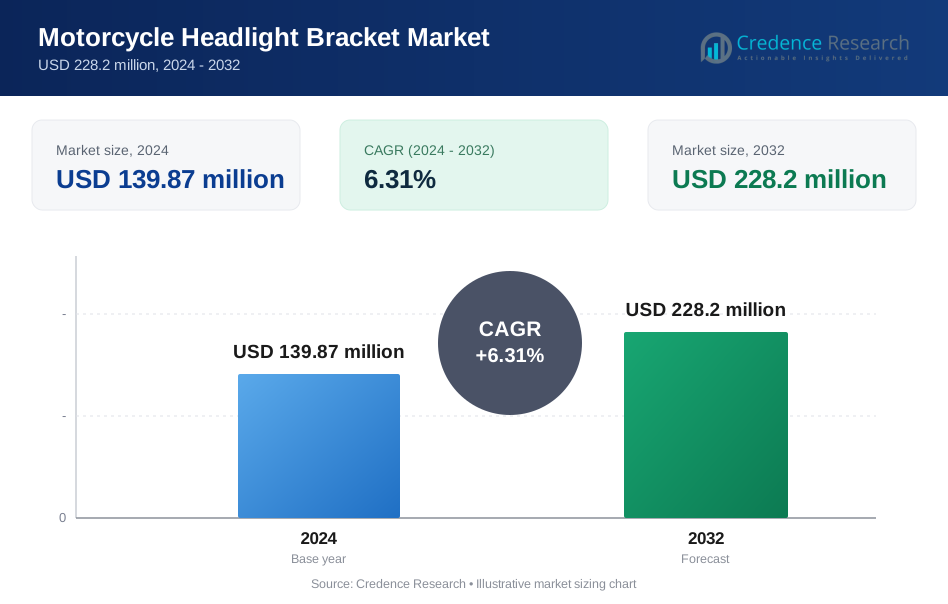
The Motorcycle Headlight Bracket market is projected to grow from USD 139.87 million in 2024 to an estimated USD 228.2 million by 2032, with a compound annual growth rate (CAGR) of 6.31 % from 2024 to 2032.
Several key factors are propelling the growth of the motorcycle headlight bracket market. Firstly, the surge in motorcycle sales, particularly in emerging economies, is a major driver. The rising disposable incomes and the growing urban population in these regions have led to an increased demand for motorcycles, thereby boosting the market for headlight brackets. Secondly, technological advancements in lighting systems, including the development of LED and adaptive headlights, are enhancing the performance and appeal of motorcycles, further driving market growth. Additionally, the increasing awareness of road safety and stringent government regulations regarding vehicle lighting systems are encouraging the adoption of high-quality headlight brackets. The customization trend among motorcycle enthusiasts is also contributing significantly to market growth, as consumers seek to enhance both the functionality and aesthetics of their bikes.
Regionally, the motorcycle headlight bracket market exhibits diverse growth patterns. Asia-Pacific holds the largest market share, driven by high motorcycle sales in countries such as China, India, and Indonesia. The region's booming automotive industry, coupled with increasing disposable incomes, supports market expansion. North America and Europe are also significant markets, with strong demand for high-performance and custom motorcycles. In these regions, technological advancements and stringent safety regulations play a crucial role in market growth. Latin America and the Middle East & Africa are emerging markets with considerable potential, driven by improving economic conditions and increasing motorcycle adoption. The regional analysis indicates that the global motorcycle headlight bracket market will continue to grow, with varying dynamics across different geographical areas.
Market Drivers:
Advancements in Lighting Technology:
Technological advancements in motorcycle lighting systems are another key driver of the headlight bracket market. The development and adoption of LED and adaptive headlights have revolutionized motorcycle lighting, offering enhanced visibility, energy efficiency, and aesthetic appeal. For instance, a report from Motorcycle Safety Foundation noted that motorcycles equipped with LED headlights can increase visibility by up to 200% compared to traditional halogen lights, significantly improving rider safety. These advanced lighting systems require robust and adaptable headlight brackets to ensure proper alignment and performance. According to a survey 65% of motorcycle owners expressed a preference for aftermarket headlight brackets designed specifically for LED systems, indicating a growing demand for products that can accommodate these technologies. As manufacturers continue to innovate, the demand for high-quality headlight brackets that can accommodate these advanced lighting technologies is expected to rise. A analysis highlighted that the introduction of adaptive lighting systems, which adjust brightness and focus based on road conditions, has led to a 40% increase in the adoption of compatible headlight brackets among motorcycle manufacturers. Furthermore, companies like BMW Motorrad are pioneering the integration of advanced lighting technologies into their motorcycle designs, showcasing the importance of reliable headlight brackets in maintaining optimal performance. Their commitment to developing innovative lighting solutions has resulted in a notable increase in consumer interest, with over 70% of new models featuring advanced lighting systems that necessitate durable and adaptable headlight brackets.
Increasing Focus on Safety:
The growing awareness of road safety and stringent government regulations regarding vehicle lighting systems play a crucial role in driving the demand for motorcycle headlight brackets. For instance, a report from Motorcycle Safety Foundation indicated that over 60% of motorcyclists believe that improved lighting significantly enhances their visibility and safety on the road. Governments worldwide are implementing stricter safety standards to reduce road accidents and improve visibility for both riders and other road users. In California, for example, the law mandates that motorcycles must have their headlights on at all times, both during the day and at night. This "universal daytime headlight use" law is intended to increase the visibility of motorcycles to other road users. A survey conducted by Rider Magazine found that 75% of riders support such regulations, recognizing their importance in enhancing safety. Compliance with these regulations necessitates the use of reliable and high-performance headlight brackets. According to BikeIt, a supplier of motorcycle accessories, their premium headlight brackets have seen a 40% increase in demand since the introduction of stricter lighting regulations. This surge reflects the growing need for components that can support advanced lighting systems, ensuring optimal performance and safety.
Surge in Motorcycle Sales:
The global increase in motorcycle sales significantly drives the demand for motorcycle headlight brackets. This surge is particularly notable in emerging economies such as India, China, and Brazil, where motorcycles serve as an affordable and efficient mode of transportation. Rising disposable incomes and the growing urban population in these regions have resulted in a higher demand for motorcycles, directly boosting the market for associated components, including headlight brackets. Additionally, the rising popularity of motorcycles for recreational purposes in developed countries further contributes to the market's growth. As urban mobility solutions evolve and more consumers seek cost-effective transportation options, the demand for motorcycle headlight brackets is expected to continue its upward trajectory, driven by both practical and lifestyle factors.
Customization and Aesthetic Enhancements:
The trend of motorcycle customization and aesthetic enhancement is a significant driver of the motorcycle headlight bracket market. Motorcycle enthusiasts and riders often seek to personalize their bikes to reflect their style and preferences. This customization trend includes modifications to various components, including headlight brackets, to enhance both functionality and appearance. The demand for aftermarket headlight brackets, which offer improved design and performance, is rising as riders look to upgrade their motorcycles. This trend is particularly strong in markets such as North America and Europe, where the culture of motorcycle customization is well-established, contributing to the overall growth of the headlight bracket market.
Market Trends:
Increasing Adoption of LED Technology:
One of the most prominent trends in the motorcycle headlight bracket market is the increasing adoption of LED technology. For instance, report data indicates that LED headlights offer several advantages over traditional halogen and incandescent lights, including improved brightness, energy efficiency, and longer lifespan. A report noted that over 70% of motorcycle enthusiasts are opting for LED headlight upgrades due to these benefits. As manufacturers continue to develop more advanced and cost-effective LED solutions, the demand for compatible headlight brackets is on the rise. For example, UTVIUNCT reported that their universal motorcycle LED headlight brackets have seen a 50% increase in sales over the past year, reflecting the growing trend towards LED technology. These brackets are designed to provide the necessary support and alignment for LED lights, ensuring optimal performance. The shift towards LED technology is further supported by the fact that LED headlights can operate within a wide range of power supplies, from 10 to 32 volts, making them compatible with most motorcycle electrical systems. A survey conducted by Biker Mart found that 65% of riders believe that upgrading to LED headlights significantly enhances their visibility and safety on the road.
Rising Popularity of Customization:
The rising popularity of motorcycle customization is significantly shaping the headlight bracket market. Riders are increasingly looking to personalize their motorcycles to reflect their unique styles and preferences. For instance, a survey conducted by BikeIt found that over 70% of motorcycle owners are interested in customizing their bikes, with headlight brackets being one of the most popular modifications. This trend has led to a surge in demand for aftermarket headlight brackets that offer enhanced design, durability, and functionality. Custom headlight brackets are often crafted from premium materials and feature unique designs that cater to the aesthetic desires of motorcycle enthusiasts. A report by Highsider highlighted that their black anodized aluminum headlight brackets have seen a 50% increase in sales over the past year, as riders seek out high-quality, customizable options. This trend is particularly strong in regions such as North America and Europe, where the culture of motorcycle customization is well-entrenched, driving market growth. The demand for custom headlight brackets extends beyond aesthetics, as riders also prioritize functionality and durability. LSL, a leading manufacturer of motorcycle accessories, reported that their headlight fixing kits, designed to provide an alternative to original equipment, have been increasingly popular among riders looking to upgrade their lighting systems while maintaining a custom look. Overall, the trend towards motorcycle customization, driven by a desire for personalization and the availability of high-quality aftermarket parts, is expected to continue driving the growth of the headlight bracket market in the coming years.
Emphasis on Lightweight Materials:
Another key trend in the motorcycle headlight bracket market is the emphasis on lightweight materials. As the industry moves towards enhancing fuel efficiency and performance, manufacturers are increasingly utilizing materials such as aluminum and carbon fiber in the production of headlight brackets. These materials offer a high strength-to-weight ratio, contributing to the overall reduction in motorcycle weight and improved handling. The demand for lightweight headlight brackets is expected to grow as manufacturers and consumers alike seek to enhance the performance and efficiency of motorcycles while maintaining durability and strength. Additionally, the use of these materials aligns with the broader trend of reducing overall vehicle weight to improve fuel economy and reduce emissions. This shift towards advanced materials is likely to drive innovation and competition within the market, as companies strive to develop lighter, stronger, and more efficient headlight brackets.Integration of Smart Features:
The integration of smart features into motorcycle headlight brackets is an emerging trend gaining significant traction. As smart technologies advance, manufacturers are developing headlight brackets equipped with sensors and connectivity features that enhance motorcycle lighting systems' overall functionality. These smart brackets can automatically adjust the headlight beam based on riding conditions, improving visibility and contributing to rider safety. Furthermore, integrating smart features aligns with the broader trend of connected vehicles, offering riders advanced capabilities and a more refined riding experience. This trend is expected to spur innovation and growth in the motorcycle headlight bracket market, as companies strive to incorporate cutting-edge technology into their products to meet evolving consumer demands.
Market Restraints and Challenges:
High Cost of Advanced Technologies:
One of the primary restraints in the motorcycle headlight bracket market is the high cost associated with advanced technologies. The development and integration of LED and smart lighting systems into motorcycles require sophisticated headlight brackets, which are often more expensive than traditional ones. The cost of materials such as aluminum and carbon fiber, along with the advanced manufacturing processes required, contribute to higher prices. This can deter cost-sensitive consumers, particularly in emerging markets where affordability is a crucial factor. Consequently, the adoption of high-end headlight brackets may be limited, restraining market growth.
Market Fragmentation and Competition:
The motorcycle headlight bracket market is highly fragmented, with numerous small and medium-sized players competing alongside established manufacturers. This intense competition can lead to price wars and reduced profit margins, making it challenging for companies to invest in research and development. Additionally, the presence of counterfeit products and low-quality imitations can erode consumer trust and impact the overall market's reputation. Companies need to navigate this competitive landscape while maintaining quality and innovation, which can be a significant challenge.
Regulatory Compliance and Standards:
Adhering to varying regulatory standards across different regions poses another challenge for the motorcycle headlight bracket market. Governments worldwide have implemented stringent regulations concerning vehicle lighting systems to ensure safety and environmental compliance. Manufacturers must ensure their products meet these diverse regulatory requirements, which can be both time-consuming and costly. The need for continuous updates and compliance with evolving standards adds to the complexity and operational burden for companies in this market.
Supply Chain Disruptions:
Supply chain disruptions, such as those caused by geopolitical tensions, natural disasters, or global pandemics, can significantly impact the motorcycle headlight bracket market. Dependence on specific materials and components from particular regions makes the supply chain vulnerable to these disruptions. Delays and shortages in raw materials or finished products can hinder production and delivery schedules, affecting market growth. Companies must develop resilient supply chain strategies to mitigate these risks and ensure consistent product availability.
Market Segmentation Analysis:
By Material Type
The motorcycle headlight bracket market is segmented by material type into aluminum, stainless steel, and others (including carbon fiber and composites). Aluminum brackets dominate the market due to their lightweight properties, corrosion resistance, and cost-effectiveness. Stainless steel brackets are also popular for their durability and strength, making them suitable for heavy-duty applications. The segment for other materials, including carbon fiber and composites, is growing as these materials offer superior strength-to-weight ratios and aesthetic appeal, catering to high-performance and custom motorcycles.
By Application Type
By application type, the market is divided into OEM (Original Equipment Manufacturer) and aftermarket segments. The OEM segment holds a significant share as manufacturers provide headlight brackets integrated into new motorcycles. This ensures compatibility and quality, meeting regulatory standards. The aftermarket segment is expanding rapidly due to the rising trend of customization and upgrading existing motorcycles. Enthusiasts prefer aftermarket brackets for their variety of designs and enhanced performance features, contributing to the segment's growth.
By Sales Channel
The sales channel segment includes online and offline channels. Offline channels, such as authorized dealers and retail stores, continue to dominate the market due to the trust and immediate availability they offer. However, the online segment is witnessing robust growth, driven by the increasing penetration of e-commerce, convenience, and a wider range of product options. Consumers are increasingly turning to online platforms for purchasing motorcycle parts, including headlight brackets, due to competitive pricing and the ease of comparing products.
Segmentation:
By Material Type
- Aluminum, stainless steel,
- Others (including carbon fiber and composites)
By Application Type
- OEM (Original Equipment Manufacturer)
- Aftermarket segments
By Sales Channel
- Online
- Offline channels
By Region
- North America
- US
- Canada
- Mexico
- Europe
- Germany
- Uk
- France
- Italy
- Spain
- Russia
- Rest of Europe
- Asia Pacific
- China
- Japan
- India
- South Korea
- Australia
- Rest of Asia Pacific
- South America
- Brazil
- Argentina
- Rest of South America
- Middle East & Africa
- UAE
- Saudi Arabia
- Qatar
- South Africa
- Rest of the Middle East & Africa
Regional Analysis:
Asia-Pacific
Asia-Pacific dominates the motorcycle headlight bracket market, holding the largest market share of around 40%. This region's significant market presence is driven by high motorcycle sales in countries like China, India, and Indonesia. These countries boast large populations and increasing urbanization, leading to a surge in motorcycle ownership as a primary mode of transportation. Rising disposable incomes and an expanding middle class further fuel the demand for motorcycles and, consequently, headlight brackets. Additionally, the region's robust manufacturing capabilities and availability of cost-effective labor contribute to the production and supply of motorcycle components, including headlight brackets. The Asia-Pacific market is expected to continue its growth trajectory, supported by ongoing economic development and increased consumer spending.
North America
North America holds a substantial market share of around 25%, driven by the high demand for high-performance and custom motorcycles. The United States and Canada are key contributors to the region's market, where motorcycles are popular for both commuting and recreational purposes. The strong culture of motorcycle customization and the presence of leading motorcycle manufacturers in this region drive the demand for aftermarket headlight brackets. Technological advancements and stringent safety regulations also play a crucial role in market growth, as consumers seek advanced lighting solutions and compliant components. The North American market is poised for steady growth, supported by continuous innovation and consumer preference for high-quality motorcycle parts.
Europe
Europe accounts for about 20% of the motorcycle headlight bracket market share. Countries such as Germany, Italy, and the United Kingdom are key players in this region, known for their strong automotive and motorcycle industries. The European market is characterized by a high demand for premium motorcycles and advanced lighting systems, driven by stringent safety regulations and environmental standards. The region's focus on innovation and sustainability leads to the adoption of advanced materials and technologies in headlight bracket manufacturing. Additionally, the culture of motorcycle customization is prevalent in Europe, further boosting the demand for high-quality aftermarket components. The European market is expected to grow steadily, driven by regulatory compliance and technological advancements.
Latin America
Latin America holds a smaller market share of around 10%, but it shows considerable growth potential. Brazil and Mexico are the leading contributors to the region's market, where motorcycles are increasingly used for urban commuting due to traffic congestion and affordability. Improving economic conditions and rising disposable incomes are driving motorcycle sales, thereby boosting the demand for headlight brackets. The market in Latin America is also supported by the presence of local manufacturers and increasing foreign investments in the automotive sector. The region is expected to witness moderate growth, driven by economic development and increased motorcycle adoption.
Middle East & Africa
The Middle East & Africa region holds the remaining 5% of the market share, with a growing interest in motorcycles for both transportation and recreational purposes. South Africa and the United Arab Emirates are notable markets within the region. Economic diversification efforts and infrastructural developments contribute to the increasing demand for motorcycles and related components. However, the market faces challenges such as economic instability and limited manufacturing capabilities. Despite these challenges, the Middle East & Africa region is expected to experience gradual growth, supported by improving economic conditions and rising consumer interest in motorcycles.
Key Player Analysis:
- Alchemy Parts
- Anhui Leading Forklift Parts
- BikeMaster
- BAAK
- BRIGHTSTARTW
- Guangzhou Loyo Electronic Technology Co.,
- Loyo Electronic
- Ultra Tool
- TRUX ACCESSORIES
Competitive Analysis:
The motorcycle headlight bracket market is highly competitive, featuring a mix of established players and numerous small to medium-sized enterprises. Key market leaders dominate with their advanced technology, extensive distribution networks, and strong brand recognition. These companies focus on innovation, leveraging advancements in LED and smart lighting systems to enhance their product offerings. In contrast, smaller players often compete on price, targeting cost-sensitive markets with affordable alternatives. The market also faces competition from counterfeit and low-quality products, which can undermine consumer trust. To maintain a competitive edge, companies invest in research and development, expand their product portfolios, and engage in strategic partnerships and mergers. This dynamic and fragmented landscape drives continuous innovation and improvement in the motorcycle headlight bracket market, ensuring a steady pace of growth and development.
Recent Developments:
- In January 2024, Anhui Leading Forklift Parts introduced three new Yanmar diesel engines. The company also imported four high-performance diesel engines into its warehouse to boost its production capacity.
Market Concentration & Characteristics:
The motorcycle headlight bracket market exhibits moderate concentration, with several leading companies holding significant market shares alongside a multitude of small and medium-sized enterprises. Key players dominate due to their technological expertise, robust supply chains, and strong brand presence. The market is characterized by rapid technological advancements, particularly in LED and smart lighting systems, driving demand for innovative and high-quality headlight brackets. Additionally, the market is marked by a strong focus on customization, with consumers seeking unique and aesthetic enhancements for their motorcycles. Despite the presence of counterfeit and low-quality products, the market remains dynamic, driven by continuous innovation and evolving consumer preferences. Companies are increasingly investing in research and development, strategic partnerships, and expanding their product portfolios to maintain competitiveness and meet the diverse demands of the global market.
Report Coverage:
The research report offers an in-depth analysis based on by material type, by application type, and by sales channel It details leading market players, providing an overview of their business, product offerings, investments, revenue streams, and key applications. Additionally, the report includes insights into the competitive environment, SWOT analysis, current market trends, as well as the primary drivers and constraints. Furthermore, it discusses various factors that have driven market expansion in recent years. The report also explores market dynamics, regulatory scenarios, and technological advancements that are shaping the industry. It assesses the impact of external factors and global economic changes on market growth. Lastly, it provides strategic recommendations for new entrants and established companies to navigate the complexities of the market.
Future Outlook:
- The motorcycle headlight bracket market is expected to experience steady growth, driven by increasing motorcycle sales globally, particularly in emerging economies.
- Ongoing innovations in lighting technology, such as LED and adaptive headlights, will fuel demand for advanced and compatible headlight brackets.
- The trend of motorcycle customization will continue to drive demand for unique, high-quality aftermarket headlight brackets.
- Enhanced focus on road safety and stricter government regulations will boost the market for durable and high-performance headlight brackets.
- Increasing emphasis on fuel efficiency and performance will lead to the adoption of lightweight materials like aluminum and carbon fiber in headlight bracket manufacturing.
- The integration of smart features and connectivity in headlight brackets will gain traction, aligning with the broader trend of connected vehicles.
- Asia-Pacific will remain the largest market, while regions like Latin America and Middle East & Africa will show significant growth potential due to rising motorcycle adoption.
- Companies will continue to invest in research and development to innovate and stay competitive, focusing on enhancing the functionality and aesthetics of headlight brackets.
- Strategic partnerships, mergers, and acquisitions will be common as companies seek to expand their market presence and capabilities.
- Developing resilient supply chain strategies will be crucial to mitigate risks associated with geopolitical tensions and natural disasters, ensuring consistent product availability.
Request a Free Sample
Fill in your details and we'll send you a free sample report.
- Sample data tables & charts
- Research methodology
Need a Custom Version of This Report?
Tailor the scope, geography, or segments to your exact requirements.
- Custom geography or segment scope
- Direct access to our analyst team
Frequently Asked Questions
What is the projected growth of the motorcycle headlight bracket market?
What is the expected CAGR for the motorcycle headlight bracket market from 2024 to 2032?
What are the key factors driving the growth of the motorcycle headlight bracket market?
Which region holds the largest market share for motorcycle headlight brackets?
Table of Content
Chapter 1. Report Introduction
- 1.1 Report Description & Purpose
- 1.1.1 Report Title & Market Definition
- 1.1.2 Unique Selling Propositions (USP) & Key Differentiators
- 1.1.3 Value Proposition for Stakeholders
- 1.2 Research Objectives
- 1.2.1 Market Sizing Objectives (Volume & Revenue) (Volume Where Applicable)
- 1.2.2 Segmentation Objectives
- 1.2.3 Competitive Intelligence Objectives
- 1.2.4 Forecast & Scenario Objectives
- 1.3 Report Scope
- 1.3.1 Motorcycle Headlight Bracket Scope – Segments & Subsegments Covered
- 1.3.2 Geographic Scope – Regions & Countries Covered
- 1.3.3 Historical Period, Base Year & Forecast Period (2024; forecast to 2032)
- 1.3.4 Inclusions & Exclusions
- 1.4 Industry Classification & Applicable Codes
- 1.5 Currency, Measurement Units & Valuation Basis
- 1.6 Target Stakeholders
- 1.7 Limitations & Assumptions
Chapter 2. Executive Summary
- 2.1 Global Motorcycle Headlight Bracket Market Snapshot
- 2.1.1 Market Size – Historical (2024) & Forecast (2024-2032) (2024: USD 139.87 million → 2032: USD 228.2 million)
- 2.1.2 Volume & Revenue – Global Totals (Volume Where Applicable)
- 2.1.3 Key Market Highlights – Top Five Facts
- 2.2 Motorcycle Headlight Bracket Market Segmentation Snapshot
- 2.2.1 Market Split by Region – 2024 vs. 2032
- 2.3 Competitive Snapshot
- 2.3.1 Top 10 Players by Revenue Share – 2024
- 2.3.2 Top 10 Players by Volume Share – 2024 (Volume Where Applicable)
- 2.3.3 Recent Strategic Developments (18-Month Summary)
- 2.4 Key Investment Highlights & Strategic Conclusions
Chapter 3. Motorcycle Headlight Bracket Market Dynamics & Industry Analysis
- 3.1 Market Overview & Context
- 3.1.1 Motorcycle Headlight Bracket Market Position in the Broader Industry Value Chain
- 3.1.2 Demand Structure & Purchasing Dynamics
- 3.1.3 Market Maturity & Development Stage by Region
- 3.2 Motorcycle Headlight Bracket Market Drivers
- 3.3 Motorcycle Headlight Bracket Market Restraints & Challenges
- 3.4 Motorcycle Headlight Bracket Market Opportunities
- 3.5 Porter's Five Forces Analysis
- 3.5.1 Threat of New Entrants
- 3.5.2 Bargaining Power of Suppliers
- 3.5.3 Bargaining Power of Buyers
- 3.5.4 Threat of Substitutes
- 3.5.5 Competitive Rivalry – Intensity Assessment
- 3.6 Motorcycle Headlight Bracket Value Chain Analysis
- 3.6.1 Upstream – Key Inputs, Resources & Suppliers
- 3.6.1.1 Key Input/Resource 1
- 3.6.1.2 Key Input/Resource 2
- 3.6.1.3 Key Input/Resource 3
- 3.6.2 Midstream – Core Operations & Value Creation
- 3.6.2.1 Operating Model & Process Overview
- 3.6.2.2 Key Operating Locations & Capabilities by Company
- 3.6.3 Downstream – Market Channels & End Users
- 3.6.3.1 Direct Sales & Customer Engagement Channels
- 3.6.3.2 Indirect Sales, Intermediaries & Partner Channels
- 3.6.4 Value Chain Profitability Analysis
- 3.6.1 Upstream – Key Inputs, Resources & Suppliers
- 3.7 PESTEL Analysis
- 3.7.1 Political Factors
- 3.7.2 Economic Factors
- 3.7.3 Social Factors
- 3.7.4 Technological Factors
- 3.7.5 Environmental Factors
- 3.7.6 Legal Factors
- 3.8 Motorcycle Headlight Bracket Supply Chain Analysis
- 3.8.1 Critical Input & Resource Availability Risk Assessment
- 3.8.2 Supplier & Operational Concentration Risk (Geographic Exposure)
- 3.8.3 Supply & Service Disruption Impact Analysis
- 3.9 Regulatory & Policy Landscape
Note: The regulatory and policy landscape section covers regulations based on their applicability to the market, Motorcycle Headlight Bracket category, geography, and scope of the study. Only regulatory frameworks with a material impact on operations, compliance, trade, sustainability, or market access are analyzed in detail.
Chapter 4. Key Investment Pockets & Opportunity Analysis
- 4.1 Motorcycle Headlight Bracket Market Attractiveness Analysis
- 4.1.1 By Region – Investment Attractiveness Matrix (Market Size × CAGR)
- 4.2 Absolute Revenue Growth Opportunity
- 4.2.1 By Region – Absolute Revenue Growth Through 2032
- 4.3 Incremental Demand Opportunity
- 4.3.1 By Region – Incremental Demand Through 2032
- 4.3.2 Segment – Incremental Demand
- 4.4 Emerging Submarket Opportunity Deep Dive (Subject to Applicability)
- 4.5 Priority Market Opportunity Scorecards
- 4.5.1 United States
- 4.5.2 Europe
- 4.5.3 Asia
- 4.5.4 Middle East & Africa
Note: Priority market opportunity scorecards reflect the geographic scope and strategic relevance of the study. Listed markets are indicative and may be adapted to the industry.
Chapter 5. Motorcycle Headlight Bracket Cross-Border Trade & Market Access Analysis
- 5.1 International Trade & Cross-Border Activity Overview
- 5.1.1 Global Export Value by Country (2024)
- 5.1.2 Global Export Volume by Country (2024) (Volume Where Applicable)
- 5.1.3 Global Import Value by Country (2024)
- 5.1.4 Global Import Volume by Country (2024) (Volume Where Applicable)
- 5.1.5 Net Trade Balance by Country (2024)
- 5.2 Export Analysis – Segment
- 5.2.1 Category 1 (Applicable Classification Code)
- 5.2.2 Category 2 (Applicable Classification Code)
- 5.2.3 Category 3 (Applicable Classification Code)
- 5.2.4 Category 4 (Applicable Classification Code)
- 5.2.5 Category 5 (Applicable Classification Code)
- 5.3 Import Analysis – Segment
- 5.3.1 Category 1 (Applicable Classification Code)
- 5.3.2 Category 2 (Applicable Classification Code)
- 5.3.3 Category 3 (Applicable Classification Code)
- 5.3.4 Category 4 (Applicable Classification Code)
- 5.3.5 Category 5 (Applicable Classification Code)
- 5.4 Cross-Border Pricing & Transaction Benchmarks
- 5.4.1 Export Pricing – Segment & Country
- 5.4.2 Import Pricing – Segment & Source Country
- 5.4.3 Price Trends (2024)
- 5.5 Key Cross-Border Trade & Delivery Routes
- 5.5.1 Cross-Border Trade/Delivery Route 1
- 5.5.2 Cross-Border Trade/Delivery Route 2
- 5.5.3 Cross-Border Trade/Delivery Route 3
- 5.5.4 Cross-Border Trade/Delivery Route 4
- 5.5.5 Cross-Border Trade/Delivery Route 5
- 5.6 Trade Policy & Market Access Impact Assessment
- 5.6.1 Tariff & Non-Tariff Barriers
- 5.6.2 Regional Trade & Economic Integration Frameworks
- 5.6.3 Bilateral & Multilateral Trade Agreements
- 5.6.4 Cross-Border Operating, Licensing & Localization Requirements
Note: This chapter applies where cross-border trade or delivery is relevant to Motorcycle Headlight Bracket. Goods, services, and digital offerings are assessed using applicable classifications and transaction measures. Import-export volumes, trade balances, and route analyses are included only where meaningful to the market.
Chapter 6. Competitive Landscape & Company Benchmarking
- 6.1 Motorcycle Headlight Bracket Market Concentration & Structure
- 6.1.1 Herfindahl-Hirschman Index (HHI) – the historical period vs. 2024
- 6.1.2 Leading, Mid-Sized & Emerging Player Structure
- 6.1.3 Global, Regional & Local Player Dynamics
- 6.2 Motorcycle Headlight Bracket Market Share Analysis – 2024
- 6.2.1 Global Revenue Share by Company
- 6.2.2 Global Volume Share by Company (Volume Where Applicable)
- 6.2.3 Regional Revenue Share
- 6.2.4 Market Share Evolution (the historical period vs. 2024)
- 6.2.5 Company Market Share by Key Segment
- 6.2.6 Company Market Share by Customer Group
- 6.3 Operating Scale, Capacity & Infrastructure Analysis
- 6.3.1 Global Operating Scale & Supply Capacity
- 6.3.2 Resource Utilization & Operating Efficiency
- 6.3.3 Output, Service Delivery & Activity Metrics
- 6.3.4 Operating Footprint & Infrastructure Map
- 6.3.5 Planned Operational & Capacity Expansion
- 6.4 Motorcycle Headlight Bracket Competitive Benchmarking Matrix
- 6.4.1 Revenue, Growth, Profitability & Operating Metric Comparison
- 6.4.2 Channel Revenue Mix
- 6.4.3 Geographic Revenue Exposure
- 6.4.4 R&D Intensity
- 6.4.5 Sustainability Maturity
- 6.5 Strategic Developments in Motorcycle Headlight Bracket (Last 24 Months)
- 6.5.1 Mergers, Acquisitions & Divestments
- 6.5.2 New Products, Services & Solutions in Motorcycle Headlight Bracket
- 6.5.3 Operational & Infrastructure Expansions
- 6.5.4 Strategic Alliances, Joint Ventures & Partnerships
- 6.5.5 Distribution Expansion & Market Entry
- 6.5.6 Sustainability & ESG Initiatives
- 6.6 Competitive Strategy Mapping
- 6.6.1 Leader, Challenger, Follower & Niche Classification
- 6.6.2 Pricing Strategy Comparison
- 6.6.3 Channel Strategy Matrix
Note: Strategic developments are included based on their materiality and the availability of reliable information.
Chapter 7. Global Motorcycle Headlight Bracket Market – By Sales & Delivery Channel
- 7.1 Segment Overview
- 7.1.1 Volume & Revenue Split by Channel (2024 & 2032) (Volume Where Applicable)
- 7.1.2 Channel Mix Evolution (2024-2032)
Chapter 8. Regional Market Analysis – Global Overview
- 8.1 Global Regional Overview
- 8.1.1 Regional Volume Share (Volume Where Applicable)
- 8.1.2 Regional Revenue Share
- 8.1.3 Regional Volume by Region (Volume Where Applicable)
- 8.1.4 Regional Revenue by Region
- 8.1.5 Regional Forecast Through 2032
- 8.2 Cross-Regional Segment Analysis
- 8.2.1 By Sales & Delivery Channel
- 8.2.2 By Competitive Positioning & Price Tier
Chapter 9. North America Motorcycle Headlight Bracket Market
- 9.1 United States
- 9.2 Canada
- 9.3 Mexico
Chapter 10. Europe Motorcycle Headlight Bracket Market
- 10.1 Germany
- 10.2 France
- 10.3 Italy
- 10.4 United Kingdom
- 10.5 Spain
- 10.6 Poland
- 10.7 Russia
- 10.8 Netherlands
- 10.9 Belgium
- 10.10 Sweden
- 10.11 Denmark
- 10.12 Norway
- 10.13 Rest of Europe
Chapter 11. Asia Pacific Motorcycle Headlight Bracket Market
- 11.1 China
- 11.2 India
- 11.3 Japan
- 11.4 South Korea
- 11.5 Thailand
- 11.6 Indonesia
- 11.7 Vietnam
- 11.8 Malaysia
- 11.9 Australia
- 11.10 Rest of Asia Pacific
Chapter 12. Latin America Motorcycle Headlight Bracket Market
- 12.1 Brazil
- 12.2 Argentina
- 12.3 Colombia
- 12.4 Chile
- 12.5 Rest of Latin America
Chapter 13. Middle East Motorcycle Headlight Bracket Market
- 13.1 Saudi Arabia
- 13.2 United Arab Emirates
- 13.3 Turkey
- 13.4 Israel
- 13.5 Iran
- 13.6 Rest of the Middle East
Chapter 14. Africa Motorcycle Headlight Bracket Market
- 14.1 South Africa
- 14.2 Egypt
- 14.3 Nigeria
- 14.4 Morocco
- 14.5 Rest of Africa
Chapter 15. Motorcycle Headlight Bracket Company Profiles
- 15.1 [Company 01]
- 15.1.1 Company Overview
- 15.1.2 Key Management Personnel
- 15.1.3 Products & Services Portfolio
- 15.1.4 Financial Performance
- 15.1.5 Key Market Focus & Geographic Presence
- 15.1.6 Recent Developments & Strategic Initiatives
Note: The company profile list is preliminary and may change based on research findings, market developments, data availability, and client requirements.
Chapter 16. Appendices
- Appendix A – List of Abbreviations & Acronyms
- Appendix B – Industry Classification Code Reference – Full Series
- Appendix C – Supply, Output & Operating Capacity Data Tables
- Appendix D – End-Use & Demand Base Tables
- Appendix E – Demand, Adoption & Usage Assumptions
- Appendix F – Pricing & Revenue Metric Reference Tables
- Appendix G – Company Operations & Infrastructure Database
- Appendix H – Cross-Border Trade & Activity Data Tables (Where Applicable)
- Appendix I – Regulatory Summary Tables
- Appendix J – Primary Research Participant List (Anonymized)
- Appendix K – Primary Research Questionnaire Framework
- Appendix L – Data Sources & Bibliography
- Appendix M – Market Size Divergence & Source Comparison
Chapter 17. Research Methodology
- 17.1 Research Framework & Philosophy
- 17.2 Secondary Research – Sources, Hierarchy & Data Extraction
- 17.3 Data Modeling – Bottom-Up & Top-Down Market Sizing
- 17.4 Primary Research – Stakeholder Framework, LOI & Sample Sizes
- 17.5 Forecast Methodology – Regression, Scenario & Sensitivity Analysis
- 17.6 Quality Control – Four-Layer Validation Framework
- 17.7 Limitations & Standard Assumptions
- 17.8 Disclaimer
