
Natural Shampoo (Organic Shampoo) Market Overview:
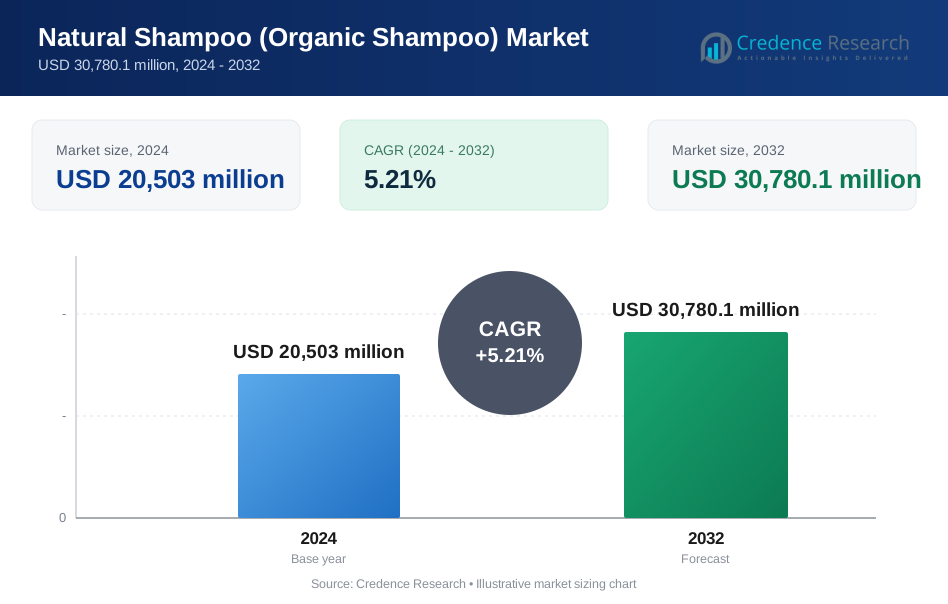
Natural Shampoo (Organic Shampoo) Market size was valued at USD 20,503 million in 2024 and is anticipated to reach USD 30,780.1 million by 2032, at a CAGR of 5.21% during the forecast period.
| REPORT ATTRIBUTE | DETAILS |
|---|---|
| Historical Period | 2020-2023 |
| Base Year | 2024 |
| Forecast Period | 2025-2032 |
| Natural Shampoo (Organic Shampoo) Market Size 2024 | USD 20,503 million |
| Natural Shampoo (Organic Shampoo) Market, CAGR | 5.21% |
| Natural Shampoo (Organic Shampoo) Market Size 2032 | USD 30,780.1 million |
Natural Shampoo (Organic Shampoo) Market Insights
- Market growth is driven by rising consumer preference for clean-label, sulfate-free, and plant-based haircare products, supported by increasing awareness of scalp health, ingredient safety, and long-term wellness benefits.
- Key market trends include premiumization of organic shampoos, growing demand for vegan and cruelty-free formulations, and innovation in botanical ingredients, while established brands and niche clean-beauty players strengthen presence through product differentiation and digital channels.
- Market restraints include higher product costs due to organic certifications and sustainable sourcing, along with price sensitivity in developing regions and regulatory complexity related to natural and organic labeling standards.
- Regionally, North America led with 6% share in 2024, followed by Europe at 29.1% and Asia-Pacific at 24.3%, while by segment, liquid shampoo dominated with a 68.4% share, driven by ease of use and wide retail availability.

Natural Shampoo (Organic Shampoo) Market Segmentation Analysis:
By Product Type:
The Natural Shampoo Organic Shampoo Market by product type is led by Liquid Shampoo, which accounted for 68.4% market share in 2024, driven by strong consumer familiarity, ease of application, and wide availability across mass and premium brands. Liquid formats enable better infusion of botanical actives, essential oils, and sulfate-free surfactants, enhancing perceived efficacy. Rising demand for daily-use mild cleansers, expanding premium organic liquid shampoo lines, and higher adoption among urban consumers continue to support dominance. Solid shampoo bars held 19.1% share, supported by sustainability trends, while dry shampoo accounted for 12.5%, driven by convenience-led usage.
- For instance, EcoRoots provides a vegan solid shampoo bar handmade with coconut oil and cocoa butter bases, free of SLS to avoid stripping natural oils. Designed for 50-75 washes per 2 oz bar, it delivers rich lather while nourishing all hair types during the transition from liquid shampoos.
By Ingredient:
By ingredient, Plant-Based formulations dominated the Natural Shampoo Organic Shampoo Market with a 54.7% share in 2024, supported by rising preference for vegan, cruelty-free, and non-toxic personal care products. Consumers increasingly favor formulations derived from coconut, aloe vera, soy, and sugar-based surfactants due to perceived safety and environmental benefits. Herbal extracts accounted for 28.6% share, driven by traditional ingredient trust and scalp-health benefits, while essential oils held 16.7%, supported by aromatherapy appeal and premium positioning. Clean-label trends, regulatory support for natural ingredients, and growing ingredient transparency continue to drive plant-based segment leadership.
- For instance, DermTropics' Raw Coconut + Aloe Vera Nourishing Shampoo uses organic wet-milled virgin coconut oil and coconut milk alongside aloe vera leaf juice for deep scalp nourishment and dandruff relief.
By Distribution Channel:
The distribution channel segment is dominated by Supermarkets/Hypermarkets, holding a 42.9% market share in 2024, driven by strong shelf visibility, consumer trust, and extensive brand assortments across price tiers. High footfall, promotional bundling, and private-label organic shampoo offerings reinforce dominance. Online retail followed with 31.4% share, supported by product variety, subscription models, and access to niche organic brands. Specialty stores accounted for 17.8%, driven by premium positioning and expert recommendations, while other channels held 7.9%. Expanding organized retail and omnichannel strategies continue to strengthen supermarket leadership.
Key Growth Drivers
Rising Consumer Preference for Clean-Label and Chemical-Free Personal Care
The Natural Shampoo Organic Shampoo Market is experiencing strong growth driven by increasing consumer awareness of ingredient safety and long-term health impacts. Shoppers are actively shifting away from shampoos containing sulfates, parabens, silicones, and synthetic fragrances toward clean-label alternatives with transparent ingredient lists. Growing concerns about scalp sensitivity, hair fall, and allergic reactions are accelerating adoption of organic formulations enriched with plant-based surfactants and botanical extracts. Regulatory scrutiny on cosmetic ingredients and rising influence of dermatologists and clean-beauty advocates further reinforce demand, positioning natural and organic shampoos as safer, daily-use solutions across diverse age groups.
- For instance, Himalaya Herbals offers Gentle Daily Care Natural Protein Shampoo enriched with chickpea, licorice, soy, and wheat proteins as botanical actives. The formula strengthens hair, reduces breakage from daily wear, and nourishes without synthetic irritants.
Expansion of Sustainable and Eco-Conscious Lifestyles
Sustainability-driven consumption is a major growth driver for the Natural Shampoo Organic Shampoo Market, supported by rising environmental awareness and ethical purchasing behavior. Consumers increasingly prefer brands that emphasize biodegradable ingredients, recyclable or refillable packaging, cruelty-free testing, and reduced water footprints. The alignment of organic shampoo products with zero-waste, vegan, and carbon-neutral lifestyles enhances their appeal, particularly among millennials and Gen Z consumers. Brand storytelling around responsible sourcing and environmental stewardship strengthens customer loyalty, while retailer emphasis on green product portfolios further accelerates market penetration across developed and emerging economies.
- For instance, Kiehl’s Amino Acid shampoo comes in one-litre refillable pouches that save about 80% plastic versus standard 250ml bottles. Empty pouches recycle via in-store programs, promoting reduced waste.
Premiumization and Product Innovation in Hair Care
Premiumization trends are significantly boosting growth in the Natural Shampoo Organic Shampoo Market, as consumers demonstrate willingness to pay higher prices for perceived quality, performance, and ethical value. Innovations incorporating cold-pressed oils, fermented botanicals, probiotics, and Ayurvedic or herbal blends enhance functional benefits such as scalp repair, anti-hair fall, and moisture retention. Customized formulations targeting specific hair concerns, including color-treated, curly, or damaged hair, are expanding addressable demand. Premium packaging, sensorial fragrances from essential oils, and salon-inspired positioning further elevate product value and stimulate repeat purchases.
Key Trends & Opportunities
Rapid Growth of E-Commerce and Direct-to-Consumer Channels
The expansion of digital retail presents a significant trend and opportunity in the Natural Shampoo Organic Shampoo Market. Online platforms enable brands to reach global audiences, educate consumers through detailed ingredient disclosures, and promote niche organic formulations that may lack shelf space in traditional retail. Subscription-based models, personalized product recommendations, and influencer-led marketing are enhancing customer acquisition and retention. Social commerce and brand-owned websites also provide valuable consumer data, supporting targeted innovation and faster product launches. As internet penetration and digital trust increase, online channels are expected to remain a key growth engine.
- For instance, Ethique markets solid shampoo bars online, with each bar delivering up to 80 washes and containing 30 times more active natural ingredients than liquid equivalents. Their plastic-free, compostable packaging and D2C model reduce waste while reaching sustainability-focused buyers worldwide.
Increasing Demand in Emerging and Urbanizing Markets
Emerging economies present strong growth opportunities for the Natural Shampoo Organic Shampoo Market, driven by urbanization, rising disposable incomes, and improving awareness of personal wellness. Consumers in Asia-Pacific, Latin America, and parts of the Middle East are increasingly adopting premium personal care products as lifestyles modernize. Local brands leveraging traditional herbal knowledge combined with modern organic certifications are gaining traction. Expanding modern retail infrastructure and increasing penetration of organized beauty stores further support growth, while localized formulations tailored to climate and hair types create additional differentiation opportunities.
- For instance, Himalaya Herbal Healthcare in India blends traditional Ayurvedic ingredients like neem, aloe vera, and chickpea into its shampoos, such as the Anti-Dandruff Tea Tree Shampoo with Tea Tree Oil and Aloe Vera.
Key Challenges
High Product Costs and Price Sensitivity
High production and sourcing costs remain a key challenge for the Natural Shampoo Organic Shampoo Market. Organic certifications, ethically sourced raw materials, and sustainable packaging significantly increase manufacturing expenses compared to conventional shampoos. These higher prices can limit adoption among price-sensitive consumers, particularly in developing regions. Maintaining affordability without compromising ingredient integrity or brand positioning is a persistent challenge for manufacturers. Intense competition and promotional pressure further constrain margins, making cost optimization and scalable sourcing strategies critical for sustained growth.
Regulatory Complexity and Greenwashing Concerns
Regulatory inconsistency across regions poses challenges for the Natural Shampoo Organic Shampoo Market, particularly regarding definitions of “natural” and “organic.” Varying certification standards and labeling requirements increase compliance costs and complexity for global brands. Additionally, rising instances of greenwashing have created consumer skepticism, potentially undermining trust in genuine organic products. Brands must invest in transparent communication, third-party certifications, and rigorous quality assurance to maintain credibility. Failure to clearly differentiate authentic formulations from misleading claims can negatively impact brand reputation and overall market confidence.
Regional Analysis
North America
North America held a 34.6% market share in 2024 in the Natural Shampoo Organic Shampoo Market, driven by high consumer awareness of clean-label personal care and strong penetration of premium organic brands. The region benefits from well-established certification frameworks, widespread availability across supermarkets and specialty stores, and high online retail adoption. Consumers increasingly prioritize sulfate-free, vegan, and cruelty-free formulations, supporting steady demand growth. Brand loyalty, higher disposable income, and influencer-driven clean beauty trends further strengthen market expansion across the United States and Canada, positioning North America as the leading revenue-generating region.
Europe
Europe accounted for a 29.1% market share in 2024, supported by strict cosmetic regulations and strong sustainability-driven consumption. Consumers across Germany, France, the UK, and Nordic countries show high preference for eco-certified, ethically sourced, and biodegradable haircare products. Growing demand for refillable packaging and locally sourced botanical ingredients reinforces adoption of organic shampoos. Widespread availability through specialty organic stores and expanding private-label offerings in supermarkets contribute to consistent growth. Strong alignment with environmental policies and circular economy initiatives continues to support Europe’s significant position in the global market.
Asia-Pacific
Asia-Pacific captured a 24.3% market share in 2024, driven by rising urbanization, increasing disposable incomes, and growing awareness of scalp health and chemical-free products. Countries such as China, India, Japan, and South Korea are witnessing strong demand for plant-based and herbal shampoo formulations rooted in traditional wellness practices. Rapid expansion of e-commerce platforms and social commerce is accelerating product accessibility. Younger consumers and working professionals increasingly adopt premium organic haircare, while domestic brands leveraging regional botanicals strengthen competitiveness, making Asia-Pacific the fastest-growing regional contributor.
Latin America
Latin America represented a 7.1% market share in 2024, supported by growing middle-class populations and rising interest in natural personal care products. Brazil and Mexico are key contributors, driven by increasing awareness of hair damage caused by chemical formulations and climatic conditions. Expanding organized retail and improved online penetration enhance product availability. Consumers increasingly favor shampoos with plant oils and herbal extracts suited to diverse hair textures. Although price sensitivity remains a factor, gradual premiumization and local brand innovation continue to support steady market development across the region.
Middle East & Africa
The Middle East & Africa held a 4.9% market share in 2024, reflecting emerging but growing adoption of natural and organic haircare products. Demand is driven by increasing health awareness, rising expatriate populations, and expanding modern retail infrastructure in the UAE, Saudi Arabia, and South Africa. Consumers show growing preference for sulfate-free shampoos suited for dry climates and sensitive scalps. While limited price accessibility constrains faster adoption, expanding e-commerce platforms and premium beauty retail outlets are gradually improving market penetration across key urban centers.
Natural Shampoo (Organic Shampoo) Market Segmentations:
By Product Type
- Liquid Shampoo
- Solid Shampoo Bars
- Dry Shampoo
By Ingredient
- Herbal Extracts
- Essential Oils
- Plant-Based
By Distribution Channel
- Online Retail
- Supermarkets/Hypermarkets
- Specialty Stores
- Others
By End-User
- Men
- Women
- Children
By Geography
- North America
- U.S.
- Canada
- Mexico
- Europe
- Germany
- France
- U.K.
- Italy
- Spain
- Rest of Europe
- Asia Pacific
- China
- Japan
- India
- South Korea
- South-east Asia
- Rest of Asia Pacific
- Latin America
- Brazil
- Argentina
- Rest of Latin America
- Middle East & Africa
- GCC Countries
- South Africa
- Rest of the Middle East and Africa
Competitive Landscape
Competitive landscape analysis of the Natural Shampoo Organic Shampoo Market is characterized by the presence of both global personal care leaders and specialized clean-beauty brands, including L'Oréal S.A., Unilever N.V., Procter & Gamble Co., Aveda Corporation, The Body Shop International Limited, and Burt's Bees, Inc.. The market shows moderate fragmentation, with established multinationals leveraging extensive distribution networks, R&D capabilities, and brand trust, while niche organic players compete through ingredient transparency, sustainability positioning, and premium formulations. Product innovation focused on plant-based surfactants, herbal actives, and eco-friendly packaging remains a key competitive strategy. Companies are increasingly strengthening digital presence, expanding direct-to-consumer channels, and launching region-specific formulations to address diverse hair needs. Strategic acquisitions, clean-label certification, and partnerships with specialty retailers continue to shape competitive dynamics and long-term market positioning.
Key Player Analysis
- Yves Rocher S.A.
- Procter & Gamble Co.
- Avalon Organics
- L'Oréal S.A.
- John Masters Organics, Inc.
- Unilever N.V.
- Burt's Bees, Inc.
- Kiehl's LLC
- The Body Shop International Limited
- Aveda Corporation
Recent Developments
- In November 2025, LUSH (via Lush.in) entered the Indian market under a strategic licensee partnership with Bilberry Brands India, offering its ethically-sourced natural and cruelty-free hair care products including solid shampoo bars and organic-aligned shampoo formulations to Indian consumers.
- In September 2025, EVERSOFT introduced a new shampoo range (Nature’s Therapy line) targeted at Southeast Asian consumers, emphasizing natural hair care solutions rooted in organic and botanical ingredients as a strategic portfolio expansion.
- In August 2025, Moroccanoil expanded distribution by launching its full brand expression in 800 Ulta Beauty stores nationwide in the U.S., broadening consumer access to its range of hair care products that include natural-formulation shampoos.
Report Coverage
The research report offers an in-depth analysis based on Product Type, Ingredient, Distribution Channel, End User and Geography. It details leading market players, providing an overview of their business, product offerings, investments, revenue streams, and key applications. Additionally, the report includes insights into the competitive environment, SWOT analysis, current market trends, as well as the primary drivers and constraints. Furthermore, it discusses various factors that have driven market expansion in recent years. The report also explores market dynamics, regulatory scenarios, and technological advancements that are shaping the industry. It assesses the impact of external factors and global economic changes on market growth. Lastly, it provides strategic recommendations for new entrants and established companies to navigate the complexities of the market.
Future Outlook
- The Natural Shampoo Organic Shampoo Market will continue to expand driven by sustained consumer shift toward clean-label and chemical-free haircare products.
- Rising adoption of plant-based, vegan, and cruelty-free formulations will strengthen long-term demand across all age groups.
- Product innovation focusing on functional benefits such as scalp health, hair fall control, and damage repair will accelerate market differentiation.
- Sustainable packaging solutions, including refill formats and biodegradable materials, will gain wider acceptance among environmentally conscious consumers.
- Online and direct-to-consumer channels will play a critical role in improving product accessibility and brand engagement.
- Premiumization trends will support higher penetration of organic shampoos in urban and developed markets.
- Emerging economies will witness faster adoption due to rising disposable incomes and increasing personal wellness awareness.
- Local brands leveraging traditional herbal ingredients will intensify competition alongside global players.
- Regulatory clarity around natural and organic claims will enhance consumer trust and market transparency.
- Strategic collaborations, acquisitions, and clean-beauty certifications will shape competitive positioning over the forecast period.
Request a Free Sample
Fill in your details and we'll send you a free sample report.
- Sample data tables & charts
- Research methodology
Need a Custom Version of This Report?
Tailor the scope, geography, or segments to your exact requirements.
- Custom geography or segment scope
- Direct access to our analyst team
Frequently Asked Questions
What is the current market size for the Natural Shampoo Organic Shampoo Market, and what is its projected size in 2032?
At what Compound Annual Growth Rate is the Natural Shampoo Organic Shampoo Market projected to grow between 2024 and 2032?
Which Natural Shampoo Organic Shampoo Market segment held the largest share in 2024?
What are the primary factors fueling the growth of the Natural Shampoo Organic Shampoo Market?
Who are the leading companies in the Natural Shampoo Organic Shampoo Market?
Which region commanded the largest share of the Natural Shampoo Organic Shampoo Market in 2024?
Table of Content
Chapter 1. Report Introduction
- 1.1 Report Description & Purpose
- 1.1.1 Report Title & Market Definition
- 1.1.2 Unique Selling Propositions (USP) & Key Differentiators
- 1.1.3 Value Proposition for Stakeholders
- 1.2 Research Objectives
- 1.2.1 Market Sizing Objectives (Volume & Revenue)
- 1.2.2 Segmentation Objectives
- 1.2.3 Competitive Intelligence Objectives
- 1.2.4 Forecast & Scenario Objectives
- 1.3 Report Scope
- 1.3.1 Natural Shampoo (Organic Shampoo) Scope – Types & Subtypes Covered
- 1.3.2 Geographic Scope – Regions & Countries Covered
- 1.3.3 Historical Period, Base Year & Forecast Period (2024; forecast to 2032)
- 1.3.4 Inclusions & Exclusions
- 1.4 HS Code & Classification Framework
- 1.5 Currency, Units & Pricing Basis
- 1.6 Target Stakeholders
- 1.7 Limitations & Assumptions
Chapter 2. Executive Summary
- 2.1 Global Natural Shampoo (Organic Shampoo) Market Snapshot
- 2.1.1 Market Size – Historical (2024) & Forecast (2024-2032) (2024: USD 20,503 million → 2032: USD 30,780.1 million)
- 2.1.2 Volume & Revenue – Global Totals
- 2.1.3 Key Market Highlights – Top Five Facts
- 2.2 Natural Shampoo (Organic Shampoo) Market Segmentation Snapshot
- 2.2.1 Market Split by Region – 2024 vs. 2032
- 2.3 Competitive Snapshot
- 2.3.1 Top 10 Players by Revenue Share – 2024
- 2.3.2 Top 10 Players by Volume Share – 2024
- 2.3.3 Recent Strategic Developments (18-Month Summary)
- 2.4 Key Investment Highlights & Strategic Conclusions
Chapter 3. Natural Shampoo (Organic Shampoo) Market Dynamics & Industry Analysis
- 3.1 Market Overview & Context
- 3.1.1 Natural Shampoo (Organic Shampoo) Market Position in the Broader Automotive Value Chain
- 3.1.2 OEM vs. Replacement Market Dynamics
- 3.1.3 Market Maturity & Development Stage by Region
- 3.2 Natural Shampoo (Organic Shampoo) Market Drivers
- 3.3 Natural Shampoo (Organic Shampoo) Market Restraints & Challenges
- 3.4 Natural Shampoo (Organic Shampoo) Market Opportunities
- 3.5 Porter's Five Forces Analysis
- 3.5.1 Threat of New Entrants
- 3.5.2 Bargaining Power of Suppliers
- 3.5.3 Bargaining Power of Buyers
- 3.5.4 Threat of Substitutes
- 3.5.5 Competitive Rivalry – Intensity Assessment
- 3.6 Natural Shampoo (Organic Shampoo) Value Chain Analysis
- 3.6.1 Upstream – Raw Material/Input Suppliers
- 3.6.1.1 Raw Material/Input 1
- 3.6.1.2 Raw Material/Input 2
- 3.6.1.3 Raw Material/Input 3
- 3.6.2 Midstream – Production/Manufacturing/Service Delivery
- 3.6.2.1 Production/Process Overview
- 3.6.2.2 Key Facility Locations & Capacity by Manufacturer
- 3.6.3 Downstream – Distribution & End Consumer
- 3.6.3.1 Primary Channel – B2B/OEM
- 3.6.3.2 Secondary Channels – Dealer, Retail, Online, Direct
- 3.6.4 Value Chain Profitability Analysis
- 3.6.1 Upstream – Raw Material/Input Suppliers
- 3.7 PESTEL Analysis
- 3.7.1 Political Factors
- 3.7.2 Economic Factors
- 3.7.3 Social Factors
- 3.7.4 Technological Factors
- 3.7.5 Environmental Factors
- 3.7.6 Legal Factors
- 3.8 Natural Shampoo (Organic Shampoo) Supply Chain Analysis
- 3.8.1 Raw Material/Input Supply Risk Assessment
- 3.8.2 Manufacturing Concentration Risk (Geographic Exposure)
- 3.8.3 Trade Disruption Impact Analysis
- 3.9 Regulatory & Policy Landscape
Note: The regulatory and policy landscape section covers regulations based on their applicability to the market, Natural Shampoo (Organic Shampoo) category, geography, and scope of the study. Only regulatory frameworks with a material impact on operations, compliance, trade, sustainability, or market access are analyzed in detail.
Chapter 4. Key Investment Pockets & Opportunity Analysis
- 4.1 Natural Shampoo (Organic Shampoo) Market Attractiveness Analysis
- 4.1.1 By Region – Investment Attractiveness Matrix (Volume × CAGR)
- 4.2 Absolute Revenue Growth Opportunity
- 4.2.1 By Region – Absolute USD Growth Through 2032
- 4.3 Incremental Volume Opportunity
- 4.3.1 By Region – Incremental Volume Through 2032
- 4.3.2 Segment – Incremental Volume
- 4.4 Emerging Submarket Opportunity Deep Dive (Subject to Applicability)
- 4.5 Emerging Market Opportunity Scorecards
- 4.5.1 United States
- 4.5.2 Europe
- 4.5.3 Asia
- 4.5.4 Middle East & Africa
Note: Emerging Market Opportunity Scorecards will be included based on relevance and strategic importance. Regions listed are indicative and may vary depending on data availability and market dynamics.
Chapter 5. Natural Shampoo (Organic Shampoo) Import-Export Analysis & Trade Flows
- 5.1 Global Trade Overview
- 5.1.1 Global Export Value by Country (2024)
- 5.1.2 Global Export Volume by Country (2024)
- 5.1.3 Global Import Value by Country (2024)
- 5.1.4 Global Import Volume by Country (2024)
- 5.1.5 Net Trade Balance by Country (2024)
- 5.2 Export Analysis – Segment
- 5.2.1 Type 1 (HS Code)
- 5.2.2 Type 2 (HS Code)
- 5.2.3 Type 3 (HS Code)
- 5.2.4 Type 4 (HS Code)
- 5.2.5 Type 5 (HS Code)
- 5.3 Import Analysis – Segment
- 5.3.1 Type 1 (HS Code)
- 5.3.2 Type 2 (HS Code)
- 5.3.3 Type 3 (HS Code)
- 5.3.4 Type 4 (HS Code)
- 5.3.5 Type 5 (HS Code)
- 5.4 Average Unit Trade Prices
- 5.4.1 Average Export Price – Segment & Country
- 5.4.2 Average Import Price – Segment & Source Country
- 5.4.3 Price Trends (2024)
- 5.5 Key Trade Route Analysis
- 5.5.1 Trade Route 1
- 5.5.2 Trade Route 2
- 5.5.3 Trade Route 3
- 5.5.4 Trade Route 4
- 5.5.5 Trade Route 5
- 5.6 Trade Policy Impact Assessment
- 5.6.1 US Anti-Dumping & Section 301 Tariffs
- 5.6.2 EU Customs Union Impact
- 5.6.3 Major Free Trade Agreements
- 5.6.4 USMCA Rules of Origin
Note: Trade policy analysis will be included only where relevant to the Natural Shampoo (Organic Shampoo) market.
Chapter 6. Competitive Landscape & Company Benchmarking
- 6.1 Natural Shampoo (Organic Shampoo) Market Concentration & Structure
- 6.1.1 Herfindahl-Hirschman Index (HHI) – vs. 2024
- 6.1.2 Tier 1, Tier 2 & Tier 3 Market Structure
- 6.1.3 Global, Regional & Local Player Dynamics
- 6.2 Natural Shampoo (Organic Shampoo) Market Share Analysis – 2024
- 6.2.1 Global Revenue Share by Company
- 6.2.2 Global Volume Share by Company
- 6.2.3 Regional Revenue Share
- 6.2.4 Market Share Evolution ( vs. 2024)
- 6.2.5 OEM Segment Share by Company
- 6.2.6 Replacement Segment Share by Company
- 6.3 Production/Delivery Capacity & Facility Analysis
- 6.3.1 Global Installed Capacity
- 6.3.2 Capacity Utilization Rates
- 6.3.3 Production/Output Volume
- 6.3.4 Facility Locations & Capacity Map
- 6.3.5 Planned Capacity Additions
- 6.4 Natural Shampoo (Organic Shampoo) Competitive Benchmarking Matrix
- 6.4.1 Revenue, Volume, CAGR & Profitability Comparison
- 6.4.2 Channel Revenue Mix
- 6.4.3 Geographic Revenue Exposure
- 6.4.4 R&D Intensity
- 6.4.5 Sustainability Maturity
- 6.5 Strategic Developments in Natural Shampoo (Organic Shampoo) (Last 24 Months)
- 6.5.1 Mergers, Acquisitions & Divestments
- 6.5.2 New Natural Shampoo (Organic Shampoo) Launches
- 6.5.3 Facility Expansions
- 6.5.4 Strategic Alliances, Joint Ventures & Partnerships
- 6.5.5 Distribution Expansion & Market Entry
- 6.5.6 Sustainability & ESG Initiatives
- 6.6 Competitive Strategy Mapping
- 6.6.1 Leader, Challenger, Follower & Niche Classification
- 6.6.2 Pricing Strategy Comparison
- 6.6.3 Channel Strategy Matrix
Note: Strategic developments are included based on their materiality and the availability of reliable information.
Chapter 7. Global Natural Shampoo (Organic Shampoo) Market – By Distribution Channel
- 7.1 Segment Overview
- 7.1.1 Volume & Revenue Split by Channel (2024 & 2032)
- 7.1.2 Channel Mix Evolution (2024-2032)
Chapter 8. Regional Market Analysis – Global Overview
- 8.1 Global Regional Overview
- 8.1.1 Regional Volume Share
- 8.1.2 Regional Revenue Share
- 8.1.3 Regional Volume by Region
- 8.1.4 Regional Revenue by Region
- 8.1.5 Regional Forecast Through 2032
- 8.2 Cross-Regional Segment Analysis
- 8.2.1 By Distribution Channel
- 8.2.2 By Brand/Price Tier
Chapter 9. North America Natural Shampoo (Organic Shampoo) Market
- 9.1 United States
- 9.2 Canada
- 9.3 Mexico
Chapter 10. Europe Natural Shampoo (Organic Shampoo) Market
- 10.1 Germany
- 10.2 France
- 10.3 Italy
- 10.4 United Kingdom
- 10.5 Spain
- 10.6 Poland
- 10.7 Russia
- 10.8 Netherlands
- 10.9 Belgium
- 10.10 Sweden
- 10.11 Denmark
- 10.12 Norway
- 10.13 Rest of Europe
Chapter 11. Asia Pacific Natural Shampoo (Organic Shampoo) Market
- 11.1 China
- 11.2 India
- 11.3 Japan
- 11.4 South Korea
- 11.5 Thailand
- 11.6 Indonesia
- 11.7 Vietnam
- 11.8 Malaysia
- 11.9 Australia
- 11.10 Rest of Asia Pacific
Chapter 12. Latin America Natural Shampoo (Organic Shampoo) Market
- 12.1 Brazil
- 12.2 Argentina
- 12.3 Colombia
- 12.4 Chile
- 12.5 Rest of Latin America
Chapter 13. Middle East Natural Shampoo (Organic Shampoo) Market
- 13.1 Saudi Arabia
- 13.2 United Arab Emirates
- 13.3 Turkey
- 13.4 Israel
- 13.5 Iran
- 13.6 Rest of the Middle East
Chapter 14. Africa Natural Shampoo (Organic Shampoo) Market
- 14.1 South Africa
- 14.2 Egypt
- 14.3 Nigeria
- 14.4 Morocco
- 14.5 Rest of Africa
Chapter 15. Natural Shampoo (Organic Shampoo) Company Profiles
- 15.1 [Company 01]
- 15.1.1 Company Overview
- 15.1.2 Key Management Personnel
- 15.1.3 Products & Services Portfolio
- 15.1.4 Financial Performance
- 15.1.5 Key Market Focus & Geographic Presence
- 15.1.6 Recent Developments & Strategic Initiatives
Note: The company profile list is preliminary and may change based on research findings, market developments, data availability, and client requirements.
Chapter 16. Appendices
- Appendix A – List of Abbreviations & Acronyms
- Appendix B – Industry Classification Code Reference – Full Series
- Appendix C – Production & Capacity Data Tables
- Appendix D – End-Use & Demand Base Tables
- Appendix E – Consumption & Replacement Rate Assumptions
- Appendix F – ASP Reference Tables
- Appendix G – Manufacturing & Facility Database
- Appendix H – Import-Export Data Tables
- Appendix I – Regulatory Summary Tables
- Appendix J – Primary Research Participant List (Anonymized)
- Appendix K – Primary Research Questionnaire Framework
- Appendix L – Data Sources & Bibliography
- Appendix M – Market Size Divergence & Source Comparison
Chapter 17. Research Methodology
- 17.1 Research Framework & Philosophy
- 17.2 Secondary Research – Sources, Hierarchy & Data Extraction
- 17.3 Data Modeling – Bottom-Up & Top-Down Market Sizing
- 17.4 Primary Research – Stakeholder Framework, LOI & Sample Sizes
- 17.5 Forecast Methodology – Regression, Scenario & Sensitivity Analysis
- 17.6 Quality Control – Four-Layer Validation Framework
- 17.7 Limitations & Standard Assumptions
- 17.8 Disclaimer
