
| REPORT ATTRIBUTE | DETAILS |
|---|---|
| Historical Period | 2019-2022 |
| Base Year | 2023 |
| Forecast Period | 2024-2032 |
| Netherlands K Beauty Product MarketSize 2023 | USD131.98 million |
| Netherlands K Beauty Product Market, CAGR | 6.60% |
| Netherlands K Beauty Product Market Size 2032 | USD234.62 million |
Market Overview
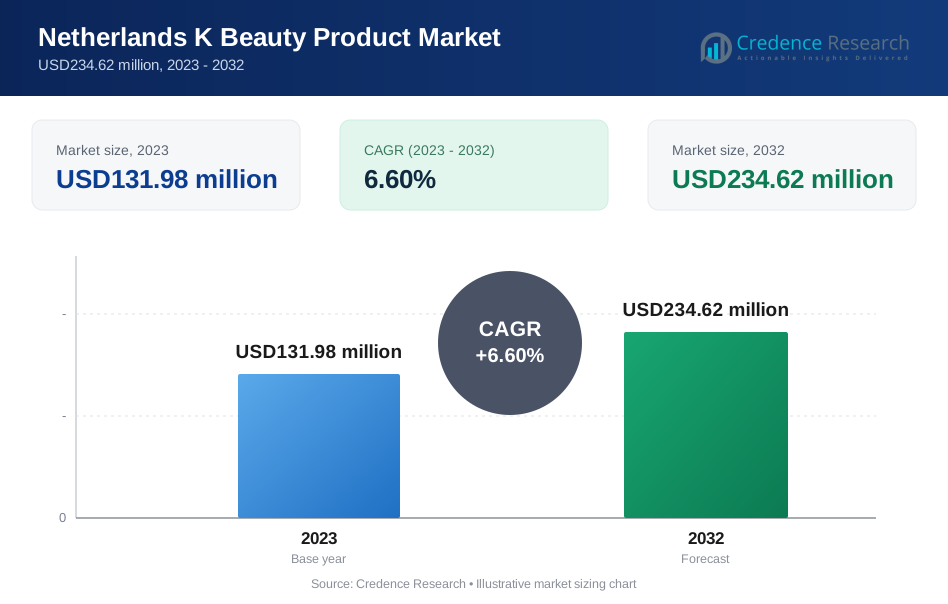
The Netherlands K Beauty Product Market is projected to grow from USD131.98 million in 2023 to an estimated USD234.62 million by 2032, with a compound annual growth rate (CAGR) of 6.60% from 2024 to 2032. This steady expansion reflects the increasing consumer interest in Korean beauty innovations and the expanding distribution channels within the region.
Key drivers fueling this market growth include the high demand for advanced skincare formulations, the popularity of natural and cruelty-free products, and the effective use of digital marketing and social media by K Beauty brands. Trends such as the incorporation of unique ingredients like snail mucin and centella asiatica, as well as the rise of multi-step skincare routines, are also propelling the market forward. Additionally, the shift towards e-commerce and online beauty platforms has made K Beauty products more accessible to Dutch consumers, further enhancing market penetration.
Geographically, the Netherlands K Beauty Product Market is concentrated in major urban centers such as Amsterdam, Rotterdam, and The Hague, where consumers are more receptive to international beauty trends. These cities benefit from higher income levels and greater exposure to global beauty standards. Key players in the market include renowned brands like Innisfree, Laneige, Missha, and Dr. Jart+, which have established a strong presence through strategic partnerships and localized marketing efforts. Additionally, emerging local distributors and retailers are playing a crucial role in expanding the availability and visibility of K Beauty products across the country, ensuring sustained market growth.
Market Insights
- The market is projected to grow from USD131.98 million in 2023 to USD234.62 million by 2032, driven by a CAGR of 6.60% from 2024 to 2032.
- Dutch consumers are increasingly adopting advanced Korean skincare products due to their effectiveness and innovative formulations.
- The growing popularity of K-pop and Korean culture plays a significant role in enhancing the market’s appeal, especially in urban areas.
- There is a growing demand for cruelty-free, natural, and clean beauty products, fueling market expansion.
- The competitive landscape is saturated with global and local players, making differentiation and brand loyalty crucial for success.
- Major cities like Amsterdam, Rotterdam, and The Hague account for the largest share of the market, with high disposable incomes and strong exposure to global beauty trends.
- The shift towards online shopping, driven by convenience and broader product availability, is accelerating market growth and accessibility.
Market Drivers
High Demand for Advanced Skincare Formulations
One of the foremost drivers of the Netherlands K Beauty Product Market is the escalating demand for advanced skincare formulations. Dutch consumers are increasingly seeking products that offer innovative solutions to various skin concerns, such as aging, hyperpigmentation, and acne. For instance, the increasing focus on advanced skincare formulations is evident as consumers actively seek products that address specific skin concerns. K Beauty brands have successfully integrated scientifically-backed ingredients such as hyaluronic acid and peptides into their offerings, which resonates with the Dutch market's demand for effective solutions. The popularity of multi-functional products that combine benefits—like moisturizing and brightening—demonstrates a shift towards efficient skincare routines. This trend not only highlights the sophistication of Dutch consumers but also sets K Beauty apart from traditional Western brands. Consequently, the continual introduction of high-performance products by K Beauty brands sustains consumer interest and drives market growth in the Netherlands.
Growing Influence of K-Pop and Korean Culture
The pervasive influence of K-Pop and broader Korean culture serves as a substantial market driver for K Beauty products in the Netherlands. The global popularity of K-Pop stars and Korean dramas has significantly elevated the visibility and desirability of Korean beauty standards and practices. For instance, the desire to emulate the beauty standards portrayed by K-Pop idols fosters a strong emotional connection to K Beauty brands, enhancing brand loyalty. Fans and followers are eager to replicate the flawless skin and distinctive beauty routines showcased by their favorite celebrities, leading to increased adoption of K Beauty products. This cultural phenomenon encourages consumers to explore and invest in products that promise similar aesthetic outcomes. Additionally, marketing campaigns often leverage this cultural influence by featuring K-Pop idols and integrating elements of Korean lifestyle, further strengthening the association between K Beauty and modern, trend-setting beauty practices. As a result, the symbiotic relationship between K-Pop’s popularity and the demand for K Beauty products continues to be a pivotal driver in the Netherlands market.
Preference for Natural and Cruelty-Free Products
The increasing preference for natural and cruelty-free products significantly propels the Netherlands K Beauty Product Market. Dutch consumers are becoming more conscientious about the ingredients in their skincare products and the ethical practices of the brands they support. For instance, there is a marked preference for natural and cruelty-free products among Dutch consumers who are increasingly discerning about ingredient sourcing and brand ethics. This demographic prompts K Beauty brands to prioritize sustainability and animal welfare in their formulations. Many K Beauty products feature botanical extracts, essential oils, and other naturally derived components that appeal to eco-conscious consumers seeking gentle yet effective skincare solutions. The emphasis on clean beauty aligns with these values, enhancing brand credibility and fostering trust among consumers who prioritize ethical consumption. Certifications such as “cruelty-free” and “vegan” further enhance the attractiveness of K Beauty brands in this market. This alignment with consumer values not only broadens the appeal of K Beauty products but also drives sustained market growth.
Expansion of E-commerce and Digital Marketing Strategies
The rapid expansion of e-commerce and the strategic use of digital marketing are critical drivers behind the growth of the Netherlands K Beauty Product Market. The shift towards online shopping, accelerated by the COVID-19 pandemic, has created a fertile environment for K Beauty brands to reach a wider audience. For instance, this expansion facilitates access to a diverse range of K Beauty products, allowing consumers to explore various options conveniently from their homes. Brands leverage digital marketing strategies, including influencer collaborations and social media engagement, to enhance visibility and foster community interactions among tech-savvy consumers. E-commerce platforms provide convenient access to product tutorials, user reviews, and behind-the-scenes content that effectively build a strong online presence for these brands. Moreover, data-driven marketing strategies enable brands to tailor their offerings to specific preferences and behaviors of Dutch consumers, enhancing overall shopping experiences. Consequently, this seamless combination of e-commerce infrastructure and innovative digital marketing not only facilitates market penetration but also drives sustained growth in the Netherlands' K Beauty market.
Market Trends
Rise of Customized and Personalized Skincare Solutions
The trend toward customized and personalized skincare solutions is significantly shaping the Netherlands K Beauty Product Market. Consumers increasingly prefer products tailored to their unique skin types, concerns, and preferences. For instance, brands like Klira and Dermatica utilize comprehensive online assessments that gather detailed information about an individual's skin type, lifestyle, and medical history to create tailored skincare products. This process includes uploading photographs and answering a series of questions to ensure that the formulations are specifically designed to meet each customer's unique skin concerns, such as acne or sensitivity. K Beauty brands are capitalizing on this demand by offering personalized skincare quizzes, AI-driven diagnostic tools, and subscription-based services, allowing consumers to receive products specifically formulated for their skin. Advanced technology, such as AI algorithms, analyzes vast datasets to provide tailored recommendations, enhancing product efficacy while fostering a deeper connection between consumers and brands. Furthermore, the focus on addressing specific issues like sensitivity, acne, and anti-aging aligns seamlessly with the Dutch market's preference for practical and results-driven skincare. This innovative approach not only enhances product effectiveness but also positions customization as a prominent trend in the Netherlands K Beauty market.
Emphasis on Sustainability and Clean Beauty
Sustainability and clean beauty are emerging as dominant trends in the Netherlands K Beauty Product Market. With an increasing focus on environmental consciousness and ethical consumption, Dutch consumers are gravitating toward products that reflect these values. K Beauty brands are responding by emphasizing sustainable sourcing, eco-friendly packaging, and transparent ingredient lists. For example, many brands highlight their use of natural, organic, and cruelty-free ingredients while offering refillable packaging options that reduce plastic waste.This shift not only aligns with consumer expectations but also reinforces brand loyalty among ethically-minded buyers. The clean beauty movement is characterized by a commitment to avoiding harmful chemicals like parabens, sulfates, and synthetic fragrances. Many brands have adopted strict ingredient policies to ensure their products are safe and environmentally responsible. As a result, K Beauty brands are positioned as leaders in sustainability within the beauty industry. This commitment to ethical practices resonates with eco-conscious consumers in the Netherlands who prioritize safe, effective solutions. By offering environmentally responsible skincare options that meet growing demand for sustainability, K Beauty brands enhance their appeal in this competitive market.
Increased Popularity of Multi-Step Skincare Routines
The popularity of multi-step skincare routines is a hallmark of the K Beauty philosophy and a key trend in the Netherlands market. Dutch consumers are increasingly adopting comprehensive skincare regimens championed by K Beauty, which include steps such as double cleansing, exfoliation, toning, and layering serums, essences, and moisturizers. This trend is driven by the perception that structured routines deliver superior results and promote long-term skin health. Educational marketing campaigns and tutorials by influencers have played a pivotal role in familiarizing consumers with these routines.Moreover, the experiential aspect of multi-step routines transforms skincare into a self-care ritual that Dutch consumers appreciate. Brands are leveraging this trend by offering bundled products or starter kits that simplify the adoption of these regimens. For instance, many brands provide curated sets that guide users through each step of the routine while ensuring compatibility among products. The multi-step approach not only encourages higher product consumption but also fosters greater consumer engagement with the K Beauty brand ecosystem. This engagement solidifies K Beauty's position in the Netherlands market as consumers embrace these elaborate yet rewarding skincare rituals.
Integration of Technology in Product Development and Marketing
Technology integration in product development and marketing is a defining trend in the Netherlands K Beauty Product Market. Advanced formulations incorporating biotechnology—such as probiotic-based skincare and encapsulated ingredients—are gaining popularity due to their superior efficacy and innovative appeal. K Beauty brands lead the way by leveraging scientific advancements to create high-performance products that address specific skin concerns effectively.Additionally, the use of augmented reality (AR) and virtual reality (VR) in marketing is transforming the consumer shopping experience. AR tools allow users to virtually try on products before purchasing them, enhancing confidence in their choices. Coupled with VR-powered brand storytelling that immerses consumers in brand narratives, these technologies create engaging experiences that resonate with tech-savvy Dutch consumers. Digital marketing strategies—including influencer collaborations and AI-driven personalization—further enhance consumer interaction and purchase intent.Furthermore, technology plays a pivotal role in sustainability efforts; brands utilize data analytics to optimize supply chains and reduce waste. The seamless integration of innovation continues to position K Beauty as a dynamic segment within the Netherlands beauty market, appealing to consumers who value both efficacy and technological advancement in their skincare choices.
Market Challenges
Intense Market Competition and Brand Saturation
The Netherlands K Beauty Product Market faces intense competition from both international and local players, creating a saturated marketplace that poses significant challenges for brands. With the rising popularity of K Beauty products, numerous brands have entered the market, leading to heightened competition for shelf space, online visibility, and consumer attention. For instance, the competitive landscape is characterized by a multitude of brands vying for consumer attention, complicating positioning for new entrants. The influx of international and local brands results in a marketplace where consumers are inundated with choices, making it increasingly difficult for any single brand to stand out. This scenario is exacerbated by Western and European brands adopting similar innovative formulations, further intensifying the competition.Additionally, the constant introduction of new products can overwhelm consumers, making it challenging for brands to establish loyalty and sustain growth. Smaller or emerging K Beauty brands find it particularly difficult to differentiate themselves amidst this saturation. As a result, brands must develop unique selling propositions and innovative marketing strategies to capture consumer interest. Without effective differentiation and strategic positioning, the long-term success of K Beauty brands in the Netherlands may be significantly hindered.
Cultural Differences and Consumer Adaptation
Adapting K Beauty products and routines to align with the cultural preferences and skincare habits of Dutch consumers poses another key challenge. While the multi-step skincare routine is a cornerstone of K Beauty, it may not resonate with the simpler and more minimalist approach often preferred by Dutch consumers. Convincing consumers to adopt these elaborate routines requires significant educational efforts and strategic marketing. For instance, brands must invest heavily in educational marketing to persuade consumers to embrace these more intricate regimens. Furthermore, many K Beauty formulations are designed for Asian skin types and climates, which may not fully address the specific needs of Dutch consumers—particularly those with fair or sensitive skin affected by colder weather conditions.To bridge this gap, brands must implement localization strategies that include product reformulations tailored to the unique skincare needs of Dutch consumers. Culturally relevant marketing campaigns are also essential to effectively communicate the benefits of K Beauty products. Failure to adequately address these cultural and environmental differences may limit market penetration and hinder the long-term success of K Beauty brands in the Netherlands. By understanding and adapting to local preferences, brands can enhance their appeal and foster stronger connections with Dutch consumers.
Market Opportunities
Expansion into Untapped Demographics and Regions
The Netherlands K Beauty Product Market holds significant growth potential by expanding its reach into untapped demographics and regions. While urban centers like Amsterdam and Rotterdam are key markets, there is an opportunity to penetrate smaller cities and rural areas where awareness of K Beauty products is still developing. For instance, targeting these regions through strategic partnerships with local retailers can enhance product accessibility and appeal to a broader audience. Additionally, focusing on specific demographics such as men and older age groups represents a lucrative opportunity. The growing interest in men’s grooming and anti-aging products offers a pathway for brands to diversify their consumer base. For example, the rise of men's skincare routines in South Korea has led to increased spending on cosmetics among men, indicating a similar potential in the Netherlands if brands tailor their marketing and product lines accordingly. By creating targeted campaigns that resonate with the unique needs of these segments, K Beauty brands can unlock new revenue streams and solidify their market presence. This approach not only broadens the consumer base but also fosters brand loyalty as customers feel their specific needs are being addressed.
Leverage of E-commerce and Digital Marketing
E-commerce presents a vast opportunity for growth in the Netherlands K Beauty Product Market. With Dutch consumers increasingly relying on online shopping for convenience and access to diverse product options, K Beauty brands can capitalize on this trend by strengthening their digital presence. For instance, collaborations with prominent e-commerce platforms can significantly enhance product visibility. The use of social media influencers has also proven effective in engaging consumers, particularly younger demographics who are more likely to trust recommendations from online personalities.Moreover, the integration of virtual try-on technologies can attract tech-savvy consumers seeking personalized shopping experiences. As seen in other markets, brands that offer subscription services and exclusive online discounts are able to foster customer loyalty and generate recurring revenue. By leveraging advanced digital marketing strategies and data-driven personalization, K Beauty brands can effectively cater to the evolving preferences of Dutch consumers. This approach not only ensures sustained market growth but also positions brands as leaders in an increasingly competitive landscape, appealing to consumers who prioritize convenience and tailored experiences in their shopping journeys.
Market Segmentation Analysis
By Type
Sheet masks, cleansers, moisturizers, and other K Beauty products are becoming increasingly popular in the Netherlands due to their effectiveness and versatility. Sheet masks are favored for their convenience, affordability, and immediate results, especially for hydration, brightening, and skin soothing. Cleansers, particularly oil-based and water-based types, reflect the growing trend of K Beauty’s double-cleansing method, with consumers seeking products that remove makeup and impurities without damaging the skin. Moisturizers, including lightweight gels and emollient creams, cater to various skin types and seasonal needs, contributing significantly to the market. Additionally, essences, serums, and exfoliators are becoming more popular as essential components of multi-step skincare routines, further driving the market’s growth in the Netherlands.
By Application
The Netherlands K Beauty Product Market is driven by three main applications: Beauty Business, Personal, and Others. The Beauty Business segment, including salons, spas, and beauty clinics, is a key contributor to market growth due to the adoption of K Beauty products known for their innovative formulations and effective results. The Personal use segment leads the market, with consumers increasingly incorporating K Beauty products into their daily skincare routines to achieve professional-grade results at home. Additionally, the Others segment, which encompasses niche applications such as gifting, promotional bundles, and educational workshops, supports overall market development by expanding consumer engagement and brand awareness.
Segments
Based on Type
- Sheet Masks
- Cleansers
- Moisturizers
- Others
Based on Application
- Beauty Business
- Personal
- Others
Based on End User
- Male
- Female
- Children and Teenage
Based on Distribution Channel
- Online Retail
- Supermarket/Hypermarket
- Specialty/Monobrand Stores
Based on Region
- Amsterdam
- Rotterdam
- The Hague
Regional Analysis
Amsterdam (45%)
As the capital and largest city in the Netherlands, Amsterdam represents the dominant region for K Beauty products, accounting for approximately 45% of the market share. The city is home to a diverse population with a higher concentration of international residents, including those familiar with K Beauty trends. Amsterdam's retail landscape, featuring both physical stores and a robust e-commerce infrastructure, facilitates the widespread availability of K Beauty products. The strong presence of beauty clinics, salons, and luxury retailers further drives the adoption of high-end Korean skincare. Additionally, the influence of social media and global beauty trends is particularly high in this metropolitan area, making it a key hub for K Beauty innovation and consumer education.
Rotterdam (25%)
Rotterdam, known for its modern architecture and progressive outlook, holds approximately 25% of the K Beauty market in the Netherlands. The city's younger, trend-conscious population is highly receptive to global beauty trends, including K Beauty. Rotterdam’s expanding digital and retail ecosystem supports a growing demand for Korean beauty products, with many local retailers offering a wide range of options. Furthermore, Rotterdam’s diverse community and its large student population contribute to increased interest in affordable yet effective skincare solutions, boosting the demand for K Beauty products. The growing number of specialized beauty stores and pop-up shops further facilitates market penetration in this region.
Key players
- Able C & C Ltd
- Adwin Korea Corporation
- Amorepacific Corporation
- CLIO COSMETICS Co. Ltd
- Cosrx Inc
- LG H&H Co. Ltd. (LG Corporation)
- The Crème Shop Inc
- The Face Shop Inc
- Tonymoly Co. Ltd
- Haruharu
Competitive Analysis
The Netherlands K Beauty Product Market is highly competitive, with several major global players vying for market share. Companies like Amorepacific Corporation and LG H&H Co. Ltd., with established brand recognition and diverse product portfolios, are leading the charge, offering a broad range of skincare and cosmetics designed to appeal to the Dutch consumer’s desire for high-performance, innovative products. Cosrx Inc and Tonymoly Co. Ltd are focusing on affordable yet effective skincare, catering to price-conscious consumers while maintaining a strong online presence. Meanwhile, Able C & C Ltd and Adwin Korea Corporation differentiate themselves through unique formulations and ingredients, driving consumer interest. Local retailers and specialized stores are increasingly stocking these international brands, creating a dynamic retail environment. With e-commerce rapidly expanding, these brands are adapting their strategies to engage consumers digitally, which is critical for maintaining a competitive edge in the evolving market landscape.
Recent Developments
- In August 2024, CLIO launched its Fall/Winter 2024 makeup collection in the Netherlands, introducing several new products including their popular Kill Cover foundation and Butter Balm Crayon. The collection has quickly gained popularity among beauty enthusiasts.
- In January 2024, Cosrx released a new Ultra-Light Invisible Sunscreen SPF 50 in the Netherlands, which quickly became a bestseller due to its lightweight formulation and high protection factor. This product has garnered significant attention from consumers seeking effective sun protection.
- In May 2024, The Crème Shop introduced a new line of sheet masks infused with unique ingredients such as collagen and hyaluronic acid, targeting hydration and skin rejuvenation. This launch has been well-received by Dutch consumers looking for effective skincare solutions.
- In July 2024, The Face Shop launched a new eco-friendly skincare line in the Netherlands that emphasizes natural ingredients and sustainable practices. This initiative aligns with the growing trend towards clean beauty among consumers.
- In March 2024, Tonymoly released a new series of playful skincare products designed specifically for younger consumers. These products feature fun packaging and engaging marketing strategies to attract a younger demographic in the Netherlands.
- In April 2024, Haruharu launched its latest product line featuring fermented ingredients aimed at enhancing skin vitality and health. This launch has resonated well with Dutch consumers who are increasingly interested in innovative K-beauty solutions.
Market Concentration and Characteristics
The Netherlands K Beauty Product Market exhibits a moderate level of market concentration, with several key global players dominating the space. Major brands such as Amorepacific Corporation, LG H&H Co. Ltd., and Cosrx Inc lead the market, offering a wide range of skincare and cosmetic products that cater to diverse consumer needs. These established brands benefit from strong brand recognition, extensive product portfolios, and robust distribution channels, both online and offline. However, the market also shows characteristics of fragmentation, with emerging local distributors and smaller Korean beauty brands gradually gaining market share through innovative offerings and tailored products. The competitive landscape is marked by a growing preference for personalized skincare solutions, cruelty-free products, and sustainable beauty, which drive both established and new entrants to continually adapt their strategies. As the market evolves, brands are increasingly leveraging digital platforms and social media to engage with tech-savvy Dutch consumers, ensuring dynamic growth and competition within the sector.
Report Coverage
The research report offers an in-depth analysis based on Type, Application, End User, Distribution Channel and Region. It details leading market players, providing an overview of their business, product offerings, investments, revenue streams, and key applications. Additionally, the report includes insights into the competitive environment, SWOT analysis, current market trends, as well as the primary drivers and constraints. Furthermore, it discusses various factors that have driven market expansion in recent years. The report also explores market dynamics, regulatory scenarios, and technological advancements that are shaping the industry. It assesses the impact of external factors and global economic changes on market growth. Lastly, it provides strategic recommendations for new entrants and established companies to navigate the complexities of the market.
Future Outlook
- The Netherlands K Beauty market is expected to maintain a steady growth trajectory, driven by increasing consumer demand for innovative skincare solutions. The market is forecasted to grow at a CAGR of 6.60% from 2024 to 2032.
- E-commerce will play a pivotal role in shaping the future of the K Beauty market, offering Dutch consumers greater access to a wide range of products. Brands will increasingly focus on enhancing their online presence through platforms like Instagram and TikTok.
- Customized skincare solutions tailored to individual needs will gain momentum, with consumers seeking more personalized, effective products. Digital tools and AI-based services will become integral to the product selection process.
- K Beauty brands will continue to emphasize sustainable packaging and cruelty-free practices, reflecting the growing consumer preference for environmentally responsible products. Eco-friendly beauty solutions will become a key differentiator in the market.
- The male skincare market is expected to expand as more men become aware of skincare benefits and seek products suited to their specific needs. Brands will create targeted offerings for men’s grooming.
- As consumers seek safer and cleaner products, K Beauty brands will prioritize natural, organic ingredients, further tapping into the clean beauty movement. Products using botanicals and plant-based components will see higher demand.
- K Beauty brands will gradually penetrate smaller cities and rural areas across the Netherlands, expanding their reach beyond major urban centers. Local partnerships and offline retail channels will drive growth in these regions.
- Korean beauty brands will continue to leverage K-Pop and Korean culture to attract Dutch consumers. Localized marketing and tailored product formulations will be key to connecting with the diverse Dutch market.
- The integration of cutting-edge technology, such as biotechnology and augmented reality, will revolutionize the development and marketing of K Beauty products. This will drive the market’s future evolution toward more advanced, effective solutions.
- As the K Beauty market in the Netherlands matures, new players and local distributors will emerge, intensifying competition. Innovation, product quality, and effective digital strategies will be crucial to securing market share.
Request a Free Sample
Fill in your details and we'll send you a free sample report.
- Sample data tables & charts
- Research methodology
Need a Custom Version of This Report?
Tailor the scope, geography, or segments to your exact requirements.
- Custom geography or segment scope
- Direct access to our analyst team
Frequently Asked Questions
What is the market size of the Netherlands K Beauty Product Market in 2023 and 2032?
What factors are driving the growth of the Netherlands K Beauty Product Market?
Which regions in the Netherlands are driving the K Beauty product market?
What are the key trends shaping the Netherlands K Beauty Product Market?
Who are the major players in the Netherlands K Beauty Product Market?
Table of Content
Chapter 1. Report Introduction
- 1.1 Report Description & Purpose
- 1.1.1 Report Title & Market Definition
- 1.1.2 Unique Selling Propositions (USP) & Key Differentiators
- 1.1.3 Value Proposition for Stakeholders
- 1.2 Research Objectives
- 1.2.1 Market Sizing Objectives (Volume & Revenue)
- 1.2.2 Segmentation Objectives
- 1.2.3 Competitive Intelligence Objectives
- 1.2.4 Forecast & Scenario Objectives
- 1.3 Report Scope
- 1.3.1 Netherlands K Beauty Product Scope – Types & Subtypes Covered
- 1.3.2 Geographic Scope – Regions & Countries Covered
- 1.3.3 Historical Period, Base Year & Forecast Period (2023; forecast to 2032)
- 1.3.4 Inclusions & Exclusions
- 1.4 HS Code & Classification Framework
- 1.5 Currency, Units & Pricing Basis
- 1.6 Target Stakeholders
- 1.7 Limitations & Assumptions
Chapter 2. Executive Summary
- 2.1 Global Netherlands K Beauty Product Market Snapshot
- 2.1.1 Market Size – Historical (2023) & Forecast (2023-2032) (2023: USD131.98 million → 2032: USD234.62 million)
- 2.1.2 Volume & Revenue – Global Totals
- 2.1.3 Key Market Highlights – Top Five Facts
- 2.2 Netherlands K Beauty Product Market Segmentation Snapshot
- 2.2.1 Market Split by Region – 2023 vs. 2032
- 2.3 Competitive Snapshot
- 2.3.1 Top 10 Players by Revenue Share – 2023
- 2.3.2 Top 10 Players by Volume Share – 2023
- 2.3.3 Recent Strategic Developments (18-Month Summary)
- 2.4 Key Investment Highlights & Strategic Conclusions
Chapter 3. Netherlands K Beauty Product Market Dynamics & Industry Analysis
- 3.1 Market Overview & Context
- 3.1.1 Netherlands K Beauty Product Market Position in the Broader Automotive Value Chain
- 3.1.2 OEM vs. Replacement Market Dynamics
- 3.1.3 Market Maturity & Development Stage by Region
- 3.2 Netherlands K Beauty Product Market Drivers
- 3.3 Netherlands K Beauty Product Market Restraints & Challenges
- 3.4 Netherlands K Beauty Product Market Opportunities
- 3.5 Porter's Five Forces Analysis
- 3.5.1 Threat of New Entrants
- 3.5.2 Bargaining Power of Suppliers
- 3.5.3 Bargaining Power of Buyers
- 3.5.4 Threat of Substitutes
- 3.5.5 Competitive Rivalry – Intensity Assessment
- 3.6 Netherlands K Beauty Product Value Chain Analysis
- 3.6.1 Upstream – Raw Material/Input Suppliers
- 3.6.1.1 Raw Material/Input 1
- 3.6.1.2 Raw Material/Input 2
- 3.6.1.3 Raw Material/Input 3
- 3.6.2 Midstream – Production/Manufacturing/Service Delivery
- 3.6.2.1 Production/Process Overview
- 3.6.2.2 Key Facility Locations & Capacity by Manufacturer
- 3.6.3 Downstream – Distribution & End Consumer
- 3.6.3.1 Primary Channel – B2B/OEM
- 3.6.3.2 Secondary Channels – Dealer, Retail, Online, Direct
- 3.6.4 Value Chain Profitability Analysis
- 3.6.1 Upstream – Raw Material/Input Suppliers
- 3.7 PESTEL Analysis
- 3.7.1 Political Factors
- 3.7.2 Economic Factors
- 3.7.3 Social Factors
- 3.7.4 Technological Factors
- 3.7.5 Environmental Factors
- 3.7.6 Legal Factors
- 3.8 Netherlands K Beauty Product Supply Chain Analysis
- 3.8.1 Raw Material/Input Supply Risk Assessment
- 3.8.2 Manufacturing Concentration Risk (Geographic Exposure)
- 3.8.3 Trade Disruption Impact Analysis
- 3.9 Regulatory & Policy Landscape
Note: The regulatory and policy landscape section covers regulations based on their applicability to the market, Netherlands K Beauty Product category, geography, and scope of the study. Only regulatory frameworks with a material impact on operations, compliance, trade, sustainability, or market access are analyzed in detail.
Chapter 4. Key Investment Pockets & Opportunity Analysis
- 4.1 Netherlands K Beauty Product Market Attractiveness Analysis
- 4.1.1 By Region – Investment Attractiveness Matrix (Volume × CAGR)
- 4.2 Absolute Revenue Growth Opportunity
- 4.2.1 By Region – Absolute USD Growth Through 2032
- 4.3 Incremental Volume Opportunity
- 4.3.1 By Region – Incremental Volume Through 2032
- 4.3.2 Segment – Incremental Volume
- 4.4 Emerging Submarket Opportunity Deep Dive (Subject to Applicability)
- 4.5 Emerging Market Opportunity Scorecards
- 4.5.1 United States
- 4.5.2 Europe
- 4.5.3 Asia
- 4.5.4 Middle East & Africa
Note: Emerging Market Opportunity Scorecards will be included based on relevance and strategic importance. Regions listed are indicative and may vary depending on data availability and market dynamics.
Chapter 5. Netherlands K Beauty Product Import-Export Analysis & Trade Flows
- 5.1 Global Trade Overview
- 5.1.1 Global Export Value by Country (2023)
- 5.1.2 Global Export Volume by Country (2023)
- 5.1.3 Global Import Value by Country (2023)
- 5.1.4 Global Import Volume by Country (2023)
- 5.1.5 Net Trade Balance by Country (2023)
- 5.2 Export Analysis – Segment
- 5.2.1 Type 1 (HS Code)
- 5.2.2 Type 2 (HS Code)
- 5.2.3 Type 3 (HS Code)
- 5.2.4 Type 4 (HS Code)
- 5.2.5 Type 5 (HS Code)
- 5.3 Import Analysis – Segment
- 5.3.1 Type 1 (HS Code)
- 5.3.2 Type 2 (HS Code)
- 5.3.3 Type 3 (HS Code)
- 5.3.4 Type 4 (HS Code)
- 5.3.5 Type 5 (HS Code)
- 5.4 Average Unit Trade Prices
- 5.4.1 Average Export Price – Segment & Country
- 5.4.2 Average Import Price – Segment & Source Country
- 5.4.3 Price Trends (2023)
- 5.5 Key Trade Route Analysis
- 5.5.1 Trade Route 1
- 5.5.2 Trade Route 2
- 5.5.3 Trade Route 3
- 5.5.4 Trade Route 4
- 5.5.5 Trade Route 5
- 5.6 Trade Policy Impact Assessment
- 5.6.1 US Anti-Dumping & Section 301 Tariffs
- 5.6.2 EU Customs Union Impact
- 5.6.3 Major Free Trade Agreements
- 5.6.4 USMCA Rules of Origin
Note: Trade policy analysis will be included only where relevant to the Netherlands K Beauty Product market.
Chapter 6. Competitive Landscape & Company Benchmarking
- 6.1 Netherlands K Beauty Product Market Concentration & Structure
- 6.1.1 Herfindahl-Hirschman Index (HHI) – vs. 2023
- 6.1.2 Tier 1, Tier 2 & Tier 3 Market Structure
- 6.1.3 Global, Regional & Local Player Dynamics
- 6.2 Netherlands K Beauty Product Market Share Analysis – 2023
- 6.2.1 Global Revenue Share by Company
- 6.2.2 Global Volume Share by Company
- 6.2.3 Regional Revenue Share
- 6.2.4 Market Share Evolution ( vs. 2023)
- 6.2.5 OEM Segment Share by Company
- 6.2.6 Replacement Segment Share by Company
- 6.3 Production/Delivery Capacity & Facility Analysis
- 6.3.1 Global Installed Capacity
- 6.3.2 Capacity Utilization Rates
- 6.3.3 Production/Output Volume
- 6.3.4 Facility Locations & Capacity Map
- 6.3.5 Planned Capacity Additions
- 6.4 Netherlands K Beauty Product Competitive Benchmarking Matrix
- 6.4.1 Revenue, Volume, CAGR & Profitability Comparison
- 6.4.2 Channel Revenue Mix
- 6.4.3 Geographic Revenue Exposure
- 6.4.4 R&D Intensity
- 6.4.5 Sustainability Maturity
- 6.5 Strategic Developments in Netherlands K Beauty Product (Last 24 Months)
- 6.5.1 Mergers, Acquisitions & Divestments
- 6.5.2 New Netherlands K Beauty Product Launches
- 6.5.3 Facility Expansions
- 6.5.4 Strategic Alliances, Joint Ventures & Partnerships
- 6.5.5 Distribution Expansion & Market Entry
- 6.5.6 Sustainability & ESG Initiatives
- 6.6 Competitive Strategy Mapping
- 6.6.1 Leader, Challenger, Follower & Niche Classification
- 6.6.2 Pricing Strategy Comparison
- 6.6.3 Channel Strategy Matrix
Note: Strategic developments are included based on their materiality and the availability of reliable information.
Chapter 7. Global Netherlands K Beauty Product Market – By Distribution Channel
- 7.1 Segment Overview
- 7.1.1 Volume & Revenue Split by Channel (2023 & 2032)
- 7.1.2 Channel Mix Evolution (2023-2032)
Chapter 8. Regional Market Analysis – Global Overview
- 8.1 Global Regional Overview
- 8.1.1 Regional Volume Share
- 8.1.2 Regional Revenue Share
- 8.1.3 Regional Volume by Region
- 8.1.4 Regional Revenue by Region
- 8.1.5 Regional Forecast Through 2032
- 8.2 Cross-Regional Segment Analysis
- 8.2.1 By Distribution Channel
- 8.2.2 By Brand/Price Tier
Chapter 9. North America Netherlands K Beauty Product Market
- 9.1 United States
- 9.2 Canada
- 9.3 Mexico
Chapter 10. Europe Netherlands K Beauty Product Market
- 10.1 Germany
- 10.2 France
- 10.3 Italy
- 10.4 United Kingdom
- 10.5 Spain
- 10.6 Poland
- 10.7 Russia
- 10.8 Netherlands
- 10.9 Belgium
- 10.10 Sweden
- 10.11 Denmark
- 10.12 Norway
- 10.13 Rest of Europe
Chapter 11. Asia Pacific Netherlands K Beauty Product Market
- 11.1 China
- 11.2 India
- 11.3 Japan
- 11.4 South Korea
- 11.5 Thailand
- 11.6 Indonesia
- 11.7 Vietnam
- 11.8 Malaysia
- 11.9 Australia
- 11.10 Rest of Asia Pacific
Chapter 12. Latin America Netherlands K Beauty Product Market
- 12.1 Brazil
- 12.2 Argentina
- 12.3 Colombia
- 12.4 Chile
- 12.5 Rest of Latin America
Chapter 13. Middle East Netherlands K Beauty Product Market
- 13.1 Saudi Arabia
- 13.2 United Arab Emirates
- 13.3 Turkey
- 13.4 Israel
- 13.5 Iran
- 13.6 Rest of the Middle East
Chapter 14. Africa Netherlands K Beauty Product Market
- 14.1 South Africa
- 14.2 Egypt
- 14.3 Nigeria
- 14.4 Morocco
- 14.5 Rest of Africa
Chapter 15. Netherlands K Beauty Product Company Profiles
- 15.1 [Company 01]
- 15.1.1 Company Overview
- 15.1.2 Key Management Personnel
- 15.1.3 Products & Services Portfolio
- 15.1.4 Financial Performance
- 15.1.5 Key Market Focus & Geographic Presence
- 15.1.6 Recent Developments & Strategic Initiatives
Note: The company profile list is preliminary and may change based on research findings, market developments, data availability, and client requirements.
Chapter 16. Appendices
- Appendix A – List of Abbreviations & Acronyms
- Appendix B – Industry Classification Code Reference – Full Series
- Appendix C – Production & Capacity Data Tables
- Appendix D – End-Use & Demand Base Tables
- Appendix E – Consumption & Replacement Rate Assumptions
- Appendix F – ASP Reference Tables
- Appendix G – Manufacturing & Facility Database
- Appendix H – Import-Export Data Tables
- Appendix I – Regulatory Summary Tables
- Appendix J – Primary Research Participant List (Anonymized)
- Appendix K – Primary Research Questionnaire Framework
- Appendix L – Data Sources & Bibliography
- Appendix M – Market Size Divergence & Source Comparison
Chapter 17. Research Methodology
- 17.1 Research Framework & Philosophy
- 17.2 Secondary Research – Sources, Hierarchy & Data Extraction
- 17.3 Data Modeling – Bottom-Up & Top-Down Market Sizing
- 17.4 Primary Research – Stakeholder Framework, LOI & Sample Sizes
- 17.5 Forecast Methodology – Regression, Scenario & Sensitivity Analysis
- 17.6 Quality Control – Four-Layer Validation Framework
- 17.7 Limitations & Standard Assumptions
- 17.8 Disclaimer
