
| REPORT ATTRIBUTE | DETAILS |
|---|---|
| Historical Period | 2020-2023 |
| Base Year | 2024 |
| Forecast Period | 2025-2032 |
| Pet Shelter and Adoption Platform Market Size 2024 | UUSD 4,525.45 million |
| Pet Shelter and Adoption Platform Market , CAGR | 9.7% |
| Pet Shelter and Adoption Platform Market Size 2032 | USD 9,491 million |
Market Overview:
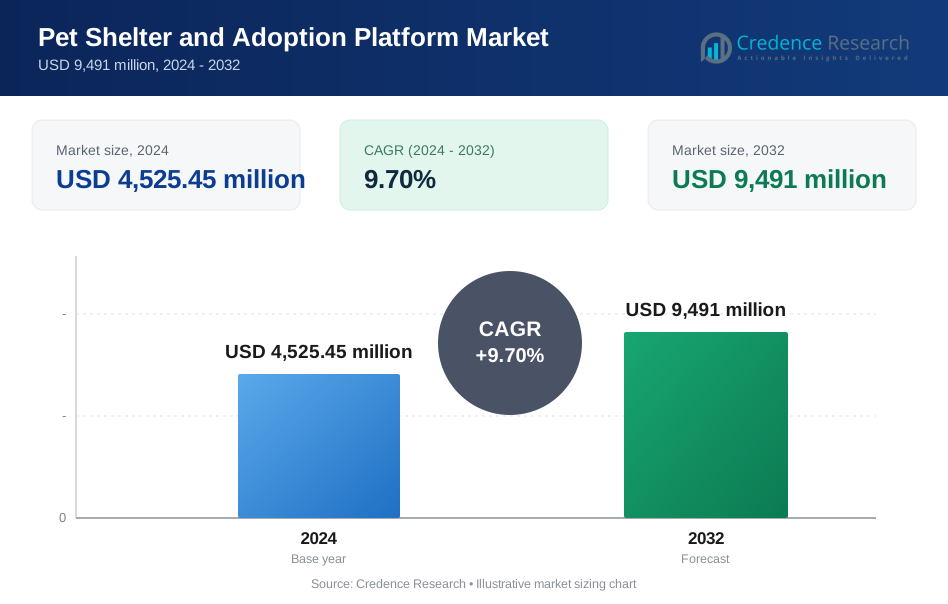
The Pet Shelter and Adoption Platform Market is expected to grow from USD 4,525.45 million in 2024 to USD 9,491 million by 2032, representing a compound annual growth rate (CAGR) of 9.7%.
The Pet Shelter and Adoption Platform Market is primarily driven by increasing awareness about animal welfare and the growing adoption of pets across global households. The rise in pet ownership, especially during and after the pandemic, has fueled demand for efficient adoption platforms. Technological advancements, such as mobile applications and online platforms, have made pet adoption more accessible, improving the overall user experience. Additionally, partnerships between shelters, non-profits, and government organizations are fostering a more structured and supportive environment for pet adoptions. Trends include a shift towards digital platforms that provide real-time information on available pets, enhancing transparency and efficiency. Moreover, the increasing emphasis on responsible pet ownership and adoption over purchasing pets is contributing to the market's growth. As consumers become more conscious of ethical and sustainable practices, the market is expected to continue evolving, offering more streamlined services and greater pet welfare initiatives.
The Pet Shelter and Adoption Platform Market shows strong regional performance across North America, Europe, and Asia Pacific. North America holds the largest market share due to advanced digital infrastructure and high adoption awareness, followed by Europe, where ethical pet ownership drives platform growth. Asia Pacific is emerging rapidly, supported by rising pet ownership and expanding digital access. Key players operating in the market include Petfinder, Adopt a Pet, The Humane Society, Pawlytics, Shelter Pro, ToYourRescue, OERCA, Volgistics, PawsHero, Pet Friend, PetPal, Buzz to the Rescues, Naankuse, and BARRK. These companies leverage innovative technology, strategic partnerships, and user-centric features to expand their presence across regions. Each region offers distinct opportunities, with North America and Europe focusing on platform enhancement, while Asia Pacific provides untapped growth potential driven by urbanization and increased awareness of animal welfare.
Market Insights:
- The market is projected to grow from USD 4,525.45 million in 2024 to USD 9,491 million by 2032, with a CAGR of 9.7%.
- Rising awareness of animal welfare and the preference for adopting over buying pets are driving consistent growth in global adoption rates.
- Digital transformation, including mobile apps and online platforms, has enhanced accessibility and streamlined the adoption process.
- Increased pet ownership, especially post-pandemic, has accelerated demand for structured and responsive adoption platforms.
- Government and non-profit support continues to shape the market through funding, regulations, and public adoption campaigns.
- Regional performance is led by North America (40%), followed by Europe (30%) and Asia Pacific (20%), each showing distinct growth patterns.
- Key players like Petfinder, Adopt a Pet, Pawlytics, Shelter Pro, and PetPal are leveraging innovation and partnerships to expand their presence.
Market Drivers:
Growing Awareness and Advocacy for Animal Welfare:
The increasing focus on animal welfare is a significant driver for the Pet Shelter and Adoption Platform Market. With more people recognizing the importance of adopting pets from shelters, the demand for platforms facilitating such adoptions has risen. Various awareness campaigns, both online and offline, have encouraged people to consider shelter adoption rather than purchasing pets. This shift in perspective has led to higher engagement on pet adoption platforms, contributing to market growth. Shelter organizations are also leveraging these platforms to showcase their animals, increasing the likelihood of successful adoptions.
For instance, the ASPCA launched a national campaign to boost adoption and community engagement, leveraging data-driven strategies to connect more shelter animals with new families.
Technological Advancements in Digital Platforms:
The rapid adoption of technology has played a crucial role in enhancing the Pet Shelter and Adoption Platform Market. Online platforms and mobile apps are now the primary methods for individuals to explore adoption options. These platforms provide detailed profiles of animals, allowing potential adopters to make informed decisions. The integration of features like real-time updates, breed-specific filters, and location-based services has made the adoption process more efficient. The ease of use and accessibility of these digital tools encourage more people to engage with adoption services, driving market expansion.
For instance, PetRescue in Australia facilitated the adoption of 21,226 dogs and 39,241 cats through its platform during the 2022-23 financial year, leveraging real-time updates and breed-specific filters to streamline the process for adopters.
Increasing Pet Ownership and Pandemic Impact:
The surge in pet ownership, especially following the COVID-19 pandemic, is another key factor fueling the Pet Shelter and Adoption Platform Market. During lockdowns, many individuals sought companionship by adopting pets, leading to a significant rise in adoption rates. This trend continues as pet ownership has become more common in urban and suburban households. With more people owning pets, the demand for adoption services, as well as shelter space, has increased, further supporting the growth of the market.
Government and Non-Profit Support for Pet Adoptions:
Government and non-profit organizations have played a crucial role in promoting responsible pet adoption. Through funding, regulations, and collaborative efforts, these entities have helped shape the landscape of the Pet Shelter and Adoption Platform Market. Many shelters now collaborate with these organizations to improve adoption rates and enhance animal welfare programs. These partnerships not only support market growth but also build trust in adoption platforms, ensuring that they remain vital resources for pet seekers and shelters alike.
Market Trends:
Shift Towards Digital and Mobile Adoption Platforms:
The Pet Shelter and Adoption Platform Market is witnessing a notable shift towards digital and mobile adoption platforms. More users prefer adopting pets through user-friendly apps and websites due to the convenience of browsing available pets, filtering based on specific needs, and receiving instant updates on adoption status. These platforms offer real-time information, making it easier for potential pet owners to connect with shelters directly. The integration of virtual features, such as video calls and detailed pet profiles, enhances the adoption process, improving transparency. This trend is further supported by the increasing reliance on mobile devices for everyday tasks, pushing the market to cater to a more tech-savvy audience. With enhanced accessibility and ease of use, these platforms have become an integral part of the adoption process, driving market growth.
For instance, Best Friends Animal Society, a leading U.S. animal welfare organization, reported that the number of no-kill shelters reached an all-time high of 57% in 2023, highlighting the effectiveness of digital adoption tools and increased public engagement through online platforms.
Increased Focus on Responsible Pet Ownership and Ethical Adoption:
There is a growing emphasis on responsible pet ownership and ethical adoption practices within the Pet Shelter and Adoption Platform Market. Consumers are becoming more aware of the environmental and ethical implications of pet breeding and are increasingly choosing to adopt pets from shelters. This trend is evident in the rising demand for adoption platforms that focus on promoting sustainable practices and animal welfare. Platforms that provide educational resources about pet care and responsible ownership are gaining traction, as they help build a deeper connection between adopters and their pets. The market is also evolving to support these values, with shelters and adoption platforms collaborating to ensure that pets are placed in suitable homes. This focus on ethics and responsibility is shaping the future of the pet adoption process, contributing to the market's expansion.
For instance, Adopt a Pet has enhanced its platform with educational resources and collaborations with animal welfare organizations, helping adopters make informed decisions and promoting responsible pet care.
Market Challenges Analysis:
Limited Shelter Capacity and Resource Constraints:
One of the primary challenges facing the Pet Shelter and Adoption Platform Market is the limited capacity of shelters to accommodate the increasing number of animals. Many shelters struggle with overcrowding, which can lead to compromised conditions for pets and lower adoption rates. These constraints often result in longer wait times for pets to be adopted and can hinder the overall effectiveness of adoption platforms. Shelters may lack sufficient funding, staff, or space, limiting their ability to fully engage with adoption platforms. Overcoming these limitations requires greater collaboration between shelters, government organizations, and adoption platforms to ensure resources are optimized.
For instance, Cobb County Animal Services in Georgia reported a 17% increase in animal intake in 2023, resulting in over 1,000 additional animals and forcing the shelter to euthanize 44 healthy animals due to lack of space.
Barriers to Trust and Transparency in Adoption Processes:
Another significant challenge in the Pet Shelter and Adoption Platform Market is the issue of trust and transparency. Some potential adopters may be hesitant to adopt pets through online platforms due to concerns about the legitimacy or transparency of the information provided. Without clear verification of shelter practices or pet histories, users may feel unsure about the process. This lack of trust can reduce engagement with platforms and hinder overall adoption rates. Ensuring accurate information, clear communication, and providing post-adoption support are crucial steps to address these concerns and foster stronger relationships between shelters, adopters, and platforms.
Market Opportunities:
Expansion of Global Adoption Networks and Partnerships:
The Pet Shelter and Adoption Platform Market presents significant opportunities through the expansion of global adoption networks and strategic partnerships. By collaborating with international shelters, adoption platforms can broaden their reach and connect with a wider audience, increasing the number of pets adopted globally. These partnerships can also lead to shared resources, knowledge exchange, and enhanced operational efficiencies. This network expansion opens doors for cross-border pet adoptions, benefiting both shelters with excess animals and adopters looking for specific pets. Such opportunities can enhance platform visibility and adoption rates, helping address overcrowding in shelters.
Integration of Advanced Technologies for Enhanced User Experience:
Another promising opportunity within the Pet Shelter and Adoption Platform Market lies in the integration of advanced technologies to improve user experience and adoption outcomes. Artificial intelligence and machine learning can be used to match pets with potential adopters based on preferences and compatibility, leading to more successful and lasting placements. Virtual reality tools can provide immersive experiences for adopters, allowing them to interact with animals remotely before making decisions. Incorporating these technologies can make the adoption process more efficient, user-friendly, and appealing to a tech-savvy audience, ultimately boosting engagement and growth in the market.
Market Segmentation Analysis:
By Type of Animal
The Pet Shelter and Adoption Platform Market is segmented based on the type of animal, including dogs, cats, small mammals, reptiles, and birds. Dogs and cats dominate the market due to their popularity as household pets, with the majority of adoption requests focused on these species. Small mammals, such as rabbits and guinea pigs, also see significant adoption activity, though to a lesser extent. Reptiles and birds make up smaller portions of the market, but their dedicated fan base continues to grow. The diversity in pet types provides platforms with opportunities to cater to different consumer preferences, expanding the scope of the market.
By Adoption Process
The adoption process segment in the Pet Shelter and Adoption Platform Market is characterized by a variety of methods, including online adoption applications, in-person interviews, home visits, drive-through adoption events, and foster-to-adopt programs. Online adoption applications have gained popularity due to their convenience, allowing potential adopters to browse pets remotely. In-person interviews and home visits remain critical for assessing the suitability of adopters. Drive-through adoption events offer a new, more streamlined approach, and foster-to-adopt programs have gained traction by providing temporary homes before final adoption.
By Service Offerings
Service offerings in the Pet Shelter and Adoption Platform Market include adoption services, foster care programs, educational resources for pet care, rehoming services, and veterinary assistance. Adoption services remain the core offering, but the inclusion of foster care programs and educational resources is gaining momentum. Rehoming services address the needs of individuals seeking to rehome pets, while veterinary assistance plays a vital role in ensuring the health and well-being of adopted animals. These services collectively enhance the overall pet adoption experience and promote responsible pet ownership.
Segments:
Based on Type of Animal
- Dogs
- Cats
- Small mammals (e.g., rabbits, guinea pigs)
- Reptiles (e.g., turtles, lizards)
- Birds (e.g., parrots, canaries)
Based on Adoption Process
- Online adoption applications
- In-person interviews
- Home visits
- Drive-through adoption events
- Foster-to-adopt programs
Based on Service Offerings
- Adoption services
- Foster care programs
- Educational resources for pet care
- Rehoming services
- Veterinary assistance and healthcare services
Based on Target Audience
- Families looking to adopt
- Individuals seeking companionship
- First-time pet owners
- Animal lovers and advocates
- Volunteers and donors
Based on Technology Utilization
- Mobile applications
- Web platforms for virtual tours
- Social media engagement
- Online donation and fundraising platforms
- AI-based matching systems for pets and adopters
Based on the Geography:
- North America
- U.S.
- Canada
- Mexico
- Europe
- Germany
- France
- U.K.
- Italy
- Spain
- Rest of Europe
- Asia Pacific
- China
- Japan
- India
- South Korea
- South-east Asia
- Rest of Asia Pacific
- Latin America
- Brazil
- Argentina
- Rest of Latin America
- Middle East & Africa
- GCC Countries
- South Africa
- Rest of the Middle East and Africa
Regional Analysis:
North America
North America holds the largest market share in the Pet Shelter and Adoption Platform Market, accounting for 40% of the global market. The region benefits from a high level of awareness surrounding pet adoption and a large number of established shelters and adoption platforms. The United States and Canada show strong demand for both online and offline adoption services, with technological advancements in mobile applications and digital platforms making the process more accessible. Increasing pet ownership rates, especially during the pandemic, have further bolstered market growth. Government initiatives and non-profit organizations actively support adoption efforts, contributing to a favorable environment for market expansion.
Europe
Europe holds a significant share of the Pet Shelter and Adoption Platform Market, representing 30% of the global market. In countries like the UK, Germany, and France, pet adoption trends are growing rapidly due to increased emphasis on responsible pet ownership and ethical adoption practices. European adoption platforms are expanding their services, incorporating digital tools to improve the user experience. Furthermore, regional collaborations between shelters, government bodies, and non-profits are boosting the adoption process. Market growth is also supported by a rising awareness of animal welfare, which drives demand for adoption platforms and services across the region.
Asia Pacific
The Asia Pacific region, accounting for 20% of the Pet Shelter and Adoption Platform Market, presents significant growth potential. Increasing pet ownership, especially in countries like China, Japan, and India, is driving demand for adoption services. Though online adoption platforms are still emerging in some countries, technological advancements are helping to accelerate market development. As pet adoption becomes more popular, awareness campaigns and collaborations between local shelters and international organizations are fostering positive market conditions. The growing middle class and rising disposable incomes in the region offer further opportunities for market expansion.
Key Player Analysis:
- Pawlytics
- Shelter Pro
- Buzz to the Rescues
- BARRK
- Naankuse
- Pet Friend
- PetPal
- OERCA
- Volgistics
- ToYourRescue
- PawsHero
Competitive Analysis:
The Pet Shelter and Adoption Platform Market is characterized by intense competition, with a mix of established players and new entrants. Leading platforms like Petfinder and Adopt a Pet dominate the market due to their strong networks of shelters and extensive user bases. Emerging platforms, such as PawsHero and Pawlytics, are gaining traction by incorporating advanced technologies, including artificial intelligence and data analytics, to enhance user experience and streamline the adoption process. Smaller, specialized platforms such as ToYourRescue and Shelter Pro focus on niche markets, offering tailored solutions for specific types of pets or adoption models. Strategic partnerships, innovative features like virtual pet interactions, and an emphasis on responsible pet ownership are key strategies for differentiation. The market is evolving, with players continually adapting to meet the growing demand for digital adoption services and animal welfare initiatives, ensuring a competitive landscape with continuous innovation.
Recent Developments:
- On July 31, 2024, Pawlytics announced updated pricing and continued to enhance its animal rescue software with features like custom forms, data visualization, automatic pet exports, and plans for new foster sourcing and matching tools.
- In October 2023, PetPal, a Philippines-based startup, expanded beyond its original teleconsultation service to offer at-home grooming, home vet visits, lab tests, vaccinations, and annual teleconsultation subscriptions through its PetPal Club.
- In December 2024, Pawlytics announced a partnership with Embark Veterinary to provide shelters and rescues with dog DNA testing, enabling access to breed, health, and trait insights for adopters, and expanding fundraising opportunities for rescues.
- In January 2025, BARRK continued to offer an all-in-one animal shelter software platform, focusing on simplifying animal intake, adoption processes, and volunteer management with a user-friendly interface for efficient operations.
Market Concentration & Characteristics:
The Pet Shelter and Adoption Platform Market shows moderate market concentration, with a mix of dominant players and emerging platforms contributing to a competitive landscape. It features a blend of large-scale platforms with extensive shelter networks and smaller, niche-focused service providers. The market benefits from increasing digital adoption, high consumer engagement, and growing support from non-profit and government bodies. It continues to evolve through partnerships, innovation, and user-driven customization. Players compete on technological capability, regional reach, service diversity, and user trust. The market also reflects strong ethical considerations, with consumers showing a clear preference for transparent and welfare-focused adoption processes. It demonstrates dynamic growth patterns driven by social impact, where community involvement, mobile app functionality, and real-time pet availability tools influence platform success. Regional variations in infrastructure and awareness also shape the competitive environment, requiring players to adapt their strategies to local needs while maintaining consistency in quality and care standards.
Report Coverage:
The research report offers an in-depth analysis based on Type of Animal, Adoption Process, Service Offering, Target Audience, Technology Utilization and Geography. It details leading market players, providing an overview of their business, product offerings, investments, revenue streams, and key applications. Additionally, the report includes insights into the competitive environment, SWOT analysis, current market trends, as well as the primary drivers and constraints. Furthermore, it discusses various factors that have driven market expansion in recent years. The report also explores market dynamics, regulatory scenarios, and technological advancements that are shaping the industry. It assesses the impact of external factors and global economic changes on market growth. Lastly, it provides strategic recommendations for new entrants and established companies to navigate the complexities of the market.
Future Outlook:
- The market will continue to grow due to increasing awareness about animal welfare and ethical pet adoption.
- Digital platforms will play a larger role in streamlining pet adoption and shelter management.
- More shelters will adopt cloud-based software to improve efficiency and data tracking.
- Mobile applications will enhance user engagement through real-time updates and pet matching tools.
- Partnerships between shelters, non-profits, and government agencies will expand service reach.
- Educational content on responsible pet ownership will become a standard feature on adoption platforms.
- AI and data analytics will support better matchmaking between pets and adopters.
- Regional expansion will intensify, especially in emerging markets across Asia Pacific and Latin America.
- Platforms will focus more on post-adoption support to reduce pet returns and improve adoption satisfaction.
- Market players will invest in user experience, security, and transparency to strengthen trust and platform loyalty.
Request a Free Sample
Fill in your details and we'll send you a free sample report.
- Sample data tables & charts
- Research methodology
Need a Custom Version of This Report?
Tailor the scope, geography, or segments to your exact requirements.
- Custom geography or segment scope
- Direct access to our analyst team
Frequently Asked Questions
What is the current size of the Pet Shelter and Adoption Platform Market?
What factors are driving the growth of the Pet Shelter and Adoption Platform Market?
What are some challenges faced by the Pet Shelter and Adoption Platform Market?
Who are the major players in the Pet Shelter and Adoption Platform Market?
Table of Content
Chapter 1. Report Introduction
- 1.1 Report Description & Purpose
- 1.1.1 Report Title & Market Definition
- 1.1.2 Unique Selling Propositions (USP) & Key Differentiators
- 1.1.3 Value Proposition for Stakeholders
- 1.2 Research Objectives
- 1.2.1 Market Sizing Objectives (Volume & Revenue)
- 1.2.2 Segmentation Objectives
- 1.2.3 Competitive Intelligence Objectives
- 1.2.4 Forecast & Scenario Objectives
- 1.3 Report Scope
- 1.3.1 Pet Shelter and Adoption Platform Scope – Types & Subtypes Covered
- 1.3.2 Geographic Scope – Regions & Countries Covered
- 1.3.3 Historical Period, Base Year & Forecast Period (2024; forecast to 2032)
- 1.3.4 Inclusions & Exclusions
- 1.4 HS Code & Classification Framework
- 1.5 Currency, Units & Pricing Basis
- 1.6 Target Stakeholders
- 1.7 Limitations & Assumptions
Chapter 2. Executive Summary
- 2.1 Global Pet Shelter and Adoption Platform Market Snapshot
- 2.1.1 Market Size – Historical (2024) & Forecast (2024-2032) (2024: USD 4,525.45 million → 2032: USD 9,491 million)
- 2.1.2 Volume & Revenue – Global Totals
- 2.1.3 Key Market Highlights – Top Five Facts
- 2.2 Pet Shelter and Adoption Platform Market Segmentation Snapshot
- 2.2.1 Market Split by Region – 2024 vs. 2032
- 2.3 Competitive Snapshot
- 2.3.1 Top 10 Players by Revenue Share – 2024
- 2.3.2 Top 10 Players by Volume Share – 2024
- 2.3.3 Recent Strategic Developments (18-Month Summary)
- 2.4 Key Investment Highlights & Strategic Conclusions
Chapter 3. Pet Shelter and Adoption Platform Market Dynamics & Industry Analysis
- 3.1 Market Overview & Context
- 3.1.1 Pet Shelter and Adoption Platform Market Position in the Broader Automotive Value Chain
- 3.1.2 OEM vs. Replacement Market Dynamics
- 3.1.3 Market Maturity & Development Stage by Region
- 3.2 Pet Shelter and Adoption Platform Market Drivers
- 3.3 Pet Shelter and Adoption Platform Market Restraints & Challenges
- 3.4 Pet Shelter and Adoption Platform Market Opportunities
- 3.5 Porter's Five Forces Analysis
- 3.5.1 Threat of New Entrants
- 3.5.2 Bargaining Power of Suppliers
- 3.5.3 Bargaining Power of Buyers
- 3.5.4 Threat of Substitutes
- 3.5.5 Competitive Rivalry – Intensity Assessment
- 3.6 Pet Shelter and Adoption Platform Value Chain Analysis
- 3.6.1 Upstream – Raw Material/Input Suppliers
- 3.6.1.1 Raw Material/Input 1
- 3.6.1.2 Raw Material/Input 2
- 3.6.1.3 Raw Material/Input 3
- 3.6.2 Midstream – Production/Manufacturing/Service Delivery
- 3.6.2.1 Production/Process Overview
- 3.6.2.2 Key Facility Locations & Capacity by Manufacturer
- 3.6.3 Downstream – Distribution & End Consumer
- 3.6.3.1 Primary Channel – B2B/OEM
- 3.6.3.2 Secondary Channels – Dealer, Retail, Online, Direct
- 3.6.4 Value Chain Profitability Analysis
- 3.6.1 Upstream – Raw Material/Input Suppliers
- 3.7 PESTEL Analysis
- 3.7.1 Political Factors
- 3.7.2 Economic Factors
- 3.7.3 Social Factors
- 3.7.4 Technological Factors
- 3.7.5 Environmental Factors
- 3.7.6 Legal Factors
- 3.8 Pet Shelter and Adoption Platform Supply Chain Analysis
- 3.8.1 Raw Material/Input Supply Risk Assessment
- 3.8.2 Manufacturing Concentration Risk (Geographic Exposure)
- 3.8.3 Trade Disruption Impact Analysis
- 3.9 Regulatory & Policy Landscape
Note: The regulatory and policy landscape section covers regulations based on their applicability to the market, Pet Shelter and Adoption Platform category, geography, and scope of the study. Only regulatory frameworks with a material impact on operations, compliance, trade, sustainability, or market access are analyzed in detail.
Chapter 4. Key Investment Pockets & Opportunity Analysis
- 4.1 Pet Shelter and Adoption Platform Market Attractiveness Analysis
- 4.1.1 By Region – Investment Attractiveness Matrix (Volume × CAGR)
- 4.2 Absolute Revenue Growth Opportunity
- 4.2.1 By Region – Absolute USD Growth Through 2032
- 4.3 Incremental Volume Opportunity
- 4.3.1 By Region – Incremental Volume Through 2032
- 4.3.2 Segment – Incremental Volume
- 4.4 Emerging Submarket Opportunity Deep Dive (Subject to Applicability)
- 4.5 Emerging Market Opportunity Scorecards
- 4.5.1 United States
- 4.5.2 Europe
- 4.5.3 Asia
- 4.5.4 Middle East & Africa
Note: Emerging Market Opportunity Scorecards will be included based on relevance and strategic importance. Regions listed are indicative and may vary depending on data availability and market dynamics.
Chapter 5. Pet Shelter and Adoption Platform Import-Export Analysis & Trade Flows
- 5.1 Global Trade Overview
- 5.1.1 Global Export Value by Country (2024)
- 5.1.2 Global Export Volume by Country (2024)
- 5.1.3 Global Import Value by Country (2024)
- 5.1.4 Global Import Volume by Country (2024)
- 5.1.5 Net Trade Balance by Country (2024)
- 5.2 Export Analysis – Segment
- 5.2.1 Type 1 (HS Code)
- 5.2.2 Type 2 (HS Code)
- 5.2.3 Type 3 (HS Code)
- 5.2.4 Type 4 (HS Code)
- 5.2.5 Type 5 (HS Code)
- 5.3 Import Analysis – Segment
- 5.3.1 Type 1 (HS Code)
- 5.3.2 Type 2 (HS Code)
- 5.3.3 Type 3 (HS Code)
- 5.3.4 Type 4 (HS Code)
- 5.3.5 Type 5 (HS Code)
- 5.4 Average Unit Trade Prices
- 5.4.1 Average Export Price – Segment & Country
- 5.4.2 Average Import Price – Segment & Source Country
- 5.4.3 Price Trends (2024)
- 5.5 Key Trade Route Analysis
- 5.5.1 Trade Route 1
- 5.5.2 Trade Route 2
- 5.5.3 Trade Route 3
- 5.5.4 Trade Route 4
- 5.5.5 Trade Route 5
- 5.6 Trade Policy Impact Assessment
- 5.6.1 US Anti-Dumping & Section 301 Tariffs
- 5.6.2 EU Customs Union Impact
- 5.6.3 Major Free Trade Agreements
- 5.6.4 USMCA Rules of Origin
Note: Trade policy analysis will be included only where relevant to the Pet Shelter and Adoption Platform market.
Chapter 6. Competitive Landscape & Company Benchmarking
- 6.1 Pet Shelter and Adoption Platform Market Concentration & Structure
- 6.1.1 Herfindahl-Hirschman Index (HHI) – vs. 2024
- 6.1.2 Tier 1, Tier 2 & Tier 3 Market Structure
- 6.1.3 Global, Regional & Local Player Dynamics
- 6.2 Pet Shelter and Adoption Platform Market Share Analysis – 2024
- 6.2.1 Global Revenue Share by Company
- 6.2.2 Global Volume Share by Company
- 6.2.3 Regional Revenue Share
- 6.2.4 Market Share Evolution ( vs. 2024)
- 6.2.5 OEM Segment Share by Company
- 6.2.6 Replacement Segment Share by Company
- 6.3 Production/Delivery Capacity & Facility Analysis
- 6.3.1 Global Installed Capacity
- 6.3.2 Capacity Utilization Rates
- 6.3.3 Production/Output Volume
- 6.3.4 Facility Locations & Capacity Map
- 6.3.5 Planned Capacity Additions
- 6.4 Pet Shelter and Adoption Platform Competitive Benchmarking Matrix
- 6.4.1 Revenue, Volume, CAGR & Profitability Comparison
- 6.4.2 Channel Revenue Mix
- 6.4.3 Geographic Revenue Exposure
- 6.4.4 R&D Intensity
- 6.4.5 Sustainability Maturity
- 6.5 Strategic Developments in Pet Shelter and Adoption Platform (Last 24 Months)
- 6.5.1 Mergers, Acquisitions & Divestments
- 6.5.2 New Pet Shelter and Adoption Platform Launches
- 6.5.3 Facility Expansions
- 6.5.4 Strategic Alliances, Joint Ventures & Partnerships
- 6.5.5 Distribution Expansion & Market Entry
- 6.5.6 Sustainability & ESG Initiatives
- 6.6 Competitive Strategy Mapping
- 6.6.1 Leader, Challenger, Follower & Niche Classification
- 6.6.2 Pricing Strategy Comparison
- 6.6.3 Channel Strategy Matrix
Note: Strategic developments are included based on their materiality and the availability of reliable information.
Chapter 7. Global Pet Shelter and Adoption Platform Market – By Distribution Channel
- 7.1 Segment Overview
- 7.1.1 Volume & Revenue Split by Channel (2024 & 2032)
- 7.1.2 Channel Mix Evolution (2024-2032)
Chapter 8. Regional Market Analysis – Global Overview
- 8.1 Global Regional Overview
- 8.1.1 Regional Volume Share
- 8.1.2 Regional Revenue Share
- 8.1.3 Regional Volume by Region
- 8.1.4 Regional Revenue by Region
- 8.1.5 Regional Forecast Through 2032
- 8.2 Cross-Regional Segment Analysis
- 8.2.1 By Distribution Channel
- 8.2.2 By Brand/Price Tier
Chapter 9. North America Pet Shelter and Adoption Platform Market
- 9.1 United States
- 9.2 Canada
- 9.3 Mexico
Chapter 10. Europe Pet Shelter and Adoption Platform Market
- 10.1 Germany
- 10.2 France
- 10.3 Italy
- 10.4 United Kingdom
- 10.5 Spain
- 10.6 Poland
- 10.7 Russia
- 10.8 Netherlands
- 10.9 Belgium
- 10.10 Sweden
- 10.11 Denmark
- 10.12 Norway
- 10.13 Rest of Europe
Chapter 11. Asia Pacific Pet Shelter and Adoption Platform Market
- 11.1 China
- 11.2 India
- 11.3 Japan
- 11.4 South Korea
- 11.5 Thailand
- 11.6 Indonesia
- 11.7 Vietnam
- 11.8 Malaysia
- 11.9 Australia
- 11.10 Rest of Asia Pacific
Chapter 12. Latin America Pet Shelter and Adoption Platform Market
- 12.1 Brazil
- 12.2 Argentina
- 12.3 Colombia
- 12.4 Chile
- 12.5 Rest of Latin America
Chapter 13. Middle East Pet Shelter and Adoption Platform Market
- 13.1 Saudi Arabia
- 13.2 United Arab Emirates
- 13.3 Turkey
- 13.4 Israel
- 13.5 Iran
- 13.6 Rest of the Middle East
Chapter 14. Africa Pet Shelter and Adoption Platform Market
- 14.1 South Africa
- 14.2 Egypt
- 14.3 Nigeria
- 14.4 Morocco
- 14.5 Rest of Africa
Chapter 15. Pet Shelter and Adoption Platform Company Profiles
- 15.1 [Company 01]
- 15.1.1 Company Overview
- 15.1.2 Key Management Personnel
- 15.1.3 Products & Services Portfolio
- 15.1.4 Financial Performance
- 15.1.5 Key Market Focus & Geographic Presence
- 15.1.6 Recent Developments & Strategic Initiatives
Note: The company profile list is preliminary and may change based on research findings, market developments, data availability, and client requirements.
Chapter 16. Appendices
- Appendix A – List of Abbreviations & Acronyms
- Appendix B – Industry Classification Code Reference – Full Series
- Appendix C – Production & Capacity Data Tables
- Appendix D – End-Use & Demand Base Tables
- Appendix E – Consumption & Replacement Rate Assumptions
- Appendix F – ASP Reference Tables
- Appendix G – Manufacturing & Facility Database
- Appendix H – Import-Export Data Tables
- Appendix I – Regulatory Summary Tables
- Appendix J – Primary Research Participant List (Anonymized)
- Appendix K – Primary Research Questionnaire Framework
- Appendix L – Data Sources & Bibliography
- Appendix M – Market Size Divergence & Source Comparison
Chapter 17. Research Methodology
- 17.1 Research Framework & Philosophy
- 17.2 Secondary Research – Sources, Hierarchy & Data Extraction
- 17.3 Data Modeling – Bottom-Up & Top-Down Market Sizing
- 17.4 Primary Research – Stakeholder Framework, LOI & Sample Sizes
- 17.5 Forecast Methodology – Regression, Scenario & Sensitivity Analysis
- 17.6 Quality Control – Four-Layer Validation Framework
- 17.7 Limitations & Standard Assumptions
- 17.8 Disclaimer
