
| REPORT ATTRIBUTE | DETAILS |
|---|---|
| Historical Period | 2019-2022 |
| Base Year | 2023 |
| Forecast Period | 2024-2032 |
| Russia K Beauty Product Market Size 2023 | USD 251.65 Million |
| Russia K Beauty Product Market, CAGR | 5.27% |
| Russia K Beauty Product Market Size 2032 | USD 399.99 Million |
Market Overview
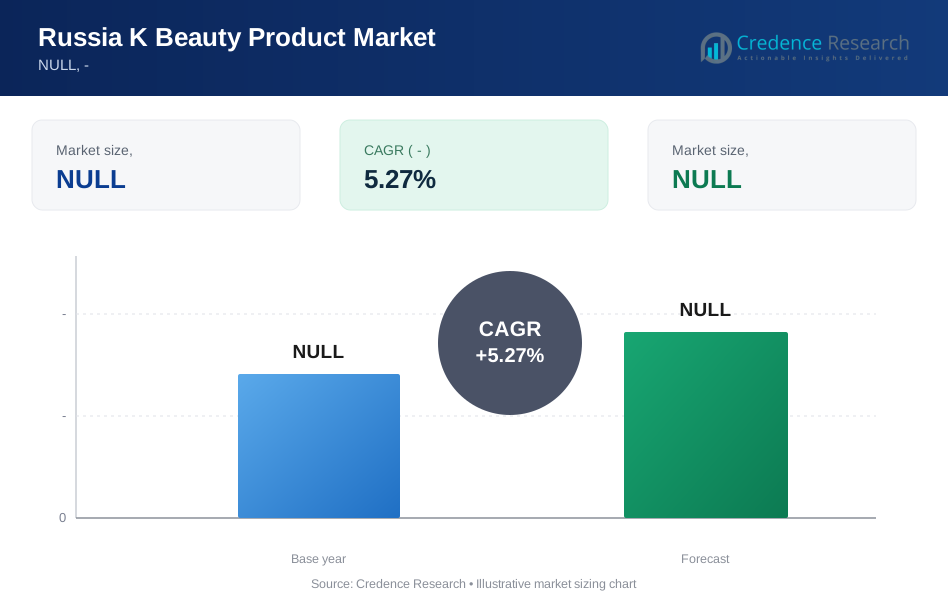
The Russia K Beauty Product Market is projected to grow from USD 251.65 million in 2023 to an estimated USD 399.99 million by 2032, with a compound annual growth rate (CAGR) of 5.27% from 2024 to 2032. This steady expansion is driven by increasing consumer interest in Korean skincare and cosmetic innovations, coupled with the rising influence of K-pop and Korean culture.
Key drivers fueling this market growth include the heightened awareness of skincare routines, the appeal of natural and innovative ingredients commonly found in K Beauty products, and the expansion of e-commerce platforms that make these products more accessible to Russian consumers. Additionally, trends such as personalized beauty solutions and sustainable packaging are gaining traction, further propelling the demand for K Beauty products. Social media and influencer marketing also play a significant role in shaping consumer preferences and boosting market penetration.
Geographically, the Russia K Beauty Product Market is concentrated in major urban centers such as Moscow and Saint Petersburg, where consumers exhibit higher disposable incomes and greater exposure to international beauty trends. These regions serve as key hubs for distribution and retail of K Beauty products. Prominent players in the market include Amorepacific, LG Household & Health Care, and Missha, alongside emerging local brands that cater to specific consumer needs. Strategic partnerships and collaborations with local retailers are essential for these companies to enhance their market presence and capitalize on the growing demand across Russia.
Market Insights
- The Russia K Beauty Product Market is projected to grow from USD 251.65 million in 2023 to USD 399.99 million by 2032, with a CAGR of 5.27% from 2024 to 2032.
- The market is fueled by rising consumer interest in Korean skincare routines and innovative beauty products, particularly those featuring natural and effective ingredients.
- K-pop and Korean culture play a pivotal role in shaping consumer preferences, driving the popularity of K Beauty products among younger demographics.
- The growth of e-commerce platforms, personalized beauty solutions, and the increasing focus on sustainable packaging are key drivers boosting market expansion.
- Challenges such as regulatory barriers, import restrictions, and intense competition from local and Western brands may hinder market growth.
- Urban centers like Moscow and Saint Petersburg dominate the market, accounting for a significant share due to higher disposable incomes and exposure to global beauty trends.
- Prominent players like Amorepacific, LG Household & Health Care, and Missha are strengthening their market presence through strategic collaborations and innovative offerings.
Market Drivers
Rising Consumer Awareness and Adoption of K Beauty Trends
One of the foremost drivers of the Russia K Beauty Product Market is the increasing consumer awareness and adoption of K Beauty trends. Russian consumers are becoming more educated about skincare and cosmetic products, leading to a heightened interest in the unique offerings of Korean beauty brands. K Beauty is renowned for its innovative formulations, multi-step skincare routines, and emphasis on natural ingredients, which resonate well with Russian consumers seeking effective and high-quality beauty solutions.For instance, the growing interest in specific ingredients such as hyaluronic acid, snail mucin, and centella asiatica illustrates this trend. Consumers are actively researching these components, celebrated for their efficacy in skin hydration, healing, and anti-aging. The proliferation of digital content through blogs, online forums, and beauty influencers has significantly contributed to this awareness. This informed consumer base is more likely to experiment with and adopt K Beauty products, driving market growth. Additionally, the success of K Beauty is attributed to its ability to address specific skin concerns prevalent among Russian consumers, such as dryness and sensitivity due to harsh climates. Tailored solutions offered by K Beauty brands align with local skincare needs, fostering greater acceptance and loyalty among users.
Influence of K-pop and Korean Culture
The global influence of K-pop and Korean culture plays a significant role in driving the Russia K Beauty Product Market. K-pop stars and Korean celebrities are trendsetters whose beauty routines and product endorsements carry substantial weight among fans. This cultural phenomenon, often referred to as the "Korean Wave" or "Hallyu," has permeated various aspects of lifestyle, including fashion, entertainment, and beauty.For instance, Russian fans of K-pop frequently aspire to emulate the flawless skin of their favorite idols. This aspiration leads to increased demand for K Beauty products that promise similar results. Collaborations between K Beauty brands and K-pop artists serve as powerful marketing tools; limited edition products and exclusive endorsements effectively capture the attention of the target audience. Social media campaigns featuring popular idols enhance brand recognition and loyalty. Moreover, the cultural alignment between K-pop and K Beauty not only boosts sales but also ensures sustained interest in these products. As fans engage with both music and beauty trends, this symbiotic relationship fosters continuous market expansion.
Expansion of E-commerce and Digital Marketing Platforms
The expansion of e-commerce and digital marketing platforms is a pivotal driver for the Russia K Beauty Product Market. The rise of online shopping has made K Beauty products more accessible to a broader audience, overcoming geographical barriers and reaching consumers beyond major urban centers. E-commerce platforms offer a convenient shopping experience that allows consumers to explore a wide range of products, compare prices, and read reviews before making a purchase.For instance, the integration of advanced technologies like augmented reality for virtual try-ons enhances the online shopping experience. Consumers can visualize how products will look on their skin before purchasing, appealing particularly to tech-savvy individuals. Additionally, K Beauty brands have adeptly leveraged digital marketing strategies through social media platforms such as Instagram, VKontakte, and YouTube. These channels facilitate direct interaction between brands and consumers, fostering a sense of community and trust. Influencers play a crucial role in shaping preferences by providing authentic testimonials that enhance credibility. This seamless blend of e-commerce and digital marketing significantly contributes to the growth and penetration of K Beauty products in the Russian market.
Innovation in Product Formulations and Sustainability Initiatives
Innovation in product formulations and a strong emphasis on sustainability are critical drivers of the Russia K Beauty Product Market. Korean beauty brands are at the forefront of skincare innovation, continuously developing new products that cater to evolving consumer needs. The focus on cutting-edge ingredients such as probiotics, peptides, and fermented extracts sets K Beauty apart from competitors while appealing to consumers seeking advanced skincare solutions.For instance, many K Beauty products combine multiple benefits—such as moisturizing, anti-aging, and sun protection—into a single formulation. This multi-functional approach aligns with modern consumers' preferences for efficiency without sacrificing effectiveness. Additionally, sustainability has become increasingly important to Russian consumers who prioritize ethical considerations in their purchasing decisions. In response, K Beauty brands are adopting eco-friendly practices like sustainable packaging and sourcing natural ingredients responsibly. Brands that prioritize transparency in ingredient sourcing build consumer trust; this commitment not only meets regulatory standards but also resonates with environmentally aware consumers seeking responsible consumption options. By focusing on innovation and sustainability, K Beauty brands ensure long-term growth in Russia's competitive market landscape.
Market Trends
Personalized Skincare Solutions and Multi-Step Routines
The growing preference for personalized skincare solutions is a defining trend in the Russian K Beauty Product Market. Consumers are increasingly gravitating toward products tailored to their unique skin types, concerns, and lifestyles. For instance, many brands are now utilizing AI-driven diagnostics to provide tailored product recommendations based on individual skin analyses, ensuring that consumers receive products specifically suited to their needs. This approach not only enhances product efficacy but also fosters greater customer satisfaction and loyalty, as consumers feel their specific needs are being addressed.The influence of the K Beauty multi-step skincare regimen has gained widespread popularity in Russia. This regimen emphasizes preventive care and long-term skin health, aligning with the priorities of Russian consumers seeking radiant, youthful skin. Many brands have introduced starter kits designed to familiarize consumers with this comprehensive approach, making it more accessible even to those new to K Beauty. This shift reflects a broader movement toward viewing skincare as a self-care ritual rather than a chore. As a result, personalized skincare and multi-step regimens have become powerful tools for brand differentiation and customer retention in this competitive market.
The Rise of Clean Beauty and Ethical Practices
Russian consumers are becoming increasingly aware of the environmental and ethical implications of their purchasing decisions, leading to a growing demand for clean beauty products. Clean beauty, characterized by the use of natural, non-toxic, and sustainably sourced ingredients, has become a cornerstone of the K Beauty market in Russia. For instance, brands are responding by offering products free from harmful chemicals like parabens and sulfates while emphasizing vegan and cruelty-free certifications. This focus on ethical values resonates strongly with consumers who prioritize transparency in ingredient sourcing and production processes.Additionally, eco-friendly packaging solutions, such as biodegradable materials and refillable containers, are increasingly prevalent. Many K Beauty brands are integrating these practices into their product lines to appeal to sustainability-driven consumers. This trend not only addresses consumer demands but also positions K Beauty brands as leaders in ethical and sustainable innovation. By prioritizing clean beauty practices, brands can build trust and loyalty among environmentally conscious consumers who seek products that align with their values. The rise of clean beauty reflects a significant shift in consumer behavior towards more responsible purchasing choices that benefit both personal health and the planet.
Influence of Digital Marketing and E-Commerce Expansion
The integration of digital marketing and the expansion of e-commerce platforms have transformed the way K Beauty products are marketed and sold in Russia. Social media platforms like Instagram, VKontakte, and TikTok play a central role in promoting K Beauty products through engaging content, tutorials, and influencer collaborations. For instance, influencers—especially beauty bloggers and K-pop idols—significantly shape consumer preferences while boosting brand credibility. This dynamic engagement fosters a sense of community among beauty enthusiasts.E-commerce platforms have made K Beauty products more accessible to a diverse audience across Russia, including those in remote areas. The convenience of online shopping is enhanced by features such as virtual try-ons and personalized product recommendations that improve the consumer experience. Additionally, flash sales, discounts, and subscription models offered by online retailers incentivize repeat purchases and drive customer loyalty. Mobile apps and chatbots also play crucial roles in digital engagement by providing real-time assistance and skincare advice. By leveraging these tools effectively, K Beauty brands bridge the gap between consumers and their products while ensuring a seamless shopping experience that aligns with modern consumer expectations.
Emergence of Hybrid Products and Innovative Formulations
The demand for hybrid products that combine skincare and makeup benefits is rapidly rising in the Russian K Beauty Product Market. These multifunctional products cater to busy consumers seeking efficiency without compromising on quality. For instance, BB creams, CC creams, and cushion compacts provide hydration, sun protection, and color correction in a single application. This trend reflects a growing desire for streamlined beauty routines that simplify daily skincare while delivering effective results.K Beauty brands are also known for their innovative formulations incorporating unique ingredients like snail mucin, fermented extracts, and cica (Centella asiatica). These ingredients are revered for their effectiveness in hydration, repair, and soothing properties—qualities that resonate well with Russian consumers facing skin challenges posed by the country’s harsh climate. Furthermore, products designed to address specific concerns such as anti-pollution skincare or anti-aging treatments are gaining traction as urban pollution levels rise.The integration of science-backed research with traditional Korean beauty practices ensures that K Beauty remains at the forefront of innovation. By appealing to both novice users seeking simplicity and seasoned enthusiasts desiring advanced solutions, these hybrid products solidify K Beauty’s position in the competitive Russian market.
Market Challenges
Regulatory Barriers and Import Restrictions
One of the most significant challenges in the Russia K Beauty Product Market is navigating regulatory barriers and import restrictions. As K Beauty products are predominantly imported, they must comply with Russia’s stringent regulations on cosmetics and skincare products. This includes requirements for product certification, ingredient safety testing, and labeling in the Russian language. For instance, products must undergo State Registration, which can take up to three months and requires samples to be tested in Russian laboratories. This process involves submitting various documents, including Material Safety Data Sheets (MSDS) and project labels, adding to the time and cost of market entry. Moreover, geopolitical tensions can exacerbate these challenges; sanctions and fluctuating trade policies may disrupt supply chains, leading to delays in product availability and increased import costs. Such conditions necessitate that brands establish local partnerships to ensure compliance and mitigate risks, which can require significant investment and strategic planning.
Competition from Local and Western Brands
The rising competition from local and Western beauty brands presents another key challenge for K Beauty in Russia. Domestic brands are increasingly capitalizing on the demand for affordable, high-quality skincare solutions by offering products tailored to the needs of Russian consumers. These local players leverage their understanding of local preferences and regulatory frameworks to gain market share, making it essential for K Beauty brands to continuously innovate. Additionally, established Western brands, known for their strong market presence and marketing budgets, compete directly with K Beauty by emphasizing innovation and premium quality. To differentiate themselves, K Beauty brands must maintain their unique appeal through the use of traditional Korean ingredients and multi-functional products. However, sustaining consumer interest and loyalty amid diverse choices and price-sensitive buyers remains a persistent challenge for market growth, compelling K Beauty brands to invest in effective marketing strategies that resonate with Russian consumers.
Market Opportunities
Expansion into Emerging Regional Markets and E-commerce Growth
The increasing penetration of digital platforms and the rise of e-commerce provide significant opportunities for K Beauty brands to expand their footprint in Russia. While major urban centers like Moscow and Saint Petersburg are already established markets, untapped potential exists in smaller cities and rural areas where access to international beauty products remains limited. By leveraging e-commerce platforms, K Beauty brands can reach a broader audience, offering convenience and accessibility to consumers across the country. Collaborations with local online retailers, offering tailored promotions, and utilizing localized marketing strategies can further enhance brand visibility and market share.
Demand for Natural and Sustainable Beauty Products
The growing consumer interest in natural, clean, and sustainable beauty solutions presents a lucrative opportunity for K Beauty brands. Russian consumers are increasingly prioritizing eco-friendly products with transparent ingredient lists and ethical sourcing. K Beauty’s reputation for using innovative, natural ingredients and sustainable practices aligns well with these preferences. Brands that emphasize their commitment to sustainability through biodegradable packaging, cruelty-free certifications, and ethical production processes are likely to capture the attention of environmentally conscious consumers. This opportunity is amplified by the potential to create product lines specifically tailored to local skin concerns, such as hydration and protection against harsh weather conditions, further solidifying the relevance and appeal of K Beauty in the Russian market.
Market Segmentation Analysis
By Type
The Russia K Beauty Product Market, segmented by type, reflects diverse consumer preferences. Sheet masks are particularly popular for their convenience and effectiveness in delivering hydration and nutrients, holding a significant market share due to their affordability and appeal among skincare enthusiasts. Cleansers, including foaming and oil-based options, are staples in the K Beauty multi-step routine, witnessing steady demand as Russian consumers prioritize thorough skin cleansing. Moisturizers, offered in creams and gels, are essential for addressing the harsh Russian climate, making them a key product category. Other products, such as serums, sunscreens, and exfoliators, are increasingly adopted as part of holistic skincare routines, further diversifying the market landscape.
By Application
The application segment of the Russia K Beauty Product Market is driven by diverse uses. The beauty business segment, comprising salons and parlors, benefits from the growing trend of professional skincare treatments incorporating K Beauty products. Personal use dominates the market, as consumers increasingly adopt K Beauty’s multi-step skincare routines at home. Additionally, niche applications, such as gifting and product sampling, contribute to market expansion by reaching new consumer segments and enhancing brand visibility.
Segments
Based on Type
- Sheet Masks
- Cleansers
- Moisturizers
- Others
Based on Application
- Beauty Business
- Personal
- Others
Based on End User
- Male
- Female
- Children and Teenage
Based on Distribution Channel
- Online Retail
- Supermarket/Hypermarket
- Specialty/Monobrand Stores
Based on Region
- Urban
- Sub-Urban
- Rural
Regional Analysis
Central Russia (50%)
Central Russia, primarily driven by Moscow and Saint Petersburg, holds the largest share of the K Beauty product market, accounting for approximately 50% of the total market value. Moscow, as the capital and largest city, leads the charge in terms of both product sales and consumer interest. The region’s high disposable income, exposure to international beauty trends, and a large, beauty-conscious population make it the dominant force in the market. Saint Petersburg, as the second-largest urban center, also contributes significantly due to its cultural proximity to Western Europe and global fashion trends. Both cities are major hubs for e-commerce and retail activities, where a wide range of K Beauty brands are easily accessible to the consumer base.
Volga Federal District (15%)
The Volga Federal District, which includes cities like Nizhny Novgorod, Kazan, and Samara, accounts for approximately 15% of the market share. While this region is not as developed as the Central Russia segment, it shows strong potential for growth due to increasing urbanization and rising incomes in mid-sized cities. The region is gradually witnessing more retail outlets and online platforms that cater to the demand for K Beauty products, particularly skincare and cosmetics. As e-commerce penetration improves, it is expected that this region will experience accelerated growth in the coming years.
Key players
- Able C&C Ltd
- Adwin Korea Corporation
- Amorepacific Corporation
- CLIO COSMETICS Co. Ltd
- Cosrx Inc
- LG H&H Co. Ltd. (LG Corporation)
- The Crème Shop Inc
- The Face Shop Inc
- Tonymoly Co. Ltd
- Fellix Co Ltd
Competitive Analysis
The Russia K Beauty Product Market is highly competitive, with both established players and emerging brands vying for market share. Companies such as Amorepacific Corporation, LG H&H Co. Ltd., and Able C&C Ltd dominate the market through extensive product portfolios, innovative formulations, and robust branding strategies. These key players leverage their global reputation and expertise in K Beauty to maintain strong consumer loyalty. Emerging brands like Cosrx Inc and CLIO COSMETICS Co. Ltd are gaining traction due to their focus on targeted solutions and affordable pricing, appealing to younger, price-sensitive demographics. Meanwhile, specialty brands such as The Crème Shop Inc and Tonymoly Co. Ltd use creative packaging and influencer marketing to attract consumers. The competitive landscape is further intensified by increasing e-commerce penetration, which allows smaller players to directly access a broad consumer base, leveling the playing field and driving innovation.
Recent Developments
- In November 2023, Able C&C Ltd launched a new line of skincare products specifically tailored for the Russian market. This launch includes innovative formulations that cater to local skin concerns, utilizing popular ingredients like green tea and ginseng, which are well-received in K Beauty circles.
- In January 2024, Amorepacific Corporation made headlines with the introduction of an AI-driven beauty consultation service in Russia. This service allows consumers to receive personalized skincare recommendations based on their unique skin types and conditions, enhancing customer engagement and product satisfaction.
- In October 2023, CLIO COSMETICS Co. Ltd expanded its product range in Russia by introducing a new line of long-lasting makeup products designed for the harsh Russian climate. This launch aims to meet the demands of local consumers seeking durable beauty solutions.
- In December 2023, Cosrx Inc entered the Russian market with a product launch featuring its popular acne treatment line. The brand emphasized its commitment to using gentle, effective ingredients that resonate with the increasing demand for natural skincare solutions among Russian consumers.
- In September 2023, The Face Shop Inc launched a promotional campaign in Russia, introducing their new herbal skincare line that incorporates traditional Korean ingredients known for their soothing properties, appealing to consumers looking for natural remedies.
Market Concentration and Characteristics
The Russia K Beauty Product Market is moderately concentrated, with a mix of established multinational corporations and emerging local players driving competition. Dominated by global giants such as Amorepacific Corporation, LG H&H Co. Ltd., and Able C&C Ltd, the market benefits from their extensive product portfolios, innovative formulations, and strong brand equity. However, smaller, niche brands like Cosrx Inc and CLIO COSMETICS Co. Ltd are rapidly gaining market share due to their focus on affordability, targeted solutions, and unique marketing strategies. The market is characterized by high consumer demand for natural and effective ingredients, growing digital penetration through e-commerce platforms, and an increasing inclination towards personalized skincare. While established players leverage robust distribution networks and premium offerings, emerging brands capitalize on influencer marketing and K-pop culture to attract younger consumers, making the competitive environment dynamic and evolving.
Report Coverage
The research report offers an in-depth analysis based on Type, Application, End User, Distribution Channel and Region. It details leading market players, providing an overview of their business, product offerings, investments, revenue streams, and key applications. Additionally, the report includes insights into the competitive environment, SWOT analysis, current market trends, as well as the primary drivers and constraints. Furthermore, it discusses various factors that have driven market expansion in recent years. The report also explores market dynamics, regulatory scenarios, and technological advancements that are shaping the industry. It assesses the impact of external factors and global economic changes on market growth. Lastly, it provides strategic recommendations for new entrants and established companies to navigate the complexities of the market.
Future Outlook
- The Russia K Beauty Product Market is expected to maintain a compound annual growth rate (CAGR) of 5.27% from 2024 to 2032, reaching an estimated USD 399.99 million by 2032.
- Consumers will continue to embrace the K Beauty multi-step regimen, driving demand for diverse product categories such as cleansers, serums, and moisturizers.
- The rising popularity of e-commerce platforms will enhance market accessibility, allowing K Beauty brands to reach consumers in remote areas and smaller cities across Russia.
- Advances in AI and dermatological research will enable brands to offer tailored skincare products, aligning with the growing demand for personalized beauty experiences.
- Increasing awareness among men about skincare and grooming is expected to boost the adoption of K Beauty products in the male segment.
- Brands will prioritize eco-friendly packaging, cruelty-free products, and ethical sourcing to cater to environmentally conscious consumers in Russia.
- Continued R&D efforts will drive innovation in product ingredients and formulations, offering solutions tailored to the harsh Russian climate and specific skincare concerns.
- The popularity of K-pop and Korean dramas will further amplify consumer interest in K Beauty products, strengthening brand loyalty and market growth.
- Local Russian brands inspired by K Beauty principles will enter the market, intensifying competition and driving innovation across the industry.
- Growth in non-metropolitan regions, supported by e-commerce penetration and localized marketing efforts, will significantly contribute to the market's overall expansion.
Request a Free Sample
Fill in your details and we'll send you a free sample report.
- Sample data tables & charts
- Research methodology
Need a Custom Version of This Report?
Tailor the scope, geography, or segments to your exact requirements.
- Custom geography or segment scope
- Direct access to our analyst team
Frequently Asked Questions
What is the market size of the Russia K Beauty Product Market in 2023 and 2032, and what is its CAGR?
What are the key factors driving the growth of the Russia K Beauty Product Market?
How does K-pop influence the Russia K Beauty Product Market?
Which regions in Russia contribute the most to the K Beauty Product Market?
Who are the key players in the Russia K Beauty Product Market?
Table of Content
Chapter 1. Report Introduction
- 1.1 Report Description & Purpose
- 1.1.1 Report Title & Market Definition
- 1.1.2 Unique Selling Propositions (USP) & Key Differentiators
- 1.1.3 Value Proposition for Stakeholders
- 1.2 Research Objectives
- 1.2.1 Market Sizing Objectives (Volume & Revenue)
- 1.2.2 Segmentation Objectives
- 1.2.3 Competitive Intelligence Objectives
- 1.2.4 Forecast & Scenario Objectives
- 1.3 Report Scope
- 1.3.1 Russia K Beauty Product Scope – Types & Subtypes Covered
- 1.3.2 Geographic Scope – Regions & Countries Covered
- 1.3.3 Historical Period, Base Year & Forecast Period (the historical period; forecast to the forecast period)
- 1.3.4 Inclusions & Exclusions
- 1.4 HS Code & Classification Framework
- 1.5 Currency, Units & Pricing Basis
- 1.6 Target Stakeholders
- 1.7 Limitations & Assumptions
Chapter 2. Executive Summary
- 2.1 Global Russia K Beauty Product Market Snapshot
- 2.1.1 Market Size – Historical (the historical period) & Forecast (the forecast period) (base year: NULL → forecast year: NULL)
- 2.1.2 Volume & Revenue – Global Totals
- 2.1.3 Key Market Highlights – Top Five Facts
- 2.2 Russia K Beauty Product Market Segmentation Snapshot
- 2.2.1 Market Split by Region – vs.
- 2.3 Competitive Snapshot
- 2.3.1 Top 10 Players by Revenue Share –
- 2.3.2 Top 10 Players by Volume Share –
- 2.3.3 Recent Strategic Developments (18-Month Summary)
- 2.4 Key Investment Highlights & Strategic Conclusions
Chapter 3. Russia K Beauty Product Market Dynamics & Industry Analysis
- 3.1 Market Overview & Context
- 3.1.1 Russia K Beauty Product Market Position in the Broader Automotive Value Chain
- 3.1.2 OEM vs. Replacement Market Dynamics
- 3.1.3 Market Maturity & Development Stage by Region
- 3.2 Russia K Beauty Product Market Drivers
- 3.3 Russia K Beauty Product Market Restraints & Challenges
- 3.4 Russia K Beauty Product Market Opportunities
- 3.5 Porter's Five Forces Analysis
- 3.5.1 Threat of New Entrants
- 3.5.2 Bargaining Power of Suppliers
- 3.5.3 Bargaining Power of Buyers
- 3.5.4 Threat of Substitutes
- 3.5.5 Competitive Rivalry – Intensity Assessment
- 3.6 Russia K Beauty Product Value Chain Analysis
- 3.6.1 Upstream – Raw Material/Input Suppliers
- 3.6.1.1 Raw Material/Input 1
- 3.6.1.2 Raw Material/Input 2
- 3.6.1.3 Raw Material/Input 3
- 3.6.2 Midstream – Production/Manufacturing/Service Delivery
- 3.6.2.1 Production/Process Overview
- 3.6.2.2 Key Facility Locations & Capacity by Manufacturer
- 3.6.3 Downstream – Distribution & End Consumer
- 3.6.3.1 Primary Channel – B2B/OEM
- 3.6.3.2 Secondary Channels – Dealer, Retail, Online, Direct
- 3.6.4 Value Chain Profitability Analysis
- 3.6.1 Upstream – Raw Material/Input Suppliers
- 3.7 PESTEL Analysis
- 3.7.1 Political Factors
- 3.7.2 Economic Factors
- 3.7.3 Social Factors
- 3.7.4 Technological Factors
- 3.7.5 Environmental Factors
- 3.7.6 Legal Factors
- 3.8 Russia K Beauty Product Supply Chain Analysis
- 3.8.1 Raw Material/Input Supply Risk Assessment
- 3.8.2 Manufacturing Concentration Risk (Geographic Exposure)
- 3.8.3 Trade Disruption Impact Analysis
- 3.9 Regulatory & Policy Landscape
Note: The regulatory and policy landscape section covers regulations based on their applicability to the market, Russia K Beauty Product category, geography, and scope of the study. Only regulatory frameworks with a material impact on operations, compliance, trade, sustainability, or market access are analyzed in detail.
Chapter 4. Key Investment Pockets & Opportunity Analysis
- 4.1 Russia K Beauty Product Market Attractiveness Analysis
- 4.1.1 By Region – Investment Attractiveness Matrix (Volume × CAGR)
- 4.2 Absolute Revenue Growth Opportunity
- 4.2.1 By Region – Absolute USD Growth Through the forecast period
- 4.3 Incremental Volume Opportunity
- 4.3.1 By Region – Incremental Volume Through the forecast period
- 4.3.2 Segment – Incremental Volume
- 4.4 Emerging Submarket Opportunity Deep Dive (Subject to Applicability)
- 4.5 Emerging Market Opportunity Scorecards
- 4.5.1 United States
- 4.5.2 Europe
- 4.5.3 Asia
- 4.5.4 Middle East & Africa
Note: Emerging Market Opportunity Scorecards will be included based on relevance and strategic importance. Regions listed are indicative and may vary depending on data availability and market dynamics.
Chapter 5. Russia K Beauty Product Import-Export Analysis & Trade Flows
- 5.1 Global Trade Overview
- 5.1.1 Global Export Value by Country (the historical period)
- 5.1.2 Global Export Volume by Country (the historical period)
- 5.1.3 Global Import Value by Country (the historical period)
- 5.1.4 Global Import Volume by Country (the historical period)
- 5.1.5 Net Trade Balance by Country (the historical period)
- 5.2 Export Analysis – Segment
- 5.2.1 Type 1 (HS Code)
- 5.2.2 Type 2 (HS Code)
- 5.2.3 Type 3 (HS Code)
- 5.2.4 Type 4 (HS Code)
- 5.2.5 Type 5 (HS Code)
- 5.3 Import Analysis – Segment
- 5.3.1 Type 1 (HS Code)
- 5.3.2 Type 2 (HS Code)
- 5.3.3 Type 3 (HS Code)
- 5.3.4 Type 4 (HS Code)
- 5.3.5 Type 5 (HS Code)
- 5.4 Average Unit Trade Prices
- 5.4.1 Average Export Price – Segment & Country
- 5.4.2 Average Import Price – Segment & Source Country
- 5.4.3 Price Trends (the historical period)
- 5.5 Key Trade Route Analysis
- 5.5.1 Trade Route 1
- 5.5.2 Trade Route 2
- 5.5.3 Trade Route 3
- 5.5.4 Trade Route 4
- 5.5.5 Trade Route 5
- 5.6 Trade Policy Impact Assessment
- 5.6.1 US Anti-Dumping & Section 301 Tariffs
- 5.6.2 EU Customs Union Impact
- 5.6.3 Major Free Trade Agreements
- 5.6.4 USMCA Rules of Origin
Note: Trade policy analysis will be included only where relevant to the Russia K Beauty Product market.
Chapter 6. Competitive Landscape & Company Benchmarking
- 6.1 Russia K Beauty Product Market Concentration & Structure
- 6.1.1 Herfindahl-Hirschman Index (HHI) – vs.
- 6.1.2 Tier 1, Tier 2 & Tier 3 Market Structure
- 6.1.3 Global, Regional & Local Player Dynamics
- 6.2 Russia K Beauty Product Market Share Analysis –
- 6.2.1 Global Revenue Share by Company
- 6.2.2 Global Volume Share by Company
- 6.2.3 Regional Revenue Share
- 6.2.4 Market Share Evolution ( vs. )
- 6.2.5 OEM Segment Share by Company
- 6.2.6 Replacement Segment Share by Company
- 6.3 Production/Delivery Capacity & Facility Analysis
- 6.3.1 Global Installed Capacity
- 6.3.2 Capacity Utilization Rates
- 6.3.3 Production/Output Volume
- 6.3.4 Facility Locations & Capacity Map
- 6.3.5 Planned Capacity Additions
- 6.4 Russia K Beauty Product Competitive Benchmarking Matrix
- 6.4.1 Revenue, Volume, CAGR & Profitability Comparison
- 6.4.2 Channel Revenue Mix
- 6.4.3 Geographic Revenue Exposure
- 6.4.4 R&D Intensity
- 6.4.5 Sustainability Maturity
- 6.5 Strategic Developments in Russia K Beauty Product (Last 24 Months)
- 6.5.1 Mergers, Acquisitions & Divestments
- 6.5.2 New Russia K Beauty Product Launches
- 6.5.3 Facility Expansions
- 6.5.4 Strategic Alliances, Joint Ventures & Partnerships
- 6.5.5 Distribution Expansion & Market Entry
- 6.5.6 Sustainability & ESG Initiatives
- 6.6 Competitive Strategy Mapping
- 6.6.1 Leader, Challenger, Follower & Niche Classification
- 6.6.2 Pricing Strategy Comparison
- 6.6.3 Channel Strategy Matrix
Note: Strategic developments are included based on their materiality and the availability of reliable information.
Chapter 7. Global Russia K Beauty Product Market – By Distribution Channel
- 7.1 Segment Overview
- 7.1.1 Volume & Revenue Split by Channel ( & )
- 7.1.2 Channel Mix Evolution (the forecast period)
Chapter 8. Regional Market Analysis – Global Overview
- 8.1 Global Regional Overview
- 8.1.1 Regional Volume Share
- 8.1.2 Regional Revenue Share
- 8.1.3 Regional Volume by Region
- 8.1.4 Regional Revenue by Region
- 8.1.5 Regional Forecast Through the forecast period
- 8.2 Cross-Regional Segment Analysis
- 8.2.1 By Distribution Channel
- 8.2.2 By Brand/Price Tier
Chapter 9. North America Russia K Beauty Product Market
- 9.1 United States
- 9.2 Canada
- 9.3 Mexico
Chapter 10. Europe Russia K Beauty Product Market
- 10.1 Germany
- 10.2 France
- 10.3 Italy
- 10.4 United Kingdom
- 10.5 Spain
- 10.6 Poland
- 10.7 Russia
- 10.8 Netherlands
- 10.9 Belgium
- 10.10 Sweden
- 10.11 Denmark
- 10.12 Norway
- 10.13 Rest of Europe
Chapter 11. Asia Pacific Russia K Beauty Product Market
- 11.1 China
- 11.2 India
- 11.3 Japan
- 11.4 South Korea
- 11.5 Thailand
- 11.6 Indonesia
- 11.7 Vietnam
- 11.8 Malaysia
- 11.9 Australia
- 11.10 Rest of Asia Pacific
Chapter 12. Latin America Russia K Beauty Product Market
- 12.1 Brazil
- 12.2 Argentina
- 12.3 Colombia
- 12.4 Chile
- 12.5 Rest of Latin America
Chapter 13. Middle East Russia K Beauty Product Market
- 13.1 Saudi Arabia
- 13.2 United Arab Emirates
- 13.3 Turkey
- 13.4 Israel
- 13.5 Iran
- 13.6 Rest of the Middle East
Chapter 14. Africa Russia K Beauty Product Market
- 14.1 South Africa
- 14.2 Egypt
- 14.3 Nigeria
- 14.4 Morocco
- 14.5 Rest of Africa
Chapter 15. Russia K Beauty Product Company Profiles
- 15.1 [Company 01]
- 15.1.1 Company Overview
- 15.1.2 Key Management Personnel
- 15.1.3 Products & Services Portfolio
- 15.1.4 Financial Performance
- 15.1.5 Key Market Focus & Geographic Presence
- 15.1.6 Recent Developments & Strategic Initiatives
Note: The company profile list is preliminary and may change based on research findings, market developments, data availability, and client requirements.
Chapter 16. Appendices
- Appendix A – List of Abbreviations & Acronyms
- Appendix B – Industry Classification Code Reference – Full Series
- Appendix C – Production & Capacity Data Tables
- Appendix D – End-Use & Demand Base Tables
- Appendix E – Consumption & Replacement Rate Assumptions
- Appendix F – ASP Reference Tables
- Appendix G – Manufacturing & Facility Database
- Appendix H – Import-Export Data Tables
- Appendix I – Regulatory Summary Tables
- Appendix J – Primary Research Participant List (Anonymized)
- Appendix K – Primary Research Questionnaire Framework
- Appendix L – Data Sources & Bibliography
- Appendix M – Market Size Divergence & Source Comparison
Chapter 17. Research Methodology
- 17.1 Research Framework & Philosophy
- 17.2 Secondary Research – Sources, Hierarchy & Data Extraction
- 17.3 Data Modeling – Bottom-Up & Top-Down Market Sizing
- 17.4 Primary Research – Stakeholder Framework, LOI & Sample Sizes
- 17.5 Forecast Methodology – Regression, Scenario & Sensitivity Analysis
- 17.6 Quality Control – Four-Layer Validation Framework
- 17.7 Limitations & Standard Assumptions
- 17.8 Disclaimer
