
| REPORT ATTRIBUTE | DETAILS |
|---|---|
| Historical Period | 2019-2022 |
| Base Year | 2023 |
| Forecast Period | 2024-2032 |
| Sheds and Outdoor Storage Market Size 2024 | USD 7242.7 Million |
| Sheds and Outdoor Storage Market, CAGR | 6.5% |
| Sheds and Outdoor Storage Market Size 2032 | USD 11986.63 Million |
Market Overview:
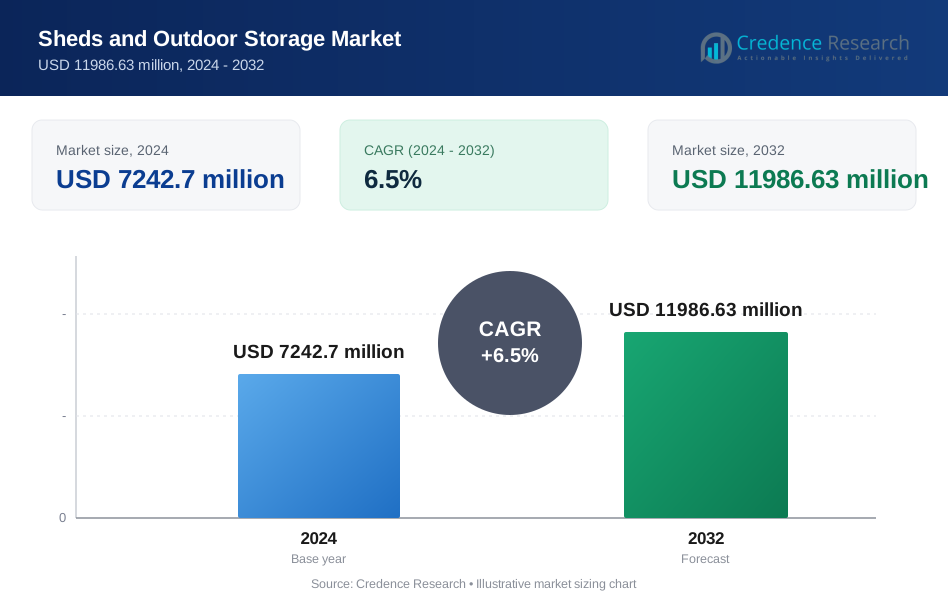
The Sheds and Outdoor Storage Market size was valued at USD 7242.7 million in 2024 and is anticipated to reach USD 11986.63 million by 2032, at a CAGR of 6.5% during the forecast period (2024-2032).
Key market drivers include the increasing need for space optimization, particularly in urban households with limited storage capacity. The growing popularity of gardening and outdoor recreational activities has also boosted the adoption of sheds for storing tools, equipment, and outdoor furniture. Additionally, the rising demand for prefabricated and customizable storage units is fueling market growth, as consumers seek convenient and cost-effective solutions. Innovations in materials, such as high-density polyethylene (HDPE) and resin-based sheds, offer enhanced durability and low maintenance, further influencing purchasing decisions. The commercial sector, including retail and agriculture, also plays a crucial role in market expansion, requiring efficient storage options for inventory and equipment. The rising adoption of modular and portable storage units is enhancing market flexibility and expanding customer choices. Moreover, the increasing penetration of e-commerce platforms is simplifying access to a wide range of outdoor storage solutions.
Regionally, North America holds a significant market share due to the strong presence of home improvement trends and a high rate of homeownership. The U.S. and Canada are key contributors, supported by increasing spending on outdoor living spaces. Europe is witnessing notable growth, driven by demand for sustainable and aesthetically appealing storage solutions. Meanwhile, the Asia-Pacific region is expected to exhibit the highest CAGR, fueled by rapid urbanization, rising disposable income, and increasing construction activities in countries like China, India, and Japan. Latin America and the Middle East & Africa are also showing growth potential, primarily due to increasing investments in residential infrastructure. Government initiatives supporting smart city projects and housing development are further boosting regional demand. Additionally, the expansion of distribution networks and retail chains is improving market accessibility, especially in emerging economies.
Market Insights:
- The market size was valued at USD 7242.7 million in 2024 and is expected to reach USD 11986.63 million by 2032, growing at a CAGR of 6.5% during the forecast period.
- Space optimization in urban areas is a key driver, with rising demand for outdoor storage units due to limited indoor storage capacity in residential spaces.
- The popularity of gardening and outdoor activities is boosting demand for sheds, as more homeowners invest in outdoor furniture, lawn equipment, and storage solutions.
- Innovations in materials, such as high-density polyethylene (HDPE) and resin, are improving durability, reducing maintenance costs, and increasing consumer preference for weather-resistant sheds.
- The commercial and agricultural sectors are expanding their use of outdoor storage for inventory, equipment, and supply management, driving market growth.
- E-commerce and direct-to-consumer sales models are improving accessibility, offering customizable storage solutions with easy delivery and installation.
- Asia-Pacific is projected to grow the fastest, driven by urbanization, rising disposable income, and increasing investments in residential and commercial infrastructure.
Market Drivers:
Increasing Demand for Space Optimization:
The growing need for efficient space utilization is a major driver of the sheds and outdoor storage market. Urbanization and shrinking residential spaces have increased the demand for external storage solutions, allowing homeowners to declutter indoor areas. For instance, a survey by the National Association of Home Builders found that storage space is one of the top features desired by homebuyers. Households with limited garage or basement storage prefer sheds for organizing tools, seasonal decorations, and gardening equipment. Additionally, commercial establishments, including retail stores and small businesses, are increasingly investing in outdoor storage units to optimize available space and improve operational efficiency.
Rising Popularity of Gardening and Outdoor Activities:
The increasing interest in home gardening and outdoor recreational activities is positively influencing the market. More homeowners are investing in sheds to store gardening tools, lawn maintenance equipment, and outdoor furniture. For instance, the National Gardening Association reported a significant increase in household participation in food gardening and landscaping activities. The growing adoption of backyard landscaping and DIY gardening projects further supports the demand for durable and weather-resistant storage solutions. Additionally, outdoor activities such as camping, biking, and fishing require proper storage for gear and equipment, boosting the sales of storage sheds in residential and recreational spaces.
Advancements in Material Innovation and Prefabrication:
The market is witnessing a surge in demand for prefabricated and customizable sheds, driven by convenience and affordability. Innovations in materials such as high-density polyethylene (HDPE), vinyl, and resin are enhancing durability, reducing maintenance costs, and improving weather resistance. For instance, the U.S. Department of Energy has highlighted the benefits of using advanced materials in building construction, including improved energy efficiency and durability. Metal and composite sheds with anti-corrosion coatings are also gaining popularity for their long lifespan and robustness. The availability of modular and DIY-friendly storage solutions is further fueling market growth, as consumers seek quick and hassle-free installation options.
Growth in Commercial and Agricultural Storage Needs:
The commercial and agricultural sectors are contributing significantly to the expansion of the sheds and outdoor storage market. Businesses require secure storage solutions for inventory, machinery, and supplies, driving demand for large-capacity sheds. For instance, the California Department of Education has emphasized the importance of proper storage facilities in maintaining food quality and controlling bacterial growth. Similarly, the agricultural sector relies on durable storage units to protect farming equipment, animal feed, and perishable goods. With rising investments in rural infrastructure and smart farming technologies, the need for efficient outdoor storage solutions is expected to grow further in the coming years.
Market Trends:
Growing Adoption of Prefabricated and Modular Sheds:
The increasing preference for prefabricated and modular sheds is shaping the market, driven by their ease of installation and cost-effectiveness. Consumers seek quick, hassle-free solutions that require minimal labor and time for assembly. For instance, a survey conducted by the National Association of Home Builders found that homeowners prefer modular storage units due to their flexibility and customization options. Manufacturers are offering customizable modular storage units that cater to specific needs, such as tool organization, workspace extensions, and vehicle storage. This trend is particularly strong in urban areas, where space constraints demand flexible and efficient storage solutions.
Rising Demand for Sustainable and Eco-Friendly Materials:
Sustainability is becoming a key focus in the sheds and outdoor storage market, with increasing demand for eco-friendly materials. Consumers and businesses are prioritizing storage solutions made from recycled plastics, sustainably sourced wood, and energy-efficient materials. For instance, the Green Building Council shows that the use of sustainable materials in outdoor structures has increased in recent years. Additionally, the adoption of solar-powered sheds is gaining traction, allowing users to integrate renewable energy for lighting and equipment charging. This shift toward environmentally conscious solutions aligns with global efforts to reduce carbon footprints and promote sustainable construction practices.
Technological Integration and Smart Storage Solutions:
The integration of technology in storage sheds is enhancing convenience and security. Smart sheds equipped with IoT-enabled monitoring systems, automated lighting, and climate control features are gaining popularity. For instance, Home Depot revealed that customers are interested in smart storage solutions with advanced features. Consumers are increasingly looking for advanced storage solutions that offer remote access, security alarms, and temperature regulation for sensitive equipment. These innovations cater to both residential and commercial users seeking enhanced functionality and protection for their stored items.
Expansion of E-Commerce and Direct-to-Consumer Sales:
The rapid growth of e-commerce is transforming the distribution landscape for sheds and outdoor storage solutions. Online platforms provide a wide range of options, allowing consumers to compare materials, sizes, and prices conveniently. For instance, Wayfair, a major e-commerce platform for home goods, saw a significant increase in outdoor storage and shed sales in recent years. The rise of direct-to-consumer sales models is also enabling manufacturers to offer customized storage solutions with seamless delivery and installation services. This trend is driving higher accessibility and market penetration, particularly in emerging economies.
Market Challenges Analysis:
Fluctuating Raw Material Costs and Supply Chain Disruptions:
The sheds and outdoor storage market faces challenges due to fluctuations in raw material prices, particularly for wood, metal, and high-density polyethylene (HDPE). Variability in material costs impacts production expenses and pricing strategies, making it difficult for manufacturers to maintain profit margins. Additionally, supply chain disruptions, including delays in sourcing materials and increased transportation costs, further complicate market operations. The reliance on imported raw materials in certain regions also exposes manufacturers to trade restrictions, tariffs, and geopolitical uncertainties, adding to production challenges. Unpredictable global economic conditions, including inflation and currency fluctuations, further exacerbate these cost pressures. To mitigate these risks, companies are exploring alternative materials and local sourcing strategies to reduce dependency on volatile supply chains. Furthermore, the rising cost of energy and logistics is driving manufacturers to adopt lean production methods and automation to optimize efficiency and control expenses.
Regulatory and Environmental Compliance Issues:
Increasing environmental regulations related to sustainable materials and waste disposal pose challenges for market players. Manufacturers must comply with stringent regulations on emissions, deforestation, and plastic usage, which can increase production costs and limit material choices. Additionally, zoning laws and building codes vary by region, restricting the placement and size of outdoor storage units in residential and commercial spaces. Consumers often face challenges obtaining permits for larger storage structures, leading to reduced demand in some areas. As governments enforce stricter environmental policies, companies must invest in eco-friendly innovations to remain competitive. Furthermore, shifting consumer preferences toward sustainable products requires businesses to adopt greener production methods without compromising quality and durability. The implementation of extended producer responsibility (EPR) regulations is further pushing manufacturers to develop recyclable and biodegradable storage solutions, adding pressure to redesign traditional shed materials.
Market Opportunities:
The sheds and outdoor storage market presents significant growth opportunities driven by increasing consumer demand for versatile and space-efficient storage solutions. The rising trend of home improvement and backyard transformations is encouraging homeowners to invest in high-quality storage units that enhance outdoor spaces while providing functional utility. Additionally, the growing preference for prefabricated and modular sheds offers manufacturers an opportunity to expand their product lines with customizable, easy-to-assemble options. The demand for weather-resistant and low-maintenance materials, such as resin and high-density polyethylene (HDPE), is further creating opportunities for innovation in product design and durability. As consumers seek storage solutions that blend with modern outdoor aesthetics, manufacturers can focus on design innovation and multi-functional storage units that cater to diverse residential and commercial needs.
The shift toward sustainable and eco-friendly storage solutions is another key opportunity for market growth. Consumers and businesses are becoming increasingly conscious of environmentally friendly products, leading to a higher demand for sheds made from recycled materials and energy-efficient manufacturing processes. Companies that invest in sustainable practices and green certifications can differentiate themselves in the market and attract environmentally conscious buyers. Furthermore, the rapid expansion of e-commerce and direct-to-consumer sales models is opening new distribution channels, enabling manufacturers to reach a broader customer base. By leveraging digital platforms, companies can enhance customer engagement, offer customized solutions, and provide seamless installation services. As urbanization continues to drive space constraints, the demand for compact and efficient outdoor storage solutions is expected to rise, creating sustained market opportunities.
Market Segmentation Analysis:
By Material
The sheds and outdoor storage market is segmented by material into wood, metal, resin, and high-density polyethylene (HDPE). Wooden sheds remain a popular choice due to their aesthetic appeal and natural durability, especially among homeowners seeking traditional designs. Metal sheds offer enhanced security and strength, making them ideal for commercial and industrial applications. Resin and HDPE sheds are gaining traction due to their lightweight structure, resistance to weather conditions, and minimal maintenance requirements. The increasing preference for sustainable and recyclable materials is also influencing product innovations in this segment.
By Product Type
Based on product type, the market is divided into storage sheds, garden sheds, tool sheds, and garage sheds. Storage sheds dominate the market, as they cater to both residential and commercial users for general storage needs. Garden sheds are widely used by gardening enthusiasts for storing tools and equipment, while tool sheds provide compact and efficient space solutions for DIY and maintenance tools. Garage sheds are witnessing increased demand for vehicle storage and additional workspace, driven by rising automotive ownership.
By Application
The market is categorized by application into residential, commercial, and agricultural sectors. Residential applications drive the largest share, supported by home improvement trends and space optimization needs. Commercial applications include retail and warehousing solutions, while agricultural applications require durable sheds for equipment and supply storage. The expansion of smart storage solutions is further enhancing growth in these segments.
Segmentations:
By Material
- Wood
- Metal
- Resin
- High-Density Polyethylene (HDPE)
By Product Type
- Storage Sheds
- Garden Sheds
- Tool Sheds
- Garage Sheds
By Application
- Residential
- Commercial
- Agricultural
By Region
- North America
- U.S.
- Canada
- Mexico
- Europe
- Germany
- France
- U.K.
- Italy
- Spain
- Rest of Europe
- Asia Pacific
- China
- Japan
- India
- South Korea
- South-east Asia
- Rest of Asia Pacific
- Latin America
- Brazil
- Argentina
- Rest of Latin America
- Middle East & Africa
- GCC Countries
- South Africa
- Rest of the Middle East and Africa
Regional Analysis:
North America
North America holds a market share of 35%, driven by a strong demand for home improvement solutions and increasing outdoor space utilization. The United States and Canada are key contributors, with high consumer spending on backyard transformations and storage enhancements. The region's well-established home improvement industry, coupled with a preference for durable and weather-resistant materials, fuels market growth. Rising demand for prefabricated and modular sheds, along with the growing trend of multifunctional outdoor spaces, further supports expansion. Additionally, the presence of leading manufacturers and widespread e-commerce availability enhances market accessibility, accelerating sales. The rise in DIY home improvement projects is also increasing demand for customizable storage solutions. Furthermore, innovations in material technology, including UV-resistant and insulated sheds, are gaining traction among consumers.
Europe
Europe accounts for 28% of the sheds and outdoor storage market, supported by increasing consumer preference for sustainable and aesthetically appealing storage solutions. Countries such as Germany, the United Kingdom, and France are major revenue contributors, with a high adoption rate of eco-friendly materials like recycled wood and resin. The region's stringent environmental regulations are pushing manufacturers to develop innovative, low-carbon storage solutions that align with green building standards. The rising popularity of compact and stylish sheds for urban residential spaces, along with expanding commercial applications in retail and warehousing, further boosts market growth. Moreover, the increasing influence of online retail and direct-to-consumer sales channels is improving market penetration. The shift toward multi-functional outdoor spaces, including garden offices and hobby sheds, is further diversifying product offerings. Additionally, growing investments in smart storage systems with integrated security features are enhancing the market’s appeal.
Asia-Pacific
Asia-Pacific holds a market share of 24% and is projected to witness the highest growth rate due to rapid urbanization and increasing disposable income. Countries like China, India, and Japan are driving demand, supported by expanding residential construction activities and a growing middle-class population. The shift toward space optimization in urban households, along with rising awareness of modular and prefabricated storage solutions, is fueling adoption. Additionally, government initiatives promoting smart city projects and infrastructure development are contributing to market expansion. The growing agricultural sector in rural areas is also generating demand for durable storage solutions, particularly for equipment and supply storage. Strengthening distribution networks, coupled with a rising e-commerce presence, is further enhancing product accessibility across diverse consumer segments. The introduction of cost-effective sheds designed for small living spaces is attracting urban buyers. Moreover, increasing investments in automated manufacturing processes are enabling companies to offer competitive pricing and improved product quality.
Key Player Analysis:
- Lifetime Products Inc.
- Suncast Corporation
- Rubbermaid
- DuraMax Building Products
- Rowlinson Garden Products
- Tuff Shed
- Keter Group
- ShelterLogic Group
- Arrow Storage Products
- Handy Home Products
- Palram Applications
- Kondor Outbuildings
Competitive Analysis:
The sheds and outdoor storage market is highly competitive, with key players focusing on product innovation, material advancements, and strategic expansion to strengthen their market presence. Leading companies are investing in sustainable and durable materials, such as high-density polyethylene (HDPE) and resin, to meet evolving consumer preferences for low-maintenance and weather-resistant storage solutions. For instance, Keter, a prominent player in the market, has introduced a line of eco-friendly sheds made from recycled plastic, which not only supports environmental sustainability but also offers durability and ease of maintenance that modern consumers demand. The market is also witnessing increased competition in modular and prefabricated sheds, with manufacturers offering customizable and easy-to-assemble options. Companies are leveraging e-commerce platforms and direct-to-consumer sales models to expand their reach and enhance customer engagement. Strategic partnerships, acquisitions, and regional expansions are key strategies adopted by market leaders to gain a competitive edge. Additionally, the integration of smart storage technologies, including IoT-enabled security systems, is creating new growth opportunities. As consumer demand for sustainable and multi-functional storage solutions rises, competition is expected to intensify further.
Recent Developments:
- In September 2024, Rubbermaid launched a new 7-foot by 7-foot Resin Outdoor Storage Shed on Amazon, featuring weather-resistant construction and ample space for large outdoor equipment.
- In November 2024, Keter Group announced a leadership transition, with Udi Sagi appointed as Interim CEO effective October 31st, replacing Alejandro Pena.
Market Concentration & Characteristics:
The sheds and outdoor storage market exhibits moderate to high concentration, with leading manufacturers leveraging extensive product portfolios, distribution networks, and material innovations, while regional players focus on niche and customized solutions. Growing demand for prefabricated and modular sheds is driven by ease of installation and cost-effectiveness, with consumers prioritizing durability, low maintenance, and weather resistance. The increasing adoption of high-density polyethylene and resin-based materials is reshaping product offerings. Urbanization and space constraints are boosting demand for compact, multi-functional storage units, while mergers and acquisitions are strengthening market positioning. Sustainability is a key focus, encouraging manufacturers to develop eco-friendly storage solutions. The rise of e-commerce and direct-to-consumer sales is expanding market accessibility. Additionally, advancements in smart storage solutions, including IoT-enabled security features, and automated manufacturing investments are driving innovation, reducing costs, and increasing large-scale market expansion.
Report Coverage:
The research report offers an in-depth analysis based on Material, Product Type, Application and Region. It details leading market players, providing an overview of their business, product offerings, investments, revenue streams, and key applications. Additionally, the report includes insights into the competitive environment, SWOT analysis, current market trends, as well as the primary drivers and constraints. Furthermore, it discusses various factors that have driven market expansion in recent years. The report also explores market dynamics, regulatory scenarios, and technological advancements that are shaping the industry. It assesses the impact of external factors and global economic changes on market growth. Lastly, it provides strategic recommendations for new entrants and established companies to navigate the complexities of the market.
Future Outlook:
- The market will continue to expand as consumer demand for space optimization and organized outdoor storage solutions increases, particularly in urban areas with limited indoor storage space.
- Advancements in prefabricated and modular storage solutions will drive growth, with manufacturers focusing on customizable, easy-to-assemble, and durable products.
- Sustainable and eco-friendly materials will gain traction, prompting manufacturers to develop sheds using recycled plastics, responsibly sourced wood, and energy-efficient designs.
- Smart storage solutions, including IoT-enabled security systems, automated lighting, and climate control features, will become more prevalent, enhancing functionality and consumer appeal.
- The rise of e-commerce and direct-to-consumer sales models will improve product accessibility, allowing manufacturers to reach a broader customer base and offer seamless installation services.
- Increasing investments in automated manufacturing and supply chain optimization will help reduce production costs and improve efficiency, enabling competitive pricing strategies.
- Expanding applications in the commercial and agricultural sectors will fuel demand, with businesses and farms requiring durable storage solutions for equipment, inventory, and supplies.
- Government initiatives supporting smart city development and infrastructure projects will drive the adoption of modern storage solutions in residential and commercial spaces.
- Consumer preferences for aesthetically appealing and multi-functional sheds will push manufacturers to introduce innovative designs that blend with modern outdoor environments.
- Strategic partnerships, acquisitions, and regional expansions among key players will strengthen market positioning and accelerate growth in emerging economies.
Request a Free Sample
Fill in your details and we'll send you a free sample report.
- Sample data tables & charts
- Research methodology
Need a Custom Version of This Report?
Tailor the scope, geography, or segments to your exact requirements.
- Custom geography or segment scope
- Direct access to our analyst team
Frequently Asked Questions
What is the current and projected market size of the sheds and outdoor storage market?
What are the key factors driving market growth?
Which materials are most commonly used in outdoor storage sheds?
Which region holds the largest market share?
How is e-commerce influencing the market?
Table of Content
Chapter 1. Report Introduction
- 1.1 Report Description & Purpose
- 1.1.1 Report Title & Market Definition
- 1.1.2 Unique Selling Propositions (USP) & Key Differentiators
- 1.1.3 Value Proposition for Stakeholders
- 1.2 Research Objectives
- 1.2.1 Market Sizing Objectives (Volume & Revenue) (Volume Where Applicable)
- 1.2.2 Segmentation Objectives
- 1.2.3 Competitive Intelligence Objectives
- 1.2.4 Forecast & Scenario Objectives
- 1.3 Report Scope
- 1.3.1 Sheds and Outdoor Storage Scope – Segments & Subsegments Covered
- 1.3.2 Geographic Scope – Regions & Countries Covered
- 1.3.3 Historical Period, Base Year & Forecast Period (2024; forecast to 2032)
- 1.3.4 Inclusions & Exclusions
- 1.4 Industry Classification & Applicable Codes
- 1.5 Currency, Measurement Units & Valuation Basis
- 1.6 Target Stakeholders
- 1.7 Limitations & Assumptions
Chapter 2. Executive Summary
- 2.1 Global Sheds and Outdoor Storage Market Snapshot
- 2.1.1 Market Size – Historical (2024) & Forecast (2024-2032) (2024: USD 7242.7 million → 2032: USD 11986.63 million)
- 2.1.2 Volume & Revenue – Global Totals (Volume Where Applicable)
- 2.1.3 Key Market Highlights – Top Five Facts
- 2.2 Sheds and Outdoor Storage Market Segmentation Snapshot
- 2.2.1 Market Split by Region – 2024 vs. 2032
- 2.3 Competitive Snapshot
- 2.3.1 Top 10 Players by Revenue Share – 2024
- 2.3.2 Top 10 Players by Volume Share – 2024 (Volume Where Applicable)
- 2.3.3 Recent Strategic Developments (18-Month Summary)
- 2.4 Key Investment Highlights & Strategic Conclusions
Chapter 3. Sheds and Outdoor Storage Market Dynamics & Industry Analysis
- 3.1 Market Overview & Context
- 3.1.1 Sheds and Outdoor Storage Market Position in the Broader Industry Value Chain
- 3.1.2 Demand Structure & Purchasing Dynamics
- 3.1.3 Market Maturity & Development Stage by Region
- 3.2 Sheds and Outdoor Storage Market Drivers
- 3.3 Sheds and Outdoor Storage Market Restraints & Challenges
- 3.4 Sheds and Outdoor Storage Market Opportunities
- 3.5 Porter's Five Forces Analysis
- 3.5.1 Threat of New Entrants
- 3.5.2 Bargaining Power of Suppliers
- 3.5.3 Bargaining Power of Buyers
- 3.5.4 Threat of Substitutes
- 3.5.5 Competitive Rivalry – Intensity Assessment
- 3.6 Sheds and Outdoor Storage Value Chain Analysis
- 3.6.1 Upstream – Key Inputs, Resources & Suppliers
- 3.6.1.1 Key Input/Resource 1
- 3.6.1.2 Key Input/Resource 2
- 3.6.1.3 Key Input/Resource 3
- 3.6.2 Midstream – Core Operations & Value Creation
- 3.6.2.1 Operating Model & Process Overview
- 3.6.2.2 Key Operating Locations & Capabilities by Company
- 3.6.3 Downstream – Market Channels & End Users
- 3.6.3.1 Direct Sales & Customer Engagement Channels
- 3.6.3.2 Indirect Sales, Intermediaries & Partner Channels
- 3.6.4 Value Chain Profitability Analysis
- 3.6.1 Upstream – Key Inputs, Resources & Suppliers
- 3.7 PESTEL Analysis
- 3.7.1 Political Factors
- 3.7.2 Economic Factors
- 3.7.3 Social Factors
- 3.7.4 Technological Factors
- 3.7.5 Environmental Factors
- 3.7.6 Legal Factors
- 3.8 Sheds and Outdoor Storage Supply Chain Analysis
- 3.8.1 Critical Input & Resource Availability Risk Assessment
- 3.8.2 Supplier & Operational Concentration Risk (Geographic Exposure)
- 3.8.3 Supply & Service Disruption Impact Analysis
- 3.9 Regulatory & Policy Landscape
Note: The regulatory and policy landscape section covers regulations based on their applicability to the market, Sheds and Outdoor Storage category, geography, and scope of the study. Only regulatory frameworks with a material impact on operations, compliance, trade, sustainability, or market access are analyzed in detail.
Chapter 4. Key Investment Pockets & Opportunity Analysis
- 4.1 Sheds and Outdoor Storage Market Attractiveness Analysis
- 4.1.1 By Region – Investment Attractiveness Matrix (Market Size × CAGR)
- 4.2 Absolute Revenue Growth Opportunity
- 4.2.1 By Region – Absolute Revenue Growth Through 2032
- 4.3 Incremental Demand Opportunity
- 4.3.1 By Region – Incremental Demand Through 2032
- 4.3.2 Segment – Incremental Demand
- 4.4 Emerging Submarket Opportunity Deep Dive (Subject to Applicability)
- 4.5 Priority Market Opportunity Scorecards
- 4.5.1 United States
- 4.5.2 Europe
- 4.5.3 Asia
- 4.5.4 Middle East & Africa
Note: Priority market opportunity scorecards reflect the geographic scope and strategic relevance of the study. Listed markets are indicative and may be adapted to the industry.
Chapter 5. Sheds and Outdoor Storage Cross-Border Trade & Market Access Analysis
- 5.1 International Trade & Cross-Border Activity Overview
- 5.1.1 Global Export Value by Country (2024)
- 5.1.2 Global Export Volume by Country (2024) (Volume Where Applicable)
- 5.1.3 Global Import Value by Country (2024)
- 5.1.4 Global Import Volume by Country (2024) (Volume Where Applicable)
- 5.1.5 Net Trade Balance by Country (2024)
- 5.2 Export Analysis – Segment
- 5.2.1 Category 1 (Applicable Classification Code)
- 5.2.2 Category 2 (Applicable Classification Code)
- 5.2.3 Category 3 (Applicable Classification Code)
- 5.2.4 Category 4 (Applicable Classification Code)
- 5.2.5 Category 5 (Applicable Classification Code)
- 5.3 Import Analysis – Segment
- 5.3.1 Category 1 (Applicable Classification Code)
- 5.3.2 Category 2 (Applicable Classification Code)
- 5.3.3 Category 3 (Applicable Classification Code)
- 5.3.4 Category 4 (Applicable Classification Code)
- 5.3.5 Category 5 (Applicable Classification Code)
- 5.4 Cross-Border Pricing & Transaction Benchmarks
- 5.4.1 Export Pricing – Segment & Country
- 5.4.2 Import Pricing – Segment & Source Country
- 5.4.3 Price Trends (2024)
- 5.5 Key Cross-Border Trade & Delivery Routes
- 5.5.1 Cross-Border Trade/Delivery Route 1
- 5.5.2 Cross-Border Trade/Delivery Route 2
- 5.5.3 Cross-Border Trade/Delivery Route 3
- 5.5.4 Cross-Border Trade/Delivery Route 4
- 5.5.5 Cross-Border Trade/Delivery Route 5
- 5.6 Trade Policy & Market Access Impact Assessment
- 5.6.1 Tariff & Non-Tariff Barriers
- 5.6.2 Regional Trade & Economic Integration Frameworks
- 5.6.3 Bilateral & Multilateral Trade Agreements
- 5.6.4 Cross-Border Operating, Licensing & Localization Requirements
Note: This chapter applies where cross-border trade or delivery is relevant to Sheds and Outdoor Storage. Goods, services, and digital offerings are assessed using applicable classifications and transaction measures. Import-export volumes, trade balances, and route analyses are included only where meaningful to the market.
Chapter 6. Competitive Landscape & Company Benchmarking
- 6.1 Sheds and Outdoor Storage Market Concentration & Structure
- 6.1.1 Herfindahl-Hirschman Index (HHI) – vs. 2024
- 6.1.2 Leading, Mid-Sized & Emerging Player Structure
- 6.1.3 Global, Regional & Local Player Dynamics
- 6.2 Sheds and Outdoor Storage Market Share Analysis – 2024
- 6.2.1 Global Revenue Share by Company
- 6.2.2 Global Volume Share by Company (Volume Where Applicable)
- 6.2.3 Regional Revenue Share
- 6.2.4 Market Share Evolution ( vs. 2024)
- 6.2.5 Company Market Share by Key Segment
- 6.2.6 Company Market Share by Customer Group
- 6.3 Operating Scale, Capacity & Infrastructure Analysis
- 6.3.1 Global Operating Scale & Supply Capacity
- 6.3.2 Resource Utilization & Operating Efficiency
- 6.3.3 Output, Service Delivery & Activity Metrics
- 6.3.4 Operating Footprint & Infrastructure Map
- 6.3.5 Planned Operational & Capacity Expansion
- 6.4 Sheds and Outdoor Storage Competitive Benchmarking Matrix
- 6.4.1 Revenue, Growth, Profitability & Operating Metric Comparison
- 6.4.2 Channel Revenue Mix
- 6.4.3 Geographic Revenue Exposure
- 6.4.4 R&D Intensity
- 6.4.5 Sustainability Maturity
- 6.5 Strategic Developments in Sheds and Outdoor Storage (Last 24 Months)
- 6.5.1 Mergers, Acquisitions & Divestments
- 6.5.2 New Products, Services & Solutions in Sheds and Outdoor Storage
- 6.5.3 Operational & Infrastructure Expansions
- 6.5.4 Strategic Alliances, Joint Ventures & Partnerships
- 6.5.5 Distribution Expansion & Market Entry
- 6.5.6 Sustainability & ESG Initiatives
- 6.6 Competitive Strategy Mapping
- 6.6.1 Leader, Challenger, Follower & Niche Classification
- 6.6.2 Pricing Strategy Comparison
- 6.6.3 Channel Strategy Matrix
Note: Strategic developments are included based on their materiality and the availability of reliable information.
Chapter 7. Global Sheds and Outdoor Storage Market – By Sales & Delivery Channel
- 7.1 Segment Overview
- 7.1.1 Volume & Revenue Split by Channel (2024 & 2032) (Volume Where Applicable)
- 7.1.2 Channel Mix Evolution (2024-2032)
Chapter 8. Regional Market Analysis – Global Overview
- 8.1 Global Regional Overview
- 8.1.1 Regional Volume Share (Volume Where Applicable)
- 8.1.2 Regional Revenue Share
- 8.1.3 Regional Volume by Region (Volume Where Applicable)
- 8.1.4 Regional Revenue by Region
- 8.1.5 Regional Forecast Through 2032
- 8.2 Cross-Regional Segment Analysis
- 8.2.1 By Sales & Delivery Channel
- 8.2.2 By Competitive Positioning & Price Tier
Chapter 9. North America Sheds and Outdoor Storage Market
- 9.1 United States
- 9.2 Canada
- 9.3 Mexico
Chapter 10. Europe Sheds and Outdoor Storage Market
- 10.1 Germany
- 10.2 France
- 10.3 Italy
- 10.4 United Kingdom
- 10.5 Spain
- 10.6 Poland
- 10.7 Russia
- 10.8 Netherlands
- 10.9 Belgium
- 10.10 Sweden
- 10.11 Denmark
- 10.12 Norway
- 10.13 Rest of Europe
Chapter 11. Asia Pacific Sheds and Outdoor Storage Market
- 11.1 China
- 11.2 India
- 11.3 Japan
- 11.4 South Korea
- 11.5 Thailand
- 11.6 Indonesia
- 11.7 Vietnam
- 11.8 Malaysia
- 11.9 Australia
- 11.10 Rest of Asia Pacific
Chapter 12. Latin America Sheds and Outdoor Storage Market
- 12.1 Brazil
- 12.2 Argentina
- 12.3 Colombia
- 12.4 Chile
- 12.5 Rest of Latin America
Chapter 13. Middle East Sheds and Outdoor Storage Market
- 13.1 Saudi Arabia
- 13.2 United Arab Emirates
- 13.3 Turkey
- 13.4 Israel
- 13.5 Iran
- 13.6 Rest of the Middle East
Chapter 14. Africa Sheds and Outdoor Storage Market
- 14.1 South Africa
- 14.2 Egypt
- 14.3 Nigeria
- 14.4 Morocco
- 14.5 Rest of Africa
Chapter 15. Sheds and Outdoor Storage Company Profiles
- 15.1 [Company 01]
- 15.1.1 Company Overview
- 15.1.2 Key Management Personnel
- 15.1.3 Products & Services Portfolio
- 15.1.4 Financial Performance
- 15.1.5 Key Market Focus & Geographic Presence
- 15.1.6 Recent Developments & Strategic Initiatives
Note: The company profile list is preliminary and may change based on research findings, market developments, data availability, and client requirements.
Chapter 16. Appendices
- Appendix A – List of Abbreviations & Acronyms
- Appendix B – Industry Classification Code Reference – Full Series
- Appendix C – Supply, Output & Operating Capacity Data Tables
- Appendix D – End-Use & Demand Base Tables
- Appendix E – Demand, Adoption & Usage Assumptions
- Appendix F – Pricing & Revenue Metric Reference Tables
- Appendix G – Company Operations & Infrastructure Database
- Appendix H – Cross-Border Trade & Activity Data Tables (Where Applicable)
- Appendix I – Regulatory Summary Tables
- Appendix J – Primary Research Participant List (Anonymized)
- Appendix K – Primary Research Questionnaire Framework
- Appendix L – Data Sources & Bibliography
- Appendix M – Market Size Divergence & Source Comparison
Chapter 17. Research Methodology
- 17.1 Research Framework & Philosophy
- 17.2 Secondary Research – Sources, Hierarchy & Data Extraction
- 17.3 Data Modeling – Bottom-Up & Top-Down Market Sizing
- 17.4 Primary Research – Stakeholder Framework, LOI & Sample Sizes
- 17.5 Forecast Methodology – Regression, Scenario & Sensitivity Analysis
- 17.6 Quality Control – Four-Layer Validation Framework
- 17.7 Limitations & Standard Assumptions
- 17.8 Disclaimer
