
| REPORT ATTRIBUTE | DETAILS |
|---|---|
| Historical Period | 2019-2022 |
| Base Year | 2023 |
| Forecast Period | 2024-2032 |
| South Korea medical gas and equipment market Size 2023 | USD 143.10 million |
| South Korea medical gas and equipment market, CAGR | 8.07% |
| South Korea medical gas and equipment market Size 2032 | USD 266.15 million |
Market Overview
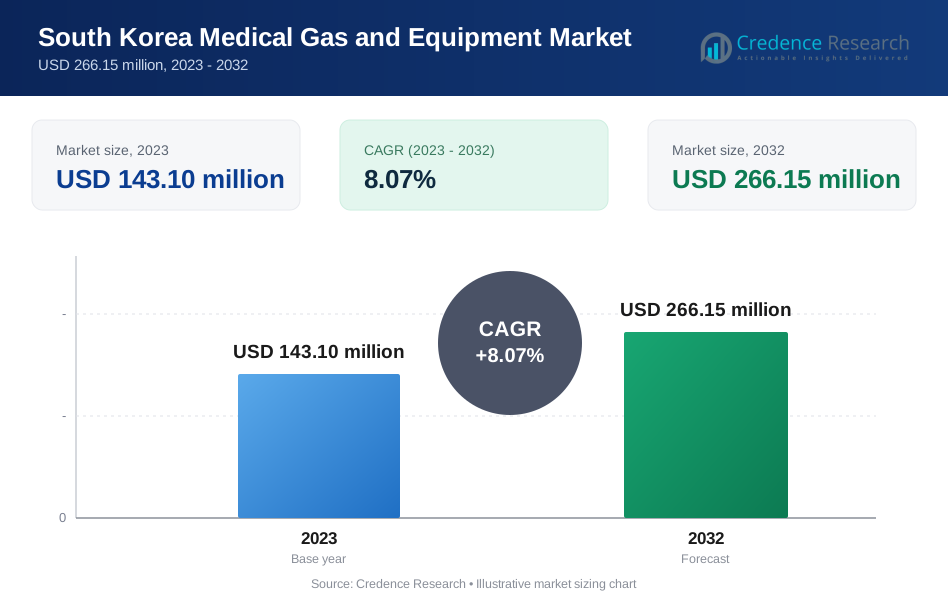
The South Korea medical gas and equipment market is projected to grow from USD 143.10 million in 2023 to USD 266.15 million by 2032, at a CAGR of 8.07%.
The South Korea medical gas and equipment market is driven by the increasing demand for advanced healthcare infrastructure, fueled by an aging population and a rise in chronic diseases. The growing adoption of medical gas systems in hospitals, clinics, and healthcare facilities for critical care and surgical procedures is further propelling market growth. Technological advancements in gas delivery systems and the rising trend of home healthcare also play a significant role in expanding the market. Additionally, government initiatives to improve healthcare services, including the development of medical gas networks, are supporting market expansion. The growing awareness about the benefits of medical gases in patient care and the increasing number of surgeries and treatments in the country are contributing to the positive market outlook. As healthcare facilities upgrade to meet higher standards, the demand for reliable and efficient medical gas equipment is expected to continue rising.
The South Korea medical gas and equipment market is characterized by a strong presence of key players, both domestic and international, catering to the growing demand for advanced healthcare solutions. Prominent companies such as Taiyo Nippon Sanso Corporation, Air Liquide, and Linde Plc dominate the market, providing a wide range of medical gases and equipment essential for critical care, diagnostics, and therapeutic applications. Regional players like South Korea National Air Separation Engineering Co., Ltd. and Suzhou Xinglu Air Separation Plant Science and Technology Development Co., Ltd. further contribute to the market, supporting local healthcare institutions with tailored medical gas solutions. Additionally, INOX Air Products Pvt. Ltd. and Universal Industrial Gases, Inc. play a vital role in supplying industrial gases for healthcare applications. These companies are instrumental in driving the adoption of innovative medical gas technologies, ensuring the continued growth and development of the market across South Korea.
Market Insights
- The South Korea medical gas and equipment market is projected to grow from USD 143.10 million in 2023 to USD 266.15 million by 2032, with a CAGR of 8.07%.
- Increasing demand for medical gases in critical care and surgical procedures is driving market growth.
- Rising prevalence of respiratory diseases and chronic conditions fuels the need for oxygen therapy and other medical gases.
- Smart technologies and IoT-enabled devices are gaining traction, improving the efficiency and safety of medical gas delivery systems.
- The market faces challenges such as high initial investment costs and the complexity of regulatory compliance.
- Major players like Taiyo Nippon Sanso, Air Liquide, and Linde Plc dominate the market, while regional companies like South Korea National Air Separation Engineering contribute significantly.
- The market is expanding in regions such as Seoul, Gyeonggi, and Busan, driven by growing healthcare infrastructure and demand for medical gases.
Market Drivers
Growing Healthcare Infrastructure
The expanding healthcare infrastructure in South Korea is one of the primary drivers of the medical gas and equipment market. As the country continues to invest in state-of-the-art hospitals and healthcare facilities, the demand for medical gases like oxygen, nitrogen, and nitrous oxide is increasing. For instance, South Korea's Ministry of Health and Welfare has announced its 2025 Action Plan, which includes expanding healthcare infrastructure to support the needs of an aging population and improve access to essential healthcare services. The country’s advanced healthcare system, with its focus on improving patient care, is driving the adoption of sophisticated medical gas delivery systems in hospitals, surgical centers, and intensive care units. This trend is expected to continue, contributing significantly to the market's growth.
Aging Population and Rising Chronic Diseases
South Korea's aging population is another key driver fueling the medical gas and equipment market. The country has one of the highest life expectancies in the world, and as the elderly population increases, so does the need for healthcare services. For instance, the proportion of people aged 65 and above in South Korea is projected to surpass 25% by 2025, significantly increasing the demand for healthcare services. Elderly individuals often require medical gases for respiratory conditions, anesthesia, and other treatments. The rising prevalence of chronic diseases such as COPD, cardiovascular conditions, and diabetes among the aging population further drives the demand for medical gas systems to support ongoing treatment and rehabilitation efforts.
Technological Advancements in Medical Gas Systems
Technological advancements in medical gas delivery systems are revolutionizing the healthcare landscape in South Korea. Newer, more efficient, and safer gas management systems are improving the delivery and monitoring of medical gases in various healthcare settings. Innovations such as automated gas pressure regulators, advanced flowmeters, and real-time monitoring systems enhance the reliability and precision of gas delivery. These developments not only ensure optimal patient care but also improve operational efficiency, driving the adoption of advanced medical gas equipment across the country.
Government Initiatives and Healthcare Upgrades
Government initiatives aimed at upgrading healthcare infrastructure and promoting medical advancements further stimulate the growth of the medical gas and equipment market. South Korea's healthcare policies, focused on expanding access to healthcare and improving the quality of patient care, are encouraging healthcare facilities to modernize their equipment, including medical gas systems. Moreover, the government’s investments in medical research and development contribute to innovations in medical gas technologies, ensuring that the sector remains at the forefront of healthcare advancements.
Market Trends
Increasing Adoption of Home Healthcare Solutions
A significant market trend in South Korea's medical gas and equipment sector is the growing adoption of home healthcare solutions. As the aging population increases, there is a rising demand for home-based care, where medical gases like oxygen are essential for treating chronic respiratory conditions. For instance, the South Korean home healthcare market is experiencing robust growth due to the expanding geriatric population and the increasing prevalence of chronic diseases. Home healthcare providers are increasingly offering medical gas solutions to support patients with long-term illnesses or those recovering from surgery. This trend is driving the need for portable, easy-to-use medical gas equipment that can be safely managed outside of clinical settings, thus expanding the market for home healthcare-focused gas systems and devices.
Integration of Smart Technologies
Smart technologies are gaining traction in South Korea’s medical gas and equipment market. The integration of Internet of Things (IoT) devices and automated systems in medical gas delivery is improving efficiency and safety. Real-time monitoring and automated gas management systems enable healthcare providers to track gas usage, manage supplies, and ensure that patients receive the correct gas mixture. These innovations not only reduce the risk of human error but also optimize healthcare facility operations, driving the demand for advanced, connected medical gas equipment. As the healthcare sector moves toward digital transformation, smart medical gas systems are expected to become increasingly common.
Rising Demand for Critical Care and Surgical Procedures
The demand for medical gases is also being driven by an increase in critical care and surgical procedures in South Korea. As the country continues to enhance its medical capabilities, there is a growing number of complex surgeries and treatments that require medical gases for anesthesia, pain management, and respiratory support. The trend toward minimally invasive surgeries and advanced medical interventions further increases the use of medical gases in both public and private healthcare institutions. This surge in medical procedures is fueling demand for a variety of medical gas equipment, including cylinders, regulators, and central gas supply systems.
Enhanced Focus on Patient Safety and Compliance
Another prominent trend in the South Korean medical gas market is the heightened focus on patient safety and regulatory compliance. Healthcare facilities are increasingly prioritizing the safety of medical gas systems to prevent errors, contamination, and malfunctions that could affect patient outcomes. Compliance with stringent national and international standards, including those set by the Korean Ministry of Health and Welfare, is a key consideration for healthcare providers. This focus on safety is driving the demand for high-quality, certified medical gas equipment that meets regulatory requirements and ensures safe, effective patient care.
Market Challenges Analysis
High Initial Investment Costs
One of the primary challenges facing the South Korean medical gas and equipment market is the high initial investment required for advanced medical gas systems. The cost of purchasing, installing, and maintaining sophisticated gas delivery systems can be prohibitive, especially for smaller healthcare facilities or those in rural areas. Additionally, the need for ongoing training and certification for medical staff to operate these systems safely adds to the financial burden. While larger hospitals and well-funded healthcare institutions can absorb these costs, smaller players may struggle to keep up, potentially limiting the overall market growth and accessibility of high-end medical gas solutions.
Regulatory and Safety Compliance Challenges
Another significant challenge in the South Korean medical gas and equipment market is the complexity of regulatory and safety compliance. Medical gas systems are subject to stringent national and international standards, which require continuous monitoring, inspection, and updates to ensure safe operation. For instance, the Ministry of Food and Drug Safety (MFDS) mandates strict compliance with regulations related to the installation, operation, and maintenance of medical gas systems. Navigating these regulations can be difficult for healthcare providers, especially when introducing new technologies or upgrading existing systems. Any non-compliance or safety lapses can lead to serious repercussions, including fines, facility shutdowns, and compromised patient care. As the medical gas industry evolves, staying up-to-date with evolving regulations and maintaining safety standards remains a challenge for healthcare facilities, potentially slowing market adoption and innovation.
Market Opportunities
Expanding Home Healthcare Market
A significant market opportunity in South Korea’s medical gas and equipment sector lies in the expanding home healthcare market. With the country’s aging population and increasing prevalence of chronic diseases, there is a growing demand for medical gas solutions to support home-based treatments. Patients with respiratory conditions such as COPD, asthma, and other chronic illnesses require continuous oxygen therapy, which presents an opportunity for the development of portable and user-friendly medical gas systems. The demand for home healthcare services is expected to rise, creating a market for compact, efficient medical gas equipment that can be easily used outside of clinical settings. Companies that innovate to provide affordable, reliable, and easy-to-use home healthcare solutions stand to gain a competitive advantage in this growing segment.
Technological Advancements and Smart Solutions
The integration of advanced technologies into medical gas systems presents another opportunity for growth in the South Korean market. The rise of smart medical gas solutions, including IoT-enabled devices and automated gas delivery systems, offers improved efficiency and safety in healthcare settings. Real-time monitoring, automated alarms, and predictive analytics can help prevent errors and enhance operational management, which is particularly valuable in critical care environments. Additionally, the shift toward digital healthcare services and smart hospitals is expected to drive demand for connected medical gas equipment that integrates seamlessly with other healthcare technologies. As healthcare facilities continue to modernize and prioritize patient safety and operational efficiency, there is substantial potential for growth in the adoption of these innovative medical gas solutions.
Market Segmentation Analysis:
By Medical Gases:
The South Korea medical gas and equipment market is primarily segmented by the type of medical gases used, which include oxygen, nitrous oxide, carbon dioxide, nitrogen, and others. Oxygen holds the largest share of the market, driven by its critical role in treating respiratory disorders, anesthesia, and intensive care units. Nitrous oxide is widely used for anesthesia during surgeries and dental procedures, further contributing to its strong market presence. Carbon dioxide is essential in diagnostic procedures, such as endoscopy, and is also utilized in certain surgical applications. Nitrogen is commonly used for cooling applications and in the preservation of medical samples. The "Others" category includes gases such as helium and argon, used in specialized applications such as cryosurgery and medical imaging. As the demand for advanced healthcare solutions rises, the need for a variety of medical gases in both clinical and non-clinical settings continues to drive market growth across these segments.
By Application:
The application-based segmentation of the South Korea medical gas and equipment market includes therapeutic, diagnostic, pharmaceutical manufacturing, research, and other segments. The therapeutic application segment dominates, driven by the increasing number of respiratory patients, surgical procedures, and critical care treatments requiring medical gases like oxygen and nitrous oxide. The diagnostic segment also plays a vital role, particularly in medical imaging and procedures that use carbon dioxide and nitrogen. The pharmaceutical manufacturing segment is growing due to the use of medical gases in the production of various drugs and vaccines, while the research segment benefits from gases like nitrogen and oxygen for laboratory testing and clinical trials. Other applications include the use of gases in medical equipment maintenance, calibration, and sterilization. As healthcare technology advances, the demand for specialized medical gases in these diverse applications is expected to continue expanding, creating new growth opportunities in the South Korean market.
Segments:
Based on Medical Gases:
- Oxygen
- Nitrous Oxide
- Carbon Dioxide
- Nitrogen
- Others
Based on Application:
- Therapeutic
- Diagnostic
- Pharmaceutical Manufacturing
- Research
- Others
Based on End-user:
- Hospitals
- Ambulatory Surgical Centers
- Home Healthcare
- Clinics
- Others
Based on Medical Gas Equipment:
- Cylinders
- Flowmeters
- Regulators
- Vacuum Systems
- Others
Based on the Geography:
- Seoul Metropolitan Region
- Gyeonggi Province
- Busan and Ulsan Regions
- Daegu Region
Regional Analysis
Seoul Metropolitan Region
The Seoul Metropolitan Region is the leading contributor to South Korea’s medical gas and equipment market, holding a market share of around 45%. The region is home to a large number of tertiary hospitals, medical centers, and healthcare institutions that require medical gases for critical care, surgeries, and diagnostic procedures. The concentration of medical research and innovation in Seoul further boosts the demand for specialized medical gases, including oxygen, nitrous oxide, and carbon dioxide. As the capital and most populous region in South Korea, Seoul's healthcare facilities drive a significant portion of the market, supporting advancements in medical gas systems and technologies. Additionally, the rapid development of smart healthcare solutions and the implementation of IoT-enabled medical gas delivery systems in the region offer further growth opportunities.
Gyeonggi Province
Gyeonggi Province, which surrounds the Seoul Metropolitan Region, holds a market share of approximately 25% in the medical gas and equipment sector. This region benefits from its proximity to Seoul, making it a key hub for healthcare services, medical research, and pharmaceutical manufacturing. The healthcare infrastructure in Gyeonggi Province is robust, with numerous hospitals, clinics, and long-term care facilities relying on medical gases for therapeutic and diagnostic purposes. As Gyeonggi Province continues to urbanize and attract investment in healthcare, the demand for medical gas systems and equipment is expected to grow significantly. Additionally, the expansion of home healthcare services and research institutions in the province contributes to the rising need for efficient medical gas solutions.
Busan and Ulsan Regions
The Busan and Ulsan regions together contribute around 15% to the overall market share of South Korea's medical gas and equipment market. Busan, as the second-largest city in South Korea, serves as a significant industrial and healthcare hub. The region is home to various medical institutions, including specialized clinics and hospitals, that require a steady supply of medical gases for emergency care, surgeries, and patient management. Ulsan, while smaller in population, has a growing healthcare sector, particularly in industries related to pharmaceutical manufacturing and research. The demand for medical gases in these regions is rising, driven by both urbanization and the increasing need for advanced healthcare solutions in industrial areas.
Daegu Region
The Daegu region accounts for approximately 10% of the medical gas and equipment market in South Korea. Although it is one of the smaller regions in terms of market share, Daegu is a significant healthcare and educational center in the country. The region has a well-established network of hospitals and medical institutions that utilize medical gases for a variety of therapeutic and diagnostic applications. As Daegu’s healthcare infrastructure continues to grow, particularly with advancements in medical research and specialized healthcare facilities, the demand for medical gases and related equipment is expected to increase. Moreover, Daegu’s emphasis on medical education and innovation provides a strong foundation for further market development in the coming years.
Key Player Analysis
- Taiyo Nippon Sanso Corporation
- Air Liquide
- Linde Plc
- South Korea National Air Separation Engineering Co., Ltd.
- Suzhou Xinglu Air Separation Plant Science and Technology Development Co., Ltd.
- INOX Air Products Pvt. Ltd.
- Universal Industrial Gases, Inc.
- Cryogenmash JSC
- NovaAir Pvt. Ltd.
- Gas Malaysia Berhad
Competitive Analysis
The South Korea medical gas and equipment market is highly competitive, with leading players continuously innovating to meet the rising demand for medical gases and advanced delivery systems. Key players such as Taiyo Nippon Sanso Corporation, Air Liquide, Linde Plc, South Korea National Air Separation Engineering Co., Ltd., Suzhou Xinglu Air Separation Plant Science and Technology Development Co., Ltd., INOX Air Products Pvt. Ltd., Universal Industrial Gases, Inc., Cryogenmash JSC, NovaAir Pvt. Ltd., and Gas Malaysia Berhad dominate the market. For instance, Linde Healthcare supports research by clinicians and academic institutions to enable the delivery of the right gas to the right organ in the right dose, thereby optimizing patient care and outcomes. Companies that invest in smart technologies are gaining a competitive edge, particularly with solutions that allow for real-time monitoring, predictive analytics, and automated systems to enhance gas delivery and management in critical care environments. In addition to technological advancements, companies are prioritizing safety and regulatory compliance to ensure that their products meet stringent standards. This is crucial as healthcare facilities require highly reliable and compliant systems for patient care. The market also sees significant competition in terms of pricing and distribution, with companies working to optimize supply chains to meet the increasing demand for medical gases across various healthcare settings. Regional players focus on providing tailored solutions to meet the specific needs of local healthcare systems, ensuring a strong foothold in the South Korean market. As the healthcare industry evolves, companies continue to refine their strategies to maintain leadership in this competitive landscape.
Recent Developments
- In September 2024, Taiyo Nippon Sanso Corporation announced the development of CO2 shipping tank equipment aimed at achieving carbon neutrality, with plans for market release in Spring 2025.
- In May 2024, Linde entered into a long-term agreement with H2 Green Steel to supply industrial gases for the world’s first large-scale green steel plant. This project involves an investment of approximately $150 million to build an on-site air separation unit (ASU), which will also support local healthcare customers by providing essential gases like oxygen and nitrogen.
- In February 2024, GCE group launched new terminal units designed to improve safety and accuracy in medical gas pipeline systems. These units are critical for connecting medical gases to devices like ventilators
- In January 2024, Linde signed a record number of small on-site projects in 2023, totaling 53 projects with a capital expenditure of $270 million. These projects focus on the supply of nitrogen and oxygen, utilizing Linde’s ECOVAR® technology for enhanced efficiency and sustainability across various sectors, including healthcare.
Market Concentration & Characteristics
The South Korea medical gas and equipment market is characterized by moderate concentration, with a mix of global industry leaders and regional players competing for market share. While large multinational corporations dominate the market, regional players have a strong presence, especially in offering tailored solutions to meet local healthcare needs. The market’s characteristics reflect a high degree of specialization, driven by the critical nature of medical gases in therapeutic, diagnostic, and emergency care applications. The demand for medical gases such as oxygen, nitrous oxide, and carbon dioxide is growing rapidly due to an aging population, increasing prevalence of chronic diseases, and advancements in surgical and critical care technologies. The competitive landscape is shaped by both technological advancements and a strong emphasis on safety and regulatory compliance. Companies invest heavily in developing innovative solutions, such as smart gas management systems that integrate IoT and automation, to improve operational efficiency and ensure the safe and accurate delivery of gases in healthcare settings. Furthermore, the market is marked by a growing trend toward home healthcare solutions, driving the demand for portable medical gas systems. As healthcare facilities continue to modernize, the market will likely see further consolidation, with larger players acquiring smaller companies to expand their product portfolios and distribution networks.
Report Coverage
The research report offers an in-depth analysis based on Medical Gases, Application, End-user, Medical Gas Equipment and Geography. It details leading market players, providing an overview of their business, product offerings, investments, revenue streams, and key applications. Additionally, the report includes insights into the competitive environment, SWOT analysis, current market trends, as well as the primary drivers and constraints. Furthermore, it discusses various factors that have driven market expansion in recent years. The report also explores market dynamics, regulatory scenarios, and technological advancements that are shaping the industry. It assesses the impact of external factors and global economic changes on market growth. Lastly, it provides strategic recommendations for new entrants and established companies to navigate the complexities of the market.
Future Outlook
- The South Korea medical gas and equipment market is expected to continue its growth, driven by an aging population and increasing prevalence of chronic diseases.
- The demand for medical gases, particularly oxygen, will rise as more patients require respiratory support due to respiratory disorders and aging.
- Technological advancements, such as IoT-enabled medical gas systems, will play a pivotal role in enhancing operational efficiency and safety.
- Home healthcare solutions will see increased adoption, creating a demand for portable and user-friendly medical gas systems.
- Companies will focus on developing advanced gas management systems with real-time monitoring and predictive analytics to improve patient care.
- Increased government support for healthcare infrastructure and the adoption of modern medical technologies will drive market expansion.
- The integration of AI and automation in medical gas systems will enhance the accuracy and efficiency of gas delivery, reducing human error.
- The growth of the pharmaceutical manufacturing and research sectors will further stimulate the demand for medical gases in these industries.
- Competitive pressure will lead to more strategic partnerships, acquisitions, and product innovations among key players in the market.
- Regulatory compliance will remain a critical factor, pushing companies to prioritize safety, quality control, and adherence to local healthcare standards.
Request a Free Sample
Fill in your details and we'll send you a free sample report.
- Sample data tables & charts
- Research methodology
Need a Custom Version of This Report?
Tailor the scope, geography, or segments to your exact requirements.
- Custom geography or segment scope
- Direct access to our analyst team
Frequently Asked Questions
What is the current size of the South Korea Medical Gas and Equipment Market?
What factors are driving the growth of the South Korea Medical Gas and Equipment Market?
What are the key segments within the South Korea Medical Gas and Equipment Market?
What are some challenges faced by the South Korea Medical Gas and Equipment Market?
Table of Content
Chapter 1. Report Introduction
- 1.1 Report Description & Purpose
- 1.1.1 Report Title & Market Definition
- 1.1.2 Unique Selling Propositions (USP) & Key Differentiators
- 1.1.3 Value Proposition for Stakeholders
- 1.2 Research Objectives
- 1.2.1 Market Sizing Objectives (Volume & Revenue)
- 1.2.2 Segmentation Objectives
- 1.2.3 Competitive Intelligence Objectives
- 1.2.4 Forecast & Scenario Objectives
- 1.3 Report Scope
- 1.3.1 South Korea Medical Gas and Equipment Scope – Types & Subtypes Covered
- 1.3.2 Geographic Scope – Regions & Countries Covered
- 1.3.3 Historical Period, Base Year & Forecast Period (2023; forecast to 2032)
- 1.3.4 Inclusions & Exclusions
- 1.4 HS Code & Classification Framework
- 1.5 Currency, Units & Pricing Basis
- 1.6 Target Stakeholders
- 1.7 Limitations & Assumptions
Chapter 2. Executive Summary
- 2.1 Global South Korea Medical Gas and Equipment Market Snapshot
- 2.1.1 Market Size – Historical (2023) & Forecast (2023-2032) (2023: USD 143.10 million → 2032: USD 266.15 million)
- 2.1.2 Volume & Revenue – Global Totals
- 2.1.3 Key Market Highlights – Top Five Facts
- 2.2 South Korea Medical Gas and Equipment Market Segmentation Snapshot
- 2.2.1 Market Split by Region – 2023 vs. 2032
- 2.3 Competitive Snapshot
- 2.3.1 Top 10 Players by Revenue Share – 2023
- 2.3.2 Top 10 Players by Volume Share – 2023
- 2.3.3 Recent Strategic Developments (18-Month Summary)
- 2.4 Key Investment Highlights & Strategic Conclusions
Chapter 3. South Korea Medical Gas and Equipment Market Dynamics & Industry Analysis
- 3.1 Market Overview & Context
- 3.1.1 South Korea Medical Gas and Equipment Market Position in the Broader Automotive Value Chain
- 3.1.2 OEM vs. Replacement Market Dynamics
- 3.1.3 Market Maturity & Development Stage by Region
- 3.2 South Korea Medical Gas and Equipment Market Drivers
- 3.3 South Korea Medical Gas and Equipment Market Restraints & Challenges
- 3.4 South Korea Medical Gas and Equipment Market Opportunities
- 3.5 Porter's Five Forces Analysis
- 3.5.1 Threat of New Entrants
- 3.5.2 Bargaining Power of Suppliers
- 3.5.3 Bargaining Power of Buyers
- 3.5.4 Threat of Substitutes
- 3.5.5 Competitive Rivalry – Intensity Assessment
- 3.6 South Korea Medical Gas and Equipment Value Chain Analysis
- 3.6.1 Upstream – Raw Material/Input Suppliers
- 3.6.1.1 Raw Material/Input 1
- 3.6.1.2 Raw Material/Input 2
- 3.6.1.3 Raw Material/Input 3
- 3.6.2 Midstream – Production/Manufacturing/Service Delivery
- 3.6.2.1 Production/Process Overview
- 3.6.2.2 Key Facility Locations & Capacity by Manufacturer
- 3.6.3 Downstream – Distribution & End Consumer
- 3.6.3.1 Primary Channel – B2B/OEM
- 3.6.3.2 Secondary Channels – Dealer, Retail, Online, Direct
- 3.6.4 Value Chain Profitability Analysis
- 3.6.1 Upstream – Raw Material/Input Suppliers
- 3.7 PESTEL Analysis
- 3.7.1 Political Factors
- 3.7.2 Economic Factors
- 3.7.3 Social Factors
- 3.7.4 Technological Factors
- 3.7.5 Environmental Factors
- 3.7.6 Legal Factors
- 3.8 South Korea Medical Gas and Equipment Supply Chain Analysis
- 3.8.1 Raw Material/Input Supply Risk Assessment
- 3.8.2 Manufacturing Concentration Risk (Geographic Exposure)
- 3.8.3 Trade Disruption Impact Analysis
- 3.9 Regulatory & Policy Landscape
Note: The regulatory and policy landscape section covers regulations based on their applicability to the market, South Korea Medical Gas and Equipment category, geography, and scope of the study. Only regulatory frameworks with a material impact on operations, compliance, trade, sustainability, or market access are analyzed in detail.
Chapter 4. Key Investment Pockets & Opportunity Analysis
- 4.1 South Korea Medical Gas and Equipment Market Attractiveness Analysis
- 4.1.1 By Region – Investment Attractiveness Matrix (Volume × CAGR)
- 4.2 Absolute Revenue Growth Opportunity
- 4.2.1 By Region – Absolute USD Growth Through 2032
- 4.3 Incremental Volume Opportunity
- 4.3.1 By Region – Incremental Volume Through 2032
- 4.3.2 Segment – Incremental Volume
- 4.4 Emerging Submarket Opportunity Deep Dive (Subject to Applicability)
- 4.5 Emerging Market Opportunity Scorecards
- 4.5.1 United States
- 4.5.2 Europe
- 4.5.3 Asia
- 4.5.4 Middle East & Africa
Note: Emerging Market Opportunity Scorecards will be included based on relevance and strategic importance. Regions listed are indicative and may vary depending on data availability and market dynamics.
Chapter 5. South Korea Medical Gas and Equipment Import-Export Analysis & Trade Flows
- 5.1 Global Trade Overview
- 5.1.1 Global Export Value by Country (2023)
- 5.1.2 Global Export Volume by Country (2023)
- 5.1.3 Global Import Value by Country (2023)
- 5.1.4 Global Import Volume by Country (2023)
- 5.1.5 Net Trade Balance by Country (2023)
- 5.2 Export Analysis – Segment
- 5.2.1 Type 1 (HS Code)
- 5.2.2 Type 2 (HS Code)
- 5.2.3 Type 3 (HS Code)
- 5.2.4 Type 4 (HS Code)
- 5.2.5 Type 5 (HS Code)
- 5.3 Import Analysis – Segment
- 5.3.1 Type 1 (HS Code)
- 5.3.2 Type 2 (HS Code)
- 5.3.3 Type 3 (HS Code)
- 5.3.4 Type 4 (HS Code)
- 5.3.5 Type 5 (HS Code)
- 5.4 Average Unit Trade Prices
- 5.4.1 Average Export Price – Segment & Country
- 5.4.2 Average Import Price – Segment & Source Country
- 5.4.3 Price Trends (2023)
- 5.5 Key Trade Route Analysis
- 5.5.1 Trade Route 1
- 5.5.2 Trade Route 2
- 5.5.3 Trade Route 3
- 5.5.4 Trade Route 4
- 5.5.5 Trade Route 5
- 5.6 Trade Policy Impact Assessment
- 5.6.1 US Anti-Dumping & Section 301 Tariffs
- 5.6.2 EU Customs Union Impact
- 5.6.3 Major Free Trade Agreements
- 5.6.4 USMCA Rules of Origin
Note: Trade policy analysis will be included only where relevant to the South Korea Medical Gas and Equipment market.
Chapter 6. Competitive Landscape & Company Benchmarking
- 6.1 South Korea Medical Gas and Equipment Market Concentration & Structure
- 6.1.1 Herfindahl-Hirschman Index (HHI) – vs. 2023
- 6.1.2 Tier 1, Tier 2 & Tier 3 Market Structure
- 6.1.3 Global, Regional & Local Player Dynamics
- 6.2 South Korea Medical Gas and Equipment Market Share Analysis – 2023
- 6.2.1 Global Revenue Share by Company
- 6.2.2 Global Volume Share by Company
- 6.2.3 Regional Revenue Share
- 6.2.4 Market Share Evolution ( vs. 2023)
- 6.2.5 OEM Segment Share by Company
- 6.2.6 Replacement Segment Share by Company
- 6.3 Production/Delivery Capacity & Facility Analysis
- 6.3.1 Global Installed Capacity
- 6.3.2 Capacity Utilization Rates
- 6.3.3 Production/Output Volume
- 6.3.4 Facility Locations & Capacity Map
- 6.3.5 Planned Capacity Additions
- 6.4 South Korea Medical Gas and Equipment Competitive Benchmarking Matrix
- 6.4.1 Revenue, Volume, CAGR & Profitability Comparison
- 6.4.2 Channel Revenue Mix
- 6.4.3 Geographic Revenue Exposure
- 6.4.4 R&D Intensity
- 6.4.5 Sustainability Maturity
- 6.5 Strategic Developments in South Korea Medical Gas and Equipment (Last 24 Months)
- 6.5.1 Mergers, Acquisitions & Divestments
- 6.5.2 New South Korea Medical Gas and Equipment Launches
- 6.5.3 Facility Expansions
- 6.5.4 Strategic Alliances, Joint Ventures & Partnerships
- 6.5.5 Distribution Expansion & Market Entry
- 6.5.6 Sustainability & ESG Initiatives
- 6.6 Competitive Strategy Mapping
- 6.6.1 Leader, Challenger, Follower & Niche Classification
- 6.6.2 Pricing Strategy Comparison
- 6.6.3 Channel Strategy Matrix
Note: Strategic developments are included based on their materiality and the availability of reliable information.
Chapter 7. Global South Korea Medical Gas and Equipment Market – By Distribution Channel
- 7.1 Segment Overview
- 7.1.1 Volume & Revenue Split by Channel (2023 & 2032)
- 7.1.2 Channel Mix Evolution (2023-2032)
Chapter 8. Regional Market Analysis – Global Overview
- 8.1 Global Regional Overview
- 8.1.1 Regional Volume Share
- 8.1.2 Regional Revenue Share
- 8.1.3 Regional Volume by Region
- 8.1.4 Regional Revenue by Region
- 8.1.5 Regional Forecast Through 2032
- 8.2 Cross-Regional Segment Analysis
- 8.2.1 By Distribution Channel
- 8.2.2 By Brand/Price Tier
Chapter 9. North America South Korea Medical Gas and Equipment Market
- 9.1 United States
- 9.2 Canada
- 9.3 Mexico
Chapter 10. Europe South Korea Medical Gas and Equipment Market
- 10.1 Germany
- 10.2 France
- 10.3 Italy
- 10.4 United Kingdom
- 10.5 Spain
- 10.6 Poland
- 10.7 Russia
- 10.8 Netherlands
- 10.9 Belgium
- 10.10 Sweden
- 10.11 Denmark
- 10.12 Norway
- 10.13 Rest of Europe
Chapter 11. Asia Pacific South Korea Medical Gas and Equipment Market
- 11.1 China
- 11.2 India
- 11.3 Japan
- 11.4 South Korea
- 11.5 Thailand
- 11.6 Indonesia
- 11.7 Vietnam
- 11.8 Malaysia
- 11.9 Australia
- 11.10 Rest of Asia Pacific
Chapter 12. Latin America South Korea Medical Gas and Equipment Market
- 12.1 Brazil
- 12.2 Argentina
- 12.3 Colombia
- 12.4 Chile
- 12.5 Rest of Latin America
Chapter 13. Middle East South Korea Medical Gas and Equipment Market
- 13.1 Saudi Arabia
- 13.2 United Arab Emirates
- 13.3 Turkey
- 13.4 Israel
- 13.5 Iran
- 13.6 Rest of the Middle East
Chapter 14. Africa South Korea Medical Gas and Equipment Market
- 14.1 South Africa
- 14.2 Egypt
- 14.3 Nigeria
- 14.4 Morocco
- 14.5 Rest of Africa
Chapter 15. South Korea Medical Gas and Equipment Company Profiles
- 15.1 [Company 01]
- 15.1.1 Company Overview
- 15.1.2 Key Management Personnel
- 15.1.3 Products & Services Portfolio
- 15.1.4 Financial Performance
- 15.1.5 Key Market Focus & Geographic Presence
- 15.1.6 Recent Developments & Strategic Initiatives
Note: The company profile list is preliminary and may change based on research findings, market developments, data availability, and client requirements.
Chapter 16. Appendices
- Appendix A – List of Abbreviations & Acronyms
- Appendix B – Industry Classification Code Reference – Full Series
- Appendix C – Production & Capacity Data Tables
- Appendix D – End-Use & Demand Base Tables
- Appendix E – Consumption & Replacement Rate Assumptions
- Appendix F – ASP Reference Tables
- Appendix G – Manufacturing & Facility Database
- Appendix H – Import-Export Data Tables
- Appendix I – Regulatory Summary Tables
- Appendix J – Primary Research Participant List (Anonymized)
- Appendix K – Primary Research Questionnaire Framework
- Appendix L – Data Sources & Bibliography
- Appendix M – Market Size Divergence & Source Comparison
Chapter 17. Research Methodology
- 17.1 Research Framework & Philosophy
- 17.2 Secondary Research – Sources, Hierarchy & Data Extraction
- 17.3 Data Modeling – Bottom-Up & Top-Down Market Sizing
- 17.4 Primary Research – Stakeholder Framework, LOI & Sample Sizes
- 17.5 Forecast Methodology – Regression, Scenario & Sensitivity Analysis
- 17.6 Quality Control – Four-Layer Validation Framework
- 17.7 Limitations & Standard Assumptions
- 17.8 Disclaimer
