
| REPORT ATTRIBUTE | DETAILS |
|---|---|
| Historical Period | 2019-2022 |
| Base Year | 2023 |
| Forecast Period | 2024-2032 |
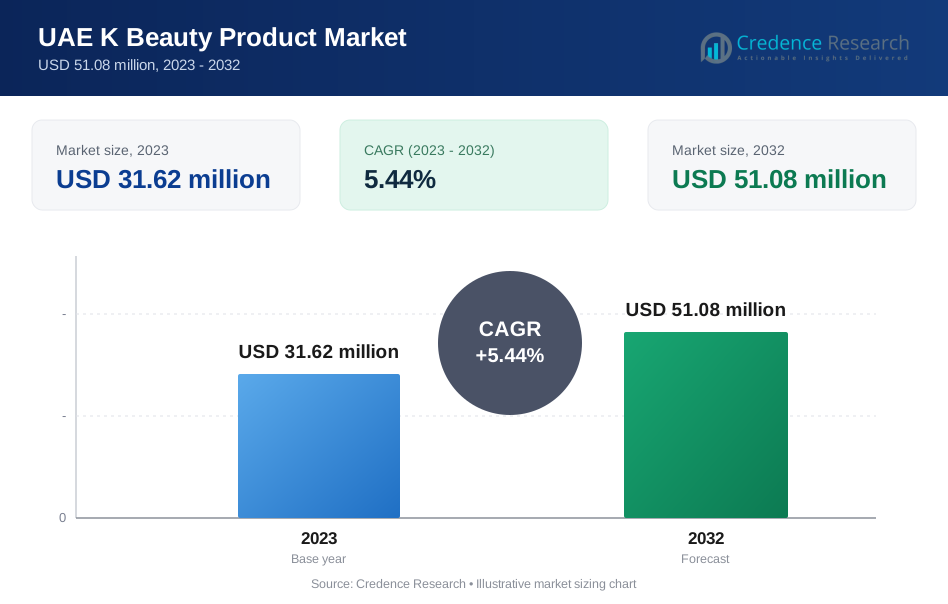
| UAE K Beauty Product Market Size 2023 | USD 31.62 million |
| UAE K Beauty Product Market, CAGR | 5.44% |
| UAE K Beauty Product Market Size 2032 | USD 51.08 million |
Market Overview
The UAE K Beauty Product Market is projected to grow from USD 31.62 million in 2023 to an estimated USD 51.08 million by 2032, with a compound annual growth rate (CAGR) of 5.44% from 2024 to 2032. This steady growth reflects the increasing consumer interest in Korean beauty products, driven by their reputation for innovation and quality.
Key drivers fueling the growth of the UAE K Beauty Product Market include the growing influence of K-pop and Korean culture, which enhances brand appeal among younger consumers. Trends such as the demand for natural and cruelty-free products, advanced skincare technologies, and personalized beauty solutions are also shaping the market. Moreover, strategic marketing campaigns and collaborations with local influencers have effectively increased consumer awareness and preference for K Beauty brands. The emphasis on high-quality ingredients and innovative formulations continues to attract a loyal customer base seeking effective and trendsetting beauty solutions.
Geographically, the UAE K Beauty Product Market is concentrated in major cities like Dubai and Abu Dhabi, where there is a higher concentration of beauty retailers and affluent consumers. These regions serve as key hubs for distribution and marketing activities, facilitating broader market penetration. The competitive landscape includes prominent players such as Amorepacific, LG Household & Health Care, and Missha, who are actively expanding their presence through strategic partnerships and product launches. Additionally, local retailers and online platforms play a crucial role in catering to diverse consumer preferences, ensuring the sustained growth and dynamism of the K Beauty sector in the UAE.
Market Insights
- The UAE K Beauty Product Market is projected to grow from USD 31.62 million in 2023 to USD 51.08 million by 2032, with a CAGR of 5.44%, reflecting increasing consumer interest in innovative Korean skincare products.
- The global influence of K-pop and Korean culture is a significant driver, enhancing brand appeal among younger UAE consumers who seek trendsetting beauty solutions.
- The growing consumer preference for clean beauty products, sustainable practices, and natural ingredients boosts demand for K Beauty offerings in the UAE market.
- Intense competition from global beauty brands and local players, along with market saturation, poses challenges for K Beauty brands striving to maintain distinctiveness.
- These cities account for the largest market share due to their affluent populations, strong retail ecosystems, and the presence of high-end beauty stores.
- Digital retail platforms play a pivotal role in increasing accessibility, supported by high internet penetration and effective influencer-driven marketing campaigns.
- Brands face the challenge of tailoring products to suit the UAE’s diverse population and harsh climate, which emphasizes hydration, sun protection, and anti-aging solutions.
Market Drivers
Rising Popularity of K-Pop and Korean Culture
The global wave of K-pop and Korean entertainment, often referred to as the "Korean Wave" or Hallyu, has significantly influenced the UAE beauty market. Korean celebrities and influencers serve as powerful ambassadors for K Beauty products, showcasing flawless skin and advanced beauty regimens that captivate audiences. This cultural influence has resonated strongly with UAE consumers, particularly among younger demographics who closely follow trends set by Korean pop stars and actors.In addition, the unique storytelling and branding of K Beauty products often link them to Korean culture, enhancing their desirability. Advertisements, social media campaigns, and collaborations with regional influencers further amplify this connection, making K Beauty brands aspirational among UAE consumers. As the UAE remains a hub for international culture and innovation, this affinity for Korean culture acts as a significant catalyst for market growth.
Preference for Innovative and Natural Formulations
K Beauty products are renowned for their innovative formulations and high-quality natural ingredients, aligning well with the preferences of UAE consumers. For example, products featuring snail mucin and hyaluronic acid cater specifically to skincare needs arising from the UAE's harsh climate, where high temperatures and arid conditions can challenge skin health. This focus on effective solutions has earned K Beauty brands significant consumer trust and loyalty. Additionally, the emphasis on cutting-edge technologies-such as multi-step skincare routines and innovative delivery systems-distinguishes K Beauty from conventional offerings in the market. The growing demand for skincare solutions that hydrate, protect, and repair skin further solidifies K Beauty’s relevance to local consumers. Moreover, eco-friendly and cruelty-free practices resonate with environmentally conscious shoppers, enhancing the appeal of these products. As consumers increasingly seek effective skincare solutions that address their unique needs, K Beauty's innovative approach positions it favorably within the competitive landscape of the UAE beauty market.
E-Commerce Growth and Digital Marketing Strategies
The rapid expansion of e-commerce platforms in the UAE has been pivotal for the growth of the K Beauty market. Leading online retailers such as Amazon UAE and niche platforms like K-Beauty Middle East offer a wide selection of products, ensuring convenient access for consumers across the country. For instance, e-commerce growth is supported by high internet penetration rates and a tech-savvy population that increasingly prefers online shopping. Digital marketing strategies have also played a crucial role in popularizing K Beauty products through social media platforms like Instagram, TikTok, and YouTube. Brands leverage these channels to showcase product efficacy via tutorials, reviews, and user-generated content. Influencer marketing has proven particularly effective; consumers often trust recommendations from local and international beauty influencers. This synergy between e-commerce and digital marketing not only increases brand visibility but also builds consumer trust and engagement. As more consumers turn to online shopping for beauty products, this dynamic approach will continue to drive sustained demand for K Beauty in the UAE.
Affluent Consumer Base and Diverse Retail Ecosystem
The UAE’s affluent consumer base creates a favorable environment for premium beauty products like those offered by K Beauty brands. Consumers in this region are known for their willingness to invest in high-quality skincare solutions, making it a lucrative market for global beauty players. The growing number of beauty-conscious individuals-including an emerging male grooming segment-further diversifies the target audience. The retail ecosystem in the UAE supports this growth through luxury malls, specialized beauty stores, and boutique outlets that feature K Beauty prominently. Brands have established their presence in prominent retail chains like Sephora and Watsons while also engaging with niche stores to cater to specific consumer segments. Additionally, pop-up events, beauty fairs, and collaborations with local retailers create buzz around new product launches, keeping the market dynamic and competitive. This integration of online and offline channels provides multiple touchpoints for consumer interaction, enhancing accessibility and fostering brand loyalty among consumers who seek both convenience and quality in their beauty purchases.
Market Trends
Increased Focus on Multi-Step Skincare Routines
One of the defining trends in the UAE K Beauty Product Market is the growing adoption of multi-step skincare routines, inspired by traditional Korean beauty regimens. Consumers in the UAE are increasingly drawn to personalized and holistic skincare approaches, which often include cleansing oils, foaming cleansers, exfoliators, toners, essences, serums, sheet masks, and moisturizers. For instance, the popularity of these extensive routines is reflected in the trend of incorporating up to ten distinct steps, emphasizing thorough cleansing and targeted treatment. This comprehensive approach is particularly significant given the UAE’s arid climate, where maintaining skin hydration is crucial. K Beauty products are known for their layering techniques that offer targeted solutions for hydration, anti-aging, and skin brightening. Brands have effectively marketed these routines through tutorials and social media campaigns, educating consumers on the benefits of multi-step regimens and encouraging higher product consumption. As a result, consumers are not only investing in individual products but also embracing a lifestyle that prioritizes skin health and beauty.
Demand for Clean Beauty and Sustainable Products
Sustainability and clean beauty have become critical factors shaping consumer purchasing decisions in the UAE, with K Beauty brands leading the charge through eco-friendly and cruelty-free offerings. For instance, there has been a noticeable shift towards products free from harsh chemicals, parabens, sulfates, and synthetic fragrances. This aligns with a global movement toward healthier and more ethical beauty choices. K Beauty brands leverage their reputation for using natural ingredients like green tea and honey to appeal to eco-conscious consumers. Additionally, innovative packaging solutions such as biodegradable materials and refillable containers resonate with buyers who prioritize sustainability. This trend is further supported by government initiatives and cultural shifts in the UAE that emphasize environmental responsibility. As consumers become more aware of their impact on the planet, clean beauty is increasingly seen as an integral part of their purchasing decisions. The combination of natural ingredients and sustainable practices not only enhances brand loyalty but also positions K Beauty as a leader in the evolving beauty landscape.
Growth of E-Commerce and Digital-First Strategies
The e-commerce boom in the UAE has revolutionized how consumers discover and purchase K Beauty products. Online platforms such as Amazon UAE and Noon have expanded the reach of K Beauty brands across the country. For instance, high smartphone penetration rates combined with a digitally savvy population facilitate convenient online shopping experiences. Social media and digital marketing strategies play a crucial role in amplifying this trend. K Beauty brands actively engage consumers through visually appealing campaigns on platforms like Instagram and TikTok, showcasing product efficacy through tutorials and testimonials. The use of augmented reality (AR) tools for virtual product trials enhances consumer interaction, while live-streaming events for product launches drive sales in the digital space. This digital-first approach not only caters to consumer preferences for convenience but also fosters a community around K Beauty products. As brands continue to innovate their online presence, they solidify their position within a competitive market landscape.
Introduction of Men’s Grooming Products
A noteworthy trend in the UAE K Beauty Product Market is the rising demand for men’s grooming products. As societal norms around male grooming continue to evolve, K Beauty brands are tapping into this expanding segment by offering skincare solutions tailored specifically for men. For instance, products such as cleansing foams, moisturizers, anti-aging creams, and sheet masks are gaining popularity among male consumers who seek to improve their skin health and appearance. The growth of this segment is driven by increasing awareness of skincare benefits alongside a cultural shift toward self-care among men. K Beauty brands cater to this demand by introducing unisex and male-specific product lines marketed through male influencers and targeted campaigns. This diversification not only broadens the customer base but also solidifies K Beauty's position as a comprehensive solution for diverse skincare needs. By addressing male grooming with dedicated products and marketing strategies, K Beauty brands are reshaping perceptions around men's skincare in the UAE market.
Market Challenges
High Competition and Market Saturation
The UAE K Beauty Product Market faces intense competition from both international and local beauty brands. The growing popularity of K Beauty has encouraged numerous global players to enter the market, creating a highly competitive environment. For instance, in 2021, the UAE imported approximately $43 million worth of Korean cosmetics, reflecting a broader regional enthusiasm for these products. This trend is mirrored in neighboring countries, with Saudi Arabia importing around $19 million and Kuwait about $13 million. Established Western beauty brands and emerging local skincare companies are capitalizing on similar trends, such as natural ingredients and innovative formulations, making it challenging for K Beauty brands to maintain a distinct market position.Market saturation is another concern, as a large variety of K Beauty products are readily available across online platforms and retail outlets. This abundance can overwhelm consumers and dilute brand loyalty. In 2023, the UAE accounted for approximately $35 million in K Beauty sales, highlighting robust demand amid fierce competition. To stand out, brands must invest heavily in marketing, product innovation, and influencer collaborations, which can increase operational costs and strain profitability.
Cultural Adaptation and Consumer Awareness
While the popularity of Korean beauty products is growing, not all UAE consumers are familiar with the multi-step skincare routines and unique formulations central to K Beauty. Educating consumers about the benefits of these routines remains a challenge, particularly among those accustomed to simpler skincare regimens. For instance, many consumers in the UAE still perceive these intricate routines as complex or unnecessary due to a lack of awareness. This gap in understanding limits the adoption of K Beauty products.Furthermore, adapting products to suit the UAE’s diverse population and climate-specific needs requires additional effort. The region's arid climate necessitates formulations that address dryness while catering to various skin tones and types. Failure to localize offerings can result in reduced relevance and hinder market penetration. As brands seek to enhance consumer awareness and acceptance, they must prioritize education on the benefits of K Beauty while ensuring their products resonate with local preferences and conditions.
Market Opportunities
Expanding Demand for Customizable and Targeted Skincare Solutions
The UAE’s diverse population, comprising residents of various ethnicities and skin types, presents a significant opportunity for K Beauty brands to offer customizable and targeted skincare solutions. Consumers in the UAE are increasingly seeking products that address specific skin concerns, such as hyperpigmentation, dryness, and sensitivity, which are exacerbated by the region’s hot and arid climate. For instance, the demand for products that specifically target hyperpigmentation is rising, reflecting a broader trend where consumers desire solutions tailored to their unique skin issues. This trend underscores the potential for K Beauty brands to innovate by developing products that cater to local climate conditions and individual skin requirements. By leveraging their reputation for innovation and creating personalized skincare routines, K Beauty can enhance consumer appeal and drive growth in this dynamic market. As brands introduce solutions that resonate with the specific needs of UAE consumers, they can establish a strong foothold and capitalize on the increasing interest in effective skincare tailored to diverse skin types.
Leveraging E-Commerce and Digital Engagement Channels
The UAE's high internet penetration and tech-savvy population create a robust platform for the growth of K Beauty products through e-commerce and digital channels. For instance, the rise of online retail platforms allows brands to reach a broader audience efficiently, while effective digital marketing campaigns can enhance visibility. Additionally, technologies like AI-driven personalized recommendations and virtual product trials significantly improve customer experiences by providing tailored suggestions based on individual preferences. Live-streaming events and influencer partnerships further exemplify how brands can engage consumers in culturally relevant ways, building brand awareness and fostering loyalty. By maximizing these digital engagement strategies, K Beauty brands can strengthen their market presence in the UAE. The combination of a digitally engaged consumer base and innovative marketing techniques positions K Beauty to capitalize on the growing demand for premium skincare products, ensuring sustainable growth in this competitive landscape.
Market Segmentation Analysis
By Type
UAE K Beauty Product Market is led by sheet masks, which are highly popular due to their convenience, affordability, and effective hydration and brightening benefits, making them a staple in skincare routines. Cleansers also see strong demand, driven by their essential role in double cleansing routines preferred by UAE consumers for thorough skincare. Moisturizers, especially those with SPF and hydrating properties, are vital for addressing the region’s dry and hot climate and are commonly used for daily skin protection. Other products, such as serums, toners, and essences, are gaining traction as integral components of the multi-step skincare trend embraced by many consumers.
By Application
The application of K Beauty products in the UAE spans various sectors, with personal use leading as the largest segment, driven by rising consumer awareness and the growing emphasis on self-care practices. The beauty business sector, including spas, salons, and beauty clinics, generates significant demand by integrating K Beauty products into professional treatments and services. Additionally, educational workshops and training centers utilize these products for demonstration purposes, contributing to market expansion.
Segments
Based on Type
- Sheet Masks
- Cleansers
- Moisturizers
- Others
Based on Application
- Beauty Business
- Personal
- Others
Based on End User
- Male
- Female
- Children and Teenage
Based on Distribution Channel
- Online Retail
- Supermarket/Hypermarket
- Specialty/Monobrand Stores
Based on Region
- Dubai
- Abu Dhabi
- Other Emirates
Regional Analysis
Dubai (35-40%):
As the UAE's largest city and a global hub for commerce and tourism, Dubai commands the largest share of the K-Beauty market, estimated at approximately 35-40%. The city's affluent and diverse population, coupled with a strong retail infrastructure featuring luxury malls and specialty beauty stores, drives significant consumer demand. Additionally, Dubai's status as a tourist destination attracts international consumers, further bolstering sales of K-Beauty products.
Abu Dhabi (25-30%):
The capital city holds the second-largest market share, accounting for around 25-30%. Abu Dhabi's high-income residents and growing interest in premium beauty products contribute to this substantial share. The city's expanding retail landscape, including high-end department stores and beauty boutiques, facilitates access to K-Beauty products for consumers seeking quality skincare solutions.
Key players
- Able C & C Ltd
- Adwin Korea Corporation
- Amorepacific Corporation
- CLIO COSMETICS Co. Ltd
- Cosrx Inc
- LG H&H Co. Ltd. (LG Corporation)
- The Crème Shop Inc
- The Face Shop Inc
- KBeautyArabia
Competitive Analysi
The UAE K Beauty Product Market is highly competitive, with leading global brands such as Amorepacific Corporation, LG H&H, and Cosrx dominating the market. These companies leverage their extensive product portfolios, including skincare, makeup, and beauty tools, to cater to the diverse demands of UAE consumers. Amorepacific, for example, is renowned for its premium skincare lines and innovative formulations. Meanwhile, brands like Cosrx and CLIO Cosmetics appeal to consumers seeking effective solutions for specific skin concerns, such as acne or aging. The entry of localized players, like KBeautyArabia, also adds to the market's competitive landscape by offering curated selections tailored to regional tastes. Strategic collaborations with local influencers and e-commerce platforms further bolster the presence of these brands. Despite strong competition, the market is expected to see growth driven by continuous innovation, increasing consumer awareness, and effective digital marketing strategies.
Recent Developments
- In October 2024, Amorepacific participated in Beautyworld Middle East, showcasing its latest innovations in K-Beauty. The company highlighted its commitment to research and development, aiming to introduce more products specifically designed for local consumers.
- In September 2024, CLIO COSMETICS opened its first flagship store in Dubai, offering a wide range of makeup products that cater to the preferences of UAE consumers.
- In August 2024, Cosrx Inc reported a surge in online sales in the UAE, driven by increased demand for its acne treatment products and hydrating skincare lines.
- In June 2024, The Crème Shop expanded its product offerings in the UAE by introducing a new line of sheet masks infused with local ingredients like date extract.
- In May 2024, The Face Shop held a promotional event at a major mall in Dubai, attracting thousands of visitors and boosting brand awareness among local consumers.
Market Concentration and Characteristics
The UAE K Beauty Product Market exhibits a moderately concentrated structure, dominated by a mix of global leaders such as Amorepacific Corporation, LG H&H, and Cosrx Inc., alongside emerging local players like KBeautyArabia. Characterized by high competition, the market thrives on innovation, with brands continuously introducing advanced formulations, natural ingredients, and personalized skincare solutions to cater to diverse consumer needs. The market is further defined by its reliance on digital channels, where e-commerce platforms and influencer-driven campaigns play a pivotal role in consumer engagement and brand visibility. The presence of both premium and mass-market products ensures accessibility across various income groups, while the increasing adoption of multi-step skincare routines highlights the evolving sophistication of consumer preferences in the UAE. This dynamic blend of global influence and localized strategies underscores the unique characteristics of the market.
Report Coverage
The research report offers an in-depth analysis based on Type, Application, End User, Distribution Channel and Region. It details leading market players, providing an overview of their business, product offerings, investments, revenue streams, and key applications. Additionally, the report includes insights into the competitive environment, SWOT analysis, current market trends, as well as the primary drivers and constraints. Furthermore, it discusses various factors that have driven market expansion in recent years. The report also explores market dynamics, regulatory scenarios, and technological advancements that are shaping the industry. It assesses the impact of external factors and global economic changes on market growth. Lastly, it provides strategic recommendations for new entrants and established companies to navigate the complexities of the market.
Future Outlook
- The UAE K Beauty Product Market is expected to witness steady growth, driven by increasing consumer interest in advanced skincare solutions and rising disposable incomes.
- The male grooming segment is anticipated to grow significantly as more men in the UAE adopt skincare routines, encouraged by targeted marketing and product availability.
- E-commerce platforms will continue to dominate sales, supported by advancements in digital marketing, influencer collaborations, and seamless online shopping experiences.
- Personalized skincare solutions tailored to individual skin types and climate-specific needs are expected to become a key growth driver in the market.
- Eco-friendly packaging and sustainable ingredient sourcing will gain prominence, appealing to environmentally conscious consumers in the UAE.
- The demand for luxury and premium K Beauty products is forecast to rise, particularly among high-income groups seeking effective and high-quality skincare solutions.
- Strategic partnerships between global K Beauty brands and UAE-based retailers will enhance market penetration and ensure wider product availability
- Innovations such as augmented reality (AR) for virtual product trials and AI-driven skincare recommendations will shape consumer engagement and purchasing decisions.
- Products catering to teenagers and children, focusing on safe and effective skincare, are likely to grow as new consumer segments emerge.
10 .Competition within the UAE market will intensify as both international and regional brands invest in product innovation and marketing strategies to capture market share.
Request a Free Sample
Fill in your details and we'll send you a free sample report.
- Sample data tables & charts
- Research methodology
Need a Custom Version of This Report?
Tailor the scope, geography, or segments to your exact requirements.
- Custom geography or segment scope
- Direct access to our analyst team
Frequently Asked Questions
What is the market size of the UAE K Beauty Product Market in 2023 and 2032, and its CAGR?
What are the key factors driving the growth of the UAE K Beauty Product Market?
Which regions dominate the UAE K Beauty Product Market?
How is e-commerce contributing to the UAE K Beauty Product Market?
Table of Content
Chapter 1. Report Introduction
- 1.1 Report Description & Purpose
- 1.1.1 Report Title & Market Definition
- 1.1.2 Unique Selling Propositions (USP) & Key Differentiators
- 1.1.3 Value Proposition for Stakeholders
- 1.2 Research Objectives
- 1.2.1 Market Sizing Objectives (Volume & Revenue) (Volume Where Applicable)
- 1.2.2 Segmentation Objectives
- 1.2.3 Competitive Intelligence Objectives
- 1.2.4 Forecast & Scenario Objectives
- 1.3 Report Scope
- 1.3.1 UAE K Beauty Product Scope – Segments & Subsegments Covered
- 1.3.2 Geographic Scope – Regions & Countries Covered
- 1.3.3 Historical Period, Base Year & Forecast Period (2023; forecast to 2032)
- 1.3.4 Inclusions & Exclusions
- 1.4 Industry Classification & Applicable Codes
- 1.5 Currency, Measurement Units & Valuation Basis
- 1.6 Target Stakeholders
- 1.7 Limitations & Assumptions
Chapter 2. Executive Summary
- 2.1 Global UAE K Beauty Product Market Snapshot
- 2.1.1 Market Size – Historical (2023) & Forecast (2023-2032) (2023: USD 31.62 million → 2032: USD 51.08 million)
- 2.1.2 Volume & Revenue – Global Totals (Volume Where Applicable)
- 2.1.3 Key Market Highlights – Top Five Facts
- 2.2 UAE K Beauty Product Market Segmentation Snapshot
- 2.2.1 Market Split by Region – 2023 vs. 2032
- 2.3 Competitive Snapshot
- 2.3.1 Top 10 Players by Revenue Share – 2023
- 2.3.2 Top 10 Players by Volume Share – 2023 (Volume Where Applicable)
- 2.3.3 Recent Strategic Developments (18-Month Summary)
- 2.4 Key Investment Highlights & Strategic Conclusions
Chapter 3. UAE K Beauty Product Market Dynamics & Industry Analysis
- 3.1 Market Overview & Context
- 3.1.1 UAE K Beauty Product Market Position in the Broader Industry Value Chain
- 3.1.2 Demand Structure & Purchasing Dynamics
- 3.1.3 Market Maturity & Development Stage by Region
- 3.2 UAE K Beauty Product Market Drivers
- 3.3 UAE K Beauty Product Market Restraints & Challenges
- 3.4 UAE K Beauty Product Market Opportunities
- 3.5 Porter's Five Forces Analysis
- 3.5.1 Threat of New Entrants
- 3.5.2 Bargaining Power of Suppliers
- 3.5.3 Bargaining Power of Buyers
- 3.5.4 Threat of Substitutes
- 3.5.5 Competitive Rivalry – Intensity Assessment
- 3.6 UAE K Beauty Product Value Chain Analysis
- 3.6.1 Upstream – Key Inputs, Resources & Suppliers
- 3.6.1.1 Key Input/Resource 1
- 3.6.1.2 Key Input/Resource 2
- 3.6.1.3 Key Input/Resource 3
- 3.6.2 Midstream – Core Operations & Value Creation
- 3.6.2.1 Operating Model & Process Overview
- 3.6.2.2 Key Operating Locations & Capabilities by Company
- 3.6.3 Downstream – Market Channels & End Users
- 3.6.3.1 Direct Sales & Customer Engagement Channels
- 3.6.3.2 Indirect Sales, Intermediaries & Partner Channels
- 3.6.4 Value Chain Profitability Analysis
- 3.6.1 Upstream – Key Inputs, Resources & Suppliers
- 3.7 PESTEL Analysis
- 3.7.1 Political Factors
- 3.7.2 Economic Factors
- 3.7.3 Social Factors
- 3.7.4 Technological Factors
- 3.7.5 Environmental Factors
- 3.7.6 Legal Factors
- 3.8 UAE K Beauty Product Supply Chain Analysis
- 3.8.1 Critical Input & Resource Availability Risk Assessment
- 3.8.2 Supplier & Operational Concentration Risk (Geographic Exposure)
- 3.8.3 Supply & Service Disruption Impact Analysis
- 3.9 Regulatory & Policy Landscape
Note: The regulatory and policy landscape section covers regulations based on their applicability to the market, UAE K Beauty Product category, geography, and scope of the study. Only regulatory frameworks with a material impact on operations, compliance, trade, sustainability, or market access are analyzed in detail.
Chapter 4. Key Investment Pockets & Opportunity Analysis
- 4.1 UAE K Beauty Product Market Attractiveness Analysis
- 4.1.1 By Region – Investment Attractiveness Matrix (Market Size × CAGR)
- 4.2 Absolute Revenue Growth Opportunity
- 4.2.1 By Region – Absolute Revenue Growth Through 2032
- 4.3 Incremental Demand Opportunity
- 4.3.1 By Region – Incremental Demand Through 2032
- 4.3.2 Segment – Incremental Demand
- 4.4 Emerging Submarket Opportunity Deep Dive (Subject to Applicability)
- 4.5 Priority Market Opportunity Scorecards
- 4.5.1 United States
- 4.5.2 Europe
- 4.5.3 Asia
- 4.5.4 Middle East & Africa
Note: Priority market opportunity scorecards reflect the geographic scope and strategic relevance of the study. Listed markets are indicative and may be adapted to the industry.
Chapter 5. UAE K Beauty Product Cross-Border Trade & Market Access Analysis
- 5.1 International Trade & Cross-Border Activity Overview
- 5.1.1 Global Export Value by Country (2023)
- 5.1.2 Global Export Volume by Country (2023) (Volume Where Applicable)
- 5.1.3 Global Import Value by Country (2023)
- 5.1.4 Global Import Volume by Country (2023) (Volume Where Applicable)
- 5.1.5 Net Trade Balance by Country (2023)
- 5.2 Export Analysis – Segment
- 5.2.1 Category 1 (Applicable Classification Code)
- 5.2.2 Category 2 (Applicable Classification Code)
- 5.2.3 Category 3 (Applicable Classification Code)
- 5.2.4 Category 4 (Applicable Classification Code)
- 5.2.5 Category 5 (Applicable Classification Code)
- 5.3 Import Analysis – Segment
- 5.3.1 Category 1 (Applicable Classification Code)
- 5.3.2 Category 2 (Applicable Classification Code)
- 5.3.3 Category 3 (Applicable Classification Code)
- 5.3.4 Category 4 (Applicable Classification Code)
- 5.3.5 Category 5 (Applicable Classification Code)
- 5.4 Cross-Border Pricing & Transaction Benchmarks
- 5.4.1 Export Pricing – Segment & Country
- 5.4.2 Import Pricing – Segment & Source Country
- 5.4.3 Price Trends (2023)
- 5.5 Key Cross-Border Trade & Delivery Routes
- 5.5.1 Cross-Border Trade/Delivery Route 1
- 5.5.2 Cross-Border Trade/Delivery Route 2
- 5.5.3 Cross-Border Trade/Delivery Route 3
- 5.5.4 Cross-Border Trade/Delivery Route 4
- 5.5.5 Cross-Border Trade/Delivery Route 5
- 5.6 Trade Policy & Market Access Impact Assessment
- 5.6.1 Tariff & Non-Tariff Barriers
- 5.6.2 Regional Trade & Economic Integration Frameworks
- 5.6.3 Bilateral & Multilateral Trade Agreements
- 5.6.4 Cross-Border Operating, Licensing & Localization Requirements
Note: This chapter applies where cross-border trade or delivery is relevant to UAE K Beauty Product. Goods, services, and digital offerings are assessed using applicable classifications and transaction measures. Import-export volumes, trade balances, and route analyses are included only where meaningful to the market.
Chapter 6. Competitive Landscape & Company Benchmarking
- 6.1 UAE K Beauty Product Market Concentration & Structure
- 6.1.1 Herfindahl-Hirschman Index (HHI) – vs. 2023
- 6.1.2 Leading, Mid-Sized & Emerging Player Structure
- 6.1.3 Global, Regional & Local Player Dynamics
- 6.2 UAE K Beauty Product Market Share Analysis – 2023
- 6.2.1 Global Revenue Share by Company
- 6.2.2 Global Volume Share by Company (Volume Where Applicable)
- 6.2.3 Regional Revenue Share
- 6.2.4 Market Share Evolution ( vs. 2023)
- 6.2.5 Company Market Share by Key Segment
- 6.2.6 Company Market Share by Customer Group
- 6.3 Operating Scale, Capacity & Infrastructure Analysis
- 6.3.1 Global Operating Scale & Supply Capacity
- 6.3.2 Resource Utilization & Operating Efficiency
- 6.3.3 Output, Service Delivery & Activity Metrics
- 6.3.4 Operating Footprint & Infrastructure Map
- 6.3.5 Planned Operational & Capacity Expansion
- 6.4 UAE K Beauty Product Competitive Benchmarking Matrix
- 6.4.1 Revenue, Growth, Profitability & Operating Metric Comparison
- 6.4.2 Channel Revenue Mix
- 6.4.3 Geographic Revenue Exposure
- 6.4.4 R&D Intensity
- 6.4.5 Sustainability Maturity
- 6.5 Strategic Developments in UAE K Beauty Product (Last 24 Months)
- 6.5.1 Mergers, Acquisitions & Divestments
- 6.5.2 New Products, Services & Solutions in UAE K Beauty Product
- 6.5.3 Operational & Infrastructure Expansions
- 6.5.4 Strategic Alliances, Joint Ventures & Partnerships
- 6.5.5 Distribution Expansion & Market Entry
- 6.5.6 Sustainability & ESG Initiatives
- 6.6 Competitive Strategy Mapping
- 6.6.1 Leader, Challenger, Follower & Niche Classification
- 6.6.2 Pricing Strategy Comparison
- 6.6.3 Channel Strategy Matrix
Note: Strategic developments are included based on their materiality and the availability of reliable information.
Chapter 7. Global UAE K Beauty Product Market – By Sales & Delivery Channel
- 7.1 Segment Overview
- 7.1.1 Volume & Revenue Split by Channel (2023 & 2032) (Volume Where Applicable)
- 7.1.2 Channel Mix Evolution (2023-2032)
Chapter 8. Regional Market Analysis – Global Overview
- 8.1 Global Regional Overview
- 8.1.1 Regional Volume Share (Volume Where Applicable)
- 8.1.2 Regional Revenue Share
- 8.1.3 Regional Volume by Region (Volume Where Applicable)
- 8.1.4 Regional Revenue by Region
- 8.1.5 Regional Forecast Through 2032
- 8.2 Cross-Regional Segment Analysis
- 8.2.1 By Sales & Delivery Channel
- 8.2.2 By Competitive Positioning & Price Tier
Chapter 9. North America UAE K Beauty Product Market
- 9.1 United States
- 9.2 Canada
- 9.3 Mexico
Chapter 10. Europe UAE K Beauty Product Market
- 10.1 Germany
- 10.2 France
- 10.3 Italy
- 10.4 United Kingdom
- 10.5 Spain
- 10.6 Poland
- 10.7 Russia
- 10.8 Netherlands
- 10.9 Belgium
- 10.10 Sweden
- 10.11 Denmark
- 10.12 Norway
- 10.13 Rest of Europe
Chapter 11. Asia Pacific UAE K Beauty Product Market
- 11.1 China
- 11.2 India
- 11.3 Japan
- 11.4 South Korea
- 11.5 Thailand
- 11.6 Indonesia
- 11.7 Vietnam
- 11.8 Malaysia
- 11.9 Australia
- 11.10 Rest of Asia Pacific
Chapter 12. Latin America UAE K Beauty Product Market
- 12.1 Brazil
- 12.2 Argentina
- 12.3 Colombia
- 12.4 Chile
- 12.5 Rest of Latin America
Chapter 13. Middle East UAE K Beauty Product Market
- 13.1 Saudi Arabia
- 13.2 United Arab Emirates
- 13.3 Turkey
- 13.4 Israel
- 13.5 Iran
- 13.6 Rest of the Middle East
Chapter 14. Africa UAE K Beauty Product Market
- 14.1 South Africa
- 14.2 Egypt
- 14.3 Nigeria
- 14.4 Morocco
- 14.5 Rest of Africa
Chapter 15. UAE K Beauty Product Company Profiles
- 15.1 [Company 01]
- 15.1.1 Company Overview
- 15.1.2 Key Management Personnel
- 15.1.3 Products & Services Portfolio
- 15.1.4 Financial Performance
- 15.1.5 Key Market Focus & Geographic Presence
- 15.1.6 Recent Developments & Strategic Initiatives
Note: The company profile list is preliminary and may change based on research findings, market developments, data availability, and client requirements.
Chapter 16. Appendices
- Appendix A – List of Abbreviations & Acronyms
- Appendix B – Industry Classification Code Reference – Full Series
- Appendix C – Supply, Output & Operating Capacity Data Tables
- Appendix D – End-Use & Demand Base Tables
- Appendix E – Demand, Adoption & Usage Assumptions
- Appendix F – Pricing & Revenue Metric Reference Tables
- Appendix G – Company Operations & Infrastructure Database
- Appendix H – Cross-Border Trade & Activity Data Tables (Where Applicable)
- Appendix I – Regulatory Summary Tables
- Appendix J – Primary Research Participant List (Anonymized)
- Appendix K – Primary Research Questionnaire Framework
- Appendix L – Data Sources & Bibliography
- Appendix M – Market Size Divergence & Source Comparison
Chapter 17. Research Methodology
- 17.1 Research Framework & Philosophy
- 17.2 Secondary Research – Sources, Hierarchy & Data Extraction
- 17.3 Data Modeling – Bottom-Up & Top-Down Market Sizing
- 17.4 Primary Research – Stakeholder Framework, LOI & Sample Sizes
- 17.5 Forecast Methodology – Regression, Scenario & Sensitivity Analysis
- 17.6 Quality Control – Four-Layer Validation Framework
- 17.7 Limitations & Standard Assumptions
- 17.8 Disclaimer
