
| REPORT ATTRIBUTE | DETAILS |
|---|---|
| Historical Period | 2019-2022 |
| Base Year | 2023 |
| Forecast Period | 2024-2032 |
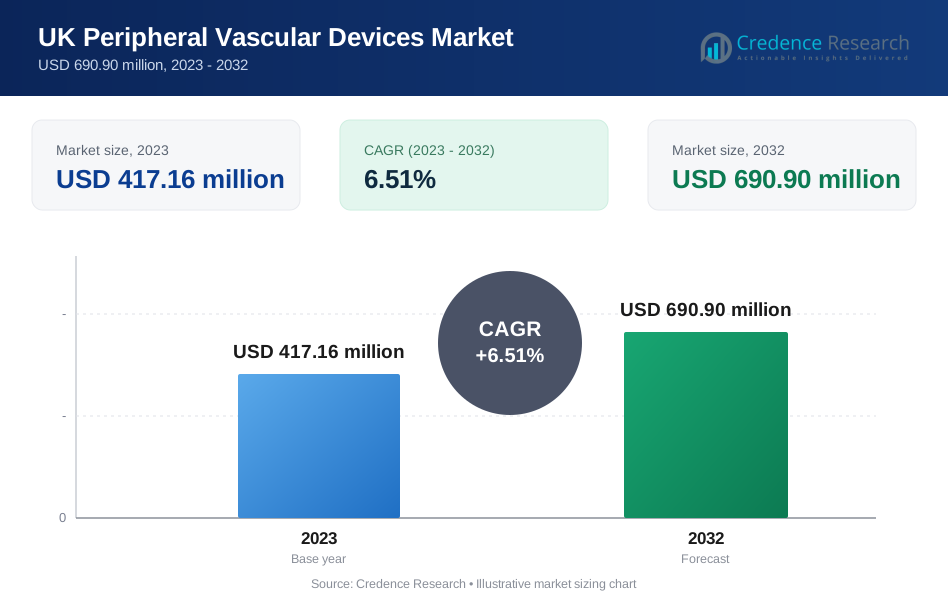
| UK Peripheral Vascular Devices Market Size 2023 | USD 417.16 million |
| UK Peripheral Vascular Devices Market, CAGR | 6.51% |
| UK Peripheral Vascular Devices Market Size 2032 | USD 690.90 million |
Market Overview
The UK Peripheral Vascular Devices Market is projected to grow from USD 417.16 million in 2023 to USD 690.90 million by 2032, at a CAGR of 6.51%.
The growth of the UK Peripheral Vascular Devices market is driven by the increasing prevalence of peripheral artery diseases (PAD) and diabetes, which contribute to higher demand for effective treatment solutions. Advancements in technology have also spurred market expansion, with innovations in minimally invasive procedures and device efficiency offering better patient outcomes. The aging population in the UK, coupled with a rise in lifestyle-related health conditions, further fuels the demand for these devices. Additionally, government initiatives aimed at improving healthcare access and the growing adoption of healthcare technologies by medical professionals are creating a favorable environment for market growth. On the trend front, the market is seeing a shift toward more sophisticated, user-friendly, and cost-effective devices, reflecting the evolving needs of both healthcare providers and patients. These factors, combined with increasing awareness of vascular health, are expected to drive sustained growth in the UK Peripheral Vascular Devices market.
The UK Peripheral Vascular Devices market is driven by key regions such as London, Manchester, Scotland, and Birmingham, each contributing to the increasing demand for advanced vascular treatments. London remains a hub for innovation, housing world-class healthcare institutions and research centers. Manchester follows with its expanding medical facilities and academic influence, while Scotland's strong healthcare system and aging population continue to support growth in vascular treatments. Birmingham's growing infrastructure and demand for minimally invasive procedures further enhance the market landscape. Leading players in the UK market include Medtronic plc, Becton, Dickinson and Company, Biotronik SE & Co. KG, Koninklijke Philips N.V., Boston Scientific Corporation, Terumo Corporation, and Cook Medical, among others. These companies are continuously innovating to offer advanced peripheral vascular devices, driving the growth of the market with cutting-edge technology and improved patient outcomes.
Market Insights
- The UK Peripheral Vascular Devices market is valued at USD 417.16 million in 2023 and is projected to reach USD 690.90 million by 2032, with a CAGR of 6.51%.
- The rising prevalence of peripheral artery disease (PAD) and cardiovascular conditions is driving the demand for peripheral vascular devices.
- Technological advancements in devices such as drug-eluting stents and angioplasty balloons are contributing to market growth.
- The increasing adoption of minimally invasive procedures is shaping the market trends, leading to faster recovery and reduced complications.
- Key players in the market include Medtronic plc, Becton, Dickinson and Company, Biotronik SE & Co. KG, and Boston Scientific Corporation, competing with innovative technologies.
- High regulatory requirements and reimbursement challenges are restraining the growth of the market.
- Regions like London and Manchester dominate the market, with growing demand from hospitals, ambulatory surgical centers, and specialty clinics.
Market Drivers
Advancements in Medical Technology
Technological advancements in medical devices are significantly driving the UK Peripheral Vascular Devices market. The development of next-generation, minimally invasive tools has enhanced treatment outcomes and reduced recovery times, leading to higher adoption rates among healthcare providers. For instance, in March 2024, clinical trials were initiated to evaluate novel vascular covered stents for treating PAD across multiple sites in the UK, Europe, Australia, and New Zealand. Innovations, such as drug-eluting stents and improved balloon catheters, have improved the success rates of procedures and increased patient satisfaction, contributing to the growing demand for these devices in clinical settings.
Supportive Government Initiatives and Healthcare Advancements
Government initiatives aimed at improving healthcare accessibility and promoting advanced medical treatments are also fueling the growth of the UK Peripheral Vascular Devices market. Public health campaigns focused on vascular health and increasing healthcare budgets to support innovative medical technologies are key drivers. For instance, the Health Tech Adoption and Acceleration Fund has provided £30 million to support the implementation of innovative technologies across 42 Integrated Care Systems. These initiatives are creating a conducive environment for market expansion, as hospitals and clinics are increasingly investing in the latest vascular devices to meet the growing demand for effective treatment options.
Growing Prevalence of Peripheral Artery Diseases (PAD)
The rising incidence of peripheral artery diseases (PAD) in the UK is a key driver for the demand for peripheral vascular devices. PAD, which is common among the aging population and those with lifestyle diseases such as diabetes, often requires intervention through devices such as stents, catheters, and balloons. As the number of PAD cases continues to increase, there is a greater need for effective and minimally invasive treatment options, thereby boosting the market for peripheral vascular devices.
Aging Population and Lifestyle Factors
The aging population in the UK plays a crucial role in driving market growth for peripheral vascular devices. As people age, they are more likely to develop vascular-related health issues such as PAD. Moreover, the rise in lifestyle-related risk factors, including smoking, sedentary behavior, and poor diet, has contributed to an increased prevalence of vascular diseases. These factors are creating a larger patient base that requires interventions using peripheral vascular devices, further expanding the market.
Market Trends
Focus on Patient-Centered Solutions
There is a growing trend towards developing patient-centered peripheral vascular devices that prioritize comfort, ease of use, and improved clinical outcomes. Manufacturers are focusing on creating devices that are not only technologically advanced but also provide a better overall experience for patients. Features such as smaller, more ergonomic designs, reduced risk of complications, and improved patient comfort are driving innovations in the market. For instance, the British Journal of Nursing highlights the development of peripheral intravenous catheters (PIVCs) that are designed to minimize discomfort and reduce the risk of infection. As patients increasingly demand higher-quality, personalized care, this trend toward more patient-friendly devices is shaping the development of new products in the peripheral vascular devices sector.
Shift Toward Minimally Invasive Procedures
A prominent trend in the UK Peripheral Vascular Devices market is the increasing preference for minimally invasive procedures. As healthcare providers aim to improve patient outcomes and reduce recovery times, devices that enable less invasive interventions are becoming more popular. These procedures, such as angioplasty and stenting, offer shorter hospital stays, reduced risk of complications, and quicker recovery, making them more appealing to both patients and clinicians. The shift toward minimally invasive solutions is driving demand for more advanced, user-friendly peripheral vascular devices.
Rising Demand for Cost-Effective Solutions
Cost-effectiveness has become an important consideration in the UK Peripheral Vascular Devices market. Healthcare systems are under pressure to reduce costs while maintaining high standards of care. As a result, there is a growing demand for devices that offer high clinical effectiveness at a lower cost. Manufacturers are focusing on creating cost-efficient solutions without compromising on performance, enabling healthcare providers to offer quality care while managing budget constraints. For example, the National Institute for Health and Care Excellence (NICE) has evaluated the cost-effectiveness of various peripheral vascular devices, promoting those that provide significant clinical benefits at lower costs. This trend is contributing to the increasing adoption of peripheral vascular devices in both public and private healthcare sectors.
Integration of Digital Technology
The integration of digital technology into peripheral vascular devices is another key trend shaping the market. Devices with enhanced digital features, such as real-time monitoring, image-guided intervention, and remote diagnostics, are becoming increasingly common. These technological advancements enable healthcare professionals to make more accurate and timely decisions, improving treatment precision. Digital technology also offers patients a better overall experience, with features that allow for improved monitoring of their conditions and outcomes. This trend is enhancing the effectiveness of vascular treatments and expanding the adoption of these devices in healthcare settings.
Market Challenges Analysis
Regulatory and Reimbursement Challenges
One of the significant challenges facing the UK Peripheral Vascular Devices market is the complex regulatory environment and reimbursement issues. The approval process for medical devices, including peripheral vascular devices, involves strict regulatory requirements, which can lead to delays in product launches and increased costs for manufacturers. For instance, obtaining approval from the Medicines and Healthcare products Regulatory Agency (MHRA) can take several months and requires extensive clinical trials. The need for extensive clinical trials and compliance with stringent safety standards can create barriers to entry for new players. Additionally, the reimbursement policies for these devices are evolving, and healthcare providers must navigate changing regulations and funding criteria. This uncertainty in reimbursement structures often impacts the adoption rates of newer devices and may limit market growth, especially for smaller healthcare providers who may face financial constraints.
High Competition and Pricing Pressures
The UK Peripheral Vascular Devices market is highly competitive, with numerous established players and an increasing number of new entrants offering a wide range of products. This intense competition puts pricing pressure on manufacturers, forcing them to find ways to offer high-quality products while reducing costs. While innovation in technology continues, manufacturers must balance the demand for advanced devices with the need to remain price-competitive in a cost-sensitive healthcare environment. As a result, pricing pressure can hinder profit margins, especially when healthcare systems are under financial constraints, impacting the ability of companies to invest in research and development or expand their market share. This competitive landscape presents a continuous challenge for companies to differentiate themselves and maintain sustainable growth.
Market Opportunities
Expansion in Aging Population and Chronic Diseases
A key opportunity for the UK Peripheral Vascular Devices market lies in the growing aging population and the increasing prevalence of chronic diseases, particularly diabetes and cardiovascular conditions. As the elderly population continues to rise, the demand for peripheral vascular devices to treat age-related conditions like peripheral artery disease (PAD) is expected to grow significantly. Additionally, lifestyle-related risk factors such as smoking, sedentary behavior, and poor diet continue to contribute to an increase in vascular health problems. This trend offers manufacturers the opportunity to develop and market advanced devices that address the needs of a larger patient base, ensuring better treatment outcomes and improved quality of life for individuals affected by these conditions.
Advancements in Technology and Healthcare Integration
Another promising opportunity lies in the integration of advanced technologies into peripheral vascular devices. Innovations such as image-guided interventions, real-time monitoring, and digital integration are shaping the future of vascular treatments. These technological advancements present opportunities for device manufacturers to offer more effective, minimally invasive solutions that enhance patient care and improve clinical outcomes. Furthermore, as the UK healthcare system increasingly adopts digital solutions and smart technologies, there is an opportunity to introduce devices that align with these trends. The growing focus on personalized medicine also creates an avenue for the development of tailored, patient-specific vascular devices. Manufacturers that leverage these innovations and integrate them into their product offerings stand to capture a greater share of the growing market, driven by enhanced treatment efficiency and patient satisfaction.
Market Segmentation Analysis:
By Type:
The UK Peripheral Vascular Devices market is categorized by various device types, including angioplasty balloons, angioplasty stents, catheters, guidewires, and others. Among these, angioplasty balloons and angioplasty stents hold the largest market share, driven by their widespread use in treating peripheral artery disease (PAD) through minimally invasive procedures. Angioplasty balloons are designed to dilate narrowed arteries, while stents provide structural support to keep vessels open after angioplasty. Catheters and guidewires, essential for accessing vascular structures, also represent significant market segments due to their crucial role in a variety of interventional procedures. Other devices, such as thrombectomy devices and atherectomy tools, are gaining traction as additional treatment options for PAD. The continued advancement in device technology, offering enhanced performance and patient outcomes, contributes to the growth of these segments, with a shift towards minimally invasive and effective alternatives to traditional surgery.
By End-user:
The UK Peripheral Vascular Devices market is also segmented based on end-users, including hospitals, ambulatory surgical centers (ASCs), and specialty clinics. Hospitals dominate the market due to their comprehensive healthcare services and the higher volume of PAD and vascular procedures performed in these settings. ASCs, however, are experiencing significant growth, driven by their ability to offer cost-effective and efficient treatments in a more outpatient-focused environment. The increasing adoption of minimally invasive procedures in ASCs is contributing to this growth. Specialty clinics focusing on vascular health are another key segment, benefiting from the rising demand for specialized care and targeted treatments for vascular diseases. These clinics are positioned to offer advanced, patient-specific therapies, further expanding the market for peripheral vascular devices. As healthcare systems evolve and demand for specialized, outpatient-based care increases, these end-user segments are expected to grow rapidly.
Segments:
Based on Type:
- Angioplasty Balloons
- Angioplasty Stents
- Catheters
- Guidewires
- Others
Based on End-user:
- Hospitals
- Ambulatory Surgical Centers
- Specialty Clinics
Based on the Geography:
- London
- Manchester
- Birmingham
- Scotland
Regional Analysis
London
London holds approximately 40% of the market share, driven by its advanced healthcare infrastructure, a high concentration of hospitals, and specialized medical centers. London's dominance in the Peripheral Vascular Devices market can be attributed to its status as a global medical hub. With world-class hospitals, specialized clinics, and research centers, the city serves as the epicenter for innovation in the healthcare sector. The high volume of vascular surgeries and interventions conducted in leading healthcare institutions like St Thomas' Hospital and King's College Hospital contributes significantly to the region’s market share. Additionally, London’s aging population, combined with increasing prevalence of lifestyle-related vascular diseases, further fuels the demand for peripheral vascular devices. The integration of advanced medical technologies and personalized treatment options further strengthens the market in this region.
Manchester
Manchester has steadily gained market share in the UK Peripheral Vascular Devices market, currently holding approximately 25% of the market. The city’s prominent medical and academic institutions, such as the Manchester Royal Infirmary, play a key role in advancing research and improving patient outcomes in peripheral vascular disease treatments. With a growing focus on minimally invasive procedures, Manchester’s healthcare system has adopted innovative vascular devices, which has contributed to a rise in the number of interventions performed annually. Additionally, the region’s strategic initiatives aimed at improving healthcare access and quality are helping boost the demand for peripheral vascular devices.
Scotland
Scotland, with a market share of approximately 15%, is also seeing significant growth in the demand for peripheral vascular devices. Scotland’s healthcare system has undergone considerable modernization, with hospitals like the Royal Infirmary of Edinburgh and Glasgow's Queen Elizabeth University Hospital offering specialized vascular treatments. The region’s increasing focus on improving healthcare access, coupled with an aging population, is driving the adoption of advanced vascular devices. With an expanding network of ambulatory surgical centers and specialty clinics, Scotland’s market is poised for continued growth. The rise in peripheral artery disease cases, combined with Scotland’s strong commitment to improving healthcare outcomes, offers significant opportunities for peripheral vascular device manufacturers.
Birmingham
Birmingham, holding a market share of around 10%, is gradually becoming an important player in the UK’s peripheral vascular devices market. The city is home to several leading hospitals, including the Queen Elizabeth Hospital, which offers a comprehensive range of vascular treatments. As the second-largest city in the UK, Birmingham is experiencing an increase in both its aging population and the number of patients seeking vascular interventions. The growing adoption of minimally invasive technologies and the establishment of specialized vascular clinics in the city further contribute to market growth. With an expanding healthcare infrastructure and a rising demand for effective treatment solutions, Birmingham’s market share is expected to grow in the coming years.
Key Player Analysis
- Medtronic plc
- Becton, Dickinson and Company
- Biotronik SE & Co. KG
- Koninklijke Philips N.V.
- Boston Scientific Corporation
- Terumo Corporation
- Cook Medical
- Straub Medical AG
- Eurocor Tech GmbH
- AngioDynamics, Inc.
Competitive Analysis
The UK Peripheral Vascular Devices market is highly competitive, with leading players focusing on product innovation, technological advancements, and strategic collaborations to strengthen their market position. Major companies such as Medtronic plc, Becton, Dickinson and Company, Biotronik SE & Co. KG, Koninklijke Philips N.V., Boston Scientific Corporation, Terumo Corporation, Cook Medical, Straub Medical AG, Eurocor Tech GmbH, and AngioDynamics, Inc. are prominent players in the market. Leading players are continuously investing in research and development to offer cutting-edge solutions such as drug-eluting stents, angioplasty balloons, guidewires, and other minimally invasive devices. For instance, Medtronic has significantly increased its research and development funding, receiving $337 million from Blackstone Life Sciences to advance its diabetes technologies. Technological improvements, such as the integration of digital features like real-time monitoring and image-guided interventions, have become key differentiators. Manufacturers are also expanding their product portfolios to cater to the growing demand for patient-specific treatments and improved clinical outcomes. Companies are leveraging mergers, acquisitions, and collaborations to enhance their market reach and strengthen their position in the competitive landscape. Additionally, efforts to reduce production costs without compromising quality are gaining importance, allowing for more cost-effective solutions to be offered to healthcare providers. The intense competition fosters continuous innovation and better treatment options for patients, ultimately driving the market forward. Companies must also navigate complex regulatory frameworks and reimbursement challenges to ensure widespread adoption of their devices.
Recent Developments
- In December 2024, Terumo Interventional Systems launched the R2P™ NaviCross® peripheral support catheter in the U.S. This catheter is designed for enhanced performance in radial-to-peripheral procedures, addressing the need for advanced tools in treating PAD and critical limb ischemia.
- In October 2024, BD was highlighted as a key player in the peripheral vascular devices market forecast report. While specific recent product launches were not detailed, BD's ongoing commitment to R&D and innovation positions it strongly within this competitive landscape.
- In June 2023, Cook Medical announced new size options for its Advance Serenity PTA Balloon Catheter, used for treating peripheral artery disease (PAD).
- In June 2023, Biotronik launched the Oscar multifunctional peripheral catheter, designed for dilation of stenotic segments in peripheral vessels. The device features user-adjustable components and aims to improve procedural efficiency in treating peripheral arterial disease.
Market Concentration & Characteristics
The UK Peripheral Vascular Devices market is moderately concentrated, with a mix of established global players and emerging companies vying for market share. While a few large companies dominate the landscape, the presence of numerous smaller players and specialized manufacturers creates a competitive environment. These dominant players focus on innovation, research and development, and expanding their product portfolios to include a wide range of peripheral vascular devices, such as angioplasty balloons, stents, catheters, and guidewires. The market characteristics are marked by a high level of technological advancement, with many companies investing in minimally invasive devices that offer better patient outcomes, shorter recovery times, and reduced complications. Additionally, regulatory standards and reimbursement policies heavily influence market dynamics, as companies must comply with strict requirements to gain market approval and widespread adoption. There is a growing trend towards personalized medicine and the integration of digital technologies into peripheral vascular devices, allowing for more precise and effective treatments. The market is also witnessing the emergence of advanced materials, such as drug-eluting stents, which further contribute to device innovation. Despite the dominance of large companies, smaller players continue to challenge the status quo, fostering healthy competition and pushing the market towards continuous technological improvement and improved clinical solutions.
Report Coverage
The research report offers an in-depth analysis based on Type, End-user and Geography. It details leading market players, providing an overview of their business, product offerings, investments, revenue streams, and key applications. Additionally, the report includes insights into the competitive environment, SWOT analysis, current market trends, as well as the primary drivers and constraints. Furthermore, it discusses various factors that have driven market expansion in recent years. The report also explores market dynamics, regulatory scenarios, and technological advancements that are shaping the industry. It assesses the impact of external factors and global economic changes on market growth. Lastly, it provides strategic recommendations for new entrants and established companies to navigate the complexities of the market.
Future Outlook
- The UK Peripheral Vascular Devices market is expected to grow significantly due to the increasing prevalence of cardiovascular diseases and peripheral artery disease (PAD).
- Technological advancements in minimally invasive procedures will drive demand for more efficient and effective vascular devices.
- The adoption of drug-eluting stents and bioresorbable scaffolds will revolutionize treatment options and patient outcomes.
- Increasing investment in research and development will lead to innovative device designs and improved functionalities.
- The aging population in the UK will continue to fuel the need for advanced vascular treatment options.
- Growing healthcare expenditure and improved access to healthcare services will contribute to market expansion.
- Regulatory frameworks are likely to evolve, creating both opportunities and challenges for manufacturers in device approval and market entry.
- The rise of outpatient care and ambulatory surgical centers will increase demand for cost-effective, minimally invasive vascular devices.
- Digital integration and real-time monitoring in devices will enhance treatment accuracy and patient care.
- Companies will focus on expanding their product portfolios and forming strategic partnerships to maintain competitive advantages in the evolving market.
Request a Free Sample
Fill in your details and we'll send you a free sample report.
- Sample data tables & charts
- Research methodology
Need a Custom Version of This Report?
Tailor the scope, geography, or segments to your exact requirements.
- Custom geography or segment scope
- Direct access to our analyst team
Frequently Asked Questions
What is the current size of the UK Peripheral Vascular Devices market?
What factors are driving the growth of the UK Peripheral Vascular Devices market?
What are the key segments within the UK Peripheral Vascular Devices market?
What are some challenges faced by the UK Peripheral Vascular Devices market?
Table of Content
Chapter 1. Report Introduction
- 1.1 Report Description & Purpose
- 1.1.1 Report Title & Market Definition
- 1.1.2 Unique Selling Propositions (USP) & Key Differentiators
- 1.1.3 Value Proposition for Stakeholders
- 1.2 Research Objectives
- 1.2.1 Market Sizing Objectives (Volume & Revenue)
- 1.2.2 Segmentation Objectives
- 1.2.3 Competitive Intelligence Objectives
- 1.2.4 Forecast & Scenario Objectives
- 1.3 Report Scope
- 1.3.1 UK Peripheral Vascular Devices Scope – Types & Subtypes Covered
- 1.3.2 Geographic Scope – Regions & Countries Covered
- 1.3.3 Historical Period, Base Year & Forecast Period (2023; forecast to 2032)
- 1.3.4 Inclusions & Exclusions
- 1.4 HS Code & Classification Framework
- 1.5 Currency, Units & Pricing Basis
- 1.6 Target Stakeholders
- 1.7 Limitations & Assumptions
Chapter 2. Executive Summary
- 2.1 Global UK Peripheral Vascular Devices Market Snapshot
- 2.1.1 Market Size – Historical (2023) & Forecast (2023-2032) (2023: USD 417.16 million → 2032: USD 690.90 million)
- 2.1.2 Volume & Revenue – Global Totals
- 2.1.3 Key Market Highlights – Top Five Facts
- 2.2 UK Peripheral Vascular Devices Market Segmentation Snapshot
- 2.2.1 Market Split by Region – 2023 vs. 2032
- 2.3 Competitive Snapshot
- 2.3.1 Top 10 Players by Revenue Share – 2023
- 2.3.2 Top 10 Players by Volume Share – 2023
- 2.3.3 Recent Strategic Developments (18-Month Summary)
- 2.4 Key Investment Highlights & Strategic Conclusions
Chapter 3. UK Peripheral Vascular Devices Market Dynamics & Industry Analysis
- 3.1 Market Overview & Context
- 3.1.1 UK Peripheral Vascular Devices Market Position in the Broader Automotive Value Chain
- 3.1.2 OEM vs. Replacement Market Dynamics
- 3.1.3 Market Maturity & Development Stage by Region
- 3.2 UK Peripheral Vascular Devices Market Drivers
- 3.3 UK Peripheral Vascular Devices Market Restraints & Challenges
- 3.4 UK Peripheral Vascular Devices Market Opportunities
- 3.5 Porter's Five Forces Analysis
- 3.5.1 Threat of New Entrants
- 3.5.2 Bargaining Power of Suppliers
- 3.5.3 Bargaining Power of Buyers
- 3.5.4 Threat of Substitutes
- 3.5.5 Competitive Rivalry – Intensity Assessment
- 3.6 UK Peripheral Vascular Devices Value Chain Analysis
- 3.6.1 Upstream – Raw Material/Input Suppliers
- 3.6.1.1 Raw Material/Input 1
- 3.6.1.2 Raw Material/Input 2
- 3.6.1.3 Raw Material/Input 3
- 3.6.2 Midstream – Production/Manufacturing/Service Delivery
- 3.6.2.1 Production/Process Overview
- 3.6.2.2 Key Facility Locations & Capacity by Manufacturer
- 3.6.3 Downstream – Distribution & End Consumer
- 3.6.3.1 Primary Channel – B2B/OEM
- 3.6.3.2 Secondary Channels – Dealer, Retail, Online, Direct
- 3.6.4 Value Chain Profitability Analysis
- 3.6.1 Upstream – Raw Material/Input Suppliers
- 3.7 PESTEL Analysis
- 3.7.1 Political Factors
- 3.7.2 Economic Factors
- 3.7.3 Social Factors
- 3.7.4 Technological Factors
- 3.7.5 Environmental Factors
- 3.7.6 Legal Factors
- 3.8 UK Peripheral Vascular Devices Supply Chain Analysis
- 3.8.1 Raw Material/Input Supply Risk Assessment
- 3.8.2 Manufacturing Concentration Risk (Geographic Exposure)
- 3.8.3 Trade Disruption Impact Analysis
- 3.9 Regulatory & Policy Landscape
Note: The regulatory and policy landscape section covers regulations based on their applicability to the market, UK Peripheral Vascular Devices category, geography, and scope of the study. Only regulatory frameworks with a material impact on operations, compliance, trade, sustainability, or market access are analyzed in detail.
Chapter 4. Key Investment Pockets & Opportunity Analysis
- 4.1 UK Peripheral Vascular Devices Market Attractiveness Analysis
- 4.1.1 By Region – Investment Attractiveness Matrix (Volume × CAGR)
- 4.2 Absolute Revenue Growth Opportunity
- 4.2.1 By Region – Absolute USD Growth Through 2032
- 4.3 Incremental Volume Opportunity
- 4.3.1 By Region – Incremental Volume Through 2032
- 4.3.2 Segment – Incremental Volume
- 4.4 Emerging Submarket Opportunity Deep Dive (Subject to Applicability)
- 4.5 Emerging Market Opportunity Scorecards
- 4.5.1 United States
- 4.5.2 Europe
- 4.5.3 Asia
- 4.5.4 Middle East & Africa
Note: Emerging Market Opportunity Scorecards will be included based on relevance and strategic importance. Regions listed are indicative and may vary depending on data availability and market dynamics.
Chapter 5. UK Peripheral Vascular Devices Import-Export Analysis & Trade Flows
- 5.1 Global Trade Overview
- 5.1.1 Global Export Value by Country (2023)
- 5.1.2 Global Export Volume by Country (2023)
- 5.1.3 Global Import Value by Country (2023)
- 5.1.4 Global Import Volume by Country (2023)
- 5.1.5 Net Trade Balance by Country (2023)
- 5.2 Export Analysis – Segment
- 5.2.1 Type 1 (HS Code)
- 5.2.2 Type 2 (HS Code)
- 5.2.3 Type 3 (HS Code)
- 5.2.4 Type 4 (HS Code)
- 5.2.5 Type 5 (HS Code)
- 5.3 Import Analysis – Segment
- 5.3.1 Type 1 (HS Code)
- 5.3.2 Type 2 (HS Code)
- 5.3.3 Type 3 (HS Code)
- 5.3.4 Type 4 (HS Code)
- 5.3.5 Type 5 (HS Code)
- 5.4 Average Unit Trade Prices
- 5.4.1 Average Export Price – Segment & Country
- 5.4.2 Average Import Price – Segment & Source Country
- 5.4.3 Price Trends (2023)
- 5.5 Key Trade Route Analysis
- 5.5.1 Trade Route 1
- 5.5.2 Trade Route 2
- 5.5.3 Trade Route 3
- 5.5.4 Trade Route 4
- 5.5.5 Trade Route 5
- 5.6 Trade Policy Impact Assessment
- 5.6.1 US Anti-Dumping & Section 301 Tariffs
- 5.6.2 EU Customs Union Impact
- 5.6.3 Major Free Trade Agreements
- 5.6.4 USMCA Rules of Origin
Note: Trade policy analysis will be included only where relevant to the UK Peripheral Vascular Devices market.
Chapter 6. Competitive Landscape & Company Benchmarking
- 6.1 UK Peripheral Vascular Devices Market Concentration & Structure
- 6.1.1 Herfindahl-Hirschman Index (HHI) – vs. 2023
- 6.1.2 Tier 1, Tier 2 & Tier 3 Market Structure
- 6.1.3 Global, Regional & Local Player Dynamics
- 6.2 UK Peripheral Vascular Devices Market Share Analysis – 2023
- 6.2.1 Global Revenue Share by Company
- 6.2.2 Global Volume Share by Company
- 6.2.3 Regional Revenue Share
- 6.2.4 Market Share Evolution ( vs. 2023)
- 6.2.5 OEM Segment Share by Company
- 6.2.6 Replacement Segment Share by Company
- 6.3 Production/Delivery Capacity & Facility Analysis
- 6.3.1 Global Installed Capacity
- 6.3.2 Capacity Utilization Rates
- 6.3.3 Production/Output Volume
- 6.3.4 Facility Locations & Capacity Map
- 6.3.5 Planned Capacity Additions
- 6.4 UK Peripheral Vascular Devices Competitive Benchmarking Matrix
- 6.4.1 Revenue, Volume, CAGR & Profitability Comparison
- 6.4.2 Channel Revenue Mix
- 6.4.3 Geographic Revenue Exposure
- 6.4.4 R&D Intensity
- 6.4.5 Sustainability Maturity
- 6.5 Strategic Developments in UK Peripheral Vascular Devices (Last 24 Months)
- 6.5.1 Mergers, Acquisitions & Divestments
- 6.5.2 New UK Peripheral Vascular Devices Launches
- 6.5.3 Facility Expansions
- 6.5.4 Strategic Alliances, Joint Ventures & Partnerships
- 6.5.5 Distribution Expansion & Market Entry
- 6.5.6 Sustainability & ESG Initiatives
- 6.6 Competitive Strategy Mapping
- 6.6.1 Leader, Challenger, Follower & Niche Classification
- 6.6.2 Pricing Strategy Comparison
- 6.6.3 Channel Strategy Matrix
Note: Strategic developments are included based on their materiality and the availability of reliable information.
Chapter 7. Global UK Peripheral Vascular Devices Market – By Distribution Channel
- 7.1 Segment Overview
- 7.1.1 Volume & Revenue Split by Channel (2023 & 2032)
- 7.1.2 Channel Mix Evolution (2023-2032)
Chapter 8. Regional Market Analysis – Global Overview
- 8.1 Global Regional Overview
- 8.1.1 Regional Volume Share
- 8.1.2 Regional Revenue Share
- 8.1.3 Regional Volume by Region
- 8.1.4 Regional Revenue by Region
- 8.1.5 Regional Forecast Through 2032
- 8.2 Cross-Regional Segment Analysis
- 8.2.1 By Distribution Channel
- 8.2.2 By Brand/Price Tier
Chapter 9. North America UK Peripheral Vascular Devices Market
- 9.1 United States
- 9.2 Canada
- 9.3 Mexico
Chapter 10. Europe UK Peripheral Vascular Devices Market
- 10.1 Germany
- 10.2 France
- 10.3 Italy
- 10.4 United Kingdom
- 10.5 Spain
- 10.6 Poland
- 10.7 Russia
- 10.8 Netherlands
- 10.9 Belgium
- 10.10 Sweden
- 10.11 Denmark
- 10.12 Norway
- 10.13 Rest of Europe
Chapter 11. Asia Pacific UK Peripheral Vascular Devices Market
- 11.1 China
- 11.2 India
- 11.3 Japan
- 11.4 South Korea
- 11.5 Thailand
- 11.6 Indonesia
- 11.7 Vietnam
- 11.8 Malaysia
- 11.9 Australia
- 11.10 Rest of Asia Pacific
Chapter 12. Latin America UK Peripheral Vascular Devices Market
- 12.1 Brazil
- 12.2 Argentina
- 12.3 Colombia
- 12.4 Chile
- 12.5 Rest of Latin America
Chapter 13. Middle East UK Peripheral Vascular Devices Market
- 13.1 Saudi Arabia
- 13.2 United Arab Emirates
- 13.3 Turkey
- 13.4 Israel
- 13.5 Iran
- 13.6 Rest of the Middle East
Chapter 14. Africa UK Peripheral Vascular Devices Market
- 14.1 South Africa
- 14.2 Egypt
- 14.3 Nigeria
- 14.4 Morocco
- 14.5 Rest of Africa
Chapter 15. UK Peripheral Vascular Devices Company Profiles
- 15.1 [Company 01]
- 15.1.1 Company Overview
- 15.1.2 Key Management Personnel
- 15.1.3 Products & Services Portfolio
- 15.1.4 Financial Performance
- 15.1.5 Key Market Focus & Geographic Presence
- 15.1.6 Recent Developments & Strategic Initiatives
Note: The company profile list is preliminary and may change based on research findings, market developments, data availability, and client requirements.
Chapter 16. Appendices
- Appendix A – List of Abbreviations & Acronyms
- Appendix B – Industry Classification Code Reference – Full Series
- Appendix C – Production & Capacity Data Tables
- Appendix D – End-Use & Demand Base Tables
- Appendix E – Consumption & Replacement Rate Assumptions
- Appendix F – ASP Reference Tables
- Appendix G – Manufacturing & Facility Database
- Appendix H – Import-Export Data Tables
- Appendix I – Regulatory Summary Tables
- Appendix J – Primary Research Participant List (Anonymized)
- Appendix K – Primary Research Questionnaire Framework
- Appendix L – Data Sources & Bibliography
- Appendix M – Market Size Divergence & Source Comparison
Chapter 17. Research Methodology
- 17.1 Research Framework & Philosophy
- 17.2 Secondary Research – Sources, Hierarchy & Data Extraction
- 17.3 Data Modeling – Bottom-Up & Top-Down Market Sizing
- 17.4 Primary Research – Stakeholder Framework, LOI & Sample Sizes
- 17.5 Forecast Methodology – Regression, Scenario & Sensitivity Analysis
- 17.6 Quality Control – Four-Layer Validation Framework
- 17.7 Limitations & Standard Assumptions
- 17.8 Disclaimer
