
| REPORT ATTRIBUTE | DETAILS |
|---|---|
| Historical Period | 2019-2022 |
| Base Year | 2023 |
| Forecast Period | 2024-2032 |
| Vietnam Commercial Amino Acids Market Size 2024 | USD 7.7 Million |
| Vietnam Commercial Amino Acids Market, CAGR | 7.09% |
| Vietnam Commercial Amino Acids Market Size 2032 | USD 13.32 Million |
Market Overview:
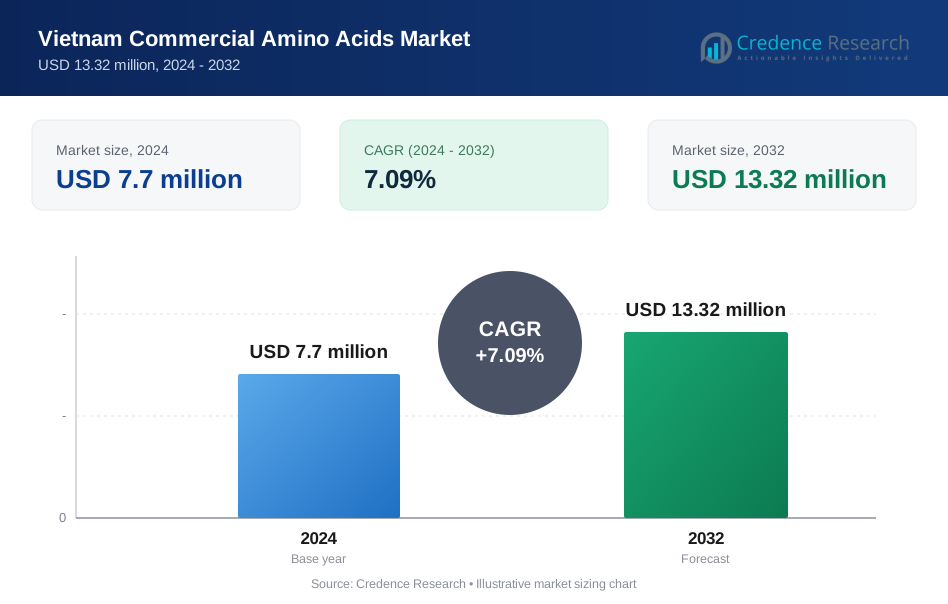
The Vietnam Commercial Amino Acids Market is projected to grow from USD 7.7 million in 2024 to an estimated USD 13.32 million by 2032, with a compound annual growth rate (CAGR) of 7.09% from 2024 to 2032.
Several key factors propel the Vietnam Commercial Amino Acids Market. The growing health-conscious consumer base in Vietnam has fueled the demand for dietary supplements and functional foods enriched with amino acids like lysine, glutamine, and leucine, known for their role in muscle recovery, immune support, and overall health enhancement. Additionally, Vietnam's expanding livestock and aquaculture industries have driven the adoption of amino acids in animal feed to improve nutritional value, promote growth, and ensure high-quality meat production. The pharmaceutical sector also contributes to market growth, leveraging amino acids for therapeutic applications in drugs for metabolic disorders and nutritional deficiencies. Furthermore, the development of cost-effective and sustainable amino acid production methods has enhanced the market's accessibility, particularly for small and medium-sized enterprises (SMEs).
The Vietnamese market for amino acids is witnessing substantial growth across key regions, with urban centers like Ho Chi Minh City and Hanoi leading the demand due to their higher disposable incomes and health awareness. In these areas, the adoption of amino acids in dietary supplements and health-oriented products is particularly strong. Rural regions are also emerging as significant contributors, driven by the growing penetration of the livestock and aquaculture industries, supported by government initiatives promoting sustainable agricultural practices. The export market further enhances Vietnam's position, as locally manufactured amino acids cater to international demand, particularly in Southeast Asia. With rising investments in production infrastructure and innovation, Vietnam is expected to strengthen its regional and global standing in the commercial amino acids market.
Market Insights:
- The Vietnam Commercial Amino Acids Market is projected to grow from USD 7.7 million in 2024 to USD 13.32 million by 2032, with a CAGR of 7.09%, highlighting robust expansion potential.
- Urban regions, including Ho Chi Minh City and Hanoi, dominate the market with over 45% of the share, driven by higher disposable incomes and awareness of dietary supplements and functional foods.
- Rural areas, contributing approximately 30% of the market, rely on amino acids for livestock and aquaculture, supported by government initiatives promoting sustainable practices.
- The pharmaceutical sector is leveraging amino acids for therapeutic uses, particularly in drugs for metabolic disorders and nutritional deficiencies, spurred by rising health concerns.
- Increasing consumer preference for plant-based amino acids and personalized nutrition solutions is creating new opportunities for innovation and market penetration.
- Challenges such as high production costs and dependency on imported raw materials hinder the competitiveness of small and medium enterprises (SMEs).
- Technological advancements, including efficient fermentation and enzymatic processes, are enhancing production capabilities, reducing costs, and fostering sustainable growth in the market.
Market Drivers:
Growing Health Awareness and Demand for Functional Foods
The increasing focus on health and wellness among Vietnamese consumers is driving the demand for functional foods and dietary supplements enriched with amino acids. Amino acids such as lysine, leucine, and glutamine are widely recognized for their benefits in muscle recovery, immune system enhancement, and overall well-being. With a shift toward preventive healthcare and fitness-oriented lifestyles, consumers are actively seeking nutritional products that offer long-term health benefits. This trend has spurred the growth of amino acid applications in the food and beverage industry, For instance, Nutifood has introduced Blue GROWPLUS+, a product designed to help children gain weight effectively through high-quality protein and amino acids
Expansion of Livestock and Aquaculture Industries
Vietnam's robust livestock and aquaculture sectors are significant drivers of the commercial amino acids market. Amino acids are essential feed additives that enhance animal growth, improve feed efficiency, and promote higher-quality meat and seafood production. The country’s rising meat consumption, coupled with the growing export demand for Vietnamese seafood, has intensified the need for high-quality feed solutions. Amino acids like methionine and lysine play a critical role in meeting these nutritional demands, as they contribute to optimal animal health and productivity. For instance, Ajinomoto has developed AjiPro-L, a lysine formulation that reduces nitrous oxide emissions from dairy cow excrement and urine by about 25%, while also improving digestion and reducing feed costs for farmers.
Increasing Applications in the Pharmaceutical Industry
The pharmaceutical sector in Vietnam is leveraging the functional and therapeutic properties of amino acids, further driving market growth. Amino acids are widely used in the formulation of drugs for treating metabolic disorders, nutritional deficiencies, and chronic illnesses. The rising prevalence of lifestyle-related diseases, such as diabetes and cardiovascular conditions, has increased the demand for amino acid-based therapeutic products. For instance, Ajinomoto has launched No-katsu Seven Amino in Japan, which leverages the effects of seven essential amino acids to maintain attention and cognitive flexibility, supporting positive feelings and cognitive health.
Technological Advancements and Sustainable Production
Technological advancements in amino acid production have significantly contributed to the market's growth. Innovations in fermentation and enzymatic processes have improved production efficiency, reduced costs, and minimized environmental impact. These sustainable manufacturing practices align with Vietnam's increasing focus on eco-friendly industries, making amino acid products more appealing to environmentally conscious businesses and consumers. The adoption of advanced technologies has also facilitated the development of customized amino acid solutions tailored to specific industries, such as animal nutrition, food fortification, and pharmaceuticals, further enhancing their market penetration and acceptance. For instance, Ajinomoto uses advanced fermentation technology to produce amino acids sustainably. This process involves custom microbial strains and cutting-edge bioreactors to ensure precise control over fermentation conditions, enhancing production efficiency and reducing environmental impact.
Market Trends:
Rising Popularity of Plant-Based Amino Acids
The growing preference for plant-based diets has led to increased demand for plant-derived amino acids in Vietnam. Consumers seeking sustainable and vegan-friendly options are driving the adoption of amino acids sourced from soy, peas, and other plant-based materials. This trend aligns with the global shift toward cleaner and more ethical food production practices. For instance, Vinasoy, a leading soymilk producer in Vietnam, has been at the forefront of this movement, offering products rich in soy proteins and isoflavones, which are natural amino acids beneficial for health. Manufacturers in Vietnam are responding by investing in the production of plant-based amino acids to cater to a broader customer base. These products are increasingly used in fortified foods and beverages, appealing to both health-conscious and environmentally aware consumers.
Integration of Amino Acids in Innovative Functional Beverages
Functional beverages infused with amino acids are gaining traction in Vietnam’s food and beverage sector. Products such as protein shakes, energy drinks, and recovery beverages are incorporating amino acids like branched-chain amino acids (BCAAs) to enhance their health benefits. This trend is driven by the increasing consumer demand for on-the-go nutritional solutions, particularly among urban populations with busy lifestyles. For example, Miss Universe has launched M*U Beverage, which includes functional drinks made with natural ingredients and amino acids to support cognitive function and focus. Local and international beverage companies are launching innovative products tailored to the Vietnamese market, leveraging the growing awareness of amino acid benefits to attract health-focused consumers.
Emergence of Personalized Nutrition Solutions
The adoption of personalized nutrition is transforming the commercial amino acids market in Vietnam. With advancements in biotechnology and data analytics, consumers can now access tailored dietary solutions based on their unique nutritional needs. Amino acid supplements are at the forefront of this movement, offering targeted benefits for muscle recovery, cognitive enhancement, and metabolic health. For instance, Companies like Prinova are providing customized amino acid blends to meet the specific requirements of consumers, ensuring that the products align with individual health goals. Companies are capitalizing on this trend by developing customized amino acid formulations, marketed through e-commerce platforms and health-focused retail outlets. This shift is redefining how amino acids are consumed, making them more accessible and appealing to individual preferences.
Increasing Export Opportunities and Regional Collaboration
Vietnam’s amino acid industry is expanding its footprint in the international market, driven by regional trade agreements and growing global demand for high-quality amino acids. Vietnamese manufacturers are establishing partnerships with international companies to enhance production capacity and meet stringent export standards. For instance, ADM Animal Nutrition has announced new product registrations for PROPLEX® DY in the Philippines and Vietnam, showcasing the country's growing role in the global amino acid supply chain. The growing reputation of Vietnamese products in the Southeast Asian region is creating opportunities for cross-border collaboration, particularly in the animal feed and pharmaceutical sectors. This trend not only boosts the market’s global competitiveness but also encourages the adoption of advanced technologies and production practices to maintain quality and sustainability.
Market Challenges Analysis:
High Production Costs and Limited Raw Material Availability
One of the significant restraints in the Vietnam Commercial Amino Acids Market is the high production cost associated with advanced manufacturing processes. Producing amino acids involves complex fermentation and enzymatic methods, which require significant investment in technology and expertise. Additionally, the limited availability of high-quality raw materials within Vietnam increases the dependency on imports, further escalating production costs. These factors pose challenges for local manufacturers, particularly small and medium-sized enterprises (SMEs), in maintaining competitive pricing and profitability.
Stringent Regulatory Frameworks
Navigating the stringent regulatory landscape is a critical challenge for the amino acids market in Vietnam. Compliance with international quality and safety standards, especially for products intended for export, requires substantial investment in certifications, testing, and quality assurance processes. Furthermore, evolving regulations in the food, pharmaceutical, and animal feed sectors can lead to operational complexities and delays in product approvals. These regulatory hurdles may hinder the market's growth, particularly for smaller players with limited resources to address compliance requirements effectively.
Market Fragmentation and Competition
The Vietnam amino acids market is highly fragmented, with intense competition among domestic manufacturers and international players. The presence of well-established global companies with advanced technologies and extensive distribution networks creates significant challenges for local businesses to gain market share. This competitive environment often results in price wars, which can impact profit margins and limit the scope for innovation and expansion among smaller companies.
Lack of Consumer Awareness in Rural Areas
While urban centers in Vietnam demonstrate high awareness and adoption of amino acid-enriched products, rural regions face challenges due to limited consumer education and access. The lack of understanding regarding the benefits of amino acids, combined with constrained distribution channels in remote areas, restricts market penetration. Addressing these gaps through targeted awareness campaigns and improved supply chain infrastructure remains a challenge for stakeholders aiming to unlock the market’s full potential.
Market Opportunities:
The Vietnam Commercial Amino Acids Market offers significant growth opportunities driven by the increasing adoption of amino acids across diverse industries. In the food and beverage sector, the rising consumer preference for functional foods and health supplements presents a lucrative avenue for manufacturers to innovate and cater to evolving dietary trends. With growing awareness of amino acids' health benefits, such as enhanced muscle recovery, improved immunity, and metabolic health, companies can expand their product portfolios to include fortified food products, functional beverages, and dietary supplements. Furthermore, the expanding middle-class population with higher disposable incomes in Vietnam creates a robust consumer base willing to invest in premium health-oriented products, enhancing the market's growth potential.
Vietnam's strong presence in the livestock and aquaculture sectors also opens up significant opportunities for amino acid manufacturers. The increasing demand for high-quality animal protein and seafood, both domestically and for export, underscores the need for amino acids in animal feed formulations. Government initiatives promoting sustainable agricultural practices and investments in modern farming technologies further amplify this opportunity. Additionally, Vietnam's strategic location within Southeast Asia positions it as a hub for regional trade, facilitating the export of amino acid products to neighboring countries. Collaborations with global players and advancements in production technologies can help local manufacturers enhance their competitiveness, improve product quality, and tap into the growing international demand for amino acids across various applications.
Market Segmentation Analysis:
The Vietnam Commercial Amino Acids Market is segmented by type, application, end-use, and form, reflecting its diverse applications across industries.
By Type, the market includes key amino acids such as L-Glutamine, L-Leucine, L-Tryptophan, L-Carnitine, and L-Arginine. Among these, L-Glutamine and L-Leucine are highly sought after due to their significant roles in muscle recovery, immune function, and protein synthesis, driving their adoption in dietary supplements and healthcare products.
By Application, the market spans animal feed, food and beverages, pharmaceuticals, cosmetics, and nutraceuticals. The animal feed segment dominates due to Vietnam’s robust livestock and aquaculture industries, which rely heavily on amino acids to enhance feed efficiency and productivity. The food and beverage sector is also a key contributor, with growing consumer demand for functional foods and fortified products.
By End-use, the market is categorized into livestock, pet food, human nutrition, personal care, and healthcare. Livestock accounts for a substantial share, driven by rising meat consumption and export opportunities. Human nutrition is another significant segment, fueled by increasing health-consciousness and the growing popularity of dietary supplements.
By Form, amino acids are available in powder, liquid, and granule forms. Powder dominates this segment due to its ease of handling, storage, and compatibility with various applications, particularly in animal feed and food products. Liquid forms are gaining popularity in nutraceuticals and pharmaceuticals, where precision and quick absorption are critical.
Segmentation:
By Type:
- L-Glutamine
- L-Leucine
- L-Tryptophan
- L-Carnitine
- L-Arginine
By Application
- Animal Feed
- FoodBeverage
- Pharmaceuticals
- Cosmetics
- Nutraceuticals
By End-use
- Livestock
- Pet Food
- Human Nutrition
- Personal Care
- Healthcare
By Form
- Powder
- Liquid
- Granules
Regional Analysis:
The Vietnam Commercial Amino Acids Market exhibits significant growth potential across its key regions, driven by varying industrial and consumer demands. The market is predominantly segmented into urban and rural regions, each contributing uniquely to its development. Ho Chi Minh City and Hanoi, accounting for approximately 45% of the market share, dominate the demand for amino acids due to their urbanized infrastructure and higher income levels. These cities lead in the adoption of dietary supplements and functional foods, spurred by a growing focus on health and wellness. The presence of modern retail outlets and an increasing number of fitness centers in these urban hubs further drives the demand for amino acid-enriched products.
In contrast, rural regions, which make up around 30% of the market share, are primarily driven by the agricultural and aquaculture industries. Vietnam’s thriving livestock and seafood sectors in provinces like Dong Nai, Binh Duong, and the Mekong Delta heavily rely on amino acids as essential feed additives. The growing emphasis on sustainable farming practices, supported by government initiatives, has increased the adoption of amino acids to enhance animal nutrition and productivity. However, limited consumer awareness in these areas poses a challenge to the penetration of amino acids in human nutrition products, highlighting an opportunity for targeted educational campaigns and distribution strategies.
The remaining 25% of the market share comes from export-oriented production and industrial applications concentrated in coastal regions and industrial zones such as Hai Phong and Da Nang. These regions benefit from Vietnam’s strategic location within Southeast Asia, making them key players in amino acid exports to neighboring countries. Industrial applications, such as amino acids used in pharmaceuticals and cosmetics, are also gaining traction, supported by advancements in manufacturing technologies and the establishment of partnerships with international players.
Key Player Analysis:
- Bluestar Adisseo Co., Ltd
- Phibro Animal Health Corporation
- Meihua Holdings Group Co., Ltd
- Kemin Industries, Inc
- Ajinomoto
- RSP amino acids
- Biaffin
- Synthetech
- Bluestar Adisseo Co
- CJ CheilJedang Corp
- Zhejiang Medicine
- Kyowa Hakko Bio
- Nutraceutics
- Evonik Industries
Competitive Analysis:
The Vietnam Commercial Amino Acids Market is characterized by intense competition among domestic and international players, driven by the growing demand for amino acids across various sectors. Prominent global companies, such as Ajinomoto Co., Evonik Industries, and Cargill Inc., dominate the market with their advanced production technologies, extensive product portfolios, and well-established distribution networks. These players leverage their expertise to cater to both local and export markets, setting high standards for product quality and innovation. For instance, Ajinomoto Co., Inc. has been actively expanding its presence in Vietnam through strategic partnerships. Local manufacturers, on the other hand, focus on cost-effective production to meet domestic needs, particularly in the agricultural and aquaculture industries. However, they face challenges in competing with multinational corporations in terms of scale and technological capabilities. Strategic partnerships, investments in advanced manufacturing processes, and compliance with international quality standards are enabling domestic companies to enhance their competitiveness. Overall, the market’s dynamic landscape fosters continuous innovation and collaboration among stakeholders.
Recent Developments:
- In August 2024, Allozymes, a leading innovator in enzyme discovery and engineering, announced a strategic partnership with Adisseo, one of the world's leading animal nutrition companies. This collaboration aims to develop groundbreaking bioprocesses for animal feed ingredient production, marking a significant step towards a more sustainable future for the animal feed industry.
Market Concentration & Characteristics:
The Vietnam Commercial Amino Acids Market exhibits a moderately concentrated structure, with a mix of established global players and emerging local manufacturers. Key international companies, such as Ajinomoto Co., Evonik Industries, and Archer Daniels Midland Company, hold a significant share of the market, leveraging their technological advancements and extensive supply chains to dominate high-value segments like dietary supplements and functional foods.
Local manufacturers focus on catering to specific domestic needs, particularly in the agricultural and aquaculture sectors, where cost-effective amino acid solutions are crucial. Despite their smaller scale, these companies are gaining traction through investments in modern production methods and regional collaborations. The market is characterized by a growing emphasis on sustainability, product innovation, and adherence to international quality standards. This balance of global and local competition fosters a dynamic environment, driving continuous improvements in product offerings and manufacturing efficiency.
Report Coverage:
The research report offers an in-depth analysis based on By Type, By Application, By End-use and By Form It details leading market players, providing an overview of their business, product offerings, investments, revenue streams, and key applications. Additionally, the report includes insights into the competitive environment, SWOT analysis, current market trends, as well as the primary drivers and constraints. Furthermore, it discusses various factors that have driven market expansion in recent years. The report also explores market dynamics, regulatory scenarios, and technological advancements that are shaping the industry. It assesses the impact of external factors and global economic changes on market growth. Lastly, it provides strategic recommendations for new entrants and established companies to navigate the complexities of the market.
Future Outlook:
- The market is expected to witness robust growth, driven by rising consumer demand for health-focused dietary supplements and functional foods.
- Expansion in the livestock and aquaculture industries will continue to drive the use of amino acids as essential feed additives.
- Increased investments in sustainable and cost-efficient production technologies will enhance local manufacturers' competitiveness.
- Collaborations between domestic and international players are likely to foster technological advancements and product innovation.
- Growing export opportunities, especially to Southeast Asian countries, will strengthen Vietnam's position in the regional market.
- The pharmaceutical sector will expand its use of amino acids for therapeutic and metabolic disorder treatments.
- Consumer awareness campaigns in rural areas are expected to unlock untapped potential for amino acid-enriched products.
- Advancements in personalized nutrition solutions will open new avenues for customized amino acid formulations.
- Government initiatives supporting sustainable agricultural practices will bolster amino acid adoption in animal nutrition.
- Increasing demand for plant-based amino acids will align with global trends toward sustainability and ethical consumption.
Request a Free Sample
Fill in your details and we'll send you a free sample report.
- Sample data tables & charts
- Research methodology
Need a Custom Version of This Report?
Tailor the scope, geography, or segments to your exact requirements.
- Custom geography or segment scope
- Direct access to our analyst team
Frequently Asked Questions
What is the projected growth of the Vietnam Commercial Amino Acids Market?
What are the main drivers of market growth?
Which regions in Vietnam dominate the amino acids market?
What challenges does the Vietnam Commercial Amino Acids Market face?
Table of Content
Chapter 1. Report Introduction
- 1.1 Report Description & Purpose
- 1.1.1 Report Title & Market Definition
- 1.1.2 Unique Selling Propositions (USP) & Key Differentiators
- 1.1.3 Value Proposition for Stakeholders
- 1.2 Research Objectives
- 1.2.1 Market Sizing Objectives (Volume & Revenue)
- 1.2.2 Segmentation Objectives
- 1.2.3 Competitive Intelligence Objectives
- 1.2.4 Forecast & Scenario Objectives
- 1.3 Report Scope
- 1.3.1 Vietnam Commercial Amino Acids Scope – Types & Subtypes Covered
- 1.3.2 Geographic Scope – Regions & Countries Covered
- 1.3.3 Historical Period, Base Year & Forecast Period (2024; forecast to 2032)
- 1.3.4 Inclusions & Exclusions
- 1.4 HS Code & Classification Framework
- 1.5 Currency, Units & Pricing Basis
- 1.6 Target Stakeholders
- 1.7 Limitations & Assumptions
Chapter 2. Executive Summary
- 2.1 Global Vietnam Commercial Amino Acids Market Snapshot
- 2.1.1 Market Size – Historical (2024) & Forecast (2024-2032) (2024: USD 7.7 million → 2032: USD 13.32 million)
- 2.1.2 Volume & Revenue – Global Totals
- 2.1.3 Key Market Highlights – Top Five Facts
- 2.2 Vietnam Commercial Amino Acids Market Segmentation Snapshot
- 2.2.1 Market Split by Region – 2024 vs. 2032
- 2.3 Competitive Snapshot
- 2.3.1 Top 10 Players by Revenue Share – 2024
- 2.3.2 Top 10 Players by Volume Share – 2024
- 2.3.3 Recent Strategic Developments (18-Month Summary)
- 2.4 Key Investment Highlights & Strategic Conclusions
Chapter 3. Vietnam Commercial Amino Acids Market Dynamics & Industry Analysis
- 3.1 Market Overview & Context
- 3.1.1 Vietnam Commercial Amino Acids Market Position in the Broader Automotive Value Chain
- 3.1.2 OEM vs. Replacement Market Dynamics
- 3.1.3 Market Maturity & Development Stage by Region
- 3.2 Vietnam Commercial Amino Acids Market Drivers
- 3.3 Vietnam Commercial Amino Acids Market Restraints & Challenges
- 3.4 Vietnam Commercial Amino Acids Market Opportunities
- 3.5 Porter's Five Forces Analysis
- 3.5.1 Threat of New Entrants
- 3.5.2 Bargaining Power of Suppliers
- 3.5.3 Bargaining Power of Buyers
- 3.5.4 Threat of Substitutes
- 3.5.5 Competitive Rivalry – Intensity Assessment
- 3.6 Vietnam Commercial Amino Acids Value Chain Analysis
- 3.6.1 Upstream – Raw Material/Input Suppliers
- 3.6.1.1 Raw Material/Input 1
- 3.6.1.2 Raw Material/Input 2
- 3.6.1.3 Raw Material/Input 3
- 3.6.2 Midstream – Production/Manufacturing/Service Delivery
- 3.6.2.1 Production/Process Overview
- 3.6.2.2 Key Facility Locations & Capacity by Manufacturer
- 3.6.3 Downstream – Distribution & End Consumer
- 3.6.3.1 Primary Channel – B2B/OEM
- 3.6.3.2 Secondary Channels – Dealer, Retail, Online, Direct
- 3.6.4 Value Chain Profitability Analysis
- 3.6.1 Upstream – Raw Material/Input Suppliers
- 3.7 PESTEL Analysis
- 3.7.1 Political Factors
- 3.7.2 Economic Factors
- 3.7.3 Social Factors
- 3.7.4 Technological Factors
- 3.7.5 Environmental Factors
- 3.7.6 Legal Factors
- 3.8 Vietnam Commercial Amino Acids Supply Chain Analysis
- 3.8.1 Raw Material/Input Supply Risk Assessment
- 3.8.2 Manufacturing Concentration Risk (Geographic Exposure)
- 3.8.3 Trade Disruption Impact Analysis
- 3.9 Regulatory & Policy Landscape
Note: The regulatory and policy landscape section covers regulations based on their applicability to the market, Vietnam Commercial Amino Acids category, geography, and scope of the study. Only regulatory frameworks with a material impact on operations, compliance, trade, sustainability, or market access are analyzed in detail.
Chapter 4. Key Investment Pockets & Opportunity Analysis
- 4.1 Vietnam Commercial Amino Acids Market Attractiveness Analysis
- 4.1.1 By Region – Investment Attractiveness Matrix (Volume × CAGR)
- 4.2 Absolute Revenue Growth Opportunity
- 4.2.1 By Region – Absolute USD Growth Through 2032
- 4.3 Incremental Volume Opportunity
- 4.3.1 By Region – Incremental Volume Through 2032
- 4.3.2 Segment – Incremental Volume
- 4.4 Emerging Submarket Opportunity Deep Dive (Subject to Applicability)
- 4.5 Emerging Market Opportunity Scorecards
- 4.5.1 United States
- 4.5.2 Europe
- 4.5.3 Asia
- 4.5.4 Middle East & Africa
Note: Emerging Market Opportunity Scorecards will be included based on relevance and strategic importance. Regions listed are indicative and may vary depending on data availability and market dynamics.
Chapter 5. Vietnam Commercial Amino Acids Import-Export Analysis & Trade Flows
- 5.1 Global Trade Overview
- 5.1.1 Global Export Value by Country (2024)
- 5.1.2 Global Export Volume by Country (2024)
- 5.1.3 Global Import Value by Country (2024)
- 5.1.4 Global Import Volume by Country (2024)
- 5.1.5 Net Trade Balance by Country (2024)
- 5.2 Export Analysis – Segment
- 5.2.1 Type 1 (HS Code)
- 5.2.2 Type 2 (HS Code)
- 5.2.3 Type 3 (HS Code)
- 5.2.4 Type 4 (HS Code)
- 5.2.5 Type 5 (HS Code)
- 5.3 Import Analysis – Segment
- 5.3.1 Type 1 (HS Code)
- 5.3.2 Type 2 (HS Code)
- 5.3.3 Type 3 (HS Code)
- 5.3.4 Type 4 (HS Code)
- 5.3.5 Type 5 (HS Code)
- 5.4 Average Unit Trade Prices
- 5.4.1 Average Export Price – Segment & Country
- 5.4.2 Average Import Price – Segment & Source Country
- 5.4.3 Price Trends (2024)
- 5.5 Key Trade Route Analysis
- 5.5.1 Trade Route 1
- 5.5.2 Trade Route 2
- 5.5.3 Trade Route 3
- 5.5.4 Trade Route 4
- 5.5.5 Trade Route 5
- 5.6 Trade Policy Impact Assessment
- 5.6.1 US Anti-Dumping & Section 301 Tariffs
- 5.6.2 EU Customs Union Impact
- 5.6.3 Major Free Trade Agreements
- 5.6.4 USMCA Rules of Origin
Note: Trade policy analysis will be included only where relevant to the Vietnam Commercial Amino Acids market.
Chapter 6. Competitive Landscape & Company Benchmarking
- 6.1 Vietnam Commercial Amino Acids Market Concentration & Structure
- 6.1.1 Herfindahl-Hirschman Index (HHI) – vs. 2024
- 6.1.2 Tier 1, Tier 2 & Tier 3 Market Structure
- 6.1.3 Global, Regional & Local Player Dynamics
- 6.2 Vietnam Commercial Amino Acids Market Share Analysis – 2024
- 6.2.1 Global Revenue Share by Company
- 6.2.2 Global Volume Share by Company
- 6.2.3 Regional Revenue Share
- 6.2.4 Market Share Evolution ( vs. 2024)
- 6.2.5 OEM Segment Share by Company
- 6.2.6 Replacement Segment Share by Company
- 6.3 Production/Delivery Capacity & Facility Analysis
- 6.3.1 Global Installed Capacity
- 6.3.2 Capacity Utilization Rates
- 6.3.3 Production/Output Volume
- 6.3.4 Facility Locations & Capacity Map
- 6.3.5 Planned Capacity Additions
- 6.4 Vietnam Commercial Amino Acids Competitive Benchmarking Matrix
- 6.4.1 Revenue, Volume, CAGR & Profitability Comparison
- 6.4.2 Channel Revenue Mix
- 6.4.3 Geographic Revenue Exposure
- 6.4.4 R&D Intensity
- 6.4.5 Sustainability Maturity
- 6.5 Strategic Developments in Vietnam Commercial Amino Acids (Last 24 Months)
- 6.5.1 Mergers, Acquisitions & Divestments
- 6.5.2 New Vietnam Commercial Amino Acids Launches
- 6.5.3 Facility Expansions
- 6.5.4 Strategic Alliances, Joint Ventures & Partnerships
- 6.5.5 Distribution Expansion & Market Entry
- 6.5.6 Sustainability & ESG Initiatives
- 6.6 Competitive Strategy Mapping
- 6.6.1 Leader, Challenger, Follower & Niche Classification
- 6.6.2 Pricing Strategy Comparison
- 6.6.3 Channel Strategy Matrix
Note: Strategic developments are included based on their materiality and the availability of reliable information.
Chapter 7. Global Vietnam Commercial Amino Acids Market – By Distribution Channel
- 7.1 Segment Overview
- 7.1.1 Volume & Revenue Split by Channel (2024 & 2032)
- 7.1.2 Channel Mix Evolution (2024-2032)
Chapter 8. Regional Market Analysis – Global Overview
- 8.1 Global Regional Overview
- 8.1.1 Regional Volume Share
- 8.1.2 Regional Revenue Share
- 8.1.3 Regional Volume by Region
- 8.1.4 Regional Revenue by Region
- 8.1.5 Regional Forecast Through 2032
- 8.2 Cross-Regional Segment Analysis
- 8.2.1 By Distribution Channel
- 8.2.2 By Brand/Price Tier
Chapter 9. North America Vietnam Commercial Amino Acids Market
- 9.1 United States
- 9.2 Canada
- 9.3 Mexico
Chapter 10. Europe Vietnam Commercial Amino Acids Market
- 10.1 Germany
- 10.2 France
- 10.3 Italy
- 10.4 United Kingdom
- 10.5 Spain
- 10.6 Poland
- 10.7 Russia
- 10.8 Netherlands
- 10.9 Belgium
- 10.10 Sweden
- 10.11 Denmark
- 10.12 Norway
- 10.13 Rest of Europe
Chapter 11. Asia Pacific Vietnam Commercial Amino Acids Market
- 11.1 China
- 11.2 India
- 11.3 Japan
- 11.4 South Korea
- 11.5 Thailand
- 11.6 Indonesia
- 11.7 Vietnam
- 11.8 Malaysia
- 11.9 Australia
- 11.10 Rest of Asia Pacific
Chapter 12. Latin America Vietnam Commercial Amino Acids Market
- 12.1 Brazil
- 12.2 Argentina
- 12.3 Colombia
- 12.4 Chile
- 12.5 Rest of Latin America
Chapter 13. Middle East Vietnam Commercial Amino Acids Market
- 13.1 Saudi Arabia
- 13.2 United Arab Emirates
- 13.3 Turkey
- 13.4 Israel
- 13.5 Iran
- 13.6 Rest of the Middle East
Chapter 14. Africa Vietnam Commercial Amino Acids Market
- 14.1 South Africa
- 14.2 Egypt
- 14.3 Nigeria
- 14.4 Morocco
- 14.5 Rest of Africa
Chapter 15. Vietnam Commercial Amino Acids Company Profiles
- 15.1 [Company 01]
- 15.1.1 Company Overview
- 15.1.2 Key Management Personnel
- 15.1.3 Products & Services Portfolio
- 15.1.4 Financial Performance
- 15.1.5 Key Market Focus & Geographic Presence
- 15.1.6 Recent Developments & Strategic Initiatives
Note: The company profile list is preliminary and may change based on research findings, market developments, data availability, and client requirements.
Chapter 16. Appendices
- Appendix A – List of Abbreviations & Acronyms
- Appendix B – Industry Classification Code Reference – Full Series
- Appendix C – Production & Capacity Data Tables
- Appendix D – End-Use & Demand Base Tables
- Appendix E – Consumption & Replacement Rate Assumptions
- Appendix F – ASP Reference Tables
- Appendix G – Manufacturing & Facility Database
- Appendix H – Import-Export Data Tables
- Appendix I – Regulatory Summary Tables
- Appendix J – Primary Research Participant List (Anonymized)
- Appendix K – Primary Research Questionnaire Framework
- Appendix L – Data Sources & Bibliography
- Appendix M – Market Size Divergence & Source Comparison
Chapter 17. Research Methodology
- 17.1 Research Framework & Philosophy
- 17.2 Secondary Research – Sources, Hierarchy & Data Extraction
- 17.3 Data Modeling – Bottom-Up & Top-Down Market Sizing
- 17.4 Primary Research – Stakeholder Framework, LOI & Sample Sizes
- 17.5 Forecast Methodology – Regression, Scenario & Sensitivity Analysis
- 17.6 Quality Control – Four-Layer Validation Framework
- 17.7 Limitations & Standard Assumptions
- 17.8 Disclaimer
